
John Elliott
This transcript was generated by AI and may contain errors. It is provided to assist those who may not be able to listen to the message.
The Passover is approaching, and it's a time when we are moved by remembering what Christ has done for us. But that event is one part, one very visible part, one very moving part, one very important element of an entire picture of the plan of salvation.
God and His Son, the Word, the Logos, divined a very intricate plan by which human beings could be created and ultimately become part of their family. Salvation is a term that indicates you and I have the opportunity to join that family, and those who achieve that state of salvation, being saved, being raised to eternal life, will ultimately fulfill the goal and the wish that the God family had in devising and designing and going through and setting up this very elaborate, detailed plan of salvation.
What is salvation? What is the whole picture? How vast is the complete process of salvation that God has made? It's common for humans to simplify, to reduce, to minimize, to limit what God has done and what God expects. We often want to put those concepts into one day of a week or maybe an hour or two of one day of a week, and the rest of the time pursue our own physical, trivial endeavors and thereby minimize what God has done. Yet, in Proverbs chapter 8 and verse 10, there's a statement about the wisdom, the knowledge, the understanding that you and I can have from God and how much more valuable this topic is. It says in Proverbs chapter 8 and verse 10, receive my instruction and not silver. We're all about the silver. We're all about the money, the income. We're all about life and acquiring things. But God says, wait a minute, there's something higher here. And if you want to look at the sacrifice of Jesus Christ and the Passover, you're only looking at the tip of a very important iceberg. Yes, it's a very visible, important thing. But if you're just going to glance at that part and then go back to your silver, you're going to miss a very, very important opportunity that God is providing. It says here, receive knowledge rather than choice gold. Do we want to understand this plan of salvation? Do we really want to let it soak in and ponder it, to meditate on it, and then to perform our part of that plan that God has worked so hard to provide for us? Verse 11, for wisdom, God's wisdom is better than Ruby's, and all the things one may desire cannot be compared with her. So God has put his entire life essentially on hold and devoted billions of years to providing us with a very intricate, detailed plan of salvation. But we humans commonly limit our understanding of it to maybe a favorite phrase of the Apostle Paul. It's very common, just to a little concept, just as something that we can skip and maybe grab something and say, oh, I'll get to salvation, but here's really all it is. Pick your favorite. I only want to know Christ and him crucified. That's all I want to know. We could take some of the statements of Paul out of the context in which they're made, and we can make that our understanding of salvation.
I want to hear about salvation. I want to hear about Christ crucified. I want to hear about Jesus. I want to praise Jesus, but I don't really want to participate in the plan of salvation, which means that all that God has done and all he's developed down through time and all the covenants that he's made and the very life and death of our Lord and Savior were wasted on me or on you or on the person who says, I just want to know this little bit. I don't really have time. I don't really have the interest.
Some reduce it to Paul's statement, the simplicity that's in Christ. I just want it to be a little simple thing. It's not a big deal. It's easy, and I'll get on with my silver and gold. We could take one of Paul's favorite phrases and say, I'm saved by grace. That's God's plan of salvation. We could take another statement by Paul. I'm saved by Jesus. We could take another statement by Paul. I'm saved by Jesus's life or another statement by Paul. I'm saved by Jesus's death. Another statement by Paul. I'm saved by the name of Jesus. Another statement by Paul. I'm saved in this hope. See, we could reduce it to one of these things and go around with this thing in our head like, oh, we're coming up to the Passover, and it's not a big deal because I'm saved by... you see? Or do I merely feel that, as Paul said, I just believe on the Lord Jesus Christ and you will be saved, you and your household? Is that what salvation comes down to? Or, as Paul said, whoever calls on the name of the Lord shall be saved? Or do you hold Paul's statement, the gospel which you have received by which you are also saved? Saved by the gospel? Maybe the TV program. Have you been saved by grace through faith? In that not of yourselves, it's the gift of God. That's another statement by Paul. Or, as my salvation through, as Paul said, the love of the truth that they may be saved. Love the truth, therefore I'll be saved. Is salvation through God the Father's mercy? This is one statement by Paul. We're saved according to God the Father's mercy. You know, Paul is the only apostle that even uses the term saved. None of the other apostles use that term in connection with salvation. But Jesus is quoted as using it. What did Jesus say about being saved? Jesus said, he who endures to the end, the same will be saved. Well, that's all I have to do. I'll reduce salvation to enduring to the end. Jesus said, I say these things that you may be saved. Ah, so I'll read Jesus' words, the ones in red, and then I'll be saved. Or is it, your faith has saved you, as he said to the woman? See, we as humans tend to look at salvation, and then oftentimes we don't see the huge plan that God has made and all the work that he has done and the intricacies of this plan of salvation. And then, as we have an opening for a covenant at various times and various places, do we dive into that and participate in that plan fully, in every way that God wants us to?
There are some statements of Paul and Jesus that people lean on to assure themselves that they are secure and they will be in the resurrection. Now, while each of these statements I've read is absolutely true, they are plucked out of a context. They are plucked out of a statement about a certain situation, and sometimes they are made to somehow be the whole plan, the end all. God's plan of salvation is much more complex than any favorite saying lifted from Scripture. In this sermon, I'd like to come to understand, have a grasp of the complexity, the complexity of God's plan, and combine that with the expectation that God has for you and that you need to have for him within that plan of salvation. As we lead up to the time of the Passover, I'd like to go through several aspects of the plan of God in a timely fashion. So we come up to the Passover and into the Days of Unleavened Bread so that we can fully understand what God is doing, what we've been invited to participate in, how we can fully participate in that, and then actually fulfill God's wish and his heart's desire that we can be saved, that we can be part of his family.
God's plan of salvation is, like everything else God designed, it's complicated, complicated in that it's complex. In fact, it's a little bit more than the human mind can really fully grasp. We are always learning from his very complex word. This is a great example of something that God made. Have you ever read the Bible all the way through and then read it again and again? Every time we read it, we find new layers vertically, horizontally. We learn more. We see more. This is a very, very complex book, unlike any other. My wife and I read books occasionally together, and I've never read a book where I said, you know, I just really want to go back and mine that chapter. I just really want to get into the deep meaning of what that author was saying. And every time I read that book again, it says exactly the same lousy story it said the last time. Not this book. This book is complex. This book is thrilling. It is like other things that God made, the creation. Just as this book will never be fully understood and never be mined completely by any human being through one's lifetime, the creation will never be understood by all humans combined. It is unfathomable. It is the thing that creates the itch in the minds of science, especially the physical science. It is so detailed, whether it's the whole cosmos and how things work and operate, to read coming down to the small things, the molecules, and how the very small things operate. It's the environments and the ecosystems that somehow work together, and one thing gets removed or one thing is needed. It's the flora and the fauna, the animals and the plants. It's not just the butterflies and the flowers. It goes a lot deeper than that. It goes to microbes in the soil. It goes to the dependencies. It goes to the hollow feathers of a bird that latched themselves together. So many different things that have so many elements that run out into infinity. It's a very complex creation. It's kind of like the human body. You have one of those, and you and I tend to look at the outer covering of the skin and we think, well, that's me. But when we start looking below the layers of the skin, it's phenomenal.
The Center for Scientific Creation writes that molecules necessary for life, such as DNA, RNA, proteins, these molecules themselves are incredibly complex. Just the molecules are complex. If you were to look at the human brain, a human brain that you are now thinking with contains over 100,000 billion electrical connections. Now, let me give you an idea of how many electrical connections. That's just the connection points within your brain. Over 100,000 billion. If you took every circuit board in the world, that's every computer, every cell phone, every radio, television, everything that uses a circuit board from your automobile dashboard to the things you use at work, your refrigerator, your stove circuits, every circuit board. If you took every circuit board that exists on Earth, including the ones in piles of trash that are old and used, the ones that are coming out with all the latest stuff and the electronic stuff, every circuit board, if you took every solder joint on every circuit board that exists on planet Earth today, your brain has more connections than all those circuits. Every little circuit on every circuit board, every solder joint in the world, your brain has more connections than all of that.
God made you and me very, very complex. Not only that, but the functions that we are involved with with genetic materials communicate. The cells have to communicate. It's not just the brains, but the actual cells and some of the molecules have to communicate. In order for them to communicate, they have to have a message. The message is actually programmed and then coded. That message from one molecule to another molecule must then be sent. It must be transmitted and then carried to the other molecule where there has to be a receiver that can decode the program, descramble the code, and then make sense of it. It has to be meaningful. It has to be understood. In order for that message to go, the mechanisms on both sides have to already be present. They have to already be functional, and without a message, they're of no value whatsoever.
These are programmed with a planned sequence of steps to accomplish goals, these little messages.
The cells, the molecules, have to understand the messages, and there has to be a goal somehow for every little message that flows through anything that God made. The brain is very interesting. It's pre-wired for communication, unlike any other brain on Earth. It's pre-wired, but we also have the infrastructure, just like cell messages, we have the infrastructure to communicate with each other. The interesting thing is we have the various physical anatomy that is linked to those communication devices, such as our throat with a tongue, a larynx, a voice box, lungs, a certain distance of the airway that's required in order for speech to take place. And if that's not enough, no human being could ever develop speech on his or her own. The human brain is not capable of developing speech. It can only be learned from someone else. It can only be learned from someone else. You know, God created us very, very complicated, you might say, for people to try to figure out. We are very complex, very, very detailed. It's just like the rest of God's creation. It's like the plan of salvation. The plan of salvation isn't a phrase by the Apostle Paul. It can't be accomplished by a simple saying of a word or some little simplistic thing. God's plan of salvation is so complex that he says in 1 Corinthians 2 verse 8, Paul says, as it is written, I has not seen nor ear heard, nor have entered into the heart of man the things which God has prepared, which he has designed, which he has planned, which he has gotten ready. And he says, God has prepared for those who love him, but God has revealed them to us through his Spirit. We go back. We can have understanding that is more important than gold. We can have the wisdom from God that's more important than rubies or diamonds. It is challenging. It is complex. But with God's Holy Spirit, we can decode it. And if we are given the invitation to participate in his plan of salvation, now we can be successful with his help.
I'd like to talk about an overview of the plan of God. It's been very difficult to put down the exact overview because it's like having an overview of creation. It's so big, so many parts. We can't just say specifically, or I can't just say specifically, this is what it is. But I can tell you part of what it is, an overview of the plan of salvation. Most people never fully grasp God's plan. They see it more from a personal side, like, oh, am I going to get saved or not? That's sort of the limited view. It's about me. It becomes about me. Am I going to live forever? It's a very narrow, eccentric view. They tend to reduce it, maybe, to a covenant and say, then within the covenant they'll reduce that to me again and Jesus. And so the great plan of God can be reduced down once again to a phrase or a small concept. We don't want to know the whole thing. That's not so important. All I need to know about me and Jesus are me and somehow getting saved. The plan that involves you and me certainly involves Jesus Christ, front and center, because he is the core of the particular covenant that we're engaged in. That covenant is part of God's greater plan of salvation.
When we hear the common phrase, well, it's all about Jesus. Everything's about Jesus. Well, Jesus didn't come and say that. He came and actually said, it's not about me, it's about the Father. Those who say it's all about Jesus and that's where they want it to end are missing the message that he brought. Or some just say, well, it's all about me, me and Jesus. Some say, well, it's about Jesus, the Alpha and the Omega, the beginning and the end. Well, in one part of the plan of salvation, that is true. That statement, as we'll look at a little bit later, is a very important aspect. We can hear about Jesus the Savior. Yes, in the plan of salvation, that and the Passover service along with it is a very crucial integral part of the plan of salvation. We shall rise to meet him and forever be with the Lord. Maybe that's our view of salvation. Well, it might be the view of one group's resurrection, but that's part of the greater plan of salvation that God has for mankind. Let's step back a bit further than this view that sometimes we get. See a broader overview of God's greater, complex plan of salvation. I'll use five scriptures. Let's look at five scriptures for a broad overview that I'd like to begin with. In Genesis 1, verse 26, then God the Father said, Let us make man in our image according to our likeness.
You see here, right from the beginning, this perspective comes from God the Father, because we read in John 1, created all things, and he did it through the one who became Jesus the Christ. Let's go to John 3, verse 16.
John 3, verse 16 is a much-quoted verse in the Bible. We're going to read verses 16 and 17. For God the Father so loved the world that he gave his only begotten Son. Here we begin to understand the plan of salvation at the core, at the front and center, the very fabric of it, is with the Father. And he loves humanity so much that from the foundation of the world, he built into the plan of salvation the giving of his Son. Why? As it says in verse 16, carrying on, that whoever believes in the Son should not perish but have everlasting life. We can see how important the giving of his Son was to the overall plan, and ultimately would end up in eternal life. Going on. 17. For the Father did not send his Son into the world to condemn the Son to the world. We see here that the Son is part of the plan that the Father is directing. This is the Father's plan along with his Son. But that the world through the Son might be saved. 18. So here is part of the plan, and we now see who is directing it. In Matthew 6, verse 9 through 13, Matthew 6, beginning in verse 9, is what we refer to as the model prayer outline.
Let's notice some things.
In verse 8, it says, For your Father knows the things you have need of before you ask him.
Father is at the helm. He is the one who is receiving our prayers. He's the one who is knowing our thoughts along with his Son. And he says in this manner, therefore, pray, Our Father in heaven.
This is the center of our universe spiritually. This is the seat of our process of salvation. It's a relationship with God the Father. Your kingdom come. The Father. It's his kingdom. And he's asking us here that we do the will of the Father. The plan of salvation involves you and me and the Father in doing the will of the Father. This is far beyond some simplistic view of somebody praising Jesus or somebody thinking that something to do with Jesus is the entire plan of salvation. Because sometimes we can focus in so tightly on a covenant that we're in that has Jesus Christ right at the core. And we fail to back up and see the plan as it is. To the Father give us this day our daily bread, and Jesus is that bread. The Father is the one who forgives us of our debts, of our sins as we forgive those who sin against us.
The end of verse 13, it says, For Yours, Father, is the kingdom, and the power, and the glory forever. This plan of salvation is about God the Father through Jesus Christ, who is our intercessor, He's our King, our High Priest in Heaven. Let's go to 1 Corinthians chapter 15, in verse 24. 1 Corinthians chapter 15, verse 24. We can look at the object of the plan of salvation. This plan isn't just you and me not dying forever or getting burned in the lake of fire. This plan is about the family of God. In 1 Corinthians 15, verse 24, here Paul talks about Christ coming afterward, after this resurrection in verse 23 of the first fruits, then in 24, then comes the end. Not the end time. Then comes the end. When He, Jesus Christ, delivers the kingdom to God the Father, when He puts an end to all rule and authority and power, there comes a time when Jesus Christ steps out of the role of authority and power, and all end is put to that, and then He puts all things back to the Father when He delivers the kingdom to God the Father. If we look a little bit further down here, in verse 26, the last enemy that will be destroyed is death, for He has put all things under His feet. But when He says, all things are put under Him, under Christ, it is evident that the Father who put all things under Him is accepted. So He's not over the Father. Now, when all things are made subject to the Father, then the Son Himself will also be subject to Him, the Father, who put all things under Him, that God may be all in all. So this plan of salvation is about the Father, ultimately, and about the family of the Father. And we're in a phase of the plan of salvation during which children are added to that family. That's a very important part of God's plan of salvation. We see in Revelation 21, verses 3-4, another ultimate objective of this plan of salvation, Revelation 21, verse 3, And I heard a loud voice from heaven. Now, God the Father is going to be introduced, saying, Behold, the tabernacle of God the Father is with men. Oh, this is an ultimate change. When God the Father will dwell with men, He will dwell with them, and they shall be His people. God the Father Himself will be with them and be their God. And God will wipe away every tear from their eyes. There shall be no more death, nor sorrow, nor crying. There shall be no more pain, for the former things have passed away. Then He who sat on the throne, I take it this is God the Father, said, Behold, I make all things new. And He said to me, Write, for these words are true and faithful. We can see here that ultimately this plan of salvation involves the family living together. Jesus said, In my Father's house are many rooms. The family is going to dwell there. And He says, I'm going to go prepare a place for you. That's what we're involved in right now. We're involved in this covenant, part of the plan of salvation, wherein we can be included within that family. If we look at this as an overview of God's complex plan of salvation for mankind, that's the what in the what, where, when, how, and who. We just looked at one element. That's kind of a what overview. But the where, the when, the how, the who, there's so much more to the plan of salvation that we haven't even discovered.
Let's look at the goal. What is the goal that we should be focused on? Far from just a one-liner from Paul or even something plucked out of context throughout the scripture, there is a goal that God gives us through his son Jesus Christ. It's stated in many different places. Once again, we don't just pluck it here and say, well, that's it, or pluck it there, well, that's it. This is a very complex word of God. And some here and some there can be gathered, and the understanding and the wisdom can grow. So in Luke 6 and verse 35, notice what Jesus says with regards to the goal that God has for us and that we should have.
What is it? What does God want from us in this plan of salvation? What should your goal and my goal be? We have an integral part. We have to be busy about our Father's busyness. It's not just one thing. Part of it is Luke 6 35, but agape love. God wants you and I to develop his mindset, his character of love, even to enemies. It's what God is. It's what the family does. We're to have the goal of loving. Notice the next phrase, do good. This isn't just about enemies. This is what we need to develop into as a goal, real children, as we're going to see. And lint, hoping for nothing in return, no favor. We should be doing these things of agape, of serving, of giving, of sacrificing, not for the return of even salvation. We shouldn't be trying to buy our salvation by doing it. We should be becoming family by doing it. That's what the goal is here. God wants us to do this, hoping for nothing in return. The genuine character is what he's looking for. And if you do that, your reward will be great. If our goal, if I can put it in that term, if our goal is to become godly, the reward will be great and you will be sons of the Most High. You'll be sons of the Father. For he, the Father, is kind to the unthankful and the evil. Do you ever think of God the Father that way? We begin to realize how integral God the Father is to the plan of salvation. He's not just sitting on a throne in heaven. It's all about the Father. He's very involved. He is merciful. He is kind. Therefore, be merciful. That's another attribute. Not all of them, just another family attribute. Be merciful just as your Father is also merciful. Said another way in Matthew 5.48, Jesus said, Be you therefore perfect as your Father in heaven is perfect. He is pointing us to the Father. Some people think it begins and ends with Jesus and all I want to know is about Jesus and that's a very narrow view. Whereas when you go to Jesus, he is telling us you pray to the Father. The Father is the one who judges you. The Father is the one you're trying to imitate. He is the head of the family. He's the one you're to be like. He is ultimately the ultimate goal. And it says, Be you perfect. That should be our ultimate, like shooting an arrow. That is our ultimate goal, is to become like our Father in heaven. God's goal for you is to have his heart, to live his way. Let's go to Jeremiah 32 verse 38. Jeremiah chapter 32 and verse 38. Now when we stop and listen to God telling us what his perspective is, what his desire is regarding salvation, it's very different than just me wanting to avoid eternal death. Me wanting to get myself saved. He's wanting us to become one of them first and foremost. Jeremiah chapter 32 verse 38. Breaking into this thought, he said, They shall be my people, and I will be their God. And then I will give them one heart and one way. That's what God wants from you. One heart, one way. You can look in Ephesians chapter 4. One God, one faith, one spirit. One set of standards, one mind, one body.
This is what God desires. That they may fear, that may respect me, that they may fear me forever. Why? For the good of them and their children after them. These covenants are for good. The plan of salvation is only for good. God wants good for us, if we will participate in the process.
But how is that possible? It's impossible for me. I don't have that heart. I have a different heart. I don't have the mindset of God. I have an opposing mindset. I developed it carefully as a child. I worked on it really hard. I got really good at it. And this mindset of God is very difficult. So if God wants that to happen, and He's expecting that to happen, and my salvation is dependent on me becoming like Him and His mindset, then we have a problem. Then we have a problem.
So now let's talk just a little bit, a little glimpse here, at the process of how salvation comes to us. How we participate in this process. The United Church of God has a booklet called The New Covenant. Within it, there's a heading called God's Visionary Plan. Just think of those words. God's plan of salvation is visionary. It was set a long time ago with vision and planning. It involves so many things, including physical creation, and mental things, and spiritual things, and promises, and covenants. Covenant after covenant after covenant that have been laid down. And in one sense, the New Covenant is built on other covenants. They had to take place first in order for us to come to the New Covenant and have what we have now in this covenant. God speaks of an everlasting covenant coming up with peoples in the future. We have ultimately a relationship in the Spirit that will be in the heavenly realm, heavenly being the Spirit dimension that will last forever in perfection. So this is an involved, integral, ongoing building process that will take place. And once Christ returns and the first fruits of the New Covenant are harvested and join Him as a type of bride, a helper, then this plan of salvation will reach a new level, a new dimension that it's never had before. At the end of those thousand years, the plan of salvation will become very complicated in the sense of 60, maybe 100 billion people coming out of their graves. And who knows what will have happened during the thousand years and what exactly will take place there when those people get a covenant. And then at the end of that period of time, there is another resurrection, either to spirit or physical resurrection, to a lake of fire that burns up the physical cosmos. And everything steps really high then into a new heaven and a new earth. It's quite an inspiring, exciting process that God has developed. Now this process includes, as the booklet says, from the beginning of man's existence, God has been putting into place the details of His great plan for humanity's salvation. To assure us of the irrevocability of the plan, He confirmed it with a series of covenants. Notice here at Jeremiah, continuing on now in verse 38, They shall be my people, and I will be their God. Jeremiah 32 verse 39, And then I will give them one heart and one way.
Dropping down now to verse 40, And I will make an everlasting covenant with them, that I will not turn away from doing them good. God will not turn from that covenant, but I will put my fear, my deep respect, the deep respect of me in their heart so that they will not depart from me. And there you have a covenant, an everlasting covenant, where God will never turn His heart from them, and we will never turn our heart from Him.
There's a process that that takes place.
In 2 Corinthians chapter 5 verse 17, just glimpsing at a part of this process, of which Jesus Christ is front-center core in the covenant that you and I have for baptized, 2 Corinthians 5 verse 17 says, Therefore, if anyone is in Christ, he is a new creation. So the process of getting the old John Elliot with a crafty wrong heart over to where God has a heart that is focused on Him will never leave Him and has a mind that is like His Father in heaven, comes through a new creation.
It's not easy. This isn't simple. It's complex. But it's very doable with the Holy Spirit, with the manual of the covenant, with God leading us, with Jesus Christ taking us down the very narrow path. We have to pay attention, just as we'll find what by the time we get to the days of Unleavened Bread, the Israelites had to march. They had to travel. They had to follow. They had to do what God instructed them to do in order to reach their destination.
If anyone is in Christ, He is a new creation. Old things have passed away, or could be said, old things are passing away. But really, at baptism, the old man, theoretically, and with all intentions, is supposed to be done away. He tends to pop back out and tag along.
So it's not that the new creation after baptism suddenly, I'm perfect, I now have the mind of God, everything's fine, just bring on the resurrection. We've got a lot of work to do in order to be transformed in our thinking into the mind of God. So we are a new creation, and we're becoming a new creation. Old things have passed away in the official sins, but in another sins, they are passing away as we overcome, as we change, as we grow. And all things have become new, because we are now with Christ washed clean and have the Holy Spirit, but in another sense, all things are still becoming the new man, because the old man is very much alive, as Paul said. That which I want to do, that's not exactly what I'm doing a lot of the time. So there's a wrestling that goes on there. Now, all things are of God the Father. Notice this passage. Now, all things are of God. He's referring to the Father who has reconciled us. He's attached us to Himself through Jesus Christ. This plan is about us and the Father. And you and I can go and talk to God. We can have a relationship with God and be inspired by God, led by God the Father, who loves us so much through Jesus Christ and going on. And the Father has given us the ministry of reconciliation. That we are to repeat the same process as lights of the world, as Christ- like beings, sacrificing ourselves. Just as 1 John 3, 16, says, we know love by the life He laid down for us, and so we ought to now lay down our lives for others. We should be servants, serving in the ministry of reconciliation. That is, that God the Father was in Christ, reconciling Himself, reconciling the world to Himself, the Father. This is the plan of salvation. God's very active in it. The Father is very, very central and focused in the overall plan. He is reconciling the world to Himself in Christ. The Father is not imputing their trespasses to them and has committed to us the word of reconciliation. The Father has committed to you and me. This business, the work, the word, the work of reconciling ourselves and those who we can with Him. Now then, we are ambassadors for Christ as though God the Father were pleading through us. We now are doing work on behalf of the Father. Yes, we're ambassadors for Christ, but it's the Father that is pleading through us. We implore you on Christ's behalf to be reconciled to God the Father, for He the Father made Him Christ, who knew no sin to be sin for us, that we might become the righteousness of God the Father in Christ. This plan of salvation is very integrated within the lives of the throne, both on the throne and at the right of the throne in heaven.
You and I work for God the Father. We have direct relationship with God the Father. God the Father directed, as Paul says here, that His Son Jesus Christ be sin for us, who knew no sin. He was never associated with that, but He took that upon Himself. He carried that. He carried our sins. He shed His blood for us, that we might become the righteousness of God the Father in Christ. This is not just a wink and a blink. It's not just a broad-brush stroke. This is actually the work that you and I are to be involved in, in our aspect of the plan of salvation. In the booklet, it says, crucial to that plan was the birth and mission of the Messiah. This plan of salvation has a very crucial element, as we've just seen. It's how we can have this relationship, how we can be considered righteous. Hebrews 12, verse 2, let's notice the statement here again by the Apostle Paul, Hebrews 12, verse 2. It says, looking unto Jesus, the author and finisher, you might say, the Alpha and Omega, the beginning and the end. But what's He the beginning and end of? What's He the author and finisher of? The plan of salvation? What does it say? Looking unto Jesus, the author and finisher of our faith, a very integral, important part of the plan of salvation. But as we've seen, the plan of salvation is about the Father leading it. His Son has a very integral part, and within a covenant placed within that plan of salvation, Jesus Christ is the author and finisher of our faith. Who for the joy that was set before Him endured the cross, despising the shame, and has sat down on the right hand of the throne of God the Father, who is central to the plan. He did what He did, and when He finished, He went up and He took a second post to the right of the throne. He says, sat down at the right hand of the throne of God. Very, very important position, but this passage highlights who is actually on the throne, and who the plan of salvation is being directed by.
When we come to things as central as the forgiveness of sin, which is, again, now we've looked at an overview of the plan. Now we've come down and looked at essentially a goal of the plan of salvation. Then we've looked at a little bit of how that plan can work out. We've seen that there's a covenant. Within that covenant, there is a complex way for sin to be forgiven.
We tend to think of it as something simple. Forgiving sin was a very, very complex process that God worked out. If you go back in the Bible and start reading about the history of the forgiveness of sin and what transpired down through time, you'll find that it's a very complex process. Even within the new covenant, the forgiveness of my sins, of your sins, is a complex process. It includes, not limited to, the faith of Christ, of Christ, not just in Christ, but of Christ in us. It includes your repentance to the sin that's going to be forgiven. It includes your baptism for the forgiveness of sin. It includes his shredded body for which we take the bread, for which his body was marred, as visaged before, worse than any man. The blood that was shed, it also involves your forgiving others, or you cannot be forgiven yourselves. It involves and includes your obedience to God's commandments. That is coupled with God's mercy. And I will say, etc. Once again, the forgiveness of sin itself is a complex thing that has many facets that all have to be in place for that to happen. And central to that is God's love for us, that his son died, his body was broken, it wasn't really broken, but if you look at that word, it's more shredded, torn, and his blood was shed. But there are many aspects of forgiveness. And then who determines and forgives your sins? You know, there's a determination as to whether a sin will be forgiven. In Mark 11, verse 25, let's notice what Jesus says about this. Mark 11, verse 25.
Jesus said, and whenever you pray, you're going to pray, right? You come to fore God, and you're going to pray. Whenever you stand praying, if you have anything against anyone, forgive him. That your Father in heaven may also forgive you your trespasses. Ah, it's the Father in heaven who determines whether or not forgiveness will be given or not. Going on. But if you do not forgive, neither will your Father in heaven forgive your trespasses. So we see that even the forgiveness of sin goes right back to the Father, and the forgiveness of sin is one important link, one important element of the process of salvation. The salvation process is not complete, even with faith, with repentance, with Christ's blood, with the forgiveness of sin, with not breaking any laws. It's more complex even than that. Because one might think, well, I've done all of that, and I have received all of that. Surely, surely, I'm saved. Let's go to Hebrews chapter 13 and see what the apostle Paul says about that. Hebrews chapter 13 verses 20 and 21.
Hebrews chapter 13 beginning in verse 20.
It says, now may God the Father, as the one being referenced, may God the Father of peace who brought up our Lord Jesus from the dead, that great shepherd of the sheep, through the blood of the everlasting covenant, may God the Father make you complete in every good work to do the Father's will, him working in you what is well pleasing in the Father's sight through Jesus Christ, to whom be glory forever and ever. The plan of salvation is not just complete with the forgiveness of sin, with the lack of disobedience, with faith, with the blood of Christ. We actually have to be working and doing what is well pleasing in God's sight, doing every being complete and every good work. This is about being family, in other words. It's not by salvation, it's not by works that we get saved, but faith without works is dead in the sense that if you believe in the plan of salvation but don't participate in the likeness of God and developing his character, you can't be in his family because God is seeking children. God is looking for godly offspring that are like him. In John 5, verse 22, we see some interesting statements from Jesus Christ. John 5, verse 22, that tells us what the Father does, that oftentimes we don't realize what he doesn't do, sometimes that we might assume that he does. One is still not saved, you see, until a final judgment is rendered. You can do all of those things, including the will of God, but there's a final judgment that is given, a decision, in other words. Who decides whether I live or die? Who decides whether I receive salvation or not? John 5, 22, Jesus says, for the Father judges no one but has committed all judgment to the Son.
Who will be given the gift of salvation? Let's look in verse 24. Most assuredly I say to you that he who hears my word and believes in the Father who sent me has everlasting life and shall not come into condemnation but has passed from a state of death into the promise of life.
You see, Jesus is here pointing us to the Father. He wants us to hear and do and believe in the Father. Who gives you eternal life in the kingdom of God? Well, now that's complex. It's one of those complex things because, you see, God and Jesus Christ, his Son, are one in mind. Jesus Christ doesn't really do anything, he says, without the Father's direction. They have a will and a harmony in going about things and they often work together. So it's true that Jesus in several places is the one who gives life, but he also bounces that back and says, even though I've been given that authority, I just don't solely take that upon myself.
Let's see him say that here in verse 21. For as the Father raises the dead and gives life to them, even so the Son gives life to whom he will. Kind of looks like both then give everlasting life and raises people from the death and it looks like they could be very independent in this. But that's not really how the family of God, if you read John 17, it's not really how the family of God operates. It's not how he wants us to operate. Jesus said he wills that we be one as they are one.
Us and them, them and us, them and each other. And so in verse 26 it says, For as the Father has life in himself, so he has granted the Son to have life in himself, and has given him authority to execute judgment also because he is the Son of Man.
Because of what he went through and what he did and the roles that he had, God has given him supreme levels of authority. Do not marvel at this, for the hour is coming in which all who are in their graves will hear his voice and come forth, those who have done good to the resurrection of life and those who have done evil to the resurrection of condemnation.
Interesting. Whose voice are they going to hear? They're going to hear the Father's voice. This is Jesus speaking. I can of myself do nothing. As I hear, I judge, and my judgment is righteous, but who does he hear it from? He hears it from the Father. They work together because I do not seek my own will, but the will of the Father who sent me. So we see at the same time that the Father has authorized the one who shed his blood, the one who came and lived and was persecuted and humiliated and gave his all for us.
He has authorized him to give eternal life to us. And so we see this complex manner in which they give life through judgment and mercy, but through an assessment and decision according to the will of the Father. Let's look at John 10, verses 27 through 30. John 10, verses 27 through 30. As we wrap this up, he says, My sheep hear my voice, and I know them, and they follow me.
So somewhere within this great plan, we're in a covenant, and the Father has authorized his Son to come and be our great shepherd. And the sheep not only are known by him, they know him and they follow him. They move. They do as he does. And I give them eternal life, and they shall never perish. Neither shall anyone snatch them out of my hand. But this is an integrated relationship, as we see, verse 29. My Father, who has given them to me, is greater than all, and no one is able to snatch them out of my Father's hand.
I and my Father are one. That family is so perfect and so united and so absolutely righteous and agape-minded that they want us to join them, because that's their nature. They want to help the ultimate underdogs who had nothing to offer in the beginning, but they're willing to give us the ultimate gift of eternal life if we want to participate in their very complex plan of salvation.
Do you feel like getting into that plan of salvation? Participating fully in that plan of salvation? If so, Jesus Christ shows us the way. He shines the light. He is the way, the truth, the life, and He is the one who will lead us to God the Father and to the family. Let's notice His words in John 17. His final prayer to the Father, well, I should say His final formal prayer because He prayed more even when He was hanging on the tree. John 17, verse 1, Jesus spoke these words, lifted up His eyes to heaven and said, Father, the hour has come.
Glorify Your Son that Your Son may also glorify You. As You have given Him authority over all flesh, that He should give eternal life to as many as You have given Him. And this is eternal life. Is this how you define eternal life? This is eternal life that they may know You. That is God's view of what eternal life is. To know, to know by observing, to know by participating, to know by keeping, to know by changing, to know by becoming a new child engendered from above of a new Father.
This is eternal life that they may know You, the only true God and Jesus Christ whom You have sent. God created a plan of salvation by family for family. It's a God that's very complex in His thinking. His thoughts are higher above our thoughts so much more than the heavens are above the earth.
It's exciting to have a window through God's Holy Spirit of understanding brought to us. Spiritual understanding, to understand the things of the Spirit and to begin to participate in that process. It's about family. Now, as we conclude this first part of a look at God's plan of salvation, how can you obtain eternal life through God's plan of salvation with these many complexities? Well, by having a goal to become one with the family. If that's your goal, if that's your passion, if you want nothing more than to be like God, to be one with God, one in thought, one in mind, one in prayer, one in philosophy, as it were, one in deed, and you want to put everything out and get rid of every other thing that is not of God, then you have the goal that God has for you to ultimately become one with the family. Because that's Jesus's goal that he stated in John 17. Let's conclude by reading 1 Thessalonians chapter 5. One of the writings of Paul, 1 Thessalonians chapter 5 verses 8 through 10.
Paul is a wonderful teacher, brilliant man, brilliant only because of God's Holy Spirit, inspiring him to write in things that are hard to understand. Yes, they are complex. But when we have the right focus and we're led by the right spirit, the words that the Apostle Paul spoke in each situation that he was dealing with, sometimes with Gnostics or sometimes with people who were into a different form of Judaism, etc., etc., or had a certain race that they were from and had other forms of Gospels, he would make statements about this or that as a teaching tool on a certain element of God's plan of salvation. But how we obtain it overall is to become one with the family. 1 Thessalonians chapter 5 verse 8, But let us who are of the day be sober. Here's what we need to be doing. Putting on the breastplate of faith and agape, agape love, and as a helmet the hope of salvation. That's what we're supposed to be busy doing. Again, that's an oversimplification, but that's a general focus. We've got faith, agape love, and hope. For the Father did not appoint us to destruction the lake of fire. That's what wrath means when it says wrath. Wrath is something that's torn up or it is killed. We're not appointed to die in the lake of fire, but to obtain salvation through our Lord Jesus Christ. You are being offered a path to salvation in the God family. It comes to you via the new covenant offered through Jesus Christ, our Lord, our Master, and our Savior. Next time, let's zoom in a little tighter on the new covenant that we have been engaged in since baptism. It is our path of entry into the family of God. We will look at its central figure and authority, Jesus Christ, and look a little closer at the responsibilities that you and I have in fulfilling that covenant.
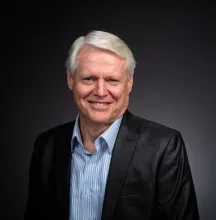
John Elliott serves in the role of President of the United Church of God, an International Association.
