
John Elliott
This transcript was generated by AI and may contain errors. It is provided to assist those who may not be able to listen to the message.
As we saw in the first part of this series, God developed an elaborate plan of salvation for his future children. He next developed a very complex cosmos. He formed a world out of darkness, and he said, and there is light. Let there be light, and there was light. God is light. His Son, Jesus Christ, is light. They inserted themselves into the darkness, and the darkness goes away. God led Israel out of darkness on a dark night as a pillar of light moving forward to have a relationship with Him.
Jesus came to light our way as the light of the world. As a part of God through His Spirit dwells in those who are the children of God and led by that Spirit, they become light, a form of light, a spiritual light, into a dark world and within a dark world.
Jesus said, you are the light of the world. In the future, God the Father and His Son will be the light that lights New Jerusalem. He also says that their children will also shine as the sun. God's plan then transitions us eventually into a world of light and being part of the source of that light. However, we're not there yet. We live in a world of darkness, and there is a problem in the plan. There's a challenge to God's plan. God, who is light so bright that if we were to see Him, it would kill us. And God, who is the source of all the bright light, righteousness, has one who contests it, and one of darkness.
Satan is darkness. His mindset is darkness. His demons are darkness. They represent something that tries to come in and smother the light. When God was the light to Adam and Eve, Satan showed up and smothered it in darkness. And mankind has preferred the darkness. There's a long-standing wrestling going on between darkness and light.
It's the darkness that wrestles with the light and tries to prevent it. Genesis 3 tells us that part of that wrestling is that one agent of light would bruise the head of an agent of darkness that would bruise the heel of the agent of light.
There is darkness that would come upon those that God is trying to create as children. And He would try to not only bruise their heels, but to kill them, get God to kill them so that they would never be part of this great plan of salvation. The ultimate solution to this problem is that darkness and death that comes from it will be destroyed forever. Ultimately, that's what will take place. There's an eye-for-an-eye principle that God has long established that is a requirement from God's perspective.
And ultimately, there must be an elimination of sin, of darkness, of death. In the eye-for-an-eye principle, the penalty for sin is death. It's the elimination of it. Father and the Logos never sinned, so they're not in any way subject to death or elimination. But Satan and his demons have sinned. Jesus Christ said that a lake of fire is prepared for the devil and his angels.
Ultimately, they are going to be thrown in it. Satan, however, also has tempted all of God's potential children and gotten them to sin. And so they are destined for the same fire to be burned up and destroyed so that darkness and sin is purified out of God's kingdom and all that is. And none will remain. Only light will remain. In Revelation 21, verse 8, we find a very clear statement that none should be unaware of. It says, "...but the cowardly unbelieving, abominable murderers, sexually immoral sorcerers, idolaters, and all liars shall have their part in the lake, which burns with fire and brimstone, which is the second death." So this creation in light is challenged by the darkness and death that it has been subjected to.
And Satan has been the main culprit of bringing that in. So that God's great plan of salvation has this challenge. There are no children who are essentially available to be in the kingdom of God because all have received the sentence of death. All of us have been somehow guilty of these very things we read in verse 8. And we all therefore shall have our part in the lake which burns with fire and brimstone, which is the second death, so that sin and darkness can be purified out, except that God also built another opportunity, another process into that plan.
It's not just purified out by fire. Baptized, purified, cleansed by fire is how God's creation, God's kingdom will be cleansed. There's also a process where one can be baptized by water and by the Holy Spirit. So this alternate method of purification was instituted as well. And you and I have a choice. And that choice is, do I want to be baptized by the fire of the lake of fire and my sins cleansed and my darkness and those trespasses?
Do I want to have those cleaned up forever that way? Or do I want to be engaged in another opportunity that God has developed? And that is to be baptized by water and God's Spirit. Now we might say, well, I have an easy choice, an easy answer for that choice.
Well, there is no easy answer because the answer really requires a complex dedication on the part of any who decide to go the baptism-by-water route. Transitioning these doomed potential children of God from darkness to life, transitioning them from death to light, this involved great complex deeds on behalf of the God family.
And these are brought to us through covenants. There are several covenants in the Bible. Two in particular concern us. Actually, several concern us, but two are of great focus. One involves us directly. I'd like to talk briefly about one of them, the Sinai Covenant. The Sinai Covenant took a people who were not a people, and they were sanctified.
They were brought out. They were redeemed through the death of firstborn, and they were brought out and sanctified through a covenant that God gave them. They were blessed when they followed that covenant. God's intention was that they would be His people. God said, I married you. I am your husband. That's a very strong relationship. They were to be the model nation to shine the light to the other nations of the world about God's way, about His law, about His love, about His mindset.
However, we know that darkness overtook the participants of that covenant. Satan once again swooped in and got them deceived, tempted them, got them to go back into darkness. An overview of the Sinai Covenant can be found in Hebrews chapter 10 verses 1 through 4. Hebrews chapter 10 verses 1 through 4. I say two covenants concern us because this covenant takes up half the Bible or more, and it's referred to so many times in the New Testament. It's important for us to understand that Sinai Covenant.
But just in a briefest of overview here, if we look at one aspect of it, we see Paul in verse 1 of Hebrews 10 saying, for the Sinai Covenant, or the law of the Sinai Covenant, having a shadow of good things to come. Now let's pause there for a minute. This was a fine covenant. It was a holy, good covenant. It is a great covenant. There is nothing wrong with the covenant whatsoever. And I am not one to jump in and go where God hasn't gone. Let's just say that he developed the Sinai Covenant. He put a lot into it, put thousands of years of energy into it, lots of heartaches.
There's a lot of prophecies concerning the people involved and their descendants in that covenant. We'll just let that covenant stand. But that covenant has having, not had, but having in the current sense. This is written 30 or more years after Jesus's death. So the Sinai Covenant, having a shadow of good things to come, and not the very image of the things, can never, with these same sacrifices which they offer continually year by year, make those who approach perfect. So that covenant, as we know, was a covenant of if you obey these laws, you'll receive physical blessings.
And that was really the extent of the covenant. They'd have a blessed life in this life, and they could be sanctified to God. There was a continual sacrificial process that God accepted animal sacrifices as acts of repentance that enabled them to have a relationship with him on a certain level. Now, in verse 2, if these had been perfected, for then would they not have ceased to be offered? Now Paul is saying something here that's very real, because this is happening the day he wrote this.
If you went to Jerusalem, those sacrifices were taking place. So what Paul is talking to the Hebrews about, they were a people in transition. Some had been invited to the new covenant. God had opened the eyes of some. They had been baptized, we find in chapter 6. They had received God's Holy Spirit. They knew the doctrines and were trying to live the doctrines. But with all the sacrifices going on in that extremely nice Temple Mount and all the excitement there and the things that they had participated in all those years, it was trying to draw them back.
And they felt like, wow, we should be doing that too. The spiritual stuff with God's Spirit doesn't seem somehow as real as the physical, get your hands dirty, take the animal, go up and be with the crowds of people. So he's explaining here something. For the worshippers, once purified, would have had no more consciousness of sins. In other words, they would be forgiven, and therefore you move forward. But in those sacrifices, there is reminder of sins every year.
No, I haven't been forgiven. I'm bringing animals. For it's not possible that the blood of bulls and goats could take away sins. So God ultimately had another covenant in mind.
We read about that in Jeremiah 31. There are some misconceptions about the timing of the new covenant, but let's read it carefully as God said it. Jeremiah 31.
Behold, the days are coming, says the Lord. Notice it didn't say, Behold, the day is coming, or in that day. It says, Behold, the days are coming, says the Lord. Many times, many days, they are coming, when I will make a new covenant with the house of Israel and with the house of Judah. So there's a new covenant coming. It's not at a specific time on a calendar. It will be at a specific time in an individual's life. Paul is referring to this in the book of Hebrews in two different places, as we'll see. This is not according to the covenant that I made with their fathers in the day that I took them by the hand to lead them out of Israel. My covenant, which they broke, though I was a husband to them, says the Lord. This is the covenant that I will make with the house of Israel after those days, says the Lord. I will put my law in their minds and write it in their hearts, and I will be their God, and they shall be my people. The end of verse 34, it says, For I will forgive their iniquity and their sin I will remember no more. So this new covenant transitions people up to something much greater than what was before. There's a removal of sins. God's going to be there. He's going to live in them. When is this going to happen? Again, in verse 31, it says, The days are coming. Paul is telling these people that he's writing to at that time, this is what's happening to them. You had this happen to you if you were baptized. When you were baptized, it was one of those days. And the days came, the day came for you, and it came for me, which God put a new covenant in our hearts, in our minds and hearts. And he is our God, and we are his people. Now we look in Hebrews chapter 8 and verse 6. Paul here is referring once again to this new covenant in comparison with the Sinai covenant. Nowhere is it called the old covenant, by the way. But for those who were in the Sinai covenant and transitioned now during their lifetimes, like, oh, I'm called to a new covenant. Well, there is one that's old and ready to vanish away, isn't it? There is one that they're transitioning into. I'll give you an example. My wife and I own a boat. Okay? We'll ignore the boat for a minute. But the boat has an insurance policy. And that insurance policy is a good policy. All right? It's a good policy. It ensures us for stuff. If we do something to someone else, it ensures those other people that they'll get some relief. And that's a good policy. Well, it turned out another insurance company recently offered me a new insurance policy. Okay? I have the good insurance policy. I've been offered a new insurance policy. For the same amount of money, it's not just liability only. It's comprehensive. Now, if I do something or somebody does something to our boat, it's covered.
See? If I decide to run it up into a pile of rocks, they'll give me a new boat, I guess. That's pretty much better than the old policy, which was if I run it up into a pile of rocks, it's my pile on the rocks. You know what I mean? And I've got to somehow get it off the rocks and throw it away.
The new policy is so much better than the old policy. But here's the problem. I said yes to the new policy, but I still have the old policy. Now, the old policy is a good policy, but the new policy is better. I've got to transition from one policy to the other. Now, it's kind of easy, you'd say, but it's not because I've had the old policy for a while. I like the old policy. I like the name of the company better. I like the agent. She's a real sweet lady. She worked really hard to get me that policy. It's going to break my heart to call that woman on the phone and say, I don't want your policy anymore. Her office is real close to home. I don't even know where the new office is if maybe they don't even have an office. I don't know. Got it online. You know what I'm saying?
So here you've got two policies, and you're transferring to a better one. One's new, one's old, one has better promises, but there's a transition involved. Somebody's got to say no, as it were. So here in Hebrews 8 and verse 6, but now we're talking about the Logos, the one who is the God to Israel. Now he has obtained a more excellent ministry in as much as he is also mediator of a better covenant, which was established on better promises. Verse 13, in that he says, a new covenant he has made, or actually I believe it should say, he will have made the first obsolete. Why do I say that? Because the next phrase is all in the present tense.
Now what is becoming obsolete and growing old is ready to vanish away. This is 30 years after the death of Christ, and he's saying the Sinai covenant is still alive. But for these individuals who are in transition, he is or he will have made the first obsolete once you transfer or translate into the new covenant. These are Jews. They're transitioning to a new and better covenant.
And with them, like my insurance policy, the previous one is becoming obsolete. It's growing old. It's ready to vanish away with a simple phone call to a very nice person. Now Hebrews here is written to people who are transitioning, and it's easy to let physical symbolism trump spiritual truth, reality, that you can't see. Paul gives us a summary of these two covenants in Hebrews chapter 10 verses 11 through 22. Let's begin here in Hebrews chapter 10 and verse 11, and we'll see the contrast in this one covenant that we see written about in the Bible. We learn so much about it. We'll talk about it at Passover, days of unleavened bread in particular, before we step in and look at and really focus on the new covenant that you and I vowed to keep at our baptism. Hebrews chapter 10 verse 11, and every priest stands ministering daily and offering repeatedly the same sacrifices. As you can see, in Paul's day, this was going on. The priests were standing, doing the sacrificing, which can never take away sin. But this man, after he offered one sacrifice for sins forever, sat down at the right hand of God. So in this plan of salvation, God makes this way for us to come out of darkness and death by giving us the life and death of his own son, who became a sacrifice for sin forever. But then he sat down at the right hand of God, and from that time, waiting till his enemies are made his footstool. For by one offering, he has perfected forever those who are being sanctified, those who are being sanctified, those who are part of a process and are faithful to that process. But the Holy Spirit also witnesses to us, for after he had said before, this is the covenant that I will make with them after those days, says the Lord. I will put my laws into their hearts and into their minds. I will write them. Then he adds, their sins and lawless deeds I will remember no more. Now where there is remission of these, there is no longer an offering for sin. Therefore, brethren, having boldness to enter the holiest by the blood of Jesus by a new and living way, not an old and dying way, not a physical-based death of animals repeating that didn't really accomplish the giving of life or the taking away of darkness, we have a new and living way. It's a way out of our death sentence. It's a way out of the darkness that's going to be burnt up, which he consecrated for us through the veil that is through his flesh.
And having a high priest over the house of God, let us draw near with a true heart and full assurance of faith, having our hearts sprinkled from an evil conscience and our bodies washed with pure water. So through this process of stepping into a new covenant, we have cleaned, been cleaned, we have been washed, we have been purified. Let us hold fast the confession of our hope without wavering, for he who promised is faithful. It's very important for us, then, to be understanding of the covenant that God has given to us. And today what I'd like to do is gain an overall sense of some of the components of this new covenant that we have vowed to keep, or some of you who are not baptized yet will vow to keep if you do get baptized. The new covenant has many components. Some of the components are God's responsibility. Some of the components are your responsibility. Let's look, first of all, at just a list of some of the responsibilities that God has within this covenant that we have made. He's made it with us, we've made it with him, and it's sealed. First of all, God's responsibility was to develop this plan of salvation, and he had to set down the laws governing the new covenant. And we might think, well, that was recent. No, actually, Jesus Christ was sentenced, in a sense, or determined that he would give his life before the physical realm was ever begun. It says, before the foundation of the world, billions of years ago, it was determined that he would die. Also, billions of years ago, from the foundation of the world, those who would be involved now in the first covenant, in the new covenant who are called the saints, were chosen. It was determined that they would be here. This new covenant is something that God has developed. He developed the laws. He planned the sacrifice. He chose the saints, then created the physical realm. He is the life-giver as well.
He created humans to be in his image and attain his likeness.
Part of that process is a series of covenants that will span 7,100 years or more.
One of those covenants is the new covenant. The new covenant, at this point in time, is an impact on the saints who will be in the first resurrection.
I don't limit or try to tell you where God's covenants begin and or if they end.
We just look in the scripture and we see that God has covenants of various types.
One that pertains to us and the sons of the first resurrection, the sons and daughters of the first resurrection, is this new covenant.
God's responsibility in the covenant was to love us before we loved him.
He has to love sinners and reach out to them while they are, in a sense, enmity or enemies of his.
He has to call. He has to choose. He has to select. How he does that, I don't know. I can't limit it. In our human minds, we might say, oh, the new covenant is this and this and this and this and this and this and this and this and this and this and this and this and this and this and this.
Oh, God can or can predestined and he can only know so far.
We humans can think we're so bright and knowledgeable when, in fact, God's ability and understanding is so far above ours, it's like a pea sitting on the ground and looking at the North Star. The difference is just incredible. So I don't go there, but God definitely calls and he chooses at certain times. He is the sanctifier of sinners. He is the Redeemer and must pay the ransom for those involved in this new covenant. He is the giver of divine knowledge to us. He is righteous. He is without fault. He is perfect in every way. He is gracious.
He is a giver of understanding, a giver of godly wisdom, a giver of faith, a giver of repentance.
He is the justifier of those involved in the new covenant. He is also the reconciler and the forgiver. As we see in 1 Peter chapter 1 and verse 17, the Father is also the judger of our works. He judges us by the works that we do. It's an active role, a part that the Father has in the new covenant. He is also a rewarder of good works. He is a punisher of evil.
And he is the one responsible to gift eternal life to those who are selected as the children for the god family. Those are some of the responsibilities, not all just an overview, some of the responsibilities that God and his son Jesus Christ have in the new covenant on their side. Now, if we come over to our side of this covenant agreement, we might call it the saint's responsibility or my responsibility. We are receivers of the calling.
What do we do with that calling? Many are called, few are chosen, Jesus said. It's our responsibility then to answer the calling and to participate if we want to be washed with water as opposed to be baptized with fire. Our sins have to be, remember the eye for an eye principle, our sins have to be paid for. There's no such thing as, oh, we'll just ignore that. That one won't count. It'll just go off into space somewhere. Now, there has to be a payment made. There is a payment or the payment, as it were, or that wage that you earn from sin is death. It has to be paid. It invokes something. An eye for an eye principle, expanded out, requires a payment. So if we look in Ephesians chapter 1 and verse 5, as we focus here on some of the responsibilities that you and I have in this covenant, we are receivers of this calling. Ephesians 1 verse 5 says, having predestined us to sonship as sons by Jesus Christ to himself according to the good pleasure of his will.
Notice he didn't say all humanity. He says, us. Having predestinated, having predestined us. You can check Romans 8, 29 as well there. In verse 11, in him we have obtained an inheritance, being predestined according to the purpose of him who works all things according to the counsel of his will. That we who first trusted in Christ should be to the praise of his glory. We then are the first. We are intended to be to the praise of his glory. We need to receive that calling and respond appropriately. In John chapter 6 and verse 65, we notice what Jesus says. John 6 verse 65.
Therefore I said unto you that no one can come to me unless it has been granted to him by my father. Again, it's the father who directs this plan of salvation. No one can come to him through Jesus Christ unless he personally grants that at this time. So your calling and my calling to sonship is something that is very specific and very particular. In Luke chapter 10, verses 21 through 24, Luke chapter 10, we'll begin in verse 21. Jesus here is praying to the father in front of the disciples. He says, I thank you, Father, Lord of heaven and of earth, very active role, that you have hidden these things from the wise and the prudent and revealed them to babes.
So the ones receiving the new covenant at this time, the saints, are called babes.
Paul refers to us as the unwise, the foolish of the world.
Even so, Father, for so it esteemed good in your sight.
Now that's what God has determined. Verse 22, all things have been delivered to me by the father, and no one knows who the son is except the father. People don't know who the son is.
People who talk about Jesus Christ out there, they're not talking about Jesus Christ. They're talking about a Jesus who was born about 3500 years ago, up near Babel and his illegitimate child, you know, sort of replaced him. Born on December 25th, it's been celebrated in Babylon and Medo-Persia and Greece and Rome, and his mother, celebrated as the queen mother of heaven.
That individual is identified in Revelation as being a false messiah who is going to be thrown into the lake of fire, you read at the very end of chapter 19 of Revelation. So no one really knows who the son is except the father, the real son, and who the father is except the son, and the one to whom the son wills to reveal him. We can't even know about God unless we have this calling, unless the father says, I want that man or that woman, that boy, that girl to know me, the true God, the real God. Then he turned and said to his disciples, verse 3, privately, blessed, O how supremely blessed are the eyes which see the things you see.
For I tell you that many prophets and kings have desired to see what you see and have not seen it, to hear what you hear and have not heard it. You, the babes, the offscouring of the world, are more important than kings. We are more blessed in the eyes of the father and his son than anyone else on earth at this time because we have this calling.
Another responsibility we have is being a receiver of faith. God will give us faith, but we have a responsibility to continue in that faith and for that faith to develop. Let's look in Ephesians chapter 1 and verse 13.
Ephesians chapter 1 begin in verse 13 through 16. Ephesians 1, 13, In him you also trusted, after you heard the word of truth, the gospel of your salvation, in whom also, having believed, see this is what we have to do, not just here, but also believed, you were sealed with the Holy Spirit of promise, which is the guarantee of our inheritance until the redemption of that purchased possession to the praise of his glory.
In verse 15, Therefore, I also, after I heard of your faith in the Lord Jesus and your love for all the saints, do not cease to give thanks for you, making mention of you in all of my prayers. Here are people then that responded out of belief and then took that faith onto living it, the agape he mentions, agape, love. It is the works that show the faith is genuine. Romans 12, 3, I won't turn there, but it says, As God has dealt to each one a measure of faith, we receive this faith, now we're responsible to grow in faith and in trust of God. Another responsibility we have is being a receiver of knowledge, of understanding, and wisdom from God.
Let's look in verse 17 right here.
That the God of our Lord Jesus Christ, the Father of glory, may give you the Spirit of wisdom.
Father is very involved in your life and mine. He is the director of this plan of salvation. He chooses the participants at this point in time. And may that Father give you the Spirit of wisdom and revelation in the knowledge of Him, the eyes of your understanding being enlightened, that you may know what is the hope of His calling, what are the riches of the glory of the inheritance in the saints, what is the exceeding greatness of the power toward us who believe according to the working of His mighty power, which He worked in Christ when He raised Him from the dead and seated Him at His right hand in the heavenly places. It's important that you and I not only receive that knowledge, but we then understand it, give God's understanding, and turn it into wisdom. I shouldn't say we turn it into, but God elevates it to wisdom from above so that we're actually knowing it, understanding it, and living by it. It's our responsibility to submit to God's plan of salvation and to participate in that plan of salvation. Let's look at a few aspects of that.
First of all, believing and trusting. You know, you and I have physical human eyes, and Satan wants to tempt us away. He wants to take us back to sin and darkness so that we will die just like he is going into a lake of fire. We will go into a lake of fire and burn up. That's his goal. But we are to trust and continue trusting and believing. In 1 Timothy chapter 4 and verse 10, 1 Timothy 4 and verse 10, for to this end we both labor and suffer reproach. Why do we suffer reproach? Why do we have persecutions? Because Satan wants to drive us away from this believing and trusting. And one way to get your eyes off of being godly is to suffer, feel shame, embarrassment, pain, be lied about. Look at all Satan tried to do to Jesus Christ when he was in that final day of his life. Shift his focus. Get him to act in some carnal way. Go into darkness and quit being the light. But that will be tested in us. We should not succumb. We suffer reproach because we trust in the living God who is the savior of all men, especially of those who believe.
Also in 2 Corinthians chapter 3 verses 4 through 6, 2 Corinthians chapter 3 verses 4 through 6. And we have such trust through Christ toward God. Trust towards the Father through Christ. Now Paul trusts in many ways. If you look up trust and who's trusting, there's various trusts that we have. Trusting that God's will will be done. But there's a strong trust. It goes through Christ towards the Father. Not that we are sufficient of ourselves to think of anything as being from ourselves, but our sufficiency is from God, who also made us sufficient as ministers of the new covenant. Not of the letter, but of the Spirit. Not of just the covenant that Paul would speak about to Jews that they had been in in the past, which had certain blessings for various obedience. But now you and I have been baptized by the Spirit. We have been baptized and received God living in us. And now that those laws are expanded much more into much more complexity. If you read Matthew 5 and 6, the simple laws, I shouldn't say the simple laws, but the simple statements of the Ten Commandments, Jesus Christ just, you know, into many, many complex parts of hatred or envy, jealousy, or various concepts that would tend to impact us on a mental level versus just the physical action. So he brings that out. And we're now able and capable with God's Holy Spirit to deal with concepts, not just action, not just taking the hammer and killing somebody, but actually mentally sort of having wrong thoughts and scheming thoughts and unloving thoughts and unforgiving thoughts, even about enemies. So these are aspects that you and I need to reach out from, as it says here in 2 Corinthians chapter 4 and verse 6, for it is the God who commanded light to shine out of darkness, who has shone in our hearts to give the light of the knowledge of the glory of God in the face of Jesus Christ. You and I also have been called to repent. We're to repent before baptism. We're to repent every day. We're to repent several times a day. That in itself is a complex operation because if we perceive something as sin, it is sin to us, and we have to repent of that.
It's not just, uh, go find the code. It's not on the list that I can do it kind of a thing. The way to develop a character in a mind of God that if it doesn't really fit with the agape mindset, we shouldn't even be thinking or doing it.
Repent is something Jesus Christ came in Matthew 3.2. He said, repent for the kingdom of God is at hand. You are a saint involved in the new covenant. The kingdom is coming. You are going to be part of the first fruits resurrection. Repent for the kingdom of God is at hand. And he puts into the model prayer outline, forgive us this day our sins as we forgive those who sin against us. If we look in Matthew, sorry, in Luke 24, Luke 24 and verse 47. Luke 24 verse 47.
Just breaking in here, Jesus is talking to them.
And that repentance and remission of sins should be preached in his name to all nations beginning at Jerusalem. Repentance. See how important repentance is to God, to Jesus Christ?
It might not be something you and I think much about. Again, somebody might pull one of the phrases of Paul out and stick it and say, oh, this is all I have to do. With God, it's about repentance, daily repentance, more than daily repentance.
Acts 2 verses 38 and 39. Repent, baptized for the remission of sins. Receive the Holy Spirit. 2 Timothy 2 verse 25. Again, these are things that the Apostle Paul is saying that oftentimes people think the Apostle Paul simplifies or minimizes the covenant, which he does not at all.
2 Timothy 2 verse 25 says, In humility, correcting those who are in opposition, if God perhaps will grant them repentance so that they may know the truth. Repentance. Where does it come from? Well, talks here about God granting them repentance. God is very involved in wanting us to repent. In fact, He will inspire us to repent. He will give us repentance. What do we do? It's our responsibility to respond and participate. Another one is we are to be obedient. We could go through many things about obedience, such as John chapter 15 and verse 10.
Let's notice this from Jesus' own lips. John chapter 15 verse 10. If you keep my commandments, you will abide in my love, just as I have kept my Father's commandments and abide in His love.
Now, there's if and if. There's a condition. It's up to you and me, as part of this new covenant, to be obedient. And if we're not obedient, we will not abide in the Father's love. We'll become part of the darkness, part of the scourge, part of that which needs to be cleansed away through fire.
And that's not something we want to go into. You can read scriptures about the unpardonable sin, or one who turns his back, turns from the plow, turns away, one who departs, one who quits repenting. Who will bring him back to repentance again?
We have a big responsibility to be obedient. Let's look in Acts chapter 5 verses 31 through 32.
Acts chapter 5 and verse 31.
Him, this is Jesus Christ, God the Father, has exalted to his right hand to be prince and savior, to give repentance to Israel and forgiveness of sins. And we are his witnesses to these things, and so also is the Holy Spirit, which God has given to those who obey him. Do you want God's Holy Spirit? Do you want it to remain? Do you want God to live in you? And do I? I mean, this is a question for each one of us. If so, we have to obey. Remember Jesus said, if you obey, my Father will love you. If we obey, God will live in us through his Holy Spirit, but God will not abide. He will not remain in darkness. He will not abide or make his home in sin. This new covenant is a process of us recapturing a status of sanctification, justification, forgiveness, which we'll talk about in a future sermon. It's up to us to be focused on obedience.
Another aspect that we have to focus on is being holy. 1 Peter 1, verse 14. We can't just do what we want to do with God living in us. We are holy because God is holy, and he lives in us through his Holy Spirit. We are the temple that he is dwelling in now, that he and the Father dwell in.
I'm not saying anything about the other temple or the temple that we'll be, or anything about other covenants where God has or may dwell. I'm talking about the new covenant. Within the new covenant, we are the temple of the Holy Spirit. We're the temple where he dwells in us. But that is, once again, conditional. 1 Peter 1, verses 14-16, says, As obedient children, not conforming yourselves to the former lusts and your ignorance, don't go back and be disobedient. Beedient, obedient children. 2 Peter 1, verses 15, But he who has called you is holy.
Who called us? God the Father called us. He is holy. You also be holy in all your conduct, because it is written, Be holy, for I am holy. And if you call on the Father, it continues.
2 Peter 1, verses 16, Who without partiality judges according to each one's work.
Conduct yourself throughout the time of your stay here in fear.
You know, you and I need to pay attention to this holiness, and our conduct, and our obedience, and be real children of the God family. That's the condition, or one of the big conditions, of the covenant that we are in, is to be developing into godly children.
Another way of defining this is growing in agape.
Part of the new covenant, an integral part that is your responsibility and mine, is growing in agape. John 15, in verse 12, Jesus himself.
John 15, verse 12, This is my commandment, that you agape one another as I have agape you.
It's not just a thing we do, it's a mindset. You love with my mindset one another as I, with the godly mindset, have loved you. We are to be growing in that.
Romans 13, 8-10. Romans 13, verses 8-10.
Oh, no one anything except to agape one another.
For he who agapes another is fulfilling the law.
It's fulfilling the law. Why? Because Jesus reduced the entire law in a concept down to agape God and agape you fellow man, and on that hangs all the law and the prophets. So Paul here is saying, oh, no one anything except to love with that godly mindset one another.
Verse 9, For the commandment you shall not commit adultery, you shall not murder, you shall not steal, you shall not bear false witness, you shall not covenant. And if there's any other commandment, and there are, they are all summed up in this saying, you shall love your neighbor as yourself.
You know, God the Father loves you as much as he loves himself. That's why he has rolled out this huge complex plan that involved the death of his own only son. And there was no other God while Jesus Christ was in the grave for two days, I'm sorry, three days and three nights. He was alone as the sole member of the God family. And he loves us as much as he loves himself. And Jesus Christ, obviously, the same is known of him by what he did for us. Love does no harm to a neighbor, therefore love is the fulfillment of the law. We need to grow into that. Now, in looking at some of these aspects of the new covenant, this isn't the entire covenant, these are, this is just an overview. There are aspects that you and I are responsible for, such as forgiving. We read back in Luke, or we can read, in Luke 11 and verse 4, where Jesus says that we are to ask God for forgiveness of our sins as we forgive others. There is no forgiveness of our sins. You take this whole new covenant and all the stuff that we've talked about so far, there is no forgiveness through the broad of Christ. There is no forgiveness of sin, nothing for me if I don't forgive you.
It all goes away. I go into a black box waiting to be burned up.
That's interesting. You know, this is a multifaceted covenant that we've been given. It's a wonderful covenant. Every aspect, every part of it, is about the encouraging, building up, helping, assisting of every other individual that exists, including the God family.
Part of our covenant is to reject the darkness, to reject Satan's deception, to reject all of his mindset from the lawlessness that creeps in. It looks good. Oh, I just want to do that. It's not too bad. Everybody's doing it in the church. Just let that creep on in. A little darkness come in. Religions. The religions out there, they use Jesus and Christ and all that. That's good stuff. It makes me feel good. You know, when I hear it and I listen, all that stuff, we'll just invite some of that in. God tells us to come out of this world. He wants us to have nothing to do with it. It's up to you what you do with Satan's mindset, but God will not accept both.
In Revelation 2, verses 19-20, I'd like to just show you what Jesus says about me, about you, about the church of God. If we'll listen to him, if we won't relegate this to someone else, let's let him speak to us. If we have ears to hear, like he said, you're blessed, supremely blessed, to have ears that hear. Okay, well, let's see if we'll hear his ears with our ears, what he has to say.
Revelation 2, verses 19-20, I know your works, agape love, service, faith, your perseverance.
That's wonderful. Close the book. Let's all go home. He's speaking to you and me, and those are wonderful words. However, it's not as simple as that. There's more to it.
He says here, verse 20, Nevertheless, I have a few things against you, a few things against you, because you allow that woman Jezebel, who calls herself a prophetess, to teach and seduce my virgins, the ten virgins, the virgins who are awaiting Christ, the virgins who have not mixed with the other religions, who have not mixed with the beast, my servants to commit sexual immorality.
Uh-oh, they're not virgins. To eat things, sacrifice to idols.
See, we can do all of these things and yet embrace Satan to come back in, and instead of having that betrothed mind of the wife, the bride of Christ, we reach over to someone else. His villainous challenger who is trying to get us to follow him.
You and I have the responsibility to reject Satan's mindset. Look in 1 John, chapter 5, in verse 4, just a page or two back. 1 John, chapter 5, in verse 4, For whatever or whoever is born of God overcomes the world, and this is the victory that has overcome the world, our faith.
He who is he who overcomes the world, but Jesus Christ, the Son of God. You and I have got to overcome. We've got to defeat. We've got to win this war against Satan.
Jesus Christ did it perfectly. He was tempted in all things and did not sin. He set us the example. It is our responsibility to reject the lawlessness, the religions, and he right there sees it so quickly. We have to be merciful. Luke 6, verse 36. A few more things I want to just bring out as part of an overview that you and I are responsible to be doing as part of this covenant. Luke 6, and verse 36. Therefore be merciful just as your Father also is merciful. It's interesting how this covenant is founded and based on the Father and directed by the Father. If we want to be forgiven, turns out we have to be forgiving. If we want mercy, we have to be merciful.
We find in Romans 2, verse 13, that it's not the hearers of the Word, not the hearers of this message, not the hearers of the new covenant that are justified, but the doers. We have to do these things. We have to be really becoming children of God. Another aspect of our responsibilities is submitting to authority.
God will not allow us to be in his kingdom. He will burn us up if we are rebellious to authority.
And you think of the authorities that are mentioned in Scripture that Peter mentions and Paul mentions.
They range everything from, as it says in James chapter 4, verse 7, submitting to God.
To wives submitting to husbands, children submitting to parents, all of us submitting to each other.
Let's look in Romans chapter 13 and the first two verses.
There are places that talk about slaves submitting to masters.
Romans 13 verse 1, let every living person, every lively person, be subject to the governing authorities. Now you can just stop there and think about that.
Rebellion is a sin of witchcraft, Satanism. It's of the other sides, the darkness. God will have nothing to do with it. So we need to be subject to the governing authorities.
For there is no authority except from God, and the authorities that exist are appointed by God.
Therefore, whoever resists the authority resists the ordinance of God, and those who resist will bring judgment or condemnation on themselves. We can be doing all those other parts of the new covenant that we've talked about and doing wonderfully, but if we reject and resist, we'll bring the lake of fire on ourselves.
There is a whole passage there you can read about that.
The last thing that I would like to mention in the overview section of the new covenant is that we need to be growing in godliness into our parents, into God the Father, into Jesus Christ. We need to be growing into their family, in other words.
It is not just a bunch of deeds that we do. It's a mindset, it's a family to where our citizenship becomes in heaven. In other words, I'm of that family, I'm of that country, I'm part of that mindset, that's who I am, that's who my dad is, that's who my older brother is, that's where my future is, and you can't take that out of me because that's what I'm becoming. I'm becoming part of the family of God. Ephesians chapter 5, we'll go there, one scripture on this point, Ephesians chapter 5 verse 1, therefore be imitators of God as dear children.
I was thinking this morning about a little boy that came into the house yesterday.
I won't say who he is, but he's short. And he came into the house, such a little gentleman, and he was very polite and conducted himself very well, very friendly, and I just saw his daddy in him. He was just a son of the family and so mature at it as well for just being age six. And we are to be imitators of our Father as dear children, and walk in agape as Christ also has loved us and given himself for us in offering and a sacrifice to the Father for a sweet-smelling aroma. Verse 8, for you were once in darkness, but now you are light in the Lord. Walk as children of light. This is what God wants of us. That's what this covenant is intended to produce.
Dear children who walk as light, part of the family of God.
So today we've taken a look at some aspects of the new covenant, and we've seen that it is a really complete mindset that we're engaged in, in copying our Father and our elder brother.
It's one that we are to be fully participating in, and it should be transforming us, converting us into something that we never were before, something that is divine. Our duty in the new covenant is really to repeat everything that we've talked about today, every day. The repentance, the forgiveness, the obedience, the faith, the trust, every day is a new day that we begin on our knees with our Father. And it's through His Son Jesus Christ and this process of salvation in the new covenant, which you and I have been called to right now, that we can ultimately be successful in their goal of becoming their children. This process is exemplified by an individual called a man after God's own heart. We read some of his words in Psalm 119. I'd like to begin in verse 159.
If you want to sort of summarize the covenant that you and I are in and the complexity of it all, let's let David speak about it in one passage. Psalm 119 verse 159 through 176.
Consider how I love your precepts. Revive me, O Lord, according to your loving kindness.
It's not just a set deal. You don't just get baptized in weight. There's a reviving.
We make mistakes. We go forward. We step back. We fall.
This covenant is one that we get up and dive back into every day, working through all of these aspects of it. Verse 160, the entirety of your word is truth, and every one of your righteous judgments endures forever. Verse 161, princes persecute me without a cause, but my heart stands in awe of your word. I rejoice at your word as one who finds great treasure. I hate and abhor a lying, but I love your law. Seven times a day, I praise you because of your righteous judgments. Great peace have those who love your law, and nothing causes them to stumble.
Lord, I hope for your salvation. I do your commandments. My soul keeps your testimonies, and I love them exceedingly. I keep your precepts, your testimonies, for all my ways are before you.
Let my cry come before you, O Lord. Give me understanding according to your word.
Let my supplication come before you. Deliver me according to your word.
My lips shall utter praise, for you shall teach me your statutes.
My tongue shall speak of your word, for all your commandments are righteousness.
Let your hand become my help, for I have chosen your precepts.
I long for your salvation, O Lord, and your law is my delight.
Let my soul live, and it shall praise you. Let your judgments help me.
Verse 176, I have gone astray like a lost sheep.
Start over again. Seek your servant, for I do not forget your commandments.
Brethren, this wonderful opportunity that we have to follow God in light, to become light, ultimately fulfill His will by becoming children in His family forever, is right in your hands. It is a choice that you have to make daily. It's a process that you have to be very involved in, very passionate about, just like David said us a fine example of.
Understand that this is not something trivial. It's not something on autopilot. It's not something that's been done. It is something that you and I have to live.
We have to do the Word. We have to love God with our heart, soul, and mind, love our neighbor as ourselves, and fulfill all of the aspects that we have promised to fulfill in this new covenant.
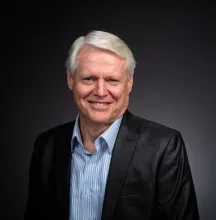
John Elliott serves in the role of President of the United Church of God, an International Association.
