

Robin S Webber
This transcript was generated by AI and may contain errors. It is provided to assist those who may not be able to listen to the message.
Well, certainly appreciate the very lovely special music and appreciate the beautiful, beautiful flowers here before me. Aren't they just gorgeous? And every time we come to church, we realize that we come and worship before a beautiful God, giving us a beautiful truth, giving us beautiful people, and we have a beautiful future ahead of all of us. But as Mr. Josephak mentioned today, there's some challenge and some struggle between where we are today and when we have the fullness of that kingdom. Before I go any further, and you might want to take out your paper and pencils, because I'm going to put some things on the board to make sure that we cover them in the course of this message. The message that we're going to give, there is a lot of rhythm that goes on in the message. So I kind of want to put it down here before I forget it. Sometimes this helps me as I get to going. And you say, what does this mean? Well, I'm going to tell you what this means so that you can look at it now, see if I talk about it in the course of the message, and then at the end of the message say, did he really get to it? Sometimes people go away and say, you know, that was a really good sermon. And somebody says, yeah, what was it about? Well, let me think about it. Maybe you've been there. I've been there as well. Well, we don't want that to happen today. There's some things that we want to recognize. There are what we call twofold, twofold, fourfold, and fourfold emphasis in the course of what we're going to be discussing this afternoon out of Ephesians 6. First of all, we're going to, there's a twofold emphasis that what you and I are experiencing is God's instruments, and that's what we are. The battle, the battle. And we are in a conflict as Mr. Joseph take brought out. The battle is the Lord's. We can never forget that.
The battle is the Lord's, and it is in the Lord. That's the first thing we're going to be talking about. Secondarily is that we are given a twofold, we are given a twofold invitation twice. Sometimes instead of God's state something once, that's important enough, but twice, to put on the armor. To put on the armor. Put on armor.
See, any time there is inspired writing or even good writing, you will often notice that there is a rhythm and there is a cadence that is leading us to a point. The next point is that, and this is going to be incredibly important, is there is a fourfold emphasis for the Christian soldier that Mr. Joseph defined for us, a fourfold emphasis to stand. To stand. Now, if you were a soldier of old, you would understand that. We're going to explain that a little bit more for all of you. And then, lastly, there is a fourfold, that means four times mentioned in the Course of Ephesians, a fourfold emphasis to pray. To pray.
When you're out in the field, when you're in the middle of the war, you had better be communicating. Now, with that stated, remember, I'm an old teacher. I've got all sorts of things up here today. We've got the whiteboard, and also I have passed out. Did everybody get one of these? So, if the message gets boring, you can at least look at this and kind of get your pencil and paper and draw some more on the soldier. Okay? Just teasing. I used to do that when I was... Anyway. You'll notice that, and we're going to get to the back towards the end of the message. So, everybody got one? You can wave them if you want to. You can stay awake. Okay, good. We're all set. We're ready to go. Let's understand what's happening here. For those of you that are visiting with us today, and there are a number of visitors that are with us today, we have been going through the book of Ephesians, which basically outlines the will of God for the body of Christ.
The will is not a mystery. Again and again, let's again open up the Word of God. Let's turn to Ephesians 1, verse 9, to again establish what that will is, and then we will build upon it for the rest of this message. The will is not a mystery. It has been revealed to the body of Christ. And we find it in this beautiful epistle written to the Ephesian church. And we find in Ephesians 1 and starting in verse 9, clearly what that will is. It says, having made known to us the mystery of His will, according to His good pleasure, which He purposed in Himself, speaking of God the Father, having made known to us that, that in the dispensation of the fullness of times, He, speaking of God the Father, might gather together in one all things in Christ, both which are in heaven and which are on earth in Him. Paul had this amazing vision that was given to him. John was not the only one. John the apostle and the revelation of God through Christ to John. Paul also was given this vision, given this understanding, that he saw that all old animosities, all separations, all divisions that are both in heaven and earth and in between, that between Jew and Gentile, that between man and woman, that between child and parent, that between slave and master, were to evaporate, were to come together in Christ, that there would be incredible reconciliation first with God, and then if with God, then with one another. And Paul was blown over, and he spent the rest of his life describing that. He came to understand that that which had happened in Eden, that there had been that creation, that creation that came from the material world, that special creation of humanity that came from the dust, that rejected God, rejected all that God desired to give man and woman. And with that rejection came the curse, came the animosity, came the separation, not only from God, but from one another. And now Paul is sharing God's revelation that there is a cure for the curse, and it all comes through that redemption towards the Father through Jesus Christ. Coming through that door allows an opportunity for humanity to come together, and not only that, but all that is in heaven and in earth, because the Jewish mind of which Paul was a part always thought more of in a larger vein than just simply the square foot that was in front of them.
Last time we talked about the solutions that were on the ground, that the household of faith that God is designing and God is creating this new spiritual creation is a beautiful thing. And it is a part of the Gospel of the peace. It is about peace. It is about surrendering ourselves to God. And it was a beautiful thing.
But now we come to a transition here. Join me now in Ephesians 6, because what is laid out is not only about the household of faith, but our own human households have got to be in order, in alignment with that.
We covered that last time. But there is this very rapid interruption here. And it is fascinating how it develops. Because in one sense we are going that man and woman can come together in marriage, not apart, not opposite, not opposed, but as that emblematic symbol of the body of Christ and what Christ does for it.
Then the relationship between the parent and the child healed. We saw the relationship between the master and the slave healed. Not necessarily taken away, but transformed that in everything that we do, it is in Christ as to the Lord. Beautiful, wonderful picture.
Mr. Joseph was talking about that he hopes that the kingdom of God might come in his lifetime. And that has always been the hope of every Christian. But now we see this point. Verse 10.
Finally, my brethren, be strong in the Lord and in the power of his might. Put on the whole armor of God that you may be able to stand against the wiles of the devil.
Now oftentimes when we've perhaps studied the book of Ephesians, whether it was perhaps in a Bible class or perhaps a Bible study or perhaps in another sermon other than this, we get to Ephesians 6 and it says, oh, it's like, oh, and by the way, let me add one last thing. Finally, kind of like a sign off. If we understand it that way, we do not understand what Paul is sharing with you and me today. That finally is better rendered this way if you'd like to drop it down. Put it down. It's simply this. It's better rendered this way. Henceforth. Henceforth. And or for the time that remains. Totally different, isn't it? Than just simply finally. Kind of like you're signing off on a letter. Paul is telling us something here. Henceforth. For the time that is remaining. Paul had just shared this beautiful grand picture of the will of God for the body of Christ. But he says, but it's not going to come easily in this lifetime. And he says, basically, as I see it, there is going to be no view of cessation, of hostilities between the first coming of our Lord and that of his second coming. And thus, to speak to where Mr. Josephic was, we are going to need to be soldiers of Jesus Christ. Finally, my brethren, be strong in the Lord and in the power of his might. Now, this is very interesting. Let's understand what he's telling us today as we're listening to this message. Let's perceive and get into Paul's mind and heart as God's Spirit is revealing to him what God would have us to know today. Simply this, number one, he makes it apparent to us in the body of Christ that we stand between two opposing forces, two opposing ways of life, with two completely different outcomes. And we are invited, dear brethren, here today, we are invited to align ourselves with God and not go the way of the rest of the world. Thus, number two, we are given a summons. We are given a call. We are given a trumpet blast to steadfastness, to stand up and to be a part and even spiritually fight and be God's instrument for what he would have us to be. The verse is spoken with confidence. The victory is in place.
1 John 3 and verse 8 tells us that Jesus came to destroy the works of the devil. He came to destroy them, not just to have a parley, not to just simply have a conference, not to just to have an ongoing simmering low-level conflict that never has any conclusion, but to destroy it. The victory is in place. It's only the details that have to be worked out. But in that, we need to understand something. Because now, we have one that is in place that is wounded. And when an enemy is wounded, or when an animal in the hunt is wounded, it becomes all the more dangerous. And what we are talking about is none other than Satan, the adversary. Because it speaks to the wilds of the devil. There's one thing that Ephesians is telling us. I want you to think through for a moment. With all of these studies that we've been going through since October. And that is simply this. What Ephesians is sharing with you and me is that God has, by His grace and in His will, decided to create a new creation. It's spiritual. It's spiritual. And even the angels wonder at it as they begin to see it come about. It's different from the old creation. That which was in Genesis. The old creation was material. The old creation was made out of dust, wasn't it? But this new creation, this spiritual organism, this spiritual body called that of Christ, is spiritual in nature. There's an old creation, there's a new creation. The new creation is now under progress towards the kingdom. But there's something, there's a constant in both of those. Lucifer was at the old creation. And what Paul is telling us even now, because even as God is developing this new creation in us, we are still in these physical tents. Yes, we're still down here. And yes, Lucifer, Satan, the serpent, the adversary is still at war with the will of God. And so we are brought into alignment with that, and we are brought into awareness with that. And so there is, number three, a summons to conflict. A summons to conflict for the people of God. There can be no passivity. Christianity is not just simply philosophical, it is not just theological, it is not just cerebral.
It is activity, and it is battle, and it is war, and it is living in the trenches. And we're going to find out how that comes about. Lastly, Paul warns of war and how to win it with God's help. And simply put it as this, as we're going to come. Number one, there are going to be a lot of points here today, and I want you to get them. Number one, we stand in the Lord.
Number two, we pick up the armor that He has forged for us. Not that we thought about, but that He has forged for us, given to us, and that we have the opportunity and the privilege and the honor to use as His instruments on earth.
And number three, all the armor and all the weaponry that He gives us goes right back to Him. It is from Him, and it is to reflect and point to Him as in the Lord, as unto the Lord.
Any movement of armor that we make, any activity of offense or defense that we make, it is all of the Lord, in the Lord, and as to the Lord. Because it's not by our might nor our power, but by His Spirit, that we will be able to prevail. Notice it again when it says, finally, my brethren, be strong in the Lord and in the power of His might. Put on the whole armor of God that you may be able to stand against the wiles of the devil. At times, people don't elect to put on this armor. Let's talk about that for a moment. Think about it. Why is that? Some do it out of a false sense of strength, of pride. They simply do nothing because they are utterly self-confident. They think that Christianity is simply about knowledge and about what I know rather than who I know and that I need to rely on Him. Number two, there are people that do it out of a false sense of humility. And, or shall I say, let me rewind a wrongful sense of humility. And that is, some people make no movement thinking that they have nothing to contribute. Oh, yes, you do. Oh, yes, you do. Number three, then, there are others that abide in the Lord and pick up the armor piece by piece. And that is our invitation and that is our goal today as a congregation. Let's notice what it says. Finally, may brethren be strong in the Lord and in the power of His might. It says, put on the whole armor. God is not going to force us. He will empower us.
But He's not going to overpower us. God continues to allow us to have that choice, but He says, put it on. If you could hear Paul's words, He's saying, put it on. Come on. You need it because you do not recognize who you wrestle against. Put on the whole armor. Put on the whole panoplay. Let's understand that when Paul is writing this, are you with me? When Paul is writing this, he's probably in a house imprisonment, and there's either a guard standing over him or he's literally tied to the guard. So the PowerPoint presentation that you have in front of you in that piece of paper, he's looking at it. And the panoplay is the term that is used, talks about the full armor that was used in war, not just dress parade. He's saying, dig in, get ready, it's coming, you need to know what you're going to be up against. Put on the whole armor of God that you may be able to stand against the wiles of the devil, for we do not wrestle against flesh and blood, but against principalities, against powers, against the rulers of the darkness of this age, against spiritual host of wickedness in the heavenly places.
Therefore, notice again it says, take up the whole armor of God. There is a two-fold emphasis. Please, by all means, your spiritual life is going to depend upon it. You put on this armor, for we do not wrestle against flesh and blood.
Let's understand something, because sometimes you can think about Paul and being in the world of Hellenism, that maybe he's talking about the Olympics. This is not about the Olympics. If you'll take your picture here that I have in front of you, the front page with all the different emblems on it, you notice up here in the right-hand corner, you notice that the soldier here with the stabbing action against the poor, oh, it looks like one of my relatives, one of the Germans, oh boy, not again, one of the Teutonic people.
But you notice they're at close encounters. The wrestling that is being talked about is not in the gymnasium, but on the battlefield, where you had to have your wits about you. You had to stand on your feet. You had to stand firm. And it was, are you ready, folks, close up and personal. You think of the flick that you've seen sometime about the Roman soldiers or the Scots going against the British, like Braveheart.
That's what we're talking about. We're talking about an entanglement. We're talking about a wrestling. We're talking about being up close and personal. And notice what it says here, against the rulers of the darkness of this age. This is particularly important for you and I. Since the Enlightenment, since the age of reason, man has basically reasoned that he can basically solve all of his problems of and by himself, and has divorced any thought of the heavens or the spiritual world that is around him.
And thus, he is capable and more than able to handle his own affairs. That's the world that we're conditioned by today. The world of humanism, the world of secularism, the world that the fate of humanity, the future of humanity is within our own hands. Notice what it says, we do not wrestle against flesh and blood, but against principalities, against powers, against the rulers of the darkness of this age, having spiritual host of wickedness in the heavenly places.
There are some things let's cover here for a moment. The enemy of the body of Christ is revealed. He's introduced over in Ephesians 2. Let's go there for just a second. In Ephesians 2, there's an introduction here. Speaking of the walk that we once walked until God began working with us according to the course of this world, according to the prince of the power of the air, the spirit who now works in the sons of disobedience. God has simply chosen at this time not to take him off the world stage.
That power is indeed still there. In chapter 4, verse 27 of Ephesians, it says, neither give place to the devil. Now let's understand, the victory has been won. Christ came to destroy the works of the devil.
Much of that was done at Golgotha. The victory is in place and is in the making. It's going to be completed when he comes back and that adversary is tossed into that pit by the angel. I want you to understand something. God has called us to the victory.
It is the might of God that is doing this, but we need to be aware of what's happening down here below. What do we need to understand about all of this? Number one, we need to understand it says about the powers that be. Number one, the adversary is powerful. Don't underestimate that. The sons of Sceva underestimated that. If you go, and they were actually in the area of Ephesians. Remember the sons of Sceva and the Jewish sorcerers? And they knew what Paul and the others were doing, casting out demons. So the Jewish sorcerers and the sons of Sceva, I think there were seven of them, went to cast out the demons.
Because they thought, oh, if I just use the name of Jesus, then I'll have the same power as those apostles and those disciples. Well, if you read the story, you come to recognize whatever happened. It was like a cat and a dog going around and around, and the sons of Sceva left that house without their clothes on. There was a lot happening in that room. Because they just thought that they could go there, oh, in Jesus' name, we know Jesus, in Jesus' name. And the demons that were in there, completely overthrew them. There must have been a hustle and a tussle and a fussel.
I don't know if fussel is a word, but it rhymes. And they went out naked. Don't underestimate the power and the force of the foe. And don't just think having a little relationship with God and knowing Jesus and or the name alone is going to get you anywhere. What is this telling you? Do not underestimate the fury of the adversary towards your destiny as being in the kingdom of God and sharing eternity with God Almighty and His Christ. We notice here also, if you come back to this verse, it speaks about a wickedness in heavenly places.
There is no morality to Satan and his demons. There is no morality. Every means that they use to corrupt you, to have you not standing, to trample you, to extinguish you. Every means justifies the end. Then also notice here, back in verse 2, that we are to stand against the wiles of the devil.
The wiles, the cunning, the cunning of the devil. We need to know what his strategies are like. And the only way we can know his strategies are by reading the Bible. It says that, you know, he is a wolf, but he appears in lamb's clothing. It says that he roars like a lion, but he is as subtle as a serpent. It says that he is the ruler of darkness, but his angels appear as angels of light. It says that, you know, to recognize all of this, to recognize his subtlety and what it's about. To understand that he is a bully. He likes to attack that which is weak and or asleep.
And that's why, as soldiers of Jesus Christ, we must maintain a vigil and be awake and be alert.
It says, therefore, again, verse 13, take up the whole armor of God, that you may be able to withstand in the evil day, and having done all, stand.
Stand, therefore. Now, what I want to share with you is simply this. Stay with me. Let's pick it up in verse 11. We are to be able to stand against the wiles of the devil. Again, notice what it says here in verse 13, to be able to withstand. And again, it says, having done all to stand. Verse 14, to stand. The emphasis here, brethren, and I want to share this with you, is simply this. There is a four-fold emphasis to stand.
Now, part of the armor that God gives us is for us to stand. What is this talking about? We'd have to go back at this time. You take your sheet again here, and this is just a microcosm of a battle that's going on kind of man-to-man. But let's recognize that oftentimes battles were maybe, oh, maybe a couple football fields wide. Let's say about 600 feet out. Thousands of men on either side. And normally what happened, there'd be kind of a back and a fourth and a back and a fourth. There'd be a bit of this low line, testing one another, probing, trying to sense the timing, trying to get a feel of one another.
Kind of like when you see wrestlers, you know, wrestlers get out there and they kind of move around the mat and they're kind of looking at one another, kind of figure out the moves. That's what entire lines of men would do, kind of probing. There'd be a little battle here, then there'd be a little battle over there, probing, probing.
But then finally there'd be that call to arms, and you would have thousands of men on each side all of a sudden come together in contact. Can you imagine what that is like? You know, just think of a football game with 11 guys facing 11 guys, and the impact there.
Can you imagine thousands? When it says to stand, Paul is thinking of that moment of to stand. That impact moment of when thousands of men hit, thousands of other men. And if you don't stand, what happens? You go down. When you go down, you are vulnerable to a sword thrust or a spear thrust and or simply to what? Become suffocated by the trampling of thousands and thousands of men going over you. Therefore, the encouragement is you've got to stand on your feet. You have got to stay alert. You've got to stay up in the battle, in the game. You do not want to go down. Basically what this is talking about, brethren, is the crush of life that can come our way.
And it's interesting when you look at this verse, it says, therefore take up the whole panoply that you may be able to stand the evil day. And having done all to stand, using every instrument that God has in store for us to utilize and performing that battle in the Lord as to the Lord, still just to stand. Many are called. Few are chosen. And I suggested those that are chosen and remain in the field are those that take Ephesians 6 very seriously and recognize the battle that we are in. Let's go a little bit further here, then. Now we are introduced to the instruments. Stand therefore, having girded your waste with truth.
Girding your waste with truth. If you look at your piece of paper here, you'll see here in the middle, the Roman soldier with his shield, and you can see the belt around him and the apron coming down. And you also see it over here in this picture of the breastplate. You see the belt and you see the apron coming down. What a belt did was that the belt of truth, that's the first thing that a soldier would put on was his belt. People of all war loose-fitting tunics. And if that tunic remained loose, like Knut was bringing out in his first message, you could become entangled.
You could become ineffective. So the first thing that we put on is the belt of truth. It's God's truth. God's truth about the gospel of Jesus Christ, the gospel of the kingdom of God, the truth of his revelation, and then the truth that is in us because of the byproduct that you and I live a life of integrity and moral certainty by the help of God's Holy Spirit keeps you and me in the trim.
It gives us a compass to go by. That truth. I remember so often in my own life that that has been my own GPS recognizing the revelation of God. And because God's grace has been visited upon me, I in turn in byproduct strive to abide by his word and be a man of integrity, allowing those truths to live in me. Notice what it says here, then. Stand therefore, it says, girding your waste with truth so that you are in the trim.
You are fine-tuned. You are ready and prepared. And it says, and put on the breastplate of righteousness. Put on the breastplate. You can see that in your picture here, twofold. You see the Roman soldier standing, then you see this picture of the breastplate. That breastplate could be multifaceted in composition. Sometimes they just wore very hard leather breastplate. Sometimes they had chain mail. Sometimes they cobbled metal together that was tied together by thongs of leather. But what that was really talking about, the breastplate of righteousness, is to protect our hearts. To protect our hearts. That our hearts might remain in the trim. It's very interesting if you'll join me for a moment over in Isaiah.
In Isaiah 59. This is none other than the armor of God that he shares with us, speaking about the Redeemer of Zion. Let's pick up the thought in verse 16. He saw that there was no man and wondered that there was no intercessor. Therefore his own arm brought salvation for him, and his own righteousness it sustained him. For he put on righteousness as a breastplate and a helmet of salvation on his head.
And he put on the garments of vengeance for clothing and was clad with zeal as a cloak. What we really find is that this is the armor of the Redeemer that God shares with us. You and I are privileged and have the honor to utilize the very armor of God, forged by him and worn by the captain of our salvation, who himself was on this earth in the form of man.
So therefore this breastplate that protects our heart. Our heart deals with what we are about, why we do what we do, what are our motives, and that we have surrendered our heart to God because of his Spirit guiding and leading us. Very interesting what Knut brought out in the first message, that he looks forward to that time when the Kingdom of God appears.
And that's going to be a time when all the nations are going to surrender to Messiah when he lands on the Mount of Olives. And they are going to unconditionally surrender. But for the body of Christ, for you and me now, that time is now. Not when the Mount of Olives day comes, but now in the mountain of our own heart. That we have unconditionally surrendered our lives and recognize there is no righteousness in us, but the righteousness of God working in us, God performing his will and his work in us. And we surrender to that, and therefore we become bent to God and his ways. And our motives change of why we do what we do. Notice in what it says here. And it says, And having shod your feet with the preparation of the gospel of peace. Romans were soldiers. Soldiers march. You look at your diagram if you want to. You can see pictures of shoes on there on the Roman soldier. The Romans marched and marched and marched. They had to have good footwear. Those boots that they wore, the caligas that they wore, Latin term for boot, they were leathery, they were flexible, but they were hard on the bottom. And oftentimes they had studs. They had studs. Why did they have studs on the bottom? And sometimes, depending upon your economy, you just put nails at the bottom of those shoes. Why would you do that? A question to the audience here. Why were there studs on the bottom of those boots and or sometimes nails driven in to grip the earth? Help me. I'm not talking until somebody talks here, so. It could be a long service. Yes, canoe. Traction. To do what? To stand. Four times, we, the members of the body of Christ, as we've gone through this excellent elocution of the grace of God and the will of God, we are told to stand, to stand, to stand, and not lose our grip. Why are we told not to lose our grip? Because we can. Because of the external factors that are around us. Philippians 4. Philippians 4.
Be anxious for nothing, verse 6, but in everything by prayer and supplication with thanksgiving, let your request be made known to God, and the peace of God, the peace of God, which surpasses all understanding, will guard your hearts. It will help us stand through Jesus Christ.
To be strong in the Lord. To be able to stand in the power of His might. You and I, when we talk about feet that are shod for the preparation of the Gospel, it's twofold. Number one, we should be eager with our feet, which carry our lives to share the good news about the gospel of Jesus Christ and the Kingdom of God. There should be an eagerness about us to share that.
But number two, to stay firm. It's very interesting that when you look at the book of Ephesians, there's two different things that come out. One is grace, the other is peace. Grace Charis, which is a gift. Peace, which was very familiar in the Jewish world, meaning shalom. Shalom.
I wish you peace. I pray you peace. Not the peace that we were used to in the 1960s, but a different kind of peace. A peace that is beyond understanding, better than the facts that are on the ground. Jesus said in John 14, verse 27, You can know many a thing in the Bible. You can understand many a doctrine in the Bible. You can be an almanac of all scriptures that are in the Bible. But that if you do not have that peace of God, that fruit of God's Spirit in us, we will not be able to stand in any day, much less the evil day.
Peace is a fruit of God's Holy Spirit. Peace is knowing that it's going to sunshine even when the storm clouds are above you, because God has promised that He will never leave you nor forsake you. You can go into any battle that way. When you recognize your commander, the captain of our salvation is with us. Therefore, we notice that our feet need to be shod with the preparation of the Gospel and understanding it.
This is a peace that is given to us through the book of Ephesians. The will of God gives and grants us a peace. You know, when we look at the headlines right now in our own nation, Europe, the Middle East, do I dare say Iran? Can we remember Russia? Do we know China? Have you looked at your portfolios, financially speaking, recently? Humanly, I don't know too many people that are at peace in this day and age. But I am at peace because I've read the end of the book, and I know that we win. The captain of our salvation stands and sits on that white horse, and he's coming back to rescue this world.
But until then, we need to believe in that rescue, have faith in that rescue, and live every day as we deal with our mates, as we deal with our children. I'm not just picking on the lion's family. I'll look around here. But as we deal with our mates, as we deal with our children, as we deal with our employer-employee relationships, as we tackle and we entangle ourselves dealing with the issues of humility and pride, when we're dealing with the issues of unity, when we're dealing with the issues and you name them, that we have this peace. Now, there's something I want to share with you. Don't go away. The first three articles that we've talked about, that is what the soldier normally wore. He wore the belt of truth. He wore the breastplate that Paul calls righteous, and he had his shoes on. Every soldier did that all the time. But now, remember, we have the panel plate, the full armor. We go into the other three issues here. What God is telling us is simply this. This is a battle. This is not just a dress review. And that's why the next three are mentioned. Notice what it says here, then. It says, And above all, taking the shield of faith with which you will be able to quench all the fiery darts of the wicked one. You might look at your picture here of the shield on the lower left-hand corner. This was not just a typical little round shield, but this was a full long oblong shield, about four and a half feet long, two and a half feet wide. That was designed to protect the entire body of the Roman soldier. And when the Roman soldiers were about to go into war, what they would do is that they would dip it into...which is very interesting. That's another sermon. But they would dip it into water. Why would they dip it into water? Because as they began to advance, the other army would begin shooting the fiery darts at them. And so this was to protect them. Paul says that we need to have the shield of faith. What does that mean to you and me? The faith that is spoken about here is not just simply a rolodex of doctrine, and doctrine is absolutely essential and necessary. But this speaks above and beyond that. And this is a basic confidence in God's purpose, in God's plan, in God's promises, and in God's provisions, and that God says that I will never leave you nor forsake you. And that when Jesus Christ says to follow me, you follow Him just as closely as that Roman soldier is right behind that shield. Sometimes we won't understand why God has this going down in one direction or another. Remember ancient Israel. Ancient Israel is in the Sinai wilderness, and all of a sudden during the day, the cloud would take in some direction and say, what? You know, some guy named Her or Caleb, no, those are the good guys, that say, pick a name, Levi. No, no, no, what's God got in it? Man, we're going down that desert again? Haven't we? No, you follow. And sometimes there'll be that fire at night leading them. Where's God? God is going now. Does God really know? Maybe you have that situation in your life right now where you're wondering if God's got His GPS messed up on your life.
He says, what's going on? This isn't showing up even on the GPS.
What God is saying is, you need to hold on to that shield of faith and believe in me and believe that I have your best interest in my heart and in my mind towards you. Well, how do you know that? How do I know that you've got my best interest? How do I know that?
God says, because I gave my son for you. Isn't that proof enough?
Now get behind the shield and you follow me as closely as you can, and you have faith in me that if I have begun to work with you, I will work with you to the end. Notice what it says here then. And take on the helmet of salvation. Take on that helmet of salvation. The helmet was designed, and you see a nice picture of the helmet on your picture there. The helmet was designed to protect the head.
And the bottom line is the adversary, Satan the devil, who goes about roaring, seeking whom he might devour. Let me put it in 1960s language. He likes to mess with your head.
He tries and strives to make you feel that God doesn't really know what he's doing. And he tries to make you doubt God.
Remember when Jesus was in the wilderness and Satan kept on coming back to him? You know, if...if...if...if...if you be...if you be. Folks, Satan knew exactly who he was talking to.
He was trying to mess with Jesus' head. And if he did it to the head of the church, he's going to do it to you and me.
This coming week, this coming month, this coming year, the words of Paul are telling us to be at alert, to be on a vigil, to be ready, to recognize that Satan, the adversary, wants to mess with our head and get us off track with the commander.
It says the helmet of salvation.
In God's eyes, he already sees us in his kingdom. God sees things as if they already are.
It says that by his life, speaking of Christ, that we are saved. That's a process, that's a progress, that's a movement towards the kingdom when we move into God's kingdom and we are, in that sense, fully within God's kingdom.
And at that time of resurrection, we do fully come into salvation.
But God sees things as if they already are.
We keep on that helmet of salvation by reading the Word, by understanding God's promises and staying close to God. Notice then what it says here.
And it says, And the sword of the Spirit, the sword of the Spirit, the Word of God.
The sword is the only offensive instrument that is mentioned.
Would you look at your picture for a moment there?
You see up in the upper right-hand corner, the Roman soldier?
That's not like one of those long, middle-aged swords that you could barely carry. The Roman carried a sword that was only about two feet long.
And the way that he used it...
This is my PowerPoint. If you'll look up here for a moment.
I feel like I've been in a battle.
But he'd have the shield of faith. Let's say he has the shield in front of him.
And then he'd have that small sword.
He had to be trained in using it. Because what happened is, they would move together as a unit.
They'd be going in like this, as a unit.
And they'd go in, they would push...
This is going to be a little...
They would push, and then they would do a stabbing action.
They would come back, then they would push forward, and then they would do a stabbing action.
There's training involved in doing that, as an individual and as a unit.
As an individual Christian, and as the body of Christ.
That we use that shield of faith to move the gospel forward.
And then to use God's word as an offensive instrument.
Hebrews 4 and verse 12 says that it pierces the very deepest matters of life when we use it.
But it takes training.
The Roman soldier using that sword, he would hold it parallel to the ground, and it would be flat.
It was all in the training. Again and again and again.
And likewise, we need to be trained in God's word.
Now I want to begin concluding here.
I want to finish this up because we're going to move into a new subject next time.
But I want to show you something now that's very important as we begin to clued.
And that is simply this.
It takes the helmet of salvation, the sword of the spirit, which is the word of God. And then it speaks about something that is so very important.
And it's not any singular piece of armor that Paul is seeing on the Roman soldier that is tied to him.
And the one that you see down there below.
It's the intangible, and yet it's the most important.
And it's right here.
Prayer and praying. And praying.
You can feel as if you're alone out on the battlefield, and some of us might feel that way today.
Just like that Roman soldier 2,000 years ago.
And that's why Paul now says to pray.
Notice what it says in verse 18.
Praying always with all prayer and supplication in the spirit, being watchful to this end with all perseverance and supplication for all the saints and for me.
Let's understand something, and we'll try to make it very simple.
Notice number one. Praying always.
Our prayers must, number one, be constant.
Number two, it says, with all prayer and supplications in the spirit, our prayers need to be intense.
Prayer and supplication. Supplication is breaking down prayer into a microcosm, asking God to supply certain things for you and or another individual.
Thus the term supplication that God will supply our need.
And to do it, notice by any and all means, and staying in constant touch with God and intense.
Notice in what it says here, where it says, and being watchful to this end with all perseverance.
Being watchful, being alert, being vigilant.
Luke 21, verse 36 says, Watch you therefore and pray always, that you may be accounted worthy to escape.
It doesn't just say watch.
You can watch, and are you with me?
You can watch and you can be seeing things the wrong way.
We're not looking in the right direction.
Sometimes I know Susan's going to laugh.
I hope she's going to laugh with me.
Sometimes I can say or she can say, do you see that out the window?
Yeah, but we're looking two different directions at two different objects.
And that can happen to the body of Christ.
Praying allows us to begin to think and to understand where God is at and what God is doing rather than simply making Him a cosmic bellboy for what we think He ought to be doing.
Remember Abraham? Remember when Abraham said, Lord, if there be fifty?
Forty? Thirty? Ten?
In that communication with God, God was working with Abraham to really recognize how terrible the situation was really on the ground and what Sodom was really like. Abraham did not understand.
When we pray to God, God's Spirit, and when we pray in the Spirit, it will help us to understand and to begin to think like God. And then notice what it says here, and supplication for all the saints.
Prayer is to be unselfish. It's not just for us, it's for everybody.
Thus, allow me to repeat myself here.
We are to be constant in prayer, intense in prayer, persistent in prayer, unselfish in prayer.
Why is that? Because you and I, as soldiers of Jesus Christ, as Canute brought out, we are in a battle, and we must stay in touch with the captain of our salvation, the commander of the armies of Israel.
Allow me to... This comes out of a book entitled, In the Name of Rome. A story about great Roman soldiers.
And this is a quote, I believe the quote comes from Publius, who was a second-century Greek, but he made a comment on what it was to be a Roman general. Please hear me.
The duty of a general is to ride by the ranks on horseback, show himself to those in danger, praise the brave, threaten the cowardly, encourage the lazy, fill up the gaps, transpose a unit if necessary, and bring aid to the wearied, to anticipate the crisis, to anticipate the hour and the outcome.
Jesus Christ is the commander of all of the armies of God.
Jesus Christ is defined in Scripture in the book of Joshua, in the book of Joshua, in a theophany, that is a God appearing, as the captain of our salvation. We have to keep our eyes, we have to keep our hearts, we have to keep our lives connected to He that is supporting us from the rear and is in front of us, who knows the crisis, who knows the hour, who knows the outcome, who knows to rally the troops. John 16, verse 33, Be of good cheer! Be of good cheer! I have overcome the world!
I go to repair a place for you.
God, Christ see things as if they already are.
It is so very important when we're going through our own struggles, that in prayer we stay in touch with God and with Jesus Christ, to make sure that their marching orders are our marching orders.
Now, let's see how this winds up then.
Paul says, Pray for me that the utterance may be given to me that may open my mouth boldly to make known the mystery of the gospel, for which I am an ambassador in chains that I may speak boldly as I ought to speak.
I want you to understand something as we begin to conclude with the will of God.
I'm going to go about five minutes so that this series will be over.
But this could be the most important part of what I've shared with you since October.
Paul sets a marvelous example here. He says, Pray for me! Pray for me! I am still in the battle. Oh yeah, I've got this Roman soldier and I'm tied up to him. And oh yes, I'm in the house imprisonment, but I am not out of the battle. I'm not out of the game. I'm not looking for escape.
Oh, how this speaks to what we covered last time where we discussed marriage, where we discussed parent and child-rearing scenarios, when we discussed employer-employee relationships, when we talked about even back then masters and slaves, to recognize that Christianity is not about transference of problems, but transformation of ourselves within that storm. This coming week, I would like to inquire of you, ask of you, to consider these two things.
To ask God for clarity, a purpose of what he is doing in your life, that he will give you utterance, and that he will give you, number two, the courage in whatever you are going through right now in that hand-to-hand Christian combat, whether it be on the job, whether it be in the classroom, whether it be at home, whether it be in the neighborhood, whether it be in the recesses, in the battlefield of your mind, that God, in you speaking to him, will give you utterance, will give you the words, will give you the understanding that you need, and that he will give you the courage to follow through, and that we pray for all the members around the world that are known but to God, that they can have that clarity of purpose, that courage, the clarity of purpose that we have been discussing since October as you and I have been going through God's will in the body of Christ. Brethren, it is marvelous. It is incredible. It is the greatest gift that can be visited upon man and woman to know the will of God, that all things in heaven and earth, both that which is above and that which is below, can be brought together in unity through Christ to be presented to our Father, accepted and approved. To recognize that that curse that was visited upon humanity back at Eden is reversed through the life, the death, and the resurrection of Jesus Christ and our acceptance of that. That is why Paul wanted to stay in the battle. That's why I encourage all of you that right now might be getting a little tired and wondering what this is all about. To go back and read for yourself again now the book of Ephesians once we've gone through it. And to recognize that you can have the same stability, the same substance that was visited upon Paul. Notice what it says then when he says at the very end, verse 23, Peace to the brethren and love with faith from God the Father and the Lord Jesus Christ. Grace be with all of those who love our Lord Jesus Christ in sincerity. Allow me to share with you what the Revised Standard Version finishes with the book of Ephesians. Grace be with all those who love our Lord Jesus Christ with love undying. Eternal, steadfast, stable, on guard, on our feet. Recognizing that we do have been called to the battle, that God has shared with us His very own armor as described in Isaiah 59. That His encouragement is to stand, to be steadfast, to hold on. Just as much as when Stephen was being about to be stoned, that vision came to him. He saw Jesus Christ standing in the heavens. Standing, not sitting, but standing in that sense saying, Come on, Stephen, I've been there. I was just there a little bit ago. You can do it. I'm for you. Hold on. It's going to be all right. And then to pray. What is so incredible when we see the Scriptures, they always end where they begin. And that is why men like Paul, men like Peter, men like John, men and women like those that are in the Los Angeles congregation can stand. Because the pillars of our way of life that God has granted is there before us. That of grace, that of faith, and that of peace.
We've gone through it. We're done. I hope that your lives, by God's grace, can be changed as you and I now have gone through what the will of God is for the body of Christ.
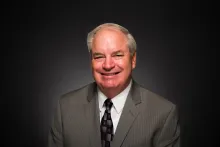
Robin Webber was born in Chicago, Illinois, in 1951, but has lived most of his life in California. He has been a part of the Church of God community since 1963. He attended Ambassador College in Pasadena from 1969-1973. He majored in theology and history.
Mr. Webber's interest remains in the study of history, socio-economics and literature. Over the years, he has offered his services to museums as a docent to share his enthusiasm and passions regarding these areas of expertise.
When time permits, he loves to go mountain biking on nearby ranch land and meet his wife as she hikes toward him.
