

Robin S Webber
This transcript was generated by AI and may contain errors. It is provided to assist those who may not be able to listen to the message.
Victor, can you help me a second? Because we're leaving some of these dear folks out over to my right. We're going to move this. This is a very fragile whiteboard, and it's looking a whole lot wider than it did about a half an hour ago. There you go. Thank you. That's fine. Yeah. That way, your vacancy. Okay. You have to pray that this whiteboard is going to stand for the next five hours. No, it's just teasing. It's very fragile. Would you like to jot down with me? A few things here?
Sometimes you read a book and you go to the conclusion because you want to know who done it. That's kind of what we're going to do in this message. We're going to go right to the conclusion, and then we're going to work our way back. One of the purposes why we communicate the gospel in services is not only to share to you, perhaps, what to think, but how to think, how to understand Scripture, how to study it. So often in Scripture, and especially in the writings of the Apostle Paul, it is often given in a rhythm and a cadence. We often say that if God mentions something once, that's pretty important to take note of. Imagine if he says it two times or four times within the course of just a few Scriptures. I'd like to jot this down for you for a second. First of all, we have two references basically of in him. I'll explain that as we go along. These are thoughts that I'm going to want you to go out with in the course of Sunday, Monday, Tuesday, Wednesday, Thursday, and Friday to come. You will have to know that our source of power and strength is in him. There's another element here of two that comes on that is fascinating. The Scriptures that we're going to discuss is to put on. It is to put on. Very important. Put on. In the beginning, you say, well, where is this? That we're going? What chapter of the Bible is that? Well, we're going to talk about that in a moment. Then there's four. Four times something is mentioned are very important that we need to understand.
That is just simply to stand the importance of standing. The last cadence or rhythm that we're going to notice and where I'm going to be taking you in a moment. I'm trying to get your curiosity up a little bit. That is the importance of prayer.
If you'll jot that down, we're going to do real well together as we explore the Scriptures. The Scriptures that we're going to explore basically expand upon a certain wording that we just heard in that beautiful hymn called, Abide with me. Maybe it stuck out in your mind or in your ear when you heard it, where it said, I fear no foe. That's why God gives us Ephesians 6. Join me if you would there for a moment. Ephesians 6, a glorious epistle. God breathes through the Apostle Paul. Let's go to Ephesians 6 and let's pick up our basic text for today, or at least begin it, and then we'll expand upon it. Finally, my brother in Ephesians 6 and verse 10, Be strong in the Lord and in the power of his might. Put on the whole armor of God, that you may be able to stand against the wiles of the devil. For we do not wrestle against flesh and blood, but against principalities, against powers, against the rulers of the darkness of this age, against spiritual hosts and wickedness in heavenly places. Therefore, take up the whole armor of God, that you may be able to withstand in that evil day, and having done all to stand. So, in the course of this text, there is instruction, there is admonition, and there is encouragement. But why is the Apostle Paul encouraging the body of Christ in the book of Ephesians to stand? Because of the glorious, incredible, wonderful privilege that God has given us. Join me over in Ephesians 1, just for a moment, Ephesians 1, to understand what our destiny is now and in the future, and to recognize what God is granting to those that are in the body of Christ. In Ephesians 1, and let's actually pick up the thought in verse 16, and that he might reconcile them both to God in one body through the cross, speaking of the Jews, speaking of the Gentiles, speaking frankly of all humanity, thereby putting to death the enmity, and that he might... Enmity, verse 17, and he came and he preached peace to you who were afar off into those who were near, for through him we both have access by one Spirit to the Father. Now therefore... It's always important when you see a word like therefore, because that's like a drumroll. That's like the sound of a trumpet. You have to be prepared for what's going to come forward. Now therefore, you are no longer strangers and foreigners, you're fellow citizens with the saints, and members of the household of God, having been built on the foundation of the apostles and the prophets, Jesus Christ himself being the chief cornerstone, in whom the whole building, being fitted together, growing into a holy temple in the Lord, in whom you are also built together for a dwelling place of God in the Spirit.
This is a wonderful revelation that God gives us. He tells us those that he's calling into the spiritual organism, called the body of Christ, are given a three-fold opportunity. You might want to jot it down. Number one, we have a citizenship. Not on this earth alone, but we have a heavenly citizenship. We are a part of a new society and a new order founded on Christ.
Ruled by God the Father, secondarily, it says that we are the household of God. We are members of the family of God, the household of God. That name, His name, a name above all names, is written on us. Number three, those that are members of the body of Christ, then, are also incredibly called a temple. That God is taking fleshly timber and stones down here below, and is developing, molding together, fiddly framing in place, a temple, no longer in Zion, no longer built of mortar, not Solomon's, not David's, not Zerubbabel's, not even the Herodian temple, a new creation, a new temple that He is going to dwell in.
May I make a comment? Such high sleep stakes, spiritually speaking, such a glorious future. And God sees things as if they already are, and He spreads that out through the book of Ephesians. But then He comes to Ephesians 6, because while He is our God, and Christ is His Christ and our Savior, and the end of the church, He wants to remind you and me about a foe that is down here below, that wants to challenge Him, always has, and desires to challenge us, and always will, until our last breath.
And so He wants us to understand what is going down here below, and thus He gives us Ephesians 6. And it is through Ephesians 6, 10 through 24 that I want to take you. My focus is not to keep the spotlight on the adversary, on Satan alone. The spotlight is always on God and what He is doing in us and through us and by us and for us.
But we do have to recognize what's happening here below. Since the time of the Renaissance, then the Enlightenment, man has basically divorced himself from thinking of the spiritual. It's gradually occurred over the time of history. Man basically thinks that he is the ruler of his own destiny, that we are down here below. God's coming out of evolution, where we make our own rules, where we make our own destiny, where things will only get better if time goes on.
The Bible gives us a different story. It shares with us a wider vision of what is happening, to recognize that there is also a spiritual world that is around us. And that is why God, again, gives us Ephesians 6. We've talked about the destiny. We've talked about our calling.
Some of you right now are in the midst of moving towards baptism. Some of you have been in this way of life for, shall we say, decades, if not scores of years. But all of us, whether we're at the beginning of the pilgrimage or towards the end of the pilgrimage, we always need to be reminded of what's going on down here below and what God gives to us to be able to make the end of the pilgrimage with His help.
Let's notice verse 10. Some of you have heard messages before on the armor of God. They are all different, but they all move towards the same course that God is in charge. But I want to share some things that maybe you've never seen in the construction of the book of Ephesians, and particularly this area.
Notice what it says here, a verse that you might be very familiar with. Finally, my brethren. Sometimes in reading the book of Ephesians, it's almost like, okay, the end of the chapter and finally. Oh, by the way, there's one more thing that I want to tell you about. There's an adversary down here. Finally. If we take finally that way, it is not the best translation. It's better to put it henceforth.
That will set the course that we're going to go. Allow me to share this with you. Henceforth, my brethren. What Paul is sharing here is that there is going to be no cessation of hostilities from the first coming of Jesus Christ until His return. The war, the challenge, the struggle is indeed on.
God, it gives us so very much as we just described in Ephesians 1, but it does come at a cost. What is the cost? We can't earn it. We can't buy it. But one thing that we can do is we might want to jot this word down. We need to be vigilant. We need to be vigilant. In Ephesians 6, it shows us how. Finally, my brethren, be strong in the Lord and the power of His might. Be strong in the power of His might and in the Lord. This first verse is spoken with confidence. The victory is in place in the epistle of 1 John 3 and verse 8.
We won't turn there right now, but it says that part of the reason why Jesus came was to destroy the works of the devil, to destroy them. We're not used to that in this day and age, in the 21st century, with the wars that are fought since World War II. The last time there was unconditional surrender, where you know who won and you knew who lost.
Today we have these protracted wars. These are not political statements I'm making, but analytical and historical, that we have these protracted wars that go on and on and on. Finally somebody plants a flag and calls victory and goes home, even though there is no victory. Jesus came to destroy the works of the devil. 1 Corinthians 15 reminds us that He is the victor. He is the victor over death, over sin. So it is spoken with that confidence. Satan is wounded. At Golgotha, Jesus Christ struck a blow. At His death. Sin no longer has power over us, of and by itself.
We can be redeemed. Satan went a-reeling. But you know, for some of you that are hunters, that there is no beast that is more dangerous than a wounded beast, that knows that its time is limited, that is backed up in a corner. And so this is the thrust of Ephesians to tell us that we need to get ready, we need to be ready to understand the beast, to understand what is happening down here. Thus, and therefore, Paul opens up Ephesians 6 with this thought that there are two opposing forces, two different ways of life, two different ways of being, two different outcomes that we need to be aware of, and we need to take a stand.
We need to recognize that there is a war. We need to recognize that God is now with this glorious revelation regarding this new creation, this spiritual creation called the body of Christ, that we need to be vigilant. So it's a summons to the conflict. It's a call to steadfastness. He doesn't want us to go to sleep at the switch. It's very interesting that when you go to the beginning of the old creation, that which was in the dust of Adam and Eve, and they were in that garden, to recognize that in the old creation that the serpent, Lucifer, Satan, the adversary was there.
Paul is reminding us that in this new creation, as we head towards this new Eden, called the kingdom of God, by the way, are you with me? The serpent is still there, and he wants to nip at your heel. He does not want you to have what God the Father indeed wants for us.
So thus we come to this very simple point. Number one, stand in the Lord. Number two, pick up the armor that He has forged for us. And number three, all armor and all weaponry come from Him, and is to reflect Him and point back to Him. Simple point. We're in a battle. Remember what? In 1 Samuel 17, remember David going into Goliath? He's carrying the slingshot. He's got the five stones, not just one, but five. He's ready to do a little battle. And he says, the battle is...
Who's? The Lord's. So the Bible comes all together now, doesn't it, as we look at Ephesians 6. Finally, my brethren, be strong in the Lord and in the power of His might. Now, He's riding this, and then He looks up. He's in this house imprisonment, speaking of Paul. And there, in front of Him, or sitting down by Him, or perhaps even attached to Him, because that's often how it was in the Roman world, if you were in a house imprisonment, is a Roman soldier.
It is the living PowerPoint in front of Him. The image. He's looking at somebody. Think of it that way. He's looking at armor. And He begins under inspiration, then, to discuss not that Roman soldier's armor, but likens it to what God is desirous of giving us. And therefore, then He says, put on the whole armor of God that you may be able to stand. Now, it's very interesting.
You might want to jot this down. I'm not going to spell it out. But the word there is panoply. The word panoply in Greek means the full armor, the whole armor. Every bit of it. You are not just at ease. You're not just walking around the parade grounds, but everything that you would put going into war because you're going to need it.
It's called the panoply. Put on the whole armor of God that you may be able to stand. Now, this is very important. Some of you have seen some of the old movies out of the 60s, what we call the toga and sandal flicks, often made in Italy in the old days. Or maybe you have seen gladiator, or maybe you've seen Braveheart, the Scots, coming over the hill again at the English. And you see these thousands of men coming up against these thousands of other men on the other side that they don't like.
And what you have is you might have had five to ten thousand men at times. And can you imagine what's talking about is the impact point to stand. The impact point. Can you imagine, you know, we think of an American football, 11 guys against 11 guys in kaboom. But can you imagine the sheer force of thousands of men crunching one another, coming up against one another. And can you imagine trying to stand? Because if you didn't, you were trampled to death, or suffocated, or vulnerable to a spear shaft or a sword going in you.
To stand was to perhaps live. To have your feet or your legs knocked out underneath you. It puts you in a very vulnerable position. It is in that concept that I want you to forever remember what it means to stand. It is the crush of battle. It is the weight of what is coming up against us. Put on the whole army that you may be able to stand against the wiles of the devil. For we do not wrestle against flesh and blood, but against principalities, against powers, against the rulers of the darkness of this age, and spiritual hosts of wickedness in the heavenly places.
Very interesting. The word there, and sometimes we limit it, meaning when it talks about wrestling, and we know this is written in Greek, and during Paul's day we might think he's talking about being at the Olympic Games. This is not talking about gym wrestling at Gold's Gym. This is talking about the wrestling that occurs when 5,000 men come up against 5,000 other men, and there is wrestling, and you are fighting for your life. But more than this, we're talking more than a physical life. We're talking about our spiritual well-being. You do not wrestle against blood, but against principalities, against powers, and hosts of wickedness. Here Paul takes off the veil, takes off the screen.
Sometimes if you've ever seen those science fiction movies, these vessels out in outer space have a screen, and they appear invisible. Nothing can appear invisible. I thought it was funny. What happens is that you can't see them. God, through the Apostle Paul, takes away the veil and the screen to allow us to know what the foe is. There are three things that are brought out here. You might want to jot them down. It says that he is powerful. It says that he is wicked. And it says that he is wily. That means cunning. Let's explain that for a moment.
He is powerful. God, in His realm, in His way, in His wisdom and reasons, has allowed Lucifer, Satan, to maintain a certain amount of authority and power. And he does have one-third of the former angels, now demons, that are underneath him. So there is a realm. There is a dominion. It also says that he is wicked. He is evil. He is evil. That means he has no moral base. He wants to take your all for his cause. And any means justifies the end. He is not immoral. He is amoral.
He has no heart. He has no base. And he has every reason for in his mind, in his insanity, to not have you experience God's best, as described in Ephesians 1, 19-20. It also says, thirdly, that notice against the wiles of the devil, he is cunning.
So what Paul is telling us here, you have to know that he is wily. He is cunning. And you have to understand his strategies. And while you understand those strategies, you have to respect the power that is there. Sometimes people don't do that. There are stories in the Bible.
It actually takes place in Ephesus when there were the Jewish exorcists and the sons of Sceva. The seven sons of Sceva. If you've ever read that story, join the Jewish exorcist. And they were going to cast out a demon. Or demons, plural. I don't have the story right in front of me, but we'll get to the end in a moment.
And they go in there using Jesus' name as if it's a lucky charm. Well, if you read the story, what happens? It's like a cat and a dog in that house. And what happens is the seven sons of Sceva are cast out of that house by the individual that has the demon.
And if you read the story, it doesn't tend to indicate they had too much of the clothing left on. They went through a screening and shaving. And so right there, we have to recognize that it's only by being strong in the Lord and the strength in His might.
And it's not about us, it's all about Him. And to recognize that. And they are cunning. That means you have to know their strategies. When you think about Satan and his demons, it says that with Satan, different biblical scriptures, you might just want to jot this down, we're going to go real quickly. It says that in one case, he's like a lion, but he is subtle as a serpent.
So he's got the roar of a lion, but he's subtle as a serpent. It also mentions that he's likened to a wolf, but he can appear in sheep's clothing. It mentions that he is in this realm of darkness, but that he what? He appears as an angel of light. We also understand that he seldom attacks in the open. He wants to take those that have gone to sleep. He wants to take those that are weak. He wants to take those that are isolated from the flock.
And so we have to understand those strategies that are happening. Very important. Now we're setting this up. And the one thing that Paul is encouraging, after he's painted this glorious picture in the book of Ephesians, and the destiny of the children of God, the body of Christ. And God already sees us there. He sees things as if they already are. But the details still have to be worked down here below. And he says, you know, here's what you have to do, folks, is you have to know your enemy and do not underestimate him.
Do not underestimate him and know his strategies. Two of the greatest strategies that Satan uses is simply this. Number one, he likes to promote his non-existence. Wow! That's a great way of winning a war. Just promote your own non-existence and do your thing while nobody thinks that you exist. And that's what's happening today as the world becomes more humanistic, worshipping man, more secular, no mention of God.
Satan rejoices at that. They're not mentioning God, and then they're not mentioning me. And also, we need to be aware that also, for those that are in the body of Christ, spiritual amnesia, spiritual amnesia, going to sleep and forgetting that there is a foe that is out there. We need to understand that. That's why we go back to this major, major point, and why it's so important for you to understand Ephesians 6. Some people do not pick up the armor of God because they don't think that they need it. They think that they can do it on their own.
And therefore, right here, they lose the first two points. That we only have might and strength, and it is only in Him, not ourselves. There are other people that have a false sense of humility. False sense of humility, and that is simply, Oh, well, I couldn't do anything, or I shouldn't do anything, or I might be taking something out of myself, so I'll just leave it all to God. But that's not how God operates. That's not how God operates. God wants us to pick up that armor just as much as David picked up those stones in 1 Samuel 1740.
There were five of them. And why were there five? Because he was going to do everything that he could to bring down the foe of his people. And that's exactly the encouragement of this story that we find in Ephesians 6.
With all that said, therefore, notice what says, Stand therefore having girded your waste with truth. We're going to move right into it. If you'll look at this now, your picture that we had here, if you'll look at this right here on the right, you'll see this breastplate of righteousness, and you'll actually see the girdle or the belt of truth, which was a leather belt, and it had an apron down here to protect vital areas. And that's the belt that we're talking about.
And he's looking at that Roman soldier there in front of him. He says, Stand therefore having girded your waste with truth, and then having put on the breastplate of righteousness. Let's just say with the waste with truth. Gird your waste with truth. Put the belt on. Why was that so important? This was the first article to put on because it showed earnestness, that we are soldiers of Jesus Christ, and that we are prepared.
This leather belt was made of leather, and then it had brass on it, again, to protect those vital areas. That belt was so very important because what that belt did, oftentimes they would wear either... This would be somewhat of a loose fitting garb underneath here. And what that belt did, the belt of truth, it tightened up everything. It tightened up your garments. It tightened what you were putting on. Why is that important? Have any of you ever gone by a chair, or maybe gone by a door and snagged your soul? Or am I the only one? You're looking at me like I'm the only one that's ever done that.
Confession's good for the soul. What happens is this, is you know, you get snagged. Well, can you imagine getting snagged when you have 5,000 people that don't like you coming the other way? You've got to be mobile. You've got to be ready for the battle. You can't have your cloak and you can't have your tunic. It has to be tight. You have to be trim. You have to be ready to go into the battle. And it says here that it talks about the belt of truth. Very interesting when we consider that.
There's many things that can be considered when we talk about the truth and the belt of truth. And that is number one, that truth can be, in a sense, speaking of the Gospel, the truth of God's message. It does help. It brings everything into center play. It gives us a focus. When you know the truth about God Almighty and Jesus Christ, and you realize that He not only came once, but He is coming again in glory and power, that is the most incredible GPS that you can have.
Forget the one that's hanging up in your car. That's the direction. That's the compass. How many people today are looking at the problems that we have in America, the global problems that we have with terrorism, with the wars that are going around in the Middle East? When you think of the financial situations in America, much less Europe, people are discouraged. People are depressed.
They see no hope. They see no bright future. Every day a Christian wakes up and says to himself, I know that things are going to get better. I know that the Master went out of that tomb and it was open. There was a window to the future. He not only went out of the tomb, but He is coming back to this earth as King of kings and Lord of lords.
That's the truth that girds you. Pulls everything together when it seems like everything is flying in the wind. Right? That truth can also be that you are a person of integrity. You're a person of integrity. That people know exactly where you stand. That you are firm. You are the same yesterday, today, and you're going to be the same tomorrow because you follow the example of Jesus Christ. Let's look at this next point here where it says, not only this belt that ties you together, but then you put on the breastplate of righteousness.
Now, here we see the breastplate up here. If you look at your picture, the one to the right is one that was commonly used by the common soldier, which was more of leather. You see the Roman soldier with the drawn sword over here. He has a different kind of metallic armor that was there, and that was used later on in the third and fourth century AD. They actually used chain mail, much like 11th or 12th century Frank or Norman would use chain mail. You've got to realize that Rome was around so long that the armor changed. When your empires extend from five to six hundred years, uniforms are going to change.
But whether they change or not, what was the purpose? It was the breastplate. That breastplate had to have a certain strength to it because it was again protecting your vitals. It was protecting your heart. The breastplate of righteousness was protecting your heart. What's really interesting, if you'll join me in Isaiah 59 for a moment, Isaiah 59. Come with me there for a second. Again, this is a wonderful scripture to tie in with Ephesians 6.
It reminds us as members of God's army, as soldiers for Christ, that it's not our armor that is being granted us. It's the armor of God. This is a whole scripture set in Isaiah speaking of the Redeemer, speaking of the Lord of Hosts.
Then the Lord saw it and displeased him. There was no justice. And he saw that there was no man and wondered that there was no intercessor. Therefore his own arm brought salvation for him and his own righteousness. It sustained him. For he put on righteousness as a breastplate and a helmet of salvation on his head. And he put on the garments of vengeance for clothing and was clad with a zeal as a cloak. And according to their deeds, according he will repay them in fury to his adversaries and recompense to his enemies. Well, we recognize that this is prophetic about the Redeemer, about the captain of our salvation, about the armor that he wears, that then he gives to us. The Apostle Paul says, put on.
God is granting us this armor to put on because having done everything just to stand. Why is it important that the breastplate of righteousness be put on? That righteousness is not our righteousness. It's not us working ourselves up to the kingdom. It's not doing this and doing that. God has granted us his righteousness, his well-being, his righteousness, imputed it to us. And it cloaks us. It cares for us. And it guards our heart. The heart is everything. If your heart is not running, you're not running. When your heart goes, you go. If your heart is stabbed, you're dead. Like Rover, dead, all over. And that's where Satan with his power and with his cunning goes. He goes to our heart. You know, I was talking to Susan about some thoughts that came to my mind today. You know, when you look at warfare today, China, Israel, the United States, Russia, it's no longer dealing with ICBMs. It's no longer dealing with this missile and that missile. My missile is bigger than your missile. What the nations of the world now are doing is they're getting into the computer systems. They're injecting a virus. They're going for what we might call the grid. And we're not talking about football. They're going for the grids because if you can go to the computers and if you can get into the grids, you can't fire off anything. You can have all the armor in the world and you can have all the missiles like we did when I was a kid growing up in San Diego here. Getting underneath my desk for a nuclear war grill. Remember those? Like that was really going to help. Ilamesa, 10 miles away from, you know what? We'd get underneath our desk.
They would always define it. This is not an earthquake drill. This is going to be a nuclear warfare grill. And you need to do this. Well, we know the folly of all of that. I don't think any of us realize the extent of thermonuclear war at that time. We haven't seen enough science fiction movies yet. Many of you that were in San Diego back in 62 at the height of the Cuban Missile Crisis don't realize the challenge that we had being here in San Diego. If anything was going to go up, it was going to be San Diego. Not us. It was Norfolk over in Virginia.
The point is this. We have a grid inside of us. We have a grid. And that's what Satan wants to get to. He doesn't get to the point of, now, now, so and so, I want you at 3 o'clock this afternoon, I want you to get into this attitude or this mood. I want you to begin thinking of this person, or I want you to do this or that. You will now take 100 steps to the front. You will go to the left. You will go through that. Satan does not work with a list that way. He operates as the prince of the power of the air in moods with attitudes. And he gets to us. He wants to get into our hearts. He wants to get into our grid. Because if he can get into our grid, then everything else follows in line. Join me if you would in Romans 8.
When the righteousness of God is imputed to us, we have that breastplate of righteousness. We have been accepted, as it says in Ephesians 1.4, we have been accepted in the beloved. And therefore, that breastplate of righteousness does protect us and keep us. In Romans 8, if you're there, I'm there now. Let's notice what it says. Because these moods and these attitudes begin to affect our heart. Let's look at verse 31.
Well, we know that Satan does. He did with Job. He does with others. Who shall bring a charge against God's select? It is God who justifies. And when we are justified, as it says in Romans 1, we are accepted. We are approved of God through Christ. Who is he who condemns? Who tries to get into our minds, to mess with our hearts, to mess with our attitudes? Who is it that condemns? It's Christ who died and furthermore is also risen, who is even at the right hand of God, who also makes intercession for us. Then another gridlocker happens. Who shall separate us from the love of Christ? When we wear that breastplate of righteousness and understand that if nobody else in this world loves us, God loves us enough that he gave a son for us.
And if we accept that in faith, and if we truly believe that, that breastplate of righteousness is going to defend us. Does it mean that Satan is not going to try to get into our head, try to worm his way into our heart?
Remember, the whole lesson of Ephesians 6 is having done all of this just to stand, not to go skipping like a lamb.
Let's notice what else it says here.
And having shod your feet with the preparation of the gospel of peace.
Footwear was incredibly important to the Roman army. Armies march on two things. Food and shoes.
No food, no march. No shoes, no march. No food, no shoes, no victory.
That's actually how the Battle of Gettysburg began.
Armies were looking for shoes, and they'd heard that there was a shoe factory in Gettysburg.
That's how the greatest battle on American soil occurred. Armies were looking for shoes.
Now, let's take a look at this for a moment. It says here, notice, it says, having your feet shod with the preparation of the gospel of peace.
What did Jesus say in John 14 on that last night of his human life?
My peace, my peace, I am going to give to you. My peace.
That you are able to, even in the midst of a storm, understand that we're not abandoned.
To understand that there is hope. To understand that there is a future.
To understand that even if God does not take you out of that situation, He will give you the armor, He will give you the help, He will give you the wherewithal, He will give you the spiritual aid, the aid of the Spirit, the aid of Scripture, and the aid of friends.
To help you.
Remembering that Christianity is not about transference of life's situations, but transformation of the situations that each and every one of us are going through in life.
Have you ever noticed—maybe I've noticed, hope you have— have you noticed that life does not give a time-out to Christians, or am I the only one?
There is no time-out.
As a Christian, you're always on the court of life. It doesn't pass you by, it hasn't passed me by.
You thought, well, I thought pastors had to fly by. No?
It happens to each and every one of us.
And God says that He's going to give us our peace.
Join me in Philippians 4.
In Philippians 4—and let's pick up the thought.
Philippians 4, verse 6.
Be anxious for nothing, but in everything, by prayer and supplication with thanksgiving, let your request be made known to God. And the peace of God which surpasses all understanding.
What does that mean?
Let's get right down to the common denominator, what I call low-angle of Saxon talk here.
And that is simply this.
The peace of God is better than the facts that are on the ground.
It's better than what you're looking at.
It's better than what you think is surrounding you for the moment.
You fill in the blanks. Marriage, economy, neighbors, children, adult children.
That battleground that's between our two ears, which is bigger than any world war theater that ever was.
This is happening here.
It says there's a peace that passeth all understanding.
The peace of God.
Better than the facts.
We'll guard your hearts and minds to Jesus Christ.
Now, when it says that our feet are shot with the gospel of peace, what Romans did, if you want to look up here, what Romans did, and you can look at your thing here too, what they did is they had studs that were underneath their sandals or underneath their boots, just like a golfer.
Just like a golfer.
You have those studs.
Because, you know, when you're about to make that fantastic shot, you don't want to slip.
And if they couldn't afford those kind, what they did is they actually took nails and nailed nails into their boots or their sandals.
Because they had to be firm.
They had to hold their ground.
Because you're going to have what? To stand.
You're going to have that force come at you.
There is going to be a force that's going to be coming at us Monday, Tuesday, Wednesday.
What day do you want to pick? You can't pick it, because you never know when it's going to happen.
That's why we have to always be constantly vigilant that we have those studs in our feet of the peace of God, knowing that what we're going through is better than the facts that are on the ground.
Notice then what it says here.
Because now we're going to move. We've dealt with the belt.
We've dealt with the breastplate. We've dealt with the shoes.
That is what soldiers normally wore, even when they were in the barracks.
But remember, Paul said, put on a dress. That's the panoply.
Now we're dealing with those elements that we take into battle with us.
Because I want to share something with you that's very important.
Let's go back to the other side of your page here.
This is the famous tortoise formation.
The famous tortoise formation that Romans used to advance into armies and horde cities.
You don't do that overnight.
You try to do it overnight, it'd be like a bunch of spaghetti and you'd be clanging shields.
This takes practice. This takes time.
The armor of God was never thought of to be just simply for the individual, but that the body of Christ, together, and it always starts with one, but the body of Christ together is putting on the belt, is putting on the breastplate, is having the proper equipment to hold us sturdy.
And then what we're going into, what does it say in Ephesians 1? Are you ready?
That God is putting together the body, fitly framed together.
Look at that picture. Just look at it in front of you.
Fitly framed together.
God's intent was always that each member of the body of Christ would do their part, to do their share of what every joint supplies, so that we are not only protected for ourselves, but that together as a unit, the army of Christ, the body of Christ, could move together. In doing this, it fulfills what Jesus said, that even the gates of hell shall not prevail.
Does it begin to make sense as we see all this together?
And thus, let's finish what we have here for a moment.
It says, And having taken the shield of faith, with which you will be able to quench all the fiery darts of the wicked one.
Now, if you look up here for a moment, the shield of faith is like this Roman soldier has here, and or the one that you have on the left at the bottom, and or if you look over here, what they have in the tortoise formation.
The shield was not one of those ghoulish...
I didn't say ghoulish, I said ghoulish.
Speaking of the folks in ancient France, it wasn't just a little round shield, but it was a shield that was basically four and a half feet long by two and a half feet wide.
It was there to protect you at every angle.
From the fiery darts that would come.
Those fiery darts would be lit.
There would also be some kind of fuel or agitation on them to keep them lit.
And what the Romans would often do is they would put their shield, first of all, into water.
Why do you put the shield into water?
Al knows the answer. He's nodding.
Why, Al?
Doubts the flame. You get it? What?
Isn't it interesting that our faith is doused from the flame?
The fiery darts of Satan by dousing into the water of the Word?
The water of the Word?
Because those fiery darts on Monday, Tuesday, and Wednesday, and what day we do not know, are going to come at us.
The faith that is being talked about here is not a rolodex of doctrine, and doctrine is a port. Absolutely.
The faith that is being spoken of basically here is faith and confidence in the purpose, the plan, the promises, and the provisions of God.
Paul always brings it about in the aspect of in Him, in Christ, of Christ, by Christ, for Christ, with Christ, through Christ.
To live is in Christ, and even to die is in Christ.
He is the captain of our salvation. He leads the army of God today, and is going to lead it again if you read the book of Revelation from Heaven with the celestial host behind him.
It is confidence that God's Spirit will never take us to where God's grace cannot keep us.
And to have that confidence, recognizing that we put on that breastplate of righteousness, recognizing that we're accepted, that we are approved, that God did not give His Son to us and for us to see us fail.
That at all times, as the general, God the Father, He's looking down. He knows exactly what He's doing. Jesus Christ knows exactly what He's doing.
And we have that same faith that as we read in the book of Acts, when Stephen is a lion on the ground and he's about to be stoned, he says, I commit my Spirit unto you, and he looks up and he sees Jesus Christ at the right hand of God, cheering Him on. That's the faith. That's the shield of faith that you and I need to go into life every day.
Here's what it says here. Then it says, and take the helmet of salvation. A helmet protects your head.
The adversary, the foe, wants to mess with your head.
Can I use a 60s language? That's my generation.
It's my generation, for those who remember the song.
He wants to mess with your head.
He tried to even mess with Jesus' head. In the wilderness, if, if, you know all the ifs, if and ifs, and ifs.
Have you ever noticed that people that try to tempt you and take you away from God, they never say something's going to happen. They just say, well, I wonder.
Where is this leading? Where is this going?
Perhaps this will happen. And what if? See, the foe deals, you have to owe his strategies.
He's a coward. He doesn't tell the truth.
So he deals with ifs, deals with trying to demean your position before the throne of God, which trumps any condition that's on the battlefield down here below.
When he says if, you know what that if is? It's just nipping. Just kneecapping you, trying to make you not stand, trying to take you out of the battle, trying to take you out of the fray, trying to move you away from supporting the other members of the body of Christ by kneecapping you. He doesn't have to kill you.
He knows you'll do that to yourself once you lose your footing. Once you lose your footing.
Once it comes up and underneath you because of doubt, because of insecurity. That is why it is very interesting. If we go to the whiteboard here, two times it says, You be strong and your might is in the Lord.
Every bit of armor that God gives us is directed back up to him and reflects him.
And he says, you have a choice. You can try to do this on your own. I do really suggest not to do that.
And or you can put on. Doesn't it sound like Colossians? Colossians 3. Put off, put on, put off, put on. This one you want to keep on. Number four, he says, you've got to stand the vigilance.
I hope I'm waking some of you up here today. You've got to stand.
Not stand on your own two feet, but stand in his might. Stand in his power.
Stand in the water of the Word. Stand.
Let's notice also what it says here. And with the sword of the Spirit. Very interesting that the sword is used. We think of the Word of God, Hebrews 4, verse 11, verse 12.
That the Word of God is sharper than any two-edged sword.
And to recognize that it is the only offensive weapon that is given.
It's very interesting that a Roman sword was used both offensively and defensively.
Therefore, the wisdom of God's Spirit in us allows us then to understand when we need to use it defensively and when we need to go on the offense.
The Bible says, Jesus' words, turn the other cheek.
But last time I noticed there's only two cheeks.
So there's a time when you take it and not just react violently, because that's what our Lord told us to do.
You need to be willing to suffer. You need to be able to turn the other cheek.
But there also comes a time when, as a Christian, you need to go on the offense.
Can we talk a moment? I think sometimes we as Christians are very passive in nature.
And we don't need to be.
The Word of God, the sword of God, allows us both to defend the Word but also to spread the Word.
And not to just simply be retreating, but remember the whole focus of Jesus' words is that even the gates of hell are not going to be there.
They are going to prevail. The Word of God is also an instrument for offense.
Now, what I want to do is I want to conclude here. I'm just going to go about seven minutes.
I don't get to see you but once a month. And I want you to understand this. And then we're going to conclude.
Very interesting. We've gotten all the field equipment. The whole panoplay.
It's kind of a fun word to say. The panoplay.
The whole armor of God. That is running dust for the battle. But there's one thing that's missing.
You can be the best soldier. But if your communication is cut off, you are going to be a dead duck out in the field.
One thing I learned as a ballplayer, and I have kids. I was a ballplayer at one time, high school and college.
Is that one thing that you learn as a ballplayer is simply this. You've got to communicate.
You can be the best player in the world out on the court. I was not. I just tried harder.
But you can be the best player out on the court. But if you're not talking, if you're not working as a team, if you think you're doing it all on your own, guess what?
You're going to wind up like the Lakers did last year.
That's a political comment on basketball. You have to work as a team. You have to communicate.
Here, then, comes at the end. The armor of God is on. We have been encouraged to stand in Him.
We've been put on this armor that is granted to us by God. The same armor that is mentioned in the book of Isaiah, chapter 59.
We're told to stand and stand and stand and stand. It's so important.
But now comes the communication quickly. Let's look at it. It says here, Praying always with all prayer and supplication in the Spirit.
And watchful to this end with all perseverance and supplication for all of the saints.
Now, that's easy to read, but there are actually four major points that are brought out here.
The one thing is that to be able to be in Him, in the strength of His might and in His power, we have to be talking above and not just simply below.
And recognize that there are four major points that are brought out here.
Notice what it says. Praying always.
Number one, if you want to take notes, number one, constant, constant.
Praying always. If you're in a battle, and you know where the information is coming from that's going to help you, you are going to be in constant contact with that source.
Battles, in Roman battles, Battle of Canay or Battle of Lake Trasimene or Battle of Zama over in North Africa, constantly shifting. Wars change. There's called a fog of war.
Everybody has a plan and then you hit. And once you hit, payload, everything changes.
Well, sometimes we're ready to go in with all of our armor. We've got the belt, we've got the breastplate, we've got the whole kit and caboodle on.
But Satan's tactics can change, or situations change on the ground, or you need encouragement from General Headquarters up above.
You need to, number one, be constant in prayer.
Number two, let's notice what it says, with all prayer and supplications in the Spirit.
That means, by all means, that means intense, intense.
Supplication, by any means. There is prayer and then there is supplication, where you're asking God to supply the munition. Supplication means where you break down your prayers like so much incense. You're familiar with that Scripture out of the Bible. Where you break down your prayers so much.
Supplication is where you break down the prayer and you are specifically focused on maybe one situation that's happening here in the San Diego congregation.
Or one situation that's occurring in your family that you need to go to the Commander-in-Chief about. So, number one, we are to be constant in prayer.
Number two, we are to be intense in every means to bring our supplication to God.
Notice this, and it says, being watchful to this end with all perseverance.
We are to be persistent. We are to be watchful. We are to be on guard.
Jesus Himself said, watch you therefore and pray always.
There is a vigilance when it comes to being a soldier of Jesus Christ.
And supplication for all the saints.
Prayer must be unselfish. We must be praying for somebody else other than to God and with our want list. Allow me to repeat that again.
This can change my life and your life as soldiers of Jesus Christ.
Our prayers are to be constant. Constant.
Constant. Number two, intense.
Breaking them down by any means. Communicating. Number three, persistent.
Persistent.
And number four, unselfish. Praying for all the saints. In fact, it's very interesting. Notice what it says then, because this will tie in with, abide with me, and that I fear no foe.
Paul says, and by the way, folks, you didn't really write that. That's not in the Greek, but here it goes.
And for me, pray for me, that utterance may be given to me, that I may open my mouth boldly to make known the mystery of the gospel, for which I am an ambassador in chains, that in it I may speak boldly as I ought to speak.
There's two things that Paul asks for, and I'd like you to jot these down if you're serious about having heard this sermon and want to do something.
Here's Paul. He's written about the armor of God, being tied up to and or looking at a Roman soldier with the full panoply on.
He is not asking God to take him out of the situation.
Paul looks at himself not as a prisoner of Rome, but as a prisoner of Jesus Christ.
God is always involved in every situation of his life.
And there's only two things that he asks for. Let's jot this down. He prays for clarity, and he prays for courage. It's pretty simple.
He prays for clarity and he prays for courage.
If by any means God can use me, allow me to pray that I might be clear with this incredible privilege that God has given me.
And by the way, not only that my lips are firm, but that my heart is firm.
Let's understand again, then, what Paul has been talking about as Paul has encouraged us to put on the armor of God.
That he asks this communication to be taken up to God for us, but he does not ask to be taken out of the situation room.
But ask that strength and communication from God, and that the armor of God, the belt of truth, that breastplate of righteousness, that helmet of salvation, that shield of faith, the footwork that God supplies us, that sword that He supplies us, that He might be using.
Brethren, in Christianity, we can forego the parachute.
Forgo the trap door.
When you look at Paul, and when you look at what God did with Paul, Paul did not ask to be taken out of the fray, but to be a soldier of Jesus Christ.
I hope this message has been encouraging for you today to be a soldier of Jesus Christ.
To recognize that God said that He will never leave us nor forsake us, that He gives us this armor.
But it has to be in Him. We have to make the choice to put it on.
We have to realize that even as we have the whole strength of God coming our way, that it's still going to be a challenge because of the forces that are out there.
That we can pray, that we can communicate to the Commander-in-Chief, communicate to the very head of this universe, that He will supply us our needs, that He will give us courage, that He will give us clarity.
And that if we do do that, then we can remember those words that are in that hymn that we heard today.
That beautiful, beautiful hymn, abide with me, in which it says, I will fear no foe.
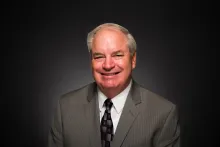
Robin Webber was born in Chicago, Illinois, in 1951, but has lived most of his life in California. He has been a part of the Church of God community since 1963. He attended Ambassador College in Pasadena from 1969-1973. He majored in theology and history.
Mr. Webber's interest remains in the study of history, socio-economics and literature. Over the years, he has offered his services to museums as a docent to share his enthusiasm and passions regarding these areas of expertise.
When time permits, he loves to go mountain biking on nearby ranch land and meet his wife as she hikes toward him.
