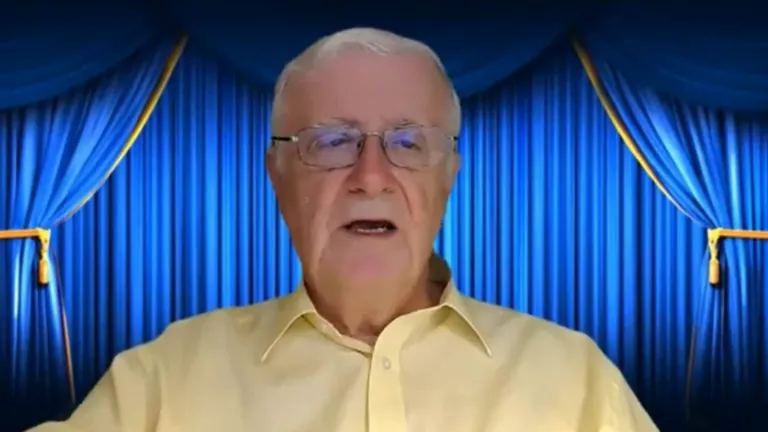

Robin S Webber
This transcript was generated by AI and may contain errors. It is provided to assist those who may not be able to listen to the message.
I'm just going to write four letters on the whiteboard. By the end of this message, I hope that these four letters will have more meaning than ever. There are letters that you know because I presume you all know the alphabet. It's not going to be in Greek. This is going to be in English. And you will also know what I'm going to put up. But at the end of the message, I hope that it will mean more than ever to you. You might want to jot these down in your own notes. Join me, if you would, as we continue the series on God's will for the body of Christ. Join me, if you would, and let's go to Ephesians 1. Sometimes people look at the Bible as being a mystery, and in one sense, it is. But you have to understand the Greek word that is used for mystery, which is mysterion, which is not a mystery like a whodunit kind of novel that you only find out at the end. When God uses the term mystery and or mysterion in the Greek, it's actually a revealing. It's an unveiling. It's not something that's coated way down deep in the bottom of a basement somewhere, stuck in a coffee can. But you and I think understand at the same time to recognize that God's Spirit must also lead us and guide us to understand the things of God. There's probably no clearer verse in all of Scripture than Ephesians 1, verse 9, that tells us exactly what the mystery is that God wants to reveal to humanity. Having made known to us the mystery of His will, according to His good pleasure which He purposed in Himself, that in the dispensation of the fullness of the times, He might gather together in one all things in Christ, both which are in heaven and which are on earth in Him. Thus we have plainly revealed who is in the will. I'm sure we've watched sometimes those old black and white mystery movies to where the will is to be read, and everybody wonders are they going to be in the will? Are they going to be mentioned? And or what did Uncle Harry or what did Aunt Tilly leave them? Or do they leave it to everybody else? Here we find clearly displayed in Scripture that God's will ultimately includes every human being that has ever lived. That His will, His desire, is that every human being ultimately might come together in Him through Jesus Christ. Now with that stated, let's understand something. The book of Ephesians then maps out what is God's will. What is God's purpose? In other words, why are we here? And that vision is displayed throughout the book of Ephesians. And there's three things that kind of keep on coming back again and again and again through the book of Ephesians. Number one, God does want us to remember our past. He does want us to remember our past. I'm not saying He wants us to remember everything that we did and all of our sins because again those have been put aside, those have been forgiven, and the judgment has been distanced from the act. But nonetheless, to remember our past before God began working with us. Number two, He wants us to understand our present hope, that we live a hope-filled existence because of God's will being worked out in our life. And number three, He wants us to view the future with optimism, with certainty, with confidence, not in ourselves but because of what He is doing.
Over the last several messages, we've come to understand that God's will for His body, the spiritual organism called the body of Christ, is to praise Him. And not only praise Him, but it's also to pray for others that their eyes might be enlightened. We've come to understand that we need to focus on the aspect that as Christ was and is, that in His life and in His death and in His resurrection, and now in His position before God Almighty, as He was and is, we too likewise shall be. And to have that confidence that if Christ has done this, the life, the death, the resurrection, the ascension, we then are reminded that our position before God Almighty at all times, all times, trumps any condition that is on the ground because of our access to His presence and experiencing His love.
Today, we're going to take a different step now. We're going to go a little bit further in understanding what the will of God is. To do that, let's open up our Bibles and let's come to Ephesians 2, and we're going to begin focusing on verse 11. We're only going to be covering 12 verses today, but I think these verses might have an opportunity as you hear them, as you understand them, to affect your life. Verse 11, therefore, remember that you once, Gentiles in the flesh, who are called uncircumcision by what is called the circumcision made in the flesh by hands, that at the time you were without Christ, being aliens from the Commonwealth of Israel, and strangers from the covenants of promise, having no hope, and without God in the world, but now in Christ Jesus, you who once were afar off have been brought near by the blood of Christ.
Key word that I'd like to begin with, to have you come into this message with me, because I hope it can be a mutual experience for both of us, is that we are challenged to remember. And that takes us back to verse 10 that we left off on last time. In Ephesians 2 and verse 10, let's notice what it says here, for we are His workmanship, created in Christ Jesus for good works, which God prepared beforehand, that we should walk in them. The one thing that Paul is saying, that therefore, therefore, always takes us back in the Scripture to where we were before. Therefore, what is the therefore? Therefore is in verse 10. It says here again that we are His workmanship. Now that's very important to understand, and a very key principle that I want to bring out today. Oftentimes, in Sabbath school or in other venues with our parents, or our parents taught us that there are how many days of creation? That's when the hand finger is supposed to go up. Seven! And so, so often we think that the creation is over. Done! Finny! Complete it!
But Ephesians 2 and verse 10 reminds us something, and it's powerful that the creation process is still occurring. We can go back and we can think about how God shaped the land and how He created the firmaments and how the green plants came up. And we can even go to the sixth day and we can think about God in a sense leaning over into the the red clay of Eden and molding and shaping Adam. And therefore, we think of the days of creation. And in a sense, we think of them past tense. We can think about even geographically in the southwest, we can think about the Grand Canyon and all of its grandeur and all of its color and all of its mass. And we can think about in that sense how God just kind of carved it and shaped it and molded it. And I would suggest that He lingered there for a while with creation. I think He got excited with what He was doing. But while I want to share a very basic thought with you today, God is still in the process of creation. Brethren, it is not over. And this is a very basic Christian understanding that you and I need to understand, that what God started in Eden is not yet complete. And we are reminded that it says in the book of Genesis where God said, let us make man in our image and after our likeness. God's purpose was revealed. The only thing that was simply from the clay of Eden. And the process is not over.
And what I'm speaking to you is going to be opened up here as we discuss Ephesians 2. And that is simply this that I want to share with you.
Of what we're going to understand about the will of God today has got to affect our life in the sense of recognizing that every human being, every man, every woman, and every child, every person on this earth demands our respect, demands our prayers, because they are made in the image of God.
That alone is enough for us to contemplate a change of thought and a change of mind in the year 2011, about to go into 2012, as to how you and I interact with people. We'll say, well, I already knew that. I knew that, you know, you know, we're not from guerrillas. We're made in the image and the likeness of God. We know that. We think of that in the past.
God is still working on us, and He still has a will and a purpose for every human being that is now alive. And we must understand that we have a part, and we have a role in that. And the reason why God the Father sent Jesus Christ to this earth is so that every human being could have an opportunity and have access to Him. The difficulty is that man too often has gotten in the way. Both those that are without God and those that think that they're doing God a service, have at times thwarted the will of God, as revealed in the book of Ephesians. That's why here it says, remember, remember that God is at work.
We don't have an absentee landlord.
We don't have a cosmic couch potato. God is actively about His will.
And remember, the walk that you were in. Remember last time in our message, we covered there were two different walks. There was the walk where God first met us and tapped us on the heart and said, I want you to go a different direction. And then the walk that we accepted as one that had been redeemed and one that said that we had surrendered our life to God and we were no longer going to be our own person. That God Almighty was going to own our past, He was going to own our present, and He was going to own our future. And we surrendered our lives to Him. We are to remember that, as I said, point one, we are to remember our past. Therefore, remember that you once Gentiles in the flesh who are called uncircumcision by what is called the circumcision, made in the flesh by hands. Paul, even though he is an apostle to the Gentiles, speaks and shares his familiar former roots in Judaism. And what we have here, uncircumcision and circumcision. God so often instructs us by contrast. It shows us a difference. But the mention of uncircumcision is more than just simply an analysis of male anatomy. Uncircumcision versus circumcision had become a handle for hatred and had created walls between people.
That was horrific in that day, and maybe in a sense, in a way that we don't even understand in modern-day society. And it was both the Jew to the Gentile and it was also the Gentile to the Jew. It's kind of interesting. I'd like to read a moment from William Barkley. He talks about the aspect of how the Jews viewed, that would be the circumcision, viewed those that were uncircumcised.
The Gentiles recalled the uncircumcision by those who laid claim to that circumcision, which is physical, which after all is a man-made thing. This was the first of the great divisions. The Jew had an immense contempt for the Gentile. They said that the Gentiles were created by God to be fuel for the fires of hell, that God loved only Israel of all the nations that he had made, and that the best of the serpents crushed the best of the Gentiles killed. It was not even lawful to render help to a Gentile woman in childbirth, for that would be to bring another Gentile into the world. The barrier between Jew and Gentile was absolute. If a Jew married a Gentile, the funeral of the Jew was carried out. Such contact with a Gentile was the equivalent of death, even to go to a Gentile house rendered a Jew unclean before Christ.
B.C. Before Christ, the barriers were up. After Christ, after death, the barriers were down. Greeks, on the other hand, were just as guilty. Just as guilty.
The Greeks used a word that you and I are very familiar with. The word is barbarian. It's a Greek word. Barbarian was a term that goes back 2,800 years, which meant anything other than Greek. It was used as a derogatory term. It was used as an epithet. It was used as a cursed term.
And it was often used in the sense of bestial nature, that which is less than human. It's interesting that one of the greatest philosophers of all time, Plato, said, Barbarians are our enemies by nature. And this is a situation that the early church faced. This is the world that Jesus Christ came into at a set time to declare that the kingdom of God is at hand and the time is fulfilled and repent and believe the gospel. Man was apart from one another. There was a division. There was a wall. There was a wall of paganism to the people of God. And the people of God that had been given birthright, had been given divine privilege, had been given promise, turned that promise and that privilege into bigotry and separateness and disdain. The same people that had been called out of Egypt as slaves.
Now look at others as being inferior. This is the world that Jesus Christ entered.
This is the world that the Apostle Paul was sent out to. This was the world of B.C. in contrast to A.D. that something occurred right in here where that line is before and after. And perhaps one of the great words out of this set of scriptures. And now I want you to realize as we're going along that we're not just going to be talking about Jews and we're not going to just be talking about Gentiles. We are going to be getting to you because we all have a little bit of the Jew and we all have a little bit of the Gentile in us because both had human nature. And Ephesians 2 speaks to me, speaks to you on this the last day of 2011. For at that time, speaking to the Gentiles, you were without Christ, being aliens from the Commonwealth of Israel and strangers from the covenants of promise, having no hope without God in the world. Imagine, here we find Paul speaking to the Gentiles that were in Ephesus, telling them that they basically suffered from a double alienation. It's bad enough to be alienated at once. Can we all agree on that? I can. No, thumbs down once is probably enough. Thumbs down twice. Uh-oh, we've got problems. Houston, we've got a problem. They were, number one, alienated from the Commonwealth of Israel. They were not even included as a part of the people of God. Number two, Paul says, you were without God. They were alienated from this special people that God had poured out His law and blessings upon. The same people that God said, I will be your king. I will be your God and you will be my people. What a tremendous privilege. And yet, that was not the Gentiles' world. You notice what it says here, and strangers from the covenants of promise. It's very interesting when you think of Scripture and you think of Israel and you think of the Jewish people down to our day and our age, that they continue to read the promises of God from the Old Testament. No matter what happened to the Jews, whether it be back to the time of Nebuchadnezzar, to the time of Esther, to the time of the fall of Jerusalem, to the revolt of Barcofa, to the ghettos of Eastern Europe, to the Holocaust of World War II, they were not strangers to the covenants of promise. No matter how difficult life was, no matter how many of your relatives were taken away from you in a pogrom, in the Ukraine, or in Russia, or Poland, there was always hope. There was always light at the end of the tunnel, for in the Jewish mind, Messiah had been promised. That was not the case for the mind of the Gentile.
History was bleak. It was pessimistic.
While as life might be dark for the Jew, and looking down the pipeline, and looking down the tunnel, there was light. There was no door. There was no hope. The gods were chasing them. The gods were down on them. You could not be a friend to a god of old. You could only appease them, so that they might leave you alone. That was the religion of the Gentiles. There was no hope. It was darkness. It was bleak. It was negative.
Consider it for a moment. When you think about the state of the Gentile, number one, they were separated. Number two, they were alienated. Number three, they were strangers from any form of promise.
No hope. Paul's commentary on the world, no hope. No God. It's interesting that John Stodd, in his commentary in Ephesians, quotes William Hendrickson. And Hendrickson puts it this way. They were jot this down, if you would, be so kind. Because we're going to be having a kingdom of God seminar in three weeks. We're going to be talking about the kingdom of God at hand, the time fulfilled, repent, believe what we're talking about today. There was a time when the world was Christless, was stateless, was hopeless, was friendliness, not. And they were godless.
Paul, through God's inspiration, took the temperature of the world, and it was ablaze. Both of those that were without God, and those that thought that they were doing God a favor. Notice verse 13, but now, in Christ Jesus, you who were once afar off, have been brought near by the blood of Jesus Christ. Join me if you would in Psalm 148.14. Psalm 148.14. This was a favorite phrase out of the scriptures of the community of God. Psalm 148.14.
And he is exalted the horn of his people, the praise of all of the saints of the children of Israel, of people near to him. Praise the Lord. But Paul was speaking to the Gentiles that had been afar off. Here is an endearing term. But now, in Christ, they are brought near by his blood. They can now have a new view of history.
Let's consider that for a moment as a congregation.
Because these words don't only speak to the Gentiles or the Jews, but they speak to you and I today, Americans, in 2011. Do you and I have a personal, different view of history before God the Father invited us into this way of life? Has our view of our personal history, of the history of man, of the destiny of man changed from what it was BC? Before we were without hope, hopeless. Before we were without Christ, the greatest gift of God the Father, Christless. Before we had any roots and we were tossed and turned by the whims and the fancies and the sensuality of the society, prompted by feelings, lust of the flesh, lust of the eyes, pride of life, tossed to and fro.
No hope, no future. We look at humanity today. We see what's happening in the United States. We see the troubles all around the world. You open up the newspaper. There's nothing but despair. You and I have been given a new window and a new outlook on history. We recognize that humanity is not headed for disaster, but is headed for God's purpose and for a destiny to have what started and eaten to be fulfilled in the future, as God calls each and every one of them. But now, in Christ Jesus, there's a difference between the walk where God found us and the walk that we're supposed to be on now. The power of this verse is now. And I want to ask you, friends, because we're just reading the Scriptures today, what is the now like in your life? The now. The now in your relationship, not perhaps the circumcised or uncircumcised, but the now with the people that are around you. Have the walls come down or are walls being put up. Walls in the body of Christ.
Walls between husband and wife. Walls between adults and their children. Older adults and their adult children. Employers, employees. Members, participants within the body of Christ. With Christ, the walls come tumbling down.
For we will understand why in a moment. For He Himself is our peace who has made both one and has broken down the middle wall of separation. What does that mean, the middle wall of separation? If we're not understanding what this was, we will understand it in a moment.
In ancient times, in the Herodian temple, we might call it the second temple. In the Herodian temple, many of you have seen pictures of it before. It was kind of upon what we call the Temple Mount. And there was Herod's great temple, one of the wonders of the ancient world. But there were many, many courtyards around it. And it's very interesting that you had the temple, and then next to that was what was called the Courtyard of the Priest. And then beyond that, there was the Courtyard of Israel. And then beyond that, there was the Courtyard of the Women. Now, what is interesting is that all of these courtyards all had different walls. And as you got closer to the temple, the higher the wall was. But for the Gentile, the Court of the Gentiles, the Court of the Gentile, you had to walk down to, go through another wall, then there would be that court. The Gentile, in other words, could always look up to God, but could never go in. Interesting. And that there was a sign over the door of the court going from one courtyard to the other, and it was both in Latin and Greek, in case somebody didn't read one or the other, that says, you enter on pain of death.
This was the middle wall of separation. This was not a device that you read in the Bible. This was not what you see in the tabernacle in the wilderness, where there was simply a tab... there was certainly a curtain around the tabernacle. And there was only one door in, right? If you've ever seen the picture, there's only one door, which would personify 1500 years later, that there would only be one door to God. Jesus Christ saying, I am the door. I am the gateway. But there were not all of these divisions. There were not all of these walls that had been put up of people thinking that they were doing God a favor, and walling out a part of His creation from Him.
I have a question for you, please, and I hope it's a penetrating question. How many walls are you, as a member of the body of Christ, putting up in your life today?
And you have a sign up there, as loud and as clear as our ancestors put up 150 years ago in the streets of Boston and New York. Irish need not apply.
What man does, of and by himself, even at times when he thinks he's doing God a favor, man puts up neighborhoods with people just like themselves. Let's understand something about the will of God. Let's shut it down if you're serious enough. The will of God is not about putting up neighborhoods. It is about brotherhood. It's not about putting up neighborhoods. It's about brotherhood and respecting and praying and hoping and asking that God will bring more members into the body of Christ as it is His will, in His perfection, and in His time to give people hope, to move their hearts from bleakness and despair to enlightenment and to hope.
For He Himself is our peace, who has made both one, both the Jew and the Gentiles, made one, and has broken down the middle wall of separation, having abolished in His flesh the enmity, that is, the law of commandments contained in ordinances, so as to create in Himself one new man from the two, thus making peace. Now, people often put a mistaken notion on these verses. They read this, and therefore they say, well, will Christ did away with the law? Plain and simple. Put away the enmity. That's not what's being spoken about here. This is speaking of the one who is our peace, the same one that came in Matthew 5, 17 through 19, and says, get it, folks, I have not come to destroy the law and or the prophets, but I have come to magnify. I've come to fulfill.
This has nothing to do with the moral law of God, but it does have to deal with the ceremonial. Not only what was prescribed in the Bible, but later on what was added in Judaism by people thinking that they were doing God a favor, that if you do this, and if you do that, if you do this, and if you do that, and if you go by our book, and let's say, you're looking pretty good, and they looked at the outside, when Jesus Christ came, He fulfilled all that had been in the ceremonial law. His sacrifice encompassed all the sacrifices that are mentioned in the law, and He satisfied that. He also satisfied that penalty that you and I so richly deserve for having broken God's moral law, and He satisfied that, that enmity, that which comes between us and God, the curse of the law, the curse of the law being death, but it's not a cursed law. Sometimes people make that mistake. They think, oh, the law is a curse. No, the law is beautiful. David said, oh, oh, how love I, thy law. The law is not a cursed law, but there is a curse of the law, and Jesus Christ came and took that which was on our shoulders and put upon His shoulders, and that by His blood, there at the stake on Golcotha, He took away that enmity. I want you to understand something as we look through this.
For He Himself, verse 14, is our peace. How does Isaiah put it? The Prince of Peace. Now, I want to share something with you because once we understand, as Paul brings out here, for He Himself, verse 14, is our peace, who has made both one, broken down the middle of separate, and having a bulged in His flesh, the enmity, that is, the law of commandments contained in ordinances, so as to create in Himself one new man from the two, thus making peace. He is not only speaking to the Gentiles, but He is speaking to the people of God that they, before Christ, were not on the right track.
But now, Christ is doing something. Notice that when we understand what the blood of Jesus Christ does, not B.C., but A.D., after death, notice this. There begins to be certain gifts and certain activity that God does. It says, He began to create in Himself, speaking of Christ, one new man from the two, and thus making peace. Now, He says, new to me. Great. Let's use that word, new. The reason why God spread the gospel through the Greek language is because it's very, very rich. So rich. You know, we that speak the Anglo-Saxon tongue, you know, there's one meaning for everything. You go into the Greek, there can be two or three different meanings, just like when you talk about love being agape and eros and filia.
The same with new. What is being spoken about here is, Paul is defining this creation that God is developing. And he says that after the death of Christ and the acceptance of that blood of Christ, whether it be Jew or Gentile, and when you accept that sacrifice, that life, and believe in that ascension to heaven, and now at the right hand of God, something happens.
The new that is being used here is not new and improved. Have you ever heard Proctor & Gamble adds? New and improved. Next in the line. Allow me to share something that's very significant about the will of God here. The new that is used here, the Greek word means never before. Never before. Something completely different. Something that is just rolled off the blocks. Just as much as one of those days of creation, but recognizing that that seventh day really carries over into this of what God is doing and that spiritual work that he is performing. He says you are no longer just simply Jew or Gentile when you have responded to the invitation of God the Father, and when you have accepted Jesus Christ as your personal Lord and Savior, and you are buried with him in baptism, then raised up in type of resurrection with him into newness of life.
What is being spoken here is a miracle. You are no longer who you were before. You are the beginning of a new creation. Now, just in case you're worrying about what I'm saying about, you can pinch yourself. We're not all the way there yet.
But God is beginning to do something. He's saying you are a new creation unto me. Now, that's not talking about external. That doesn't mean that the leopard can't change his spots. That doesn't mean that the Jew all of a sudden looks like a Gentile or the Gentile all of a sudden looks like the Jew, because God does not look from the outside in.
He looks from the inside out. The righteousness of God in us that he places there and imputes to us, begins to work with our hearts, begins to work with our mind. And thus, we are no longer going down that walk that we were walking down before as we covered last time. But now we've reversed ourselves. We've repented. But repentance is not just simply saying, I am wrong. It is now walking in a different direction altogether.
After we've given God our past, our present, and our future, and say, whatever you want me to do, I will do, Father. I will obey you. You loved me first. And in turn, I love you and I will obey you even when it's not convenient. And I will leave the consequences of that obedience to you, knowing that your perfection and in you all will be fulfilled.
Let's notice what it says here. In that he might reconcile them both to God in one body through the cross, through the cross.
Both, needed it, both the circumcision and the uncircumcision need to metaphorically and figuratively stand on Golgotha and stand at the foot of the cross and recognize that the blood of the Savior drips down on both of them and they are in the same pool of blood to accept, to redeem them, and to allow them to have access to God the Father.
Do you think that way? Not about circumcision or uncircumcision, but do you think about that when it comes to you and your wife and perhaps the challenges that you're having?
Oh, now he's getting personal.
That we both stand figuratively beneath that cross. We all stand in the same pool of blood.
We have all fallen short of God's glory. And even though we've accepted God's invitation, even though we've accepted God's sacrifice, while we walk with Him we'll stumble. And yet sometimes our stumble, the stumble of our mates, seems somehow to be worse than our stumble. Have you ever noticed that? Or is it just me? Susan very rarely stumbles. I've got to put that out.
Do you stand in that same pool of blood as with the person that perhaps you're not getting along with for years now in the church? That perhaps we walk into the same building and we don't talk to one another? We don't look at one another? As the young ladies see over in this valley next to us, we've got issues.
The time is short. The time is short. The power of the Scripture is loud.
We are, if we truly have the life of Christ in us, we ourselves are tearing down the walls of separation and indifference. Walls that God never put up, walls that God never intended, but walls that have nonetheless gotten between you and others.
If you have accepted Jesus Christ being your peace, as Paul says, our peace, you are going to be in the business of tearing down walls. And what you can't tear down, pray to God that he will have come a-tumbling down and that we become a bridge-builder. Because when we understand God's grace, we understand that we are worthy of nothing but death, but of being given life. And as Paul says here, a new life, that we might be reconciled both to God and one body through the cross, no longer Jew, no longer Gentile, no longer male, no longer female, as Paul brings out in Galatians, no longer free, no longer slave, no longer man, no longer woman, but a new creation. And he came and preached peace to you who were afar off, and to those who were near. He's not a respecter of persons. He spoke to those that were a-near, being the circumcision, to those that were afar off. And what he's basically saying, verse 17, is, you were all in the same boat, but you just didn't recognize it.
But sometimes in our mind, because of our pride, or because of our vanity, we don't think our boat has holes. We don't think our boat has legs. It's just the other guy. It's the other gal. It's our wife. It's our husband. It's that other member. It's that other person. It's those people that are out there right now that haven't been called by God, that somehow were better. No, we're simply first by God's grace. We were in that same boat. See, the will of God is always to remember where we were before Christ, BC. And now the hope that we have in AD, before the different road, the different walk, as it says in the beginning of Ephesians 2, and now the new road, the new walk, but no longer our steps. It's interesting when it says here that Jesus is our peace. Verse 17, and He came and preached peace to you who were far off into those who were near. Now, one, verse 17, is historical because He did come to Galilee and He did preach peace. But how do people know about that peace today other than by our lives and the light of His example in our life? That's why I am so excited about the kingdom of God's seminar, where we can begin to tell people that the time is fulfilled. God works with a purpose.
The time is at hand, and that they can have a new life, they can have a new view of history, they can have a new hope in the future. But how do people come to understand that other than by that life in us, that light in us, and how we live? That as members of the body of Christ, that if Jesus is the head of the body of Christ, then our arms do His bidding, our feet do His walking, our words that come out of our mouth match the words. Not that we'll be hearing over this winter break, or on New Year's, or what comes out of this world and its society and its entertainment and its philosophies of secularism, hedonism, all about the self. Look at me, lust of the eyes, lust of the flesh, the pride of life is more than ever displayed during this winter break from December 25th to January 1st. Just view it this weekend at the Super Bowl.
You'll see it all. You'll come to understand the difference between the walk that God wants us to walk and this world as they sit down and party and feast on things that are apart from God. What will our example be? For through Him, we both have access to the Jew and the Gentile, Robin Weber and Paul Schimmet, Susan Weber and Laura Peabody, Mary Duckworth and John Garnett, Ralph Helge and Bob Brown, and those that are yet to hear this wonderful gospel, we have access. That means that we have an opportunity to be coming to the throne of God because we understand that we sit within that same pool of blood that was given to us. People that don't talk like us, people that have a different mother than us, a different way of looking, a different language, but now we are one. We have access before a king, but now comes the greatest gift as we conclude. And Paul saves God's best for last. He says, to the uncircumcision and to the Jews that left their families, you're leaving everything behind. But I've got something in store for you. A.D. I have something in store for you. You will not be alone.
You will not be alone. Here are the gifts that are given us. Now, therefore, you are no longer strangers and foreigners, but your fellow citizens. Point number one, God offers those that come into the body of Christ citizenship into his kingdom.
Now it begins. It's not deferred. There is a tension between the present and the future when it comes in its fullness, but we are now citizens of that kingdom. Remember what I said earlier, that before God began dealing with us, we were Christless, we were stateless, we were friendlessness, hopeless and godless. God offers us a stake in his kingdom. No longer strangers, no longer foreigners. The word stranger there is basically talking about aliens that would be coming through.
Aliens that shouldn't even really belong there. They had to look over their shoulder. They had to wonder where their next meal was going to come. There was no room at the end. Does that sound familiar?
So there were aliens and there were strangers. Strangers is a different term in the Greek. Strangers were those that bought their way into the system. Sounds familiar. Bought their way into the system. They had a green card, in a sense, but you know what, even with that green card, they could walk up to the fountain, but they were never allowed to drink. And God says, this is where you were before I began working with you and dealing with you.
And now you're no longer going to have to live a life of fear, but you have a life of faith. Your view of history has changed. You are going to be a citizen of my kingdom. Notice next. And members of the household of God. Number one, we are in the body of Christ's citizens of God's kingdom. Number two, we are offered a stake in the family into this household.
Some of these people that were walking away from their homes in Bethany or Cappadocia, Lystra, Derby, Iconium, Ephesus, they were not welcome to back. Remember the gal that married somebody? It was like they had a funeral. If you're Jewish, you married a gentile, you got the funeral. It's hard enough to run a wedding, but a funeral too. They left their families.
God's revelation to Paul, and some of you might have left your family this way, and or in the course of leaving your family to follow God, God says, you will leave your physical family. I have a family for you. You're now in my family. That is why the number one term other than saint in the Bible for the body of Christ is simply this, brethren, brethren, a family. Number three, notice what it says, in whom the whole, excuse me, having been built on the foundation of the apostles and the prophets, Jesus Christ being the chief cornerstone in whom the whole building, being fitted together, grows into a holy temple in the Lord, in whom you also are being built together for a dwelling place of God in the Spirit. We are offered citizenship in the kingdom, number one. Number two, we are offered to be members within the family of God. And number three, the vision of God for the body of Christ is to be a part of His temple. Let's understand it for a second. It says having been built on the foundation of the apostles and the prophets.
A foundation is important for a building. Many of you are builders. That means it's founded on the scripture, the revelation of God, both in the Old Testament and the New Testament. It talks about Jesus being the chief cornerstone. To have a cornerstone in any building is essential. To give it alignment, to keep it steady. And then it says in the whole building, being fitted together, that God is taking you and me as living timber and living stones and saying, you're going to be a part of my temple. We're being fitted, individually groomed. And it says that it grows. Peter said, grow in the grace and the knowledge of our Lord and Savior, Jesus Christ. It doesn't happen overnight. You can't watch a teapot boil. You can't watch the grass grow underneath your feet. And I've known many of you for 35 or 40 years, and you're not the same people you were when I first met you. Because you're growing and developing and changing and the mold and the model of Jesus Christ. And then notice what it says here. Grows into a holy temple in the Lord, in whom also are being built together, circumcision and uncircumcision, man and woman, husband and wife, free and slave, your neighbor, my neighbor, grow together for a dwelling place of God in the spirit, a world without walls, a world with a new walk into the temple of God.
That means God is in our midst, and we have acceptance by Him. We have the ability to come into His presence, the temple of God.
Brethren, the reason why I'm giving these messages to you is to wake all of us up, to the high calling that God Almighty above, our Father, has given us. We can't simply play church. We can't simply put time in. God has called us to sacred service to handle the holy matters of God, to appreciate the holiness that He has put in us by His Spirit, that you and I have been called to a different walk.
Now, where are we now? Because it's going to be about four or five weeks till I can get back to the book of Ephesians. Here's some of the will of God for you and I to contemplate. You might want to jot this down. We've come to understand that the will of God is for us to understand that the body of Christ is not a building like this, but it's a spiritual body. It's a spiritual organism.
We've come to understand that, in understanding that what God has done to us, He deserves our praise as Paul prays to God in Ephesians 1. But that praise is not just something that just simply goes up. We need to be praying for others. Would you do a favor with me and pray for people that they might come to the kingdom of God seminar in three weeks from now?
That somebody might be able to have a different view of history than they're walking with in 2011 when they begin to understand the things of God in 2012?
We've come to understand that our position before God's throne trumps any condition that you and I have on the ground. Susan and I do not live a gilded life. We, none of us, have a silver spoon. Life is just as challenging as it is for us, as it is for you. We have a lot of challenges going on right now in the extended Weber family.
And I know that my position before God's throne trumps any condition that's on the ground. And to recognize that God will give me the will, give me the purpose, and give me the capacity to meet the challenges at hand. Because I have experienced God's love. I know he loves me. I love him. But I also have to love others that God puts into my path.
We've come today to understand more than ever that God is a God that does not want to be separated from his creation. Let's remember this. I hope this when you see BC and AD in the future, that you will always remember what this meant. Not in a history book, but in your life. Before God the Father invited you to understand his greatest gift of all, Jesus Christ, our peace, the one that brings all together. That is, it says in the will of God in Ephesians 1, 9, through 10, that the will, the mystery of God is that he brings all together in and by Christ, in and by Christ, both in heaven and on earth, and that it is now that we live differently. Here is your homework until I see you next time, three weeks from now. I challenge you to study the Bible when it comes to taking down walls and building bridges with your fellow man, recognizing that every human being is worthy of our respect and our dignity. Perhaps not what they're doing right now, but what God yet has in store for them and his purposes in them. And remember that creation is not yet over. It's going along just well and fine according to God's timetable. Look forward to seeing you after services.
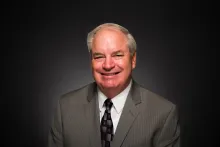
Robin Webber was born in Chicago, Illinois, in 1951, but has lived most of his life in California. He has been a part of the Church of God community since 1963. He attended Ambassador College in Pasadena from 1969-1973. He majored in theology and history.
Mr. Webber's interest remains in the study of history, socio-economics and literature. Over the years, he has offered his services to museums as a docent to share his enthusiasm and passions regarding these areas of expertise.
When time permits, he loves to go mountain biking on nearby ranch land and meet his wife as she hikes toward him.
