
Robin S Webber
This transcript was generated by AI and may contain errors. It is provided to assist those who may not be able to listen to the message.
This is a beautiful song that we just sang. Chris, I know my wife is very happy because that's your favorite song, I think, in the book. But I was just listening to the words here for a moment while I was back getting the microphone on. It's always amazing how God brings things together, sometimes the message and the music and what somebody might want to bring by the spoken word. Let's go to page 171 for just a second because it really speaks to what I want to share with you in the second message today, where in 171, one faith and one love, in the second stanza, it says, Our many lives are woven, fitly blended as tapestry created by thy hand.
Within each thread thy glory is extended, and with every color, quality, and strand. That's what I'd like to speak to this afternoon because I know that we were going to be having a church meeting this evening. So often, church meetings boil down to facts and figures and numbers. What is the church? What is the local congregation doing? Perhaps not doing. What ought we to do to fix this or to fix that or to do this or to do that?
Please understand, we at times do need to have local council meetings or have a wonderful meeting like we're going to have this evening. Beyond those facts and figures, I began to think this morning a little bit about all of you, all of you that are in this room. I began to think of where all of us are from, and I began to rattle off some place names.
Kind of interesting. I'm not going to write them all out, but I'm all out. Not that I don't know how to spell these names because I grew up around here. But just different dots, which is interesting. I began to think about our church roster and where people live. I know that we have some people up in Alpine. That's where the rich people live. We have some people that live, I think, in Lakeside. We have people in Santee. This isn't going to be geographical. Then we have people that live in La Mesa.
We have people that live in East San Diego. It will always be East San Diego, even though they try to give it a fancy name these days. Then we have people that live in Bonita. We have people in Chula Vista. I think we've had people down in San Ysidro from time to time. We have people that are up in where we all are, up in Minifee, the Lucin Heights and the Weber's.
We have people in Marietta. We have people in Fallbrook. I don't think Walter's here today, but he represents Fallbrook. We have people in Escondido. We have people over here in Vista and San Marcos. We've got David and Unico living over in the Oceanside. Then we have, we already mentioned Bonita. We've got people in San Diego. San Diego is pretty big. We've got people that live downtown like James. We have people like the Smiths that live up here in the Mira Mesa section, or whatever they call that section over where Paul lives. Just all sorts of people. The point I want to make about all of this, and I just don't really want to waste the sermon time by drawing a bunch of dots and saying that it's over, is simply this.
What's interesting is that all of these people, when you really think about all these different areas, when you think about it, that compre—oh, I just saw Victor, La Jolla, Chris. La Jolla and Alpine have something kind of in common.
Just joking. Just joking. All of the week of the world people living here. Okay, just teasing. The point is this. We're drawing all of these dots up here. Oh, wait, I just saw the Coeles. About Rancho Bernardo. Okay. Let's just talk about this for a moment. Why are we here, and how did we ever come together? Have you ever thought about that? And we keep on coming back for more? Have you ever thought we should not know one another?
Our paths should never have crossed. And once they've crossed, what keeps us together, other than what God is doing in our lives individually and collectively to His honor and to His glory? And that's why that song struck me so much about the threads and the weaving and what that meant. And you realize that. And that's why I'd like you to come with me if you would. Let's open up our Bibles and go to Ephesians 2. I've used this elsewhere recently, but I specifically wanted to use it with you today along with my dots. Because all of our dots appear, and that's not always how I think of you, but those dots are all going to come together as we go through Ephesians 2 and recognize that we're not coming here just simply because of what we want to do, but to recognize that God is performing something miraculous and wonderful and fantastic to His glory and to His honor.
And to recognize that perhaps in a couple weeks from now, we open our doors. Our doors are always open. That's kind of misnomer in the United Church of God. Our doors are always open, our Bibles are always open, and our hearts are always open. So there's no real such thing as an open house. The house is always open because we don't own it. God owns the house. But nonetheless, we're going to have folks come in here in a couple of weeks beyond that other weeks. I can't always schedule what God is doing. Have you ever figured that out yet?
We can't put God on a watch. He'll know what to do. But there are going to be people that are going to be coming into our midst ultimately, as they have over the years that we've been here. These dots are going to be added to. My question is simply this. What is God doing with all of these dots that represent all of you? Because what I want to share with you is a very simple and profound thought for we that are Christians and keep the fourth commandment.
All of us know that the fourth commandment is as far as the Sabbath day. So often we think of the Sabbath day as to what God has done and what He has performed in the past dealing with what we call terra firma, Mother Earth, and all that which we see around us. What I want to share with you today is simply this very sentinel point. The creation goes on, and you are a part of it. You are being molded, and you are being developed, and you are being shaped right here, right now, today, and in Santee, and in Alpine, and in Chula Vista, and all the days in between.
Just as much as God formed the heavens and the earth, just as much as He brought up the sea and brought up the green things and made the animals, the creation continues. And you and I are a part of that creation. And what I'd like to do is focus on Paul's words here for a few moments to maybe encourage us about what God is doing with the San Diego congregation and why we continue to be instruments in His hands to reach out to other people, hoping that they too can be a part of what God is doing.
And that is why I think God always wants us, as members of the body of Christ, to do three specific things. Allow me to mention them to you. Number one is to remember our past. Is to remember our past, where He picked us up. Number two, to understand our present hope. To understand our present hope. And that's what we're going to be talking about in a couple of weeks when we talk about the time is fulfilled and the kingdom of God is at hand.
And to recognize that there is a hope. And we're going to talk about that a little bit today. And also, point number three then is to view our future in Christ with certainty. A lot of what I want to talk about this afternoon in collecting all these dots together is in a very simple form, just four letters, BC, BC, and AD. Very simple, BC and AD. Could somebody out there, those may just look like a jigsaw puzzle, could somebody tell me what that means to the person that reads these letters in a paragraph?
What does BC mean? You don't know. Did you all go to school? No, go ahead. Okay, pardon? Bill? Before conversion. Okay, that's the little Church of God lingo. Let's go with just the standard lingo. What's BC? Before Christ. What's AD? After death. And I'm not going to give you the fancy Latin term for it. What we have here is basically a before picture and an after picture. Before Christ? After Christ. I think all of us have viewed the magazines before or seen in the newspaper where they show the before and the after ads. What's really scary is when they look worse after than before.
No, just teasing. And that's why we need to go back and remember what we were like before God began dealing with us and before we accepted Jesus Christ as our Lord and our Savior. Because there are going to be people that are yet going to do that today somewhere on earth, perhaps in our congregation in the weeks and the months to come along. We're going to see them growing. We're going to see the fruit of God's Spirit leading them. They're developing. They're going to understand that they can begin to experience the Kingdom of God in their life with Jesus Christ as their Lord and Savior and as the King of their life.
But you and I need to remember and have a little history here for a moment and think about it. Because these people that God may call into our lives brings us to a very significant and that is simply this. God has called us out of our neighborhoods. God has called us out of our neighborhoods to a brotherhood in Christ.
You might want to jot those two words down because we're going to go back and forth with that. Because human history is about neighborhoods and neighborhoods of races and ethnic groups and linguistic groups that do not get along. History and living is about neighborhoods of genders. Just two. Maybe that's enough. Male and female. That have not always understood one another.
The war of the genders, the war of the sexes, the misunderstanding between the genders, the concern about one another, the not understanding one another, the not the desire to shake hands over a hedge and come together. Human history is about neighborhoods that have not gotten along. And what we're going to come to understand and what the good news of the Gospel of the Canum of God is about is that these various neighborhoods all becoming one. And they become one in one way. Now maybe you want to jot some dots down here from them in your own paper. These all eventually are not separated, but they all become one as they are in Christ.
And that is the message of the Gospel and why God the Father sent Jesus Christ to bring the neighborhoods of humanity to God and to the Father. Let's just go through this for a moment. I'm not going to spell it all out, but let's understand what's happening here. Therefore, remember Ephesians 2 verse 11, that you once Gentiles in the flesh who are called uncircumcision by what is called the circumcision made in the flesh by hands, that at that time you were without Christ being aliens from the commonwealth of Israel and strangers from the covenants of promise having no hope and without God in the world.
But now in Christ Jesus, you who once were far off have been brought near by the blood of Christ. Now, unlike another message that I gave recently and specifically went into a lot of what was between the Jew and the Gentile, we understand that Paul's words here are speaking to a neighborhood conflict in the first century AD. Between those that were circumcised and these people that were beginning to come into the church that were known as Gentiles and uncircumcised, two people that had never come together in human history.
What I'd like to share with you, and I think the principle still stretches here, and it is a principle, but let's all recognize that there was a time, you might want to jot this down to follow along, that there was a time when all of us in that sense were spiritual Gentiles.
And we were outside of the realm of experiencing God's grace by our actions and by our deeds and by our sins and by our lifestyle, which was not 80-20 or 20-80, but was 100% opposed to God working in our life. So there is an analogy, there's a stretch of principle there to bring us all together. But I do want to come back for a second and talk about, verse 11, in the sense of what human history was like in the neighborhoods of the first century, because sometimes only the names have changed. And this speaks about a contention that was between the Jew and the Gentile that was just absolutely incredible.
These two people just simply didn't like one another. And they had nothing to do with one another. They despised one another. The Jew, it's interesting in the way that they looked at the Gentile. I like to just read a thought for you, because again, sometimes we read these words and we don't understand what it was like. We can read the Gospels, we sometimes get a sense of what was happening. But let me just take a little bit deeper. This is out of William Barkley's commentary, and it deals with how the Jews looked at the Gentiles.
The Gentiles were called the uncircumcision by those who lay claim to that circumcision, which is a physical and a man-made thing. And this was the first of the great divisions. The Jews had an immense contempt for the Gentile. People of God, people of the Book, had immense contempt for the Gentile. They said that the Gentiles were created by God to be fuel for the fires of hell, that God loved only Israel of all the nations that he had made, that the best of the serpents crushed the best of the Gentiles killed. It was even unlawful to render to help a Gentile woman in childbirth, for that would be to bring another Gentile into the world. The barrier between Jew and Gentile was absolutely impossible. And the truth is, if a Jew married a Gentile, the funeral of that Jew was carried out. Such contact with the Gentile was the equivalent of death. Even to go into a Gentile house rendered a Jew unclean. Before Christ came, the barriers were up. After Christ came, the barriers were down. I want you to think this truth for a moment. Are you with me? These are people of covenant. These are people that read the Scriptures. These were the people that knew the promises of God. And yet they had that utter contempt for those of another neighborhood. Now, let's go visit the other neighborhood for a moment. We're going to journey over here and think about what the Greeks were like. The Greeks were not second class to the Jews and their contempt for the rest of humanity. Many of us often have heard the term of barbarian. We associate it with Conan. Not with Arnold, but with Conan. Conan the barbarian. That was a very common term. The term barbarian was basically a term that the Greeks used on all the rest of the world that was not Greek. They were looked upon with contempt. They were called barbarians. Anything that was not Hellenistic was barbarian. It was other.
In fact, the Greek language in depicting others or depicting the barbarians normally spoke of them basically in bestial terms. That neighborhood looked upon all the rest of the neighborhoods of humanity with contempt. If you were not Greek, if you were not from Achaia, or if you were not from Ionia, you were looked upon as being a barbarian. This was the world that Jesus Christ came into. What does that mean to you and I? Let's go a little bit further here, verse 12. That at that time before Christ entered their lives, it says, you were without Christ, being aliens from the commonwealth of Israel, and strangers from the covenants of promise having no hope and without God in the world. Now, there are three things I want you to think about. The reason I'm asking you to think about these things is simply this. We are reaching out to people around the world through the Beyond Today program, through the Good News, and through the example of our members in their neighborhoods, to people that are, let's think about this, without Christ. What would that mean in your life today to be without Christ? They are without God, and they are without hope, and they are without even understanding what promises mean. Why don't you just think about that for a moment? Let's cogitate on that one for a moment. Without Christ, without God, without hope, strangers, foreigners from promises. Interesting. It's very interesting when you think of the Jewish community down through the ages with everything that the Jews have been through, from the time of Esther and Persia onward. Now, I want you to think about no matter what. They were never strangers from the promise. Everything that was inhumanely visited upon this people. Nonetheless, there was always light at the end of the tunnel.
There was always in their thought the prophecies of Isaiah, the prophecies of Zechariah, the thought of Messiah, that no matter how bleak human history was, that there was no promise there was always a spark of hope because God had said so. They were not strangers to the promises. Different with the Greek world. The Greek mind, the Stoic mind, woke up in a Stoic sense. Life was life. One plus one equal two. Black and white. No hope. Here were two peoples in the Mediterranean basin. Two legs, two arms, two eyes, but a different mindset towards history. To the Greek mind, history was closed. To the Jewish mind, it was open. This is the world that Jesus Christ came into. Here were people that were strangers from the Commonwealth of Israel. They didn't have a king like Israel had. Israel was not a democracy. It was not despotic. It was a theocracy. And the reality was that when it was all said and done that God was king and God was sovereign and gave them hope. Let's think about this for a moment as we wrap this up for a second. Because this was not only 2,000 years ago, but this is the world that you and I are trying to reach today through our prayers and through our ties and our donations and our support of this instrument within the body of Christ. That the world today is not too far amiss from this world that was of yester-age. Basically, before Christ came, if you want to look at this, and you think maybe back in your life, wherever you were, whether it was New York, Illinois, or California, maybe Nevada, maybe Arizona, maybe someplace international, that here were people that were separated. I want you to put these words down. I want you to really think about it. This is the society that you and I are trying to reach out to today by God's grace. People are separated from God. They are alienated from God. They're strangers, more and more, even so today, through the very basic tenets of the Judeo-Christian manner. No hope. No God. We're dealing with people today in America, and Europe is in just as much a mess as America is, if not more, if you've been reading the downgrading that's occurred the last couple of days in Europe. You look around and you see a world that has really done itself in for a number of reasons, which I won't go into right now. But it's not just that human society is a house of cards. The legs of the card table underneath the house of cards is being kicked in. People don't have answers for $16 trillion worth of debt. You can say that. I can say $16 trillion, but you don't have the answers. People, for the first time in our nation, are understanding that they're not going to be able to pass on a life to their kids or their grandkids that they experienced. Now, I would say in that that I would hope that we could pass on a life to our children or grandchildren, not just fiscally or financially, etc., as America, but certainly spiritually as well. But just say in general, Americans right now are hopeless. They want to again put their trust and their hope in a person that's going to solve things. But we come to a point where all the king's horses and all the king's men cannot necessarily put Humpty Dumpty back together again.
Now I want to draw you to verse 13. But now in Christ Jesus, you who were once far off and have been brought near by the blood of Christ. Now, that's what the Kingdom of God's seminars are about in a couple of weeks. The time is fulfilled. The Kingdom of God is at hand. You can understand. You can know about this. And you can know about the great personality of that Kingdom, Jesus Christ, and what His Father had Him do for us. And you also can now be brought near. And they were for He Himself, speaking of Jesus, is our peace, who has made both one and has broken down the middle wall of separation. I want to talk about that for a moment, because you can read that the middle wall of separation. What does that mean? I'd like to talk to you about the middle wall of separation for a moment. I found my pen. It was here somewhere. The Temple Mount. You've seen pictures of the Temple Mount, and here was the temple up here, to eat for temple. Well, there were all sorts of walls in between. There was the court of men. Then there was the court of women. And way out here was the court of Gentiles, but that was actually at a lower rung. That was lower. Not as high as these. What happened was... Now, I want you to think about this. Maybe you've never thought about this before. Here's the Temple Mount, up on the Mount. Here's the temple. Here's the court of Israel, the court of men. And then there's the court of the women. And then out here is the court of the Gentiles. Each of these had a wall. What did you think about this? Each of these had a wall. And as you came to the temple, each wall was a little bit higher. Each wall was a little bit higher.
The men were here. High wall. The women were here. A little lower wall. And then down on a different terrace, lower, were those that were afar. Those that were off. Those that were different. It's called the court of the Gentiles. Right here, where the court of the Gentiles was, was a wall. There were two signs there. There were two signs. One was in Latin and one was in Greek. And it was simply this. You shall not enter upon pain of death. Of course, that's later on what got Paul in trouble with Trophines. Remember, when he came out of the temple, and they thought that he had desecrated that sign, that was the whole thing behind that. Therefore, they wanted to tear Paul apart. Now, here's what I want to share with you. Think this through for a moment. This was man-made, man-thinking. He was doing God a favor. This was never the design that you find in the book of the law. This is not the design that you find, what? In the tabernacle. The tabernacle had a curtain around it. The tabernacle of the wilderness, correct? Had a curtain around it. But it didn't have all of these partitions, all of these walls of separation, saying, you can only come so close to God. You are only so good. Your neighborhood only ranks this far, and we're going to redline you. In the tabernacle days, what God designed in His creation and His mind was a simple curtain to sanctify the Holy Place. And there was only one opening. There was only one door wasn't there into the tabernacle. And Jesus, 1500 years later, would identify that door, saying, I am the door. See, brethren, this is what is so profound when we think in a couple of weeks from now. We're going to be able to share with people what we've learned a couple of weeks from now. We're going to be able to share with people that time is fulfilled and the Kingdom of God is at hand. And you can have hope in a hopeless world.
You can have hope where you feel helpless, and you don't have to feel afar anymore from the answers, the big answers, the big questions of your life, because a lot of people believe of a God who's a first cause, who wound up the universe and let it go. And a lot of people pat themselves on the back and they say, yeah, I believe in God and I believe that there was a first cause. But they don't understand that creation is still in process, that God is doing something. Let's notice this in verse 14. For he himself is a peace who has made both one and has broken down that middle wall of separation through the blood of Christ, having abolished in his flesh that enmity that is in the law of commandments contained in ordinances so as to create in himself one new man from the two thus making peace. Now would we understand the fullness of that? And it could be a whole sermon itself, which is not my purpose there. We're not talking about the law in a negative sense. What we find here is the law of commandments contained in ordinances. That's not dealing with the moral law. That's not dealing with the Ten Commandments. Christ came and lived those Ten Commandments. And he also did that, which we could never do, existing in them perfectly, because he existed out of them because he gave them. But more so, it's also talking about the sacrificial ordinances, those things that were keeping people apart. But notice what it says in verse 15, so as to create in himself one new man from the two thus making peace. Here's the key point. This tells us that the act of creation is still going on.
God is creating a new neighborhood. It's called the kingdom of God. And you and I can be citizens and participants in that and have legality within that, not because of what we've done, but what Christ has done. With this done, let's look at this. There are three things that have come because Jesus Christ came and broke down that middle wall of separation. There are gifts. Everybody likes to hear about gifts. Here's three things.
Number one, he created within himself one new man. The act of creation is still going on. It did not end at Eden. That's why we keep the seventh day Sabbath. The seventh day Sabbath, friends, is not just simply about the past, but what God is doing today and yet in the future.
When God finished in Genesis 2 and he says he finished and he rested, he rested from his physical labors. God doesn't get pooped. God doesn't get tired. Do you think God's a couch potato? No. He's still now about a spiritual work. What he's doing is he's still in the act of creation. He's developing this one new man, this man that is neither Gentile or Jew, not from this neighborhood or that neighborhood, but now is incorporated together. The word there new is very important to understand.
This new man. When that term is used in the Greek and that's why the gospel was made in Greek because it's a colorful language that has many, many different meanings, that does not mean new and improved. Have you ever gone to the grocery store and you look on the shelf proctoring, gamble, or whoever they say, new and improved toothpaste? You say, what's that going to do? Is that going to spout a new tooth in my mouth or what? What do you mean, new and improved?
How can it get any better? What can you do with toothpaste over a hundred years to get it better? But they always have new and improved. The point being is simply this. When God uses the term new here in Romans, that means has never been. Never been before. Not just something on an assembly line and one inch longer or one pound heavier or after hearing Omar, one pound less, but something that's completely a new creation, like taking two colors and making one. We have this gift. And that he might reconcile them both to God and body through the cross, thereby putting to death the enmity.
And he came and preached peace to you who were afar off and to those who were near, for through him we both have access by one Spirit to the Father. The first gift then is that a new man is developed. Is that not what Paul said? Behold, all things are new. The reason we're here together today, even though we come from Alpine, Lakeside, and alcohol, and La Mesa, and Bonita, and Temecula, and Menifee, and Mira Mesa, is because God is doing something new.
I want you to get that in your heads. God is doing something new. It's not about you. It's about what God is doing in us with this creation that draws us together by the blood of Jesus Christ and by the Spirit of God. And notice what it says here, and he came and preached peace to who you were far off and to those who were near and through him. We both have access by one Spirit to the Father. The bothness factor there is profound because in the original sense of this verse, it's talking about the Gentile who was apart from the promises and the people of God that knew the promises, and now they are noticed together and both have access.
The term there, out of the Greek and dealing with access, is as if we are able to come up to the Holy of Holies and bring sacrifices. We have that access or to be announced the presence of a King. That's very hopeful. That's wonderful that you and I can have access. I've got a lot on my mind right now, a lot of personal challenges with my family, and I realize that sometimes, you know, two o'clock or three o'clock with everything else that's going on with church-related responsibilities. I wake up in the middle of the night, and I remember that old Ames Home Loan advertisement.
When you can't sleep at night, call Ames Home Loan, and they'll take care of everything. And it's not just financial, which is the issue, but just life challenges with family and what's going on, as many of you have had and are having right now. And you know what happens is? I begin to not sleep. It's like that article I wrote recently that I said, you know, you really have a choice in life. You can either try to put yourself to sleep counting shape, or you can go to sleep calmly by focusing on the Shepherd, Jesus Christ, the Lord of our life, and whom we shall not want.
What I'm sharing with you, friends, is the hope that I have that sometimes in those still quiet moments at night in the darkness of the bedroom, and when my eyes are wide open as a bat. And while my heart, in a sense, is calm but my knees are still a-shaking, I go through everything that you're going through. But I also recognize that as I give my life to God because of what Christ has already done for me, He will supply the answers.
He promises that. He says that He will not let us alone. He can't leave us alone. He's got a love affair going on with us. He's not going to leave us alone. He wants us to succeed because as we succeed in Him, He is praised.
He is glorified. That witness goes out louder. I can share that witness with you. You can share that witness with others. And we can begin to share that witness with others as they come into our midst in one week or two weeks or three weeks or a year from now when they come out of that Greek type of world in which there was no hope, where there was no God, where there was no Christ, where they were not rooted to any society, where they were stuck in the hood of their birth, the hood of their culture.
And we can begin to witness to them, not just as a pastor, not just Beyond Today program, not just a Good News magazine, but what will be more profound than anything is what Sal or what Pam or Susan or Jim or Paul or Joe or Aaron share individually with people. One-on-one, what's going on in your life? I have a question for you. How important is hope in your life? People can go without air for four or five minutes. They can go without food for 10 days. They can go without water for 25 to 30 days.
No human being on God's earth can live without hope. And you and I are agents. Let's continue the story here for a second. We're going to conclude here. I'm sorry to answer what time it is. Here we are. Let's look up here for a moment.
This is more important than anything that I could tell you, friends, in a church meeting this evening, even though I'm looking forward to church meetings and churches should have meetings. But this is us.
And we were in Alpine or we were in Lakeside or we were in Bonita or we were wherever. And now we see what God is doing, that the will of God is that everything come before the Father ultimately in Jesus Christ and through the blood of Christ. That's why we're here. And when we do that, there is sacrifice. There is sacrifice. We have to give ourselves away. That's what Christianity is about. But as we leave the hood, as we say, the hood, as we leave the hood or as we leave our neighborhood, and that doesn't mean to love less our family. That doesn't mean to leave them alone. But we also recognize some circumstances in life have caused us to have to make decisions regarding family or regarding even spouses or regarding situations with employment or this or that. God promises something. As we leave that of which and where He found us, God says something. There's three things that I want you to have and possess. Let's notice these as we begin to conclude. And what is very important is simply the word now. Do you know how important the word now is in the Bible? Because God views things through the lens of now. And this is important. Now therefore, you are no longer strangers and foreigners, but fellow citizens with the saints and members of the household of God.
And having been built on the foundation of the apostles and the prophets, Jesus Christ Himself being the chief cornerstone in whom the whole building being fitted together grows into a holy temple in the Lord in whom you also are being built together, not separately. Just like that song that Mr. Carlson led us through, that pepistry. There is a togetherness. There is a brotherhood in Christianity. And I think one, frankly, if I can say as Christian to Christian, one that we've got to get back to in our mind with the world. A brotherhood that God wants us to establish in our minds with those likewise that are made in His image and in His likeness.
In whom you also being built together for a dwelling place of God and the Spirit. Let's notice three specific things that God says for you and I as we left Lakeside, La Mesa, Bonita, and points in between. Number one, simply this, He said that I'm going to offer you citizenship in my kingdom. I'm going to offer you citizenship, number one. Now therefore you are no longer strangers and foreigners but fellow citizens with the saints. God does not have others.
Those are man-made and human-devised and individually packaged in the heart of man by spite and malice. God says you're going to be a citizen of my kingdom. No longer strangers, no longer foreigners. There's two terms that are being used there in the Greek. One is strangers. That would be very much like, and we know this in San Diego, where somebody comes over, illegal. Somebody's non-documentate. You use your word of choice and they're over here. And you know what happens? They're always looking over their shoulder, always looking over their shoulder, always wondering what's going to happen in the next moment as to whether or not they are going to be wanted and or deported. That's the term that's being used here for stranger. The other term that is being used is foreigner. The term there for foreigner is one that came in, came in quote-unquote the right way, got the green card, comes, but not necessarily accepted by the neighborhood. Not necessarily liked by the community other than what they can bring in. And to be in that community they had to back then had to pay a special tax. They weren't just good enough on their own with what they contributed by their intellectual or manual enterprise. They had to pay a tax for the right. Got it? Now with that stated, now, now, now, now, therefore you are no longer strangers and foreigners. God sees things as if they already are. That's why it's so important with this presentation that we're going to be making. The kingdom of God is at hand.
There are benefits now of having Jesus Christ as our King. And while the kingdom is yet to be in the future and all of its fullness, there are things that says God is looking at it as if we are already there, that we are participants of His grace and are experiencing it. And we can have the benefits now living that world tomorrow today and be blessed of God. Now blessings don't always mean good things are going to happen every day in the life of a Christian, especially in this world and in this present evil age. But we worship a God of hope, just like the Jews did, that always recognized what? That there's a light at the end of the tunnel. And a Christian always, are you with me? Always understands that there is a light at the front of the grave, that there is no stone too heavy, that sealed or kept our Savior in the tomb to remind us in our day, in our life, whether it's at nighttime when you can't sleep or challenges during the day, that God will never put something in front of us, that He will not make a way that ultimately it glorifies Him. Therefore, number one, we are offered citizenship. Number two, notice not only that, but we become members of the household of God. Number one, with this middle wall partition down with this world of hopelessness now, hopelessness, the world of BC cast out. God says, you're not only going to be a part of my kingdom, but I'm going to give you a family, recognizing that some people have had to leave their family for one reason or another. But I'm going to give you a family. I'm going to put you in the household of God. You know the one word that is used for those that are in the church more than any other word in the Bible. It's not church members. It's not even saints. It's brethren.
Here we know it's brethren. God always asks us to look at one another as the family, that it's not our role. It's not our job to choose God's family. It's our role and our opportunity to accept the family that God brings in the door, accept the people that God brings into our life.
You are made a citizen of the kingdom of God. Number two, you are granted a family. What do we do with that family? Join me if you would for a moment. Hebrews 10. We're going to go about five minutes. We'll conclude Hebrews 10 verse 19. Here is our role as a family with this stated.
Therefore, brethren, family, household of God, having boldness to enter the holiest by the blood of Jesus, by a new and a living way, because you and I are new men and new women, we have been granted access to a new neighborhood. It's called the kingdom of God, which He consecrated. He made holy for us through the veil that is His flesh and having a high priest over the house of God. Notice, here's what the family does. Let us draw near with a true heart in full assurance of faith, having our hearts sprinkled from an evil conscience and our bodies washed with pure water.
And let us hold fast the confession of our hope without wavering, for He who promised is faithful.
And let us consider one another an alpine, lakeside, la mesa, bonita, chula vista, fallbrook, myrietta, minifee, and all parts and places in between, to stir up love and good works. Did you notice that? Sometimes you have to stir it up, not just in yourself, but you have to help others stir it up because they come out of this world having experience Monday or Tuesday or Wednesday or Thursday in a world that is apart from God, in a world that more and more is a very challenging place to go. You're the group that lives out there. You're the ones that work out there. I don't think I'm telling anything new. So we can come into service as flat. We can come into service as flat as a pancake, no butter and no syrup. I mean, we are not sweet. And it's our job as a family, with grace, with taste, with balance, with temperance, to stir one another up when one is down to pull the other one up by the heart and by the arm.
Say, you know what? I'm going through the same thing. I know right where you're at, brother. I know right where you're at, sister. I've been there, done that. It's going to get better. Maybe not tomorrow, but I'm going to pray for you. I know your situation. I didn't know that. Thank you for bringing it up. And at times when people are sharing their story, and we all have to share a story, but sometimes we can put it on the repeat button until all we're doing is sharing the pain, and we're not looking for the answers. And somehow we have to stir up people in love to stir up that love and stir up the good works. Not talking about, well, did you see Oprah last Wednesday? That'll help you. But opening up the Bible, and I like Oprah, but you know, open up the Bible.
Turn to the promises of God. What are we going to do when we begin to which I really do believe that I see God's blessing, and we're going to have to stay the wheel as I wrote to you. But I sense something happening out there. I've been getting more phone calls than ever before. People are searching. They're wanting to hear. They're wanting to learn. And we have to stay the course.
And if God does bless us with people, then we have to stay the course with them as they come out of that world. And they're going to be good for us, and we're going to be good for them.
We need them just as much as they need us. We are experienced and practiced in the way. But sometimes even being experienced and practiced in the way, we don't really sometimes really fully appreciate really how exciting and how different it is and how spectacular it is from anything else. Because, well, after all, we've been doing this for 20, 30, or 40 years. We need them. They need us.
And that's why God produces a family. He says we're family. The last thing I want to show you is this.
It says here that having been built on the foundation of the apostles and the prophets, Jesus Christ himself being the chief cornerstone, in whom the whole building being fitted together grows into the Holy Temple and the Lord. The third thing is that what God is doing. The first is we are citizens of the kingdom. Number two is that we are family. And number three, you and I are being offered to be a part of the spiritual temple of God and are today being fitted together as lively stones to his purpose, to his honor, to his glory, and by his grace. Now, you know that when we put stones together, they don't always rub easily. You know, there can be a little heat, there can be a little light, and there can be a little friction. That's why we keep on going back to the book.
And that's why we keep on being patient with one another. What have we learned today, friends?
Here's what I want to share with you as your pastor. And I appreciate you hearing me. You know, I wish I could be here every week. I can't be because of the needs of the other congregations.
So that when I do come, I hope that by God's grace, I can bring a message to you of hope and of encouragement of what God is not only doing with you, but what he wants to do with every human being that has ever lived and breathed, that he wants to bring them a world with Christ, a world with God present in the middle of their life. As present as he was in the middle of the Garden of Eden, as present as he was in the middle of the encampment of Israel, and as present as he will be in the book of Revelation 21-22. People more than ever need God present in their life.
As we pray about this Kingdom of God seminar coming up, I ask you to consider Paul's question.
Reflect. Remember where we were before God first began dealing and calling us by his Spirit.
Where were we before Christ? And where are we now, having understood his death and died with him in baptism, and now live with him in that sense and are prepared now to offer others the hope and the encouragement of knowing that the time has been fulfilled and that the Kingdom of God is at hand. Susan and I are honored to be here with all of you today and we're really looking forward to meeting and greeting and sharing time with you this afternoon.
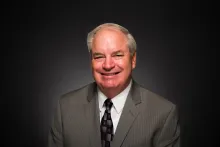
Robin Webber was born in Chicago, Illinois, in 1951, but has lived most of his life in California. He has been a part of the Church of God community since 1963. He attended Ambassador College in Pasadena from 1969-1973. He majored in theology and history.
Mr. Webber's interest remains in the study of history, socio-economics and literature. Over the years, he has offered his services to museums as a docent to share his enthusiasm and passions regarding these areas of expertise.
When time permits, he loves to go mountain biking on nearby ranch land and meet his wife as she hikes toward him.
