

Jorge de Campos
This transcript was generated by AI and may contain errors. It is provided to assist those who may not be able to listen to the message.
Brethren, we just completed the season of Unleavened Bread, and I want to thank Cliff for a very good heart-to-heart sumenet about examining ourselves, because indeed, as we completed this first part of God's Holy Day plan, we are learning through it. And indeed, God's Holy Days, think about it, all of God's Holy Days have miracles associated with it. For instance, the Bar-Sylva has the miracles of the firstborn of Egypt dying, but the firstborn of the Israelites being protected.
Clearly, a miracle, then. Pentecost, the miracle of giving of the Holy Spirit. Trumpets, the miracle of the Christians being resurrected, changed to a new body, and obviously, there are other miracles related to that, but I'm just covering a few. A tournament, Satan being imprisoned, and not able to influence society. That's an intervention, direct intervention from God. And the Feast of Tabernacles, the miracles on the earth, the nature of animals will be changed, the earth will become a paradise. And for instance, the last great day, the Second Resurrection, the chance for the world to learn what they never learned.
In other words, the world is actually not lost. They have a chance, but there's a miracle in there. But, you know brethren, sometimes we do not think that there is also a miracle during the days of Unleavened Bread that have just completed. Do we understand what is the miracle of the days of Unleavened Bread? Indeed, there is an invisible miracle that is represented by the days of Unleavened Bread in your life and in my life, in our lives. You see, because during the days of Unleavened Bread, the resurrected Jesus Christ, that resurrected during the days of Unleavened Bread, He used to live in us through the Holy Spirit.
And what does that mean? Well, my purpose today is to talk to you about the miracle of what the days of Unleavened Bread represents to us. In other words, about the miracle of Jesus Christ living in you and I, what it means to us. What miracle is it?
Or, in other words, I want to talk to you today about the biggest miracle of them all. And if you wanted to put a title to the sermon, it would be the biggest miracle of them all. All other miracles happened or will happen for the purpose of this miracle to be fulfilled. And what is this miracle with Christ living in us? Christ being the bread of our life, right? He's the way, He's the bread of our life. He is without sin, so is Unleavened. So Christ living in us represented us having to symbolically eat in every day of Unleavened Bread, which is that Unleavened Bread we are supposed to eat for seven days.
Obviously, it has other meanings, as we have mentioned before. The meaning of the leaven being without the bread, being Unleavened, being without sin, not being puffed up, therefore not being proud and arrogant, but being humble. But today I'm looking at an additional, let's call it dimension in that meaning. And that is that Christ lives in us now. And during the Days of Unleavened Bread, we ate that bread every day, symbolically also giving us the example of Christ living in us every day, completely for seven days. And now that 11, the Days of Unleavened Bread are over, do we look at that and say, I have to have that Unleavened Bread, that spiritual bread, the bread of life, living in me, living in you, living in me, living in us.
And what results will that do to you and I? Because that's the miracle, what that bread in us does. That's the miracle. Like Cliff was saying, what have we changed? Are we examining ourselves? Have we changed? Well, with Christ in us, with the power of the Holy Spirit, which is Christ's Spirit, which is God's Spirit, the same Spirit, He's one Spirit, and in us, what is that doing us?
So if we go to traditional Christianity up there, when they say, oh Jesus, Jesus, what are we going to do? Oh, we're going to be merciful. We're going to have to be merciful to people. We're going to be soft, we can't. Yes, merciful is kind of a thing that follows with justice, you know, the waking matters of law, justice, mercy, and faith, but you can't have mercy without justice first. But that's related to judging and showing mercy after people are just.
But what does the Holy Spirit convict us to do? Does it just convict us to be merciful?
Now there's something much more. Turn with me, please, to John 16. We'll start reading in verse 7 through 11. John 16. This is when Christ is speaking to the apostles just after he changed the symbols of the Passover in the night that he was betrayed. And before he actually suffered, he gave to the apostles, let's call it a lecture, which we normally read a lot of these sections during the Passover after we've taken part in the symbols. And one of the sections he had that he was speaking in John 16 verse 7, he says, Nevertheless, I tell you the truth.
It is to your advantage that I go away. For if I do not go away, the Helper will not come to you.
In other words, he's talking about Holy Spirit. But if I depart, I will send the Helper to you, the Holy Spirit. And when the Holy Spirit has come, the Holy Spirit will convict us, will convict the world of the cross, second come, they will convict the whole world. But now it's convicting us that I have God's Holy Spirit of three things of sin, of righteousness, and of judgment.
The Holy Spirit convicts us of three things. It's not just convince us, but it convicts us.
Convict, it means more than convince. It kind of cuts to the heart, and it really, it's more than convince. It convicts. It's a strong form of being convinced of sin, because, you know, after Christ died, Christ died, and He died for our sins.
And when we believe in Christ, we then do the things that He tells us to do.
You see, belief is practicing. You know, I always use the example of, you put a little child on top of a table, and you say, son, jump, and I'll catch you. If the child believes you, he or she will jump.
If he does not believe you, he will jump. So, belief is action, is doing. It's clearly, it's belief is action. So, quite often, the Bible just talks about belief, but beyond the word of belief, there is action, because if I don't do anything, then I don't believe, because I just don't do it. So, belief is action. So, it says, of sin, because they do not believe in me. In other words, people will recognize sin. Ultimately, when Christ comes back, but sin because they do not believe in me. And they believed him. They would obey him, and they would not be sinning. So, the world is being convicted of sin, because they don't practice the teachings of Christ. But then it says, yeah, of righteousness. Now, this is the point of my sermon today that I'm going to be talking about on this one, is of righteousness, because I go to my father, and you see me no more.
Of righteousness means, in a broad sense, it's a state of, that is acceptable to God, of, let's call it, of an integrity, or virtue, a purity of life, of correct thinking, and feeling, and acting like Christ. In other words, being like Christ. In a more narrow sense, is righteousness, when it's applied, it's justice. It's justice. It gives each one what is right and due to him. But because Jesus Christ is not on earth, we have Christ living in us spiritually through the power of the Holy Spirit. And therefore, the Holy Spirit convectors of righteousness, of Christ's righteousness, of his righteousness. So, when Christ lives in us, he will live a life like he lived. And the life that he lived was a righteous life. And therefore, the Spirit convectors of righteousness. And the third thing that the Spirit convectors is of judgment. Because the very fact that Christ lived without sin, he qualified to depose Satan from his position of ruler of this world. So, Satan is now condoned. His future is doomed. Because Christ had already qualified to rule the earth instead of Satan. So, it's just waiting for the time when God the Father says, okay, Christ, he can go now. Now it's the time, second coming. Satan is doomed. So, his ruling is finished. Because that's why it says, because the ruler of this world is judged, he is gone, he's doomed. So, there will be judgment. When Christ comes back, Peru on earth, it will be a time of judgment. Starting through the millennia, it will be a judgment. Starting through there, through the Great White Throne, the Hthi Judgment, and the final judgment, Lake of Fire, it's a whole period of judgment. Now, it's started now for us in the church, but then it will be for the whole world. So, the Holy Spirit convicts us of these three things. But, you know, brethren, convicts us of righteousness. And this is what I want to talk about today. Because we need righteousness. We need to be convicted, not just of sin. And yes, we've gone through possible. We've been baptized. We've repented. And therefore, we're living in a life which is in a light, not in darkness. As John says, you know, we live in light, not in darkness. Which means, yes, we live in a way that is wanting to be in a light, being the correct way. We don't want to go into darkness. Now, it does say, John, just because you're in a light, you still occasionally tripped. I mean, I could be light, and I could not just see a little thing on the floor and trip.
But I'm still in the light. So if anybody says that he's in the light, and he doesn't ever trip, he's a liar. That's what John's saying. It was, if you're in the light and say you never sin, you're a liar. But the point is, we're not walking in darkness. We don't want to sin. We're not living in a life of breaking the Ten Commandments or anything like that. We're living in a life that, occasionally sinned because we say something wrong. We're occasionally sinned because we have a wrong attitude about something, or we say something which is not loving, which hurts people, which in cross-emplification of the law is the same thing as killing. But it's not that we are walking this way and killing people or committing a doubt. We know that what we're doing is we're tripping in little things. We're not breaking the law in that little things. We may sin in little things because we're trying to go in the light. So, but the question is, we need righteousness.
And this righteousness is very important. You know, brethren, it says, seek you the kingdom and His righteousness. Remember that? Matthew 6, 33. Seek you the kingdom and His righteousness. You know, seek you first the kingdom and His righteousness. For many years, I've puzzled you. How can you seek first two things? Seek the kingdom and His righteousness. I mean, one is first and the other one is second. Well, it's because they're the same thing.
You see, when you seek the kingdom of God, the only way we'll be in the kingdom of God is if we follow the way of His righteousness. Therefore, His righteousness is the way. The kingdom of God is the goal. So, when we seek first the kingdom of God is what? How is the way it's His righteousness?
So, I hope this is still recording. Yes, that means. So, the point is, the kingdom of God and His righteousness. So, we ought to follow His righteousness. Who's righteousness? God's righteousness. Who exemplified God's righteousness on earth? Because if you see Him, He would see the Father. It's Jesus Christ. So, when we are like Christ, we are exemplifying God's righteousness.
So, Christ is the way. Doesn't He say, I'm the bread, I am the way? In other words, He's the way. He's the way He exemplifies to us, the way of His righteousness. So, look with me, please, to John, I beg your pardon, Romans chapter 3, the third chapter of Romans, Romans 3, and we start reading in verse 10 through 12, Romans 3, 10 through 12.
It says, as it is written, there is none righteous, no, not one, which basically says, George, you're not righteous. None of us is righteous. I'm not righteous. None of us is righteous. Our righteousness is no good. None of us is righteous. There is none that understands. We really don't understand of ourselves in other words. By ourselves, we don't understand. There's no one who seeks after God unless God calls us and brings us to the power of His Spirit to seek Him.
No, no one. They've all together become unprofitable. There's none who does good. No, no one. You see, brethren, there's no one, nobody. It's not our righteousness. Our righteousness is imperfect. It's God's righteousness. That's what we've got to pursue.
Because our best attempts to obedience to the law is not good enough.
Human justice, for instance, or human righteousness, for instance, adds to the law.
Human righteousness starts saying, well, we've got to keep the Sabbath. And to really keep the Sabbath in a righteous way, I can't do this, I can't do that, and we start creating lists.
And there's such a tendency to create lists, such a tendency to create lists. I mean, a pharisee creates lists. But even today in modern age, people say, well, you can't do this on the Sabbath because people start saying lists of things that you can and cannot do. That is human righteousness. Because the law, the Sabbath, was made for man and for women, of course. All right, for us, mankind. And so the Sabbath is a time for us to physically rest. It's a time for us to have time to be with God. And the moment we start adding, I can't do this, I can't do that, I can't do the other, we are putting our righteousness before God's righteousness. We're going to be careful.
I mean, we were talking before services about 11 and things like that. We've got to be careful that we don't become self-righteous in putting things around 11 which are not there, in trying to be more righteous. Because our righteousness is as what? Remember, Isaiah 64 verse 4, keep a finger on Romans. We're going to go back there, keep a finger on Romans. But Isaiah 64 verse 6, Isaiah 64 verse 6, a scripture that we used to read often, many years ago, and maybe we haven't read it for a long time. But it says, Isaiah 64 verse 6 says, but we are all, I mean all except me, no, all, all, and I'm dreaming. And all our righteousness are like filthy rags. All our righteousness is rubbish in front of God. We all fade like a leaf, and our iniquity is like the wind that's taken us away. There is no one who calls in your name. So it goes on. There's no one that is righteous. We are not righteous. Now, look at how Paul put this when he spoke about the Jewish or the Hebrew people, because he was to the Romans, you're writing to the Gentiles, but he was referring in Romans, the 10th chapter. So I didn't say we're going to go back to Romans. So let's go back to Romans, not to the same chapter we were at in a moment ago, but to the 10th chapter.
Romans 10, we're going to start at the beginning, and we're going to read just a few verses then, four verses. But he says, brethren, this is Paul telling the Romans, brethren, my heart's desire and prayer to God for Israel, for the Israelites, for the Hebrew people, the Israelites, not just the Jews, the Israelites, is that they may be saved. I really mean it, Gentiles in Rome, that I really mean it, that I wish that Israel would be saved, for I bear them witness that they have a zeal for God. So he's talking about, for instance, the Pharisees, and you're saying, I'll be witness that the Pharisees have a zeal for God. They really, they want to obey God, have a zeal for God, but not according to knowledge. So what knowledge is he talking about?
Is a knowledge of true God's righteousness, because look at it how he goes on. For being ignorant of God's righteousness, you see, that's the knowledge, they are ignorant of God's righteousness, and seeking to establish their own righteousness.
They are seeking to establish their own righteousness. That's Romans 10 verse 3, in the middle there. Seeking to establish their own righteousness. What does that mean?
That's self-righteousness. And you know what? What it's comparing is self-righteousness is the opposite of God's righteousness. In other words, self-righteousness in God's eyes is unrighteousness.
Self-righteousness in God's eyes is unrighteousness.
It's not true righteousness. They have a zeal for God. They want to please God, but they're trying to do it their way with self-righteousness. It's like, think about the days of Adam and Eve, the two trees, the tree of knowledge of good and evil, and the tree of life.
Could have called the tree of life and the tree of death, or the tree of the knowledge of God, or the tree of the knowledge of good and evil, which is man-developed.
So people that want to please God in their own self evaluation of what's right and wrong, they come to the wrong conclusion, because their way is unrighteousness. But God's way is God's righteousness. That's what we're going to seek. Seek you first the kingdom of God and His righteousness. So as Cliff was saying, we need to examine ourselves. Therefore, we are examining ourselves that we are putting on God's righteousness, which is Christ. Christ in us is God's righteousness.
Continuing up, I'm going to read from the beginning of verse 3 again. For they being ignorant of God's righteousness, and seeking to establish their own righteousness, you know what, self-righteousness, have not submitted to the righteousness of God. It's a point of submission. It's a point of humility. It's a point of realizing it's the righteousness of God. It's not my righteousness. In verse 4, this is an important verse that people don't understand. People just do not grasp the meaning of this verse, because it's, for Christ is the end of the law for righteousness to everyone who believes.
In other words, Christ foretold the law so perfectly that folded up to its end. So it foretold it completely to the end. So Christ is the complete end combination of a full law of obedience. Therefore, for righteousness, so that we can be like Him, when we follow Him, we can also be righteous, like He is righteous. In other words, He is full righteousness, completing the law. For righteousness to everyone. In other words, His righteousness can be in us, if we believe in Him. And behind the world believe, always see practice. Because when we believe, we do, like I was giving an example of the little child. Jump! If you believe and if you trust, you do. So if we trust God, if we believe in Christ's teaching and God's commandments, and Christ enhanced and amplified the commandments, magnified them. So if we believe Him, we're going to do what He says. And therefore, that is righteousness for us. It says, Christ is the end of the law. It's the culmination of the ideal example of completely fulfilling the law to its limit, to its end, for our righteousness. In other words, for God's righteousness in us. If we believe what He says and if we believe and therefore live like He lived. You see brethren, that's how we seek His righteousness. It says, seek the kingdom and His righteousness. How do we seek His righteousness? We seek to imitate Christ.
When we imitate Christ, He is the way. When we imitate Him, we are now following His righteousness. When we follow His righteousness, that is the way to the goal, which is the kingdom. Let's look at another scripture, which is in 2 Corinthians.
2 Corinthians chapter 5. 2 Corinthians chapter 5.
2 Corinthians chapter 5. We're going to read verse 17 first and then we read verse 21.
We can read them all, but to highlight a few points here. First verse 17.
Therefore, if anyone is in Christ, therefore, if you and I are in Christ, or in other words, Christ is in us, because Christ will only be in us if we are without sin, and therefore, through the Holy Spirit, He lives in us like that unleavened bread, and we eat completely for seven days. And that's an example of Christ living in us. Yes, there are other examples. I'm not disputing there are other examples of humility and getting rid of being passed up and all the other things, but I'm concentrating on one dimension of this example. So if anyone is in Christ, what are we? We are a new creation. We are a new creation.
That is a miracle, Gretchen. That is a miracle. It's a new creation. We are... creation is a miracle, and we become a new creation. And look at verse 21. It says, For he, that's God, made him, that's Christ, who knew no sin to be sin for us, yeah, Christ was made to be sin for us, yeah, to buy sins for us, that we might become the righteousness of God in Christ, so that we might become the righteousness of God. Why? Because it paid us in for us. Therefore, it reconciled us to God, as you can see in the verses between 17 and 20 days, we reconciled to God. Therefore, we have that reconciliation. God has done that.
It's all the work of God, and it's a new creation, and he made this that we might become the righteousness of God. Not our righteousness, not our self-righteousness. It's God's righteousness in Christ, in him, because he is the way. He lives in us, and if he lives in us, he's changing our human nature to divine nature. That is a miracle. That is a miracle. Now, I challenge you to go to anybody out there, go in the street there, and say to anybody in the street and says, look, the Sabbath is established, and therefore, from tomorrow on, or from next week onwards, you're going to keep the Sabbath not Sunday. And they'll tell you, cheers!
Go out, go out of the street. You cannot change anybody's mind. You cannot, I cannot. But God can. That is a miracle. He's changing your mind and my mind from a human nature to a divine nature. That is the greatest miracle. Symbolized by Christ living in us. That unleavened bread that we have to eat completely for all seven days. So, it is a miracle from God. Now, there's a lot of things that we could go into about how to transform our lives. But the Church has an amazing book that I just point to transforming our lives to process of conversion. If you do not have, order it. Because with this book, you can do some very powerful, interesting Bible study, look at the number of scriptures of how we can change our lives. Transform our lives using God's only Spirit and study the scriptures of taking the hold of man, changing our minds to become the new man and principles of that. It's an interesting study. Use that as a study aid, but to study the Bible. The core is the Bible, of course. So, God works in our minds, and God makes us righteous through His righteousness. It's an example of Christ, Christ living in us. Because Christ will not live in somebody that's sinning because He's not sin. So, that's why the Holy Spirit convicts us of sin, of righteousness, and of judgment. And indeed, like it says, we're all either going to be judged or forgiven. We're either going to be judged or forgiven. So, the Holy Spirit is convicting us of sin, and we're either going to put on righteousness, or we're going to have judgment. And if we put on righteousness, His righteousness, not ours, ours is unrighteousness, but if we put His righteousness, then we're going to be forgiven, and we have eternal life. Then we won't be judged or condemned because we'll be forgiven, and we'll have... we'll live eternally. You see, brethren, God works in our minds. It is a gift. It's a miraculous gift. It's a miracle. And it is through the faith of Christ. You see, quite often we think, oh, well, I've got to work out my own faith because it is through faith, but it's the faith of Christ. It's the faith of Christ that He had to come and die for us. He had a faith that God, the Father, through the Holy Spirit, would resurrect. So, He absolutely trusted in the Father. Therefore, the faith of Christ opened up the way that we can, you know, take the Passover, take the symbols, and have the meaning of the Holy Days and the plan of salvation, sit because the faith of Christ made it possible. Now, we have to have faith in Him. That's why it says from faith to faith. You know, it's from the faith of Christ to our faith. It's from faith to faith. In other words, we now, because He's faithful, we need to become faithful as well. And therefore, this justification, this stepping forwards, this working with that, it's all just the first step. Justification is just the first step. It's given to us as a gift, but it's not yet complete because just because we justified at Passover, at baptism, or whatever, we justified, we made just, sins are forgiven because we repented and changed. Now, we have to live and prove to be loyal and put Christ's righteousness in our life, through our lives, and therefore grow through that, and we grow in that reconciliation.
Turn with me, please, to, well, we're already there, but read with me in verse 19, I mean 18, 19, and 20, which is in the middle of the section that we were reading a moment ago. It says, now all things are of God, who has reconciled us to Himself. It was God the Father who reconciled us to Himself through Jesus Christ and has given us the ministry of reconciliation. In other words, God has given us the ministry, the teaching, the education of reconciliation. That is, that God was in Christ, reconciling the world to God the Father. It was God the Father through Christ was building, re-establishing a connection between the world and God the Father. Not the whole world yet. Today, it's starting just the judgment with the Church of God, as that had been called. But ultimately, it will be the whole world. Not imputing their trespasses. Today, in other words, God is not imputing our past sins to us. Why? Because He's forgiven them through the sacrifice of Christ. And as committed to us as the ministry, the ministers in the Church, the world of reconciliation, in other words, He is committed to us as ministers in the Church to preach this world of reconciliation that we are reconciled with God the Father. Now, then we are ambassadors for Christ. We, all the Christians, represent Christ. We've got to live like Christ is. We've got to be representatives of Christ. We represent that government, that righteousness. And therefore, we've got to live like Christ's Lord. As though God were pleading through us. There was God as dandas in His mercy and in His grace for us.
And He's actually as if saying, please let's go forward. We've got to do our part. Therefore, says Paul, we implore you on Christ's behalf, be reconciled to God. We plead to you. We implore you, says Paul, do your part. You see, Christ, God through Christ has opened the door, has done all these things for us, but it's up to us to actually eat that bread. It's up to us to practice it. It's up to us. And He says, we implore you on Christ's behalf, do your part. Be reconciled to God. God wants to be reconciled with you. He's opened up the way that's made it possible for you and I, but now we implore you, do your part. Be reconciled to God.
You know what He's saying? Please be reconciled to God the Father. That is Christ living in us for us to be just like Christ.
And therefore then, verse 21, as we read, for He made Him Christ, who knew not sent to be sent for us, that we might become the righteousness of God, even Christ. So what does God want from us?
He's saying, we implore you on Christ's behalf to be reconciled to God. So what does God require of us?
Well, it's very plain. It's in the Old Testament. The Deuteronomy 10, Deuteronomy 10, don't have to even go to the New Testament. It's very plain in Old Testament. Deuteronomy 10, verse 12 to 13.
10, Deuteronomy 10, 12 to 13. And now Israel, what does the Lord your God require of you?
And some people may say, oh well, this only applies to Israel. But if you read further in verse 17, it says, God shall not partiality, which means, you know, he'll do it all. It's not just Israel. It's to old mankind. So Jews and Gentiles. And now everybody, mankind, what does the eternal your God require of you? What does God require of us? What is our requirement? I mean, it's not just like race and we don't have anything to do. We do have a requirement to do something. What is it?
First, to fear the eternal your God. We're going to have a deep respect for God, because God is a judge. You see, he also convicts us of judgment, not just sin, righteousness, and judgment. So he convicts us of judgment. There will be judgment sooner or later. It's not all just our mercy, mercy, mercy. There will be judgment and there will be justice. Justice, mercy, and faith. Justice first. So, go on.
To fear the eternal your God. To walk in all these ways. To walk like Christ walked.
And to love Him. To serve the eternal your God with all your heart and with all your soul.
With all your passions and feelings and emotions you want to serve your God. And with all your soul, in other words, with all your life, with all your life, your energy, everything that's part of your life. So it's not just in the heart, but with all your being, with all your life. Verse 13. And to keep the commandments of eternal. Heavy scratches which are command you today for your good.
God's laws are always for our good. They are for our good. They're not for our bad. It's not for our, for our, for Him to just be in charge and before you be on top of us. Now, He wants it for our good.
Because He loves us. It's for our good in here. And then if you jump a little bit further and you read in verse 16, it says, therefore, therefore, circumcise the full heart, the full skin of your heart. Second science, your heart. In other words, change your heart. Change yourself inside. Be different and be stiff-knit no longer. Don't be hard, hard, whatever. Don't be stiff. Don't be have that stiff-knit why? Because it's a change and that change is a miracle.
That's a change of our minds. That's a change of the way we are from unrighteousness to God's righteousness. It's a miracle. It's an internal change. In other words, we have to change and that, if we are talking in medical terms, would be a major surgery.
Bad word. You know what I'm talking about, surgery. It's a major internal change right inside us. That's what God's doing. It's very deep. It's very intimate. It's in us. And we must change this attitude. Could it be pride? Could it be arrogant? Could it be stiff naked? Could be whatever. Whatever it is, like Cliff mentioned, we need to examine ourselves and then change with God's Spirit, with Christ in us, walking in the light. Yes, we're walking the light and then see where there's still a few other things to change and work with God's Spirit, with His mercy, with His help. He will help us. Because God wants a malleable, a teachable, a meek heart, a heart that is pliable to His righteousness. He does not want pride. He does not want selfishness. He does not want stubbornness. But He wants that gentle heart.
Just a few chapters ahead in Deuteronomy 21. Look with me, Deuteronomy 21, verse 18 to 21.
Now, this is an example that in today's society it's difficult for us to understand.
But look at it from a spiritual principle. So let's see. If a man as a stubborn and rebellious son, if we as a child, and I'll talk a little bit more about that because it's not a child, it's a grown-up, and I'll show you it's a grown-up. But it's our son that is grown-up, that is stubborn and rebellious, who will not obey the voice of his father or the voice of his mother, who when they have chastened him will not hear them. Then his father and his mother shall take hold of him and bring him to the houses of the city, to the gate of his city, to the judges.
So this is a civil law because it's not our civil system today, but in Israel of old, there was a civil government there, and in that civil government they shall say to the elders of his city, this son of ours is stubborn and rebellious. He was his proud, he's arrogant, he does not listen to mom and dad, he will not obey our voice. He is a glutton and a drunkard. That's why I know he's an adult, you know, because I wouldn't have a drunkard as a five-year-old.
Right? I mean, he's a glutton and a drunkard.
Verse 21, then all the men of this city shall stun he to death with stones.
So you shall put away the evil from among you and all Israel shall year and fear. Remember when we read at the beginning, the Spirit will convict you of sin, of righteousness, and of judgment. This is judgment. Spiritually speaking, what it's saying is, if we have, if God has a son or a daughter or a potential son or daughter of God that is stubborn and rebellious, that potential son or daughter of God will not be in the kingdom of God. That's what it says. That's judgment. Because if God put that law to physical Israel and a civil authority that they had, he'll put that law applicable to spiritual Israel. So the principle applies here to us from a spiritual point of view. Yes, we know it's a Mosaic law, but this law applies just because it's a Mosaic law doesn't say, oh well, it's the law of Moses before. No, it's God's law that Moses put out. It's applicable in his spiritual intent because his children of God will not have eternal life if we are rebellious and stubborn. God will not have it in his kingdom. So what does God require of us? To obey Him, as we saw early on. To circumcise our horse, to change ourselves, to change us completely, not to be stubborn, not to be stiff-necked, but to be malleable, teachable, humble. Another example of something else that God will not want in his kingdom is in Deuteronomy 29 verse 18. Deuteronomy 29 verse 18.
And we'll jump in there, says this. So that there may not be among you man or woman or family or tribe whose heart turns away, big a part of today, from the eternal your God to go and serve the gods of these nations and that they may not be among you a root-bearing bitterness or warm wood. In other words, God does not want an attitude that is also bitter, that it's like a poisonous root, that it's got that stubborn attitude and it's that poisonous root that's going to be taken out, that's going to be removed. Now, people today, when they are self-righteous, they'll turn around and say, but I've done nothing wrong. What have I done wrong? I've done nothing wrong. Look at Jeremiah 16. It gives you another example here. Isaiah, Jeremiah 16.
There's a group of people who came to God and says, yeah, Jeremiah 16 started from verse 10. And it shall be, when you show this people all these words, they will say to you, they will say to these people, look, all these things are going to happen to you.
And the people are going to say, why has the eternal pronounced all this great disaster against us? Why is God cursing us so much? Why is God removing the blessings, for instance, of our nation? We've done nothing wrong. We're trying to please God. We're trying to obey God. We go to church every Sunday. We've got all these things. Why is God doing these things to our nation? In other words, why is the eternal pronounced all this great disaster against us? Or what is our iniquity? What have we done wrong? What is our sin that we have committed against eternal our God?
What is our sin? Then you shall say, because your fathers have forsaken me, says eternal, they have walked after other gods and have served them and worshiped them and have forsaken me and have not kept my law. See, your fathers have not obeyed me. But even worse, verse 12, but even worse, you, you, this new generation, you, this later generation, you've been worse than your fathers.
For behold, each one of you follows the dites of his own evil heart so that no one listens to me.
You are just thinking, know it all, and you will not prepare to listen to God.
You see, they think they're absolutely innocent. They've done nothing wrong.
They don't see themselves. In other words, they're self-righteous.
They're seeking to establish their own righteousness, but not submitting themselves to the righteousness of God. So for us to change our minds to God's righteousness, it's the greatest miracle of all that God is doing in us. It's the greatest miracle of all.
Look at that one other example that I want to show you from the Old Testament, and that's in Ezekiel, the third chapter. Ezekiel, third chapter.
Starting from verse one through verse seven. Ezekiel, third chapter. Starting from verse one to verse seven. Moreover, he said to me, Son of man, eat what you find. Eat this scroll and go, speak to the house of Israel. So I opened my mouth, and he caused me to eat that scroll.
And he said to me, Son of man, feed your belly and fill your stomach with this scroll that I give you. And it was internalize what I'm telling you. Internalize what I'm telling you. So I ate, and it was in my mouth like honey in sweets. When else do you find that somebody had to eat a book, and it was in the mouth like honey and sweets? Revelation 10. Revelation 10. And then it says, to me, Son of man, go to the house of Israel and speak with my words to them.
For you are not sent to a people of unfamiliar speech and hard language. In other words, you are not being sent to people that constitute your language, but to the house of Israel.
Not to many people of unfamiliar speech and of hard language whose words you cannot understand. Surely I've sent you to them, and I've sent you to them. They would have listened to you.
But to the house of Israel will not listen to you, because they will not listen to me.
For all the house of Israel are impudent and hard-husted. In other words, our minds are beings. We have to change. Our attitudes have to change. For instance, what sort of attitudes do we have in the world today? It is my right. It's my right. I will have it. It's my right.
Or, I do what I want. Nobody's going to tell me what to do.
No one can tell me what's right or wrong. I will do what's wrong. I mean, some of these attitudes are actually taught in schools, in a way or another.
If you go to churches out there in the world that says, all I have love, all I need is love. I don't need to do anything else. All I need is love. It's kind of the same thing with a religious intonation.
Some people may say, oh well, you owe me something. You owe me something. In the God of attitude, you owe me something. Or, in a world, oh well, truth is all relative. You know, it's kind of, well, you know, but you've got to look in this, therefore, whatever.
In the end, what are we talking about, brethren, is intellectual leaven.
Intellectual leaven. But we have to be a new creation. We cannot be like the world.
We must change from inside. This is a miracle. It's an absolute miracle.
We typically do not see ourselves. We must ask God to reveal it to us, to reveal us to us.
Be mercy. But we need to ask God to reveal us to ourselves.
Look at an example here in Ephesians 4 of what we need to be doing. Ephesians 4.
It's a familiar scripture. Many of you have probably looked at it recently. Ephesians chapter 4.
Verse 17.
This is our side, therefore, in testifying the Lord that you should no longer walk as the rest of the world, as the rest of the Gentiles, who walk in the futility of their mind. There was in a vanity of thoughts. We should not walk that way. Then further down in verse 22 says, Therefore, put off, concerning your former conduct, the old man which grows corrupt according to seek the lust, and be renewed in the spirit of your mind. That is probably the most difficult part, is actually changing the mind. That's the miracle. That's the great miracle. And that you put on the new man which is created according to God, in true righteousness, in God's unrighteousness and holiness. And then from verse 25, yeah, some specific examples of things you can do. Putting away lying. When each man speaks the truth, be angry and do not sin. In other words, be angry with the sin but not of the sinner. Do not let the sun go down in your wrath. In other words, don't let this become a... just anger in you. You know, you're angry with the actions, but you're not having this anger towards people. Very much still, still no longer. Let him labor, working with his hands, that is good. Very may have something to give to him, where he needs. Let no corrupt word. Be careful with what comes of our mouth. Proceed out of the mouth. But what is good of necessary for necessary edification, or what we say, must be to build, must be to edify people. The very main part of the race to the year is, do not grieve the Holy Spirit of God. Yes, we've got God's Spirit living in us, so don't disappoint God. Don't hurt. It's like, ah, my children, sometimes they may be obeying me, but they do something that kind of disappoints you, and you just feel, ah, and then you tell the sun, look, it's not that you do or don't do certain things. It's like, what's he doing? It displeases me. It doesn't please me. It's not pleasant to me. It's not something that I like. And that's what it is. Do not grieve the Holy Spirit. In other words, don't grieve God's Spirit in us by doing things that are not pleasing to God, by whom you were sealed for the day of redemption, redemption, sorry. We're all bitterness, wrath, anger, clamor, all evil speaking be put away from you with all malice, all evil thinking. So, all these things are things for self-examination, one by one, to see where we can improve. Be kind to one another, tender-hearted, forgiving one another, even as God in Christ forgave you. Therefore, be imitators of God. Be imitators of Christ as dear children, and love, and walk in love as Christ also has loved us, and given himself for us an offering and a sacrifice to God for a sweet-smelling aroma. In other words, let's walk like Christ walked. Let us be like Christ. This is the greatest miracle when our mind gets changed to this mind, to the mind of Christ.
Brethren, all God's early days have a miracle attached to them. But the days of a living bread have this hidden miracle, which is symbolized by us having the unleavened bread, the bread of life living in us. That is a hidden miracle, but it is the greatest miracle of all, changing our human nature to divine nature, so that we can seek the Kingdom of God with God's His righteousness, by us being Christ-like, putting in our minds the mind of Christ. So let's be full of the fruit of the righteousness of God. So to conclude, I want us to read what Philippians 1 says here. And we start with verse 6. Philippians 1 verse 6. Because it's quite amazing what it says here. Philippians 1 verse 6. It says, Being confident of this thing. Brethren, are we confident of this thing? And confident of this thing, the important which is, that He who has begun a good work in you will complete it. God has begun this work in you and in me in us, in our minds. He has begun this miracle in our minds. He will complete it until the day of Jesus Christ, until Christ comes. He will do it. God is faithful. He will do it. And that should give us courage and encouragement, and kind of saying, well, I know I've got all these problems. I know I'm all these things that I'm not so much so good. I've got a lot to grow, a lot of time, but man, we need to be confident that He that has begun this work, He will complete it. This miracle in your mind and in my mind, He will complete it. There's no doubt. He will do it. Do we understand that? But there's not permission. And this is Paul's prayer that I want to read as a conclusion. Paul's prayer is quite amazing. It says, starting from verse 9 through verse 11, and this our praise says Paul, there was He prays that we'll do our part, because God will do His part, but there is a part that you and I have to do. And He prays that you and I will do our part till the end. And see, let's see how Paul puts it. And this I pray that your loves may abound so more and more in knowledge and all discernment that you may approve the things that are excellent, that you may be sincere and without offense till the day of Christ, being filled with the fruits of righteousness, with righteousness, His righteousness, which are by Jesus Christ to the glory and praise of God.
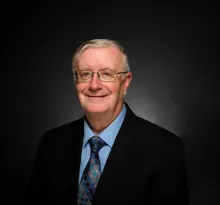
Jorge and his wife Kathy serve the Dallas (TX) and Lawton (OK) congregations. Jorge was born in Portuguese East Africa, now Mozambique, and also lived and served the Church in South Africa. He is also responsible for God’s Work in the Portuguese language, and has been visiting Portugal, Brazil and Angola at least once a year. Kathy was born in Pennsylvania and also served for a number of years in South Africa. They are the proud parents of five children, with 12 grandchildren and live in Allen, north of Dallas (TX).
