
Rodrick Foster
This transcript was generated by AI and may contain errors. It is provided to assist those who may not be able to listen to the message.
Welcome back from the Feast of Thevernacles. It's great to be home. I mean, the Feast is always exciting, and we enjoy it thoroughly. But there comes a time that we just have to stop listening, and it's time to go home and start doing. And we're back from the Feast of Thevernacles, and I wanted to ask the question, what can we do to keep the enthusiasm and excitement of the Feast alive in our minds and carry us through a long winter?
You may not have noticed, but I've noticed as I walk into that door down there that the flowers have already been dipped by frost. Some of the beautiful landings we have thriving in that little area have already been dipped by frost. And we are going to have a typical Cleveland cold winter.
So what can we do to stay focused on the right thing and to maintain the right perspective so that we can all grow and develop the mind of Jesus Christ? I'd like to answer that question today by going to scripture that Paul wrote in 2 Corinthians. We're going to look at verses 1 through 4. 2 Corinthians 11, verses 1 through 4. And we're going to read what Paul says here. This is actually one of my favorite scriptures that Paul ever wrote, and I don't read it that often.
But I have always found it to be the kind of scripture that helps you to keep balance in your life. Paul was concerned because there were other ministers within the Corinthians who were trying to use the bread. We're trying to manipulate them, or we're trying to teach another gospel who had a different spirit, probably a negative self-absorbed spirit. And Paul writes this. He says, Oh, that you would bear with me, and a little following, for indeed you do bear with me. For I am jealous for you with a godly jealousy.
Paul says, you know, he had found in this congregation, Paul said, I'm jealous for you. And he said, I'm struggling with it a little bit, but it's the right kind of jealousy. It's a godly jealousy. He says, for I have determined to you to one husband that I may present you as a chaste virgin of Christ.
But I fear, lest somehow, as the serpent deceived he by his craftiness, that your minds may be corrupted from the simplicity that is in Christ. And as we come back from the piece of Tachronachos, and we say, how can I keep that enthusiasm, that joy, that excitement alive? If the answer is to live the simplicity that is in Christ. Let's continue here, and then I'll explain what I mean.
For if he who comes preaches another Jesus whom we have not preached, or if you receive a different spirit, which you would not receive a spirit of manipulation, or a spirit of anger, or a spirit of people trying to have their own way, or a different gospel, if someone comes to you and says that the work is now, the church of preaching the gospel is now complete, and all we have to do is focus on the children of members, and we are no longer going to print any material, any literature, except for offering and beliefs.
If someone comes to you with a different gospel than the one that we believe, which is outward, which is an outreach, which is trying to reach the world with the positive and encouraging news of Jesus Christ, anyone who comes to you with a different gospel, who says that you have not accepted, his concern was that you may well be productive.
So he was jealous for the congregation because he wanted them to focus on the simplicity that is in Christ. The Greek word for simplicity is haplochus, and it means singleness. It means a sincerity without self-seeking or simplicity. Like all activities in life, the road that you are on walk requires balance. Now, on one hand, there are some who mock the moral and ethical teachings of Jesus Christ, who mock the things that Jesus said.
They only have one primary statement of belief, and that is, don't worry, be happy. Accept Jesus Christ, and he did it all for you. So you can continue to live in your sins, you continue to be the scoundrel you've always been. All you need to do is accept Jesus, and don't worry, be happy. So that is one ditch that many people fall into. And then there's another ditch, unfortunately. The other ditch that people fall into is to make discipleship far too difficult to understand and live.
To put roadblocks in front of people, to put obstacles in front of people that are not required in the Bible. And those obstacles can be all kinds of things. No, you need to be worshiping the full moon, the blue moons, the moon pies. You need to be talking with all kinds of personal agendas that you need to speak a certain language.
You need to pronounce the name of God a certain way. You need to do all these things in order to be righteous in God's eyes. So there's one ditch, and then there's another ditch, and then there's the balance. And the balance is the simplicity that is in Christ.
Let's take a look at another scripture. A few chapters ahead. 2 Corinthians 1 and 12. 2 Corinthians 1 and 12. People have a tendency to want to make God's way of life complex.
Christianity is just not easy. We say that again. Christianity is really very simple. It's just not easy because it's not easy because it takes commitment. It's not easy because we have to continually work on ourselves and make ourselves better in the power of God's Holy Spirit. But God did not intend Christianity to be complex, to be rich in the Lord. You may notice our services are kind of simple.
We don't have icons hanging all over the place. You may notice there's no stained glass. You may notice that the preacher walks up in a suit. I don't have special robes. There's nothing special. There aren't candles or incense burning. It's a very simple way of worship, a very simple way of life. Paul says in 2 Corinthians 1 and 12, he says, For our boasting is this. And again, he's being very critical of other religious leaders who were using and manipulating the Corinthian church. He says, Here's our boasting. The testimony of our conscience that we conducted ourselves in the world in simplicity and godly sincerity, not with fleshy wisdom, but by the grace of God and more abundantly towards you.
So Paul is saying we were honest and open and sincere with you. He's covered the Corinthian congregation in the way that we treated you and we talked you the Word of God. Again, people tend to make Christianity more complex than it was intended to be. There are those who have many types of spiritual viruses.
Some of those viruses include, I'm the one true leader, follow me, because I am the one true God's anointed. I think I've said before rather humorously, but it's true that in my lifetime I have met and shaken hands with all eight of the two witnesses.
People who claim to be, obviously, the two witnesses. A virus is spiritual viruses, which some people just have to prop themselves up in a very world that they live in and tell everyone else that I am the one exclusive true leader of God. If you're not part of my church or my organization, you're bad and you're cut out from God's blessing. There are many spiritual viruses, and we need to maintain the simplicity that is in Christ. That means that the head of the church is Jesus Christ. It's not a man, a group of men. The head of the church is Christ Himself.
The journey of discipleship is really very simple. Being a child of God is a lot less complicated than most people make it out to be. Today I want to discuss the simplicity that is in Christ. As we go through this long winter, hopefully we will claim to the simplicity that is in Christ and not be sucked into. Some may have adopted, some wind of change, some particular idea that people have about what God wants us to do. So I'm going to ask a few simple questions and provide some answers to those questions.
First of all, what is Christianity? What is Christianity? Let's go to Acts 9. We'll take a look at verses 1 and 2. Acts 9 and verses 1 and 2.
Speaking about the conduct of the Apostle Paul before he was converted and known as Saul, Acts 9.1, then Saul, still breeding threats and murder against the disciples of the Lord, went to the hunt groups and asked letters from him through the synagogues of Damascus so that if he found any who were of the way, whether men or women, that he might bring them down to Jerusalem. Now, if your Bible is like mine, the word way is capital W. Because what is Christianity? It is a way of life. It's not a fad. It's not something you can pick up and accept for a month or a year or five years of discard. It is a way of life. Once you understand it, once you understand that the Father has called you, it is a way of life until the day that you die. Because it is a life-stop. It is not simply a fad. Acts 19 and verse 9. Acts 19 and verse 9. I'll read this one, the new century version, the New King James, which I believe most of you have. Acts 19 and verse 9. It says, What did Paul talk about? He talked about a way, a lifestyle change and choice that you could make if you wanted to follow Jesus Christ of natural. One final scripture regarding this point. Acts 19 and verse 23. St. chapter is down for the 23rd verse. It says, And about that time there arose a great promotion about the way. So again, one emphasize that Christianity is a lifestyle choice. It's not a philosophy. Let me explain the difference. Politics is a philosophy. In politics, people support and believe a certain thing. And in politics, they usually want their candidate or their philosophy to take control.
But in Christianity, Christianity is a way of life. And in Christianity, we are the ones who want to be changed.
Alright? In Christianity, we are the ones who seek the change within us. To grow from being carnal and physical and selfish. To be changed and to be more like the mind of Jesus Christ himself. It is a single-minded commitment to a particular way of life. And again, I want to emphasize that Christianity is not a philosophy. The easiest way to live your life is to not to live your life in different boxes. You see, most people put their lives in separate compartments. They have one box for work. They have one box for leisure. They have one box for home.
And the way they treat their spouses and children at home, they have one box for church. But rather, Christianity is not effective when we live our lives in separate boxes. For example, we're not productive Christians when we live in a Sabbath morning box. And we come here and we act a certain way. And for two hours, we sing a few hymns. We shake some hands. And we eat some snacks. And then we return home and throw another switch and live in a different box.
And suddenly treat the people at home differently than we treat our own brothers and sisters in Christ. The simplicity of Christ is easier because you're always living in the same box. You don't have to remember which switch to throw when you accept the simplicity that is in Christ. There's no pretending. There's no double lifestyle. There's no shame or guilt that I'm doing this at work or home, but I come to church and I'm a different person. There's no shame or guilt that you're duplicitous, that you're living a double lifestyle. For 24-7, when you understand the simplicity that is in Christ, for 24-7, what you see is what you get.
And if you don't like what you see, then you can begin to change yourself and you'll get different results in your life. So that's what Christianity is about. It's a lifestyle choice. And if we understand the simplicity in Christ, it improves every area of our life. It will improve our whole life. It will improve what we do and say on the job.
It will improve virtually every aspect. Our marriages, our child-bearing practices, if you own a business, it will improve your ability to run a business, or an abandoned apartment. It is intended to improve every area of your life because it's not simply a philosophy. It's not a fad. It is a change in your lifestyle. And it should permeate, and that change should be reflected in everything you do in every aspect of your life.
So let me ask another question regarding the simplicity that is in Christ. What is conversion? Let's go to Matthew 18 and verse 3. Matthew 18 and verse 3. We'll be talking about this a little bit more next Saturday because it's a central stretch of the blessing of the children's ceremonies that we have. Jesus said, and surely I said to you, that unless you are converted, that means change, change dramatically. Unless you are converted and become as little children, you will by no means ever become a payment of heaven. And that's Matthew 18 and verse 3. Now, conversion is both a resolution and it is a lifetime building project.
Conversion is a life-altering process that changes us from one form or one frame of mind to another frame of mind. We all understand how cold temperatures can convert a liquid like water and totally convert it and change its composition into ice. If you don't understand that, just hang around, please, in about another 60 to 90 days and you'll see that happen. That's an example of conversion. It's a process. And for us, it's a process in which we gradually change our minds from mere physical desires, meaning our whole life is centered about my comfort and me and what I want. We change from mere physical desires to a spiritual passion and we make the kingdom of God first in our lives.
Now, that doesn't mean that we don't have other things in our lives. We still have great marriages and we can still make money and we can still have our own businesses and we can still accept promotions where we work. And other areas of our life are important. We still do all those things, but we change what our priority is, at least in primary reason, for living as a peace of mind, seeking first the kingdom of God and righteousness.
And then when we do that, all the other areas of our life, marriage, child-bearing, work, finances, everything else works out and is blessed. Because again, if we understand what the simplicity of Christ is, it changes us and it changes how we do everything. How we do people, how we view the importance of our relationships. It changes everything in our lives.
I want you to think about this scripture that Jesus said, unless you're converted, become like little children, you'll by no means enter the kingdom of heaven. A little child trusts its mother and father. It has faith in what mom and dad tell it. A child looks at them for answers. A little child looks at mom and dad for answers, for security, for love, and little children deserve to receive those things from their parents. Christ is saying, this is how our relationship needs to be with God. We need to go to God, we need Him for answers and for security and for love. And if we do that, then we will absolutely be blessed because our priority will be right. Christ is saying, this is how we need to be in our relationship towards God. Let's look at the process a little bit closer. Let's go to Colossians chapter 3, and we'll look at verses 1 through 11. Colossians chapter 3, beginning in verse 1, and we'll go through verse 11.
Again, I'm answering the question, what is conversion?
Paul writes here to the congregation.
It goes on and on, and it will be the youthful litany of murders, rapes, and every other news thing that they can possibly report in 30 minutes. Because those are the things that occur on the earth. Verse 3, The phrase here, hidden with Christ in God, refers to the fact that a Christian's old carnal nature has been crucified with Christ and buried together with him in baptism. So when we go under that water, when Joe Mango went under the water there of the Gulf of Mexico, and was covered by that water, his past life was not only forgiven, but it was hidden with Christ in God. All of those sins that he had, God separated from himself, and it's from God as far as the east is from the west. So he not only forgave of his sins, he has forgotten his sins. And who makes that possible? Jesus Christ. Who makes that possible? Because of the life he lived and what he did. In God's eyes, that past life is dead. It's buried. It's forgotten. You know what? It's us who continue to break up again. It's us who won't forget it. It's us who won't let it go. Long after God let it go, and forgot about it. Let's take a look now here at verse 5. I talked about a few minutes ago that lifetime building project. I'd like to give you the spiritual specifications. And if you were going to build a building, you would be given drawings and specifications. Right? This is our drawings and specifications, but I'm going to read from the New Century version.
Verses 5 through 11. I really don't like the new King James, for example. It starts out saying, it's a poor translation. It starts out saying, therefore, put to death your members, which are on the earth. And it says, for education and cleanness, back. You know, if we put to death every member, church member, who had these qualities, we'd be in an empty hall today. So it's just a poor translation. For that reason, I'm going to read this in the New Century version and follow, of course, with me, whatever you have.
Verses 5 through 10. So put all evil things out of your life, which are building projects, sexual sin, doing what you hate, letting evil thoughts control you, wanting things that are evil and greed. This is really serving a false god. These things make God angry.
In your past evil life, you also did these things, but now also put these things out of your life. Anger, bad temper, doing or saying things that hurt others, and using evil words when you talk. Do not lie to each other. You have left your own sinful life and the things you did before.
Verse 10, again from the New Century version, you have begun to live the new life in which you were being made new and are becoming like the one who made you. This new life brings you the true knowledge of God. I think that's just so much more powerful, and that is our specification. Getting those things out of our lives is the building project that we are on. These destructive qualities are not rooted out in our lives in a month. They're not going to be rooted out in a year, or 20 years, or 30 years, because we're physical, we're carnal, and we are conditioned to want to do those things. We are conditioned to be selfish, and that's why we need an output that I'll talk about in a few minutes. Acts chapter 3 verses 19-20. Acts chapter 3 verses 19-20. We're still discussing what conversion is. Again, conversion is a process, and change is a process, not an event.
Acts chapter 3 verses 19-20. Peter said, Peter said, Peter said, Peter said, Peter said, Peter said, Peter said, Peter said, Peter said, Peter said, Peter said, Peter said, Peter said, Peter said, Peter said, Peter said, Peter said, Peter said, Peter said, Peter said, Peter said, Peter said, Peter said, Peter said, Peter said, Peter said, Peter said, Peter said, Peter said, Peter said, Peter said, Peter said, Peter said, Peter said, Peter said, Peter said, Peter said, Peter said, Peter said, Peter said, Peter said, Peter said, Peter said, Peter said, Peter said, Peter said, Peter said, Peter said, Peter said, Peter said, Peter said, Peter said, Peter said, Peter said, Peter said, Peter said, Peter said, Peter said, Peter said, Peter said, Peter said, Peter said, Peter said, Peter said, Peter said, Peter said, Peter said,
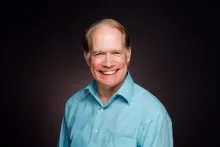
Greg Thomas is the former Pastor of the Cleveland, Ohio congregation. He retired as pastor in January 2025 and still attends there. Ordained in 1981, he has served in the ministry for 44-years. As a certified leadership consultant, Greg is the founder and president of weLEAD, Inc. Chartered in 2001, weLEAD is a 501(3)(c) non-profit organization and a major respected resource for free leadership development information reaching a worldwide audience. Greg also founded Leadership Excellence, Ltd in 2009 offering leadership training and coaching. He has an undergraduate degree from Ambassador College, and a master’s degree in leadership from Bellevue University. Greg has served on various Boards during his career. He is the author of two leadership development books, and is a certified life coach, and business coach.
Greg and his wife, B.J., live in Litchfield, Ohio. They first met in church as teenagers and were married in 1974. They enjoy spending time with family— especially their eight grandchildren.

