

Jorge de Campos
This transcript was generated by AI and may contain errors. It is provided to assist those who may not be able to listen to the message.
Brethren, what is conversion? Are we converted? Sometimes, as I come across people, particularly because a lot of the work I do in other languages, particularly in Portuguese, comes across a lot of people, and some people say, please, I want to get baptized. Please come and visit me. I want to get baptized. And baptism is an important phase, an important step that we need to do. But what is conversion? Is it simply just being baptized and you're converted? Is conversion attending church? Now, I'm not saying that you mustn't be baptized. I'm not saying that you must not attend church. But what I'm saying is that all... Is conversion just... Are there such nice people? They must be converted? Is it just being a nice person? In a sense, it's like people say, all we need to do is accept Jesus Christ and be saved. Like, recently I was talking to somebody that I know, because somebody else in a related family died, and they were not Christians, quote-unquote. They didn't believe, they didn't practice, but they were nice people. But, you know, they think they're really nice people, can't really criticize them, you know. But they didn't believe in Christ and then I was talking to this other person and he said, oh well, but we took to them and just before he died he accepted the Lord and he's in heaven and we're happy. Now, I'm glad that obviously they came to that, that's death. And you and I know that there is a second resurrection and there will be a time. Yes, we're all going to be judged according to our works. But the question I have is, let's assume that it was a baptism at the last moment, like at the deathbed. And does that mean, therefore, that you'll be in the first resurrection? You know, sometimes we think just because I'm baptized and because I do have God's only Spirit, but what is the promise? Now, I'm not saying you want to be or you will be, but what I'm saying is God is the judge and you and I cannot put God in a box and say, yeah, it's the box. Therefore, God, this is the box. Therefore, you're going to do x, y, z.
Yes, maybe that will be and maybe the person will be in the first resurrection, but maybe not because, because Christ did say, many will say of me, Lord, Lord, but I'll never knew you. So what is true conversion? And this is important for you and I to understand because it is a matter of life and death. Indeed, of eternal life or sick and death. It is important. Now, turn with me, please, to Matthew 18. Matthew 18. Yeah, in Matthew 18, we've got a situation that people came to Christ looking at one of the things that quite often people say, who's the biggest among them? Who's the boss? Who's the chief? Who's the apostle? Who's the leader of the church? Or whatever it may be, you know, and regrettably, this does happen. And the disciples said, who is the greatest in the kingdom of God? And then Christ was very specific said in verse three, and he said, because he brought some children, he brought, in fact, he discussed a little child and put in a mitzvah of them and he said, surely I say to you, unless you are converted, unless you are converted and become as a little child. Doesn't say converted as a little child and become as a little child. You'll by no means enter into the kingdom of God. So what is conversion? It is an important step. I mean, you know, in Acts chapter three, Acts chapter three, we have a situation, yeah, where the apostles were inspired to speak. And in this specific case, we have, yeah, a layman that had been healed.
And then we have Peter going to Solomon's portico, and now he's giving, let's call it a sermon.
And then there he says, because he's telling them about who Christ is, the Prince of Life. So he's telling them the good news about Christ. This is interesting, you see, because there's the good news of God's kingdom and his good news of Christ. That's why in our statement of beliefs, these, you know, we believe in the good news of Jesus Christ and the good news of the kingdom of God. The good news of Christ is that Christ is our Messiah, is our Savior. And he's the one that is going to, through whom we have salvation is given to us through him. So it is important. But then he goes on and says in verse 19, or let's go start in verse 18, but those things which God foretold by the mouth of all his prophets, that thee Christ would suffer, you know, was the Messiah would suffer. He has thus foretold. This is the good news about the Messiah Christ that has been fulfilled in his first coming. Verse 19, repent therefore and be converted.
Now you can see repentance is one thing. Being converted is a matter of it. Repent and be converted. So we can see that repentance is required, but then we've got to be converted. We've got to be converted. There's an action that the Holy Spirit, God's Holy Spirit, does. And that action is to convict us. That is explained in John chapter 16. John chapter 16.
Christ is here just talking just before he gives that lost prayer, public prayer in front of his disciples. That was obviously, as you know, after the Passover ceremony. So that was on the night that he was betrayed in John 16. Then he is telling them in verse 8 and 9. He was talking about when the Holy Spirit comes, when he says the Holy Spirit, which proceeds from the Father, that he will send it to us. And that he came on the day of Pentecost, where he says the Holy Spirit will convict the world of sin and of righteousness and of judgment. The Holy Spirit will convict. Now, interesting, convict is not just convinced, as I've mentioned before. It's actually a legal term. You know, you're convicted. It's a legal term. It goes to court and you're convicted. Convicted is, it's proved, in a sense, it's like proven beyond a shadow of doubt. But this is, the Holy Spirit convicts our hearts beyond a shadow of a doubt. So it's not just convinced, but it's convicted in the heart of sin. In other words, you and I know in our in hearts that we have to repent and change, that we have sinned. It really pricks our hearts like it happened to Saul. Paul, remember? What happened to him? He was on the road to Damascus. And he, in the road to Damascus, it's run about Acts chapter 9.
And then Christ appeared to him and he says, is it hard to kick? Basically, like kick against the stones, the rocks, you know? I mean, you're going in the road. I mean, that's not the war that is used there, but it's like you're going, I mean, kick against the rock. You're going to hurt yourself because Christ is the rock. You can't fight it. You can't fight it. So he was blind and then he had to recognize. He had to recognize that what he was doing, even though he was seen as perceived or he thought of himself as a good, in today's words, would be called a good Christian. I mean, he was Christian, was a Pharisee. But in other words, he was a good person, a good religious type person. So he thought himself and therefore there was these people talking about this man, which obviously was Christ, and this is fake, this is not true, whatever, whatever. And therefore, in his heart, he felt that he was doing the right thing until Christ came to him and really awoke him up, because he thought he was serving God.
But he came to a point where he realized he wasn't. And so God's Holy Spirit is what in the end, conveys us of sin. It was that we were sinned. It convinces us of righteousness. In other words, that we need to do what is right and that righteousness comes through Jesus Christ and convinces there's going to be a judgment. And that means we better do it, otherwise it's thicket. It's gone. It's thicket. There's going to be a judgment. So God's Holy Spirit kind of puts this conviction in us to say, we're going to do something about it. We've got to do something about it. And so it's basically talking about, you know, unless you be repented and be converted, as we read a little earlier on in Acts chapter 3, none of us will have eternal life. So there is an act of conversion that is very important. And so let us look at what is the biblical definition of conversion? What is the biblical definition of conversion? And that we can read in Romans chapter 8. So let's look at Romans chapter 8. In Romans chapter 8, we'll start in verse 6. Romans 8 verse 6. And it says here, For to be carnally minded is death, but to be spiritually minded is life and peace. Basically what it's saying, brethren, is that the way you and I are in our normal, natural way, we are minded about the things which are physical. Carn means flesh, which is physical, the physical things. You and I are concerned about physical things, and there's nothing wrong with being concerned about physical things. But when those physical things take a dimension, then it becomes a priority beyond what it should be. Because now we're minded about those carnal things, and particularly those carnal desires, those things that become more important than God, because God should be first. When all those physical things become more important, whether it's money or whether it's Bitcoin or whatever it is, when these things become really very, very critical to us, we are being carnally minded. We are being carnally minded. The end thereof is second death. Second death. Because understand, the first death, the Bible looks at it metaphorically or figuratively speaking as sleep. So really, the first death in that true spiritual sense of looking at time which is eternal, the first death is only a profound sleep. So in a sense, it's not a real death.
In a sense, it means you do not cease to exist. Think about it. You do not cease to exist. Why? Because the spirit of man in man, which is you, is kind of, I'm going to use just a simple analogy, put in a freezer and held in a non-living status, but it's like a seed of you held there until it's taken out of that freezer box, given a new body, and then it's living again. So you do not cease to exist. It's not in a living status with it sleeping, but when it's talking about a carnal mind is death, it's talking about real death, which is a second death. When that spirit will be destroyed, when that spirit will be destroyed, the spirit of man in man. Elsewhere, elsewhere says, fear not man, they can kill the body, but not cannot kill your life potential, eternal life potential. So, Yahweh are to be carnally minded is death, but to be spiritually minded is life and peace. Yah is talking about through conversion, brethren, through conversion. It's actually changing our thinking process to be focused not on physical fleshly things. Yes, as physical human beings, we've got to look after our houses, we've got to look after our cars, we've got to look after our health, we've got to make sure that everything is done, but there is a balance to that. When it becomes overly swung towards the passions of the flesh, that's what God is talking about, then we must not. So, our minds must be changed from the old man to the new man, a whole change in the thinking process in a way you and I think to be towards things which are our spiritual goal. Long-term eternal goal, which is in a sense, as it says, is life, eternal life, and peace, and harmony. It really is something to change. You think about, for instance, we have the ministry of reconciliation, which means we need to make peace to be peacemakers. And, you know, sometimes you make peace with people, but you stay there and I stay there. Now, imagine if that's what we'll have for eternity. You stay there and I stay there. I don't think that's what God wants in eternity. When it says reconciliation means we reconcile and we best bodies.
And I think that takes time. I think that takes time. And that's what this conversion is all about, is a process of time, of healing, of changing the thinking process, of healing these issues, resolving these long issues, and maybe sitting with that person and talking and, and yes, you got to change and the other person got to change and we have to come to a harmonious reconciliation and that takes time. You don't do that at the deathbed in five seconds. Oh, well, I've accepted Christ. That's what I'm talking about. It's beyond that. That is true conversion. That is the biblical definition of conversion. Let's continue reading in verse seven. Because the carnal mind is an end with you against God. Why? Because when the things that are physical take such a big priority in our lives, it actually may mean that because there's such high priority, I'm prepared to lie or I'm prepared to steal or I'm prepared to just taint a little bit the truth for me to get what I want. And regrettably, this has happened in many of us. And we're going to change that. I'm not saying that we're perfect. I'm just saying it's a process that we're going to change.
Because the carnal mind is the enemy against God because it is not subject to the law of God, which says, you tell the truth even to your own hurt. You tell the truth even to your own hurt. That's... You see, God... God is not above the law. That's an important statement.
God is not above the law. You see, many leaders say, oh, well, I don't have to do that because I'm the leader. I'm excused. If God was above the law, then Christ would have not had to die.
But you see, because you have said, all right, we'll just wash that away. You can be forgiven. That's it. Why die? But the law says the wage of sin is death.
And the only way to save you and I was for a life which is greater than our lives to die for us. The law requires that. And therefore, because God created everything through Christ, Christ's life, which is greater than ours because it's the one that created us all, under the instructions of the Father, is far greater than us. And therefore, that life pays for all our lives and had to die. God is not above the law.
God's law is eternal, is spiritual, and God will never deviate from his law, because his law, in the end, is love. Is that again concerned? And when you steal, when you murder, when you commit adultery, whatever it is, it is a lack of love. Simple as that. Continue reading then in verse 8. So then those who are in the flesh cannot please God. Now, you and I all in the flesh, physically speaking, but it's talking about the mindset if your mindset is focused on the physical things. Now, understand, it has to be, to some degree, focused on physical things. Right? We have to look at ourselves. We've got to brush our teeth every morning or whatever it is. Otherwise, you know, we've got to look after the flesh. So those things, but when those drives and physical desires become over demanding that for self, me, myself and I, I'm first, not loving the others first, and not putting God first, then the equilibrium is out of bounds. That's why it says those who are in the flesh cannot please God. Verse 9, but you are not in the flesh. You know, it was your mindset, your mind thinking, your main way of thinking is not around the things of the flesh, but in the spirit. If indeed, God's spirit dwells in you. In other words, as we are in the sermon, and if God's spirit is preaching us, and if we're listening to God's spirit, if we're putting that into practice, and therefore we're listening. Now, does it mean that we never fail? No, but we try to listen. Now, we all trip. I mean, it says we walk in the light, but we all sin. Why? Because we walk in the light. We want to do what's right, but which one of us is walking the light and does not trip on a little piece of wire on the floor that I didn't notice it. We all do. Do we do it deliberately? No. So we all do sin. But our desire and intent is not to fall. Our desire and intent is to walk in the light, is to walk in the spirit. So if we are in the spirit, yes, we are physical flesh still, so we're still imperfect, so we still can trip now and again, but it says if we've got God's Holy Spirit, we are going to strive to walk the right way. Now, if anyone does not have the spirit of Christ, which obviously is talking about the spirit of God, just in the previous sentence, what's the spirit of Christ? The same spirit. There's only one spirit. So it's the spirit of Christ, it's the spirit of God. So it's the same spirit. If we don't have God's Holy Spirit, it was if we don't have Christ's Holy Spirit, same thing, same spirit. We're not Christians. We're not God's people. Simple as that.
But it's not just having the spirit, it's following the lead and listening to that spirit.
And so conversion. And look at verse 14. Conversion is when you and I, or as many of us, are led by the spirit of God. In other words, God's Holy Spirit is pricking our minds, whether it's through study, through meditation, through whatever means. That's still small voice, pricking our conscience, and my conscience and your conscience says, don't do that. Do I follow that little pricking? Am I led by the spirit of God? It says, as many as I'm led by the spirit of God. These are the sons of God. These are the children of God. Now, it is very powerful for us to understand that, because when you and I receive God's Holy Spirit, it's a seed. It's the Holy Seed. And that seed is impregnated in your mind with the human spirit, the spirit of man in man. It's in analogy is like the human male seed from the father, yes, the father, spiritually speaking, from the father, going to the egg in the mother. And then a baby is begotten in the mother's womb. The moment that little baby, and nowadays we have ultrasound, and you can see the baby growing, growing, growing, and all this, that baby is living.
And you can see nowadays, when it's a boy or a girl and all that, you can't, but it's still not born. But it's already the son of that physical dad. He's already the son, not yet born. He's still unborn son, but he's already the son. For instance, when I begot our children, they were not yet born, but they were already my sons, or my daughters, although they were not born yet. And so, when we are led by the Spirit of God, that the Spirit of God is begotten us, we are really children of God. We're not adopted. I've mentioned this before, and I have nothing against adoption. Please, those of you, and some, have done adoption or do adoption, it's a lovely deed, and it's commendable. It is commendable. But God is not adopting us, because taking a little bit of an extreme, some families, they love cats or love dogs, and they adopt the cat as one of their own children, quote-unquote. But you know what? But you know what? That cat will always be a cat.
And I'm not saying adoption is wrong. And I'm not saying that action of loving a cat and treating him right and all in a godly way is wrong. By no means, I'm just using that as the analogy. But the analogy is, if we were adopted by God, we would always be of a different kind. We are begotten by God the Father, and we're going to be of the same kind as the Father, really of the God-kind. And that is so encouraging and uplifting. And so what he says, yeah, as many as are led by the Spirit of God, you know what?
As we are listening to that conscious, to that gene, think about it, is that spiritual genetic code that we receive from the Father. When we are led by that genetic code, spiritual genetic code, between quotes, okay, so I'm just using that as an analogy, we now are really the sons of our Heavenly Father. That is conversion. That is conversion. It's a change of the thinking process when God's Holy Spirit joins us. But that is only step one. Remember, that begettle is only the first step, because that baby, physical baby which is begotten in a mother's womb, it's only an embryo. It has to grow until it reaches maturity enough after 40 weeks or whatever number of weeks, at least 39, or if it's a little earlier, it maybe needs to go to incubator and things like that.
But it has to mature up to a certain level before it gets born. Likewise, you and I, spiritually speaking, have to mature, have to grow, have to go through this conversion process in the womb, which is the Church of God, which is the matter.
And we are going to grow in this until we can be born. And so, when we are first begotten, it's only the first step of that conversion process. In other words, that follows baptism.
We'll look a little bit more at that in a moment. That follows baptism. But that is only the first step. Turn with me to Colossians chapter one. 1, Colossians chapter one, verse 13. It says, He has delivered us from the power of darkness and conveyed us into the kingdom of the Son of His love. At that moment, when we have received that Holy Seed, we have been, in other words, conveyed as it says, or delivered from the power of darkness and conveyed from the kingdom of this world to the kingdom of God.
Even though the kingdom of God is not yet, but we are already living under those rules and those conditions and those standards of the kingdom of God. Sure, the kingdom of God will only be established on earth when Christ comes back, but the kingdom of God means as living according to God's laws, according to the standards of that kingdom, according to the practices of that. And when we receive not only spirit, our minds need to switch tracks from following the laws of this worldly environment to start following the laws of the kingdom of God.
So we need to do that. So He says, in whom we have redemption through His blood, the forgiveness of sins. Through whom, through Christ, we are brought back. We are brought back. Our life is brought back. Yeah, because at birth, basically, we have not really done any sins, but over time we will do some sins, and we're brought back. We've got to be brought back from death. So we've got to be brought back.
And you and I are brought back not by gold, but coins, dollars, British pounds, a big bank account. We are brought back by the sacrifice of Christ, and because of that, we receive God's Holy Spirit that can lead us the right way. Turn with me to 1 Peter 1, verse 18. 1 Peter 1, verse 18. 2 Peter 1, verse 18. Knowing that you are not redeemed, in other words, you are not brought back from death to eternal life, with corruptible things like silver or gold, from your aimless conduct received by tradition from your fathers, but you and I were brought back by or with the precious blood of Christ as a lamb without blemish and without spot.
That's how we're brought back.
So we're brought back by Christ's blood. Christ, therefore, then, going to the Father, sent us the promise from the Father to obey and to practice righteousness. Turn with me to Romans chapter 6. Romans chapter 6. In Romans chapter 6, it tells us, yeah, yeah, about God's loving kindness and graciousness. And it says, yeah, in verse 1, what shall we say? Shall we continue in sin that grace may abound? Seeing that God's giving us such grace, such gift. Shall we continue in sin so we get more gifts from God? No. Now he says, certainly not. How shall we, who died to sin, live any longer in it? How shall we continue that? Anything explains we were baptizing to his death, and now we've got to walk in a new life.
So Christ died. So our baptism symbolically represents us going down with Christ to death. But likewise, like Christ was resurrected, we're going to come out of it with a new life. In other words, with putting down to death that old fleshly way of thinking and coming out now with a new way of thinking, converted way of thinking, which is the new life. Look at verse 15 and 16 of Romans, bigger part of Romans chapter 6. Verse 15 and 16 said, What then shall we sin because we're not under the law but under grace? Shall we sin because the law now does not say you are condemned to sin because the grace says, no, your death penalty is gone, so you're not under the law's penalty? Certainly not. Do you not know that to whom you present yourselves, slaves to obey, you are that one's slaves who you obey?
So, yes, we did sin. Now we've been forgiven. Now we quote unquote out of jail. But we now, therefore, because we are out of jail, can we go on killing and murdering and doing? No! We've been forgiven gratis. Gratis is a version of the word grace. Think about it. Gratis means freely, you know. We've been forgiven freely. Gratis. So, shall we continue sinning? No! Because sin led us to death. Are we going to continue that as slaves of that? Or of obedience leading to righteousness? Do you get that? Obedience leads to righteousness. Obedience leads to righteousness. Not that you earn it, but it leads that way. That's why it says, verse 17, but God be thanked that though you were slaves of sin, yet you obeyed from the heart. It's a change of heart. It's a change of mind. It's a change of mindset. It's a change of way of thinking.
You're made from the heart that form of doctrine to which you were delivered. You were delivered from that wrong way of life. That is a transition. That's what the biblical conversion is all about. There is a transition. And so, how do we receive God's Holy Spirit?
Yes, we receive God's Holy Spirit upon baptism. Right? Turn with me to Acts chapter 2, verse 36. It's a well-known scripture. Acts chapter 2, verse 36.
Acts 2, verse 36.
Therefore, that all the house of Israel know assuredly that God has made this Jesus. Therefore, even though this was written in Greek, now think about it. This was to a Jewish orchards. Now think about it's talking to a Jewish orchards. Yes, it's written in Greek, so it's translated into English. It is speaking to a Jewish orchards. And he was saying to that Jewish orchards that God has made this man Jesus whom you have crucified, has made him both Lord, that to a Jewish orchards, what did Lord mean? Me Yaw.
Me Lord. And Messiah.
That's a powerful statement. Now, I understand that it's in Greek, it's not Yaw, it's curious, but he was talking to a Jewish orchards, and that's what it meant to them. That's the context of that environment. Now, when they heard this, verse 37, they were cut to the heart. They were convicted. They were convicted. It pricked the heart. Bang! That was like a bullet straight through. Bang! And then they said to Peter, see, they recognized their sin. They recognized their sin, and they said to Peter and the rest of the apostles, what are we going to do now?
What did we do? What are we going to do now? Man, what did we do?
Then Peter said to them, repent.
Now that you believe, you have fight, that what you've done, you believe, you need, that Christ is the Christ, and that you killed him. That is the Lord, that is the Messiah, and you killed him. How do you believe that? Now you've got to repent. You've got to change.
And we saw, early on, it's repent and be converted. So how do that conversion process start? Starts by being baptized in the name of Jesus Christ. Yes, you're baptized by the name and authority of Jesus Christ for the remission of sins, and you shall receive the gift of the Holy Spirit that's sealed. So that's how they receive the Holy Spirit. First, they need to have the faith and then they need to change, to repent.
Now, what is true repentance? Now, is true repentance saying, oh well, I keep the Sabbath, I go to church on the Sabbath, well, the Jews go to synagogue on the Sabbath, but they're repentant. I don't know, those individual people and God. I'm not judging, but what I'm saying is that's not all. Just be a Sabbath keeper is not all.
Oh, is it keeping the Holy Days?
Yes, we've got to keep the Sabbath. Yes, we've got to keep the Holy Days. But is that a sign of true repentance? Oh, a sign of true repentance is because I only eat clean food. Is that a sign of repentance? Now, I'm not saying you must not eat clean food. Of course you have to. Is the sign of repentance that I understand the promises of Abraham, and that I understand the plan of God? I understand the Holy Days, the plan of God. Is that I come to church every Sabbath? I keep the Holy Days? Is that a sign of repentance?
If you do all that, but you can't see the carnal mind, if you can't see that you have to change your way of thinking, that is only an intellectual conversion. Intellectual.
A repentant person must see the carnal mind. They must understand it. They must surrender the mind, the will, to God's will. As we read in Romans 6, it's that death of that old man is buried in that watery grave, and he comes out in the newness of life, in the newness of the way of thinking.
I've got a lot of people coming to me and says, they're writing to me, when you're coming to visit me, I want to be baptized. Wait, wait, wait, wait, let's talk a little bit. Do you understand this? Oh, no, no, but I believe in the Lord, I believe the Sabbath. Wait, wait, wait, wait.
If you don't understand what you've got to give up, then how do you know that what you've got to give up is dead?
You've got to understand what you've got to give up. I've got some people that said, oh, so you mean you only baptized people that can read and write? Well, I have baptized people that can't read and write. I have baptized people in Brazil that cannot read and write. Because it's a matter of the heart. You say, oh, well, I can't read the Bible or not. The other brethren next to them were reading the Bible to them. Yes, today they know how to read and write, because I encourage them to go to classes, to adult classes, and they're done, but I baptized them before that. It's a matter of the heart. You see, that's why Christ in Luke chapter 14 says we've got a counter cost. Luke chapter 14.
Now, if anyone comes to me and does not hate his father and mother and wife and children, brothers and sisters, and yes, his own life. Now, hate means loveless. You know, it's like, says you've got to hate the things of the flesh. Now, it does not mean now that you don't brush your teeth. You know, it does not mean that now you come to church dressed in rags and and unwashed clothes, and everybody stays away from you because it smells. No, that's not love to your brother. So, what he's saying about hate is that you put God first. It's a question of priorities. It's a question of priorities.
If you don't put God first before your own life, you cannot be Christ's disciple.
So, basically what baptism is, think about it, is signing a contract. It's signing a contract. So, say for instance, you see this lovely car out there, and say, I want that car. So, he got to the dealer, and he says, I want that car, I want to buy it. And he says, okay, you can have it because I want to buy it. Is he going to sell it to you? Maybe not, because if he doesn't know you've got enough money to buy for it, or maybe he's got enough whatever bank account or whatever it is to pay, he's not going to sell you the car. Well, you can have some el cheapo salesman says, yeah, you can have it, but will the dealer, the owner of the company really give him the car? No! I mean, you get some people that say, oh, well, you made a contract, and this and that. It's like some people can buy you. He says, okay, but will God give you the promise? If you don't know what you're committing to, you cannot commit to something unless you know the cost. Your account, the cost. Your account, the cost. That's what he says here. He says, verse 28, for which of you, intending to build a tower, does not sit down first and count the cost? Whether he has enough to finish it, and to be baptized, we've got to count the cost.
If you have not counted the cost, and if you've gone to el cheapo salesman, quote unquote, second-hand dealer, minister, that says, all right, you baptized that you got, they unbaptizes you, which is not a minister of God, would God fulfill that contract?
If you don't know what you're committing, you're counting the cost. As a minister of Jesus Christ, I'm very careful to ensure that people are baptized, are committing, and they know what they're committing to before I baptized them.
And therefore, people don't understand they are a forsake old. Do you and I really understand what we need to forsake? Because that is the new covenant.
That is the new contract that you and I make with God directly, and with that contract, He writes the laws in your heart and in my heart.
Look at it in Hebrews chapter 8. Hebrews chapter 8.
Verse 7. For which that first covenant had been faultless. You see, the first covenant, old covenant, had a problem.
Was God's problem? Because God was not faithful, and therefore, He didn't do His part of the job?
Of course not. God is faithful.
See, they had a problem, and therefore, there was need of a second. And verse 8 says where the problem is. The problem was not in God. The problem was the fault of the people that they did not fulfill that part of the contract. They did not obey Him. They said they would, but they didn't, and that's why they went to slavery. And so all these Jews that says, oh, they're great people because they're Jews. I'm sorry, historically, your record is not very clean. I've got nothing against Jews. I love them. But you see, the law says, because the days are coming, says the Lord, when I'll make a new covenant, I'll make a new agreement with the House of Israel and the House of Judah. And that agreement will be done in the world tomorrow with all Israelites and all the Jews. But in the meantime, it's being done with a few of us now up front.
It says, not like the old one, because it did not obey, but in verse 10 says, this is a new covenant. Now make is that in those days says the Lord, I will put God's laws in their mind and write them on their hearts. Interesting. I was talking to somebody just the other day, they told me, this is the only place where God says that He will tattoo you. Write His law in your heart. It's the only tattoo we see in the Bible.
Writing God's law into your heart. And I'll be their God and I shall be my people.
Brethren, that means that when you have God's law written in your minds and in your hearts, you want to obey God. You want to. Therefore, where is the memory and the reminder that you got to obey God?
Inside, yeah, and in the end, isn't it?
Therefore, if you need tassels to remind you to obey God, I think you got the wrong thing. Because what you need is in the end, yeah, and there. That's what you need. What we need is a living sacrifice. Romans 12 verse 1 and 2 says, due to God, a living sacrifice that is pleasing to God, which is your rational, your basic, simple responsibility. In other words, God is not interested in you burning and killing a bull or a goat. He's interested in you obeying. That is the living sacrifice. That is the sacrifice of the new covenant.
And therefore, when you receive God's only Spirit, is that process finished? No! No! It's only the beginning. It's only step one. It's only step one.
Look at the parable of Luke 19. Parable of the talents. Luke 19. Luke 19. Start in verse 11.
It says, he has a certain man, a certain nobleman, that went into a far country to receive to himself a kingdom and then to return. The analogy I was talking about Christ, that went to heaven to receive the kingdom of God and then to return to earth to implement the kingdom of God. And he called his servants, you and I, and delivered to them a portion of his spirit. God's only spirit. Amina is basically about three months salary. So whatever your salary is, it's three months of it. Yes, it is a good amount, but it's not a lot. You know, but it is a good amount. And he says, do business to like him. He's given as the seed of the Holy Spirit. And he says, do business. Make it grow, make it multiply. Use God's Holy Spirit and multiply. But he's citizens, which is the natural children, physical children, his reliance, rejected him. They killed him. Yeah, they killed him, rejected him. They hated him. We'll not have this man reign over us. They killed him. That's verse 14. But anyway, when you return, verse 15, those true servants, one that received that seed multiplied at tenfold. Multiply at tenfold. You see, you and I have to use God's Holy Spirit, and it takes time to multiply and grow and to apply it. See, the conversion process is not only receiving God's Holy Spirit, it's actually growing. So there was another one that grew it as well, and proportionately they got their reward. But it was someone that received it and sat on it. He sat on it. He did nothing with it.
You see, God's Holy Spirit opens our mind to certain understanding, and yes, but we've got to read it, we've got to study it, we've got to meditate on it like we are doing the sermon, and we've got to apply it and grow and make it multiplied. That's why it says, brethren, you know that time's up at, that's in 2 Peter 3, but beware, there's two poles, because what you need to do is to grow in the grace and knowledge of our Lord Jesus Christ. We've got to grow. That has to multiply. That has to multiply. There's also the scripture that says, I am the vine, that's in John 15, and he says, you're going to be a much fruit. We're going to use that fruit, that sap from the vine and multiply and produce fruit. That sap from the vine is God's Holy Spirit, and we're going to use it, we're going to multiply it and bear fruit. We're going to put it to practice. And it also says, Peter does not work, does not eat. Second Thessalonians 3 verse 10, which, spiritually speaking, and now it's not talking about spiritually in that context, but spiritually speaking says, if you don't put God's Holy Spirit to work, you will then not eat of the end result, which is eternal life. Brethren, we've got to be overcoming. We've got to be growing, and we've got to be overcoming. We all have faults, we all have difficulties. When Christ comes back, you bring us the kingdom, we know that, there's many scriptures about that. But who will be there? Those that are overcoming. But who will be there? Those that are overcoming. Let's look at Revelation chapter 2 verse 26. For instance, Brethren, Revelation chapter 2 verse 26.
He says, But he who overcomes and keeps my works till the end, till the end, whenever the end is, when it's the end of your life or my life, or it's when Christ comes back. But we've got to be growing till the end and overcoming. To him will I give power over the nations. You see, we're going to be overcoming till the end. Look at another scripture, chapter 3 verse 21. And there are many others that say the same thing. To him who overcomes, I will grant to sit with me in my throne as I also overcame and sat down with my father on his throne. We've got to overcome. And then there's the parable of the soul, which is in Matthew chapter 13. Matthew chapter 13.
And you know the parable of the soul, which is explained at the beginning of Matthew chapter 13, about the soul went out to sow and some of the seed fell on the wayside. Some of it fell on stunning places. Some of it fell on amongst the thorns and some of it fell on good ground. And then there's the explanation starting in verse 18. Verse 19 says, when one hears the word of the kingdom, when we hear the truth, the words, and does not understand it, if we just hear it, but we're not listening to it, and we don't grab it, it doesn't sink in, then Satan, the wicked one, comes and snatches it away. How many people get to beyond today? How many people listen to our programs and are just gone, gone?
Because this is the ones that are received by the wayside. And then you've got the other ones receive the seed on stunning places. This is who hears the word, and he immediately receives it with joy. A viewer comes to people and says, hey, I have been waiting for this for years. I'm so excited. This is the truth. Wow, this is the best thing since class of bread and this. I'm so excited. And they stay even. They start coming to church. They come to church for a week to two, well some two, for five, six years. So excited. And then it fizzles away.
Receives it with joy. Verse 21, yet he has no root in himself. There has not gone deep into the heart and into the mind, into the application. And therefore he endures it for a while. Whoever a while is, a day or two, a week, five years, whatever it is. But then, oh well, you know, you know.
You come. This job, I'll only give you this job. If you come here, maybe just one week a year on the Sabbath. Oh, well, it's only one week a year. God will understand. And then, oh well, but you've done it last week. Why don't you come this week again? Oh well, you know, God will understand. You see, when the tribulation or persecution arises, because of the word, because of what you're going to stand up for, immediately stumbles. Immediately he stumbles. Immediately he or she compromises.
And now when he refers to 22 and he receives the seed amongst the thorns, you see, we use the word. You see, they get the word. Maybe they get baptized in the church. Look what I'm so busy.
I had such a busy week. I didn't do my prayer and Bible study as much as I should. In the next week, do a little bit less. And then, oh, then, oh, I've got to pick it up. But then, you know, it just keeps going on. It's like not really getting it right, getting it together. See, the kids of the world in the sequence of riches chunk the word and makes it a little fruitful. You see, it requires time, this conversion process. It requires overcoming. It requires showing faithfulness till the end because it says, either it's cold and chosen and faithful till the end. You see, through conversion requires not only that initial commitment, but it requires perseverance till the end.
Perseverance till the end. And you know, we all in a sense are like Paul. We go through times. We look at it in Romans chapter 7, Romans chapter 7. We all in the same shoes. I mean, he was God's apostle to the Gentiles. But look here in Romans chapter 7. Verse 15. Romans chapter 7. For I'm doing, I don't understand. For our will to do, that I do not practice. But I hate that I do. Now, brethren, Paul was not going out and robbing banks or whatever doing things. But what he was saying is, he was struggling with things in his mind. And we all do that. We all struggle. If then I do what I will not do, I agree with the law that the law is good. Because it's no longer high to do it. But certainly dwells in me. And look a little bit further. In verse 22. For I delight in the law of God according to the inward man. That's what I want. It's in my heart. It's my desire. It's my intent. I delight in that. But I see, verse 23, that I'm struggling. I'm worrying about against these things. In my mind, there's other things, thoughts that keep coming up. And look at verse 24. It says, Oh wretched man that I am. Oh wretched man that I am. Who will deliver me from this body of death? In verse 25, I thank God through Jesus Christ our Lord. So then with the mind, I serve the law of God. My mind, I am spiritually minded. I'm not commonly minded. I'm spiritually minded. I am on this road of conversion, being spiritually minded, having the Spirit of God guiding me. And so with the mind, I serve the law of God. But yes, in my flesh, there is the sweetness. But I'm really striving to obey God. And such encouraging in verse one of chapter eight. There is therefore now no condemnation to those who are in Christ Jesus, who do not walk according to the flesh, but according to the Spirit. Brethren, so what is true conversion? True conversion, brethren, is not just being baptized. It's actually being led by God. So the Spirit is working as this ongoing struggle and fight and overcoming to the end. Brethren, conversion is being led by God's only Spirit. Yes, indeed, it's receiving God's only Spirit. Yes, indeed, it's a change of mind, but it is an overcoming process. Please never forget that and be encouraged, because the mere fact that you are fighting, it's encouraging to know that you are in the right path.
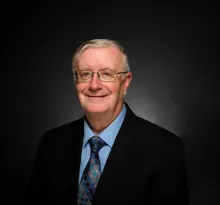
Jorge and his wife Kathy serve the Dallas (TX) and Lawton (OK) congregations. Jorge was born in Portuguese East Africa, now Mozambique, and also lived and served the Church in South Africa. He is also responsible for God’s Work in the Portuguese language, and has been visiting Portugal, Brazil and Angola at least once a year. Kathy was born in Pennsylvania and also served for a number of years in South Africa. They are the proud parents of five children, with 12 grandchildren and live in Allen, north of Dallas (TX).
