
Roy Holladay
This transcript was generated by AI and may contain errors. It is provided to assist those who may not be able to listen to the message.
Well, good afternoon to everyone. Good to see you. I was beginning to doubt whether I'd make it or not. I got in the traffic jam in all three lanes on the interstate that sat there. And finally, we started easing forward for about, I don't know, a mile and a half or two. Got down to exit 328. There was a wreck there. So they had everybody merge over to the right on the berm, and we drove by it, and then you were scot-free. So I wasn't too far from there when I called.
So thankfully, I was able to be here. I had a couple other notes I thought I might mention. I believe all of you realized that was John Elliott. And he and Mary served in Kenya. The white lady who was talking to the audience, that was Mary, his wife. She goes over with him quite often. And I got tickled. You'll notice she would talk 30 seconds. The translator would say, what, three or four words? And then she would go on. So I guess he was a good summarizer. So, this past couple weeks, we've been quite busy. Not just out visiting, although I have put quite a few miles on visiting. Any time I run down the Roman comeback, it's about 300 miles to go down there and visit.
So it takes quite a bit of time. And went down, counseled someone for baptism, and they're ready. And discussed something with another couple while it was down there. But, uh, Carrie Antion and I, as well as the management team, have been working on this family winter weekend, or winter family weekend. We had several sites that we were considering. Actually, Nashville was one of them. Indianapolis, several there. Northern Kentucky and Cincinnati. And finally, we got down to the one that was selected. And I think everyone who will go this year will be very pleased at the facility. It's a brand new lodge. They have all the rooms are villas, two rooms.
And they have a, I'm sure Bill mentioned all this, built-in water park. So, it's going to really be nice having that. Also been working on the feast. We've had to go over, collect all of the ministers where they're attending. And basically, begin to do some preliminary work on speaking schedules and song leading this year. So, those are now in the coordinators' hands. And they'll come back to us again. We'll take another look at them. Also, we've been working on satellite sites. As time goes on, we may have to have more sites that are regional.
As far as the feasts. We're getting older and we find that we have certain areas where people, simply because of age and finances, are not able to travel. Consequently, we have what we call satellite sites. They're not open to transfers, but they're for people locally to attend. We have one up in Montana. That was there last year. We're going to have one in Phoenix this year.
We've had one in Big Sandy. Norman and I started that somewhere back around 1998-1999. And that's been going ever since. And we're going to have one in Cincinnati. In fact, Norman and I are in Gatlinburg, so we're going to be there to start the feast. We're going to jump out a couple of days and run up to Cincinnati and speak and come back.
But we have one in Cincinnati to help take care of the middle part of the country. And then working on one right now, Charles Mollier is trying to find a site up in the northeast. It has several prospects. So we've got a number of those who are going. So all of that just seems like it takes time.
A lot of work on the computer, phone calls, teleconferences. In fact, Sam Martin and I were out this week visiting. And I had forgotten when I made my visit that I had a council teleconference. So we had to run out of the house about five o'clock and from 5 to 7 30 or so I was on.
I was on my phone and I let him drive. So he drove, I talked, and listened. And we had a teleconference. So that worked out. Speaking of Sam Martin, he's down in Gadsden today. He's going to Woodman and he will be there. He's going to be one of the Christian leader presenters as far as seminars and so on. And he's teaching softball. So he's looking forward to that, he said.
I told him I'd give him my big daddy softball, love, but we never could get it all together. So that should be a lot of fun. Speaking of the Martins, we're making an announcement this weekend pertaining to Sam and Penny. They're going to be transferred from this area.
And I know all of you are going to be extremely sad about that. But we really need a church pastor in Knoxville, London, Lexington. It's been going on here seven months now without having a true pastor.
So Mr. Martin or Sam will be gone for this Sabbath, next Sabbath. And then coming back, I think it's the 16th, they will take their first trip up to the Knoxville area, probably run London Knoxville and speak that particular weekend. We'll begin doing house hunting. And as soon as they are able, they will be transferring up that way.
So that's something that is coming up. We're really hoping, and this is something we don't know about fully yet, that we can pick buildup and he can serve here likewise. So we'll have to see how that progresses. Let me see if there's something else. Oh, yeah. Victor Cubic sent an announcement out that, did you read this from Victor? Concerning seminar registration, this came out Friday afternoon. It says, beginning with this month's Good News magazine, how many of you got your Good News magazine? Nobody in Rome has. I don't know what's happening down there.
It says, beginning with this month's Good News magazine, we've begun to promote the Kingdom of God seminar, Bible seminars. As you know, there's two-page spread, I think on page eight, nine. We have noticed that some of our members have been completing the online registration process for the seminars. If you are a church member, please do not register for these seminars.
The registration process is designed to allow us to count and to contact those who are interested in the seminars, but who have not already, or who would not already be in attendance with the congregation. Thank you for your understanding. And then the latest issue of the ministerial journal that we receive once a month has the basic outline of the lectures that we're supposed to give. The first weekend we will have three lectures, each one of them 45-50 minutes. There'll be a break between one and two for coffee and tea, and then there'll be a break between two and three for finger sandwiches and that type of thing. And the total time they're estimating is two hours and 45 minutes for these. It'll be on September the 10th, and obviously we're going to want all of our members to be there. Hopefully we'll have somebody show up. You never know at these things. We have anywhere between 1,800 and 2,000 good news subscribers in this area. We only have about 344 down in Rome. There's a big difference between the two areas. So just wanted to mention that. And I see the local pastor here doesn't use the timer.
We have a timer so we can time ourselves. Make sure we don't go over, but it's the same time I had last week. So if you want to know, I spoke 61 minutes last week. So that will be a little shorter, hopefully this week.
In 1 Corinthians, the Apostle Paul compares the church in chapter 3 of being a field.
The field that's growing that has a beautiful crop in it. Or you might say you could use the analogy that having a beautiful garden. Let's go over to 1 Corinthians chapter 3 and verse 5.
To begin with, 1 Corinthians 3, 5 says, Who then is Paul and who's Apollos, but ministers through whom you believe? As the Lord gave to each one, I planted Apollos watered, but God gave the increase. So obviously, he's talking about the ministry. Paul planted the seed. Apollos came along and helped take care of the church. And God is the one who gives the growth. He's the one who adds the members. He's the one who gives spiritual growth.
So then neither he who plants is anything or he who waters, but God who gives the increase.
Now he who plants and he who waters are one, and each one will receive his own reward according to his own labor. For we are God's fellow workers. You are God's field.
So again, the analogy of a field. You're a field. You are God's building.
Now God obviously expects the field to produce a crop. He expects growth from us.
Now most of us have had gardens in the past, and you can have a well-manicured garden.
I don't know of anybody's garden that doesn't have a few weeds in it.
There'll be a weed here and there. There could be a rotten tomato somewhere, or something else that might be spoiled. There could be around the fringe of a garden a few rotten tomatoes, a few weeds.
But a garden plot for it to really be productive needs a lot of organic material fertilizer added to it. I would say that Norman Bill's dad, Mr. Cowan, is probably or has been a master gardener.
Did you mention about him being 90? This past week, Mr. Cowan turned 90. We all showed up in Crossville for that. Betty cooked a delicious dinner for all of us. Norman brought chocolate pies, and that's his favorite. So we had a very enjoyable time with her dad. But in the past, he's had some wonderful gardens. Actually, one time he went in to the county agent and had some soil samples, and the guy said, your garden's perfect. It's got a perfect pH balance. You don't need to do a thing in your garden. Well, he's one who would always add every year mulch to the garden. He would have compost piles. He would bring in big piles of horse manure, cow manure, leaded compost, put it on. I remember one time he had this huge stack of hay, left it there for a year and a half, and it reduced down to this little pile of compost. He added that. He put bat manure on. He had mushroom dust and droppings. Anything you could think of that would go in a garden, he'd put on a garden. He used to have some beautiful ones. As time goes by, really, a fertile garden will produce more fruit every year, and more and more people will be fed by that particular garden. Now, what if you were the owner of a beautiful garden like that, you saw some weeds in the garden, and you saw maybe a rotten tomato vine and some rotten tomatoes.
Here's the solution to plow the garden up. Get rid of it. Is that what you would do? Just plow it all under, get rid of it, and that will take care of those weeds. That'll take care of the problem. Obviously, you would not eliminate wild tomatoes and vines. That way, you would dig them up and try to get them out of there. Do people try to destroy the garden because they see some weeds or something that should not be there? If they did, they can't see the forest for the tree.
They don't have much insight. Well, I have found that there have been some who have actually tried to do that with the church, with the field or the garden that we're in. Maybe they've seen weed here and there. Maybe they've seen a rotten tomato. They've seen some type of problem. So, destroy the church. Plow it under. Go do something else. That's not the attitude or the approach that God is actually looking for. We find that sometimes it's easy to become turned off and to become uninvolved. Yet God has called every one of us here to be an integral part of the church. There's nobody who should be a weed over here on the fringe. We shouldn't be fringers. Neither should we be rotten tomatoes. We're not to be on the sidelines. When you plant a garden, you expect it to grow, contribute, and produce fruit. God talks about us. You might remember in the book of John, Christ talks about his vender, and that if the vender is going to produce fruit, he prunes it. And if it doesn't produce fruit after pruning, he works with it and fertilizes it, he cuts it down. Well, God is working with us.
And, brethren, we as a local congregation and as a church must be involved in not only our local congregation, but also be involved in the church as a whole. We all need to be positive influences on everyone around us, everyone we come in contact with. And especially when we have visitors who are among us or when we have new people who show up, that we need to make sure that we're the right example. And that when they walk into our congregation, that there's not a cold shoulder, or they don't feel welcome, but when they come in that they do truly feel welcome and appreciated, we're glad that you're here. With that in mind, let's go over to James 2. James 2, and verse 1.
James 2, and verse 1. And let's notice some instruction from James.
Beginning in verse 1, he says, My brethren, do not hold the faith of our Lord Jesus Christ, the Lord of glory, with partiality. For there should come into your assembly a man with gold rings and fine apparel, and there should also come in a poor man and filthy clothes. And you pay attention to the one wearing the fine clothes, and say to him, Well, sit here in the good place. You say to the poor man, you stand over there, or sit at my footstool. He says, Have you not shown partiality among yourself?
Become judges with evil thoughts.
Well, without realizing that it's easy for human beings to be partial, to be partial in their judgment, to be partial to different ones for various reasons. Here, the example is given of a rich versus poor, how they're dressed, and that you would naturally maybe be drawn to one, not to the other. Now, I think in the past there's been a big problem in the church, and let's face it, it's been a problem here in Chattanooga, and that's forming cleats, where people get off into little cleats, little groups, and this is a group you fellowship with mainly and talk to and not involved with everybody. Now, in saying that, let me just hasten to add that it's not wrong to have special friends. We wouldn't be human if we didn't look upon certain people that we're closer to than others. Nothing wrong with that. You might remember, let's go back, hold your place here, because we'll come right back here, but John 21, John 21, verse 20, talking about Jesus Christ, that apparently Jesus Christ had an affinity for the Apostle John, that he was close to him.
You'll notice beginning here in verse 20, that Peter, turning around, saw the disciple whom Jesus loved, following, that's John, who also had leaned on his breast at the supper, and said, Lord, or he was the one who said, Lord, who is the one who betrays you? Peter, seeing him, said to Jesus, but Lord, what about this man? And Jesus said to him, if I will that he remains till I come, what is that to you? You follow me. So we find that there was a closeness between Christ and John. Yet did Jesus Christ neglect the other disciples? Obviously not. He taught them for three and a half years. They were his disciples. They were going to lay the foundation for the church. And so, therefore, he did not neglect them. And neither should we neglect one another as a congregation. We should have deep concern for everyone. Let's back up to James 2 again, verse 8. James 2. And we'll read here in verse 8. And we read this, If you really fulfill the royal law according to the Scripture, you shall love your neighbors yourself. You do well. But if you show partiality, you commit sin and are convicted by the law as transgressors. Brethren, we're not to be partial. We shouldn't be forming cliques.
And we must not be unfriendly and uninterested in others. We need to be deeply concerned about everyone else. Ask yourself, how many people do you talk to every Sabbath? Do you talk to the same ones every Sabbath? Do you go out of your way to try to meet people that you really don't know that well on the Sabbath? Do we know everyone here? Do we know their background? Do we know their names?
Can we honestly say that we really know one another? Let's go over to 1 John chapter 1. And notice what John has to say here. 1 John chapter 1. And we'll begin in verse 1.
1 John 1. 1. It says, That which from the beginning, which we have heard, which we have seen, with our eyes, which we have looked upon, and our hands have handled concerning the word of life.
2 John 1. The life was manifested, and we have seen, bear witness, and declare to you that that eternal life, which was with the Father and was manifested to us. 3 John 1. That which we have seen and heard we declare to you, that you also may have fellowship with us. 4 And truly our fellowship is with the Father and his Son, Jesus Christ. So, brethren, what we discover, John writing here, is that our fellowship with one another is because we have fellowship with God the Father and with Jesus Christ.
You and I fellowship with them all the time. When you get down on your knees and pray, you have fellowship with God. You're able to come to God, talk to God. You communicate with God. When you study his word, he's communicating with you. So, there is a communication going on there. We all make choices in life. Every day, you make dozens of choices. You decide if you're going to get out of bed in the morning. And you decide when you're going to get out of bed in the morning. You decide what you're going to eat during the day, what kind of diet you want to eat. You choose what to wear during the day. Every day is made up of multiple choices. And so it is when it comes to the topic of fellowshiping with each other. You and I can choose the fellowship, or we can choose not the fellowship.
The choice rests with us. Now, the Bible tells us to fellowship.
So, in that sense, the choice has been made. We just have to choose whether we'll do it. The Bible says life and death choose life. It tells us what to choose, but we still have to make choices. The word fellowship means to share in and participate with, to have communion with.
Another Greek lexicon says, fellowship is an association including close mutual relations and involvement. So, you get close to people. You become involved with them, and you want to fellowship with them. As one commentary states, fellowship is the essence of the Christian life. Fellowship with God and fellowship with other believers in Christ. So, you and I have that type of fellowship. You go back to the very beginning, you'll find that God has obviously wanted to fellowship with his people. God created Adam and Eve. He put them in the Garden of Eden. What did he do? He talked to them. He got Adam to name all the animals. He walked with him. He explained what he required of him. You meet of this tree. Don't touch that tree. Everything else is, you know, you can take. But we know that Adam and Eve disobeyed, took the wrong tree. What did they do immediately? They hid. They cut themselves off from God.
Whereas before, they had a perfect relationship going. Now, they want to hide from God. Yet, God sought them out. And even though he pronounced certain curses on the man, the woman, and the snake, God revealed to them that there was going to be a Redeemer who was going to come along, who would save mankind. The Old Testament tells us how God began to draw a special people to himself, the peoples of Israel, and to have fellowship with them. In fact, God said he wanted to dwell among them, did he not? He built a tabernacle, then he built a temple, and he dwelt there.
And God dwelt among his people. When God was just working with one man in time like Enoch, the Bible says Enoch walked with God. So he walked along, he talked with God. No, likewise, communicated with God. And God talked to him, Abraham. The father of Israel is called the friend of God. You don't become the friend of somebody unless you're their friend. You've got to spend enough time with them to be friendly and to get to know them. You find that Moses was certainly very close to God, and he would talk to God all the time. He would talk to God all the time. He went up on the mountain for forty days. And Noah, not Noah, but Moses probably had as much contact with God as any other human being. To be up there for forty days, God gave him the Ten Commandments. He pleaded with God to show him his glory. God put him in the hollow of a rock, put his hand over it, passed by, and he saw a little of the glory of God. So much so that his face was illuminated. He came back down and had to put a veil on to hide it. We find later that David was a man after God's own heart. And so there are many accounts in the history of the Bible where we find that God wanted to communicate and be with his people. But what about us? We today are the New Testament temple. We are the temple of God, and God dwells in his temple, and he dwells in us. And through his spirit, you and I can have contact with God. There are some questions we need to ask ourselves when it comes to this subject of fellowshiping and being close to God. Do we come late to church and leave early? Have you ever thought about how that needs to be reversed? Come early, leave late. That's a more preferable way of doing things. Are we cold and unfriendly?
Are we unfriendly to visitors and to new people? Are we only interested in ourselves?
All human beings tend to be selfish. They all tend to be self-centered. And if we're not careful, maybe it's not in our nature to want to talk to other people. But we need to pray and ask God to help us to be outgoing, to be friendly. I remember when I first went to Ambassador College back in 1959, that I was about as outgoing as a rock. I mean, that was probably a little more outgoing than I was.
I came from the hills here of East Tennessee. I didn't know the first thing about communicating.
I knew about the back end of a horse or a plow or a tractor, something of that nature.
So we were told as students that we needed to be friendly. We'd go down to the Shakespeare Club on Friday night. And they had Bible study. Hundreds of people there. Sabbath service. Multiple hundreds there. Shakespeare Club. And you'd wander around and I'd look at these people and they're just jabbering away and talking. And I thought, what am I going to say? So I got the right idea.
I started keeping a list. I got a three by five card. And I would write down on that three by five card while we were studying. If something interesting came up, I'd write it down.
Any world news would come up, I'd write it down. I'd go into the Shakespeare Club and I'd pull my card out. And I would spot somebody who wasn't talking to anyone. And I'd go over, you know, well this happened this week. And so I put my card up and I go over and I start talking about an item of world news. And after a while, you know, we exhausted that. I pulled my card back out and glanced at it and continued on. Well, after a while, I began to learn that you can talk.
And as my wife has taught me, most people don't want to hear about you. They want to talk about them. So if you get people talking about themselves, you can learn something. You're just talking about yourself. You're not going to learn anything. And so, you know, you begin to learn how to communicate a little better, talk to people. And, you know, it takes courage to start with. It takes courage for all of us to get away from our own selfishness, our own self-centeredness, and begin to think about other people. We know that we're supposed to be God-centered, but we also need to become people-centered. We need to be thinking about others, not just ourselves. Now, here in verse 6 of 1 John, 1 John 1, 6, if we say that we have fellowship with Him, walk in darkness, we lie and do not practice the truth. But if we walk in the light as He is in the light, we have fellowship with one another, and the blood of Jesus Christ, His Son cleanses us from all sin. So here we are in the church, and our fellowship is based upon our fellowship with God. When you come here to services, God is the host of this day. He's in charge. He's here in spirit. And collectively, when we sing, we are worshiping God. When we pray, and when we're sitting here listening to sermons, sermonettes, and so on, that's part of our worship with God and fellowship. And when we fellowship with one another, we're also fellowshiping, and it's through Christ and the Father. Why? Well, because it's through the Holy Spirit that God gives us, and it's because we all have something in common. Notice again what it says here. If we walk in the light as He's in the light, in other words, if we're living, our way of life is one of living in the light in the way that God tells us to live, not in darkness the way we were.
Then we have fellowship one with another, because we all have the same thing in common. We've got a similar goal, similar purpose, and background. We've got a basis for our fellowshiping. If you ever notice that when somebody has left the church, you meet them over the years, that you can talk about the family and catch up that way, the weather. After a while, what do you talk about?
There's just really not that common interest, whereas now we have a tremendous amount in common.
What do you do when you see a stranger? When you see somebody who's new? We're going to have these Kingdom of God seminars coming up, hopefully. We'll have one or two new people, or you know, dozen. We'll find out. What do you do when you see someone like that? Let's go over to Hebrews 13.
Hebrews chapter 13 verses 1 and 2.
The writer of Hebrews says, Let brotherly love continue. Do not to forget to entertain strangers, for by so doing some have unwittingly entertained angels.
Now, have we ever had angels among us? I don't know. I can't really say that I've ever seen anyone I thought was an angel, but I don't think they carry a neon sign. Angel? Angel? Or are you they glow? Are you anything of that nature? But God does occasionally send an angel to see what the local congregation is like, how they're doing. Now, could we be impeding the growth of God in this area?
Because we have not yet reached the maturity, or we've not yet appearing before God the way that we should. We're not fellowshiping and entertaining the way that we should for God to bring new people in and for them to absolutely feel welcome as they come into our congregation. The word entertain in the Greek means to receive and show hospitality. And in this context, especially to a stranger, that is someone who is not regarded as a member of the extended family or a close friend, to show hospitality, to receive a stranger as a guest. Notice in Acts 28 verse 7 we have here, I think, a perfect example of this.
Acts chapter 28 verse 7. Remember the ship that Paul was on had shipwrecked the escape to the island of Malta. And then in verse 7 it says, in that region there wasn't a state of the leading citizen of the island. His name is Publius who received us and entertained us courtesy for three days. So he apparently probably housed them. He was hospitable, fed them, and sent them on their way. So here we have a classic example. We find in Romans 12-13 it talks about how we need to be eager to show hospitality to others. We need to be willing to entertain. And so part of what we're talking about, as far as being hospitable, fellowshipping, part of that is entertaining. Being willing to share with others maybe to go out and eat after services. We are blessed many times with very fine food here to eat, fellowship, to talk with each other. 1 Corinthians chapter 1 verse 9 adds another element that we've touched on, but notice it's reiterated here. 1 Corinthians chapter 1 verse 9 says, God is faithful by whom you were called into the fellowship of his Son, Jesus Christ our Lord. So we've been called into the fellowship of Jesus Christ. Our fellowship spiritually is with the family of God. Now God is called our Father, is he not? So we fellowship with the Father. Jesus Christ is referred to as our brother. Remember Hebrews chapter 2? 1 and 2? Over and over and over again he talks about his brothers, and we are his brothers and his sisters. So he fellowships with us. We are the family. We are God's family, and family does things together. Family has to learn to get along, has to learn to cooperate, has to learn to serve, has to learn to help, has to learn to entertain, has to learn to love one another. And guess what? We're going to be doing that for all eternity. Now is our opportunity to learn how. This is the training ground. This is where God says, okay, I'm going to put you in a family. You all have the same Father. You all have God's Spirit. You have the same understanding. You know the truth. But aren't we all different?
And so, you know, there are different people here, and we all have different personalities, different outlooks, perspectives. And yet, we have to learn to get along with each other, because we're going to do this for eternity. There's going to come a time when God will come to this earth, dwell with man, and you and I will be a part of that family of God. We've got to love one another. We'll be fellowshiping with each other forever. Will we entertain one another?
Be hospitable? We're going to, eventually, I'm sure, know everybody in the family of God. You've got eternity. And if you've got a memory where you don't forget, see, I've got a memory right now where I don't forget, but I don't remember what I'm supposed to forget, or I forget. We all forget, but at that time, you will be able to remember. Wouldn't it be wonderful to remember 10 billion names or 100 billion names, whatever it might be?
God says He numbers names all the stars. So if He can do that, and we know there are billions of them out there, we will have somewhat of that same capacity. Now, back in 1 John chapter 3, 1 John 3 and verse 10.
1 John chapter 3 and verse 10.
In this, the children of God and the children of the devil are manifest.
So how do we know the difference between the children of God and the children of the devil?
Whoever does not practice righteousness, that means live it as a way of life. It's a way of life with us. If he does not practice righteousness, well, he's not of God. 2 John chapter 3 and verse 11. Nor is he who does not love his brother.
So again, we find that we have to love the brethren. We've got to love one another.
We can't have animosity and hatred and ill feelings, that type of thing towards one another.
Verse 11. For this is a message that you heard from the beginning, that we should love one another.
Not as Cain, who was of the wicked one, murdered his brother. Why did he murder him? It says, because his works were evil, his brothers were righteous.
Do not marvel, my brethren. The world hates you. Do you know that we have passed from death to life because we love the brethren?
So here's one key. How do you know you're really converted?
How do you know you passed from death to life? That you're headed towards eternal life. Well, we love the brethren, and he who does not love his brother abides in death.
Whoever hates his brother is a murderer, and you know that no murderer has eternal life abiding in him.
Now verse 16 tells us, by this we know love because he laid down his life for us, and we ought to lay down our lives for the brethren.
You and I need to be laying down our lives for one another.
What is your life? Well, it's made up of time, isn't it?
A day is 24 hours. A week, seven days.
A year, 365 days. Seven decades, 70 years old. That's it.
Maybe you have strength, you live beyond that, but this is the allotment that God has given to us.
So you and I need to be using and giving our life, lay down our lives, our time, in service to others and in helping other people. We need to be able to help them.
We realize that health and age might dictate that people can't do as much as they used to.
Quite frankly, I can't do as much as I used to, or maybe thought I did, but you can't do.
You know, like you used to, maybe health, age, and finances, you know, limit to a certain extent.
But we can all spend time in prayer. We can all take time to pray for everyone else.
Do we ever try to keep a roster, a role, and begin to pray for everyone in the local congregation that we know? Are those that we know that have special needs, that we spend time in prayer?
We can write. Those who can't write can print, or you can get a computer and type, but, you know, we can write people. You can pick the phone up and call them and talk to them. God expects us, as it says here, to lay down our lives for the brethren, and especially for the brethren.
Now that doesn't mean you exclude other people. Notice verse 17.
But whoever has his world's goods and sees his brother in need and shuts up his heart from him, hell does the love of God abide in him, my little children. Let us not love in word or in tongue, but in deed and in truth. According to what the Bible says, his word is true.
And so we need to help. And we need to help the needy, food and clothing.
There's coming a time here in the future as we approach the end time.
Some of the Bible prophecies begin to be fulfilled, and God begins to remove more and more of the blessings from Israel and from his people. Is there going to come a time when we might have to begin to share with one another even housing, clothing? Somebody's got some food that they share with other members and what they have to be able to make ends meet? Well, there's going to come a time when maybe just to stay alive we're going to have to be able to do such things. Let's notice in Matthew chapter 25 and verse 34.
Matthew 25 verse 34 what Christ says here about those who are going to be in the kingdom.
Then the king will say to those on his right hand, Come you blessed of my father, inherit the kingdom prepared for you from the foundation of the world.
Why are they going to inherit the kingdom? Christ said, I was hungry. You gave me food.
I was thirsty. You gave me drink. I was a stranger. You took me and I was naked and you clothed me. I was sick and you visited me. I was in prison. You came to me. Then the righteous will answer and say, Lord, when did we see you hungry and feed you or thirsty and gave you drink?
When did we see you a stranger and take you in or naked and clothe you? Or when did we see you sick or in prison and come to you?
And the king will answer and say to them, assuredly I say to you, inasmuch as you did it to one of the least of these, my brethren, you did it to me.
When we do it for one another, it's the same as doing it for Christ. Notice the NIV translation in 1984. The king will reply, I tell you the truth. This is verse 40.
Whatever you did for one of the least of these brothers of mine, you did for me.
And then the new Revised Standard Version says this, and the king will answer them, truly I tell you, just as you did it from one of the least of those who are members of my family.
You did it for me. Now, I think this scripture through here shows that occasionally Christians suffer, do they not? Christ said, I was hungry, you fed me. I was thirsty, you gave me drink.
I was naked, you gave me clothes. And he goes on talking about people who have need.
He's talking of Christians who have problems and showing that you and I need to have a spirit of compassion, the spirit of love for them. And when you do it for a brother, you do it for another member of the family, you're doing it for Christ. Now, why is that? Because the church is the body of Christ, right? He's the head for the body. You do something for the hand, you're also doing it for the head. And when somebody does something good for me, so your back is aching, Bradley comes up and gives you a back rub. Now, he's good at that, but he gives you a back rub. Well, doesn't the head appreciate that as much as the back does? Christ is the head of the church, and when anyone does something for any part of the body, it's the same as doing it for Christ. And so, consequently, you and I are to serve one another. We are to entertain. We are to visit and fellowship with one another.
We are to be hospitable with one another. Now, what do we talk about when we fellowship with each other? Do we gossip? Do we complain? Do we argue? Do we, you know, whatever. Or do we build up? Do we edify? Do we strengthen? Do we help? Romans 14 in verse 19. Romans chapter 14 in verse 19 says, Therefore let us pursue the things which make for peace, and the things by which one may edify another.
You'll notice the word edify here means to build up. Our conversation, our actions, should help to build other people, to strengthen them, not tear them down, not ridicule them, not make them feel badly, but to build them up and to strengthen them. 1 Thessalonians chapter 5 in verse 11 ties in with this also. 1 Thessalonians chapter 5, verse 11 says, Therefore comfort each other and edify one another just as you also are doing. So you and I need the word comfort and edify mean to encourage and to build up. That should be the cornerstone of what a Christian is like.
He is an encourager. He tries to build other people up. We're to help one another. We are to encourage each other. 2 Corinthians chapter 1 in verse 3 talks about how the very nature of God is one of comforting others. This is the way God is. He comforts, He helps, He encourages.
As verse 3 says, Bless be the God and Father of our Lord Jesus Christ, the Father of mercies, and the God of all comfort. The word comfort in the Greek means to call someone to be encouraged or consoled. That you encourage them. Someone has experienced a death in the family and you're there to encourage. Someone's going through a trial, you encourage.
Someone needs help, you volunteer to help. What can I do? And you try to help. You console them, as it says here, either verbal or nonverbal. Let me read this section to you out of the Good News Translation. Good News Translation. Verse 3 again, Let us give thanks to God and Father of our Lord Jesus Christ, the merciful God, the God from whom all health comes. Will they translate this as God giving comfort or help? So we should give help. Now it says, He helps us in all of our troubles so that we might be able to help others who have all kinds of troubles, using the same help that we ourselves have received from God. There are many times that we go through a trial and a test, so we just don't see any end. Looks like a dead alley, and yet God delivers us. And so when somebody else is going through a similar trial, what can we do? Well, we can encourage them because I've been there. I've been through this. God is faithful. He will intervene. And verse 5, just as we have a share in Christ many sufferings, so also through Christ we share in God's great help. If we suffer, it's for your help and salvation. If we are helped, then you too are helped. And given the strength to endure with patience the same suffering that we also endure. So our hope in you is never shaken. We know that just as you share in our suffering, you also share in the help we receive.
So never look upon a trial or a test that we go through if we're truly looking to God for health and strength, that God will help us. And we can turn around and help others because we know that God is faithful. Now in James chapter 1, verse 26, James 1, 26, we find this scripture, If anyone among you thinks he is religious, does not bridle his tongue, but deceives his own heart, this one's religion is useless. So we've got to learn to control our tongue what we say. If you're an undefiled religion before God and the Father is this, to visit the orphans and the widows in their trouble and to keep oneself unspotted from the world. So here it talks about visiting especially the widows and the orphans. We make a point of doing that, or picking up the phone and calling them. You don't see them at church, you pick the phone up and tell them you miss them, and how are they doing? You're concerned about them.
So we can do this in person, we can do it through letters, through calling, but we need to truly be concerned with one another. Romans 12 is a beautiful chapter in the Bible.
If there's one chapter, and that's all you had out of the Bible, rip Romans 12 out, because it's an excellent chapter on Christian living and what we need to do.
Beginning in verse 9, we find, summarize here, the attitude God's looking for in his church, that God is looking for in our local congregation, that he's looking for church-wide, and it summarizes that attitude among his family and children.
Verse 9, let love be without hypocrisy. Don't put it on or pretend. Abort what is evil, claim what is good. Be kindly affectionate to one another with brotherly love and honor, giving preference to one another. So you give preference to the other person.
You don't walk around in arrogance or vanity and pride, saying, look who I am, how good I am, what I've done, my talents, my abilities. You give preference to the other. Not lagging in diligence, fervent in spirit, serving the Lord. So we are to serve. We are to serve and do the work, rejoicing in hope, patient in tribulation, continuing steadfast in prayer.
Bless those who persecute you. Bless and do not curse. Then notice, rejoice with those who rejoice and weep with those who weep. That should be a cornerstone. If somebody is going through a trial, we weep with them. We feel as they feel. But if they're blessed, we rejoice with them. Sometimes when somebody has a blessing, we can be a little envious if we're not careful.
I know who they are. I know their problems and faults. How come they're being blessed and I'm not? Look how righteous I am. And we can begin to be a little envious and desirous of other people.
No, we should rejoice with those who rejoice and weep with those who weep.
Be of the same mind toward one another. Do not sit your mind on high things, but associate with the humble. Not with the proud and the arrogant, but the humble.
Do not be wise in your own opinion. Repay no one evil for evil.
Have regard for good things in the sight of all men. If possible, as much as depends on you, live peaceably with all men. Beloved, do not avenge yourselves.
God says vengeance is his. Therefore, verse 20, if your enemy hungers, feed him. If he's thirsty, give him a drink. For in doing so, you will heat colds of fire on his head. Do not be overcome by evil, but overcome evil with good. So the attitude of service that we should have, the attitude of love that we should have, the attitude of humility, exalting the other person, letting them go first, so that's all brought out here. This is the approach that God wants us to have. Now in John chapter 15, we discover here beginning in verse 12. This could be, if the other was a summary, this is a shorter summary by Christ of the way we should be with one another. Remember, we're talking about how we treat one another locally. This is the training ground for us. This is our boot camp. This is where we're learning. And you can expand it out to the church, the broader church. In verse 12, it says, this is my commandment that you love one another as I have loved you. So that's quite a bit. Love others as Christ loved us. And greater love has no one than this, that he lays down his life for his friends. So there is no greater love than you lay down your life for your friends. You give of yourself and of your time. You are my friends if you do whatever I command you. So, brethren, God has called us as his church, as his people, to be able to put into practice these principles. And it starts, you'll hear locally, starts with us, and how we treat one another, how hospitable we are, how we fellowship, what a warm, glowing, dynamic atmosphere we have in the local congregation. We all need to work on that, and to realize, as Christ says here, greater love has no man than to lay down his life for his friend.
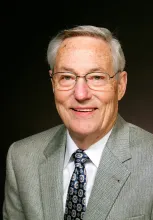
At the time of his retirement in 2016, Roy Holladay was serving the Operation Manager for Ministerial and Member Services of the United Church of God. Mr. and Mrs. Holladay have served in Pittsburgh, Akron, Toledo, Wheeling, Charleston, Uniontown, San Antonio, Austin, Corpus Christi, Uvalde, the Rio Grand Valley, Richmond, Norfolk, Arlington, Hinsdale, Chicago North, St. Petersburg, New Port Richey, Fort Myers, Miami, West Palm Beach, Big Sandy, Texarkana, Chattanooga and Rome congregations.
Roy Holladay was instrumental in the founding of the United Church of God, serving on the transitional board and later on the Council of Elders for nine years (acting as chairman for four-plus years). Mr. Holladay was the United Church of God president for three years (May 2002-July 2005). Over the years he was an instructor at Ambassador Bible College and was a festival coordinator for nine years.
