
Roy Holladay
This transcript was generated by AI and may contain errors. It is provided to assist those who may not be able to listen to the message.
Brethren, can one person make a difference in a local congregation? Can one family make a big difference? Is it such a fine example that others are inspired to follow that example? Over the years, I've found that someone really tries to put forth effort, to really change, to be different, to jump in, to serve, to help, to give, whatever it might be, that sometimes there are reactions that occur from others who know him or know his family. Sometimes they begin to judge him. What's he up to? What's he trying to do? See, Brown knows in the minister. And so they become critical. He's just trying to get ahead. He's pushing whatever it might be. He's climbing the ladder.
Sometimes we can judge and perhaps condemn, and yet we don't do much ourselves. When people make fun of others, put them down. I've found over the years that they're trying to exalt themselves, that they're comparing themselves with others. Therefore, they're wanting themselves to look better. Let's face it. One of the problems Pharisees had with Christ is when somebody does what's right and it reflects on you, then they would strike out. They would try to put him down because he was showing them up by his example, by how he lived. There are times, yes, I will admit that a person's zeal may outweigh his wisdom in what he does. But if we're trying to help others to please God, God looks at the attitude.
He looks at what we're striving to do. God wants us to be committed to him, to his church, to one another, to be committed to service. Commitment carries involvement. It means that we must be involved with God, we must be involved with his church, his people. Let's notice Romans 13.8, a scripture that tells us about what we need to be doing.
Romans 13.8 says, O no man, anything except, there's one thing that we need to owe to others, except to love one another. For he who loves another has fulfilled the law. So when you love another individual, you are fulfilling the law. We are indebted to each other when it comes to the matter of love. We all need to change. We realize that. We all need to grow in the ability to show love and express love to one another, serve one another, help one another, give to one another.
Now, you may not have stopped to think about it, but this involves our fellowship with each other in quite a dramatic way that I don't think most of us have ever stopped to think about. We don't always view fellowship from the perspective that God views it. Let's take a look today at what God expects of us, what He expects of me, what He expects of you, and we'll see that one person can truly make a vast difference in a local congregation.
How can we be different? Well, we will come to understand that fellowship plays a great role in that effort. So when you begin to focus on fellowship, first you have to understand that to have fellowship with one another, we must have fellowship with God the Father and with Jesus Christ. In the New Testament, the word fellowship and the word communion are translated from one Greek word. They come from the same Greek word. Kino-nia is the Greek word.
It's K-O-I-N-O-N-I-A. Kino-nia. The key idea of the word is that of partnership, of possessing things in common, and belonging in common, too. Now, Thayer's lexicon says that it means an association, a community, joint participation, intercourse, the share, which one has in any thing, participation. Then finally, our Gingrich and Bauer dictionary of the Bible says that the word implies a close association involving mutual interest and sharing association, communion, fellowship, close relationship. Now, as we talk about fellowship, I want you to keep all of that in mind because I will be pointing that out to you as we go through this sermon.
Let's begin over in 1 Corinthians chapter 1 and verse 9. 1 Corinthians 1 and verse 9. We read this about Jesus Christ. God is faithful. We don't have to worry about who's faithful. God is faithful by whom you were called into the fellowship of His Son, Jesus Christ, our Lord. We've been called into the fellowship of Jesus Christ to have fellowship with Him. What that implies is that we share things in common with Him.
We have a close relationship with Him. We have mutual interest with Him. He is our older brother, the Bible says, and elder brother implies a family relationship. How many of you here had an older brother or an older sister?
Several of you did. Well, I am the older brother in my family. Some of you may be the older sister or older brother in your particular family. We know that when you have siblings, there is a family relationship that is developed. There is a bond that is developed that carries on after you're married and goes on through the years. The same is true here with Jesus Christ. As we're going to see today, there are many things that we should have in common with Jesus Christ. I could just very quickly enumerate them. There have to be things such as same goals, same purposes, same desires. We have the same mind. You could go on and on making an exhaustive list of things that we have in common.
Now, in 2 Corinthians chapter 13, this is expanded a little bit in verse 14. 2 Corinthians 13-14. Verse 13 says, All the saints greet you, and the grace of our Lord Jesus Christ, and the love of God, and the communion of the Holy Spirit be with you all. Amen. So be it. So we have communion by, or of, or through the Holy Spirit. It talks about the quality of fellowship that we are able to have because we have God's Spirit. What is it that unites us together?
What is it that makes us one body? What is it that puts us into the body? Well, 1 Corinthians 12 tells us we are baptized into one body by one Spirit. It is the Spirit of God that puts us into the body of Christ, and we become a family. We have the same Father. So it talks about the quality of fellowship that is brought about by the Holy Spirit.
The Holy Spirit imparts to us gifts. It imparts to us the fruit of the Spirit, love, joy, peace, patience, and so on. So what it implies is that if we have God's Holy Spirit, there is a change that takes place in our nature. We become a member of the family of God, and we are to reach out to one another. We are to communicate with one another.
We are to fellowship with each other. We go through the same trials. We go through the same tests. We have the same difficulties and problems, but we're all striving for the same goal, the same purpose, and we have God's Spirit. We have God dwelling within us. Now, with that in mind, it helps to understand 1 John, beginning in chapter 1, verse 1.
We read here, That which was from the beginning, which we have heard, which we have seen with our eyes, which we have looked upon, and our hands have handled concerning the word of life. Now, John is writing, saying that we the apostles know that Jesus Christ was a Messiah, because we heard Him from the beginning. We saw Him with our eyes. We looked on Him. We handled Him. We touched Him. The life was manifest, and we have seen and bear witness and declared to you that He, excuse me, that eternal life which was with the Father and was manifest to us.
So Christ came from the Father. He was God in the flesh, Emmanuel. He says, That which we have seen and heard, we declare to you. So they heard Christ. They heard what He said. Christ said, I come, and what I say, my Father gave me. So He didn't preach anything that the Father had declared to Him.
So He said, What we have seen and heard we declare to you, that you also may have fellowship with us. And truly our fellowship is with the Father and with His Son, Jesus Christ.
Now, what John wrote about Jesus Christ here in verses 1-3, he wrote about Christ in order that all might have joint participation in the knowledge of the things that Jesus Christ did. He was an eyewitness. He knew what Christ did. He knew what Christ taught. So he wanted to share that with them so that they would have fellowship, in other words, communion or joint knowledge, understanding of what Jesus Christ had done as our example and our Savior.
How can you fellowship with God when you don't know Him?
There are so many people who claim to be Christians and are not, are professed to be Christians, and yet they don't understand who the God of the Bible is. They have a certain idea about what God is like or what Christ is like, and yet it's totally the opposite of the Bible. You have to know who He is and be able to have fellowship with Him and not have a false concept to who He is or what He believes or what He requires of you. I've used this example before. If I were to tell you, I know, and I've met, and he's a very good friend of mine, Joe Blipschtick. And, you know, I tell you that Joe is 6'7", redhead, 280 pounds, looks like he's hewed out of granite, wears size 18 shoes, his hands are as big as meat cleavers, hams. And so, I tell you, Joe Blipschtick is going to visit one day. You're anxious to meet this guy. And he shows up, and he's 5'3", he's 120 pounds, size 8 foot, black hair, almost bald.
And nothing like what you described. You would think, you know, this is not the same person you've been telling me about. Well, this is the way the world is when it comes to God.
God does not reveal himself to the world, to society, until he calls a person, opens their mind, establishes a relationship with them. And then we realize that the false concept about who God was, who Christ was. Christ was not a being with long hair when he walked this earth. He looked like the average Jew of his day, Roman haircut. And, you know, he was not as he is portrayed or pictured in society today. So, for us to be able to have fellowship with God and with Christ, we need to know who they are, what they stand for, what their values are, what they believe, what they require of us. And that's what God does when he calls you, opens your mind, begins to reveal to you the truth and his way of life. Remember, fellowship is an association involving close mutual relations and involvement. Art of fellowship, that's taken from L'Onita, the dictionary of the Bible, their definition. I've given you about four of them, and they all basically say the same thing. Let's notice going on here in verses 5 and 6.
This is a message which we've heard from him and declare to you that God is light, and in him is no darkness at all. If we say we have fellowship with him. So, if a person comes along and says, yes, you know, I have fellowship with God, and we walk in darkness, we lie.
And we do not practice the truth. Now, does that remind you of another Scripture?
Same page of my Bible, 1 John 2.4. He who says, I know him, is okay. He who says, I fellowship with him. And he who says, I know him, and does not keep his commandments, is a liar.
So again, I didn't say that. John did. In both cases, he says he's a liar. Verse 6, 1 John 2.
He who says he abides in him, himself also to walk, just as he walked. That means to live, just as he lived, to follow his perfect example. So, if we say we have things in common with God, that we fellowship with him, that we have this close relationship with God, and we walk in darkness, then there's something wrong. So, we have to have things in common with God.
We are to share with God, with light nature, light mind, his love, and his concern. We have to love holiness. We have to hate evil. Notice verse 7. If we walk in the light as he's in the light, we have fellowship with one another. So, in order for us to truly have Christian fellowship with each other, we must walk in the light. Light is a person. You know, pictures or personifies truth. What's right? Darkness pictures what's wrong, what's evil. So, if we walk in the light as he's in the light, we have fellowship with one another, and the blood of Jesus Christ, his son, cleanses us from all sins. You and I cannot be cleansed from our sins to be forgiven, be baptized, receive the Holy Spirit, unless we, first of all, truly understand what's right, truly understand what we need to repent of. In 1 John 3 and 4 it says, sin is the transgression of God's law. That's what we have to repent of when we come to God. So, you can only have fellowship if we live according to the truth of God. Adultery, fornication, smoking, gossiping, hating, anger, all of these things. These are not traits of God. These are not values of God. They're the traits of this world of Satan the devil. Back up to 2 Corinthians 6.14. 2 Corinthians 6. We'll read here in verse 14.
We're told, Do not be unequally yoked together with unbelievers.
It says, For what fellowship has righteousness with lawlessness?
What communion or what fellowship, translated both ways, has light with darkness?
They have nothing in common. Light and darkness are total opposites, as we know.
Darkness is a lack of light.
I don't know how many of you have ever gone into a cave, and it's always you get into a cave, and you can't see any exterior lights. They turn the lights off. You stand there for a few minutes, and they tell you how dark it can get in a cave without the lights on. It truly does get pitch dark. You can't see a thing. All you have to do is to take someone who's in a cave like that, spin them around a few times, and say, Okay, retrace your steps. You have no idea which way to go, because it's pitch dark. You can't see a thing. That's the way the world is. The world lives in darkness. They don't know how to live. They don't know where to go. They don't know what path to try. They don't see the way out to the light.
Light is the ability to see things because they've been illuminated by a source of light. Something illuminates it. If you're in the middle of that cave, and all it wants to guide turns is light on, now you can see. He says, Look over here. That's the trail we came in on. So now you can see a path. You can see where it goes, and you can follow it. The Bible says God's Word is a light to my path. It guides us and directs us. When it comes to the source of light that you and I have, guess what? God is that source of light.
God is. He directs us. Human reasoning, philosophy, I have to chuckle at men. Men are so pedantic, so vain, so cocky, so sure of themselves that they can see and that they understand things. When God says, All human beings are like a drop in a bucket to Him. Our combined intelligence and wisdom are nothing compared to God. He says, Like the dust on the balance. So God is all powerful, all wise. He's the source of illumination, of understanding His Word. And God has, through His grace, called us and given us His Spirit to guide us, lead us, and help us to understand His Word so that we will know the right way to go.
So, brethren, our fellowship, if we're going to have fellowship with one another, must be based upon the fact that we have fellowship with God the Father, Jesus Christ, through the Holy Spirit, and that we have things in common that God has called us and He's working with us. Now, that brings us to another point concerning fellowship, which is what mostly we think of when we think of fellowship. And that is, we are to fellowship with one another. And that's a very vital part of what the Bible teaches, that we are to have fellowship with one another. Now, there are many avenues of fellowship with each other. Take, let's go back to Acts 2 and verse 42, Book of Acts chapter 2 and verse 42.
And we read here, Remember Peter had preached an inspired sermon, three thousand were baptized, and they continued steadfastly in the apostles' doctrine, their teaching, and fellowship, and in the breaking of bread and in prayers.
Fellowship has always been important to the church right from the very beginning of the New Testament church. They were just starting. It was important for them to be able to hear the Word of God expounded, the doctrine, the teachings that the apostles were giving, and then to fellowship with one another. They had things in common that they shared with one another. So, brethren, when we come together on the Sabbath, or throughout the week, many opportunities for us to fellowship. And we need to take advantage of the opportunities that we have at church services. Sometimes we come late, leave early. We should come early, leave late. There's a difference. We should take the time to fellowship with one another. How can we find out about another person, what they're going through, the difficulties they're facing, unless we take a little time to be with them and to fellowship with them? In 2 Corinthians 8, beginning in verse 1, the apostle Paul shows another way that we fellowship. 2 Corinthians 8, beginning here in verse 1, at this time there had been a famine in Judea, especially in Jerusalem. There were many poor saints there. They were going without food, and they were taking up a collection across the Gentile area, and they were bringing it up to Jerusalem to help feed them. In verse 1, It says, Moreover, brethren, we made known to you the grace of God, bestowed on the churches in Macedonia. So he's sort of using one church, what they had done, to inspire another church to get on the ball. It says that in a great trial of affliction, the abundance of their joy and their deep poverty, abounded in the riches of their liberality, even though they didn't have much, they dug out deep, and they came up with an abundance to give to the saints. For our bare witness that according to their ability, yes, and beyond their ability, they were freely willing, imploring us with such urgency that we should receive the gift of foodstuff and monies, and the fellowship, notice, of ministering to the saints.
Now, as the Second Epistle to Corinthians, a commentary of Greek text, translates this verse, notice, verse 4. They begged us most urgently for the favor of participation in this service for God's people. Do we ever stop to think about when we help other people who are in need, that we are actually participating in a service and we do it for God's people? For the service of God's people? That's what they did. They wanted to. Please take our goods, please take our money, and give it to the brethren.
Going on in verse 5, it says, not only as we had hoped, but they first gave themselves to the Lord, then to us by the will of God. So he was delighted that they first were converted, gave themselves to God, and then they gave of themselves. So we urged Titus that as he has begun, so he would also complete this grace in you as well. What do you mean, this grace in you?
Well, the NSA B95 translation has this to say about verse 6. So we urged Titus that as he had previously made a beginning, so he would also complete in you this gracious work as well.
See, too often we just think of grace as unmerited pardon and forgiveness, but grace has to do with graciousness, has to do with favor. And so they were urging, or he was urging, Titus to complete this gracious work, this favor that they said that they were going to do, this support, this help that they were going to give to the saints. We all share in supplying the needs of the saints. The Good Works projects that we have around the world, I don't know if you've ever stopped to think about it from this perspective, are not unlike what Paul was doing here. Collecting foodstuff, collecting monies, so that it could go to those in need. We have, through the Good Works programs and life nets in the church, sent monies and sent goods and bought foodstuff for the brethren in Africa, in Asia, sometimes in Latin America, but especially in Africa. There have been some areas of Africa in Nigeria, especially in Kenya, where they've had crop failures. If it had not been for the church buying maize for them and giving it to them and distributing it on a regular basis, those people would not have had anything to eat. And so brethren, there are projects like this that go on all the time. So we're not unlike the church in the first century of collecting. Generally, for us, monies are goods when needed to help the poor, to help the needy in God's church. So that's another way that we're able to have fellowship or something in common with one another. Another way is mentioned back here in 1 Corinthians chapter 10, verse 16. Let's go over to 1 Corinthians chapter 10, verse 16. It says, A cup of blessing, which we bless, is it not the communion of the blood of Christ?
Isn't it the fellowship of the blood of Christ? When we take the Passover every year, you drink that wine, symbolizing the blood of Christ. That's something we all do in common, isn't it? Because we've all been baptized, we've all had the blood of Christ applied for the forgiveness of our sins. We have that in common. And so the fact that we're able to sit together as a family and participate in that indicates that there is a connection, and we're connected through Christ and what He did for us. And the bread which we break, is it not the communion or the fellowship of the body of Christ? So we share in common the symbols of the Passover and not only share but have experienced what those symbols symbolize, the broken body of Christ for our healing and also for the forgiveness of our sins. So God wants us to serve others, brethren. He wants us to serve for the benefit of others.
Consequently, if we serve others, it always will come back and benefit us, likewise. Too often, if we're not careful, if we don't watch our attitude, we will serve for selfish reasons or to impress others, or only when it's convenient for us. I would say that many times we fall into that last category, and I've found myself, you're doing that too. If it's convenient, you do it. If it's not, you don't. We need to take every opportunity for service, every opportunity we have to grow. We must take every advantage to help and to serve. That includes all of us, men and women. It takes effort to be involved, doesn't it? You've got to get up, you've got to get dressed, you've got to go do something. It's not always convenient, but we do it.
Many times we say, well, I'm just too tired, I'm worn out, don't have any energy, and that may be true in many cases. I mean, we may have hit the wall. When we help and serve within the body, we benefit the church, our families, our marriage, and ultimately ourselves. It's interesting that this word for fellowship and communion was used extensively in the Greek literature to describe the closest relationship that a person could have on the human level between a husband and wife. The things that you share together, things that you have in common, and so it can be applied in that way. Too often, though, we think of ourselves and we're not thinking of others when it comes to helping and giving. Have you ever asked yourself, why does God give certain gifts in the church? Let's go over to chapter 12 here in 1 Corinthians. Turn the page of my Bible, beginning in verse 4.
Why does God give us certain gifts? We all don't have the same gift.
If we did, well, we would... what if we were all preachers? That was a gift you had. Well, we'd have a lot of good preachers around here.
Every week we would have somebody different, but maybe we would need somebody else to do other things to serve in other ways. Let's notice what the Bible says here, beginning in verse 4. There are diversities of gifts. Not everybody has the same gift, but it's the same Spirit. It all comes from the Holy Spirit.
There are differences of ministries or service, but the same Lord. There are diversities of activities, but it's the same God who works all in all.
But the manifestation of the Spirit is given to each one. Why? What's the purpose? For the profit of all. God gives gifts for the common good of the body, for the good of all.
The Greek means to be advantageous or to the advantage of. Notice the ESV translation, verse 7. To each is given the manifestation of the Spirit. So God gives to all of us gifts.
Why? For the common good. God gives gifts and talents to share with others. Now, not just for us. They're not a show of. Well, look at me. I've got this particular gift. And so it pumps up your ego and your vanity. That was a problem the church in Corinth had. That's why Paul, in 1 Corinthians chapter 14, had to address their speaking in tongues, interpretation of tongues. Because they used that to impress others and to show that they had certain talents and gifts. Gifts are not given to aggrandize us, but to help others, to serve others, to be able to give in a way that God has granted us to give. If God has given you a gift and hasn't given it to somebody else, he's given you that gift so that you can serve in that way. And he expects you to use it, utilize it in that way. I think it would be interesting for us. I think one of the most misunderstood aspects in the church is to misunderstand the gifts that God gives. What are those gifts? How do they operate? How do you know what you have? You can look at yourself and say, I don't have any gifts. Well, I look at myself and I wonder, too. But you have at least one. You've got at least one talent because God rewards you according to what you do with what you have. So you've got to have something to have with or to do with. And so, God is expecting us to use that. And if he's given it to us, we have to share it. So you need to pray and ask God, help me. What are my gifts? And how can I share those with others? So how do we go about doing this? Well, let's turn back to chapter 12. We'll see here a little bit on this topic, beginning in verse 3 of the book of Romans. Romans 12, verse 3. It would be good to know which book of the Bible. Romans 12, verse 3, For I say, through the grace given to me, to everyone who is among you, not to think of himself more highly than he ought to think, but to think soberly, as God has dealt to each one of us a measure of faith. So God deals to each one of us faith and a measure of faith. For as we have many members in the body, but all members do not have the same function. We don't all have the same job. We don't all have the same responsibilities. Not all are elders. Not all are deacons. Not all can sing. Not all can whatever it might be. We have many different functions within the Church.
Verse 5, So we being many are one body in Christ, and individual members one of another. Having then gifts differing according to the grace that is given to us, let us use them.
Use the gift that God has given to you. Or the gifts that God has given to you. If prophecy, let us prophesy in proportion to our faith. Prophecy means inspired preaching.
Or ministry, let us use it in our ministry.
Ministry means service. Some have been called to serve. Some have a unique ability to serve and always know when to say things. He who teaches in teaching.
There are people who have just a knack for teaching and being able to convey things to other people. He who exhorts or encourages in exhortation. He who gives with liberality. So giving can be money. It can be time. It can be in many different ways. He who leads with diligence. If you're given responsibility to oversee something, lead that with diligence. He who shows mercy with cheerfulness. We don't always think of mercy, giving, encouragement, teaching, serving as gifts. But these are all gifts that God gives to various ones.
He who leads with diligence. He who shows mercy with cheerfulness.
Then in verse 9, let love be without hypocrisy. We are to love one another, but we are not to pretend to be hypocrites. Abhoor what is evil. Cling to what is good. Be kindly affectionate to one another.
With brotherly love.
So we are to owe no man anything except to love. So we are to have brotherly love and honor giving preference to one another. Preferring one another. Not thinking we're so important that we should always have the limelight. Or we should be someone who is more important than somebody else.
So brethren, we need to have brotherly love.
What are some of the needs of the saints that we can help? How can we help? How can we take the gifts, the talents, the functions that God gives to us? The abilities and use them?
Well, in James 1, excuse me, James 2, beginning in verse 15.
James 2, 15.
We find one way that we can serve.
If a brother or sister is naked and destitute of daily food, and one of you say to him, well, depart in peace, be warmed, be filled, but you do not give them the things which are needed for the body. What does it profit?
Thus also, faith by itself, if it does not have works, is dead.
So if we say we have brotherly love, we don't have works, it's dead. If we say that we love the brethren, we don't have works to go along with it.
I don't know of anyone in the congregation who is so destitute he doesn't have clothes to wear.
But there are times that all of us come on hard times.
What if somebody lost a job?
There certainly could be needs that they might have.
What if somebody is sick and perhaps needs somebody to come over and say, well, let me wash your clothes for you, or clean house for you, or just help to take care, or sit there with them. What about somebody who is elderly and their needs?
Ask anyone who is elderly who never sees anyone and goes weeks without coming to church. They'll tell you that they would love to see somebody occasionally. What about a widow in the panes? She goes through especially a new widow who has recently lost a husband. Single parent homes. Sometimes they need help with children. A single mother has children growing up. We would dearly love to occasionally have a family come along and say, why don't you join our family? We're going to go to a lake this weekend. We're going to go fishing. I notice you have a couple of young boys. Do you mind if I help to teach them how to fish? And where you get involved with them? Babies are born. Maybe there's sickness. They may need help. We have programs locally to do this, but nothing wrong with us independently jumping in the breach and saying, can I do something? Can I help?
Do we share things in common? Do we have joint participation with one another? Notice Romans 12 again in verse 15. Romans 12-15 says, Rejoice with those who rejoice. Weep with those who weep. We have the same mind toward one another. Do not set your mind on high things, but associate with the humble. Do not be wise in your own opinion. Brethren, we need volunteers a lot in the Church. Seems that it's always the same ones who volunteer. We should all help to bear the burden. It's a lot easier if everybody jumps in and serves and helps and gives, and it won't be too heavy for any one person to be involved. In Philippians 2, we read this. Fulfill my joy by being like-minded, having the same love, being of one accord, of one mind.
So if we are to be like-minded, we are to have the same love and mind and care. Why? Notice in Acts 1 and 2.
Therefore, if there is any consolation in Christ, any comfort, any love, if any fellowship of the Spirit, if any infection, if any mercy, so if there is this fellowship of the Spirit, and we have God's Spirit, and we are fellowshiping with one another through that Spirit, he says, fulfill my joy by being like-minded, having the same love, one accord, one mind, and it comes through the Spirit of God. So we have fellowship of the Spirit. God's Spirit will produce in us common attitudes, common approaches, shared attitude that we will have toward one another.
It will produce an attitude of love and unity within a congregation.
Brethren, another thing that we are told to do in the Scriptures, and that is to visit with one another. That's part of our fellowship, to visit with one another. We tend to think, again, of fellowship only doing it on the Sabbath. Well, you know, I fellowship when I was at church today, and that's sort of it. But that's not the only time we should be fellowshiping. In the Greek, the word for a fellowship is episkeptoma, e-p-i-s-k-e-p-e-t-o-m-a-i-a, episkeptoma, and it's translated from two closely related verbs. One of them means to look upon or after, or to inspect, to examine with the eyes. So you go see for yourself. You inspect, you see, you look after. Second, to look upon in order to help. So why are you inspecting and looking in order to help? In order to benefit, to look after, to have care for, and to provide for.
Now, most of us don't expand our definition that far, but that's what we should be doing. Let's notice in Matthew chapter 25, verse 34, Christ is talking to those who are going to be in the kingdom. Matthew 25, verse 34, Then the king shall say to those on his right hand, Come, you blessed of my father, and here at the kingdom, prepared for you from the foundation of the world. I was hungry. You gave me food. I was thirsty. You gave me drink. I was a stranger. You took me in. I was naked. You clothed me. I was sick. And notice, you visited me. You came to me. You saw what my needs were. I was in prison, and you came to me.
Then the righteous will answer and say, Lord, when did we see this?
Verse 40, the king will answer and say to them, assuredly, I say to you, Inasmuch as you did it to one of the least of these, my brethren, you did it to me. So when you do it to whoever you might consider the least in the congregation, you've done it to Christ. Now, you and I may not sometimes be able to visit people in prison because of distance and health, but we can write to them. We can pray for them. Let's notice in Philippians chapter 2. Philippians chapter 2, what Epheraphiditis did. How many Epheraphiditis do we have in the congregation? Philippians chapter 2 verse 25.
Now Paul writes, Yet I consider it necessary to send a Euaphroveditis, my brother, fellow worker, fellow soldier, but your messenger, and the one who ministered to my needs, since he was longing for you all and was distressed because you had heard that he was sick. So here's a minister who was sick, and indeed he was sick almost to death. He was so sick that they heard it, then the news came back. So he wasn't healed immediately, but God had mercy on him, not only on him, but also on me, that I should have, lest I should have sorrow upon sorrow. Now, let's notice here, he goes on in chapter 4 verse 18.
Indeed, I have all and abound, I am full, having received from the Epheraphiditis, the things sent from you, a sweet smelly aroma, and acceptable sacrifice, well pleasing to God. So Epheraphiditis had come to Paul while he was in prison and brought things that he needed. He knew what Paul needed. Maybe he needed some clothes, maybe he needed some food stuff, maybe he needed some parchments, whatever it might be. I remember one time in Richmond, Virginia, we had a member who was sentenced to jail for three years. He set such a good example. Every Sabbath, there would be people to go over to try to see him. Only a few could go in to see him. There were a lot of weeks you couldn't go in to see him, but he became such a good trustee that they did something for him that was unusual. On the Sabbath, they allowed him to go out and sit on the ground outside the prison. On any given Sabbath, half the church would show up, have a picnic, and we would eat and sit around and talk to him. He could stay out there for a couple of hours, talk to his wife, and then go back to prison. He did that because of his Sterling example. There are many ways that we can serve one another, and this is just one of them. We see needs, and then we jump into the breach, and we try to help where those needs are. James 1, verse 27, tells us that pure religion and undefiled religion before God and the Father is this. To visit orphans and widows in their trouble and to keep oneself unspotted from the world.
So part of having undefiled religion that's pure before God is to visit with the orphans and the widows, to look after them, to make sure that their needs are being met, and to encourage and to benefit them. Why don't we visit the needy more often?
You ask a group? Time is a factor. I realize that. But I'd like to point out to you what I call the circle principle. By circle principle, I'm talking about visiting those within a certain radius of where you live. Maybe 15-20 minutes of where you might live. 25, however far you want to expand it. It doesn't make sense for somebody who lives in Cleveland to go down and visit somebody in Carrollton, Georgia. Polar opposites. But those who live down around Cartersville or Carrollton down in that area can certainly visit one another in that area and look after their needs. Those of us who live in a certain geographic area can certainly look after those within that area. It doesn't mean you're limited to that. But if everybody took care of those within their circle of influence, so to speak, then there'd be very few people in a local congregation who would not be cared for, looked after, visited on a regular basis. So remember the circle and use that principle. In 1 Peter 2.25, 1 Peter 2, in verse 25, we read here about the ministry. It says, Where you were like sheep going astray, but now have returned to the shepherd and overseer of your souls. King James version translates overseer as bishop. The word bishop or overseer is from another word closely allied to the verb. It implies one who looks after for the good and benefit of the people. Where it's a bishop, an elder, who's an overseer of a local congregation overlooks the needs. I don't mean he overlooks them, meaning he doesn't see them, but he's aware of them. He looks after those particular principles. It implies one who looks after for the good and benefit of the people. We should visit one another at church, be friendly, try to help, make strangers feel comfortable.
Only, as I said before, only many of us have viewed fellowshiping as simply what we do at church. Do strangers feel comfortable when they come to Chattanooga? Do they feel welcome? Do they feel taken in? Somebody comes up and talks to them, shows interest in them? When there's a new person, do you visit that person and then pass them on to somebody else? Take them up and introduce them to someone else so that they can talk to them? Are we trying to benefit and build the church? One final thing that we need to do.
We are to show hospitality to one another. Display hospitality. The Greek word for hospitality is phyloxanea. It means a love of strangers, one who is fond of offering up hospitality, of service.
Romans 12-13. Romans 12, verse 13. Paul writes here again, distributing to the needs of the saints and given to hospitality.
We all should be given to hospitality. Given is the Greek word nyoko. It means to pursue, to seek after eagerly, earnestly, endeavor, or to acquire.
To occasionally have people over, to be hospitable in any way and every way that we possibly can. Remember Hebrews 13, verses 1 and 2. It talks about being hospitable to strangers and thereby some have entertained angels, unaware. Hebrews 13, 1-2. You and I need to show hospitality one to another. This is what family does for one another, that we share with one another. This is another way to help draw the body closer together, to demonstrate our love for each other.
Brother, why do all these points have in common that are similar? They all have in common putting Christianity into practice. Practicing Christianity. We have to walk the walk and not just talk the talk. We have to be doers and not just hearers.
We sometimes wait for somebody else to do something, but one person, one family, can make a great difference. One person who really gets on the ball and sets a sterling example can begin to inspire others, maybe shame others, begin to show others, lead the way. We don't serve to get or to receive something in return. We serve to give or to benefit to help. Ask yourself how much of a benefit or help am I to God, am I to the church, am I to my family, and last of all, am I to myself.
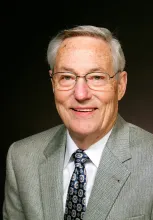
At the time of his retirement in 2016, Roy Holladay was serving the Operation Manager for Ministerial and Member Services of the United Church of God. Mr. and Mrs. Holladay have served in Pittsburgh, Akron, Toledo, Wheeling, Charleston, Uniontown, San Antonio, Austin, Corpus Christi, Uvalde, the Rio Grand Valley, Richmond, Norfolk, Arlington, Hinsdale, Chicago North, St. Petersburg, New Port Richey, Fort Myers, Miami, West Palm Beach, Big Sandy, Texarkana, Chattanooga and Rome congregations.
Roy Holladay was instrumental in the founding of the United Church of God, serving on the transitional board and later on the Council of Elders for nine years (acting as chairman for four-plus years). Mr. Holladay was the United Church of God president for three years (May 2002-July 2005). Over the years he was an instructor at Ambassador Bible College and was a festival coordinator for nine years.
