
Greg Thomas
This transcript was generated by AI and may contain errors. It is provided to assist those who may not be able to listen to the message.
Well, thank you again, Mark. Happy Sabbath once again, brethren.
I have a question for you to begin the sermon today. How well do you adopt the change?
Do you like change in your life? If you're like most people, like me, you probably resist change. You're not real comfortable with change. I know that you may not personally like change. The problem with you and I is that we were probably born in the worst possible time in human history if we don't like change, because things happen in our world today at an unbelievable past. As a matter of fact, more change has occurred in the last 100 years of human history than the previous 6,000 years combined. If you look around this room, you see somebody who's 60 years who recently retired or are about to retire. They saw in their careers where they work more change in that one career than all previous careers experience change in human history.
That's how rapidly things are changing in our world today. I would like to discuss the issue of change, because the truth is it's a deep human delusion that change is something that shouldn't happen. That change should be resisted. I want to highlight this if you don't mind by taking a few pictures of you if I could. I know Mr. Graham sometimes comes up here with products made by the beast power. So I have one made by Gog and May Gog, and I'm going to take just a few pictures of you folks. Oh, that's a good one. That's great. We're going to take another one here.
Okay, that's good. We're going to take one over here. Give me a nice smile. Okay. Thank you for that. I appreciate that. And you know why that was important? That was important because those pictures, those three or four that I took, are just a snapshot of a moment in time.
That will never be repeated again ever. That's how much we change. The world changes. Even if by some miracle, next Sabbath, all of you came in here and sat in the exact same chairs, which would be very difficult to do because some will be here next week who weren't here today, some will be sick next week who are here today, even if by some miracle all of you sat in the same chairs, you'd have different color clothes on, or you'd have different poses. You see, the reality is, brethren, is that each second is a unique snapshot in history, and everything is constantly changing. And why is this? It's because God intended for nothing to ever stay the same.
And for us as human beings who like comfort, who resist change, that is something that we don't want to accept. But the truth is, it's all around us. So I have to ask the question as we're entering the Holy Day season, the Spring Holy Day season, and what one word, by the way, encapsulates the meaning of getting 11 out of our homes. Isn't it change? Isn't it shaking up our lives a little bit and realizing that we need to change? That we need to go to another level? That we need to get closer to God, and the Holy Days are an annual reminder of those Spring Holy Days to keep growing, keep expanding, keep changing, keep learning new things, keep getting closer to God. That's what the message is for all of us. So how well do we accept change in everyday events? In our communities, they're rapidly changing in our businesses, in our church, in our own families. And how are these changes affecting our lives? Turn with me, if you would, to Daniel chapter 12. We'll begin today. Daniel chapter 12 beginning in verse 1. Because for those of us who have the privilege of living in the end days, there was a prophecy about what we would all experience at this time. Daniel chapter 12 beginning again in verse 1. Prophecy foretold that matter and technology would rapidly advance.
I just gave you an example of it a few minutes ago. This contraption here called a smartphone that can take pictures, can have telephone calls, that have apps, that can read documents, that can create documents, that can play games on, that can do so many things in the palm of my hand. There's more power in this than the Apollo rockets and the Apollo flights that took human beings to the moon and back safely. There's more power in this one little device than what took a man to the moon and back. That's the rapid world and the technology that we live in. Let's go to Daniel chapter 12 verse 1. And at that time, Michael shall stand up. And of course, God has archangels responsible to protect nations, to guide his nations, report to him how nations are doing. Michael shall stand up. The great prince who stands watch over the sons of your people. And there shall be a time of trouble, such as never was since there was a nation, even to that time. And at that time, your people shall be delivered, everyone who is found written in the book. And then it gives a series of events what's going to happen after those latter days. This isn't in chronological order, but here they are. And many of those who sleep in the dust of the earth shall awake, some to everlasting life, some to shame and everlasting contempt. And those who are wise shall shine like the brightness of the firmament and those who turn many to righteousness, like the stars forever and over. Verse 4. But you, Daniel, shut up the words and seal the book until the time of the end.
And here's what's going to happen. As he says at the time of the end, many shall run to and fro, and knowledge shall increase. Think about what's happened in our world the last 50 years.
If the airline travel, how many hundreds of thousands of people get on airplanes every day and fly from one area to the world to another? How many of us so conveniently hop in our cars and drive from one location to another? And this is just the beginning of it. They've designed a plane they call the Sky Whale that has three levels that is intended for commercial flight, and it will seat 755 people on the plane. Richard Branson, the owner of Virgin Air, has already successfully had a few supersonic flights meant for commercial flight in which it makes it possible to leave a coast from the United States and be in Europe in an hour and a half to two hours. From the West Coast, three hours to Hawaii and beyond. Supersonic flight is something that we'll have in the future. So indeed, as the prophecy said, many shall run to and fro. We are a mobile people, are we not? My daughter and son-in-law are here today. They got in an airplane in Dallas and flew here in just a few short hours. They arrived. So we are a very mobile generation, aren't we? And it said, and knowledge shall increase. Now, in the 1960s, we used to, in our sermons or in the 1970s, I can remember very early on, we used to, we had no concept of something called the internet. We used to define it as, well, they would build lots of libraries. A lot of books would be available. People would print lots of books. No one ever considered the fact that from the privacy of your own home, you could sit down and type in a search term to learn about anything. And you could spend the next eight hours studying about that subject through page after page after page, including university journals and blogs and everything that somebody says on a subject that you could explore it so deeply. Why is that possible? Because of the age that we live in. Here's verse four translated from the translation God's Word for today. But you, Daniel, keep these words secret and seal the book until the end time. Many will travel everywhere and knowledge will grow. And indeed, that is happening in our world today more than ever. And what we call technology today is just the tip of the iceberg. The next 10 to 20 years will make devices like this seem hokish. They'll seem like what most people today, remember that telephone in which you put your finger in it and you turned a little dial to get to a number? That's how smartphones will be looked upon 10 years from now, because the technology is leapfrogging forward. My point? My point is that we live in a world of rapid change. The truth is things are always changing. They have always changed. Every moment in time is simply a snapshot because things are constantly changing. Think about our lives. We are aging.
I know that's a shock for many of us. I think I've told you before that when I take a shower and I see those hairs at the bottom of the sink, you know, it used to be that there are millions more where that came from. Who cares? Now I pick them out and I lay them back in place. No, I don't. I probably should, but I don't do that. But the reality is I can look in the mirror and see that I'm aging. My children have grown up. I have grandchildren that are almost 10 years old that are growing up. So things are constantly changing. The next generation in the church and in the world is well under where. Society. What are society? Think of all the fads. How faddish are. What's the latest things that people have talked about the last six months? How about selfies? You didn't hear the phrase selfies 10 years ago. You know, taking a picture of yourself with your phone. Terms like twerking. Now I'm not going to define what that is. You can ask Mrs. Thomas if you want to know what that is. But invented terms to define activities that people do today. We live in a very faddish, a very cultural driven society where people idolize celebrity. And of course, celebrities come and go because the older ones kill themselves off or die out of old age and they are replaced by younger celebrities. Our fashions. Skirt lengths lengthen, skirt lengths shorten, ties get wider, ties get smaller. Fashion is constantly in a state of change. Our customs change all the time that we have in our society. We add new foot the names of new football teams. Football team owners move from one city to another. Many of the customs we do are constantly changing.
Our businesses. I can't imagine what it was like. I remember in the 1970s when I first got into the business world. I as a salesman, I would spend probably half a day in a strange city trying to find a payphone somewhere so that I could call in and find out if anyone left the message for me.
Now we talk about scanning and all of these things. I'm going to tell you about the first time that I received a new Xerox machine. I thought this is incredible technology. Here's how it worked. You put your master copy on that Xerox machine. You took a special piece of paper invented by Xerox that had what was to become the new copy and it had a little pink sheet on it. And you laid that over it and you closed the lid and you push a button and thermally it heated for about two minutes. And at the two minutes it grinds. The end of two minutes you lifted up the lid. You took that page out. You separated the pink sheet from the other paper. Unbelievable! You had a copy of paper that looked just like this one. Unbelievable! It can't get any better than this.
Think of what we have today. We have scans, jpegs that are sent over email.
It's almost humorous how much the world has changed within business in one lifetime. Everything became software-oriented. Things that were always charted in logs and now are put in Excel spreadsheets or logged somehow on some type of software program. Our government has dramatically changed. Our government, after spending trillions of dollars to destroy the nuclear family over the last 50 years, because they have destroyed the American family, now has replaced family from helping itself. And now the federal government more and more provides for all of our daily needs. That's what governments want. Governments always want to become bigger and more powerful and control you. That's what they have instinctively inside of all human governments. Education. When I achieved my bachelor's degree, education, you were required to come and literally sit into a seat in a room and listen to someone pontificate for 50 minutes. They would wake you up when it was over. You would leave the room and you would walk to another class. And now a lot of education is online. You can receive accredited degrees and virtually anything by sitting at a computer at your home and doing the classwork and submitting the assignments. So even the way that we educate has dramatically changed. God's Church is always changing and it's always changed for the last 2,000 years and it has to continue to change. For example, a lot of our literature was written with a perspective of the 60s and 70s with the assumption that people had already accepted there is a God and that the Bible had validity. And the modern generation, they don't make those assumptions. So your literature has to be crafted going back further and it has to realize that in our post-Christian society, most people do not have a church background and don't have a concept in God, don't believe in God, aren't sure there is a God and they think the Bible is nothing but a bunch of very nice stories and myths that you read to your grandchildren but has no other values beyond that. So the church has to change the way it delivers its message. The church always has and it must do that. It will.
So my point is that change is all around us and it will continue to be at an ever increasing pace.
We have been called to a life of change and it's God's Spirit that gives us the ability to accept change when we don't want to accept it and to make the necessary changes in our lives. The spring holy days, as I mentioned earlier, are an annual reminder for us that change is necessary, that change can be good, and that we need to change for the better. I want you to think about the idea of removing leaven from homes in ancient times when God originally gave that command to Israel. Truly bread was the best breadbasket of their existence. They didn't have all food choices. They didn't go to giant eagles and let's see should I have kish tonight? Maybe I'll choose pasta.
Maybe I'll choose Chinese tonight. No, the Israelites didn't have that. They had a diet that was primarily composed of leavened bread products. They didn't even eat that much meat, because you know what? When you slaughtered an animal, that was your wealth. Animals were slaughtered for festivals. They were special occasions you slaughtered an animal. Otherwise, you wanted them to stay alive to give you milk and to give you other little animals. You know what I mean? So a huge part of their lifestyle was tied around eating that luscious, wonderful-smelling, leavened bread that just came out of the oven. So when God said, don't do that for seven days, that literally forced them to transform their lifestyle for seven days to do something different, to eat bread that tastes like cardboard instead of the bread that they loved. And it literally shook up. God, the message of the spring holy days is, wake up! Shake it up a little bit! Let's get out of our complacency. Let's get out of our lethargy. Oh yeah, I like my rut. It's comfortable. But am I growing? Is it making me better being comfortable? Being complacent, being in my rut. That's the question. Ecclesiastes chapter 3. If you turn there with me, Ecclesiastes chapter 3 beginning in verse 1.
The author of the book of Ecclesiastes understood one thing, the principle that we're talking about today, and that is we may not like change, but the truth is the change is always happening.
Always. Ecclesiastes chapter 3 in verse 1. To everything there is a season, a time for every purpose under heaven. Here's some changes that we'll deal with in life, a time to be born and a time to die. That's change. A time to plant and a time to pluck up what was planted. That's change. Planting, harvesting. A time to kill and a time to heal. That certainly is part of our human culture and society. We've had so many wars throughout human history. A time to break down and a time to build up. A time to weep and a time to laugh. What a contrast. Both are changes. A time to mourn and a time to dance. A time to cast away stones. A time to gather stones. A time to embrace and a time to refrain from embracing. There's a time when you're so agitated at someone you love. You say, no, no, not now. I'm not ready yet. I'm going to refrain from embracing. A time to gain and a time to lose. A time to keep and a time to throw away. That's change. This week our geothermal unit coughed a little bit, spit up a few times, and stopped working. We got a quotation for the new $11,000 geothermal unit to replace the one that is 20 years old. So you see there's a time to keep and a time to throw away in life, isn't there? A time to tear, which is about how I felt when I saw that quotation in front of me. A time to tear and a time to sow. A time to keep silence and a time to speak, a time to love, and a time to hate, a time of war, and a time of peace. Well, certainly as Christians we shouldn't experience all of those events as deep as hate, but the point is that as we go through the journey of life, change constantly happens. Whether we like it or not, whether we want it to happen or not, it is a reality. And we face different challenges and events that are often unwanted and unexpected.
About five years ago I left a job that I'd had for 17 years, and if someone would have told me six, seven years ago that in seven years down the road you're going to have started your own business and it'll be successful, you'll do just fine, and you're going to be a church pastor, something you resisted your entire lifetime and didn't want. If someone would have told me that, I would have told them they were crazy. Impossible. That cannot happen, because I don't want that to happen. That's not in my plans. I don't know whose plans they are, but they're not part of my goals. They're not in my plans, but as you go through life you find out that God has other plans. There's an old saying that if you want to make God laugh, create your own plans.
Right? What God has intended for you is probably far different than you have intended for you.
That's just the reality of life, and we call that change. And my point is, is that even though events occur that may be unwanted and undesired and unexpected, each of these events can teach us something and can fulfill a purpose that God has for us in this lifetime, even if we don't want it.
God, my friends, is in the personal development business. He is not in the comfort business.
God does not worry about my comfort zone. I've learned that the hard way. He doesn't care one bit about how comfortable I am, or frankly, how comfortable you are. He's in the development industry. He wants to develop you and I so that we have the mind of Jesus Christ.
Today in the sermon, I'd like to contrast a few individuals who experienced great change in their lives. Some viewed change as bad and they resisted and, ehh, no! That's how they were. That was a reaction to it. And others, just by sheer faith, said, you know, it's not what I would have chosen, but it's an opportunity and I'll embrace it. I'll trust God and I'll embrace it. So let's see what we can learn from these lessons. The first lesson we'll go to is Genesis chapter 19 and verse 4. And we'll take a look at a story, it's very beautiful, about Lot. It tells us a lot about Lot's character. I know that sounds like a double negative. A lot about Lot's character. Two Lots in one sentence. Excuse me for that.
Genesis chapter 19 and verse 4.
God had heard that there was a lot of wickedness and perversion going on in the city of Sodom and he set angels to check it out and to report back to God about the sin and he evilled it. He had heard beginning in verse 4. Now, before they lay down the men of the city, the men of Sodom, both old and young, all the people from every quarter, surrounded the house and they called to Lot and said to him, Where are the men who came to you tonight? These were angels who had manifested themselves into looking like human beings. Bring them out to us that we may know them carnally. So Lot went in to them or Lot went to them through the doorway, shut the door behind him and said, Please, my brethren, do not do so wickedly. See now, I have two daughters who have not known man, please let me bring them out to you and you may do with them as you wish, only do nothing to these men since this is the reason they have come under the shadow of my roof.
I have no idea why he says this. To me, this is personally, this is despicable.
Maybe it's because I grew up in the 20th and 21st century. I cannot imagine a father making this kind of statement and offering his daughters to be repeatedly raped so that he doesn't appear inhospitable to a couple of people who showed up to stay at his home that night. So I don't understand this. I'm just reading the events and I certainly don't agree with his attitude. Verse 9, and they said, Stand back! And they said, This one who came to stay here and he keeps acting like a judge, now we will deal worse with you than with them. And isn't that this same old cultural litany you hear every generation, who are you to judge us? Right? If you make a comment in an environment about the very kinds of perverse actions that these men wanted to do with these angels, people will say to you three thousand years later, who are you to judge us? Who made you a judge in our lifestyle? So nothing changes, you know, it all remains nothing changes in that the mentality of human beings and the fact that they don't want to keep God's law. That is one thing that stays the same. It says, Now we will deal worse with you than with them. So they pressed hard against the man lot and came near to break down the door. But the men reached out their hands and they pulled lot into the house with them and shut the door. And they struck the men who were at the doorway and the house with blindness, both small and great, so that they became weary trying to find the door. And the men said a lot, Have you anyone else here? These are the men who were angels and manifested themselves in the men, son in laws, your sons, your daughters, whomever you have in the city, take them out of this place, for we will destroy this place because the outcry against them has grown great before the face of the Lord. And the Lord has sent us to destroy it. So Lot went out and spoke to his son in laws who had married his daughters and said, Get up, get out of this place, for the Lord will destroy this city. But his son in laws, he seemed to be joking. So we see here, the lots told to leave the city, despair his life, and he tries to tell his relatives to leave it once before the destruction would begin. What is Lot struggling when here? In a way, Lot is struggling with what you and I oftentimes struggle with. He had become so comfortable in Sodom.
He liked it there. It was home. It's what he knew. He was in a rut. He had learned to adopt.
He had learned to just accept. And he was really comfortable there. He had become spiritually blind to the conversion and corruption that existed all around. He didn't even notice it.
He, again, was just far too comfortable. He was compromising with evil and his entire life was in a rut. And the way he offered his daughters to the degenerate men of the city of Sodom shows how far his personal values had declined. Lot was at ease with his dysfunction and the way that he was. He had accepted his environment. Didn't want to change. He had accepted where he was.
And he didn't want to leave. He didn't want to change. He wants you to see how this is even more exacerbated in chapter 19 verse 16. It says, "...and while he lingered." Now, he'd already been told that God's going to destroy the city. Wouldn't common sense tell you that if you want to save your life, you'd pack your bags and get moving very fast. It says, "...while he lingered, the men..." Again, these are the angels that manifested themselves into men. "...took hold of his hand, his wife's hand, and the hands of his daughters. And the Lord, being merciful to him, they brought him out of the city, outside of the city. So it came to pass, when they had brought him, brought them outside, that he said, escape for your life! Run for it! Go! Full throttle! Do not look behind you, nor stay anywhere in the plain. Escape to the mountains, lest you be destroyed." But again, my brethren, Lot was comfortable where he was. He really didn't want to leave. This was a time of great change in his life, and he would have rather stayed. That's why he lingered. That's why he did the kind of things that he did. And this is often true of us. When things begin to change dramatically, or when it's obvious that something big is about to happen, what do we usually do? We usually linger. We usually want to compromise. We want to go part way in overcoming that problem. We want to get started in overcoming that problem, but we don't want to see it through. Even though his life was in danger, he loved the monotonous, everyday life. Too much that he lived in. He loved the rut that his life was in. He didn't want to change any part of his daily routine or habits. A few years ago, I came up with this brilliant idea of taking all of the 33 rpm LPs I had and converting them all through my computer into mp3 files. And that way I'd have all of my favorite old albums on mp3 files.
I didn't last long doing that at all. Why? It's because they skipped repeatedly.
Just when you thought it was recording right and you'd step like 10 feet away, the same phrase in a song on the LP would repeat itself over and over and over again. I have to explain that because a lot of young people are looking at me saying, what's an LP?
What do you mean? What are you talking about, Mr. Thomas? You see, the phonograph needle was in a rut. And all it did was play the same old song over and over again. It was in a rut. And, brethren, that's what happens to our lives. Like that phonograph needle, we get in a rut and we sing the same song all the time over and over again. Let's pick it up here now in verse 18. Then Lot said to them, remember he had been told to escape to the mountains, Lot said to them, please, no, my lords, indeed now your servant has found favor in your sight, and you have increased your mercy, which you have shown me, by saving my life. But I cannot escape to the mountains, lest some evil overtake me and I die. Does that even make sense? You're told to escape to the mountains to save your life, and you come back and say, well, I can't escape to the mountains because it might cost me my life. Huh? Verse 20. But this is the kind, this is, brethren, how we justify living in our problems. These are the kind of things we come up with to justify staying where we are and not moving forward and not making those changes.
Let's continue here. He says, see now this city is near enough to flee to, and it's just a little one. It's not a big, bad city like Sodom. It's just a little one. So rather than going to the mountains, can't I just go to this little city?
And what's the message behind this? Notice he didn't want to go all the way. It's time for change. He wanted to know, how about if I just change a little bit? Do I get bonus points if I just kind of go halfway, maybe just to the little city instead of to the mountains?
And, brethren, this is how we live our lives as well. This is how we compromise and accept things that we know in our lives. We need to change. Verse 21. And he said to them, see, I have favored you concerning this thing also, in that I will not overthrow this city for which you have spoken. Hurry, escape there, for I cannot do anything until you arrive there. Therefore the name of the city was called Zor, and the sun had risen upon the earth when Lot entered Zor. So he traveled there all night. Then the Lord rained a brimstone and fire on Sodom and Gomorrah from the Lord out of the heavens.
So he overthrew those cities, all the plain, all the inhabitants of the cities, and what grew on the ground. So what happens here, when we read closely, we find that Lot didn't want to go to the mountains even though he had been specifically asked to go to the mountains. He only wanted to overcome a little bit. He only wanted to change a little bit, halfway, partway.
Is that good enough? Now, of course, God in his great mercy, because God had favor on him and probably, frankly, pitied him, said, okay, you can do that. Verse 26, but his wife looked back behind him and she became a pillar of salt. So we see here that Lot and his wife were matched bookends. Like her husband, she also didn't want to leave Sodom. She liked the rut her life was in because ruts are easy.
All we do is we get up and we go through the same motions and the same routines that we know and it requires minimum effort. It requires minimum risk. The results are predictable. Very little is accomplished and there are few challenges. But the problem with that, brethren, is there are also few opportunities. There are few opportunities to stretch us to another level, to take us to a place that God wants us to go.
So instead of looking at changes and opportunity to learn and experience new events, they wanted to return to their same old little rut, the same old house that they had in Sodom, in a world, in a city that had nothing to offer them but comfort, but staying in their rut. Isn't that a lot like us, brethren? Sometimes we also experience dramatic change in our lives. And we do. It might be a health crisis. Maybe your geothermal system dies on you. Maybe you lose a job.
Maybe relationships turn sour and we struggle with these dramatic changes in our lives. Sometimes we face conditions where we're forced to change. We don't want to. We're drug into that change, kicking and screaming every step of the way. And when that happens, how do we view these experiences? Do we get angry with God? Do we get angry with the circumstances? Do we get angry when we find ourselves in something new that we didn't want, that we didn't desire? Do we get upset because change may wrench us out of our routines?
Or do we say it's an opportunity? I may not know where this leads to, and I may not want to go there, but change is inevitable, and I can either resist it or not, but it's going to happen anyway.
Now don't get me wrong. Some routines are good. For example, having consistent prayer and Bible study, that's a good thing. That's a routine and a hablet. That's a good thing. But even over time, these can lose effectiveness if we don't add an element of change in the way that we study our Bibles, or add an element of change to how we pray.
If it's the same old prayer in the same old format from dear Father to Amen, and it's just some litany that we repeat over and over again off of a card or off of something, even that can lose its effectiveness. We need to change that up sometimes as well. Well, we saw an example from Lot, not a real good example, of someone who resisted change, who was in his rut, who was comfortable in his lifestyle, and just wanted to go part way with change. Didn't really want to do what God told him to do, which was go to the mountain, but he just wanted to go to where there was just a little bit of sin, the little city. He didn't want to go all the way. We're going to contrast him now with his uncle Abe, his uncle Abraham. Genesis chapter 12, if you turn there with me in verse 1.
So we're going to look at his relative and see here that they were very different. Their character and their attitude was different from each other. It was pulls apart. Genesis chapter 12 verse 1. This is now the Lord had said to Abram, Get out of your country from your family and from your father's house to the land that I will show you. I will make of you a great nation. I will bless you and make your name great. And you shall be a blessing and I will bless those who bless you and I will curse him who curses you and in all in in you all the families of the earth shall be blessed. So Abram departed as the Lord had spoken to him and Lot went with him and Abram was 75 years old when he departed from Haran.
What a contrast! Whereas Lot gripes, resists, lingers, compromises, it simply says, So Abram departed as the Lord had spoken to him. You know, God called Abraham to a sudden, dramatic change in his life. He's not 22, adventurous and wants to explore the world. He's 75 years old at this point in his life. And God tells his 75 year old man, Pack up your bags, everything you own, and get moving. And God says, Oh, by the way, I'm not telling you where you're going to go yet. I'll let you know that some other time. Just head that way. That's what God tells him. And Abraham accepted this opportunity without whining and questioning why God did this to him. He didn't say, God, why me?
I'm 75 years old. I was just, I just bought this piece of real estate here in the desert. I want to stay here. No, he doesn't do that because he had faith. And that's why Paul likened Abraham that his salvation was through his belief in God, his faith, because God said, do it, get out of your comfort zone. And Abraham said, okay. So why did he do it? It's because he looked into the future and he saw the long-term benefits of accepting change. It would make him better. It would make his lineage and provide opportunities for his children and great grandchildren and great, great, great, great, great, great, great grandchildren. It would change people's lives forever if he just listened to God and did what God said. Isn't that true of you and I?
If we overcome this hidden sin that maybe we've been struggling with for years and think about examining ourselves for the spring holy days, it, when we finally lick that problem, it will change our lives forever. It really will. It will allow you to grow spiritually. It will allow you to feel a greater sense of fulfillment. I finally overcame this attitude, this sin, this selfish perception that I've had for 40, 50 years of my life. I finally rid myself of that. Think about how different it will change our lives forever. But that's not the only kind of change that God had. Let's see how he shakes things up here for Abraham in Genesis chapter 22. Scripture we always read before the spring holy days around the time of the Passover because it's so symbolic of what God the Father himself would do for his only legitimate son Jesus Christ. But this was a change.
Think of all that Abraham went through to have a legitimate son. First of all, God said he would have a son. Remember, and we shouldn't idealize the patriarchs. Before Abraham was the father of the faithful, you know what he was? It was the father of the unfaithful because God said, you're going to have a son. And he said, all right, we can do this. Bring your concubine over here. I'll make this happen. That's not what God had planned. But eventually he got it. He understood it and he became through conversion the father of the faithful. So let's continue taking a look at this. He came to pass after these things that God tested Abraham. How's he going to test him? He's going to give him some pretty dramatic change that he has to face regarding his relationship with his only legitimate son Isaac. And he said to him, Abraham, and he said, here I am. Then he said, take now your son, your only son Isaac, whom you love, and go to the land of Moriah and offer him there the burnt offering on one of the mountains of which I shall tell you. So Abraham rose early in the morning. He saddled his donkey and he took two young, his young men with him and Isaac his son. And he split the wood for the burnt offering and arose and went to the place of which God told him.
Talk about change. Here he's got this wonderful relationship with his son. His son's going to be his heir. Watch as him grow up. Watch as him gets stronger. And suddenly God says, I want you to go and sacrifice that boy and lay him on an altar of wood. And I want you to slit his throat like you would a lamb or a goat. This was the son of promise he'd waited for so long. It had to be a shock to Abraham's sensibilities, but he pleased God with his attitude. And sometimes, brethren, God orchestrates things in our lives that we don't agree with, we don't understand. And how we react to those kind of changes in our lives is important to God because it's a testing of our mettle.
It's a testing of how far we've come from where we started. It's a testing of our mettle, just like this event was a testing of Abraham's mettle. Verse 10, and Abraham stretched out his hand, and he took the knife to slay his son, but the angel of the Lord called him from heaven, saying, Abraham, Abraham! So he said, Here I am, and he said, Do not lay your hand on the lad, nor do anything to him. For now I know that you fear God, since you have not withheld your son, your only son from me.
Battery is, maybe the battery is dying. He said, Through this event, you may prepare, if you have a battery, you might be prepared to bring one up to him if you have one.
Through this event, God said, Now I know you, now I tested you with some pretty dramatic change, and you came through with flying colors. You were willing to do, if I hadn't stopped you, you were willing to do what I asked you to do. Then Abraham lifted his eyes and looked, and there behind him was a ram caught in the thicket by its horns. So Abraham went out and took the ram and offered it up as a burnt offering instead of his son. And Abraham called the name of the place the Lord will provide, as it is said to this day, In the mount of the Lord, it shall be provided. And of course, we know the theology of this. Excuse me.
Hopefully that will fix the problem. Thank you for bearing with me there.
Of course, we know the theology of these scriptures. This was a prophetic event that God used to show Abraham exactly what he himself would be willing to do two thousand years later. Abraham's only legitimate son, and God the Father would offer his only legitimate son as a sacrifice, Jesus Christ. Moriah happened to be in a place that later would be known as Jerusalem.
They traveled three days. At the time that God made this command to Abraham, his son was as good as dead. And it says in the scripture that on the third day they went up to make the sacrifice. Of course, we know that Jesus Christ was dead for three days and three nights. Isaac was laid upon wood as an offering. Jesus Christ was laid on a stake or a cross of wood. And as he said, God will provide a burned offering. And Jesus was the ultimate burned offering, sacrificed for all the children of humankind. So, a very powerful theology that's expressed to us from the fact that Abraham experienced some pretty dramatic change. But he's not done. Chapter 23, verse 1. So Sarah lived 127 years. These were the years of the life of Sarah. So Sarah died in Kurjah Abba, that is Hebron in the land of Canaan. And Abraham came to mourn for Sarah and the weep for her. So he lost his beloved wife Sarah, and he wept and he mourned her loss. This too was a pretty dramatic change in his life. She was his life partner, and as with any of us, this was hard on him. He was an old man by this time. So is he ready to give it up?
Is he ready to cash his chips in? Is he ready to resist change? Chapter 24, verse 1. Now Abraham was old, well advanced in age, and the Lord had blessed Abraham in all things. So these are what we might call his twilight years. He may have been, the best we can estimate, he may have been around 150 years old at this time. So at this age, maybe it's time for him to just sit on the front porch swing. Maybe it's just time for him to relive the past and think about things that had been. Maybe it's time for him to spend the rest of his life reminiscing and regretting about the things that he could have done but didn't do. Chapter 25, verse 1, it says, speaking about 150 year old man, Abraham again took a wife, and her name was Katura, and she bore him Zimram, Jokshan, Nidan, Midian, Ishbok, and Shua.
I've heard of embracing change, but he may have embraced Katura a few times too many.
You see, Abraham didn't live in the past. He accepted change, and he moved forward in life to new opportunities, whatever they may have been. Yes, he was an old man, and yes, he deeply loved Sarah, and this was no indignity to her. But Abraham looked upon change, dramatic change, not as the end of a book, but as the beginning of a new chapter in his life. Verse 7 states that he was 175 years old when he died. So being around 150 when he married Katura, he lived with her about 25 years. Life was still worth living and enjoying. There were still more experiences for him to learn. He looked at change as an opportunity, not as something to be dreaded, not as something to linger against, not as something to regret and become bitter and not as something to regret and become bitter against, but to accept. He accepted change throughout his life, and he demonstrated faith in God and became the father of many nations.
Now, how about us, brethren? No matter what age we are, there are probably things in our lives, sins, or bad habits that we're struggling with. We need to make those changes.
We need to stretch ourselves. Do we need to develop a new skill? Especially if we're retired and we have more time in our hands and we had all of our working years. How about music, learning, and instrument that you never played before? How about building something, learning a new craft or a new skill? How about teaching? How about traveling? How about volunteering to help others in the community? Are one of the many nonprofits that are available? Are we stretching ourselves? Are we embracing change? Are we looking at change as an opportunity? Or are we regretting it? Are we angry over it? Are we frustrated over the fact that we do not want to change? Let's take a look at a couple of New Testament examples. Philippians chapter 4 and verse 4. Philippians chapter 4, I'm sorry, verse 9. The Apostle Paul speaking about himself.
If you read between the lines here, he may have felt a little regret that the church hadn't brought him a care package or helped him a little earlier while he was in prison. Philippians chapter 4 and verse 9. He says, That's a very nice Christian way of saying, where were you when I needed you?
I mean, it's great that you finally showed up, but where were you when I needed you?
It's verse 11. Not that I speak in regard to need, for I have learned in whatever state I'm in, whatever position in life, whatever situation, good or bad, befalls me, whatever state I am in to be content, I know how to be abased, I know how to abound. Everywhere and in all things I have learned both to be full and to be hungry. Both to abound and to suffer need. I can do all things through Christ who strengthens me. You know, Paul's life was a classic picture of change.
First of all, he starts out as a zealous Pharisee, and life is good, and he's whistling on his way to a particular city, and he struck down with blindness, and he is converted. And for a number of years he has to pay his dues in the church of God and kind of stay underground and kind of remain a little on the quiet side because no one trusts him yet. And then he begins a career as an apostle. And you talk about change. He travels from city to city, unknown cities, not knowing what to expect, not knowing if he's going to be welcomed, not knowing how many people are going to respond to the gospel, or if he's going to get beat up again this time. And he does that through his entire ministry. And as he says here, as a result of this, there were times when he was poor, and there were times when he had plenty. There were times when he was hungry, and there were times when he had all kinds of food to eat. But he had learned that change is constant. And whatever was happening in his life, to have faith in God, and to be content in whatever state he was in, because he had learned that through Christ he could do anything, he could endure anything, he could accept any challenge, he could accept any opportunity. I'd like to read this from the New Century Version. I know how to live when I am poor, I know how to live when I have plenty. I have learned the secret to being happy at any time in everything that happens. When I have enough to eat, and when I go hungry, when I have more than I need, and when I do not have enough, I can do all things through Christ, because he gives me strength. So here's the Apostle Paul, elderly man, lonely, in prison, and at last some help, some assistance comes to him from the Philippian congregation. And he tells them about his ability to accept and change. He adopted to change, he embraced change, he accepted change as part of life, as part of what living is all about. It made him stronger, it made him better.
Like you have another New Testament example here. If you'll turn to Philippians chapter 2 verse 5.
This is a beautiful scripture, and I know I read a lot.
So I'm going to read it from another translation.
This is the most dramatic change that ever took place in human history that has ever occurred, and it happened for our benefit. It was because God loves us so much that he was willing to change his very form and composition, that Jesus Christ was willing to accept the greatest emotion ever so that he could live a sinless life and become our Savior. And again, I'll read verses 5 through 8 from the translation of God's Word for today. Have this same attitude that Jesus had. Although he was in the form of God and equal with God, he did not take advantage of this equality. Instead, he emptied himself by taking on the form of a servant and becoming like a servant. And becoming like other humans by having a human appearance. He humbled himself by becoming obedient to the point of death on a cross. So, brethren, Jesus Christ was God in all glory and splendor, and he gave up that glory. The walk is a mere human being. He was humbly born of a woman. He lived as a man, and at that time he lived as a man. He was no longer composed of spirit. He had to rely on his relationship with his Father through prayer, just like you and I do. He did that as a living example for us. And his connection with the Father was through the power of the Holy Spirit. Talk about culture shock that go from God to a mere human being, and to accept that change. Why? Because it was an opportunity. And what was the opportunity? So that you and I would have a Savior, and we could go directly to the Father, and have a human and spiritual and loving and intimate relationship with our Dad, with our great Father. Yet he did this willingly because he loves us. He put all of his greatness aside to live as a mere man, because he believes that we are worth the effort, that we are worth the sacrifice.
Follow with me to Hebrews chapter 5 and verse 5. We don't often think of Jesus Christ since he was the Son of God as being able to learn new and additional things, do we? But we're going to see a scripture that says he learned something. The Son of God learned something. He had expanded additional knowledge. It's not that the knowledge he had was wrong, but by experiencing something, by accepting change, by embracing it, he learned something that was very important. Hebrews chapter 5 and verse 5. And so also Christ did not glorify himself to become high priest, but it was he who said to him, you are my son today, I have begotten you. He also says in another place, you are a priest forever according to the order of Melchizedek, who in the days of his flesh, when he had offered up prayers and supplications with the eminent cries and tears to him who was able to save him from death and was heard because of his godly fear, though he was a son, here's the key, yet he learned obedience by the things which he suffered. What was the opportunity? To learn through suffering.
And how was that possible? Because there's a very powerful word that we call empathy. Empathy is identification and understanding of another person's situation. It's experiencing and understanding their feelings and their fears and their frustrations. We use a phrase today, we say, been there, done that. Because Jesus Christ was willing to embrace the greatest emotion in human history in walking earth, he knew what it was like to wake up in a cold morning and have shivers. He knew what it was like to suffer pain as the crown of thorns rammed on his head, as his face was slapped, as accusations he knew what it was like to be humiliated. He knew what it was like to suffer and be unhurt, as many of us are when we're ill, and he was being tortured before he died. He learned obedience by the things that he suffered. It took him to a whole new level of being able to relate with you and relate with me, and that's why he's such a perfect high priest, because he accepted that change. He was willing to do that.
As John Maxwell likes to say, and I'll quote him here, change is inevitable. Growth is optional. You see, it's about our attitude. Isn't it always about our attitude? How many things do we discuss? And it always goes back to how we view things and our attitude, our mindset, and how we approach life. It always goes back to that.
Oh, brethren, we're all creatures of habit, and by instinct we resist change. We love stability. We love routine. And these characteristics are not necessarily bad, but they can be, come bad, if we blind ourselves to the necessity of change and growth. I want to encourage you, when you are being drugged through or voluntarily walk through a process of change, that we realize that there's something for me to learn here. And if I complete this journey, I'll be stronger for it. I may, like Jesus Christ, learn obedience by the things that I suffer, but I will be better. I will be stronger. I will be more the kind of person that God wants me to be.
For our final scripture today, I'd like to turn to Job chapter 14 and see one other dramatic change that will occur for each of us. And like most change, it'll change our existence forever. Job chapter 14 verse 14.
Job chapter 14 verse 14.
The patriarch Job wrote, The man die, shall he live again? All the days of my hard service I will wait till my change comes.
He says, I'll just sit there in a grave, unconscious, and I will wait patiently in a deep sleep until my change comes. You shall call and I will answer you. You shall desire the work of your hands, for now you number my steps, but do not watch over my sin. My transgressions are sealed up in a bag and you cover my iniquity. So, brethren, someday we are going to be changed from mortal to immortality. We are going to be changed from corruptible to incorruptible because of what Jesus Christ did for us. Our transgressions are sealed up in a bag, and they've been paid for by the blood of Jesus Christ. He has covered our iniquity.
Brethren, God is not done with us yet. This spring holy days is coming upon us. Let's allow God to do a work in us, in each and every one of us as individuals. Let's allow God to take us to another level. Let's do that examination and think about the things like Lot that we've been compromising on, the things that we've been too comfortable in, the rut that we've been in that we need to get out of.
And let's think about the need for change and to overcome those things that we've been putting off, or maybe only overcoming halfway or partway. And let's go all the way and become the kind of person that will please our Father because it's all about His glory. It's all about giving pleasure to our Father. That's why we exist. Our very presence in our existence gives God pleasure. So let's continue to go and prepare for the Spring Holy Days and make them the most meaningful that we have ever experienced in the Church of God. Have a happy Sabbath!
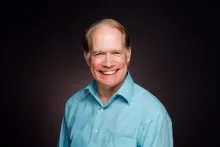
Greg Thomas is the former Pastor of the Cleveland, Ohio congregation. He retired as pastor in January 2025 and still attends there. Ordained in 1981, he has served in the ministry for 44-years. As a certified leadership consultant, Greg is the founder and president of weLEAD, Inc. Chartered in 2001, weLEAD is a 501(3)(c) non-profit organization and a major respected resource for free leadership development information reaching a worldwide audience. Greg also founded Leadership Excellence, Ltd in 2009 offering leadership training and coaching. He has an undergraduate degree from Ambassador College, and a master’s degree in leadership from Bellevue University. Greg has served on various Boards during his career. He is the author of two leadership development books, and is a certified life coach, and business coach.
Greg and his wife, B.J., live in Litchfield, Ohio. They first met in church as teenagers and were married in 1974. They enjoy spending time with family— especially their eight grandchildren.

