
Ben Light
This transcript was generated by AI and may contain errors. It is provided to assist those who may not be able to listen to the message.
Well, thank you, Luke, and Melody, for the very beautiful special music. It's one of those things, the lyrics, solid sentiment. You know, there's one thing that we need these days in the world and in the church is humility and prayer. You know, being able to have that ability to humble ourselves and pray to God, to deliver and to heal, and for all of the things that are going on in the world around us, two very, very important components. Well, I apologize for my lack of tie today. And so one of the very first things that we did when we got to Africa, quite literally, we got to our hotel and Dari took us into one of the rooms and laying on the beds were five different patterns of fabric.
And he said, you need to blend in. Right. Pick a shirt or pick a fabric. We're going to have a shirt made for you or a dress made for you, depending on if it was the girls or the guys. And so this is my West Africa shirt. So I thought I would bring you a little bit of West Africa today. I'm going to sprinkle some of it into the message. I'm going to do everything that I possibly can not to just yak up here about West Africa. I promise there's a point. We're going somewhere with a message today.
And we'll hopefully reach it by the time we're done. And it'll hopefully be able to stick with us a little bit. But it is so good to be here with you today. The last few months of life in the light household has been a little bit crazy. It's been a little bit of a whirlwind. You know, we've been to a number of youth camps, got back from West Africa.
And as people have sometimes joked about, sometimes you need a vacation from your vacation, honestly going back to work this week and kind of falling back into that rut of familiarity of, okay, I get up in the morning and I go to work, and then I come home, and the next day I get up in the morning. It's honestly been a little bit nice to have some semblance of a routine. I don't know about a rut, but you know what I mean.
It's nice to get back into the normal swing of things. So before I left for Nigeria, though, we began a five-part series of messages based on the United Youth Camp program themes for this year and our Christian Living Daily sub-themes. We completed the first of those messages, and I understand that Mr. Seporik and I are giving dueling sermons on this from the sounds of it. So hopefully it's not too much overlap, but it sounds like he's doing a series similar to it.
I don't know if he's continuing it or not at this point, but I'm in and we're going to go. So at this point we'll continue with it. But we talked in the first of those messages about the importance of building our life on a strong foundation. And we address the importance of basing our life, basing the decisions that we make in that life on the foundation of the Word of God. And how unbelievably important it is that we know that Word of God, we understand what is required, we build the life on those teachings, and that that Word of God is the rock upon which our life, the career that we choose, upon our foundation, our marriage is founded on, our spiritual legacy, and all the other things that are really contained underneath that umbrella.
How important it is that all of those things are founded on God's Word. We went to Matthew 7, verse 24, and we're going to start there because it's been a little bit. It's been almost a month, I think, since that message. So Matthew 7, let's kind of pick up sort of kind of where we left off with a very brief summary.
And for those that didn't hear the first one, this should catch you up. So that'll be actually kind of a dual purpose. Matthew 7, and we saw the contrast of two different lives. Matthew 7, and we will pick it up in verse 24 to begin with, and we'll read through verse 27. Matthew 7 and verse 24, we saw a contrast between two different lives, two different people, so to speak, as outlined in this particular parable of Christ. It says, Therefore, whoever hears these things of mine and does them, I will liken him to a wise man who built his house on the rock.
And the rain descended, the floods came, the winds blew and beat on that house, and it did not fall, for it was founded on the rock. But everyone who hears these things of mine, and does not do them, we hear them, but we don't put them into application, we hear them, but we don't actually follow through. Whoever hears these things of mine and does not do them will be like a foolish man who built his house on the sand.
We all know we've been on sand before. It slips, it shifts, it's not a very solid foundation. The rain's descended, the floods came, the winds blew, they beat on that house, and it fell, and great was its fall. So we see a comparison, we see kind of a contrasting here between two different individuals. One who had built their life on the unshakable foundation of God's Word, on the teachings of Jesus Christ, on the law and the commandments, and then we saw another who built their life on sand, on a shifting, unstable, shaky foundation, that when things got hard, when life got tough, down came the foundation, down came the house.
And not only did it fall, great was its fall. It didn't hold up in the midst of the storm. As the message continued, we took a look at marriage as a whole, and it really, the importance of building that marriage in our families on that really important foundation of God's Word as well. Talks about why people marry in the first place, and how we build lasting marriages by building that marriage again on the foundation of God's Word, and the instructions that are contained within.
And really trying to put an extra emphasis on actually doing the things that we read scripturally that are given to us for husbands and for wives. As we drew the first message to a close, we started to examine the concept that we're going to spend our time addressing today. We're going to look at the second of those sub-themes that we went through while we were in the camp program, and the second of those themes, we'll get to the specifics here in just a second, but once we've examined the Word of God, once we've seen what that foundation requires of us, and what God expects of us, once we have an idea of what is expected of us, when we see that He's designed a specific way of life for us that spares us the troubles and the difficulties, we see that He's given us His law and His commandments as it brings out in Psalm 119-105 as lights to our path, then we're given a choice.
We're presented in front of us a choice at that point. When the path has been illuminated by God's Word and we see what's required, God then asks us, will you do it my way or not? Here is the requirement, here is the expectation, and now I put before you a choice. What's going to be? And that's really what is being told to the individuals in Matthew 7, 24 and through 27. We're seeing two different varieties of life here, people that are either building on that rock or not. We see that people who are both hearing and doing versus people who are simply just hearing.
Now, in that section in Matthew 7, what exactly are they expected to do? We kind of went into this a little bit with the last message. I want to review it just briefly. We're expected to do all the things prior to what's there. This is near the end of the Sermon on the Mount, so Matthew 5, 6 and 7 are all topics that are on the table here when it comes to actually going through and doing. Some of those things include people who are meek, people who are peacemakers, people who are merciful, people who turn the other cheek, who love their enemies.
Once again, these are not platitudes. These are the expectations and the instructions provided to us to live the way of life that we profess to live. Please understand, I am talking to myself as much or more than I am talking to you today. Please don't take this as overly corrective. That's not my intent. Just bringing to light the things that God expects of us and the choices that we have.
God ultimately asks us, now that you know the things I want you to do, will you do it? Will you show mercy? Will you be a peacemaker? Will you turn the other cheek?
Will you humble yourself? Now, as we heard in the special music today, this particular aspect of our faith, the follow-through part of our faith, the application of the knowledge that we see in Scripture, is really where the rubber meets the road. This is the part that is the absolute crucial component, is taking that knowledge and converting it into action, living the way of life that we understand that we need to lead. And choosing God's blessings is a crucial aspect of our spiritual life. Once we again, once we know the truth, it's up to us to make the decisions and the choices in accordance with that particular truth.
The 2016 United Youth Camp program had our overarching theme again of being guided by God's word, but Tuesday, the second day's Christian living theme, was essentially the title of our message today. Okay, it was Choose God's Blessings. And so this one is guided by God's word, part two, and I'm going to title it just slightly different, choosing life, choosing life.
The memory Scripture that we used on this particular day was Deuteronomy 30 and verse 19. If you turn over to Deuteronomy 30 and verse 19, we're going to build upon that particular foundation today as we go forward in our discussion. Deuteronomy 30 and verse 19.
And while you're turning there, you know, this concept of being guided by God's word was brought up to me the other night as I was walking through my house in the dark.
We mentioned this before. I have children, many of you are aware of that, and when you have children, there's this weird thing that happens in your house. Things that used to be in the places that you thought they were end up in different places at night for some weird reason. And I have a horrible, horrible, horrible night vision. My night vision is terrible. It's more carat, right, as supposed to be the way to fix that or something, which I learned this week, actually, was a British war propaganda thing. They were telling during the war something about eating a lot of carrots or something like that to the German forces, so they were all worried about being able to see at night. Anyway, I don't see well at night, so my feet and my shins and my lower extremities find everything that is in my house if I don't have some way of seeing what's in front of me. And when we are guided by God's Word, when we have that Word of God, that law and that commandment as a light to our feet, we can see the hazards coming. We can see the things in our way. We can see the pieces that we need to avoid. And so we kind of see God telling the Israelites here in Deuteronomy 30 verse 19, look, I put some things before you. There's some things I want you to avoid, and there's some things that I want you to choose and some things that I want you to do. We get to Deuteronomy 30 in verse 19. We kind of get to the summation of the chapter here in Deuteronomy 30, but verse 19 says, I call heaven and earth as witnesses today against you that I have set before you life and death, blessing and cursing. Therefore, choose life that both you and your descendants may live. Verse 20, that you may love the Lord your God, that you may obey his voice, and that you may cling to him, for he is your life and the length of your days, and that you may dwell in the land which the Lord swore to your fathers, to Abraham, Isaac, and Jacob, to give them. We see, scripturally, many, many, many things. In fact, most of the times when God is dealing with individuals, his way of doing things is to establish it on the testimony of two or more witnesses. When you're basing things on a single witness, things go bad. You know, individuals can be bought off. You can have situations where you have false witnesses that come in and end up condemning somebody on their single testimony. And God, in his law, is fair, and he, you know, set it up so that it would be two or more witnesses.
Well, they had two roads set before them in this case. On one path, blessings in life. On the other path, cursing and death. And really, God's offering them, or offered them, I should say, the same opportunity that he offers us. The same question, really, that he offers us. He asks, of the two, what's it going to be? What's it going to be? Which one will you choose when it comes down? Collectively, as a nation, if they made the right choice, the heavens would serve as a witness by rewarding them with rain. The earth would give forth its bounty, of course, coming from God.
They don't follow God. The heavens would be closed up. The earth would hold back its blessings. There were a number of other things that are entailed within those couple of passages from Deuteronomy 28 on. It's worth taking a look at. We're not going to go there today.
But if they followed God, the blessings would follow. If they did not follow God, the blessings did not follow. And really, in our lives, it's not much different now, really.
God provides His people with free will. They do have the opportunity to make a choice. But notice He's encouraging them very specifically to choose life itself, to choose those blessings outlined in the previous couple of chapters here of Deuteronomy. But notice too, in verse 19, Notice too, in verse 19, I call heaven and earth as witnesses today against you, that I have set before you life and death, blessing and cursing. Therefore, that word again, choose life that both you and your descendants may live. You know, this is so much bigger than just us. This is so much bigger than just us. The decisions that we make today, the decisions that we make today have ripple effects generationally as time goes on. As we see in 1 Corinthians 7, 14, and we won't turn there today, but the decisions that we have on our belief ultimately impact the next generation.
They can ultimately impact the next generation. They have a ripple effect, either for good or for bad. Our belief has the ability to sanctify others and give them the opportunity to follow God, but it is a choice. It is a choice. God didn't create us with the inability to choose to go in the wrong direction. You know, life would be so much easier, wouldn't it, if we didn't have the ability to choose the wrong way to go? If we could only, always, ever make the right decision, wouldn't life be so much easier?
But, but, God wouldn't know where our heart lies. If we could only always make the right decision, this life is an opportunity for God to know what is in our hearts, to know whether we can be trusted with eternal life, to know whether or not we'll rebel or not in the way that Satan did. You know, Eleanor Roosevelt once said, one's philosophy, or in this particular quote we might say, faith, is not best expressed in words. It is expressed in the choices that one makes. In the long run, we shape our lives and we shape ourselves. The process never ends until we die, and the choices that we make are ultimately our responsibility. She gets at the underlying motivation here for our choices. Why is it that we do what we do? The choices that we make tell a story.
They describe our philosophy, or you might say they describe our faith. If we are consistently choosing to go contrary to God's way in many aspects of our life, the choices are making a story, and they're telling a story of where our loyalty and where our heart lies. We may not like the story it's writing, but it's telling a story. The book of Jeremiah tells us that the heart is deceitful above all things who can know it, but you know what goes on in chapter 17. We sometimes stop there at the end of verse 9. Let's go to Jeremiah 17, 10. Jeremiah 17 and verse 10. Jeremiah 17 verse 10. Sometimes it feels like we stop there, we stop at the end of verse 9, we just don't keep going. But there's a pretty important thought there in Jeremiah 17 verse 10 that would be a good idea to complete. Jeremiah 17, and we'll pick it up in verse 9, just because we can.
Jeremiah 17 and verse 9 says, the heart is deceitful above all things and desperately wicked who can know it. And that's getting at that core of what are our motivations in life? Are we motivated by fame? Are we motivated by money? What's our motive? Are we selfish? Are we selfless? But then verse 10, I the Lord search the heart. I test the mind even to every or even to give every man according to his ways, according to the fruit of his doings.
Our actions tell a story. God searches the mind, He tries the heart, gives to man according to his doings, according to his actions. And brethren, the actions of our choices tell a story. What are the desires of our heart? They're reflected in our choices. The desires of our heart are reflected in our choices. And sometimes those choices aren't necessarily hugely different choices. Sometimes I think we think that they're two mass extremes every single time. It's like, as far as east could be from west, there are different things to choose.
That's not always the case. Sometimes it's choice between shades of gray and between the black and white. Sometimes there are small compromises that can do us in. Now, I never, I will never forget the very first legitimate job that I got. Like, in my mind, my first big real job when I moved to Oregon. Okay? I worked in a variety of different places, but they were never kind of where I was going to feel like I was going to land. At the time I was doing science stuff at Western Oregon University and I got hired on at a medical laboratory. So to me, I'm like, oh, I'm using stuff that I know in school. This is like a real job! I'm almost an adult! Yay! Right? I was so excited. I got hired on as a technician in this medical laboratory and we were doing, it was data entry, we were doing data entry, patient entry and processing samples in order to then turn around and send them up to the regional laboratory in Portland. So we would get all the samples from here in Salem, all the doctor's offices in Salem, we'd get them from Dallas, Corvallis, Albany, they'd all come to us and then we'd unpack them, enter all the testing, we'd enter all the patient information, we'd, you know, spin everything off, put it down, get it all off so that when Portland got it all they had to do was run the test. They didn't have to do anything else, it just sped it up when it got to the regional lab. Well, we had a staff of four people and it was quite a bit of work to try to get through everything every night and the four of us were very efficient, we were very quick and we did a very good job at our work. In fact, our boss was very happy that the four of us were there. But I was kind of surprised when I got hired on at that particular job that one of the ladies that I worked with was a staff keeper. That's the first time I've ever had an opportunity to work with another Sabbath keeper. I'd never ever had a job where I had somebody else who kept the Sabbath in Myershire. She was a Seventh-day Adventist. So as we kind of talked early on in my time with the company, it was just so exciting to have somebody else who understood not working on the Sabbath. It was just such a cool thing. Well, one Friday afternoon, late Friday afternoon, I think it was early summer, my boss comes to me and says, hey, you know, we're really slammed this afternoon. We got a lot of specimens, you know, I don't know if we're gonna, you know, kind of that passive-aggressive way of asking you if you're gonna stick around like, I don't really know if we're gonna make it. What do you think about? She's trying to kind of feel out whether or not I'd be willing to stay. She finished with, you know, occasionally, so-and-so, the other Sabbatarian, she'll stay and help if, you know, we're really slammed. So I kind of had a choice, honestly, at that point. And I think, you know, I probably could have rationalized it in my head at the time and said, okay, this could be an ox in a ditch situation. This could be a one-time thing. But you know the way she was phrasing it, I got the feeling this was a pretty clumsy ox, that he was gonna keep falling in this ditch if I agreed to do this this one time, just every Friday this ox is back in the ditch. And I looked at the counter, we had quite a few extra specimens, we did, but it looked doable. Thought the rest of the crew could get it done. And so I told her no.
I said, uh-uh, sorry. We talked about this when I was hired. You agreed that it would be okay that I not work Friday nights. And I'm just not gonna do it, I'm sorry. And she was upset. She got over it. She was upset. But you know, what was really, really, really interesting to me, as time kind of went on, I noticed that we got slammed every Friday, it seemed like. And by the time I left, my Seventh-day Adventist co-worker was pretty much working a regular Friday shift. And it was like, she was scheduled. It wasn't like a, okay, kind of sorta. It was, she was scheduled. Compromised is a lot like the little classic frog in the boiling water example, right? You take the boiling water, you throw the frog in, and the frog jumps right back out. But you take and put them in there when it's lukewarm, and you start slowly heating up the water, and the frog doesn't even notice until it's dead. You know, according to the classic little example here. We run the risk in the world around us with regards to sin, and the choices that we make. If we compromise, we run the risk of ending up in a situation like that, where it's a little increment here, it's a little increment here, it's a little bit here, it's a little bit here. And when we stop and look around, we go, whoa, where am I and how did this happen? And it's a small amount of coffee. And that's not, that's not a choice between two diametrically opposite things. That's a choice between a couple of shades of gray in some ways. And then you end up over here, and then maybe over here, and then maybe over here as time goes on. Let's go over to Genesis 13. Let's turn over to Genesis 13.
Probably already guessing in your head who we're going to be talking about here.
Genesis 13. And we'll go ahead and pick it up in verse 8. Genesis 13 and verse 8. I want to try to take a look at an example in Scripture where it seems that a little bit of compromise ended in a place where the person stopped and looked around and said, whoa, wait, where am I? Genesis 13.
Genesis 13. And we'll go ahead and pick it up in verse 8. Genesis 13, from a context standpoint, we see ultimately a dispute between Abram and Lot's herdsmen due to the land that they were grazing being unable to really continue to support their exceedingly large flocks. You know, God had been blessing Abram exceedingly, and ultimately Lot, because he was with Abram, was also being blessed when it was all said and done. And the flocks were going larger and larger and larger and larger, and pretty soon there's some conflicts back and forth between Lot's herdsmen and Abram's herdsmen. And Abram finally, in verse 8, says, look, we've reached a point that we simply can't coexist in this location anymore. There's not enough room. There's not enough space. We need to separate. We just need to. It's just got to happen. Okay, so in 13 verse 8, we'll go ahead and pick it up. Genesis 13 verse 8. So Abram said to Lot, please let there be no strife between you and me and between my herdsmen and your herdsmen for we are brethren.
He goes on in verse 9, is not the whole land before you? Abram basically tells him, look, you take your choice. You go this way, I'll go that way. I'm not going to pick the choice lands here. I'm not going to say, hey, here's my place. I'm Abram, and you're going to do what I tell you to do. You pick your spot, and I'll go the opposite direction. He goes on to tell him in verse 9, is not the whole land before you? Please separate from me. If you take the left, then I will go to the right. Or if you go to the right, I'll go to the left. He gives him the choice of the land. You go where you want to go, I'll go to the opposite location. I'll go in the complete different direction. Verse 10, Lot lifted his eyes and saw all the plain of Jordan. And I kind of like to think in my head that maybe like it had a little sparkle to it as he saw it, like he was, oh, what? Look at this beautiful place, right? The plain of Jordan here. And it says, it was well watered everywhere. In this case, it says in parentheses, before the Lord destroyed Sodom and Gomorrah and turned that area of the valley into a wasteland. But it was watered everywhere like the garden of the Lord, like the land of Egypt as you go towards Zuar.
This was really nice prime real estate. Lot chose for himself all the plain of Jordan, and Lot journeyed east, and they separated from each other. So Lot, you know, hey, human nature, what it is, he looked up, he saw a really good thing and said, hey, he's not going to take it, I'm going to take it. And so he chose that particular location. Abraham or Abram at that time said, all right, whatever, I'll go the other direction. It's cool. You do what you're going to do over here. So we see in verse 12, we see in verse 12, Genesis 13 and verse 12, but the men, oh, I'm sorry, verse 12, there we go. Abram dwelt in the land of Canaan and Lot dwelt in the cities of the plain. And it says, pitched his tent even as far as Sodom, pitched his tent even as far as Sodom. And that's what it's recorded as in the New King James Version. Your translation might be slightly different, but he went eastward from Abram with his men and his swocks, and he settled near Sodom. He pitched his tent near Sodom. Sodom at that time was an established city. I always, I sometimes look at these times, and in my head, I can't help but get past this vision that somehow everybody's nomadic. They've all got tents. There's no establishment. This was a city at the time. This was an established city at that point in time. Civilization was going, agriculture was going, people were in place and clustered up in cities. So he pitched his tent even to Sodom. So if we take that for what it says, then he was staying on the outskirts of Sodom somewhere at this point in time. He was staying in the outskirts at this point in time somewhere. Genesis 13, 13 goes on and tells us that the men of Sodom were exceedingly wicked and sinful against the Lord. Now, the question we've got to know is, did Lot know up front?
Did he know up front that the people of Sodom were wicked and evil? It's hard to know for sure, but I tend to think that he probably had some idea. You know, you can kind of get feelings of things when you go into areas and you do business and commercial, you know, trade and market and whatever else.
I think he probably had some sort of an idea, and if he didn't have any idea before he moved near, I'm sure it didn't take long for him to figure it out. I'm sure it didn't take long for him to figure it out.
Notice in chapter 14 of Genesis, let me flip over just a page, Genesis 14 and verse 12. Genesis 14 and verse 12, we see the captivity of Lot here. There was a war in an alliance between several kings that came in and kind of sacked Sodom and Gomorrah and took off with a bunch of the stuff. Verses 11 and 12 of chapter 14 says, then they took all the goods of Sodom and Gomorrah and all their provisions and went their way.
So they sacked the city at this point in time, taking all the provisions and taking all the things. They also took Lot, Abram's brother's son, who dwelt in Sodom, who dwelt in Sodom and his goods and departed. Now, if that's the case, and if we take that for what it says, at that point in time he'd move from the outskirts into the city in some way. So now he's in the city. Now he's inside the city walls at this point in time.
It's a little tough—I think we all know this—it's tough to keep ourselves unspotted when it comes to compromise. When it comes to things that are a little bit here and a little bit there, different gradations of water temperature, so to speak, it can be tough to keep ourselves unspotted when it comes to compromise. A little here, a little there eventually leads to the whole enchilada. You know, as time goes on, it's very difficult to draw that line in the sand and say, okay, no more past this little shade of gray. A little here and a little there leads to down the road.
And so, you're thinking about a lot living in this situation. Now we have all this stuff going on in Sodom. We have this terribly wicked city, and you can't help but think that in some way it rubs off a little bit. That you're going to have in that area, you're going to pick up things as time goes on. Let's go to Genesis 19.
Genesis 19, we'll turn over just a little bit further here to the account where the angels come to visit Lot. God had already made his decision at this point in time that it's time for Sodom to go. Genesis 19. We see the introduction to this particular section. Genesis 19, verse 1, not only makes mention of Lot having moved into Sodom, he apparently has become someone of Sodom, of some importance.
19, verse 1, Now the two angels came to Sodom in the evening, and Lot was sitting in the gate of Sodom. When Lot saw them, he rose to meet them, and he bowed himself with his face towards the ground. Now, does it seem as though Lot participated in the depravity of Sodom?
I don't think so. I don't see anything scripturally that says he was a participant. However, the phrase sat at the gate of the city is used in a number of places throughout the Bible to indicate someone of status, someone who is an official of some kind. Job, for example, had a seat at the gate of the city. David had a seat at the gate of the city. Was Lot aware of what went on in Sodom? Uh-huh. That's why he told the angels, You are not sleeping in the city square tonight.
You are staying with me. This is a bad idea. So he's fully aware of what's going on in the city in which he lives, and in this case, the city in which he seems to have some status in. Yet, he continued to dwell among them.
He started outside, eventually moved inside, and then appears to become a man of stature of some some variety at this point, sitting at the city gate of Sodom before it was destroyed.
That compromise, that little bit here, little bit there, led to an incredible loss for Lot, an incredible loss for Lot as Sodom was ultimately destroyed. Would it have been different if Lot had moved straight into Sodom, coming from, you know, him and Abram together, and then just boom, right into the middle of Sodom, seeing it for what it was? Would that have made the difference? Would he, like a frog, jumped out of that pot of boiling water immediately? It's hard to tell. It's hard to tell. Maybe, maybe not. Sometimes it's hard to tell where the road ultimately is going to go. It's easy to speculate, but it's hard to tell ultimately where the road's going to ultimately go. It reminds me of a place. I read about this a little bit ago. There's a place in the Teton Wilderness area that is called Two Ocean Pass. Has anybody seen Two Ocean Pass or heard of Two Ocean Pass? There's a creek there called Two Ocean Creek, a place called Two Ocean Creek. And it's a really cool area. It's a path kind of at the top of the Continental Divide, and it is a location where there's a stream right there, and that stream splits. That creek splits. One creek ultimately hits tributaries and whatever else that leads to the Pacific. The other creek heads to the Atlantic. And so you have a spot in one area in the United States where when it rains in that spot, one raindrop could fall right here. The other raindrop could fall right here. And conceivably, one could end up in the Pacific and the other could end up in the Atlantic, depending on currents, depending on gravity, depending on whatever else it might be. They could end in two very, very different places. And that's the danger with compromise.
It might not be enough to pull you away, but it just might be. It might not be enough to pull you away, but it might just be all that's necessary to pull you off. And pretty soon you end up in a road where you turn around and go, what am I doing in the Atlantic? How did I get here?
You know, as Christians, we walk a fine line between being in the world and being of the world. And it's a very fine line. A little too far one way, and we struggle to relate with people in the world around us. A little bit too far this way, and we can't connect, which really makes our witness pretty ineffective if we can't connect with the people of this world. If we have no way of reaching them, like Paul said, reaching them, being all things to all men, understanding their culture, understanding what it takes to get to them, if we're too far one way, we don't have that ability. We just can't connect. On the other side of that, though, if we're too far the other way, we end up downstream with everybody else. And so it's a very fine line to walk where we're in the world and not of the world, ultimately. Having recently returned from Nigeria, I had a really unique opportunity to talk with the youth and the members from West Africa. I know many of you are hoping for updates, and so I'm going to sprinkle some of these things from Africa through the next several messages here to connect everything. But it was really interesting to talk to the youth and to be able to talk to the people inside Nigeria as to what it means to be a believer in Nigeria. Because, you know, we all understand what it means to be a believer here.
Like, we understand what it means to be a believer in the United States.
But Nigeria is a different place. It's a different culture. It's a different setup. It's a different everything, really. And so some of the factors and some of the things that they deal with are very different but very similar in other ways. A bit of background and context. The United Church of God has three congregations within Nigeria. One of them is in Lagos. One is in Benin City, which is about four to six hours drive from Lagos to the east and kind of south a little bit. And then east in my head. I realize I'm pointing stage right here, and you guys are seeing it the other way.
And then we have one in O'Wary, which is about 12 hours outside of Lagos.
And 12 hours, and it put that into perspective. If it were a freeway, a really decent freeway that you could drive really fast on, it wouldn't be 12 hours. But the fact is the road makes it 12 hours. And so it's a 12-hour drive by road in that particular location. We do have a couple of individuals that are in the northern part of the country, but by and large the concentration of our brethren are in the south of the country. They're in the southern part of Nigeria. Lagos itself is a metropolitan city. In fact, they call it kind of somewhat tongue-in-cheek, the New York of Africa. But it really is. It is a very bustling metropolis. The estimate of the population is 21 million.
They overtook Cairo very recently as Africa's most populated city. I also heard some rumors that it was one of the most densely populated cities in the world, with more people per square foot than many other cities. To be quite honest, the government really has no idea what the actual population number is. 21 million is an estimate. They were at about 10 or 11 million, I think, in 2001. And based on the growth rates, they're projecting that they're probably at anywhere from 21 to 23 million.
As you might imagine, the congregation in Lagos is the largest of the three, with about 30 to 40 members.
Many of them are younger, which is kind of cool. We have a very young population in Lagos. But in cities, around 20 to 25 people. And then, O'Wary's a little bit smaller, with anywhere from 20 or so members. And O'Wary's quite a bit more rural. It's kind of a conglomerate of villages that happens to have a city in between. And so, there's a lot of the brethren in some of the outlying villages. And then, O'Wary's got the university and the city official buildings and all those things in there. Between those three congregations, for kids that weren't otherwise occupied with school or weren't able to make it, we had about 30 campers. So, we had just over, I think, just over 30 campers. And we had 20 or so staff from all three of the different areas, and with a wide mixture of backgrounds, socioeconomics. But they were all united in a love for the truth of God. Now, because of differences from metropolitan areas like Lagos to the more rural areas, you might think that the issues that young people would face in Lagos would be very different than the issues that they would face in O'Wary. And in reality, they all face some of the same issues. And honestly, they're some of the same issues that we face here, though slightly different in their scope. To set that up and kind of give you some ideas, Nigeria's unemployment rate is quite high. They have a very high unemployment rate. If you ask the government, it's only 6%.
It's not 6%. It is not 6%. The hard part is no one really knows what it is. No one really is 100% sure what the unemployment rate really is. From what I saw in Lagos there—and I pronounce it back and forth, I apologize—Lagos and Lagos, my apologies for that. But there are a lot of people looking for work all over the place, a lot of people looking for work. They have what I call Nigerian WANADS, which are the brick walls, have messages written on them in chalk that say seamstress, you know, need work, looking for, you know, 40,000 naira a month, call this number, you know, and they'll have people offer jobs on the walls of the bricks near the hotel, for example. They were hiring one of the waitstaff or something like that while we were there, and it was written on the wall outside the hotel. So it's like a version of Craigslist, I suppose.
Nigerian Craigslist, if you will. But from what I saw in Lagos, I think this is a very big problem in country. Nigeria's economy currently is in a state of inflation. The dollar to naira was very elevated while we were there at 408 naira to one. To put that into perspective, a couple of years ago it was more like 200 to one. And so it's gone up significantly in the last little bit.
And just to even provide a little more perspective, I did some digging.
U.S. inflation, I think all of us would agree prices have gone up over the last few years in the U.S. I think we would all say, yeah, things are more expensive. At least they feel more expensive. To put that into perspective, it said the U.S. inflation rate in the month of August, this last August, was the highest it's ever been at 1.1 percent in recent years. Okay. Nigeria's inflation rate in August of this last year was 17.6 percent. So they are dealing with runaway inflation right now, meaning the cost of everything is going up. And so you can imagine people in that area are struggling from an economic standpoint. What makes that tough is that with that struggle economically also comes the unemployment issue. There aren't that many jobs to go around. And there are a lot of folks looking for those jobs. So when our brethren go looking for work, if they're not willing to work on the Sabbath, there are quite literally thousands of other people in the line right outside the door ready to step in and work that job. Immediately replace you right now. As you might imagine, too, they don't enjoy the same degree of religious protections that we do. Where we might have like a solid lawsuit if we get dismissed from a job for religious reasons, they don't have a leg to stand on. They just go look for another job. They go look for another job. There is religious protection, but it's a little bit different in the way that we have it. There's also not the level of government assistance that we have here in the United States.
So keeping the Sabbath, keeping God's feasts, choosing light, choosing God's blessings could well mean your children don't eat. That is a very real reality that our brethren in Africa face. A very real reality. The young men in the university system were discussing their challenges as they navigate the public university system within Nigeria. For many of them in Nigeria, it takes them six to seven years to complete a degree. And it's not because, you know, they are bright. They are very, very bright young men. It has nothing to do with that whatsoever.
The schools in Nigeria, especially the public universities, strike semi-regularly. So you might start school, and you're doing great, right up to December when everybody decides, nope, we're done, we're walking out. No more school this year, go home. We're done. You can start next year, next fall. Hopefully the strike's resolved, and we can start back over again. And so that year is now shot. Now you're coming back for a second year. They talked of corruption among the teachers, where they had professors that were openly accepting bribes, who were openly playing favorites with kids that would grease the palms, so to speak, to make an outcome occur.
And you might expect, and you might kind of reason, in fact, we have one young man who his professor changed his major without his say. He had no say whatsoever in the matter. He went from wanting to become a mechanical engineer, which is what he's always wanted to do, and his professor said, no, no, you're going into industrial physics. Whether you like it or not, you're going into industrial physics. And there were no, there was no way to go around it. So he had to degree in industrial physics, and I would personally appreciate your prayers on his behalf for a job, because now he's looking for work and trying to figure out kind of where he's going to go from there in a degree field that he had no interest in pursuing whatsoever. There are big tests, yearly exams that they take on a regular basis, and many of them coincide with the feast. Seems like every year they coincide with the feast. If you take off with the feast, you miss the exams, well, come back next year and start over again. And so it's a difficult thing to go through this process for our college-age youth in Nigeria. They're trying to be ready to support themselves. They're trying to get out of their parents' homes, start their families, start their process, and there is an expectation that the first one to go to college, when they get out and they get their job, the money that they make, some of that goes home to put the rest of the siblings through college. There's a lot of pressure put on that very first person out. And some of these young men, that is them. And they're trying to find a way to get a job now in a situation where they simply don't have that job. So they struggle to get through in a reasonable amount of time. The year of school is very expensive. There are loans. You can take out a loan at 30 percent interest to go to school. And then, here's the best part, if you pay for that year of school and then it strikes, better luck next year. I'd like our money back, please. But I didn't go to school, right? I'd like our money back, please. So it's a difficult system for our youth to kind of navigate. And so there's a lot of pressure, there's a lot of pressure to just grease the wheels and make it happen. There's a lot of pressure to just kind of pad the palms, so to speak, wink, wink, nudge, nudge, and just move your way through so you can complete the system. But choosing God's blessings, choosing life, doing it right, means that you may end up in an entirely different field of study.
You may finish in six to seven to eight years. You may not finish at all.
Choosing God's blessings means you may not finish at all. Additionally, one other thing that our youth are facing in Nigeria is that while they're at camp, those 30 people, that's your dating pool.
Those are your marriage options. And so as they're here at camp and they're looking around and they're getting to know each other because they're coming from different areas, different places, very different backgrounds, there is an intense pressure within Nigeria from what was described to us to marry and to have children in your younger adult years. And so Dari was telling us that many of the young ladies that are single into their mid-20s, late 20s, early 30s, begin to feel like the moment is passing and that if they don't do something about it, they don't take matters into their own hands, they'll never marry, they'll never have children, they'll never have a family.
And so this actually isn't much different in some ways than what we face here in our own church, but a number of them have begun to look outside the church for their mate. And a number of them have begun to look around and try to find somebody outside the church that they can marry. And we talked about this a lot, actually, with Dari as we drove around, and it is a legit concern because a lot of those who have married outside of the church eventually stop attending. He said, it's just amazing how many of them will will marry somebody outside the church and then pretty soon they're keeping Christmas, they're keeping Easter, and they're going to church on Sunday with their husband. And he said, it's unreal how often it happens. And then he said, you know, but unfortunately what's hard is there are a few who have managed to make it work. They've held on to their faith, they've had a happy marriage, and it works. And so, of course, like it happens here in the United States, the youth go, but it worked for them! It'll work for me too. And the track record shows that, no, no, chances are it won't. Chances are it won't. Choosing God's blessing in Nigeria, choosing life, may mean that you don't ultimately marry and start a family. That may be the sacrifice that you make to live God's way of life. God wants to know what is in our hearts. What are our desires?
Will we compromise what we know to be true? What we know to be the foundation of our lives? Will we compromise it in order to obtain something that we want? Will we give up on it for something that we want? You know, really, it's no different here. We're tested and tried in somewhat different ways, but the question's the same. What does your heart desire? Are we willing to walk away from God and the Word of God for a spouse? Are we willing to walk away from the Word of God for our education, for our career? Are we willing to tell God, essentially, yeah, I don't want this. I want this more.
Matthew 6 contains some of God's instructions towards the things of this life that we kind of tend to wrap ourselves up in, really. Matthew 6 tend to get concerned over these things quite a bit.
Matthew 6, we'll go ahead and pick it up in verse 25 and go through this section. It's a very familiar passage of Scripture, so forgive me for going there again. Matthew 6 and verse 25. I want to bring out a couple of things in here. Matthew 6 verse 25, Therefore I say to you, Do not worry about your life, what you will eat or what you will drink, nor about your body what you will put on. Is not life more than food and the body more than clothing? Look at the birds of the air, for they neither sow nor reap nor gather into barns. Get your heavenly Father feeds them.
Are you not of more value than they? Which of you, by worrying, can add one cubit to his stature?
So why do you worry about clothing? Consider the lilies of the field, how they grow, they neither toil nor spin. And yet I say to you, even Solomon, in all of his glory, was not a raid like one of these. Now if God so clothes the grass of the field, which today is and tomorrow is thrown into the oven, will he not much more clothe you, for you of little faith? Verse 31, therefore do not worry, saying, What shall we eat? Or what shall we drink? Or what shall we wear? For after all these things the Gentiles seek, for your heavenly Father knows that you need all these things. And God knows what we need. But there is a marked difference in this case and in this particular passage of what we need versus what we want. There's a big difference between what we need and what we want. God takes care of needs. He provides us with food. He provides us with drink. He provides us with clothing, hopefully a roof over our head. Sometimes it may not be much. But you know, sometimes brethren, He uses us to take care of those needs. When we recognize a need and we know somebody needs clothes or somebody needs food or somebody needs other things, He uses us to fill that need sometimes.
We have to be listening and we have to be aware of those needs so that we can provide people with what they need. Matthew 6, verse 33, goes on and says, Seek first the kingdom of God and His righteousness and all these things shall be added to you. All these things that you worry about, all these things that you're really, really, really needing. Seek first the kingdom and the rest shall be added. Therefore do not worry about tomorrow, for tomorrow will worry about its own things. Sufficient for the day is its own trouble. God tells us, Seek first the kingdom, not these other things, the kingdom. And He says that if we're doing that, then these other things will be added to us. But keep in mind, again, these are needs. These are not wants. Notice food, clothing, shelter, basic life needs. The rest is details. The rest is details. And don't get me wrong, they're nice.
But do you see them guaranteed in this passage? I don't. This is not Joel Austen's health and wealth prosperity gospel. This is not pay so much money and you'll be living in a rich mansion somewhere.
God takes care of basic needs and hopefully blesses us exceedingly beyond that. But I don't see those things guaranteed. Nowhere in the passage does it say, and you'll have a nice house, and you'll have a really nice car, you'll have cable television, you'll have a new phone. I don't see any of those things. I think that was probably the starkest difference that I saw while I was in Nigeria.
Comparatively to those in the United States, the people of Nigeria, if you were to take an average American and put them in Nigeria, most Americans, I think, would term them poverty-stricken. They would consider them to be poor. Many of the homes that I saw in most of the areas that we went consisted essentially of about a 10 by 12 foot home with a roof, open windows, concrete walls.
No indoor plumbing, no air conditioning, you know, in many cases no electrical, which doesn't really matter anyway. The power grid's on and off three, four, five times a day with rolling blackouts, so honestly, okay, whatever. But many people that do have electricity utilize generators and other things if they can afford the gas. Most people don't have vehicles. Most use public transportation to get around, which honestly is probably a good thing. I can't imagine the traffic in Legos with more cars on the road. There's plenty of public transit everywhere, so most Nigerians make a modest amount of money. Most of the values of salaries that I saw people were looking for on the walls were anywhere between 40 to 45,000 Naira a month, which at current exchange rate is about $100 U.S. to survive on for the month. According to nige.com, which is an engineering news site, the average monthly salary of Nigerians, according to that another website called salary survey, was 54,860 Naira, which is about $130. That's kind of average monthly salary. So obviously some make more, some make less. But everything in Nigeria is expensive, at least more expensive than it was. Part of that's due to petrol prices. I don't know if you knew this or not. Nigeria is very rich in oil. Lots and lots and lots and lots of crude oil, like lots of crude oil. They just lack the refineries to refine it. And so what they do is they pump the crude oil up, they shift it to the United States, who will gladly refine it for them, and turn around and sell it back to them in U.S. dollars. So you're losing out on the exchange right off the bat. You're losing out on a number of other things. And so petrol there is incredibly expensive. But that's part of the issue for inflation. And realistically, that means in their budget there's not a lot of room for non-essentials. You know, it's food, it's clothing, it's the absolute essentials, and there's not a lot of room for other things. Now, that said, everybody has a cell phone. Everybody has a cell phone. And that's their primary means of communication, contact with the world, etc. And believe it or not, their cell phones and plans are very, very cheap in Nigeria. We're getting gouged. Just throwing that out there, America. We really are. I can't believe how inexpensive it is in Nigeria to get a cell phone and a cell phone plan. But here in the United States, we have multiple cars, we have too much house, cable TV, high-speed internet, all the new gizmos, all the new gadgets, and guess what?
By and large, we're miserable. By and large, with all of our stuff, we're miserable.
We hate our jobs, we hate our marriage, we hate our lives.
I really wish I could have the people in the United States go and visit Nigeria. I wish it was mandatory. I wish every person in the United States had to go to some impoverished location and see life so they could better appreciate what they have, so they could better appreciate the things that they have. I would make an argument that the people of Nigeria, despite not having much according to American standards, frankly, they're richer than we are, because they have learned that happiness is not wrapped up in things. It's not wrapped up in things. It's not wrapped up in all the extras that's not wrapped up in any of it. Final night, we were at camp.
Caleb and I were standing out on the veranda, this structure that they had at the camp, watching the little local kids play. It was kind of an interesting dynamic at camp. We rent this oil platform, not oil platform, that's not the right term. That indicates the rig out in the ocean. We weren't on those. But the oil companies will buy these parcels of land right on the beach, and then they'll bring people in, and they'll host their big company parties out on the beach. It's like Africa light out there. It doesn't look like Africa. It doesn't smell like Africa. It's a beach, as far as everybody else is concerned. So they'll bring people out there, and that's where they'll hold their company retreats. Well, they have a caretaker for all of these different places. Each place has their own caretaker, and it's one of the locals that lives there.
And so the guy who took care of ours lived on a little property right kitty corner on our place. This little pretty decent house, actually, was a brick maker by profession, so there was no shortage of bricks for his house. So he was able to build a little bit bigger house and a little bit of a setup. And I'm assuming he's being paid to caretake the property as well.
But he had probably half a dozen kids, and probably about a half a dozen kids. I'd say probably close to six. And from ages all the way from like 10 months all the way up to one of the kids is probably 13 or 14. So a pretty wide mix. He was crippled from polio, so he had some difficulty getting around. But again, was a brick maker by trade.
It was kind of fun actually watching him make the bricks by hand. He had this little thing out there, and he was doing the process to make them all by hand. And they make these cinder blocks, basically, is what they make with all the sand they dig up out of the river. And so that was kind of cool to watch.
I was telling, I asked Darie, what are they doing? He goes, they're making brick. He goes, how do they do it where you're at? And I go, I buy them at Home Depot. I don't know. Sorry. I'm sure they make them, but it's probably a mechanized process here, I would imagine. But anyway, point being, because there were kids there, and because we had so much stuff going on all the time where we were, you know, the kids would, we'd have the kids playing in the pool, and they'd be learning to slam or playing Marco Polo, or we'd have kids, you know, strapped up with a rope from one veranda over to the other doing what's called a terrillion traverse, where you're clipped in, and you're hooked to the rope, and you're on your back pulling yourself across this big expanse, and kids are just screaming up a storm, just scared to death, and they get on that thing to scream, scream, scream, and then they get on it, and they're having fun.
But all the neighborhood kids, all the locals would come running, trying to figure out what was going on, and so they'd start at the gate, like they'd start right at the outside of the gate line. What's everybody doing in there? Pretty soon, the next thing you'd know is they're in the compound behind one of the tents. So everybody would do it. And then pretty soon, they're right on the deck of the pool, watching everybody play and watching everybody have a good time. And so we got to know the kids. We got to know the caretaker's kids pretty well.
All of them were very, very cool, except for the youngest one who was scared to death of me. I waved at her and smiled, and I must have been something out of the depths of her nightmares. Her mother told me that she'd actually never seen a white person before, that the people who owned the oil place where we had rented out were Lebanese, and they hadn't been there in like three or four years. And she said the daughter was young enough.
I was the first big white person that she had seen. The rest of the folks that were with us, you know, I was apparently a pretty scary Oweebo. But the reality is, you know, Nigeria, it's not a tourist destination. It's just simply not. It's not a tourist destination. If you are an Oweebo, which is what they call white folks there, if you're an Oweebo and you are there, you work for an oil company. I mean, it's just what it is. So it was interesting having that kind of connection a little bit.
But anyway, the kids and some of the locals were out the final night that we were there. And there's a fence, so it was hard to kind of see what they were doing. I could tell they were running around, but they weren't playing tag. They weren't like tagging each other or anything. They were just running, and it was coordinated. I mean, they'd run at each other and then run the other way and run.
I'm going, what's going on? I didn't really see what was going on until finally one of the kids kicked this liter and a half empty water bottle that had blown either blown out of our thing or they grabbed it, but they were using it as a soccer ball.
That was their soccer ball. They didn't have a soccer ball. They were using this one and a half liter plastic bottle and absolutely just loving every minute of it. Big old smiles in their face, laughing, just joyful, just absolutely excited and having a great time. They made do with what they had. They were content. Their joy was in the game, not necessarily what they were playing with, but the people that they were playing with. Stuff doesn't provide happiness, ultimately. Their happiness and their joy was derived through other means. For me, it was a very good lesson. It was a good lesson to see. Seek first the kingdom. Other things will be added.
Seeking the kingdom requires one of the most important choices that a person will ever make.
The decision to be baptized into the body of Jesus Christ. We had the opportunity, while we were there, to baptize three young people that were there at the camp. They'd been counseling up to our coming. Paul Moody, who is the senior pastor over that area now, was there and was able to go through the process with the baptism. But a number of those young people had come to the point in their lives where they wished to show God their commitment to His way of life.
That decision illustrates to God one's desire to seek His kingdom, to choose life, to choose blessings. It is a definitive statement of, I choose life. However, as we all know, it requires daily reaffirmation. It requires us to go back through the process each and every day. It's not a one-time thing, and then we just coast for the rest of our time. As we navigate our lives each and every day, we come across choices. When we wake up in the morning, do we pray, or do we neglect that relationship with God? Let's call it what it is. Do we pray, or do we neglect that relationship with God? Do we study God's Word, or do we not? As we engage with other people at work or at school, do we forgive? Are we merciful? Do we show love? Do we do all those things that we saw outlined in Matthew 5, 6, and 7 that we examined at the beginning that Christ said, hear and do? Do we do them? Do we live that life? Ultimately, each of our choices that we make, whether we do or whether we don't, sends a message. It tells a story. That action illustrates where our heart is and what the motivation is behind that decision. It kind of tells God what we're willing to sacrifice, what we're willing to flex a little bit. What message do we send?
What message do we send? Will we choose blessing or cursing? Will we choose life or death? Brethren, choose life that both you and your seed may live.
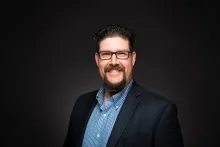
Ben is an elder serving as Pastor for the Salem, Eugene, Roseburg, Oregon congregations of the United Church of God. He is an avid outdoorsman, and loves hunting, fishing and being in God's creation.
