

Ben Light
This transcript was generated by AI and may contain errors. It is provided to assist those who may not be able to listen to the message.
Well, thank you very much, Odell. This is very well done. It's neat to see budding piano players.
You know, the future looks good. We've got piano players all over the place, individuals that are learning the skills to take the place of some of those that are getting up there.
Like... Sorry, I wasn't...
My wife is older than I am, and I'm getting up there, so therefore we have... Just a quick reminder, too. Lunch on Trumpets is a bring-your-own lunch, so please make sure that you do bring something for food. We are not doing a large-scale potluck.
However, I have been told that there will be a share table, which is essentially just a table where you come, and if you have extra stuff, you can put it on there for individuals that want to do a little bit of a sampling of other things. I remember I did potlucks... Let me do this real quick. Sorry. Turn this thing on while I'm still talking. Or did you already turn it on? Did I just turn it off? Hey, look at that. I remember the potlucks of old... I don't remember who it was, but somebody used to run around... Oh! With lutefisk! Like, pickled herring and stuff, and all these different things, and share that with folks. Don't put that on the share table.
Some people may love it. I don't know. I did forget one announcement, actually, and I actually...
I specifically told Carol Mitchell that if I forgot she was supposed to be in the back doing this. She's been doing that for, like, five minutes. I'm sorry, Mrs. Mitchell. Carol has been cleared to move into her apartment. She is going... They're still fixing and finishing things, but she is cleared at this point to go in. The plan is that she will be moving tomorrow. Is that correct?
Can you... What time? I'm sorry? About 10 o'clock. So if there are a couple of individuals available tomorrow at 10 to be able to go over there and move some boxes and some other things, it would certainly be greatly appreciated. See, I got to start looking, and when I do announcements, I look this way. I need to... Sorry. All right, so I thought today what would be kind of a...
kind of a fun thing to do would be to take a look at the recent experience that we had down in Ghana, take a look at the United Youth Camp program that we were there to support, and to provide you with a little bit of an update and a report on the work that is going on in West Africa. You know, Proverbs 25, 25 reads that, like, cold water is to a weary soul, so is good news from a distant land. Good news from a distant land. And I don't know about you guys, but one of the things that I used to just absolutely love was the updates on the international work that was on the feast video.
I absolutely... As a kid, I remember just looking so much forward to being able to watch the little updates from the different places around the world as the work was going on. That just...
I don't know, it just spoke to me. And it feels like we haven't had one of those in a little while, and I'll be honest, I kind of missed it. I kind of miss it, seeing what is going on around the world in various places, because there's something refreshing, there's something satisfying about seeing God working in so many places around the world, so many different places, with so many different races and cultures. Seeing the Word of God and the Spirit of God convicting people to turn to Him and to ultimately dedicate their lives to His service. It's inspiring to me to see that happening around the world in various places. Yet, I think interestingly, we in the United States can tend to have a bit of a U.S.-centric version of the work.
Sometimes we think that it happens here, and by and large, a lot of it does. But I think sometimes the AIA part at the end of UCGAIA can be forgotten, that we really are an international association with thousands of brethren around the world. Carl and I got home, Carl Kester and I got home from West Africa on the 21st of August, which is the day of the eclipse. We missed it. I heard it was pretty amazing. We didn't get a chance to see it, but we left Ghana at 10 o'clock West African time, 10 o'clock PM West African time, on August 20th, which was 3 in the afternoon here.
We arrived home 24 hours later on the 21st. So, 24 hours worth of travel, some weird flights where you left it. One point in time, you were in the air for 12 hours, and you landed an hour later.
You kind of have that moment of, like, did I go back in time? I mean, the last 12 hours didn't technically happen, but they did, and it's kind of weird. But Carl got home a few hours later, and as you might imagine, we arrived home exhausted. But with a sense of satisfaction, and with a number of new friendships of our brothers and sisters in Christ halfway around the world. So I thought I would take some time today in this message and discuss with you our recent trip and try to update you on the work that's going on in Ghana and in West Africa as a whole, but also to update you using the theme of this year's camp theme as to the big takeaway that came out of this year's camp. So the first part of this message, be patient, the first part of this message is a little more of story format. Kind of goes along a little bit of what we did, and then the second half of this is really going to dig in and start looking at that takeaway.
So I've been told that the front arrow button moves the slide. Aha! It does! Fantastic.
So the United Church of God has congregations across West Africa, starting at left in the country of Ghana, moving over into Togo in Benin, Nigeria, Cameroon, and then the Democratic Republic of the Congo. So, which is neither Democratic or a Republic, but that's another story for another day. They have brethren in and around the Kinshasa area. There's kind of that little deal there right on the border, but we have brethren in that area, and that is part of the overall West African circuit. It doesn't seem like much when you look at it in the way of coverage.
I mean, you look at it and you kind of go, what? I mean, I don't know, that's not too bad until you overlay the United States over the top of it, and you realize that this is an incredibly large circuit, an incredibly large circuit. There's a cool website that allows you to overlay maps over the top of other maps and preserve the sizes so you can compare more accurately.
But this is, at one point in time, was Mr. Mark Mickelson's circuit, from essentially Boise, Idaho, so to speak, to what appears to be somewhere in Mississippi.
And he was responsible for one to four congregations in each of those areas. And what's interesting is, as you look at this and as you consider these things, overlaying the United States over the top of this gives you an idea as to the sheer size of the circuit. But it doesn't tell the whole story either. Each of these countries is a different government, a different culture, multitude of tribes, varying levels of governmental stability.
Some of these countries are very stable, others of them are ready to collapse at the snap of a finger. And so you're working within all of these other things. There's rebellions occurring in certain places for independence, different languages. It's just it's all over the map from one side of the circuit to the other. Since the Cogwa split, these areas were served by a single senior pastor. Immediately after the split, Mr. Fred Kellers, who's in the Tennessee area now, then Mark Mickelson, who's up in Spokane, and then now Paul Moody. Well, that's changed slightly, too. So our senior pastors in West Africa, because of the size of the circuit and how many people there are to serve in that area and how far flung and apart they are, the size of the circuit, as well as the language barriers necessitated, necessitated, sorry, a shift in how things were done. The United Youth Corps program that we were participating in in Ghana was under the purview of Paul Moody, who is over at this point the senior pastor in the English-speaking parts of West Africa. That's primarily Ghana and Nigeria. There's a couple of other English-speaking countries in West Africa, but we don't have members there. So at this point in time, it is Ghana and Nigeria. Hopefully that changes. Hopefully we'll have opportunity in some other countries as well. But the senior pastor that's over the the new senior pastor, I should say, that's over the French-speaking areas, which is the vast majority of countries in West Africa, or Francophonic, is Benin, Togo, Cameroon, and DR Congo. That's Mr.
Tim Pebworth, who's down in the Oakland, California area. He's over the entirety of the French work, and it just made sense to bring him into West Africa as well, because before, if you were speaking a message in English, the message would need to be translated first into French, and then from French into one of the local dialects, and sometimes from that local dialect into another local dialect. And so a 45-minute sermon turns into a 12-minute sermonette by the time the translations have occurred. If you can cut the middleman out and start in French, it saves you some time. So Mr. Tim Pebworth is working down in those areas. As former British colonies and protectorates in Ghana and Nigeria, those are those that are under Paul's purview, they're largely Westernized. By and large, they're Westernized countries. Ghana is a little more so, I think, Westernized than Nigeria, but both are still very African, having received their independence from the crown just a little over 60 years ago. And as their independence has occurred, some of the vestiges of Britain and some of its customs and things are starting to become less and less as it becomes more African in its culture. We left the United States for African soil on August 10th, which was a day later than we had originally planned, which is the reason I put up here Misadventures. It cut down on our time in Ghana by a day. What ended up happening was we had the Seattle to Amsterdam leg of our flight canceled, and Carl and I were getting on the plane as we got this beep on our phone and both of us kind of looked at it and said, oh, it looks like the leg of our flight's been canceled. Well, they'll figure it out in Seattle. Well, little did we know while we were in the air and you have your plane in airplane mode that they're rerouting our flight out of Portland at that point in time and we ended up in the wrong airport. So we were stuck in Seattle for a day. What ended up happening, we found out later on, was a worker, one of the airport crew, ran a forklift through the side of the fuselage, some other form of a loader, punched a big hole in the side of a multi-million dollar plane and grounded that entire flight. So they canceled the flight, they rebooked everybody, and I can only imagine that the cost to Delta was substantial. Carl and I and Becky and Leanna Novak from Lake Tahoe, California, who were in these photos here, were stuck in Seattle. They put us up at the Marriott, they gave us food vouchers, and they booked us on the next flight out, which was an extra flight, which was kind of nice. You'll notice that Carl and I, there's no one sitting between us on that international flight. How often does that happen for those of you that fly internationally?
Rarely ever. So the second flight that we had was completely and totally empty. In fact, at one point you get up to use the restroom and there are people just sacked out across the entire row.
As you go back in the plane, there was one person per row sitting in those areas. So the next day's flight was quite empty, which was nice, and it rebooked it in such a way that we were able to end up for an extended period of time in Amsterdam. I won't spend a ton of time here, but what was really neat for me, I've never been to Europe. This is the first time I've been to Europe. I've never had a chance to set foot on European soil. You know, I've read a lot about it in school and a lot of different things, and I actually had relatives that were in the Amsterdam area way, way, way, way back as you look into the genealogy stuff. But it was really interesting to have an opportunity to visit a city with such a rich and storied history and to see the sites in these houses. Some of them had stamps on the top of the concrete. The house was put up in 1600s as we're going along in the canal. It's just incredible. So it was nice to have time to stop, and it made missing a day in Ghana, losing a day of our trip, a little bit more bearable.
We had a bit of our layover there. Carl, I got to tell this story because it was funny, Carl was really excited to get out into the city of Amsterdam and to get a European coffee. And he built it up. He built it up. He told me about this European coffee, how excited he was about this European coffee, and I really wanted to get this thing. I love coffee. I love coffee, and probably a little bit too much. But as excited as he was, I got excited too. And I had it in my head that I'm envisioning a small quaint coffee shop on this cobblestone-lined street with this artisan coffee maker with 1600 years of coffee knowledge that's been passed down from one barista to the next, and that there's, you know, this coffee master of old with a silver spoon that's inherited for 250 years. And I order my coffee, and she puts it on a little machine behind her and presses a button.
And it goes, and she hands it to me and charges me like 20 euros. No, it wasn't that much. But it was expensive-ish. But there was no man. There was no spoon of legend. I'd flown halfway around the world for a coffee I could have gotten at 7-11. And it was good. It was good. But it wasn't.
I'd built it up in my head to something just entirely different. So I now know European coffee comes at the push of a button. So, you know, you experience, right? But later that day, after we experienced Amsterdam a little bit, we found ourselves on a flight to Accra, and then seven short hours later we landed in West Africa. So the country of Ghana, as you can see from the slide here, I overlaid it over the top of the northwest just to give you an idea of size of Ghana. We landed in Ghana. Accra is down... I was told there's a laser pointer. Accra is kind of right down in here. About halfway up the country, it shifts over into predominantly Muslim influence and rule and cultures and customs. And so there's a variety of... and not as much of a population in the north of the country, to be honest. It's also a lot drier and much more desert-like up there. So the majority of the country all exists down in here population-wise, by and large. So African airports, as we landed, can be a very interesting adventure. Prior to leaving Seattle that morning, we stopped and prayed that the group of four of us would have safe travels, that God would grant us favor in the eyes of the officials, that He would protect us, that He would take care of us as we went. And having favor in the eyes of the officials is a very important point.
Africa is notorious for its corruption. It's notorious for its corruption. West Africa, in particular, Ghana and Nigeria are no exceptions. In fact, Mark and Paul... Mark Mickelson and Paul Moody have told some incredible stories about various security checkpoints that they've been stopped at over the years. And it's not uncommon, even in the Ghanaian airport, to be stopped every what felt like 100 feet for somebody to look at your passport. And in some ways they're looking for one little thing that's off, that they can maybe encourage you to grease the wheels a little bit for them to overlook. And so we went through checkpoint after checkpoint after checkpoint, it seemed like, as we were coming out. But at each of those checkpoints, we were passed along, no problems at all. In fact, Mr. Moody mentioned to us that it just... going through the airport these days in Ghana and Nigeria just isn't as fun as it used to be. You know, it's just... it's getting to be too easy. There's not enough people hassling you for money and trying to cheat you out of this and that. So it's getting to be too easy. But our prayers were answered. We landed safely. We were protected. We were given favor in the eyes of the security. And we were passed along quickly to our outside area where we met up with Henry Aikens, who's the office manager in Ghana, and Isaac Tete, who was waiting for us and took us back to where we were staying. We were promptly terrible guests as we were extremely exhausted and basically fell asleep mid-sentence along the way back. Next morning, we got up extremely early, headed to the Cape Coast area in preparation for the Sabbath. Because we'd lost a day, we had planned on having a day to relax and un-jet lag and whatever else. We didn't get that. We just got up the next morning really, really early and jumped in a car and booked it down the highway towards the Cape Coast. And Ghana is right on the Atlantic Ocean. It's actually very beautiful along the coastline. And the place where we're staying for camp is inland quite a ways. So we kind of had an opportunity to switch from what would be kind of jungly into more of a coastal climate with palm trees and a number of other things.
And the Cape Coast area is where a majority of the tourists and those Ghanaians that are a little bit more well-to-do tend to reside. North of the Cape Coast, which is also known as the Gold Coast, the Slave Coast, and the Ivory Coast, depending on what the primary export was at that time, it was referred to as that. And really, depending on which empire controlled the area at that point in time, lies a very small village town of Abra Magona, and it's one of the locations of one of our congregations in Ghana. We have four congregations in Ghana, and I've done the best I can to show you locations. The red stars there is a blow-up of the little southern area in that box and just shows you kind of where they're at. Abra Magona is the one down here on the far left side. So we traveled from Accra, which is the one on the far right, through the little roundabout that leads up to Quinaco and leads down to Winoba and over here into Abra Magona. And they're very different congregations. They're very different congregations. Accra is the capital, and it's, you know, a location where a majority of the brethren are college-educated. They have very good jobs, and they do decently well for themselves given their location.
Agona, Quinaco, and Winoba are smaller congregations in village, not as much economic opportunity, not as much education. And so most folks earn a decent wage. You know, they work, they're farmers, they do what they can, and they live in very small, very modest homes and live a good, happy life in those areas. It's difficult. It's not easy, but they live a good, happy life.
You know, for a number of years, these congregations met together in, in, or I'm sorry, they met separately for a number of years. They had, at one point, met together. And if you think about it, it actually kind of makes sense. Accra, if you have people come to the feast in Agona, for example, you're going to a village where there's not running water, there's not necessarily flushing toilets, there's not necessarily the kind of amenities that people might be used to if they're living in Accra. Likewise, if you ask the individuals from the village to come to the city, it's expensive. They have a very different way of doing things in the village, which I'll mention in a second. And it ends up causing some, some divisions a little bit in that regard. But part of the reason that they'd met separately was initially the three congregations that are down here on the far left, the one above in Quiñaco and Winoba and down here in Abrema Gona, originally had gone with Cagua when the split had occurred. And a few years after that, they contacted Mr. Mickelson and Mr. Moody and requested to return. And so with them came about 300 brethren in those three congregations, and they're, they're meeting together today. But the feast itself was separate for a while. They're going to recombine this year for the first time in a lot of years. And what ultimately changed that was the last time they did it was seven years ago when they met together. And at that point in time, it was a bit of a challenge. And one of the gentlemen in the area told us a couple of stories about that. And it was it was kind of interesting. So they met together in this hotel. The last time that it was done, those brethren from the village areas came with their goats and their chickens.
They brought all of their stuff with them. They chained them up outside the hotel room doors.
Some of them slaughtered them in front of their hotel room doors on premise of the hotel.
The hotel itself complained. One of the brethren had bought with them a fufu machine. And fufu is this pounded plantain and cassava mixture that you pound into this very starchy, very substantial, almost bread-like substance that's not cooked. And you dip it in food, and that's kind of a substance thing. But to make that, you have to pound it. You have to smash it down and fold it and smash it again and fold it. Well, if you're a little more well off, you have a machine that does that for you. You just stick the stuff in there, turn the machine on, and the machine goes constantly until the fufu is made. Well, the people in the hotel rooms around them, when the fufu machine turned on, and it was thumping consistently all hours of the night, so the fufu would be ready to go the next morning, complained. And then the final straw, according to the story that I heard, was one of the brethren started a charcoal fire in his hotel room to cook the food, and that was kind of it. The hotel said, we're done. Thank you very much.
And so they started to meet separately at that point. They said, all right, those in the villages, let's get you a feast site in the village, and you can do whatever you need to do. You can bring the goat, you can bring the chickens, do what you need to do, and those that are in the city will meet in the city. Well, they're combining again this year in order to bring everyone together, and it's going to be a really neat opportunity. There are about 400 brethren in Ghana, and they'll finally, for the first time in about seven years, have a chance to all be together for the feast, which is a really, really wonderful thing. The United owns a building in Agona, a church building, which you'll see in just a second, and also help finance a project that helps mill cassava. And cassava is not something that we're super familiar here with, but in Africa it's a staple. It's tapioca flower is essentially the same thing. Both cassava and tapioca come from the cassava root, or manioc, as you might know it.
But tapioca is pulled from the water that is squeezed out of the pulp and then dried, so you get this kind of fine flower, whereas cassava is the fiber itself that comes from the root that's all ground up. And they use it to make bread, they use it to make a number of things, they use it to make something called gary, they mix it with fufu. It's mixed with a whole bunch of different things, but it's a massive staple in the area. Well, Benjamin Agupong, who is the pastor in the three smaller congregations in Ghana, approached Mr. Moody a few years back and said, I have an idea.
I want to grow cassava and contract with local farmers to process their cassava. And we'll build this little mill, we'll go through the whole process, we'll grind it up for them, we'll take care of the whole thing, we'll take it from farm to table and market it and send it out there.
And he said, I just need this much money to get it started. And they read the business proposal, they approved it. Sure enough, here's the facility. Doesn't look like much at first, but it's pretty incredible what they can do there. They take this process from start to finish, they grow some of the cassava on site, and they contract with a number of other farmers in the area, and they process it through a series of processes.
I'll show you this real quick, and then I think I can go back on this. The milling machine is right up here on the top right, and that's a bunch of cassava root in it. Looks like potatoes, but it's a little bit of a different setup. But they run that little machine, and they grind it into this pulp. The pulp is squeezed, the water's taken out of it, they dry it, and then they put it back on this deal up at the top right, which is a furnace, essentially, to dry it out.
And then once it's dried, and it's been sifted, they down there in the bowls, that's the finished product, and they bag it, and they sell it, and it's been a way for them to bring that money back into the three congregations, to bring the money back into the project, to continue to finance it, and help support Brethren Locally in those three areas, which is a really neat project. Really, really cool project. But this is all of us out in front of the building that the church owns there in Inagona, and that's the church hall, as well as they use it for a number of other things.
And this is a woman down here showing us the cassava, the plant right behind her, but she's showing us how they harvest it. She made short work out of that thing, quickly processed it with that machete, and then took a quick slice of the branch right back in the soil, stepped on it, said nine months later, we'll harvest it again. And it just, it replenishes itself, and they just kind of keep going in this process. Once we were done, we headed over to what was called the slave coast, or the Cape Coast, and there is a castle and a fort that is present in this area.
And it was probably the most sobering part of the trip, because this is also an area that was one of the main stop-off points for men and women that had been moved into the slave trade. So in addition to this being a fortified location, complete with cannons and everything else, underneath this were slave pens, and they kept people up to 200 of them in a pen, essentially, in these stone walls. They had a thousand different men at any given time, and about 500 women, and they would process them through for the slave trade in the West Indies and in the United States, and in the South American areas in the Caribbean.
Unfortunately, this particular one, and this is the the part that was really, you know, unbelievably sobering, this was one of the worst conditions that anybody had to live through. And this particular condition, many of them didn't make it out of this. They got here and they died here. Many of them didn't even make it out to go into the slave trade. They lost their lives here. So they go through and they talk about the slave trade, they talk about a number of those things, and it's really interesting, and it's a sad reminder of what people can do to one another in the name of exploitation, in some ways, and other things.
We came back to our hotel after that. The Sabbath was that evening. We came back to our hotel, kind of caught up a little bit, caught up on some sleep. So you can kind of see just a little bit here too, of the slave coast castle itself. So we had Sabbath in Abrema Gona, and this is a photo of the congregation there. It's a good-sized congregation in Abrema Gona.
There's between about 130 and 150 on a regular basis that meet in this little tiny village in the middle of nowhere in Ghana. And so there has been some incredible growth in that area. There's been people that have just come in, and it's the local village, and they come in and they listen, and they're convicted of the truth, and they stay.
And it's just really, really incredible what they've been able to do here. But we kept the Sabbath with them. I think the day they were saying about 140 that we had, and I often brag on this Salem congregation that we're, you know, a huge amount of children. I think they've got to speak. I would estimate 60 percent of that is young kids in that area, and just little kids running all over the place, having a great old time, which is really, really neat.
It's a nice sign for the future of the work in Agona. We had split sermons that day. Mr. Moody and I gave the split sermons that day, which was kind of an interesting experience. The messages were translated into Fonte, which meant that you would say a little thing and then turn to Mr. Agupong, who's sitting there next to us, and he would translate it from English to Fonte, and the brethren would have it. But we spent some time after that getting to know a number of the kids after church who would come then to camp a little while after that, and that's everybody outside of church afterwards having a chance to fellowship and get to know one another a little bit better.
We returned to our hotel, and camp started. We got back the next morning. Kids showed up that afternoon, and the youth camp had begun. They started arriving by busload at about three in the afternoon. They got set up into their teams, and something that's a little bit different about the camp program in Agona compared to the camp program in the United States is that the dorms are teams. They don't do dorms, they do teams, and they're co-ed and they're multi-aged. So you would have in one team, you would have kids anywhere from 13 to 19, both boys and girls, in this team. And so they would go around as teams. There were two teams, red team and blue team.
You can see at the bottom, blue team working on with Mr. Billy there, working on doing the whole prop everybody up by seeing if you have the strength to do it. And then you've got red team up here. I'm working on showing them speed away, and just good times were really had by all.
We taught the young people swimming, which was a challenge, to be perfectly honest. About 70% of Africans don't swim, and many of them live near water, and it's a very dangerous thing if they end up in water. They get very panicky and a number drown, so they stay away from water just completely and totally. They don't float well. They don't. They don't. You're telling them all the things that should be easy. I mean, I float well. I mean, I'm like a bobber in the water. I float really well. So I'm trying to instruct them how I would do it and how I would go about it. You get them there, and you get them all set, and you take your hands away, and they just sink like a bag of rocks.
So it was a challenge. We had about four kids swimming by the end of the camp, and this was their first time trying. So we'll do it multiple years in the future and see if we can't get some more there. So those of you that have instructed swimming before, two years from now we will be back in Ghana. Think about it. We could use some help, because Mr. Moody and I don't really know what we're doing on teaching swimming. So sorry, Mr. Moody, if you hear this later.
But it was a neat opportunity for the kids to experience a variety of different activities, have a chance to bond together as young people, and get to know one another. Down at the bottom right are the accommodations. Those are the dorms. Nice REI tents, but those are the dorms that the kids stay in, and it was a good time that was had by everyone.
There we go. That was all the campers together. We had just a little over 30 campers and probably a dozen or more Ghanaian staff that were there to serve the campers, and I can tell you that this year's camp was a great success. The Sabbath itself, though, this is what's the real special treat, is the Sabbath. Everybody comes in the most brightest of clothing, and very nice clothing.
Everybody dresses up and has these different patterns and colors, and I wore my shirt today.
You've seen it before, but I wore my shirt today just with the patterning that goes on in a variety of these things, but it's neat. They dress up very much. The young people, I think, really like to look good. You know, they'd have their sunglasses on along with their dress and doing everything they could to look nice. It did appear, though, as we went in, that the primary export from America to Africa is the selfie. Every one of the kids wanted pictures with you and with this person and that person, and come running in, you're trying to take a picture with one person, and all of a sudden everybody floods in to take other pictures. We've actually joked in the past, Mr. Moody and I, you meet so many people that you sometimes forget who you've met, and you'll get friend requests on Facebook, because most people in Africa have cell phones and social media accounts. You'll get these friend requests on Facebook, and you'll go, hey, everybody has a Christianized name, so somebody might be known as John, but then also be known in their native dialect, and their Facebook profile has their native dialect. So you get this request from somebody, you don't recognize the name. The only reason sometimes, and the only way you know, that it's you is if you're in the picture, and you go, oh, there I am, okay, I know this person.
Yes, you have a moment where you're like, oh, yeah, okay, this is the one that I know.
So we had a chance to take pictures with a lot of the folks and a lot of the kids, and what was really kind of neat is not just the kids wanted pictures. This is Mr. Ugy Pong here in the back on this left side, jumping up and taking a quick photo with Billy and I, and then, you know, a number of the kids, Mr. Moody's in on the pictures as well. One of my favorites, let's see where I ended up putting it. Oh, right here. This gentleman in the front is 85 years old, and he came in and he was like, I want in, and he comes and he crouches in front of the picture and takes his picture too, which was just wonderful. There's such full of joy, especially the Sabbath itself. It was a wonderful opportunity. So we said our goodbyes on Sunday. This was the last crew of people right before everybody went their separate ways, and we wrapped a very successful United Youth Camp experience in Ghana. The opportunity for them to make new friends and to experience the camp program activities and have that time together is so unbelievably crucial, and it's a really big and important aspect of the Youth Camp program, but the reality is the reason we were there. All those activities are great. All those things are wonderful. They're important.
But the reason that we were there during that time, the reason that we had flown halfway across the world, was not to teach them basketball. That's important, and we did, but it was to teach them about God's way of life. It was to teach them and instruct them spiritually during that time that we were together. And so we had a set of themes this year. We had themes last year as well, and I gave a series of messages on those themes. But the camp theme this year for the African camps, as well as the United Youth Camp program in the U.S., was building your relationship with God.
Building your relationship with God. Each day I had a specific theme and a focus, and we covered it in the morning compass check and then circled back on it in the evening during the Christian living classes. And so what I'd like to do today is I'd like to spend the rest of our time that we have going through and taking a look at this set of themes in a 30,000 foot overview, so to speak, of how these all kind of relate to one another and to the concept of building your relationship with God. So it consisted of five specific themes, and I'm just going to leave this slide up here as we finish out today. It consisted of five specific themes that really built on one another, from one to the next to the next to the next to the next. And they're crafted purposefully in that way. They're designed to go together. They're designed to build on one another. The first of those themes were the idea for our youth that God is calling, that this is not just your parents' church, that God is calling you as well, that He is giving you the same opportunity that He gave your parents, same opportunity that He's given people since the beginning of time to be a part of His family. Once that calling is recognized, then you build with faith. You recognize the importance of belief. You recognize the importance of faith and trust in God. And you build that relationship with faith as the cornerstone in Jesus Christ.
You pray with purpose. Make sure that it's not just rambling words, that you're praying intentionally and purposefully, kind of as Mr. Griswold talked about today.
You know, the ding goes off in the middle of a notification or whatever, you ignore it, right?
You learn from God and you respond to God ultimately. Because the reality is, when you look back throughout Scripture, God has always desired a relationship with His people.
It's always desired a relationship with His people. Let's go to Leviticus 26. Let's go to Leviticus 26. Leviticus 26, and we'll go ahead and pick it up in verse 11. We're going to break into the middle of this discussion on blessings and obedience. Leviticus 26, and we'll do 11 and 12.
Leviticus 26, verses 11 and 12.
Read as follows, I will set my tabernacle among you, my souls will not abhor you, I will walk among you and be your God, and you shall be my people. There's a relational connection here. There's a relational connection here. That I will be your God and you shall be my people. God desired of His people a willing submission to the law that He provided to them. He wanted obedience. He wanted them to willingly submit themselves to that law. That they might lay their lives down, submit themselves, and obey. That they would be circumcised of the heart. That they would ultimately change. And if they did, He would be their God, and they would be His people. It's a relational setup. In fact, God says in Deuteronomy 5 verse 29, and we won't turn there, but in Deuteronomy 5 verse 29, after the host of Israel listens to the words of God, and then they tell him, we will hear it and we will do it. How does God respond? He responds with, ugh, that they would have such a heart in them.
That they would have such a heart in them. That they might actually obey. That they would walk with God, instead of in opposition to Him. We will hear and we will obey, oh, if they only would.
If they only had such a heart in them. You know, have you ever had a relationship with someone who did everything the exact opposite of your wishes? You ever known anyone like that? You tell them your favorite color is blue, every gift they buy you is not blue. It's their favorite color instead. Oh, it's red. Come on, it's red. I like blue. I like red. Oh, okay. You tell them your favorite food is Thai and they bring you tacos, which is their favorite food. I mean, I'm going to imagine you probably have not necessarily had one of these kinds of relationships in the past, because in this situation it doesn't matter what you ask, it doesn't matter what you request, state, or command. They do the exact opposite. Why would you maintain a relationship like that?
The person clearly doesn't have honor and respect for you or for your wishes in that situation.
And the chances are you probably haven't had a relationship like that, because those kind of relationships don't usually last long. They don't usually last long. Let's go over to Ezekiel 16.
Let's go over to Ezekiel 16. We'll edit this passage carefully for the kiddies.
But Ezekiel 16, we kind of see God's thought process with regards to the length to which Judah had fallen. Ezekiel 16, he gets into this idea of the relationship that he has, and he likens it to something. And it's really lamenting the length to which they had fallen. He talks about, in the past, he talks about all the things that he's done for Judah, talks about the love that he had shown Judah and her sister Samaria, the end of the relationship that he kept up. Ezekiel 16 and verse 8 says, When I passed you, or passed by you again and looked upon you, indeed your time was the time of love. So I spread my wing over you and covered your nakedness. Yes, I swore an oath to you, and I entered into a covenant with you, and you became mine. You became mine. Again, relational.
Then I washed you in water. Yes, I thoroughly washed off your blood, and I anointed you with oil. I clothed you in embroidered cloth and gave you sandals of badger skin. Never worn badger skin sandals, but it sounds like they're being described as nice.
Perhaps they're very soft. I clothed you with fine linen, and I covered you with silk. I adorned you with ornaments. I put bracelets on your wrists and a chain on your neck. I put a jewel in your nose, earrings in your ears, and a beautiful crown on your head. I have done all of these beautiful things for you.
Verse 11.
Again, adorned you with ornaments, bracelets on your wrists, a chain on your neck, a jewel in your nose, earrings in your ears, and a beautiful crown on your head. All these adornments that were provided. Thus you were adorned with gold and with silver, and your clothing was of fine linen, silk, and embroidered cloth. You ate pastry of fine flour, honey, and oil. You were exceedingly beautiful and succeeded to royalty. All of these beautiful descriptions of all of these things that God had provided for His people, Judah, and His people, Samaria. God provided for His people again and again and again and again. How did they repay Him? How did they ultimately repay Him?
By playing the harlot again and again and again and again. By saying, you know, God, I really appreciate all these things that you've done for me, but I really want to see other people.
I want to have the opportunity to be out here rather than over here. God has always desired a relationship with His people. Has He always gotten it? No. No. Not a beneficial. Not one that is to the degree that He had hoped for. Granted, this was physical Israel. This was Israelite peoples of Samaria and Judah. But as members of the body of spiritual Israel, we have to continue to be cautious and careful to ensure that we build and we maintain our relationship with God, showing Him honor and showing Him respect, being willing to learn from Him and obey Him and grow, not following the pattern that we see established again and again and again in Scripture. He's called us into a relationship with Him specifically. I've mentioned this before, but He has looked down on this earth and for whatever reason, and I don't know about you, I sometimes ask the question, why? For whatever reason, He chose us. Out of the seven and a half billion people on this planet and the billions that have lived before this, He chose us. He has called us, He has given us an opportunity to enter into this relationship with Him. And for some of us, those of you that are second and third and fourth generations in the church, that may have come from the relationship that your parents or grandparents or great-grandparents had with God. It mentions that in 2 Corinthians 7. For others, those of you that are first generation, He saw something in you, called you into this way of life, out of a life that was completely apart from Him. And it may not have been drastically apart from Him, but it was apart from Him.
Those individuals were convicted by His word or convicted by His Spirit, and they entered into a relationship with Him, into a covenant relationship with Him.
Whatever the reason, that opportunity that's been offered to us has been offered to us, just like it was offered to Abram. Let's go ahead and turn over to Genesis 12. Genesis 12.
We'll see the instructions that God gave to Abram.
Genesis 12 and verse 1.
Genesis 12 verse 1 says, And in you all the families of the earth shall be blessed.
God called Abram to leave his country, to walk away from the things that he was familiar with, to leave behind what was comfortable, what was normal, what felt comfortable, and to strike off into a strange land. He assured him that he would bless him, he would make of him a great nation. And as you read through this passage, especially as you look at verse 4, Abraham was likely a wealthy man prior to God calling him. He had substantial things.
He became far wealthier after he left. God blessed him exceedingly. But he called him to step away from those familial and economic connections and step out on faith in belief and in trust.
Abraham's response is recorded in the next couple of verses. Verse 4, So Abram departed. As the Lord had spoken to him, and Lot went with him.
Abram was seventy-five years old when he departed from Huron. He left. He departed from Huron. He and all the people that he had acquired, all of his substance, he packed it all up, left the country he was familiar with, and he left for a complete unknown. All he had was a promise from God that he would be taken care of and that God would bless him and in him create a great nation.
God called us out of a life, too. One that we may have become comfortable with. One that we may have just been drifting along downstream with the world around us, oblivious to God's way. But like Abram, he instructs us to get out. Get out of that way of life and step into a somewhat unfamiliar territory.
Something new, something different, with just the assurance that he'll hold you in the palm of his hand. Some people make that jump. Other people bridge too far. Abram struck out on faith, and so do we. Let's go to Hebrews 11, verse 6. Hebrews 11 and verse 6. This was one of the memory scriptures at camp this year. Hebrews 11 and verse 6.
Hebrews 11 and verse 6, the whole section of Hebrews 11 talks about all of the people of faith throughout the years, these individuals whose examples we can look up to. Verse 6, But without faith it's impossible to please him, for he who comes to God must first, some translations put it, others say, must believe that he is, and that he is a rewarder of those who diligently seek him. It was by faith that Abraham left. This was the faith that he exhibited. He believed that God is, and that he was a rewarder of those who diligently sought him. And, ultimately, we know it was accounted to him for righteousness. Faith in God and in his promises, Hebrews 11, kind of 8 through 10, if you skim down just a little bit of ludes to that, by faith Abraham obeyed when he was called to go out to the place which he would receive as an inheritance, and he went out not knowing where he was going. You know, we sometimes joke if you look at Abraham's wanderings in the desert. GPS, right? Kind of out and about and moving around a little bit.
He didn't know where he was going. He didn't know what quite was going to happen. By faith he dwelt in the land of promise, as in a foreign country, dwelling in tents with Isaac and Jacob.
He bears with him of the same promise, for he waited for the city which has foundations, whose builder and maker is God. We know that he understood much.
You know, there are times, though, when you take a look at Abraham, was his faith always perfect? Was his faith always perfect? No. There were times that he faltered.
There were at least two times that he told half-truths in the hopes that Sarah would not be taken away from him. Once in Egypt and once in Gaurar, his faith faltered a bit, and he was concerned of what was going to happen. If they found out that she was his wife, would they kill him? Would they just take Sarah? You know, these things are running through his head.
Will God really protect me? He said he'd protect me. Will he really? I'm going to take matters into my own hands. I'm going to just make sure that this is good and that I can preserve my life and preserve Sarah's life. There were times that Abraham faltered. You know, we have a really unique position, with hindsight, to be able to see his story arc, to be able to see him go from this time of faltering to a time where he is known as the father of the faithful.
He trusted God and he believed in his promises. James 2 and verse 23, just a few pages over here, James 2 and verse 23 discusses this topic a bit in this book of the Bible that Martin Luther didn't care for much. The book of James struggled to fit his worldview, and so he didn't care for it much.
James 2 and verse 23 says, and the Scripture was fulfilled which says Abraham believed God. In the middle of this discussion on faith and works, faith and works and how they interact, and the Scripture was fulfilled which says Abraham believed God and it was accounted to him for righteousness, and he was called the friend of God. Now his belief led to action.
By works, his faith was made perfect. It was accounted to him for righteousness, earning him the descriptor of friend of God. Do you and I desire to be a friend of God?
Do we desire to be a friend of God? Do we desire to have the kind of relationship that Abraham and God shared? The kind of relationship doesn't simply happen. It's not accidental. It's not something that just one day you wake up and all of a sudden you're a friend of God. That relationship is built intentionally and it's built through faith. We must first believe that he is and that he is a rewarder of those who diligently seek him. Now we brought out this point with the kids at camp as well. Not passively seek him. Not sort of, kind of seek him, but diligently seek him. Not when it's convenient, not when I'm sort of bored and there's nothing on TV. Diligently seeking him with a sense of urgency. I might say, well, it's still today.
Hebrews 3 uses this concept of while it's still today. While it is still today. Hebrews 3.
And it describes a sense of urgency and an urgency that comes with our response to God and ultimately his calling. Hebrews 3 in verse 7 says, therefore, as the Holy Spirit says, today, if you will hear his voice, do not harden your hearts, as in the rebellion in the day of trial in the wilderness where your fathers tested me, tried me, and saw my works forty years.
Therefore, I was angry with that generation and said, they always go astray in their heart and they have not known my ways. They wouldn't listen. They wouldn't obey. They wouldn't establish the relationship. God tells the readers of the Hebrews, today, if you hear his voice, do not harden your hearts. Listen, believe, change. Verse 11, so I swore in my wrath they shall not enter my rest. Beware, brethren, lest there be in any of you an evil heart of unbelief in departing from the living God. But exhort one another daily while it is still called today. Lest any of you be hardened through the deceitfulness of sin. Do these things while it is still today. Be diligent.
Maintain that sense of urgency. Don't put off the important things until tomorrow, because tomorrow might not come. Tomorrow may not come.
Hebrews 3, verse 14, says, For we have become partakers of Christ if we hold the beginning of our confidence steadfast to the end. Really steadfastly holding on to that confidence or that faith, that belief or that assurance, unto the end. Not wavering. Not wavering. Verse 15, While it is said, today if you will hear his voice, do not harden your hearts, as in the rebellion.
For who, having heard, rebelled? Indeed, was it not all who came out of Egypt, led by Moses?
Now with whom was he angry for forty years? Was it not with those who sinned, whose corpses fell in the wilderness? And to whom did he swear that they would not enter his rest, but to those who did not obey? So we see that they could not enter in because of unbelief. We must believe that he is, and that he is a rewarder of those who diligently seek him. And we must build that relationship today, while we still can, because we don't know what the future holds. We don't know what the future holds. Sunday afternoon, we had just arrived back to the facility that we would be holding camp at, resting and sitting around waiting for the campers to arrive, kind of planning for their activities and getting ready for dinner. And there's a seven-hour time difference between Ghana and the United States, for those that don't know. Seven-hours time difference, which honestly made communicating with back home very difficult, because as we were getting up in the morning really early to do our Arabic stuff in the morning at 4.45, everybody here was just starting to get ready to go to bed. We would put our full day in, and then by the time we're getting ready to kind of finish up, and people are just starting to kind of wake up and just getting out with their day. So it made it difficult to contact people at the right amount of time. You'd have to stay up kind of late to make phone calls and to make connections and whatever else. But we had just gotten back. There's, again, seven-hour time difference in Ghana, so folks back home were just starting to get up and get going to their daily activities. And I got a phone ding that I'd received an email. It was an email from Linda Hansen, and through that email I'd learned that John had suffered a serious heart attack and that he was going to need open-heart surgery.
And what we thought at the time would be an extensive recovery. I'm very thankful that it is not. It needed to be a super extensive recovery. I'm glad that he is doing so much better than what we had originally kind of understood and had heard. But there was a flurry of emails that went back and forth, phone calls trying to make sure everybody's okay, make sure that things are going on, and I'm trying to work around a seven-hour time difference and connecting up with individuals that are, you know, in the midst of different things and all over the place. And it became kind of apparent that when we got home from Africa, things were going to change a bit. You know, in my case, somewhat significantly as I stepped into this role. You know, I found in my experience with God and serving God's people that God rarely waits until you feel like you're ready.
And sometimes it might not matter whether you feel prepared or not. You're up.
You know, when we were asked to start driving over to Bend and serving back in 2010, some of you may remember the events of 2010. The church had just split in December at basically the Northwest weekend. That exact same Northwest weekend, Mr. Walker collapsed, ended up in the emergency room.
Right as Mr. Sephoric is giving his sermon, Mr. Walker has collapsed in the back and they're taking him out to an ambulance. They needed help in Bend and they needed help in Medford, in the circuit, and I was asked to come over and provide coverage one sermon a month so that Jeff could fill the holes in the circuit. I'd never given a sermon before. I didn't know if it was something I could even do. But you know what? None of that mattered. God sort of tapped me on the shoulder and said, ready or not, you're up. Ready or not, you're up. And there have been a number of those kinds of times in my life, and I'm sure you can think back over your own life, where God has had moments where he's tapped you on the shoulder and said, ready or not, you're up. Maybe that's a conversation with somebody on the street that asks you a random question about the hope that lies within you, and God goes, dink, dink, dink. Your turn. Or perhaps it's shouldering other responsibilities or other things. Brethren, we have to develop our relationship with God with a sense of urgency. We cannot wait. We can't tell him, oh, when this stage of my life is over, I'll focus and I'll dedicate. I will focus in and I will dedicate when I finish school, or when this big project is over with at work, or tomorrow, or when things settle down a little bit. Because the reality is we don't know what the future holds. We simply don't know what sorts of circumstances may arise, what sort of opportunities may present themselves, where they will be in need. Or, frankly, we don't know how long we've got in a variety of different ways. We don't know how long we have. Psalm 90 verse 10, we won't turn there. You know what's there, more or less. It discusses the three score in 10 that men have. That's 70 years. And by way of strength, 80. Well, modern medical advances have given us a bit more than that. But the important message that we have to take from that is that our days are finite. Anything could happen at any time. Notice it says, you know, that's what's given, not guaranteed. Not guaranteed. Any of us could not wake up tomorrow, and our opportunity to build that relationship with God, to prepare ourselves for service to Him, could be over. Are you where you need to be? Are you where you want to be? Am I where I want to be, or need to be? Let's go to 2 Timothy 4 and verse 2. 2 Timothy 4 and verse 2 kind of talks about this idea of being ready, being prepared, being able at different seasons of our life and certain times that occur. 2 Timothy 4 and verse 2 says, preach the Word.
That doesn't mean from up here, per se. Sure, that's included. Preach the Word.
Preach the gospel to all the world as the Great Commission was given. Preach the Word. Be ready in season, out of season. Convince, rebuke, exhort with all long suffering, all patience and teaching. It goes on to kind of talk about why that is. I don't want to get into that at the moment, just that idea that we need to be ready. We need to be prepared for whatever eventuality may come in season, out of season, able to teach, able to preach the Word and give others the reason for that hope that lies within us. No, brethren, if that opportunity comes, not even if, when that opportunity comes, to give someone the gospel and we don't, we've neglected our commission. We have to be ready. We have to be prepared to do that, which means we have to build our relationship with God. We have to recognize our calling, build with faith, pray with purpose, learn from God, respond to God. You know, James 1, 22, and 23, which Mr. Griswold mentioned this morning, which I appreciated, or this morning. He wasn't here this morning. It was still this afternoon. But before, earlier, that's what I'm trying to say.
Discuss this concept of hearing and doing. This concept of hearing, that it's not enough to know what is right. It's not enough to understand what is right and to know that, oh yeah, this is something that I should be doing. Once you understand, once you become convicted, you must then follow through. That's the expectation, is that we then follow through. Matthew 7, 24 and 25, discusses this concept as well, as we start to wrap up here today. Matthew 7, verse 24 and 25.
Matthew 7, verse 24, says, Therefore, whoever hears these sayings of mine, and does them, hear and do, hears these sayings of mine, and does them, I will liken him to a wise man who built his house on the rock. Remember, we mentioned this a while back, as to what he's referring back to, all these things that are contained in this Sermon on the Mount. Matthew 5, Matthew 6, Matthew 7.
All these teachings, all these things, and more, obviously. But that's the direct reference, is, who hears these sayings of mine, and does them, I will liken him to a wise man who built his house on the rock. The rains descended, the floods came, the winds blew, and they beat on that house, and it did not fall, for it was founded on the rock. But everyone who hears these sayings of mine, and does not do them, will be like a foolish man who built his house on the sand.
The rain descended, the floods came, the winds blew, they beat on that house, and it fell, and great was its fall. And so it was when Jesus had ended these sayings that the people were astonished at his teaching, for he taught them as one having authority, not as one of the scribes.
hears them and does them. hears them and does them. The house that stands in this example, that stands up to the battering rain, and the winds, and all the difficulties and the trials of this life, is the man who hears God and follows through, building that house on the rock.
That's all of our goals. That's all of our goals, is to build a house that is going to, or build a life in this case, as the analogy goes, that will hold up to the storms and the trials and the difficulties of this life. That's the same goal that we have for our young people in Africa as well, is to recognize that when you live your life, God's way, it may not be easy, but God will take care of you. If you trust in Him, He will take care of you. You know, our brethren in Africa deal with so much difficulty and trials in their lives, just in their day-to-day lives. And I'm consistently amazed at some of the things that come up that the young people, especially now with Facebook and WhatsApp and other connections, will bring to your attention. I had a young man message me the other day and was asking, what should I do about the feast? You know, they told me they'll kick me out of school. This is the second time they told me that they would let me come back, but if I leave again, I'm done. I'm out of school. I don't get my education. I can't finish. What do I do? It's like, you know, that's a really easy answer here in the United States. We have religious protections. We have all kinds of other things.
Obviously, God wants you to obey Him. And what that looks like in Nigeria might be a little bit differently than what it might look like here from a standpoint of, you know, do you go on just the high days? Do you take that allowance? Do you make it? I said, you need to talk to Mr. Kinbow and find out what it is that's the best situation in the country that you're in. If you were in America, I'd say leave and don't look back. But I know that things are different there, a little bit different there. You stand up for what's right. You stand up for God. You do what you can. You know, they deal with so many difficulties. But, you know, we kind of jokingly said in the past when the Tribulation comes, those in Africa are going to deal with it so much better than those of us here in the United States because they've dealt with difficulties and struggles their entire lives. Not having much, having to make things work. You know, one of the wives of the ministers in Africa came to the United States for training and made the comment to another of the women that was there at the training in Cincinnati saying, you pray for the Kingdom to come in the United States. You don't realize you're already living the kind of abundance that we only dream of in Africa. In our minds, this is the Kingdom. There's abundance. There's groceries everywhere. There's nice things. It's this and it's that. And the person had a very important discussion with them and said, you know, yeah, this life in the United States with stores full of food and consistent electricity and running water and flushing toilets and economic opportunity and educational opportunities. It looks amazing, yes.
But with material abundance comes a bankruptcy of morality and a need and a lack of a need for God in many people's eyes. And so, yes, things are difficult and there are not a lot of abundance here. And, yes, there's a ton of abundance here. But we are equally as wrecked from a standpoint of relationship with God. And I would argue their relationship there is much stronger than that here in the United States. You know, in West Africa, as they deal with continued corruption in the system, poverty trials, struggles, limited opportunities, education, work opportunities, really a fundamental lack of resources. As they search for spouses in the faith, which you might think, well, there's 400 of them in Ghana. What do you mean? Well, when somebody's gone to a cron become extremely college-educated and is working as a nurse, it's a struggle for them to turn around and go back to the village and marry into the farming life. And so they find themselves in this place where, yeah, there's eligible bachelors and bachelorettes, but different life stages, different cultures of life, different things, it makes it a struggle. They lose good jobs for standing up for their beliefs. They get kicked out of school for standing up for their beliefs.
They deal with any number of struggles, things like malaria. You know, the majority of the people that we had, one of the young ladies, dealt with a malarial outbreak at camp. She was getting really sick and had to go into the hospital. But a life that's built in the Word of God and a life that has strong faith will withstand those trials. You know, one family, I'm going to mention a couple things so you can keep in your prayers. One family in Ghana is going through a terrible trial right now. One of the young men at camp's father had recently passed away. It was a few months prior to camp, as I understand it, which is a difficult trial in and of itself. But then they were given an eviction notice for the land that they have owned for decades and the home that their father had built. As they investigated, it turns out the land was sold to two different people when they purchased it originally. The other person came back and claimed their land that they had sold to one person and sold to the other people who'd been living there for decades. They took the case to the High Court of Ghana and they got a ruling against them. The widow and her two son or her son and her daughter were asked to leave. As they're now dealing with trying to figure out packing up their lives and just like Abraham did and forging off to a new life, trusting, though, that God will take care of them. Another person in Nigeria actually spoke with this morning, messaged me on Facebook. We talked for some time. Our coping with Out-N-A-Wary, which is a small little village congregation just outside of, well, about 12 hours outside of Lagos, are coping with the beginnings of what might well become a civil war. There was a kind of an underlying simmering crisis that's been going on since the late 60s and it's been it'll bubble to the surface and then go away and then bubble to the surface and go away. Well, it bubbled to the surface quite a bit this last week. Nigerian government raided one of the rebel leader's homes, guns a-blazin', killed a bunch of his security personnel, shot a bunch of young people outside protesting in the streets, and now the government's cracking down in that particular city and the conflict is widening. And so he's messaging me saying, boy, it sure seems a lot like what we see in the book of Revelation as to wars and rumors of wars and Daniel and all these different prophetic locations where we see all these things happening.
So this was Thursday that all of this happened and, you know, we don't know what the week's going to bring. We don't know what the next couple of weeks are going to bring. But the brethren in West Africa deal with so much difficulty. You know, faith, seeking God, and diligently building that relationship really is the answer to the struggle. You know, when the kingdoms of this world become the kingdoms of our Lord and of His Christ, the solution to these problems has come. That's the fix. That's the thing that our upcoming fall holy days symbolize. That's the fix. That is what is going to fix all of these issues ultimately and permanently. The reality, though, is that when that solution to these problems has come, if that relationship with God isn't present, they won't be there. And neither will we. We have to be actively building that relationship with God while it is still today, while we still can. Calling, recognizing that calling and building with faith, praying with purpose, learning from God, and most importantly, responding to God, obeying and ensuring that our actions follow. Like Cold Water to a weary soul, I'm happy to report this year's United Youth Camp program in Ghana was a phenomenal success. We heard so many people say it was the best camp that they'd had in years. And that is largely due to the attitudes of the kids, you know, the interactions that we were able to have with them was just wonderful. And I, you know, look at the future in Ghana and see very good things with the number of young people that are there, especially kids under age 10. There's so many little kids. And that's such a wonderful, wonderful blessing. But the future looks good in Ghana. Brother and I would ask you to please join me in remembering our brothers and our sisters in West Africa in your prayers. I hope you all have a wonderful Sabbath.
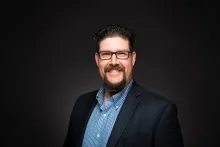
Ben is an elder serving as Pastor for the Salem, Eugene, Roseburg, Oregon congregations of the United Church of God. He is an avid outdoorsman, and loves hunting, fishing and being in God's creation.

