

Greg Thomas
This transcript was generated by AI and may contain errors. It is provided to assist those who may not be able to listen to the message.
Thank you so much for that, Mr. Blakey. Appreciate it very much. Well, as we begin to prepare for the fall holy days this coming week, and I hope we are getting the feast fever, the great God of the heavens and the Lord Jesus Christ invites you to come and worship our God on the Feast of Trumpets. Now, there aren't some other options. On the way here today, I noticed that the Catholic Church that I passed on Route 42 had a sign, and it said, Pet Blessings, October 3rd. So, if you don't want to keep the Feast of Trumpets, you could take your pet there and get your pet blessed. Actually, I was thinking I probably should take that fish tank in the office there and ask them to bless the fish that keep dying in that tank continually. But the good news is that the fall holy day season is ready. It's on the verge of beginning, and it begins this coming Monday with the Feast of Trumpets. I think it would be good for us today to examine a unique miracle that was performed by Jesus Christ. Now, we know he performed many miracles, but this miracle involves the actions and comments of Jesus to a blind man. And it is truly unique. It's unique because Jesus Christ says and does some unusual things that he doesn't do with a typical healing. That he doesn't do in other healings. And I believe this episode that happens to be in the Gospel of Mark is a metaphor about our calling. And it's a metaphor about some of the things that will occur in the approaches and attitudes in the events in the Kingdom of God. So I'd like to encourage us today to study this event closely and review some characteristics about the Kingdom that we all patiently wait for. So turn with me, if you would, to Mark 8 and verse 22. Again, Mark 8 and 22. And we'll take a look at this very unique, some might even say odd episode of this healing of a blind man.
Mark chapter 8 and verse 22. He says, Then he came to Bethsaida, and they brought a blind man to him, and begged him to touch him. So they, we don't know, it might have been friends, it might have been family members, they brought a blind man to Jesus Christ, and they begged Jesus, will you please just touch him? So he took the blind man by the hand, and he led him out of town. All right, let's begin. Jesus healed many blind people during his earthly ministry, and four of them are specifically recorded in detail in the Gospels. But Mark alone records Christ's miracle of healing this blind man from Bethsaida. This miracle occurred not far, by the way, of the scene where Jesus had fed 5,000 people. And although the blind man may have been able to sense light, he remained essentially blind. So we're going to just pause for a second and think about this situation. Because his blindness was a physical portrayal of the spiritual and the moral blindness that exists in our world today. It represents the state that all humanity is in. Totally blind of God's way of life. Blind of God's calling. Blind of having a meaningful and true relationship with the Creator. This man sees the world in blurry shadows and limitations because of his physical blindness. He needs to be healed. He needs to achieve his God-given potential. And that can only happen if he is healed. If that blindness is removed. Just like the world today, and so many people who have been born and died throughout so many generations, never reached their God-given potential because they lived in a world of blindness and because they were spiritually blind.
Verse 22, it says he came to Bethsaida. Bethsaida was a city, if you may recall, it was reserved in judgment. Harsh judgment by Jesus Christ because of their lack of faith and because they wouldn't repent. Let's take a look at that in Matthew chapter 11. Now as you turn there, one thing I forgot to mention a little earlier is I want to encourage you to place a bookmark in Mark chapter 8 because we're going to be going back and forth from Mark 8 to a number of scriptures but yet return. So go from there after your little bookmark to Matthew chapter 11 and verse 20 and we'll see what Jesus said about this city of Bethsaida.
Then he began to rebuke the cities in which most of his mighty works had been done because they did not repent. They didn't get it. It was life is status quo. Oh yeah, this Jesus is entertaining. Oh yeah, we love stories about him. We love to see him do miracles. Boy, is he charismatic. We love to hear what he says but it didn't lead them to repentance. Didn't lead them to desire to change who and what they were because they did not repent. Verse 21, woe to you, Corazin. That was another city. Woe to you, Bethsaida, for the mighty works which were done in you, if they'd been done in Tyre and Sidon, they would have repented long ago in sackcloth and ashes. But I say to you, it will be more tolerable for Tyre and Sidon in the day of judgment than for you. And this was the city that this blind man came from. Like our world today that must go through some very terrible times in the future. Times that we know of as the Great Tribulation we talk about in scriptures and our literature. Time that we know of called the Day of the Lord, which is God's punishment on the earth. That is yet to come. So the world has to go through some very terrible coming times.
And Bethsaida is symbolic of what this world, the world of blindness, is going to have to experience because they have rejected God. God will soon rebuke the world for its constant sin and evil. Yet, in the middle of this judgment and sin, it shows that God has mercy. Because even though he's condemning the city, he's condemning a culture, he is still working with individuals. He's still connecting with people. He's still calling people. Let's go back now to Mark chapter 8 and verse 22.
Hopefully you did put that little bookmark in there. Mark chapter 8 and verse 22.
It said, they brought to him a blind man. We had just read that verse a few minutes ago. Just like God called you and I out of this world, when we were spiritually blind, this man is led by friends and family to seek Jesus Christ, to receive healing, and to receive his sight once again.
Do you know this blinded world is waiting for you and I to someday lead it to God?
Just like this man's friends said, this is an opportunity. If for some reason we don't get to this Jesus Christ, this is an opportunity lost and he'll be blind the rest of his life.
In the same way, we have a dying world that's going to have its opportunity someday.
And we are going to be the ones to lead it to God, to lead humanity to Jesus Christ as the first fruits of God's call.
Let's now go to Ephesians chapter 4 and verse 17. If you'll turn there with me. Ephesians chapter 4 and verse 17.
It said he brought to him a blind man and again the blind man representing humanity today and most of the people who exist in this world. Paul said in Ephesians chapter 4 and verse 17, this I say therefore and testify in the Lord that you should no longer walk as the rest of the Gentiles walk. Remember, Ephesus was a Gentile congregation. So he's saying you've been called out, you're special, you're God's church, you shouldn't act like your brothers in the world. You shouldn't act like the rest of the Gentiles walk. How? In the futility of their mind. Confused? Wondering what life is all about? Wondering why they can't find contentment or happiness? Wondering why the sense of fulfillment is always missing in everything that they do? Just living a life of confusion? In the futility of their mind, having their understanding darkened, being alienated from the life of God because of the ignorance that is within them because of the blindness of their heart. And again, this blind man and Mark represented the state of humanity today. Also represents, frankly, the way that you and I were when God called us out of this world. We were living pretty futile lives. We were living lives of ignorance and darkness. Verse 19, who being past feeling and giving themselves over to lewdness to work all uncleanness with greediness sounds like the front page of the Cleveland Plain Dealer. Any article that you might read on the front page of the paper, it sounds like the five o'clock news telling you everything that happened in your city today. He says in verse 20, but you have not so learned Christ. You didn't learn about those kinds of things from Jesus Christ.
You didn't learn about lewdness. You didn't learn about uncleanness. You didn't learn to be greedy from Jesus Christ. You learned something else, and that is the fruits of the Spirit from Christ. Verse 21, if indeed you have heard him and have been taught by him as the truth is in Jesus, that you put off concerning your former conduct the old man which grows corrupt according to deceitful lust and be renewed in the spirit of your mind. Very powerful scripture encouraging all of us to continue growing, to continue leaving that mindset of ignorance and darkness, that then we all have a little bit of that old man still trying to pull us back. And I'll give you a little hint how you know if you're doing really well against that old man. Here's a little hint. If everything that enters your head, every thought, every attitude you were challenging, then you're starting to get it. Because if you don't challenge those thoughts and attitudes, usually the first one that comes into your head about any situation, it's going to pull you down. It's usually carnal. It's usually selfish. It's usually judgmental. Deeply converted people get in the habit of challenging everything that's entering their head. And if it's a good thing, then it can be confirmed with that challenge. If it's self-righteous, if it's judgmental, if it's carnal, if it's selfish, then it needs to be challenged. Because beyond our initial reaction, beyond our initial thought process, beyond the first things that may come out of our mouth, if we're challenging it, it may pull us back to where we need to be, where we should be. All humanity struggles in darkness because of sin. All humanity, instead of really living, most people in the world are being lived. They're not living, they're being played by the great deceiver. And until the Father calls someone and removes that blindness, we are all groping in the darkness for a purpose and for meaning in life because only having a relationship with God can provide us a life of purpose and meaning. Let's go back now to Mark chapter 8 and verse 22. So they brought the blind man to him, and they begged him, speaking of Jesus, to touch him. The blind man's friends knew that this was an incredible opportunity. If this opportunity were lost, if they didn't get to Jesus Christ, if he just happened to leave the village early, or that somehow they thought he was here and he was really somewhere else, that this man could remain blind for the rest of his life. Christ's personal intervention was his only hope. And in this world, the intervention of Jesus Christ coming to earth again to restore the kingdom of God is this world's only hope.
How beautiful that thought is. Since a man was blind, the sense of touch was far more important to him. You know, my father-in-law, BJ's dad, was blind. And because of that, his other senses became very acute. He could hear things that I could never hear because his hearing made up for the sense of blindness, that had been sight, sense of sight, that had been taken away from him.
Your other senses become far more acute. And that is why Jesus wanted to touch him.
By now, Jesus had acquired a powerful reputation of healing by touch and the spoken command. There's no need to turn there, but I'll read you earlier in the book of Mark, an event in Mark, chapter 1 and verse 40. It says, now a leper came to him, imploring him, kneeling down to him and saying to him, if you're willing, you can make me clean. Then Jesus moved with compassion, stretched out his hand and touched him and said to him, I am willing be cleaned. And as soon as he had spoken, immediately the leprosy left him and he was cleansed. The power of touch. Verse 23 here, this is, he took the blind man by the hand. Jesus is personally leading the blind man to freedom away from this condemned city and from the disease of moral blindness. He's taking him away from his environment, a negative environment. He's taking him away from a town that is condemned and he's walking him to freedom, symbolically representing a new spiritual identity.
Another disciple must have observed and recorded this event, perhaps from a distance. But they saw Jesus, he took the blind man by the hand and then here in verse 23, he led him out of town. Again, Bethsaida was a negative environment and this man needed to leave it in order to have a real relationship with God. He needed to go away and get out of there, just like we've been called out of this world and we have to leave it if we want to have a deep and meaningful relationship with God. The Messiah took him away from the gaze of the crowd, away from the village, and dealt with him privately. The Lord was not about to put on a show for these people in the city, in a faithless city, but like any good physician or counselor, he dealt personally with the man. The blind man was a child of God. He was an individual. No longer was he to be an outcast, gazed at by the curious. His healing was for God's glory, not for the entertainment or the gossip of the masses. So Jesus said, take my hand. We're walking away from here. We're getting out of this environment. Brethren, in the same way, we must leave the world. As Christ stated in John chapter 17 and verse 14, I have given them your word, and the world has hated them because they are not of the world, just as I am not of the world. Let's turn to 2 Peter chapter 3 and verse 13.
2 Peter chapter 3 and verse 13.
Is it possible that we can have one foot in God's way of life and still keep one foot in the world?
Can we straddle the fence? Well, of course we can't. Only one can be our master.
Only one we can have devotion and loyalty to.
Peter said, nonetheless, we, according to his promise, look for new heavens and a new earth in which righteousness dwells. Not a world that was like Bethsaida, faithless, a world that wouldn't repent, a world that doesn't want anything to do with God.
We have been called, according to God's promise, to look for new heavens and a new earth. And there's going to be righteousness there. There are going to be people who want to love God and want to learn about God. Jesus had abandoned Bethsaida to judgment. He did that in Matthew 11. And from that point on, he would neither heal in that village nor preach the gospel there any longer. But he would still show mercy to individuals who had the desire and the wisdom to seek him and who were willing to get out of that environment. And for you and I, if we want to grow in God's way of life, we cannot be straddling between the world and God's law. We can't be two places at one time and have one face on for the world and then have a church face on on the Sabbath day and being transformed into someone totally different. We have to be in people of integrity, of transparency, of honesty. In a similar way, God is not coming to this world to tweak the problems that exist in this world. He's not coming to earth simply to do an upgrade of human civilization. No, it has to totally be destroyed. It has to totally be gutted. And that's why the great tribulation and the Day of the Lord are necessary in God's plan. God has to begin from scratch. As Peter said, that's why we look forward to a new heavens and a new earth. That is just so very important for us to appreciate and understand. We must come out of this world. We must seek where God is and we must enter His presence. We can't compromise on that one bit. Back to Mark chapter 8 verse 23.
Mark chapter 8 and verse 23.
At this point in the episode, it is very interesting. Verse 23, when he had spit on his eyes and put his hands on him, he asked him if he saw anything and he looked up and he said, I see men like trees walking. Now, in our 21st century sensitivities, we might say, oh, how gross! I mean, we have people who touch a piece of dust and they're putting hand sanitizer on. Because that's the world that we live in today. Everybody's got a phobia about germs or whatever. In our culture, if someone spits at you, you consider that to be an insult, don't you? Of course you do. So do I. But here, Jesus, he put spit on his eyes and put his hands on him and asked him if he saw anything and he looked up and said, I see men like trees walking. In the scriptures, there are actually three spitting miracles, if I can use that phrase, recorded in the Gospels. There are two in Mark, one in chapter seven before, the one that we're looking at now. There's the one that we're reading now in chapter eight and there's also one in John chapter nine beginning in verse one. Jesus heals in these events hands-on. He's personal. He's relational. He's physical. He's there, just like God's family will be in the kingdom of God. Because he is setting the right example. Now in John chapter nine in verse one, it's kind of an interesting event. We're not going to go there in detail today, but it's a little bit different.
They brought a man on the Sabbath day to Jesus Christ who had been born blind.
So in this case, Jesus spits in the mud and mixes the spit with mud and puts the mud on the man's eyes. Now, what was that all about? Well, many scholars are to believe what that was all about is the very creator himself who created Adam from the dust of the earth literally took that mud along with his spittle. And because the man had been born blind, there's a chance that he didn't even have eyeballs in his eye sockets. And that when he put that mud on that man's eyes, that literally that mud was transformed into his eyeballs and made it possible for him to see.
But this is a little bit of a different account. There's no mud involved. Jesus simply spit on his eyes and he put his hands on him. And again, he asked him if he could see anything. Let's take a look at this in a little more detail and ask ourselves why would he do something that in our culture today would seem so bizarre and so odd. Okay, it says, and he spit on his eyes, well, Christ's method of healing this man was indeed unusual, even compared to what he usually did in healings. He spat on the man's eyes and he touched them, which is what the people had asked him to do. They had asked him to touch the man and he certainly did that. So we see here, first of all, that even the Lord Saliva had healing properties because it's something that came out of the Lord. But why did he do this? Okay, in the days of Jesus, the Jewish people believed that spittle from the firstborn of every family had great healing power. In the Babylonian Talmud, it even contained several references to saliva as being medicine, the saliva of a firstborn son in a family. As a matter of fact, in the Baba Batra, there is a tradition of the sages that proclaimed that the saliva of a legitimate firstborn heir would have healing properties. And it mentions that if you had any question about someone who was really the firstborn, that the way to tell was that his saliva had healing properties. And if it did, then he was the legitimate firstborn. That's what it says there in the Babylonian Talmud. So why did Jesus do this? Well, he used his spittle in this healing, and a couple of other healings, to testify to everyone in the culture that they understood and that they lived in, that he was the firstborn of God the Father, and the only begotten son of God. They got it. For us, it doesn't make sense, because we don't have that tradition. We don't have that belief in our culture. But in that day, they got exactly the message that he was sending. Remember that some of his enemies had questioned the legitimacy of his birth. Some had felt and alluded to the fact that he was illegitimate, that his parents weren't married when he was born.
So this was his way of showing them through the action of using his spittle to confirm and to identify that Hebrew tradition and teaching. Another reason why Christ anointed the man with his saliva is that he was establishing an intimate and personal contact with a person who had been pitied and ignored in Jewish society his whole lifetime or since he had become blind. Let's not forget that the blind were on the fringes of society in the Jewish culture, like beggars and paupers. And when Christ began to provide emotional and spiritual healing by getting close to him, by touching him and applying his own spittle closely on him, this man felt the presence of God.
He had been treated as an alien and a stranger his entire lifetime, but now the Messiah had come and he was being brought into the community once again. No longer would he be treated like a second-class citizen. Verse 24, and he looked up and he said, I see men like trees walking. Unlike the other healing of a blind man in John 9 that I mentioned a few minutes ago, this man was not born blind because he knew what trees looked like.
The fact that he knew what a tree looked like tells us that previously he had had his sight. But this miracle illustrates some important spiritual truths. Unlike most of his healings, this one is unique in that it occurs in stages, not instantaneously. Some illnesses cannot be healed by degrees.
For example, if you are casting out a demon from someone, you have to totally expel the demon, or it's not expelled at all. Another example is leprosy. If a leper is anointed, he still suffers from leprosy if a blemish remains. So there are some healings in which the total act must be done in one blow, in one significant action. However, blindness can be healed in stages. First, a glimmer of light, then a little more clarity, and finally, perfect vision.
And this healing by stages pictures the maturing of our spiritual understanding. It actually pictures the conversion process that each and every one of us has experienced. And that's important for us to remember. It pictures the change that will take place when the kingdom of God is established on earth.
First, there will be massive destruction. There will be environmental damage that has to be healed. There will be the remnant of humanity that is wounded, that is lived through war, and the horrors of war, and death, and destruction. And we know from the scriptures that the law and the government of God will begin in Jerusalem. And from there, it will filter out into all the world. So you see, the kingdom of God is progressive. It takes time. It's gradual. That healing process of God's kingdom is gradual, reflected by the fact that this man's blindness was healed in stages. So the reality is that his brain programming had not been yet adjusted to the light.
And what we find in this event is not just merely some colorful story, but a clinical description of how a man actually came to see once again. In the early stage, as happens clinically, I might add, the trees and the men blurred together because his cortex was programming the flood of light coming into his brain, and he couldn't yet make sense of what he was seeing.
Verse 25, then he put his hands on his eyes again and made him look up, and he was restored and saw everyone clearly. Christ's method of healing here shows that our spiritual maturity and our growth is a gradual process. We're continuing to grow in the grace and the knowledge of our Lord. Much of our spiritual blindness oftentimes remains even after our baptism. We're still new in the faith. We're still babes in Christ. But in time, our faith and our obedience and our growth develops because the power of the Holy Spirit works with us.
It increases our focus and the the clearness of our spiritual vision through the power of God's Spirit. I want you to notice here it says, and he made him look up. Our spiritual growth and maturity will be constant if we constantly look up for God's guidance. If we're looking up to God to be our resource in prayer and study to develop a closer relationship with our Father, if we're looking up, we're doing the right thing.
It's when we start looking inside of ourselves we get in the trouble. That's when we're not challenging our self-talk and we're just accepting the lies that we're telling ourselves all day. That's when we begin to get into trouble because we're looking within instead of looking up. Verse 25, it says, he put his hands on him again. This is the third time Christ touched the man with his hands. As I said earlier, Jesus Christ is hands on.
Let's go to Isaiah chapter 41 and verse 13. Isaiah chapter 41 and verse 13.
Isaiah was inspired to write, For I, the Lord your God, will hold your right hand. You see, God is hands-on.
In the kingdom of God, he's not going to be as far away isolated somewhere. I'm stunned by people who think in the kingdom of God that the family of God are somehow going to be in some palatial mansions in Jerusalem and from there dictating everything that's supposed to be done in the world. That is a very distorted perverted view of what leadership is or what the God family is going to be doing. The Lord God says, God will hold your right hand saying to you, fear not. I will help you. Fear not, you worm. Jacob, you men of Israel. I will help you, says the Lord, your Redeemer, the Holy One of Israel. Behold, I will make you into a new, thrusting sledge with sharp teeth. You shall thresh the mountains and beat them small and make the hills like chaff. You shall winnow them with the wind that shall carry them away and the whirlwind will scatter them. I'm going to give you the ability to level the mountains so that more farmland can be produced, so that more beautiful things can grow on the environment of the earth at that time.
It says, You shall rejoice in the Lord, in the glory and the Holy One of Israel. The poor and needy seek water, but there is none. Their tongues fail for thirst. I, the Lord, will hear them.
I, the God of Israel, will not forsake them. I will open rivers in the desolate heights and the fountains in the midst of the valleys. I will make the wilderness a pool of water and the dry land springs of water. I will plant in the wilderness the cedar, the acacia tree, the myrtle, the oil tree, and I will set in the desert the cypress tree and the pine and the box tree together that they may see and know. What's the problem with the world today? It is blind and it doesn't know God. And Isaiah says there's coming a time in God's kingdom when they may see and they'll know. And they'll even be able to take the parts of the earth in which nothing can grow. It's unproductive and they're going to be able to grow beautiful and wonderful green things even in the deserts, even on desolate mountain sides. They're going to re-transform and change the earth into a beautiful paradise that they may see and know and consider and understand together that the hand of the Lord has done this and the Holy One of Israel has created it. Again, I'm just stunned at things that I read from people associated with our faith, how they think that God and His children will be isolated from the people in the kingdom of God. Jesus Christ emptied Himself of His glory to come down to earth and serve others with His hands. He was on the scene. He was available to those who made an effort to approach Him. In the Garden of Eden, God walked in the garden. He personally communicated with Adam and Eve. Even after they sinned, He made garments of skin for them by His own hands because He loved them so much. He was hands on. And so will we be in the kingdom of God. This can now go back to Mark chapter 8 verse 25.
It says, "...and made Him look up." So Jesus made Him look up. Jesus wanted the blind man to acknowledge the true source of light. He looked up in respect and thankfulness to God, the Father of lights. God's kingdom will be restored when Christ returns to earth. When Jesus Christ returns on that day, I can assure you that everyone will look up to acknowledge His glory, His power, His magnificence at His return. Let's now go to Isaiah chapter 49. Isaiah chapter 49. Isaiah chapter 49 beginning in verse 8. We had just read in Mark 8 verse 25 where it said that Jesus Christ made Him look up and He was restored and saw everyone clearly. Chapter 49 in verse 8 of Isaiah thus says the Lord, in an acceptable time I have heard you and in the day of salvation I have helped you, I will preserve you and give you as a covenant to the people to restore to the earth, to cause them to inherit the desolate heritages, that you may say to the prisoners, go forth to those who are in darkness, show yourselves. You no longer have to be blind anymore. You no longer have to be cut off from God anymore. You can come out now. You can learn. You can change. You can grow.
They shall be fed among the roads or along the roads and their pastures shall be all on desolate heights. They shall neither hunger nor thirst neither heat nor sun shall strike them for He will have mercy on them and will lead them. Even by the springs of water He will guide them.
I will make each of my mountains a road and my highways shall be elevated surely these things shall come from afar. Look, flows from the north and the west and those from the land of sinim sing, O heavens be joyful, O earth, and break out and singing, O mountains, for the Lord has comforted His people and will have mercy on His afflicted. What a beautiful day. What a beautiful kingdom that we can all look forward to. Let's go back to Mark chapter 8 and once again verse 25. Mark chapter 8 25. It said, and he was restored, speaking of his sight, it said, and he saw everyone clearly. This is symbolic of all humanity when they live in the right relationship with God. When you start getting in the right kind of a relationship with God, the blinders fall off and things start becoming clear. In God's kingdom, all blindness will be removed from mankind and everyone will have access to God. Let's take a look now at 1 Corinthians chapter 13 and verse 12. 1 Corinthians chapter 13 and verse 12. If we're humble enough, we will agree with Paul here and say that even the things that we know about God aren't perfect. Even our knowledge, though God has given us a spirit, though some of us have been around a long time, some of us are so old, we knew when the Dead Sea was known as the Sick Sea. That's how old some of us are. No matter how long we may have been around, that we still see through a glass darkly. We're still learning. We're still growing. There's things that we still don't understand and comprehend. That's what Paul's saying here to the brethren in Corinth. For now we, and he's including himself, that's we, see in a mirror dimly. But then, and another time in a future world, face to face, we'll look at God directly in the face. He says, now I know in part. Paul says, I have a lot of knowledge, but it's still limited. I only have part of the story. But then I shall know just as I am also known. Then I will know God as well as he knows my heart right now. He knows me. He looks, he peers down into my soul. He knows everything there is to know about me right now. But I don't know God intimately and face to face yet. Paul says, I'm going to read this from another translation. God's word for today. It says, now we see a blurred image in a mirror. Then we will see very clearly. Now my knowledge is incomplete. Then I will have complete knowledge as God has complete knowledge of me.
So you and I will not have complete knowledge and understanding until we have been transformed from this carnal flesh into spirit. And only after we've been changed into spirit will we have a complete and total understanding of God. And God's plan is that for the rest of the world, we'll eventually have full knowledge of him as well after the kingdom arrives.
All right. Let's go back to Mark 8 for the last time. Mark chapter 8 and verse 26.
So what did Jesus tell him to do after this incredible miracle, this unique miracle occurred?
Mark chapter 8 and verse 26. Then he sent him away to his house saying, neither go into the town, nor tell anyone into the town. Jesus was saying to the man, don't go back to that faithless negative environment. I called you out of that.
I took you by the hand and I took you out of that environment. There's a message for you and I today.
Jesus is telling us that we can't go back into the world. We can't have begun the journey that we're on. And he removed the blindness from our eyes so that we had the ability to know God so that we could repent and receive his Holy Spirit. We now cannot turn and go back and walk into the world. We can't go back to that negative environment. Just like when the kingdom of God is established, it has to wipe the slate clean. All remnants and memories and vestiges and museums of this world today have to be destroyed, obliterated, because in the kingdom of God, you can't go back. Let's turn to our final scripture in 1 John chapter 2 and verse 15.
1 John chapter 2 and verse 15.
The apostle John wrote, he said, do not love the world or the things in the world.
Remember Jesus told that blind man don't go back.
Do not love the world or the things in the world. If anyone loves the world, the love of the Father is not in him. As I said, we can't be straddling the fence.
We can't have one foot in God's church and one foot in the world.
Verse 16. For all that is in the world, the lust of the flesh, the lust of the eyes, and the pride of life is not of the Father but is of the world, and the world is passing away in the lust of it. But he who does the will of the Father abides forever. And what is the will of the Father?
Don't go back. Don't look back. Just keep walking forward, straight into the kingdom of God.
So, in conclusion, here are some of the things we saw today in this very unusual biblical event. First of all, the blind man was just like us before our calling. And he was just like the world is today, needs healing. Before our calling, we were confused. We were spiritually blind. Some of us were morally blind. And we needed to be healed. God called us into his way of life. He led us for that healing. But the whole rest of humanity that is still struggling with sin and needs a Savior needs to be healed. God has judged this world. And we have been called out of it, and we can't go back. And just like the Messiah led the man out of the city and told him not to return, you and I can't go back. We can't go back to the world. Another point, even though God condemned and condemns our diseased civilizations and our human cultures, he still loves his creation and he's still working with individuals at this time. In the kingdom, everyone will have access to him. So we need to understand that even though God has condemned the world and we know the prophecies, we know what the scriptures say. He still loves his creation and he's still working with individuals.
Another point, just as the friends of the blind man brought him to Jesus, you and I right now are being prepared to bring the world to Christ in the kingdom of God. They will be able to relate to us.
We are human. Did there, done that. We'll be hands-on. We'll have relationships with people who are struggling. If you think your brothers or sisters in Christ have problems who are sitting across the row from you or someone in the back of the room or someone in the front of the room and you're concerned about problems they have and judging them, you ain't seen nothing yet. Wait until you meet the survivors in the world tomorrow. If we can't handle things today, how are we going to handle them then? If we're too judgmental and self-righteous today, how are we going to be servants then? Jesus Christ was hands-on as he led this man by the hand, as he touched him three times, as he personally spoke to the blind man. You and I will be doing the same thing in the kingdom of God. The blind man's healing was gradual. It was in stages, just like our spiritual maturity.
And God is going to do the same as he calls people in the world tomorrow. Change is a process, not an event. And people in the world itself will be gradually transformed into a new heavens and a new earth. Another point, salvation and healing is only possible because Jesus Christ was the firstborn son of God, the Father. And this was endorsed by Jesus Christ himself to confirm the Jewish belief that the legitimate firstborn son's spittle, saliva, had miraculous healing powers. Another point is that we must look up to heaven for guidance and direction in our prayers and in our faith. Don't look within ourselves. That's a dead end.
That's going nowhere slow.
Another point, full understanding and knowledge of God will come when we are spirit beings. The world will understand God clearly and only be restored when God's kingdom comes. Then everything will be revealed. Then all the questions about prophecy and all the little church divisions and picky points and things that people get all upset about and they have veins swelling in their foreheads and they're getting all worked up over these little things, then we'll have all the answers. Until then, what we have are all the questions.
Let's be humble enough to accept that.
Well, this short but very powerful episode that was recorded in the Book of Mark can tell us a lot about our own calling and it can also tell us a lot about how God will restore his kingdom and what his presence will mean on the earth in the world tomorrow.
So as we prepare for the Feast of Trumpets this year, followed by the Day of Atonement, followed by the Feast of Tabernacles, followed by the Last Great Day or the Eighth Day, I encourage you to meditate on how patient and merciful God is with us and how patient and merciful God is with the world. And if you ever question that, if you ever begin to doubt that, just think of that episode in Mark chapter 8.
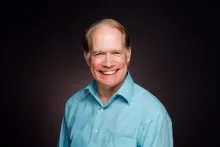
Greg Thomas is the former Pastor of the Cleveland, Ohio congregation. He retired as pastor in January 2025 and still attends there. Ordained in 1981, he has served in the ministry for 44-years. As a certified leadership consultant, Greg is the founder and president of weLEAD, Inc. Chartered in 2001, weLEAD is a 501(3)(c) non-profit organization and a major respected resource for free leadership development information reaching a worldwide audience. Greg also founded Leadership Excellence, Ltd in 2009 offering leadership training and coaching. He has an undergraduate degree from Ambassador College, and a master’s degree in leadership from Bellevue University. Greg has served on various Boards during his career. He is the author of two leadership development books, and is a certified life coach, and business coach.
Greg and his wife, B.J., live in Litchfield, Ohio. They first met in church as teenagers and were married in 1974. They enjoy spending time with family— especially their eight grandchildren.
