
Robin S Webber
This transcript was generated by AI and may contain errors. It is provided to assist those who may not be able to listen to the message.
Well, what a wonderful song to be able to sing after the blessing of the children, to be able to praise God altogether. So good to be here in San Diego with all of you, and it was just a beautiful trip down, the 15 today, with all the beautiful clouds and the hills and the mountains. And also, it's very interesting, I stopped off and I had a breakfast.
I am by myself, and I don't cook that much. I can cook a mean piece of toast. But I was sitting at the counter, and I had my Bible open, and I was just kind of reviewing my notes just a little bit. It's always amazing that when God's Word is open, how things happen. And the waiter looked at me, said, Can I talk to you? He says, I have a really big decision in my life, and I saw that you're a man with a Bible, and I'd like to talk to you.
And that was such a rewarding conversation. Two people of faith, a counter in between, and an uneaten pancakes in between. I did not eat all of my pancakes. But to recognize that we were able to come together for five or ten minutes there at Cocos in Escondido, and to say that, and to let him know that God wants to bless him and keep him, and to give him some advice from somebody that's perhaps been around this earth a few more orbits than him, and a person of the Word. So, never limit where God is going to use you, how he's going to use you, where he's going to use you, and who you can be used for.
I'd like to mention here that we often are asked many questions, perhaps in our lifetime. We are at times asked questions as, can I, over the telephone, may I please have your social security number? There are other questions that will come to us as far as your birth date.
You might be going to a store, you might be going to a convenience store, and you are now age 21 and you're wanting to get some alcoholic beverages, and somebody will look at you, and they'll say, could I please see your driver's license? I would like that to have happened to me today, but it did not happen. That stopped happening about 40 years ago.
Sometimes people will ask you things that you might be a little embarrassed at. I remember when I was baptized in a Protestant church, not how we baptized in the Church of God. I was a Lutheran then, and I was standing in front of about 300 people. I was all of about 11 years old, and I knew that they were going to ask me what my full name was, and I didn't want them to let anybody know my middle name, but they asked the question anyway.
That's probably just to test my pre-teenage conversion as to whether or not I would give it to them. I'm not going to share what my middle name is. It's not really that bad. My middle name is Scott. It's not a bad name, but just for an 11-year-old boy, 11-year-old boys for some reason don't like to share their full name. I was all 11-year-old Americana boy back in the 60s. There's one question, whether you've been asked any of those questions or not, that all of us need to understand that we will be asked, not by a storekeeper, not by an attendant on a phone that will never meet, but by somebody very special to us.
That is simply this. The question will come to you at one time or another, and for most of you in this room, it already has come, but will continue to come every day of your life, and that is simply this.
Who do you say that I am? Who do you say that I am? And the answer to that question is not only the verbiage that we would return in a prayer, but it is by our daily actions and by our daily responses, by the people that come into our life. It's a powerful question, and it's a question that we will be answering the remainder of our lives. And that's why this afternoon I want to draw you to one chapter in the Bible, which happens to be one of my favorite chapters in the Bible and one of my favorite stories in the Bible, but it's not only a story but tells us how to answer the question.
Would you please open your Bibles, please, and join me in John 9. And it's a wonderful story, and I hope there will be a story that will encourage us. I have had this sense of being prompted by God's Spirit over the last year that how much God's people need encouragement.
Need encouragement for the walk of faith that is set before us. And to know that His ways are true, that His presence is upon us, and that we have a God that we can rely on, a God that will never leave us nor forsake us, especially in these days of increasing challenge that was mentioned in the prayer to recognize the things that are happening around us, around the world, our nation, our personal lives, and even in the individual challenge of a Christian walk within a family. That sometimes families themselves can be tough on followers of Jesus Christ.
So let's just go through the story because that's why it is here. And we pick up the story in John 9 and verse 1. Now as Jesus passed by, He saw a man who was blind from birth, and His disciples asked Him, saying, Rabbi or teacher, who sent this man or his parents that he has been born blind?
Now let's understand something as we understand the story and go a little bit deeper here. When it says that Jesus just passed by, I would dare say that He did not just pass by. I do not believe that Jesus had accidental encounters when He was here on earth. What we're about to move into is a tremendous miracle. And one thing I want to share with you, friends, and I'm going to be speaking to it a little bit later, is simply this. God never wastes a miracle. And He knows who He is working that miracle upon.
So when it says now, as Jesus passed by, that was from human eyes, not from Jesus' perspective. He saw this man who was blind from birth. Here was an individual that everybody knew in town. Because normally blind people back then would have been sitting on the ground. They might even been, in that sense, asking for alms, asking for funds. This is somebody that everybody knew, just like later on in the book of Acts, where it talks about the lame man that was at the gate called Beautiful.
And the reason why Jesus would do miracles on these people is because everybody knew their condition. Everybody knew. There was no hocus pocus. They knew this individual from the time he was a lad had been blind. And his disciples asked a question, Rabbi or teacher, who sinned? This man or his parents said he was born blind. People that in that day and age that were suffering physical affirmity, whether it was not being able to walk, whether it might have been epilepsy, whether it was the matter of being blind, it was considered that it was visited upon them because of God's displeasure.
They had done something wrong. And or their parents or their grandparents, because there was the reckoning, as it says, that the sins of the parents are upon the children to the second or third generation. So there must be something wrong going on here.
And Jesus answered, neither this man nor his parents sinned, but that the works of God should be revealed in him. And I must work the works of him who sent me while it is day. The night is coming when no one can work. And as long as I am in the world, I am the light of the world. Here are people, disciples of Jesus Christ. And I think you would say, and I would say, if we knew John or Peter or Andrew, we would say these are people of the book, these are people of faith. This would have been in that sense the Church of the Day, religious people. But they were doing something that we often do as human beings, if I can share it for a moment. And that is simply, so often we say, what happened? How come? Rather than being solution oriented and saying, what can be done? Or am I the only one? So often we say, what's the matter here? Something must, to use modern jargon, something must have gone down a long time ago.
This person's a wreck. This person has what is coming to them. What I'm trying to show you, friends, is a godly Christ-like perspective that Jesus, whose Spirit dwells in us, had a reckoning of mind, not as to what had happened, but what might happen. Didn't look at what occurred, but what might occur. Let's continue with the story. When he had said these things, he spat on the ground and made clay with the saliva. And he anointed the eyes of the blind man with clay. Now, it's very interesting that Jesus, being a master teacher, took elements that were well known in antiquity. And even today, we think of so often that there are certain healing elements of when you do use clay. And it can help people. And also, we know that saliva in its sense. Have you watched a cat look itself? Saliva can have a certain sense of healing. So he was taking physical elements that were well known in that day, and he was mixing them together. But then notice it also says, and he anointed the eyes of the blind man with the clay.
Kind of put that picture in your mind for a moment. It's very graphic, isn't it? You haven't seen me spit up here on stage recently, have you?
But that to all of a sudden spit, go down into the earth. Are you with me? Getting a handful?
Get a handful and mix it around, make it good. And then to go over and to dab it on eyes.
This is what Jesus Christ did.
And he said to him, Go wash in the pool of Siloam, which is translated sent. And so he went, and he washed, and came back seen.
What is very interesting about this gentleman is that God does not make mistakes in whom he calls.
He recognized that this gentleman was going to have a spirit of cooperation. He asked him to do something very, very simple.
It'd be like me right now saying to Bill Luzenheit, Bill, I want you to walk down to the 15th freeway.
And then I want you to come back here, and we'll have the rest of the talk.
There was from this gentleman, no why or what or why. Are you kidding me? That's Hebrew for are you kidding me? Or Aramaic? Are you sure? Is this what you want me to really?
Sometimes, even in our own lives, we spend more time wondering and complaining and explaining than just doing what God asked us to do.
How simple life would be. Remember the story of Naaman back in the book of Kings? Remember when Elijah was going to work with him? He said, listen, I want you to go down to what? The Jordan River. Here's what I want you to do. I want you to dip yourself seven times in the Jordan River.
Then come back.
Of course, we know the story of Naaman, that Syrian generalist. You've got to be kidding me. You want me to go down to that mud pit? You want me to go down to that mud hole? I mean, do you know where I'm from? I mean, we've got rivers. We've got big ones. They come right out of those mountains over what is today Lebanon, from the 10,000-foot peak, 9,000-foot peaks. We've got gushers. I mean, I get in there and I'm cleansed all over. It'll just wipe away the leprosy where I come from.
But that was not the instruction, was it? The instruction was, you go dip yourself seven times into the river.
I think there's a lesson here for all of us friends, that sometimes God asks us to do very, very simple things, and we complicate them by our attitudes.
We challenge God by our lack of cooperation.
And yes, sometimes it can seem strange. Sometimes you've got to be kidding me. Why do this? But remember what it says in the book, a wise understanding, have they who keep thy law. But before you get the understanding, you've got to do it. But we want the understanding before, but that's not how God works. And it's very interesting here when you look at verse 3, it says, and he sent him to go wash in the pool of Selium, which is translated, sent. So he went and washed and came back, sing. Therefore, he comes back.
Not only his eyes are open, but his vision is in path. Let's get to where the story's at. And wow, this is fantastic. This is a celebration, just as much as when we had the Luhan family up here with little Zander.
I like that name, little Zander. And all of you were smiling, and everybody were happy. Look what God has blessed the family with. This is really neat. Is this what this man got? Notice what it says. Therefore, the neighbors and those who previously had seen him, that he was blind and said, is not this who sat and begged?
And some said, yeah, this is he. And others said, kind of looks like him.
Get my thumb.
Could be.
And here he is, he said, it's me.
It's me. I haven't changed. I'm he.
And therefore they said to them, how were your eyes opened?
And he answered and said, a man called Jesus.
That day and age, he would have said, Yeshua, which is just another term for Joshua. A man named Jesus, Yeshua, made clay and anointed my eyes, and said to me, go to the pool of Selium and wash. So I went, and I washed, and I received sight.
And then they asked him, well, where is he? And he said, I don't know.
The first thing that I want you to recognize about this gentleman, you might want to jot down verse 11 if you're taking notes today.
And this is simply God's story through Jesus Christ had begun in him. And the most important thing that I want to share with you this afternoon, friends, in San Diego, is God gives each and every one of us a story.
God gives each and every one of us a story, and you have to stay with that story. Because when God begins working with us, and grooming, and shaping, and molding us, people will want to take away that story. They'll want to take away that revelation that God has given you.
And it began here. But this man is what I want to share with you, simply this. This man was a man of integrity.
A man of integrity.
And I'm sharing this story with you in part today to help you become even more so a person of integrity. And hold on to the story. Hold on to the miracle. Perhaps not of your physical vision being restored, but for the first time having your spiritual vision open up to see what God has in store.
Verse 13. Then they brought him who was formerly blind to the Pharisees.
And now it was the Sabbath. And when Jesus made this clay and opened his eyes, so was the Sabbath day. Now, Pharisees, the word Pharisee literally means separate at once.
And I think we need to be fair in talking about the Pharisees, that the Pharisees, yes, did many, many wonderful things within the community.
And they were respected by and large, much more by the community than were the Sadducees, who made up the temple priest, who had a different bent on things. So the Pharisees, in a sense, were closer to the people, but they also had a lot of cultural issues, a lot of things that got between them and what God was wanting them to experience. Then the separated ones, or the Pharisees, also asked him against that how he had received his sight. And he said to them, He put clay on my eyes, and I washed, and I see. Therefore, some of the Pharisees said, This man is not from God, because he does not keep the Sabbath.
He doesn't keep the Sabbath.
In the cultural venue of the Pharisaical community, you couldn't mix clay and spittle together, because that was work. And not only that, you couldn't heal a man on the Sabbath. If you found somebody by the roadside that had been injured or wounded or hurt, you could mend them to a reasonable security, but you couldn't take it any further.
No wonder so many of them were not good Samaritans.
And this is where the Pharisaical community was coming from. And then He said, How can a man who is a sinner do such things? And there was a division among them. Now, let's understand where we are so far in the story. Are you with me? Number one, the man is healed. Oh, are we not all happy? The whole community is busting out all over. No, no. Neighbor... I don't know if it's the same guy. So that's the neighborhood.
As we say, that's the hood. That's how they treated him. Now, he's with the people, quote-unquote, in his church.
And the church members are diminishing and downplaying what this man had done.
And therefore, some of the Pharisees said, This man is not from God because he does not keep the Sabbath. They said, How can I do it? They said to the blind man again, What do you say about him because he opened your eyes? Let's notice now what's beginning to emerge in the story. Very importantly, as number one, number one, he has taken God at his word and obeyed him. Number one.
Number two, has stuck and stayed with that story. If you look at verse 11, if you look at verse 11 for a moment, we're going to back up.
When he's first asked who did it, he said, a man called Jesus.
So the first step that the former blind man took was, This was a man.
This was a man, and he was a good man.
But as God's Spirit began to draw him and to work with him, now we come down to here. Notice what happens. He tells the Pharisees, He is a prophet. But we begin to see a growth. We begin to see an emergence in this man of what God is doing with them and the instrument that he has used. Again, remembering what it says, a wise understanding of they who keep God's law. It doesn't happen necessarily overnight. We begin to see this develop.
And they said to the blind man again, you think, oh, that's wonderful.
But that's not where the religious community was. That isn't where the church was at that time.
Because they had everything preconceived as to what God was to do. And they had God's miracles kind of in a cookie cutter of their own making.
And they said to the blind man again, what do you say about him because he opened your eyes? And he says to the prophet, but the Jews did not believe him concerning him that he had been blind.
They basically said, you're a liar. You weren't really blind.
That he had been blind and received his sight until they called the parents of him who had received his sight.
And now the parents come into the story. The community has been in the story. The higher ups in the local church, as it were, have been in the story. And now the folks come into the story and they asked him saying, is this not your son who you say was born blind? How then does he now see? And his parents answered them and said, we know that this is our son and that he was born blind. So they verified that he'd been born blind. But what means he now sees we do not know, or who opened up his eyes, we do not know. He's of age. He's over 21, as we might say in America. You ask him. He'll speak for himself. We're out of this. We're backing off. We're backing away. Why were they doing that? Let's continue with the story. His parents said these things because they feared the Jews. For the Jews had agreed already that if anyone confessed that he was Christ, that he would be put out of the synagogue. He'd be kicked out of the church. He'd be kicked out of the church. And therefore, his parents said he's of age. Ask him.
Now, this is an incredible story, because basically we're going to find that this young gentleman, blind from birth, and now having received this marvelous miracle, stands alone.
His neighborhood won't back him up.
His local church will not back him up.
And his parents now distance themselves from him. Maybe some of us have had this same experience in our life. I see a very brave and courageous people in front of me sometimes that have walked away from everything because of God coming into their life. But it's a story that continues, and some of you are just beginning to do that.
And you're following the heat, and you're following the lead of God's spirit saying, I'm here. I'm here today. This is where my eyes need to be opened up. This is where I can see a glimmer, and I can see a vision of God. And yet there will be people that will say, Oh, no, don't go. Don't be there. Distance yourself. You don't know what you're doing. You don't know what you're about.
And sometimes Christianity is the only business, isn't it, down here below? I think of the Apostle Paul who said, Nobody stood with me. Even so-and-so other than, I think it was Luke. It might have been Luke or somebody else. He was alone when he was before the magistrate. I remember the story and history of Luther, 1520, 1521, at the Diet of Worms. He said, Here I stand alone. I can do no other.
Takes courage to stand alone and know that you're surrounded by God's angels. I see one of our people here that lives in Europe most of the year. And to a great degree, most of the year you stand alone. You don't have a lot of people in the support system that you need, but other than your San Diego family that you're tied with. Christianity, earthbound, can be an only business. And what we have to recognize and what we have to know is that we worship a good and a great and a loving God who never takes us out of his sight. Never takes us out of his sight, as we'll see how this story goes.
Verse 24, So again, they called him who was blind and said to him, Give God the glory. We know that this man is a sinner. And he answered and said, Whether he is a sinner or not, I do not know. One thing I do know that I was blind, but now I see. Then they said to him again, What did he do to you? Almost did he cast a spell on you? Or what? How did he open your eyes? And verse 27, he answered them and said, I told you already. What's with the ears? Weren't you listening? Why do you want to hear it again? Do you want to also become his disciples? So he was kind of, if I can use a phrase for a moment, he was kind of messing with him. He was kind of being sarcastic. He said, Why are you going down this path? You want to be his followers too? And then notice verse 28. Then they reviled him and said, You are his disciple, but we are Moses' disciple. One of the things that we need to understand that was so unique about our Lord and Master, when he walked this earth, as it says, I think it's in Matthew 7, 29, they were amazed because he came as one speaking with authority. What that meant was not that he had a megaphone in front of him. He didn't have a microphone that was on steroids in front of him. It was not the volume of his speech, but what he said, because he spoke in the first person. See, they said they were Moses' disciples. A Jew in the church that day would have said, Well, Moses said this and Moses said that. And if they didn't know what Moses said, they at least would say, Moses supposes. They would say something, but they would always add Moses' name. Jesus Christ came and said, Assuredly, I say unto you. Jesus, as not only the Son of Man, but the Son of God, spoke in the first person. That is what got the Pharisees excited.
Thus, we see here where it says, you want to be his disciples? And they said, We're Moses' disciples.
And then verse 30, the man answered and said to them, Why, this is a marvelous thing, that you do not know where he is from, yet he has opened my eye. Don't you get it, folks? 1 plus 1 equals 2. Bad seed does not come from good, godly fruit. That itself would go against the Scriptures. Now we know that God does not hear sinners, but if anyone is a worshipper of God and does his will, he hears him. And since the world began, it has been unheard of that anyone opened the eyes of those who have been born blind. If this man were not from God, he could do nothing. Then notice what we may call of that day the faithful did.
They answered him and said, You were completely born in sins. They judged him. They condemned him. Not based upon doctrine, but based upon culture, based upon tradition, based upon what they had added to the book. And you are teaching us, and they cast him out.
Now what do we learn up to this point? And what is our takeaway today? Our takeaway today is, brethren, that you are not here by accident just as much as it says when Jesus passed by. God doesn't have accidental encounters with his saints. Today we're talking earlier about the little one not being an accident. God does not have children accidentally. He knows exactly when he entered your life and at what stage? And I'm talking maybe much earlier than your baptism date. God begins working with us sometimes from the womb, sometimes from early childhood, sometimes even through other religious communities as he moves us forward to fully understanding his truth. And the bottom line is simply this, brethren, that I want to share with you. Your takeaway today is simply this. God gives each and every one of us a story. And when God has intervened in our life and given us a story, let no man, let no woman, let no institution take that away from you. I have a very special story that God visited upon me when I was young. And it is my story that I will proclaim again and again. And it's a story that I cannot dismiss. I'm not saying that God intervenes in my life every day. I'm sure he doesn't. Certain ways that I don't know about, but I think sometimes God intervenes in our lives maybe in a handful of encounters that you can count your fingers on, that he says, I want you to remember this forever that I was involved with you. And I think there's a purpose and there's a reason behind it. That when I was aged 16 years of age, I was a good strapping hunk of teenage Americana and a ballplayer, and I was having a great time in high school playing ball and really enjoyed it. Really enjoyed my experience growing up. Teenage was good where I was. I was able to drive my dad's 1964 convertible Malibu. I was having fun going up and down Orange Grove Boulevard in Pasadena in what we call the Boo and going up to the basketball courts to play. And then all of a sudden I became deathly ill. I had spinal meningitis. That was just a time some of you that are older will remember when about 22 to 23 Marines died up at Fort Ord, up in northern California by Monterey, that there was a plague. You know, we're talking about the plagues that are happening right now. It went through a whole slew of Marines. When you have spinal meningitis, things happen.
I know I was healed of spinal meningitis. I know that there was a night in my life that they did not know whether or not I would open my eyes the next morning. Now, I'm going to share this, and I hope you understand what I'm saying when I share this. This was at a time in the past when our people didn't go to hospitals and were not visited by doctors that much or took that much medicine. In saying that, please understand I am very comfortable with the medical community. This is not an indictment of today. We're talking about then and not now. But I was anointed by a very, very brave man that came over to anoint me and had no thoughts, no compunction not to come. Now, we laid hands today on little Xander, but this man came into a room that was most likely infected with germs and came and laid his hands in faith and committed me to God and asked for God's intervention and God's miracle.
And I was healed that night. I went to bed, closing my eyes as a 16-year-old boy, not knowing whether or not I would wake up in the morning. I've shared this story before, but it's my story to share just as much as this blind man. And what occurred was that I will always remember it was about five in the morning. We lived up on the third floor. We lived on a third floor condo up above Orange Grove Boulevard, and it was kind of like in the tree zone, a little bit like Tarzan and Jane. And all the birds were up there. And I will forever remember that God's healing trumpet was the sound of a mockingbird. Have you ever heard a mockingbird go off at about five in the morning with about 15 different songs and you want to shoot it? Well, I didn't want to shoot this bird. My eyes were closed. My eyes were closed. And I heard that bird. And the first thing that came into my mind as a 16-year-old boy was, I'm alive. I've made it through the night.
Now, why did God place that story into my life? Because he knew that years down the line, as I grew up and I volunteered my time and served, and then was brought into ministry and brought into writing and brought into speaking, that I could encourage hundreds and hundreds and thousands and thousands of people wherever I am, that God is alive, that God continues to heal to those that trust and obey Him. And even if He did not heal me, I could go to Acts 12 and recognize that there's a time, like with Peter, when you get out of jail, and there are times like James when you go to the block. But it's all in God's hands, and it's all for His purpose. Now, I don't need to know a lot of Hebrew and Greek about it, and I just know some Hebrew and Greek, but I don't have to talk to you in Hebrew and Greek about this. This is not a big theological mystery in my mind, and I hope it's not in yours the way I've explained it. God gives each and every one of us a story, and at times people will try to take away your story. They'll try to take a check and sign it with their signature. They'll diminish it. They'll say it didn't really happen. It did happen. It was simple. As simple as Jesus telling that man to go to the pool, that means sent. My mother, a woman of faith, Thomasina Weber, called the minister, followed James 514. If any be sick among you, call for the elders of the church, and they will come out. This was not complicated. This was not rocket science. But this is about faith. This is about belief. This is about obedience. This is about trust. This is about confidence. This means no matter what happens in your life that you have committed yourself to God the Father, and Jesus Christ, and surrendered your past, your present, and your future to them.
Each and every one of us have a story. And when it comes to the Bible, friends, it's not how much you know in the Bible. It's what God has given you in the Bible to know, and acting upon that. It is better to act upon one verse in the Bible and be obedient in faith to it, than to know all the Bible by heart and do none of it, or do it because of a wrong motive. Can we finish the story now? Here we go. Let's take a look at what happens here.
In verse 3-4, they cast him out, and Jesus heard that they had cast him out, and when he had found him. This is one of the most beautiful verses in all of the Bible. This talks about an intertwining of beings, of Christ with this man, embracing him, and nobody else would embrace him. Not his neighborhood, not his parents, and not his church at that time. And embracing him as much as that little baby was embraced up here by the elders of the church this afternoon. That Jesus found him, that good shepherd. Here the man that had been blind, who said, I was blind, but now I see, and cast out of the house of the Lord, is now found by the Lord of the house. Who, when nobody else will love him, or tend to him, or minister to him, there's Jesus Christ. And he said to him, do you believe in the Son of God?
Do you believe in the Son of God? In other words, that question is kind of echoing, who do you say that I am? And he answered and said, who is he, Lord, that I may believe in him? And Jesus said to him, you have both seen him, and it is he who is talking with you. And then he said, Lord, I believe. And he worshiped him. And Jesus said, for judgment I have come into this world, that those who do not see may see, and those who may see may be made blind.
Kind of interesting when you think about that, what had been previously a lonely spot where only that man was. A man that had been given vision and eyeballs that were now open, but nobody around to look upon. And there is Jesus with that man, and it would give you the feeling that that man says that he worshiped him. If he knew that he was the Son of God, I think we can take it reasonably that he fell down and worshiped him as the Son of God. Verse 40, Then some of the Pharisees who were with him heard these words, and said to him, Are we blind also? And Jesus said to them, If you were blind, you would have no sin. But now you say, We see, therefore, your sins remain. It's very interesting what William Barkley says in his commentary on this section, on his commentary on John, Volume 2, page 50. And it reminds us that, ultimately down here below, we are not judged by our family, we are not judged by our neighbors, we are not even judged by a religious institution. But that our judgment comes and is before God. Interesting what it says here, Barkley speaking, Jesus came into this world for judgment. Whenever a man is confronted with Jesus, that man at once passes a judgment on himself. If he sees in Jesus nothing to desire, nothing to admire, nothing to love, then he has condemned himself. If he sees Jesus, and if he sees in Jesus something to wonder about, something to respond to, something to reach out to, then he is on the way to God. The man who is conscious of his own blindness, and who longs to see better and to know more, is the man whose eyes can be opened, and who can be led more and more deeply into the truth. Remember how he started about this was a man? And then it said that he was a prophet? And then ultimately, alone before the Christ, he said, you're the Son of God. He can be led into this truth. The man who thinks he knows it all, the man who does not realize that he cannot see, is the man who is truly blind and beyond hope and help. Only the man who realizes his own weakness can become strong, and only the man who realizes his own blindness can learn to see. Only the man who realizes his own sin. His own sin. Not what's cast upon him by culture, by tradition, by others saying, how come, but having a Savior who can reach into our lives and say, what can be done? I think in all this you can realize now why this is one of my favorite stories in the Bible. And I love sharing it again and again. I hope it's been encouraging to you for you to recognize that we are a spiritual creation that is not accidental. God has purposefully come into our lives at this time.
And remember that Jesus Christ never said that it would be easy, but he said that it would be worth it. And that the Scriptures tell us that he will never leave us nor forsake us. And that when everybody else abandons us, and even sometimes ourselves, we abandon ourselves by our own actions, just as Peter did. When Jesus said, Peter, you're going down, you don't see it. You think you're full of yourself. So you're going to go down because Satan's asked you to go through you like so much wheat.
But when you return, I'll be here. I'll wait for you. I'll find you. You will serve me. And yes, indeed, you will tend my sheep. Brethren, this afternoon, as we conclude this service, let us go out rejoicing that this Christ, the friend of the man that was blind, made whole, is the same one who is the Lord of your life. The same one that is the head of the church. The same one that our Heavenly Father says, and is there any wonder that he says, Indeed, this is my beloved Son. Always remember, every day and in every way, we are asked a question. Who do you say that I am? You will not answer by the words on your mouth alone, but how you respond in faith, simply, obediently, by your actions. And by your actions, God will have his answer. We're going to take a final hymn.
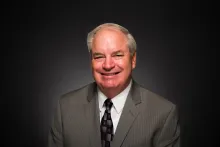
Robin Webber was born in Chicago, Illinois, in 1951, but has lived most of his life in California. He has been a part of the Church of God community since 1963. He attended Ambassador College in Pasadena from 1969-1973. He majored in theology and history.
Mr. Webber's interest remains in the study of history, socio-economics and literature. Over the years, he has offered his services to museums as a docent to share his enthusiasm and passions regarding these areas of expertise.
When time permits, he loves to go mountain biking on nearby ranch land and meet his wife as she hikes toward him.
