

Darris McNeely
This transcript was generated by AI and may contain errors. It is provided to assist those who may not be able to listen to the message.
Well, thank you again, David. There we go. They've turned me off. I think the lapel mic is on, hopefully. Well, happy Sabbath once again. Recently, many of our brothers and sisters in Christ have been struggling with diseases and ill health. And not just Linda, but many of us in our congregation throughout this past year, especially, have had a number of health challenges and health issues and have asked for prayers. And in most cases, God indeed has intervened on those situations. Our health is something that's very important to us, and it's something that we often pray about, and hopefully we pray about the health and the needs of others. Today, I would like to discuss the topic of healing and what the Scriptures reveal to us about it. The topic of healing, I think, is very important to God's people because we are a people who have to live by faith. It's as if they just will live by faith. And we have to do what we can also, not only to live by faith, but to seek God's will in every situation. So let's begin by going to the book of Exodus, chapter 15 and verse 22, and see a statement that God said to Moses and to the nation of Israel that helps us to begin to understand the marvelous kind of God that we worship, that we serve. Exodus chapter 15 and verse 22. You'll turn there with me. Now, this is one of those situations where, if I recall correctly, and let me take a look here in verse 14, yes, this is one of those situations that shows the depravity of human nature. God just performs all kinds of wonderful miracles. He brings people out of slavery. The previous chapter, they're so excited about God, they're singing songs to him. Pharaoh's army had died in the sea. The people are on a high. They're all exciting. Life is good. And then, boom, suddenly, almost like the next day. So Moses brought Israel from the Red Sea, and they went out into the wilderness of Shur. And they went three days into the wilderness and found no water.
Now, when they came to Marah, they could not drink the waters of Marah, for they were bitter. Therefore, the name of it was called Marah, and the people complained against Moses. After all he's done for them, after all God has done for them, miracle after miracle after miracle, three days earlier, they're singing praises to God about his goodness and his greatness.
They complained against Moses, saying, What shall we drink? So he cried out to the Lord, and the Lord showed him a tree, and he cast it into the waters, and the waters were made sweet. And there he made a statute and an ordinance for them, and he tested them. You see, our attitude, it's all about testing. And how do we do when things go wrong? How do we do when things end life? Yesterday was fine, and we were praying to God, and we were happy, and all of a sudden something goes wrong. How do we react? Do you see? That is a test. Anyone can love God when times are good. Anyone can be happy when everything's going their way. Even an atheist is happy when things are going their way. It's when things aren't going our way is the real test of our character, our mental, and what we're made of. So it says he made a statute and an ordinance for them, and there he tested them and said, If you diligently heed the voice of the Lord your God and do what is right in his sight, give ear to his commandments and keep all statutes, I will put none of the diseases on you which I have brought on the Egyptians, for I am the Lord who heals you. Now the phrase here, the Lord who heals you, comes from the Hebrew word rafa, which means to mend something by stitching it together like a piece of cloth that was ripped that is mended together. It means by extension to cure, to repair, to make whole. And he said, I am Yahweh rafa, that is the God your healer. I am the God who heals you. So unlike the other gods that the pagan nations around them worship, who were gods of wood and stone and had really no value and couldn't hear their prayers, couldn't respond to their pleas, the great God of the universe says that I have the ability to intervene in the affairs of human life and I have the ability to make something that was diseased whole. That's remarkable. You see, we worship a loving God who is approachable and who is receptive to our prayers for healing. And I want you to notice the importance of diligence because it says here, diligently heed the voice of the Lord your God, the importance of diligence and of respecting God's values by the way that we lived. This was a parallel, a reverse parallel of what had occurred in ancient Egypt. In ancient Egypt, one of the plagues caused the water of the Nile to be undrinkable.
The Egyptians couldn't drink it. That was one of the plagues. And here in this case, God, that is Yahweh Rapha, intervenes and makes bitter waters sweet. He heals the waters so that the Israelites could drink the water. And he's saying, I am a God who intervenes in your life.
And that's an important point for us to consider when we pray, when we think about why we pray, and why we go to the throne of grace and ask God on behalf of our brothers and sisters who are struggling with health issues to be a God who intervenes in our lives. Now, let's go to Psalms, chapter 103, and read about God's benefit plan.
I am sure one of the things that young Mr. Horton asked about in his new job is what kind of benefit package is there? Do you include health care? Do you include pressing my suit? Do you cover the cost of my meals, my automobile, my monthly mortgage at home, sending my children to college? Is that part of your benefits package? Well, we understand that concept of a benefits package, and here in the 103rd Psalm we are told about God's benefit package. That's the benefit of having a relationship with God, the benefit of being considered God's children. Now, ultimately, this benefit package is spiritual, but it has some physical applications as well.
The psalmist wrote, beginning in Psalm 103, verse 1, Bless the Lord, O my soul, and all that is within me, meaning with passion, with zeal, with enthusiasm, all that is within me, bless his holy name. Bless the Lord, O my soul, and forget not all his benefits. Now he's going to give you some of the parts of that benefit package.
Who forgives all your iniquities? That's a pretty good benefit. You're a sinner. He removes those sins from you through the shed blood of his son, Jesus Christ, and he forgives all of your sins. That's a pretty great benefit. Who heals all your diseases? That's a pretty good benefit. Who redeems your life from destruction? Now, ultimately, that's more spiritual than physical because eventually we all grow old and we all die and our life force ceases. But we hope in eternal life. So he redeems your life from destruction. He resurrects us from the dead, who crowns you with loving kindness and tender mercies. Meaning it's God who gives us those things as a benefit, as part of the package. Who satisfies your mouth with good things so that your youth is renewed like the eagles. The Lord executes righteousness and justice for all who are oppressed. He made known his ways to Moses, his acts to the children of Israel. Verse 8, the Lord is merciful and gracious. Meaning God extends grace to us and graces favor. Grace is unmerited, pardoned, is receiving things we don't deserve and we haven't earned. God gives him to him because he's God and because he loves us. He wants to give us good things. He's slow to anger, abounding in mercy. He will not always strive with us. Yes, we may go through periods of life and I can tell you that I certainly have where God has spanked my spiritual, you know what? In order to wake me up, in order to get me out of some lethargy that I was in, some spiritual funk that I was dealing with, and to say to me in a spiritual sense, wake up, get off the pitty pot, and move on with life. Do something positive for somebody. So he doesn't always strive with us. We go through periods of time when life went indeed. He does discipline us to prompt us to move forward. Nor will he keep his anger forever. He has not dealt with us according to our sins, nor punished us according to our iniquities because of his great love and grace. If God dealt with humankind according to our sins, the planet earth would be one huge ashtray.
But because he is a God of mercy and grace and compassion, he has not judged humankind or you or me according to what we deserve, according to our sins. Verse 11, For as the heavens are as high above the earth, so great is his mercy towards those who fear him. And as far as the east is from the west, so far he has removed our transgressions from us. As a father pities his children, so the Lord pities those who fear him. Now to give you a proper understanding of the word fear, God has not given us the spirit of fear. So it's not the kind of fear that trembles in worrying about being burned up in a fire. It's not that kind of fear, it's a respect. It's holding God in deep awe and respect and appreciation for who and what God is. And for all of these qualities that we read about, that's what it means in context when it says he pities those who fear him, who have a deep, profound respect for his sacredness. For he knows our frame, he remembers that we are dust. We are just mere, weak, carnal, physical human beings. And God understands that. He created us. He knows that. So the psalmist reminds us of the benefits of having a good relationship with our heavenly Father. One of those is that he heals us of our diseases.
Again, he opens the possibility, because he's that kind of God, of seeking him and imploring him to intervene on behalf of someone or ourselves to make us whole, to make us complete. Now, obviously, as I said in context, the ultimate fulfillment of these verses and these benefits are spiritual.
And when we are spirit beings, all of these qualities will be totally fulfilled and filled within us. But let's be candid and take a look at the kind of human life in the world that we live in. And we can understand that by going to Ecclesiastes chapter 3. If you'll turn there with me, very beautiful scripture. Songs have been written about it.
Ephesians chapter 3, beginning in verse 1.
Ecclesiastes chapter 3 and verse 1.
It says in verse 1, They are not by accident, they are not just arbitrary, they are not by random odds, they are for a purpose. Most of the times, I might add, we don't understand. We, in our limited human ability, cannot grasp what God's purpose is when we go through a trial, when something terrible happens in our lives. But there is a time for every purpose under heaven. So, again, as I've stated before, it's good to stop and realize that there is a huge gulf between what God wills and what He allows. Those are two different things. Jesus taught His disciples that one of the things that we need to pray for every day is, Your will be done on earth as it is in heaven.
That's Matthew chapter 6 and verse 10. Why did He pray that? Why did He tell us to pray that? Because at this time in history, God's will is rarely done on earth.
God allows a lot of evil. He allows a lot of terrible things to happen, but they are not His will. He certainly allows them to happen because they are for a purpose under heaven. I might also add that Jesus made that statement right after saying, Thy kingdom come. So what He said is, Thy kingdom come, Thy will be done on earth as it is in heaven.
When God's kingdom arrives, then the fulfillment of God's will will permeate the entire earth. Until then, there is a God of this world. We know of His Satan the devil. There are lots of evil, terrible things that go on throughout this world that are not part of God's will, but part of what God allows in order for His purpose to be fulfilled for mankind. The next verses here in Ecclesiastes tell us about this cycle of human life and civilization. A time to be born and a time to die.
That cycle continues over and over again. Even though God is our healer, He allows death. We can have all the faith in the world, but eventually we get to a point in time when we become so old that God established the fact that we are physical, biological beings. And when age gets to a certain point, we die. No matter how many people are praying for us, no matter how much faith they have, that is part of the cycle that God intended.
He attended for everyone, physical, to eventually die. Again, even if people are praying for them. So that is part of the cycle, a time to be born and a time to die, continuing, a time to plant, and a time to pluck up what is planted. Every year mankind plants crops, mankind plucks up harvests those crops, and the cycle goes on all the time. A time to kill, there's a time of war throughout earth. There's always a war going on someplace and a time to heal.
A time to break down and a time to build up. And if you go to many ancient cities, you'll see layers upon layers of previous cultures in the same geographic area. Rubble, another city was built, armies came in, tore that down, rubble, another empire arose, they rebuilt the city, and you just see those layers in some of those ancient cities right on top of previous cities. So indeed, there's a time to break down and a time to build up, a time to weep and a time to laugh.
We all experience those human emotions, a time to mourn and a time to dance, a time to cast away stones and a time to gather stones, a time to embrace, a time to refrain from embracing, a time to gain and a time to lose. A time to keep and a time to throw away, a time to tear and a time to sow, a time to keep silence, and a time to speak, a time to love, and a time to hate, a time of war and a time of peace.
And indeed, if you look at every human civilization that has ever arisen, going back to ancient Egypt, all the way to today, to the great American empire of the 21st century, the superpower, you will see this cycle, mentioned here in these scriptures, just repeated over and over again throughout human history. There is nothing new under the sun.
Verse 9, What prophet has the worker from which he labors? I have seen the God-given task with which the sons of men are to be occupied. He has made everything beautiful in its time. Also, he has put eternity in their hearts, except no one can find out the work that God does from the beginning to the end. Now, this is tying in with that purpose that exists under heaven. Again, I want to read that. It says, So, working hard is a gift of God. At the end of a long day, when you've developed the dignity of hard work, and when you're sitting back and looking upon what you achieved, you have a right to sit there with your favorite beverage in your hand and say, Ah, I had a good day. I got some things done today. This was a good day in my life. And to savor that moment, that is a good thing. This is what the author of Ecclesiastes is telling us. He's also telling us that God has put eternity in our hearts. And our cultures reflect that. We have a medical science industry, which has done a lot of great things in extending human life. Why? Because we're physical beings and we want to live forever. Don't we? We do have eternity in our hearts. We do believe that there is something beyond this physical life. There is something beyond the here and now, and virtually every religion in the world in some form or another believed and taught in an afterlife. Believe that there is more to this human existence than simply the 70 or 80 or 90 years that we may have in this world. It is God who put eternity, the sense, the desire for eternity in our human hearts. And all of those things are good. Verse 14, I know that whatever God does, it shall be forever. Nothing can be added to it and nothing taken from it. God does it that man should fear before him. So in the context of a time for every purpose under heaven, we need to know that whatever God does, it shall be forever. That's what it says here in verse 14. Nothing can be added to it because it's His plan. And it says nothing taken from it. Why? Because it is God's plan. It all fulfills a purpose, including when we experience trials, including when we acquire diseases, or when our loved ones acquire diseases. It says, continuing, God does it that men should not fear before Him. So I want to emphasize again that God is working on a plan on earth. No one can distract God from His plan. No one can stop God from completing His plan for all humankind. And what is the difference between God's purpose for human life and our purpose? It's huge. What is our purpose? Let's be very frank. What is our purpose? We're human beings. We have no sense of eternity.
We have no sense of what we were before we came into this physical consciousness that we call the human brain. We cherish life. We want physical life to go on and on. We're happy if it can be extended another three months or six months or a year or ten years or twenty years. We're interested in the here and the now. Where God, on the other hand, His perspective is on eternity. It's not on the here and the now. It's not on the short term. We have short-term thinking. We can't help it because we're human. God has long-term thinking because He looks at the purpose of life from the perspective of eternity. We look at the perspective of life as, how can I survive another week, month, day, year, or five years? There's a huge gulf between what God's perception is and what our perception is. Let's go to Hosea, Chapter 14, beginning in verse 1. Hosea, Chapter 14, beginning in verse 1.
This is a prophecy, a prophecy about the nation of Israel, returning again to God's good grace and returning again to the Holy Land, to fulfill God's ultimate goal for them. Hosea, Chapter 14, beginning in verse 1.
The prophet was inspired to write, O Israel, return to the Lord your God, for you have stumbled because of your iniquity. You've stumbled because of your sins you've been taken into captivity. Verse 2, take words with you and return to the Lord. Say to him, take away all iniquity. Please take away our sins. Receive us graciously, even though we don't deserve it. Please give us your favor and your mercy. For we will offer the sacrifices of our lips. In other words, we're going to be sincere, and we are going to tell you how much we love you. It's not going to be about shedding the blood of a bull or a lamb or a goat. It's going to come from the heart, and it's going to come out of our lips. We're going to praise your name. Continuing here. Receive us graciously, for we will offer the sacrifices of our lips. Assyria shall not save us. No nation can save us. No human nation. We will not ride on horses, nor will we say any more. To the work of our hands, you are our gods. No longer will we say that our God is an iPad, or our God is our car, our 2014 Chevy Impala, or that our God is our home, or that our God is these things. No more shall we worship the work of our hands, for in you the fatherless finds mercy. Verse 4, God begins to respond, I will heal their backsliding. God says, I will make a people who was filled with iniquity and sin, and I will heal that iniquity and sin. I will love them freely, for my anger has turned away from him. I will be like the dew to Israel. He shall grow like the lily, meaning fast and strong and beautiful flowering, and lengthen his roots like Lebanon. His branches shall spread, his beauty shall be like an olive tree, and his fragrance like Lebanon, and those who dwell under his shadow shall return. They shall be revived like grain and grow like a vine. Their scent shall be like the wine of Lebanon. Now, previously in history, God promised physical healing to Israel. That was what the Old Covenant was about. It was a covenant based on physical promises. Blessings and curses, depending on how obedient they were to the covenant of Moses, the law of Moses, that they observed. You and I are under a different covenant. You and I are under a new covenant. And our covenant is a little different than ancient Israel's was, because we are not concerned with mere physical promises. We are given spiritual promises. We are given spiritual promises like eternal life, like sonship in the family of God, things that were not offered to ancient Israel as a physical nation. And of course, we know the messenger of the new covenant was Jesus Christ himself. So let's see some of the things that he did, what his message was, and some of the things that he said in Luke 4, verse 16.
Let's go there right now. Luke 4, verse 16. In this account, Jesus is the Nazareth. He goes to a synagogue, and he stuns the people in the synagogue by reading from the book of Isaiah and saying that I today, right now, am fulfilling these verses. So he came to Nazareth where he had been brought up, and as his custom was, he went into the synagogue on the Sabbath day, and he stood up to read. And he was handed the book of the prophet Isaiah, and when he had opened the book, he found the place where it was written, The Spirit of the Lord is upon me, because he has anointed me to preach the gospel to the poor. The good news, the encouraging news, the inspiring message of the kingdom of God to those who were poor. He has sent me to heal the brokenhearted, to proclaim liberty to the captives, and recovery of sight to the blind, to set at liberty those who are oppressed, to proclaim the acceptable year of the Lord. So what is Christ saying here? What is he doing? Well, he's saying that he was on earth here to fulfill the prophecy of Isaiah by preaching the gospel. He came to offer these things, and all these three different things are part of healing. He came to heal. He came to offer emotional healing. He calls that brokenheartedness, to have your heart broken, to have all your hope sapped out of your life, that you have no hope, and that you lack encouragement. You need to be emotionally healed. That was one of the things that he came to earth to do. He came to provide spiritual healing. He says, liberty to the captives. He means the captives of sin. And he came to provide physical healing. Sight to the blind was what the prophet wrote that Jesus quoted. So Jesus Christ came to earth to represent a kingdom that will offer total and complete healing, body, mind, and soul.
He came far more than just to offer physical healing, because after all, in all fairness, that's temporary. Do you know what happened to everyone that Jesus healed? Every one of them grew old and died. So that was really very temporary, wasn't it? That was only one of the forms of healing that he came to represent as a representative of the kingdom of God.
He also came to offer and tell them that there is emotional healing available, and most importantly, that there is spiritual healing available. Aniquity can be forgiven. That barrier, that wall that separates us from God can be removed through the shed blood of Jesus Christ. And the whole ministry of Jesus Christ was that it was a foretaste of the kingdom of God.
He was coming as the very king of that government to represent the government of God. So I think that's very important that we understand that Christ came to offer three kinds of healing, more than just physical healing.
Physical healing was a very important aspect of his ministry. Let's read about that in Matthew 9 and verse 32.
Matthew 9 and verse 32. It says, He cast out demons by the rulers of the demons. They were implying that Jesus Christ was in league with Satan, which of course was sacrilegious and a lie. Then I want you to notice, though, how Jesus responded in verse 35. Then Jesus went about all the cities and villages, teaching in their synagogues and preaching the gospel of the kingdom.
He just allowed the magpies to flap their gums and criticize them, and he went out and did something. He believed in overcoming, not over-talking. So he just went out and did his job, and he allowed those in a peanut gallery to continue to complain. What did he do? He preached the gospel of the kingdom, and healing every sickness and every disease among the people.
But when he saw the multitudes, he was moved with compassion for them because they were weary and scattered like sheep having no shepherd. And he said to his disciples, The harvest truly is plentiful, but the laborers are few. Therefore, pray the Lord of the harvest to send out laborers into his harvest. He said, We need more disciples because there is that much potential out there.
And then chapter 10 and verse 1, And when he had called his twelve disciples to him, he gave them power over unclean spirits to cast them out and heal all kinds of sickness and all kinds of diseases. So again here, Jesus is preaching the good news of the kingdom of God. And what is that kingdom? It's a time of universal healing. A time that we look forward to. Universal healing includes emotional healing, physical healing, and most important, spiritual healing. He also gave his disciples the power to heal as a foretaste of the peace and the healing that will occur in the kingdom of God. But do you realize that even though Jesus performed physical healings, that wasn't his main purpose for walking on earth?
His main purpose was to offer people through his shed blood the opportunity upon the Father's calling of eternal life of the ultimate healing from sin. Do you know sin is a disease? The word disease comes from dis-ease, meaning not being at ease. And when we live a life of iniquity, we are dis-eased.
When we live a life of sin, we are in a life of disease. And we need to be healed from that. That is so very important. 1 Peter 2, verse 18.
I have to be very fair with you because I have seen people interpret this scripture in 1 Peter 2 and apply it to physical healing.
And that's okay. I don't have a problem with that except the fact that in context, this is talking about far, far more than physical healing. Most importantly, it is talking about spiritual healing. Healing from spiritual disease, that is called sin or iniquity.
1 Peter 2, verse 18. 2 Peter 2, verse 18.
He is saying, if you do something wrong and you get beaten for it, you don't get any credit. You probably should have been beaten. I mean, that's how Frank is being here. Peter is being here. He says, but when you do good and suffer, I hear the phrase that no good deed goes unpunished. Sometimes you try to do good, you try to do good, and it seems like it just comes back and haunts you. He says, but when you do good and suffer, if you take it patiently, not if you play the martyr, not if you whine day and night because you're under this trial and burden, he says, if you take it patiently, this is commendable before God. For this you were called because Christ also suffered for us, leaving us an example that you should follow his steps. Who committed no sin, nor was deceit found in his mouth, who when he was reviled did not revile in return, but when suffered he did not threaten, but committed himself to him to judge us righteously. Now beginning in verse 24, before we talk about stripes, we need to understand the context of what these stripes and what kind of healing. Ultimately, this was for verse 24, who himself bore our sins in his own body on the tree. What is the context? Bearing our sins, that we, having died to sins, might live for righteousness as a new creature in Christ. We get out of that baptismal tank, we have hands laid on us, and we begin to live life for righteousness with a new perspective about why we were born and why we exist on earth. By whose stripes you were healed? Now does this include healing of physical problems? Sure, but far more importantly, the healing that it's talking about here in context is the healing from sin. And when Jesus Christ was beaten, he shed his blood. And it's by the shedding of blood that our iniquities, that our sins, are forgiven. It says, For you were like sheep going astray, but have now returned to the shepherd and overseer of your soul. So again, the context of this scripture is being healed of sin, not simply healed of a physical disease.
Peter is saying that to accept a beating for something you didn't deserve is commendable. But even greater than that is Christ, who was terribly beaten, who shed his blood by being beaten, so that we could be healed of the most fatal disease that there is. That disease is known as sin. And that we could be healed of that disease and be offered eternal life.
Okay. Let's now go to Acts 3 and verse 1 and see that the early disciples also understood the calling of Jesus Christ. This was the first generation. These were individuals who knew Christ, personally knew him, were taught by him. And God gave them the ability to perform an unusual number of miracles. Phenomenal number of miracles. All they virtually had to do was ask, and a miracle would occur. A healing would occur. Acts 3, beginning in verse 1.
The name of Jesus Christ of Nazareth, arise up and walk. And he took him by the right hand and lifted him up, and immediately his feet and ankle bones received strength. So he, leaping up. I want you to notice the miracle here. For most of us, if we'd been in bed for a week, how do we even get out of bed if we walked most of our life? We're kind of wobbly like a young steer. Whoa! Right? Here was a man who never walked in his life, and he leaps to his feet.
He's not shaky. He's not iffy. He's not trying to figure out his balance for an hour. He leaps to his feet. And he stood and walked and entered the temple with them, walking, leaping, and praising God. And all the people saw him walking and praising God. Then they knew that it was he who sat begging at the alms, begging alms at the beautiful gate of the temple. And they were filled with wonder and amazement at what had happened to him.
Now the lame man who was healed held on to Peter and John. All the people ran together to them to the porch, which is called Solomon's, greatly amazed. So when Peter saw it, he responded to the people. He used it as an opportunity to preach the Gospel. Men of Israel, why do you marvel at this? Why do you look so intently at us? As though by our own power or guideliness we had made this man walk? The God of Abraham, Isaac, and Jacob, the God of our fathers, glorified his servant, Jesus, whom you delivered up and denied in the presence of Pilate when he was determined to let him go.
But you denied the Holy One and the Just, in other words, the Messiah, the one who came to wash you of your sins, and asked for a murderer to be granted to you and killed the Prince of Life. You see, that's what Jesus Christ was. He was the Prince of Life. Because of his ministry, because of his life and his death, he offers us eternal life. Whom God raised from the dead, of which we are witnesses, and his name, through faith in his name, has made this man strong.
Whom you see and know, yes, the faith which comes through him has given him, that is, this man, this perfect soundness in the presence of you all. So this first generation of disciples continue the literal example of Jesus Christ by healing individuals as a tool to preach the Gospel. And in this generation, again, they had the uncanny ability, at their very command, where literally people were healed. And you find throughout history that when this generation dies out, when the original apostles and Paul and this original generation dies out, you find that there are still miracles in the Church.
There are still healings that occur in the Church, as there are today, but not the degree of those who had been with Jesus Christ, who was a direct ambassador of the Kingdom of God and wanted that generation to understand the total healing that is available for the Lord. And that is available within that Kingdom. Well, now let's go and take a look in Acts 19 and see a unique ability to heal that the Apostle Paul had. Apostle Paul was taught personally by Jesus Christ when he was in Arabia. So let's read about what happened at Ephesus and see how this ability to heal continued through that first generation of disciples in their lifetime.
Here in Ephesus, Acts 19, verse 8, And he went into the synagogue and he spoke boldly for three months, reasoning and persuading concerning the things of the kingdom of God. There is that constant theme over and over again preaching the gospel of the kingdom. But when some were hardened and did not believe but spoke evil of the way before the multitude, he departed from them and withdrew the disciples, reasoning daily in the school of Tyrannus, and this continued for two years.
So they departed from the synagogue, the believers, and they just did their own thing.
And verse 10, and this continued for two years so that all who dwelled in Asia heard the word of the Lord Jesus, both Jews and Greeks. Now God worked unusual miracles by the hands of Paul so that even handkerchiefs or aprons were brought from his body to the sick, and the diseases left them, and the evil spirits went out of them. So this is where we get the concept and we use the understanding today of what we call anointed cloths. This was God's way to overcome problems with distance. Paul could not handle all the requests coming in from the various cities around him. He would be chasing his tail constantly. If personally he needed to go and every request from point A to point Z, praying for people and literally physically anointing them one on one. But he was able to do the same kind of thing, the same ability to heal by sending out these anointed cloths. I want you to notice it says God who worked unusual miracles. Paul was just a vessel. It was God who was doing these miracles. There's nothing divine or sacred about the actual cloths. They're just simply a symbol of God's power. And the faith of the one making the request for the anointed cloth is what's important. If you should request an anointed cloth from a minister, your deed is done. If the minister is hit by a truck and never gets that anointed cloth into the mail, that's okay. Because it was your faith, your request, that God respected and understood and chose to intervene, not the physical receiving of the cloth. If you should ask a minister and they forget to drop it into the mail, shame on the minister. But the point is that it is the faith of the one making the request that is honored and respected by God. So in the concluding minutes we have today, I want to ask a few questions and answer a few questions about healing. Does God continue to heal in His church today? And what are some of the things we should know regarding prayer and healing? These are good questions, and I think it's good for us to understand these things. One key is faith. Faith, obviously, is very important.
Jesus often told others, according to your faith, that it be done. That was a common phrase that He had in many of His accounts of healing people. We could spend the next hour looking at the examples of Jesus discussing the importance of faith. But instead of doing that, we'll just go to the book of James, the first chapter, and we'll let His half-brother give us a summary of the importance of faith. Here's what James says in chapter 1 and verse 2. Faith, obviously, is a key, an important key.
James writes, My brethren, count it all joy when you fall into various trials. Now, I don't know about you. I'm still working on this one here. I still want to complain when I fall into various trials. I still want to feel like, God, why have you forsaken me when I fall into various trials? So I'm still working on this one. I'm not to the level of joy yet. It is knowing that the testing of your faith produces patience. But let patience have its perfect work. Be patient. Allow it to work itself out. Ask yourself, what can I learn while I'm waiting? That you may be perfect and complete, lacking nothing. If any man lacks wisdom, let him ask of God, who gives all liberally and without reproach. And it will be given to him. But let him ask in faith, with no doubting. For he who doubts is like a wave of the sea, driven and tossed by the wind. For not that man suppose that he will receive anything from the Lord. He is a double-minded man, unstable in all his ways. So faith is essential. Faith is very important. What hinders our faith today? Well, the first enemy of faith is materialism. And we live in a world of materialism. We live in a world that focuses on physical needs and physical wants. And if we don't seek the kingdom of God first in our life, our faith will be weak. There's just no way to get around that. If the kingdom of God takes second or third or fourth place in our life, our faith is not where it needs to be. We live in a society where evolution has influenced our culture with the belief that there is no God. Or that he's kind of a deistic God. That he started it all by creating the initial spark of life, millions and millions of years ago. And since then, he's just been kind of sitting back, you know, like an absent-minded professor, he's just sitting back observing what goes on, but he doesn't have any influence in human life. Our scientific world, by its very nature, rejects miracles because miracles can't be tested with the senses. You know, you cannot use the scientific method to judge faith because miracles transcend the scientific method. The scientific method is good. The scientific method teaches us that this works and we try this and it doesn't work. And ultimately, you find things that work because you put them to stringent testing. But that has no validity with faith in miracles because that is a different realm of existence. That is spiritual. You cannot scientifically test a miracle or someone's faith. But we live in a world in which there are many doubts and those doubts test our faith and test sometimes our own belief if we're part of God's plan. So key number one again was faith. Key number two is that our request must be according to God's will.
You see, sometimes we may have the faith, but it is not God's will to intervene at that time. And this is important because we should not judge one another. If you are not healed immediately, don't judge other people because maybe they were healed quickly and you're not healed quickly. Or don't judge other people because you were healed quickly and they're still living with a chronic disease.
Because it takes more than just simply faith. We have to ask according to God's will for God to intervene at that time. You know, it's God's promise to heal, and that is an absolute promise from God. But the truth is that some will not be healed until the resurrection from the dead. Some will be healed immediately. Some will be healed in a year, five years. And frankly, some will not be healed until they are resurrected from the dead. God's promises are sure, but God's timing is according to his own purpose and his own plan and his own time frame. The deacon Stephen, who was a rather young man, was allowed to die, wasn't he? Now, it's interesting when you go to the book of Acts, there were times when Peter and Paul, their lives were spared. They were put in prison, and the prison doors opened. And there were times when they were stoned. Paul was stoned once, and he got up and he brushed himself off, and he crawled to another city. God allowed Stephen to die, didn't he? Stephen wasn't resurrected from the dead. So the point is that it not only takes faith, we have to understand and be sure that God's will, know what God's will is and that we are in harmony with his will. Let's go to John 5, verse 30. John 5, verse 30, a good scripture for us to ponder in thinking about God's will. Jesus said, I can of myself do nothing. As I hear, I judge. And my judgment is righteous because I do not seek my own will, but the will of the Father who sent me. So it takes more than faith. We have to make sure that we are aligned with God's will. Jesus was in perfect harmony with the Father. He knew the Father's will in every situation. You know what? Frankly, we don't. He was Christ. We're not. God is doing things. He's allowing things for the sake of eternity that you and I can't grasp, that we don't understand. And we probably never will in this physical lifetime. I have personally witnessed hundreds of healings over 40 years, including the healings of some of you. Some of you sitting in this congregation, I remember a couple, I'm going to guess, seven, eight years ago, a couple who came to me, and there was a lump on the wife's breast. And that couple was anointed. Concerned, obviously very concerned. Went back for the next test, which would have looked at it a little more closely and resulted in surgery. Went back the next test. The lump is gone. Now, I can't explain that, but that has happened. I've known people that went into the hospital diagnosed with the disease, asked for an anointed cloth or anointed with oil, and the next day the doctors did more testing. The disease is gone. Go home. What are you doing here? I can't explain that because God is working out a plan that I can't fully grasp. On the other hand, I have also known young children who died in leukemia, who were church members' children. I've known young people who died in tragic automobile accidents. So the point that I want to bring across is that we have to give God the compassion and understanding and love and accept the fact that He does things beyond what we can grasp and understand. You know, when a young person dies, it's very tragic for everyone left behind, and it's often a test for them.
But I want to give you an analogy of how God looks at our physical human existence. And I want to emphasize this again in maybe a little more detail. Here's how we look at life as human beings. We cling to human life, preciously, don't we? Even an additional day or a week is something that we want. That's important to us. In our modern culture, in the medical world, we spend billions and billions of dollars every year to give someone an extra year or five years or ten years. Thus, human life is just absolutely precious because it's all we've ever known, and we want to hold on to it and cling to it. Now I want to give you God's perception of life. I want you to picture yourself walking up to an ocean. And that ocean represents eternity.
If you go to the Feast of Tabernacles this year to Panama City Beach, walk up to the ocean and just look out. Look as far as you can see. You'll see water. And to the right, you'll see that beautiful ocean. To the left, you'll see that beautiful ocean. That's eternity. That represents eternity. And for God to give us an additional 20 or 30 years of physical life in this earth, from God's perspective, is like you taking a water dropper, and you put one drop into that dropper, and you walk out into that sea, and you put one drop of water into it. From the perspective of eternity, how God sees the value of human life, that is what an additional 20 or 30 years to your life and the my life really means to God.
Our physical life is like the introduction page of an encyclopedia. It is so short, in the terms of its total value, is so un-consequential. And yet, as human beings, we grasp onto every second that we can possibly get. But remember always that God looks at eternity, where we look at the hope of another day. Another key is to realize that we can ask God to reconsider His will, and we can plead on the behalf of fairness and justice. Have you ever done that? Have you realized that we worship a God who is very approachable? And sometimes we can change His will, and if you think about it in all fairness, often what we should pray for is God to reconsider His will and to allow something to happen. Let me give you a couple of examples. At Mamrie, Abraham was told by God, God said in uncertain terms, I'm going to destroy the city of Sodom. They're toast. I'm going to destroy them. And it was Abraham who went about negotiating with God, reasoning with God, who got him down from sparing the city if there were 50 righteous to if there were only 10 righteous. What did he do? He asked God to reconsider His will, and he convinced God otherwise. At Kadesh in Numbers, Chapter 14, one of those many episodes where the family of Israel had rebelled against God, and God told Moses, He said, you know what, Moses? Numbers 14, He said, stand aside. I'm going to wipe all these people out right now, and I'm going to build a great nation through you. And Moses said, God, you can't do that. Other nations are watching what you did for Israel. They'll say that you brought them out here just so you could destroy them in the desert. They'll say you're not a real God. And what did he do? He got God to reconsider His will on behalf of fairness and justice.
And sometimes it is very possible that God will allow someone to die, or maybe it is His will that someone die. And it may be our prayer going to a God who listens, a God who is reasonable, a God who can be approached and asking Him to reconsider what the events that are going on and what is happening.
Here's another key. Our prayers can be more effective if we live in harmony with God's law. They can be more effective if we live in harmony with God's law. God stated to the prophet Isaiah in chapter 66, He said, But on this one will I look on him who is poor and of a contrite spirit and him who trembles at my word.
So we need to be humble. We need to conform to God's way of life. As James said in James chapter 5, he said, Now that's in contrast the naman. Remember naman in 2 Kings chapter 5? He was the general of the Syrian army. He had leprosy. And he wanted to be healed. So he came to the prophet Elijah. And he said, I need to be healed. And the prophet Elijah wouldn't even come out to see him. He sent his servant and he said, The prophet says you need to dip yourself into River Jordan seven times and you'll be healed. And the general flew into a rage. Why? How dare that doesn't he know who I am? I thought he was going to come out here and wave his magic wand. I thought he was going to come out here and do something flashy and impress me. Why aren't the rivers in Syria superior to this mud hole they call the Jordan? I'm not going to do this. And once he calmed down, because his attitude stank pretty bad, didn't it? You think he's about to be healed? No. Once he calms down, his servant comes to him and says, You know, Master, if the prophet had asked you to do something like real hard, you would have done that. You would have thought, Oh, how great this God is, this difficult task that I have to do. He says, So why don't you just go and dip into Jordan seven times like you were told? And sure enough, he did. And he was healed. You see, we have to be in line with God's values. We have to have a humble heart. We have to want to serve God, to serve our brothers and sisters in Christ, because, as James said, the effective fervent prayer of a righteous man avails much. Do you remember the story in Mark 2 in the city of Capernaum? It was the story of a paralytic who had friends, and they wanted their friend, their paralytic, to be healed. There were so many people in the house, they couldn't get their friend there.
So what did they do? Being clever Jewish people? They went and they cut a hole in the roof. And Jesus is probably there. I can see him preaching. He's there. And suddenly, out of the roof starts coming down, this cot with ropes tied to it. And there he is. He dangling in the... Well, it certainly worked. It got his attention. And what does the Scriptures say? It says in verse 5 of Mark 2, And when Jesus saw their faith, he was moved to heal the man. You see, it wasn't even the man's faith. It was the faith of his friends that made the difference. They were so willing to cut a hole in someone's roof and to do extraordinary things on behalf of the person that they loved.
We worship a God who heals, and on every level, emotional, physical, and spiritual God, and does heal according to his will. We can know that God hears our prayers, and everyone will be healed when the time is right. Some, again, are healed immediately. Some individuals are healed after a time of testing, and some individuals will be allowed to die and heal in the resurrection. In all these situations, we have to be very careful not to imply weakness on a person or weakness on God as we wait patiently for God to intervene for his intervention. We are merely human, and we want action right here, and we want it right now, don't we? On the other hand, God is preparing us for eternity through the things that we experience and the things that we learn.
So I hope that what you will do with this sermon is the next time you will hear a prayer request in the bulletin or receive a weekly email from Mr. Thomas about someone who has asked for our prayers. Or maybe someone comes to you personally, just doesn't want it broadcast, but comes to you personally and says, Will you pray for me? I'm struggling with this. Will you pray for me? I hope that we will, a little more seriously, maybe, a little more take it to our hearts and take that request to the throne of grace and ask our great God, the God who can and does intervene, to intervene on that person's behalf. Believe it in God's hands according to his will, to pray that it be God's will, to approach him, to approach that throne convincingly with reason. If we believe that we need to change God's will, that's okay. He's a big God. He's a great God. He's a good listener. He considers our thoughts. He considers what the things that come from our hearts and that we will take those things to God for one another. Because that's really what our calling is all about. Our calling is serving one another. It's praying for one another. It's having faith for one another.
And I hope that we can do that even a little more intently in the future. Have a wonderful Sabbath day.
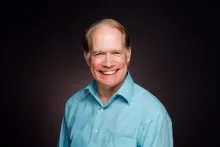
Greg Thomas is the former Pastor of the Cleveland, Ohio congregation. He retired as pastor in January 2025 and still attends there. Ordained in 1981, he has served in the ministry for 44-years. As a certified leadership consultant, Greg is the founder and president of weLEAD, Inc. Chartered in 2001, weLEAD is a 501(3)(c) non-profit organization and a major respected resource for free leadership development information reaching a worldwide audience. Greg also founded Leadership Excellence, Ltd in 2009 offering leadership training and coaching. He has an undergraduate degree from Ambassador College, and a master’s degree in leadership from Bellevue University. Greg has served on various Boards during his career. He is the author of two leadership development books, and is a certified life coach, and business coach.
Greg and his wife, B.J., live in Litchfield, Ohio. They first met in church as teenagers and were married in 1974. They enjoy spending time with family— especially their eight grandchildren.
