

Roy Holladay
This transcript was generated by AI and may contain errors. It is provided to assist those who may not be able to listen to the message.
What is the heart of God like? If you were to describe God's heart, what would you say? How would you define it? The theme of the Days of Unleavened Bread, Mr. Lichtenstein touched on this morning in 1 Corinthians 5 and verse 8. You might want to turn there. 1 Corinthians 5 and verse 8, where it says, Therefore let us keep the feast, not withhold leaven, nor with the leaven of malice and wickedness, but with the unleavened bread of sincerity and truth. When you stop and ask yourself, what should I be working on this coming year, throughout the upcoming year, it should be working on our sincerity and truth.
We know the Word of God is truth, the Bible, the Scriptures. Truth comes from God. He is the pillar of truth. You and I are to be sincere in how we deal with one another, our motives, our approach, sincerity and truth. We should want, desire, and strive to become more like God. The more we become like God, the closer we become to being in His family. Today, you find a lot of people want to become like somebody famous.
It could be a ball player, whether it's baseball, football, basketball, cricket, whatever it might be. Or somebody might have a musical idol or a Hollywood star. They dress like them, try to walk like them, try to imitate them, maybe wear the same style of clothing. A while back, the Gothic style was a style that many young people were following. People have hairstyles. There are those who cut their hair and have a mohawk, that type of style. Or just shave their heads, or whatever it might be. In the early 60s, when the Beatles appeared on the scene, long hair started to come into gold. Prior to that, you didn't see very many people with long hair. Looking back at the Beatles now, the Beatles didn't really have long hair.
We thought they did at the time. Not like a lot of people today where you see men with hair way down their back, and they've got ponytails, and all of this. You have rock bands, drug culture. How many people, though, do you see in our culture who want to be like God? I'm reminded of one of the Disney movies where they sing the song, I want to be like you. How many people want to be like God and imitate Him?
God brought Israel out of Egypt. When God did that, He was their king. Israel rejected God as being their king, and they wanted a man like all the other nations around them. They wanted to be like the nations around them. Here was God, as we heard this morning, who led them through the Red Sea, performed an outstanding miracle, fed them 40 years in the wilderness.
Their shoes never got old. Their clothes did not wear out. They had manna every day. God blessed them, looked after them, protected them. Pillar of fire by night, cloud by day. Whenever the cloud moved, they knew they were supposed to move.
God constantly lived with miracles from God on a regular basis. Yet, when it came down to it, they wanted to be like the nations around them. God gave them precisely what they wanted. He gave them a king from all appearances, which was exactly what man would want. Let's notice the story back here in 1 Samuel chapter 8 and verse 5. We'll go back to 1 Samuel chapter 8, and we will begin here in verse 5. Now, the people had come to Samuel, and you'll notice they said to him, to Samuel, the prophet, Look, you're old, and your sons do not walk in your ways.
Now make us a king to judges, like all the nations. But this thing displeased Samuel when they said, Give us a king to judge us. So Samuel prayed to the Lord. And the Lord said to Samuel, Heed the voice of the people in all that they say to you. For they have not rejected you.
It's not you that they're rejecting, but they have rejected me that I should not reign over them. They don't want me to be their king. Now notice in chapter 9 and verse 1. Now there was a man of Benjamin whose name was Kish, the son, and he goes on to mention him, that he was a Benjaminite, a mighty man of power. Notice, he had a choice, and handsome son whose name was Saul. There was not a more handsome person than he among the children of Israel.
Now how would you like to be called the most handsome man in the land? That was him. From his shoulders upwards, he was taller than any of the people. Now what if we had somebody in here seven feet tall? Heading shoulders above everybody else. That's the way Saul was. So you look at him and you think, wow! God really picked somebody who's going to be a great king. He's good looking, he's rugged, and here he is. He's choice.
In chapter 10 in verse 1, we read that Samuel took a flask of oil, poured it on his head, and kissed him, and said, Is it not because the Lord has anointed you, commander over his inheritance?
So you're going to be in charge, you're the commander over his inheritance. Now verse 6, Samuel told him, So the Spirit of God was going to come upon him, and he would be a different man. God was going to give him help. Now let's notice in verse 9.
So it was when he had turned his back to go from Samuel that God gave him another heart.
So God gave him a heart, a different heart, a different motives, a different approach, and all those signs came to pass.
So the Spirit of God came upon him, and he gave him another heart. So Saul started out right. He started out with the Spirit of God having another heart, another way of looking at things. When it says God gave, the Hebrew word says, overturned or overthrown to change or transform.
His heart, his mind, his approach was changed, transformed. Notice how the NIV translates, verse 9.
As Saul turned to leave Samuel, God changed Saul's heart. God changed it. Good news translation. When Saul turned to leave Samuel, God gave Saul a new nature. New nature. The net translation. Saul turned to leave Samuel, and God changed his innermost person. So there was a definite change. God was there on his side to help him, to guide him, to lead him. He has a different heart now. Now turn over to chapter 13, and verse 13.
We find that in spite of this, he did not obey God. If he had obeyed God, he had a distinct flaw in his character. That is, he feared the people more than he feared God. He was a prey to the people.
God says, do this because the people wanted to do something, or he reasoned in his own mind, then he did his own thing. If Saul had obeyed God, God would have established his dynasty over Israel forever. Notice verse 13. Samuel said to Saul, you have done foolishly. You have not kept the commandment of the Lord your God, which he commanded you. For now the Lord would have established your kingdom over Israel forever. The same thing that God did for David, he would have done for Saul. Saul had first shot at it. He was the first one out the door, so to speak. Now your kingdom shall not continue. The Lord has sought for himself a man after his own heart. God wanted to put a man in charge who had his own heart. The Lord has commanded him to be commander over his people, because you have not kept what the Lord commanded you. Saul did not do what God commanded him to do. Could Saul have been trained to rule over Israel and the world tomorrow? Yes, he could have. He could have qualified for that responsibility. Instead, he was disqualified, and the opportunity passed to David. And David was obedient. 1 Samuel 16 and verse 7. Notice 1 Samuel 16 and verse 7.
Very important principle that all of us need to remember. In verse 7, the Lord said to Samuel, Do not look at his appearance. Now this is where David was anointed king. Remember he came, looked at all of David's brothers. Some of them were hunks. Some of them looked like they had been hewed out of granite, oak trees, strong, virile, masculine. Somebody would think, wow, he would make a great leader. But notice God says, the Lord said to Samuel, Do not look at his appearance or his physical stature, because I refused him.
For the Lord does not see as man sees. God does not look at a man or a woman the way we would. The man looks at the outward appearance, but the Lord looks at the heart. You see, today in society, people are impressed, are they not?
With wealth, achievement, power. How are political leaders chosen? Are they chosen based upon integrity, based upon conversion, based upon their love for people? Are they chosen because they're good speakers? Are they good-looking?
They give a certain persona, and people say, wow, he'll make a good leader. But God looks at the heart. God chose a teenager, a young man. David was probably still in his teens at this point.
Notice what the Bible says about David being chosen to become king and successor to Saul. Psalm 78, beginning in verse 70. Psalm 78, and we'll begin to read here in verse 70. He also chose David, his servant, and took him from the sheepfolds. He wasn't in the army and had been trained as a general and gone to West Point. He didn't have any of those credentials. Verse 71, from following the ewes that had young, he brought him to shepherd Jacob his people. God brought him to shepherd Jacob his people. Verse 72, key verse.
So he shepherded them according to the integrity of his heart, and guided them by skillfulness of his hands. And I will be their God, and they shall be my people.
God chose a shepherd, a young man. Why? Well, notice again Psalm 78, verse 72, from the ESV translation. With upright heart he shepherded them and guided them with skillful hands. In that translation, David cared for them with pure motives. These are alternate translations of what we read in verse 72. Why did God choose David? His heart was right with God. His heart was right with God. So what does it mean to be a person after God's own heart?
And the key question is, is your heart is my heart? A heart that is after God's own heart. When God looks down at you, looks down at me, can he say the same thing about us today?
What if God came down and lived in the flesh today? Dwelled among us. We observed him. We saw him. We followed him around. We saw how he answered people. We saw how he was motivated. Would that help us? Because, quite frankly, all we have are each other. We look at each other and look at his faults. Look at his mistakes. He's got wars. Whatever it might be. We look at people. We look at the outward appearance.
We don't think too much of him. But you know, God did come in the flesh, did he not? He was called Emmanuel, God among us. Jesus Christ came to this earth. Philippians 2, beginning in verse 5. Let's notice Ephesians 2. We'll pick up the story in verse 5 here. It says, Let this mind be in you, which was also in Christ Jesus. So you and I are to have the same mind that Jesus Christ had. Now, the question is, what kind of mind was that?
What kind of mind did he have? When you look the term, heart hub, it refers to our way of thinking. It refers to our emotions. It refers to our motivation. It incorporates all of these qualities. Part of it is emotional. Part of it is intellectual. But it says, Let this mind, this attitude, this approach be in you, which was also in Christ Jesus, who, being in the form of God, He was God in the family of God, did not consider it robbery to be equal with God.
So this shows you He was equal with God in the sense that He was God. He was on that level. But He made Himself of no reputation, taking the form of a bondservant and coming in the likeness of men. So He came to the earth like a man. He was God in the flesh. He was the Son of God, and He was the Son of man.
Both of those are used of Him. In being found in appearance as a man, notice, He humbled Himself and became obedient to the point of death, even the death of the cross. So Jesus Christ was the perfect example for us in the flesh. What do we find described in this section? What was the attitude that Jesus Christ had? What does it say? He had humility, did He not? He humbled Himself, as verse 8 says, and became obedient even to the point of death. Now how often do you stop to think that God is humble? That humility is a quality that God possesses. Here was Christ, the second member of the God family, known as the Word.
And as it says here, being in the form of God, He didn't think that that was something to grasp at. That He was willing to come to this earth, take the form of a human being, live in the flesh for 33.5 years, humble Himself to do that, to give up the glory and the power that He had, the level of existence that He had, and become like a man, be subject to gravity and all of those things, so that He might die for us.
He had humility. God has humility. It's a part of the mind and the heart of God. Is God motivated? Let me ask you a different question. Is God motivated by pride or humility? Who's motivated by pride? Well, Satan the devil is. That's His way of life. That's His thing, as we heard earlier. Pride, vanity, ego, selfishness, vanity, all of that. That's the way Satan thinks. That's not the way God thinks. God always thinks, what is best for you?
What's best for me? And it's humility. He will do what it takes. Remember, Jesus Christ totally submitted Himself to His Father. So, here we have the perfect example of a man with God's own heart. He was a man who had God's own heart, and he was the Son of God. You read the book of John, especially, he gave all glory to God. He always said that he could do nothing of himself. He gave God the credit, constantly.
Now, we could read, I could spend the rest of the sermon just going through the book of John, reading about Jesus Christ and His relationship with His Father. But I want you to notice, though, in John 17, beginning in verse 11, that Jesus Christ made a profound statement here. Chapter 17, and we'll begin in verse 11. Christ said, John 17, 11, we read this Passover evening, Now I am no longer in the world, but these are in the world.
And I come to you, Holy Father, keep through your name those whom you have given me, that they may be one as we are. So Jesus Christ and the Father are one. That means they are perfectly united in their attitude and in their approach. They are united in their love for each other. We are to have the same attitude and the same approach. So what is another characteristic of God that you and I are to emulate? Well, you find that the God family operates as one. They are united in their approach, their plan, their purpose, their goals.
They have the same attitude, same approach. One isn't going over here doing his thing, the other over here doing his thing. And, you know, get out of my way. I think my way is better. No, they are working together. They have forever. They know it works best because everything has flowed from that. You and I are to be the same. We are to be united. We are to work together. We are to have the same love for each other.
And working with each other. So what is a heart of God like? What is the heart of God like? If we are to be a man, and let's put a woman in there also. If we are to be a woman after God's own heart, a man after God's own heart, what should we be like? Well, one of the best things you can do is study the example of Jesus Christ. Go through the Gospel. Study His example. And especially, I'd say, the book of John would be one to concentrate on, because it shows His attitude toward His Father, constantly, and how He related to the Father.
What is the heart of God like? It is a heart of love. 1 John 4, 8 says, God is love. As I've emphasized before, it doesn't say God has love. God is love. That's the way He is. It's His nature. It's His very being. David, it might be funny to express it this way, was in love with God. David loved God. And can you say the same?
Can you say, I love God? And I have love for God. God is motivated by a heart of love. That's His heart. That's the way He is. Let's go over to the book of Ephesians, chapter 1. Ephesians, chapter 1. We'll just hit two or three verses here. Ephesians 1. In the book of Ephesians, there's an expression that's translated Good Pleasure, or the pleasure of His will, or the will of God.
All of these are used. Let's notice, beginning in verse 5. Have He predestinated us to adoption as sons by Jesus Christ to Himself, according to the good pleasure of His will? Now, God has done this. In other words, He's predestinated us to be adopted as sons of God, to be a part of the family of God, by His good pleasure, pleasure of His will. And then in verse 9. Have He made known to us the mystery of His will, according to His good pleasure?
So it's God's good pleasure to make known to us the mystery of His will, which He purposed in Himself. So the plan of God, God purposed in Himself. It originated within Him, within His mind, His thoughts. God wanted to share eternity with us. He wanted to share His level of existence and life with someone. So how did He go about doing that? He created the plan of salvation. Verse 11. In Him also we have obtained an inheritance, being predestined according to the purpose of Him, who works all things according to the counsel of His will. The word will in the Greek language is Thelema.
It means a desire which proceeds from one's heart or emotions. A desire that comes from your heart or your emotions. It's usually translated as the will of God or will, but that sublimates the primary meaning of the word. In the Greek word, Thelema is primarily an emotional word. God's will is not so much just His intention. I will do this. I intend to do this. It's not so much that as it is God's heart's desire. What is God's heart's desire for you, for me, for the human race? He is to share His life with us. Share His kingdom with us, His family with us. Give us eternal life. The plan was created by God, by His counsels, it says.
But behind that plan, behind that counsel, behind the two beings sitting down and talking about it, planning it, designing it, and creating everything that we can know, was not just a mastermind, but a heart. A heart of love and good pleasure. What motivated God to create the plan of salvation?
It was a heart of love and good pleasure. It is God's pleasure. So God so loved the world, the Bible says, that He gave His only begotten Son, that whosoever should believe in Him should not perish, but have everlasting eternal life. So what motivated God to create the plan of salvation, to want to give us eternal life, was a heart of love and good pleasure. God wants to share Himself, His level of life with us. Everything that God does for mankind is motivated by love.
So if you want to know what is the basis of the heart of God, the mind of God, it is love. Now, is that true of us? Or do we still operate out of selfish ambition? Do we want to try to get ahead of others, push, shove, have greed, pride, vanity, hostility, hatred? What is our motivation? You look around you in the world and again you see politicians.
They're easy to pick on. What is their motivation many times? Put the other guy down, put themselves forward. But God's grace, God's forgiveness, is motivated, or based, upon an attitude of love. An attitude of love, a heart of grace and forgiveness. A heart of serving and giving. That's what God's heart is like. God's heart is a heart of grace. God extends grace to us. Now, grace isn't just always forgiveness, that's part of it. But it's an attitude that God has, of serving, of giving.
And God wants to give to us. You'll find, in many cases, that God is our helper. In the Old Testament, if you look the word help, helper up, God, you'll find, is associated with it. God gave us marriage to teach us that lesson. God created women to be what? A help meet. To help us. We work together. And you find that we learn from marriage. This is a lesson that teaches us that we need help.
And who is the greatest servant in the universe? Who is the greatest helper in the universe? It's God. What kind of a helper, servant, are we? Do we serve one another? Do we serve the church? Do we serve and help to whatever degree, whatever capacity we have, depending on age, health, many other factors? God is also, we're talking about the heart of God here, God is also the great law giver.
Don't write anything else down like this. The law is God's love in action. The law is God's love in action. Love for God and love for your neighbor. The law shows us how to love God, shows us how to love our neighbor. So it's putting love into action, into doing it. Now, in Hebrews 8 and verse 10, Hebrews 8 and verse 10, you might remember this is written, This is the covenant that I will make with the house of Israel after those days, says the Lord. I will put my law or laws in their mind and write them in their hearts.
If you and I have a heart of God, then God's law is being written in that heart because it shows us how God would do things, how he would act, his motivation.
So God puts his laws in our mind. They're etched in our mind. They're etched on our heart. Hebrews 10 verse 16 basically says the same thing. This is the covenant that I will make with them after those days, says the Lord. I will put my laws into their hearts and in their minds I will write them. So God's law is to be written in our hearts. So where did the law of God come from, the Ten Commandments, when it applies to human beings? Well, it comes right out of the heart of God. It shows, you know, here is God. How would God live if he came to the earth? How did Jesus Christ live when he came to the earth? Did he break any one of the Ten Commandments when he was God in the flesh? And the answer is no. He never said, said is a transgression of God's law. So he never broke the law of God. The law explains how God demonstrates love, how he shows love, how he would treat others. Love God with all your heart, the Bible says, and your neighbors yourself. You and I, when we were baptized, made that commitment, did we not? When you were first baptized, you said that you would put God first, above all beings, above everything. Nothing in the universe, nothing in this world would be more important to you than God and going God's way. Remember what David said? Oh, how love I thy law is my meditation all the day. So that was David's attitude. Why was David a man after God's own heart? Because David said, oh, how love I thy law. God knew that David loved his law, his way of life. Now let's notice in Acts 13, verse 21, let's focus on David. Because we have two outstanding examples in the Bible of what it means to have the heart of God. The perfect example is Jesus Christ. The second example that is referred to in the Bible is David. And in Acts 13, beginning in verse 21, we read this. Then they asked for a king, and God gave them Saul, the son of Kish, a man of the tribe of Benjamin, for 40 years.
After he had removed him, he raised up David to be their king, concerning whom he also testified and said, I have found David, the son of Jesse, a man after my own heart, notice, who will do all my will.
Who will do all my will. He will obey me.
One of the reasons why God chose David, because he saw in David an obedient attitude. An obedient attitude. And from the descendants of this man, according to the promise, God is brought to Israel as Savior Jesus.
I notice an alternate translation here, the New International Version. It says, after removing Saul, he made David their king, God testifying concerning him, I found David, the son of Jess, a man after my own heart, he will do everything I want him to do.
Now, can God say that of us? That he or she will do everything I want them to do. Now, we know that David was human, he made mistakes, he said, but yet David was, if you want to use the term for it, wholehearted in his approach to God. He was not halfhearted, he was passionate in his approach to God. And as a result, God knew that he would do everything that he wanted. Why is David considered a man after God's own heart?
Well, you might remember David committed adultery, as Sheba, had Uriah killed, he counted Israel. I mean, those were probably three major things you might think of when you think of David and some of the things he did. But you know, as a young man, David looked at the heavens. He was a sheep herder. You're a sheep herder, you've got a lot of time on your hands sitting out there with the sheep.
And he didn't have an iPad with him, he didn't have cell phone. He's out there, he's looking at the heavens and the stars. And when he began to look at the creation around him, and he saw everything, he realized that there had to be more to it than just the physical.
He realized there had to be a maker, he had to be a creator. Notice back here in Psalm 8, Psalm 8, about David, because it describes this period of time. Notice Psalm 8, verse 1, O Lord, our Lord, how excellent is your name in the earth, who have set your glory above the heavens.
And then he goes on to say, Out of the mouths of babes and nursing infants, you have ordained strength. Now, verse 3, when I consider your heavens, he says, the work of your fingers, the moon, the stars, which you have ordained, what is man, that you are mindful of him? He said, look, when I look at all of that, see those stars up there, the moon, the sun, all of that, what is man? You compare to all of that. And the sons of man that you visited him, for you have made him a little lower than the angels. You have crowned him with glory and honor. You have made him to have dominion over the works of your hands.
You have put all things under his feet, all sheep and oxen, even the beasts of the field. The birds of the air, the fish of the sea, have passed through the paths of the sea. O Lord, our Lord, how excellent is your name and all the earth! So David realized that God was all-powerful. So let's take a look at David and see what we can learn about having the heart of God, about David being a man after God's own heart, and the rest of the sermon.
David sinned, yes, but you know what David did? He genuinely repented, did he not? He genuinely repented. He did not continually commit those same sins over again. You don't find David going out, taking every man's wife away from him. No, he didn't go out and have people murdered you after that. He deeply repented and sought God's forgiveness. It was David who wrote Psalm 103, where it talks about how all of our sins are forgiven, that God removes our sins as far as the east is from the west, totally in opposite directions from us.
He accepted responsibility for his mistakes, regardless of the consequences. He sinned greatly, he committed adultery, he had Uriah killed, and yet, when confronted with his sins by Nathan the prophet, what did he say? David said, I have sinned, and he admitted. He didn't say, well, but you don't understand, he didn't try to justify himself. Turn over to Psalm 51. There's a beautiful hymn in our hymnal. On Psalm 51 here, verse 1, Here is the prayer of repentance of David, after he had committed his sin, and Nathan the prophet went to him.
Have mercy upon me, O God, according to your loving-kindness, according to the multitude of your tender mercies. Blood out, my transgressions. Wash me thoroughly from my iniquity, and cleanse me from my sin. For I acknowledge my transgression, my sin is always before me. Against you, you only have I sinned and done this evil in your sight. So you realize that sin is against God. Now, sin hurts others, but sin is against God, because God is the law-giver, and we break his law. He acknowledged his sin.
And then in verse 10, Create in me, he said, a clean heart, O God, and renew a steadfast spirit, a constant spirit within me. And so David said yes, but he didn't go back and commit those sins again. He learned, and he moved on. The way that we respond when people bring things to our attention, and need correction and improvement, are a reflection of our character. And so we should be willing to admit when we're wrong. So David genuinely repented, and sought God, and sought God's will, and cried out for forgiveness.
Another attribute that David had, David had absolute faith in God. When God looked at David, he saw a man who he knew would look to him, rely upon him, trust in him. What did Jesus Christ do when he came to the earth? He looked to the Father, he trusted in the Father. He didn't say, oh, I can do it, get out of the way, let me do it.
He said, I can do nothing of myself. What the Father told me to say, that's what I speak. And it's God who does the miracles. David had wholehearted commitment and adoration of his Creator. That was his approach. The Psalms give an absolute insight into the attitude and thoughts and heart of David.
If you want to know what David thought, read the Psalms. We need to read the Psalms occasionally, because there's no better book that describes David, his attitude, his approach, and what he wrote here in these Psalms.
There was a courageous faith.
You might remember in 1 Samuel 17, verses 36 and 37, we read this.
Your servant, this is David talking to Saul, has killed both lion and bear. And this uncircumcised Philistine will be like one of them, in other words Goliath.
Seeing he has defiled the armies of the living God, moreover David said, The Lord who delivered me from the pall of the lion and from the pall of the bear, He will deliver me from the hand of this Philistine.
Now, where did David get that type of faith? He had faith, you might say, in some of the smaller things. I don't know that a lion is a smaller thing. Or a bear, but he was responsible for the sheep. A bear would come up, he'd kill it. A lion would come up and grab it by the mane and slit it's throat, or hack it over the head, or strangle it, or whatever. God was with him and God protected him. So David knew that if God would do that for him, that here was a man who was defying the armies of the living God.
And if he was going to do that, God would give him into his hands. And God did. That's the type of faith that we have to have. The faith to obey, remember that works without faith is dead. David had living faith. David constantly sought God's direction and will.
There are many times, I'll just refer to one of them, 2 Samuel 2 and verse 1. You can go through and look up, but many times, David, before he would do something, the Bible says, David inquired of the Lord, should I go up and fight against the Philistines? Should I go up and take this city? Should I go up and do this? And God would say yes or no. So, you and I go and pray, we don't hear a voice. David, obviously, God revealed in a dream or a vision. Generally, it was the Urim and the Thumb and of the priest. God would reveal it in that way. So, David had absolute faith and confidence in God. That's part of having the heart of God, being wholehearted in our approach. I mentioned to you earlier about the law being written in our heart. But again, Psalm 119 verse 97, I read earlier, O how I love your law, it is my meditation all the day. David thought on God's law constantly. He thought other things, too. He took principles and he thought on them and applied those principles. So that he became wiser. You can read through the Psalms. And he became wiser than his teachers. Because he had greater wisdom and understanding. He could apply the law of God. What we want to do is not just memorize it, but we want to be able to apply it today in and day out situations. How to live. That's what the law is there to show us. David had another thing that made him have a heart after God's own heart. He had an absolute passion for God. He worshipped God in prayer and in song. You find many of these Psalms are what? There are Psalms of David. David wrote many of these. Half of the Psalms are from David. And he wrote many of these. Many of them are where he's pouring out his heart in prayer to God. Many of them are Psalms of adulation to God. He loved God. He adored God. He looked to God as his creator. He trusted him with his whole heart. He talked to God. He studied the Word of God. His mind was filled with God. His goodness, his power, his majesty. Notice Psalm 100, verses 1 through 5. We can just stay here in the book of Psalms and read some of these Psalms. But notice here, Psalm 100. Here is a Psalm of thanksgiving. Make a joyful noise to the Lord all you lands. Serve the Lord with gladness. Come before his presence with singing. Know that the Lord is God. It is he who made us, and not we ourselves. We are his people in the shape of his pasture. Enter into his gates with thanksgiving and into his courts with praise. Be thankful to him. Bless his name. For the Lord is good. His mercy is everlasting. And his truth endures to all generations. Psalm 101, verses 1, I will sing of mercy and justice to you, O Lord, I will sing praises. And so David, saying praises in thanksgiving to God, David had a heart for God. True religion is a matter of the heart and of the mind. It encompasses our attitude and our approach. Again, the great commandment is what? To love the Lord your God with all your heart, all your mind, all your soul, and all your strength with your whole being. We are to have a great depth of feeling, and not just sort of be mildly interested in God. If we only give prayer a hit and a lick, never study the Word of God, what does that tell God? That tells him you're not interested in Him, not interested in maintaining that relationship and that contact with God in the way that you should. In 1 Kings chapter 15, verse 5, we read a summary of David's life. 1 Kings 15, verse 5.
David strode to do what God said. Now, let's notice in 1 Chronicles 28, verse 9.
1 Chronicles chapter 28, verse 9.
As for you, my son Solomon, this is David instructing his son Solomon when it came to time to build the temple and to become king. Know the God of your Father, though this could be instruction to us. Know God. Know who He is. Serve Him with a loyal heart and with a willing mind, for the Lord searches all hearts, understands all the intent of the close. If you seek Him, He will be found by you, but if you forsake Him, He will cast you all forever. Now, notice this in a few other translations. ESV. So Solomon, my son, know the God of your Father, serve Him with a whole heart and a willing mind, a loyal heart, a whole heart. The next translation. Obey the God of your Father, serve Him with a submissive attitude and a willing spirit, for the Lord examines all minds and understands every motives of the false. The NIV says, serve Him with a whole-hearted devotion, a whole-hearted devotion, and a willing mind. Guess what? That describes what David did. David served God with a whole-hearted devotion and a willing mind. King James Version says, serve Him with a perfect heart and a willing mind. So God inspired David, the king. He was about to go the way of all men, of all flesh. He was going to die. So he's instructing, grooming, getting his son ready. Solomon. But notice in 1 Kings 11, Verse 4, what happened to Solomon. 1 Kings 11, Verse 4. Solomon started outright, just as Saul started outright. He prayed to God. You go back and you read the prayer of Solomon in the dedication of the temple. He had a marvelous prayer to God at that time. But guess what? He had a thousand wives and concubines. They came from every nation on earth. Practiced every religion on the face of the earth. So he had to keep his wives happy, quote-unquote. So what did he do? He built temples and places for them to worship their gods. And then he got caught up in it. 1 Kings 11, verse 4. For it was so when Solomon was old, that his wives turned his heart after other gods. And his heart was not loyal to the Lord his God, as was the heart of David his father. Heart of his father David. David, at the end of his life, was loyal to God. Faithful to God. The word loyal here actually comes from the root word shalom.
It's shalom, or shalaim, or shalaim, here. And it means completion or fulfillment. Entering into a state of wholeness and unicity, a restored relationship, full, whole, or at peace, a covenant relationship. Solomon did not remain faithful and true to the relationship with God. He was not wholehearted with God to the end of his life. It's not how you start out, it's how you end up. He who endures to the end shall be saved. And David remained faithful. Now, I've written down several of these, but I won't read them. But you know, there are a number of kings in the Bible, like 1 Kings 15, Abijah, whose heart was not loyal to God. You can go through, and you'll look up the word loyal, look up the word, you know, the heart of God, and so on. But David did what was right in the eyes of the Lord. So we have been called today, brethren, as saints, really called out once, the firstfruits of God, to obey God to have the opportunity to be in His kingdom. God wants to know what's in our heart. Let's just read a couple of Scriptures here. Deuteronomy 8, in conclusion here, Deuteronomy 8, verse 2. Deuteronomy 8. And we'll read here in verse 2.
And as chapter 10, verse 12 says, 2 Chronicles 16, verse 9, says this.
Now, this isn't just back then, but it's true today. God's eyes go to and through throughout the earth to show Himself strong on behalf of those whose heart is loyal to Him. God is looking for those who will be loyal, faithful, wholehearted, passionate, who will have His heart to God. We have two examples in the Bible, what it means to be a man after God's own heart. We have the perfect example of Jesus Christ, which we barely have even touched on, which again, we could spend sermon after sermon going through. We have the example of David. I would say they would help all of us. To take the example of David, read that, especially going through the Psalms. To see the attitude, the motive, the heart of a man who was a man after God's own heart. And then to read, especially John, the book of John, to see the attitude and the example of a perfect man, God in the flesh, who came and dwelt among us and set a perfect example. So, brethren, our goal, our striving this coming year should be to make sure that we have a heart that is after God's own heart.
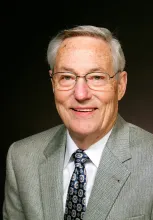
At the time of his retirement in 2016, Roy Holladay was serving the Operation Manager for Ministerial and Member Services of the United Church of God. Mr. and Mrs. Holladay have served in Pittsburgh, Akron, Toledo, Wheeling, Charleston, Uniontown, San Antonio, Austin, Corpus Christi, Uvalde, the Rio Grand Valley, Richmond, Norfolk, Arlington, Hinsdale, Chicago North, St. Petersburg, New Port Richey, Fort Myers, Miami, West Palm Beach, Big Sandy, Texarkana, Chattanooga and Rome congregations.
Roy Holladay was instrumental in the founding of the United Church of God, serving on the transitional board and later on the Council of Elders for nine years (acting as chairman for four-plus years). Mr. Holladay was the United Church of God president for three years (May 2002-July 2005). Over the years he was an instructor at Ambassador Bible College and was a festival coordinator for nine years.
