

Steve Shafer
This transcript was generated by AI and may contain errors. It is provided to assist those who may not be able to listen to the message.
I hope all of you had a really great feast. We had a great feast in Branson. It shows you my mind. If we sit right behind the Johnsons, either in front or back of them every day, and I got here, I said, where did you go to the feast? That shows how my mind's going. Anyway, don't believe anything I say, by the way, because I don't know. But we did. We had a great feast in Branson.
It was really, really nice down there. We had about 600 or so. We had just wonderful music. I thought the music was really, really special. But it was a great feast in Branson. We had talked afterwards for a couple days, but see Evelyn's family. But we're always glad to be back home again.
Of course, again, today is the 21st of August, and it's the second Sabbath after the feast. When, like we just did, we do the busting of little children, because Mr. Armstrong does any of this particular Sabbath for that special occasion, many years ago, following the example of Jesus Christ.
But when he did that, as we just read in Luke's account, it greatly surprised his disciples. Again, like I said, it's recorded in three of the four Gospels, and we read in Luke's account. So let's look at Matthew and Mark's as well, here at the beginning of the sermon, here this afternoon. Let's go to Matthew 19, where Matthew's account is recorded. Matthew 19, beginning in verse 13, Then little children are brought to him, that he might put his hands on them and pray, but the disciples rebuked them, probably brought to Christ by their mothers.
The Roman world was a dangerous world at that time, especially for non-Romans, for Jews or Israelites, especially. And these mothers knew there was something special about Christ they'd probably heard of or witnessed his many miraculous healings and made the miracles he performed. So they knew this, whether they understood the Son of God or not, I don't know, and those of them might have thought that, but they knew he was a special prophet, had special blessings from God and power from God. And so they especially wanted God's blessing and protection over their little children.
But why would Christ's disciples rebuke him for doing that? Well, they probably didn't feel children were all that important, and in the Roman world sometimes they weren't. And they probably felt that he shouldn't be wasting his time on them. And all the other things I'm thinking of here, probably, we don't know this for all of them. We know Peter was married, but at that particular time, a very young poor father, they were alive when he was training them to be his disciples, when they were probably in their twenties, or the very oldest, maybe approaching thirty. Most of them, if not all the disciples at that time, very few of them probably had any children of their own.
So they didn't really understand how important children were. Most of them probably did not have children. But he used this particular opportunity to teach all of them a very valuable lesson. Let's continue here in Matthew 19, verse 14. But Jesus said, Let little children come to me. Do not forbid them. For of such is the kingdom of heaven. He said, Not only shall we bless them, but we need to look at some of the qualities little children have, because if you want to be in God's kingdom, you need to have some of those qualities.
In verse 15, He laid hands on them and departed from there. So let's go to Mark's account, which is in Mark chapter 10. Very similar, but Mark adds a little bit more to it. Mark 10, beginning in verse 13, Then they brought little children to him, that he might touch them. But the disciples rebuked those who brought them. But when Jesus saw it, he was greatly displeased. And he said to them, Let the little children come to me.
Do not forbid them. For of such is the kingdom of God. And, assuredly, I say to you, Whoever does not receive the kingdom of God as a little child, will by no means enter it. So Mark puts even stronger terms in Matthew. I want to particularly note two things from both of these accounts together. One, both say that Christ's disciples rebuked those who brought their little children to Christ.
The Greek word translated, rebuked, literally means to censor or to forbid. As indicated by Christ's response, Do not forbid them. So Christ's own disciples are trying to censor or forbid those mothers or parents from bringing their children to Christ. So no wonder Christ was greatly displeased. This leads me to another question for a moment. It's not my sermon, it's not on this, but it kind of ties in here.
What are all of God's people today? What are all of us today? Well, we're all children of God, aren't we? Spiritually speaking. What about the churches of God today? Do any of the churches of God discourage or even forbid some of their members from having close contact with other Church of God members? Well, there are a couple that are like that. Or do any have closed-door policies regarding the people of the world?
Fortunately, I'm really pleased that the United Church of God does not have those kind of policies. We're more open to people, and just Christ was, it appears anyway from this. And you look at it spiritually in a little deeper way. But a second thing we can note from these two accounts, and it stands out here, is this. It appears Christ accepted each and every child that was brought to Him, no questions asked. Now, I don't know if we would have thought of any questions. We do know that Christ could perceive all things.
He could see beyond just the person. He could meet somebody, know what happened in their life in the past. He could perceive all things as He did in the case of the Samaritan woman, as recorded in John 4. He said, you're not even married to the husband you have now. He's not your husband. You had seven or whatever it is. He could perceive her past. But Christ didn't say, for instance, here, I can't bless this child because he or she was born out of wedlock, which some of them could have been. I don't know.
Or I can't bless this child because he doesn't really have a father. Some of them might not have had fathers. I don't know. Maybe they all did. We don't know any of the circumstances that these little children may have been born into, or they were in at that particular time. But we do know that Christ blessed them, no questions asked. He didn't ask anything about them, even though He could have perceived things.
Instead, He just said, let the little children come to Me, do not forbid them. For of such is the kingdom of God, and whoever does not receive the kingdom of God as a little child will by no means enter it. Now, I want to turn this around a little bit and look at it from a different perspective and ask this.
How great is God's love for all of us? Does God want all of us to be blessed as His little children, spiritually speaking? Today, I would like to give all of us a lesson, then, from a little different perspective. Today, you look at God's people. It can be in difficult situations and circumstances they face. Maybe this can easily get discouraged, knowing how much we fall short of the glory of God, and we look and evaluate our lives and the mistakes we sometimes make.
I don't want to focus on one particular individual that we're all kind of familiar with. We all know the many faults and sins and shortcomings of King David. He was the great king of Israel, but he had some faults and shortcomings. In fact, they're all documented in God's Word.
We also know this. David is going to be in God's kingdom. He makes it plain. He is going to be in the kingdom of God and have a high position in the kingdom of God. Today, then, I would like to bring this into perspective by relating a story, a bit later in the sermon, about something that happened in the life of David.
A story that reveals the heart of God and that reveals God's grace and favor that God wants to extend to all of us as his children today. I thought a lot about what my title should be. David, a man after God's own heart? Or how did David's heart reveal the heart of God?
Instead, I just wanted to make a short title. My title is The Heart of God, because that's really what this is all about. This is God's heart-like. My title is The Heart of God. Can we really know the heart of God? How can we know the heart of God? Well, I think we can get a small glimpse into the heart of God through King David, through the heart of David.
Let's go to Acts 13. Let's begin there in Acts 13. Acts 13 and verse 16. We'll begin there. Acts 13 and verse 16. Paul stood up and motioned with his hand and said, Men of Israel and you who fear God. Listen. Then Paul began reiterating the history of Israel, beginning in verse 17. The God of this people, Israel, chose our fathers and exalted the people when they dwelt as strangers in the land of Egypt.
And then with an uplifted arm he brought them out of Egypt. Now for a time of about 40 years he put up with their ways in the wilderness. They were thankful to God. They rebelled against God. And he just kind of let them go their own way until all that generation died out. He started working with the next generation. And then as he took them into the Promised Land, it says in verse 19, He destroyed seven nations in the land of Canaan.
He distributed their land to them by allotment, to those who were the next generation of Israel. In verse 20, after that he gave them judges for about 450 years until Samuel the prophet. He was the judge and also a prophet until Samuel. And afterward they asked for a king. They didn't want judges, they wanted a king like the other nations.
God gave them Saul, the son of Kesh, a man of the tribe of Benjamin, for 40 years. And when he had removed him, he raised up for them David as king, to whom also he gave testimony and said, I have found David, the son of Jesse, a man after my own heart who will do all my will. And then he adds in verse 23, From this man's seed, from the seed of David, according to the promise, God raised up for Israel a Savior, Jesus.
So David here is called a man after God's own heart, from whom Jesus our Savior descended. Why did God consider David to be a man after his own heart? He had a lot of faults and shortcomings. Some sins were revealed openly with Bathsheba, for example. But there are several things that reveal why, but for today I just want to look at one particular incident, a little bit later in the sermon.
One particular incident in the life of David, where David's heart and God's heart are one. This story also reveals God's heart toward all of us as his children today, and reveals a tremendous grace and favor that God has extended to each and every one of us. So how can we know the heart of God? In this story, by knowing the heart of David, because their hearts were one in this particular incident that I'm going to talk about. But I want to give a little bit of background.
We'll give the historical setting of our story. Saul had become the first king of Israel, but Saul did not turn out to be a man after God's own heart. Let's go to 1 Samuel 13. We'll look into the historical background of our story. 1 Samuel 13. Let's begin in verses 13 and 14. 1 Samuel 13, verse 13. And Samuel said to Saul, Samuel, God's prophet and God's judge, God sent Samuel to Saul to tell him this.
He said, You have done foolishly. You have not kept the commandment of the Lord your God, which He commanded you. For now the Lord would have established your kingdom over Israel forever. But now your kingdom shall not continue, because the Lord has sought for Himself a man after His own heart, and the Lord has commanded Him to be commander over His people, because you have not kept what the Lord commanded you.
God then chose David, the eighth and youngest son of Jesse. Let's go forward to 1 Samuel 16. 1 Samuel 16, verse 1. Now the Lord said to Samuel, How long will you mourn for Saul?
I have rejected him from reigning over Israel. God tells Samuel, I should say, Fill your home with oil, and go, I am sending you to Jesse the Bethlehemite. For I have provided myself a king among his sons. Or, as it could be rendered, I have seen myself a king among his sons. It's the same Hebrew word translated to see in the previous verse, in chapter 15, verse 35, where it says, Samuel wants no more to see Saul. Same word as in verse 16. Say, I have provided myself. I provided the same words translated to see in verse 35. Nevertheless, Samuel mourned for Saul, and the Lord regretted that he made Saul king over Israel.
Here's a fascinating aspect of 1 Samuel 16. When you think about it and analyze it, how old is David at this point? If you do a little bit of background and research, he's only about 17 years old. The other thing that's amazing here is that he is the youngest of Jesse's eight sons. Jesse had eight sons, and David's the youngest. He's only about 17 at this point.
So if you look at David outwardly and just look at the circumstances at this particular point in his life, you would think he would be the least likely choice to be a king. He's the youngest son, not the oldest son. In the line of kingly rulership, normally it was passed down to the oldest son first and the second oldest, etc. So he'd be eighth in line to the throne, the very best.
Also, David's only a teenager. He'd tend sheep up in the mountains. Of course, David also was totally unaware that God sees him, and that God has been observing him as to how he has been caring for his sheep. He just cares for the sheep. He doesn't realize the God above kind of watching him and saying, well, I want to take a look at David. How is he caring for those sheep? How is he taking care of that? How is he handling that? David is not aware of that. He's not aware that God has also been evaluating his heart. After observing David, God tells Samuel, I have seen myself a king among his sons, among the sons of Jesse. What did God see? What did he see as he observed David? Well, God saw two things. Number one, he saw that David, deep down inside his heart, you might not look at this and you look at the story outwardly, but there was something special about David's heart. God saw that deep down inside his heart, he had a certain kind of integrity. David, the attendant of the sheep, had no idea God was watching him. But a good definition of integrity is this. Integrity is what you do and how you behave when no one is watching, or when you think no one is watching. Number two, God saw that David was a man after his own heart. He saw that what was really important to God was also important to David. He saw that what was really important. Thus, David was annoyed then to become the next king of Israel. However, it would be a long 13 years before that would become reality. He wouldn't become the king until age 30, about 13 years later. What happened during those 13 years? For 13 years, King Saul pursued David, seeking to take his life. David would have to wait until age 30 before he became the actual king. During those 13 years, David makes two promises that relate to our story. The first promise was made to Saul's son, Jonathan. Let's go to 1 Samuel 20, just forward a few chapters here to 1 Samuel 20.
1 Samuel 20, verse 1. Then David fled from Naoth in Rama and went and said to Jonathan, He said, What have I done? He's talking to... Jonathan is a really close friend, a very good friend of David's. They're very close friends and they love each other as brothers. He goes to Jonathan, and David does. What have I done? What is my iniquity? What is my sin before your father that he seeks my wife? See, Saul had just tried to kill David twice, once with a spear in the king's palace, 1 Samuel 19. When he missed, Saul sought to kill him the next morning, 1 Samuel 19. So, Jonathan, Saul's son, had a hard time believing that his father was seeking David's life. He didn't know anything about those two incidents. He said, No, I can't be true. So, Jonathan said to David, he said, By no means, I can't be true. I know my father. You're not going to die. Indeed, my father will do nothing, either great or small, without first telling me. He'd be sure to tell me first if he didn't like you and wanted to get rid of you. And why should my father hide this thing from me? It can't be so, he says. It can't be so.
Dropping down to verse 12. Then, Jonathan said to David, The Lord God of Israel is witness. When I have sounded out my father, or searched out my father's, my margin says, sometime tomorrow, Jonathan says to David, or the third day, And indeed there is good toward David, and I do not send to you until you, Then may the Lord do so, and much more to Jonathan. If it pleases my father to do you evil, find out that's really what his intent is, Then I will report it to you, and send you away, that you may go in safety. And the Lord be with you as he has been with my father. And you shall not only show me the kindness of the Lord while I am still living, But I may not die, he says to David. But you shall not cut off your kindness from my house forever. No, not when the Lord has cut off every one of the enemies of David from the face of the earth. And the Hebrew word translated kindness here in verses 14 and 15 also means grace, mercy, and unmerited favor. You know, at that time when a new king came to the throne, He would sometimes have all the descendants of the previous king put to death To make sure there would be no one left to challenge his right to be the king. So Jonathan is really asking David this. He's saying, David, when you become the king of Israel, show my family grace, mercy, and favor. Unlike the custom of some other kings, will you preserve our lives? Will you care for us and provide for us and protect us that we may not be forgotten? And will you protect and preserve the life of my son, who might feel he has a right to the throne, unlike other kings might do? And without any hesitation whatsoever, David agrees. David's love for Jonathan prompted him to enter into binding contact with Jonathan, and a binding contract that Jonathan also makes here with David. In 1 Samuel 20, verse 16, The second promise that David makes is to Saul. Let's go forward to 1 Samuel 24. 1 Samuel 24, verse 1. Beginning in verse 1.
Hey, Saul, if you want to find David, you want to get rid of him? I know where he is. He's in the wilderness of Ngedi. So then Saul, with that information, he takes 3,000 chosen men from all Israel, and he goes to seek David. He wants to take his life. And he went to seek David and his men on the rocks of the wild goats here in the wilderness of Ngedi.
So he came to the sheepfolds by the row where there was a cave. And Saul went in to attend to his needs. But he didn't know it, but David and his men were staying back in the back recesses of the cave. In the dark there, they were unseen by Saul when he went in to attend to his needs, as he says. Then the men of David said to him, This is the day of which the Lord said to you.
The men were sitting there, and they said, Look at this! This is your chance, David! Here is the man who has been trying to take your life, and God has delivered him into your hands. This is the day of which the Lord said to you, Behold, I will deliver you, Emy, into your hand, that you may do to him, as it seems good to you.
What did David do? David arose and secretly cut off a corner of Saul's robe. David here could have easily taken matters into his own hands. He could have killed Saul and become the king of Israel right then and there. But David was not like other young men of his day. David was a man after God's own heart. So instead of taking matters into his own hands, David put his trust in God by waiting for God to work things out. Something will let God do it.
I don't want to let God take care of it and work it out the way he wants to work it out. So instead of taking Saul's life, instead of cutting off the life of Saul, David only cut off a corner of Saul's robe. And he did in such a way that Saul never even knew that had taken place. But then, after he did that, and Saul left, as Saul walked out of the cave, even that bothered David and began to trouble David's heart.
Again, we're talking about David being a man after God's own heart. Begin to trouble his heart. 1 Samuel 24, verse 5. Now it happened afterward that David's heart troubled him because he cut off a portion of Saul's robe. And he said to his men, the Lord forbid that I should do this thing to my master. He called Saul his master.
Here's a man who's been trying to take his life for 13 years, and he calls him his master. He's in a position over me. He's been appointed over me. I can't do that. How should I do this thing to my master? To the Lord's anointed. To stretch out my hand against him, seeing he is the anointed of the Lord. So David restrained his servants with these words and did not allow them to rise against Saul. And Saul got up from the cave and went on his way.
But David in essence promised he would not go after Saul to take his life, even though Saul had tried to kill David on a number of previous occasions. For example, in 24 verse 8, David also rose afterward and went out of the cave and he called out to Saul.
He said, Saul, wait a minute. I want to show you something. I know you've been trying to take my life and you think that I'm trying to get rid of you. But he called up to Saul saying, my Lord the King. He calls him my Lord the King. He respects his office. He respects his position. And when Saul looked behind him, David stooped down with his face to the earth and bowed down.
He pays him respect. He respects that office. As Saul was saying, even though Saul had greatly abused that office. And then David said to Saul, verse 9, Why do you listen to the words of men who say, indeed, David seeks you harm? I don't seek you harm. Look, verse 10, this day your eyes have seen the Lord delivered you today into my hand in the cave. And someone urged me to kill you. My men here, this is your chance, David. God's delivered him into your hands. Take his life now.
He's been trying to take your life for all these years. But I spared you, David, tell Saul. And I said, I will not stretch out my hand against my Lord, for he is the Lord's anointed. God put him in that position. I'm not going to change that. I'm not going to take matters into my hand. I'm going to leave God to work it out the way he wants to work it out.
So here David makes a direct promise to Saul that he would not stretch out his hand against him, regardless of what happened. Dropping down to verse 11, more of my father see. David calls out to Saul and he calls in my father. Again, respect him as an elderly person. Moreover my father see, yes, see the corner of your robe in my hand. For in that I cut off the corner of your robe, but did not kill you. No one see that there is neither evil nor rebellion in my hand.
And I have not said against you, and yet you hunt my life to take it. Verse 12, let the Lord judge between you and me, and let the Lord avenge me on you. But my hand shall not be against you. David tells Saul.
Verse 16, dropping down to verse 16. So it was when David had finished speaking these words to Saul, and Saul said, Is this your voice, my son David? And Saul lifted up his voice and he wept, realizing his attitude towards David and David's attitude towards him. Then he said to David, verse 17, You are more righteous than I. For you have rewarded me with good, whereas I have rewarded you with evil. Hold your place here just for a second. That really brings the Scripture to mind. It brings a saying to mind that Christ taught his disciples in the Sermon on the Mount. And imagine David here, a man after God's own heart, he exemplifies what Christ taught his disciples many years later. Just hold your place here and I'm going to turn to Matthew 5 and read that for you. Matthew 5 beginning in verse 43. This is Christ taught his disciples in the Sermon on the Mount. You have heard that it was said, You shall love your neighbor and hate your enemy. But I say to you, love your enemies. Bless those who curse you. Do good to those who hate you. Pray for those who spitefully use you and persecute you. Why? Verse 45. That you may be sons of your Father in heaven, for he makes his Son rise on the evil and on the good, and sends rain on the just and on the unjust. David here applied that principle in his relationship with Saul. He did him good instead of evil. Let's go back to 1 Samuel 24. 1 Samuel 24, beginning up in verse 18. And you have shown this day how you have dealt well with me, Saul tells David. For when the Lord delivered me into your hands, you did not kill me. For man finds his enemy? Does he let him go away safely? No, not normally. Therefore, may the Lord reward you with good for what you have done to me this day. And now know indeed that you shall surely be king. Man, you have a king's heart. You're going to make a good king, David. I know indeed that you shall surely be king, and that the kingdom of Israel shall be established in your hand. Therefore, Saul tells David, swear now to me by the Lord that you will not cut off my descendants after me, like other kings tend to do, and that you will not destroy my name from my father's house. So David swore to Saul, and Saul went home, but David and his men went up to the stronghold. So earthen is another aspect of the second promise that David made to Saul. David promised not to cut off all of Saul's descendants, and he also promised that Saul's name would not be destroyed from his father's house. Now, not long after that, tragedy struck Saul and his three sons. 1 Samuel 31. Let's go forward to that. 1 Samuel 31. Beginning in verse 1.
1 Samuel 31. Now, the Philistines fought against Israel, and the men of Israel fled from before the Philistines, and fell slain on Mount Gavoa. Then the Philistines followed hard after Saul and his sons, and the Philistines killed Jonathan, Abinadab, and Malchishua, Saul's sons. And the battle became fierce against Saul, and the archers hit him, and he was severely wounded by the archers.
Then Saul said to his armor bearer, Draw your sword and thrust me through with it, lest these uncircumcised men come and thrust me through and abuse me. But his armor bearer would not, for he was greatly afraid. Therefore Saul took his sword and fell on it. Saul took his own life. And when his armor bearer, verse 5, saw that Saul was dead, he also fell on his sword and died with him.
Verse 6, Tragedy. So Saul, his three sons, his armor bearer, and all his men died together on that very same day. What a tragedy! But that was not the only tragedy that happened on that day. There was another tragedy that happened on that day that greatly relates to our story.
When one particular lady heard of Saul and Jonathan's death, it caused her to panic.
It caused her to flee with a five-year-old child.
When she fled, tragedy struck that five-year-old little boy.
But almost no one knew of it. No one knew of that tragedy. Not even David. David didn't know that that happened on that very same day.
Didn't find out till a long time later.
Well, with that background, with that historical setting, we can now continue our story. Our story of how the heart of David reveals the heart of God.
Of course, in time then, David's throne becomes secure.
As God blessed David and gave him victory over all of his enemies, let's pick it up in 2 Samuel chapter 8. 2 Samuel chapter 8, beginning in verse 13, says, And David made himself a name when he returned from killing eighteen thousand Syrians. David was a warrior.
He had to fight off enemy nations to secure his kingdom.
So David made himself a name when he returned from killing eighteen thousand Syrians in the valley of salt.
He also put garrisons in edom. Throughout all edom he put garrisons.
And all the edomites became David's servants. And the Lord preserved David wherever he went.
So David reigned over all Israel, and David administered judgment and justice to all his people through David.
After that, there was a brief period of peace and prosperity.
But then one day, when things kind of settled down here, his kingdom seemed secure, David sat back and began to reflect on his life.
He began to reflect on his love for Saul's son, Jonathan, and his tragic death, on the life of Saul, King Saul, and he reflected on the tragedy of their deaths, all of them dying on that one day there in battle.
And he also began to reflect on the promises he had made to both Jonathan and Saul, his promise to not cut off their descendants, and his promise to show kindness and grace and mercy in favor to any remaining descendants there might be.
Second Samuel 9, verse 1. Now David said, as he began to reflect on these things, and thinking about all these things, he said, is there still anyone who was left of the house of Saul that I may show him kindness for Jonathan's sake?
And the promise I made? Again, why did David want to do that?
Again, like I said, because he promised to do that. He made a promise. He made a covenant to both Jonathan and to Saul.
And David was a man of his word. He kept his promises. He was a man after God's own heart because God also keeps his promises. God is a man of his word. Notice verse 1, here in 1 Samuel 9, that David simply asked, is there still anyone who was left of the house of Saul that I may show him kindness?
In other words, basically, he doesn't ask for any circumstances.
So he may show him in regards to who they are, in regards to their condition, regardless of whether or not they may be worthy, in regards to what anybody might think. David simply says, is there still anyone left?
Now there was. There was someone left. 2 Samuel 9, pointing to verse 2, And there was a servant of the house of Saul whose name was Ziba. So when they called him to David, the king said to him, Are you Ziba? He said, That's your service. The king said, Is there not still someone of the house of Saul to whom I may show the kindness of God?
And Ziba said to the king, Well, there is still a son of Jonathan, but he's laying in his feet.
How does Ziba... He said, Is there anyone I might show the heart of God?
He said, How does Ziba reply? He said, The king there is still a son of Jonathan who is laying in his feet.
He seems to be telling David, Yes, there is someone, but I'm not sure if you want to show him favor.
He's not sure he would look too good sitting beside you. He's laying in his feet.
So kind of like, if you read between the lines, it's like he's thinking, Well, maybe you better think twice before showing him kindness in favor.
He's not going to look very good in your presence.
He's handicapped.
And he won't maybe look too good sitting at your table.
And besides, what are people going to think? You can just see this going on through Ziba's head here.
He won't fit in. People will say, Well, what's he doing in the king's palace eating at the king's table?
I mean, he can't even walk. Somebody has to carry him in.
Do you want someone like that sitting at your table?
Notice David's beautiful response, the response of a man after God's own heart.
Second Samuel 9, verse 4.
So the king said to him, Where is he?
He doesn't ask, How badly is he handicapped or crippled?
Or how long has he been that way?
Or how did he become that way?
He simply asks, Where is he?
Where can I find him?
That's the response of a man after God's own heart.
Didn't matter to David what kind of condition his life was in, or how he got that way.
David simply wanted to keep his promise.
David's heart reveals the heart of God.
Because God's kindness and mercy and favor toward each and every one of us is like that of David.
God favors those whom he chooses to favor.
Regardless of what condition their life is in, at the time he calls them, or how they might have gotten that way.
See, God saw something inside that goes far beyond outward appearance or circumstances.
Now, where was this handicapped descendant of the house of Saul?
Second Samuel 9, verse 4.
So King David said to him, Where is he? And Zippah said to the king, Well, indeed, he is in the house of Macar, the son of Emiel.
He's in Lodi Bar. He's in Lodi Bar, he tells me. He says, He's in Lodi Bar.
How many of you know where that is? Is that a familiar place in the Bible?
Yeah, Mr. Murray knows. He probably given this story before.
But most of us have never even heard of Lodi Bar until now.
I dare say that's not a place that enemies are familiar with, for most of us.
However, the name itself depicts what it was like.
Low in Hebrew means no.
Debar in Hebrew means pasture or pasture land.
So Lodi Bar literally means no pasture or no pasture land, which would indicate what?
It would indicate that Lodi Bar was a barren and desolate place.
So why was this handicapped son of Jonathan living in a place like that?
Because he was one of the former king's grandsons and a potential heir to the throne.
He's in hiding.
He's been taken by his guardian to live out his life in an obscure, barren, desolate place where people seldom travel and where he's unlikely to be discovered.
By this time, he's no longer a little child and five years old.
He's now a young man, and he's probably been told who he is and why he is hiding in Low Debar.
He doesn't know David.
He doesn't know that David is not like other kings. He doesn't know that David is a man after God's heart.
How long has he been in hiding? How long has he been there in Low Debar?
Well, he had been in hiding since the day his father Jonathan and his grandfather Saul had been killed in battle.
He'd been in hiding from the time he was a little child of only five years old. Who was he?
Second Samuel 9, verse 5, The king David sent and brought him out of the house of Macar, the son of Amiel, from Low Debar.
Verse 6, And now when Mephibosheth, the son of Jonathan, the son of Saul, had come to David, he fell in his face and prostrated him.
David said, Mephibosheth? And he answered, Here's your servant, here I am. So his name was Mephibosheth.
Do you know what that name means in Hebrew?
It means, Dispeller of Shame.
It means one who was driven away because his condition would have brought shame on the house of Saul.
By the way, most people would look at it.
Even though his condition was no fault of his own, as we'll see.
He was a child who grew up having to live with shame, who needed to be blessed.
As he appeared before the king, he must have been trembling since the custom of most kings at that time was to kill all the descendants of a previous dynasty who might have a claim to the throne.
But now, after all these years in hiding, he had finally been discovered by the new king.
But how had he become lame in both feet? How'd that happen? Let's go back just a few chapters. 2 Samuel 4 tells us. God records it for us. 2 Samuel 4, verse 4 tells us, Jonathan, Saul's son, had a son who was lame in his feet. He was five years old when the news about Saul and Jonathan came from Israel, the news about how they had all been killed in battle on that spirit in one day. He came back to the person who was the guardian of Jonathan's son, Mephebo Seth.
And his nurse took him up when she heard that, and she said, Wow! They're going to want to find him now. They're going to take his life. He's the last one left. It could be the next king.
So the nurse took him up and fled. And then it happened, as she made haste to flee, that he fell and became lame. His name, it says, was in italics, so that's not in Hebrew.
His name was, I would say probably his name became Mephebo Seth.
To reflect his condition, after this happened, this one, they probably gave him that name. To spell her shame.
So this nurse, his guardian, either tripped and fell with him in her arms, or she dropped him. Either way, he then became lame in both feet for the rest of his life.
Not able to walk, having to be carried.
Back to 2 Samuel 9.
2 Samuel 9, let's pick it up in verse 6.
And when Mephebo Seth, the son of Jonathan, the son of Saul, had come to David, he fell on his face and he prostrated himself. And then David said, Mephebo Seth?
And he answered, that's me.
Here's your servant.
Verse 7.
Look at how David responds here. So David said to him, don't fear. Don't be afraid. I'm not like other kings. I'm not going to take your line.
Do not fear. I'm going to do just the opposite. I will surely show you kindness for Jonathan, your father's sake. Not only that, I'm going to show you honor. Wow. I will restore to you all the land of Saul, your grandfather. I'm going to give you back your land. I'm going to give you back a name that has respect and honor. And you shall eat bread at my table, continue. I'm going to greatly honor you. I'm going to still honor upon you because you're the son of Jonathan, and you're the grandson of King Saul. I'm going to show you honor. You're going to eat at my table continually. Wow. What a shock that must have been for Mephiboszeth. He was probably expecting death, and instead he is offered a place at the king's table. Instead of death, David chose him honor.
David honors him. How did Mephiboszeth respond to that? 2 Samuel 9, verse 8, he bowed himself and said, What is your servant that you should look upon such a dead dog as I? He says, what humility. And this is the way he says, Look, I can't even walk. I have to be carried wherever I go. I'm a worthless handicapped person. Why would you want someone like me to eat bread at your table continually? I can't even walk on my eyes. I have to be carried to your table. I can't even walk there.
Why? Because David was a man after God's own heart, and God's heart loves all of his children regardless of their condition. And God says to his children, as Christ said to the little children who were brought to him, Forbid them not, for us such as the kingdom of God. Let's continue. 2 Samuel 9 verse 9. And the king called to Zebesal's servant, and said to him, I have given to your master's son all that he longed to Saul and to all his house, and restored everything that he had lost, and restored all the honor he should have had as the king's grandson. You therefore, and your sons and your servants, shall work the land for him. Wow! He says, all of your servants, you're going to work for the sibos, Seth. I'm going to honor him.
And you shall bring in the harvest that your master's son may have food to eat. And when he said, your master's son shall eat bread at my table always. He's not going to go out there, and he can't go out there and work, but you're going to work for him. And you're going to restore honor to him.
And he's going to eat bread at my table always. No, Zebes had 15 sons and 20 servants. And then Zebes said to the king, According to all of my lord, the king has commanded his servants, and all your servants do. As for Mephibos, Seth, said to the king, He shall eat at my table like one of the king's sons. And he stole great honor on him. And Mephibos, Seth, had a young son whose name was Micah. And all who dwelled in the house of Zebes were servants of Mephibos, Seth. And then how it ends in verse 13. So Mephibos, Seth, dwelled in Jerusalem for eight continually at the king's table. And then it adds, and he was lame in both feet.
That then is how the heart of David reveals the heart of God. But I want to add one more thing as we close. This is not just David's story. It's not just the story of Mephibos, Seth. This story is also our story.
We, like Mephibos, Seth, had death hanging over our heads.
At an early age, we all stumbled and fell and became spiritually handicapped or crippled by sin, crippled or lame, as it were, in both feet, not being able to walk straight, not being able to walk, having to be carried by God to where we need to be.
We became lame in both feet by walking contrary to God, by going against God in God's ways.
As a result of that, our lives became barren or desolate, and all of us in one way or another, then hid from God in our own low debar.
Then when the king revealed himself to us, he didn't give us, just like Mephibos said, and David did to him, he didn't give us what we expected. Instead of death, he gave us honor.
He honored us by giving us an invitation to sit at his table, to dine with him at the marriage supper of the Lamb. He said, I want you to be a part of my family. I want you to sit down and dine with me at my table forever.
I want to begin at the marriage supper of the Lamb. I want to give you a place of honor and respect.
The king in this case, in the future, being the King of Kings, being Christ, King of Kings and Lord of Lords.
Why is he giving us this invitation? Because that is the heart of God.
And that is how God's kindness and mercy and grace and favor works toward all of us as his children today.
So, in conclusion, God revealed himself to us and has invited us to be part of his family, and to eat continually at his tables, who will begin to do at that marriage supper of the Lamb when Christ returns, and invited to live in the King's palace, in the King's city, the New Jerusalem, as a part of his own family.
Let's switch them with a couple of scriptures here. 1 John 14.
John 14, the first three verses that we're all familiar with, where you eat a Passover, where Jesus tells all of us, Don't let your heart be troubled. Don't worry.
Hey, you love me, I love you. Letting out your heart be troubled.
If you believe in God, believe also in me.
For in my Father's house are many mansions, many places to sit, honor, and respect.
For if not so, I would have told you, I go and prepare a place for you.
And if I go and prepare a place for you, I will come again and receive you to myself.
That where I am, and where I sit, and where I eat, you can be there with me also and share in my glory and my honor.
I want to extend that to you.
And finally, then, Psalm 23.
We're all familiar with Psalm 23. Good place to end.
Psalm with David, a man after God's own heart.
The Lord is my shepherd I shall not want.
He makes me to lie down in green pastures.
He leaves me beside the still waters.
He restores my soul. He leaves me in the paths of righteousness for His name's sake.
And though I walk through the valley of the shadow of death, I'll fear no evil. For you are with me, your rod and your staff, they comfort me.
And you prepare a table before me. You have a place prepared. You have a setting at your table reserved for me.
You prepare a table before me in the presence of my enemies.
You anoint my head with oil. My cup runs over.
Surely goodness and mercy shall follow me all the days of my life.
And I will dwell and eat at your table.
And I will dwell in the house of the Lord forever.
So when we look at ourselves and our own lives, we can say, as Mephiboseth did to David, What is your servant that you should look upon such a dead dog as I?
And Christ will answer, Let those who are like little children come to me, and forbid them not.
For of such is the kingdom of God.
That then is the story of King David and Mephiboseth.
It's the story of how David was a man after God's own heart, and how David's heart reveals the heart of God.
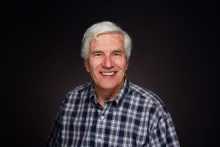
Steve Shafer was born and raised in Seattle. He graduated from Queen Anne High School in 1959 and later graduated from Ambassador College, Big Sandy, Texas in 1967, receiving a degree in Theology. He has been an ordained Elder of the Church of God for 34 years and has pastored congregations in Michigan and Washington State. He and his wife Evelyn have been married for over 48 years and have three children and ten grandchildren.
