

Greg Thomas
Unedited video available: https://youtu.be/stCqL93bHJ8
This transcript was generated by AI and may contain errors. It is provided to assist those who may not be able to listen to the message.
Well, anyone who's ever studied or been around the Church of God for a while knows that there's one particular thing that we are focused on, almost obsessive about, and that is preaching the gospel. It's something that's in our spiritual DNA, and if you go back 80 years in what we might call our modern era, you'll see an emphasis that we have on preaching the gospel. You can go back hundreds and hundreds of years here in the United States, and you can see the movement, the Church of God movement, an emphasis, a very strong and powerful emphasis of preaching the gospel.
You know, we were given a commission by Jesus Christ in Matthew chapter 24 and verse 13, and He said, but He who endures unto the end will be saved, and this gospel of the kingdom will be preached in all the world as a witness to all nations, and then the end will come.
This commission and passion to preach the gospel, again, is wired into our spiritual DNA. It's very important to us, so important to us even locally, that we are going to have another Kingdom of God seminar here, in which we will be preaching the gospel to the general public on November 4th. You may recall that after the initial four that were sponsored by the Home Office of the United Church of God, we, as local congregations, were encouraged whenever you desire to continue this idea of having local Kingdom of God seminars.
We had a local one two years ago, and it was very productive. Last summer, we were blessed with the Beyond Today team came to Greater Cleveland and preached the gospel in our locality, and now it's time again locally for us to send a mailing to all of our Beyond Today mailing list, and to have the opportunity to preach the gospel to those who are so interested, who are drawn and attracted through the Father's influence to come and hear the good news of the coming Kingdom of God in that day.
But what is the gospel? We use that word often within our church literature, within our preaching, but what really is it? Why is knowing what the gospel is important? You know, the gospel is different things to different people. For some people, the news of the birth of Jesus Christ is the gospel, and the scripture that announces His birth says, I bring you good tidings. So for some people, the announcement that Jesus Christ was born to be a Savior is the gospel.
For other people, it's the restoration of Israel as the most prominent nation on earth. To them, that's the gospel. For some, it's the knowledge of a coming global government in which there basically will be one government over the earth. It's important for all of us to understand completely what Jesus meant and what Jesus Christ intended when He proclaimed the good news of the coming Kingdom of God. So let's go to our first scripture today, Matthew 4 and verse 23. See a few verses here that encapsulate what His ministerial calling was.
If you want to know what the purpose of Jesus Christ was before He became a living sacrifice and shed His blood for the forgiveness of sins, for all humanity, up until that point, this was His calling. Matthew 4 and verse 23. Jesus went all about Galilee teaching in their synagogues, preaching the gospel of the Kingdom, and healing all kinds of sickness and all kinds of disease among the people. Then His fame went throughout all Syria. Now that's a Gentile area. Most people don't pick up on that. But His fame went beyond Judah.
It went throughout all Syria, and they brought to Him sick people who were afflicted with various diseases and torments, and those who were demon-possessed, epileptics and paralytics, and He healed them. Verse 25. Great multitudes followed Him from Galilee, and here's another phrase most people don't pick up on, the Decapolis, this was a league of 10 Greco-Roman cities, of which two of them, these were Greco-Roman Gentile cities, two of them are still in modern Israel today.
Sistopolis and Hippos happened to be two of those league of 10 cities. So even Gentiles were being attracted to the message of Jesus Christ. His fame went out throughout all Syria, and people were following Him from Decapolis, again, these two of these league of Greco-Roman cities.
This was Jesus' ministerial calling as a teacher, as a preacher, as a healer, one who physically healed, one who gave encouragement, one who provided emotional healing through His message. This is what Jesus Christ was all about. Taking a look at this word gospel here in verse 23, it says He was preaching the gospel of the kingdom. This is from the Greek word euangelion, which means a good message.
It's from, if you were Latinized that, it would be evangelism. But in the original Greek, it's euangelion, and it simply means a good message. We use the word interestingly enough from the English derivation of that. It's an Old English word, gospel, and gos means, in the Old English, good, and spael means spiel. I mean, we even hear today, someone talking to us, and say, can I, yeah, yeah, okay, give me your spiel.
And that's where the root of that word is. A good message, a good story. That's where the Old English root gospel comes from, guspiel. Let's go to Luke chapter 1 and verse 26, and see when it was introduced to Mary, the mother of Jesus Christ about His birth, how it was described, who and what Jesus Christ would be, because this is the heart of the gospel message. If someone were to say that the gospel of Jesus Christ is His birth, that is not a false gospel. I've heard people say that in the past. It is not a false gospel. It's an incomplete gospel. It doesn't tell you the full story, because it doesn't tell you why He's saving anyone and what it is all about. So it's incomplete.
But it's not false. If someone simply tells you that the gospel is about a kingdom to be established on earth, that's an incomplete gospel message. That's not telling the full story of what the gospel is all about. Luke chapter 1 and verse 26. Now, in the sixth month, this was Elizabeth's sixth month of pregnancy, the angel Gabriel was sent by God to a city in Galilee named Nazareth.
To a virgin betrothed to a man whose name was Joseph of the house of Joseph, the virgin's name was Mary. And having come in, the angel said to her, Rejoice highly favored one, the Lord is with you. Blessed are you among women. But when she saw him, she was troubled at his saying and considered what manner of greeting this was. She was a little bit suspicious. You know, it's like this angel is being too nice. He's praising you. He shows up out of nowhere, and she's naturally a little concerned with what he's saying. So he continues verse 30. Then the angel said to her, Do not be afraid, Mary, for you have found favor with God, and behold you will conceive in your womb and bring forth a son, and shall call his name Jesus in the original Greek, Jesus.
That's how it's pronounced in Greek, Jesus, and it means the Lord is salvation. That's what the name Jesus means. Continuing, the angel says he will be great, and he will be called son of the highest. What the angel's going to tell her here is he's far more than a king.
He's far more than the Christ Messiah, the anointed one that the Jews have been expecting for centuries. He's far more than that coming king that the prophets wrote about in the Old Testament. And he'll be called son of the highest, and the Lord God will give him the throne of his father, David, and he will reign over the house of Jacob forever, and of his kingdom there will be no end.
So he absolutely, positively is going to be a king. Let the angel continue here in verse 34. Then Mary said to the angel, how can this be, since I've not known a man? And the angel answered and said to her, the Holy Spirit will come upon you, and the power of the highest will over shadow you. That Greek word over shadow means you'll be invested with supernatural influence. That's a great definition of what the power of the Holy Spirit can do for us, I might add. Invested with supernatural influence.
So it says, the power of the highest will overshadow you, therefore also, and the Holy One, who is to be born, will be called the Son of God. What's the angel telling her here? The angel is telling her here that far more than what the prophets said about a Messiah returning to earth to restore Israel's glory and to restore a physical nation, this Jesus that's coming from you, from your womb, is also going to be the Son of the highest.
He is going to be the Son of God. That's powerful, so powerful, the Jews rejected it. That's not what the Old Testament prophets had told them. They expected only an anointed one, a Messiah, to return to earth as God's favored and blessed and to restore the glory, the physical nation of Israel in the world. That's what they were looking for. So when this message came to them, and later when he preached the message in what he was, they rejected it. So Mary is clearly being told that Christ would be king, but there's also, obviously, indication here he'd be more than the Messianic king mentioned in the prophets. Again, it says he would be Son of the highest and the Son of God.
His name literally means the Lord is salvation. Let's go to the next chapter, chapter 2, and let's see the events surrounding his birth. Luke chapter 2 verse 6, so it was that while they were there, the days were completed for her to be delivered, and she brought forth her firstborn son. That's an important statement because she would have other sons. With her physical husband Joseph, she would have other sons and also other daughters. Her firstborn son, and wrapped in swaddling cloths, and laid him in a manger, because there was no room for them in the end.
Now there were in the same country shepherds living out in the fields, keeping watch over their flock by night. And behold, an angel to the Lord stood before them, and the glory of the Lord shone around them, and they were greatly afraid. A few and I just saw an angel suddenly showing up with magnificent glory, and the glory of God shining around that bright light. I would say that we probably would be afraid, too. We would be a little bit alarmed at least at first.
Verse 10, then the angel said to them, do not be afraid, behold, I bring you good tidings. This is the Greek word, euangelizo, which is the same root word as we found in Matthew chapter 4 that we just read earlier, from which the word the gospel is taken from. It comes from the same root of the same Greek word. I bring you good tidings of great joy, which will be to all people. Now, when emphasized, this isn't great joy, which will be to the Jews.
It's not the great joy, which will be to the Israelites. This is the great joy, which will be to all people. Very important to pick that up. Verse 11, for there is born to you this day in the city of David a Savior, who is, who happens to also be, Christ, the anointed Messiah, the Lord.
So he also happens to be that Messiah that the prophet spoke about. He happens to be the same person that you have longed for and looked for since Israel went in the captivity.
But aside from that, he is also a Savior. And again, that's the part that hung up the Jews of his day, because that is not what they were looking for. Verse 12, and this will be the sign to you, you will find a babe wrapped in swaddling clothes lying in a manger. So again, very powerful scripture here. The angel confirms what Mary was told. Jesus is born not only to be a king, but also to be a Savior who is the Christ. So to appreciate the gospel message and what it means, it is important to understand that the Lord Jesus Christ is fulfilling both roles. He is fulfilling the need for humankind to have a Savior, and He is also fulfilling the prophetic role of being the anointed Messiah that the prophets spoke about it had longed for, for generations, to simply say that the gospel is the birth of Christ, is to limit the gospel as an incomplete message. The gospel is the good news of God's coming kingdom on earth led by Jesus Christ, the Savior of humankind, the Son of God, and the King of Kings.
So we need to appreciate and understand exactly what the gospel means and not to limit it. And it will be a kingdom, a kingdom that we long for. And any kingdom is comprised of four characteristics. Any kingdom on earth that has existed was comprised of four characteristics. The kingdom of God will be comprised of these same four characteristics that we're going to talk about today as the heart of this sermon. So let's take a look at these four characteristics as we prepare for the fall holy days. I think the Feast of Trumpets is less than six weeks away. And as we think about the kingdom of God seminar that we're going to have in November, I would like to briefly discuss these four characteristics today. And they'll help us to answer the question of why we passionately preach the gospel, why we spend so much energy and so many resources to preach this powerful message to the world and even certainly to our local community. Let's begin in Revelation chapter 1 and verse 4. The first of those four characteristics that any kingdom must have is leadership. It has to have a structure that provides leadership. If you look at any physical empire that existed on earth at any given period of time, whether it was ancient Egypt or whether it was Rome or one of the Chinese empires or one of the American Indian empires in what later became called the New World, the Incas or the Mayans, they had leadership. You cannot have a kingdom, an organization survive unless you have leadership. Revelation chapter 1 and verse 4. John writing here, he says, John to the seven churches which are in Asia, grace to you and peace from him who is and who was and who is to come. You know what that is? It's a different language, of course, writing in Greek, but basically it's saying it's from Yahweh. If you look at the YHVH in Exodus chapter 3, YHVH means the eternal one, the self-existent. It means him who is, who was and who is to come, who is eternal, lived forever, presently lives and has existed throughout all of eternity. Continuing here, who is, who was and who is to come, and from the seven spirits who were before his throne, and from Jesus Christ, the faithful witness, the firstborn from the dead and the ruler over the kings of the earth. To him who loved us and washed us from our sins in his own blood and has made us kings and priests. So you see here that there's leaderships. First of all, there is God the Father, and then there is Jesus Christ, and then there are those who in their physical lifetimes, through many generations between the time of Pentecost and 31 A.D., and until the day that Jesus Christ returns, each generation there were called among those times people who were trained to become kings and priests in that kingdom. Continuing verse 6, and has made us kings and priests to his God and Father, to him be glory and dominion forever and ever. Behold, he is coming with clouds, and every eye will see him, even those who pierced him. So there is a judgment day, and eventually even those who pierced him will be resurrected, and when it's the right time, and they will face Jesus Christ, the one whom they pierced. And all the tribes of the earth will mourn because of him, even so, Amen.
I am the Alpha and the Omega. Another way of just saying, I am the Eternal One. I am Yahweh.
I'm the beginning and the end, says the Lord, He who was and he who is to come, the almighty.
So you see here that indeed Jesus Christ is returning to earth to rule over the nations as King of Kings, but he's not coming to rule alone. He needs a team. He needs people who can say, been there, done that. He needs people who were physical and human, and struggled with their own challenges in life, and overcame the temptations that they faced, and learned through the trials and the struggles that they endured with in their physical lives. And by doing that, prepared to help the physical people, and that's another characteristic we'll talk about a little bit later, but to help the physical remnant and the people who are alive after the very horrific events that will occur through the tribulation and the day of the Lord. So again, as I said here, he's preparing each generation of disciples to be leaders also in that kingdom, and this includes kings, those who are being trained now with management and organizational roles, and also priests, those who will be responsible for religious and educational instruction in that kingdom.
This concept is so important. It's repeated again in chapter 5 and verse 10, where it says, and have made us kings and priests to our God, and we shall reign on earth. And it's said again. Let's go to chapter 20 and verse 4. How many times does God have to say what our leadership rule is for us to fully grasp it and to appreciate it and to inspire us to be all that we can be, to use the power of God's Holy Spirit to continue to transform our lives into lives of service?
Because that's why we're being called Revelation chapter 20 and verse 4. And I saw thrones, and they sat on them, and judgment was committed to them. Then I saw the souls of those who had been beheaded for their witness to Jesus and for the Word of God, who had not worshiped the beast or his image and had not received his mark in their foreheads or in their hands, as their end time events, and they lived and reigned with Christ for a thousand years. That's a leadership rule. Verse 5, but the rest of the dead did not live again until the thousand years were finished.
And then the next part of this sentence referring to what had been spoken before the rest of the dead in context is this is the first resurrection, meaning those who were resurrected and reigned with Christ for a thousand years. Then verse 6, blessed and holy is he who has part in the first resurrection. Over such the second death has no power, but they shall be priests of God and of Christ and shall reign with him a thousand years. Again, those who have been trained by a life of overcoming, people who faced constant obstacles and endured into the end and overcame those obstacles, continued to be faithful, continued to face the physical, the financial, the emotional challenges that were thrown at them during their lives. They'll be resurrected to positions of leadership, stating here that the saints will be both kings and priests, tells us very clearly that there will be no separation of church and state in the world tomorrow. Now, in physical governments, that's very necessary because people are diverse. And in physical governments, religion can be very divisive because people have different religious views. It can cause wars. Human history shows that that's occurred over and over again. But in the kingdom of God, there will be one faith, one worship of the true God, and church and state will not be separate as a part of the leadership structure of the kingdom of God. So again, resurrected Christians will fulfill both dual roles as secular and spiritual rulers. And we are being prepared for those positions.
And what prepares these disciples? What's preparing you and I to be in those positions? Well, it says in Revelation 12, verse 7, speaking of the remnant, which keeps the commandments of God and have the testimony of Jesus Christ. Are we obedient to God's law? Do we keep the commandments of God? Are we faithful to our testimony? Are we willing to die for what we believe, if that should be called upon? Do we have that level of faith and commitment? Let's take a look now at the second characteristic. The first one was leadership. The second, our laws. Any kingdom, whether it's a physical kingdom on earth, and again, you could look at Rome or Egypt or any empire that's ever existed. It had to be a kingdom of laws. You have to have values. You have to have standards that people live by or else you have chaos. If you don't have rules, if you don't have laws, if you don't have standards, then what you have is simply chaos. So the kingdom of God will also have laws. Let's go to Isaiah chapter 2, beginning in verse 1, and read about those laws. What Isaiah the prophet said, Isaiah chapter 2, beginning in verse 1.
It says the word that Isaiah the son of Amaz saw concerning Judah and Jerusalem.
Now it shall come to pass in the latter days that the mountain of the Lord's house shall be established on the top of the mountain. The mountain is symbolic for a nation, and it says this kingdom will be above all other nations on earth. It will be at the top of the mountains and shall be exalted above the hills, and all nations shall flow to it.
Not just Jewish people will flow to it, be attracted to it ultimately.
Not just people of Israelite descent will be attracted to it, but all nations will eventually in time, because it is a process, be attracted to the laws that emanate from this kingdom, because they work, because they provide people with happiness, with stability, with fulfillment, with peace, with prosperity. Think about where our world would be today if just one simple thing happened. If everyone had the power to begin keeping the Ten Commandments, every human being who lives on earth, you think the world would be any better immediately? Well, it would be a world that we've never seen, right? It would literally be transformed from the way that it is now. Let's take a look at verse 3. Many people shall come and say, Come and let us go up to the mountain of the Lord, to the house of the God of Jacob. We're attracted to these laws. They work. Look at how happy these, look how productive, look how beneficial these people. We have something we can learn from them. He will teach us His ways, and we will walk in His paths for out of Zion, and Zion is God's spiritual kingdom. Israel will be a restored physical nation, but also in Jerusalem will be Zion. That is God's spiritual church. Jesus Christ and His bride and those comprised of the spiritual family of God are Zion. For out of Zion, again, this spiritual kingdom shall go forth the law. God's perfect law, as James said, God's law of liberty. And the word of the Lord from Jerusalem. He shall judge between the nations and rebuke many people. They shall beat their swords into plowshares and their spears in the pruning hooks. Nation shall not lift up sword against nation. Neither shall they learn war anymore. Very powerful statement. You know, that children have to be taught to hate. Children don't hate naturally. Children aren't racist naturally. Children don't hate naturally. They are taught that by their families and by their cultures.
And it says there will come a time where neither will they learn war anymore. That war will not be part of the culture of the kingdom of God. Verse 5, O house of Jacob, come and let us walk in the light of the Lord. The law of God, again what James called the law of liberty in chapter 2 and verse 12, is transformative. And when obeyed, it provides harmony, justice, equality, fulfillment for the peoples of all nations of the earth. Remember, it says all nations will flow into it. All peoples will look forward and look toward Jerusalem as the role model because the immortal king and his saints will reside there. It's important that we understand that what it's talking about in context here is God's law. It's not talking about land laws or laws that were established in former covenants.
It's not talking about the doctrines of men that people escalate as if it's God's law. God isn't concerned with that at all. This is talking about God's law. God's spiritual law emanates from the heart of the Ten Commandments, and that's deep respect towards God and deep respect towards the rest of God's creation, our fellow human beings who live over all the earth. That's what God's law is. It should never be confused with the law of Moses. It should never be confused with parts of former covenants as people try to escalate them and elevate them as if they're applicable today when they were applicable only for a Bronze Age people at a certain time in history. Let's go to Matthew 5 and verse 16. Let's see what Jesus Christ said about this law.
Matthew 5 and verse 16. See what he himself said about the law.
He said, Let your light so shine before men that they may see your good works and glorify your Father in heaven. He's soon going to tell us how we can do that. Do not think that I've come to destroy the law or the prophets. I did not come to destroy but to fulfill. I came to fulfill what the original intent of that law was. That original law was physical because of the hardness of people's hearts. They couldn't dig deep into the spiritual intent of what God has as part of his value system since the beginning of time. So I've come to reveal that and to take that law beyond being physical and to fulfill it to a spiritual level that deals with our thoughts, that deals with our attitude.
Now, when the kingdom of God is established on earth, will there still be a heaven?
Of course there will. Will there still be an earth when the kingdom of God is established on earth? Oh, I gave that one away. Well, of course there will be. So in the kingdom of God, the law will not pass away. Verse 19, whoever therefore breaks one of the least of these commandments and teaches men so, shall be called least in the kingdom of heaven, but whoever does and teaches them, he shall be called great in the kingdom of heaven. For I say to you that unless your righteousness exceeds the righteousness of the scribes and Pharisees, you will by no means enter the kingdom of heaven.
And he goes on to explain how that's possible. First of all, he goes on to teach the original intent of the Ten Commandments. The spiritual application, he says, it's not enough just to not murder your brother. The Pharisees and scribes say, because I haven't killed anybody in a week. I'm righteous. Jesus says, that's not good enough. If he says, if you hate your brother, you've already murdered him in your heart.
That's filling the law to the full, isn't it? That's the spiritual intent. That's dealing more than just beyond what we physically do. That's dealing with what's going on up here inside of our heads, our attitudes, our perspectives. So he says, hating someone is like killing them in your heart. He goes on to say that beyond the scribes and Pharisees, well, I haven't committed adultery in a year. I'm righteous. Jesus would say, that's not good enough. I'm sorry. If you lust after a person, you've already wanted to have marital or extramarital relations with that person, you're guilty of sin. Lust is sin, is what Jesus Christ says. Then he talks about the sanctity of marriage, truthfully keeping your word, making sure your yes is yes, and you're not deceitful, and you're not holding things back, and you're not doing things that other people do. He talks about turning the cheek when you're abused, not being vengeful, not striking back, but literally turning the cheek. So how will it be possible for people in the kingdom of God to observe this spiritual law that we've just talked about? It's hard enough for us, isn't it? It's difficult for us to keep the spiritual intent of God's law. Let's go to Hebrews chapter 8 and verse 7 and see what difference is going to be made and how it's going to be possible for people to respect and observe this spiritual intent of God's law in the kingdom. The author of the book of Hebrews says, for if that first covenant had been faultless, we today call that the old covenant, then no place would have been sought for a second. We live under the second today, we call that the new covenant as God's church, but the entire world will live under the new covenant in the kingdom of God. Verse 8, because finding fault with them, you see, they sinned, they fell short, generation after generation they violated that covenant. The fact that it was broken was their fault. Finding fault with them, he says, behold, the days are coming, says the Lord, when I will make a new covenant with the house of Israel and with the house of Judah. And as it says in other places in the book of Hebrews, the church of God lives under that covenant today. Verse 9, not according to the covenant that I made with their fathers in the day that I took them by the hand that lead them out of the land of Egypt, because they did not continue in my covenant, and I disregarded them, says the Lord. Now verse 10, for this is the covenant that I will make with the house of Israel after those days.
Those days meaning the return of Jesus Christ and God bringing back the physical descendants of Israel scattered all over the earth back to the Middle East, back to their ancient homeland. That's what it means by after those days, says the Lord. I will put my laws in their mind and write them on their hearts, and I will be their God, and they shall be my people. My law will be part of them. They'll be wired to be attracted to my law and want to keep it and obey it. Verse 11, none of them shall teach his neighbor and none of his brothers saying, no, the Lord, for all shall know me. That is a universal around the world. All will know me. From the least of them to the greatest of them, for I will be merciful to their unrighteousness and their sins and their lawless deeds. I will remember no more.
So, brethren, here beginning with Israel and permeating throughout all the earth will be the gift of the Holy Spirit placed in the hearts and minds of the inhabitants on earth, as the prophet Joel proclaimed in chapter 2 and verse 28, and it shall come to pass afterward that I will pour out my Spirit on all flesh. The Scripture says not on the flesh of people who are of Israel like descent, not simply on the flesh of Jewish people. It says I will pour out my Spirit on all flesh. Your sons and daughters shall prophesy, your old men shall dream dreams, your young men shall see visions. And, of course, there will be one big dramatic change at this time for these people that will make it far easier for them than for us. And that is, at that time, the presence of Satan will no longer be in the world. Pictured by the Day of Aotement, he will have been put in a spiritual prison. And unlike what he is today, which is the prince of the power of the air connecting with our minds through that spiritual Wi-Fi network, putting negative thoughts and putting anger and putting anxieties and putting those things in our minds to disturb us today, he will be unable to influence these people in God's kingdom. Okay, we've already taken a look at two characteristics. Leadership was one. Laws was the second. The third one are citizens. Who will the citizens be at the start of this kingdom? Let's go to Jeremiah chapter 32. If you'll turn there with me. Jeremiah chapter 32.
Jeremiah says, Behold, I will gather them. That's the scattered physical descendants of Israel. Out of all the countries where I've driven them, in my anger, in my fury, and great wrath, I will bring them back to this place, and I will cause them to dwell safely. They shall be my people, and I will be their God. Then I will give them one heart and one way that they may fear me forever, for the good of them and their children after them. And I will make an everlasting covenant. This is the new covenant that was spoken about in Hebrews chapter 8 and verse 7 we just read about. I will make an everlasting covenant with them that I will not turn away from doing them good, and I will put my fear in their hearts so they will not depart from me. Yes, I will rejoice over them to do them good, and I will assuredly plant them in this land with all my heart and with all my soul. For thus says the Lord, just as I brought all this great calamity on this people, so I shall bring them all the good that I have promised them. All the things that were promised through the prophets will be fulfilled.
Brethren, God has always had a deep affection for the descendants of Abraham. He's always favored them and had a very deep affection for them. Jesus Christ returns to earth at Jerusalem because he has a deep affection for the descendants of Abraham. And like a mustard seed, the kingdom is planted and it gets larger and grows larger and larger until like a big tree it will encompass the entire earth. You may recall what Jesus said in Luke chapter 13 and verse 20. He said, so what shall I like in the kingdom of God? He said it's like leaven which a woman took and hid in three measures of meal until it was all leaven. So beginning in Jerusalem, the feet of the Mount of Olives, when Jesus Christ feet touches the Mount of Olives and he's there with his saints, beginning from there like that little speck of leaven, the kingdom of God will continue to grow and grow and grow. We don't know how much time that will take. That may be hundreds of years into the millennium. We don't know how long it'll take, but it says here very clearly in Scripture that that kingdom shall encompass the entire earth. Jerusalem will be the capital and there will be a restored nation, Israel, where the kingdom begins and is rooted with the physical descendants of Israel. But we have to understand that God's plan, that his kingdom and his plan, goes far beyond Israel. Let's go to Luke chapter 2 and verse 25 and see where the old man Simeon prophesied this. He got it. He understood it. Luke chapter 2 and verse 25.
Luke chapter 2 and verse 25, and behold, there was a man in Jerusalem. This is when Jesus is being brought by his parents to the temple to be circumcised according to the law of Moses. And behold, there was a man in Jerusalem whose name was Simeon, and this man was just and devout, waiting for the consolation, that means the comfort of Israel. Israel was scattered throughout the civilized nations of the world even at that time. Judah was oppressed by the Romans. He was longing for a time when Israel would be comforted rather than persecuted. And the Holy Spirit was upon him, and it had been revealed to him by the Holy Spirit that he would not see death until he had seen the Lord's Christ. So he came by the Spirit into the temple, meaning he was led there, and when the parents brought in the Christ child to do to him according to the custom of the law, he took him up in his arms and blessed God and said, Lord, now you are letting your servant depart in peace according to your word. For my eyes have seen your salvation. Remember, his name is Jesus, which means the Lord is salvation. I've seen him. My eyes have seen your salvation, which you have prepared before the face of all peoples, a light to bring a revelation to the Gentiles far more than just the restoration of Israel as a physical nation, far more than just the restoration of the throne of David in that physical nation called Israel. He was called to be a light to bring a revelation that is salvation to the Gentiles and the glory of your people Israel to both.
And Joseph and his mother Mary marveled at those things which were spoken of him far more than they thought, far more than they anticipated. When Peter went and visited the Gentile Cornelius in his household, and he was stunned in that parallel to what had occurred in the day of Pentecost, that God's Spirit fell on these individuals very similar to what happened in the day of Pentecost, even before they were baptized. And he went back in Acts chapter 11 and verse 18, and he explained it to the disciples who at first were very critical of him for spending time with a Gentile.
In Acts chapter 11 and verse 18 it says, and when they heard these things, they became silent.
How can you argue with what God is doing? It says, they became silent and they glorified God, saying, then God has also granted to the Gentiles repentance to life. You see, Jesus Christ came as a Savior more than just the King of kings. He came as a Savior not just of the descendants of Israel. The gospel is that good news of the fact that he not only came to be the King of kings, he also came to be the Savior of all mankind. Some people would have you think that the future history of the world is all about Israel, and the rest of the 99% of humanity will be second-class citizens in the kingdom of God.
The Bible does not teach that. Indeed, God has a special love for the descendants of Israel due to his relationship with Abraham and Abraham's faith, and indeed everything will commence from Jerusalem and radiate to the rest of the earth. But God is the creator of all peoples on earth. He has a love and a concern and a plan for everyone, not just the physical descendants of Israel. So who will these citizens be after some very terrible events happen? Let's take a look at that, and for the next few minutes I'm going to mention some things that future events that are very horrific, but I think it's necessary for them to be said in order for us to understand who the citizens will be who are there when this kingdom is established on earth.
Let's begin by going to Isaiah chapter 24 and verse 1. In the context of Isaiah chapter 24 beginning in verse 1, this is after the tribulation. We sometimes call it the great tribulation, and after a period of time known in biblical prophecy as the day of the Lord. Isaiah chapter 24 and verse 1. It says, Behold, the Lord makes the earth empty. The Hebrew word means spread out or poured out.
It's going to be like everyone's scattered in rural area of the earth as I'm sure the major cities will have been vaporized and totally destroyed. Behold, the Lord makes the earth empty and makes it waste. You can just imagine the environmental damage that will occur on this earth after a world war and after nuclear weapons and some very terrible and tragic things occur. It continuing, distorts its surface and scatters abroad its inhabitants of the people who are left alive or scattered everywhere.
And it shall be as with people so with the priest. Everyone is going to be in the same condition. They're going to be impoverished. They're going to be frightened and they're going to be suffering from shock.
As with the people, so with the priest. As with the servant, so with his master. As with the maid, so with her mistress. As with the buyer, so with the seller. As with the lender, so with the borrower. As with the creditor, so with the debtor. Everyone is going to feel the same thing. This will be a great equalizer in human relationships and status. This is very tragic events. Verse 3, the land shall be entirely emptied and utterly plundered for the Lord has spoken this word. The earth mourns and fades away.
The world languishes and fades away. The haughty people of the earth languish those who had so much and so arrogant and so cocky and those nations that thought, well, we're just going to war against this coming invader to earth, this Christ, and we're just going to shoot off a number of nuclear weapons at him as he appears on earth, and we're just going to end this now. The arrogance, the haughtiness of mankind, thinking that it could fight against God himself.
The earth is also defiled under its inhabitants because they have transgressed to the laws, changed the ordinance, broken the everlasting covenant. Therefore, the curse has devoured the earth and those who dwell in it are desolate.
Therefore, the inhabitants of the earth are burned. Possible radiation. Therefore, the inhabitants of the earth are burned and few men are left. Yes, the coming tribulation and day of the Lord are sadly going to result in many deaths. How many deaths? When will human beings be able to inherit the kingdom of God?
Well, just very quickly. We won't turn to any of these scriptures, but in Revelation chapter 6 and verse 8, there's a pale horse, and it says there that that horse is given the power to kill by the sword, famine, and plague by the wild beast of the earth, and one quarter of the earth is destroyed. A few chapters later, Revelation 9, there are four angels that are released to kill a third of mankind. Zechariah chapter 13 and verse 8, it says, in the whole land declares the Lord, two-thirds will be struck down and perished.
One-third will be left in it, and we don't know if that's two-thirds of those who are alive after the pale horse of four angels. We can't know for sure percentages or numbers, but perhaps millions or even a few billion people will survive the tribulation and day of the Lord living into the beginning of the millennium. As Isaiah states here, we just read it, few men left, but that phrase is depending on your perspective.
There are seven and a half billion people on earth today. If some terrible event would happen, and one billion would survive in perspective, that would be few men, few individuals left of seven and a half billion. And of course, these healed peoples will produce future generations in the kingdom of God, and the changes will be enormous. But I want you to think about how important that leadership will be at this time. The people who are left on earth will be in incredible shock.
They'll be numb. They will have seen the horrific events of war. They will have seen multiple billions of people die through plagues and war and famine and being devoured by wild beasts of the earth. All kinds of terrible things. They'll need people who can heal them.
They'll need people who are strong in the Lord. People who, by their own experiences, were prepared to be there for them, to love them, to care for them, to support them, to encourage them, to heal them. And that's what you and I are being prepared for today. One important change that will take place, I think we often overlook, is that there's going to be a new universal language, which is going to make it a little easier to communicate in this world. Zephaniah, chapter 3 and verse 9, says, I will restore to the peoples a pure language that they may call on the name of the Lord to serve him with one accord. So all the dysfunctional human languages that we speak that have embedded within them, all of those gross detestable words that sometimes fly out of our mouths, those languages will be gone and will be replaced by one universal pure language that doesn't even have any of those words in it. All right, our fourth and last characteristic today, geography. Any kingdom has to have a geographic purpose. It has to have boundaries of what the kingdom is comprised of geographically. Again, if you look at the Roman Empire, it was geographically large and it shrank and it grew over time, but there was always geography involved. The same is true of the British Empire. The same is true of the United States today, composed of 50 states and a number of dependencies and other parts of what are considered the American sphere of influence. So geography is the fourth and last characteristic we will talk about. Psalm chapter 33 and verse 8.
Psalm chapter 33 and verse 8. So is God just basically concerned about Israel? Is God just basically concerned about returning to earth, bringing back to Israel all the physical descendants of Abraham that are scattered all over the earth and bringing them back to a homeland?
Is that what God is primarily concerned with? Well, let's allow the great psalmist to tell us God's perspective about the earth. Psalm chapter 33 and verse 8. It says, let all the earth fear the Lord. Let all the inhabitants of the world stand in awe of Him.
Doesn't seem very limited to me. Verse 9, for He spoke and it was done. He commanded and it stood fast. The Lord brings the counsel of the nations to nothing. Nations plan and nations are going to do this, right, and they're going to conquer another nation and they're going to institute another government program to solve all these problems that'll of course backfire and drive the nation to death and the problems will be bigger than they were before they started the government program. But the nations have all these brilliant ideas that don't work to solve mankind's problems.
So it says He brings the counsel of the nations to nothing. He makes the plans of the peoples of no effect. The counsel of the Lord stands forever. The plans of His heart to all generations. God has plans for all the inhabitants of the world. All generations that have lived for all the inhabitants of the world. They all have a part in His plan. Their lives all had purpose and meaning, and the best is yet to come in their existence when they are resurrected. Verse 12, Blessed is the nation whose God is the Lord, the people He has chosen for His own inheritance. The Lord looks from heaven and sees all the sons of men. When He looks from His throne, He just doesn't see Abraham's descendants. He just doesn't see Judah's descendants.
He sees all the sons of men. From the place of His calling, He looks on all the inhabitants of the earth. He fashions their hearts individually. Each and every person is important to God. He even fashions their heart individually, no matter what part of the earth they came from or they will come from. From the place of His dwelling, He looks on all the inhabitants of the earth. He fashions their hearts individually. He considers all their works. So, again, God has a special love for Israel, and the kingdom will begin there and radiate out to the rest of the earth. But God is the creator of all peoples of the earth. He has love and concern and a plan for everyone. He has always been involved in the affairs of the nations of every generation of mankind. They may not know it. He may not have revealed Himself to those nations. They may not be privy to the words like the Hebrew people were of this book, but God has always been there. He's always been allowing the things to happen that He wanted to allow. He's always had His will, whatever it may have been at that time, extended to those peoples, even though they may have worshipped other gods. They may have worshipped trees. He was still there. He was still present and in charge. One final scripture, Zechariah chapter 14 and verse 6. If you'll turn there with me, as I said, God has always been involved in the affairs of the nations and every generation of mankind, and He will continue to be. Our final scripture today, Zechariah chapter 14 and verse 16, as we look at a very beautiful prophecy about a time after the return of Jesus Christ, and it will come time to celebrate the festival of tabernacles in Jerusalem. And most assuredly, you can't get 200 million people to go to Jerusalem to celebrate the fees to tabernacles. You can't get the world to Jerusalem, but every nation will be expected to send representatives, ambassadors, to represent their people, to go to Jerusalem to celebrate the feast of tabernacles and to worship the King, to acknowledge the King and the Savior. It says, it shall come to pass that everyone who is left of all the nations which came against Jerusalem shall go up from year to year, every year, not just once, and then is fulfilled, and the holy days are done away forever. It doesn't say that. It shall go up from year to year to worship the King, the Lord of Host, and to keep the feast of tabernacles. And it shall be that whichever the families of earth do not come up to Jerusalem to worship the King, the Lord of Host, on them there shall be no rain.
If the family of Egypt does not come up and enter in, they shall have no rain, for they shall receive the plague which the Lord strikes the nations that do not come up to keep the feast of tabernacles. So is the feast of tabernacles important to God that they take that time and celebrate and worship the King then? You bet it is. Is the feast of tabernacles that important now? That we take the time and that we go and worship the King this year? Of course it is. You bet it is. It says, this shall be the punishment of Egypt and the punishment of all the nations, every one on earth, from one corner to another, that do not come up to keep the feast of tabernacles. God is the God of all peoples. His law of liberty is the law for all peoples. His plan has always included the benefit, the prosperity, the healing, the blessing upon all peoples. Today we have reviewed why we are so committed to preaching the gospel. It's an incredible message. It's an encouraging. It's an inspiring message of hope. That's why so many people would follow Jesus. They would be encouraged to hear the words that came out of his mouth, those words of hope, those words of understanding that yes, my life does have meaning. Yes, I do have a purpose. Yes, there is a God who is there for me and has a plan for me for all eternity. From this powerful message, the future leaders of this coming kingdom have tended to respond. Those whom the Father has called and said, I'll do it. I'll accept the calling. I'll take the challenge. I'll repent of my sins.
I will receive the wonderful gift of your Holy Spirit. That's a powerful message. And those very same people throughout history, the last 2,000 years in each generation, have been prepared to serve as kings and priests. And now it's your time. It's your generation. It's your calling that these scriptures are talking about. So, brethren, we're now drawing closer to the fall Holy Days.
And those Holy Days, specifically the fall Holy Days, picture the return of the Savior and King, Jesus Christ, and the literal establishment of this kingdom that we've been talking about today.
And let us never forget the totality, the complete message of the good news of the coming kingdom of God. Have a wonderful Sabbath.
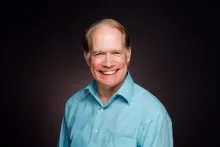
Greg Thomas is the former Pastor of the Cleveland, Ohio congregation. He retired as pastor in January 2025 and still attends there. Ordained in 1981, he has served in the ministry for 44-years. As a certified leadership consultant, Greg is the founder and president of weLEAD, Inc. Chartered in 2001, weLEAD is a 501(3)(c) non-profit organization and a major respected resource for free leadership development information reaching a worldwide audience. Greg also founded Leadership Excellence, Ltd in 2009 offering leadership training and coaching. He has an undergraduate degree from Ambassador College, and a master’s degree in leadership from Bellevue University. Greg has served on various Boards during his career. He is the author of two leadership development books, and is a certified life coach, and business coach.
Greg and his wife, B.J., live in Litchfield, Ohio. They first met in church as teenagers and were married in 1974. They enjoy spending time with family— especially their eight grandchildren.
