

Don Ward
This transcript was generated by AI and may contain errors. It is provided to assist those who may not be able to listen to the message.
Happy Sabbath to all of you once again, all of you on Zoom who are participating in the service today. It is just over three weeks that we begin the Fall Holy Day celebrations. So let's review what we did so far in the calendar year 2022. Earlier this year, during the Spring-only days, we were reminded of our need for a Savior. We participated in the Passover, and Jesus Christ is the Lord's Passover, who came to earth and lived a perfect life and shed his blood so that our sins can be forgiven. Then, during the days of Unleavened Bread, we symbolically removed leaven from our homes. Not that in itself that makes us spiritual, but we removed leaven in our homes, knowing that leaven represents sin and showing by our actions that we desire to remove sin from our lives to develop the mind of Jesus Christ. Then came summertime, a few months later, and during Pentecost, we were reminded of God's gift that offers us the gift of the Holy Spirit to develop the mind of Christ himself through the fruit of the Holy Spirit. And those were the Holy Days that God designates so far in this particular calendar year. And now, we prepare to look boldly into the future, whereas the spring Holy Days are about our personal calling and salvation and sanctification as we grow and strive to remove sin from our lives. The fall Holy Days are all futuristic. They look to something very beautiful, very wonderful, originally promised by the Old Testament prophets, confirmed by the ministry of Jesus Christ, and reaffirmed by the writings of Paul and what we find in the book of Revelation. The message that we're going to talk about this fall during these Holy Days is the same one that Jesus himself proclaimed. It says in Mark chapter 1 verses 14 and 15, Now after John was put in prison, Jesus came to Galilee preaching the gospel, the good news, of the kingdom of God and saying, the time is fulfilled and the kingdom of God is at hand, meaning it's within reach. The message and the opportunities that God is now providing, beginning with that generation, is within reach. Repent and believe the gospel. That was the message of Jesus Christ. Today, what I would like to do is look at some key scriptures from all 12 of the minor prophets, because when Jesus came proclaiming the gospel of the kingdom of God, people didn't sit there and say, what gospel? What kingdom? What's he talking about? What Jesus was talking about is something that had been mentioned in all 12 of the minor prophets. So anyone who was religious and went to synagogue or the temple and heard the minor prophets preached understood exactly what Jesus Christ was proclaiming and talking about. So I'd like to take a look at some key scriptures from the minor prophets and see what special event they looked forward to.
In spite of Judah's and Israel's many sins, what did these prophets proclaim about the future?
We're going to see that what they proclaimed was exactly what the fall holy days remind us of and picture each and every year. That is the return of Jesus Christ, the removal of all evil from the earth, beginning with Satan the devil himself, and the establishment of the kingdom of God beginning in Jerusalem. It's kind of a beachhead and then beginning to encircle the entire earth.
So that's what we're going to see today. The interesting thing about the minor prophets, if you've ever read them, is sometimes they're in the middle of talking about judgments or something that's horrible or terrible, tragic, and then out of nowhere they make a comment about the kingdom of God. It's like it's totally out of context. It's like, where did that come from? And then after they make a statement, they go back to judgment, or they go back to correcting Judah or Israel about some sin, or it's like they were inspired, they were compelled, they couldn't help. But talk about the kingdom of God. Let's take a look at the minor prophets today. We call them the minor prophets. They're also known as the twelve prophets, occasionally known as the book of the twelve.
It's a collection of prophetic books written between the eighth and the fourth centuries BC.
They are in both the Jewish Old Testament, by the way, called the Tanakh. That's what the Jewish people call their book, what we call the Old Testament. So they're both in the Jewish Tanakh, and they are in our Christian Old Testament. Now in the Jewish scriptures, they appear as one single book. In the English scriptures, we name a book after each of the prophets, so there are 12 of them. But in the original Tanakh, it's just one book. So that's something that's rather interesting.
So let's today take a look at a statement made by each prophet and see what they ultimately proclaimed about the future, the coming kingdom of God. We're going to begin in Hosea. If you'll turn to Hosea chapter one, beginning in verse eight, if you'll go there, please. Hosea chapter one, beginning in verse eight.
Now Hosea is a personal name, and it means salvation. He was a contemporary of the prophet Isaiah. He wrote about 750 to 725 BC. He was from the northern kingdom of Israel before it fell, before it was eliminated as a nation. God ordered Hosea to take a wife of harlotry and have children of harlotry. Now we had a very good sermon on this from Mr. Skipper recently, which I appreciated very much, and his message was very simple. In Hosea chapter one and verse two, he was told to take a wife who was a harlot, or in modern vernacular, a woman who's monogamously challenged. He was told to take a woman who is a harlot, and in Hosea chapter one and verse two, it says, quote, for the land has committed great whoredom departing from the Lord, end of quote. So that's why he was asked to do that. Well, let's go to Hosea chapter one and verse eight and see what he says here. In the midst of condemning the nation because of its idolatry, its adultery against God being unfaithful in the covenant, Hosea chapter one and verse eight, now when she had weaned Lo Ruhama, now this is the prophet's wife, the name, by the way, Lo Ruhama means unloved, and because that's what Israel was, God was rejecting the nation, she conceived and bore a son, and God said, call his name Lo Ami, for you were not my people, and I will not be your God.
Yet, there's a transition statement in all of this judgment, yet, this is a transition to the future, the number of the children of Israel shall be as the sand of the sea which cannot be measured or numbered, and it shall come to pass. We're going to see this phrase over and over again. During the transition time when God institutes a new kingdom on this earth is often referred to by the phraseology, and it shall come to pass. In other words, God's promises say, and it shall come to pass in the place where it was said of them, you are not my people. There it shall be said of them, you are sons of the living God. What a complete turnaround! Verse 11, then the children of Judah and the children of Israel shall be gathered together. Right now, there are Jewish people that live in virtually every nation on earth. Israel, the northern tribes, their peoples, are distinctly scattered all over. But it says there's going to come a time when Judah and Israel will be gathered together and taken back into the confines of Canaan to live as a people, and to point for themselves one head, a leader, a ruler, and they shall come out of the land, for great will be the day of Jezreel. Now, Jezreel means God sows, God plants. So, great is going to be a day when God plants a new world, a new kingdom on this earth. Now, regarding this phrase, they shall appoint for themselves one head. Ultimately, it will be Jesus Christ, even though the prophet himself may have not known that. It says here in chapter 3 verse 5, afterward, the children of Israel shall return and seek the Lord their God and David their king. They shall fear the Lord in his righteousness in the latter days. So, God is going to resurrect David, who's going to be their king, but David's only the king of Israel. He's not the king of China. He won't be the king of the nations in Africa. He won't be a king of any other nations on earth. So, when it says here, they shall appoint for themselves one head, it will be the resurrected King David, who will be in spirit. It's a spirit being in order to rule and guide over the people. So, here, Hosea himself, in the midst of bemoaning the fact that Israel and Judah have been unfaithful to God, and that God does not love them at this point in time, and they are going to be punished, and all the things that are going to come upon them is written in the book of Hosea. Yet, in the midst of all this, the transition, the statement from the scriptures about a new world, a new world order, in a biblical sense, that will come to pass. So, that's all we're going to read from Hosea today. Obviously, to cover the 12 minor prophets for the sake of time, I can't survey each book and show numerous scriptures. We would never get out of here, and I know you wouldn't be happy about that.
So, that's all we're going to comment from the book of Hosea. Next, we're going to go to the book of Joel. If you will kindly go there, Joel chapter 3 and verse 12. Joel chapter 3 and verse 12. Joel is a personal name, meaning Yahweh is God. It contains only 70 verses. The book of Joel is one of the shortest in the Old Testament. No reference is made to the northern kingdom of Israel, even though it existed at this time. It was written about 830 BC around the time of the boy-king Joash of Judah. Joel chapter 3, beginning in verse 12. Let the nations be awakened. Well, if you think in our culture today being woke is something, wait until the great tribulation hits the earth. Let the nations be awakened and come up to the valley of Jehoshaphat, for there I will sit to judge all of the surrounding nations. So there's coming a time, most likely immediately after Armageddon, spoken of in Revelation, that there is going to be a great judgment of the nations and peoples of the earth, directly by Jesus Christ himself. Put in a sickle, for the harvest is right. Come, go down, the winepress is full, the vats overflow, for their wickedness is great. Multitudes, multitudes in the valley of decision. There again, this is a connection with Megiddo, or the battle of Armageddon, which comes from the word Megiddo. For the day of the Lord is near in the valley of decision. The sun and moon will grow dark, and the stars will diminish their brightness. The Lord will also roar from Zion and utter his voice from Jerusalem. So God is directly going to be on the earth, known to us as Jesus Christ, who's going to be there, roaring, making judgments, judging the nations at this time, and they're evil. The heavens and the earth will shake, but the Lord will be a shelter for his people and the strength of the children of Israel. Verse 17, so you shall know that I am the Lord your God, dwelling in Zion my holy mountain. Then Jerusalem shall be holy. Now does anyone think Jerusalem is holy now?
No, of course not. And no aliens will ever pass through her again. No foreign rulers. No longer will Persia come down and say, all right, we're controlling all of you. No longer will the Roman Empire come and say, all right, we're controlling all of you. No alien will ever pass through her again. This is an obvious connection here with the events of the day of the Lord. The phrase is even mentioned within these verses. Detailed in the book of Revelation, chapters 14 and 16. And again, this judgment could take place immediately after the Battle of Armageddon mentioned in Revelation chapter 19. So we see another of the minor prophets talks about the coming kingdom of God.
Let's take a look at the book of Amos. Amos chapter 9 and verse 13, if you will kindly turn there. Amos chapter 9 and verse 13. Amos is a personal name, meaning a burden bearer, someone who carries a load or tremendous burden. Beginning his prophetic activity during the reign of Jeroboam II in the northern kingdom of Israel, he condemned both Judah and Israel. He challenged this superficial hypocrisy of their religious institutions, pretending like they believed in God and wanted to follow God, but doing something different.
He condemned the exploitation of the poor that was occurring throughout the land. He condemned the corrupt justice that was occurring throughout the nations. His ministry was between 760 and 755 BC during the latter part of the reign of Jeroboam II. All right, Amos chapter 9 verse 13, Behold, the days are coming. Again, another one of those transitional statements says, The Lord, when the plowman shall overtake the reaper and the treader of grapes, him who sows seed.
The crops are so abundant that you're still harvesting last year's harvest because it was so great that the people who need the plant seed for the next season. Can you move it along a little bit here, please? I got seed to get in the ground. Well, we're still reaping all the abundant harvest from last year.
So this is talking about something very beautiful that will occur in the world tomorrow. The mountains shall drip with sweet wine and the hills shall flow with it and I will bring back the captives of my people Israel. When Israel fell and the people were taken into captivity, they are scattered. Scattered all throughout Europe, scattered all throughout the world by now, the 21st century, with all the migration and immigration that takes place.
But God says he's going to bring back his people. Let's continue. What's going to happen then? I will bring back the captives of my people Israel. They shall build the waste cities and inhabit them. And during the great tribulation and day of the Lord, there's going to be a tremendous amount of destruction. Physical destruction, our infrastructure, and a lot of things that exist today are going to be leveled to the ground. And they are going to build the waste cities and they're going to inhabit them. And they shall plant vineyards and drink wine from them.
And they shall also make gardens and eat fruit from them. I will plant them in their land. No longer will people be captive or people who have lost the total identity. It will be restored. They will come back to their land. No longer shall they be pulled up from the land I have given them, says the Lord your God.
Well, this is obviously referring to the Millennial Kingdom where abundant food, universal peace, personal security will dwell on the earth. Again, the prophecy of Amos. Now let's go to Obadiah. If you'll go to Obadiah chapter 1 and verse 20. Obadiah chapter 1 and verse 20. Obadiah means Yahweh's servant. This is the shortest book of the minor prophets. It concentrates on the part that the Edomites played in the fall of Judah, even though they were related to the Jews and the Israelites. They played a part in the collapse and fall of Judah. The book was written near the end of the sixth century BC, and its central section, verses 10 through 14, deals with the fall of Jerusalem to the Babylonians in 586 BC.
So let's see what Obadiah tells us, chapter 1, verse 20. It says, and the captives of this host, those who were exiles from Israel, of the children of Israel, those who were forced into captivity, those because of the fall of Jerusalem were sent to Babylon and all ended up their descendants all over the earth, shall possess the land of the Canaanites as far as Zarephath, that's far north of the city of Tyre.
The captives of Jerusalem, who are in the Sepharad, that's that some people think that goes as far north as modern Turkey. So the land that we call Israel today will be greatly expanded. It'll need to, because of all of these millions and millions of people brought back in to this area of the world.
Continuing, shall possess the cities of the south, then saviors shall come to Mount Zion to judge the mountains of Esau, and the kingdom shall be the lords. Who are these saviors? Well, a better translation is deliverers. I'm going to quote from the reary Bible notes, and here's what it says, quote, most likely judges who will help rule in the millennial kingdom, end of quote. So these are deliverers who are sent out to create organization, who are sent out to create structure, to teach, to be priests of Jesus Christ. Think of Revelation chapter 20 in verse 6, where it says, Blessed and holy is he who has part in the first resurrection. Over such the second death has no power, but they shall be priests of God and of Christ, and shall reign with him for a thousand years. So the inference is that these individuals will be the judges, will be the deliverers spoken here in Obadiah. Then we have the book of Jonah. If you go to Jonah chapter 2 and verse 6, the book of Jonah is rather unique in that it focuses on the king of that kingdom that is to come on Jesus Christ himself. Jonah chapter 2 verses 6 through 9, the ministry of Jonah is a parallel, a very poor representation of the great ministry of Jesus, but yet he's a missionary. Yet he goes and he preaches to Gentiles, and that was part of Jesus's message as well, that salvation is available to everyone, not simply the descendants of Judah or the descendants of Israel.
So this book is unique among the minor prophets. It consists of a short story about a very reluctant prophet, because he knew that Nineveh would ultimately destroy his people, so he wasn't really happy about preaching a message of repentance to them. His message can be encapsulated in a single sentence. It's in Jonah chapter 3 and verse 4, then he cried out and said, yet 40 days a Nineveh shall be overthrown. And then to his dismay the Gentiles repented. I mean, you can't get Israel to do that, but these Gentiles repented. This book reveals God's desire to preserve the lives of pagan Gentiles as an extension of his grace. His grace isn't just for the tribe of Judah and their descendants, the nation of Israel and its descendants. It's for everyone, and that is reflected by the fact that protection and salvation in a physical sense from destruction was being offered to these pagan Gentiles at this time. He so loves the world, he sent Jonah into the nation so that it would repent. So again, this is Jonah. He has a pre-missionary role. He's a forerunner of the ministry of Jesus. So here's the one scripture I wanted to read from here, because it's a parallel of what is occurring to Jesus when he is in the tomb. You may recall that Jesus said very profoundly in Matthew 12 and verse 40, that people said, we want a sign. Could you give us a sign? A sign, please? Well, apparently, healings weren't a sign.
Multiplying bread and wine to feed thousands wasn't a sign. He said the only sign you're going to get is as Jonah was dead three days and three nights. And he was in the belly of the whale for three days and three nights. So I will be three days and three nights in the heart of the earth. And so he would be in a tomb. He would be buried. Jonah chapter 2 and verse 6, I went down to the moorings of the mountains. This is him thinking as he's in this belly of the whale. The earth and its bars close behind me forever. Yet you have brought up my life from the pit, O Lord, my God.
When my soul faints within me, I remembered the Lord. And my prayer went up to you, into your holy temple. Those who regard worthless idols forsake their own mercy. We give up our opportunity for mercy when we continue to worship.
Worthless idols is what he's saying. Verse 9, But I will sacrifice to you with the voice of thanksgiving. I will pay what I have vowed. Salvation is of the Lord. Salvation's possible because the Lord emptied himself of his glory, came to walk on earth as a mere human being, lived a perfect life, allowed himself to be crucified in his bloodshed, and died in our place, died for our sins. But that's not the end of the story. We are saved by his life. He came out of that tomb. He was resurrected three days and three nights later. And that's what offers us. It's his resurrection. It gives us the hope that we, too, will be resurrected when our physical bodies die and when we go into the earth. God delivered Jonah from the sea through the fish after three days and three nights in a similar way. Christ was dead three days and three nights just as he prophesied in Matthew, chapter 12 and verse 40. God delivered the city of Nineveh from destruction after Jonah's visit.
And God will deliver all who repent of their sins and believe in Jesus's death and resurrection, including Gentiles. So this is a very powerful statement here by Jonah as he looks forward, understanding that salvation comes from God, the God himself who emptied himself of his glory and came to walk on earth among men. Next we go to Micah. Micah chapter 4 and verse 1.
Scripture, that's a parallel of what a contemporary of his was Isaiah. I've falsely heard people say in the past that God only works through one man. I'm sorry, that's not supported by Scripture. Many of these prophets were contemporary. They were all preaching at the same time, doing the same job. Micah is an abbreviated form of the personal name Micahiah, meaning who is like Yahweh. That's exactly what the name Micah means. He preached to both Judah and the northern nation of Israel. His message reveals much about the society of the day.
He constantly renounced the oppression of the poor by the rich. He also denounced the religious practices of the nation like most of the other minor prophets did. His ministry was from about 735 to 725 BC before the fall of the northern kingdom. He was a contemporary of both Isaiah and Hosea. So they're all prophets at the same time in history. Micah chapter 4 and verse 1. Now it shall come to pass in the latter days, transition into the future, that the mountain of the Lord's house shall be established on the top of the mountains. In biblical symbolism, a mountain represents a nation, symbolic of a nation. And it shall be exalted above the hills, and people shall flow to it. Many nations will come and say, come, let us go up to the mountain of the Lord, to the house of the God of Jacob. He will teach us of his ways. We are tired of misery.
We are tired of cultures of dysfunction, where no one knows right from wrong anymore, where perversion is celebrated. We're tired of living like animals. So we need to find this God and his law and begin to live by it. Many nations shall come and say, come and let us go up to the mountain of the Lord, to the house of the God of Jacob. He will teach us his ways, and we shall walk in his paths. For out of Zion, which is the spiritual Jerusalem, out of Zion the law shall go forth, and the word of the Lord from Jerusalem. As I said earlier, it all begins when Jesus touches down the Mount of Olives and Jerusalem becomes the beachhead for this kingdom, this new world that will encircle the entire earth. Verse 3, He shall judge between many peoples and rebuke strong nations afar off.
They shall beat their swords in the plowshares and their spears in the pruning hooks. The implements of war will be refashioned to become implements of peace and prosperity. Nations shall not lift up sword against nation, neither shall they learn war anymore, but everyone shall sit under his vine and under his fig tree. Everyone will have great security. You won't have to worry about leaving your home and getting mugged, right, or stepping outside and some invader comes and steals the contents of your home. This will be a totally different world than the one that we live in today.
And no one shall make them afraid, for the mouth of the Lord of the host has spoken.
As I mentioned earlier, this is a parallel to Isaiah chapter 2 verses 2 through 4.
All right, let's take a look at Nahum. Nahum chapter 1 and verse 15, if you'll kindly go there.
Nahum chapter 1 verse 15. Nahum is a personal name meaning comfort or to be encouraged.
He responded to the Assyrian tyranny with a message that marked what God would do to the Assyrians in very vivid language. The second chapter graphically portrays the future fall of Assyria's capital, Nineveh, the one that had repented. Judah had been subjected to the cruel domination of Assyria for over a century, so their repentance didn't last very long.
If it's like most people I've known, their repentance probably lasted as long as Jonah's feet left the city, because people fall back pretty quickly. They certainly do. So Judah had been subjected to the cruel domination of Assyria for over a century. Nahum's ministry is believed to have been between 650 and 625 BC. So let's see what he wrote here. Chapter 1 and verse 15, Behold on the mountains the feet of him who brings good tidings who proclaims peace.
You know what the good tidings are? It's the gospel! As a matter of fact, Paul quotes from this very verse in Romans chapter 10 and 15 and says, this is the gospel of the kingdom of God.
The feet of him who brings good tidings who proclaims peace. Oh Judah, keep your appointed feast, perform your vows for the wicked. One shall no more pass through you, he is utterly cut off.
He who scatters has come up before your face, man the fort, watch the road, strengthen your flanks, fortify your power mightily. For the Lord will restore the excellence of Jacob, like the excellence of Israel. For the emptiers, those former enemies who just came and looted the nations and took what was in the temple and took the best gold and silver and in some cases took the smartest people, the royalty, the intellectuals from these nations and deported them, the emptiers have emptied them out and ruined their vine branches. So again, Paul applies these words, the feet of him who brings good tidings, who proclaim peace himself in Romans chapter 10 and verse 15.
Then we come to Abacak. We'll go to chapter 2 and verse 12. Abacak chapter 2 and verse 12, his name is based on a root meaning to embrace. He preached in the late 7th century BC. He was a contemporary of Jeremiah. The Lord told the prophet that he was sending the Chaldeans to be the instruments of his judgment to punish the nation. Abacak proclaims a number of woes in chapter 2 verses 6 through 10 to denounce the various kinds of tyranny in Judah.
Later, the apostle Paul used Abacak's declaration that, quote, the just shall live by faith. That's chapter 2 and verse 4. Paul quotes from that. Paul makes that a significant part of what he teaches in his own ministry. All right, let's go to chapter 2 and verse 12. Woe to him who builds a tower with bloodshed, who establishes a city by iniquity, because you can't establish something the last if it's built by bloodshed and iniquity. Behold, it is not from the Lord of Hosts that the people's labor to feed the fire, and nations weary themselves in vain. Isn't that what the world does today? Don't the nations today weary themselves in vain? We try to create technologies to solve our problems. We look forward to medical science to extend our lives and solve our problems. We throw all kinds of money at social problems and come up with every gimmick, every silly idea to try to solve our own problems as humanity, and we have failed and will continue to fail every time without the guidance and direction from God. But verse 14 is a transition to what we experience today.
For the earth will be filled with the knowledge of the glory of the Lord. Unlike today, where humanity gropes in the dark trying this and trying that and throwing money at this problem, and hoping that medical science can find some magic to eternal life and all the things that we strive for as a people, unlike today the earth will be filled with the knowledge of the glory of the Lord as the waters cover the sea. That's a lot. I don't know how many gallons that is, but that's a lot.
Like many prophets in the midst of destruction and gloom, this prophet injects a hopeful prophecy about the coming kingdom of God.
Zephaniah. We'll go to Zephaniah chapter 3 and verse 14. This is a personal name, meaning Yahweh is sheltered or Yahweh stored up. This book looks towards the punishment of all sinful nations, including Judah at the time. But then it's followed up by the restoration of Judah and the nations of the earth. Most state his ministry from between 630 and 621 BC.
And we're going to read again chapter 3 verse 14. Obviously a time of rejoicing. Sing, O daughter of Zion! Shout, O Israel, and be glad and rejoice with all your heart, O daughter of Jerusalem! The Lord has taken away your judgments. He has cast out your enemy. The king of Israel, the Lord, is in your midst. Jesus Christ literally returns, and his feet are on the Mount of Olives. He is in the midst of his people.
You shall see disaster no more. In that day it shall be said to Jerusalem, Do not fear Zion, nor let your hands be weak. The Lord your God is in your midst. The mighty one will save. He will rejoice over you with gladness. He will quiet you with his love. After all that they've experienced, ever see a baby kind of out of control?
And a mother able to quiet that child with her love. Just mom being there, hearing mom's heartbeats, being cuddled by mom, quiets that baby, no matter how much trauma that baby was feeling. And that's the analogy here. The nations go through some horrendous things during the great tribulation, during the day of the Lord. Millions and millions of people die. It's not a pretty scene at all. It's pretty tragic. It's terrible. Yet when it's all over and Jesus Christ returns, and he calms down the nations, settles them down, it says he will quiet you with his love.
He will rejoice over you with singing. All right. Haggai. We're going to go to Haggai chapter 2 and verse 6. Haggai chapter 2 and verse 6. Haggai is a personal name, meaning festive. Something we'll be doing in a few weeks. Hopefully we'll all be festive. The dating of the book is between the 6th and the 9th month of the year 520 BC. A very narrow, specific time that this book is writing about. We also had a sermon with some allusions to this recently from Mr. Graham.
The returning exiles from Babylon found it very difficult to rebuild their homes and the temple at the same time because it put a huge strain on their limited resources. They were frustrated. They despaired of ever restoring the temple to its former glory. The book consists of five short addresses and a description of the results of Haggai's efforts to persuade his people to get with it, to resume work on the temple. Chapter 2, verse 6. In the midst of all that's going on, thus says the Lord of Hosts, once more, it is a little while, and I will shake the heaven and earth, the sea and dry land, again events that will definitely occur during the Great Tribulation. And I will shake all nations, and they shall come to the desire of all nations.
And I will fill this temple with glory, says the Lord of Hosts. The silver is mine, and the gold is mine. God is saying, I own everything, says the Lord of Hosts. The glory of this latter temple shall be greater than the former, says the Lord of Hosts. And in this place, I will give peace.
So who is this desire of all nations? I'm going to quote from the Believer's Study Bible. Quote, Jewish tradition and early Christian literature identify the desire of all nations as the Messiah.
End of quote. All right. The prophet Zachariah will go to Zachariah chapter 14 and verse 8.
Zachariah, a personal name, meaning Yahweh remembered. Yahweh remembered. In this book, God promised the people of Judah and Jerusalem success, if only they purified themselves from sin. God raised the two prophets, Haggai Zachariah. He proclaims that God is going to preserve his remnant from all world powers. As a contemporary of Haggai, he wrote about 520 to 518 BC, and he also urged finishing the temple. Zachariah chapter 14 and verse 8. In that day, there's that transition statement looking forward into the future, it shall be that living waters shall flow from Jerusalem. Who are living waters? Well, in living waters, this is representative of new life, a new spiritual life offered by the Holy Spirit. Half of them towards the eastern sea and half towards the western sea in both summer and winter, it shall occur. God will offer his Holy Spirit to the peoples. Verse 9. And the Lord shall be king over all the earth. In that day it shall be the Lord is one and his name one. There won't be room for other gods to be worshiped throughout the nations. Dropping down to verse 16. And it shall come to pass that everyone who is left of all the nations which came against Jerusalem shall go up from year to year to worship the king, the Lord of hosts, and the keep the feast of tabernacles. And it shall be that whosoever of the families of the earth do not come up to Jerusalem to worship the king, the Lord of hosts, on them there shall be no rain. If the family of Egypt will not come up and enter in, they shall have no rain. They shall receive the plague which the Lord strikes the nations who do not come up and keep the feast of tabernacles. You know, many people believe that God is schizophrenic. They believe that he instituted the Feast of Tabernacles for ancient Israel, and then they were done away on the cross, whatever that means. The Holy Days were done away on the cross. But God restores them again in the future and expects Egypt and other Gentile nations to come and worship the king during the Feast of Tabernacles. No, the Feast of Tabernacles for God's people have always been something they looked forward to, that they observed, because it pictures the literal establishment of the kingdom of God. So again, very powerful scriptures here regarding what God's intention is for the future.
And then we come to Malachi. Malachi chapter 3 and verse 16, if you'll turn there. Malachi is a personal name or common noun, meaning my messenger. Sometimes it's also called my angel.
Malachi, which he told his people that God still loved them, but that God, along with God's love, God demands respect and honor and faithfulness from them. Malachi condemns the religious and social abuses that were going on at that time, and he warned that judgment would come to purge the people of sin unless they repented. He wrote his prophecy about 435 BC. So Malachi chapter 3 and verse 16. Then those who feared the Lord spoke to one another, and the Lord listened and heard them, and a book of remembrance was written before him for those who fear the Lord and meditate on his name. That happens to be the Book of Life. Verse 17, they shall be mine, says the Lord of Hosts.
On that day, there's that transitional phrase, on that day I will make them my jewels, and I will spare them as a man spares his own son who serves him. Then you shall again discern between righteous and the wicked. In our culture today, do we any longer have the ability to discern between the righteous and the wicked? Think of same-sex marriage. Think of the gender confusion going on. People don't even know right from wrong anymore, and this scripture says there's coming a time that people will know the difference between the righteous and the wicked, between one who serves God and one who does not serve him. For behold, the day is coming, burning like an oven, and all the proud, yes, all those who do wickedly will be stubble. And the day which is coming shall burn them up. Great tribulation in the day of the Lord are very tragic, very terrible events, says the Lord of Hosts. That will leave them neither root nor branch. Entire families, entire peoples, entire groups of peoples will end up being destroyed because of their evil. Verse 2, but to you who fear my name, the Son of righteousness shall arise with healing in his wings, and you shall go out and grow fat like stall-fed calves. Some of us are already working ahead of time to fulfill the latter part of that scripture. I know I'm in trouble when I step in my talking scale, and it says one at a time, please. The word son here, which is S-U-N, is a metaphor that's applied to God. I'm going to give you an example. In Psalm chapter 84 and verse 11, here's what it says, for the Lord God is a son, S-U-N, is a son and shield. The Lord will give grace and glory. No good thing will he withhold from those who walk uprightly. So the use of the sun here, again, is a metaphor for the light, the brilliance that radiates from God. This metaphor points to his character as one of light, of brightness. Jesus is identified as light in John chapter 1 and verse 9. John chapter 8 and verse 12. The kingdom is the dawn of a coming age that brings light, it brings revelation, it brings righteousness, and it's going to, on one hand, herald judgment to the proud and wicked, and it's going to be severe punishment for them, and at the same time it's going to herald healing for those who fear God, who love him, and to respect him.
Well, what we have seen today in the 12 minor prophets is one unified vision of a millennial kingdom to be established on this earth in the future. Now, perhaps we can appreciate more the fact that when Jesus came preaching the gospel of the kingdom of God, those who were with it and religious and went to the temple or the synagogues and heard the minor prophets read, understood what the minor prophets hopefully spoke about, and that made a connection with them.
Sometimes what they wrote comes completely out of context to what the prophets were writing about, but yet it's a powerful message of hope and peace and salvation and fulfillment for all humanity.
In three weeks we're going to celebrate this future kingdom beginning with the festival of trumpets, but the same trumpet blast that Paul spoke about regarding the first resurrection, the feast of trumpets going back to Leviticus 23, where an instruction to look forward to the literal return of God to this earth in the form of Jesus Christ to establish this kingdom. We're going to celebrate that in a little over three weeks. It's a festival that celebrates the return to the Messiah on earth. Let's all begin to prepare this year for a very wonderful and rich and fulfilling fall holy day season. I wish all of you a wonderful Sabbath day.
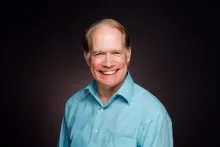
Greg Thomas is the former Pastor of the Cleveland, Ohio congregation. He retired as pastor in January 2025 and still attends there. Ordained in 1981, he has served in the ministry for 44-years. As a certified leadership consultant, Greg is the founder and president of weLEAD, Inc. Chartered in 2001, weLEAD is a 501(3)(c) non-profit organization and a major respected resource for free leadership development information reaching a worldwide audience. Greg also founded Leadership Excellence, Ltd in 2009 offering leadership training and coaching. He has an undergraduate degree from Ambassador College, and a master’s degree in leadership from Bellevue University. Greg has served on various Boards during his career. He is the author of two leadership development books, and is a certified life coach, and business coach.
Greg and his wife, B.J., live in Litchfield, Ohio. They first met in church as teenagers and were married in 1974. They enjoy spending time with family— especially their eight grandchildren.
