
David Schreiber
This transcript was generated by AI and may contain errors. It is provided to assist those who may not be able to listen to the message.
Good afternoon to everyone. I was expecting a song, special music, a dance, something. But it's great to be here. Norm and I decided to come back to the area. As you know, Bill and Betty got away for their 49th wedding anniversary. We're celebrating our 52nd to this past week. So we thought we would come back to the area, take a week off.
It really hasn't been a week off. As you saw that letter, I had to write a letter. I've answered all kinds of phone calls, edited the letters. I think we've been about as busy here as at the home office. But at least we're away, and we can have some time to ourselves.
We'll be headed back next Thursday to the home office and getting back there. I just wanted to clarify a couple of things. None of these men you see have been ordained yet as far as elders are concerned. Most of them are between 25 and 32. So what we're doing, we're looking to the future. We have a list of couples in the church that we're looking at. We're hoping they can go out and be trained two or three years under a church pastor.
Then after two or three years, somewhere in that period of time, hopefully they will be ordained. If we find they're not really cut out from the ministry, they're young enough that they can go back, pick up a career, and keep going. So that was one factor. But all of them, if you'll read their biography, you'll find out that they're quite talented. Most of them have degrees. Three of them are in the Cincinnati area. We've got a whole host of men, couples there in Cincinnati, that if we could hire them, and if they'd be willing for us to hire them, we would have a number of individuals.
But I think it's very encouraging to see the fact that we're at the point now in the church that we're not having to just say, okay, you're 65, you're an elder, would you mind pastoring a church for a while? But that we can actually begin to train some of our younger men, and then they can serve 30, 40, 50 years. You have somebody maybe who's ordained. He starts pastoring around 30 years of age, and he can pastor until he's 70, 75.
He'll be able to pastor 40, 45 years. So the object is that every year we're going to try to hire three to five men, and this year we've got six. Five of them are being picked up full-time, one part-time this year, and then hopefully next year he will come on board full-time. So I would like to ask your prayers about that. That's a project that we have going. We also have two other projects, and we hope to get out the door here quickly.
One of them is a mentoring guidelines. We're going to send that out to all church pastors. That if they're mentoring someone, and all of these individuals that I mentioned here are going to be serving under a church pastor somewhere. Three of them are going to send out into the field, so to speak, and they'll be working under a church pastor, and they'll be taught how to pastor.
And they'll learn all of the ins and outs of how to pastor. That's how I learned. That's how Bill learned. We went out for a year or two or three. I worked under two pastors. I was on a nationwide baptizing tour, serving under two men there. And you just simply learn how to handle certain situations. You don't learn that just sitting there listening to the Bible being taught. You have the head knowledge, but you don't have the practical knowledge, and the wisdom, and the application.
So that's what we're going to begin to work on. So we hope that as time goes on, over the next five, six, seven years, that we'll be able to pick up and train another 30, 35 men, and that as pastors begin to retire, that we will actually have younger men who can step in and begin to do that job. So, just to let you know, as I said, we're sending out information on how to mentor. That will come out to church pastors also who maybe don't have a trainee, but would look around and would have a number of men in their area that they feel that they can train for leadership positions and maybe be able to serve in those capacities in the future.
The General Conference of Elders this year featured the theme, labor in the Word. I'm sure that you've heard about that. Were you able to hear the sermons here? Normally, we do have those. Well, laboring in the Word is something that we've been charged with of getting out the door. So, we have 48-hour classes that we're producing. Right now, we have decided on the classes, the titles. Now, we've got to come up with outlines, and then beginning sometime in July, we will begin to produce these classes. There are six two-hour classes in four different categories.
One category is the overview of the Bible. Don Borden will be basically covering that. Then we will have how to interpret the Bible. We'll get into homiletics and those types of... how do you research and rightly divide the word of truth? And then we're going to have teaching and preaching.
There will be six who are classes in those. And then I'm heading up the pastoral care classes on how to pastor. So, there will be six who are classes in each one of those four categories. So, beginning somewhere probably around August, we'll start each week having a two-hour class. Each week will be a two-hour class in one of these categories. So, in the month, we will have covered all the categories. In the next month, we'll come back and do another two hours. And we'll do that for approximately six months. And we'll be able to cover that with the ministry. And then by that time, we hope to be able to roll out a number of other classes, pastoral care classes, the classes that Don Ward has covered, and some of the others that we've had.
So, again, we'd appreciate your prayers. We've got to get those up and running so that I can retire. And we're shooting again for next year. So, that's an object to get all those up and running out the door and functioning so we can hand it off to somebody else and let them carry on. I really appreciated the sermonette by Phil. I didn't realize he had such a sense of humor. And I didn't know he was so talented as a carpenter.
But you learn about people every day. So, I really appreciated that. Well, I noticed we have a little reconfiguration of the lectern up here. So, we'll see how this works. Actually, the sermon today will tie in very well with the sermonette, as you will see. Who is your authority for what you do? How you live? How you conduct your life? Who do you listen to? Is it CNN News? Is it Fox News? Is it NBC, NBC, CBS? Whatever. Well, obviously, when it comes to news, we have a broad range where we can actually go and look things up.
But you'll find it's very interesting that the average individual in our country today, less and less is looking to the Bible, to Scripture, for authority on how they live and how they conduct their lives. Let's go over to a very interesting account mentioned in John 6, and we'll pick up the story in verse 5. John 6, and we'll begin here in verse 5 of this chapter. And we'll notice a very interesting point as we proceed through this chapter. Jesus lifted up his eyes, and seeing a grave multitude coming toward him, said to Philip, Where shall we buy bread that these may eat?
But this he said to test him, for he knew, he himself knew what he would do. He had already understood that he was going to perform a miracle here. And this he said to test him, and Philip answered him, Well, two hundred denarii worth of bread is not sufficient for them, for every one of them may have a little. So one of his disciples, Andrew, Simon Peter's brother, said to him, Well, there's a lad here, he's got five barley loaves, two small fish, but what are they among so many? And Jesus said, We'll make the people sit down.
And there was much grass, and you'll find that there were five thousand men here. And Jesus took the loaves, and when he had given thanks, he distributed them to his disciples, and his disciples to those sitting down, and likewise of the fish, as much as they wanted. So can you imagine having two fish? You start breaking the fish, and you give this disciple some fish, and this one some fish, and keep breaking, and you're giving fish, and you hear a loaf, and you split it in half, and it keeps happening, and you keep spreading it around, and after a while, all five thousand are fed.
Now, we have no idea how many people were there, because I'm sure there were a few women. There may have been even some children around. So there were a lot of people there. And when they were filled, he said to his disciples, Gather up the fragments that remain, so that nothing is lost. Therefore they gathered them up, and filled twelve baskets with the fragments of the five barley loaves, which were left over by those who had eaten. Then these men, notice verse 14. When they had seen the sign that Jesus did, in other words, the miracle that he had performed, said, This is truly the prophet who is to come into the world.
So when they saw this take place, this miracle, they came to an interesting conclusion. Now, if you had been sitting there, and you had eaten all the fish you could eat, had eaten all of the bread you could eat, what would have been your summary? Well, they said, This has got to be the prophet who is to come into the world. Now, why would they say that? What connection does that have with this miracle, this sign, that Jesus Christ performed?
He had obviously, the prophet had not yet come, and they were looking for the prophet to come. With that in mind, let's go back to Deuteronomy 18 and verse 15. We'll be coming back to John again. The Deuteronomy 18 and verse 15, where the concept of the prophet is introduced by Moses. Let's see what we can learn from this. Deuteronomy 18 and verse 15.
Moses said, The Lord will raise up for you a prophet. So, here's a prophecy. There's going to come a prophet. He said, He's going to be like me. He's going to be like Moses. From your midst, from your brethren. In other words, he would be an Israelite. Not a Gentile, an Israelite. He would come up from their brethren. Him, notice, you shall hear. You're going to listen to him. Or you should listen to him. In what way was that prophet going to be like Moses? He said, he'll be like me. God was going to raise up another prophet. The implication is that Moses was a prophet also. And that God was going to raise up another prophet. We will see that he was going to be like Moses in his calling, in his duties, in his responsibilities, many other ways. And the Bible says, Him, you shall hear. If you were to analyze this verse, what's the most important point brought out in this verse? Well, to me, it is, you shall hear.
Now, Phil talked about, you know, you need to be building, making sure you're building and building correctly. But let's also, if you want to put a title down, I've got two or three titles here, but one could be, Him, you shall hear.
You and I are to hear that prophet. Now, notice in verse 16, According to all you desire to the Lord your God in Horeb, in the day of the assembly, saying, Let me not hear again the voice of the Lord my God, nor let me see this great fire lest I die. You see, when God gave the Ten Commandments, and He spoke the Ten Commandments, and His voice reverberated down the mountainside, sounded like thunder, and all of the three million Israelites heard Him speak. Now, you need a pretty good PA system for that. Well, God didn't need a PA system. He just spoke up. And the mountain was on fire, probably a volcano, lightning, thunders, and they were half scared out of their wits, the tremendous display taking place, and they heard God's voice.
So in verse 17, the Lord said to me, What they have spoken is good. I will raise up for them a prophet like you from among their brethren. And notice what God said He would do. I will put my words in His mouth. I will put my words in His mouth. So what words would that prophet speak? Whose words would he speak? He would speak the words of God. He would speak the message of God, what God gave him to speak. And He shall speak to them all that I command Him. So whenever that prophet was to come, He would not bring His own message. He would come and proclaim a message from God Himself.
Now in verse 19, And it shall be, And it shall be, That whoever will not hear my words, This is God speaking, My words, which he speaks, In My name, in other words, by My authority, in My name, I will require it of him.
Remember that verse, because we will come back to it later on, not here, but in the New Testament. So if you don't hear His word that He speaks in God's name, then God will deal with that person individually. So here's someone who's supposed to come with the authority of God, inspired by God, commanded by God, given a message by God, who would speak these words. Okay, let's go back to the original setting. Turn back to Deuteronomy 5. Deuteronomy 5, this is where we read about what this refers to. We come to Deuteronomy 5, we could go over to Exodus 20, but since we're here in the book of Deuteronomy, we might as well read the story here. Verse 1, Moses called all Israel and said to them, Hear, O Israel, the statutes and the judgments which I speak in your hearing today, that you may learn them and be careful to observe them. The Lord our God made a covenant with us in Horeb. The Lord did not make this covenant with our fathers, but with us, those who are here today, all of us who are alive. The Lord talked with you face to face on the mountain from the midst of the fire. I stood between the Lord and you at that time to declare to you the word of the Lord, for you were afraid because of the fire, and you did not go up to the mountain. He said, and then we have the Ten Commandments reiterated here. So Moses stood between God and the people. Now we know that this prophet, as we shall see, is Jesus Christ, and that Jesus Christ is our High Priest. And just as Moses went up into the mountain, God gave him the Ten Commandments, he brought the tablets back down, God spoke the Ten Commandments so that they could hear them, he brought back the statutes and judgments. You see, many times when people talk about the statutes and the judgments, they say, well, those are Moses' law. No, they weren't Moses' law. If the people had been willing, God would have spoken all of this to them, and they would have known that it came from God, but they said, you go up, you hear what God has to say. Then you come back and tell us. That's exactly what Moses did. Now let's notice in verse 22, verse 22 here, Deuteronomy 5, These words the Lord spoke to all the assembly in the mountain from the midst of the fire, the cloud and the thick darkness and the loud voice, and ye added no more. And I wrote them on two tables of stone, and gave them, or he wrote them on two tables of stone and gave them to me. In verse 23, So it was when you heard the voice from the midst of the darkness, while the mountain was burning with fire, and you came near to me, although the heads of your tribes and your elders, and you said, Surely, the Lord our God has shown us His glory and His greatness, and we have heard His voice from the midst of the fire, and we have seen this day that God speaks with man, and He still lives. Now there should have been absolutely no doubt in their mind. Absolutely no doubt that God was real. They heard His voice. They saw His power, His greatness, and His glory.
Well, guess what? When Moses went up into the mountain to get to two tables, what happened?
The Bible says he tarried. That means he was up there for 40 days fasting. 40 days, 40 nights. And what happened? Well, they said, Well, where's Moses? And they began to complain. And they made them what? A golden calf and fell down and began to worship it. Even after God had given them His Ten Commandments and spoken to them. So they rebelled against God.
But notice in verse 25, Now therefore why should we die for this great fire will consume us? If we hear the voice of the Lord our God anymore, we shall die. For who is there of all flesh who has heard the voice of the living God, speaking from the midst of fires we have and lived? See, this was unique. It did not happen before. And so verse 27, You go near and hear all that the Lord our God may say, and tell us all that the Lord our God says to you, and we will hear it and we will do it. Then the Lord heard the voice of your words which you spoke to me, and the Lord said to me, I have heard the voice of the words of this people which they have spoken to you. They are right in all that they have spoken. Now notice verse 29.
God listening to what the people said, notice verse 29. O that they had such a heart in them, that they would fear me, fear me, and always keep my commandments, that I might be well with them and their children forever.
So God knew the nature of man. He knew the nature of the Israelites. He knew that eventually they would depart, they would disobey.
So Moses was to teach them, as we find in verse 31. He was going to go up. He says, as for you, stand here by me, and I will speak to you all the commandments, the statutes, and the judgments, which you shall teach them, that they may observe them in the land, which they go over to possess. So he was to teach them. But you see, if they had been willing to listen, God himself would have spoken this to them. Now in chapter 6 of the book of Deuteronomy, it is very interesting. I don't know if you've ever done a story from chapter 5 and read all the way up to chapter 18. But I'll just hit a couple of high points here for you, because in each one of them we find where God begins to teach the people the statutes and the judgments and begins to convey them. And the words that God commanded Moses to give to them, now notice in verse 1 here, chapter 6. Now this is the commandment, and these are the statutes and judgments which the Lord your God has commanded to teach you, that you may observe them in the land. Verse 2, that you may fear the Lord your God and keep all these statutes and your judgments, which I command you, you and your sons and your grandsons, all the days of your life. Why? Your days may be prolonged. God wanted them to live a long and rich and abundant and blessed life.
Now verse 3, Therefore hear, O Israel, and be careful to observe it, that it may be well with you, that you may multiply greatly. And then verse 4, key note, scripture and the Bible, hear, O Israel, the Lord our God, the Lord is one. Now this is a scripture that is referred to in the New Testament, and as well find as you go through this whole section, that much of the teaching here is something that you find in the New Testament, in the New Testament, that that prophet, the prophet himself, came along and taught. Now God is one. Does that mean that there's only one being in the God family? Now the word here for one is a word like family. It means one unit, a group. We could say, here is the Chattanooga congregation, but it's made up of more than one person. It's one congregation, but there are many people. You can have a family. There's one family, but there may be two or three or four or five, six, seven people in that family. So God is one, but he's one in the sense of being one as a unit, as a people.
Now notice verse 5, you shall love the Lord your God with all your heart, with all your soul, with all of your might. And these words which I command you today shall be in your heart, and then you shall teach them diligently to your children and talk about them, so they were to be passed on to the next generation. Notice the first and the great commandment is mentioned here, that you are to love the Lord your God with all your heart, all your soul, all of your mind. And when Jesus Christ was asked what is the great commandment, he quoted this. The second, he said, is like it. You are to love your neighbor as yourself. Now notice in chapter 7 and verse 6, For you are a holy people to the Lord your God. The Lord your God has chosen you to be a people for himself, a special treasure above all the people on the face of the earth. So Israel was chosen. They were to be a holy people, a special treasure. Now, brethren, what you find that God says here about Israel is what God also says about us when you get to the New Testament. That we likewise are a holy people. We are to be a holy people. The word saint refers to those who are holy, those who have been set apart for a holy purpose, a holy reason to be used by God. And we are God's special treasure. I think the last time I was here I spoke on that. And you find in the book of Malachi that when God makes up his jewels, that we will be his special treasure that he is putting together. And notice verse 7, The Lord did not set his love on you or choose you, because you were more in number than any other people, for you were the least of the people, but because the Lord loves you, because he would keep the oath which he swore to your fathers, O Lord, who has brought you out with a mighty hand. So you find that God keeps his word.
That if God makes a promise, he keeps it. God promised Abraham, he promised Isaac, he promised Jacob, that he would bring his people into the Promised Land. And that's why it's called the Promised Land, because God promised it to them. So the rest of the chapter shows how God would bless them for their obedience and drive out all the nations from before them. In chapter 8 and verse 2, You shall remember that the Lord your God led you all this way these forty years in the wilderness.
Why did God direct them through the wilderness? And why does God allow us to go through trials, tests, this life, difficulties? Why are we faced with the problems we're faced with? Each one of us uniquely.
I don't go through the same trials, the same life experiences you go through. You don't go through the same ones that I go through. Even mates don't experience life exactly the same. We all have our own perspective. But notice what God says. God led you all this way these forty years in the wilderness to humble you, to test you, and to know what was in your heart. So God humbles us. God wants us to be humble. He puts us to the test, will we obey Him, and that He might know what's in our heart? How does God know what's in your heart, what's in your mind? You can say, Lord, I will obey You. I don't care what. But when the test comes, whether you pay your tithe or you pay this bill, what do you do? The test comes when we're faced with anything where God says, do this, and the pull is to do that. Then who do we hear? Who do we listen to? Who is it that we follow? Well, here God said the reason why He led them was so that He would humble them. So He humbled you and allowed you to hunger and fed you with a manna that you did not know, that your fathers did not know. That He might make man to know that he shall not live by bread alone, but man shall live by every word that proceeds out of the mouth of God. Now, do we not find that in the New Testament? Matthew 4.4, Luke 4.4. Christ, in responding to the devil, says, man doesn't live by bread alone when the devil told him to turn the rock into food, but by every word of God.
Now, Christ listened to God, not to the devil. Now, in chapter 9, in verse 4, it says, Do not think in your heart, after the Lord your God has cast them out, talking about the nations in Palestine, He was going to cast out before them and give them the Promised Land. Same because of my righteousness, so the Lord has brought me in to possess this land, but it is because of the wickedness of the nations that the Lord is driving them out from before you. It is not because of your righteousness or the uprightness of your heart, but because of the wickedness of these nations. So they were not more righteous than the other nations. God has called us today, and we are headed for the Promised Land. I don't know how many of you remember the movie and the song. I am bound for the Promised Land. Every time I hear that, I think of these scriptures. I think of Hebrews 3, what the Bible has to say.
That we are also called by God, chosen by God. Are we sitting here today because we are more righteous than the world around us? That is why God called you to be here. When you read those that God called, and you go back, especially in the New Testament, and you begin to read, where Paul said, some of you were like this. Adulters, pornicators, homosexuals, liars, cheats, etc. God called us because of His love and because of His mercy. In verse 5, notice, It is not because of your righteousness or the uprightness of your heart that you are going to possess this Lamb, but because of their wickedness of the nations. Notice, He also goes on to say that He may fulfill the word which the Lord swore to your fathers, to Abraham, to Isaac, and to Jacob. God said He would fulfill the promise that He gave to the fathers. The promise was a promise of race and grace. Race and grace. Race was that God would bring the Israelite tribes into the Promised Land. The promise of grace is the promise that that prophet would fulfill, that He would carry out Moses, Joshua, the leaders would lead them to the Promised Land. Moses didn't go in, but Joshua did. Hold your place here and go back to Galatians chapter 3. Galatians the third chapter. And, let's notice, verse 16.
Galatians 3.16. Now to Abraham and his seed where the promise is made. And he does not say, And the seeds, as of many, but as of one, into your seed, who is Christ. So the promise was made to the physical seed, descendants of Abraham, Isaac, and Jacob, the twelve tribes. But there was a promise of grace through Christ, the promise of salvation, those that God would call. Verse 26. For you are all the sons of God through faith in Christ Jesus. And as many of you, as were baptized into Christ, have put on Christ. There is neither Jew nor Greek, there is neither slave nor free, there is neither male nor female. For you are all one in Jesus Christ. And if you are Christ, then you are Abraham's seed, and heir according to the promise. So you and I today are heirs to the promise through Christ. Now, with that in mind, turn back to Deuteronomy 4. Deuteronomy 4 and verse 32.
Deuteronomy 4.32. For ask now concerning the days that are past, which were before you, since the day that God created man on the earth. And ask from one end of heaven to the other, whether any great thing like this has happened, or anything like it has been heard. Did any people ever hear the voice of God? Speak out of the midst of the fire, as you have heard, and live. Or did God ever try and go and take for Himself a nation from the midst of another nation, by trial, signs, and wonder, by war, by a mighty hand, and an outstretched arm, by great terror, according to all the Lord your God did for you in Egypt, before their eyes. To you it was shown that you might know that the Lord Himself is God, and there is none other beside Him. One of the main lessons why God brought them out of Egypt, in the way that He did, why He spoke to them on Mount Sinai, was so they would know that He was the true God. That they would know that what He was commanding them, that it came directly from God. It wasn't some man dreaming up some religion. What you and I must know is that this book, this Bible, whether you got it on a phone, an iPad, or on your computer, and I've got it on all of them, as Phil said, that these Bibles, this is the Word of God, and you and I must be more convinced than the Israelites were. They saw all the miracles. What was their problem? They saw it. They observed what God did. They heard the voice of God. They saw His glory and His power. You'd think, boy, if I could only have God come down and talk to me, see His power, you'd talk about never lacking faith, but wasn't that exactly what they lacked? The Bible says, for you and for me, we walk by faith, not by sight. That was the problem with the Israelites. They walked by sight and not by faith. You and I must walk by faith.
So, with all of that in mind, let's go back to John 6 and see how all of this ties together. John 6, and we'll pick up the story in verse 15. John 6, 15.
You'll notice after Christ did this, after He fed the 5,000, they saw this sign. Therefore, Jesus perceived they were about to come and take Him by force to make Him king. He departed and went up into the mountains. They were all enamored with Christ. They were going to come and make Him their king. Now, in verse 24, you might remember after this, the disciples had crossed over to the other side. The crowd knew that Christ did not go with the disciples. There was only one boat there. They saw the disciples rowing away. Christ was up in the mountain. They knew He had not gone with them. They assumed He was on this side. But in the morning, He was not there. You'll notice here, Christ came walking on the water to the disciples. He got in the boat, and immediately they were where they wanted to go. That is how I would like to be able to travel today. Get in the car and say, I am going to drive to Rome. Immediately, I am in Rome. That would be the way to go. But it doesn't work that way. So you find they came looking for Christ in verse 24. When the people therefore saw that Jesus was not there nor His disciples, they also got into boats and came to the Capernaum seeking Jesus. Now, one might assume they were so enamored with His teachings. They believed what He was preaching to them, that they wanted more. When they found Him on the other side of the sea, they said to Him, Rabbi, when did you come here?
They wanted to know when He got there. Jesus answered them and said, most assuredly I say to you, He could see right through them. He said, You seek Me not because you saw the signs, but because you ate of the loaves and were filled. Lord, your bellies were filled. That's why you're here. You're wanting another free meal. They wanted some more food.
They sought Him because He fed them, and they got a free meal.
In verse 27, He says, Do not labor for the food which perishes, but for the food which endures to everlasting life, which the Son of Man will give you, because God the Father has set His seal on Him. God has set His seal on Him. Well, you'll find the prophet Isaiah wrote, Why do you spend money for that which is not bread, and labor for that which does not satisfy? In Isaiah 55, verse 2, He knew that they had come seeking after food, and that their attitude was not right. But notice what he says here. The Father has set His seal on Him.
Have you ever gotten a letter with a seal on it?
Occasionally you might do it. A lawyer writes you some type of legal document. They put a drop of wax on it, and they get a seal, and they stamp it. What does that seal show? Well, the seal shows that it's authentic. That whatever document is in there, the seal has not been broken, the envelope has not been opened, that you can trust whatever is contained in there, that it is the genuine article. In the Greek, the word seal means to close or make something to secure.
In other words, it is secure. Figuratively, it means to attest, confirm, establish, and it confirms. So, when it says here that the Father has set His seal upon Him, it's like the Father came down and said, This is my Son. And how did He put His seal on Him? He backed Him with power. He backed Him by signs and wonders. He backed His word. He backed Him with His preaching, His example, His teaching. The Father had put His stamp of approval on Jesus Christ, and in Christ, they could see the power of God in action by deed and by word. And so, He showed them that power. Notice verse 28. Then they said to Him, What shall we do that we may work the work of Him? And Jesus answered and said to them, This is the work of God that you believe in Him whom He sent. Now, have you ever stopped to think about, Do you do the work of God? Notice the definition of the work of God. This is the work of God. One of the definitions of the work of God is that we believe in Jesus Christ. Now, how is that doing the work of God? But when you believe in Him, then what He said you will do. In other words, you hear Him, and you automatically do it because you believe. In other words, you have faith, you trust Him, and you focus on that. Now, going on, Therefore they said to Him, What sign will you perform then that we may see it and believe you? What work will you do? They wanted to see some type of work. You'll notice as we go through this, they had absolutely no understanding what Christ was saying here. They always put their own interpretation on it. So they said, Okay, what sign are you going to perform to show us? Now, notice immediately where their minds went. Our fathers ate manna in the desert as it is written. He gave them bread from heaven to eat. So they wanted a sign, and basically what sign did they want? Gibbous manna. Now, Barkley's commentary has an interesting comment on this section. According to Barkley, one of the traditions among the Jewish rabbis at that time was that when the Messiah would appear, when that prophet would appear, that he would do greater miracles than Moses. And Christ certainly knew he did that. But he would perform a greater miracle than Moses. They looked upon the giving of manna as the greatest miracle. It lasted 40 years, every day, the manna coming down. And they considered the giving of manna as probably the greatest miracle. They would be looking for the Messiah to give them food on a regular basis. When he came, somehow he was going to perform this great miracle. So their focus was on the physical. Now, notice what Jesus said here, beginning in verse 32. Jesus said to them, most assuredly, I say to you, Moses did not give them bread from heaven, but my Father gives you the true bread from heaven. The bread of God is He who comes down from heaven and gives life to the world.
Now, what Christ is saying here is actually a very profound statement when you understand it. The bread of God is true bread. Now, my wife and I ate breakfast this morning. We had two eggs and a piece of toast. A cantaloupe also, but that doesn't fit in with the story. We ate bread, and that bread sustains our lives. Now, we know that physical bread is sort of a staff of life. It will feed your body, but the bread of God that comes into the world is true bread, and it comes from the Father, and He gives life to the world. Now, whether you've ever noticed it or not, hold your place here. Go back to 1 John, chapter 1 and verse 1. 1 John, chapter 1, verses 1 and 2 here.
John says, "...that which from the beginning, which we have heard, which we have seen with our eyes, which we have looked upon, and our hands have handled concerning the word of life." Talking about Jesus Christ, He was the Word of life. But notice, the life was manifest, and we've seen, and we bear witness, and we declare to you that eternal life.
Not only was Jesus Christ the Word of life, but He was eternal life. Manifested in the flesh. God in the flesh, the Son of man. We declare to you that eternal life which was with the Father one time, and is with the Father, and was manifest to us. That which we have seen and heard, we declare to you that you also may have fellowship with us.
And truly, our fellowship is with the Father and with His Son, Jesus Christ. And so you find that Jesus is the bread of life. And that life is not physical life, it's eternal life. So if you eat the spiritual bread, you will feed the spiritual man. Each one of us, when we are converted, we become a new man. Now the Bible doesn't say that God rehabilitates the old man. The old man dies when you were baptized.
The old man goes under the water. He's buried. He dies. You rise up a new man. There is a new creation that takes place. Now with that new creation, the new man, just like the physical man, has to be fed. And this is where you find the emphasis comes in here in chapter 6 of the book of John. One of the main emphasis is that the new man must be fed spiritually. And that means that you've got to take this spiritual food, the Bible, the Word of God. You've got to eat it every day. Why do I mention this? Because I have seen the tendency over the years, as well as even recently, that many of our members do not study on a regular basis.
We never forget to feed our faces, do we? I would say that sometime between now and midnight, you will eat again, even though you've already eaten today. And tomorrow, you'll get up and you'll do it again and again and again. And we eat on a regular basis because we realize if we don't eat and we don't drink, we die. Spiritually speaking, the same thing happens, but we don't see it. We don't discern it. We can go days and weeks without really studying the Bible. I'm not talking about opening the Bible up and giving you a hit and a lick and closing it and going your way.
We've got to open this Word of God up and study it. Focus on it. Go into it so that we understand what it means. I guess perhaps because of the recent General Conference of Elders, where we talked about laboring in the Word, that comes directly from the Scriptures, that we are to labor in the Word of God. And then understanding and helping to prepare these 48 hours of classes that we're going to be covering, how much you can get out of the Bible by studying it and reading it, not just reading over it.
It's easy to read. So, well, I read three chapters today in the Bible, as opposed to reading it and asking yourself, what does this verse say to me? What am I supposed to be doing? What should I hear? What is God trying to tell me? I should be listening. My eyes should be open. My ears open.
I should be hearing something. I'm not talking about an audible sound. I'm talking about listening and studying the Word of God so that we actually understand it. Jesus Christ goes on to say in verse 35, I am the bread of life. Now, we're back in John 6 again. In verse 35, He said, I am the bread of life, and he who comes to me shall never hunger, and he who believes in me shall never thirst.
And so He's talking about the spiritual here. He's talking about the new man. That we should be satiated when it comes to that. Now, we realize, dropping down to verse 53, that there's a dual application of this because in verse 53, Jesus said to them, Most assuredly I say to you, unless you eat the flesh of the Son of Man and drink of His blood, you have no life in you. And whoever eats my flesh and drinks my blood has eternal life, and I will raise him up at the last days. In verse 55, for my life my flesh is food indeed, and my blood is drink indeed.
And whoever eats, or he who eats my flesh and drinks my blood abides in me, and I in him. And as the living Father sent me, and I live because of the Father, so he who feeds on me will live because of me. Now, he's talking about the symbols of the Passover, but we know those symbols stand for something. It's not a matter of once a year, we take a little piece of unleavened bread and a little bit of wine. This picture is something. Jesus is our Savior. It's our belief in Him as our Savior. His sacrifice, His shedding His blood for our sins.
The fact that we are to die, we rise up a new creature, and that we are to live and feed on Him. Let's notice in verse 63. Verse 63 here. It says, it is the Spirit that gives life. So when you are baptized, and God's Spirit comes into you, you're baptized, your sins are forgiven, hands are laid on you, you receive God's Holy Spirit. It says, it is the Spirit that gives life. The flesh profits nothing, nothing spiritually. The words that I speak to you... Notice the words, four Gospels. We'll see it's much broader than that. The words that I speak to you are Spirit and our life.
So the Bible, the Scriptures, the words that Jesus Christ Himself spoke are Spirit and life. We hear Christ, we're to listen to Him because He says His words are Spirit in their life. Now, let's turn over to Acts 7. Acts 7, verse 37. Acts 7, verse 37. Here is Stephen making his defense before the Sanhedrin, the Jewish council. It says, this is that Moses said to the children of Israel, The Lord your God will raise up for you a prophet like me from your brethren.
Him shall you hear. Notice, Moses said, Him you shall hear. This is He who was in the congregation in the wilderness with the angel who spoke to Him on Mount Sinai with our fathers, the one who received the living oracles, the living divine truths, living oracles, an oracle is a message that comes from God. He received the living oracles. Notice, the words of God in the Old Testament are living also. The Ten Commandments are alive. They're spiritual principles. They were given to us. They may be written down in the Old Testament, but they were written down so that you and I could have them. He shows here that they were to listen.
When Jesus Christ came, you will find that they did not accept Christ. Notice from verse 38, this is He who was in the congregation in the wilderness with the angel who spoke to Him. Verse 39, whom our fathers would not obey but rejected in their hearts, they turned back to Egypt. They made a golden calf.
So you'll find. John 1.11, Christ came to His own. His own received Him not. They didn't believe He was a Messiah, the prophet. You and I do. That's the reason why you're sitting here today. We've got to make sure that we listen to Him, that we don't just pay lip service, but that we hear Him. Moses received God's message and gave it to the people. The living oracles or sayings from God, or the message from God, came as a result, as you'll notice here in verse 38.
This is the angel who spoke to Him on Mount Sinai. Many times in the Old Testament you find it says, the angel of the Lord came and spoke. People misunderstand that because the word angel just simply means messenger. In the Old Testament, who was the messenger that the one we know as the Father sent to human beings to convey the Father's message to them?
It's the one we know as Jesus Christ. The Logos, the Word. He was the one who we know as the spokesman in the Old Testament who dealt with the prophets, who dealt with the servants of God, who spoke to Moses. But where did the message come from? It came from the Almighty God, the Everliving God, the one who, when He sent His Son, became known as the Father. Remember in Exodus 3 and 2, just as a reference?
Exodus 3.2, where God appeared to Moses in the burning bush? What does it say? It says, the angel of the Lord appeared to Moses, the messenger of the Lord. And yet, later on, He describes Himself as I AM. And so He is obviously God. And so He was the spokesman that came to mankind. So, brethren, we find that God spoke through His servant.
Notice in Matthew 17 and verse 5. I mentioned to you that the Father Himself put His seal upon Christ. Notice what He said here. This is where Christ was transfigured. In verse 5, Matthew 17, Notice again, God said, Hear Him. Jesus Christ likewise said to hear Him. In John 12, let's notice, why do we need to hear and listen and pay attention to what Jesus Christ has taught us?
What the Word of God teaches us? What the Bible tells us? Well, let's notice. John 12, 47. John 12, chapter, verse 47.
The word that I have spoken will judge Him in the last days. For I have not spoken on my own authority, but the Father who sent me gave me a command, what I should say and what I should speak. And I know that His command is everlasting life. Whatever I speak, just as the Father has told me, so I speak. You can read over and over again in the book of John that the message that Christ brought was from the Father. And so, I believe the King James Version, as you read through this in verse 48 and 49, doesn't just say here that concerning His words, it uses the word, who hears my words.
And so Jesus Christ said that we ought to hear Him, receive His words. The Father said we ought to hear Him. Moses said when He comes on the scene, you ought to hear Him. And so the same message is consistent throughout the Bible from God Himself, from Moses, and from Jesus Christ. So His words are what will judge us in the last days and determine whether we have eternal life or not. There are those today who claim that what Jesus Christ taught is out of date. All we should do is listen to Paul. But that's not what Christ said, and that's not what the Father said, and that's not what Moses said.
They all said that He came with the authority of God to give that message. His words have been written down so we would know how to live. And in Matthew 4, 4, we read, Man shall not live by bread alone, but by every word that proceeds out of the mouth of God.
Notice how this is summarized in Hebrews 1 and 2. Notice the message here. God, talking about the Father, who at various times and various ways, spoke in times past to the fathers by the prophets. So when God conveyed His message to the Israelites, to His people, He did it through the prophets, but who brought the message to the prophets? Well, it was the angel of the Lord, the messenger from God, the one we know as the Logos, the Word.
He has in these last days spoken to us by His Son. So in the end time, Christ came as the Son of God, whom He appointed heir of all things. So the whole Bible, the Old Testament, as well as the New Testament, is a direct revelation from the Father through the Son to mankind, to us. And so when the Bible says that you and I are to hear that prophet, in essence, God is saying, listen to me, because the message that He brought in both the Old Testament and in the New Testament is what I inspired and I gave to Him, and He faithfully conveyed it to you.
And so we are to listen to that message. Jesus Christ in Matthew 7 summarized it this way. And this is an admonition in verse 24 that is there for us, that whoever hears these sayings of mine, so here is Christ saying, whoever hears these sayings of mine, where did Christ get the sayings? They came from the Father. And does them, I will liken him to a wise man, build his house on a rock. So He is able to withstand the trials, the tests, the rains, the floods, and so on. But everyone, verse 26, who hears these sayings of mine and does not do them, will be like a foolish man who builds his house on the sand.
The rains descended, the floods came, and the house is washed away. So, brethren, another reason why we need to study the Word of God, and we need to take it seriously, is simply because it is the rock on which we build. It is the rock on which our life is built, everything that we do. When you and I are confronted with a situation, a trial, or a test, or whatever, we should always be able to think of a scripture, think of a principle, something in the Bible.
We pray about it, we study about it, and God gives us the guidance. Let's notice, finally, in Revelation 2, Revelation 2, and you read. There are certain messages that you read to all seven of the churches in the book of Revelation.
Revelation 2 and 3 describe seven churches. These were seven literal churches that existed simultaneously in Asia Minor. They are also a type of the history of the church down through the ages, seven general stages of the church down through time. Likewise, they also picture seven attitudes, seven approaches, that you find at any time in the Church of God. You find some people are dead, some people are zealous, some people are compromising.
You go on and on as you read through these. But let's notice that there are certain admonitions repeated to each church over and over again. Verse 7, He who has an ear let him hear what the Spirit says to the churches. So we're admonished to do what? To hear. Verse 11, He who has an ear let him hear what the Spirit says to the churches. Verse 17, He who has an ear let him hear.
Verse 29, He who has an ear let him hear. So again, you find emphasized over and over. Don't just read it, but hear it. Let him hear, let him understand, let him comprehend what is said. Chapter 3, verse 6, He who has an ear let him hear. Verse 13, He who has an ear let him hear. Verse 20, Behold, I stand at the door and knock.
If anyone hears my voice and opens the door, I will come in to him and dine with him, and he with me. In verse 22, He who has an ear let him hear. So, brethren, you find over and over. The Scripture says, If you have an ear, let him hear. What that means, the Bible shows very clearly, Christ gave the parable, that there are those who hear, and they don't understand. They see and they cannot comprehend. Your ears have been opened, your eyes have been opened.
You know the truth of God, the precious word of God. And, brethren, these are our marching orders. They are not just written by men. A lot of people look at the Bible as just simply a compilation of books of men, and think of them as fables. The messenger delivered this to men, and he got the message from the Father.
And so, the words we have here come directly from God Himself, the Almighty God, to us, to you personally, to me personally, as human beings. Hear the Word. That's what God desires of us. If we have an ear to hear, let us hear.
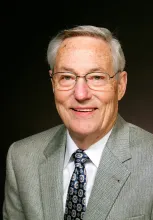
At the time of his retirement in 2016, Roy Holladay was serving the Operation Manager for Ministerial and Member Services of the United Church of God. Mr. and Mrs. Holladay have served in Pittsburgh, Akron, Toledo, Wheeling, Charleston, Uniontown, San Antonio, Austin, Corpus Christi, Uvalde, the Rio Grand Valley, Richmond, Norfolk, Arlington, Hinsdale, Chicago North, St. Petersburg, New Port Richey, Fort Myers, Miami, West Palm Beach, Big Sandy, Texarkana, Chattanooga and Rome congregations.
Roy Holladay was instrumental in the founding of the United Church of God, serving on the transitional board and later on the Council of Elders for nine years (acting as chairman for four-plus years). Mr. Holladay was the United Church of God president for three years (May 2002-July 2005). Over the years he was an instructor at Ambassador Bible College and was a festival coordinator for nine years.
