
Jorge de Campos
This transcript was generated by AI and may contain errors. It is provided to assist those who may not be able to listen to the message.
Of course, when we've been to-morrow night, we are going to partake, again, of the symbols of the New Testament Passover. And, of course, first we'll participate in the foot washing, which portrays Christ's attitude of humility and becoming a servant to others, as well as it's also symbolic of being spiritually cleansed by Christ as well. A very meaningful part of this Passover service. Then we'll partake of the bread, symbolic of Christ's broken body, and then the wine, symbolic of Christ's shed blood. So today, then, and next Sabbath, in preparation for taking the Passover away from tomorrow night, I want to take a deeper look at the symbols of the bread and the wine. And today we'll take a deeper look into the meaning of the bread. Now, we know the wages of sin is death, as it tells us in Romans 6, verse 23. And that Christ died after he was pierced in the side, and he died with shedding of his blood, symbolized by the wine. But the question I want to ask, when we're thinking about the bread, is why do we need to first partake of the unleavened bread, symbolic of Christ's broken body? Since the wages of sin is death, and Christ died to pay that penalty of death for us, why did he have to go through all that suffering first before he died? Why couldn't he have just died? Wouldn't that have paid the penalty of sin, which is death, by dying in our stead? So that's what I want to take a look at today, and taking a deeper look into the meaning of the bread. Why did Christ have to suffer before he died, and of what benefit is his suffering for you and me? In what way was Christ's suffering meant to benefit us, and how can we apply that in our lives today? The title for my sermon here this afternoon is, By His Stripes We Are Healed. By His Stripes We Are Healed. Of course, let me get to that verse a little bit later in the sermon. First, I want to just look at a couple of scriptures pertaining to the bread. Let's begin by one that we usually read at the Passover service in Matthew 26, verse 26. Matthew 26, verse 26 says, as they were eating, as they were eating that meal on that Passover night, in which Christ was betrayed later that evening, as they were eating on that, Jesus took bread, blessed and broke it, and gave it to his disciples and said, Take, eat, this is my body. This represents my body.
Now, there's four things mentioned here in this scripture. I just want to point out to kind of break it down. First of all, it says Christ blessed the bread. He blessed it. So the bread of the Passover is given a special blessing by Christ Himself. Of course, we always do that on the Passover as well. We blessed it. Put a special blessing on that bread, even as Christ did here.
So this bread then should therefore bring a special blessing on all who partake of it, because it was specially blessed by Jesus Christ. Second, Christ broke the bread, thus whatever blessing the bread should bring on those who eat of it ties in with it being broken some way. Third thing that's mentioned here is that Christ gave a piece of that broken bread to each of his disciples and told them to take it and eat it. Thus whatever blessing this broken bread is meant to bestow upon us, that must be internalized into our lives. We must understand it and internalize it. We must become a part of us and become a part of who we are. And fourth, Christ said, this is my body. That is, this blessed broken bread that we must eat and take in represents the body of Jesus Christ. Now I look at a second scripture, pertains the bread that we also usually read on the Passover, in the essence of 1 Corinthians chapter 11. We'll turn there. 1 Corinthians chapter 11, and we'll read verses 23 and 24. 1 Corinthians 11 verse 23, apostle Paul says, of course Paul wasn't there on that special night when Christ initiated the Passover service with his disciples, but he was called later and Andal had a meeting with Christ who had this all explained to him. Because he says here in verse 23, For I received from the Lord that which I also delivered to you, that the Lord Jesus on the same night in which he was betrayed, on that Passover evening, he took bread, and when he had given thanks, he broke it and said, Take, eat, this is my body, and then he adds this, this is my body which is broken for you.
Do this in remembrance of me. So here Paul adds to what we read in Matthew 26, 26. He adds, this is my body which is broken for you. So this special blessing that Christ gave on this broken bread, it says, is for you, it's for you and me. Now as we know, Christ's body went through a tremendous amount of suffering before he died. He was on the cross for six hours before that he was beaten and so on. And of course that was all portrayed a few years ago in Mel Gibson's movie, The Passion of the Christ. But Christ here is telling all of us, I suffered for you.
This broken bread is for you. I suffered for you. I suffered for your benefit to bring a blessing on you. Now why was that? Why was Christ's body broken for you and me? And what blessing and what benefit should it bring on all of us who partake of it? We've been around all night on the Passover.
Let's move on by asking another question. In what way was Christ's body broken?
Does 1 Corinthians 11, 24, which states, this is my body which is broken for you, does that verse, 1 Corinthians 11, 24, contradict what we are told in the book of John?
Let's go to book of John. Let's go to John chapter 19.
John 19. Let's begin in verse 25. John 19 verse 25. It says, Now there stood by the cross, of course this is the time of that Passover day when Christ was about to die, and there he was dying, there stood by the cross of Jesus his mother, his mother whose name was Mary, and his mother's sister, Mary the wife of Clopas, and Mary Magdalene. So three Marys there are mentioned here in verse 27, or two of them are mentioned, the others referred to.
Then go on in verse 26. When Jesus therefore saw his mother, and the disciple whom he loved, standing by, he said to his mother, Woman, behold your son. Then he said to the disciple, behold your mother. And from that hour that disciple took her to his own home. Of course, that disciple was the author of this gospel. It was John, the author who wrote this book, whose humility would not allow him to mention his own name here. But verse 28, after this Jesus, knowing that all things were now accomplished, that the scripture might be fulfilled, said, I thirst.
So if this whole full sour wine was sitting there, and they filled a sponge with sour wine, and put it on a hyssop, and put it into his mouth. So when Jesus had received the sour wine, he said, it is finished. And bowing his head, he gave up his spirit. He gave up his spirit and died. But what about his body, which had been nailed to the cross for six hours? Was his body broken?
Because he said, this is my body, the bread represents his, he said, my body which is broken for you. Verse 31 of John 19, therefore because it was a preparation day, that the body should not remain on the cross on the Sabbath. For that Sabbath was a high day that was coming up. The Jews asked Pilate that their legs might be broken. The other two who are crucified with him, that they and the inventors asked you if all three of them were going to be broken, that they might be taken away. Of course, the Passover day was a preparation day for the first day of Unleavened Bread, an annual high day Sabbath, the holy day as we know, which would begin at sunset that evening after the Passover day ended.
Thus the bodies of those crucified on the day were not to remain on the cross past sunset, according to the Jews. As it tells us there in verse 31. Going on in verse 32, then the elders came and broke the legs of the first and of the other who was crucified with him, the two there, they broke their legs. But when they came to Jesus and saw that he was already dead, they did not break his legs.
One of the soldiers pierced his side with a spear, and immediately blood and water came out. And he was seen as testified, and his testimony is true, and he knows that he is telling the truth so that you may believe. For these things were done that the Scripture should be fulfilled. Not one of his bones shall be broken. Now he said, this is my body which is broken for you, but it says here that not one of his bones would be broken.
Is that a contradiction? And then verse 37, again another Scripture says they shall look on him whom they pierced. Now what Old Testament Scripture is quoting from where it says that Scripture shall be fulfilled, not one of his bones shall be broken. Well, actually it's Psalm 3420. I'm not going to turn there, but Psalm 3420 is actually from you look at verse 19, it's talking about many afflictions of the righteous. And then the next verse is not one of his bones shall be broken, and they apply that prophecy then to Jesus Christ.
It's applied right here. But why would there be a prophecy stipulating that not one of his bones would be broken? Well, the Bible doesn't tell us. All we can do is speculate. I'm thinking about, I can think of four possible reasons why that prophecy might be included in looking forward to and prophesying the sacrifice that Christ would give for on behalf of all of us. One of the reasons his bones might not be broken is because, number one, crucifixion was meant to be a very long excruciating death, and breaking the bones of the legs would mean quick suffocation and a shortening of the agony.
And Christ's agony was prophesied not to be shortened prematurely, but they did because they put them on the cross, they broke his blood right away, you know, you would die quickly rather than being prolonged. Number two, not breaking any of his bones would ensure that he would not die prior to a predetermined time, because I believe there was a predetermined time that Christ was going to die, that was meant for him to die at a specific time.
Now, we're told in Matthew 27 46 that Christ died about the ninth hour. That would be the ninth hour after sunrise or about three o'clock in the afternoon, the way we reckon time today. That was the precise time that the Jews would normally have sacrificed their Passover lambs at the temple. But I'm thinking about it, I think I may have mentioned this before in another sermon, but it's doubtful they were able to do so on that particular Passover day. It's doubtful any other lambs were sacrificed the temple on that Passover day as they normally would have been, due to several factors.
Number one, we're told that it got dark at noon, became dark, probably like night, and it was dark for the next three hours up until the time Christ died. So we had three hours of darkness leading up to the time he died. It would be very hard to carry normal things, activities out in that dark darkness. Also, we're told that right before Christ died there was a tremendous earthquake.
Part of the temple came down and so on, bricks fell down, and also the veil and the Holy of Holies split in two. Those have been frightening things that happened, and if all that taking place is happening, I don't think they're about their normal business of sacrificing lambs on that day. Probably that was not the case. We don't know for sure, but I would say that's a good possibility. But by dying at the precise time the Passover lambs would normally have been sacrificed.
That would show that Christ was the Passover lamb who died on that Passover day, and he was probably the only Passover lamb that died on that Passover day.
And by not having any of his bones broken, it would ensure he would not die prior to that time. So that's another possibility reason. Third reason is that the Scripture might be fulfilled, as we're told in John 19 36, to fulfill prophecy. Of course, Christ fulfilled many, many prophecies to show that he was a Messiah. And number four, to add special meaning and significance to the bread, as representing Christ's body and Christ's suffering that he went through prior to his death.
This then raises another question. If Christ's body was broken for you and me, then what does it mean in light of the fact that none of his bones were broken? How is his body broken if none of his bones were broken? What does that mean? And how can that apply to us and the bread that we partake of at the Passover? Now, I could spend a lot of time on this, but let me just summarize a few key points. Both the Old Testament Hebrew word translated broken and the New Testament Greek word translated broken in relation to Christ's bones. Literally means shattered or crushed. If you look it up, both words literally mean shattered or crushed. They can mean broken, but they literally mean shattered or crushed. So, more literally, it was prophesied that none of his bones would be shattered or crushed. Now, I'm pointing that out because it was prophesied that Christ himself would be crushed. None of his bones would be crushed, but he would be crushed. Let's go to Isaiah 53.
Isaiah 53.
Isaiah 53. I'm just going to point out something here in two verses real quickly here. Verses 5 and verse 10. Isaiah 53.5 says, But he was wounded for our transgressions. He was bruised for our iniquities. And then verse 10 says, Yet it pleased the Lord to bruise him. Now, the Hebrew word translated bruised in verse 5 literally means crushed, as my margin has it. And the Hebrew word translated bruised in verse 10 literally means crushed, as my margin also has it. So Isaiah thus prophesied that Christ was crushed for our iniquities, and it pleased the Lord to crush him. That would be more literal translation of those two verses.
And yet, none of his bones were broken, or as it could be, none of his bones were crushed or shattered, but Christ himself was crushed, as prophesied here.
Which raises the question, then, in what way was Christ crushed and broken for us? Now, Christ's physical suffering was excruciatingly painful, as prophesied even here in Isaiah. Let's go back to Isaiah 52. Just read a couple scriptures here. I'm not going to get into describing it, but just read them. Isaiah 52, verses 13 and 14. Verse 13 says, in prophecy of Jesus Christ, As behold, my servant shall deal prudently, and he shall be exalted and extolled and be very high. Verse 14 says, Just as many were astonished at you, so his visage, his appearance, as my margin says, was marred more than any man, prophesying what Christ was going to have to suffer before he died. His visage was marred more than any man, in his form, more than the sons of men. And yet, even that, even with all that physical pain he went through, there is much more to the suffering of Christ and his physical suffering than to his appearance being more marred than any man. Isaiah 53, verse 5, again, let's go back to 53, verse 5, as Isaiah, He was wounded for our transgressions. He was bruised for our iniquities. The chastisement for our peace was upon him. The chastisement for our peace was upon him. What does that mean? What does it mean, the chastisement for our peace was upon him? Well, actually, there should be a couple commas in there, because they didn't, all those were all added by the translators, but if you're going to translate that correctly, you'd say the chastisement, comma, for our peace, comma, was upon him. Now, there's a chastisement was upon Jesus Christ for our peace. The Living Bible makes it clearer, prayer phrases it this way, He was chastised that we might have peace. He went through all this suffering that we might have peace. What kind of peace is that talking about? It's talking about peace of mind. He suffered and was chastised that we might have spiritual peace. We might have peace of mind. Peace that we can have within ourselves, and peace that we can have toward others, regardless of what they might say or do against us. Sometimes people can say things against you or do things that can really get you upset and you can put your mind in turmoil and cause you to lose peace of mind and tranquility. But this is talking about how Christ suffered, so we can have peace of mind. It's talking about the peace of God which surpasses all understanding, and they will guard your hearts and minds through Jesus Christ, as Paul wrote in Philippians 4, verse 7. So we can be anxious for nothing, as Paul also wrote, as recorded in Philippians 4, verse 6.
It's talking about the kind of peace we can have through Christ's sacrifice that can take away all worry, anxiety, fretting, and vexation of spirit, if you will. So Christ suffered is symbolized by the crushed and broken bread, so he might have peace of mind. So all guilt, anxiety, worry, fretting over others and what they say or do can be removed from our minds and from our thoughts and from our hearts. Notice the last part of this verse, which is also the title of today's sermon. Last part of the verse says, and by his stripes we are healed. Now my margin renders stripes as blows that cut in or blows that cut deep, and he suffered many, many blows that cut very deeply into his flesh and caused a great deal of suffering. And Christ suffered those blows and took that upon himself in two ways. Number one, obviously physically, but also mentally and emotionally. And that's where our battle often is, isn't it? The battle we have is often mental and emotional. Even we're going through physical problems. Thus the healing here is not primarily talking about physical healing, although that's obviously included. The Hebrew word translated healed is ratha, R-A-P-H-A-H, and it means literally to mend, to cure, and to thoroughly make whole, which is primarily referring to spiritual healing, to mental emotional healing, which can give us peace of mind in any and all situations that we face in life, regardless of our physical situation or circumstance that we might be in. And Christ suffered mental and emotions we might receive that kind of healing, which can be applied right now, regardless of what our physical situation might be. That knows what this actually says. It says, by his stripes, we are healed. It doesn't say, by his stripes, we will be healed. It says, by his stripes, we are healed. We can be healed right now. It's not talking about necessarily a future healing, but it's also talking about a present healing we can claim now, regardless of whether or not we need physical healing. This is spiritual healing we can claim from Christ's sacrifice and suffering right now. So let's ask a question then, and we've all asked this to ourselves, and we can all answer this ourselves. Have you ever been crushed mentally and emotionally by situations that happened in your life that were beyond your control, but they just really had a negative effect on you mentally and emotionally? Very trying. They caused you a great deal of anguish. Now you think about the anguish that Christ suffered.
You know, there's a lot of prophecies here in Isaiah and also in Psalm, like Psalm 22. A lot of prophecies concerning the sacrifice that Christ was going to have to make, which included descriptions of a lot of the suffering that he was going to have to go through before he died. And think about it. He knew all of those prophecies in advance, and he knew they all applied to him, that he was the one who was going to have to actually go through and experience all those things that were prophesied about him. So he knew in advance what he would have to suffer before he died. How much anguish did that cause him to suffer himself, knowing that in advance? Did knowing all this in advance cause Christ to suffer a great deal of mental and emotional anguish?
Let's turn to Luke 22.
Luke 22. I'll begin in verse 39. It says, So an angel appeared to him from heaven, strengthening him, verse 43.
Now he's not in physical agony, he's in mental and emotional agony, just thinking about what he was going to have to go through and suffer. And being in agony, he prayed more earnestly, and then his sweat became like great drops of blood falling down to the ground.
So Christ, knowing in advance what he would have to suffer before he died, was in great agony. So much agony that he literally sweat blood. They still use that expression today, but in Christ's case it was literal.
And this was a great amount of mental and emotional agony he was going through, just in thinking about what he was going to have to suffer.
It was agony precipitated by what was going through his mind. An agony and anguish precipitated by his thoughts that he was going through and contemplating, which were greatly magnified by this additional thought. That before it was over, he would have to go through all of this and suffer all these things alone. All of his disciples would forsake him.
Even God the Father would have to forsake him in the sense that he could not intervene on his behalf. Let's go to Psalm 22.
Psalm 22. I mean, there he knew his father was there. He knew his father was knowing what he was going through. He knew his father had all power to stop it, to intervene at any time. Yet he knew his father was not going to intervene. He was going to have to let him go through it alone without any intervention.
It's why he cried out here. There's a prophecy here, but also this literally took place as you read in the Gospels later, which I'll mention. It's actually, he actually literally carried this out, cried this out at a court in Mark 1534, where here it was prophesied. So Christ knew this was going to happen. He knew he was going to be forsaken by his father. You have to go through it alone. Psalm 22.1, My God, my God, why have you forsaken me?
Again, it's spoken by Christ just before he died as recorded in Mark 15.34.
My God, my God, why have you forsaken me? Why are you so far from helping me?
And why are you so far from the words of my groaning? Oh, my God, I cry in the daytime. Why, you don't hear?
In the night season, I'm not silent. He was up there in the Mount of Olives that night as we saw. He went off alone to Bastogne, so I went away from the disciples. He was praying to his father, but God wasn't answering.
Have you ever felt that way?
Have you ever felt you were going through a certain situation, a certain trial or situation, alone, with no one who really understood what you were wrestling with in your mind, in your thoughts, in your heart?
Now, that's what Christ suffered. That's what he experienced.
Verse 7 of Psalm 22, And those who see me ridicule me, and they shoot out the lip, they shake the head, saying, He trusted in the Lord, let him rescue him. Hey, he claimed that God was his father. He trusted him his entire life.
Let him deliver him now, since he delights in him so much.
Verse 9, But you are he who took me out of the womb. You made me trust while all my mother's breasts. I was cast upon you from birth, from my mother's womb. You have been my, from my mother's womb, you have been my God. Be not far from me, for trouble is near. For there is none to help, no one to help, other than God the Father.
But again, have you ever felt that way?
That you were alone with no one who could really help you out of that situation?
Now, Christ was not only forsaken and alone. He also had many who were against him and who wanted to see him suffer and die. As we read in verses like 12 to 14, for example. Verse 12, Psalm 22, Many bulls have surrounded me, strong bulls of vision have encircled me. They gave at me with their mouths, like a raging and roaring lion. I am poured out like water, and all my bones are out of joint. My heart is like wax. It is melted within me. In other words, you could say here, he was mentally and emotionally drained and crushed. I am sure it took every fabric of his being just to go on. But if you ever felt that way, if you had a situation where at least to some degree, not to this degree, but to some degree felt that way, that you just hardly couldn't go on, you were crushed by some trial that came upon you out of your control. Maybe some of us have, and I think some of us have, but not to the extent, of course, that Christ did.
Psalm 22, verse 15. My strength is dried up like a pot-shirt, and was not just his physical strength that was dried up, but also his mental and emotional strength that was dried up. As it says, my tongue clinks to my jaws.
You have brought me to the dust of death. For dogs have surrounded me, the congregation of the wicked has enclosed me. They pierced my hands and my feet. I can count all my bones. They look and stare at me. They divide my garments among them. As for my clothing, they're gambling over it. They're casting lots for my clothing and who I use their dying and suffering.
That you, O Lord, do not be far from me. O my strength, hasten to help me. Deliver me from the sword. Deliver my power. Deliver me from the sword. Deliver my precious life from the power of the dog. Save me from the lion's mouth and from the horns of the wild oxen.
And then the latter part of verse 21, you have answered me.
Now he may have been drained and even crushed mentally and emotionally, but he still looked to God. He looked still up to his Father and he still had absolute faith.
Now, at the end of this verse, it illustrates the tremendous faith that Jesus Christ had at this particular moment.
And it illustrates the kind of faith that all of us, who are particular to bread on Passover, must have. If we can have this kind of faith, there is nothing that can prevent us from making it into God's kingdom.
Very important to understand. This verse concludes with a statement, You have answered me, he said. You have answered me. But the question is, how did God the Father answer Christ at this particular moment? What was his answer?
His Father's answer was silence.
His answer was not to answer and to allow his Son to go it alone.
Now, let me ask all of you, have you ever experienced that?
Have you ever prayed for God to intervene in a certain situation and receive no answer and no intervention?
Now, we all have. We've all experienced that to some degree.
Why? Why is God's answer to our prayer sometimes silence? Sometimes, and maybe oftentimes, God doesn't answer. So we will be forced to find our own answers and forced to find our own solutions.
Also, to test our faith, to see if it's really genuine.
To see if we really believe that God is sovereign over all things. If he really does sit on his throne, if he's there, if his promises to the future are real and we really have faith in those future promises. And do we really believe that God is sovereign over all things, even over death? So it doesn't matter whether we die or not or what we go through, because we know God is sovereign over death.
If God remains silent and we have to face those things, that's going to show God what kind of faith we really have.
Let's go back to Isaiah 53. Isaiah 53 verse 3, again prophecy of Jesus Christ and his sacrifice. He is despised and rejected by men.
You're felt that way. If you've been despised and rejected by men at some point in your life, because of something. He's going on, A man of sorrows and acquainted with grief.
A man of sorrows and acquainted with grief. So he was sorrowful and he had a lot of grief.
But there's an amazing truth behind this particular statement, when you look at it more deeply.
In what way was Christ a man of sorrows and acquainted with grief? Well, was he a man of sorrows and acquainted with grief, because everyone had forsaken him and turned against him? If that happened to us, we would be a lot of very sorrowful and stricken with grief, if we were abandoned. Was he a man of sorrows and acquainted with grief, because no one understood what he was going through?
Was he a man of sorrows and acquainted with grief, because he had to suffer wrongfully in such a terrible way? He had to go through wrongful suffering.
Hold your place here and turn to Luke 23.
Luke 23 explains what it meant there, when it says he was a man of sorrows and acquainted with grief. It tells us what kind of sorrow and what kind of grief he experienced as he was becoming our sacrifice and going through all the suffering he was going through. Luke 23, and begin in verse 26.
Now as he led him away on that Passover day, they lay hold of a certain man, Simon a Cyrenean, who was coming from the country, and on him they laid the cross that he might bear it after Jesus, because Jesus was too weak to carry it by himself.
Verse 27, A great multitude of the people followed him, and women who also mourn and lamented him. But Jesus, turning to them, and this verse tells us what kind of grief and sorrow he had at that particular time in his life when he was going through this horrible suffering.
Jesus, turning to them, said, Daughters of Jerusalem, do not weep for me, but weep for yourselves and for your children.
For indeed the days are coming in which they will say, Blessed are the barren, blessed are the wombs that never bore, and breasts which never nursed. Then they will begin to say, to the mountains fall on us, and to the hills cover us.
For if they do these things when things aren't really all that bad, what's going to happen when things really get bad?
That's basically the meaning of verse 31.
So in Christ's darkest hour, at the time of his greatest suffering, he grieved and sawed for others rather than for himself. He was concerned about what others were going to have to go through and what others were going to have to suffer rather than what he was suffering.
See, he was a man of grief and sorrows because of what he knew others were going to go through, not because of what he was suffering. Let's go back now again to Isaiah 53.
Isaiah 53, and let's pick it up again in verse 4. Surely he has borne our griefs and carried our sorrows, and yet we have seen him stricken, smitten of God and afflicted. But he was wounded for our transgressions. He was bruised or crushed for our iniquities. The chastisement for our peace, for our benefit to have peace of mind, was upon him.
And by his stripes we are healed.
But all we like sheep have gone astray, verse 6. We have turned every one to his own way, and the Lord has laid upon him the iniquity of us all.
So why was Christ forsaken?
Why did he have to go along?
Because the Lord has laid on him the iniquity of us all.
And we've all gone astray.
But notice verse 7. Verse 7 is an extremely important scripture to understand.
He was oppressed and he was afflicted, yet he opened, not his mouth.
He was led as a lamb to the slaughter, as a sheep before its shearers is silent. So he opened, not his mouth.
What a statement! He opened not his mouth.
Christ suffered wrongfully, as no one has ever suffered.
He was wrongfully despised.
He was wrongfully rejected and forsaken by men. He was wrongfully smitten and afflicted in a horrible way. He was wrongfully wounded and crushed physically, mentally, and emotionally.
He was wrongfully led as a lamb to the slaughter, and yet he opened, not his mouth.
That cannot be understated, which is why it's stated twice in this verse. He opened, not his mouth.
Have any of us ever even gone through a small semblance of that?
Experience any of those kinds of wrongs against us, and yet remain silent and open, not our mouth?
Now, usually when something happens against us, we get pretty upset. We have a lot to say. Why did Christ open, not his mouth? Because he alone had to take on the full brunt of all the wrongs we have ever suffered.
And he alone had to take on the full brunt of all the wrongs we have ever committed against others, either intentionally or unintentionally, knowingly or unknowingly.
And to do that, Christ had to suffer. All the mankind has had to suffer. He had to take all that upon himself, every aspect of it, everything we've experienced he had to take upon himself, to pay the penalty for our sins, and for sin in general, which is why Christ had to suffer before he died. To pay the penalty for mankind's sins, not only did he have to die, he also had to bear the sufferings that sin has brought upon all of mankind down through the ages. As portrayed by the bread we partake of at the Passover service, which is why we partake of the bread prior to partaking of the wine, because Christ had to suffer and take all that suffering that sin has brought upon the world upon himself before he died.
That's also why Peter wrote what he did, as recorded in 1 Peter 2. Let's go to 1 Peter 2. It talks a lot about wrongful suffering that Christ had to take upon himself. It says here, when you suffer and you know you really deserve a little bit of suffering because you brought it on yourself, that's one thing. But when you suffer and you didn't do anything to deserve it, that's another. That's hard. That's what Christ suffered. He suffered and he didn't deserve it. He was sinless. He was perfect. 1 Peter 2. Let's begin in verse 17. It says, Servants, be submissive to your masters with all fear, but not only to the good and the gentle.
Also, be submissive to the harsh. That's hard. It's hard to be submissive to somebody over you when they don't treat you properly. That's hard, but that's what it says. That's what Christ was. He submitted to the will of his father even though he was totally mistreated by the people who wanted him to suffer and die.
Verse 19, it says, For what credit is it when you are beaten for your faults and you take it patiently, when you know you deserve it and have it coming, but when you do good and you suffer for it wrongfully, if you take it patiently, this is commendable before God. Why? Because to this you were called. Because Christ also suffered. He suffered wrongfully for us, leaving us an example that we should follow in his steps, who committed no sin, nor was the seat found in his mouth. There was no seat found in his mouth because he opened not his mouth. He didn't say anything. Who, when he was reviled, did not revile in return? When he suffered, he didn't threaten back. What did he do instead? He committed himself to him who judges righteously, and then he himself bore our sins in his own body on the tree that we, having died to sins, might live for righteousness by whose stripes you were healed. Now again, those are the context in which his statement by his stripes you were healed is given. The statement is given, and quoted here from Isaiah 53.5, is given in the context of suffering wrongfully.
Suffering wrongfully and then not responding. Following Christ's example of not responding. His example of opening not his mouth.
What should we do instead when these things like that happen? If we don't open our mouth. What did Christ do? He committed himself to him who judges righteously. He turned all of it over to his father.
Isn't that a tremendous thing that we can do when things like this vex our spirit? They're really troubling us. They're just causing turmoil in our minds and our hearts, and we don't know what to do. We're all out of sorts. He said, look, I'm going to commit all this garbage and I'm going to admit it to God because he knows. He knows this other individual. He knows their heart. He knows how he needs to work with them to get them where they need to be.
I'm just going to turn all this stuff over to God. I'm going to release it. Give it to God. Give it to Jesus Christ.
Think what kind of healing that can bring upon our minds and our thoughts if we can do that.
If we can do that when we suffer wrongfully, we'll receive mental emotional healing.
And by our stripes, we will be healed.
As we conclude, here's the bottom line.
How are we spiritually healed by Christ's wrongful suffering which he experienced before he died as symbolized by the bread? And how can we claim and obtain peace of mind and the healing of our emotional wounds that we suffer sometimes? In Luke 4.18, I'm not going to read there or turn there, but in Luke 4.18, Christ said he was sent to heal the brokenhearted.
How can Christ's wrongful suffering heal hearts that have been broken?
How can our hearts and our feelings be made whole again?
Christ also said in Luke 4 that he came to bring deliverance to the captives. You know, what's one thing that can hold us captive? It's our feelings, our emotions, the negative thoughts that go through our mind that can keep us captive. How can Christ's wrongful suffering deliver us from the captivity of negative and even bitter emotional thoughts and feelings that we might have, experience, when we suffer wrong for Him? In Isaiah 53.5 and 1 Peter 2.24, we are told that by His stripes we are healed.
At the Passover, what do we do with the broken bread? We break it? What do we do after we break it? What do we do after we break it? We pass it out and we eat it, don't we? What does Christ say to the disciples? He said, take, eat, this is my body which is broken for you. And we have to do just that. In order to be spiritually and mostly healed and made whole again, we have to internalize the wrongful sufferings of Christ by allowing Christ and the mind of Christ to rule in our hearts and to rule over our hearts and over our emotions. We must replace our negative emotions, maybe any bitterness that we might feel with the love and positive emotions of Jesus Christ and just turning it all over to Him.
Because He wants all people to be in His kingdom and His family. He wants to work with them until they can get to that point, that position.
But we must replace our negative emotions with the love and positive emotions of Christ who in His greatest hour of His needs said, Daughters of Jerusalem, do not weep for Me, but weep for yourselves and weep for your children. In other words, replace your negative emotions and worry and anxiety with the very love of Jesus Christ whose love for those who wronged Him was greater than His love for Himself and concern for Himself.
He was concerned more about others and what they were going to suffer than what He was suffering.
That's what it means to take on the mind of Christ. That's a tough assignment.
But as we strive to do that, we must also do as Christ did, who opened not His mouth. But instead, we have to commit ourselves as Christ did, and all the wrongful sufferings that we go through, even as Christ did, He meant all that to His Father. We have to do the same. We have to commit it all to God.
And that is what this upcoming piece of Unleavened Red is really all about, becoming like Jesus Christ, and allowing Christ to rule in our hearts and over our hearts and over our feelings and emotions.
So His feelings and emotions can replace our feelings of emotions, maybe even feelings of bitterness or resentment we might have in harbor because of going through wrongful sufferings. And the first step in doing that is partaking of the bread at the Passover, which symbolizes all those things. It represents the broken and crushed body of Jesus Christ and represents all the wrongful sufferings that He took upon Himself. To pay that aspect of sin so that by His stripes we are healed.
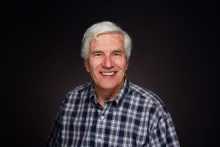
Steve Shafer was born and raised in Seattle. He graduated from Queen Anne High School in 1959 and later graduated from Ambassador College, Big Sandy, Texas in 1967, receiving a degree in Theology. He has been an ordained Elder of the Church of God for 34 years and has pastored congregations in Michigan and Washington State. He and his wife Evelyn have been married for over 48 years and have three children and ten grandchildren.
