
Jorge de Campos
This transcript was generated by AI and may contain errors. It is provided to assist those who may not be able to listen to the message.
You find people you know. And the Hadleys, Norm and I enjoyed talking with Bill and Kay before services. They actually were in the first church that we ever pastor. So you can learn a lot of dirt from them. They can fill you in on the background and past and some of the mistakes and things that we have done. I'd like to really compliment the choir. I thought you did a wonderful job. I don't know how Kenny Shoemaker does it year in, year out. He has a new group. Half of them don't sing, but by the time he gets through with them, they've learned how to sing. How to sing and do it together. So what I heard here, this choir sounded like one of the nicest that you've had. And you really have some talent here. With Kenny, it's amazing. 39-40 years ago, who would have ever thought that you'd be doing this? We knew each other back around 90, oh, 74-56, somewhere through there. And he was in the Norfolk area. And we've kept in touch over the years. So it's great to be able to see him here doing this. God has certainly blessed him with amazing talent. Singing is not one of my talents, so I really appreciate it when there are those who can. Victor Kubik was scheduled to be here today, but he's in England right now. Many of you will remember that John Ross Schroeder died. And Victor felt it would be the thing to do to represent the church, pay honor to the family, and to be there. So he's there. Then he asked Chris Rowland. Chris is speaking in the North Church, so it fell my life. A little man on the totem pole here. So I appreciate the opportunity to be here. And as Vernon, or Mr. Hargrove, mentioned, we do go back to 59 that period of time, 60. Norm and I came to college in 59. He was already there. And I remember playing basketball against him. At that time, he was one of the taller players on campus. And today, he wouldn't even make a guard in many of the the teams out there.
Well, if I'm going to have an hour and a half, I better begin.
Would you love to sit down with God personally and ask him questions, ask him what he has on his mind, ask him what he's planning for the future? What is he going to be doing for all eternity with us? You know, what does the future hold? It would be great to ask God about any problem, any solution, or say any difficulty, any problem test you're going through, and then have him say, well, this is what you should do and give you advice. It's not always easy to know. Sometimes you can be going through a problem, a difficulty. You can have something that you're dealing with, and you go to God, you pray about it, you study the Scriptures, you ask God to give me understanding so that you can understand. We understand a lot about what God is doing, what he's planned, because he's given us his word, the Bible, the Scriptures, and it reveals to us his mind, how he wants us to relate to him, how he wants us to relate to each other. And as a result of that, God has given us the Ten Commandments, and these tell us how to love God, how to love our neighbor, the rest of the Bible is an amplification of that. It explains how to put those type of things into practice. It is interesting that the Bible does reveal to us God's thinking about a subject that's associated with his plan that we want to take a look at today. There are multiple prophecies in the Bible that reveal what God is planning, what he plans to do. Do you know what is the most prophesied event in the Bible? According to the Encyclopedia of Bible Prophecy by J. Barton Payne, published in 1996, this is what he lists. In third place would be the Millennium. He counted 46 prophecies. I think I can find a few more, but he comes up with 46 specific. Second place was Christ's coming, 52 prophecies. First place, he says, the most prophesied event relates to Christ's sacrifice and death with 58 prophecies. When you begin to study some of these scriptures, you begin to understand more fully the nature of God, the love of God, the mind of God, how God acts, why God does what he does. So today I want us to take a look at the scriptures, what they reveal about the mind of God as it pertains to Christ's sacrifice, what he went through. Today we're going to find out why God did it the way he did it. Why would Christ have to go through so much suffering? Why could he not have simply just been shot, thrown off a cliff, and died for our sins in that way? Why did he have to suffer so much? Why did he go through so much pain, so much beating? In John chapter 1 in verse 1, let's begin there. John the first chapter, and we'll begin here in verse 1 of the book of John.
You'll find that in the beginning was the Word, and the Word was with God, and the Word was God. So the Word and the one that we know who as the Father and the two beings in the family of God had coexisted and were coeternal. And in verse 2, we read that he was in the beginning with God, so he had always existed.
All things were made through him, and without him nothing was made that was made. So all things, everything that was ever created, came through Christ. God used the Word to do the creating, and it was by the power of the Holy Spirit that they were able to carry it out. Now with that in mind, let's go over to the book of Colossians chapter 1. Colossians chapter 1, we'll begin to read here in verse 15.
We read here that he is the image of the invisible God, the firstborn, over all creation. For by him all things were created that are in heaven that are on earth, visible and invisible. You see, the physical is visible. We can see the stars, we can see the earth, we can see, you know, the physical things have been created, but also there are invisible things that have been created. Laws. Have you ever seen gravity? Have you ever seen centrifugal force? But there are laws that have been created. They're dominions, they're powers, they're angelic hosts.
There is a whole different dimension, the spiritual dimension. And so, as it says here, all things visible, invisible, whether thrones or dominions or principalities or powers, all things were created through him and for him. Now, do you create a universe? Create a solar system? Create the earth without plans? Would you dare try to create a car without some type of blueprint on how it goes together?
Now, God sat down and thought it all out. Can you imagine the wisdom, the knowledge, the understanding to be able to just create an eye as an example on a human being, an ear, to create a human body, create a bug, a tree, a flower, the earth, the universe, the sun, you know, everything that you can think of, and to have it all work in perfect harmony?
Well, this is what God did, and he gives you a little inkling of how superior his mind and his wisdom is than what we have. Why was the physical universe created? Have you ever asked yourself that question? Why did God create the physical universe? We don't know all the reasons. I'm sure there are a multitude of reasons we haven't thought of, but one reason we do know.
The one revealed to us is that God created the physical universe as part of his plan, that he's working out here below, that he has a plan, and part of that plan was a physical creation that was going to take place. God wanted to add to his family, and one of the most all-inspiring thoughts that I think you can have is to realize that at one time in eternity, the two beings who had existed forever started talking about, would it not be good to share our life, our way of life, our level of existence with others?
Now, how do we do that? How can we create new beings like that? And they sat down and they devised and thought out the plan of salvation as has been revealed to us. God created the angelic spirit beings, but they were not created on his level. God cannot sin. His nature is such that he's not tempted to sin, and yet we know one-third of the angels did sin, and so therefore they did not have his nature when they were created. James 1 13 tells us, James 1 13, God cannot be tempted with evil, neither does he tempt us with evil.
Even though the Bible indicates that the angels were created, they were perfect, there was something lacking. They did not have the nature of God that would keep them from sinning. They had to choose between right and wrong.
Lucifer and the angels did not have the downward pull of human nature as we know it, but they didn't have the upward pull of the God's nature either. The character of God was not set in them. Why? Well, God cannot create godly character in another being by divine fiat.
If he could, just snap his fingers, and boom, boom, boom, he would create beings who were just like him. But for us to be able to become like God, we have to know the right and the wrong. We have to choose the right way. We have to set our minds and our character through the power of the Holy Spirit that we will never go any other way, that this is the way.
If we didn't have this nature pulling us down, if we didn't have the human body, that we would go God's way with a spirit mind and a spirit body. In Ephesians 3, we read here about what God is doing. Ephesians 3, beginning in verse 8. Ephesians 3, verse 8. Notice what Paul writes here. He says, To me, who am less than the least of the saints, this grace was given, that I should preach among the Gentiles the unsearchable riches of Christ.
And to make all see what is the fellowship of the mystery, which is from the beginning of the ages, has been hidden in God, who created all things through Jesus Christ. So the wisdom of God, the word mystery just simply means hidden truth.
That what is true has been hidden from mankind. But to the intent that now the manifold wisdom of God might be known by the church to the principalities and powers in the heavenly places. According to, notice, the eternal purpose which he accomplished in Christ Jesus, our Lord.
The mystery of God has been hidden, but that mystery has to do with God's eternal purpose. He has a purpose that goes back into eternity, which he accomplished in Jesus Christ through his sacrifice for us. So the scriptures we just read here talks about an eternal purpose, and that God's wisdom was manifold. The word manifold there means many-sided, many-faceted. That the wisdom of God is so broad and faceted that God reveals to us some of it, but our minds are not capable as physical human beings of fully comprehending and understanding everything that God is doing and will do. And I think we will probably have to wait till the resurrection and in God's family before we can understand more.
Turn over here to chapter 1 in the book of Ephesians, and verse 9, Ephesians 1-9. It says, having made known to us the mystery of his will, so God has made known to us the mystery, something that has been hidden from mankind, of his will.
Now, in the Greek language, this word will here not only just means will, but it means his heart's desire. The mystery of his will or his heart's desire, according to his good pleasure, which he purposed in himself. So God purposed to do something that in the dispensation of the fullness of times he might gather together in one all things in Christ, both which are in heaven and which are on the earth in him. In him also we have obtained an inheritance, being predestined according to the purpose of him. So again, God's purpose is talked about, or eternal purpose, of him who works all things according to the counsel of his will. What we need to stop and understand is that the plan of God flowed out of his heart's desire.
That God wills and his heart desire is for us to be a part of his family. That God wants to share eternity with us. He wants to share the level of existence that he and Christ have always had. They've been so happy. They've always been such a dynamic pair, two God beings.
Everything that you can think that is good and wholesome and right, they have lived and experienced a life of joy and excitement and creativity. It came to a point in time when they said we want to share this with others. That's why you and I are sitting here now.
In 1 Peter chapter 1 and verse 18, 1 Peter chapter 1 verse 18, let's notice here a little more about what God planned. 1 Peter 1 verse 18, Knowing that you were not redeemed, were not bought back or redeemed, paid for with corruptible things like silver and gold, says from your aimless conduct received by tradition from your fathers, but with the precious blood of Christ as a lamb without blemish and without spot. He indeed was foreordained before the foundation of the world, but was manifest in these last times for you. So God had predetermined when the Christ would come on this scene. And when the time came, then He came and He died for our sins. But this was foreordained before the foundation of the world. This means that the Word and the Father had to discuss this ahead of time. They had to plan it out. If you write a book, you have control over what happens to the story and how it ends.
The God family planned for Christ's sacrifice before Adam and Eve were created.
Did they know that it was possible for humans to sin? And from everything that we can understand, the answer is yes. Revelation 13.8 tells us that Christ was slain from the foundation of the world.
And so this was something that had to be planned for if man went in the wrong way. And man did choose to go in the wrong way. Instead of choosing the tree of life and receiving God's Holy Spirit, they chose the tree of the knowledge, good, and evil, and set the direction that mankind would go in. In Philippians 2 and verse 5, we get an insight in Philippians 2.5 into the mind of God and into the mind of Jesus Christ. Philippians 2.5. We read this, Let this mind, this attitude, this approach, this mind, be in you, which is also in Christ Jesus, who, being in the form of God, did not consider it robbery to be equal with God.
He was God. And you and I are to have the same mind. Notice an alternate translation of verse 6 here.
It is that when it says, He, being in the form of God, did not consider it robbery to be equal with God. That He did not consider it something to be held on to, to be equal with God. He was willing to step down from the glorified spirit plane and become God in the flesh, a human being, but God who lived in the flesh. And verse 7 said, And He made Himself of no reputation, taking the form of a bondservant and coming in the likeness of flesh. Or as another alternate translation, He emptied Himself of His privileges. When He came to the earth, He emptied Himself of the privileges that He had in the family of God, the kingdom of God, where He existed.
Notice the WNT translations. Nay, He stripped Himself of His glory, and He took on Him the nature of a bondservant by becoming a man like other men. He gave up the environment of glory.
He gave up a spirit body. He gave up the home where He and the Father lived, planned. You might remember later on when He told Abraham to leave his country, to leave his family, Christ was not asking Abraham to do anything that He was not willing to do Himself.
That He was willing to come to the earth and become God in the flesh and to die for us. In Luke 14, we always read Luke 14, beginning in verse 26 when we counsel somebody for baptism.
We read in Luke 14 that if we love anyone more than God, we cannot be one of His disciples, that we've got to put God first. When we are asked, when you were baptized, when you were asked to be willing to give up everything, He is not asking you to do anything that He was not willing to do because He's already done so. He was willing to give up His existence on that level to come to this earth as God in the flesh. This gives you a little insight into Christ's thinking, and it also gives you an insight into God's, the Father's, thinking. The love and the concern He had for us before we were even created, that God was willing to plan and to think about this even before you and I were created. We came on this scene. Now, verse 8, and being found in appearance as a man, He humbled Himself and became obedient to the point of death, even the death of the cross. He came as a human being. He humbled Himself, and He died on the stake.
Now, the Gnostics in the first century claim that Jesus Christ did not come in the flesh, and that is an absolute lie. He did come in the flesh. He was God in the flesh. The Gnostics said He only appeared in the flesh like an apparition, and that's what is called doceticism, or, you know, it was a philosophy that was back at that time. In John 3.16, a scripture maybe many have memorized, it says, God so loved the world that He gave His only begotten Son. God had to give something, both of them, both had to give something up. The Father gave His Son, and the Son was willing to give up His level of existence, come as a human being, and to be God in the flesh. This also helps to explain what grace is. We're saved by grace through faith, but grace is not just something that God does. It is a part of His nature. It is what God is like. It is His approach. It is His direction. Grace is always from God motivated out of love.
Bible says God is love, and grace is love in action by God. God is willing to extend to us mercy, forgiveness. He's willing to overlook our sins when we repent. And so His grace is motivated from His love towards us. How would you like to watch your own son or daughter die a horrible death when you could have prevented it? God allowed He had to watch His own son die, but He allowed it for a purpose, for a reason. Why did Jesus Christ come to this earth? Why did He come? Why did He become flesh? Well, 1 Timothy 1 and verse 15. 1 Timothy 1 and verse 15 says this, This is a faithful saying, and worthy of all acceptance, that Christ Jesus came into the world to save sinners, to save you from what? Well, to save you from the death penalty, to save you from dying. We know that the wages of sin is death, and so He came to give His life as a sin sacrifice so that our sins could be forgiven.
Who was the God of the Old Testament? I want you to notice that the God of the Old Testament, the one who spoke to Abraham, Isaac, and Jacob, to Moses, to the prophets, was the one who became Jesus Christ in the New Testament. The promise Messiah, or Savior. He was the one who inspired the 58 prophecies about His own death.
Here He is as God appearing to the prophets, appearing to the patriarchs, telling them, giving them prophecies about what the Messiah would go through, what He would personally experience, and He prophesied about His own death. He inspired the prophets to write about the trials, the tests, the death that He was going to have to go through in the future. And then the Father made sure that those prophecies were fulfilled and were carried out. He could have written a different ending. So I said an author can write whatever he wants to to a story. He could have written it differently. God has control over the events, but He did not. And that's the central question we're asking. Why? Why did He do it the way He did it? In Exodus 12, we find the institution of the Passover and the Passover Lamb. The Lamb was slain for the sins of the people. They came under His blood and protection from the death angel. And so right from the very beginning, you find that there is the shedding of blood. It is the blood that covers our sins. And that that Passover Lamb was a type of Jesus Christ. John 1 verse 29, John said, Behold the Lamb of God, which takes away the sins of the world. And so Christ was that Lamb. The sacrificial system that they had in the Old Testament, sin offering, trespass offering, peace offering, burnt offering, meal offering, all of these offerings that they had that they offered up. The sacrificial system pictured the various aspects of the sacrifice of Christ. Each one gave an insight into what Christ was going to have to go through. Let's go back to Isaiah 53. Isaiah 53 is a prophecy that the one who became Jesus Christ, the Messiah, God in the flesh, inspired in the Old Testament. In verses 1 and 2, Isaiah 53, we find that he predicted his birth and growth and maturing.
And let's notice, though, picking up the story in verse 3. In verse 3, it says, he is despised and rejected by men. He was a man of sorrows and acquainted with grief. And we hid, as it were, our faces from him. He was despised, and we did not esteem him. Now, the word despised here in verse 3 means simply that. It means to hold in contempt.
That he was despised, certainly despised by the religious leaders, but he was despised, as it says here, and rejected by man. The word rejected means to be forsaken. And when it came down to him being crucified, they all turned and left him. And he was there on his own. Jesus Christ was perfect. And it's hard for us to imagine how they would despise him, how they would reject him, how anyone would do that, how the Jews of his day would. And yet in John 1, in verse 11, it says, he came to his own, and his own received him not.
You might remember the parable where Jesus Christ went off to heaven in Luke 19. And in verse 14, it says, his citizens hated him. They didn't love him. They hated him. How do you feel when somebody hates you, somebody despises you? Have you ever had somebody come up and say, I can't stand you and just, you know, maybe spit in your face? That's not something we human beings take normally very well. No, Jesus Christ was rejected. He came claiming to be the Son of God, the Messiah. And yet they rejected him. They called Jesus Christ a fraud, a bastard, a drunkard, an alcoholic. They called him every foul name that you can think of.
And yet Jesus Christ did not try to strike back or get back because he realized they were unconverted. He understood that one day they would have to eat those words and repent and ask for forgiveness. And that's the reason why he came. He wasn't going to allow himself to lose his temper, begin to sin and strike out at someone because the very reason he was there on the earth was to come live a sinless life, die for our sins. Now verse 3 goes on to say that he was a man of sorrows. The word sorrow here means pain. It can be translated pain. Christ went through physical pain. He went through mental pain. He went through emotional pain. And you look this up in the Greek and you'll find it refers. It can be translated either physically or mentally as far as pain. Then in verse 3 it also says here, he was acquainted with grief. He was acquainted with sickness. Notice the NIV translation says he was despised and rejected by men. He was a man of sorrow and familiar with suffering.
Like one from whom men hid their faces, he was despised and we esteemed him not.
Jesus Christ suffered physically, mentally, and emotionally. Not only was that during his crucifixion, but it was also during his ministry that there were many occasions when he was ridiculed, made fun of, and yet he still carried out the plan of God, the purpose of God, for why he came to the earth. The one thing that he never deviated from, he never changed, he never went off in some other direction. He came to the earth for a purpose and he never allowed anything to deter him from that purpose. Jesus Christ, as a result, can have empathy for us. Do we go through pain? Do we suffer mentally? Have we ever suffered emotionally? Have you ever lost a child or have you ever lost a mate or your relative? We all go through where we know people that have suffered death, people who go through pain. How many people suffering with cancer, sicknesses, diseases, all kinds of ailments today? We have many people who every day die of starvation. He learned, he has empathy. Hold your place here, but notice in Hebrews 5 and verse 8. Hebrews the fifth chapter, verse 8, says, Though he were a son, yet he learned obedience by the things that he suffered.
Christ learned what it was like to be a human being, to walk the earth, to get weary, to get tired, to put in a hard day's work, to go without food or without water. You don't fast 40 days and 40 nights without knowing what hunger is all about. He went through all of that so that he could have empathy, sympathy for us. He could feel for us. And when you and I go to God, we pray, we go through Christ. We say in the name of Jesus Christ, he makes it possible. You might remember when he was crucified and he died and he cried out that the veil of the temple was ripped in two, showing that through Christ, through his body, that we were able to have access to the Father in heaven and we can go to him. And so we have a high priest who has sympathy for us and he knows what we go through. And he can go to the Father and he can say, Father, I know what it's like. I know what this person's going through. And you'll be able to explain even a little more to the Father about what we suffer. Going on in verse 4 says, coming back to Isaiah 53 and verse 4 again, surely he has borne our griefs, he's carried our sorrows, and we esteemed him stricken, smitten by God and afflicted.
Now verse 4 is a key verse. Did you catch what it says? Surely he has borne our griefs and carried our sorrows, and yet we have seen him stricken.
Griefs here is sickness and the emphasis here is on our. Christ has borne our sicknesses and our sorrows or our pain. Christ bore the pains of our body and weaknesses of our body. You know, sin, you have to stop and realize sin produces harmful effects both spiritually and physically. When we sin, it affects our minds. Our minds can become perverted. All you have to do is go back and read Romans chapter 1, and it talks about how when they knew God, they didn't honor him as God, and they went off in disobedience. People's minds can become twisted and perverted in thinking, could have vile affections, wrong desires, and when we are converted, our minds need to be healed. Maybe our emotions need to be healed. Sometimes our physical bodies, we concentrate on the physical bodies, but there are scars. We have mental and emotional scars that have been left from things that we've gone through, experienced in our lives that need to be healed. So there's an emotional aspect of sin. Humans react emotionally. They get angry. What does a violent crime against somebody do? What does it do to the perpetrator? What does it do to the victim? What does it do to the victim's family? What about things like sexual perversion? What do those type of things do to the mind and emotions? Many things that we do affect our emotions, and we carry guilt with us. And one of the things of repentance is that we feel guilt. Guilt leads us to repentance, but once we have repented, we no longer have to feel guilty after that. God is able to take from us resentment, bitterness, hatred, animosity, all of these things, and we can become a new creature. We can begin to love people. We can begin to have peace of mind. We can have those hurts taken from us, the deep scars and hurts. We've all had scars, perhaps, from broken relationships, bad relationships, family problems, children, mates, parents, society. Whatever it might be, we've all gone through these type of things. Are these not areas that have to be forgiven by God? And then through God's Spirit, God gives us a sound mind. He gives us a mind that, through His Spirit, that we can be healed. And then we also have physical afflictions that are a result of sins that many times we need to be healed from.
Let's go on and let's notice in verse 5 here. There are four verbs that describe what Jesus Christ went through in verse 5. He was wounded, he was bruised, he was chastised, and he was beaten.
Why did he go through these tortures? Wounded, bruised, chastised, beaten. The word wounded means to be wounded or pierced. Remember, he was finally killed by a sword. Bruised means to be crushed or to be shattered. And he certainly was when he was beaten and scourged. Chastisement means discipline, chastening, or correcting. And stripes refers to bruises and stripes and wounds and blow.
Now, why did Christ do this? Well, notice he was wounded for our transgressions because of our sin. Transgressions means rebellion, transgressing, going against God's law. Sin is the transgression of God's law. And he was bruised for our iniquity. Iniquity here means perversity, depravity, guilt, and punishment. And then it goes on to say here that the chastisement for our peace was upon him. So Christ was wounded, had stripes, he was bruised, and all of this for our transgressions, for our iniquities. But he was also chastised for our peace. Hebrew word here is shalom. For our peace, it means completeness, soundness, welfare, peace of mind. We can have peace of mind. Our guilt can be removed from us. We can be brought into a right relationship with God. We can begin to establish right relationships with other human beings. Remember Christ said in John 14, 27, My peace, I leave with you, not peace like the world gives. The world says, well, we're living in a time of peace. What that means is that they're arming for the next war, getting ready for it. And it means maybe they're not fighting right now, but they certainly do not have peace. We can begin to have peace with others, peace of mind. And he did all of this also for our healing, that we might be healed. And healing again refers to physical, emotional, mental, and every way. This is why Jesus Christ had to go through the beating and the crucifixion that he did, because he was going to bear. And in his body, you know, our sins, our sins were placed upon him. And he was going to die so that we could be forgiven. And he experienced the pain, the suffering, so that he could be a merciful high priest for us. When Christ was on the earth, did he know what he was about to go through? Did he know what he was going to have to suffer? Did he realize that all of these things were going to happen? You might remember as a child in Luke 2, 49, Jesus Christ said, I must be about my father's business. Even as a child, he understood that he'd come to the earth for a purpose. In Mark chapter 8, let's go over to the book of Mark chapter 8 verse 31. There are literally many, many scriptures we could read along this line, but we'll just read a couple of them here. Mark 8, 31, says, He began to teach them that the Son must suffer many things, be rejected by the elders and chief priests, and scribes, be killed, and after three days, rise again. And he spoke this word openly. Then Peter took him aside and began to rebuke him. And when he had turned around and looked at his disciples, he rebuked Peter, saying, Get behind me, Satan, for you are not mindful of the things of God, but the things of men.
He realized that was the reason and purpose he'd come into the earth. And so, he was telling them, but they didn't understand. He predicted his death. John 3, 14 is another one. John 3, 14. Let's notice.
It says, As Moses lifted up the serpent in the wilderness, even so must the Son of Man be lifted up. So he realized he was going to be lifted up. He was going to be put on a stake. He knew he was going to be betrayed, condemned to death, mocked, scourged, crucified.
In fact, if you go back here to Matthew chapter 26 and verse 26, a set of scriptures we generally read on the past overnight.
Matthew 26, beginning in verse 26, Jesus Christ changed the symbols that evening. He gave us the symbols of the wine and the bread. And as they were eating, Jesus took bread, verse 26, Matthew 26, blessed and broke it and gave it to his disciples and said, Take heat, this is my body. So taking that bread, he broke it, symbolizing his body was going to be beaten. And he said, Take heat, this is my body. His body was broken by his stripes, we're healed. Then he took the cup and he gave thanks and he gave it to them, saying, Drink from it, all of you, for this is my blood of the new covenant, which is shed for many, for the remission of sins. So the bread and the wine, symbolizing what he was going to go through. Now, let's pick up the story in verse 36 here. Verse 36 of Matthew chapter 26. And notice, Then Jesus came with them to a place called Gethsemane. And he said to his disciples, Sit here while I go and pray over there. And he took with him Peter and the two sons of Zebedee, and he began to be sorrowful and deeply distressed. I want you to notice, even though he knew he had come to the earth for this purpose, he also realized what he was about to go through. He had inspired those 58 prophecies in the Old Testament. He had inspired chapter 53 of the book of Isaiah, Isaiah 52, Psalm 22. He knew all of those scriptures. And so he was sorrowful, and he was deeply distressed. And his state of mind was one where he was having mental anguish over this. Even though he was God in the flesh, and he came to the earth for that purpose. When you come right down to it, and this is the hour, this is the day, this is when it's going to happen. It's been prophesied, but now I'm here. I'm going to live through this. It was not something that he was just really, you know, the suffering, the pain, the beating, and all of that, that he was looking forward to. He knew it was coming. Notice verse 38. He said to them, my soul is exceedingly sorrowful, even to death. Verse 39, he went a little further, fell on his face, and prayed, saying, O my father, if it's possible, he said, let this cup pass from me. Nevertheless, not as I will, but as you will. Not as I will, but as you will. What did he mean, let this cup pass from me? Well, he knew he was going to have to die for the sins of mankind. There was never a question in his mind about that, but I think the ordeal that he was about to face, although the pain, the suffering, being beaten by the Roman soldiers, having a crown of thorns thrust on his head, being spit upon, being made naked, you know, everything that they did to him, the scourging, the crucifixion, all of those type of things. He knew he was going to be having to go through that, so he said, father, if this cup can be removed, if it can be done differently, please do so. He prayed three times that way, and yet God said, no, we're going to do exactly as was prophesied. What we had determined. Let's notice in Luke 22, verse 44. Luke chapter 22 and verse 44.
God gave him the answer, and the answer was, yes, you are going to have to drink of this cup. And verse 43 says, an angel appeared to him from heaven and strengthened him, and being in agony, he prayed more earnestly. Then his sweat became like great drops of blood falling down to the ground. So there was a certain amount of agony that he was going through, and so much so that when he was perspiring, that his perspiration was mixed with blood.
So what was going through Christ's mind at this point? He realized that he had come to the earth for this purpose, that this was the crowning moment of the eternal plan of God. This was the time that he had come to die for the sins of mankind. And so he prayed, he asked God to guide him, God strengthened him, and he was willing then to go and fulfill the purpose, the plan of God, that God had called him to or God had placed him there to fulfill. Brethren, we need to realize that God the Father and the Word were willing to plan all of this out. They had an eternal purpose, eternal plan. God wanted and wants to share eternity with all of us. He wants us to be in his kingdom. He wants to share his level of existence. He wants to share his way of life, his wonderful, joyous way of life, and be able to live for all eternity with his family. And in order for that to be accomplished, if human beings sinned, they had to be forgiven. And Christ was willing to come to this earth, come as a human being, humble himself. Here he had lived as God for eternity. He was willing to come down to this earth, give of himself, go through the torture, the suffering, the pain, finally the ignominy of the crucifixion, the death. And finally, you might remember, he cried out, my God, my God, why have you forsaken me? And he gave up the ghost, or he gave up the spirit, and he died for us, but he rose. And through God, through Christ living in us, we're now able to grow and to overcome. So, brethren, as the past overcomes up, let's never forget what Christ did for us, why he did it, why he had to suffer, that he was willing to suffer so that he could be a merciful high priest. He knows what we've gone through. He is born our sorrows, our pains, our suffering. So, brethren, truly, when you think of the Passover, it allows us to think and have an insight into the very mind and heart, will and plan of God.
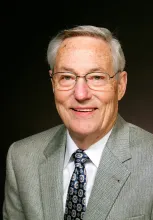
At the time of his retirement in 2016, Roy Holladay was serving the Operation Manager for Ministerial and Member Services of the United Church of God. Mr. and Mrs. Holladay have served in Pittsburgh, Akron, Toledo, Wheeling, Charleston, Uniontown, San Antonio, Austin, Corpus Christi, Uvalde, the Rio Grand Valley, Richmond, Norfolk, Arlington, Hinsdale, Chicago North, St. Petersburg, New Port Richey, Fort Myers, Miami, West Palm Beach, Big Sandy, Texarkana, Chattanooga and Rome congregations.
Roy Holladay was instrumental in the founding of the United Church of God, serving on the transitional board and later on the Council of Elders for nine years (acting as chairman for four-plus years). Mr. Holladay was the United Church of God president for three years (May 2002-July 2005). Over the years he was an instructor at Ambassador Bible College and was a festival coordinator for nine years.
