
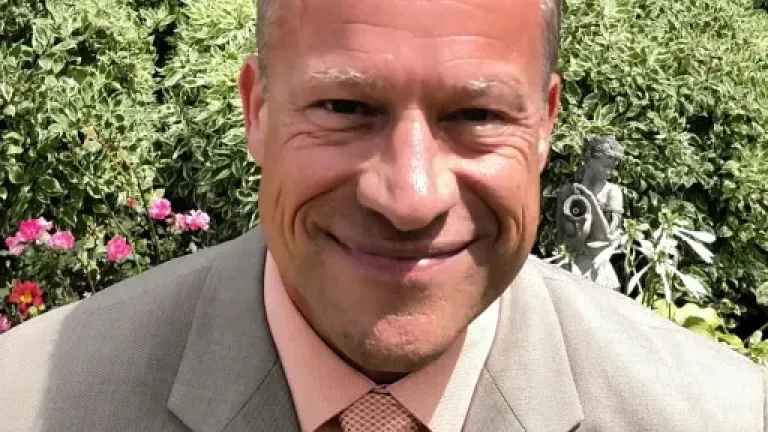

Roy Holladay
This transcript was generated by AI and may contain errors. It is provided to assist those who may not be able to listen to the message.
When you mention the term, holiness, what do you think most people think of? Well, a lot of people in society would think of holy rollers. Now, those are not people who gamble. Holy roller is sort of a slang term that's used for Pentecostals, because in many cases, they get down on the floor and they roll around. So, they call them holy rollers. Or you might hear the term holiness church, and it has the same meaning.
It's a reference to those who are Pentecostals. Many say or think that Christians claim to live a holy life, but they don't see any difference in a Christian and a non-Christian. If you had a Christian here in society, and you had a non-Christian over here, which one would you be able to say as a Christian by simply observing how he lives his life? How he deals with people? How he works? Anything that that person might do? Many of you may remember from years ago, Mohandas Gandhi. He had this to say about Christianity. I like your Christ, he said when he was asked about Christ, because a lot of people knew that he professed Christ, or that he acknowledged that Christ.
He says, I do not like your Christians. Your Christians are so unlike your Christ. And I think that's especially true today. There have been many decades have passed since Gandhi lived, and I think that that's true today more than ever. I quoted some of these statistics to you a while back in the sermon, but I'd like to reference some of them again. It's from a Barnas study, where it's talking about the average person today who professes Christ, his attitude towards religion. It says, by a three-to-one margin, adults noted that they are personally more likely to develop their own set of religious beliefs than to accept a comprehensive set of teachings by their church.
So what you find today is that people claim to be religious. They claim to be Christians, but they are putting together their own religion. And they're calling it Christian, because they take a few elements of that religion from the Bible, and they accept what they want to accept. They reject what they want to reject. So as the Christian faith is less of a life perspective that challenges the supremacy of the individual, as it is a faith being defined through individualism.
So today, faith, for many, is defined by the fact that I'm an individual, and I will decide for myself what I believe. And nobody's going to tell me what to believe. Americans are increasingly comfortable picking and choosing what they deem to be helpful, and accurate theological views, and have become comfortable discarding the rest of the teachings in the Bible. So it's like going through Golden Corral, or a cafeteria. You go along, and you say, well, this salad looks good, and this looks good.
I'll take this meat, and I won't touch the rest of it. The only problem is, here's the Bible, and the whole teachings of the Bible, and you say, well, I like this part, and I like that part, but I don't like the rest of it. So you just sort of discard everything else, and accept what you want to accept.
Growing numbers of people now serve as their own theologian in residence. One consequence is that Americans are embracing an unpredictable and contradictory body of beliefs. Barna points out as an example that millions of people who consider themselves to be Christians now believe that the Bible is totally accurate, and all of its lessons that it teaches, whereas at the same time they believe that Jesus Christ sinned. Among individuals who describe themselves as Christians, for instance, close to half believe that Satan does not exist.
Now you might ask, well, what does the Bible say? Well, it doesn't matter what the Bible says. Half don't believe he exists. One-third contend that Christ sins, that's 33%, of Christians, not agnostics, not atheists, but Christians. While he was on earth, two-fifths say they do not have a responsibility to share the Christian faith with others, and one-quarter dismiss the idea that the Bible is accurate in all of its principal teachings.
Now, how can a person be holy? How can you be holy when he doesn't believe that the Bible is the standard to live by? Or that he'll only live by a small smattering of what the Bible says? Or how can you be holy if many of the doctrines of the Bible are not accurate? Or how can you be holy if Jesus Christ, who is our example, sinned? Which part of his example are we going to follow? The sinned part or the good part? Because we're told to follow his example in the Bible. And that the individual can determine his own religion, his own standard of theology.
So what standard do you have to rely upon? Now, last week I covered the topic, if you'll remember, of what's wrong with sin. We briefly discussed the Days of Unleavened Bread and that that picture is coming out of sin. That we are to come out of this society in the world that we live in. We're to put out the old leaven of malice and wickedness. Now, we know that the Days of Unleavened Bread also, though, picture putting in the unleavened bread of sincerity and truths into our lives.
It pictures a putting away, a putting out. It also pictures a putting in to our lives. We put sin out. We put righteousness in, if you want to summarize that. Notice in 1 Corinthians 5, verses 7 and 8.
1 Corinthians 5, verses 7 and 8. We read, therefore purge out the old leaven, that you may be a new lump, since you truly are unleavened, for indeed Christ our Passover was sacrificed for us. So we find the meaning of the Passover. It pictures Christ as our sacrifice. Therefore, let us keep the feast, not with old leaven, nor with the leaven of malice and wickedness, but with the unleavened bread of sincerity and truth.
So you'll find that you and I are to worship God according to sincerity. We are to be sincere and according to truth. Now, John 17, 17 says, thy word is truth. So if we're going to worship God, it has to be according to His word.
Not our own man-made theology, not our own ideas, not our own concoction of what we think religion should be. The word truth here in the Greek language means what is true in things pertaining to God and the duties of man, moral and religious truths. In other words, the truths that are based upon the Bible. It has to do with respecting the duties of man. The candor of mind, which is free from affection, pretense, simulation, falsehood and deceit.
In other words, a person who is honest and truthful, above board, not somebody who is deceitful and going the opposite direction. Now, how holy, brethren, are we as Christians? How holy are you as an individual? How holy is your conduct? Is your life? How holy are we as a local congregation or as a church? And when I say holy, what am I talking about? What is holiness? Is that a Pentecostal term or is that a term that is applicable to all of us here?
Now, we know what sin is. We covered that last week. We went through that. We are to be sincere and operating according to truth. The Bible tells us. The question that we might want to ask ourselves is, are we wearing the new clothes that God has given to us to wear? And you might ask yourself, what are those new clothes that you and I are supposed to be wearing?
What does that have to do with holiness? Well, let's go back to the book of Exodus to start with and see if we can take a topic that is exceedingly broad. This is a very broad topic and we're not going to be able to cover everything about this topic today. Even though last week I said I was going to cover everything you ever wanted to know about holiness, but we're afraid to ask.
Nobody asked me, so I'll cover what I can here. Let's notice Exodus 19 in verse 6. It says, So Israel was to be a special treasure to God. They were to be above. He was going to exalt them above the other nations. But notice in verse 5 and 6, So Israel was to be a holy nation.
These are the words which you shall speak to the children of Israel. So you'll find that God wanted ancient Israel, the nation that he brought out of slavery, to be a holy nation, a special treasure. They were going to be a kingdom of priests. Now with that in mind, let's read Deuteronomy chapter 7, beginning in verse 1. Deuteronomy chapter 7, verse 1. It says, Moses is reiterating to the younger generation. These were those that were under 20 because the older generation had died off, who were now 40 years older, and they were going to enter into the Promised Land. And God here through Moses is reiterating the law and what was going to be required of them. So it says, Nations, he says, Verse 2. Now verse 3.
And God very clearly reiterates a principle here that's taught in the New Testament. That you do not go and marry those who are not in the church or within the faith because the problem is they can have a huge effect upon you and perhaps lead you astray. It says, Now why does God say this? Well, notice, he says, Now I want you to notice here, in verse 6, God says here that they were a holy people. If you'll notice the margin, it says that they were a people who were set apart. So God set them apart. That's what the word holy, one of the definitions of the word, means. They were chosen by God, and they were a special treasure to God. And God chose them not because they were a great number. They were small in comparison to many other nations. Then he goes on to say here, in verse 8, that the Lord has brought you out with a mighty hand. Well, let's notice, yeah, verse 8.
So you find that God chose them, number one, because He loved them. And secondarily, because He was going to keep His oath, His promise that He had made to the fathers, to Abraham, Isaac, and Jacob. And you might remember God had promised that He would bring them into Palestine, set them up, and establish them as a nation. And so you find that God did that, that God, through the Exodus. As it says here, that they were in bondage, and God delivered them from bondage. And that Israel was again called a holy people. They were God's holy people. So brethren, we find that Israel, even Old Testament Israel is referred to in the Bible as being a holy people. What made them holy? Well, let's look in Leviticus 11. Leviticus 11 and verse 44. There are any number of scriptures that you could quote that tie in with this.
Chapter 11 and verse 44 of the book of Leviticus. God says, for I am holy. I am holy. I expect you to be holy. Neither shall you defile yourself with any creeping thing that creeps on the earth. This is the chapter dealing with clean, unclean meats. For I am the Lord who brings you up out of the land of Egypt to be your God. You shall therefore be holy, for I am holy. Now, brethren, the main word here in the Hebrew, there are a number of words that occasionally are translated holy, but the main word is the Hebrew word kadash. And the word means to be consecrated or to be set apart, to be devoted to something, to keep oneself apart or separate. Now, what made Israel holy? Have you ever asked yourself, why were they holy? God said that they were to be holy. Now, if they were to be holy, what was going to make them holy? And this is where it gets down and begins to apply to us. Well, let's notice, there were several reasons. Number one, God separated them out from all other nations. They were set apart by God and consecrated or devoted to Him, to His service, to His way of life, to His calling. They had a special calling from God. And their calling was to be a beacon, to be a light, to be an example to all other nations around them. And how were they going to be that example to all other nations? Well, it was by obeying God, keeping His law. And by doing so, the nations would say that they truly were a wise people.
Of all the nations on earth, they were the only one that God was dealing with at that time. Notice over here in chapter 20, book of Leviticus, in verse 26, what God says, chapter 20, verse 26. You shall be holy to me, for I am, I the Lord, am holy, and I have separated you from the peoples that you should be mine. So they became God's people. They were holy and they were separated to God. Second reason, God chose them. They did not choose God, He chose them. They were not a nation out looking for the true God. God came along after they had been in captivity, they had forgotten about God, and God chose them as a slave nation to be His people. A third point is back here in Exodus 25, verse 8.
Exodus chapter 25, verse 8. If you'll remember, God asked them to build a sanctuary. And you'll notice here in verse 8, Let them make me a sanctuary, God says, that I may dwell among them.
The word sanctuary here means a sacred place. God told them to build a tabernacle to begin with and later on a temple. Now why? Because it would be a place where God would dwell. It was God's dwelling place among them. In other words, the Holy God was going to dwell in their midst, and He was going to lead them. Whenever they wanted to know what they should do, the high priest could go into God and seek through the urem and the thumb and through the breastplate, ask God's will. I've been struck repeatedly in studying the example of David's life, reading through Samuel here recently. How many times it says, David asked God, what should I do? And you'll read, and God said, do this or do that. And He always had a priest. When he went out to battle, when they were doing something, there was always a priest available to be able to seek God. So you'll find that here was God, who was holy, who dwelt in their midst. And why did they become a holy people? Because there was somebody holy with them, dwelling among them. Now, that brings us to the fourth point as to why they were holy. Objects are holy if they come in contact with something that is holy. Let me say that again. Objects are holy if they come in contact with something that is holy. You can remember the example back here in Exodus 3. Exodus 3 and verse 5. Moses is out here wandering around in the wilderness. He sees a burning bush. He turns aside to look at the bush. And verse 5. And He said, do not draw near this place. Take your sandals off your feet. For the place where you stand is holy ground. What made it holy? Because God was there. That's why it was holy. God was present. And so when He came into God's presence, He was on holy ground. The holy God anciently dwelt in the tabernacle, and then later on in the temple. And there was a time when God removed His glory from the tabernacle or from the temple. And He went away. And He left Israel on their own. And they went into captivity. To show you what I mean here, let's go back to Hebrews chapter 9. Hebrews chapter 9, we'll begin to read in verse 1. Because if you remember, the book of Hebrews addresses any number of items, but it addresses the tabernacle, temple, priesthood. And let's notice beginning in verse 1. It says, Then indeed even the first covenant had ordinances a divine service, and the earthly sanctuary. For a tabernacle was prepared the first part in which was the lampstand, the table, the showbread, which is called the sanctuary. The sanctuary, or as the margin says, the holy place. The holy place is where the priests entered in all the time, every day. But the holy of holies, let's notice in verse 3, was something that was separate. And behind the second veil, the part of the tabernacle, which is called the holiest of all. So you find the holy place was a type of the church. The holy of holies was a type of the very throne room of God Himself in Heaven. And that's why it's called the holy of holies. And in the holy of holies was the ark and the mercy seat. You and I come before that mercy seat through prayer.
So you find that the tabernacle became holy, and was referred to as a holy place, because God's presence was there. Now, God also gave to Israel a holy law, holy commandments. If you want to call it that. Was it just a secular law? Or was it not a law from the holy God to them on how to live and conduct their lives? Let's notice one aspect of this law back in chapter 31 of the book of Exodus. Exodus 31, verse 12.
We find this. And the Lord spoke to Moses, saying, Speak unto the children of Israel, saying, Surely, my Sabbaths, not just the weekly, but all of his Sabbaths, My Sabbaths, you shall keep, for it is a sign between me and you throughout your generations, that you may know that I am the Lord who sanctifies you or sets you apart. You shall keep the Sabbath thereof, or therefore, for it is holy to you. The fourth commandment says, Remember the Sabbath day, keep it holy.
Now, why would the Sabbath day, why is this day of all days holy? Because God's presence is in this day. When God created the Sabbath day, God rested on the Sabbath day, and he set it apart. In other words, he set it aside, he consecrated it, and it is a day that is a holy day, and you and I are to keep it that way.
Meaning, that it is to be a day from Friday sunset to Saturday sunset, that has been set apart by us also to honor God, to worship God, and to keep it in the manner that he has prescribed. So the Sabbath is holy. Not only that, but Leviticus 23 tells us concerning the feast days. Notice, beginning in verse 1, Leviticus 23, we call the feast days, what's another term we refer to the feast days as?
The holy days. Well, what do we mean? Well, let's notice. Verse 1, the Lord spoke to Moses, saying, Speak to the children of Israel, and say to them, The feast of the Lord, which you shall proclaim to be holy convocations, these are my feast. Six days shall work be done, but the Sabbath, the seventh day is the Sabbath of solemn rest, a holy convocation. And then it begins to talk about what we would refer to as the annual Sabbaths and festivals, and that there were holy convocations.
Now, what makes an assembly? This is a holy convocation that we have here. What makes this a holy convocation? Well, there's something holy about this, and that is, you and I are meeting with God. God is here. His presence is here. His presence is here also, because you and I have His Spirit, and we are also meeting here. But God set these meetings apart, and God is a part of them. Now, Israel had a responsibility, as I said, to be an example to all of the nations around them, and to set that example.
All you have to do is go back and read Deuteronomy 4, and you'll see where that's very clearly articulated. Okay, that's Old Testament Israel, Old Testament congregation. What about the New Testament church? What about us? Well, the church today—let's go back to 1 Peter 2 and verse 9. And I want you to notice something. That everything that I've read to you so far about the Old Testament congregation applies, but applies in a spiritual sense to us today, as the church of God. 1 Peter 2, beginning in verse 9, we read, You are a chosen generation, a royal priesthood, a holy nation, His own special people, that you may proclaim the praises of Him, who called you out of darkness into His marvelous light, who once were not a people.
Remember going through the book of Hosea, where He said, you know, you're not my people, but now you are my people? Notice what it says here. Who once were not a people, but are now a people of God, who had not attained mercy, but have now obtained mercy. Same thing that the book of Hosea talks about. We today are the Israel of God. And notice, we have been chosen by God.
We did not choose God. He chose us out of this world. We are to be a holy nation, a holy people. We are God's special people today. We are God's treasure today. We are here to proclaim His praises, to set His example. And as verse 10 says, we are the people of God. You look around the world, just as it was with ancient Israel. We are the people of God. We are to be an example to all others, as verses 11 and 12 said.
Remember what Gandhi said about Christ and Christians? Let me quote it again. I like your Christ. I do not like your Christians. Your Christians are so unlike your Christ. Now, when it comes to us, brethren, people who see us should say, those Christians are so like their Christ, like their Savior, like their leader. Back up here to chapter 1, verse 15, in the book of Peter, 1 Peter 1, 15.
As He who called you is holy, you also be holy in all of your conduct, and all of the way you live, your conduct, your example, because as it is written, be holy for I am holy. Same thing that was said to ancient Israel. It was said to us.
The main Greek word for holy is hagios, and it basically means to be brought near or into God's presence.
That's why we're here as a holy convocation. We are in God's presence. The word also means to be set apart for God's purpose, dedicated to God. Persons who are holy, pure, are consecrated to God. It refers to supernatural beings, such as the Father, Christ, the Holy Spirit, of course, the power of God, the Holy Spirit, and to angels. It also is a term that belongs and refers to us in the Bible as the saints of God. The word saint comes from the basic root word hagios. It means the holy ones are set apart ones of God. We are wholly dedicated, set apart, to God. So what makes the church holy today? I asked the question, what made ancient Israel holy? Well, what makes us holy? Because we're no more holy of ourselves than they were. So what makes us holy? Well, let me list the reasons why we are holy. One, God has separated us from this world. He has set us apart, and He has devoted us to Himself. Of all of the people on the face of the earth, over seven billion, there are only a small handful that God has called, and we are part of those. John 6, 44, you might remember, no one can come unto the Son unless the Father draws Him. So God calls us, He draws us, He separates us. We are a separate people. We are the ecclesia of God, the Church of God. As 1 Corinthians 1-2 says, We are sanctified, that means set apart, and we are called saints. Now, the Catholic Church makes a big deal out of being a saint. To be a saint, you have to have died. No, you've got to be dead before they can classify you as a saint. And there have to be two miracles performed in your name after you've died. Well, the Bible reveals all of those who have God's Spirit are His saints. He has called out ones that are dedicated to Him. Secondarily, we have been chosen by God, as I said earlier. We did not choose God. He chose us. Ephesians 1-4 Notice, again, we read this last week, but it's applicable here. Ephesians 1-4 says, Just as He chose us in Him before the foundation of the world, that we should be holy and without blame before Him in love. So we were chosen before the foundation to be holy and without blame. John 15, Jesus Christ, in verse 16, said, The same commandment holds true for us, that we are to love one another. So we didn't choose God. He chose us. And just as Israel was only one nation of dozens of nations, you and I are a handful of people that God has chosen today. Now in the Old Testament, the sanctuary, or the sacred place, the tabernacle, the temple, was created so God would dwell among them. The Holy Spirit was in their midst leading and directing them. Now today, God dwells in His Church through the Holy Spirit. If you've been baptized and had your sins forgiven, had hands laid on you, and have received the Holy Spirit, God dwells in you. We, the Church, are the temple of God today. And so, therefore, God dwells in His temple today. 1 Corinthians chapter 3 and verse 16.
1 Corinthians chapter 3, and we'll begin in verse 16. Do you not know that you are the temple of God, and that the Spirit of God dwells in you? You see, God has wanted to dwell with His people, to fellowship with His people, to be with His people. Now it says, if anyone defiles the temple of God, God will destroy him. For the temple of God is holy, which temple you are.
So as the temple of God is the Church of God, in which the Spirit of God dwells, brethren, we are to be holy. So God dwells in His temple today. So why are we holy? Because there's something holy in us. It's called the Spirit of God. We are the holy place in symbolism, as far as the symbolism of the tabernacle was concerned. We also now have access to the holy of holies. Remember, anciently, only the high priest had access to the holy of holies, and that was on the Day of Atonement.
Hebrews 10 and verse 19 shows that today we have access. Hebrews 10 and verse 19, Therefore, brethren, having boldness to enter the holiest by the blood of Jesus, through Christ's sacrifice, by a new and a living way, which He consecrated for us through the veil, that is, His flesh. Remember, when Christ died, the veil was ripped in two, and symbolizing that we now have access to the Father in Heaven. You and I, through our prayers, can come before the throne of grace and have access to God. So we have the Holy Spirit dwelling in us.
We have something divine in us. We're called saints, or the holy ones, or the separated ones of God. God dwells in His temple. Now, God has also given us a holy law, has He not? Remember what Paul said to Timothy back in 2 Timothy 3 and verse 15? Timothy, that from a child you have known what? The holy Scriptures. So the Old Testament, the Scriptures that were given to ancient Israel, and conversely, the New Testament, are called the holy Scriptures, because they are able to make you wise to salvation.
Now, in Romans 7 and verse 12, we also read very clearly Romans 7 and 12, Therefore, the law is holy, and the commandment holy, and just, and good. So we find that the law is holy, the commandment is holy. The Sabbath is a part of that holy law. The holy convocations, or feast days, are set apart meetings with God. We are holy because God is a part of them.
And brethren, we also have a responsibility of being a light to the world, just as ancient Israel was. Now, how does all of this tie in with the days of Unleavened Bread, the spring holy days, and the Passover? Well, remember this. Israel was a slave people. They were in bondage. You and I have been slave peoples also. We have been in slavery to the world, to Satan, to our own nature, and to sin. God had to free ancient Israel from slavery. They could not do it on their own.
Neither can we escape slavery on our own. We don't have the power or the ability to overcome sin, to overcome this world, to overcome Satan. It takes the sacrifice of Christ so that our sins can be forgiven and that God can dwell in us. Through the Holy Spirit, through His power, through His nature, He gives us the strength to come out of this world. So, the symbolism of the days of Unleavened Bread are repeated in us. In the fact that we have to come out of this world, we can't do it. We need power beyond us. We need miracles performed in our lives. We need God to park the Red Sea for us sometimes.
We need God to intervene, to help us, feed us, clothe us, guide us, lead us in all directions. And so, what you find in order for us to do this, this is what the Passover picture, the fact that they had a Savior, we have a Savior, and that our sins can be forgiven and that God will lead us to the Promised Land, to the Kingdom of God, eventually. We have been called to holiness to be a holy people.
But what is holiness? We've touched on it. I've given you all kinds of attributes of it. Holiness is the chief attribute of God and a quality that is to be developed in His people. Holiness in the adjective holy occurs more than 900 times in the Bible, if you were to go look them up. I looked them up this week. I didn't read every one of them, but I went through quite a few of them. The primary Old Testament word for holiness means to cut or to separate.
To cut or separate, fundamentally, holiness is cutting off our separation from what is unclean and a consecration to what is pure. So what is evil? What is unclean? What is impure to what is pure? In the Old Testament, holiness, as applied to God, signifies His transcendence over creation and the moral perfection of His character. When we say that God is holy, it implies that God has nothing to do with evil, but that He is totally pure in His character.
God is holy, that is, He is utterly distinct from His creation, exercises sovereign majesty and power over it. In the Old Testament, God's holiness denotes that the Lord is separate from all that is evil and defiled. His holy character is the standard of absolute moral perfection. So it has to do with His moral perfection and His character. That God cannot be tempted with evil, and neither does He tempt anyone with evil.
Now, the New Testament equivalent Greek word for holiness signifies a state of freedom for moral fault and a relative harmony with the moral perfection of God. The words, Godlikeness and godliness, captures the sense of the primary Greek word for holiness. So, if you and I are going to say we are holy, substitute the word Godlikeness and ask yourself, in this action, in this way of thinking, and what I'm about to do is this like God. And that will help you to decide perhaps what you should do if it's holy or not holy.
In Ephesians 4, we have an interesting section here. Ephesians 4, verse 22. Let's read this section and then come back and take a look at it. Ephesians 4, beginning in verse 22. We're told here that you put off concerning your former conduct, the old man, which grows corrupt according to the deceitful lust, and be renewed in the spirit of your mind, that you put on the new man, which was created according to God in true righteousness and holiness.
Now, let's go back to verse 22 and let's notice. That you put off concerning your former conduct, the old man. So here is something that you have on in the past when you were unconverted, and when you become converted, you're told, put it off. It's like having garments on, clothes on, that are dirty. And you say, okay, this is dirty.
I'm going to pull it off. So you start pulling your dirty clothes off. Now, it says here, what we're supposed to pull off is the old man. The word old here is in the sense of worn out, decrepit, or useless. And it describes our way of life that we lived in the past. The old man pictures the unconverted man, and that in the past we have lived a useless existence, so to speak. We have just gone our own way, just like wearing clothes that are wearing out. That you might say, well, these are no good.
The word man here is a word that refers to the individual self. So it's talking about the old individual self. The expression old man, therefore, refers to the unconverted person dominated by his nature that is influenced by Satan the devil and could be called a depraved nature. Now, that's not the way we're born. I'm not talking about the way a baby is born, but I'm talking about the way we become after we grow up, influenced by the world and by the devil and by our sinful nature.
This ties in very well with Romans 6, verses 6 and 7, if you'll remember. Romans 6, 6 says this, knowing this, that our old man was crucified with him, and it refers to the old man that the body of sin might be done away with, and that we should no longer be slaves of sin, for he who has died has been freed from sin.
So the old man pictures the old body of sin and way of sin. So what you find here, then, is sin is no longer to have dominion or to dominate over us. Let's come back here to verse 22 again to Ephesians 4. We find here that we're to put off concerning your former conduct. Conduct means manner of life, the way that you lived, how you conducted yourself.
And then it goes on to talk about the old man which grows corrupt. Now, this is in the present participle, and the idea is that which is being corrupted. It's a continual action. It speaks of the progressive condition of corruption that characterizes the old man. And it shows that those who are unconverted are in a situation where they are continually being corrupted and being led off into sin. You know, the old man. And it describes that, corrupted hell. Well, according to deceitful lust, lust that deceives us, the process of corruption is according to lust. The lust of the eyes, the lust of the flesh.
The word lust means a craving or a passion or a desire. It can be good or evil. It can be a good desire or an evil desire. Here it is an evil desire, an evil craving. So you find that this is the way that we have been in the past. So, brethren, when we were converted and you were baptized, you and I said at the time we were baptized, we made a commitment to God. We said that the old man, we're going to put this old man off, just like pulling the dirty clothes off, and that we were going to put something else on.
We were going to be a different person. And we realized we couldn't do that on our own, but that we had to have help. And so, verse 23 says that we need to be renewed in the spirit of your mind. The word renewed means to be renovated by inward reformation. That there needs to be a reform, a change that takes place in our mind. And notice it says, the spirit of the mind. Not just the mind, but the spirit of the mind. Now, you and I have the Holy Spirit dwelling within us, but we also have a human spirit.
It's called the spirit and man dwelling within us. Now, too often, people are only converted in the intellectual part of their mind, the doctrine. You can find somebody who can come along and intellectually argue out of that. Or they are psychologically impressed, you know, very emotional people. So they can be emotionally sway. But what does this say? Well, it says, you and I are to be renewed in the spirit of the mind. That spirit and man that God's spirit connects with, that God's spirit then can take that spirit and man. And there can be a renewal process that takes place within the mind. Not just in the mind, but also within the spirit in the mind.
Romans 12, you might remember, says this, I beseech you therefore, brethren, by the mercies of God. Verse 1, that you present your bodies a living sacrifice wholly, acceptable to God, which is your reasonable service. And do not be conformed to this world, but be transformed by the renewing of your minds, that you may prove what is that good and acceptable and perfect will of God. So you and I are to be a living sacrifice. We are to be holy. See, we die. Christ lives in us.
There's a new life there. And we need to have that regeneration, that change that takes place, a renewing of our mind. Well, coming back here to verse 24, Ephesians 4 again, we are told then that we are to put on the new man, which is created according to God in true righteousness and holiness. The new man. New means in point of quality. We are a different person, as opposed to the old man, which was an old worn-out, dilapidated type of man. There's a new man. There's a new quality about us. The new man refers to the converted person who is dominated by the divine nature of God, by the Spirit of God that motivates us and drives us.
This new man, notice, is after God is created in righteousness and true holiness. You and I are to be created in true holiness. It's like 2 Corinthians 5, 17 says, Therefore, if anyone is in Christ, he is a new creation. All things have passed away. Behold, all things are new. So all things are to be new with us. Out with the old, in with the new, so to speak.
So when it says, created according to God, this is an interesting expression in the Greek. It means, according to what God is in Himself. You and I are being created according to what God is, or created after the pattern of what God is. So who is the pattern that we pattern our life after that we are to be like? Well, we find that it is God. It's been said, by and large, many Christians go about living their life just as they did before they believed in Christ. The result has been a disconnect between what we profess and what we believe. And this is what the Barna surveys have shown in society around this. Brethren, is there a disconnect in our lives and how we live? And are we living differently than we did before conversion? It reminds me of another expression that Gandhi said. You must be the change you wish to see in the world. If we want the world to change, we should be that change. Or he said, my life is my message. Our life is to be our example. The Spirit of God must guide and direct our lives, brethren. It should be the driving force and power in our lives, as Colossians 3.8. Let's read Colossians 3.8 here quickly.
You and I need a new set of clothes. We need to get rid of the dirty ones. And anytime we find they're dirty, we need to wash them. We need a new set. Verse 8, it says, But now yourselves are to put off these anger, wrath, malice, blaspheme, filthy language out of your mouth, and do not lie one to another, since you have put off the old man with his deeds. You put on the new man who is renewed in knowledge. Well, according to the image of him who created him.
Think of the dirtiest job that you can imagine. One of the dirtiest jobs I can imagine is working in a coal mine, a few thousand feet below the ground and all that coal dust. I've seen men come out and they're just absolutely dirty, filthy from that. I think the dirtiest I've ever gotten is baling hay.
We used to bale hay and sit on the back of a hay baler, and all this hay, you know, 90 degrees, and all this hay kicking up and handling greasy wires and getting it all over you. You just felt terrible. Well, think about the dirtiest clothes that you've ever had on, and you come home. What's the first thing you want to do? Get rid of the clothes, take them off, and take a bath. You want to wash up. Get some soap and water, some hot water, and go wash. I think I've mentioned before, when I grew up, we didn't have running water.
So I either had to go down to the creek and jump in, take a bar of soap, or get one of my brothers to get a tea kettle and hold it off the side of the porch, and wash, and try to get clean that way. Well, when you get home, you want to wash, you want to take soap and water, change your clothes, you want to get comfortable. Well, brethren, we must do the same spiritually. We must pull the dirty clothes off, the wrong habits, the wrong thoughts, the wrong actions, wash ourselves with the water of God, the Word of God, clean up, and put on clean clothes.
What are those clean clothes? What is it that the church is going to be dressed in when Christ comes? It's called righteousness, the white clothing. Ephesians 5 here, one last scripture, and verse 25 talking about the church. Ephesians 5 verse 25, Husbands, love your wives, just as Christ also loved the church and gave himself for her.
Why? That he might sanctify or set her apart and cleanse her. So Christ wants to cleanse us with the washing of the water by the Word. This is why we study the Word of God. It cleans us up. It's like coming home after a hard day's work and you're dirty and you've got mud caked all over you. You go and you clean yourself up.
That he might present her to himself, a glorious church, not having spot or wrinkle or any such thing, but that she should be holy and without blemish. So God is in the process of sanctifying us, cleaning us up, that we would not have any spot or wrinkle, but that we would truly be holy before him.
So, brethren, true holiness begins with God. True holiness begins with God's action. He's the one who has to take the initiative. He calls us. He draws us. He initiates the contact. He opens our mind. He reveals himself to us. He then sets us apart. We're called saints in the New Testament. We're set apart as the holy ones of God. We are set apart, why? To do the work of God, the service of God, whatever it is that God has called and consecrated us to do.
We are to be morally pure, upright, blameless in heart and life, virtuous, holy, imitating the divine character of God, our nature of God. We're to put off the old man. We're to put on the new man. We are to be examined, or examples, I should say, to everyone that we come in contact with.
The Days of Unleavened Bread picture coming out of sin, out of slavery, out of this world, out of its customs, out of its ways. Holiness means that God has called us out of slavery. He has cleaned us up, and that's through Jesus Christ's sacrifice for our sins. He buries our old clothes, our old man. That's been crucified, our old sins. We put on new garments.
We are to put on righteousness and holiness. We are to be righteous. One day, brethren, when we have overcome, because we know this is a process, it doesn't just happen immediately, it's a process that we go through. One day, we will be clothed with a spiritual clothing, our garments, as the Bible talks about.
To go along with the change in heart, and change in mind, and change in character that is taking place right now. We will be given a spirit body that the Bible talks about, that we all yearn within ourselves to be clothed with the spiritual body that God will give us. One day, we will be part of the divine family of God.
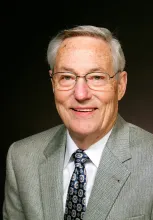
At the time of his retirement in 2016, Roy Holladay was serving the Operation Manager for Ministerial and Member Services of the United Church of God. Mr. and Mrs. Holladay have served in Pittsburgh, Akron, Toledo, Wheeling, Charleston, Uniontown, San Antonio, Austin, Corpus Christi, Uvalde, the Rio Grand Valley, Richmond, Norfolk, Arlington, Hinsdale, Chicago North, St. Petersburg, New Port Richey, Fort Myers, Miami, West Palm Beach, Big Sandy, Texarkana, Chattanooga and Rome congregations.
Roy Holladay was instrumental in the founding of the United Church of God, serving on the transitional board and later on the Council of Elders for nine years (acting as chairman for four-plus years). Mr. Holladay was the United Church of God president for three years (May 2002-July 2005). Over the years he was an instructor at Ambassador Bible College and was a festival coordinator for nine years.
