


Don Ward
This transcript was generated by AI and may contain errors. It is provided to assist those who may not be able to listen to the message.
This is Pentecost weekend. Of course, there is one holy day called Pentecost, and of course, we are at the weekly Sabbath. But this is what I would call Pentecost weekend, both days. The Holy Spirit was sent to dwell in man, not just among men. So I think we could call this Holy Spirit weekend. The Jews keep two days for Pentecost. Of course, a lot of the Jews always keep Savann 6, and they count it differently than we do. The Pharisees did. But we keep Pentecost after that Sabbath, back-to-back 48 hours. So what do you really know and understand about the Holy Spirit?
For those of you who speak, for those of you who teach, especially and for every converted person, every person who hopes to be converted and be in the family of God, you really need to understand God's Spirit. We have had some difficulty in explaining the nature of God and Christ through the years. More difficulty with explaining the Holy Spirit, I think, than anything else. So let's note what the Holy Spirit is. We'll turn to John 4, 24. What is the Holy Spirit? What is the Holy Spirit? We'll be asking several questions along the way and giving the answer from Scripture.
In John 4, 24, the setting for John 4, 24 is Jesus Christ's encounter with a Samaritan woman at the well. And finally, we get around to this. In John 4, 24, God is Spirit, and they that worship Him must worship Him in Spirit and in truth.
The woman said unto Him, I know that Messiah comes who is called Christ, or the anointed one. When He comes, He will teach us all things. Right now we focus on that first part of John 4, 24. God is Spirit. That means that that is His essence. If we were speaking in physical terms, we would say that is His composition. That's what He is composed of. We are flesh. That's our composition. That's what we are composed of. God is invisible, but that does not make Him any less real than any one of us. And we can see each other. We are in the flesh. That is our essence.
God is Spirit. He is invisible. However, spirit beings can manifest themselves as physical beings. There are several theophanies recorded in Scripture. You read about that in the Old Testament. And Yahweh appeared to Abraham as Genesis 18. Theophany means theotheos, God, and anophany appearance. God appearance. So God is invisible. There is another dimension of reality. A dimension that we do not see.
It is the spirit world. And there are in the beings in the spirit world that have rebelled. They are now cut off from God in the spirit sense of doing that which is right, that which is good. Satan is oftentimes called the Prince of Darkness. So God is Spirit. I don't know why people have difficulty getting their minds around God is Spirit. Now we go to John 15.26. The Gospel of John is the main place in the Bible that reveals to us so much about the relationship of God the Father and the Son, and also of the Holy Spirit. In John 15.26, a lot of what Jesus told the disciples on that night he was betrayed, after he instituted the symbols of the New Covenant Passover, he spent a lot of time talking about the Holy Spirit and that he would send the Holy Spirit to them.
In John 15.26, but when the Comforter is come, Pericletos, Peracletos, however you want to pronounce it, means one alongside Helper. Now if you look across the page in John 14.26, it says that the Comforter is the Holy Spirit. The Comforter is the Holy Spirit. But when the Comforter is come, and Comforter is masculine in the Greek, and that's why the reference pronouns are masculine, but we will use neuter. "...Whom I will send unto you from the Father, even the Spirit of Truth, talneuma, which is neuter, which proceeds from the Father." There was a great split in Christendom, circa 1000 AD, between the Eastern Church, headquartered in Constantinople, and the Western Church, headquartered in Rome.
Basically, this church was a part of the Roman Empire as one church with two different headquarters. But a great dispute arose between what's called the Eastern Church in Constantinople and the Western Church in Rome over the procession of the Holy Spirit. According to classical Trinitarianism, the Holy Spirit is generated eternally by the Father. The Father, they say, generates the Son, and the Father and the Son generate the Holy Spirit through a process known as passive spiration, whatever that means. And that's why Rome declared that both the Father and the Son generate the Holy Spirit.
The Eastern Church, on the other hand, said no, and they, I assume, they based it on John 1526, which is quite clear, the Holy Spirit proceeds from the Father. Otherwise, how could you call him Father? The Father is the one who begets us with his spirit, and Jesus Christ plays a role in it, whom I will send from the Father, the Holy Spirit, which proceeds from the Father.
Now, the Eastern Church said no, it only proceeds from the Father. The dispute was so great that they split. And so that's why you have what's called the Greek Orthodox Church, and you have, on the other hand, the Catholic Church or the Western Church headquartered in Rome. And as an offshoot of that, you have the Russian Orthodox Church, which embraced that which was taught by the Eastern Orthodox Church, the Greek Orthodox Church. So the Russian Orthodox Church and the Greek Orthodox Church are basically the same, though there is a separate head for each one.
They have recently tried to get together, and of course, then the Catholic Pope has tried to bring all three together, the Church at Rome, Constantinople, and the one in Russia. So a great debate over the procession of the Holy Spirit. If you wanted to use a physical analogy, you might picture the power grid as God the Father, the power grid symbolizing God the Father, and from this power grid goes out this energy, electricity, to light up the world, as it were. But in this case, God the Father from the Father proceeds the Holy Spirit.
The same Spirit that is in God is in Christ, and God and Christ are in us. Note these scriptures concerning the Holy Spirit. So we'll look at John 14 and John 14 and verse 12. John 14 verse 12.
This ties in with the sermonette.
We often do greater works than Christ said He did. Of course, I don't know if anybody believes this scripture or not, because we often limit the power of the Holy Spirit within us. We drop down to verse 21.
Jesus said unto him, not as carat, Judas said unto him, not as carat, Lord, how is this so? How can this be? How is it that you will manifest yourself unto us and not unto the world? And Jesus answered and said unto him, If a man loved me, he will keep my words, and my Father will love him, and we will come unto him and make our abode in him. So we can say the Father is in us, we can say the Christ is in us, we can say the Holy Spirit is in us, and we'll be basically saying the same thing. The very essence of God is in us, but that essence proceeds from the Father. The Father is our Father.
Now notice further with regard to the Holy Spirit.
In 1 Corinthians 12 and verse 12, and this ties in with the special music, one Spirit, how are all these nations going to get together that hate one another? How is humanity going to get together? See, the great binding force which makes you a part of the body of Christ is whether or not you have the Spirit of God.
In 1 Corinthians 12 verse 12, for as the body is one and hath many members, and all the members of that one body being many are one body, so also is Christ.
See, the great rhetorical question of 1 Corinthians is 1 Corinthians 1.13. Is Christ divided? And from your calling in chapter 1 to the resurrection in chapter 15, Paul shows that Christ is not divided. The Corinthians had more problems than we can imagine. We won't catalog each one of them now. For by one Spirit are we all baptized into one body, whether we be Jews or Gentiles, whether we be bond or free, and have been all made to drink into one Spirit. Now you go to Ephesians chapter 4. In Ephesians chapter 4, you will see essentially the same thing with regard to the one Spirit. Ephesians 4, I therefore, the prisoner of the Lord, beseech you that you walk worthy of the vocation wherein you are called. Vocation has the connotation of being what your life's work really is. You have been called to something very special. With all lowliness and meekness and long-suffering for bearing one another in love, endeavoring to keep the unity of the Spirit in the bond of peace. There is one body and one Spirit, even as you are called in one hope of your calling. One Lord, one faith, one baptism. I remember some discussion we had about this one baptism. The Bible speaks of three baptisms. Water baptism, baptism by the Holy Spirit, baptism by fire. But there is one baptism into the body of Christ. That is the one baptism that makes you part of the one body. That is being baptized by the Holy Spirit. That Holy Spirit that fell upon them the day of Pentecost, 31 A.D. One Lord, one faith, one baptism, one God and Father of all who is above all and through all and in you all. But unto every one of you is given grace, divine favor. The Scriptures oftentimes overlooked. Every one of you is given divine favor according to the measure of the gift of Christ. And of course, there are ways to grow in grace and knowledge. And we have talked about how you do that.
Now, in 1 Corinthians 8 and verse 11, see this one Spirit. The same Spirit that is in God as in Christ as in us. And by the same Spirit, as we shall read here, by the same Spirit that God raised Jesus from the dead, He will also make alive or resurrect our mortal bodies.
In 1 Corinthians 8 and verse 11, I said it wrong. Sorry. It's Romans 8-11. Romans 8 and verse 11. Romans 8 and verse 11. Romans 8 is oftentimes called the Holy Spirit chapter.
Romans 8-11. I've said several times that every person in the church should know, should memorize this Scripture. Romans 8 and verse 11. Now, the composition of a spiritual body is spirit.
You look at 1 Corinthians 15.
What is called the resurrection chapter. 1 Corinthians 15. Verse 49.
How being that was not first, which is spiritual, but that which is natural, and afterward, that which is spiritual. The first man is of the earth, earthy. The second man is the Lord from heaven.
So we are going to have a spiritual body, as in verse 44. It is sown a natural body. It is raised a spiritual body. There is a natural body. There is a spiritual body.
So we will have identity in the kingdom of God.
The Holy Spirit is the active power and presence of God. If you say, well, in the opening prayer, we usually pray that God would send His Spirit, that God's Spirit would be here. God's Spirit is another way of saying His presence. Moses was told, take off your shoes because you stand on holy ground. God's presence was there. Now you also have this thing about omnipresent, that is, God is present everywhere. But based on what the Bible says, God places His presence in certain places in a special way at certain times. So God's Spirit can be referred to as His active power and presence. Now let's look at some of the works of the Holy Spirit. We'll go now to Matthew 4 and verse 1. Now the power and presence of God in Matthew 4 and verse 1. Matthew 4 and verse 1. Then was Jesus led up of the Spirit into the wilderness to be tried and tested of the devil. Also, in verse 16 above, chapter 3 verse 16. Jesus, when He was baptized, went up straight way out of the water, and lo, the heavens were open unto Him, and He saw the Spirit of God descending like a dove and lighting upon Him. And lo, a voice from heaven, saying, This is my beloved Son, in whom I am well pleased. Now this test that Jesus Christ undergoes in Matthew chapter 4 is largely a challenge by the devil to this statement, This is my beloved Son, in whom I am well pleased. And so you notice when the devil came to Him, verse 3, when the tempter came to Him, he said, If you be the Son of God, command that these stones be made bread. But of course, Jesus triumphed by quoting Scripture over Him. The Holy Spirit leads. You look at Romans 8 and verse 14. See, Matthew 4 verse 1 says that He was led, that Jesus Christ Himself was led by the Spirit into the wilderness. In Romans 8.14, it's one of the ways whereby you know that you are the Son of God. Romans 8.14. In Romans 8 and verse 14, For as many as are led by the Spirit of God, they are the sons of God. So how can you be led by the Spirit of God? Well, it is simply the John 6.63, the words that I speak, they are spirit and they are life. That when you follow the Word of God and His way is revealed to you, then you are being led by the Spirit as you obey and you follow God's will in His way. As many as are led by the Spirit of God, they are the sons of God. And so the Holy Spirit can lead us. The Holy Spirit convicts us. You look at John 16. Once again, this is part of what Jesus said to the disciples that night that He was betrayed.
In John 16, starting verse 6, And when it is come, it will reprove. And the Greek word is a lancho means it will convict. It will convict the world of sin and of righteousness and of judgment. Now, the Holy Spirit couples with the Word of God to bring about this conviction.
As you notice in Romans chapter 10, in Romans chapter 10, and of course, one of the reasons why that Christ raised up the church has to do with the fact that there is a work to be done, and the gospel is to be preached around the world.
In Romans chapter 10, in verse 14, So, the two great aspects of the work of God, the motto of the United Church of God, preparing a people and preaching the gospel to the world, a public proclamation.
Verse 15, So, the Spirit of God and the Word of God work in concert for that conviction. The Holy Spirit will show and reveal things to come as we continue. We go back to John 16.
One of the things, especially for those who preach, who speak, and who teach. And of course, it should be applicable to all of us because in the kingdom of God, it says that He has made us kings and priests, and we shall reign on the earth. In Isaiah 61, it talks about you being the ministers of the eternal, that you have to meditate upon, read, study, think about the Word of God and how it can be applied and what it means. And then, if you do that, if you're preparing a sermon, if you're preparing to teach, if you're counseling, if whatever it might be, child-rearing, it just goes on and on, then that will be there, and the Holy Spirit is an enabler. It helps to call things to mind.
Continuing verse, this is John 16.12, I have many things to say unto you, but you cannot bear them now. How be it when the Spirit of Truth, Talnuma, has come, it will guide you into all truth, for it shall not speak of itself, but whatsoever it shall hear, that shall it speak. While the truth agrees with the truth, what will it hear? It hears. Your word is truth. And it will show you things to come. It shall glorify me, and it shall receive of mine, and shall show it unto you, all things that the Father hath, or mine. Therefore said I, He shall take of mine, and shall show it unto you.
So the Holy Spirit reveals things to come. It teaches and calls things to mind. It is a gift, and it is a conditional gift. We go now to Acts 2. This is the conclusion of Peter's sermon of when they said, Men and brethren, what shall we do? On the day of Pentecost, Peter preached his sermon. Here's what he said. Acts 2.38. Then Peter said unto them, Repent, and be baptized, every one of you, in the name of Jesus Christ, for your mission of sin, and you shall receive the gift of the Holy Spirit.
But it is conditional. You didn't earn it, but there is a condition that you had to meet in order for you to receive the Spirit of God. These represent some of the powers of the Holy Spirit within a person. Not nearly all, it's just some of the main ones.
Have you ever just sat and meditated and thought about to yourself, I have the essence of God in me? I have the essence of God. God is Spirit. I have the essence of God in me. And Christ said greater things that I have done, you shall do, because I go to my Father. And what was the main thing He was going to do? He would not leave you comfortlessly or comfortless.
He would send the Holy Spirit. I wonder how much, if ever, we just think of how sobering and awesome at the same time this is. The essence of God. That which God is. And sometimes I think maybe we have an identity crisis. The world doesn't know us yet, as it says in 1 John chapter 3, we look like anybody else on the street.
But we are called to be the light of the world. A person must exercise the Spirit. Let's go to 1 Thessalonians chapter 5. In 1 Thessalonians chapter 5, there are several short commands here that are very important. The one we want to really focus on right now in 1 Thessalonians chapter 5 is verse 19. Quench, not the Spirit. So in that sense, Spirit is sort of likened into fire or energy.
Paul wrote to Timothy and said, Stir up the gift of the Holy Spirit that you receive from the laying on of hands. This word stir is like friction striking a match. To stir it up, to strike it, to set it on fire.
Quench, not the Spirit. If you would give a command to quench not the Spirit, that means it can be quenched. So how do you quench the Spirit? Two main ways. By not renewing the inward man on a daily basis. Notice now 2 Corinthians 2 Corinthians chapter 4 verse 7. Two main ways that you can avoid. I'm saying the wrong thing.
2 Corinthians, I think I said chapter 7. 2 Corinthians chapter 4 verse 7. 2 Corinthians 4 verse 7. But we have this treasure in earthen vessels that the excellency of the power may be of God and not of us. And in verse 16 we have this treasure in earthen vessels. We're just flesh made of clay. But we have the very essence, this treasure within us. For which cause we faint not, but through, though our outward man perish, yet the inward man is renewed day by day.
How is the inward man renewed? One, by ingesting or eating and drinking of the words of God. Matthew 4, 4. Man shall not live by bread alone, but by every word that proceeds out of the mouth of God. These things have been said over and over for decades in the Church of God.
But we have had our various isms that have come and gone, our various movements of how, oh, did you read about this or hear about that? This is so enlightening and this, that, or the other. But the simplicity that is in Christ, that is in the Word of God, that's where it really resides and it is spiritual.
The inward man is renewed day by day. How? By eating and drinking of the words of God, the words I speak, their spirit and their life. Secondly, by praying and beseeching God to give you the Holy Spirit. Let's look at Luke, Luke 11, 11. Luke 11, verse 11. Luke 11, verse 11. If a son shall ask bread of any of you that is a father, will he give him a stone, or if he asks a fish, will he, for a fish, give him a serpent, or if he shall ask an egg, will he offer him a scorpion?
If you then, being evil, know how to give good gifts unto your children, how much more should your heavenly Father give the Holy Spirit to them that ask him? Beseeching him, crying out for the Holy Spirit, the very essence of God, the very mind of God. And then, the third main way is found in Acts 5, verse 32. Acts 5, verse 32. Acts 5, of course, the apostles in those early days after the day of Pentecost, they were in and out of the temple preaching mightily that Jesus is the Christ, that he's died for the sins of the world, that you can receive this gift from on high.
Great persecution was upon them. We'll start in verse 29. Then Peter and the apostles, this is Acts 5, 29, Then Peter and the other apostles answered and said, We ought to obey God rather than men. The God of our fathers raised up Jesus, whom you slew, and hanged on a tree. Him hath God exalted with his right hand to be a prince and a savior, for to give repentance, Israel, and forgiveness of sins. And we are the witnesses of these things, and so is the Holy Spirit, whom God hath given to them that obey him. So those are the three main ways that the Holy Spirit is renewed each day. And the major reason why the virgins, the five foolish virgins, did not renew the inward man on a daily basis, and that's the main reason why their lamps are going out. And they're told to go and try to get this spirit. And they went out, but when they came back, it was too late, and the gates were shut, the doors were shut, weeping and gnashing of teeth. The reason why so many people leave the church has to do with this fact right here. The inward man is not renewed on a daily basis. Those three things, reading and studying the Word of God, applying it to your life, asking God for his Spirit, and obeying what you know to do.
Is that simple? That is simple. How many times have you heard it? A lot. So we must make a decision as to whether or not we will be submissive to the Holy Spirit. If you're not, you quench it. And if you quench it long enough, then the light, the lamp, begins to go out. So we have to yield to you the Holy Spirit in the Word of God. In Romans 6, verse 16, people in this world want to be free. We hear so much about freedom. Only the true freedom comes from the perfect law of liberty, which is contained in true Christianity. In Romans 6, verse 16, Know you not that to whom you yield yourself servants to obey his servants you are, to whom you obey, whether of sin unto death or of obedience unto righteousness.
So once again, the Holy Spirit is the essence of God. It is what God is. Yet in some cases, the works of the Holy Spirit are presented as personal, like, well, the Holy Spirit did such and such. These examples of the personal work of the Holy Spirit are similar to referring to various things in the personal sense, like a ship, she. And we refer to things like that in a personal sense, that the ship did such and such, or some inanimate object did something, and refer to it in a personal sense.
But just like the ship is not a person, neither is the Holy Spirit a person. Yet the Holy Spirit is divine, but not a person. Why is it divine? Because it is of God. That's what he is, and he is holy. And since it is the essence of God, it is under his direction. The Holy Spirit is under the direction of God. It's not out freelancing on its own. And you'll read that in most of the theology books, commentaries. The Holy Spirit is of God. Of is not the same as is God. It is of God. Let's look at Matthew...well, we've already read Matthew 3.16, which says that the Spirit of the form, the Spirit of God descending from heaven.
Let's look at another verse here. Let's look at Romans 8 and verse 9. Romans 8 and verse 9. Some people get confused on these verses here in Romans. But remember what we've read. We've read by one Spirit, or we all baptized into one body. We've read from Ephesians 4. There is one Spirit.
There is one baptism. So now we're looking at this here from Romans 8 and verse 9. Romans 8 and verse 9. But we are not in the flesh, but in the Spirit, if so be that the Spirit of God dwell in you. Now if any man have not the Spirit of Christ, he is not of his.
It doesn't mean there are two different spirits that the Father generates the Spirit and the Son generates the Spirit. There is one essence. By the same Spirit that he raised Jesus from the dead, he will also quicken your mortal bodies and raise you from the dead. We are of the God-kind in resurrection. See, when Jesus Christ was raised from the dead after having lived in the flesh, he was the firstborn among many brethren. That was a new order of being came into existence when Jesus Christ was resurrected from the dead.
It wasn't a new being in the sense that he had not existed in the past because he exists in eternity. But it showed how one can live in the flesh and that God can produce, generate, begat, bring to birth children. And that's what he is doing.
Another scripture here, we've already read 1 Corinthians 12, verses 12 and 13. By one Spirit, we all baptize into one body. Look at 2 Corinthians 3. 2 Corinthians, I'm just focusing on those scriptures right now, reading 2 and 3, that says, The Spirit of God. That's very important. It's the Spirit of God. If it is of God, it is from him, comes out from him, and is of him. This is 2 Corinthians 3. As much as you are manifestly declared to be the Epistle of Christ, ministered by us, written not with ink, but with the Spirit of the living God, not in tables of stone, but in fleshly tables of the heart.
The key is of God or of Christ. A substance or essence cannot be of and yet be separate and distinct. It can't be of something and yet be separate and distinct. So the Holy Spirit is not separate and distinct from God. One cannot say the Jesus Christ or God of the Holy Spirit, but you can say the Spirit of God.
The Holy Spirit is His essence, and it is under His direction. Look at Genesis 1, verse 2. The Holy Spirit is under His direction. Genesis 1-2, The Spirit of God moved upon the face of the waters. The Spirit of God moved on the face of the waters. Now go quickly to Psalm 104, verse 30.
Psalm 104, verse 30. You send forth your Spirit. You send forth your Spirit. It is under the direction of God. They are created. And you renew us the face of the earth. How? Through His Spirit. We have had sort of a robotic utterance concerning what the Holy Spirit is through the years in the church by saying, The Holy Spirit is the power of God. Well, the Holy Spirit is associated with power. But does John 4.24 says that God is power? No, it says God is spirit. And through His Spirit, He does works of power.
Through His Spirit, He does works of power. The Holy Spirit is His essence, and through it He does works of power. He sends forth His Spirit. And through His Spirit, He does works of power. Look at Zechariah 4. I hope we can get this. I think we understand it, but semantics and the way you express something is very important.
We even had in one of the Bible studies, leading up to... They had those Bible studies out from the home office leading up to Passover. And one of the presenters, I don't know which one it was, even said, talking about Jesus Christ and what He gave up, that He gave up His divinity. No, Jesus Christ did not give up His divinity.
He gave up His glory. But He is God in the flesh, Emmanuel, God with us. And He prayed in John 17 in verse 5, Restore unto me the glory I had with you before the world began. So He gave up His glory. He was in the flesh. He took on the form of a man. He was not in His glorified form, but He was still divine. In Zechariah 4 verse 6, Then He answered and spoke unto me, saying, This is the word of the Eternal unto Jerubabel, saying, Not by might, nor by power, but by my Spirit, says, the Eternal Host, He sends forth His Spirit, and the face of the earth is renewed.
It is through His Spirit that those works of power are accomplished. Whether it be in the physical realm as recreating, renewing the face of the earth, or in the spiritual realm of what He is doing with us. And the Holy Spirit is power in that it can do works of power.
The Holy Spirit can be personified by the Son. The Son, on the other hand, is not personified by the Holy Spirit. But the Holy Spirit can be personified by the Son. For example, look at 2 Corinthians 3 and verse 17. 2 Corinthians 3 and verse 17. 2 Corinthians 3 and verse 17. Now the Lord is that Spirit, so it's personified. He is personified. Now the Lord is that Spirit, but the Spirit is not the Lord. The Lord is that Spirit, that is His essence. And where the Spirit of the Lord is, there is liberty.
But we all with face, beholding as in a glass, the glory of the Lord are changed into the same image from glory to glory, even as by the Spirit of the Lord. Using the analogy of a reflector, that God is the great source of the Holy Spirit, it comes into us, and then we are to reflect it back and be as lights to the world.
Look at 1 John 5 and verse 12. In 1 John 5 and verse 12, He that hath the Son hath life, and he that hath not the Son, hath the Son of God, hath not life. You could say, He that hath not the Holy Spirit hath not life, because the Holy Spirit is the life essence of God, and it comes into us, and that's how we're raised to spirit life. For you to have Christ in you, you have to be called convicted and granted repentance, and you have to exercise faith in the sacrifice of Christ, be baptized, and receive the gift of the Holy Spirit, as we've already read from Acts 2.38.
The principle purpose, then, what would you say the principle purpose of the Holy Spirit is? What is the main thing that it will do for us?
It will give us life. He who hath the Son hath life, just as we've just read. Now look at Titus chapter 3.
The Holy Spirit is shed on us through Christ. In Titus chapter 3, beginning in verse 5.
Not by works of righteousness, which we have done, but according to His mercy He saved us by the washing of regeneration. This word regeneration has a connotation of a renewal, a recreation, a renovation, a radical change. Now, another thing that we seem to have some difficulty in understanding with regard to the new mind and the new person is that the new mind, the spiritual mind, is not the old man made over. It is a new mind, it is a spiritual creation that rules over the old man. The old man never dies. The old man struggles to get up out of the baptismal waters. The new man keeps him under, keeps him mortified.
Just a moment on that. In verse continuing here, By the washing of regeneration and renewing of the Holy Spirit, which He shed on us abundantly through He being God the Father, shed on us abundantly through Jesus Christ our Savior, that being justified by His grace we should be made heirs according to the hope of eternal life. Now, you look back there at Romans chapter 8 with regard to what I just said about the old man. We had quite a discussion with the ministry in our online class when we were covering Romans chapters 7 and 8. Coming to fully understand the old man, the old man always struggles to get up out of the baptismal waters and does not die. But the new man, the new man, rules over the old man. Look at Romans 7, 25. I thank God through Jesus Christ our Lord so that with the mind, this old fleshly mind, my carnal mind, I serve the last part, the flesh of the law of sin. There is this law of sin abiding within. But with the new mind, I serve the law of God. I reverse the clauses. I'll read it again. I thank God through Jesus Christ our Lord so that with the mind, the spiritual mind, I myself serve the law of God. But with the flesh, the law of sin. That does not mean that he gave into it, but that it is there. It is ever warring. As we continue in verse 8, There is therefore now no condemnation to them which are in Christ Jesus, who walk not after the flesh. They do not give into that law of the flesh. The carnal mind that is not subject to the law of God is in verse 8. Not verse 8, but 7.
But they walk after the Spirit. There is therefore now no condemnation to them who are in Christ Jesus, who walk not after the flesh, but after the Spirit.
For the law of the Spirit of life and Christ Jesus have made me free from the law of sin and death. For what the law could not do in that it was weak through the flesh. Human beings, on their own and of themselves, not able to keep the law of God.
God cries out through Moses and the Pentateuch, Oh, that there was such a heart in them that they would have feared me and obey me and keep my commandments. But then God sending his own Son in the likeness of sinful flesh and for sin, and for sin we were sinners and we needed to be redeemed, condemned sin in the flesh. How so? He lived in the flesh and he kept the law of God perfectly. That the righteousness of the law might be fulfilled in us who walk not after the flesh, but after the Spirit.
For they that are after the flesh do mind the things of the flesh, but they that are after the Spirit, the things of the Spirit. Now verse 13. For if you live after the flesh, you shall die. But if you through the Spirit do mortify the deeds of the body, you shall live. So this is a new mind that is within us, the spiritual mind, a new knowing within ourselves of what is right and what is wrong. You look at Hebrews chapter 9. Hebrews chapter 9.
The sacrifices that were offered under the Old Covenant could not purge the conscience of evil works. In other words, the knowing within oneself of right and wrong, it did not change the knowing within oneself of what was right and what was wrong. It only covered sin. But with the Spirit of God and the Word of God, you can now have your conscience purge. You have a new mind, a new sense of what is right and what is wrong. And it can rule over the old man, the old conscience. You hear this saying, let your conscience be your guide. Well, your conscience can be your guide if it is in harmony with the Spirit and Word of God. And so that's why a child has to be trained up in the way he should go. And that is why various cultures have various senses of what's right and wrong. The headhunters in New Guinea say it's okay to cannibalize and eat fellow humans. That's how their conscience has been trained. But now your conscience, those who are led by the Spirit of God and have the Spirit of God, purge that old conscience, that old sense of right and wrong, to serve the living God. Hebrews 9-9.
Which was a figure of that time, then present, in which were offered both gifts and sacrifices that could not make him that did the service perfect as pertaining to the conscience. You could offer the sacrifice, and you were ceremonially clean, and the sins were covered. But that new conscience, the new creation, was not there. Now you look at verse 14. How much more shall the blood of Christ, who through the eternal Spirit offered himself without spot to God, purge your conscience from dead works to serve the living God? And so we can become new creations in Christ Jesus. And we have been called to glorify God. God expects us to use the Holy Spirit to glorify Him. And what does it mean to glorify God? It means to reveal or manifest God's righteousness in our lives. Like 2 Corinthians 3, 18, that His Spirit comes into us, and we're to be reflectors of that going back out to the world. We cannot of our own produce true love, joy, and peace. But through the unseen power of the Holy Spirit, remember the fruits of the Spirit, love, joy, and peace. It can be a part of our lives, no matter what the trials or the difficulties or the circumstances are.
So we need to ask our questions, or this question, is what I'm doing, is it from God, is it of God? And if it's not, it's your work, and just that. You know the Scripture in Matthew 7 that says, Many will come to me in that day and say, Lord, Lord, have we not done many great works and cast out even demons in your name? And He will say unto them, Depart from me, you workers of iniquity, lawlessness, I never knew you. So in this period of time between Unleavened Bread, and you heard about what should be accomplished during Unleavened Bread in the Sermonet, in this 50-day period that we are about to close at sunset, really it's a period of time to prepare the temple to receive the Holy Spirit. Now when Jesus Christ came into Jerusalem after He had started His earthly ministry, He went into the temple and found the money changers there, and He chased them out. He cleaned the temple, as it were, and we are to cleanse the spiritual temple for the receipt of the Holy Spirit.
So we have just a few minutes, a few hours, for that temple to be cleaned, to be ready for the receipt of the Holy Spirit in the symbolic sense. Of course, we already have the Holy Spirit, but perhaps we have quenched the Spirit through the past year or during this past 50 days. And so there's God as long-suffering, merciful tortoise.
The fruits of the Spirit. Let's read those, Galatians 5, 22. If these are present in our lives, we are blessed above all people. These can only be there in the truest sense through the Spirit of God. Galatians 5, 22. But the fruit of the Spirit is love, joy, and peace. Those first three have to do with what we are internally, the peace that we can have internally. Love, joy, and peace. The long-suffering gentleness, goodness, meekness, temperance. Those are generally in relationship with each other. Meekness, temperance against such, there is no law, and they that are Christ have crucified the flesh with the affections and lusts. If we live in the Spirit, let us also walk in the Spirit.
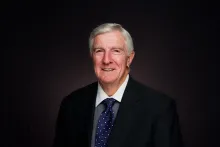
Before his retirement in 2021, Dr. Donald Ward pastored churches in Texas and Louisiana, and taught at Ambassador Bible College in Cincinnati, Ohio. He has also served as chairman of the Council of Elders of the United Church of God. He holds a BS degree; a BA in theology; a MS degree; a doctor’s degree in education from East Texas State University; and has completed 18 hours of graduate theology from SMU.
