
Roy Holladay
This transcript was generated by AI and may contain errors. It is provided to assist those who may not be able to listen to the message.
Music Over the past few years, we've had a number of trials and tests in the Church, and I think even in our own local congregation. When you look at our congregation here, or you look at the Church in Rome, you realize that we have a number of people who are out of work. And I was specifically mentioning this in Rome this morning, because here we have a congregation around 20 to 25. And we have a number of the men out of work. Some of us have some severe health problems that we contend with. And there seems to be financial struggles. And on top of that, sometimes we find that we begin to struggle spiritually and have difficulty. We look at what's going on in the crisis facing the Church, and we wonder, why is all of this happening? In the Rome congregation last year, we've had about three people. I think it was three exactly who have died. We've had people who've suffered from extended illnesses over a period of time. And so you begin to have all of this, and you wonder, why? We're the children of God. We're the called-out ones of God. We're the Church. Why do we have these difficulties? Why do we go through these struggles? Why does the Church have to go through this? Wouldn't it be nice if God called you, and all at once there's a bubble around you? No problems, and everything is taken care of, but we realize it doesn't happen that way. When you look at the history of the human race also, you see that humans have suffered a great deal down through the ages. How many people have died in wars over the centuries? The 20th century is called the bloodiest century as far as warfare. Something like 150 million people died. Now, you can say 150 million, but that impacts families, extended families. How many fathers? How many brothers? How many mothers? Sisters have died over the years? How many have been maimed or crippled for life? Think of the misery and the suffering that's produced, and the destruction that wrecks on the society around you. When you think of this, and you think of the accidents that take place, as an example, drunk drivers, those are on drugs. You begin to look around the world and you see the economic plight of a lot of people who live in conditions that are wretched, going without proper food, clothing, shelter. Surely we are still blessed in this country. We've been exceedingly blessed as the people of God. Millions today in the United States are without jobs. We find millions are, maybe it's not exactly millions, but at least hundreds of thousands of people are having homes that are foreclosed on them, huge debts. The national debt is over $14 trillion. You add all the state debts, the national debts, private debts, and in the U.S. it's over $50 trillion. Are we ever going to get ourselves out from under that type of a burden? Why do some people seem to always have problems and others don't?
If you ever look around and you look at yourself and you think, well, I've gone through this, I've had this difficulty and that problem, yet I look at others and they don't seem to be going through this. Is that fair? And so sometimes we wonder and we ask God, are you being fair in dealing with us?
When you look at individual Christians, you see that we all go through the same trials as people around us in the world and society. We have health problems, they have health problems. We have financial difficulties, they have financial difficulties. Sometimes we have family problems, they have family problems, we have marriage problems, they have marriage problems. You could just go up and down the line.
We're exposed to a whole gamut, our spectrum of difficulties, that the human race is likewise exposed to. Why? Why do we go through these? Why do we go through these problems? What are we supposed to learn from them? Is life always fair? And I can answer that one right up front. No, it's not. Anyone who thinks that everybody goes through life and has the exact same amount of problems or the exact same blessings realizes very quickly that that's not true. But let's acknowledge one thing to start with. You and I don't always know the reason why we're going through the particular trial or test that we're going through. We don't always understand why. We might not know until later, and we find out. But God always knows. God is the one who's working with us individually. We are His children. We are His sons and daughters. He's in the process of creating a family. He's in the process of developing His holy, righteous character in each one of us. And consequently, God knows what He's doing. But there's one thing that we can all know. Any trial, any test we go through, any difficulty we're faced with. We are proving to God our faithfulness, that we are willing to be faithful to Him, that we're willing to serve Him, no matter what might occur. There are sometimes specific lessons that God's trying to teach us. And occasionally, God will reveal to us the reason for those tests, those trials. See, God is like the master of pain. He has the canvas, which can be compared to our lives, to the character we're developing. He sees us. He knows. He looks at the canvas, and He says, Well, I need a little more blue in the sky. We need a little more. We need another tree over here, some plants there. We need to add this. We need to add that, like a painter would. So God's working with us, and He can see the whole picture. Too often, we begin to focus on just one little thing at a time. And we see one thing, but we don't get the whole picture. Whereas God is working with the whole picture. Let's notice in 2 Corinthians 12, verse 7, an example where God revealed to one of His servants, in this case, the Apostle Paul, revealed to him why He was going through a particular test. Sometimes we go through something, and it becomes very obvious to us. Other times, we wonder why, and we pray, we fast, and we seek God's help. Beginning in verse 7, Paul said, Lest I should be exalted above measure by the abundance of the revelations, a thorn in the flesh was given to me, a messenger of Satan to buffet me, lest I be exalted above measure. Now, Paul was given a thorn in the flesh. He doesn't say exactly what that was. I've heard all kinds of speculations. It could have been his eyesight, maybe some other health problem. It could have been somebody following him around, or even Satan. Who knows? But it was a thorn in the flesh. As he brings out here, he very well could have had a problem with vanity and pride. God had revealed a lot of things to him. He had had a lot of visions. He could get puffed up over that. So God gave him this thorn in the flesh to keep him humble, and he recognized that. In this particular case, he knew why the trial, because God told him. Now, God doesn't come down and talk to most of us in that way, but in this particular case, notice. He says, concerning this thing, I pleaded with the Lord three times that I might depart from me. So three different times, he pleaded. He begged. He asked God to remove it. And he said to me, so here's God talking to him. God says, my grace is sufficient for you.
Or, my grace, my goodness, my love, and so on, is sufficient, for my strength, God says, is made perfect in weakness. That's our weakness. So you and I can become strong when we're weak. And why is that? Too often, we tend to rely upon ourselves, don't we?
When everything is going along smoothly, we're just sort of sailing along. No problems, no difficulties. What is the tendency? Well, the tendency is to slack off from prayer and Bible study and let down. We're not as fervent. When you begin to have problems, then you begin to maybe pray more, study more. You're asking God to guide and to direct you.
So God's holding His strength was made perfect in weakness. Therefore, Paul said, most gladly, I would rather boast in my infirmities that the power of Christ may rest upon me. Therefore, I take pleasure in infirmities, in reproaches, in needs, in persecution, distress, for Christ's sake, for when I am weak, then I am strong. So when we are physically weak and going through difficulties, we can become spiritually strong because of our relying upon God. This was a problem that Paul could not overcome on his own. He had to turn to God for help, for understanding, for guidance. Many times we ask God to remove a trial from us.
And guess what? They don't always go away immediately, do they? It might be a health problem. How many times have we seen somebody who has had a health problem? Maybe they have got cancer. We pray for them. We agonize. We visit them. And eventually, we find they die with that problem. And God did not take it away from them. Sometimes God does. So we know that that's left up to him.
But God's strength is made perfect in our weakness. It makes us rely upon God, trust him, look to him. And when we're looking to him, instead of looking to ourselves and our own abilities and talents, then God can guide and direct us. Let's go back to the book of Job. And I want you to notice in Job 1, verse 8, that God brought up Job to Satan the devil.
And Satan made an accusation against Job that he makes against every one of us. In verse 8, the Lord said to Satan, Have you considered my servant Job, that there's none like him on the earth, a blameless and upright man, one who appears God and shuns evil? Now, how would you like God to say that about you? I mean, this is God's evaluation of Job. Pretty good evaluation. Now, Job had another problem. There were other problems that had to come out.
But this is what God told Satan. And Satan answered the Lord and said, Does Job fear God for nothing? Have you not made a hedge about him and around his household and around all that he has on every side? You have blessed the works of his hands, and his possessions have increased in the land.
But now stretch out your hand and touch all that he has, and he will surely curse you to your face. So what was Satan saying here? The only reason Job obeys you is because of the blessings you give him. Now, does God hedge us? Does God bless us? Does he look after us? Well, sure he does. But Satan says the only reason you're obeying is for what you can get. That if you take the blessings away, then you'll desert God. In other words, if you have a trial or a test that lasts over an extended period of time and God doesn't remove it, then you're going... He said he'll surely curse you.
Now, we find that God was working a great purpose in Job's life. Job had a problem, and he didn't really see God as he should have. He had a greater opinion of himself and a lesser opinion of God. He had to come to reverse that and have a greater opinion of God and a lesser opinion of himself.
He could see all of his goodness. He could see everything that he was doing right. And he had to come to realize that compared to God, he was nothing. That's what humility is. It's recognizing who God is, his greatness, power, and ability, and how insignificant we are in comparison. So he had to learn a lesson. Actually, there are three great lessons that you can derive from these two scriptures, if you stop and think about it.
Number one is we can be spiritually strong if we rely upon God. That's where our spiritual strength comes from. That's where the Spirit flows from. It comes from God. God gives us the strength that we need to endure the trials that we go through. And so he helps us. Secondarily, we need to keep our eyes on God and focus on Him.
See, too often we forget about our relationship with God. One of the things that we should do every day, starting our day, is to make sure that we re-establish that relationship with the great God of the universe, the Creator. And thirdly, that God will always do what is best for us. God will always do what is best. God is looking at the end result.
In Deuteronomy 8, beginning in verse 2, Deuteronomy 8.2, we find that God led Israel through the wilderness. Now there are some spiritual lessons that God wanted them to learn. Wandering through the wilderness at this time is like our experience in life. Verse 2, I should say, You shall remember that the Lord your God led you all the way, these forty years in the wilderness, to humble you, test you to know what was in your heart. You see, we profess one thing, but what's really in here? What is our attitude? What is our approach? How are we going to respond?
God needs to know. So God doesn't always know until He puts us to the test. He puts us to the test and He will know what's in our heart, whether you would keep His commandment or not. So that's something that God wants to know. Verse 16, He fed you in the wilderness with manna, which your fathers did not know, that He might humble you, that He might test you. Why? To do you good in the end. God is concerned about the end result of what is going on. He wants to do us good in the end.
So at the present, sometimes the difficulties we go through seem to be bad. We don't know how we're going to handle them, how we're going to deal with them. And yet, in the end, it will produce righteousness, holiness, and godly character within us so that we can be in God's kingdom. Let's notice 1 Corinthians 10 and verse 13. I think one of the most encouraging scriptures in the Bible. 1 Corinthians 10.13. We read, No temptation has overtaken you, except such as is common to man.
But God is faithful, who will not allow you to be tempted beyond what you're able, but with the temptation will also make the way of escape you may be able to bear it. Now, the word temptation here in the Greek is a word I've covered with you in the past. The Greek word parasmos, and it can be translated either test or trial or temptation.
And you have to tell by the context which one it's referring to. A temptation is an enticement to sin. Does God tempt us? And the answer is no. Satan the devil is the tempter. James 1 says God is not tempted by evil, and neither does he tempt others.
So God is not trying to get us to sin. But God will test our character to see how strong we are. You go out and buy a new car, and you test it. We use the term, we go out for a test drive. You want to feel how comfortable the car is, how much pep and power it has. You want to see the dashboard and the display. Your wife might want to see the color on the exterior. There could be all kinds of things that you're trying to determine whether you should buy it.
You put it to the test. Well, this is what the word parasmos means. God will test our character. Satan will entice us to sin. The word parasmos refers to the trial of man's fidelity, integrity, virtue, and constancy. Satan will try to entice us to sin, and he will tempt us to try to go in a different direction away from God.
When I say entice, if you have a problem with sex, maybe Satan will bring a voluptuous blind by. You're on the Internet, and all at once, boom, pornography pops up. There is a temptation there. If you're tempted to overdrink, you may find yourself in a situation where it would be very easy for you to overindulge.
If you have a temptation with smoking, it could be a situation where you're thrown into an environment. Everybody is smoking. They offer you a cigarette. And boy, the temptation is there for you to smoke. That's what Satan is trying to do. He's trying to egg you on to disobey God, break his law. That's not what God does. God just simply wants to know, how strong is our character? Will we do what he says?
So, the word originally was a word that had to do with coins. The testing of a coin to see if it were genuine or not. Because back at that time, they made some of these coins. It wasn't unusual to come along and shave the coin. And you shave a little bit here and a little bit there. You'd never really notice it. But if you are distributing money, and you keep shaving coins and shaving coins, after a while you've got a pile of shavings, and you've got another coin you can make. And so, it came to later on mean, because people too often fail testing trials, to being tempted. So, it could be translated either way. But notice again, verse 13, No temptation or trial has overtaken you, except such as is common to man. So, the trials and the tests we go through are common to man. The trials of common Christians are but common trials. Other people have the same burdens and difficulties we have. Most people in the world go through problems without learning any lessons from them. Some do, but the majority don't. Tough luck. They have all kinds of reasons, but they don't learn a lesson. You and I, when we go through a trial, we're always seeking to learn from it. And as a Christian, God will be working with us and directing us. Then verse 13 goes on to say, A cardinal principle of Scripture. God is faithful. That is a truism. All scriptures are truism, but that's certainly one of the great truisms of Scripture. God is faithful. He's not unfaithful. Human beings tend to be unfaithful in their actions and what they do. Sometimes, in marriage, a mate can be unfaithful. People are unfaithful all the time. But God is faithful. God is true. And He will always do what He says. And then it goes on to say that He will not allow you to be tempted above what you are able. So you're not going to be tempted or trialed above what you are able. So God is wise and faithful. He's promised He won't allow something to come on you that is too much. However, I think there's a caveat to that, and that is that you and I have to stay close to God. We've got to be close to Him. We're not. A lot of things might come along and throw us. God knows what we can bear and endure and what we cannot endure. And God will give us the strength proportionate to be able to deal with that particular problem. God wants us to overcome and to grow. He's there to encourage us. Now it also goes on to say that He will make the way of escape. So there's going to be a way of escape, but that doesn't mean He'll take it away. Notice that you may be able to bear it. So it doesn't say that God will always take it away, but you will be able to bear it, and there will be a way to escape. So, brethren, God is faithful. No trial, no test, no problem nullifies His compassion, His love, His faithfulness, His commitment to us.
Because after all, let's stop and realize the great God of the universe created the human family for what reason? He wants us and His family. He wants to elevate us from the human plane to the divine plane to His family. And so God is working with us, and He will be faithful. In Hebrews 13 and verse 5, let's go back to Hebrews 13.5, we find what God promises to us here. Notice His commitment and His promise to us.
You will never leave you nor forsake you. Now, you have a triple negative and a double negative here. I will not, I will not, I will not leave you. I will not, I will not forsake you. It's just a matter of emphasis. This is a promise from God of what He will do, His commitment. You go back and you look. It's good for us occasionally to read Revelation 4 and 5. Ezekiel 1 and 10, Isaiah 6, the chapters that describe the glory and the power of God, the throne of God. You go over to Revelation 4 and 5 and you begin to read about the throne room of God. You see a description of God that His face is like the sun in full brilliance, power radiating out from God. Here's the great God of the universe from which power, might, flows. He's surrounded by tens of millions of angels who are coming and going. His throne is described as a beautiful rainbow in color and brilliance. And so here is this great God with all this power and He's delegated to Christ, the responsibility of holding the whole universe, sustaining it. And when you and I get down and pray, brethren, too often we get down and we sort of mumble our prayers. But do we ever stop? We need to sometimes. You get down and pray. Go back and read some of those chapters. Think about who you're praying to. That we're praying to the Almighty God, the Everliving God, the Eternal God, the One who created everything, sustains it. And He says, I will never leave you. I will never forsake you. God is faithful. Those are promises. And God will do what He says He will do. There is no power in the universe that can thwart God, that can stop Him from carrying out His plan and His purpose. And He will do it. Turn back to Matthew 28, verse 18.
We're still going. We haven't come to the point to where this age ends and a new age begins. Christ has said, I will be with you always, even to the very end of the age. So we have these absolute promises from the Almighty God that He will guide us, that He will lead us, that He will direct us. So how do we know that God is faithful and that He's committed to us? Well, let's back up to Hebrews 6 and verse 13. Notice a promise that God gave to Abraham. It's the same promise that God gives to us. We read in verse 13, Hebrews 6, for when God made a promise to Abraham, the promise of race and of grace, because He could swear by no one greater, He swore by Himself, saying, Surely, blessing, I will bless you, multiplying, I will multiply you. And so after He had patiently endured, He obtained the promise.
So God's promise to Abraham was fulfilled. We are living recipients of that promise, living here in the land of Israel today, as the descendants of Befram and Manasseh, God's people. As it goes on to say here, for men indeed swear by the greater, and an oath for confirmation is for them an end of all disputes.
So human beings will swear in God's name, and that's supposed to resolve it. But God, because He could swear by no one greater, swore by Himself, and in a sense, I am God. I will do this. And He confirmed that. Thus, verse 17, God determined to show more abundantly through the heirs of promise the immutability of His counsel, confirmed it by an oath, so He swore, that by two immutable things in which it's impossible for God to lie, that we might have strong consolation who have fled for refuge to lay hold of the hope set before us. Then notice verse 19, this hope we have as an anchor of the soul, both sure and steadfast. So the hope that God gives us, that's an anchor. That's what holds us, anchors us to the promise. So there is no higher power than God. God swore. And the fact that we have His Word, His promise, and the fact that He cannot lie, we know that what God says will take place. And so the promises made to Abraham, and you and I become the seed of Abraham, and we become heirs to the promise through Christ, that you and I have those promises assured to us. Our job is to remain faithful, loyal, and obedient. Now, let's turn over to chapter 10 here in Hebrews. Chapter 10, and we'll begin in verse 23. Chapter 10, verse 23. Let us hold fast the confession of our hope without wavering, for He who promised is faithful. And again, we find this, that God has promised, and God is faithful. God is faithful in spite of human actions, human sins, human weaknesses, human frailties. God's promises don't depend on that. If God is promised, it will happen. Let's go over to the book of Romans, chapter 3, and verse 1. Romans 3.1. Paul, in writing to the church here in Rome, made this statement.
How much in every way, he said, chiefly because besides them committing the auricals of God, the teachings, the writings of God, the auricles of God? For what if some did not believe? What if some of the Jews that God had committed the Old Testament to didn't believe? We live in an age in a society today where there are a lot of agnostics and atheists who do not believe. The fact that they don't believe there is a God, does that nullify God's promise? Does that nullify what God says is going to happen?
The prophecies of the Scriptures and the Bible? No, those things are sure. They will happen. But will their unbelief make the faithfulness of God without effect? Certainly not, he says. Indeed, that God be true, every man a liar, as it is written, that you may be justified in your words and may overcome when you are judged. So you see here that the Apostle Paul clearly shows that God would fulfill his promise. It doesn't matter whether humans believe it or not.
Then you drop on down here in verse 5. He says, For if our unrighteousness demonstrates the righteousness of God, what shall we say? Is God unjust who afflicts a wrath? I speak as a man, he says. Certainly not. For then how will God judge the world? For if the truth of God has increased through my lie, through His glory? See, Paul was being accused, slandered, saying that Paul was teaching that the more you sin, the more God's grace was extended to you.
So therefore, go ahead and sin more so you can have more grace. And so he said, If the truth of God has been increased through my lie, through His glory, why am I also judged as a sinner?
Why not say, let us do evil, and good may come? As we are slanderously reported, and as some affirm that we say, their condemnation is just. So you find the Apostle Paul was slandered. There were those who carried out slanderous reports against him. They affirmed what he said. You go over to 1 Thessalonians 2, and you find that there were people circulating letters in Paul's name and claiming that they came from Paul when they did not.
In Isaiah 55, we have an amazing scripture mentioned here, Isaiah 55, beginning in verse 10. Notice what God says. He says, For as the rain comes down, and the snow from heaven, we canceled church last Sabbath because of the snow. Even though I wasn't here, or Norma wasn't here, we were talking with Stan Martin and Bill, and back and forth, what's the weather look like?
We all agreed that it would be better to go ahead and cancel because of the bad weather. But it talks here that the rain comes down, the snow comes down from heaven, and do not return there, but water the earth and make it bring forth and bud, that it may give seed to the sower and bread to the eater. So when it rains, rain goes into the ground.
It waters the trees, waters the grass, waters the garden, it waters the plants, and they grow and they produce fruit. So God says, Shall my word be that goes forth from my mouth? Just like the water coming down, just like the snow coming down, so my words, it shall not return to me void. If God has promised something, it will happen. What He has said will not return to Him void. It will come to pass. It will happen. He will fulfill what He has said. It shall not return to me void, but it shall accomplish what I please, and it shall prosper in the things which I sent.
So there are all kinds of prophecies. There are all kinds of teachings in the Bible. And we find that if God says He's faithful, He says He will never leave us, never forsake us, He's with us to the end of the age. That's going to happen. That His word will not return to Him void. If God promises it, it will come to pass. We can be assured of that. In 2 Timothy 2 and verse 11, we find why this is assured. We read, this is a faithful saying, If we die with Him, we shall also live with Him.
If we endure, we shall also reign with Him. If we deny Him, He will deny us. If we are faithless, He remains faithful. Why? Well, it says He cannot deny Himself. See, God, by His very nature, is faithful, is loyal. He cannot deny His very nature the way He is, His character. And so, therefore, as it says here, He is faithful. He cannot deny Himself. Now, you and I sometimes make promises, and we're not always able to carry them out, are we? I might promise I'll come by and see you tomorrow. Tonight I die. I'm injured in a wreck.
I have a heart attack. Who knows what could happen? I break my leg. Any number of things could happen that might prevent us as human beings from keeping our word.
But there is no power, no authority in the universe that can keep God from doing what He says. And when you know that He doesn't lie, He will not deny Himself. He will do what He says He will do. So we must believe and know in our heart of hearts that God will always do what is best for us, that God will always do what He has promised, that we have the greatest being in the universe on our side. There may be a devil, but two gods. There's the Father and the Son. There may be demons out there, but there are two righteous angels for every one of them. And it only takes one God to take care of the whole bunch. So God is on our side. He's with us.
In Titus chapter 1, next page of my Bible, Titus chapter 1, verses 1 and 2, we read this about the hope that God gives to us.
Paul, a bondservant of God and an apostle of Jesus Christ, according to the faith of God's elect and the acknowledgment of the truth, which accords with godliness, in hope of eternal life, which God who cannot lie—so again, we see that—promise before time began.
So God promised this before time began that he was going to give us eternal life. But has in due time manifested his word through preaching. And then he goes on to talk about God our Savior. So you and I have the hope of eternal life. And we have that hope because there is a God, and God has promised to resurrect every human being who has ever lived and give everybody a chance at salvation. As Mr. Herbert Armstrong used to say, God calls us for two reasons. One is to do a work. And as he articulated, it's not just a matter of our being called today to achieve salvation. You know, that's the overriding reason why we've been called. He also called us to be a part of the work that he's started and that he has established. And so God will fulfill his promises. Every human being will be resurrected. Every human being will be given a chance at salvation. God is going to increase his family. So our great loving God has not left us without hope. He has not left us without understanding his plan and purpose. He has revealed to us that there is a purpose for this physical life that we live. God created it as physical because if we turn our back on him and reject him and refuse to go his way, then we can be wiped out, not have to live forever in torment and punishment. Life doesn't always go as we hope or we plan. We thought. It's not always smooth sailing without any problems. Sometimes it can be just the opposite. But we know that God is with us. We know that he has promised us that he is doing what is best for us and what is good for us. God gives us hope. He gives us the hope of the resurrection. And finally, in 1 Peter 1 and verse 3, we read, Blessed be the God and Father of our Lord Jesus Christ, who according to his abundant mercy has begotten us again to a living hope. Notice we have a living hope. It's not a dead hope. People in the world sometimes hope. They hope things will turn out right. We have a living hope. It's alive. We know it will take place. Through the resurrection of Jesus Christ from the dead. Christ was resurrected, so we know that the resurrection can take place. It's already happened. The forerunner has already entered into heaven to sit on the right hand of God on our behalf as our high priest. It says here, So, brethren, that salvation is around the corner. It's much closer than it's ever been for all of us. We don't know how much longer we have, but we're certainly a lot closer than they were a thousand years ago. Or back in 1931 or so when Mr. Armstrong began. We have this living hope as an anchor of our soul. So, the end of our faith, the end result of our having faith, belief, trust in God, is the salvation of our souls, of our lives.
So, as I mentioned earlier, let's always remember who it is that we worship. And we need to keep that sharply in mind, sharply in our focus, that we worship the Almighty God. He's our Father. He's on our side. And He will fulfill what He has promised.
Thank you.
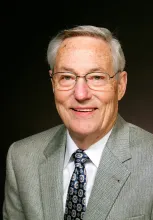
At the time of his retirement in 2016, Roy Holladay was serving the Operation Manager for Ministerial and Member Services of the United Church of God. Mr. and Mrs. Holladay have served in Pittsburgh, Akron, Toledo, Wheeling, Charleston, Uniontown, San Antonio, Austin, Corpus Christi, Uvalde, the Rio Grand Valley, Richmond, Norfolk, Arlington, Hinsdale, Chicago North, St. Petersburg, New Port Richey, Fort Myers, Miami, West Palm Beach, Big Sandy, Texarkana, Chattanooga and Rome congregations.
Roy Holladay was instrumental in the founding of the United Church of God, serving on the transitional board and later on the Council of Elders for nine years (acting as chairman for four-plus years). Mr. Holladay was the United Church of God president for three years (May 2002-July 2005). Over the years he was an instructor at Ambassador Bible College and was a festival coordinator for nine years.
