
Roy Holladay
This transcript was generated by AI and may contain errors. It is provided to assist those who may not be able to listen to the message.
When you look around the auditorium here, you realize that even though we have a nice-sized congregation, we're not that big as far as a local church. When you begin to look over the past few years at some of the trials, some of the tests, some of the difficulties that we face, just look at our local congregation. I'm not going to ask anyone to hold his hand up, but how many of us have been out of work, or how many of us have really been underpaid or working jobs that are not what we would like to have? How many of us have health problems? Well, I can look around the audience. In fact, if we were to start and go down, we would find heart problems, heart problems, heart problems, prostate problems, prostate problems, or urinary problems. You could go on and on and on with difficulties that I personally know that many of us have gone through and suffered. How many of us struggle financially and find that it's just really difficult to make ends meet? We do, but we barely do. We wish, as Mr. Cloud has said, that we had a little money to play around with and had perhaps some of the riches. As a result of some of these things, how many of us struggle spiritually? Not that it's a constant thing, but that there are periods of time that we find that we really struggle with ourselves and keeping our attitude right and having the faith, the confidence, the trust that we should have in God. How many of us over the years have known of friends? I can think of just, since I've been here, a number of people who have died of various sicknesses, some who have died prematurely, some after long illness or sickness. And as I mentioned earlier, over this past week, Mr. Charles Shannon died, Linda Young died. We've had a number of these types of situations locally. And sometimes we ask the question, why? Why do the people of God go through some of these difficulties? After all, are we not the children of God? Are we not the family of God, His sons, His daughters? Why do we find that we seem to go through so many struggles? Why isn't it a little easier for us? Why isn't the fact that we've been called by God placed in His church, isn't God supposed to be blessing us? And then when we see some of the struggles that people go through, some of the difficulties, what kind of impact does this have on friends? What kind of impact does it have on those who are family members? I'm just talking about our own little congregation here. But when you look at history, when you look at the history of the human race, you see the humans have suffered a great deal. How many have died in wars?
How many have been maimed and crippled for life? During the Old Testament, you'll find that there were battles in ancient Israel where they would go out to battle. 50, 75,000 people killed in one day. Now, we have 3,000, 4,000 people killed in Iraq, Afghanistan, and people get upset. Imagine one battle one day, 7,500,000 people dead. In the Civil War, we had over 600,000 young men killed. The most, actually more than any war, or even a combination of the wars since that time, killed in that one war, almost decimated the younger generation of that time period. Think of the misery, the suffering that warfare produces. We hear of accidents all the time. How can an accident change a person's life and perspective? One moment you're healthy, one moment you're alive, and the next moment you could be dead. The next moment you could be crippled. You could be a paraplegic. We've all known individuals who've gone through this. We find drunken drivers, people who are high on drugs, kill tens of thousands of people every year. When you begin to look around the world, you see some of the plight of people, the economic plight, people living in wretched conditions, going without proper food, clothing, shelter.
Many times we think we have it bad in this country, but until you go to an area like Ghana or Africa, Kenya, South Africa, some of these areas, you begin to see how people live.
You and I would be considered rich people to most of them, simply because of the standard of living that we possess. You find people living in wretched conditions, going without proper food, clothing, and shelter. Many of them spend all day just trying to find decent water to drink, finding something that they can cook their food with. One of the greatest things that the Church of God has ever done for many of our people in Africa, LifeNets, is involved in this, digging deep wells for them, setting up cattle programs for them. You would be amazed, one well in a village sunk 200 feet down. What that does for our members and what that does for the village as a whole, all at once, not only is it impacting our members and they can get good, clean water, but it also impacts the whole tribe or the whole city and area.
We've been able to help many people in that way. Millions of people today, even in this country, are out of work, don't have jobs. You have foreclosures of houses. You have huge debts. Why do some people, when you look at various families, why do some people seem to have a lot of problems and others have few? You look, and maybe all of us look at ourselves and say, well, I'm in the broad category of all of those who have a lot of problems, but sometimes it doesn't seem fair what some people go through and what others have. When you look at us as individual Christians, and I'm talking about our own congregation here, you see that we go through the same problems, same difficulties, same trials that the people around us in the world go through. We have health problems. They have health problems. Christians are not immune to financial disasters. They're financial problems. They are family problems. We're exposed to a whole gamut, our spectrum of difficulties that the human race is exposed to. And you ask yourself, why? Why do we go through all of these difficulties, all of these problems? What are we supposed to learn from them? Is God truly with us? Is life always fair? I think we realize that it's not.
We want to take a look at some of these questions today, and especially from the perspective of the Scriptures and what God has to say about it and the encouragement that God gives to us.
Let's acknowledge one thing to begin with. We don't always know the reason why we go through a certain test and trial, do we? Many of us have gone through certain tests and trials, and we keep wondering, why? Why is this happening to me?
What am I supposed to learn? We may not know until later. Sometimes we never know. But there is one fundamental truth that we should never forget. God always knows why we're going through what we're going through. As one of His children, nothing happens to us that's just sort of accidental.
God knows not that He causes the problems, but He's very much aware of the difficulties that we go through. We sometimes go through difficulties because of our own sins, sins of others that impact us because of society around us and the impact that that's having upon us, Satan the devil. Sometimes God will bring a trial on us. But there are specific lessons that God wants us to learn as we move along in this Christian experience we go through.
Only God knows what ultimately we need for character development. He knows what we lack. Many times we say, well, I know I lack patience. I should have more love. I should be humble. And we can see some of the broad things that we need to grow in. But God sees the whole picture. When He looks at us, it's not just isolated areas that He looks at. God sees the whole picture. And sometimes in allowing a trial to come on us or to continue on us, God is developing us across multiple areas of our character in dealing with us, not just one specific thing.
And then sometimes God will reveal to us certain areas that we need to work on, particularly. Let's go over to 2 Corinthians chapter 12, where we find the example of the Apostle Paul beginning here in verse 7. 2 Corinthians 12 verse 7. And you'll find that God apparently knew that Paul needed some help, some encouragement. Now Paul was a man that God used mightily as we realize he was an apostle. Not only was he an apostle, but God used him to open the door before many of the Gentile nations.
He raised up dozens of churches, and God used him to heal many people. And yet we find that because of the way God worked through him, if he wasn't careful, he might get the big hit. He might become a little vain. Over what he had received. And so in verse 7, he acknowledges, lest I should be exalted above measure by the abundance of the revelation. A thorn in the flesh was given to me, a messenger of Satan, to buffet me, lest I be exalted above measure.
So he recognized the fact that it was possible for him to get vain, become proud over the fact that God had given him a lot of revelations. God revealed things to him. He had had visions. He had actually even been envisioned, called up to the very throne of God to be able to see what it was like to be in the throne room of God. And so it would be easy for any of us to get vain over that. And one thing that all of us need to realize is that if we have spiritual gifts, spiritual talents, God reveals something to us.
We can't become vain over that. We can't say, well look who I am. I'm something special. Because all of that comes from God. Our talents, our abilities, our gifts are from God. And so Paul recognized that. He realized that he needed to be humble. Now, I didn't know that necessarily to start with. Notice. It says, concerning this thing, I pleaded with the Lord three times that I might depart from me. So he doesn't say what the thorn in the flesh was.
It could have been his poor eyesight. It could have been health. It could have been a demon. It could have been another individual. It doesn't say. So he asked God to remove it from him. And in this case, God gave him the answer. He said to me, My grace, my gifts, my blessings are sufficient for you. For my strength, God says, is made perfect in weakness.
In other words, in our weaknesses. So here you find the Apostle Paul being told by God that if he wanted to be strong, then it comes through his own weaknesses. And he goes on to say, Therefore, most gladly, I would rather boast of my infirmities that the power of Christ may rest upon me. Therefore, I take pleasure in impermanence and reproaches and needs, in persecution and distress, for Christ's sake. For when I am weak, then I am strong. So when we're weak physically, we become strong or can become strong spiritually.
He had to realize that he couldn't overcome this on his own. He had to turn to God for help, for understanding. How many times when we go through a trial, do we not ask God to remove it from us? When you're sick, do you not ask God to heal you and isn't asking God to heal you, asking God to remove the trial? When you're saying, Father, I'm sick, I've got this problem, you'll heal me, we're asking God to remove it. When we're having financial difficulty, we ask God to bless us, give us a better job or whatever it might be, and we don't receive an immediate answer to that prayer. Are we not asking God to remove that trial from us?
So many times we go to God and we ask Him to remove something. This is what the Apostle Paul did here. He asked God to take this messenger of Satan away from him. And God said, well, look, my grace is sufficient. And so he had to learn that God's strength is made perfect in our weaknesses. And the answer is why. Well, it makes us rely upon God. It makes us look to God because we realize we're weak. We don't have the ability, the talent, skills, whatever it takes to overcome that. And so it takes God's help, God's inspiration, God's direction, His help through His Spirit.
There are some problems that we try to work out ourselves and we find we keep budding into a wall and we can't humanly resolve them. Let's go back to the book of Job, another example here. We find in the book of Job chapter 1 that God brought Job up to Satan the devil. And in Job chapter 1, verse 8, Then the Lord said to Satan, Have you considered my servant Job, that there is none like him on the earth, a blameless and upright man, one who fears God, which is evil. So this is what God, this was God's evaluation of Job. This wasn't Job's evaluation of himself, but God, this is what he had to say about Job.
I think all of us would love to have God say that about us, would we not?
But notice Satan's cynical reply and what he said. So Satan answered the Lord and said, Does Job fear God for nothing?
Have you not made a hedge about him, about his household, all around?
All that he has on every side, you've blessed the work of his hands, and his possessions have increased in the land. Now, stretch out your hand and touch all that he has, and he surely will curse you to your face. You know that Satan the devil says the same thing about us.
He will point to us and he'll say, Well, look at that person. You take away his job. You take away his health. You remove a loved one. You do whatever it might be, whatever trial or test you might go through. And he'll turn around and curse you. When we lose a mate or a loved one, do we turn around and curse God?
When we lose our job, do we turn around and curse God? Well, I don't think so. Most of us do not do that.
But this is the accusation that Satan the devil brought against them.
Now, brethren, we need to realize that God does set a hedge about his servants. Does he not? He does bless us. He does protect us and our families. But that doesn't mean that we will not have problems. When you're converted, God does not place you in a bubble. He does not place you in a vacuum. And said ten thousand angels about you, nothing can come near you. You will not have a problem or a difficulty after that. We all know that it doesn't work that way. We're not totally impervious to the world, to its influence, to the problems of society around us. Let's notice over here in chapter 42, Job had to learn a very valuable lesson beginning in verse 1.
His friends accused him of all kinds of problems.
Their approach was, the only reason a person suffers is if they are personally disobeying your own life. And they accused him of all kinds of things. And Job said, that's not right. I'm not doing that. But let's notice. Job answered the Lord and said, verse 2, in Job 42, I know that you can do everything. And then no purpose of yours can be withheld from you. You ask, and who is this who hides counsel without knowledge? Therefore, I will not be able to do anything. I will not be able to do anything. Therefore, I have uttered what I did not understand. Things too wonderful for me, which I did not know. Listen, please, and let me speak. You said I will question you, and you will answer me. I have heard of you by the hearing of the ear, but now my eye sees you.
Therefore, I abhor myself. And I repent in Dustin Aschitz. Or some of the other translations say, I am nothing but Dustin Aschitz. He realized his own state.
You see, God was working out a greater purpose in Job's life. He had to come, first of all, to recognize how great God is. He had a greater opinion of himself than he should have had, and he had a lesser opinion of God. He had to reverse that. He had to come to have a greater opinion of God, and a lesser opinion of himself.
And so, Job had to learn a very great lesson. And you'll find that that's a lesson that God wants all of us to learn.
We have to come to realize how great, how powerful God is, how marvelous his plan is, how wonderful his calling is, and that that's something that we need to hold on to.
I think there were three valuable lessons you could probably gather more that are explained by these two examples, the Apostle Paul and Job.
Number one, we can be spiritually strong when we rely upon God.
When we rely upon our own abilities, we're not strong. That's all we rely upon. God gives us the strength that we need to endure trials.
Brethren, we're entering a period of time here at the end, and we are living at the end of the age.
When we are told he who endures to the end, the same will be saved.
You and I have to endure it in the end. We are approaching a time called the Great Tribulation, a time of holocaust on the world and on this nation, unlike anything that man has ever seen before. All life could be destroyed off the face of the earth, the Bible indicates. And you and I are going to have to have the strength, the power, the courage to endure to the end.
How do we know that we're going to be able to do that? Well, what you find is that we have to prove now by the trials and the tests, the difficulties that we go through, that we're willing to rely upon God and trust Him.
So we can be spiritually strong when we rely upon God.
We likewise also need to keep our eyes on God, focus on Him, not on ourselves.
And thirdly, God will always do what is best for us.
That's a lesson that we should never forget. God is looking at the end result. It's the end result that counts.
Now, let's get noticed. 1 Corinthians chapter 10 and verse 13.
1 Corinthians chapter 10 and verse 13.
This is one of the most encouraging scriptures in the Bible. 1 Corinthians chapter 13. There's no temptation. Our test or trial has overtaken you, except such as is common to man. But God is faithful, who will not allow you to be tempted beyond what you're able, but with the temptation will also make a way of escape. You may be able to bear it.
Now, the word here for temptation can be translated either trial or test or temptation.
And in the Bible, it's translated both ways, and it can be used both ways.
It can mean either an enticement to sin, which Satan the devil does. It's Satan who entices us to sin. An enticement can be pornography over drinking. It can be overindulging as far as food. It can be any type of thing. An enticement to sin, or it can be a testing or proving. A testing or proving means that you test it. You prove it to see if it's the genuine article. So Satan tries to tempt us to sin, and God will test our character.
Now, James chapter 1 mentions that you don't need to go there, but James 1 states that God does not tempt us. God is not tempted with evil, and he doesn't tempt us. It is Satan the devil who tempts us. The Greek word here is parosmos, and the word means in the Greek a trial or a proving.
You take a car out, and you prove it. You see if the motor runs well, how it shifts, especially if you're buying a used car. You inspect it. You test it. You see if it operates or works. And so God will test or try a man's fidelity, integrity, virtue, constancy.
It can also be translated as an enticement to sin, and temptation is going to arise from desires from within. That's called the lust of the flesh, the lust of the eyes, the pride of life, or from outward circumstances that a person finds themselves in. So God will prove our test our character, our faith, our holiness, our willingness to follow Him, obey Him, no matter what comes down the pot. So what we find here, let's notice, go back again, that no trial or test or temptation is overtaking you, but such as is common to man. So we realize that the problems and the difficulties that we go through are very common to the human race, that people have these type of difficulties. They're common trials. Others have the same type of burden that we're not just unique. The problem or the difficulty is that most people go through difficulties like this without learning the major lessons God wants us to learn. People say, well, just bad luck, and they're not learning lessons. How many people in the world do you ever find that when they go through something, they lose their job, or they have a health problem, that they're asking themselves, well, what lesson am I supposed to learn from this? What is God trying to teach me? Now you find that maybe they'll even curse God for allowing something. They'll blame Him for the problem, but they don't learn the lesson. The difference in a Christian and a non-Christian is we realize that nothing happens to us that God doesn't allow. Therefore, there are lessons that we need to be learning, and there are lessons that God is trying to incorporate into our character.
Now, it also goes on to say that God is faithful. Now, we know that the Bible is the Word of God. There are certain truisms that you can count on, and this is one of the fundamental truisms, great truisms of the Scripture. God is faithful. If God says it, it will happen. If God promises it, it will occur. So God is faithful. God is true. We can rely upon what God says. So, you know, we have trials. They're common to all men. God is faithful in what way? Well, it says here, who will not allow you to be tried above what you're able.
So God will not allow something to come upon us if we cannot endure, that we cannot go through. Our trials will be proportionate to our strength, or our strength will be supplied in proportion to the test that we go through. One way or the other, God will deal with us and work with us.
God will take care that we're not overcome. You see, sometimes people are overcome by trials, just like a dam breaking. We've had that in the news here recently, and all the water behind the dam rushes out, floods people downstream. Sometimes problems can be so overwhelming that they just sort of flood a person's life, and you're overwhelmed by them. Well, God promises to give us the strength. Now, any trial, any test, can overcome a person if we don't follow God, stay close to Him, and pray and study. But God is not going to bring a trial upon us to destroy us. That's not God's purpose. He brings them on us to strengthen us, to develop us, and to help us develop our character. Now, you notice here it also says, but with the trial there will be a way of escape, a way to handle it. Now, when I say a way of escape, God wants us to take the problem, to successfully deal with it, but He does not always...way of escape doesn't mean that you always then avoid it, because it goes on to say that you may be able to bear it. Sometimes we have to bear it. We have to live with it until God decides to remove it. So God doesn't always take away every test, every trial that we have. God is faithful. No trial, no test, no problem nullifies His compassion, His faithfulness, and His commitment to us. I don't care what we're faced with. That has no reflection on who God is. God never changes. He will always be faithful. He will always have compassion and love for us. We are His children. Hebrews 13.5, a scripture we read quite often, but let's notice it. Hebrews 13.5, Let your conduct be without covetousness, be content with such things as you have, for He Himself has said, I will never leave you nor forsake you. Now, is that something we can rely upon or not? If God says, I'll never leave you nor forsake you, He means it. Now you find people get married and they utter the marriage vows, and they'll say, I'll remain faithful to death who you part, or until I find someone prettier or more sexy, or you know, that I'm more attracted to. And so you find people bail out of marriage. They're not committed to that marriage. God will never do that. We are His bride, and He will never leave us or forsake us, so that we may boldly say, the Lord is my helper. I will not fear what man can do.
We don't have to fear what man can do to us. God is there with us. He will help us.
You notice in Matthew 28, verses 19 through 20.
Matthew 28, verses 19 through 20, when Christ was about to be called up into the heavens, He was instructing His disciples. He told them to go make disciples, preach, and then one of the last statements that He made to them, I am with you always, even to the end of the world, or the end of the age. We live in the end of the age. That's where we are. He has promised never to leave us, never to forsake us, to always be with us.
Now, how do we know that God will be faithful and committed to us, that He will always do what is best for us? Well, let's notice in Hebrews 6. Hebrews 6, verse 13.
Hebrews 6, verse 13.
We read, for when God made a promise to Abraham, because he could swear by no one greater, He swore by Himself, saying, Surely, blessing, I will bless you, and multiplying, I will multiply you.
So blessing and multiplying promises that God gave.
God promised through Abraham two major promises, race and grace. The promise of race, God has kept. We have the blessings upon the descendants of Jacob and Abraham and Manasseh. We are the recipients of those blessings. In fact, we can sit here today and all the blessings we have in this country are a testimony to that. Also, God promised grace, that He would extend mercy, that He would raise up a church and His people. But notice, so after He had patiently endured, He obtained the promise. For men indeed swear by the greater, verse 16, and an oath for confirmation is often an end of a dispute. Thus, God, determining to show more abundantly through the heirs of the promise, the immutability of His counsel, confirmed it by an oath. So you and I have had confirmed by an oath by God Himself, based upon His very nature, that He will do what He said He will do. And by two immutable things, in which it's impossible for God to lie, we might have strong consolation who have fled for refuge to lay hold of the hope set before us.
So notice, brethren, there is a hope set before us. This world has very little hope, but we have hope. In verse 19, this hope we have as an anchor of the soul, both sure and steadfast, which enters the presence behind the veil. So you and I have that anchor. There is no higher power than God, so when God swore by Himself, there is nobody who can change God's mind or alter what He said. And the fact that He cannot lie, it will happen. So it's impossible for God to lie. Consequently, two things, His word and His oath, the fact that God cannot lie His very nature and the fact that He was willing to take an oath, and that it will come to pass. So God is faithful. It doesn't matter what man's actions are. It doesn't matter if we obey or don't obey. God will carry out His plan. Romans 3. In Romans the third chapter, beginning in verse 1, we find that God very clearly shows this. That God has a plan. That plan will happen. It doesn't matter what every human being does. Verse 1, what advantage then has the Jew or what is the prophet of circumcision? Much in every way, chiefly because to them were committed the oracle of God.
Now what if some did not believe? Will their unbelief make the faithfulness of God without effect? Well, certainly not indeed. Let God be true and every man a liar, as it is written that you may be justified in your words and may overcome when you are judged.
But if our unrighteousness demonstrates the righteousness of God, what shall we say? Is God unjust who inflicts wrath? I speak as a man. Certainly not. And so you'll find, even if man disobeys, God will keep his work. God will fulfill his promise. He will do what he said he will do. So we know that if God promises, if God says that he will happen. Now let's look at another reason back here in Isaiah 55. Isaiah 55 in verse 10.
We're given another reason why we can absolutely trust God and the veracity of what he says.
Beginning in verse 10, for as the rain comes down and the snow from heaven, and do not return there, but water the earth and make it bring forth the bud that it may give seed to the sower and bread to the eater. So what we find is it rains, the water comes down to the earth, it waters the grass and it grows, it waters the gardens, it waters the fields, and they grow, they produce crops, and it produces fruit. So God says in verse 11, So shall my word that goes forth from my mouth, it shall not return to me void or empty, but it shall accomplish what I please, it shall prosper in the things for which I sent it.
So what you find is if God says it, if God promises it, if God articulates it, it will come to pass. Prophecy will happen. The promises of God are absolutes. They are firm. They will happen. There will be a resurrection.
There will be a millennium. And what God says will take place.
Now we also know in 2 Timothy 2 and verse 11 that God cannot deny himself. 2 Timothy 2 and verse 11. This is a faithful say.
If we died with him, we shall live with him. So we have died with him. In baptism, we will live with him. If we endure, we shall also reign with him. If we deny him, he will deny us. If we are faithless, if we do not remain faithful, we disobey, we fall away. He remains faithful. Why?
He cannot deny himself. That's why. If he says it, it will happen. So he cannot deny what he has promised. What he says will occur. So we have a God who will do what he says. We must believe and know in our heart of hearts that God will always do what is best for us. Now in Hebrews chapter 12 and verse 7, we find an overall summary of why we go through trials, why we're corrected from time to time. Hebrews chapter 12 verse 7, if you endure chastening, God deals with you as with sons, for what son is he with whom a father does not chasten. And if you're without chastening, of whom all have become partakers, then you are illegitimate. You're not sons.
It goes on to talk about how we have had human fathers who corrected us. Verse 10, for they indeed for a few days chastened us that seemed best to them. But he, why does God do it? Why does he allow it? He for our prophet, that you might profit, that we may be partakers of his holiness. That's why God wants us to be holy, to take on his very nature.
Now no chastening seems to be joyful for the present, but painful. Nevertheless, afterwards it yields the peaceful fruit of righteousness to those who've been trained by us. Don't we, at times when we correct our children, especially when they were younger, we train them the right way? The Bible says train up a child in the way that he should go, and he won't depart from it. God trains us. He teaches us. He sets us on the straight and narrow, and he works with us. He develops his holiness in us. He develops his righteousness within us. He does it for our good, for our profit, so that we can profit from us. God is proving us. He must know that we will remain faithful. But when you look around you in this society today, in the world today, I really feel sorry. There are so many humans today who have absolutely no hope. They don't know where to turn. They don't know what to do. They don't know how to deal with their problems. Life overwhelms them one difficulty after another, one trial after another. Man tries to solve his own problems, but he can't. You see, man's problems are spiritual in nature. Man's not sitting under the tree of life, but under the tree of the knowledge of good and evil. Therefore, his solutions to his problems are physical, not spiritual in nature. And so, human solutions do not ultimately resolve man's problems and difficulties. How many people living in the third world, fourth world, have lost hope? Go to bed at night hungry, little children starving to death, not even having good water to drink, nowhere to lie down, nothing to cook their food on. So this is the world that we live in. Ezekiel 37 is a scripture that we normally read on the day, last great day.
But I want you to notice here in chapter 37 verse 11, this is the famous scripture, the valley of dry bones, showing all Israel being resurrected to physical life again. But I want you to notice their attitude. Verse 11, he said to me, Son of Man, these bones are the whole house of Israel. They indeed say our bones are dry, our hope is lost. We have no hope, they say, and we ourselves are cut off. So they have no hope.
It summarizes the approaches that many have had over the centuries. People die without hope. They die not knowing what's going to happen when you die.
You know, there are all kinds of ideas that people have, but today we find that there are so many who have no hope, who despair, who are discouraged, who are despondent, and just giving up. In Ephesians chapter 2, the apostle Paul is describing all of us before our conversion, but especially the Gentiles. In Ephesians chapter 2, beginning in verse 11, verse 11, it says, Therefore, remember that you once, Gentiles in the flesh, are called uncircumcised by what is called the circumcision, made in the flesh by hands, that at that time you were without Christ, being aliens from the commonwealth of Israel, strangers from the covenant of promise, having no hope. These were people who were living in despair, who had no hope without God in the world, but now in Christ Jesus, you who once were far off are brought nigh by the blood of Christ. So, people, and all of us at one time, really had no hope, and now we do have hope.
God has not left us without hope. So many in the world don't know. They think that when you die, you know, they try to comfort people by saying, when you die, well, you go immediately to heaven. And so supposedly, you know, people are up in heaven, but the flip side of that coin is you also go to hell. So while people are flitting off to heaven, they also believe people are going down and burning. And so you have, you know, that too had a coin. God has not left us without hope. Notice Titus chapter 1. Titus chapter 1 verse 1. Again, here's a very clear scripture that gives us the approach that God has. Titus 1 verse 1, Paul, a bondservant of God and the fossil of Jesus Christ, according to the faith that God elect and the acknowledgement of the truth, which accords with godliness and hope of eternal life, which God who cannot lie. So again, we have this repeated, God cannot lie. Notice, if you just leave that phrase out, in hope of eternal life, promise before time began. So before God created the earth and established time, said everything in its orbit, and you have time, God had promised eternal life. So that's a hope that we have. So we have that hope that God will give us eternal life. It's a promise that God has given to mankind even before man was created. The Apostle Paul, back in Acts chapter 23, when he was brought before the Sanhedrin, and he had to defend himself, realized that there were two nefarious sects there, the Pharisees and the Sadducees. I believe it was the Sadducees who did not believe in the resurrection. And so you'll find in verse 6, when Paul perceived that one part were Sadducees, the other Pharisees, he cried out to the council, men and brethren, I am a Pharisee, the son of a Pharisee, concerning the hope and resurrection of the dead, I am being judged. There is a hope that you and I have, brethren. Eternal life is something that God will give to us through the resurrection of the dead, that God will bring us back to life and give us the spirit body, and we will live forever. Now you'll find that today people don't understand that. They don't have hope. And when someone dies, even though we miss them, we wish we could be able to converse with them, and he'll have that fellowship with them, we also realize that they haven't made, that if they've remained faithful, that they will be in the resurrection. Our fate is not yet determined. You and I have not yet endured to the end. So, you know, we still have a few days, a few months, a few years in front of us. In 1 Thessalonians chapter 4 verse 13, you find a church here that believed that Christ was going to come back from their day, and when time seemed to be delayed, he hadn't returned, and they had members who began to die, they began to wonder. And so Paul wrote to encourage them.
He says, I do not want you to be ignorant, brethren, concerning those who have fallen asleep, lest you sorrow as others who have no hope. So he's talking about those who had no hope. For if we believe that Jesus died and rose again, even so God will bring with him those who sleep in Jesus. The word sleep here being a type of death. For in this we say to you by the word of the Lord that we who are alive and remain under the coming of the Lord will by no means proceed those who are asleep. For the Lord himself shall descend from heaven with a shout, for the voice of the archangel of the trump of God and the dead in Christ shall rise first. Then we who are alive and remain shall be called up together with them in the clouds. Meet the Lord in the air, and thus we shall always be with the Lord. Therefore comfort one another with these words. So you find that we have the hope of the resurrection. Always at funeral services we talk about the hope that God gives us of the resurrection of eternal life, the plan of God. God has promised to resurrect every human being who has ever lived, and those of us who in this first six thousand years remain faithful will be in that first resurrection to eternal life. So our great loving God has not left us without hope. We have hope, and that hope is an anchor that we can hold on to. He has revealed to us that there is a purpose for this physical life that you and I have lived today. This life doesn't always go like we hope, until things happen. That, you know, if we could orchestrate it, maybe we would do it a little differently. But we have problems and difficulties that we face. Those cut off from the tree of life have no hope. They don't understand yet. They do have hope. They just don't understand it. God is going to give everyone an opportunity, as we understand. But it has not entered into their hearts. It has not entered into their minds, as 1 Corinthians 2 says, what God has prepared for them. They don't understand what we understand. Their minds have not been enlightened to understand about eternal life and the resurrection. God gives us hope, the hope of the resurrection. This is the hope that Mr. Shannon had. This is the hope that Linda Young had. This is the hope that we all look forward to, whether we are alive or we are dead, when Christ returns, the hope of the resurrection. Let's notice in 1 Peter, one last scripture here, 1 Peter 1, beginning in verse 3. In verse 3, Blessed be the God and Father of our Lord Jesus Christ, who according to the abundant mercy has begotten us again to a living hope. The hope we have is living. It's alive. It's real.
Through the resurrection of Jesus Christ from the dead. How do we know that the dead can be resurrected? Because it's already happened. Jesus Christ has gone through that process. He was God in the flesh. He was the son of man. He died. He was resurrected. And therefore, we know that it can happen. And so, He was resurrected from the dead to an inheritance, incorruptible, undefiled, that does not fade away, reserved in heaven for you, who are kept by the power of God through faith for salvation.
So God's Spirit, God's power, His strength keeps us through faith for salvation, that we will have salvation ready to be revealed in the last time. That's our time. This is the age, the time, the end, when God is going to reveal salvation. In this you greatly rejoice.
So now for a little while, if need be, you have been grieved by various trials. So notice, our trials only go on for a little while. Compared to eternity, compared to living billions of years, of course we know eternity is not measured by time, it's just existence. You live, and you will live forever. That we may be grieved by various trials, various tests that we go through. That the genuineness of your faith being much more precious than gold, the perishes. So what is God looking at? What is he interested in? He wants to know that our faith is genuine, that it's real, it's the real McCoy. He says, that gold that perishes, though it be tested by fire, may be found to praise, honor, and glory at the revelation of Jesus Christ. "...whom having not seen you love, though now you do not see him yet believe, and rejoice with joy, inexpressible and full of glory, receiving the end of your faith, the salvation of your soul." So rather than the end of our faith, that genuine faith, that God tests to make sure that it is genuine, is the salvation of our souls. So we have, of all people, hope.
And no matter what we go through, no matter what trials or tests we face, there is a God in heaven who cannot lie, who is sworn by himself, and has said that he will bring these things to pass. So, brethren, there will come a day when our hope will no longer just be a hope, it will be a reality, that we will be a part of the resurrection, and we will have that salvation of our souls.
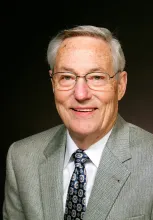
At the time of his retirement in 2016, Roy Holladay was serving the Operation Manager for Ministerial and Member Services of the United Church of God. Mr. and Mrs. Holladay have served in Pittsburgh, Akron, Toledo, Wheeling, Charleston, Uniontown, San Antonio, Austin, Corpus Christi, Uvalde, the Rio Grand Valley, Richmond, Norfolk, Arlington, Hinsdale, Chicago North, St. Petersburg, New Port Richey, Fort Myers, Miami, West Palm Beach, Big Sandy, Texarkana, Chattanooga and Rome congregations.
Roy Holladay was instrumental in the founding of the United Church of God, serving on the transitional board and later on the Council of Elders for nine years (acting as chairman for four-plus years). Mr. Holladay was the United Church of God president for three years (May 2002-July 2005). Over the years he was an instructor at Ambassador Bible College and was a festival coordinator for nine years.
