


Rick Shabi
This transcript was generated by AI and may contain errors. It is provided to assist those who may not be able to listen to the message.
I was born in a town which was a neighboring of the sea, a coastal town, and it was a huge, huge valley where boats would come in and harbor in there for various reasons, to bring imports, to go into South Africa, because it was a town today called Maputo. But they had many boats, and I always used to see and watch those boats.
But if, for instance, you were in other coastal towns that have a lot of boats, you'd probably see the same thing. The boats, quite often, anchored outside of the harbor, because they would come in maybe a day early or whatever it is. And once they get into the port, they pay a fortune for every hour they're there.
So they want to maximize the time there and out, but then they wait for their town slot, whatever it is, to be cost-effective. But the interesting thing is you watch those boats anchored at the sea. And one thing is, you watch them all.
They're all anchored. And say for instance, the anchor is here, and you see all the boats to the right-hand side of the anchor. They're all like this. And then another day you look, and you see the anchor and all the boats to the left-hand side, which is obviously depending on prevailing winds and currents and things like that, depending on how it is, they would move to one side or another.
Because if it's going for it, it's a high tide. If the tide is high tide and the tide is moving, then it moves the boats. If it's a low tide, then it goes that way. But the anchor is there. So it's winds or tides or whatever, they move around. But they're anchored based on that anchor. Now turn with me to Hebrews chapter 6, please.
Hebrews chapter 6. We're going to start in verse 17. Hebrews chapter 6 verse 17. This God determined to show more abundantly to the hairs of the prongs. And as we heard in the sermon, for instance, God had made a prong that after 70 years, the temple would be back there. And we heard in the sermon, exactly on time. God wants things exactly on time. And his promise is his promise. He does not lie. So he says, so God determined to show more abundantly to the hairs of the promise, the immutability of his counsel.
In other words, whatever he decides, whatever his purpose, it will happen. It will happen. He therefore confirmed the promise by an oath. He confirmed the promise by an oath. So that by two immutable things, what are they? Number one, that it is impossible for God to lie.
And number two, the oath. So with those two immutable things, we might have strong consolation. We, who have fled for refuge, to lay hold of the hope, sit before us. So God gives us a promise. That promise to us becomes a hope, because it hasn't happened yet. So it's a hope. But he does not lie. And not only that, he promised by an oath. So by two immutable things, there's two witnesses. One, that God does not lie, and two, he's got an oath. There's two witnesses.
And he says that hope he set before us. This hope we have as an anchor of the soul. It's just like those boats. They anchored, they stayed there. The current moves one way, the current moves the other way, but they stay in that spot. We have an anchor, which is God's promises. And that, those promises, that hope is what we've got to hold on to. Because it says, both sure and steadfast. God's promises, God's hope, is sure and steadfast.
And which enters the presence before the veil. Why? Because God's hope goes beyond today, all the way to God's throne. Where the forerunner has entered for us, which is Christ. Even Jesus, having become a high priest forever, according to the order of Melchizedek. Brethren, we have been given a hope. A hope has been set before us. We've been given a hope. Now, hope is not optimism. It's not optimism. Optimism is kind of, well, I'm optimistic, and that this is going to, whatever. But hope is, God's hope that he gives us, is not optimism.
It's very specific. It's very focused. It's a surety that will happen. Let me give you some example of how powerful hope is. There are a number of children that have been raised up from families that were very poor with very bad conditions. But those children, notwithstanding the poor financial or emotional upbringing that they had, those children later, reached success in life. And upon research, it has been found that one of the reasons that they got success is they had hope.
They hoped for something better. And they held on to that hope, and they worked with that hope. So, what is the hope that has been given to us? What hope has been given to us? Now, today, brethren, I'm going to look at three areas of the promises that God has given us. God has given us many promises, so it's not only three. But I'm just going to look at three specific ones. And the first one that I want to focus on is a physical promise. And it's the promise of the promised land, the promise of the promised land. Now, let's look at that promise in Deuteronomy 27 verse 3. Deuteronomy 27 verse 3.
Yea, we read, You shall write on them all the words of this law, and when you have crossed over, that you may enter the land, that's the promised land, which the Lord your God is giving you, a land flowing with milk and honey, just as the Lord God of your fathers promised you. So, Yea is a promised land, and I don't think you can doubt whether it's a promise land. Is it physical or not? It is a promised land of milk and honey. It's a physical promise.
Now, let's look at, fast forward to many years later to the time of the New Testament, to the time of Paul in Hebrews chapter 3. Hebrews chapter 3. Hebrews chapter 3 verse 12. We read, Beware, brethren, lest there be in any of you an evil heart of unbelief, in departing from the living God. Because as we saw the promise in Deuteronomy 27, he says, You are by me, and I'll take you to the promised land of milk and honey. And I says, Beware, brethren, lest there be in any of you an evil heart of unbelief. And brethren, we gotta be careful, because Satan is the one that inspires this evil heart of unbelief. So he says, Beware, brethren, lest there be in any of you an evil heart of unbelief, in departing from the living God.
The Israelites, when they left Israel, they did not obey, and they departed from the living God. That's why they ended up in, you know, in persecuted and outside of their promised land. Verse 13, But exhort one another daily, while it is called today. While we're still living this physical life, there is still a promise, a physical promise, to God's people. Lest any of you be hardened through the deceitfulness of sin. Yeah, sin is deceitful and hardens our hearts. For we have become partakers of Christ if we hold the beginning of our confidence steadfast to the end. While it is said, to die, if you hear his voice, do not harden your hearts as in the rebellion. When was the rebellion? The original rebellion, specifically talking about the iron context, when the Israelites left Egypt, you know that they rebelled time and time again. And then God so, got so mad with them, they said, you will not go to the promised land, but your children will, but you won't. And so they walked around the wilderness for 40 years, and they didn't go to the promised land, barring too Joshua and Caleb. Verse 16. For who? Well, we'll just jump to verse 18. And to whom did they swear that they would not enter his rest? He swore to those Israelites that were rebellious, that were unbelieving. They did not enter the promised land. Their children did, but they didn't. They left Egypt in the hope of going to the promised land, and they all ended up dying in the wilderness. They did not get that physical promise. Why? Why? He says, yeah. And to whom did they swear that they would not enter his rest? But to those who did not obey. Those that did not obey. Now, look back at what we read in verse 12. He says, be careful whether we have a heart of unbelief. So, obedience is tied to belief. And continue in verse 19. You see, you see, they did not obey. You see that they would not enter the promised land because of unbelief.
It is very important for us to understand, whenever you see in the Bible the word, believe, you gotta see behind that the word obey. Practice. If you believe what somebody tells you, you're gonna do what they tell you because you believe what they tell you. So, when people say, well, I believe in Christ, then you're gonna do what Christ tells you to do. Otherwise, you don't believe in him.
You know, you don't believe in him if you don't know what he tells you to do. So, always see behind the word believe, the practice of obeying. And we see in Exodus, at the time of the Exodus, they did not enter the promised land. That is, that generation that left Egypt. And that's why we read in the next verse, which is chapter 4, verse 1, Therefore, since a promise remains of entering his rest. For whom? Well, first and foremost, for these are lies.
They did not enter the rest. There's a physical promise still outstanding. But looking at our case, spiritually speaking, let us fear lest any of you seem to have come short of it. Let us also look at it from a spiritual point of view. We've got to be careful. Look at verse 4. For he has spoken in a certain place of the seventh day, in this way, and God rested on the seventh day from all his words. Yes. God rested. God appointed that day for rest. And again in this place, they shall not enter my rest, which is God's rest. Well, we can say that God gives us physically a rest, but God gives us also spiritual rest. So it's talking now at two levels. We're going to look at physical and spiritual. There's a duality now. So, therefore, it remains that some must enter the rest. And those to whom it was first preached did not enter because of disobedience. Again, it designates a certain day saying, in David. Now, David was long after that, after those four years. He says, in David. Today, after such a long time, as it has been said, today, if you do not hear his voice, do not harden your hearts. Otherwise, you'll not enter the rest. So there is a physical promise, Yah, to the Israelites. A physical promise of entering a promised land. And sure, he's now talking in duality because you can see Yah in verse 9. Says, therefore, there remains an arrest, Greek sabatismus, which means Sabbath-keeping for the people of God. Because it points to that physical rest and also points to the spiritual rest.
There is a rest. Now continue in verse 11.
Let us therefore be diligent to enter that rest, lest anyone fall according to the same example of disobedience. Again, he's talking in duality. To us as Christians, there is a spiritual rest, which is the kingdom of God. But to physical Israel, there is a physical rest to come. So, let's look a little bit more about this physical rest to come. Because God promised a physical rest to the Israelites and, in fact, to the whole world, as we'll see. To Israel first and then to the whole world, to the Jew and then to the Gentile. Let's start by reading in Jeremiah 16.
Jeremiah 16.
And we're going to read from verse 14 and 15. And we're going to read from verse 15 and 15. Therefore, be all that days are coming, says the Lord, that it shall no more be said, the Lord lives, who brought out the children of Israel from the land of Egypt. Here was those twelve tribes that came out of Egypt. No more are we going to talk about the Edges and say, Wow! Look at Edges! They cross the Red Sea. Verse 15. But the Lord, what they will say is, the Lord lives, who brought out the children of Israel from the land of the North and from the lands where He had driven them, for I'll bring them back into their land, which I gave to their fathers.
So, there's going to be another Exodus, physically speaking, which will be far greater than that first Exodus. We call it in the church, second Exodus. But there will be another bigger event than the first Exodus.
Let's look at Jeremiah 23, verse 5 to 8. Jeremiah 23, verse 5 to 8. "'Behold, the days are coming,' says the Lord, "'that I will raise to David a branch of righteousness,' well, which is Christ, a branch of David, which is of righteousness." It's Christ. "'A king shall reign and prosper, and execute judgment and righteousness in the earth.' Christ is going to come and rule on the earth. And in these days Judah will be saved." Judah meaning the Jews will be saved. And Israel will dwell safely. And Israel, yes, Israel could include Judah, but Israel, talking about the northern kingdom because the name of Israel was passed on to his grandchildren. And that's the northern kingdom, so there's Judah and Israel. And Israel will dwell safely. Now this is his name by which he will be called. It was that branch of righteousness, that root of David, the king that will come, which you and I know is Christ, by this is his name, Christ's name, by which he will be called. The Lord our righteousness. The Lord Yahweh. Why HWH? This is the name that Christ will be called.
Continuing in verse 7. Therefore, be all, the days are coming, says the Lord, that they shall no longer say, as the Lord who brought up the children of Israel from the land of Egypt. It was they won't say any more like when he brought the Israelites out of Egypt. They won't talk about that because that will be significant compared to this future event. Verse 8, But the Lord lives, who brought up and led the descendants of the house of Israel from the north country and from all the countries where I've driven them. And they shall dwell in their own land.
So there's going to be a very big event, which we, for lack of a better word, call it a second Exodus, which will be far greater than that first Exodus. Let's look at Jeremiah 31. Jeremiah 31. And we start reading in verse 1. At the same time, says the Lord, I'll be the God of all the families of Israel, and they shall be my people, all the families of Israel. That is, all the twelve tribes, not just the Jews of all twelve tribes. And then let's read, pick up in verse 6. It says, for there shall be a day when the watchman will cry on Mount Ephraim, arise and let us go to Zion to the Lord our God. And verse 7, seen with the gladness of Jacob, and the shout among the chief of nations, proclaim, give praise, and say, O Lord, save your people, the remnant of Israel. And here is specifically talking about of Israel. Yeah, you could say it's the usual Latin, Jews, but it's very specific, yeah, of Israel. And continue, it says, yeah, in verse 8. Behold, I'll bring them from the north country, and gather them from the ends of the earth, among them the blind and the lame, the woman of child, and when all the labors of child together, a great from, and was a great company, shall return there, and they'll come with weeping and with supplications, and I'll lead them, and I'll cause them to walk by the rivers of waters, in a straight way in which they shall not stumble. I am the father of Israel, and Ephraim is macho child-born. I am the one that is looking after Israel. And this is what Christ will do. It is amazing. And that will be a time still to come. Continue reading in verse 10. Hear the word of the Lord, our nations, and declare it in the isles far off. Well, isles far off could be Great Britain, could be Australia. He who scattered Israel will gather him. He will gather Israel. And keep him as a shepherd does his flock. For the Lord has redeemed Jacob, and ransomed him from the hand of the stronger than him. Therefore he shall come and sing in the height of Zion, streaming to the goodness of the Lord for wheat, and new oil, and new wine, and oil. Brethren, this is physical. This is physical. It's a physical restoration. To come, much bigger than the first Exodus. For the young of the flock and the herd, and the souls shall be at the well-watered garden, and they will sorrow no more at all. They will not have pain anymore. This, when Christ returns, will be a great day of liberty. That really will be a jubilee. A jubilee. No wonder it says at that time, the tremble of jubilee will blow, and says, liberty on earth. Satan is put away. As we know, it's on the Day of Atonement, and that will be the Day of Jubilee. So it is an amazing, encouraging scripture. Look at Isaiah 49. Isaiah 49.
Verse 8. Isaiah 49. Verse 8.
In an acceptable time, that says the Lord, in an acceptable time, I have heard you. You see, as we heard in the sermon, God's got his own time. At his own time, when it's the right day, and the right hour, and no man knows the day or the hour, but he is at acceptable time. He says, in the Day of Salvation. That is a day still to come, when he will save mankind. I have helped you. I'll preserve you, and give you, as a covenant to the people, to restore the earth. Will the earth need restoration, for sure? To cause them to inherit the desolate heritage of us. The earth will be desolate. It will be illness. It will be desolate. That you may say to the prisoners, go forth. Prisoners? Prisoners? Prisoners need the great tribulation. That they will say, go forth. To those who are in darkness, show yourselves. They shall feed along the roads, and their pastures shall be on all desolate heights. Brethren, is this talking about a physical restoration, yes or no? Of course it is. Is this talking about an exodus that will be bigger than that exodus out of Egypt? Yes, it is. And look at what it says to those people that are fleeing. Look at what it says to them. They shall need a hunger, no thirst. Neither heat, no sun, shall strike them. Now think about that. Does that ring a bell to some other scripture?
I'll come to it in a moment. Just remember, they shall need a hunger, no thirst. Neither heat, no sun, shall strike them. Let me ask you, is this talking about spirit beings?
For he who has mercy on them, that's God, and specifically, that Christ, will lead them, even by the streams of water, by the springs of water, bigger part. You'll guide them. I will make each of my mountains a road, and my highways shall be elevated. Surely these shall come from afar. Look. Those from the north and the west, and these from the land, from the seas, from the land of Sinon. They'll come from the north and the west, from the British Isles, from the west, like the United States, from the land of Sinon, which could be South Africa or Australia. It's all over.
Sing, O heavens, be joyful, O earth, and break out in singing, O mountains, for the Lord has comforted his people. He will have mercy on his afflicted. Brethren, there is a promise of physical restoration of the earth. It will be far bigger than the first Exodus. And everybody will say, we're not talking about the first Exodus. We're talking that this amazing second Exodus will be so far and so bigger. So, brethren, I want to now to ask you to read again and meditate briefly and write it in your mind what it says here in verse 10. Kind of, just pay attention to what it says in verse 10. They shall neither hunger nor thirst. Neither heat nor sun shall strike them. For he has mercy on them, will lead them, even by the springs of water, he will guide them. In the context, you can see that this is clearly speaking about those people coming out of the Great Tribulation. As they showed in verse 9, they prisoners, they in darkness, they don't have no hope. They're coming out of the Great Tribulation and they will have a time where it says, you will not hunger, you will not thirst. And whatever extra punishments I'm going to bring upon the earth, they will not affect you because it says, neither heat nor sun will strike you. You'll be protected because you'll have mercy and you'll guide you onto the springs of water. And look how similar, practically word for word, is this to what's written in Revelation chapter 7. Look at Revelation chapter 7.
In Revelation chapter 7, Yahweh's talking about the Great Multitude.
Revelation chapter 7 is talking about the Great Multitude. You can see in verse 9, and these things are looking beyond the Great Multitude no one could number of all nations. So it's not just Israelites but many other nations. And look a little bit further in verse 14. And it said, Sir, because He asked, who are these? He said, you know. And then He said to me, the these are the ones who come out of the Great Tribulation and wash their robes and made them white in the blood of the land. In other words, they've repented and washed themselves. Like you and I have washed our robes in the blood of the land. And you and I have access to the throne when we pray through Christ. We have direct access to God's throne. Therefore, they are before the throne of God and serving day and night in His temple. That's exactly what you and I need to be doing today. And then continue. And He who sits on the throne will dwell among them. Verse 16. Now, remember what we read in Isaiah 49 verse 10. They shall neither hunger anymore nor thirst anymore. The sun shall not strike them nor any eat. For the Lamb who is in the midst of the throne will shepherd them and lead them to living waters. And God will wipe away every tear from their eyes. As they go, as they go to verse 2nd Exodus, they go to the Promised Land and they have repented and they have acknowledged God. And God will protect them from the day of the Lord, the punishments of the seven trumpets. And they will then be part of the group of the 2nd Exodus. That will be the pioneers in the wonderful world tomorrow. Brethren, there is a hope for mankind which is a physical life which is what you and I know and understand is the millennium. We understand it's the millennium. Look at Amos chapter 9. Amos chapter 9.
Amos chapter 9. Chapter 9.
Verse, starting on verse 8. Amos chapter 9 verse 8. Behold the highs of the Lord, God, or on the sinful kingdom. Yes, the kingdom as breaking God's laws. Our nation is breaking God's laws. And I will destroy it from the face of the earth. These nations will be destroyed these kingdoms, these governments will be destroyed because they're sinful.
Brethren, we see horrible things in leadership of nations and not just me, US, all nations. They corrupt. They corrupt. They sinful kingdoms. They sinful governments. And he says, I'll destroy it from the face of the earth. Yet, I will not destroy the house of Jacob.
Says the Lord, for sure I'll come on and will sift the house of Israel among all nations as grainy sifted in a sea. Yet not one of the smallest grain shall fall to the ground. All the sinners of my people shall die by the sword who say the calamity shall not overtake us or confront us. On that day, I'll raise up the tabernacle of David, which has fallen down and repair its damages. I'll raise up its rooms and rebuild it in the days of old.
That day may possess the remnant of Eden, which could be of mankind. If you look in Acts 15, it refers there as mankind. And all the Gentiles who are called by his name, says the Lord, who does this thing. Behold, the days are coming, says the Lord, when the plowmen shall overtake a reaper, and the trader of grapes he must sow seed. The mountain shall drift with sweet wine, and all the hills shall flow with it. And I'll bring back the captors of my people, and they shall build the waste cities and inhabit them.
They shall plump vineyards and drink wine from them. They shall also make gardens and eat fruit from them. I will plant them in the land, and no longer shall they be pulled out. For the land I have given them, says the Lord, your God. Brethren, that's the millennium. That's a great hope we have. That's the millennium. We read scriptures about the millennium. Every year during the feast. And that, we hear about, you know, the sword we turned into a plow, and all that stuff.
You hear those scriptures. You'll hear it again during the feast. Brethren, there is a physical promise of hope for mankind. We need to look at this hope as a hope for our children and grandchildren. It says, our sift them, our protect them. Not one will be lost. Not one. Yes, the sinners, as we read, they'll be punished.
But those are repent, and they're close to God. Not one will be not. You will sift them through this, and they'll be protected. How miraculously God will do it, you and I do not know. I do not know. But don't underestimate the power of God or what He can do. So that's a hope that you and I have for our children, for our grandchildren, that we don't need not to speak. There is a hope. And He promises. He will look after them. And there will be a great multitude of people like that, which will be the outcome of the work we're doing today.
We're not seeing it today. We'll see it then. But there is a second hope. And the hope is for us, is that Christ's coming, at His coming, you and I will go through what's called the second resurrection or the change to spirit being. And that is a wonderful hope. We read of that in 1 Corinthians 15, we read of that, and we know these scriptures very quickly, very, very, very much in our minds.
So I'm not going to take a lot of time on this. But I did want to spend a bit of time on the first, which is the hope of a physical life for our children and grandchildren. There is a great hope, brethren, we need not despair. That should encourage us. And there is time to repent. There is time to repent, because it says they came out of the great tribulation, which means they repented during the great tribulation, when things really got tough.
They will say, yeah, Mom and Dad was right. I should have listened then. But God will protect them. And that's a great hope for us. But we have this hope in 1 Corinthians 15, I'm going to start reading in verse 20, that says, But now Christ is risen from the dead, and has become the first fruits of those who have fallen asleep. And then, I'll jump to verse 22. For as in Adam all died, so Christ, in Christ all, will be made alive. Brethren, all means all. Not just some, means all. All, mankind, good and bad, will resurrect, because Christ paid back.
And they're going to be brought back to life. But each one in his own order, first Christ, then those that are Christ's is coming, and then the others later, and we have time when God, the Christ, will deliver the Kingdom to his Father. As we read a little bit later in verse of 50, he says, Now this I say, brethren, that flesh and blood cannot inherit the Kingdom of God. In other words, you and I today are flesh and blood.
You just have to work maybe in a kitchen and use a knife a little bit incorrectly, and you'll soon realize that you still got blood. Right? So you and I are flesh and blood. As flesh and blood, we cannot inherit the Kingdom of God. We've got to be changed to spirit beings. You see, as it says a little bit in verse 44, you know, there is a natural body, but it's raised a spiritual body.
There's a natural body and there's a spiritual body. In other words, there's a flesh and blood, and there will also be a spiritual body. But continuing reading in verse 50, you know, flesh and blood cannot inherit the Kingdom of God, nor does corruption inherit incorruption.
When we in the Kingdom of God will be incorrect, which means not only we will not deteriorate, but we will not be corruptible in our actions and thoughts and deeds will not be a corrupt government. Behold, I tell you a mystery. We're not all sleep. Some of us will be alive at Christ's coming, but we'll all be changed to Spirit beings in a moment, in the twinkling of an eye at the lost trump. For the trumpet will sound, and the dead will be raised incorruptible, and we shall be changed. For this corruptor must put on incorruptionous mortal must put on immortality. In other words, our body must change. So we know that. We've seen those these scriptures many times. Now, I've had people asking me now, but if you're a spirit being, people can't see you. How's that possible? Well, let's look at Luke 24. Luke 24 verse 36. Luke 24.
Luke 24 verse 36. Now, as they said these things, Jesus himself stood in the midst of them. Now, this is after Christ had died. This was after Christ had resurrected, and therefore he had a spiritual body. Right. What we call a spiritual body. But he stood in the midst of them. Suddenly. Hey, presto! There it is! Suddenly in the middle. And he said, peace to you. I mean, I think you would also be terrified if Christ now would appear right here. You would also be terrified, and he says, and they were terrified and frightened. And suppose they'd seen a spirit. Like they thought, well, we've seen a ghost. What's happening? And so he said to them, why are you worried? Why are you troubled? Why are you doubt? Verse 39. Look at the other side. Look at the other side. Look at the other side. Look at the other side. Look at the other side. Look at my hands and my feet. Why? Because my hands, they had the holes where the nails had been and also on the feet. Handle me. Touch me. Feel it. Can you see? Feel it. Now, you say, but isn't that a spiritual body? Yes, it is a spiritual body. But this spiritual body will have a certain capability of transfiguring itself into physical matter. And they will have a capability of disappearing as well. How? I don't know. But you'll find out in your time. Anyway, say says, handle me and see, for the Spirit does not have flesh and bones.
That's verse 39, chapter 24. He didn't say, what? He didn't say flesh and blood.
He said flesh and bones. That's very significant. You see, because Christ, our physical life, the life is in the blood, as a Spirit being, the life is not in the blood, you've got eternal life. You don't need blood.
So he has a spiritual body that somehow transfigures itself into physical flesh and bones, but not flesh and blood. Because flesh and blood cannot inherit the kingdom of God, right? So it's not flesh and blood, but it's flesh and bones. How? I don't know. We'll find out.
And when they said this, you show them his hands and his feet, but they still do not believe for joy and marvel. And then he said, Hey, can we eat something? Let's have a little picnic here. Let's have a barbecue. Let's get some fish here. And so he did. And I gave him a piece of broil fish and some honeycomb, and he took it, and he ate it in their prison. A spirit being having a meal in front of the others. They kind of boggle their mind, right? I would boggle your mind, boggles my mind. I don't know how this is, but it's a spirit being. That's Christ. And that's how you and I will be. A spirit being that somehow can appear as physical. So our children and grandchildren that are physical in this world, as I explained a little earlier, they'll be able to see us. They'll be able to touch us. We'll be able to care for them. We'll be able to be there for them. Look at John chapter 20. Now, you know this one. This is the story of the doubting Thomas, right? You've heard that 20 times, John 20. Verse 24.
It says, Now, Thomas called the twin, one of the twelve, was not with them when Jesus came. So that's the story I just read to you in Luke 19. And the other disciples, they fall, say to him, say to Thomas, We have seen the Lord, and you can see it. We saw, now, maybe that's not that bad. But anyway, we saw Christ. They say, What? They say to them, Unless I see in his hands the print of the nails, and put my finger into the print of the nails, and put my hand into his side. Why his side? Because he had been pierced with that spear, and blood and water gushed out. So he says, Unless I do that, I will not believe it. And eight days later, he says, they went again inside, and Thomas with them, and Jesus came, The doors being shut! The doors were closed! So when did they walk through? I don't know. But he got in. And he stood in the midst, and said, Peace be to you! And then he said to Thomas, Okay, Thomas, Now, let's talk. He said, Reach your finger, and look at mine hands, and reach your hand, and put it in my side. Do not be unbelieving, but believe. And what did Thomas say? My Lord, and my God. And Jesus said, Thomas, Because you've seen me, and you believe. Blessed are those who have not seen, and yet have believed. Reverend, you and I need to be amongst those that believe, and are not seen. Reverend, we're going to be like Christ!
That's what it says, the eye in 1 John, Chapter 3. 1 John, Chapter 3.
Look in verse 2, beloved. 1 John, Chapter 3, verse 2, beloved. Now we are the children of God, and has not yet been revealed what we shall be. Yes, because we'll be flesh and bone. Spirit beings, they can appear as flesh and bone, and disappear. But we know that when he's revealed, that means we know when Christ comes, we'll be like him. Just like him. It was the type of body. Not like him in authority and power, no, but in type of body. And we shall see him as he is. Because now you cannot see Christ as he is in full glory. You can't see God in full glory. Because Christ is in the image of God. So you can't see God in full glory. Why? You'll get completely burnt out. But then, we'll be of that type of being that we can see God as he is, and Christ as he is. Now, verse 3. Everyone who has this hope in him. We need this anchor. We need this hope. And we need to purify ourselves just as he's pure. We need to grab this hope, and hold on to it. Because we'll be like Christ.
Incorruptible. In other words, we'll never get old. Never get old. You'll always stay young and full of energy. Never tired. Because that's a type of corruption. Right? I know what that feels like, you know. We get up in the morning, we get up in the morning.
You know, the bones trick, and whatever it is. But that won't be so.
And then, we'll be part of a government that'll be incorruptible. A righteous government that will rule the world. Our children and grandchildren, those that have left out, there, and they will have a wonderful world tomorrow as we hear the feast every year. We will have a wonderful plan for them. That's what God's got. So, we really have a blessing for all of us. So, when we look at other scriptures, like Matthew 25, and others like that, look at it. There's a parable of the talents. There's a parable of the pounds or of the meanness. Those parables say, where are we going to rule? We're going to rule. Some of the 10th century, some of the 5th, yes, they will be different rewards. They'll be different rewards.
But we do, you and I, have a hope to be in that resurrection. And that's what the Bible calls the first resurrection. Look with me to Revelation chapter 20, and we'll start reading in verse 4. Revelation chapter 20, verse 4.
And it's talking about our soul, thrones, and they that sat on them, and judgment was committed to them. And these are basically the people, as you read this, people that suffered. These difficulties are these challenges in life. So these people go through difficulties, go through trials, and they'll resurrect, and they will have life again. That's what it says here at the end of verse 4. And they lived and reigned with Christ for a thousand years. That is step one. I mean, they reigned eternally, but for the first thousand years...
Why? Because after that, the rest of the dead were resurrected. So they reigned for a thousand years, then the rest of the dead were resurrected. So that was the first resurrection of Christ coming, and the rest of the dead come afterwards.
So here's the third point of hope.
The other point of hope that we have is that the rest of humanity, the rest of mankind, the rest of people that never had a chance... ...our life was... ...they have died, but they never knew the truth. They never had a chance. They will come to life after the millennium. And that's what it mentions in Revelation 20. And we'll start reading in verse 11. Then I saw a great walk from... ...and him that sat on... ...which is... ...Christ is judging, he's a judge. And he says, ...and heaven fled away, and there was far no place for them. And I saw the dead, small and great, standing. How can the dead stand? Because they've resurrected. And these are the rest of the dead that resurrected... ...a thousand years later. And he says... ...and the books were opened. These books. The Bible. Including the book of Revelation. And the other remaining of the books, the other Bible. These books were opened. And then they'll be judged. They'll be evaluated, because it'll be a time of judgment. They'll be evaluated. And according to that evaluation, then they will be given eternal life or not, because it says, and the book of life will be opened. So they'll be judged, and then in due time, some of them, or all of them, more or less, depending which one's repaired and changed, they will then be given life. You know how Christ talked about in Matthew 11 and Matthew 12? I'm not going to go there, but you know how He talked to them, and He says, High of you, Corazimna, Bethsaida, if this had been done in Zion and Tyre, they would have repented. And look at Assyria, they repented, and look at the queen of Sheba, came out and went about, and there's one bigger than Psalami out. And He says, And they will be together on the day of judgment. You will stand up with them on the day of judgment. And you know, Christ said, there's a day of resurrection to life, and there's a day of resurrection to judgment. Turn with me to John 5. John 5. John 5, verse 27.
John 5, verse 27. He's talking about Christ, so that Christ was given in the Father to execute judgment. So He's the one who's going to be the judge, because He's the Son of Man. And verse 28, Do not marvel at this, for the hour is coming in which all who are in the graves will hear His voice. Now, which people, soon or later, are not in graves. They all, we all end up. So everybody will be resurrected, because He died for us, and we'll respect to life.
And He says, And we'll come forth, those who have done good to the resurrection of life. Those that have done good, in other words, they repented, they are living a clean life. They are living according to God's will, and they are accepting God's grace, and living according to that grace, and therefore returning that grace to others in gracious acts. They will come to the first resurrection, the resurrection of life. And those who've done evil, we all have done evil until we repent. And so those that have not yet repented, those that have not yet repented, when they die, so they consider us not evil until they need to resurrect, need to be told the truth, need to repent, and need to then be judged. We'll come to the resurrection of judgment, as it should say, resurrection of judgment. It's not a resurrection of condemnation, it's a resurrection of judgment in Greek. In Greek, it's crisis, crisis, which means judgment, a resurrection of judgment. So there will be a judgment. There will be a time of judgment. You know the scripture about Ezekiel 37, which is about the value of dry bones. And you know these bones are very dry, and then flesh will be given to them. You go in there, read Ezekiel 37, verse 1 through 14, flesh will be given to them, and then they will stand up, and they say, all I hope is gone. But then they'll get to know the Lord. How? Because we preach to them, because they come to church on the Sabbath, because they see God's gracious kindness towards them, and because of all that, they're going to repent, and they want to try and attribute the same love, which is God's lowest love. And they're going to try and apply the same in their lives. And as they try and do that, what will happen? Then they will repent, and then they will be given life. So, so Reverend, there is a time in which the rest of mankind, that is dead, will have their first chance, which they never had. And that is a great hope for us, because we look, we look at three great hopes, the hope of our children, the hope for us, as we live in God's ways, and God will be gracious towards us, and the hope for those that are dead, on these wonderful hopes, that should motivate us to say, look how great God is, as worthy the sermon is, God promised something, He deaded on time, and this time, He will do it. But, brethren, it's not our only hope.
If you look with me to 1 Corinthians 13, which is the last chapter, as we call it, in 1 Corinthians 13, at the end of the chapter, we read 1 Corinthians 13 at the end of the chapter, verse 12, now we see in a mirror, dimly, but then face to face, now we know in part, but then I shall know, just as I am also known, and I'll really know. And now abide faith. Faith is that God is faithful. God does not break His promises, and is swarmed by us, so two witnesses, these promises will happen. Second, we have these promises, therefore we have hope. And third, we have love. And love means that's what we're going to become like God, loving, caring, gentle, kind people. That in the end is the purpose. In the end, that's the purpose. Because you're by God, you praise God, you do what He wants you to do, but what does He want you and I to do? He wants you and I to be better people. He wants you and I to be loving like He is loving, gracious like He is gracious, merciful like He is merciful.
So brethren, with that in mind, let's go back to Hebrews chapter 6. To Hebrews chapter 6, where we start. Hebrews chapter 6.
Hebrews chapter 6 verse 17.
Hebrews chapter 6 verse 17. So, thus God, determining to show us more abundantly to the ears of, to the ears of the promise, the immutability of His counsel, confirmed by our health. In other words, God is faithful. So He has the three. There is faith. God is faithful. And His teaching has to be faithful people. In other words, what we say, is what we say. That you're yes, be yes, and you know, be known. In other words, you and I need to be truthful and faithful people. Then He says, you know, by two immutable things, when it is impossible to God, forgot to lie, that we have a strong consolation, and we have this hope that is a refuge for us, which is something that we hold on. That is really, hold on, that's why this hope, we have as an anchor, an anchor of the soul, of our lives. It's an anchor, a firm and strong anchor. And then, He talks about which this anchor went as the presence beyond the veil. He was entered to God, the presence. That's who is presently beyond the veil, which is the God the Father, who the forerunner entered with, the forerunner entered for us, which is Jesus. How did He enter there? By His love to us, by giving His life for us, by giving His life for us, by giving Him His blood for us. So, beyond the three, faith, hope, and love. So, my question is, is our anchor solid, strong, and firm?
And the eyes are apart. Are we holding on to this anchor? And is the anchor strong? You know, you hear of boats that are anchored, and suddenly a storm comes, and the anchor was not well encroached on the rock. And what it is, it's dragged with the storm, and then the boat gets thrown onto the rocks. And you know the story of Christ, see it? How are you going to bolt on the rock? Or are you going to bolt on sand? Is our anchor on sand? No. Our anchor is on God. It's on rock. But the question is, it's not that part of the anchor that might not hold. It's our part that we might not be holding on onto that anchor, because that anchor is bolt on the rock, and will not fail. But the question is, will we let go of that rope where the anchor is?
And so, brethren, our job is that we need to be holding on to that anchor very strongly and faithfully. We need to be working on the various tools that God's given us to have spiritual growth. And that's where we've got a booklet that addresses that. Tools for spiritual growth, which includes our prayers, which includes our Bible study, which includes our meditating about the principles that we need to put into practice, which includes occasional fasting, which includes us to take the lead and follow the lead of God's Holy Spirit.
As one doctor said, a doctor, Judith Rich, said, the hope is like a match. That lightens up a tunnel. And so, you've got this light and it shows the way forwards and it shows the exit. But that's not enough. We've got to have the faith, the courage, and the fortitude to walk forwards to that exit. We've got to be faithful to the end. So, brethren, we have to hold on to that anchor. The anchor is solid, but we've got to hold on to that hope. We've seen three areas of hope of the promised land, physical for our children and grandchildren. We will hope for us to be children of God in the kingdom of God. And we've seen the hope for all of mankind and those that have died. So, all are covered in the great promise of God. But here's a full point. We have to stay firm and hold on to that anchor. We've got to be growing spiritually daily with the help of God's early spirit. And then, the promises of God will really be anchored to us, well-established, well-firm, that goes beyond the veil all the way to God's throne through the power and authority and the help of our Savior, Jesus the Christ.
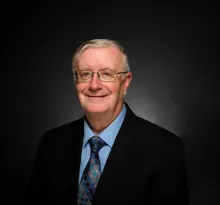
Jorge and his wife Kathy serve the Dallas (TX) and Lawton (OK) congregations. Jorge was born in Portuguese East Africa, now Mozambique, and also lived and served the Church in South Africa. He is also responsible for God’s Work in the Portuguese language, and has been visiting Portugal, Brazil and Angola at least once a year. Kathy was born in Pennsylvania and also served for a number of years in South Africa. They are the proud parents of five children, with 12 grandchildren and live in Allen, north of Dallas (TX).
