

Victor Kubik
This transcript was generated by AI and may contain errors. It is provided to assist those who may not be able to listen to the message.
Well, on behalf of the whole congregation, I just want to say thank you very much to the Greensboro Choir for that beautiful special music. Can't you come up and do another one? That was very, very beautiful. Brethren, today I would like for us to focus our minds on the mission that has been given to the Church of God, to preach the gospel of the Kingdom of God into the world, and to make disciples in all the nations.
Recently, at the General Conference of Elders and the Atlanta Area Conference a couple of weeks ago, the theme was creating an environment for growth. You know, God's churches always try to create an environment for growth. We want to be a church not standing still. We want to be a church that is growing. We want to have each member growing spiritually.
And we also want to be growing as far as having new people to attend our services. We want an environment in the church that is healthy for the growth of our members and newcomers who might come. Think about this. Jesus Christ said in Matthew 16 and verse 18, I will build my church, and the gates of Hades, which will be the grave, will not prevail against it.
You know what this means? He spoke those words almost 2,000 years ago. I will build my church, and the gates of the grave will not prevail against it. Actually, the grave has prevailed on the members of the church all down through the ages. For example, the early Christians who were baptized on the day of Pentecost and the early ministry eventually all died. But guess what? By the time they died, there was a new generation of leadership, and there was a new generation of members in the church. And that has happened all down through the 2,000-year history of the church. The members eventually die. The leadership eventually dies. But by the time they do, there's another generation that has come on the scene to carry on the church.
And so the church itself has never died away. And it won't, because Jesus said the gates of the grave would not prevail against the church. He also no doubt meant that the church would never be destroyed, that Satan would try to destroy the church, but that would not be permitted. That God would always protect and see that the church would carry on. But it certainly does mean for the church to be able not to die away, that there would be new members that would carry on the work of the church, and there would be new leadership all along the way.
Well, today let's consider our great mission. And the mission of the United Church of God, and you can find this mission online on our website, The mission of the Church of God is to preach the gospel of Jesus Christ and the Kingdom of God in all the world. Make disciples in all nations and care for those disciples. That is our mission. That is our work. That is our marching order. To preach the gospel of the Kingdom of God and to make disciples. Today, let's consider our great mission.
And I was thinking about this coming today to our service here, that we have the greatest work and the greatest mission that could ever be given to anyone. And I think we need to be more excited about it ourselves. We're preaching the good news of God's Kingdom. We know that God's Kingdom is a family that we may become a part of.
It's a kingdom family that includes God the Father and Jesus Christ at the top level, but also includes each and every one of us. We may become a part of the Kingdom of God. And that message includes the coming of God's Kingdom to be set upon the earth and bring the solution to mankind's problems. And the problems of this world are getting worse all the time. And we're seeing that mankind doesn't have the answer. It wouldn't matter who we had in the White House.
He wouldn't not have the answer to our problems nationally or internationally. The United States can't solve every problem in the world. We don't have the ability to change human nature. So it really doesn't matter at all. The problems go on and continue to get worse and worse all the time.
It may be sometimes that the leadership does seem to hasten the deterioration of the country and the world. And our top leaders, for example, have given belief in gay marriage. And that's certainly at the very top level. That has not helped our country at all for our top leadership to do that a few years ago.
But we have the greatest mission that anyone could ever be given. There's no greater work. And so we can be excited about it. I'd like for us to think about that as we go through the sermon, that we don't just take for granted the work that God has laid out for His Church, and that we are excited about it.
Questions we'd like to ask ourselves as we go along. How can we preach the gospel? That's one half of the mission. How can we preach the gospel more effectively? And number two, how can we improve in making disciples? That is certainly a part of the mission God has given us. How can we catch people's attention in a world today that has distractions all over the place?
How can we make disciples in all nations? What is our collective role together, all of us? And what is our individual role? What can you do? You know, recently in the men's club a couple of weeks ago, we discussed how we could – ideas on how we could make disciples and how we could create an environment for growth and how we could further the preaching of the gospel. I'm going to refer to some of these ideas as we go along and add some of my own to them. Let's begin just reading a few key basic verses. Matthew 28 certainly lays out the mission of the Church of God, Jesus shortly before He would ascend up to God's throne, where He currently presently is, before His return back to this earth, and not too many years ahead. In Matthew 28 in verse 19, He told them in verse 18 that all authority had been given to Him in heaven and earth. And He said, verse 19, Go therefore and make disciples of all the nations, baptizing them in the name of the Father and the Son and the Holy Spirit. So making a disciple means eventually bringing someone to conversion and to repentance and baptism and receiving of God's Spirit. And then verse 20, teaching them to observe all things that I've commanded you. And He said, Lo, I am with you always, even to the end of the age. And here's another verse then that shows the Church would not die away and that Christ would be with the Church right up to the end of the age, right up to His Second Coming. So the word here for disciple in the Greek means, or to make a disciple, means to enroll as a pupil of a scholar. So did you know that when we make someone a disciple, we make Him a disciple actually of Jesus Christ? A disciple is then one that is a Christian, a follower of Christ. And we enroll Him as a pupil of a scholar. And the scholar, of course, would be the top scholar, would be Jesus Christ. Vines says, the Greek concordance, Vines says that a disciple is an adherent, an imitator. You know, actually one becomes a disciple even before baptism. For example, before conversion, if one begins to believe and follow after Jesus Christ, he becomes a disciple of Christ, but he does eventually come to baptism and he comes then to repentance, being baptized and receiving the Holy Spirit. The twelve disciples were not converted, but they were disciples. They're called disciples of Christ. Even during the ministry of Christ, the three-and-a-half-year period, they were disciples, but they were not converted yet. Jesus even told Peter that after you are converted. So in fact, they all began to go their own way after Christ died. They didn't really get the message until just before Pentecost and at the time of Pentecost.
So we are in the business of making people believers, making them disciples. Our Beyond Today program, we just saw one of them during the sermon at that time, and we're striving to catch people's eye, their attention. We're striving to lead them step by step to a deeper study of their Bible. And if they do indeed begin to study and come along and understand, and God is working with them, opening their minds, they become a disciple of Jesus Christ. They become enrolled as a pupil of Christ. Let's go to Mark 16 and verse 15. Mark 16 and verse 15.
In verse 14, Jesus upgraded his disciples, the 11, because of their unbelief and hardness of heart, because they did not believe those who had seen him after he had risen. So you see, they weren't really fully converted yet, but they soon would be. In verse 15, he said to them, Jesus told his 11 disciples, Judas was dead by this time, he said, go into all the world and preach the gospel to every creature. So we go all around the world preaching this good news.
That's what the word gospel means. He who believes and is baptized, and of course we know that involves a calling from God, will be saved. But he who does not believe will be condemned. If he has heard the message, he'll later have to realize that he'll have to change and repent as well. So, brethren, we go into all the world and we preach the gospel, and we baptize those who believe. Those who believe are actually those that God is calling.
So we see in preaching the gospel and making disciples that it is a whole church effort. It's not just something the ministry does. And I hope the membership here feels possession of the mission just as much as the ministry, the leadership. We all are a part of it.
It's not the ministry alone. Through the ministry, in a way, serves like a spearhead. They kind of lead the way. But every member of the church has a part to play, a very important part to play in preaching the gospel and making disciples, who, for the sake of all of us, are partners with God and with Christ, the head of the church, in doing the work, in doing the mission that God has given to us.
True, it is God the Father who does the calling. We all know John 6 and verse 44 very well. No one can come to me, Jesus said, except the Father draws him. So God the Father is the one that opens hearts and minds, who he will call. And in Acts 2 verse 47, it brings out that it is God who adds to the church. So God is the one that does the calling. He's the one that gives the increase. You know, we sow the seed. We have our role to play. But it is actually God who gives the increase. But we have our part, and that's what we want to focus on, especially this afternoon.
We are in partnership with God in preaching the Gospel and making disciples. What can we do? How can we be a good partner with God? And how can we help? First of all, let's consider what we can do collectively.
That means all of us, thousands and thousands of people around this country, the United States and also other countries around the world, we're all partnering with God in preaching the Gospel. What can we do? Well, certainly first of all, our tithes and offerings make it possible for us to be on television, make it possible for us to send out magazines, hundreds of thousands of magazines, every issue, and booklets and articles, all the printed literature.
We just send out tons of it every year, and people read it, and they receive it, and they read. And later on, some of them, who knows, become members of the Church, and God works with them, and they repent, and they are baptized, and come into the Church. So our tithes and offerings play a big role in being able, also the Internet. I might add that. Many, many people find out about us over the Internet. They do a search on something, and United Church of God website shows up, and they go to it, and they find out things about our literature, and about certain subjects and topics they're interested in.
So, you know, our tithes and offerings are very, very important. Don't dismiss how important it is, and be faithful in your tithes and offerings, because, well, because God commands it, and He promises to bless us if we are. And we, of course, want to obey Him and do what He commands us to do. Now, prayer is also very important. We'll read a verse on that in just a moment. But, you know, our tithes and offerings and our prayers make it possible for us to walk through open doors.
Turn to Revelation 3 and verse 8. Revelation chapter 3 and verse 8. And here is one of the seven churches that walks through open doors. In verse 7, the Philadelphia church, these things says, He who is holy, He who is true, He who has the key of David, He who opens and no one shuts, and shuts and no one opens. These are words that are not said to any of the other churches about opening of doors and shutting of doors.
Verse 8, I know your works. See, I have set before you an open door, and no one can shut it. For you have a little strength, have kept my word, and have not denied my name. Now, we believe that this has a special application to the work of the church of God today. We believe that God has set before us open doors that no other age of the church, things like radio, things like television, like the printed page. I mean, there is just the ability today to just publish things, booklets and magazines and articles, and send them out to people over an established mail system in our country and in most other countries of the world.
And so we're just able to do things through these open doors. The Internet also, just in the last decade or so, the Internet has become so powerful. So we're able to walk through open doors that no other age of the church could walk through. We believe this has a special application to the work that we have been doing for many, many decades and continue to do. So we want to walk through those doors, those open doors. Of course, we also have preached the gospel in public-type campaigns.
We have a public campaign that is coming up in Cincinnati in, I believe, September. What about in earlier times? The open doors? How did the early church preach the gospel? How did Jesus Christ preach His message? They didn't have radio. They didn't have television, the Internet. They didn't have the printed page in the same way that we have now. So Jesus spoke at synagogues. It was common to go to synagogues.
Jesus also spoke at mountainsides, and people would gather. You know, a mountain many times is the right location, can help to carry the voice. Jesus got on a boat. Water also conveys the voice, like a loudspeaker. And Jesus even got on a boat and spoke to a large group of people. So Jesus went to public places and preached the gospel.
What about the New Testament church? They also went to public places like synagogues. And Paul went to this place in Athens where people came together, philosophers and others, to talk and debate about different things. So they went to public places to preach the gospel in their time. Today we do have some open doors, as I've mentioned, that they did not have. And now a new program, personal appearance campaigns as well. So what can we do collectively? We can walk through all the open doors that God opens for us, that we can afford to get into. And we can publicly preach the gospel in every way that we possibly can. And we should be praying about that. I mentioned prayer is one of those ways that we can collectively do the mission God's given to us. Notice in Colossians 4, Colossians 4, the Apostle Paul mentioned this thing of prayer. We can pray for God's work to preach the gospel, to fulfill the mission that God has given to the church. Colossians 4, verse 2, Continue earnestly in prayer. And we do need to do that every day. Don't let a day go by without continuing earnestly in prayer. Being vigilant in it. Vigilant means to be watchful. We can be watching ourselves, watching world events and happenings, prophecy. And be vigilant, watchful in it, with thanksgiving. Certainly our prayers ought to include a lot of thanksgiving to God. Verse 3, meanwhile, praying also for us. Praying for the ministry of the church that God would open to us a door for the Word. To speak the mystery of Christ, for which I am also in chains. So, you know, we can pray that God will open doors to preach the kingdom of God. That's our message to the world. And it is a mystery. The mystery of what God is doing. The mystery of Christ as our Redeemer and Savior. And the one that we are to follow. And verse 4, He said that I may make it manifest as I ought to speak. How often do we pray that those three men on the Beyond Today program can make it manifest as it should be. Maybe to penetrate into the hearts and minds. To connect with people. Certainly that is very important. So that it may be made manifest. Those who write articles for the Good News magazine. That we can make it manifest as it ought to be in a way that is effective. I think sometimes we don't realize that we can help collectively in that way of prayer. That God will help the ministry who is speaking and writing the message to do it effectively. That does get results. That does connect with people. Well, look at the Apostle Paul in 1 Corinthians 9. And we certainly need to be very much aware that there is a way of getting through to the hearts and minds of people. And we have to in some way touch them. We have to in some way stir them, challenge them, connect with them. Find some common ground and go from there in leading them to the truth. 1 Corinthians 9 and verse 19, Paul wrote, Though I am free from all men, he was a Roman citizen, I have made myself a servant to all, that I might win the more. So you know we might be able to do things in a way that is more effective. We have our role to play then. That I might win the more. And to the Jews, I became as a Jew. That I might win Jews. To those who are under the law, as under the law, that I might win those who are under the law. Those who are without law, as without law. Not being without law himself, to word God, but under law, to word Christ. And I might win those who are without law. To the weak, I became as weak. That I might win the weak.
I have become all things to all people. That I might by all means save some. And I do this for the Gospel's sake. The mission that God has given to the Church from the very beginning. That I may be partaker of it with you. So you see, there is a way that we need to speak the Word with being able to get across to people. And touching them and connecting with them, stirring them, challenging them. So brethren, collectively, can we not do a big work? We can improve ourselves in that collective effort.
What about individually? In our men's club, we discussed also what can we do individually? By the way, I discussed this also in my other congregations. And guess what the number one thing is that all of us individually can do? Our example. The example that we set is very powerful. People do find out about us. They do see that our way of life is different. Eventually, as they get to know us better, they do find out that we, for example, keep the Sabbath. They find out we keep the Holy Days instead of Christmas and the holidays of the world. And so our example begins to be very powerful. I don't know if we're using this as effectively as we should.
Sometimes we've encouraged in the past that we don't throw our pearls before swine. They might trample this underfoot. So be careful. And sometimes we may have hidden it too much. Jesus said that if you put a light under a bushel basket, it's not going to be seen. You've got to put it up on a lampstand and let it shine out its light. And so maybe there's a balance then.
We don't want to just throw this at people in a way they will trample the truth underfoot. But neither do we want to hide it. We want to, in fact, hold it up. Sometimes I think we don't hold it up quite as much as we should.
And maybe make some comments. When people are standing around talking about one thing or another, make a comment that makes them think. I think Jesus would do that. He would make a comment or two along the way that would make them think. And then if somebody came to you afterward and maybe took note of that comment and said, boy, that sounds interesting, what you said. And you might at that point even suggest a piece of our literature.
Maybe it was on the Trinity, maybe it's on the Sabbath or something else. And so that's certainly letting our light shine. We can refer people then to our Beyond the Day television program. We can refer them to our Good News magazine, to booklets and articles, and to our Internet website where we have so much material.
So there are many, many ways that we can, by our example, by what we do, we can individually help in the mission of the Church. All this is a part of preaching the Gospel and perhaps making disciples. Who knows what might happen to someone that you have recommended our program or our literature? So there's so much we can do individually. You know, when we consider that there are those who have a mate that is not in the Church, and yet there is evidence in our Church history that many good examples have been set. We've known ones that have gone many, many years with a mate that is not in the Church.
And then after seven years, ten years, then this person begins to attend services. Maybe goes to Holy Day services and eventually becomes a member of the Church. The Scriptures have some what to say about that. Look at 1 Corinthians 7. So, you know, this also individually shows that by example, and this happens also, it happens both ways with husbands toward their wives or wives toward their husbands. In 1 Corinthians 7, verse 13, And a woman who has a husband who does not believe, if he is willing to live with her, let her not divorce him. So that's our teaching. If a lady has a husband that doesn't believe, then stay with him if he is willing.
There's no need to divorce or separate. In verse 14, why? Because the unbelieving husband is sanctified by the wife, and the unbelieving wife is sanctified by the husband. Otherwise, your children would be unclean, but now they are holy. Even the children, where one believes, become holy. And look at verse 15. If the unbeliever departs, let him depart. You know, we can't force a person to stay in a relationship. A brother or a sister is not under bondage in such cases, but God has called us to peace.
But verse 16, But how do you know, O wife, whether you will save your husband? A wife, by her good example, might be able to get her husband to think about these things and study into them and become a part of the church. Or how do you know, O husband, whether you will save your wife? A husband might be able to also, by his example, influence his wife as well. Let's go to 1 Peter, chapter 3. And Peter writes also about this.
So individually, our example is powerful. And I agree with our family clubs and men's clubs that our example is the most powerful way that we individually can preach the gospel and help in making disciples. In 1 Peter, chapter 3, verse 1, Likewise, you wives, be submissive to your own husbands. God's Word does instruct wives to submit to their husbands. That even if some do not obey the Word, some then, some husbands, not yet in the church, they, without a Word, may be won by the conduct of their wives. When they observe your chaste conduct accompanied by fear.
Again, it's by letting the light, your light, shine. So the husband likes what he sees in his wife. And he eventually becomes a part of the church. He is one. He's one over as a disciple himself. So brethren, I think we might sell ourselves short sometimes in our marriages.
We might sell ourselves short on our jobs, communities, and our extended family, and not being a bit more recommending people as far as our program and our literature. You know, one other area that we can think about, too, is our children. Our children will grow up. And my wife and I have four children. All too soon, they grow up. You find out before too long that they're teenagers, and you begin to count down the years, and then they're out of there. And all those who have had children remember how fast that goes by. You don't have as long as you think to make your mark on the children.
But you do have about 18 years before they get totally away from the home. Usually around 18 or 19, they begin to get away. And you have quite a number of years, then, to make your mark on your children. Our new program on the Deuteronomy 6 program of parents teaching their children is going to put a lot of responsibility upon the parents, but it's going to be good. The parents are going to be able to teach their children.
They have that responsibility. And, you know, we've been kind of late, I guess, in coming to realize that this is the approach we need to use and put that responsibility upon the parents and help them. We're going to help the parents to fulfill that God-given responsibility. But think of this. Every child is a potential member of the Church of God. And so we want to certainly teach them in every way we possibly can and help them to become a disciple of Christ.
That's part of making disciples, too, isn't it? What can the local congregation do? We've covered what we can do collectively. We'll get into more things as we go along. We've not exhausted it yet. What can we do individually? We'll get more into that as well. But what can the local congregation do right here? Well, you know, when newcomers do come to our service, and we will have visitors, we will have newcomers. And newcomers should see a people that is different. They should see a devout people. They should see people that are friendly and warm in their people skills. You know, all of us need to ask ourselves, how good am I with my people skills?
The ability to go up and meet someone, to feel at ease with them, to get to know them, to let them get to know me. Begin to develop a relationship with new people you've never seen before. Scriptures encourage us to be able to entertain strangers that we have never met before. Of course, we have visitors that come here who are members of the church that we've never seen before.
And how good are we at making them feel welcome? How good are we at making new people that have never come to church before? What is your first memory of the church? What was it like when you first went to your first service of the church of God? My first one was in Pasadena, California. I was 18 years of age, fresh out of high school. I had just traveled all the way across the country to attend Ambassador College in the fall of 1958. And when I went to the service, there were hundreds of people, and they were all extremely friendly and warm.
It was welcoming and inviting. So, you know, we need to make sure that people who visit us feel that way and go up and be friendly. I don't mean that we should do it out of balance. We should not overwhelm a person. And if we sense a person maybe kind of wants to not engage too far, we should sense that.
But our people skills we need to think about. We need to have good people skills and be able to make people feel comfortable and welcome. Again, there's a balance. We should be positive, certainly. And certainly we don't need to bring up negative things. You know, the Church of God goes through its trials and difficulties. We can go back over the years.
We can see trials and difficulties here and there. If anybody brings up something along that line, we can be positive about it. God's Church does have trials, and we have to face those and with God's help come through them. But we do want a warm and inviting and friendly environment as far as our congregation.
Let me get into some things that were brought out recently at our conference in Atlanta. Let me get into just a few things that will be helpful to us. There were sessions at the Atlanta Area Conference on improving our church services and making the services more engaging and making people to feel welcome. So let me read from a handout that was given to us by one of the ministers who was presenting this session making the church more spiritually engaging. Let me just read some from this handout. First of all, it cites the mission of the church, and that is preaching the gospel and make disciples the guiding principles. We believe that our Father has given us the opportunity to build a relationship with Him, with Jesus Christ, with one another, and with all mankind. We believe the immutable Word of God shows us how to build those loving relationships and become more like Jesus Christ. Therefore, it is the duty of the church to proclaim a message of hope and a call to repentance, to teach all things Christ has commanded, and to prepare members of the body of Christ. Brethren, this is all of us. It is, isn't it? Here, to prepare members of the body of Christ, that is the church, to teach, lead, and serve under Him now and in the future. We want to do a better job as far as preparing members to teach, lead, and serve. Okay, positioning statements. We believe Christ commissions us to preach the gospel to all the world. Therefore, we must energize the entire church in fulfilling its mission to preach the gospel and prepare a people. We must motivate members to transform their lives into brighter lights to the world. We believe that it is essential that we develop leadership for the church to prepare a people for works of service and to attain the measure of the stature of the fullness of Christ. Therefore, we must provide in-depth biblical teaching, answer the great questions of life. What does God exist? Who is God? What is God? What is His purpose? Who is man? What is man? What is His purpose? Develop training and educational programs for youth, members, and ministry. We believe that building meaningful, Godly relationships is explicitly taught by Jesus Christ in the Scriptures. Therefore, we must love God and keep His commandments. Love one another as Christ loves us. Teach and live Christlike service. Become one in God and Christ through the Holy Spirit. Speak the truth openly in Godly love. Foster Godly relationships among all. Be a ministry of reconciliation. Goals. Congregational care. A Godly environment that promotes Christlike service, spiritual growth, humility, love, and unity. Objectives. Improve the quality and effectiveness of pastoral care in our congregations. So we want to do that. We want to improve our quality and effectiveness. Increase positive men, women, and youth involvement in their congregations and the larger work of God. Promote members' spiritual growth through educational seminars and programs.
So, strategies to develop a comprehensive training program for ministerial candidates to meet our current and future needs, to ensure that there are pastors and elders to care for each congregation. Develop and conduct marriage, family, and other types of seminars, such as focused education to promote members' spiritual growth and education.
Educate pastors and elders on how to encourage and improve member service and involvement in order to promote spiritual growth. Produce a systematic way to track individuals who are developing in their leadership speaking ability and service in the Church. So we want to then make the Church more spiritually engaging.
And this conference then certainly gave us some of the, you might say, ways that we can begin to think about doing that. Another session that was at the conference in Atlanta was improving the Church service experience. These were actually breakout sessions. They were workshops. And it went into everything from what happens when a new person first begins to even contact the minister, and whether by email or telephone, how we can most effectively respond. Emails from the website and so forth. The hall and the physical environment that we have a hall that is not difficult to find. I think that's one blessing we have. We're on a major highway here, even a street that is well known and also a major highway. Highway 68 here in High Point. There was also a breakout session, and part of this, as far as improving the Church service experience, having greeters at the door. I'm thinking that might be nice to have if somebody comes in, and what if they're running a few minutes late, even? It'd be nice to have someone that stays outside a few minutes after the service has started, because people may not even know which building we're meeting in, necessarily, if they're brand new. So greeters at the door that are warm and welcoming, both male and female, pointing out to new people where the restrooms are located, and just helping them to become familiar with the auditorium. Congregational training, we need to teach our members how to interact with visitors, and that's part of the people skills that I mentioned earlier. We want to be good at people skills, meeting people, and making them feel comfortable, taking an interest in them, recognizing their needs. Greeting and welcoming new people, what would make new people feel comfortable. Don't judge them by their looks. You know, there may be ones who don't realize our dress code, our grooming habits. Let them learn, give them time to learn.
Music before the services.
I don't know if we can, but sometimes a few minutes before the service begins, it is something to consider, that we would perhaps have some music that begins to play a couple of minutes before. And everyone at that point begins to take their seat, and we come to the most holy and sacred time of all, and that is the holy convocation itself, the church service.
During the church service, there are songs and special music. How can we improve? How can song leaders do even a better job of showing the enthusiasm, the warmth, and the excitement? And special music, like we had today, adds so much to the service, doing that as often as we possibly can.
The sermonette, keeping the message tightly focused and keeping it interesting and new people, helping them be helpful to members of the church as well as new people. Announcements that are brought out here in this handout, that they be short and sweet. They don't need to be long. We hand out the Sabbath newsletter. We send it out by email.
People have printed copies of it who don't have email, so we don't need to read everything in the newsletter. Much of what is sent to the ministry in the e-news, I try to put a lot of that also in the newsletter. But it is an opportunity to build rapport with the congregation and also new people and let it be known what is coming up.
The sermon, we have sermons on prophecy, sermons on doctrine, sermons on Christian living. And usually the sermons will be around 50 to 60 minutes. We feel that basically overall we should not exceed 60 minutes. And our sermons need to give hope and to be positive, certainly also helping the children who are present as well. So many things that we can speak about. Messages about prophecy to show the need to explain why it's relevant and why it matters today. And so we probably need to speak a little bit more about prophecy. Look at all that's happening in the world. I tell you, we're getting closer and closer to the end of this age. So improving the church service experience. Let's do some brainstorming on that. How can we improve the church service experience for old-time members as well as for new people that might come and might visit? Brethren, all the congregation can work together to make church services more spiritually engaging. Everyone can be involved in working together. We should be a vibrant, energetic congregation. Let's not be discouraged. Trials and difficulties have come our way along the way in the years and decades we've been in the church. But let's not be discouraged. Jesus Christ is with us. The church is not going to die away. We need to certainly be a lively and energetic congregation. Turn to John 13 in verse 35. Again, it shows how important it is, our example. When people come in, new people or visitors, that they see a family that loves to be together. They see love. They see peace. They see unity. We don't want people to come into sense that there's division, that there's friction. You know, they won't want to be a part of a family like that, will they? But if they see a family where there is love and peace and unity, one of our presentations in our men's club was on the need for love and peace and unity. And that goes a long way. We want a lot of that here. And we don't want any of the opposites of those three, love and peace and unity.
John 13 and verse 35, By this all will know that you are my disciples if you have love for one another. So we should let that certainly show to ones that are coming to visit us, and maybe considering membership in the Church of God.
You know, Mr. Kubik, our president, has talked about rungs of the latter. And I think it'd be good for all of us to think about that a bit more. There are rungs of the latter. Each and every one of us, and those who have been baptized, were on rungs of the latter. We've come up above the first and second and third rung, in fact. By the time you're baptized and been in the Church for a good number of years, you've come on up the rungs of the latter to a higher level. We're not going to say that we're at the top rung of the latter yet. Does anybody feel like you're at the top rung? You probably are not. There may be some that are very close to that top rung. I want you to consider an example in the Bible of rungs of the latter. In Peter, the disciple of Jesus Christ, one of the outspoken disciples of Christ, Peter, let's think about Peter as a good example of rungs of the latter. In Matthew 4, verse 12, Jesus heard that John was in prison. He departed to Galilee, and he began to preach about the kingdom of God. In verse 17, from that time, Jesus began to preach and say, Repent, for the kingdom of heaven is at hand. Jesus began then his public ministry. Verse 18, now Jesus, walking by the Sea of Galilee, saw two brothers, Simon, called Peter, and Andrew, his brother, casting a net into the sea, for they were fishermen. And he said to them, Follow me, and I will make you fishers of men. Then they immediately left their nets and followed him. And going on from there, he saw two other brothers, James the son of Zebedee, and John his brother. Actually, these four were partners in fishing. They were in their boats, mending their nets, and he called them, and immediately they left the boat and their father and followed him. You know, the way many of us picture this in reading these verses, Peter and Andrew had never seen Jesus before. So he came by one day and said, Follow me. And so they just left everything. They left their fishing business. Peter actually had a wife. You know, we read in the Gospel, so... They just left everything. You know, that's not the way it happened at all. When they left their fishing business, they already were aware of Jesus and his message. Let's go to John 1. We begin to get events that happened earlier in the story. And so, no, to get up to that first rung of the ladder, the first rung of the ladder is hearing the message and coming to believe it. Peter had to step up to that first rung of the ladder. And here the first rung of the ladder is described in John 1, beginning in verse 35. Again, the next day Jesus stood with two of his disciples, or John rather, pardon me, John the Baptist, stood with two of his disciples. And looking at Jesus as he walked, he said, Behold the Lamb of God. Okay? Here's John with two of his disciples. He looks out and says, Behold the Lamb of God. Picture this. Well, these two disciples took note. Verse 37. These two disciples heard him speak, and they followed Jesus. Jesus turned and, seeing them following, said to them, What do you seek? They said to him, Rabbi, which is translated teacher, Where are you staying? He said to them, Come and see. And so they came and saw where he was staying and remained with him that day. That was about the tenth hour. So they stayed with him, it seems like, several hours.
And they, what, you know, we don't have any recording of what Jesus told these two disciples of John. But he must have been telling them some things that really perked their interest and that they understood. And things about, that they must have been wondering about.
Even about the Messiah that was prophesied to come. Jesus must have explained a lot of these things to them. Because notice in verse 40, one of the two who heard John speak and followed him was Andrew, Simon Peter's brother. So Andrew was one of those two disciples of John who came and heard Jesus for maybe at least two or three hours, possibly. So look at verse 41. He first found his own brother Simon, Simon Peter, and said to him, We have found the Messiah, which is translated the Christ.
So, you know, I can imagine after Andrew, Peter's brother, had heard Jesus for perhaps a few hours, he didn't come to Peter and said, We have found the Christ. He was excited. We have found the Christ. He was excited about this. His mind was open. He was up on the first rung of the ladder. Andrew was on that first rung before Peter was. In verse 42, he brought Peter to Jesus.
Now when Jesus looked at him, he said, You are Simon, the son of Jonah. You shall be called Cephas, which is translated a stone. And so here are two that will become disciples of Jesus Christ. And Peter must have talked with, Jesus must have talked with Peter for a while. Peter heard Jesus then that day. He met Jesus. Did he jump up to the first rung of the ladder? He doesn't say here. Andrew said, his brother, we have found the Christ. Andrew was already on the first rung. Peter may have been ready for that first rung of the ladder as well.
Or maybe not. Let's go to Luke 5, and we have a little bit more of the story. See, we have to put together other scriptures to see that Jesus just did not come by one day and say to Peter and Andrew, Follow me, and I'll make you fishers of men. There are events that happened before they left everything.
In Luke 5, verse 1, Peter was aware of Jesus to that extent. And when he had done this, they caught a great number of fish, and their net was breaking. So they signaled to their partners in the other boat to come and help them. And they came, and their partners will be identified in a moment, and they came and filled both the boats so that they began to sink. When Simon Peter saw it, he fell down at Jesus' feet, saying, Depart from me, for I'm a sinful man, O Lord.
Peter must have had his language problems. He must have had some other problems. But he certainly was very outspoken, we know. Verse 9, For he and all who were with them were astonished at the catch of fish which they had taken. They were sending a thing quite like that. And so also were James and John, the sons of Zebedee, who were partners with Simon.
And that's when Jesus said to Simon, Do not be afraid, from now on you will catch fish. So when they had brought their boats to land, they forsook all and followed him. So you see, Peter was now at the first rung, or maybe the second rung. He was committed. They dropped everything. So do we see how these rungs of the latter work?
Peter was still at a pretty low level, though. You remember that during his ministry he did certain things, made outspoken comments. One time he said, This will not happen to you. After Jesus had foretold, he would suffer and then be raised after three days. And then Peter said, I'll never forsake you and deny you.
And yet he did that very night three times. He was not very high up on the latter, even at the end of Jesus' ministry. But after Jesus appeared, after his resurrection, then Peter rose up to a much higher level. And by the day of Pentecost, he was up at a, not the highest level yet at all, but he was up at a, as far as his commitment, as far as his conversion, he was going up much higher on the rungs of the latter.
And then Peter, for many, many years, he faithfully preached the Word of God. Around 36 or 37 years, he did the work of God. And as Jesus told him that he was martyred, and that would be when he reached the top rung of the latter. Certainly martyrdom is the ultimate in commitment.
You can't reach any higher on the rungs of the latter than that. So it all began, though, when his brother Andrew told him, We have found the Messiah. And Peter came and heard. That's when it began. And you can see then the rungs of the latter in his life. You know, word of mouth, that shows several things when you think about it. Word of mouth, Andrew, by word of mouth, introduced Peter to Jesus Christ.
We have found the Messiah. And Peter went and heard Jesus. Word of mouth. How often does it work that way? For me, my grandfather first heard Mr. Armstrong preaching on the radio, received the Plain Truth magazine. He told my father, well, this man is preaching the truth of the Bible. My father began to hear on the radio and also to receive the Plain Truth magazine and to have to send for booklets and articles and became a co-worker.
My father was never, or grandfather, were never members of the church. But they did understand and they did believe. That's how I began to hear about the message. It was word of mouth. It was by reference of others. And then there have been the rungs of the ladder along the way.
I began to read literature and began to show an interest. That's the first rung of the ladder. And then reading or taking the Bible correspondence course. And at age 18, going to Ambassador College, another rung of the ladder. Being baptized at age 19, another rung of the ladder.
And maybe a few more rungs and 50 years of ministry in God's church. But the top rung is yet ahead. But it's good for us to realize those rungs of the ladder that Mr. Kubik has been talking about. And realize that we'd like for there to be ones that will come on and begin to get on the rungs of the ladder. That first rung and then go on to the second rung. So what can we do? We can pray, we can be prepared. And you know, I think we are prepared and ready. I don't know if we are going to be, you know, if we cannot find ways to improve, though, our congregation, as far as for newcomers and also us individual. I'm sure there are ways that we can improve and grow. And we should. But for all of God's people, all of us, then, you know, we're somewhere on the rungs of that ladder, aren't we? As far as commitment and discipleship. But the top rung is still ahead. I think we cannot say any of us have reached the top rung yet. Brethren, I want to speak a little bit about something else that came up at the Atlanta Area Conference. And that is the topic of preparing new leadership. It was a topic of discussion, and there was a paper that was handed out on it. I want to read from it.
For the church to prepare a people for works of service and to attain the measure of the stature of the fullness of Christ. Therefore, we must develop training and educational programs for youth, members, and ministry. And we must utilize the best methods and technology in our training and education programs. The goals, as far as congregational care, is a godly environment that promotes Christlike service, spiritual growth, humility, love, and unity. The objectives? To improve the quality and effectiveness of pastoral care in the congregations.
And we want to increase positive men, women, and youth involvement in their congregations and the larger work of God. We want to promote members' spiritual growth through educational seminars and programs. Critical success factors. We need a sufficient number of elders and pastors. We need qualified candidates for the ministry. And the strategies would be to develop a comprehensive training program for ministerial candidates to meet our current and future needs to ensure that there are pastors and elders to care for each congregation.
That's from the handout that was given us at the area conference. We need, certainly, to be, and we are working hard, one of the immediate goals, to prepare new leaders to replace our aging ministry. Let's read a few verses about this. Actually, when you think about it, this has been a need of God's Church all down through the years and the decades, the centuries.
There has always been the need to train and develop new leadership. Why? Because the old leadership grows old and dies off the scene. No human leader is indispensable, but he needs to be replaced with other human leaders.
And that's what we're very busy working at even now. In 2 Timothy 2 and verse 2. 2 Timothy 2 and verse 2. Here's how it works. The current leadership passes on things to the next generation. And the next generation, then, is to pass on things to yet the next generation after them. And that's what Paul is saying here. 2 Timothy 2 and verse 2.
The things which you have heard from me among many witnesses. Okay, right into Timothy. Paul could be considered the first generation. Timothy could be considered the second generation, the things that Timothy had been taught by Paul. But Paul is now telling Timothy, commit these to faithful men. Same thing Paul had taught Timothy. Commit these to yet another generation, a third generation, other faithful men.
And then he says, who will be able to teach others also? So there's yet even another generation after them. So this developing of new leaders has been something that's been going on all along. Let's go to Titus chapter 1. Titus chapter 1 and verse 5. For this reason I left you in Crete that you should set in order the things that are lacking and appoint elders in every city as I commanded you.
So the appointing of new elders and leadership is something that Paul was instructing Timothy. And notice the very high spiritual requirements. We shouldn't...it's not just anybody. It's someone that can be loyal, someone that can be sound in doctrine. Well, let's read it in verse 6 on down. If a man is blameless, an elder then must be blameless. Doesn't mean he's perfect, but he's not...you know, can't be accused of foul language, of getting drunk and running around on his wife and things just obviously, obviously wrong.
If a man is blameless, the husband of one wife, having faithful children, not accused of dissipation or insubordination, or a bishop must be blameless as a steward of God, not self-willed, not quick-tempered, not given to wine, not violent, not greedy for money, but hospitable, a lover of what is good, sober-minded, just, holy, self-controlled. Well, this is pretty high standards. Holding fast the faithful Word as He has been taught, that He may be able by sound doctrine both to exhort and convict those who contradict. And so a leader must be loyal. A leader must be doctrinally sound. A leader must be caring. He must be watchful.
He must be passionate. So for 2,000 years, the Church has always required a new generation of leaders. So right now we're very busy in the process of developing new leaders. You know, before the area conference in Atlanta, we had some from our area here, as well as other of my congregations. There were around 80-some men that came from our region to a workshop, and they heard our President, Mr.
Kubik, and Mr. Holliday, there speaking to them. And a workshop for future leaders. We also have, over the Labor Day weekend, we have three or four days of a workshop for certain ones that are invited to come to it. So we are in that process of training and developing new leadership in the Church. But you know, brethren, it has to be ones that God appoints, doesn't it?
It is God who places every member in the body as it pleases Him. And so, but yet we have our role in training and developing, but we know that it is actually God who is going to place each person in the body, according to His will. But certainly old leaders are going to die away. Peter eventually died away. He was around about 36 or 37 years after the Church began. The Apostle Paul also faded away and died. He was the early leadership, but guess what? A new generation of leadership had been developed.
And that has happened all down through the history of the Church. Old leaders die away, but new leaders are raised up to take the baton and carry on the mission and the work of the Church. That's what we're talking about, isn't it? Preaching the Gospel, making disciples. The mission has remained the same. And guess what else has remained the same? The Head of the Church, Jesus Christ, said, I will build my Church. And in Ephesians, Chapter 5, He is described as the Head of that Church. And He promised He would be with the Church to the end of the age. So He is surely with us today.
So, brethren, let's pray that God will help us to grow and improve. That's really what this sermon is all about. It's to focus on the mission that God has given to us, the work of the Church, and it's to help us to grow and to improve. Are there ways that we can collectively improve our preaching of the Gospel and making disciples? Well, our leadership, Mr. Kubik and our Council of Elders, others feel that, yes, there are ways we can improve.
And so that's why creating an environment for growth is really improving the way that we are doing the work of God, the mission that God has given to His Church. So we can improve, yes, collectively. Can we individually improve? Is there more that we can do individually? Think about that yourself. You have to answer that for yourself. There may be more that you can do. You might be able to let your light shine a little bit brighter. You might be able to say something. You might be able to refer someone to our program or literature.
Don't hold back more than you should. At the same time, do not offend people. Don't come forward so that you actually... people trample underfoot the truth. We don't want that either. Well, in conclusion then, Jesus Christ has called us to be fishers of men also. I know that my time is up. I've probably gone more than that 60 minutes I mentioned.
But, brethren, let's ask God to help us to be good fishers of men. Let's ask Him to help us to be zealous in fulfilling the mission that He has given to us to preach the gospel and to make disciples.
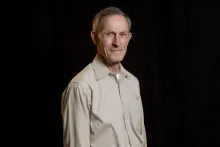
David Mills was born near Wallace, North Carolina, in 1939, where he grew up on a family farm. After high school he attended Ambassador College in Pasadena, California, and he graduated in 1962.
Since that time he has served as a minister of the Church in Washington, Florida, North Carolina, South Carolina, Oregon, West Virginia, and Virginia. He and his wife, Sandy, have been married since 1965 and they now live in Georgia.
David retired from the full-time ministry in 2015.
