

Robin S Webber
This transcript was generated by AI and may contain errors. It is provided to assist those who may not be able to listen to the message.
I want to start by asking this question. What is by far the strongest attribute that anyone could ever possess? What would you think it would be? I think you put some thought to it, you'd probably come up with the correct answer. The strongest attribute that any of us could ever possess is the love of God. And by that, I don't just mean love for God. I mean having the very love of God Himself in us, in our hearts. Having the same love for one another, for example, as God has for us. In the very most basic of all terms, in the most basic of attributes, what is God? How would you define Him as far as putting the definition on Him? In the most basic of terms and the most basic of attributes, God is love. You read that in 1 John 4.8. God is love. And God loves His creation, as we know. It says that in Genesis 1.31, basically, where it says, Then God saw that everything it made, and behold, it was very good. It was beautiful. The animals, the foliage, everything on the earth, it was just beautiful. And it says, all the angels jumped for joy when they saw it. They thought it was one of marvelous creations. God made man the very pinnacle of that creation back there, speaking of Genesis. God created man in His own image and likeness. And He made Him with the potential of becoming like Himself. He made man with the potential of becoming like God. What greater potential could there be than that? And that's the potential He has given all of us. The potential of becoming eternal members of His family. He wants us to be in His family and to share His kingdom and share His rulership with Him forever. What must we become, and what must we exemplify if we are to become like God? Well, God is love, and we must become love also. That also must be what defines us. Love must be our strongest attribute. The question then becomes, how are we going to know that? How will others know that? How will we know and how will others know that love is what really defines us and defines who we are? And how will we know that we truly have the very love of God in us? That's what I want to look at today. How can we know we have the true love of God? And that is also my title. My title is, How Can We Know We Have the Love of God? First, I want to ask this question, how important is it to continually have and be displaying the love of God? How important is that? Let's read it in God's Word to say. Let's go to Matthew 22.
Matthew 22, and I'll begin in verse 35. One of them, one of the Pharisees, a lawyer asked him a question, testing him and saying, Teacher, a rabbi, what is the great commandment in the law? And Jesus said to him, you shall love the Lord your God with all your heart, with all your soul, with all your mind.
This is the first and great commandment. And he said, the second is like it, you shall love your neighbor as yourself. And then he added in verse 40, on these two commandments, hang all the law and the prophets. In other words, what Christ is telling us here is that everything, everything hinges on our love for God and our love for one another. And we can't have that love without having the love of God himself in us.
It takes God's love in us to have that kind of love. And all the laws and principles of God, both in the Old and New Testaments, point to how we can love Lord our God with all our heart and soul and mind. And as it says here, our entire future depends on having the love of God in us.
He says, he said, on these two commandments, hang all the law and the prophets. Everything written by all of God's Old Testament prophets pertain to our future and to the future of the world. And everything written by the prophets hinges on our love for God and on our love for one another. How may I ask this?
If you took the love of God out of this world, if it was distinguished, and all you had was hatred and violence and fighting and war, you know what? There would be no future for mankind. You can only have a future if the love of God is still extended, some of his people. Otherwise, there is no future. What did Christ warn about that could happen at the end of the age? Matthew 24, verse 3. As he said in the Mount of Olives, the disciples came to him privately, saying, Tell us, when will these things be?
And what will be the sign of your coming at the end of the age? What is one of those signs? One of the signs would be that lawlessness will abound, verse 12. Any lawlessness today? When you turn on the news, do you see any lawlessness? Is lawlessness abounding today, not only in the United States, but around the world? It sure is. Today we see ever-increasing lawlessness all around us. You know, before you go out of the house, if you just want to go to the grocery store, you have to pray for God's protection.
If you want to go to McDonald's, you have to pray for God's protection. If you want to come to church to worship, you have a good idea to pray for God's contention. Some churches get attacked and blown up. What did Christ say would happen as a result of lawlessness abounding? Matthew 24. Again, let's start with verse 12. Because lawlessness will abound, the love of many will grow cold. That's going to be the result. People get so conflicted with lawlessness that they'll harden their hearts. But then it says, "...you and doers to the end shall be saved." And there is a work to do.
We do have a commission. And this gospel of the kingdom will be preached in all the world as a witness to all the nations, and then the end will come. So we still have a job to do, but to do that job, we will need the love of God in us.
And that will take the work of God's Holy Spirit. Let's go to Matthew 25, one of the greatest of all of Christ's parables, parables of the Ten Virgins. Matthew 25, verse 1, "...then the kingdom of heaven shall be likened to ten virgins, who took their lamps and went out to meet the bridegroom." Five were wise and five were foolish. Those who were foolish took their lamps and took no oil with their lamps, but the wise took oil in their vessels with their lamps. You know, I thought of that verse. I was reading it and thinking about it.
That kind of added to my memories of childhood. I brought back childhood memories. When I was a boy up to the age of 14, my grandmother and great-grandmother lived in the little town of Seaview, Washington. It's on the Pacific Ocean. It was only a short walk from their house across to some sands to get to the ocean.
It roared right over. You could listen to it. You hear it roaring all day and all night. And they lived out there kind of by themselves. There were a few. There was a mild dirt road. There was a gravel road at the time. It was one from their house. And there were only about four or five houses on that entire road, so they didn't have any really close neighbors.
They had one neighbor in the accident, but it was ways off. They had no electricity. They had no running water. They had no indoor bathroom. But I loved going there as a child. It was great. I had fond memories. Note there are no street lights. So at night, there was nothing light at the street outside. It was pretty dark. No electricity, even on the streets. They cooked on a wood stove. They heated with a wood stove, and they cooked on a wood stove.
Two wood stoves. One in the kitchen, and one in the living room area, where they heated their little home with. And they used oil lamps for light at night. And they had to have a supply of oil on hand in order to keep those lamps burning. And if they didn't at night, it would really be dark, because there's no lights anywhere. No electricity. You might have a candle. That would be it.
If they ran out of oil, they'd be in darkness. You'll hear in Matthew 25, all the symbolic of God's Holy Spirit, which must be furnished to us from God on a daily basis, in order to keep us burning, so to speak, spiritually.
Again, verse 3, Those who were foolish took their lamps, and took no oil with them, but the wise took oil in their vessels with their lamps. But while the bridegroom was delayed, seemingly, they all slumbered and slept. You know, it's easy to get focused on other things, and kind of get your focus away from God and God's future and God's plan, and how God has worked with us, and it's easy to let down spiritually. We all contend to do that at times, myself included. Verse 6, At midnight a cry was heard, Behold, the bridegroom is coming!
It's time to go out and meet Him. Then all those virgins arose, and they trimmed their lamps, and the foolish did to the wise, We need some of your oil, because our lamps are going out. But the wise answered, saying, No, listen, there should not be enough for us and for you, but go, whether to those who sell, and buy for yourselves. Where do you go to get that oil? Where do you go to buy for yourselves? Neither can be purchased, but where do you go to get a new supply of oil?
How do you go to get a new supply of God's Holy Spirit if all of a sudden you've kind of got your focus in the wrong way, and your spirit in you of God is not so good and not so sharp anymore? Where do you go to get a new supply? There's only one source. You have to go to God. The only oil being symbolic of God's Holy Spirit, the only place we can go is to go to God, and the only way we can get more of that oil is by our relationship that we have with God and with one another. We can get that supply of oil through our loving relationships with one another, using God's Spirit, God's love, and going to God.
That oil is not just something we receive. You put oil in an oil lamp, in order for it to give light, it has to burn. It has to give out light by burning. The only way we have to do when we receive God's Spirit, it has to flow not only into us, but it has to flow out of us towards others, towards love, towards others as well.
It has to be flowing out of our hearts like rivers of loving waters, as it says in John 7.38. How important is it for us to continually have the love of God, and to continually be displaying the love of God towards others? I would say there is nothing more important. Why? Because, as we just read, God is love. God is love, and we are striving to be made into His image and likeness, to become like God, so we can be a part of His eternal family.
And looking at the importance of having and displaying the love of God, we also could go to 1 Corinthians 13, which we should all be very familiar with. I'm not going to turn there. I'm going to paraphrase it. A lot of us know it. The 1st 8 verses, especially 1 Corinthians 13 verses 1-8. As you look at those different attributes there, attributes of love, we could all ask ourselves, how do I stack up with these attributes? Sometimes I read through those, and I think about it.
Wow! I've been in God's Church for 50 years, and I'm still not there yet. We could ask ourselves, do I suffer along in relating to others, as Christ suffers along with us? Am I kind, even to those who might not be kind to me?
Do I envy what others have, or am I content with the tremendous blessings, spiritual blessings God has given to me? Does pride or arrogance ever enter my heart, or am I continually humbled by God's love, mercy, and forgiveness toward me? Do I always seek after the truth? Do I always rejoice in the truth, even though sometimes the truth can hurt? Do I bear all things? Do I wait for God to work out His solution, or do I try to work out my own solution? There are times we can work out our own solution.
That's great. But there are times sometimes we can't. Sometimes we have things that only God can work out in His time and His way. Do we have the patience to wait until God works out His solution?
Do I believe and accept all things that are true, even though sometimes accepting those things are true are like swallowing a bitter pill? Do I endure all things? No matter how painful that may be at times to endure some things, there are some things that are painful to endure. And I think about that, and during all things, I think about what Christ endured. None of us has ever endured what Christ endured. But He endured on our behalf. But if we do all these things, we will be exercising the love of God. That will then mean what? It will mean that we will never fail. If we exercise those things here in 1 Corinthians, it says, we will never fail.
Why will we never fail? Because, as it says in 1 Corinthians 13, 8, love never fails. And He's talking about the love of God. What about Philippians 2? How do we stack up against these attributes of love? Let's go to Philippians 2, and let's read this beat at this time. Philippians 2, verse 1, If there is any consolation in Christ, if any comfort of love, if any fellowship of the Spirit, if any affection and mercy, let's just pause here for a moment and reflect on that, because this is showing us how we can comfort in love, how there is comfort in love.
And that we can take comfort in the love of God that He has, that goes far beyond our human capacity to love. And how can we have harmonious fellowship with one another through God's Holy Spirit? How can we extend Godly affection and mercy toward one another? That's what these things show here. And it takes the mind of Christ in us to do that.
It takes, as it says here in a few more verses, it takes the mind of Christ. We don't have the capacity to do these things, how of our own strength and will. Verse 2, Fulfill my joy by being like-minded, having the same love, having the same love toward one another as God, the Father, and Jesus Christ have toward us. Verse, Having the same love, being of one accord. Wow. That's the goal we have, isn't it? We've been called to have the goal of being a group of people from different boxes of life, different experiences, different places where we are in our life, and yet to try to all be of one accord of one mind.
And you know we do, to a large extent, because anytime you go anywhere in the United States or anywhere in the world and you walk into God's church with God's people, you have a rapport immediately. Why? Because God's Spirit is there in each of those individuals.
Verse 3, That's a challenge, isn't it? At least there are times when that's a challenge. Do we have the humility and loins of mind that Christ had? Can we really esteem others better than ourselves? Can we esteem what is best for someone else? Maybe better than what we might feel is right for us? Can we put others ahead of what we would desire? Can we esteem them better, their needs better, their feelings better than our feelings? That's not easy to do. That's challenging. It's not natural. Who wants what is best for us? Verse 4, Let each of you also look not only at his own interests, but also look out for the interests of others. Do we seek what is in our best interest? Or do we seek what is in the best interest of someone else? Do you think about the sacrifice that Christ made and what he did? Being with God, being God, and coming down here and giving up all of his glory and Godhead and becoming a human being? It certainly wasn't. Do you want to look at it from Christ's point of view as we would look at something that we might have to do? It certainly wasn't in Christ's best interest to suffer and die for us, was it? He didn't do it for his best interest. He did it for all of us. He did it for all the people of the world. He did it for what was in the best interest of others, for all of us, and for the best interests of his people, God's people, and for all the people of the world. And God the Father did not do what was in his best interest by giving his only begotten Son to die for us. That wasn't in God the Father's best interest as far as he was concerned personally. He did it for the best interest of mankind, for mankind's best interest. As it says in John 3, 16, For God so loved the world that he gave his only begotten Son, That whoever believes in him should not perish, but have everlasting life. Philippians 2, verse 4, Ladies, if you look not only for his ownership, but also for the interests of others. Then verse 5, Why should we do that? Because that's the mind of Christ. Let this mind be in you, which was also in Christ Jesus. There is nothing more important than having and being led by the mind of Christ. Verse 6, Who, being in the form of God, did not consider it robbery to be equal with God, But he made himself of no reputation. He took on the form of a bondservant. Actually, the word is a slave. He became a slave, losing total control of his power. He gave it all up. In coming in likeness of men, And being found in the appearance of a man, he humbled himself and became obedient even to the point of death, Even not only just the point of death, but to the excruciatingly painful death of the cross.
As a result of that, what has God the Father done for his only begotten Son? Look at verse 2, verse 9, Therefore God has also highly exalted him, and given him the name which is above every name. At the name of Jesus every knee should bow of those in heaven, of those on earth, and of those under the earth, Who are dead and buried, I guess. I guess that would apply to those who are dead and buried, those under the earth. So those who are now dead, when they're resurrected back to life out of their graves, They're going to have to bow their knees also to the name of Jesus. Verse 11, That every tongue should confess that Jesus is Lord to the glory of God the Father. So there's nothing more important than having to display the love of God in the mind of Christ. Let's move on to a second area on how we can know we have the love of God. Let's go back almost 2,000 years now. Let's go back to the very end of the first century A.D. By the end of the first century A.D., late 90s A.D., I think the Roman emperor's name was Domitian. He was striving to find Christians and to put them in prison or kill them. It was a very dark period in the history of the world and the history of the church. And by that time, the love of many had gone cold. Things were so bad for Christians. They were being hunted down. It was almost against the law to be a Christian. They were being hunted down and rounded up and put in prison. Some were being killed. Someone who were to save their own necks would turn in someone to save his neck. That's how bad it was. Mother love had grown cold. Some would turn against each other just to save themselves. It was a very dark period in the history of the world and the history of the church. The Apostle John, by this time, was an old man. He was probably in his 90s. And he knew his time on this earth was short. That he didn't have too many more years left to serve God or serve God's people. And the people were scattered. They were being persecuted. They were in dire straits, if you will.
He didn't know at the time that he wrote 1 John, but he saw... He was about to, I should say, he was about to be imprisoned on the Isle of Patmos, from where he would write the Book of Revelation. So he may have thought God's use of him was about to come to the end, but God had a lot to work with John yet. Even after he was in prison, he inspired him to write the Book of Revelation.
But I got to thinking about this. His letter of 1 John, when he wrote that letter, he probably thought, this is probably my last letter, I'm never going to have a chance to write to the church, because he knew... Christians would be brought up and killed or imprisoned. He knew if they got up with him, that it would happen to him.
Someone asked this question. If you or I had to write what we thought was going to be our final letter to God's people, at a time of great crisis, what would we express in that letter? If we knew our life was near its end, and that many of God's people were soon likely to die or be killed, what would we say to them to try to give them some encouragement and hope?
What is the most important thing we could express to them in what might be our final letter to God's people? What would the Apostle John express in his letter to 1 John? Let's turn there and see. Let's turn to 1 John. Let's begin right at the very beginning. 1 John 1, verse 1. He says, That which was from the beginning, which we have heard, which we have seen with our eyes, which we have looked upon, and which our hands have handled, concerning the word of life.
As I said, by this time John, in all probabilities, in his 90s, not only that, but by this time, the Apostle John was probably the only surviving Apostle of the original Apostles. He was probably the only surviving of the original Apostles, who had actually been taught by Christ himself, who had heard, seen with his own eyes, looked upon, and had personal contact with Christ. Who had personal first-hand knowledge concerning the word of life. Notice the word is capitalized here. It's capitalized because it's referring to Christ as the word of life.
Christ is the word of life. And Christ has the words of life. As it says in John 6, 63, where Christ said this, The words that I speak to you are spirit, and they are life. The words I speak to you are life. As the lone survival of the original Apostles, again, as I said, John, by this time is undoubtedly in his 90s, as this is now 60 years or more since Christ died, he could easily have felt this would be his final letter to God's people before he died.
So I had to ask myself, what if I had been in John's shoes? What if you had been in John's shoes? And you know, this is your final opportunity to write something to God's people before you died and before they died. What would your final words be to God's people to give them encouragement?
Again, 1 John 1, That was from the beginning which we have heard, which we have seen with our eyes, which we have looked upon in our hands of handles concerning the word of life. That life was manifested, and we have seen, and bear witness and declare to you that eternal life which was with the Father was manifested to us. That which we have seen and heard, we declare to you. Now, I read that and I thought, this question never came to my mind before.
I read that many times, but it came to my mind yesterday. If John was the last surviving of the apostles, why does he use the term we? He's the only one left. Why does he use the word we? Those are all dead. Why does he say that which we have seen and heard, we declare to you? Why didn't he say that which I have seen and heard, I declare to you?
I declare to you as the last surviving apostle. Do we understand why John worded it the way he did as the only surviving apostle? Well, it doesn't tell us why, but I thought about it. This is my assessment of why I think he wrote it that way. I do believe that all the other apostles were undoubtedly dead by this time. But John includes them in this letter by saying that which we have seen and heard and that which we declare to you. He brought in all the apostles that Christ trained and worked with, even though they're all dead. But John, why did he do that? Why did he include them all in his admonition here?
Well, we know from other scriptures that John was an extremely humble man, very humble individual. And I think he didn't want any focus on himself as standing out from any of the other apostles. I think he fully realized it was only by God's grace and mercy that he'd been called and chosen.
He thought, why did God call me to be an apostle? He knew himself. He knew what it was like before God called him. He said, how did that happen to me? How did God have enough love for me that he would call me to this task? And why am I the last one? Why did these others say, they deserve to be the last one more than I do? I think he was very humble.
And he fully realized it was only by God's grace and mercy that he'd been called and chosen to be an apostle, that it was totally God's doing. And I think he realized it only by God's great grace and mercy that he was now the last man standing, so to speak. I think he was very humbled by that. I think that's why he wrote it the way he did.
It had to be very humbling to John to realize that, and as a man of great humility, he wanted to include here that he represented all the apostles, that this was their collective experience, not just his experience, which then also adds more weight to his words as well. What did John, as the lone surviving apostle, want declared? 1 John 1, verse 3, That which we have seen and heard we declare to you, declare what?
That you also may have fellowship with us, and truly our fellowship is with the Father and with his Son, Jesus Christ. Do we fully comprehend the importance of what John is saying here? Remember, he likely thought this was his final letter that he ever wrote to God's people. When he sat down to write this letter, he wanted to express something which he felt was extremely important for God's people to hear at this very critical time in history. And you know, I think the time we're living in now, we're in a critical time in history as well.
But what did he want to impress on their minds? In what way did he want these words to go to their hearts and minds, so it would have a positive impact on their lives before they died? What did he want this letter to produce? He wanted to produce this, That you may also have fellowship with us, and truly our fellowship is with the Father and with his Son, Jesus Christ.
It was John's final wish to produce fellowship with men and fellowship with God. The most important thing you've got to do is keep your fellowship with one another. Keep your fellowship and your relationship with God. Don't ever let those things go, no matter how bad it is, no matter how dark it is. Know how much evil you see, no matter what others do. What he was really doing was, he saw God's people scattered, some of them turning against one another, hurting, being persecuted, alone and sometimes afraid.
And he saw them all scattered and all over the place. What he was trying to do was, he was trying to bring the people of God closer together. There's all these factions that happened, and Satan is writing their working heart today, too, to try to divide God's people. Somehow divide them so they're no longer one with one another. John was justly trying to get the people of God, bring them closer together. To bring them closer to one another and to bring them closer to God.
All goes back to what we read in Matthew 22, to the two great commandments of the law. Christ's message can be summed up as having two great aims. Love for man and love for God. Love God with all your heart, soul and mind, and love your neighbors yourself. In John's letter here, what does he tell us in regards to how we can know we have the love of God? What does he say? Here he is telling us that we all know we have the love of God by and through our fellowship with one another, by staying together, by striving to be of one mind, by having that love for one another, trying to encourage one another, trying to help one another anywhere he can.
That is displaying the love of God. And that's one way we can know we have the love of God in us.
By and through our fellowship with God and by our fellowship with one another. What should that fellowship produce? Verse 4 of John 1, That these things we write to you that your joy may be full. Dr. Kompan mentioned joy in his sermonette. It should produce joy. We should... I know. Sometimes you can have a rough week. A lot of discouraging things can happen during the week. Things can be upsetting sometimes, not go right. But when we come together as a Sabbath, when we come here together as God's people, wow, you look forward to that, don't you?
It brings joy. Because you're in a room with a bunch of people that are being led by and guided by God's Spirit. A spirit of love and a spirit of joy. So it should produce joy, and not just joy, but a fullness of joy, he says, that your joy may be full. What else should our fellowship with God and our fellowship with one another produce?
I John 1, verse 5. And this is the message which we have heard from him and declare to you, that God is light, and in him is no darkness at all. In verse 6, if we say that we have fellowship with him and walk in darkness, we lie and we do not practice the truth. But if we walk in light as he is in the light, and it's God's Spirit that gives us light and following God's Spirit that gives us light, then we have fellowship with one another.
You know, think about light. Light has many functions. Light's our way at night to show us the way. You know, if you're out on a lonely road where there's no street lights, and you're out in the country and driving at night, and there's no full moon, maybe it's cloudy, there's no stars, and you're just driving on this lonely road and there's no lights on the road, what would happen if you turned your headlights and your car off? It'd be pretty dark, wouldn't it?
But then, with result, you'd have a hard time seeing the road, you have a hard time following the road, you have a hard time knowing which way to go. It'd be very difficult to follow the road. Spiritually, God's Word and God's Holy Spirit lights our path and shows us the way. It corrects us.
It says, look, no, you shouldn't be going this way. You need to make it. There's a turn here. You need to go this way. You need to do it this way. Light also functions as a great revealer, doesn't it? You know, you begin to be flaws in some things, which may be hidden in dim light.
You don't see those flaws. But under bright light, those flaws can become apparent. Say, oh wow, look at that dirt spot over here. Look at that little tear here. God's Word and God's Holy Spirit can reveal our flaws. And we all have flaws, which can remain hidden until God reveals them to us. And sometimes it takes God to reveal them to us. We won't be able to see them.
You know, David was a man after God's own heart, but he had hidden flaws that only God could show him. In Psalm 19.12, David said, who couldn't understand his errors? The answer is none of us can, unless God shows us. God has to reveal them to us, or we won't see them. Then David asked this of God, as recorded in the same verse, John 19.12, he said, God, cleanse me from my secret faults. I know I've got things I can't see. And I'm only going to be able to see them if you show them to me.
Cleanse me of my secret faults, from those faults, and sure comings that must be revealed to us by God in his love toward us, so he can be made into his image and likeness. How can we know we have the love of God in us? The love of God in us will help us see, and will help us to be cleansed of all of our secret faults, things that we can't see.
The life of God's Holy Spirit will reveal things to us that will help us grow spiritually, so we can all have two fellowships with one another. And you know, the other thing here is encouraging. We're all in the same boat, aren't we? We're all in the same boat, aren't we?
We're all in the same boat. We all have the same things we need to work on. Not the very same things, but we all have things to work on that we don't see and understand.
And God's love reveals to us that we are in the same boat, and that's encouraging. We can realize, well, you know, we all need to encourage one another and help one another. It shows us that we all have to struggle within ourselves. Which in turn can increase our love for one another. We realize we're all struggling. We all need to help one another. We all need to encourage one another. It can help us also not to be judgmental towards one another. Why judge somebody? Because you see a fault. You realize that, wait a minute, I probably have faults, too.
Maybe worse than that person. See, we shouldn't be judgmental. Don't judge one another, because we all have faults. We're all in the same boat. What else does this letter of John tell us in regards to how we can know we have the love of God? What will the light of God's love tell us? It will tell us this. 1 John 2, verse 9, If we confess our sins, He is faithful and just to forgive us our sins, and to cleanse us from all unrighteousness.
Excuse me. That's why I want to go to 1 John 2. 1 John 2, verse 9. It will tell us this. 1 John 2, verse 9. He who says he is in the light and has a problem with his brother, he is really still in darkness. He's not following the light of God's Spirit if he has a problem with his brother.
1 John 10. He who loves his brother abides in the light, and there is no cause for stumbling in that person. How else can we know we have the love of God? Verse 15. 1 John 2, verse 15. Do not love the world or things in the world. If anyone loves the world, the love of the Father is not in him. If we have the love of God in us, we will not love the world or things of the world. That is, those things will not be our primary focus.
There's nothing wrong with desiring or obtaining things that can improve the quality of our life, or that can improve the quality of our surroundings. Nothing whatsoever wrong with that. It's not bad to strive for those things to improve our life and improve our surroundings. That is all well and good, but those things should not be the love of our life. The love of our life should be God and the people of God, and fellowship with the people of God. That should be the love of our life. What did John say here in regards to what would happen in times of crisis, when it might appear to be the last hour?
What do you say in regards to how we can know we have the love of God in us? 1 John 2, verse 18, Little children, it is the last hour, and as you have heard, that the Antichrist is coming. Even now, many Antichrists have come, by which we know it is the last hour. Or we could say, using this principle, that even now, things that are contrary to Christ and the way of Christ, a lot of those things that are contrary to God, and God's way and Christ's way, are have come.
They have come. We're living in a world that is becoming more and more Antichrist and anti-Christian. The whole world is becoming more and more Antichrist and anti-Christian, or following values that are contrary to Christian values. It's becoming more and more difficult to openly even profess to be a Christian, or follow a Christ, without being put down and ridiculed. On the news, I think it was yesterday and the day before, I was shocked, right here in Michigan. A number of schools, I think they said nine schools in Michigan, but a number of schools in Michigan are now going to be starting what they call Clubs of Satan.
And they said, they tried to qualify, they said, well, we're not necessarily promoting the worship of Satan, we're promoting atheism to compete with their silence after school Christian clubs. We want to get rid of those Christian clubs. We want something for those people that aren't Christians, so we're going to have clubs of Satan, so atheists and people that don't believe in God can have a club. And we want those clubs to prosper. Maybe they can get rid of those Christian clubs. Christ in Christi is now being attacked by some, and the thing is, it's being attacked with the blessings and approval of some schools. Can you imagine that? That's happening. What happened to some back at the time of John?
1 John 2, verse 19. Some went out from us. Why did they go out from us? Because they were not of us. If they had been of us, they would have continued with us, but they went out that they might be made manifest, and none of them were really of us. Why did some of them go out from among us?
Because they didn't truly have the love of God in their hearts. If they'd had the real love of God in their hearts, and the real love for their brethren, they would have remained regardless of difficulties or problems or misunderstandings. Because the true love of God is going to endure all things. There's another very important way by which we can know we have the love of God, and this can be somewhat of an enigma.
Enigma that John addresses here in this letter. What is that? Well, on the one hand, it tells us the love of God is going to reveal our false shortcomings by the love of God's Holy Spirit working in us. On the other hand, the love of God will also give us encouragement at the same time, so our hearts will not condemn us. Sometimes it's hard to see. God points out something to you, and you go, and it can be discouraging to me. I mean, I have that problem. And we can get so discouraged, we can tend to maybe, some people can sometimes tend to condemn themselves and want to give up.
But the love of God will give us encouragement at the same time, so our hearts will not condemn us. First John 3, verse 19, And to this we know we are the truth, and shall assure our hearts before Him.
By this we know that we are the truth concerning God's love. This will assure before Christ that the love of God is in our hearts. And here's the enigma that we might struggle with when God reveals our false to us. Verse 20, If our heart condemns us, because God knows and realizes, or John did when he wrote this letter, that sometimes God shows out our faults, and those faults condemn us, that can be discouraging.
If our heart condemns us, God is greater than our heart, and He knows all things. What does that mean? It's easy for us to condemn ourselves sometimes after God reveals our faults, and sure comings, which can discourage us, that God does not want us to become discouraged, because we fall short of the glory of God at times, as we all do, and He does not want our hearts to condemn us.
So the love of God in us will assure us of this, that God is greater than our hearts, and that God knows all things. What does that mean? He knows all things. He knows the things we struggle with. He knows our weaknesses. He knows things that we wrestle with in prayer, maybe, each and every day. And He knows what is truly in our hearts, deep down inside, that love of God that we have deep down in our hearts, even though we fall short of the glory of God. And He's going to judge our hearts. He's not going to judge our imperfections, He's going to judge our hearts.
He knows we could have a tendency to condemn ourselves, but it says here, God is greater than our hearts, if that is the case. And God's love for us will overrule our tendency sometimes to condemn ourselves. On the other hand, we read this in John 3, 21, Beloved, if our heart does not condemn us, and again we go to the confidence, Dr. Kama talked about in his sermon, if our heart does not condemn us, we have confidence toward God.
We have confidence that God's love will forgive us of our faults and shortcomings. We know we all slip. There are things we have to be forgiven every day, and we have confidence in God's forgiveness. That He forgive us if our hearts are right, because He's looking at our hearts. And God knows our hearts. What will be the result of having confidence toward God?
What will be the result of having confidence toward God? Verse 22, if we have that, it says, Whatever we ask or receive of Him, because we keep His commandments, and we're striving to do those things that are pleasing in His sight. We're all striving to do that. Our hearts are right. We're striving to do those things that are pleasing to God. But we have to work at it. It's not easy. But we have confidence that we are striving that when God knows, when we're striving to do that, even if we fall short. On the other hand, verse 21, Oh, that's what I'm talking about. The heart does not condemn us.
We have confidence toward God. And whoever we ask, we receive, because we do those things that are pleasing in His sight. I got mixed up in my notes here. But verse 23, And this is His commandment, that we should believe on the name of His Son, Jesus Christ, and love one another, as He gave us commandment.
What are some of the things that we should do that are really pleasing in His sight? Well, we should believe on the name of His Son, and we should love one another. Those things are pleasing in His sight. 1 John 4, verse 7, Beloved, let us love one another. I just want to show what He emphasized here towards the end of this letter. That we should love one another, for love is of God, and everyone who loves is born of God and knows God, and he who does not love Him, does not know God, for God is love, as we read earlier.
God is love. That sums up who God is. God is love. 1 John 4, verse 11, Beloved, if God so loved us, we also ought to love one another. Look at the love God has demonstrated towards us. That should compel us to want to pour out that love towards one another as well.
No one has seen God in any time, and if we love one another, God abides in us, and His love has been perfected in us. Should we be afraid at times? What does it say?
1 John 4, verse 18, There is no fear in love. We don't have to be afraid. Afraid what man can do to us. If our heart is right, we can't be afraid. If our heart is right, we can't be afraid. If our heart is right, we can't be afraid. If our heart is right, we can't be afraid. If our heart is right, we can't be afraid. If our heart is right, we can't be afraid. If we make a mistake here or there. There is no fear in love. But perfect love casts out fear, because fear involves torment.
But He who fears has not been made perfect in love. And we love Him because He first loved us, and we understand how much God loved us, and calling us, and giving us this opportunity, and the many things He's forgiven us of, because when we understand that love toward us that He has, then that compels us to want to love Him and to want to love His people as well. Because we realize that tremendous love God the Father and Jesus Christ have for us, just in calling us, just in giving us an opportunity to become a part of His family. Especially at this very critical time in mankind's history, and the history of His Church.
1 John 4, verse 22. That's 2 verses. 1 John 4, verses 20 and 21. If someone says, I love God, but He has a problem with His brother, then He's really lying to Himself. For He who does not love His brother, whom He has seen, how can He love God, whom He has not seen? And this commandment we have from Him, that He who loves God, must love His brother also.
So how can we know we have Him? So how can we know we have the love of God? By loving our brother. In conclusion, those then are many of the attributes by which we can know we have the love of God. Remember that love is by far the greatest attribute anyone could ever possess, especially God's love. Remember that God is love, and that we are being created into God's image and likeness so we can be like God, so love can define us.
So we can embody the love of God by displaying God's attributes. And that is how we can know that we have the love of God.
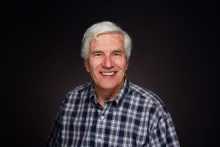
Steve Shafer was born and raised in Seattle. He graduated from Queen Anne High School in 1959 and later graduated from Ambassador College, Big Sandy, Texas in 1967, receiving a degree in Theology. He has been an ordained Elder of the Church of God for 34 years and has pastored congregations in Michigan and Washington State. He and his wife Evelyn have been married for over 48 years and have three children and ten grandchildren.
