
Roy Holladay
This transcript was generated by AI and may contain errors. It is provided to assist those who may not be able to listen to the message.
I think I had mentioned to you two or three weeks ago about the Psalm books coming out. So somewhere at the feast, we should see the new Psalm books. You should get your own personal copy of the Psalm books. And then we'll bring a couple of boxes home for the local congregation. There will be different colors. There are two colors. One is dark green, one is, I think, dark blue. And I believe the green, our personal, and the blue are for the church. Maybe vice versa. But we'll find out. So it's something to look forward to when we get to the Feast of Tabernacles. Brethren, how do we know that we should observe and keep the Holy Days today? The majority of Christianity, so-called, does not. They do not keep the annual festivals. And yet we do. Are they out of step, or are we out of step? One of the major criticisms of the church is that we observe what are called Old Testament, or Old Covenant, days. And so therefore you'll find many label us an Old Covenant church. If someone challenged you on the Holy Days, and why you keep them, what would you say? I remember once reading an article about Mr. Herbert Armstrong, and it said he was a false prophet because he believed in keeping the Holy Days and the Sabbath. And so therefore, he was labeled a false prophet. Well, we would be false ministers, and I guess I'd be a false prophet, too. Because I certainly do believe in them. I want you to notice, and this is something I don't know how many you've ever seen before. I've only copied one page of it off. But it gives the history of the observance of the Feast of Tabernacles in the modern era of God's church, going all the way back to 1933. 1933 was the first year that Herbert Armstrong and Loma Armstrong kept the Feast, and they only kept the High Days. They observed the High Days from 1933 through 1938, and it wasn't until 1939, the seventh year, that they kept the Feast, that they kept the whole seven days. Now, the Feast was originally kept in Eugene, Oregon, and that first year there was 21. Next year there was 24. There was a 14 percent increase. And it went 27, 30, 34, 38, 42, 46, and so on. So you can see for years there wasn't a great deal of growth. It was not until 1945 that Mr. Armstrong understood about the festival time. Up until this time, he didn't know, did not teach it. So that year he began to teach that you should keep it seven days, you should save your second tithe, and as a result, the Feast was moved from Eugene to Belknap Springs. That year there were 40 people who kept the Feast, a year before there were 60. So there was a drop-off at that point. Well, they kept it in Belknap Springs until the year 1953, and in 1950, excuse me, 1952. In 1952 they went to Sigler Springs, and there were 450 in attendance. So by this time you can see it's growing. 1953, which was the first year my wife and her family attended the Feast, was the first year it was held in Big Sandy, and there were 750 in attendance that year.
Then it, you know, that was the 21st year that the Feast was kept. 1959, I came along and attended in Big Sandy, and we had 5,511. And many of you will remember, in 1961 Squall Valley started. 1963, Jekyll Island started. We had three feast sites at that time in the U.S. And it was not until the 32nd year of keeping the Feast to Tabernacles, 1964, that we had 21,500 observing it in the United States.
Now it took 32 years to get to that point. Now, the reason I mention 21,000 is because 21,000 is basically how many United has keeping the Feast to Tabernacles in the United States. We have 20,000 plus close to 21,000. And so, to give you an idea of how many at that time were keeping the Feast, it's basically, here we are 12 years down the road after United has been reconstituted. The Church reconstituted and reformulated. And what we have is the same number that it took Mr. Armstrong 32 years to reach. Now, after this, we had some rather dramatic explosions. The 36th year, which was 1968, there were 46,000. Then it jumped up to 75, just four or five years down the road. And, as we know, through the 60s, 70s, it just seemed like a mushroom of growth. But the growth was very small to begin with.
Now, the reason I mention that, because I thought it was interesting to realize the size after 32 years and how God has blessed us. Even though we're not that large, we're still probably the largest group today keeping the Feast of Tabernacles. Is there a logical way that you and I can prove that we should observe the Holy Days? God would not leave us without some proof. Otherwise, why do we do it? Sometimes, we are put on the defensive by people as, why do you do this? Your old covenant? Why do you keep that old law? This type of thing. There are a few other major questions that should be asked. Maybe you should ask somebody who wants to discuss this with you. That is, can the observance of the holidays of Christianity be proven from the Scriptures?
Where can they go to show you that you should keep Christmas? Or you should keep Easter? Or Lent? Or New Year's? Or Halloween? Or whatever day you might call it? And if they cannot show that, by what authority do they do what they do? Those are good questions that I think sometimes if somebody is trying to put you on the defensive that you can come back with. If we go by the Scriptures alone, what does the Bible have to say? Well, let's take a look at this, and I'd like to approach it a little differently than perhaps you've normally thought about it. Let's begin with the future and work back to the past. When I say begin with the future, let's begin with the millennium and see what days will be observed in the millennium. Can you tell what days will be kept at that time? Let's go over to Acts 1 to begin with.
I want you to notice this is where Christ was speaking to his disciples for the last time, and then he's about to ascend into heaven. In verse 9 it says, While they looked steadfastly toward heaven, as he went up, behold two men stood by them in wide apparel. These are two angels. Who also said, Manigallalee, why do you stand gazing up into heaven? This same Jesus who was taken up from you into heaven will so come in like manner as you saw him go into heaven. So they said, okay, he went up into heaven, the clouds recieved him out of your sight. He's going to come back in the same way. Well, Zachariah chapter 14 describes his return. And let's notice it happens the same way. In Zachariah chapter 14 verse 2 we find that all nations will gather against Jerusalem to fight the battle. And in verse 4, Now verse 9 says, So we find that Jesus Christ is going to come back. And he's going to be king. He will rule the whole earth. As the book of Revelation says, he will be called Lord of Lords, King of Kings. And here we find that he will rule all the earth. That means outer Mongolia, inner Mongolia. That means Siberia. That means Russia. That means Africa. That means Australia. Canada even. Heaven, well, it means all nations. And that day, it says, it shall be, the Lord is one, and his name one. So there will be one Lord, no more false gods being promulgated.
And his name one. Now notice in verse 16, Shall go up from year to year to worship the king. So God will require their worship. Now how will they worship God? Well, to worship the king, the Lord of Hosts, and to keep the Feast of Tabernacles.
Now I want you to notice, it says, they will keep the Feast of Tabernacles. And it shall be that whichever the families of the earth do not come up to Jerusalem to worship the king, the Lord of Hosts. On them there will be no rain. And if the family of Egypt will not come up, and in her end they shall have no rain. And they shall receive the plague with which the Lord strikes the nations, who do not come up to keep the Feast of Tabernacles. Now notice, not only do Israelites keep the Feast of Tabernacles, but all nations. Specifically, Egypt is pointed out, a Gentile nation. So not only is Israel going to have to do this, all Gentile nations are going to be required. This shall be the punishment of Egypt and the punishment of all nations that do not come up to keep the Feast of Tabernacles. Now, this seems to be important enough to God that he is willing to punish the nations, withhold rain. When you withhold rain, you don't produce food, you don't produce food. People begin to starve, don't have anything to eat. Then they say, okay, we'll come up, they get rain, they get food, and they worship God. Now, let me ask you, does this scripture say? And all nations will come up and keep Christmas.
Or does it say, all nations will come up and observe Easter and New Years and Lent? They're not mentioned, are they? Now, I'll guarantee you, if they were, this scripture would be cited by every minister in the Protestant Catholic community. Because they would say, see here, here's proof of what we do. But guess what? Since it doesn't say Christmas, Easter, Lent, New Year, and so on, silence from that side. But we know that this is what God tells us. God has the right to tell us how to worship Him. And He says, in the millennium, all nations are going to come up and keep the feast. Now, let's notice Ezekiel 44. If you're familiar with Ezekiel 40 through 48, you know it's describing time in the future when there's going to be a temple built. This is going to be the headquarters where Christ will rule the nations. Water will flow out from under His throne there. We'll go out symbolically as God's Spirit flowing out from Jerusalem, from God to all nations, but we'll heal the waters, trees, everything it comes in contact with. And we find that there will be sacrifices in the millennium. They're going to be not sacrificing everywhere. There will be sacrifices right there as a symbol to humanity of what Christ did, something physical that they can see. And as a reminder of what His sacrifice was. But let's notice in chapter 44 verse 9. Thus says the Lord God, no foreigner, uncircumcised in heart. That's talking about conversion, being circumcised in the heart. Our uncircumcised in flesh shall enter my sanctuary. So God's not going to allow anybody who's not converted and physically circumcised to enter into His sanctuary into the temple compound at that time. And then in verse 23, talking about the priests at that time, they shall teach my people the difference between the holy and the unholy, and calls them to discern between the unclean and the clean. And in controversy, they shall stand as judges and judge in accordance to my judgments, and they shall keep my laws. And my statutes and my appointed meetings, and they shall hallow my Sabbaths. The appointed meetings when God meets with us, and those are the annual holy days. And we find that God's law will be kept, statutes, appointed meetings, and the Sabbath. Now again, what if this Scripture had said Sunday, and what if it had said Christmas or Easter? But it doesn't say that. Now going on in chapter 45 or 17, you find here, Then it shall be the prince's part to give burnt offerings, grain offerings, and drink offerings at the feast. So the feasts are specifically mentioned, new moons. So the people will know when the God's sacred calendar will be there. People will know when the new moons start. The Sabbath's at all the appointed seasons of the house of Israel.
Now you find verse 21, the 14th day of the month, they will observe the Passover and the Feast of Seven Days. That's the days of Unleavened Bread. Verse 25 in the seventh month, on the fifteenth day of the month, at the feast. He shall do likewise for seven days. That's the Feast of Tabernacles. So here we have almost all of them being mentioned. Where is Sunday mentioned? Where are the Christian holidays today mentioned? Well, they simply are not mentioned. Now in chapter 46, verses 3 and 4, I'll just refer you to that. It talks about the Sabbath days of the Sabbath. Verse 9 talks about the appointed feast days. Verse 11, at the festivals and appointed feast days. Again, you find. So again, we find very clearly that in the millennium, that these days are going to be observed and be taught.
Okay, let's go back to Isaiah 66, because some would say, okay, they might be grudgingly give you that. But not all the Gentiles will do this. Well, let's notice what the Gentiles are going to have to do. Isaiah 66, verse 18. It says, I know their works and their thoughts, and it shall be that I will gather all nations and tongues, and they shall come and see my glory. So on the millennium, all nations are going to behold the glory of God. And I will set a sign among them and those among them who escape. Talking about the Israelites who are left alive. And when the millennium begins, who have escaped. I will send them to the nations to Tarshish, to Pooh, and to Lud, who draw the Boah, and Tubal, and Javen to the coastlands afar off. In other words, Gentile nations, who have not heard my fame, nor seen my glory. So those nations that don't know anything about the true God. And they shall declare my glory among the Gentiles. And they shall bring all your brethren for an offering to the Lord out of all nations. So once the word begins to spread about God and what He's doing, then these nations are going to come up to Jerusalem. And if there are any Israelites among them who have been scattered there, taken into captivity, they will bring them up on horses, and in chariots, and in litters, and on mules, on camels. They'll bring them up to Jerusalem. And verse 22, For as the new heavens and the new earth, which I will make, shall remain before Me, says the Lord, so shall your descendants and your name remain. And it shall come to pass that from one new moon to another, and from one Sabbath to another, all flesh shall come to worship before Me, says the Lord. So if you're going to be alive in the millennium, you're going to have to come and worship God and do it on the Sabbath. What about rebels? What about those who refuse to? Well, verse 24, They shall go forth and look upon the corpse of men who have transgressed against Me, for their worm does not die, and their fire is not quenched.
So again, we don't find anything talking about what's commonly practiced today, but we do find God's law, Sabbath, and the Holy Days. Now, there are those who will admit, okay, the Holy Days laws and Sabbath will be taught in the millennium, but today is different. Today, we have a grace dispensation. See, since Christ and since Paul, those things have been done away, they've ceased, and we're no longer required to keep them as a New Testament church. And they like to talk about the grace dispensation and the gospel of grace and peace. Okay, with that in mind, I said we would start in the future and work our way back. Let's back up to the Apostle Paul. What did Paul teach, and what kind of an example did he set? What did he try to do? What can we learn from studying Paul, all of his writings, and also what he did? Well, Acts 18. We'll begin in Acts 18, verse 19. Acts chapter 18 and verse 19.
We find here that he came to Ephesus and left them there, but he himself entered the synagogue and reasoned with the Jews.
And when they asked him to stay a longer time with them, he did not consent. But took leave of them, saying, I must by all means keep this coming feast in Jerusalem. Word, keep, means to observe, observe or to keep this coming feast in Jerusalem. And I will return again to you, God willing, and he sailed away from Ephesus. And when he had landed at Caesarea and gone up, the expression gone up always refers to going up to Jerusalem. It was up on a plateau in a hill. So he went up, greeted the church, and then afterwards he went down to Antioch.
So very clearly he went up to Jerusalem, and he did what he said he wanted to do, probably keeping the feast at Tabernacles. Now, this was in 52 A.D. So here's Paul, the apostle to the Gentiles. He's in Ephesus, basically a Gentile area.
And he's telling Gentiles, I want to keep this coming feast in Jerusalem. Now, wasn't this an excellent opportunity for him to say, now I know the Jews are going to be keeping the feast, but we don't have to. We're Gentiles, or you're Gentiles. Let me explain to you the new, improved, sanitized way God is ordained. He didn't do that. He kept it. In chapter 19, verse 8, you find that he went into the synagogue and spoke boldly for three months, reasoning and persuading concerning the things of the kingdom of God. Now, what is the kingdom of God? Paul still taught the gospel of the kingdom of God. The kingdom of God is a family of God that you and I will be born into. Christ is ahead. And in the millennium, we will rule over the earth under Christ. And what will be taught in the millennium? Well, we've already read what's going to be taught. So, Paul is still talking about the kingdom of God and God's way of life. Now, the book of Romans was written from Corinth in around 55 to 56 AD, somewhere around chapter 20, verses 1 through 3.
You find him in Greece. And because they were plotting against his life, he left there. And notice in verse 6, We sailed away from Philippi after the days of unleavened bread. And in five days joined them at Troas, where we stayed seven days. So why in Philippi, which is a Gentile area, would they be talking about the days of unleavened bread? Well, obviously, somebody was keeping them. He could have said, after Easter, we left. But there wasn't any Easter at this point, so there's no way that you can say after Easter. See, go look up Easter and find out when it began. Of course, it began thousands of years before this, but at least a thousand years or so. But it has nothing to do with the Bible, and you don't find it mentioned here. Now, in verse 16, same chapter, Paul had decided to sail past Ephesus. So Ephesus is getting left out here. He sails past Ephesus. Why? So that he would not have to spend time in Asia. For he was hurrying to be at Jerusalem, if possible, on the day of Pentecost.
Why would he want to be there on the day of Pentecost? I mean, he's way over here. He's got to sail for a few weeks to get over to Jerusalem. And if he's no longer keeping the Holy Days, why would he go to all of that effort to be at Jerusalem for Pentecost? Well, he's obviously going to keep it. Now, I mentioned about the book of Romans being written somewhere during this period of time when he was here in Greece. The book of Romans is quite often cited as a book, and it does talk about grace.
However, you might remember I've given you three sermons on grace recently. And it talks about sanctification and righteousness and reconciliation and any number of themes. Let's go over to chapter 7 of the book of Romans. Here's Paul, who's writing about all of these. But does Paul believe that the law has done away? He shouldn't keep it? Something wrong with it? It's bad? Did Paul write, Oh, how I hate thy law? No, he didn't write anything that sounded like that. He didn't even have a song. Let's notice in verse 12, Romans 7.
Therefore, he said, the law is holy, the commandments holy, and just and good. So he seemed to think they were holy, just and good. Verse 14, we know that the law is spiritual, but I am carnal and sold under sin. And verse 16, if then I do what I will not to do, I agree with the law that it is good.
So he said, the law is good, it's spiritual. And quite frankly, anything that's spiritual, I don't care what you say about it. You can't do away with that. That's not our prerogative. Now, where does Paul say in the book of Romans, I hate the law? Well, the law is bad for you. It's not good. It was only there for a period of time.
Paul constantly taught about the coming kingdom of God, the time when the kingdom of God would rule over mankind, and the millennium when Christ would return to the earth, set up His government, and guess what they were going to be teaching during the millennium?
Well, God's holy days and Sabbath. In chapter 20 of the book of Acts, you find that the apostle Paul did teach about grace. In verse 17, from Miletus, he sent to Ephesus and called for the elders of the church. This is Acts 20 verse 17.
And verse 24 says, but none of these things moved me. The things he's talking about, he had been warned that if he went up to Jerusalem, he would be taken captive, put in prison.
But he said, none of these things moved me, nor do I count my life dear to myself, so that I may finish my race with joy. And the ministry which I received from the Lord Jesus to testify to the gospel of the grace of God.
So I did talk about the gospel of grace. Part of the gospel has to do with God's grace and mercy being extended to us. But verse 25, and indeed now, I know that you all, among whom I have gone preaching the kingdom of God, will see my face no more. So he also talked about the kingdom of God. They were not against each other, they complimented each other. So he still talked about the kingdom of God, talked about the millennium, and all of that.
Now, did Paul change things? Did Paul come along? You see, there are those who believe in progressive revelation. They believe, okay, God revealed certain things to Moses. Christ came along, Christ knew more than Moses, so therefore he dumped Moses, and he came along and he taught certain things. And along comes Paul, and Paul knew more than Christ. I'd be careful with that one. But they say he knew more than Christ. Further revelation, therefore, Paul is the one that we should listen to, and that Paul did away with the law.
Okay, did Paul change things? Again, just jot down Acts 18, 21, he said, I, by all means, want to keep this feast in Jerusalem. In 20, verse 16, to keep the day of Pentecost. But let's go over to 1 Corinthians 5, verses 7 and 8.
Here, we find not only the example of Paul, but the teachings of Paul. What did he teach? What did he say? 1 Corinthians 5, verses 7 and 8.
He said, Therefore purge out the old leaven that you may be a new lump. Since you truly are unleavened, for indeed Christ our Passover was sacrificed for us.
So he explains the spiritual significance that Christ is our Passover, and He was sacrificed for us. Therefore, let us keep the feast.
He didn't say, let's do away with the feast. He says, let us keep the feast. Now, this is teaching. By His example, He kept the feast. And here, He says, let us keep the feast, not with old leaven, nor with the leaven of malice and wickedness, but with the unleavened bread of sincerity and truth. So He shows the spiritual significance of it. Then over in chapter 16, verse 8 of 1 Corinthians, verse 16-8, He said, I will tear at Ephesus until Pentecost. So now, in this case, He did keep Pentecost in Ephesus. What did we learn from that? Well, we learned that it was okay to observe the Holy Days outside of the environment of Jerusalem. The Gentile churches, as a rule, did not go up to Jerusalem to keep the three major Holy Days. They observed them where they were. And here you find the Apostle Paul keeping Pentecost with the Gentile church in Ephesus. In the millennium, the same principle will apply. After 100 years in the millennium, how many human beings will there be on the earth? A billion, two billion people, 500 million? I don't know, but there's going to be a lot, I'll guarantee you. And when you have people and they're not dying because of disease epidemics or starvation, they're living healthy lives, they're having families and children, they're not going off to war, and everybody grows up and has their own family, there will be a lot of people around. Can you get all those people into Jerusalem? You try shoehorning a billion people into Jerusalem, just not plausible. So probably everybody, if once in their life they get to go up to Jerusalem, that will be a blessing that they'll have. They'll send representatives from every nation up there. But most people are going to have to keep it locally. You and I know some of the problems you run into, maybe you're not as much as some of us, but I've coordinated feast sites of 8,000 and 10,000 people. Now I guarantee you, you get 8,000 or 10,000 people, that's a lot of people, there are a lot of details you have to look after. But what if you have a nation of 100 million people? And they're all trying to keep the feast. You're not going to have 100 million together. You're not going to have a million in one spot. You're going to have to have multiple feast sites around the world.
So again, we do not read anywhere in Paul's writings where he said, I must by all means keep Christmas and Lent and Easter in Jerusalem with the saints, because it's all been changed now. That's just not mentioned. Okay, now we've looked at the millennium, we've come back to Paul. What about the example of the early New Testament church? What is their example? What did they do? Well, Acts 2, Acts 2, says, when the day of Pentecost had fully come, they were all with one accord in one place. So we know that the New Testament church began on the day of Pentecost. Now, if I were to substitute the word Christmas or Easter here, or New Year or Lent, anything, do you think that anyone would quote this? They would obviously quote it, because they would say, see there, the church began on Easter. That's when most of them think, but the church of God began on the day of Pentecost.
Now, there is one reference to Easter and the Bible in one place, if you have the King James Version. Acts 12, verses 3 and 4. Acts 12, verses 3 and 4. King James Version says, Because he saw it please the Jews, he proceeded further to take Peter also. Then were the days of unleavened bread. One might ask, why are the days of unleavened bread being mentioned? It says, then were the days of unleavened bread. And when he had apprehended him, put him in prison, delivered him to the soldiers to keep him, intending after Easter to bring him forth for the people. Now, that's the King James Version. Any other version you have will not say Easter. Why? Because any scholar, you will have no scholar who will argue that this word should be translated Easter. It is the Greek word, pasha. P-A-S-C-H-A. Pasha. It's translated and means Passover. Clearly. So, you don't, even churches who believe in keeping Easter, don't quote this. No scholar would ever quote it. Because he knows better. New King James Version does not translate it Easter. It is the Passover. And that's exactly what it should be. In chapter 16 of the book of Acts, and in verse 13, actually what we read there in Acts 12-3-4 is talking about the Passover and Days of Unleavened Bread. Acts 16-13 talks about, I think they came here to Philippi. There was not a place for them to meet, so they met out by the riverside where prayer was customarily made. Notice, they did so on the Sabbath day. Now, many of the commentaries will bring out, this is probably an annual festival, probably Pentecost. But even if it's not, it still says Sabbath day. We read Acts 18-21 about the Feast of Tabernacles. Acts 20, verses 6 and 16 about the Days of Unleavened Bread in Pentecost. So let me ask you a question. If you only had the book of Acts to go by, see, the book of Acts is the history of the early New Testament Church. And if we wanted to follow, pattern our lives after the first century New Testament Church. You only had the book of Acts, no gospels, no Old Testament, nothing else. What days would you be observing? Well, the only conclusion you could come to are the annual Holy Days and the Sabbath, because they're the only things that are mentioned. So what was the example of the New Testament Church? Holy Days, Sabbath. If all you had were Paul's writings, threw everything else out, and you take 1 Corinthians, and you take some of Paul's writings, what days would you observe? Well, the only ones that you find mentioned again are the Holy Days. If you only had the Scriptures dealing with the Millennium, and that's all you had, what days would you keep? Well, you'd keep the Sabbath and the Holy Days.
Okay, what about Jesus Christ's example? Should we follow His example? Now, there are many who say, oh, sure, Christ set us the right example, except in the keeping of the Holy Days and Sabbath. You know, those things have been changed. Well, let's notice one little Scripture back here in 1 John 2, verse 6. Just give us a little background. 1 John 2, verse 6.
He who says He abides in Him also to walk just as He walked. Now, that's not long and short steps. That means we live as He lived. It's talking about your manner of life. You walk as He walked. Then verse 4. Now, He who says, I know Him. And a lot of people will come up. Have you ever had somebody approach you and say, do you know the Lord Brother? Well, I have. And maybe they'll say, hallelujah. They'll talk about the Rose of Sharon, the bright morning star. And they'll use all this phraseology. So anyone who comes up to you and says, do you know the Lord? Or says, I know the Lord. I know Him. And does not keep His commandments is a liar. And the truth is not in Him. I didn't say that. John did. He calls Him a liar. So Christ expects us to keep the commandments and to follow the example of Christ. Now, back in Luke 2, Luke 2, in verse 41, we find Christ at an early age, 12 years old here. And you'll find His parents went to Jerusalem. Luke 2, 41.
Every year at the feast of the Passover. And when He was 12 years old, they went up to Jerusalem according to the custom of the feast. And when the days were over, they returned. He stayed back. Verse 47, All who heard Him were astonished at His understanding. And His answers, because He sat there talking to the scholars, to the priests, the lawyers, and talking with them. Now, was He too young to know what was going on? Was He so young He was just only 12 years old? He didn't know that you shouldn't be keeping these days. Well, let's notice verse 40. The child grew and became strong in spirit, filled with wisdom, and the grace of God was upon Him. So here we have grace, we have wisdom being filled with His spirit. Those that He talks to are totally astonished at His understanding. He knew exactly what He was doing at age 12. Did He sin? The obvious answer is no, because He never sinned. So, you know, He set an example for us. Now, in John 7, verse 1, we find that Jesus Christ, toward the end of His ministry, I believe this is the last Feast of Tabernacles that He kept. In John 7, you find that the Jews sought to kill Him in verse 1. It says, He did not want to walk in Judea, because the Jews sought to kill Him. Now the Jews' Feast of Tabernacles was His hand, His brothers. Therefore said to Him, Depart from here and go up into Judea, so that your disciples and everybody else can see all of your works. Well, verse 5 says, For even His brothers did not believe in Him. So at this time, James, Judea, and you and all of His brothers, family, they didn't believe in Him. But Jesus said, My time has not yet come. In other words, He knew He was going to die, but the timing was off. He wasn't going to be killed at the Feast of Tabernacles. And He said, You go up, verse 8, to the Feast. I am not yet going up to this Feast, for My time is not fully come. So verse 10, When His brothers had gone up, He also went up to the Feast, but not openly. Now if He had gone with His brothers, all of His family, He would have been recognized. But here He goes up quietly, as it were, in secret. And the Jews sought Him at the Feast. Well, you find that He did go up, and He did teach them. And in verse 37, On the last day, that great day of the Feast, Jesus stood and cried out, saying, If anyone thirsts, let him come to Me and drink. And so you find that He is teaching them at this time. You can find, you can demonstrate, that there were four Passovers that Jesus Christ kept during His ministry. I'm not talking prior, but during His ministry. In 28 AD, 29 AD, 30 AD, and 31 AD, He kept the Passover, as recorded. He was consistent. At age 12, He kept the Passover. At age 30 and a half, age 31 and a half, age 32 and a half, age 33 and a half, He kept the Passover. The days of Unleavened Bread. Now, if all we had out of the Bible was Christ's example, nothing more, just Christ's example. What days would you be keeping?
You'd have to keep the Holy Days. I mean, there's nothing else you could do. Now, what other examples do we have? We have the example of Jesus Christ, the example of the New Testament Church, the example of Paul, the example of the Millennium, and what the Gentiles would do at that time.
So, what else can you appeal to? Well, you can appeal to human tradition and reasoning. And that's what people do. They go by tradition and by their own human reasoning. Okay, there's one other example we haven't looked at yet. That's the Old Testament. So, let's go back to Exodus 12. Now, just cite some of these for you. Exodus 12, we find where Passover and days of Unleavened Bread are instituted. A calendar is revealed to them because the 14th day of the first month is Passover.
And so, God had to reveal to them what we call the Hebrew calendar. Exodus 23, verses 14 through 17, Exodus 23, 14 through 17, you find the Holy Days are included as part of the Old Covenant at that time when the Old Covenant was made. Leviticus 23, all seven of the annual festivals are mentioned. And they are called My Festivals, God's Festivals, not just your festivals. Now, we know, eventually, the House of Israel went into captivity, 721-718 B.C.
to the Assyrians. Later on, the Jews, the House of Judah went into captivity, 604-585 B.C. to the Babylonians. Now, why did they go into captivity? Why was God so angry with them and punished them by sending them into captivity? And especially the House of Israel, that they were so clearly removed that they've been lost sight of.
Let's go back to Ezekiel 20. Ezekiel 20 is a chapter where God clearly shows that there were two main reasons why Israel went into captivity. One is idolatry, the other is Sabbath-breaking, not keeping God's Sabbath and Holy Days. In Ezekiel 20, beginning in verse 11, I gave them my statutes and showed them my judgments, which if a man does, he shall live by them. Moreover, I also gave them my Sabbaths to be a sign between me and them, or between them and me, that they might know that I am the Lord who sanctifies them.
Yet the House of Israel rebelled against me in the wilderness. They did not walk in my statutes. They despised my judgments, which if a man does, he shall live by them. And they greatly defiled my Sabbaths. Some that very get gold.
They didn't want to obey God and to keep His commandments. Verse 16, because they despised my judgments and did not walk in my statutes, but profaned my Sabbaths for their heart went after their idols. So you see, they committed idolatry. As a result of this, what did God do? Well, verse 24, God gave them over, or allowed them, we would say, to follow statutes and judgments and their own ideas, their own days, you know, what the pagans were doing around them.
It says, because they had not executed my judgments, but had despised my statute and profaned my Sabbaths, and their eyes were fixed on their fathers' idols. Therefore, I also gave them up to statutes that were not good, and judgments by which they could not live.
Now, these are not His statutes and judgments, but He gave them up to or gave them over to. And I pronounce them unclean because of their ritual gifts, in that they caused all their firstborn to pass through the fire. God didn't command them to sacrifice their firstborn in the fire. That's what the pagans around them did. And then verse 27 talks about how they blasphemed Him, being unfaithful to Him. And so God allowed them and gave them over to keep laws and statutes and things that were not good for them.
In 1 Kings 12, if you'll remember the story, 1 Kings 12, when Solomon died, the house of Israel, the ten tribes, came up and asked realborn to cut their taxes. It would be a little easier on them, have a little mercy. He listened to the young man and He said, no, I'm not going to do it. My father's little finger, his thigh, my little finger is going to be heavier than his thigh was. So He said, I'm really going to stick it to you.
Well, they rebelled as we see here in verse 19. So Israel has been in rebellion against the house of David to this day. Jeroboam became their king and their ruler at this time. Verse 25, He built Shechem in the mountains of Ephraim and dwelt there. Now you find He was concerned, He said, verse 27, if these people go up to offer sacrifices in the house of the Lord in Jerusalem, then the heart of these people will turn back to the Lord to re-aborn.
So I knew if they went back up to keep the Holy Days and thereby offer up sacrifices, that they would rebel against Him. So He came up with this clever plan. Therefore the king took counsel, made two calves of gold, said to the people, It's too much for you to go up to Jerusalem. Here are your gods, O Israel, which brought you up out of the land of Egypt. So they went up to Dan, and they worshipped, and the thing became a sin. He made shrines on the high places and made priests from every class of people who were not of the sons of Levi.
And He ordained a feast on the fifteenth day of the eighth month. Instead of keeping the Feast of Tabernacles in the seventh month, they now have a feast in the eighth month. Now this is what we read when God gave them over to statues and things that were not good to them. He allowed them to go on. And I want you to notice what it says here. Verse 33 is a perfect summary of what we see happening around us today in Christianity. So He made offerings on the altar which He had made at Bethel on the fifteenth day of the eighth month, in the month which He had devised in His own heart.
And He ordained a feast for the children of Israel. Not what God ordained, but what He ordained and devised. And so you find people today keep days, they keep customs, they keep traditions. Where do they find them? Not in the Scriptures. They're man-made. Something that they devise. They think, well, won't this be quaint? Isn't this a nice way? Maybe it's a comfortable, maybe it's an easy way. I can remember back in 93, 4, and 5 when they were talking about doing away with the Holy Days. And they kept telling people, well, you know, it's too far. It's too hard. You know, people are losing their jobs.
So you can stay home, or you don't have to travel, or you don't have to keep all eight days. And they began to make these compromises. Now, what is that? Well, that's not what Scripture says. That was their own human reasoning. Hosea 2, verse 11, summarizes what we're talking about here. Notice the book of Hosea 2, verse 11. I will cause all her mirth to cease, her feast days, her new moons, her Sabbaths, her appointed feast.
Now, which Sabbath and so on is he talking about? He says, her appointed feast. I will punish her, verse 13, for the days of Baal. Baal's days, to which she burned incense, and she decked herself with her earrings and jewelry, and went after her lovers, and she forgot me, said the Lord. So Israel was not pursuing God and following God, but went off and kept the days of Baal. What are Baal's days? The word Baal, simply, literal translation of that means Lord.
The days of Baal are the Lord's days. What is Sunday called? It's called the Lord's day. We don't keep the Sabbath, they say. We keep the Lord's day. Well, you find here that God says these are the days of Baal. So, brethren, does God change? Is He doing something different today than He will in the world tomorrow?
Was He different in the Old Testament? Did He teach the Sabbath and the Holy Days? And the answer is yes. Did Jesus Christ do something different, or teach something different? And the answer is no. Did we find the New Testament church observing something different? And again, the answer is no. Did Paul lead by example in teaching something different? And the answer, again, is no. Malachi 3.6, God says, I change not. Therefore, you sons of men are not consumed. God doesn't change. Hebrews 13.8 says He's the same yesterday, today, and forever. Think of the confusion in the millennium if you follow the reasoning that some have to believe in different dispensations, different times.
You know, somewhere you keep the law, somewhere you don't keep the law. And what I mean by this, the millennium is here, the resurrection takes place, Moses is resurrected. What will Moses teach people in his cities in the millennium? Is he going to teach Christmas and Easter? He doesn't know anything about those. He's going to teach God's law, the commandments. What will David teach? Well, he'll teach the same thing. What will the prophets teach? They will teach the Sabbath, the Holy Days. What will Jesus Christ Himself teach?
Well, we find, chapter 40 through 48 in the book of Ezekiel that very clearly shows what He will teach. What will New Testament Christians teach? Well, the same thing that they observed and they kept. What will the Gentiles who were taught by Paul keep? Same thing that they were teaching back then. Okay, let's wind the real to the future. People today who call themselves Christians, who keep Christmas, Easter, Sunday, and so on, just for sake of arguing, what if they're resurrected and they're in the millennium? What will they teach?
What if they have a city over here, 10 cities, and they're all keeping Sunday? And they don't believe in keeping the law, and they're not keeping the Holy Days. And the rest of the world is. Well, I find in my Bible it says if you don't do it, then you're going to suffer famine. And you're not going to receive any rain and so on. Well, that would be utter, total confusion.
And in the future, the Bible very clearly says there will be one law, one Lord, one way that will be taught, and no other will be tolerated. So, brethren, I believe that you and I, when you look at all of the evidence, when you look at the Scriptures, and you let the Bible be your guide, that you and I can keep the feast in God's Holy Days with complete confidence, knowing that we truly are worshipping God in the manner and in the way that He has ordained.
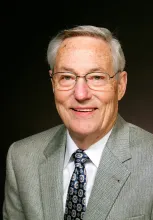
At the time of his retirement in 2016, Roy Holladay was serving the Operation Manager for Ministerial and Member Services of the United Church of God. Mr. and Mrs. Holladay have served in Pittsburgh, Akron, Toledo, Wheeling, Charleston, Uniontown, San Antonio, Austin, Corpus Christi, Uvalde, the Rio Grand Valley, Richmond, Norfolk, Arlington, Hinsdale, Chicago North, St. Petersburg, New Port Richey, Fort Myers, Miami, West Palm Beach, Big Sandy, Texarkana, Chattanooga and Rome congregations.
Roy Holladay was instrumental in the founding of the United Church of God, serving on the transitional board and later on the Council of Elders for nine years (acting as chairman for four-plus years). Mr. Holladay was the United Church of God president for three years (May 2002-July 2005). Over the years he was an instructor at Ambassador Bible College and was a festival coordinator for nine years.
