
Roy Holladay
This transcript was generated by AI and may contain errors. It is provided to assist those who may not be able to listen to the message.
Brethren, there is a continuity throughout the whole Bible. When I say continuity, I mean there's a linking of thoughts, ideas, and I think that's true because the Bible came from one being. It came from God. God is the one who inspired the Scriptures. Let's notice the Scripture in 2 Timothy chapter 3 and verse 16. 2 Timothy 3.16. For we read, all Scripture is given by inspiration of God. The word inspiration there, actually, if you look it up, means wind or breath. This is why a number of the modern translations translate this. That all Scripture is God breathed. God is the one who spoke it, who inspired that it be written. Then it says it's profitable for doctrine, reproof, for correction, and instruction in righteousness. There is a mastermind behind the Bible, behind the Scriptures. Even though the Scriptures were written over centuries, guess what? God never died. He's always been there. He has inspired it. He inspired the prophets and the apostles to record the message that he wanted for mankind. Many of the writers in the Old Testament, if you'll read what they wrote, start out by saying something like this, The Word of the Lord came to me. Then they'll go ahead and say what the Word of the Lord told them, or they saw in vision. Therefore, it's no great wonder that there are general themes, practices, and approaches that carry on from one end of the Bible to the other. The Bible is not like many of the moderns think, well, God gave this group back here one thing. Now, New Testament gave another group something different. Here we are in modern times, and we've got something different from all of them. They don't see any continuity to it. I'll address that a little more later on. It is true that there is a continuity, and this is certainly true when it comes to God's law, God's Sabbath, God's holy days, the practices that God wants us to keep, the laws he wants us to live by. Let me illustrate what I mean by the Ten Commandments, and then we will migrate on. In Exodus 20, God gave the Ten Commandments. They were written in stone. However, we realize that the law existed prior to Mount Sinai. How do we know that? Well, Paul, back in Romans 5, in verse 12, states this, Therefore, just as through one man sin entered the world, through Adam, wife, Eve, and death through sin, thus death spread to all men. Why? Because all sin, that's why.
For until the law, until Mount Sinai, where the law was given in codified form, sin was in the world. But sin is not imputed when there is no law. If there is no law, there is no sin.
Now, why is that? Well, because sin is the transgression of the law, isn't it? 1 John chapter 3 and verse 4. So, there had to be a law to break if man sinned from the time of Adam on till Mount Sinai. Now, Romans chapter 7, over here, a couple of chapters, in verse 7 tells us this. It says, What shall we say then? Is the law sin? Is there something wrong with the law? Well, of course not, he says. Certainly not. On the contrary, I would not have known sin except for the law. For I would not have known covetousness, unless the law had said, you shall not covet. So, the law reveals to us what sin is. It's through the law that we understand that. God says, this is sin. Don't do it. Or, he says, this is the right action. Do this. In fact, in verse 12, we find that the law is holy, the commandment holy, and just and good. Have you ever stopped to ask yourself, who makes the commandment holy? How can a law be holy? We have laws on the book today. They could be the law of the stop sign, the law of the speed limit. Are they holy? No, they're not holy. What makes a law holy? Only God is holy. So, if a law is made holy, if it's a holy law, God made it holy. His presence is in that law. Remember, when Moses came to the burning bush, God says, take your shoes off. Because, you know, this is holy ground. Wherever God is, that's holy. Only the presence of God in it. And then, as verse 14 says, the law is spiritual. Spiritual means it's not man-made. Man can make laws, as I mentioned, speed limit.
Many of you will remember at one time they lowered the speed limit in this country to 55. I remember when Tennessee had a 75-mile speed limit. Now it's 70. And, you know, there are all kinds of speed limits. But those can and do change. Spiritual is something else. Spiritual is something that lasts. And the spiritual laws of God are laws that last. The question is, who made it spiritual? Well, do humans? Well, no. Only God can do that. So, we find in the Old Testament, very clearly, that God gave to Israel the Ten Commandments, but that the Ten Commandments existed prior, and that human beings die. And, as we found out back in chapter 5, death passed on all men because all have sinned. So, all human beings, whether they understand the law or not, or are ignorant of it, die because of their own sins. And so, you know, sin can be on two levels in that sense. One, you die physically because of your sins, but if you don't repent of them, eventually you die eternally because that's the second death of your own sins. Now, we come to the New Testament. Jesus Christ comes along. Did He change what God had in the Old Testament? Did He come along to a way for law? Did He say, My Father, you know, He doesn't know what He's talking about. The fellas, you know, out of touch. Let me give you the update. I'm going to show you a better way. Now, Jesus Christ came, as you know, and He said, What I saw, what I know, what my Father told me to speak, that's what I speak. But let's notice in Matthew 19, just one example. We can spend the rest of the sermon, it's not the purpose of the sermon just to cover this, showing what Christ taught. But in verse 16, Matthew 19, says, Now, behold, one came and said to Him, Good Teacher, what good thing shall I do that I may have eternal life? And He said, Well, why do you call me good? No one is good, but one that is God. But if you want to enter into life, do what? Keep the commandments. Now, we know you can't earn eternal life. Eternal life is a gift, but God is not going to give eternal life to somebody who's a lawbreaker, either. So if you want to enter into life, keep the commandments. And He said, Well, which one? Well, Christ said, Don't murder, commit adultery, steal, false witness, honor your parents, love your neighbors yourself. So we find the, you know, the six of the ten commandments enumerated here and spelled out. Now, does that mean that the other four you can break?
Is it okay to worship a false God? Well, of course not. Can you make idols and fall down before them and worship them? Is it okay to curse God's name? Now, see, the reason why I mentioned this is because there are those who say, Well, yeah, He mentioned these, but He didn't mention the Sabbath. Therefore, you don't have to keep the Sabbath. He didn't mention idolatry. He didn't mention cursing. He didn't mention, you know, worshiping false gods, either. But we know that it's wrong to do that. You see, they want to pick on the Sabbath and try to do away with it, and we know that that's not the correct thing. So Jesus Christ taught the young rich man, you've got to keep the commandments. What did the apostles teach when they came along? Here comes the apostle Paul, the apostles of the Gentiles. Surely, if somebody's going to change things, Paul's going to be it. Let's notice Romans 13. Romans chapter 13 in verse 8.
Paul says, O no one, anything, except to love one another. For he who loves another is fulfilled the law. For the commandment, you shall not commit adultery, you shall not murder, you shall not steal, you shall not bear false witness, you shall not covet. If there are any other commandments, there are all some rides in this statement or in this saying, namely, you shall love your neighbor as yourself. Love does no harm to a neighbor, therefore love is the fulfillment of the law. So I want you to notice, Christ says, if you're going to keep the commandments, that love fulfills it. And so there are those who believe that all you have to do is, I've got love in my heart, and they think all you got to do is love. And if you do that, whatever that means, then you're keeping the commandments. But what is the love of God? Well, let's go over to John, 1 John 5 and verse 2. 1 John 5.2. And we discover that John gives us a definition of what the love of God truly is. Verse 2, 1 John 5. By this we know that we love the children of God when we love God and keep His commandments. For this is the love of God that we keep His commandments, and His commandments are not burdensome. So the love of God means that you keep His commandments. Somebody says He loves God, somebody says He knows God, He doesn't keep His commandments, He's a liar. Now, as the Bible tells us in Hebrews 13 verse 8, that Jesus Christ is the same yesterday, today, and forever. God is the same yesterday, today, and forever. So there's a fitting together of thought from one end of the Scriptures to the other. That's certainly true of the commandments. It's certainly true of the Sabbath. I could quote you many scriptures showing the same thing that I just proved here. The Sabbath was created at the very beginning, was it not? God rested on the seventh day, He hallowed it, He set it apart.
In the Old Testament, God gave the commandment to Israel. Jesus Christ comes along, He keeps the Sabbath. He says, in fact, He's the Lord of the Sabbath. You go to the New Testament Church, you find that Paul taught it, Paul kept it, and it was kept by the church thereafter. We know that it's going to be kept in the millennium, so the question is, why don't we do so today? There's a continuity of teaching on the Sabbath day. It has not been changed and replaced with Sunday, Monday, Tuesday, Wednesday, Thursday, Friday. It is the Sabbath.
The Bible is the foundation of our beliefs. That's what we build everything on. God has a plan and a purpose for mankind, and He's busy carrying that plan and that purpose out. So, when we study the Bible, we learn in basically two ways. There are many ways, but two basic ways. One, you study the Bible and there are direct commands from God. Thou shall do this, thou shall not do that. Those are direct commands. And we also learn from the example that is said. There are bad examples. We learn, uh-oh, we should not do that. Look at the end results. Bad. They're good examples, and so you follow the good examples. If you want to use an analogy, you could compare that to a parent and his child. If you remember when your children were young, they were growing up, some of you are children, and some of you were children not too long ago. So, you can remember.
Your parent would tell you, don't you dare go out and play in the street. They'd tell you why, because you might be hit by a car. Or they might say, don't you go down there and play by those ponds. If you do, you can fall in. That's what my parents told me. We had two ponds on our property. So, we were small. Don't you dare go around those ponds. Now, they might say, well, you can play in the backyard. Or you can play over here. You can play with so-and-so. You can't play with this other person. Well, that's the way God is in the Bible. We have the example. We have the example in the Old Testament of Israel and what they did. Christ's life, New Testament church. Growing up as a child, I learned from the example of my dad. My dad was a hard worker. I learned how to work by observing his example. How many of you ladies learned how to keep house, how to sew, how to cook from your mother? That you had an example there to follow. Perhaps you grew up and you developed a love for music because your family loved music. Or maybe they played an instrument. They would sing. They would do that type of thing. They'd listen to good music, go to concerts, play CDs. I threw CD in there because many would not understand 78 rpms or 33s or things of that nature. So that's a bygone generation here. But you develop a love for music. If you want your children to do something, you set the example. You love it. You expose them to it. In many cases, they will grow up having the same approach. All of this applies to the annual Holy Days. As we know, the fall festivals are fast approaching. You and I need to know why we do what we do. We have the direct teachings in the Bible and the scriptures about the Holy Days and how we should keep them. We have the examples in the scriptures that guide us to the observance. And I think as we will see today, there is a continuity of teaching from one end of the Bible to the other on the Holy Days, from how they should be kept. Let's go back to Genesis 2.
Genesis 2, verse 1.
Genesis chapter 2, verse 1, we find discussed here the creation of the Sabbath day. It says, Thus the heavens and the earth and all the host of them were finished.
And on the seventh day God ended the work which he had done. He did the recreation. Remember Genesis 1 is a recreation. God at some time had created the earth and the heavens. Lucifer and the angels rebelled. There was a destruction of the earth. And so chapter 1 shows God refashioning, reforming the earth to make it suitable for humans, for mammals, different types of vegetation. So God rested on the seventh day from all the work which he had done. God blessed the seventh day and he sanctified it. That means he set it apart. So all of the elements of the Sabbath, a day that's set apart, sanctified. It's a blessed day and it's a day of rest. You find God establishing. Back in Exodus 20 when the Sabbath is given, in a codified form, what does God refer back to? It refers back to the creation when it comes to that. Now, did God have any other concepts in mind during the creation week besides just the Sabbath day? Was God possibly thinking about the holy days even at this time? Well, let's notice chapter 1 verse 14 of the book of Genesis. Chapter 1 and verse 14, God said, let there be lights in the firmament of the heavens. So we have the sun, we have the moon, we have stars, but these lights were to divide the day from the night. When the sun comes up no more night, you've got day. Sun goes down, you've got darkness, you might have the moon. To divide the day from the night and let them be for signs, seasons, days, and years. I want you to notice God set in motion the ability to count time.
With time, you can establish a calendar because you have a year. The earth rotates around the sun. We've got a year, we've got a month, we've got the moon rotating around the earth. We've got the earth rotating on its axis. We have a day, we have a week, we have a month, and so you have time established. God established that. It's interesting when you look at verse 14, you see the word season. If you look the word season up in the Hebrew, it's mo'ad. Ever heard the word mo'ad before? Well, if you've heard my sermons you have, I've mentioned that word a number of times. The word means an appointed place, an appointed time, meeting, appointed meeting place, sacred season, set feast, appointed seasons, appointed meetings. It's translated congregation 150 times in the Old Testament, translated feast 23 times, translated appointed 12 times, and you can go on and on.
Let's go back to Leviticus 23, where we normally see the word, refer to it. Verse 4, Leviticus 23, verse 4. Leviticus 23 describes all of the annual holy days, the feast. It says, These are the feasts of the Lord.
The word feast is mo'ad. These are the appointed times, set times. Brethren, the Sabbath and the annual holy days, the annual Sabbath, are times when we have an appointment with God. We meet with God. He's there with us. These are holy convocations, which you shall proclaim at their appointed times. Mo'ad, again, used twice. So it's an appointed time. So, brethren, God made it possible when He recreated, refashioned, put the sun where it is, and the moon, and the earth, and set the orbit, established the fact that we could have time. Time means that we could have a calendar that you could measure that time. That you could know when the first month would be, the seventh month would be.
You could know when days would come around. And so, when God instituted that, you find that it was already prepared for. In Exodus 12, we find that God gave the Passover and the Days of Unleavened Bread to Israel. But prior to that, God had commanded Moses to tell Pharaoh, you might remember, when he went to Pharaoh, let my people go. Why? That they may go into the wilderness to observe a feast to their God.
Well, of course, Pharaoh said, I don't know who your God is, and I don't know what feast you're talking about. And he wasn't about to let them go. But God wanted them to observe the feast, or the feast days. Exodus 23, let's notice. Exodus 23, when God gave to Israel the commandments, statutes, judgments, in the midst of those, he gave them instructions concerning the Holy Days.
In verse 14, Exodus 23, verse 14 says, three times, you shall keep a feast to me in the year. So these are the three seasons or appointed times. You shall keep the feast of unleavened bread. You shall eat unleavened bread seven days, as I commanded you, at the time appointed. So notice, these days are appointed. Man can't come along and say, well, I know somebody thinks Passover is on the 14th, but I think it's on the 13th, the 16th, the 15th. No, you keep it when God appointed it, which is the 14th. So he says here, you at the appointed time in the month of Abib, and the feast of harvest, the first-roots of your labor, verse 16, which you have sown in the field, and the feast of end-gathering.
So Pentecost, feast of tabernacles, all of these are three major seasons of the year that the annual Holy Days. So God's full instructions was revealed, and He revealed to ancient Israel that He wanted the Holy Days kept. Now, when you come to the New Testament, you come to Jesus Christ again, and you come to His examples and teachings. He kept the Holy Days with His family. He kept the Passover, kept the feast of tabernacles, kept the days of unleavened bread.
You might remember the last Passover Christ observed. He made this statement, with fervent desire, I have desired to eat this Passover with you before I suffer. So He had a fervent desire to keep that Passover with them. No one will really argue that Jesus Christ kept the Passover or the Holy Days. The argument is to why He did it. See, they say He was under the Old Covenant, therefore He kept it because He was under the Old Covenant.
But once the New Covenant comes along, then you don't have to keep it. I mean, that's the major argument. But let's notice in Luke chapter 2, again, there are a number of scriptures that we could quote on this, but Luke 2 and verse 40, we find that the child grew and became strong in spirit, filled with wisdom, and the grace of God was upon him.
His parents went up to Jerusalem every year at the Feast of the Passover, and he was 12 years old, and they went up to Jerusalem according to the custom of the Feast. After the Feast was over, they came back. He stayed there for three days. He's there sitting in the temple, talking to the doctors, the scribes, the scholars. He dumb-founds them with his wisdom and understanding. They come back, they saw him. In verse 48, they were amazed, and they wondered why did he do this.
Notice, he said to them, Why did you seek me? Did you not know that I must be about my father's business? Was Jesus just keeping these days because his parents did?
No, he said, I've got to be about my father's business. Jesus Christ knew why he had come to the earth. He knew why he had been sent. As we read earlier, he grew in spirit, in wisdom, in grace. He grew in knowledge. So he knew what he was doing. In John chapter 7, we have another example of Jesus Christ, this time with his family. Peace to Tabernacles was coming up. And as verse 2 says, well, verse 1 shows that he did not want to walk in Judea because the Jews sought to kill him. So he knew they were out to kill him. He says, Now the Jews feasted to Tabernacles was at hand. His brothers said, Hey, are you going up to the feast with us? And verse 5 says, His brothers did not believe in him. And Christ goes on to say, My time is not yet come. And verse 6, But your time is always ready. He says, The world hates me, doesn't hate you. Verse 8, You go up to the feast. I am not yet going up to the feast, for my time has not yet fully come. He wasn't going to go up openly with the family. Everybody recognized them, get himself killed, or they would attempt to kill him. He went up privately to the feast. As verse 10 says, When his brothers had gone up, he also went up to the feast, but not openly, as it were in secret. So he didn't take the main road. He went to the feast. Verse 14, about the middle of the feast, Jesus went into the temple and he taught. And here in chapter 7, chapter 8, chapter 9, we have Jesus Christ's instructions to the people at that time during the feast. So Christ, obviously, was observing the feast, even with the threat of his life being taken.
So it's clear that the Old Testament Israel did it, that God made it possible for us to know how to calculate it by how he said, the sun and the moon and the earth in rotation. Christ did it. But what about the rest of the story? Paul Harvey has had quite a popular program on radio for years called The Rest of the Story, where he tells you something about an individual and you think you know who it is or you think you know about that person. Then he tells you the rest of the story. I'm going to tell you the rest of the story today. And the rest of the story has to do with New Testament church as well as the next 1100 years facing us.
The New Testament church, as I will show you, kept the Holy Days. But we know that there's going to be at least a period of time of 1100 years yet, what we call the millennium, the world tomorrow, and then the great white throne judgment. But let's pretend something. Let's pretend you're totally ignorant of the Bible. You don't know anything about the scriptures. Never seen one. You come into a meeting, we give you a Bible. You've never read it before. You don't know the first thing about this book. And I say, well, we're going to sit down and we're going to figure out, based upon what we read in this book, what days we ought to be observing. So you don't know anything. And so you're going to read the book. Because, you see, there are those today who believe in what is called progressive revelation.
Now, the idea behind progressive revelation is that God progressively reveals more and more to each generation. Now, it's not the idea of deeper knowledge and understanding that, hopefully, we know more today than we did 50 years ago, or that we grow in knowledge in that way. Progressive revelation has to do that one revelation supersedes or replaces the other. So God came along and He gave Israel a revelation of what they ought to do. And then Jesus Christ came along. Now, Jesus Christ knew more than they did in the Old Testament. So therefore, the Old Testament has done away. See, that's the old revelation. So you take the book, rip everything out up to the book of Malachi. Don't need it. Because now we have progressed beyond that. However, Paul came along and he was the apostle to the Gentiles. And God revealed more to Paul than even he did through Jesus Christ. Now, they don't say Christ didn't know it, but that it just wasn't revealed. They think Christ straddled two different worlds. So therefore, he didn't reveal everything. Paul comes along, and Paul does. So therefore, you rip the four Gospels out. Don't need those anymore. Because now we have progressed beyond that progressive revelation. Now, you carry that to its furthest degree. We today certainly know a lot more than the apostle Paul did, don't we? So therefore, guess what? Throw it all away! Why do you need this book? Because we're so much smarter today. Now, you think that that's a crazy idea? Well, there was a former minister in the worldwide Church of God who got up and told his congregation, you don't need this. He held the Bible up. He said, all you need is love.
If you love one another, you don't need the Bible. Because that's the fulfillment of everything that God says in the Scripture. That is the ultimate fulfilling of that reasoning. That's where it leads you. Now, the problem is, why has God given us this? God's given us this. It's a guidance and a directus. Christ said, man shall not live by bread alone, but by every word that proceeds out of the mouth of God. So you and I are to live by God's instructions. So let's go back and take a look at the example of the New Testament church, New Testament leaders, and then the millennium, why throne judgment? Let's see if we can get a basic idea of what is it that God wants man to do. The rest of the story that God has for us. In Acts chapter 18 and verse 19, we have here an example of the Apostle Paul. In verse 19, he says, He came to Ephesus and left them there, but he himself entered the synagogue and reasoned with the Jews. When they asked him to stay a longer time with them, he did not consent. But he took leave of them, saying, I must by all means keep this coming feast in Jerusalem.
But I will return again to you, God willing, and he sailed from Ephesus. So he wanted to go up to Jerusalem to keep this coming feast. What does the word keep mean in this context?
It means observe. Keep it. Here's a day. I want to keep it. I want to observe it. Now this is around 52-53 AD. Why go all the way to Jerusalem to do this? Paul, when it was possible, went up to Jerusalem. Now in 1 Corinthians 5 and 6, Paul writing to a Gentile church, the church in Corinth, he wrote this letter from Ephesus around 55 AD.
Notice, your glory is not good. Do you not know that a little leaven is a whole lump?
Therefore purge out the old leaven that you may be a new lump, since you truly are unleavened. For Christ, indeed Christ our Passover, was sacrificed for us. He shows what the Passover pictures. Christ, his sacrifice. Therefore let us keep the feast. Not with the old leaven, nor with the leaven of malice and wickedness, but the unleavened bread of sincerity and truth. What does the word keep mean? He said, keep the feast. He's teaching a Gentile church.
One thing I think you'll find as we go through the book of Acts, and this is just a point, during the days of unleavened bread, Paul was in Ephesus. He was observing the days of unleavened bread in Ephesus. He's writing to a Gentile church in Corinth, and it was obvious that this book was probably written during the days of unleavened bread, because he's writing to them about how they are observing it. Our news of how they were keeping it came back to him, and then he writes back to them. So the feast was not just being observed in one spot at that time. Now, in chapter 19 of the book of Acts, chapter 19, verse 1, it says, It happened while Apollos was at Corinth, that Paul, having passed through the upper regions, came to Ephesus in finding some disciples. Verse 8, And he went into the synagogue boldly for three months, reasoning and persuading concerning the things of the kingdom of God. And when some were hardened and did not believe, but spoke evil of the way before the multitude, he departed from them, which grew with the disciples, and reasoned daily in the school of Tyranias. And this continued for two years, so that all who dwelt in Asia heard the word of the Lord Jesus, both Jews and Greeks.
Now, we have Paul's and Ephesus for two years. This is where he writes, first and second Corinthians, from around 54-55 AD. He writes from Ephesus. He kept the feasts there locally, and Ephesus, while they were keeping it in Corinth. And you find that a lot of the Gentiles were not able to go up to Jerusalem to keep the feast, so they kept it locally. Now, in the Old Testament, they were commanded to keep it in Jerusalem at the Temple. The Temple was destroyed. Jews were dispersed. There was the diaspora at that time. Many of them never came back. They kept it, many of them, where they were. Those who could came back to Jerusalem. We come to the New Testament, and we have a pattern that set that I think will be set for the world tomorrow. Even in this century, last century, I should say, when Miss Armstrong began to keep the feast, he realized the importance of trying to keep it in one area. So originally, when he started keeping the feast, and I forget which one of these came first, either Siglar Springs or Belknap Springs, kept it in one area, grew it, kept it in another area. Then finally, in 1953, they kept it in Big Sandy. My wife and her family, Bill Norman, and her parents went to Big Sandy in 1953 to keep the feast at that time.
But as the Church grew, I remember very well, in 1961, I believe it was, that we had the feast in Squall Valley. In 1963, we had the feast also in Jekyll Island, and it just began to grow and mushroom. But we began to have a lot of people converted in Asia, Philippines, Africa, South America. They couldn't afford to come to this country, pay for an airplane ticket, arrive, rent cars, drive to a facility. Probably couldn't even get a passport out of many of those areas to come. So they had to keep it where they were. The same thing is going to be true in the world tomorrow. Can you imagine five billion people being alive on the earth at any one time in the millennium? I don't know how many will eventually be there. How can you get five billion people in Jerusalem? Think of the logistic problem, just trying to feed them, and transportation. Obviously, that's not going to work. People are going to keep the feast locally, and there will be representatives who will come up to keep the feast in Jerusalem from all nations. Let's notice in Zechariah chapter 14.
At the beginning of the millennium, God is going to have to teach the nations what's important, what they should be doing, and what they should do for that thousand-year period. Let's notice it in verse 16. Zechariah 14 verse 16. It shall come to pass that everyone who is left of all the nations which came against Jerusalem shall go up from year to year to worship the King, the Lord of Hosts, and to keep the feast of tabernacles. What does the word keep mean? I don't think anybody has a doubt there what the word keep means. It means they're going to come up and keep the feast. They're going to observe it. Why should we doubt what keep means, or kept or keep means, when it's in the book of Acts or in 1 Corinthians 5? It means the same thing.
And you will find it shall be that whichever the families of the earth who do not come up to Jerusalem to worship the King, the Lord of Hosts, on them there will be no rain. The family of Egypt will not come up and enter in. They shall have no rain, and they shall receive the plague, which the Lord will strike the nations who do not come up to keep the feast of tabernacles. And this shall be the punishment of Egypt, the punishment of all nations, all nations. What does the word all mean? Again, all nations who do not come up to keep the feast of tabernacles. I think that's very clear what God is going to have in the millennium. There's no doubt what this means. There's no doubt what it means in the New Testament, either. I think it's very clear. Paul many times had to keep the feast in a local area in Acts chapter 18.
I'll just refer to a couple of these. Paul was in Corinth for a year and a half. I mentioned earlier about him being in Ephesus for two years. In Galatians chapter 1, beginning in verse 13, you find that the apostle Paul talked about his conversion. Apparently, he was converted somewhere around 35 AD. The church started in 31 AD.
He was taught by Christ in Arabia for three years. Somewhere around 38 AD goes up to Jerusalem. He's Peter. Yet in chapter 2, verse 1, he talks about how he goes up to Jerusalem after 14 years. Well, the 14 years, they're apparently counting from the time of his conversion. 35 AD, 14 to that, brings you to 49. That's the council in Jerusalem. During most of that period of time, he observed the feast outside of Jerusalem because he was not coming up to Jerusalem at that time. In 1 Corinthians chapter 16, 1 Corinthians chapter 16 and verse 5, Paul says, Now I will come to you when I pass through Macedonia, for I am passing through Macedonia.
And in verse 8, he says, But I will tarry in Ephesus until Pentecost. So apparently, here's an example of Paul keeping Pentecost and Ephesus. And I've already referred to that. Now, in Acts chapter 20, you find that Luke, who wrote the book of Acts, that he constantly mentioned the holy days. And in verse 6 here, It says, For we sailed away from Philippi after the days of unleavened bread, and in five days we joined them at Troas, where we stayed seven days. Why didn't he mention Easter? Why didn't he say, well, when Easter came around, that's when we did this. Well, one very easy reason. They weren't keeping Easter. They were keeping the days of unleavened bread. Let me explain something. If the theologian of this world could find Easter, Christmas, Valentine's Day, Halloween, any of those, being observed in the New Testament, I tell you, they would trumpet it all over the place. And every time Easter would come around, they would quote that scripture. It would be on billboards. They would talk about it, see what was changed. They don't do that, do they? The reason they don't is because it's not in there.
But why do they not do that for Passover, Pentecost, days of unleavened bread, feasts to tabernacles? Because they are in there. Why don't they trumpet those? Because they don't want to keep them. Chapter 12 of the book of Acts.
Chapter 12, verses 1 through 4. Herod the king stretched out his hand, harassed some of the church. He killed James, the brother John, with a sword. In verse 2 and verse 3, because he saw that it pleased the people, he took Peter, put him in jail. He says, now it was during the days of unleavened bread. Verse 4 talks about the Passover. So again, the days of unleavened bread and the Passover.
Now, in Acts 2, verse 1, we find the church began on the day of Pentecost.
Why did the church begin among the Jews? Have you ever stopped to ask yourself that? It didn't begin in the Gentiles, but among the Jews. Well, they had the law of God. They understood the holy days. They understood God's Sabbath. And they didn't need instruction on that, except how to keep it in the right spirit and frame of mind.
They understood the law, but they did not understand that Jesus Christ was a Messiah or the Savior. So they had to learn that. Now, you and I live in a time and an age where so-called Christians think they know Christ. They believe in a false Christ, but they don't have to be taught that you have to believe in Christ because they know that there is a Christ. At least, they've been taught about Him, but they haven't been taught the law, have they? So our jobs have been reversed. Today, we have to teach the people God's law, His Sabbath, His holy days, so that they will do those. It's the reverse of what occurred in the first century. When God began to work with His church in the Old Testament, He revealed to them the holy days. The Old Testament church observed the holy days. Why?
Well, because God wanted all of them to know what days to keep. He gave them the days that they ought to observe them on. See, if you're working with one family like He did with Abraham, then Isaac, then Jacob, you can sit down and say, okay, this is my Sabbath. You keep this day. It's the seventh day of the week. Abraham gets their body together and says, look, folks, we're going to keep the Sabbath. He begins to instruct them in the right way what they should do.
You've got three million people, and you hear God say, remember the Sabbath day and keep it holy. What day is that? Well, it's got to be written down. God wrote it on tables of stone. When it came to the teachings, those things were written down. God gave the annual holy days so that they could be reminded on an annual basis of God's plan and purpose. The same thing applies to us. The same thing will be true in the world tomorrow. Remember, the Old Testament church went into captivity because they failed to keep the Sabbath and the holy days. Jesus Christ set the example in the New Testament concerning the festivals. He observed them at the threat of his life. He taught about them. The New Testament church kept the annual holy days. Paul the apostle to the Gentiles did. He taught them. History repeats or shows that the church kept these days and they were gradually replaced by pagan traditions and days and observance. Any of you ever heard of the Corto Deciman controversy? If you haven't ever looked that up, type in Porto Deciman in your computer. Google it. Or, you know, whatever. And you'll find it was controversy in the second century on should you keep the 14th day or should you keep Easter? And, you know, Easter won out, but the 14th or the 15th or Easter, you know, they had all of this discussion. Brethren, we know that there's at least 1,000 years in front of us, maybe 1,100 if the last great day is 100 years. That after Jesus Christ returns to the earth, there will be the millennium, 1,000 years of his reign, and the white throne judgment. We've already read Zechariah 14 that says that if the nations don't come up, they'll be punished. Let's go back to the book of Ezekiel real quick. Ezekiel 44 and verse 23.
Ezekiel 41-48 is obviously a millennial setting. Verse 23 says, They shall teach my people the difference between the holy and the unholy, and cause them to discern between the unclean and the clean. In controversy, they shall stand as judges and judge it according to my judgments, and they shall keep my laws, do my statutes. In all of my appointed meetings, God says, and they shall hallow my Sabbaths. So whatever God has set aside as an appointed meeting, God says, they are to teach. Chapter 45 verse 21. In the first month, on the 14th day of the month, you shall observe the Passover, a feast of seven days on leavened bread. And then verse 23, on the seventh day of the feast, he shall prepare a burnt offering. Verse 25, in the seventh month, on the fifteenth day of the month, at the feast he shall do likewise for seven days. That's the Feast of Tabernacles. Chapter 46 and verse 9. But when the people of the land come before the Lord, on the appointed feast days, the time that God has set aside and appointed, verse 11, the festivals and the appointed feast days are mentioned again.
Now in Isaiah, let's go over to Isaiah one last scripture.
Isaiah 65 is a possible reference to the great white throne judgment. R could picture the millennium. I mean, that's not set in stone, but it talks about how the infant will become, will live to be a hundred years old. Sinner will be a hundred. And that talks about verse 25. The wolf and the lamb shall feed together. The lion shall eat straw like the ox, and they shall not hurt nor destroy, and all my holy mountain, obviously a millennial setting. Thus says the Lord, continuing right on in chapter 66.
Heaven and earth is my throne, the earth is my footstool. And God talks about that he will look on the individual who is of a poor and a contrite spirit who trembles at his word. But let's go on over to verse 22. For as the new heavens and the new earth, which I will make, shall remain before me, says the Lord. So shall your descendants and your name remain, and it shall come to pass, that from one new moon to another, from one Sabbath to another, all flesh shall come to worship before me, says the Lord. So you discover here that the Sabbath is, I just thought I'd throw this scripture in, that they will be required to keep the Sabbath from one Sabbath to another, to come and worship before God. So above them there is, I think as we can clearly see, a continuity of teaching about the annual holy days, just like there is about the weekly Sabbath and the law of God. And when God began to work with a group of people, he gave them his annual holy days to keep all of us reminded of his plan of his purpose. You and I are a part of that continuity, because we live in an age and a time where we will bridge the gap. We will have the opportunity to step over into the world tomorrow, in many cases, to be alive when Christ comes back, to participate in the resurrection, to be made immortal, and we will begin to deal with human beings. And as the holy days come around, we will begin to teach them, their minds will be open, and brethren, they will know and keep the feast. So let's realize what a wonderful opportunity we have. We are the firstfruits. We're the vanguard. We're the ones God has called. He's given us understanding today to understand his plan and purpose. So you and I need to be able to expound this from the Scriptures, because there's going to come a day, and you're going to sit down with a city, a church, a group of people, and they're going to say, what days should we keep? And you're going to say, well, let's go back to Genesis chapter 1, and you will start teaching God's way of life and his plan, his principles from that point forward. And you will explain what went wrong in Genesis 2, the Garden of Eden, the two trees. And you'll move forward, and you'll be able to expound and explain about the holy days. So brethren, let's realize what a privilege it is for us, and so therefore let us make sure that we keep the feast.
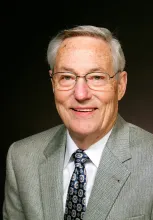
At the time of his retirement in 2016, Roy Holladay was serving the Operation Manager for Ministerial and Member Services of the United Church of God. Mr. and Mrs. Holladay have served in Pittsburgh, Akron, Toledo, Wheeling, Charleston, Uniontown, San Antonio, Austin, Corpus Christi, Uvalde, the Rio Grand Valley, Richmond, Norfolk, Arlington, Hinsdale, Chicago North, St. Petersburg, New Port Richey, Fort Myers, Miami, West Palm Beach, Big Sandy, Texarkana, Chattanooga and Rome congregations.
Roy Holladay was instrumental in the founding of the United Church of God, serving on the transitional board and later on the Council of Elders for nine years (acting as chairman for four-plus years). Mr. Holladay was the United Church of God president for three years (May 2002-July 2005). Over the years he was an instructor at Ambassador Bible College and was a festival coordinator for nine years.
