
Roy Holladay
This transcript was generated by AI and may contain errors. It is provided to assist those who may not be able to listen to the message.
Well, good afternoon to everyone. It really is a privilege to be here. I'd like to compliment Linda on that special music. I didn't realize you had all this talent. You played, but that's one of the songs that really moves me when I hear it played, because it reminds me of the Latter-day Exodus, but the former Exodus also. And there's another one to come. So, looking forward to that also. Well, Norm and I are here, and she certainly passes on her love and greetings, and she'll have the opportunity to do that personally to all of you. It's hard to imagine that it was over 50 years ago when the church began here, and I'd like to, again, thank all of you who have remained faithful, and not only remained faithful, but have grown and spiritually matured. Because, you know, it's not just a matter of hanging in there. We've got to do that. But we also want to progress. We want to change. We want to grow. And I thought what Bill Hadley had to say was exceptional along that line. Never thought of it that way. So, since others have not heard what he said, I think I can take that and work a sermon up. Always looking for ideas to work on something. I'd like to thank also the church. We stayed in St. Clair'sville last night, and we got to the motel. There was a gift basket from the Wheeling congregation, so thank you very much. We have taken advantage of your gift, and we have been consuming parts of it as we go along. We started with chocolate. You've got to start with the best, and then you move on from there. I can remember again the Wheeling congregation starting. Some of you may remember that back in 63, when we first came out from the college, Pittsburgh Akron Toledo was a three-church circuit. Then we had Bible studies in Wheeling, Charleston, Columbus, and Toronto, Canada. So we were going to all of those areas. It seemed like we got shuffled to the Wheeling-Charleston area most of the time. Bill McDowell went to Toronto, and then a combination of us would go over to Columbus. It was a natural thing that when Wheeling began, that we would move down here. In fact, we moved to Wheeling. We had one son, Arthur, our oldest. I noticed his picture is in here. A little bigger than that today. We've got five sons, and they range anywhere from 6'4 to 6'8". A couple of them are 6'5", a couple are 6'4", and a couple are 6'8". They took after my wife when it comes to height.
They got it somewhere, but anyway, there were two others born here. We left here and moved to Texas. We had three sons. We've got five now. Arthur and David, our two oldest, are living up in Seattle, Washington. Both of them were overseas. Some of you may remember. Arthur was in South Africa for 14 years. David, I think, lived about eight years in Australia. They moved back, and they've sort of clumped now. They're living in the same area. Ted, our third son, lives up in Santa Cruz, California. Our two youngest, Mark and Craig, are living in the Fort Worth area. We have 13 grandchildren, so they have done their part to spread the name. We're very happy with that. I remember back in the early days, Ken Imes coming to me. Many of you will remember the Imes family. Ken asked me, he said, look, I've given 90 speeches in the spokesman's club because we were starting a spokesman's club here. We had enough men, we started two of them. He said, I've given over 90 speeches. Do I have to start all over again? Because every time a new pastor or somebody would come in, they would start all over. I told him, no, I've heard you enough already. Up in Pittsburgh, you don't have to start all over. So he finally got out of the spokesman's club at that time. This was the first church that we pastored. I look on it from this perspective. The members here were very forgiving. They were very accommodating. They put up with us. Just starting out. We all grew together. It wasn't a matter of us being in charge and looking out. It was a matter of all of us growing together and that somebody had to be put here to teach, guide, lead. We had that responsibility. You might remember Wheeling and Charleston were a four-hour drive. Now today, what? It takes you two hours, two and a half, if that long, to get between the two. But there was no such thing as a freeway in West Virginia. Or an interstate. Or anything more than two lanes. That was basically it. You had what was called the Bluefield Parkway running from Charleston. What made that so nice is they had passing lanes on the hills. You could at least pass a truck on the hills, but you couldn't. I remember the first service in Charleston. The Dave Antion went along. And there was one spot in the road that you could pass. And if you were behind some slow traffic, if there was nothing coming from the other way, it was about a half mile, you could see. It was a long curve. And when you first entered it, you could see the end of it. Well, he woke up about the time I accelerated. And they were in the back seat. And all he saw was we were passing a line of cars on a curve. And I think he wondered what was going on, but I reassured him that there was nothing coming. And hope there wasn't.
The Wilsons have certainly been a pillar in this area. And we thank them for their service. And I tell you, we're really happy that Randy and Linda are able to be here and to be able to serve this area. We've needed somebody who could come, be full-time, take over, and be responsible for the church area. And so we're so very happy that they're here. And of course, Amanda, with them, being able to serve God's people. I think you will truly enjoy them. And Randy is one of my favorite speakers. I always enjoyed hearing him. He has unusual, different approaches. He's very creative from that perspective. So I think you will enjoy that. I don't know who put together the 50th anniversary handout, but thank you. I'll take this and file it, and we'll wait for the 60th. And I will say something. Bill Hadley said he was, I don't know if he was corrected on, but he corrected himself.
I am getting older. I think there are a number I look at here in the room who are. So we will all get older gracefully together.
I want to cover a topic that I think what Bill gave will tie in very well with what I want to cover. You know, we sometimes wonder about God. We wonder if he really loves us. Can he truly love someone like me? Now, you put you in there. Like you, I don't want to talk about you, but I'll talk about me. Can God truly love someone like me with all of my wars, frailties, problems, difficulties, things that we go through of all of our faults, all of our weaknesses, all of our shortcomings? What does God think about us? Have you ever doubted? Have you ever wondered? Have you ever gone to God and just felt like maybe there was a barrier there and you weren't getting through and you wondered where you stood with God? And I think this is especially true when we go through a severe trial, severe test. We're confronted with those types of difficulties. Have you ever asked yourself the question, how does God view me? How does He look at me? What does He think of me? How does God view us personally and how does He view us collectively? What does God think of the Wheeling congregation or the Cambridge congregation or the Pittsburgh congregation? There are many places in the Bible where God talks about His people, where He talks about His church, His family, and how He sees us. There are a number of scriptures today where we go through some of these, but as we will see, we will barely scratch the surface. And if you wanted to take a shovel and really begin to dig, I think you can find a lot more material than what I can cover in an hour and a half.
No, we won't go that long. There's just so much more in the Bible that you can see. When God looks at us, what does He see? What does He see about us individually and as a group? And what do you see about God? When you read in the Bible about God or about Jesus Christ, what do you think? I mean, what's your view of God?
It works both ways. We wonder what He thinks of us, and we also have our own thoughts and opinions when it comes to looking at God. When you're on your knees before God, pouring out your heart to Him, crying out to Him for help and for strength that you need or for comfort, and you're going through trials and tests, how does He feel about you, about what you're saying?
Maybe you think, well, I'm praying, but I'm not very good when it comes to prayer or expressing myself. I wish I had a better vocabulary. I wish I could express myself a little better. And so we wrestle with these problems as human beings. As God's people, we are extremely privileged to be called now, to be called in this age. And God gives us great comfort and great encouragement when it comes to His Word. God exhorts us, as we heard earlier, in the Scriptures. And God's exhortation should inspire us, motivate us, and help us to continue on.
Now let's go as a preface to what I want to cover today, over to 1 Corinthians 1 and verse 26. Notice 1 Corinthians 1. We'll begin to read here in verse 26, where we read this. You see your calling, brethren, that not many wise, according to the flesh, not many mighty, not many noble, are called. That's you and me. Not many wise, not many noble. But God has chosen the foolish things of the world to put to shame the wise.
So the foolish of the world. And God has chosen the weak things of the world to put to shame the things which are mighty. We're not the mighty, we're not the Bushes, the Kennedys, the Rockefellers. We don't have billions of dollars in our bank accounts. We're not Gates or Donald Trump, whoever it might be. We're good to have a bank account, aren't we?
And if we have a few extra dollars in there, we rejoice. So we understand that we're not the great of this world. And I think we need to keep that in mind as we go through the Scriptures today. Because we're sitting here today, the most privileged people on the face of the earth, to know God, to know His calling, His plan, His purpose, and be a part of it now, that we are here and it's not anything that we've done. It's not because of our greatness. It's not because God looked down and said, Oh, He's so great I need Him. I can't accomplish my plan or purpose without Him. No, God actually does it in spite of us.
Sometimes He has to kick us around the block to get our attention and move us along so that we can continue to do His work. We don't deserve the credit. God does. Out of the billions of people, seven point something like two to three billion people on earth today, God shows you as one of His first roots. A few thousand people out of the billions.
To privilege, to know, to have His Spirit, have Him come live within you, and to know God's way, and He chose you. It is through His mercy, His grace, His calling that we're here. Not because of our accomplishments or our talents or our abilities that we are sitting here.
God chose us specifically because we weren't anything. Because, you know, in the resurrection, the resurrection takes place, and God brings us into His kingdom, and He begins to deal with people in the millennium who live over into that thousand-year period, and then when He resurrects the billions in the great white throne judgments, and quote-unquote, the greats of this world, the Alexanders, the greats, and all the great politicians, and economists, and whoever it might be, and they come up, God's going to be able to say, this God used to be a plumber.
This one was a housewife. This one, you thought, was nothing. But I want you to know, glow a little for them, and you'll glow. You'll run around the block, and you'll appear, disappear, and you'll do this type of thing. This is what I can do with you if you're willing to yield yourself to me like they did. They were nothing, and look what I've made.
You're something, and you're going to have to become like them in attitude and approach. And so, you know, God will be able to deal with human beings, and they will come to understand at that time. Notice in verse 29 why God has done it the way He has. That no flesh should glory in His presence. None of us can glory in God's presence and say, you needed me.
Now, God didn't need us. He can raise rocks up, as He has said. But, you know, God is working through human beings. Notice verse 9, chapter 2. 1 Corinthians chapter 2 verse 9. To me, this is an exciting scripture that we should keep in mind. And we might refer back to it throughout the sermon today. And I hope by the time we're through with the sermon, we'll all have a much better idea of what I'm talking about here. Notice verse 9. As it is written, I is not seen nor ear heard, nor has entered into the heart of man the things which God has prepared for those who love Him. The things that God has prepared. Do you know that God is busily working right now, preparing the kingdom for us? Preparing a city for us? What happens when the New Jerusalem comes down to the earth and becomes a habitation of the bride? And God looks at the bride and He says, Whoops! I didn't build it big enough. I don't have enough rooms. There are more people than I've got rooms for. No, that won't happen. God is busily preparing the kingdom for us. As it says here, that God has prepared for whom? For those who love Him. If we love Him, if we worship Him. So God's part, what the Father is doing, is working to prepare the kingdom. You might remember in John 5, 17, I'll just refer to that.
So God isn't just sitting up there doing nothing. He is working to prepare a kingdom to get it ready for His children, for His family. He is constructing the New Jerusalem. And He's getting it ready for the bride. Now notice verse 10. But God has revealed them to us, some of these things, that eyes not seen, or ear has heard. Through His Spirit, for the Spirit searches all things. Yes, notice this expression.
The deep things of God. Do you know that you are privileged to understand some of the deep things? I remember years ago going to Ambassador College. I never heard anybody say it when I was there, but apparently we were told that some of the students used to walk around and say, You have a deep mind.
And I always wondered about that. None of them, I think, really hung around. But notice here, it talks about the deep things of God. There are things that God understands that are so deep that we can't begin to even phantom them. We can't fully grasp them. But God begins to reveal some of it to us. And as we see it, as we begin to grasp it, and our minds catch a hold of it, it motivates us.
It turns us on. It stirs us up. It inspires us. It drives us forward. We don't want to quit. And God continues to work with us in that way. We've not yet experienced the spirit world. If I were to ask you, please describe what it's like to be a spirit being. How would you describe it? Well, you're spirit and you glow. You've got power, you radiate energy, and all of that.
But what does that mean? You wouldn't be able to describe it very well. But what happens when you're in the kingdom? And you've been made immortal. You have eternal life. And you then come back and tell human beings what it's like to be a member of the God family. You can speak with authority. Let's go back and look at Psalm 145. Turn back here to Psalm 145, and we'll begin to read in verse 3. Psalm 145. And we'll pick the story up here in verse 3. Great is the Lord, and greatly to be praised.
And His greatness is unsearchable. God's greatness and power is unsearchable. Let me just illustrate. How big of a vocabulary do you have? The average person, 3,000 words or so. Maybe a little more, give or take, 1,000 or 2.
God calls every star by name. Now, how many stars are there? Well, we know that there are multiple hundreds of millions of galaxies, and they say there are hundreds of millions of stars in each galaxy. God calls them all by name. I can't count that high. I can go up to a million and a billion and a trillion and what, quadrillion, six trillion. I don't know what goes on beyond that, even if I were to try to number them. That shows you the brilliance of God. Notice in verse 10, though.
It says, All your work shall praise you, O Lord, and your saints shall bless you. And they shall speak of the glory of your kingdom and talk of your power. See, once we're in the God's kingdom, we'll be able to talk about the glory of your kingdom and talk of God's power. And when somebody asks us, What's God like?
You'll be able to say, Well, let me tell you what God is like. I was just at the throne room the other day, and I saw a hundred million angels, and the power of God, the radiance of God, the beauty of God. And you can begin to describe that. To make known to the sons of men his mighty acts and the glorious majesty of his kingdom.
Your kingdom is an everlasting kingdom, and your dominion endures throughout all generations. So we'll be able to teach people in the future about the glories of the very family of God. So what God has set before us in the future is so fantastic, so awesome, so wonderful and incredible, that our human minds really have trouble seeing it and wrapping our mind around it. I can't put it into words. I wish I had the vocabulary and the ability to express it, but nothing I can say will convey what it's going to be like to be in the family of God at that time.
It is only through the Holy Spirit working within us that we can begin to grasp with our limited human minds what God has in store for those who love him and the incredible calling that God has given us. Let's go over to Ephesians 1, and we'll pick up the story here in verse 3. Ephesians 1 and verse 3. To start with, it says, Blessed be the God and Father of our Lord Jesus Christ, who has blessed us with every spiritual blessings in the heavenly realm in Christ.
And then verse 5, having predestined us to adoption as sons by Jesus Christ to himself according to the good pleasure of his will. Now, a couple of things to notice here. Predestined and the good pleasure of his will. The word predestined means to come to a decision beforehand, to decide beforehand, to determine beforehand. So God decided beforehand that he was going to call what we know the Bible terms as first-roots.
That in this first 6,000 years, that there would be a handful of people who would be called, trained, selected by God to help him rule the world tomorrow. And that's you. That's all of us sitting here. He determined that ahead of time. According to God's plan, he decided to call some now to be his sons and daughters.
The vast majority would be called later. He predetermined that. That was something he planned on. Now, verse 4 says, Just as he chose us in him before the foundation of the world, that we should be holy and without blame before him in love. So you and I have been chosen by God before the foundation of the world. God decided that he would call a certain number of people. And you have been hand-chosen by God.
As I mentioned earlier, out of the seven-plus billion people on earth, God selected you. We've all seen the picture. Uncle Sam wants you. You and the finger pointing. At some point, God, looking at the billions of people on this earth, looked down and said, That one. I'm going to call that one.
Now, remember, many are called if you are chosen. So God calls, but you have to respond to that calling. And so the message goes out, the witness goes out, the phone call rings, and it's according to who picks it up and answers it. And you and I have done so, and God selected you. Now, stop and think about it. The greatest being in the universe, Almighty God, the eternal, the self-existing One, all powerful, the ever-living God, personally selected you. He handpicked you to be a part of his family.
Now, when you realize that it's God who did that, he calls. No one can come to the Son unless the Father draws him. The Bible clearly tells us. What if your human father were the richest men alive, the most educated man alive, had a 250 IQ, was worth trillions of dollars, and he was your dad? You're saying, well, look at my dad. Well, our dad is the greatest being in the universe.
He'll never be exceeded, and he will be that way for eternity. And he called you now to be his son or his daughter. Notice verse 7. In verse 7 it says, In him we have redemption through his blood, the forgiveness of sins, according to the riches of his grace. And again, it's by God's grace, by his, you know, his outgoing concern and love for us. You and I have been redeemed, as it shows here, through Christ's sacrifice. The word redeemed, in its basic meaning, means to buy in the slave market. You're somebody a slave. You come along, you buy them, you purchase them, you pay for them.
Christ paid for us by his sacrifice, by shedding his blood. He gave his life so that you and I could become a part of his family. And then in verse 9, having made known to us the mystery of his will. So God's will, he's made known to us the mystery, according to his good pleasure, which he purposed in himself. The word mystery means something not previously revealed or understood. And so a divine mystery is something that was not previously understood, previous generations and people didn't. And yet God has revealed it to us.
He's given us the insight, the knowledge, the understanding. It's a secret plan that God has called. Out of the seven billion people in the face of the earth, how many of them understand what you understand?
Understand why they were created. That they have an opportunity to be a part of the kingdom of God, the family of God, to live forever. They simply don't understand. The reason we do is because God has called us and he's opened our mind to understand it. Now, notice going on here in verse 11. In him also we have obtained an inheritance being predestined. We're selected ahead of time.
We have been predestined according to the purpose of him who works all things according to the counsel of his will. Now, the expression that we've read here two or three times, the pleasure of his will, the counsel of his will, the will of God, if you look it up, is a very important word in the New Testament. It indicates God's choice, God's determination, culminating from desire. God had certain desires. When a couple gets married, they ever stop to think about you, you get married. Most exciting day of your life, you got your mate, you're married, you go on a honeymoon. And that's what you're thinking about. As you begin to settle into your marriage, guess what? We like to have children. And so you begin to plan children and what it takes to do that. And you begin to have children. And there just seems to be an innate desire built within the humans to be able to have children and want to have children, to expand your family. Well, the same thing is true of God. Stop and think about it. At one time, there were only two beings in the universe. The one we know is the Word who became Christ, the one who became the Father, the Ancient A days, whatever titles they went by. But there were two God beings who existed at that time. And at some point, they had to stop and say, You know what? Our existence is wonderful. Love you, you love me, this is all great. But wouldn't it be nice to share this with others? Now, how do we do this? And they had to sit down and devise the plan of salvation. How do we do it? What happens when we're trying to do this and they don't respond correctly? And so God began to plan it. And in that plan that he was working out, it involved the physical creation, involved the creation of angels to help us to become a part of the family of God. And so God began to desire to share his level of existence, the dimension that he lives in, and his way of life with others, that they could be supremely happy and joyful, as he and the Word were. And he wanted to share that. The Word here, when it talks about God's will, conveys the idea of desire, even heart's desire. It was God's heart desire to have a family. And he had to think it all out, plan it, and bring it about. The word will in the Greek is thelima, and it means a desire which proceeds from one's heart or one's emotions. That proceeds from one's heart or emotion. The word is usually translated will in the New Testament, but the English word will sublimates the real meaning of the Greek word. The Greek word is primarily an emotional word. God's will is not so much just God's intention. You know, I will will to do something. It's much more than just saying, you know, I intend to do something, as it is God's heart's desire. God does have a plan and a purpose that he's working out, and that's clearly brought out here in verse 11. It says, according to the purpose of him, the word there purpose in the Greek means plan or purpose. And it's like laying out beforehand like a blueprint. You've got a blueprint, and you're following it. God has a plan. He has a timetable. He's working it out, and he will bring it to pass. There's nothing in the universe that can stop God from doing what he says he will do, and from finishing the plan of salvation, sharing his level of existence in eternal life with the human family that he has created.
Behind that plan of God, behind the counsel of God, is not only a mastermind, but a heart. A heart of love and a heart of good pleasure. What motivated God to create the plan of salvation was a heart of love and of good pleasure, that God desired to share his level of life and his level of existence. When you and I have children, we want to share with our children our life, our family.
We want to train them so they can grow up and then they can have their families. Notice an alternate translation here in Ephesians 1. Notice verse 5. It says, Therefore Paul talked about the good pleasure of God's heart. The way it's translated in this translation, verse 9, He made known to us the mystery of his heart's desire according to his good pleasure, which he purposed in him.
Then verse 11, an alternate translation, Indeed, God operated all things according to the counsel of his heart's desire or will. And what is the impetus that God has that came from his heart's desire? It is to have many sons and daughters in his family. As we read in the book of Hebrews and we read in the book of Romans, that God wants to do that.
So we're here as a result of the desire of God, that God is a God of love. And I don't think that we even begin to understand the depths of the love of God. The Bible doesn't say God has love.
The Bible says God is love. That's what he is. We're human. We're flesh. God is love. And that's his very nature, and it motivates everything that he does. And out of that love flows his grace, which is an extension of his love to human beings, where he extends his grace, his mercy, his comfort, his goodness to us. So how does God view us? Well, let's go over to Luke 12 and verse 31. Luke 12 and verse 31. And let's notice here.
It says, But seek the kingdom of God, and all these things shall be added to you. So the first thing that we are told to seek is God's kingdom. Now let's notice in verse 32. Do not fear, little flock, for it is your Father's good pleasure to give you the kingdom. God wants to give us the kingdom. He's not an ogre, as some people like to picture him. God wants to give us his kingdom. He wants to share it.
And notice that this is something that makes God happy. It's his good pleasure that he wants to give us his kingdom so that we can enjoy it. Another translation translates it this way. Your Father delights to give you the kingdom. It is his delight. Or as the NIV translates, verse 32, Your Father has been pleased to give you the kingdom. It's his good pleasure to give it to you. The expression, to be well pleased, you remember where that's used? The exact same word elsewhere. God looked at the Son and said, This is my beloved Son, and whom I am well pleased?
Same word here, verse 32. It is God's good pleasure. He's pleased. He's delighted to give us the kingdom and that we can share the kingdom with him. So the whole creation and plan of salvation is about the human family joining God's family in God's kingdom. And God takes great pleasure in that. He gets excited about that. You think that God created this whole thing, made the physical creation, and made everything that we can see around us, created the angels, sent his own Son to this earth because he loves us and he wants to share with us?
God is not an org or a harsh-turned-judge. He's not looking for some excuse to blot us out. He's looking for every reason to help us to get into his kingdom. He is a loving God.
And what gives God great joy, great pleasure, great excitement is to share his family with us. Psalm 16, verse 11, expresses it very well. It explains this way. In your presence is fullness of joy. Have you ever felt total joy, just fullness of joy? So joyful you just run over and you can't contain it?
In your presence is fullness of joy and at your right hand are pleasures forevermore. Now, what kind of pleasures are we going to have in God's kingdom? I don't know, but over the years I've heard a lot of times that young people will say, well, I hope that God waits for the kingdom to come because I want to enjoy the pleasures of being, you know, married, having children, and all this.
Well, when you begin to realize that physical pleasures don't compare to the pleasures that God is going to give us in the kingdom. Now, what are those? I don't know. I've never experienced them. We will have pleasures evermore. We will be so joyful, never be handing, we'll be bubbling over like a bubbling brook and water flowing. We will be so excited that, you know, this will be something that God will give us that we will have forever. So, you know what those joys are and pleasures? Well, we've got to get there and we'll find out. And it's not a matter that God will share a few with some people. He'll share it with all of us.
Now, let's notice the book of Malachi, chapter 3, verse 16. Malachi 3, 16. We read this, Then those who feared the Lord spoke to one another, And the Lord listened and heard them. Now, who are we talking about here? Talking about you and me. Here's a prophecy. It can apply during all ages, but specifically here at the end time. That those who fear God, they spoke to each other, they talked to one another. And God heard, and He made a book of remembrance, was written before Him, For those who feared the Lord and those who meditate on His name.
So God Almighty listens to our conversation. Now, that should be a fearful thing to think about. What do you and your wife talk about? Or you and your neighbor? Or whoever? You realize that God hears, He knows, He sees, and He makes a book of remembrance. So we've got to be careful about what we think and say, and we do, because there are scriptures that also talk about the God knows the intent of our heart. He knows even you are our motives and our intent. God listens and He hears our conversation. So those who fear Him and those who meditate on His name. Now verse 17, notice what God says. They shall be mine.
What is yours is mine. God says, you, all of us, will be His. Says the Lord of hosts, On the day that I make them my jewels, And I will spare them as a man spares his own son, who serves him. So those who respect and honor God, speak often about Him, fear Him, are going to become very precious to Him. They will become His jewels. New International Version says, we will become His treasured possession. Or my own special property.
Another translation, the word jewels or treasure here, means something of great value. And it literally, not just talking about a precious stone like a diamond or a ruby, sapphire, but something so rare and so valuable you can't put a value on it. Another translation translates it this way, I will make them my special treasure. That's you. God's special treasure. Let me give you an earthly example, a physical example. You go over to London, you can see the British royal crown and jewels. And they've been valued, you know, people try to guess what their value are.
Some said something like 20 million pounds, others have said up to 20 billion dollars. Now, it's probably somewhere in between, but the point is they're priceless. You can't put a price on them. The diamond in the royal scepter, the star of Africa alone, is estimated to be worth 400 million by itself. 400 million dollars. So, you know, we're probably, when you look at those jewels, you're probably looking at 4 or 5 billion dollars or more in wealth.
There's no way that you can even put a price on them, because if you were to steal them, what are you going to do with them? You can't go out and sell them on the open market. You'd have to crack them and try to break them down into smaller pieces. That's the way we are when it comes to God.
When God looks at his children, and he says, Here are my children. Here are those who speak often in my name, who fear me, who love me. And God says, You're mine. He makes up his jewels. God looks at us, and he says, when he looks at his family, they're priceless. You can't put a price on them. This is my family. See, this is again what the whole plan of salvation is about. That God was willing to create the plan of salvation.
His Son was willing to come and die for our sins. God was willing to send His Son, as the Bible says, He so loved the world that He gave His only begotten Son. Jesus Christ was willing to give His life. And they did that because they realized the only way that our sins could be forgiven is someone who had eternally existed, die for our sins, and be able to pay for all of the sins of mankind. So God sees us.
You know what? He sees it. We're human. You think God doesn't know we're human? You think He doesn't know you make mistakes? He knows better than you do. He knows our weaknesses, our faults, our mistakes, our sins, our slip-ups, that we do stupid things. When your children were growing up, were they perfect? Of course, everybody thinks his own children are perfect. No, we don't. I mean, we know our own children, don't we? And they're not quite perfect. And you see they're foibles. So when they do something wrong, you may be, for the 100th time, they slam the screen door.
And you say, don't do that. Do you say, okay, that's it? That's the last time? You're out of this house, go live with somebody else. No more food, no more clothes. You're not my son. It's all over. I wish you had been better. Well, we wouldn't even think of that, would we? We might get irritated with them and upset, but we keep working with them.
We still love them. Do you think that God gives up on us? No, Psalm 103 tells us that God removes our sins from us as far as the east is from the west. As far as the east from the west, there's no end of God's willingness to overlook our sins. And He remembers, as He goes on to say, He pities us as a father, does His children. He knows our frame. He remembers that we're dust. God knows that you're human, and He still works with you.
He's still willing to forgive you. You come before Him and you ask for forgiveness. He says that one day you will be His priceless treasure, part of His family. We're talking about a being who owns everything. He looks at us and everything He owns, He says, this is the most priceless. This is it. No price can be put on His family. You see, He is so wealthy that He makes Donald Trump look like Donald Duck. You know, there's just no comparison there. We become His special treasure. It's pretty flattering when you begin to think about that. Let's go over here to 1 Peter, chapter 2.
Real quick, like 1 Peter, chapter 2, and verse 9. Bill mentioned this in the sermonette. 1 Peter 2, 9. It says, Now, there's an incredible amount of information in this verse. You stop and think about it. Notice, it is a privilege now to be called. We have been chosen, as it says here. The word chosen means selected or marked out for favor or something special. Special privilege. And what a privilege it is to be a first fruit, to be called now, to be a part of the family of God. And we are the most privileged people on the face of the earth.
There's nobody any more privileged than we are to know the Creator God, to have a relationship with Him, to be loved by Him personally, handpicked by Him personally, and chosen by Him. And notice, it says, we are a chosen generation. The word generation means family or race. We are a family, chosen family. In the Old Testament, God chose a physical family called Israel, and they were His people. Today, God is choosing a spiritual family out of all nations, and we become spiritual Israel, the Church of God, the children of God.
And we are a royal priesthood, meaning a kingly priesthood, priests and kings. In the kingdom of God in the future, there will not be a separation of church and state. We'll all be together. We'll rule as kings. We'll also be priests. And we are a holy nation. The word holy means set apart to the service of God.
It can also be connected or characterized by perfection and spiritual purity. We found out in the sermonette how to be pure, how to keep our garments clean and white. That's through repentance, which we've got to do every day. And for asking God to forgive us, we become a holy nation, a set-apart people of God. And as it says here, you are His own special people. Now, the King James Version says peculiar. I have to admit, some of you are peculiar. Or some of us.
No, the word doesn't mean peculiar, you in that sense. It's a people claimed by God as His own. Claimed by God as His own. It means we belong to Him as His possession. That God has called us, selected us, called us out of this world to be a part of His family. We were nobodies. Notice verse 10. Who once were not a people. We were not a family at one time. But are now the people of God who had not obtained mercy, but now we have obtained mercy. So God has called us. You know what He calls us today also? He refers to us as saints. Saints. In Ephesians 1 verse 1, you read Paul, an apostle of Jesus Christ by the will of God, to the saints who are in Ephesus, faithful in Christ Jesus. Now He starts most of these books that way. To the saints in Rome, to the saints in Corinth, to the saints in Philippi. Now, the reason why I mention that is because there are those who think you have to die to be a saint. Then you've got to perform a couple of miracles, and those have to be approved by a certain church. And then they vote on it, and you can be declared a saint. And if you're declared a saint, they're trying to make, as an example, some of the Pope's saints and what they do. When they do that, they cut the body up, and they take parts around. They dedicate an altar in the church. And they have a finger, a thumb, a lock of hair, an eyeball, whatever it might be, a hand. Somewhere on the altar. And you've got the saint has set aside this altar. Well, that's not what the word saint means. Saint comes from the root word to sanctify, which means to make holy. We've been sanctified. We've been set apart. A saint is one who has a special relationship. It means to be set apart to the service of God. So I am looking here today at a group of saints.
You know, St. John, St. Jim, whoever you might be. We're all saints. So God has called us, and He is working through us. Let's notice one final scripture here. There are a number of things that we could read. But in 1 John chapter 3, 1 John chapter 3, and verse 1, God views us, as any loving father and mother does, as His children. And notice verse 1, We're called the children of God now.
Beloved, now we are the children of God, and it has not yet been revealed what we shall be. But we know, here's something we know, we understand, that when He is revealed, we shall be like Him, for we shall see Him as He is. We'll be able to see Christ as He is when He comes back to the earth. We'll see the Father as He is. And everyone who has this hope, see, it is a hope that we have. Everyone who has this hope in Him purifies Himself just as He is pure. So one day we will be like God. We will be able to see Him in His glory, His power, His brilliance, and we will be able to share eternity with Him. God looks on us as His children. And as any parent wants to have a right relationship with His children, so does God want to have a relationship with us. Not one based upon fear, but one based upon love. So, brethren, let us deeply appreciate what God is doing for us individually and collectively. We are a royal priesthood, a holy nation, a chosen people, a special people being prepared for rulership in the coming Kingdom of God. As we go back to our homes, we face the year, the holy days coming up, we need to keep this constantly in our mind about what God is doing, how God views us. God views us as His special people. We're the bride of Christ, the children of God, a kingdom, a king of kings and priests. But we have a responsibility now. You know, we have to change. We won't be in God's kingdom just as you are. You know, as the old Protestant hymn, just as you are. It's not as we are. We have to change. We've got to become like God. We have to develop His character. That's why God has given us time. Those of us who have been around for 50 years, God's not through with us yet. We still have lessons to learn, right? Otherwise, we may not be here. God says some of them are harder. So He keeps working with us to develop His character. But, you know, all joking aside, God is looking at us, and we all have to develop His character, grow in His spiritual image. And we'll get into God's kingdom only by the grace of God. We need to see ourselves for what we really are, a holy, sanctified people in the process of preparing for the kingdom of God. We are to be God's special treasure.
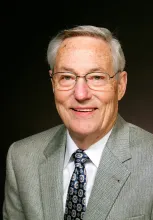
At the time of his retirement in 2016, Roy Holladay was serving the Operation Manager for Ministerial and Member Services of the United Church of God. Mr. and Mrs. Holladay have served in Pittsburgh, Akron, Toledo, Wheeling, Charleston, Uniontown, San Antonio, Austin, Corpus Christi, Uvalde, the Rio Grand Valley, Richmond, Norfolk, Arlington, Hinsdale, Chicago North, St. Petersburg, New Port Richey, Fort Myers, Miami, West Palm Beach, Big Sandy, Texarkana, Chattanooga and Rome congregations.
Roy Holladay was instrumental in the founding of the United Church of God, serving on the transitional board and later on the Council of Elders for nine years (acting as chairman for four-plus years). Mr. Holladay was the United Church of God president for three years (May 2002-July 2005). Over the years he was an instructor at Ambassador Bible College and was a festival coordinator for nine years.
