
Roy Holladay
This transcript was generated by AI and may contain errors. It is provided to assist those who may not be able to listen to the message.
Well, good afternoon to everyone. It is really a privilege to be back here in Big Sandy and to be able to see everyone. The common question I was asked when I first walked in is, is your wife here? And sad to say she's not. We had planned for her to be here. We had bought a ticket.
And at the last moment the day before I left, we had to cancel because she came down with the flu. And she was a sick puppy, we'll put it that way. And thankfully she's doing better. This morning I talked with her and she's feeling better. But she is really disappointed. She wanted to be here. We planned to come over early. We've got two sons, six grandchildren in Dallas. And so I got here on Wednesday, I was able to see them. But she was looking forward to having that opportunity also. Drove over yesterday. The Holcums had been putting up with me over the last day.
And so she was really looking forward also to being here and seeing all of the friends and people that we know. Because we pastored here for four years before going to Cincinnati. I'd like to thank Jimmy for the lovely song. He's got a beautiful voice. He sings like I would like to sing. And just a great message. Several asked me about my brother-in-law, Bill Cowan.
I thought I might just mention how he's doing. He's doing better. I think he's going to give a sermon today. He was in the hospital during the Holy Days. And he's the pastor of the Chattanooga congregation. We went down to Chattanooga. And so I gave three sermons during that period of time and helped with the Passover. But he had some gallbladder problem and had a stone stuck in a bile of his liver. But the real problem was he found out later on he had E.
coli in his bloodstream. And the doctors told him that most people died from that. And so he said, I'm surprised you're alive. So he was a little sicker than we thought he was. But he seems to be doing better now. Victor Kubik is in Dallas. Chris Rowland, who assists in our department, is also there. And he'll be driving over tonight. And we'll be here tomorrow morning. At least those are the plans. I thought I might just give you a little update on ministerial member services. It's called not just Ministerial Services, but Member Services, because we realize that we should be looking after not just the ministry, but the church as well.
Right now, we're focusing in two areas. One is providing pastors and elders for local congregations, because our ministers are getting older, and providing education and training for all of the ministry as well as for new men. What we have found is that we have some congregations that are not that large. And as a result, we in many cases have been there for a long time, serving God's people. And we have, in a lot of cases, appointed them as assistant pastors. And that simply means that they will look after that small group. Maybe there's 15, 20, 25 individuals. They will be there almost every Sabbath. A lot of our men who have three or four churches only get around in a circuit maybe once every other week.
And then they speak one place in the morning. They've got to rush off in the afternoon to someplace else. And they don't really have the time to spend. But if you're there with one congregation, you can be there all day. You can have service.
You can have potluck. You can have a Bible study. You can sit around and discuss things for hours with people and go home. So we have found that so far that's working. That's more of a bivocational type of approach where someone... We've got a number of men in the ministry who are making six figures, $150,000 to $200,000. For us to say, well, would you mind coming and working for us? And they maybe have small children and they're, you know, they haven't put them through college yet and they've got to pay for all of that. This provides an opportunity. It gives them a chance to continue working as well as pastoring.
We also ask the men, would they like to volunteer? That means without paying to do this. Would they prefer to have a stipend, you know, a small amount? Or would they like half salary, full salary? And then we have to evaluate whether the area is big enough for them to be compensated in that way.
So when we have an assistant pastor like this, it's always with the idea that we have an older pastor who's overseeing or overlooking the area. And even when they maybe are taking over completely, there's still that individual who's been around 20, 30, 40 years, who's available for counseling, who knows them, knows the area, who can be there to help in that way. So we're working with our ministry now to begin to mentor and train the younger individuals, supervise those within their area.
And so, let's say in an area where there might be a number of men, maybe they're not even ordained yet, who can be worked with, trained, the pastor can begin to help them. The idea is hopefully in many areas that we can have someone mentored by the church pastor who's about to retire, and when he retires, they can take over. So that's another thing that we're working on. Now, why are we concerned about this? Well, right now we've got 24 or 5 men who are 70 and over.
You can just do the math 10 years from now. The odds are that none of them will be pastoring. So they're going to have to be replaced. We also have 26, 27 men who are 62 and over. 10 years from now, they're all going to be in their 70s.
So we're going to be faced with the same thing. We have approximately 81 church pastors. So you do the math around 50 or so that we're going to have to replace. So we've got to begin to replace them. And so we're looking at educating, training the men that we have, as well as training and having new trainees and bringing men along.
So that's a major undertaking that we're doing right now. And the next year, that is something that we will be focusing on. In fact, I came over yesterday and we are really blessed to have someone like Don Ward, who is pastoring here because he has a vast educational background. His specialty is in curriculum. When we set up the pastoral care classes that we're teaching, he helped us. The rest of us were novices. We didn't know anything about how to go about doing this. He got us off the ground and moving.
And so right now we have a pastoral care class, but there are only 23 or 24 who can participate in the class at any given time. And this is the third year running that we've been doing this. Seven to eight hours of classes. And the pastoral care aspect of it is to cover topics to help men to learn how to pastor, how to do funerals, how to counsel for baptism, how to delegate, whatever it is that a man might do, from paperwork to just getting down in the trenches and pastoring.
We're working on that. So in talking with Don, we would like to utilize his talents, his abilities, and we realize as we all are getting older that there's going to come a point where many of us are no longer around. And so we want to tap into the wisdom of 40, 50, 60 years of being in the ministry and be able to use that information. So we're looking at online training, something that every one of our pastors as well as elders can be involved in.
And we will actually will be requiring to be involved in. We're looking at not only that, but also how to take trainees and new pastors and perhaps bring them into Cincinnati for a four to six weeks crash course on pastoring. And you'll be able to spend time with them, be able to take topics, and then have a lot of discussion on those topics.
And then also the general theme this coming conference of elders is going to be laboring in the Word. And so taking that on how we can really upgrade all of our ministers their speaking ability, but not just the speaking ability, but the quality of their sermons. That you have to labor in the Word, you've got to study it.
And then you've got to rightly divide it. How do you go about doing that? That's where Dr. Ward can help us a great deal. And then once you do that, then you can preach it. So you've got a one, two, three step program. And so we're working on that. Working on sending out to the pastors how to mentor and go about doing that with men in their local areas. And then we're also another completely different program is working with young adults in the church. We've got a vast sea of young adults. We're talking about those who are possibly 18 through, we use young adult loosely, 40, that age group, but through that area.
We would like to begin to train men so that they can be trained, go out and work under a pastor for two or three years, then be hired and be able to work for 30 or 40 years. Like many of the rest of us. And if we can do four or five year or three or four year over 10 years, we'll be able to basically keep up with what we're doing. So, you know, this is something that we would ask all of you to pray about because it is going to be a major factor.
When United First started, one of the things that we said we would do is provide pastors for all the churches. We still believe in that, want to do that. We may have to do it in a little different manner than we originally supposed, but we believe it can be done. So, I would ask all of you to pray about that and for God's guidance. Okay, having said that, I'll change gears here and go into the sermon.
I'm not speaking on fellowship, although that does tie in with the topic that I'm going to be covering. You know, sometimes we all wonder how God could love us. How could God possibly love me? I don't know if you've ever had that thought cross your mind.
With all of our faults, all of our weaknesses, all of the trials we go through, all of the troubles, all of our shortcomings, all of our failures, how could God possibly love me? If you ever doubt it, if you ever wondered that. I think from time to time it's probably natural for all of us to wonder about that. Have you ever considered the question, how does God view you? How does God look at you? What's his opinion of you? How does God view us as his children? And how do you view God? What's your impression of God? Because I think it's important to understand both approaches. There are many places in the Bible where God talks about his people, talks about his feelings towards us, what he sees in us. And we're going to cover a number of those scriptures today and go through them. We will barely scratch the surface in so many ways. But I think we will begin to have an idea of where God is coming from.
When God looks at us, what does he see? Why does he see in us as a group? Why does he see in us individually? What does God see in you and me personally? That's what we want to address.
When you're on your knees before God, crying out and pouring out your heart to him, asking for strength, health, comfort, trials or problems that you're going through, or just praying and you're asking God some blessings, how does God feel about you? When you're going about your daily life, trying to do the best, live by God's laws, his commandments, and his ways, and his laws in a society and culture that seems to be going diametrically opposite to anything that God stands for, how does God view us? What does he see when he looks at us? Let's start by going over to 1 Corinthians chapter 2 and verse 9. When you read verses 9 and 10, as we will hear, it's a very exciting scripture. And it's a scripture that we need to keep in mind as we go through the sermon today. And I hope by the time that we're finished, that we'll all have a much better idea of what this is talking about. Let's notice in verse 9. As it is written, I has not seen nor ear heard, nor has entered the heart of man, the things which God has prepared for those who love him. Now notice God is preparing things. Now it doesn't say what those things are, but we know that God's in the business of preparing them. This is part of the Father's work. We wonder, well, what's the Father doing? Well, he's preparing things for us. And God is preparing things. He's getting the kingdom ready for his family. What are some of those things that God is preparing? You might remember in John 5.17 that Jesus Christ said this, I work and my Father has been working until now.
God the Father works. He plans. He has been constructing, we know, the New Jerusalem, getting it ready for the Bride of Christ. So that's one thing that we know that he's doing.
He's been planning that. He is also preparing positions of rulership for us.
Now you might want to hold your place here, but back in Matthew chapter 20 and verse 23, Matthew 2023, you remember Mrs. Zebedee came asking that one of her sons sit on Christ's right hand, the other on the left. She wasn't asking for much, but that's what she was asking Jesus Christ.
And he said to them, verse 23, you will indeed drink my cup and be baptized with the baptism I'm baptized with. But to sit on my right hand and on my left is not mine to give. I can't give that, he says, but it is for those whom it is prepared by my Father.
So the Father, apparently, is the one who is preparing positions of leadership and individuals for those positions of leadership. What is God preparing you for?
Sometimes the trials, the tests, the difficulties, what we go through, we look at somebody and we say, well, they don't go through what I'm going through. Why do I always have these problems and tests and difficulties? God's preparing you for something. He's getting you ready for particular responsibilities and positions of leadership. And notice it says, whom it is prepared by my Father.
Now, Matthew 25 and verse 34 states the same thing. Matthew 25, 34, the King will say to those on his right hand, come you, blessed of my Father, inherit the Kingdom, prepared for you from the foundation of the world. So from the very foundation, God has been preparing a kingdom for us, for his family, for those that he's calling for the human family and getting it ready for us. Now, with that in mind, let's back up to 1 Corinthians chapter 2 again.
And verse 10 this time, 1 Corinthians 2.10. And I want you to notice here, notice it goes on to say, but God has revealed them to us through his Spirit. So once God's Spirit begins to work with your mind, God begins to call you. And how do you see, how do you understand the truth? It's only because God's Spirit reveals it to you. Spiritual matters are revealed by the Spirit of God. So God has revealed them to us through his Spirit, for the Spirit searches all things. Yea, the deep things of God. Do you realize that God has given us the privilege of understanding some of the deep things that he's doing, that he is creating, what he's planning for us, but he hasn't revealed it all to us, has he? By no means. Do you know why? Your mind couldn't even comprehend it. Our minds are physical. God gives us, we have the Spirit man that allows us to have a mind. He gives us the Holy Spirit that unites with that, but we still are not Spirit beings.
Do you know what it's like to be a Spirit being? Do you know what it's like to think as a Spirit being, have the memory of a Spirit being, to travel like the Spirit being travels? We don't know that. We've never experienced that. There are things that we haven't and aren't able yet to comprehend, but God has revealed to us the deep things, his plan of salvation, what he has in store for us, the kingdom. But once we're there, what will we be doing for eternity? What does God have prepared for us forever? We don't know those things yet, but God will, at the appropriate time, say, step into eternity, step into my family, and guess what we're going to be doing? He begins to share with us his ultimate plan purpose for creating the human family into the kingdom of God.
Let's turn back to Psalm 145. This gives us a little glimpse here. Psalm 145 we'll begin to read in verse 3. Psalm 145, great as the Lord, it says, and greatly to be praised, and his greatness is unsearchable. Or, as a margin says, beyond our understanding, his greatness is beyond our understanding. We think we know what God is like, but when you have a being who is so powerful that he can create the universe, billions of galaxies, each one containing billions of stars or multiple millions of stars, and each one of those bodies compacted with energy, power, radiating out, and he sustains it all. And it works like a clock.
You talk about power. He calls them all by name. I have trouble remembering my name.
And he can name them all. Think of the mind, the ability to be able to plan, to design, to create, and to have the power. That's the great God that we worship. Notice in verse 10, then, all your work shall praise you, O Lord, and your saints shall bless you. They shall speak of the glory of your kingdom. See, in the millennium, white throne judgment, when people ask us, when we're teaching and training, they say, what is God like? If you were to ask me, what is God like, I've just said what I know, what God's like. He's glory, glorious, power, radiating out from him. We can turn back and read a few scriptures. But when we're in the kingdom and they ask us, and we're spirit beings, we can say, well, you know, I've seen God, I've worked with Jesus Christ. Let me tell you, let me explain to you what it's like to be a spirit being.
And then we can do it from a different perspective. The other side, you know, we're there, and they'll speak of the glory of your kingdom. They'll talk of your power. So we can talk to people about the power of God to make known that the sons of men is mighty acts in the glorious majesty of his kingdom. And your kingdom is an everlasting kingdom. Your dominion endures throughout all generations. So we will be able to do that. We'll teach humans in the future about the glories of the kingdom of God. What this tells us is that God has a future plan for us that is so fantastic, so marvelous, so awesome, so wonderful and incredible that human words cannot put it into words. I couldn't even begin to describe it. I don't have the vocabulary, the ability, neither do you, to be able to describe it. We can't even begin to comprehend it.
It's because of our finite minds. It's only through the Spirit of God dwelling in us that we can begin to grasp somewhat about what God is doing. Now, with all of that in mind, turn back to Ephesians chapter 1. Ephesians chapter 1, beginning in verse 3. And we will see a little of what God has said he's going to do and what motivates God. Have you ever asked yourself what motivated God to create the plan of salvation? Why did he do it? Where did he come up with the idea, the thought? We don't know everything, but we have a glimpse here. Beginning in verse 3, Bless be the God and Father of our Lord Jesus Christ, who has blessed us with every spiritual blessing in the heavenly place, just as he chose us in him before the foundation of the world, that we should be holy without blame before him in love, having predestined us to adoption as sons by Jesus Christ to himself according to the good pleasure of his will.
Now, I want you to notice in verse 5 it says we've been predestined. The word predestined simply means to come to a decision beforehand. God planned the plan of salvation out. He thought it out.
He decided ahead of time and determined that he would call some during the first age of his plan. We're called what? Firstfruits were the first ones to trust in God to believe in him. According to his plan, he calls some now the vast majority he will call later on.
Now, as verse 4 says, just as he chose us in him before the foundation of the world.
So God planned to do this before the foundation of the world. But notice we have been hand chosen by God. You're not sitting here because of your greater intellect, capacity, brightness, or God needs you. He chose you. The great God of the universe looked down and said, I want you, Walter Crane. Or he said, I want you, Jimmy Stewart. Or whoever it might be. God said, I want you. He chose us. We've been hand chosen. We shouldn't take our calling lightly when we realize the great God of the universe, the most powerful being, called us out of the seven billion people on earth. God chose you. He chose me. God selected us. He's the greatest being in the universe, as we know. He's called the Almighty, the Eternal, the self-existing one, the all-powerful one, the all-loving God, Creator God, all of those. What if, let's just use a human analogy, what if your human father were the richest man alive, a trillionaire, not just a billionaire, but a trillionaire? What if he was the most powerful man alive, maybe president, and the most educated man alive, but 300 IQ? You could walk around and say, that's my dad.
Look at how great he is. Well, realize how great God is, and yet God chose you.
So, you know, to me, that's awesome. Now, notice verse 7 here. Verse 7 says, In him we have redemption through his blood, that forgiveness ascends according to the riches of his grace. So it states that we have been redeemed through Jesus Christ's sacrifice.
The word redemption means to buy in the slave market or to buy back. You and I have been paid for by the sacrifice of Jesus Christ, by shedding his blood. That was the price that was paid.
And then going on in verse 9, having made known to us the mystery of his will according to his good pleasure, which he purposed in himself. So he has made known to us the mystery of his will.
A divine mystery is something that was not previously revealed, and therefore was unknown and is unknown apart from divine revelation. I remember when I first began to study back in 1958, I read one of the booklets. I think it was 1975 in prophecy.
I read that and went down to my closest neighbor, my friend. I started explaining to him a little bit about the book of Revelation. He looked at me like I was not on a log. He had no idea what I was talking about. And I learned very early that unless God's working with somebody, they don't understand. Now, the reason why we understand is not because of superior intellect. It's because God's revelation. God has revealed to us the divine mysteries. Things that have been secret, God has revealed them to us now. Notice it goes on to say here in verse 9, "...have he made known to us the mystery of his will according to his good pleasure, which he purposed in himself." And then verse 11 ties in with this, "...in whom also we have obtained an inheritance, being predestined according to the purpose of him, who works all things according to the counsel of his will." The expression, good pleasure, of his will or the will of God is an important New Testament term that indicates God's choice and determination emanating from desire. Paul uses a word in verse 5, 9, and 11 that conveys the idea of desire, even heart's desire. The word will is thelema in the Greek, and it means a desire which proceeds from one's heart or emotion.
The word is usually translated as will, the will of God, but the English word will sublimates the primary meaning. The Greek word, thelema, is primarily an emotional word.
God's will is not so much just God's intention. It's part of that, yes, as it is God's heart's desire. I think that's critical. God's heart's desire. You find this in several biblical references, but Thayer's Bible dictionary has a good write-up on it. God does have an intention, a purpose, a plan. It is the word purpose. The word purpose here in verse 11 is prothesis. In the Greek, it means a plan, a blueprint, something that's laid out before it. Before you build a house, you lay out a plan. You have the blueprint to go by.
God created a plan first. Where did that plan come from? Because at one time, there were two beings in the universe. That was it. The one we know as the Father, the one, the Word, who became Christ. At some point, they had to say, why don't we share our existence, our life, the joy, the happiness, the peace, everything we have? Wouldn't it be great to share it with others? How do we do that? And from that comes the plan of salvation. Where did that originate? It came from their heart's desire. They were motivated to share, want to share with us human beings. As the end of verse 11 says, according to the counsel of his will, according to the counsel, the two of them sat down and they counseled about it. What motivated God to create the plan of salvation was a heart of love and good pleasure. What is the core of God?
1 John 4.8, God is love. It doesn't say God just loves or God has love. God is love. That's what he is. That's what motivates him. And from that heart, that will, that desire of love and good pleasure, God came up with a plan of salvation. And he created the angels to assist us. And he set the physical in motion. And we know that the Bible says God so loved the world that he gave his only gotten son. He gave his son to make it possible. Christ so loved us that he was willing to divest himself with the glory and the power on a spirit level come to the earth and humble himself.
You realize that God has humility? Jesus Christ humbled himself, came to this earth, God in the flesh, and was willing to die for us. God wanted to share his level of life and existence with us.
I want you to notice an alternate translation of verse 5, 9, and 11. I'll read through this quickly.
Paul talked about the good pleasure of God's heart. Verse 9, he made known to us the mystery of his heart's desire. And then verse 11, indeed God operated all things according to the counsel of his heart's desire or will. This arose from his heart, a heart of love, grace, and he was willing to share. So the impetus of God's eternal purpose arose from his heart's desire. He wanted to have many sons and daughters. Therefore, you and I are here.
First Proocs, chosen by God, called ahead of time, being prepared to assist him in the world tomorrow to extend this same calling to all humanity. And what an awesome calling and blessing that is. So how does God view us? How does he view the future that he set before us?
Well, let's go over to Luke 12, verse 31. One of the most encouraging scriptures you'll read in the Bible, Luke 12, and we'll begin first of all here in verse 31. We read, seek the kingdom of God, and all these things shall be added to you.
Talking about the food, clothing, shelter, the physical things. Then verse 32, do not fear, little flock. That's us. We don't have millions sitting here on the Sabbath. Little flock, for it's your Father's good pleasure to give you the kingdom.
It's God's pleasure. It's his good pleasure to give us the kingdom. God is not an ogre.
He's not harsh. He's not looking for you to make a mistake and say, Aha! There he is. He made a mistake. Zap! I got him.
No, that's not the way God is. It's his good pleasure to give you the kingdom.
You might say, what makes God happy? What gives him pleasure? Well, Christ said the thing that gives God's pleasure makes him happy is when he gives his children the kingdom. There's going to come a day when the resurrection does take place. Christ and the Father will be there, and they will say, Welcome to the kingdom. They will welcome us. You go to the Feast of Tabernacles. You haven't seen somebody in years. You see them. You go out and give them a bear hug. You're just so glad to see them. I don't know if God will give us a bear hug, but he will welcome us into the kingdom, into the family. A lot of times we baptize somebody. We will give them a hug, shake their hand, and say, Welcome to the family. They now have God's Spirit. They're part of the family of God, and we will be a part of his family at that time. Another translation translates it this way. Your Father delights to give you the kingdom. It's his delight. The NIV says, Luke 1232, Your Father has been pleased to give you the kingdom. The expression means to be well pleased.
Remember what the Father said about Jesus Christ in Matthew 3, verse 17, when he looked down.
and saw his son. He said, This is my beloved son, in whom I am well pleased. Same word.
God is pleased to give us the kingdom. He looked at his son, and he was well pleased with what he was doing. And so this will give God tremendous pleasure. When the human family joins the God family, the kingdom of God, and we are transformed. When the resurrection takes place, our bodies are changed. We're given a spirit body, and we pass from this dimension, the physical dimension, into the spirit and into eternity. God is going to rejoice. God wants to share all things with us. I don't have time to go back and read Hebrews 1 and 2. Those would be good chapters to tie in. We find that Christ has inherited all things, meaning the universe. And we find, in Romans 8, that we're joint heirs with Christ, whatever he's inherited, we will have.
The book of Philippians shows whatever kind of body he has. We will have. And so we will be in his kingdom, and we will share that. Psalm 16, verse 11, explains that in your presence is fullness of joy. It's going to come in time when we're in God's presence that we will have fullness of joy. Do you walk around just full of joy all the time? You get up in the morning, joyful, joyful, my back hurts. No, you don't do that. The knee hurts. The elbow hurts. Whatever.
We're joyful. God gives us joy, peace of mind. But there's going to come a time in the family of God when we will have joy forever. And at your right hand, it goes on to say, our pleasures forever more. Pleasures forever more. I've had young people come up to me and say, well, you know, I want the kingdom to come, but not just right now. I want to get married. I want to have family. I want to enjoy life. You know, I want to enjoy those things. I'll never have that if kingdom is established. But do you realize that there are going to be pleasures in God's kingdom that we can't even imagine forever? There will be joy forever. We enjoy things on a physical level.
What about enjoying things on a spirit level? Our minds can't comprehend that. God doesn't just sit around and got this mean look on his face. He's happy. He's joyful. There's pleasure. And we don't know precisely what all those are, but we will be able to share in them. Let's turn back to the last book in the Old Testament, the book of Malachi, chapter 3, verse 16, Malachi 3.16. And let's read here. You see something here where God expresses a little more about how he feels towards his people.
Contexts of these verses, obviously, are talking about the end time.
Return of Christ, verse 16, says, Then those who feared the Lord spoke to one another, and the Lord listened and heard them.
So a book of remembrance was written before him for those who fear the Lord, who meditate on his name.
Okay, now you need to realize God listens to what you say.
So, you know, when you leave here, you go home, and you're in the car in a privacy, and you think nobody's listening. God's listening. You know, his ears are open, and God listens. He hears what we say. He hears our conversation. Now, who does he hear? Well, those who fear him, those who talk about his name, talking about us, those who have the right kind of honor and respect and love for God. But then, let's notice verse 17. God says, They shall be mine, their mine, says the Lord of hosts, on the day that I make them my jewels.
I will spare them as a man spares his own son who serves him. God says those who respect him and honor him will become something very precious to him.
They will become mine. They'll be my jewels. The New International Version says, we will become his treasured possession, his treasured possession, or my own special property.
The word translated jewels or treasured possession means something of very great value.
Of great value. Not just literally, you've got a diamond, it's a big diamond, but something that's almost priceless. Another version translates this, is I will make them my special treasure. My special treasure.
The only earthly example I can think of is the British Royal Crown.
How many of you have been to the Tower of London, seen the Royal Crown collection and so on? Several of you have been. They've been valued by some people. I think I got this out of Wikipedia, so I'm going to read it the way it's written. As 20 million pounds, that value, somewhere around 39 million dollars at the time of that writing, it's been speculated by others that they could be worth 20 billion. And they're actually priceless. They're probably worth somewhere in the range of four or five billion dollars. Just give you an example.
The diamond in the royal scepter, the Star of Africa, alone is estimated to be worth 400 million because of its size and brilliance and how large it is. There's no way of really valuing these. They're priceless. And if somebody stole them, what would they do with them? You can't sell them the way they are because everybody would know where they came from.
Well, God says that we, those who honor Him, respect Him, love Him, talk about Him, are His treasured possessions. Far more valuable than the royal crowns or any of those. The family of God is priceless in His sight. Look at everything that He has done to bring it about, creating the angels, the physical creation, creating the earth, giving His Son Christ coming to the earth. All of this was done so that He could share His life existence with us, with His family. And we are the first to do that. When God sees us, He knows that we're human.
He knows we're flesh. He knows we make mistakes. He knows we sin. He knows we slip up. He knows we fall down. That we do a lot of stupid things. He knows that. But He sees and understands that far better than we do. He sees what we can become—His priceless treasures, members of His family.
As Psalm 103 tells us, God removes our sins as far as the east is from the west—just total opposite direction. He pities us like a father pities his children. Did you ever have a child fall and break his arm? Or do something of that nature? I remember, I think it was Arthur. My oldest son fell and broke his arm. He let out this blood-curdling scream.
And here's Dad to the rescue. I faint it. Plopped over on the ground. Now there are two where my wife is worried about it. Well, I got back up after that and took care of it. But God pities us as a father does his children. He knows our frame. He remembers that we're dust. He made us dust. He knows what we're like. But He says that we can become His special treasure.
That's the being who owns everything. You know, God—you stop and think about it—is a super-billionaire, trillionaire, zillionaire, or whatever kind of heir you want to think of. And He owns everything. He makes Donald Trump look like Donald Duck by comparison. God says we will become His special treasure. So it's pretty amazing and flattering that God has called us now.
Now let's go over to another section of the Bible—1 Peter 2 and verse 9 very quickly.
1 Peter 2.9. And notice, here's a verse, a couple of verses here, that contain an awful lot of information about what God thinks of us. Notice, you are a chosen generation. Verse 9, 1 Peter 2.9.
A royal priesthood, a holy nation, His own special people, that you may proclaim the praise of Him, who's called you out of darkness into His marvelous light, who once were not a people, but are now the people of God, who have not obtained mercy, but now have obtained mercy. Now, notice the incredible amount of information contained here.
We are a chosen generation. So again, we find we're chosen.
We're chosen there means to be selected out or marked for favor or special privilege.
So we've been chosen, selected for a special privilege and calling.
We've been called to be the firstfruits of the many sons and daughters who will be in His kingdom.
Talk about a privilege to be called now out of the billions, something like 7.3 billion people in the face of the earth right now. Now, out of those billions are a few thousand whom God has called at this time to understand His way. And you're privileged to be one of those.
Now again, who did the choosing? He did. God did. He chose us, the Creator, the ruler of the universe.
Notice it says we are a chosen generation. The word generation means a family or race.
Now, in the Old Testament, God chose a nation, the nation of Israel.
Today, God chooses us out of all nations, and we become spiritual Israel, the Israel of God.
We become the Church of God, the people of God, that God is working through.
Then it goes on to say that we are a royal priesthood, a kingly priesthood, you might say.
King and priest, the job combined together.
So we are called, and you'll find in the millennium, the world tomorrow, civil authority, religious authority, will not be separated.
We'll be one unit. We will teach God's way. We will rule.
And we are being prepared now as kings and priests. So, do we look at ourselves that God is in the process of training a family to be kings and priests of His, to rule in the world tomorrow?
Then it says you are a holy nation.
You know that we are holy. We are to be the holy people of God.
I didn't write this. It's in the Bible.
I've already read you one other place where it mentions that we are holy. Word holy means set apart to service to God.
Part of the definition is characterized by perfection and spiritual purity.
You and I are to grow, to mature. We are to have spiritual maturity and growth.
Are we holy? Well, God says we are.
We are a group of people that has set apart and called for a sacred purpose and service to God. And we are, in this society, to be a light of spiritual purity in God's way of life.
And we are to allow God to lead us through His Spirit.
Then it goes on to say you are a special people. King James Version says peculiar people.
Yes, we are peculiar sometimes, but that's not what this word actually means.
We are a specially chosen people.
New English Bible translates it as a people claimed by God here for His own. We are His own special people.
God claims us.
Have you ever told your children they're growing up?
You keep doing that, and I won't claim He was my son.
God looks down and He claims us.
He says, there goes my son, there goes my daughter.
He claims us.
He knows we're human. He knows that we need help.
He owns us. He bought us through Christ's sacrifice.
We are to proclaim His praises, His wondrous deeds, His virtues.
When the world looks around and they're looking for Christ in this world, they should be able to see Him in us, who we are.
We've been called out of darkness into His marvelous light.
There's something else that ties right in with this in Ephesians 1.1.
The apostle Paul uses a term here that he uses in many of his books.
He says, Paul, the apostle of Jesus Christ, by the will of God, to the saints who are in Ephesus and faithful in Christ Jesus.
Now, there's a big church that claims the only way to be a saint is you've got to die, perform a couple of miracles after you die, and then you wait five years or so and you can be proclaimed a saint.
You and I are saints.
Now, right now, the word saint here, he wrote to the saints in Ephesus, to the saints in Corinth, the saints in Rome, saints in Philippi, and so on.
He wasn't writing to dead people when he said that. He was writing to the church.
He was writing to congregations in various cities, made up of people just like you and me.
What is a saint? Well, it comes from a root word meaning to sanctify, set apart, to make holy, to have a special relationship with God, to be dedicated to God.
We're the saints, the called out ones, and we are to be that way.
Look around you.
Walter, you may not think of Kitty this way, but she's a saint.
You're a saint.
Sometimes you may say, you're no saint.
We use that type of terminology. But we are the saints of God, the ones that God has chosen, people belonging to God, sanctified by God, called out, set apart, and being used by God to do his work that he has called us to do today.
Let's look at one other scripture that describes the depth of a relationship that we have. And this time it's with Christ, but also with the Father.
Ephesians 5, verse 28.
Notice here, Ephesians 5, 28.
We're given a section here talking about husbands and wives, how husbands are to treat their wives, how wives are to treat their husbands.
In verse 28, it says, So husbands ought to love their wives, their own wives, as their own bodies, and he who loves his wife loves himself.
For no one ever hated his own flesh, but he nourishes it, and he cherishes it just as the Lord does the church.
Just like God does the church.
The word nourish means to feed.
You nourish the body. You feed the body. You take care of the body. Look after the body.
You and I are nourished on what?
On the food of God, the Word of God. This is what you and I are to eat every day. We're to open it up and take a big bite out of it. Chew on it. Digest it. Don't just swallow it.
Just like you eat food and you're supposed to chew it up and then digest it. So it is. We study it. We chew it. We think about it, meditate on it, and then it becomes a part of us. It nourishes us. That's why we come to Sabbath services. Dr. Ward gets up here and the rest of the men who speak, and they teach you the Word of God. And you give you the way of God.
Then the word cherish means to care for.
That you're looked after and cared for. A husband nourishes. He provides for his family. He cherishes and cares for his family. And it's verse 32.
It says, this is a great mystery, but I speak concerning Christ and the Church.
So this is how God thinks about the Church. Just like a husband is to nourish and take care of his family and look after his family. So should we look after one another.
Now, one last scripture here in 1 John chapter 3.
I saved this one for last, but we could have started out with this particular scripture. 1 John 3 beginning in verse 1. It shows how God views us.
And it uses probably the most common expression in the Bible here in referring to us.
And it's the fact that God views us as a loving father views his children.
Let's notice it beginning in verse 1, 1 John 3.
Behold what manner of love the Father has bestowed on us that we should be called the children of God.
You know what an awesome calling that is, that we are the children of God. I see Howard Baker back there.
There are those who are the children of Baker.
You know, they're his children.
I've got five sons. They're holidays.
Here we have, he calls us, his children. We are the children of God.
And then it goes on to say, therefore the world does not know us. The world doesn't recognize us because it did not know him. Beloved, now we are the children of God. Now, it has not yet been revealed what we shall be in the future.
But we know that when he is revealed, we shall be like him, for we shall see him as he is.
We will be like God because at that time we'll see him as he is. Now, no man can look on God now and live. You'd be burned to a crisp.
But at that time we will be a spirit being, and we'll be able to look on God and see him as he is. And then in verse 3, notice, it goes on to say here in verse 3, and everyone who has this hope in him, this hope we just read here in verse 2, purifies himself just as he is pure. That means there is an obligation upon us, isn't there? It's not just that God just gives all of this to us. We've got to do something.
We have to yield to God. We have to obey God. We've got to submit. We've got to repent when we sin.
We've got to go God's way. And then we strive to become like God. If we're going to be like God in the resurrection, we've got today to become like God in attitude, in purpose, in mind, in heart. God's law, his way, has to be written in our hearts and our minds. It has to become part of who we are, what we are. And so you and I are led by God's Spirit today and guided by God's Spirit. And so God wants to share eternity with us, and we do have our part.
So, brethren, let's stop and think about how does God view us.
Well, He views us as His children, as His family. He's working with us. He's not trying to put stumbling blocks in our way. He's not trying to knock us down. He's striving. Everything He does is to help us get into His kingdom. You know, God gave us marriage.
And one of the reasons He gave us marriage is to teach us the lesson of being a helper.
Your wife is supposed to be a helper. You're supposed to help her. She helps you. And you go through the Old Testament, and you read that God helps us. God helps us. The great God in the universe is there to help us, to assist us, to guide us, and to lead us. He sees us as potentially a royal priesthood, a holy nation, a chosen people, that we're being prepared for rulership in His kingdom. So as we leave here, we go home. We face a new week. We need to think about this. We need to think about what God sees when He looks at each one of us and that He's looking at His family, His special treasure. We need to think about we need to change and why do we need to change and what God is trying to accomplish. We will get into God's kingdom by His grace and only by His grace.
So, brethren, let's stop and think and realize when God looks at us, we are to God, His special treasure.
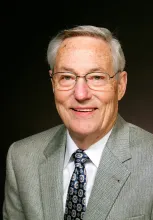
At the time of his retirement in 2016, Roy Holladay was serving the Operation Manager for Ministerial and Member Services of the United Church of God. Mr. and Mrs. Holladay have served in Pittsburgh, Akron, Toledo, Wheeling, Charleston, Uniontown, San Antonio, Austin, Corpus Christi, Uvalde, the Rio Grand Valley, Richmond, Norfolk, Arlington, Hinsdale, Chicago North, St. Petersburg, New Port Richey, Fort Myers, Miami, West Palm Beach, Big Sandy, Texarkana, Chattanooga and Rome congregations.
Roy Holladay was instrumental in the founding of the United Church of God, serving on the transitional board and later on the Council of Elders for nine years (acting as chairman for four-plus years). Mr. Holladay was the United Church of God president for three years (May 2002-July 2005). Over the years he was an instructor at Ambassador Bible College and was a festival coordinator for nine years.
