
Robin S Webber
This transcript was generated by AI and may contain errors. It is provided to assist those who may not be able to listen to the message.
I want to build upon a little bit what Mr. Brown talked about in the first message, and that is that recently we have gone through an election process. Building up to that November 8th date, there were a lot of judgments and a lot of decisions that had to be made by the candidates. Buying for an office, the highest office in our land, and probably the most important position humanly in the world of being the President of the United States.
Moving towards that election, and now as we're in this transition of government, a lot of judgment calls have got to be made. You and I can sit back and we can see what is happening in the headlines. We can, like Bob, look at our little machines and try to figure what's going on hour by hour. Those judgments and those decisions will be made by them. Some we will like, some we will wonder about, some we will not like. But we're not here today to talk about the judgments the candidates or the President-elect is making.
What I want to do today is I want to continue to build upon what Mr. Brown brought us, and that is about making our election sure, which echoes out of 2 Peter, verse 1. About a month or two ago, and I think I gave that message here in Los Angeles as well as others, I gave a very simple and I gave a very practical message. I hoped so. That was at least my desire. And it's interesting, it was very simple, very practical, and something that you could kind of like change in your pocket, put into your pocket, and go out and use.
And sometimes the simple is the profound. Maybe some of you will remember it. And it also appeared as an article in the United News. It was simply called, Stop, Look, and Listen. And it was very interesting, the minute I gave that message afterwards, how quiet the audience got, or at least half the tone went down, because everybody began to stop, look, and listen, and give one another a loving ear and a loving heart, and were changing the way that they communicated with one another in what they gave out and what they took in.
Well, that's my hope today. I want to build again. This is not going to be high theology. This is going to be very practical. And I'm very excited about giving this because of so many young people here, because you that are young people have to do and make the same decisions and the same judgments that we need to make.
And if somehow I can give you a head start today, and the rest of us, a continuing path of doing this correctly, well then this time together on this Sabbath day will be well served. To begin with, I'd like you all to turn over to Psalm 9. Let's go to Psalm 9, if you would. It's right in the middle of the Bible. In Psalm 9, and let's notice a scripture of praise that is offered up to God. In Psalm 9, and let's pick up the thought if we could, in verse 7, where it says simply this, But the Lord shall endure forever, and he has prepared his throne for judgment.
And he shall judge the world in righteousness, and he shall administer judgment for the people's in uprightness. Now let's drop down that column to verse 16. Let's come with me and look at it. The Lord is known by the judgment he executes. The wicked is snared in the work of his own hands, meditation, selah. Very interesting that this Psalm is dedicated to praising God for the judgments that he makes for his people and for we his flock.
And how he deals not only with his covenant people down through time and memorial, but also deals with those that are without. He makes decisions. He makes judgments. And they're a tad different than what you and I do during the day at times, for his are all upheld by uprightness. The reason we love, the reason we adore and praise God is because of his perfect ways of thinking when it comes to decisions that impact us, might impact the welfare of others.
Let's put it this way, friends. He is simply perfect. But the message today is going to move beyond simply praise upward to God. I told you that it was going to impact you and me, we that are here below. It's going to help us to establish God's purpose in us. I want to share a thought with you, may I? That is simply we are made in God's image and after his likeness. And he created us. And we are now a part of a spiritual creation to make wise decisions, to make judgments that are righteous.
Therefore, one of the most important ways to become like him in his image is to judge as he judges. Now, let's think about this for a moment. You say, well, Mr. Weber, how does that affect me? Well, thank you for asking that question.
We'll move a step further. Simply this. Perhaps more than anything else other than breathing and eating and sleeping, people make time making judgments about yourself. No, about others. About others. We make decisions all the time. As people come into our life, you know it and I know it. Life is like a little bit and we didn't realize it, but we all are kind of umpires. You think of baseball for a moment? Are you with me? Think of baseball?
And you have the man behind the catcher, you have the umpire, and he's got all of his safety gear on him, doesn't he? He's got all that safety gear. He's got his chest guard. He's got his knee pads. He's got that fancy mask so that the ball coming at 100 miles per hour isn't going to go through and hit him in the noggin. And we know what they do. We know that they make decisions. They're paid to make decisions. They have to make snap decisions the way that ball comes in or a play happens in the field. So normally what it is, let's look up here. This is the PowerPoint. You don't want to miss it, okay? It's basically like this. Safe!
And or you're out! That's kind of fun. Now, you know and I know that matters that come across our desk of life, we do the same without all of the gear. People, activities, events come our way that we have to make decisions on. And sometimes they are lickety-split. We do that almost immediately. And basically we're saying people that come into our life, they're either safe and or you are out. Mr. Brown mentioned about the technological world. We know that when you pick up something on the computer, you read an article or a movie. What do you have? You have the at the bottom, you have the thumbs. Have you seen that or am I the only one? And I'm not very technological.
At the bottom, like or dislike, right? Like or dislike. Let's do have let's have some fun. Let's put thumbs up everybody for a moment. Okay, thumbs up. Just keep you awake for a moment. And thumbs down.
You know, it's amazing in 21st century, we're all playing Caesar. It's like we're at the gladiator games. Life or death? Like or dislike? We all make decisions. They come at us rapidly. You right now are sitting out there. There's looks like there's about 110 people out here in front of me. I may be mistaken. I'm an old bean counter. But that I'm looking at this audience. And right now you're making a decision. You know what that decision is? You're making a decision whether or not you want to stick with me through this message. Right now, in your mind, you are going either like this or like that. You're saying, boy, I hope to see what he's talking about or over and out. Out! We are always constantly making decisions. So let's talk about this moment. We recognize the challenge that is before us. Because from the days of the Apostles till now, Christians have always been challenged to the hilt as to what kind of judgments we make on others. In family, society, ourselves, right here in the church. Yeah, right here. Not out there, but right here. We look who's coming in through the door. Or we look who's sitting down the row from... Well, what are they doing here? Who let them in?
Who gave them the invitation? Why did they come back? We just have to recognize that as human quitters, we are full of judgment making. We've been called to make judgments. The question is, are we executing righteous judgments? Again, why is this so important? Let's go to understanding that it almost destroyed an entire church. In 1 Corinthians 5 and verse 1, join me if you would there for a moment.
1 Corinthians 5 verse 1, we pick up the story of Paul writing to the Corinthians. And there is a story behind this in 1 Corinthians 5 where it says it is actually reported that there is sexual immorality among you and such as is not even named among the Gentiles that a man has his father's wife. And you're all puffed up about it and have not rather mourned that he who has done this deed might be taken away from among you. So here a church made a wrong decision. They decided not to decide.
They made a faulty judgment as if nothing at all was happening on the front row where one was having relationships with their step-parent. So we see where this happened. Now let's go to 1 Corinthians 6 just a page over. In one sense there is a spot where they should have judged and they didn't.
Now the Corinthian church in another spot is rushing judgment beyond themselves and again not taking responsibility. Chapter 6 verse 1, dare any of you having a matter against another go to law before the unrighteous. Remember God is the righteous judge and his judgments are held in uprightness. You're going to law before the unrighteous and not before the saints.
So in one sense there's a spot where they should have judged, they didn't. On the other hand they didn't and they should have amongst those that were among them. They did it in the wrong way.
Now why is that important to you and me? That is to understand. Look at verse 2 of chapter 6.
Do you not know that the saints will judge the world? And if the world will be judged by you, are you unworthy to judge? The smallest matters. Interesting. One day we are going to judge and make decisions over the spiritual angelic realm. Amazing. Incredible. But before we judge angels, we have some homework. We have some heart work down here below. Again, let's appreciate.
We are not simply to praise God for His judgments but become just like Him, His image and likeness when it comes to judgment. But why is that? And this fits just right in with what Mr. Brown brought us in the first message. Join me if you would in Revelation 5 and verse 10.
We are being called now to prepare not only for today but for tomorrow. In Revelation 5 and verse 10, let's notice again regarding why it's so important that we are making righteous judgments today. In Revelation 5 and over in verse 10, notice what it says, speaking of the saints of God, and has made us kings and priests to our God, and we shall reign on earth.
We shall reign on earth, kings and priests. Out of the old King James, it's put this way, you have caused them to become a kingdom of priests. Now, what does that mean?
Again, thanks for asking the question. Let's go to the book of Ezekiel, which moves forward in a millennial sense. Once Christ has returned, let's look at Ezekiel 44, speaking of priests and what they are to do. In Ezekiel 44, and let's pick up the thought of verse 23, we're just making a string of scriptures right now to come to point. In Ezekiel 44 and in verse 23, notice what it says, speaking of a time in the future, and they shall teach my people the difference between the holy and the unholy, and cause them to discern, to consider, to understand, to bring to fore that which is between the unclean and the clean. In controversy, they shall stand as judges and judge it according to my judgments. They shall keep my laws, my statutes, and all of my appointed meetings, and they shall hallow my Sabbath.
What we're doing right now, brethren, we are not just a society of Bible believers. This is not just to come together and to debate. We are here in training to become a kingdom of priests, to be under Jesus Christ in the wonderful world tomorrow. Now, I can be up here, or Mr. Brown can be up here. Mr. Garnett was here for the Bible study, and in that sense, we can go through a lecture.
But really, what I'm going to be talking about is the lab session that occurs every second of every minute of every hour of every day of the week of where we are seriously in training to prepare to assist Jesus Christ. I didn't say that. The Bible says that, and that is the calling before us. Now, with all of that, you say, well, what happens then? I want to share a thought with you. You might want to jot this down to let you know this. When it comes to judging, when it comes to making righteous judgments, we have a target-rich environment, starting right now, starting right now, as to how we allow God's Spirit to work with our mind, to work with our heart, to work with our tongue, and to redeem the time. This afternoon, then, we are going to be discussing—this is the title of the message—how to execute righteous judgment. It says that God executes righteous judgment. Are you with me? We're made in His image and His likeness. We, too, are to learn how to execute righteous judgment. Now, with that stated, and we know where we're going, let's understand something. One of the first things that hits us as we strive to master this God-given responsibility appears to be a contradiction in Scripture, and we're going to blend it here for a second. So we're going to work through this for a moment. Is that all right?
And then we're going to understand what God wants us to do. In Matthew 7 and verse 1—and there's a verse there. We're going to come back to it. I'm just going to allude to it right now.
In Matthew 7 and 1, it says, judge not that you be not judged. I had a grandmother like this—a little exposure that I had to her over the years when I was young—was, I'm not going to judge.
Not going to make a comment about this. Judge not that you be not judged. So, just kind of like a tortoise. I'm going to put my head into my shell, and I'm going to put up my arms, or my little, whatever they are in a tortoise, and not me, not me. Just going to let this go by.
Is that what that Scripture is saying? Does that mean we're not to have an opinion?
Does that mean that we are not to be a determined spiritual person? Does that mean that we are not to discern between that which is passing away and that which is holy? What does that mean? We're going to come back to that in just a few minutes. Then there's John 7.24. Let's go over to John 7.24.
That one we'll look at for a second. In John 7.24, notice again what it says here.
It says, Do not judge according to appearance, but judge with righteous judgment.
Now, if you just mesh those two verses together without judging them and discerning them appropriately, one says, judge that you be not judged. But over here in verse 24 of chapter 7, it says, but judge with righteous judgment. Now, my question is this.
Does that mean that as Christians then we have a split personality and we're looking both ways, like a window washer on your car going back and forth? Back and forth and back and forth.
Brethren, we are to learn to judge righteously. And God's Spirit and God's instructions are before us. It's simply whether or not we will do it and or not. Let's relax for a moment and understand a few things. Just like the word, and many of us are familiar when we first learned about the truth about heaven and hell, that, let's just use the last word for a moment, hell, is to recognize that while there is one English word, hell, there are many Hebrew and Greek words that were translated into that one English word. Well, that's the same as judgment. So, we need to notice that. Join me, number one, in Psalm 51 and verse 4. We're going to just look at two words. Two words for the moment. Psalm 51 and picking up the thought in verse 4.
This is the, shall I say, famous Psalm prayer of David's repentance. And we notice in verse 4, where it says this, Against you, you only have I sinned and done this evil in your sight.
That you may be found just, that you may be found just when you speak, and blameless when you judge.
Again, back to the, I'll call it the Old King James English for a moment.
The way that it is mentioned there is that you might be clear when you judge, that you might be clear, that it might be just on the target, spot on. The word there, judge, is shifat. Let me just spell it for you. Simple. S-H-A-P-H-A-T. To shifat is to judge as a magistrate.
It can also mean to try. It can also mean to condemn and or to pass a sentence or to punish. Just understand, this kind of judgment is in God's domain alone.
Shifat is God's role alone. It's not our job at this time.
Let me put it this way. To make a final determination on somebody here on earth.
To kind of figure out where they are before God's judgment table.
You know, when you come up along the country road and all of a sudden there's a gate and there's a no trespassing sign? It says no trespassing. Nobody allowed on this property. What do you do? Do you break down the fence and go on anyway? Every time Susan and I see that, we're out in the country and even if there's something really pretty out there that she wants to take a shot of, we go, nope, can't do that. Can't pass that. My question is simply this, friends. Let's think this through for a second. And when I'm talking to you, I'm just talking to myself today, okay? How often have we trespassed? How often have we trespassed where God says, don't go there? Don't go there. There's a big X. That is my role. That is my prerogative. That is my domain alone. Let's pick up another word now.
Now we're going to go to the Greek. 1 Corinthians 6 verse 5. 1 Corinthians 6 and verse 5.
Again, with the Corinthian church, God had, through Paul, had to make a lot of decisions about those good old Corinthians. But in 1 Corinthians 6 and verse 5, notice what it says.
I say this to your shame. Is it so that there is not a wise man among you, not even one, who will be able to judge between his brethren? We might say there's a lament by Paul in this verse.
The word there is diacrono. Diacrono, the D. Diacrono. That means, that's a different kind of judgment now. That's not a condemnation. That's not a final judgment. That means to separate, to separate, separate the straws, separate the wheat from the chaff, separate the sheep from the goats. The concept of diacrono can be understood in this sense, to discern right from wrong. You might say again back to Ezekiel what the millennial priest will do under the high priest, Jesus Christ, to discern between that which is holy and that which is profane. To discern right from wrong and or when to withdraw from evil or to step on the platform of righteousness.
So now, let's all bring this together. You say, well, thank you very much. Here we go. We're going to bring it together to understand our responsibilities as the saints of God. Number one.
Are you with me? Number one, only God has the right to sha'fat or to condemn. Thumbs down. But let's understand something too. Sometimes when we talk about judgment, we think of the negative.
God wants to do this as much as possible. God created us to be with Him, to succeed by His Spirit, by His law, by the example of His Son. But sha'fat is in God's territory, in making a lasting sentence on a person. Why? Why? For God alone. God alone sees the heart. Number two.
Beyond that, God wants us to learn thy echrono. That is to properly evaluate matters.
But we are cautioned as to how to do it. I'm going to give you some keys in a few minutes.
Number three, then. Number three. The bottom line is God wants us to appreciate and to understand how both relate to our lives. As to what is His, what is ours, and then what we will do with it.
Now, just to understand that we are not alone, because I hope you didn't think I was a little hard on you, but when I'm hard on you, I'm hard on me, because we've all been umpires.
We've all stood from a distance.
And the other person doesn't even know that we're their judge and jury.
They may never have even met us or talked to us, but we evaluate them, and we do not evaluate them the way that God does. Let's look at a few examples. Join me if you would in 1 Samuel 16.
First Samuel 16, very quickly. In 1 Samuel 16, we notice a very famous example, and it's the story of Samuel is told by God to go out and to anoint a king to replace Saul. We pick up the story here, where there is actually, if you look at verse 5, he comes towards Bethlehem, and he says, Peaceably I have come to sacrifice to the Lord, sanctify yourselves, and come with me to the sacrifice. And then he consecrated Jesse and sons and invited them to sacrifice.
What I was reading through this again this morning, what is interesting, here is a judge of Israel, a respected spiritual leader. I really got to thinking about this this morning. A respected leader over Israel. And they even sacrificed, they're even invoking God's presence. But then, in a sense, after verse 5, Samuel, just like you and me, do sometimes on Mondays or Wednesdays or Fridays, and even on the Sabbath day sometimes, we don't judge correctly. So it was in verse 6, when they came, that he looked at Eliab and said, Oh, surely the Lord appointed us before him. But the Lord said to Samuel, and this is where it comes back out of the New Testament, but the Lord said to Samuel, Do not look at his appearance or at his physical stature, because I have refused him. For the Lord does not see as a man sees.
For man looks at the outward appearance, but the Lord looks, looks at the heart.
You know that. I know that. Most of our life we've been taught the proverbial, you shall not judge a book by its cover. And yet, if you look up here for a second, we can have library shelves lodged between our ears, stacked full of books in our mind or in our heart. Book collectors or non-book collectors, because we have only judged by the cover, and only God can govern by the look at the heart. Let's look at another example, Luke 18.
Luke 18. In Luke 18, very famous story, we call it the story of the Pharisee and the publican. Luke 18. Verse 11. Both of these men have come to the temple to pray. One a Pharisee, and the other a tax collector. Back in that day, bad guy, collaborator with Rome, snitch, mole, don't want him in our neighborhood, certainly don't want him in God's temple with me, Mr. Joe Righteous. The Pharisee stood and prayed thus with himself.
And it's very interesting, he really was alone, because he wasn't reaching God with what he was about to say. He was by himself. And he said, God, I thank you. Thank you, Lord, that I'm not like other men, extortioners, unjust adulterers, or even as this tax collector. I fast twice a week, typical Pharisee. I give tithes of all that I possess. And the tax collector, standing afar off, would not even as much raise his eyes to heaven, but beat his breath, saying, God, be merciful to me, a sinner. Jesus then concludes, I tell you, this man went down to his house, justified rather than the other, for everyone who exalts himself will be humbled, and he who humbles himself will be exalted. What was the Pharisees' big mistake? This moved beyond Di-Ecrano.
He was moving into God's territory of Shabbat, a figuring who God is going to hear and not hear, who God is going to bring into his kingdom and not.
He was on troubled territory, troubled territory. The word there, in looking at this, the word that is used here is krinos. It's a condemnation. It's a condemnation.
So this verse, this story is basically warning us better like what you know. Oh, you know what?
Actually, I'm going to go to Matthew 7. I'm out of sync. Come with me in a second. Matthew 7.
Let's take a look at this. Actually, it fits the story. In Matthew 7, verse 1, notice what it says. Judge not that you be not judged. There's that verse again.
My paternal grandmother's saying, oh, I'm not going to get involved. Everybody's nice.
It's kind of nice when you run into people like that for a while, but you also have to make decisions in life. Judge not that you be not judged, for with what judgment you judge, you will be judged. And with the measure you use, it will be measured back to you.
Now we say, we read, God doesn't mean that. That's just to kind of spook us. That's just kind of to scare us. That's just kind of to get our attention. That's where a minister about 35 minutes in tries to wake up the crowd. I better be good, at least for an hour.
No, I take God at His word. Do you take God at His word? What God is saying here is one plus one equals two. That's how it's going to be. How you judge other people is how you are going to be judged yourself. Oh, He doesn't really... Yes, He does mean that. I'm here as a representative of the Gospel. This is the Gospel. God is telling us one plus one equals two. Human nature always will say, well, one plus three, my number, one plus seven, my number will equal... No, it's not how it is.
And yet, how often do we have people come into our life that we do not know what's going on in their life? We have not... We're just looking at the epidermis. We haven't got into the... under the endodermis, underneath the inner skin even. And, you know, we take out our tape measure.
We take out our tape measure. Or maybe we're a surveyor. Maybe we just see them from afar.
We're going to see that in a moment where we're kind of going...
You know, and we're lining them up, and we measure people. I have a question for you, because you're all looking at me a little cross-eyed. Am I the only one that's ever had this problem in life? Am I talking to the right crowd or no? To where we have made judgments on other people. People of whom we might not even know their name. And if we do know their name, we don't know their circumstance. If they're right here in this congregation, we don't know what has brought them to this point in their life. And yet, we make snap judgments. You know, Bob was talking today about the smartphone. You can tell I don't have one smartphone. And, you know, we have so much of this coming at us. We are having to make so many decisions today that our grandparents and our great-grandparents never had to make. Our great-grandparents or our great-great-grandparents, the biggest decision they had to make today is we had breakfast at five in the morning so I could go out and milk the cows 200 feet away in the barn. Then I'm going to come back and I'm going to have a because I've worked hard all morning. I'm going to come back. I'm going to have early supper with my wife. Then I'm going to go back. Today we are bombarded with decisions. We live in this global environment where we're worrying about China. We're worrying about South America.
We're worrying about Aleppo. We're worrying about Mosul. We're worrying about the shooting in some city in the north or the south. We're worrying about this. We're worrying about that. We're worried, worried, worried. We've got to take stock of our lives. Just as Bob said, the Sabbath day, to give us some peace, to give us a redirect and a recognized brethren that God has called us to execute judgment just as he does. Let's get into just some very brief points, very, very brief points as to how to execute righteous judgment. Here we go. Number one. There's going to be four points. They're going to go rather quickly. Probably one story with each point. Number one, don't judge solely based upon what you have heard or seen. Do not judge based upon solely what you have heard or seen. Why do I say that? Simply put, our eyes and ears are not effective radar for what might be coming our way. Yes, even our eyes and our ears can deceive us and or not serve us fully to understanding the full picture. Let's understand this for a second. Today, especially because of the video cam and the society we live in that we're all hooked up, you and I see these challenging situations where we can see people that have been shot. And so we see the immediate video and we think, oh, look, and we go into our judgment mode.
You know, we put on our black robe and we've got our gavel. Guilty. Next. But we need to understand something. And it's going to be a little bit like what you and I go through a little bit. When people have taken a video of something, the video is only as good as when it's turned on.
It may not capture what occurred before and or even after the video goes off. It's only as good as where it is directed. And it is only as good, not only where it is directed, but at the angle to give the full picture. Now, when I state this and recognizing the temperature that is in our country sometimes, I am not saying just dealing even with the situation with law enforcement.
That does not mean at times things are done improperly, wrongly, etc. But how often do we recognize that we get these quick video camps and people rush to judgment and they don't allow time and patience to make the right decision for them? In John 7, verse 24, we've already been there. It says, do not judge by appearance. And this is the starting point of righteous judgment.
Allow me to make it clear to you, please. Lest I do not want you to go out of here mistaken, because you and I are about to enter a target-rich environment as soon as this message is over.
Do not judge by appearance is the starting point of righteous judgment. Christ warns us to avoid the pitfalls of gossip, hearsay, rumor, looks like, sounds like. Unfortunately, the human mind basically works on this premise. Let us be daring and let us be honest. Guilty until proven innocent.
Guilty until proven innocent. And all of you and I, you know, all of us grow up learning about American jurisprudence that you're supposed to be what? Paul, could a little bit louder?
In a sentence so proven. How novel! How unhuman nature! And that's why we have a process.
All of us at times have fallen into this trap. Case in point, the one story I'm going to share with you. Psalms, not Psalms. 1 Samuel. Join me if you would in 1 Samuel. In 1 Samuel, and let's pick up the thought in chapter 1. 1 Samuel. If any of you don't know where 1 Samuel is, it's in front of 2 Samuel. How's that? 1 Samuel 1. Wonderful story about a wonderful lady.
And her name is Hannah. Her husband is Alkana. They do not have children. And we notice then in 1 Samuel 1 and verse 9. They've gone up to Shiloh. They've gone up to Tabernacle.
Hannah desires to petition the Lord. To perhaps, if he will, grant her a child.
So Hannah arose after they had finished eating and drinking in Shiloh.
Now Eli, this is Enera. Stay with this story. This is rich. Now Eli, the priest, was sitting on the seat by the doorpost of the Tabernacle of the Lord. See, funny things can even happen in church. And she was in bitterness of soul and prayed to the Lord and wept in anguish.
She just was pouring out her heart. Then she made a vow and said, O Lord of Hosts, if you will indeed look on the affliction of your maidservant and remember me and not forget your maidservant, but will give your maidservant a male child, then I will give him to the Lord all the days of his life. No razor shall come upon his head. Verse 12 now. Verse 12. And it happened.
Just like when you and I sometimes are looking from afar. And it happened as she continued praying before the Lord that Eli watched her mouth. Remember I said point one, eyes and ears alone do not allow us a full judgment of what is occurring. Can they be helpful? Absolutely.
But they're not the full deal. And it happened as she continued praying before the Lord. I'm going to say it again that Eli watched her mouth. Now Hannah spoke in her heart. Only her lips moved, but her voice was not heard. Her voice was not heard. Therefore, Eli thought that she was drunk.
Drunk. So Eli said to her, how long will you be drunk? Put your wine away from you.
Here's this poor young gal. She's praying her heart out.
Lord, you grant me this miracle. I'm going to give it right back to you. And just, you know, it's all out there. But her lips weren't moving. Words, in a sense, were put on her lips by somebody who just so happened to be watching afar. I wonder what the video camera would say today if there was a video camera. But nobody knows what it says. But Hannah answered and said, No, my Lord, I am a woman of sorrowful spirit. I have drunk neither wine nor intoxicated drink, but have poured out my soul before the Lord. Do not consider your maidservant a wicked woman, for out of the abundance of my complaint and grief I have spoken until now. And then Eli answered and said, Go in peace, and the God of Israel grant your petition, which you have asked of him. And she said, Let your maidservant then find favor in your sight. So the woman went her way and ate, and her face was no longer sad. Simple point number one. Are you with me?
Eyes and ears alone. Do not give us the full right to execute righteous judgment.
It can help, but what is the angle? What happened before? What happened after? We need to learn that lesson. One other quick verse, Isaiah 11. I'll just show you something millennial about Jesus Christ. We often probably just heard this during the Feast of Tabernacles, again, to show the importance of this first point. Isaiah 11. And we pick up the thought. It speaks about this one that will come out of the root of Jesse. Then verse 4, notice what it says, But with righteousness he shall judge the poor, righteous judgment, up-helt in uprightness, and decide with equity for the meek of the earth. How is he going to be able to do that? Let's go back to verse 3. His delight is in the fear of the Lord, and he shall not judge by the sight of his eyes, nor by the hearing of his ears. Are eyes important? Yes. Eyewitness.
Is audible evidence important? Yes, but it alone is not enough in this regard to execute righteous judgment. Therefore, we need to be patient. We need to be discerning. Point number two. Point number two is simply this. Don't rush to judgment even when you have the facts. Don't rush to judgment even when you have... I got it! I got him! I got this one.
Case nailed. It's all over. Why? Because snap judgments can snap on us.
Snap judgments. And right now, we have everything coming at us. So lickety-split like this. You know, everything's coming at us. It's hard to make the right decision. One of the most powerful television episodes I ever saw on television was the Waltons, about probably 25 years ago, for those of you a little bit older, that watched the Waltons the first time and maybe continue to watch them a little bit. And it was during World War II, and they were up on the mountain there in western Virginia. And there was a lot of anti-German sentiment, so all the Scott Irish were up there in the hills, you know, having the burning down there down south.
And they were up there in the woods, and they had a big bonfire going. They were burning everything.
They'd taken stuff out... I can say that because I'm German, so please understand. So that anyway, that... So what happens here is they're, you know, they took all the German language books out of the library, out of shelves, and that fire is getting bigger and bigger and bigger and bigger.
Then all of a sudden, John Ritter, for those of you that remember John Ritter, later on, went on to other episodes. But he used to be the Baptist preacher. He really nailed that one, if you remember the Waltons, typical Baptist preacher down south. And all of a sudden, he goes up like this. He just sees a book. He's looking at the eye. He's got ears, but he just takes the book, and he's ready to toss that in the fire. And John Boy, good old John Boy, remember John Boy, Richard Thomas, John Boy just goes... He grabs the pastor's hand like this, and he looks at John Ritter. He says, do you know what you're doing? Do you know what you're doing? Do you know what you're throwing into the fire? It was a Bible, written in German.
John Ritter had made a snap judgment out of emotion, and because everybody else was doing it.
Even when you think, oh, it's German, got the fact in hand, make a judgment. No, don't do that.
Snap judgments will snap back on you. Genesis 20, just one story out of this point. Genesis 20, a snap judgment by Abraham. Abraham was in the land of Abimelech, and he thought he would have learned his lesson the first time as far as how he dealt with his wife. Ladies, you've got to really appreciate this. Remember, Abraham was always trying to give his wife away to save himself.
Nice guy. But remember, remember, he is the father of the faithful. He's very human, too.
You thought he would have learned his lesson in Egypt, but you know, if you don't learn the lesson the first time, one thing I've always found out in my life, God will always bring it back again to see what you're going to do. But he wasn't handling it too well at this point. And what had happened is Abimelech was about to take Sarah as his wife. And what happened is that God came to him.
God came to him and says, whoa, if you take this one, be your wife. You're going down and your entire kingdom is going down with you. And so we pick up the thought here in Genesis 20 in verse 10.
Then Abimelech said to Abraham, What did you have in view that you have done this thing?
You almost got me killed and my entire kingdom destroyed.
What were you thinking? Are you crazy?
Verse 11. And Abraham said, Because I thought, see Abraham thought he had the facts. I thought, surely the fear of God is not in this place and they will kill me on account of my wife.
He was making a judgment on the pagans, looking what in that sense was in them, rather than taking the beam out of his own eye and recognizing what he was doing, polywogging with his wife, trying to give her away, pawning her off as the half-sister again.
How often have we, like Abraham, thought we had the facts?
We made that snap judgment and recognizing with some of our snap judgments that we not only affect ourselves, but we affect families, we affect neighborhoods, myself as a pastor, dealing with what I deal with today. My snap judgments can cause confusion, disorientation, and challenges for hundreds of people, and if not in my other roles, for thousands of people around the world. Let's learn the lesson of Eli and Hannah.
Let's learn the lesson of Abraham not making snap judgments.
Over the years, I've been a minister now for 41 years, amongst you here in Pasadena, San Gabriel Valley, the one verse that I have used more than any other verse in the Bible is in James 1, 19. Be slow to speak. Be swift to hear. Be slow to anger. Practical down to earth, wisdom from above that allows us to execute righteous judgment. Point number three.
When judging, move beyond the moment. Look to the future. Look to the future in what you do.
Incredible story in John 8. Join me if you would there for a moment. In John 8.
In John 8, we pick up the story of Jesus Christ and how he judges things. Fantastic story.
One of the best known in the Bible. In John 8, he was placed in a moment to make a decision.
The religious community, the church of that day, thought that they had Jesus in a corner.
It's the story of where the woman is brought to him, that very woman that is caught in the act of adultery. It says then in verse three, the scribes and the Pharisees, John 8, brought to him a woman caught in adultery. And when they had set her in the midst, they said, whom teacher this woman was caught in adultery and in the very act. Now Moses in the law commanded us that such should be stoned, but what do you say?
We got him this time. He's not going to be able to squeeze out of this.
This they said, testing him that they might have something of which to accuse him. But Jesus stooped down and wrote on the ground with his finger as though he did not hear. So when they continued asking him, he raised himself up, said to them, he who is without sin among you, let him throw a stone at her first. And again, he stooped down and wrote on the ground. And those who heard it, being convicted by their conscience, went out one by one, beginning with the oldest, even to the last.
And Jesus was left alone in the woman standing in the midst. One of the great scenes, you know, one on one, just two people, they're on a road. They're on that road, that dusty road, just alone, the woman standing in the midst. And when Jesus had raised himself up and saw no one but the woman, he said to her, woman, where are your accusers? Who has, who, no one to condemn you? No one more to chafat you, to condemn you, to diachrono to condemn you? She said, no, Lord. She said, neither do I condemn you. Go and sin no more. Now, let's understand something when it says to pick up the first stone, in that Jesus fully validated the law. The law was that the adulteress, the fornicator, was indeed to be stoned. But he exercised a righteous judgment.
He looked beyond that moment in time when he himself could have perhaps had stones taken up against him, but he made the right call. He told that woman, you are safe. You are not out.
You are safe. But he also said this, as much as he validated the law, he said, he understood the situation. He said, go and sin no more. What does that leave you and me with? Simple thought. I've shared it with you before. I'll say it again. What we learned from this incredible example of how to execute righteous judgment is simply this. Be conservative with God's law. Be conservative with God's law. But also, be liberal with his love. How does that work, you say? How does that work?
Which then leads me to point number four. Very simply, point number four is ask God to give you a wise and an understanding heart. Ask God to give you an understanding heart to judge.
I'll just paraphrase this right now for a moment. Jot this down. 1 Kings 3, 6 through 12. 1 Kings 3, 6 through 12.
It's the story of Solomon appealing to God, I'm but a child and you placed me over this great nation. What did he ask for? Did he ask for riches? Did he ask for this? Did he ask for that?
No, he says, God, give me an understanding heart. Give me an understanding heart.
The only way that you and I as Christians, those that are priests in training for the wonderful world tomorrow, can learn to judge today is have that wisdom from above and have an understanding heart. Because a lot of split decisions will come our way. You know the famous split decision with Solomon, don't you?
The two women are before him. One had robbed the other lady of her baby. Now they were both claiming to be mothers. And this was before biology and technology and all the stuff today where you can have this many moms. Okay? This was 4,000 years, 3,000 years ago.
Lord, thank you. I think I've got to judge this.
And he made the right call. He understood that when he asked for that baby to be divided between those two women, that the true mother of which that baby was flesh of her flesh and bone of her bone and had come out of her body would be the one that would speak up and say, no, let the other woman.
Isn't that a beautiful story? Is that not a beautiful story?
You and I, as we go out today from this facility, we're going to be met with those split decisions in life. And we're going to need that wisdom from above. Just jot down Matthew 7-7. Just such a great verse. The first gospel in two great numbers. Matthew 7-7. Are you with me? Matthew 7-7.
Ask, seek, and knock. Which creates an acronym of ask. Ask? What did James say? We have not because we ask not. Knock. God, I've been practicing too much shefah down here. I've been practicing too much krinos down here, which is not in my domain. And I am going to be giving that back to you.
But help me with this diachronos stuff. Help me to be one that is learning to discern now today so that I can be with you in the wonderful world tomorrow to help others discern and to learn between the holy and the profane. Four points. Four nuggets to share with you today how you can learn to execute righteous judgment. I want to share with you one thing that is simply this. This message is now over. But your court is in session. Let's judge righteously.
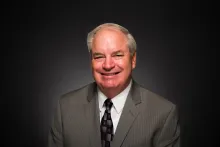
Robin Webber was born in Chicago, Illinois, in 1951, but has lived most of his life in California. He has been a part of the Church of God community since 1963. He attended Ambassador College in Pasadena from 1969-1973. He majored in theology and history.
Mr. Webber's interest remains in the study of history, socio-economics and literature. Over the years, he has offered his services to museums as a docent to share his enthusiasm and passions regarding these areas of expertise.
When time permits, he loves to go mountain biking on nearby ranch land and meet his wife as she hikes toward him.
