

Robin S Webber
This transcript was generated by AI and may contain errors. It is provided to assist those who may not be able to listen to the message.
Well, ladies, thank you very much. Beautiful, lovely music. I'm looking at the flowers in front of us. I'm not sure if that's from one of our congregation or maybe the church in the morning, but they certainly do add some bounce and beauty, don't they? Add to what Mr. Slavin was talking about, the color that this day is all about. I would like to begin today's message by focusing on a scripture of praise. I'd ask that you please open your Bibles, come with me, and let's turn to Psalm 9. Notice what is mentioned here. In Psalm 9, and let's pick up the thought in verse 7, But the Lord shall endure forever. He has prepared His throne for judgment. He shall judge the world in righteousness, and He shall administer judgment for the people in uprightness. Notice verse 9. The Lord will also be a refuge for the oppressed, a refuge in times of trouble. Then join me as we go a little bit further to verse 16. Interesting. The Lord is known by the judgment He executes.
The Lord is known by the judgments He executes. The reason why we love and adore and worship and strive to emulate God is because of His perfect ways of thinking when it comes to His decisions, His judgments regarding you, regarding me, regarding our families, regarding ultimately the world that is all around us. When we think about it and when we read and get into the book, we are awed and stunned by His perfection when it comes to His judgments. But today's message is designed more than just simply giving praise to God, but to help us establish God's purpose in us. From the very beginning, God said, let us make man after our image and after our likeness. And He wasn't only just speaking physically. That's where it begins. That's where it started in the garden. But there is more of the process that is occurring right now, to be like Him. What I want to share with all of us today that are assembled here, and this congregation is simply this, one of the most important ways we become likened to His image is to judge as He judges. Think about that for a moment. When it says that the desire was to make man after His likeness and after His image, one of the greatest, greatest molding points of becoming in God's image is to judge as He judges. When you think about it, perhaps more than anything else, other than breathing, eating, and sleeping, comes the matter of making decisions. So many which are tied to judgments, and so many that are tied to judgments regarding other people. Just think about it for a moment. We just do. From the time that we wake up in the morning until the time that we go to bed at night, we are processing as people come into our life as to who they are, as to what they are about, and as to whether they are satisfying in our eyes. We simply go about judging. For some of you that are my age, remember that there was a song out back in the 1860s?
Hello, Abe! Back in the 1960s. Oh, what a difference the century makes. Was there a song like that? No. But there was a song that went like this. Courts in session, courts in session, here come the judge. Here come the judge. Now, please understand that was not meant to be rap or any bad form, but there was a song for some of you that are my age that will remember that song. That's like us. As we move through life, there is a court in session, and you and I constantly are making judgments. You know, when you think about it, from the days of the apostles until now, we as Christians are always challenged to the tilt to what kind of judgments we are going to make and are making. The question is, will they be godly judgments? Will they be like God would judge with our families, with society, with those that share like beliefs? Why is that so important to discuss the subject of judgment and or righteous judgment? Why is that? Because it almost destroyed a church. Join me, if you would, in 1 Corinthians. 1 Corinthians, and let's turn to chapter 5, and let's understand what this church was doing and what it was not doing. It's interesting, as we turn to 1 Corinthians 5, we find that where they should have been exercising righteous judgment, they did not. 1 Corinthians 5 verse 1, it is actually reported that there is sexual immorality among you, and such sexual immorality, as is not even named among the Gentiles, that a man is with basically his step, his father's wife or stepmother, and you're puffed up.
You have not mourned that he who has done this deed might be taken away from you. Here were fellow Christians with matters that were occurring right in their congregation, and they were not using godly discernment or making a judgment, but were basically turning the other way. Where they should have exercised righteous judgment, they did not.
Now, let's go to 1 Corinthians 6. Interesting. Where they weren't supposed to rush into judgment, they were. You've got to love the Corinthians. You just watch them in action. Dare any of you, verse 1, having a matter against another, go to law before the unrighteous and not before the saints. Do you not know that the saints are going to judge the world?
And if the world will be judged by you, are you unworthy to judge the smallest matters? Do you not know that we shall judge angels how much more things that pertain to this life? Now, it's interesting as we begin to go through this, we recognize where they were supposed to judge, they did not. Where they were not supposed to, they did.
But beyond that, did you notice, because this is where I want to take you, verse 3. Because we don't want to lose this in our discussion this afternoon. Do you not know that we are going to judge angels? Incredible! Here are beings that are just simply awesome. They are in the spiritual realm. You can go through the book of Ezekiel or go through Revelation and get a sense of what angels are like and what God has given them to do and the power and the might and even their own sense of majesty under God, as God's servants and God's messengers.
That in history, when they would come into contact with human beings, they, human beings thinking the angels were God would hit the deck and begin worshipping them and the angel would have to say, no, please get up. I don't, don't worship me. There's only one that's worthy of worship. These are incredible beings. And Paul is revealing to the church then and now that one day we are going to have a rule over the angels. We're going to judge their actions. Now, can I tell you something? Before that happens, we have some homework and we've got some hard work to do and understanding what it means to judge righteously because it's coming, brethren.
What you and I are doing now is a lab session for the wonderful world tomorrow. And if we've been faithful over little, God is going to make us faithful over much. Let's understand something in relationship to judgment and why it's so important that we consider this subject today.
Join me if you would in Revelation 5 and let's pick up the thought in verse 10. Revelation 5 and verse 10, speaking of the destiny of the church, where it's speaking of what God is going to offer those that yield and surrender themselves to His kingdom and to the King of that kingdom, Jesus Christ. Verse 10, and having made us kings and priests to our God, we shall reign on earth. Better put, probably a better translation is simply this, God is going to make us a kingdom of priests.
Priests are teachers. But priests in the Old Testament had to also make judgments. Join me if you would. Let's go to Ezekiel 44. Ezekiel 44. And let's pick up this thought in verse 23.
As you and I are turning over there together, let's understand something. The end of the book of Ezekiel is speaking of the temple and the city of God that is yet to come. And it also speaks of what God is going to do with His servants in the future and their role as that whole development comes under His reign. Ezekiel 44. And let's pick up the thought in verse 23. And they, now who is they?
That's just simply a pronoun. In context, when you read it, it's speaking of the priest, the kingdom of priests that God is now having and training. And they shall teach my people the difference between the holy and the unholy, and cause them to discern between the clean and the unclean. In other words, of how to make judgments. In controversy, they shall stand as judges. That's what the kingdom of priests are going to do.
And judge it according to my judgments. Not our judgments, but how God would do it, because now we are striving to be in His image and His likeness when it comes to the subject of righteous judgment. And they shall keep my laws and my statutes in all my appointed meetings, and they shall hallow my Sabbath. Brethren, now is the time that we are in training for the wonderful world tomorrow. We cannot mortgage this opportunity to the future.
God has given you and me a target rich environment, if you haven't noticed, a target rich environment as far as making decisions, and decisions that match His as far as judging righteously. So what we're going to discuss in the course of the remainder of the message is simply this, righteous judgment. Righteous judgment. Now, one of the first things that hits us when we discuss the subject of judging, or discerning, or judgment in the Bible, it sometimes appears that there might be a contradiction, because there's two verses that seemingly kind of bump into one another.
Join me if you would. Come, let's go to Matthew 7. The first of the Gospels, Matthew 7. And let's pick up the thought in verse 1. In Matthew 7 and verse 1, let's notice what it says.
Judge not that you be not judged. I'm out of here. Case closed. I'm not going to render any decision, any judgment about anybody. I'm so humble. I wouldn't do that at all. See no evil. Hear no evil. Do no evil. I'm just over here on a shelf, letting life go by. I don't want to judge, lest I be judged. That is not where we're going when it comes to the subject of righteous judgment. God has not asked us to be passive when it comes to judgment. He has asked us to do something that we will discuss in a moment. We look at that verse, we ask what it means, and then it seems to come into confrontation with Matthew John, excuse me, John 7.24. Let's go over there a second. John 7 and verse 24.
And John 7.24, let's notice what says, do not judge according to appearance, but judge with righteous judgment. Now let's understand something. Put these two verses together. Judge not that you be not judged, uh-huh, comma, judge with righteous judgment. It leaves you with a thought. Are Christians supposed to kind of have some kind of a split personality when it comes to the matter of discernment and decisions, and training now to be a kingdom of priests for the wonderful world tomorrow?
I think the answer comes in understanding a little bit of the language that the Bible is written into. For a moment, let's relax. There are answers. The Bible does not contradict itself, and let's understand a few things when it comes to Scripture. I think all of us, many of us are versed in the Bible and our Bible students for many years, recognize that oftentimes one English word can be matched by two or three Greek words, can't they? Let's use an example. Think of love. I think that's one that we're all familiar with. In the Bible, it's translated love, but we recognize that love can be three different Greek words, and or we can take the term hell. And understand that there are different words that hell is translated from in the Greek, where English often uses one word for a given subject. Greek is a very rich and flowing language, very descriptive, that has different words for different terms. When you and I say something, in our mind, we're just straight on and money on the counter and that's it, but in the Greek language, it can come many different directions. Therein lies the case when it comes to the matter of judgment. And also, not only that, but in the Bible, we've got another language to deal with, and that is the Hebrew tongue in the Old Testament. Let's just discuss a little linguistic for a moment and then not only discuss language, but there's a major point that I want to share before we go any further. Let's see how it works, okay? Join me if you would in Psalm 51 verse 4. Psalm 51 verse 4.
In Psalm 51 and verse 4, let's notice this is David's famous prayer of repentance, and he says, against you, speaking of God, you only have I sent and done this evil in your sight, that you may be found just when you speak and blameless when you judge. There's that word judge. Now, the Old Testament, again, is written in the Hebrew tongue. The word there is shefat, very simple, two syllables, so I dare spell it for you. S-H-A-P-H-A-T. S-H-A-P-H-A-T. When that word shefat is used in relationship to judge, that means to judge as a magistrate. That means to put someone on trial. It can even mean to condemn. It can mean to pass sentence and or to punish. Now, before we go any further, and this is really very important when it comes to the subject of judgment, we're dealing with a very basic subject, but I dare say that it is Christianity 101, and that is that we see that this is assigned to God. This form of judgment, of being a magistrate, of trial, of carrying out sentence on somebody, is in the domain of the holy. It is in the domain of God. That's God's business. Frankly, frankly, to move beyond that, is trespassing. Trespassing on God's domain, God's privilege, especially when it comes to matters of eternity. Let's go a little bit further. 1 Corinthians 6 and verse 5. Now we're going to move into the Greek language. 1 Corinthians 6 and verse 5. And we notice again here it says, I say this to your shame, it is so that there is not a wise man among you, not even one, who will be able to judge between his brethren. Now this is a different sense of judgment. The word here is diikrino. Diikrino. D-I-A-K-R-I-N-O. Diikrino, just like it sounds.
That term means to separate. Like you separate the sheep from the goats. The concept can be also understood of understanding, discerning, between right and wrong, and or at times withdrawing ourself and or separating ourself from a subject and or a person. Now let's bring the Hebrew, let's bring the Greek together, and let's get out of the language business here. But it's important for us to understand. What do we learn from this? Point number one. Only God has the right to sha'fat or even condemn. That is to pass a lasting sentence on a person. Why is that? Very simple, friends. Only, only God can look into the heart. You and I can't. We don't have that kind of vision. We'll pick up that thought a little bit later on in this message. That is only God's business. Now you say, you know, Mr. Weber, I know that. So why are we discussing that? But you know, and I, can we talk? You know, and I know that sometimes we worry about people or we wonder about people. And where are they later on going to show up in God's plan? None of you have ever had that conversation with people that you've known or people that are no longer with us or people that are dead, that we begin to wonder, well, what is God going to do with them? What we do is we pray for them and we give them to God. We don't have to judge. We don't have to worry about it. We're not on that side of the desk of Shabbat. That's Jesus Christ on that side who has the holes in his hand that judges between the quick and the dead. That is not our role. When we go down that path in conversation and even in curiosity, we're trespassing. That's God's domain. That is Shabbat. Let's go to a second point, though, and that is beyond that, God does want us to learn how to, are you ready? To diachronom, or how to discern? That is to properly evaluate matters, but we're also cautioned in the Bible how to do it.
Shabbat to God, dai'ikrono, that's where our homework is. The bottom line is God wants us to appreciate and understand both how they relate to our lives as to what is His, what is ours to do, and what we do with that. Now, I have to share something with you. That takes faith. That takes patience, and that takes awareness as we go forward. For a moment, for a moment to kind of talk about righteous judgment, let's understand how some of the people in this book have done it in the past, and to understand then some of the challenges that lie ahead of us. Join me, if you would, in 1 Samuel 16. 1 Samuel 16, and let's pick up the thought in about verse 3 here. 1 Samuel 16.
Actually, I'm going to go down to verse 6. We're going to go right here. Let me set the framework. This is a story where Samuel is going out to anoint a king for Israel. He comes to Bethlehem. He comes to the sons of Jesse. Now, let's understand something. This learning to judge righteously, as God does, and the matter of dai'ikrono does not come easily. And there have been men that are very, very close to God, that still have to get closer to understand how God thinks. And here is Samuel, a judge over Israel, a man who is a Nazarite, a man who is God's man. And we notice something. So it was when they came that he looked over everybody, saw Eliab, and he said, well, surely the Lord's anointed is before him. But notice what it says in verse 7. But the Lord said to Samuel, do not look at his appearance or at his physical stature, because I have refused him. Then notice what it says, for the Lord does not see as man sees. For a man looks at the outward appearance, but the Lord looks at the heart. Samuel, prophet, judge, contributor to the Bible, had some homework to do yet when it comes to righteous judgment and discernment. I would suggest we need to be in line with Samuel because we are in training. Let's go to another example here in Luke 18. Luke 18, a story that Jesus Christ shared about two men. In Luke 18, we have the famous story about the Pharisee and the publican. Luke 18 and verse 9. And he spoke this parable to some who trusted in themselves that they were righteous and despised others. Two men went up to the temple to pray, one a Pharisee, the other a tax collector, and the Pharisee stood and prayed thus with himself, God, I thank you. Oh, how I thank you. I added that line. But I think that was the attitude that I am not like this these other men, extortioners, unjust adulterers, or even these tax collectors. May I suggest something to all of you? He probably wasn't whispering this. Have you ever been around a conversation where you were the target of the conversation just loud enough for you to hear, am I the only one that's ever been in those, you know, oh, you're talking about me? And that's what was happening here. This Pharisee was judging these people around. I fast twice a week. I give tides of all that I possess, and the tax collector standing afar off, and we know the rest of the story. He was a humble man. He was a man seeking after God. Let's understand what this Pharisee was doing. And this was a religious man, considered a godly man. He was in that time, in that day, do I dare say, church folk.
He was in the camp, and here he is. He is not just doing diachrono of discernment, but his is a condemnation. His is a condemnation of this, of this gentleman, of this gentleman and what he's doing. Where does that kind of judgment land? In Matthew 7. Matthew 7. Let's go back to Matthew 7, and again pick up the thought in verse 1. And why this is so important to understand judging righteously and having, judge not that you be not judged, for what judgment you judge, you will be judged. That is a spiritual equation which cannot be broken.
You and I learn in first grade, some that are gifted might even learn it before kindergarten, that one plus one equals two. You cannot break that. Just as one plus one equals two, it says here, with what manner of judgment you measure, it will be measured back to you. That is why I brought up the ruler. You're saying, why did he bring up the ruler?
Because there are people that in this target rich environment are at times making decisions and making judgments about people that are beyond diachrono and into Shabbat and into condemnation. And they get out their, their ruler. They start sizing up some up. Got it right there. Lock it in. That's what he is. No, Robert, don't get too nervous that I'm locking you in right now, okay?
But you know what it says? With what ruler you use on a person, it will be applied to you. It is a law of God, as much as gravity, as much as a mathematical law of one plus one equals two, it cannot be broken. Now it can be repented of, thank God, and we can change our lives.
See, we're going to be rulers one day in the wonderful world tomorrow, a kingdom of priests, and we're in training now, and that's why I want to give you some brief points as how to be a righteous judge. Allow me to give you point number one to help us along. Point number one, don't judge solely based upon what you have heard or seen.
Don't judge solely based upon what you have heard or seen. What do I mean by that? Simply put, our eyes and our ears are not effective radar for what might be coming our way.
Our eyes and our ears, which take in a lot, at times don't filter towards righteous judgment. They are a part, but they're not the totality. And frankly, what we see and what we hear can deceive us and or not give us the full picture. John 7 verse 24. Let's go over here a second. Let's not just make a point. Let's have it anchored by a scripture. John 7 verse 24.
Do not judge according to appearance, but judge with righteous judgment. Let's understand that here Christ is warning us against gossip, hearsay, rumor, looks, looks like, sounds like, making implications that are not attached to facts. Unfortunately, the human mind, and by the way, when I say the human mind apart from the Spirit, that's where you and I were before God began working with us. The human mind normally goes with this, that we are guilty until proven innocent. That's converse of what American jurisprudence is supposed to be, right?
American jurisprudence is innocent until proven guilty. But you know, and I know, we that are encapsulated in this human tent so often make a judgment on people before we get the facts, before we get the whole story. And God is measuring us as we measure others. Let me go to a very poignant story in the Bible about not just simply running with what you think you saw or heard. Join me. Interesting story. 1 Samuel 1. It's the story of Hannah. Now, most of us know about Hannah. We know about her pleading with God to bring her a son, but there's a little bit more of the story that maybe we've never locked our eyes on and come to understand. 1 Samuel 11. That's now 1 Samuel 1. Pardon me. And verse 11.
Then she, speaking of Hannah, made a vow, O Lord of hosts, if you will indeed look on the affliction of your maidservant and remember me, don't forget me, but please give your maidservant a male child, and then I will give him to the Lord all the days of his life, and no razor shall come upon his head. Hannah is pouring herself out, imploring God, most likely in a very animated fashion as a woman of the Middle East. And it happened, verse 12, as she continued praying before the Lord, that Eli, note this is classic, you don't want to miss this, that Eli watched her mouth. Did you notice that?
Now Hannah spoke in her heart, only her lips moved, but her voice was not heard. Therefore, Eli thought she was drunk. So Eli said to her, how long will you be drunk? Put your wine away from you. Hannah comes back with her explanation, but here's a part of righteous judgment. Don't leave it just simply to your eyes and your ears. That does not always tell you the whole story. I want to show and share with you to encourage you today a fascinating verse. Join me, if you would, in Isaiah 11. Isaiah 11. And again, this is about a messianic prophecy. Speaking of when Jesus Christ does come back to this earth in full glory and full honor, it says in chapter 11, verse 1, There shall come forth a rod from the stem of Jesse, and a branch shall grow out of his roots. The Spirit of the Lord shall rest upon him, a spirit of wisdom and understanding, the Spirit of counsel and might, the Spirit of knowledge, and of the fear of the Lord. His delight is in the fear of the Lord. Now stay with me here. And he shall not judge by the sight of his eyes, nor decide by the hearing notice by that hearing. Now that's part of it, but that's not where he decides. Because you can't judge a book. What did your grandmother teach you? Teach me? You can't judge a book by its cover.
And as Samuel learned, not everything that glitters is gold. Christ says he's going to look at the heart. So that's where we've got to go when we're dealing with our spouses and our family members and our co-workers and our fellow students and our congregants here and people that are in our neighborhood, that we've got to take it a step deeper, which takes us to point number two.
Don't rush to judgment even when you have the facts. Don't judge. Don't rush to judgment even when you have the facts. Let me share something with you. Just think of it this way, real simple, especially for our young people. You always remember this. If you make a snap judgment, it's going to snap back on you. You ever had something snap back on you? Like a rubber band? Ouch! When you make a snap judgment, it's going to snap back on you. And sometimes we can even move... Well, you know, I followed Mr. Weber's message. I got through point number one. It was not just with my eyes and my ears. I actually heard something.
And you run with it. But, you know, what did your parents teach you when you were young? Stop running. You may fall down. Let's understand something. It's not enough simply to have facts when it comes to judgment. We must have understanding. Because as human beings... I'm including myself, friends. I'm the first in line. We are emotional. We become impulsive. And we rush to judgment. And we can do dastardly things. Allow me to share a story if I can with you.
Most of us at one time or another have seen the series on television called The Waltons. You know, the folks. Jim Bob. And the rest of the gang. John Boy.
And I remember one time there was a series on there. And it was right before World War II. And there was a lot of anti-German hysteria. And so up there in the Hollers, up there in the western part of Virginia, they were going to destroy everything that was in the German language.
And I don't know if you remember that. Many of us remember the different characters that were in the Waltons. You know, they all have fixtures. But maybe a lot of us don't remember that the young Baptist preacher who was on the job was John Ritter, who later on went on to comedic fame. And he played it to a hilt. If you're from the south and you know a Baptist, young Baptist preacher, he fits the hilt of what it was about. And what they're doing, and he's leading the brigade, thinking he's doing God a favor, being the local pastor. And they're throwing on all those books with all the German in them. And John Ritter, and I forget what his name was, pastor so-and-so, whatever. And he's right in there chucking the books with them. And then all of a sudden, he grabs one more book, and he's about to throw it in, and John Boyd just captures his hand. He says, pastor, do you know what that is? He says, it's German! He said, no, let me read it to you.
It's Holy Bible. Here was the man, the pastor. He had, quote-unquote, the facts in his hand. It was spelled out and written in German, and he was about to do something dastardly, and that was to throw the Word of God into the fire.
Why do I bring this story to you, friends? It's not enough to simply have the facts. We must take it to the next level of understanding what we are doing. Join me, if you would, in James. James 1.
You know, I've been serving the brethren as a minister here in this area since 1975, and I have probably used this one scripture more than any other scripture in the Bible. James is the Proverbs of the New Testament. It's a book of wisdom. It's how to live a righteous life, to emulate God, to be in His likeness and after His image. Notice what it says in James 1.19, So then, my beloved brethren, let every man be swift to hear, slow to speak, slow to wrath.
For the wrath of man does not produce the righteousness of God.
Now, I've been around a lot of Christian folk over the years.
And sometimes they'll say, well, you don't understand, Mr. Weber. I'm not angry. This is not wrath. I have righteous indignation.
Folks, can I share something with you? There is such a thing as righteous indignation, but I haven't seen a lot of good cases over the last 40 years when people try to serve it up, because righteous indignation is usually served up on the platter of self. Somehow, self is tied to it. We come along with the package because we have judged a book by its cover. We have only used our eyes and our ears. We've grabbed the facts, but we don't have understanding, and we get tied into the package. And if we're thinking this, we must be right because they're wrong, and we've already made a judgment about the other person. You see, righteous judgment does not come easily. That's why we need to exercise the Holy Spirit, and that'll be point four in a moment. Let's go to point number three. Point number three. When judging, move beyond the moment. When judging, move beyond the moment. Look to the future.
So often, dear friends, we are creatures of the moment. We're in the second. We're living by the minute. We don't have the forethought of thinking ahead. We're not considering the big picture of people's lives. It may be our spouse. It may be our children and or grandchildren.
It may be our neighbors, but we're caught up in the moment. We're not thinking of that big picture. You know, it's kind of interesting. I think of the beautiful story. You can jot it down. I'll paraphrase it right now in John 8. The story of the woman that is caught in the midst of the act. The woman who is sinning. She's a prostitute, and she's dragged out of the domicile, perhaps in a sheet covering her, and she's put in the middle of a bunch of men. And they look at her with shefaht, with judgment, with conviction, with condemnation.
They not only look at her, but they look at her as being a big mousetrap to capture Jesus in a misstatement. How will he judge? He says he's a rabbi. Every rabbi has a thought. What will he say about this situation? Jesus comes along, and with the wisdom of God in him, says, yes, he says, here we are. And then he makes a comment. He says, you that have not sinned, you throw the first stone. There's a beauty in this. By mentioning the stone, he is speaking of judgment. And speaking of the stone and judgment, it is his validation of the law. Jesus was not antinomian. He was not Joe. He was not antilaw. He validated the law. But in that, he had a bigger picture, because he was looking into the heart of that woman. He saw beyond that moment. He also knew about the men. I don't know why it's always the woman that gets focused on, because where there's a naughty woman there, have you noticed there's normally naughty men? It's not just singular to the gender. Another story, another time, ladies. But that he looked beyond that. And he did something marvelous that I'd like to share with you when it comes to righteous judgment. You might want to jot this down. It's not mine. I heard it 35 years ago in the auditorium by a gentleman named Mr. McCarrow. And he simply said this, two lines, we as Christians need to be conservative with God's law, but liberal with His love.
I want you to think about that for a moment. That's how Jesus Christ was in His righteous judgment, with the understanding of God that was upon Him. He was conservative with God's law. He validated, He understood it. But He was also liberal with God's love. You know, in today's polarized society in America, depending upon what magazine or what network you watch, conservative and liberal have taken on nasty terms on both sides and thrown around. There are times to be conservative. There are times to laud being liberal. As a Christian, I hope that I am liberal with God's love, but also reigned in by God's law. Now, you say, what, how do you do that? How do you become conservative with God's law and liberal with God's love? You read the book. You see what Jesus Christ did and how He made judgments. You can't be like Christ until you read the Gospels, until you read the story, and now know and see how He approached people. When I was a young man and began to be trained in the ministry and went around, the only way I knew to learn to be a minister was to be there on every occasion and to be mentored and to sit with some of you when I was young.
And to be there, moment by moment, listening, learning, drinking in from those that taught me and how they would deal with the situation concerning finances or how they would use diachronos when it came to a matter of dealing with marriage or dealing with some very life-tripping action. I had to almost become one with the mentor to understand so that I could serve another day.
That's how we need to be with the book. That's how we need to be with the Bible. The only way that you and I have any hope under heaven is to read the Gospel, to drink in the stories of Christ, to drink in the revelation that he gave in the Old Testament as being the word, the I am, and sharing the wisdom in the book of Ecclesiastes and Proverbs and Psalms. You can't be any more than what you are, and you can't be are if you aren't reading and drinking in the message.
That's why it is so important to study the Word of God. Take it directly, one-on-one, and ask God to help you. That takes us to point number four. Point number four.
Because we're talking about some pretty big stuff. I've shared with you today, friends, that you have a calling, and God already sees it and has a place for you to be a member in his family. And what does membership in the family of God entail? It entails being citizens within a kingdom of priests that you're going to be a part. You are going to judge angels, but you can't mortgage that off into the future. We've got to be doing that right now. And we look at that sometimes and say, I know what I've done in the past. I even know what I did this week. You know, what I did last week was everything that Mr. Weber just said not to do. Well, don't worry, I've done it myself. So we're in the same ballpark. Are you with me? But to recognize that God can give us his help, he is patient, he does want us to succeed, and the only way that we can do it is to get help from above. I know right now that we have been or just did recently, we just went through the Sermon on the Mount. And when you read the Sermon on the Mount, are you with me? It reads good. But after you've read Matthew 5, 6, and 7, we say, Christ raised the bar so high that nobody can get up there. Absolutely. That's one of the reasons why he gave the Sermon on the Mount. We can't do it by ourselves. We can't. We're handicapped. We're in this human tent. The Sermon on the Mount demands following Jesus Christ and access to the Holy Spirit. The same is when it comes to righteous judgment. And let me leave you with this point. That is simply point four. Ask God to give you a wise and understanding heart to judge.
A wise and an understanding heart. Join me if you would in 1 Kings. In 1 Kings, and let's pick up the thought in verse three. 1 Kings 3. Here is young Solomon, and he's having a conversation with God. And Solomon said, You've shown great mercy to your servant, David, my father, because he walked with before you in truth and righteousness and uprightness of heart with you. And you've continued this great kindness for him, and you've given him a son to sit on the throne as it is this day. Now, O Lord, my God, you have made your servant king instead of my father, David. But I'm like a small kid. I don't even know how to go out or come in, and your servant is in the midst of your people whom you have chosen. A great people, too numerous to be numbered or counted. Therefore, verse 9, give your servant an understanding heart to do what?
To judge your people, that I may discern between good and evil, for who is able to judge this great people of yours. Solomon knew that he did not have it within him. He stated a question.
It's a very Jewish thing to create the answer within the question. He said, who is able to judge this people? The answer was he knew he could not do it by himself. He needed God's help, and he asked for understanding. And the following verses say that God was pleased. I don't know, friends, where your life was until this morning, or even in the last hour, or the kind of judgments that you have been making. But I have good news for you as we conclude this message. We have a loving Heavenly Father. We have a marvelous example in Jesus Christ, our Lord and Savior, and we have their Testaments before us. The old and the new, the way of life. And we know that the book, this Bible in front of us, gives us permission to ask. To ask, to seek, and to knock on God's door, just like Solomon did. Because you and I, as this world becomes more challenging, are going to be faced with situations where we have to split, or perhaps split, the baby in half. I don't know when that's going to come into your life. It may be this evening. It may be on Monday or Tuesday or another month down the line. We are going to need to exercise righteous judgment. Because it will probably, not our decisions, our diachronome will not only affect ourselves, it could affect our wife, our children, our grandchildren. I see a future ahead of us, brethren, of which the people of God are going to have to make more decisions than ever. Have you been reading the newspapers recently? Have you been watching television recently? Prophecy, prophecy that we have been talking about and explaining to this nation for decades is coming to pass. And you and I are not only going to have to have faith towards God, but we're going to have to have faith that His Spirit is alive and well in us, that we are going to make decisions that are going to glorify Him, are going to help our families survive and spiritually thrive as we go through a unchartered future that America has never experienced. That's why I wanted to bring you this message today. This message is Christianity 101. It is so fundamental to our calling, the glorious call that the Father has given us, made possible by Jesus Christ, that we are going to be a kingdom, a priest. But the homework, the heart work, starts now. And with God's help, each and every one of us can do it.
Let's go forward. Let's continue to pray that God will make us after His image and after His likeness when it comes to the matter of righteous judgment.
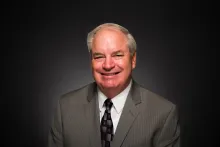
Robin Webber was born in Chicago, Illinois, in 1951, but has lived most of his life in California. He has been a part of the Church of God community since 1963. He attended Ambassador College in Pasadena from 1969-1973. He majored in theology and history.
Mr. Webber's interest remains in the study of history, socio-economics and literature. Over the years, he has offered his services to museums as a docent to share his enthusiasm and passions regarding these areas of expertise.
When time permits, he loves to go mountain biking on nearby ranch land and meet his wife as she hikes toward him.
