

Roy Holladay
This transcript was generated by AI and may contain errors. It is provided to assist those who may not be able to listen to the message.
So, let me tell you over a minute how the sermon for Matthew 16 isERT Mathematics, an attempt at a Brethren, where do we get the authority for the customs, traditions, and days that we observe? You'll find that when you look in the world, there are all kinds of religions out there, all kinds of ideas. The majority of the people in the world are not Christian.
And so you'll find that there are all kinds of religions, and they all have their traditions. They all have the gods that they worship. And yet we, sitting here, observe God's annual holy days. Where do we get the authority? Why do we keep these days? We're approaching the very beginning of the festival season, and very shortly we'll be observing the Passover and the Days of Unleavened Bread.
And I believe that all of us should realize the seriousness of the times that we live in, that our actions and our way of life are a reflection, or should reflect the times, the urgency that we see about us. Sometimes it seems that we just sort of go and drift, and yet we're living in an age and a time when momentous events are taking place.
And many of the cherished systems that we have in this country are beginning to crack and come apart. There is a devil, and he has pulled out all stops to try to divide the church, to splinter the church, to destroy the church in any number of ways. He hates the preaching of the Gospel to the world, and he does not want to see that accomplish.
You've all heard the old expression, divide and conquer, because when you divide and divide, basically what you do is you begin to weaken the resolve, weaken the ability to be able to do what God wants us to do. We will be observing the Passover and the Days of Unleavened Bread here in a little over a week.
Why? By what authority? How should we observe these days? Who has the authority to tell us how to keep them, and how should they be kept? Well, let's go back to the book of Leviticus, chapter 23. Leviticus 23, beginning in verse 1. I want you to notice a section here. First of all, it says, the Lord. It didn't say Baal, didn't say Asheroth, didn't say some other pagan god that was extant at that time.
It says, the Lord. Here we find God, and I want you to notice, spoke to Moses. God is not speaking through an intermediary here. He spoke directly to Moses. Moses isn't hearing something second hand, third hand, fourth hand. Here's God, here's Moses, and God says, Moses, and then He gives him instructions. So the Lord spoke to Moses, saying, Speak to the children of Israel, and say to them. So now we find that God spoke directly to him and asked him to pass on what God told him directly to the people.
So He said, Speak to the children of Israel, and say to them, The feast of the Lord you shall proclaim to be holy convocations. These are my feast, God says. So the word feast here, I believe as we all know, is the Hebrew word moad.
The word moad means an appointed time. So God says, You shall proclaim the feast, or the appointed times, the times that God has set apart. Notice there are holy convocations. What makes a convocation holy? Convocation means a commanded assembly. That's what we're doing here today. We've been commanded to assemble before God on the Sabbath day.
What makes it holy? Is it because I proclaim it holy or you say it's holy? No, it's because God's presence is in it. Only God's presence makes something holy. When Moses came to the burning bush, what did God say? Take your shoes off. The ground you're walking on is holy. Why was it holy? Because God was there in the presence, in that bush. So a holy convocation is a convocation that God himself is directly involved in.
It is a calling together of a sacred assembly, and God is there. Now God says, these are my feast. Not that these are pagan feasts. We were told a number of years ago that the annual holy days of God came from paganism. Israel just sort of borrowed them from the pagans, adopted them to their religion, and therefore they were a part of that. But that's not what the Bible clearly states.
Going on in verse 3, God says, "'Six days shall work be done, but the seventh day is the Sabbath of solemn rest.'" A holy convocation. That's talking about the weekly Sabbath. "'You shall do no work on it, for it is the Sabbath of the Lord in all your dwellings.'" These are the feasts. These are the appointed times, God says, of the Lord. Holy convocations, which you shall proclaim at their appointed times. So we are to proclaim them at the appointed time.
That's why we're speaking and have been speaking for the last few weeks as we lead up to the holy days. Then it says, on the fourteenth day of the first month at twilight is the Lord's Passover. On the fifteenth day of the same month is the Feast of Unleavened Bread. Then God says there are two holy convocations. Number one, we find that God has the authority and the right to tell us which days to observe. If you are going to follow God, you will observe what He has ordained.
Obviously, over the centuries, as the Church grew, the Shranc grew again. We've had about 2,000 years of the history of the Church since Jesus Christ established it, what we would call the New Testament Church. You will find that they have kept the holy days. Who had the authority to tell them at any given time how those days should be observed? Let's go back to the book of Colossians, Colossians 2. I want you to notice here in Colossians 2 what the Bible reveals about observing these days and how they should be observed. Who has the right or the authority to tell you how to keep them? Beginning in verse 13. If you'll just take note, in verse 11, he talks about being spiritually circumcised. In verse 12, we're buried with Him in baptism. We know that baptism is immersion, so you're buried in the water. In verse 13, you being dead in your trespasses. The wages of sin is death, the Bible says. So they were dead in their trespasses. Trespassing God's law, breaking God's law, sinning leads to death, eternal death, and the uncircumcision of your flesh.
Spiritually speaking, we are uncircumcised before conversion. He has made alive, together with Him, having forgiven you all trespasses. How are our trespasses forgiven? We repent, are baptized, and through baptism, based upon genuine repentance, God forgives our sins. Then, through the laying on of hands, we receive the Holy Spirit. Now, in verse 14, carrying on with the same theme, he says, having wiped out the handwriting of requirements, King James says ordinances, that was against us, which was contrary to us, he has taken it out of the way, having nailed it to the cross. Now, you'll find that many religious organizations read this, and they say, aha, verse 14 is talking about the law being nailed to the cross. But that's not what verse 14 is talking about at all. This is one big long sentence through here, and it's talking about how we have been forgiven our trespasses, having wiped out the handwriting. Now, the word handwriting here in the Greek is the Greek word chirographon, and it means a written record of debt. And I owe you. Be like, if I bought from you, purchased from you a car, and I'm able to pay half of it, and I still owe you a couple thousand, I sign the statement saying, I, Roy Holiday, owe you two thousand dollars. I will pay fifty dollars a week for the next, whatever, many weeks until it's paid for. It's an IOU.
So chirographon is referring to a written record, or an IOU, and what is it a written record of? Well, of our sins, of our transgressions. What Christ did was to wipe out the record, and it says, of requirements. The word requirement is dogma in the Greek.
Dogma is never translated for God's law. The word of means due to. So it's saying that Christ came along, and he wiped out the IOU, the written record that was due to dogma. So you find these pagans, and basically you had a church here in Colossae, which was a gentile church. They had not known God or God's way. They had followed the dogmas, the teachings, the rules, regulations around them, and when God called them, they had to repent of those things. So it doesn't say that God wiped out the requirements, but he wiped out the handwriting that was due to these requirements.
They were against us. Only God's law is for us. Man-made traditions are not.
Which was contrary to us. He has taken it out of the way, having nailed it to the cross.
Again, we've covered this in depth with you that Jesus Christ was nailed to the cross, and the Bible says his sins were placed there. So he triumphed over the principalities and powers over Satan the devil. Verse 16, Therefore, we are told, Let no one judge you.
So he's saying, Don't let anyone judge you, or tell you, condemn you in food or in drink. As it can be, eating and drinking, regarding a festival, or a new moon, or the Sabbath.
So what was the problem in Colossae? The true church there, the Church of God, was keeping the annual Holy Days. These people had been forgiven. They were feasting on the Holy Days.
Now, you find that in that area of the world, there were Gnostics. Gnosticism was being practiced, as well as asceticism. People, in order to be spiritual, were going without.
Now, as we all realize on the annual Holy Days, these are called feast days. The feast means an appointed time, but the way they are described in the Bible to keep them, we rejoice before God.
We have a nice meal, and so you have food and drink. Well, there were those who were coming along judging them or condemning them for how they were observing these days. So he says, don't let anybody judge you. The food, or in other words, the eating or the drinking, are in regard to the observance of the festival. The word festival, if you'll notice the margin, says feast day. So this is talking about God's feast days. Are new moons mentioned?
Well, they acknowledged the new moons back at that time because most of them did not have a printed calendar. They'd have to go out and see when the month began and be able to figure the Holy Days according to that, or the Sabbath. Verse 17 is a key verse because it says, which are a shadow of things to come? Notice it doesn't say which were a shadow, implying that they'd been done away. But the festivals, especially, and the Sabbath are a shadow of something to come. And as we know, the annual Holy Days picture the plan of God.
The Passover pictures Christ, His sacrifice. The Days of Unleavened Bread pictures God calling us out of this world and being placed into His body. And you go through each one of the annual Holy Days. They are a shadow of an aspect of God's plan that He's working out here below. It says, which are a shadow of things to come? And that is the present active tense. It's not past tense.
It's talking about what's going on presently. And so Christ had died. Anything He was going to nail to the stake had been nailed. And so you find that these festivals in Sabbath were still there.
You don't cast a shadow. If it's a tree, you cast a shadow. It doesn't cast a shadow if it's been cut down. It's no longer there. So God's Holy Days and festivals and Sabbath were still there.
So these are a shadow of things to come, but the substance is of Christ. Now, the margin says, literally, the body is of Christ. King James version translates it, but the body of Christ. The word is has been added. You see the translators when they read this, and they read, but the body of Christ, they said that it makes sense. So therefore, they translated the word for body as substance, and they added the word is to give it clarity. They thought. But that's not what it's talking about at all. What it's saying, this is an elliptical clause, meaning don't let men judge you in how you eat and drink, but let the body of Christ judge you. That's what an elliptical clause is. One was judging them or condemning them. He says, don't let them do that, but you let the church, the body of Christ, that's what the church is, let them judge you or show you how to keep it. So brethren, the church has a responsibility and the duty to actually teach how these days ought to be kept. And so that's exactly what we do and why we go through every year these principles. So with that in mind, realizing that the authority, first of all, comes from God. He's the one who tells us which days, and then that the church has the responsibility to help guide us and lead us in showing us how to keep those days, not outsiders. Let's go back to Exodus 12. If you remember in Exodus 12, this is where the first Passover was ordained. They were told on the 10th day of the month to set aside a lamb or goat, verse 4.
And you'll find here in verse 5, the lamb shall be without blemish. That means that it was to be perfect. It was a type, as far as the human eye could see, it was a type of Jesus Christ who was without blemish, the New Testament brings out. He had never sinned. A male of the first year, you should take it out from the sheep or from the goats, and you shall keep it up until the 14th day of the same month. Then the whole assembly of the congregation of Israel shall kill it at twilight.
Twilight is what we call dusk dark. It's that period of time that when the sun goes down and until it gets pitch dark, it's called twilight. You can still see in many states when we were in Texas, you can hunt until the sun, I mean until it got dark. So the twilight period of time was still counted as a portion of the day that you could you know you could go ahead and you could hunt.
So here you'll find that they were to kill it at twilight. Now there's been a debate over the years. Was that at the beginning of the 14th or at the end of the 14th? And we have always traditionally said that it was at the beginning of the 14th. That they saved it up and when the 13th ended and the 14th began, that's when they killed the Passover lamb and they ate it on the 14th. Now going on here, God says in verse 7, they shall take some of the blood put it on the two doorposts on the lentils of the house houses where they eat it and then they shall eat the flesh and that night roasted with fire with unleavened bread and with bitter herbs they shall eat it. Do not eat it raw nor boiled at all with water but roasted in fire its head and its legs and its entrails.
So they skinned it, put it over fire, and roasted it just as it was.
And you shall let none of it remain until the morning, what remains in the morning, you shall burn with fire. And thus you shall eat it with the belt on your waist, your sandals on your feet, staff in your hand. So shall we eat it in haste. It is the Lord's Passover.
It was the next day, the daylight portion of the Passover, they were going to be again to load things up, leave their houses, and organize into ranks. It's not easy to get two to three million people together. Organize them and start marching out of the land of Egypt. Now they had already borrowed from the Egyptians, so they had to get themselves organized. Notice what God says, I will pass through the land of Egypt on that night. It will strike all the first part of the land of Egypt, both man and beast, against all the gods of Egypt, and I will execute judgment. I am the Lord. Now the blood shall be assigned for you on the houses where you are, and when I shall see the blood, I will pass over you. So where do we get the term Passover?
Well, it seems like right here. God says, I will pass over you.
So if God passed over them, and he did it around midnight, it makes sense that that's on the 14th. Otherwise, why call the 14th the Passover?
It's on the 15th. You'd call the 15th the Passover. But the night that the land passed, I mean the death angel passed over the houses, was the 14th. And so they killed it at twilight at the end of the 13th, beginning the 14th. They roasted it. They ate it. The death angel passed over. And so God says on the 14th, or verse 14, so this day shall be to you a memorial. You shall keep it as a feast to the Lord throughout your generations. You shall keep it a feast by an everlasting ordinance. Seven days you shall eat unleavened bread. On the first day, you shall remove leaven from your houses. And for whoever eats leavened bread from the first day into the seventh day, that person shall be cut off from Israel.
So to me, it's very clear what the Bible is saying here. Now, I want you to notice Jesus Christ's example of when and how He kept the Passover. Go back to Matthew chapter 26. Matthew 26, verse 2. We'll begin to read in verse 2. Matthew 26, verse 2.
Jesus Christ told His disciples, you know that after two days is the Passover and the Son of Man will be delivered up to be crucified.
Now, in verse 17, He told them to go prepare the Passover. Now, on the first day of the Feast of Unleavened Bread, the disciples came to Jesus, saying to Him, where do you want us to prepare for you to eat the Passover? Now, many people wonder about verse 17, but I want you to notice neither the Jews nor Christ ever prepared the Passover on the first day of Unleavened Bread.
Remember, the Jews killed it at three o'clock in the afternoon on the Passover day.
Christ and His disciples killed it the evening before. So, what it says here on the first, or on the day of the Feast of Unleavened Bread, and you'll notice that Feast is in italics.
Basically, it's talking about the first of Unleavened Bread, and it's basically referring to the first time that they actually used Unleavened Bread was at the Passover.
He told them, you go into a city to a certain man and say to him, the teacher says, my time is at hand, I will keep the Passover at your home with my disciples. So, you find that the disciples went out and prepared the Passover on what we would call the 13th of the first month.
Did they prepare for the New Testament Passover? Or was this what we would call the Old Testament Passover? A lamb and bitter herbs, unleavened bread. Well, Christ had not yet instituted the New Testament Passover, had He? He hadn't brought into vogue the symbols yet. So, they were preparing the Passover, and Christ had not yet introduced the new way of observing the Passover. Now, I want you to notice in verse 20, when the evening had come, He sat down with the 12th. This is the evening, the beginning of the 14th. He sits down with the 12th. And you'll notice here, as they were eating, He said, assuredly I say to you, one of you will betray Me. In verse 21. Now, in verse 26, as they were eating, Jesus took bread, blessed the bread, or blessed, and broke it, gave it to the disciples, and said, take eat, this is my body. Now, I want you to notice they were already eating a meal. They were eating what we would call the Passover meal. Christ then changes the symbols. He breaks the bread, He gives it to them. He says, this bread represents my body. And then, He passes the cup around. They drink the wine. And He says, verse 28, this is my blood of the new covenant, which is shed for many for the remission of sins. Verse 30, they sang a hymn, went out to the Mount of Balaise. And then, you have the story to follow. This is still the night of the Passover.
Because you'll notice, verse 31, all of you will be made to stumble because of Me this night.
So, it was that night that they were going to stumble. That was the night of the Passover.
Verse 34, Christ told Peter, surely I say to you that this night before the rooster crows you will deny Me three times. So, you remember, they grabbed Christ, the mob came out, Judas betrayed him, Peter denied him, he's brought before the Sanhedrin, he's condemned, he goes before Pilate. Pilate has him scourged, and then the mob cries out, crucify him, crucify him. That's the daylight portion of the Passover day.
They take him out and they crucify him. Now, if Jesus Christ were not crucified, He did not die on the Passover day. And why call it the Passover? He died on the Passover day. The day of the Passover. That's the day He died. And He hung on the cross for six hours, died in the afternoon. Now, let's notice in John 18, verse 28, because John clarifies some things that the other gospels do not address. John 18, verse 28, says, they led Jesus from Caiapas to the Praetorium. And it was early morning, morning to the 14th. And they themselves did not go into the Praetorium, lest they should be defiled, but that they might eat the Passover. See, Jesus Christ had already eaten the Passover of His disciples. They had not yet eaten the Passover. So, the context shows it's the same night that Jesus Christ took the Passover and changed the symbols. Now, in verse 25, you'll find that Peter had denied Him three times, just to give you the context. Let's go over to chapter 19, verse 14. It says, now it was the preparation day of the Passover. And about the sixth hour, He said to the Jews, behold, you're king. So, for the Jews, this was the preparation day. They were getting ready to keep the Passover. And the disciples had already prepared the Passover. Christ had kept it with His disciples the night before. Now, verse 31 says, because it was the preparation day, that the body should not remain on the cross on the Sabbath. For that Sabbath was a high day, the first day of unleavened bread.
Now, what you discover when you go back and you read all the historical resources is that during Christ's day, there were some of the Jews. Remember, there were all kinds of sex of the Jews. There were the Sadducees and the Pharisees and the Essanines. There were 10 or 12 major sex of the Jews. And during that time, not everyone came up to Jerusalem to the temple to have their lambs killed. You can find historical evidence that, and we've written about this in our study papers. If any of you would like to go online and download those study papers, that there were Jews who were keeping the Passover at the beginning of the 14th. The majority of them kept it at the end of the 14th and on the 15th. When did they change it? They changed it when they came out of Babylonian captivity. They came back out of Babylonian captivity. They became extremely, what would you call it, serious. They realized that the reason they had gone into captivity is because they had broken the Sabbath. So therefore, they started keeping the Sabbath days strictly, and they had added 65 dos or don'ts to the Sabbath. And they also wanted to make sure that they kept the Passover there at the temple. And there was no way that they could kill all of the lambs at twilight. Josephus estimates there were a million people sometimes in Jerusalem for the Passover. They had probably killed 300,000 lambs. You couldn't do that in a short period of time of a half hour. So they backed it up, and they started at three o'clock to about six o'clock in killing the lambs. And so that was the reason why they did it. But Jesus Christ had already kept the Passover. And we know that it was on the 14th. And I want you to notice here, it wasn't on the first day of Unleavened Bread because it says that this day was a preparation day and that the next day was a high Sabbath. That high Sabbath would have been the first day of Unleavened Bread. Now, Jesus Christ, as we will remember in John 13, let's go to John chapter 13, the first thing that Jesus Christ did that evening was to, as far as the change was concerned, was to institute their ceremony of foot washing. That had not been a part of the Passover service.
So Jesus Christ got down and He washed their feet. And apparently He washed Judas' feet. Notice verse 10. You might remember Peter had said, well, you're not going to wash my feet. And Christ said, if I don't wash your feet, I have no part with you. And Jesus said to him, going on, He who is bathed needs only to wash His feet, but is completely clean. But you are and you are clean, but not all of you. So He knew that Judas was not clean, and that Judas was going to betray Him. Verse 18. You'll notice that Christ said that He would be betrayed. In verse 18, He says, I do not speak concerning all of you. I know whom I have chosen, but that the Scriptures might be fulfilled. He who eats bread with me has lifted up His heel against me. And you find that that's exactly what Judas did. In verse 21, when Jesus had said these things, He was troubled in spirit and testified, saying, most assuredly I say to you, one of you will betray me. So here we find foot washing service has taken place.
Judas is still there, and he said, one of you is going to betray me.
And you'll ask, is it me? Verse 25 says, then, leaning back on Jesus' press, He said to Him, this was John, Lord, who is it? And Jesus answered, it is He to whom I shall give a piece of bread when I dipped it, or who I give this sop to, this bread. And when He had dipped the bread, He gave it to Judas Iscarrat, the son of Simon. Now, after the piece of bread, Satan entered Him, and Jesus said to Him, what you do, do quickly. And so you find that He went immediately out.
Verse 30, having received the piece of bread, He went out immediately, and it was night. Now, where does this come in in the story flow? Well, let me show you. Let's go over to Matthew 26, verse 20. Matthew 26 and verse 20. This was before the taking of the bread and the wine. That's why I say that foot washing came first, then taking the bread, then taking the wine, and then singing the hymn. In verse 20, it says, When the evening had come, He sat down with the twelve. And as they were eating, He said, Surely I say to you, one of you shall betray me. And they were exceedingly sorrowful. And each of them began saying, Lord, is it I? And He answered, He who has dipped His hand with me in the dish shall betray me. And the Son of Man is indeed, or indeed goes just as written of Him, but woe to Him, the man by whom the Son of Man is betrayed. It would have been better or good for that man if he had not been born. And Judas, who was betraying him, answered and said, Rabbi, is it I? And he said, You have said it. Now, we know from John's account, he gave the sop to Judas. Satan the devil entered into him, he became Satan-possessed, and he immediately got up and left the room. So the foot of washing came first. This occurred.
Then Jesus instituted, beginning in verse 26, the bread and the wine, the order. So, brethren, we understand that. And that's the reason why we take the Passover and the order. We don't do the bread and the wine, then wash feet. We wash feet first, and we follow the example of Jesus Christ.
What is the meaning of the Passover for us today? Well, 1 Corinthians chapter 5 and verse 7. We're told, therefore purge out the old leaven, that you may be a new lump, since you truly are unleavened, for indeed Christ our Passover was sacrificed for us.
So Jesus Christ is our Passover. He is the Lamb of God. Remember John 1.29?
John said, Behold the Lamb of God, who takes away the sins of the world. Christ is our Passover, and He was sacrificed for us so that our sins could be forgiven. Therefore, let us keep the feast.
So we are commanded to keep the feast. Here Paul's writing to a Gentile church, and they're told to keep the feast. Not with the old leaven, nor with the unleavened bread of wickedness, but with the unleavened bread of sincerity and truth. Now, turn over to chapter 11 and verse 20. You'll find that some of them were not observing the Passover properly, and so, therefore, Paul had to straighten them out on how to keep the Passover. Notice verse 23.
This is what Paul wrote, For I received from the Lord. Now, this again, remember when I read Moses?
God spoke to Moses? Well, here's an occasion in the New Testament where God spoke to Paul.
I received from the Lord. So he says, this is the instruction I got from the Lord Himself.
Remember, he was educated and trained, we think, by Christ over a period of time. I received from the Lord that which also I delivered to you, that the Lord Jesus, on the same night in which He was betrayed, took bread. And when He had given thanks, He broke it and said, Take eat, this is my body that is broken for you. In the same manner also, He took the cup after supper, saying, This cup is the covenant of my blood. I want you to notice what night it was that Jesus instituted the New Testament Passover. It was the night He was betrayed. It was the beginning of the 14th. So the New Testament churches never a doubt about what the New Testament church did. They kept the Passover at that time of the year. Now, you and I are commanded to keep the Passover.
In John 6 53, we are told, we are commanded, that if we don't partake of those symbols, we have no life. So we do keep the Passover. Now, there are some people who show up once a year at the Passover, and they think, well, by coming to the Passover, that's all they have to do. They are sort of superstitious, like some people who go to church only twice a year on Easter and Christmas.
That's when they go. There are some who just come to the Passover, and they say, well, I won't have eternal life unless I come to the Passover. That's right. But what about obeying the rest of the commandments, such as not forsaking the assembling of yourselves together, as a matter of some?
And so, there are a lot of other things that God tells us to do. So, rather, we find that the Bible very clearly shows that we are to observe the Passover. Now, who should observe the Passover?
Well, in Exodus 12, you might just want to jot down a couple of these scriptures, verses 43-48.
In ancient Israel, only those who were circumcised could take the Passover.
And so, the males were to be circumcised. Now, you and I don't have to be physically circumcised today to keep the Passover. But Romans 2, verse 28, tells us that we have to become spiritually circumcised. Circumcision is of the heart. We read also in Colossians chapter 2 about being circumcised. Children can come, older children can come, and observe the Passover. In fact, I would encourage them, and you'll come, to see what the Passover is like. But if you're not baptized, you cannot participate in the foot washing or the bread and the wine. Only baptized members should partake of the Passover symbols. It's a solemn time. We bring our Bibles, we reflect, and we go over and we read the scriptures once more, and deal with that.
Then, back in Exodus chapter 12, we find, beginning in verse 40, that when Israel came out of Egypt, they came out with a high hand. The Bible says it's a night to be much observed. It doesn't really tell us how to observe it. It says, now the sojourning of the children of Israel, verse 40, Exodus 12, who lived in Egypt was 430 years, and it came to pass at the end of the 430th year, on the very same day it came to pass, that the armies of the Lord went out from the land of Egypt. It is a night of solemn observance to the Lord for bringing them out of the land of Egypt.
So, the Church has said over the years for that night that we should assemble together.
It's not a church service, anything of that nature. You can get together in your homes, several families together, have a nice meal together, or you can go out to a restaurant, do it that way. Some of the smaller church areas, like Rome, they all get together every year.
They've got a hall down there, and they just bring food and put it together, and they have a very enjoyable night together. In Numbers chapter 33, and verse 3, I want you to notice chapter 33 and verse 3, that Israel departed from Ramesses in the first month on the fifteenth day of the first month. So, they departed. They went out by night.
They went out, and remember, God starts the day at sunset. So, they left Egypt in the sunset, or after sunset, on the fifteenth day of the first month. Notice what it says, on the day after the Passover. Passover is already passed. It's on the day after the Passover.
The children of Israel went out with boldness in the sight of the Egyptians, and the Egyptians were bearing their dead. Now, in Deuteronomy 16 verse 1, so you put all the scriptures together, Deuteronomy 16.1, it says, observe the month of Abib and keep the Passover to the Lord your God, for in the month of Abib, the Lord God brought you out of Egypt, by night. So, they came out of Egypt by night. It was on the fifteenth, so it had to be at the beginning of the fifteenth, and they traveled out. So, brethren, we will be observing that day, and we will also be observing the days of unleavened bread. And, as we know, that during that seven-day period, we do not eat any leavening. Let's back up to Exodus chapter 12 again.
Exodus the 12th chapter, beginning in verse 15.
Seven days you shall eat unleavened bread. So, you're not to eat any bread that has leavening in it.
On the first day you shall remove leaven from your houses. For whoever eats leavened bread from the first unto the seventh day, that person shall be cut off from Israel. On the first day there shall be a holy convocation on the seventh day. So, those are annual Sabbaths, annual holy days. There shall be a holy convocation to you. No matter of work shall be done on them. So, you can't apply your normal job, your normal trade, whatever it might be. But that which everyone must eat, that only, may be prepared by you. So, on the annual holy days you can cook. You can prepare food.
So shall you observe the feast of unleavened bread. For on this same day I brought your armies out of the land of Egypt. Therefore, you shall observe this day throughout your generation as an everlasting ordinance. In the first month, on the fourteenth day of the month, that evening, you shall eat unleavened bread until the twenty-first day of the month at Eden. Seven days, no leaven shall be found in your houses, since whoever eats what is leaven.
That same person shall be cut off. Verse 20, you shall eat nothing leavened in your dwellings. You shall eat unleavened bread. Leavening, as we know in the New Testament, is a type of sin.
Just as you add yeast, baking powder to bread, and it causes it to rise, so sin puffs us up. Sin, vanity, ego, it causes us to sin and rebel against God. So, leavening is a type of sin. We're to put sin out, but we're to eat unleavened bread, which symbolizes that we're to put righteousness in. We are to be righteous. Now, here in this section of Exodus, there are three words that are translated on leaven. The first one is mecha-metz, M-E-C-H-A-M-E-T-Z, and it refers to any type of leavening agents. A substance that you use when you add it to dough or to flour produces fermentation and causes the bread to rise. Examples of that would be yeast, bicarbonate of soda or baking soda, baking powder. Then there's another Hebrew word, cha-metz, C-H-A-M-E-T-Z, and it's talking about food that has been leavened. All foods that have been caused to rise. So, you have to look at your boxes. You have a lot of crackers, obviously bread. There could be all kinds of things that have leavening in it. You have to either eat it up or get rid of it before the days of unleavened bread. And then shee-ole, S-E-S-H-E-O-H-D, is sourdough, a naturally fermented, yeasty batter.
Now, all of you should have received a handout. If you didn't, there is one. We've got X-er out there on the information table. It goes through quite an extensive list of what is leavening, what is not leaven. What you can eat, what you should not eat. I won't read through that. That's why I printed it off and gave it to you. So you could have it and you could refer to it. These items you need to put out of your house. Yeast, baking soda, baking powder. It might just draw your attention to the fact that the following items are not leavening agents, people always ask. Things like brewer's yeast.
Brewer's yeast is dead. It doesn't puff anything up. Cream or tartar by itself is not a leavening agent, only when mixed with eggs. You can have a leavening agent.
Yeast extracts are derivatives of yeast. They are not yeast agents. You find these a lot of time in pet foods. There are a whole list of these listed here on this sheet for your information.
We're looking at things like breads, cookies, crackers, cereal, pizza, ice cream, cones, some pie doughs. All of these are going to have to be removed. You need to become very label conscious. You don't want to have a bunch of crackers and things like that that have leavening in them. You need to even check the label on matzos because some matzos have leavening in them.
So make sure that you don't have that. The best matzos simply say that you have a wheat and water. That's it. That's all there is to them.
You do that. You need to also, and I think many of our ladies do, share recipes with one another during the days of Unleavened Bread. There are many wonderful recipes out there.
You need to make a family project out of cleaning your house because you want to make sure that you remove all leavening from your house. That means you vacuum the chairs, the couches, the carpets, you clean the pantry out, you clean the stove out, the toaster out, and you don't forget to clean the vacuum cleaner out after you've cleaned all these other things.
So you should be cleaning the beds, the couches, the chairs, the toasters, refrigerators, vacuum cleaners.
Husbands should help with this. It should not just be something that the wife does, but if it's a couple, it should be husband and wife and children so that everybody learns a lesson.
We've got two refrigerators and two freezers, so we've had to go through and inspect all of those and extract anything that's leavening out of them. You've got to vacuum your cars, you know, that type of thing. Get all the leavening out before the days of unleavened bread.
I know it's not always possible to do that, so before you may find yourself ending up throwing things away. Make sure they don't sit in your garbage can, that you're able to get rid of them.
I remember one year Norm and I thought we had everything gone, and we had dumped all of this in a little bag, and it was sitting in our garbage can. We had no idea where to put it.
So we were on our way to Pittsburgh to keep the night to be much observed. So we thought, well, surely we'll drive along the interstate and we'll find a place you can pull off, and a can you can throw this in. We didn't, and we looked and we looked, and we finally, after a lot of looking, came across one. We got rid of it, but sometimes it's not easy. A lot of times you think you have it all out, and guess what? Somewhere during the days of unleavened bread you'll discover that there's something there, which is a constant reminder. God has given us the physical to teach us the lesson that we think we've got to send out, and we really don't. It's not the days of unleavened fish food, pet food, dog food, beer, pillows, inflated tires. I don't know why some people seem to go to an extreme, but I've known people who let a little air out of their tires.
You can let the air out of your tires. It will not cause dough to rise. It's just not going to do it.
We need to have balance in the physical and the spiritual. You need to get rid of the crumbs. You need to get rid of the products, but you also need to spend time in prayer and Bible study, don't you?
You need to be able to examine yourself, look at yourself, prepare so that when you come to the Passover, you come in the right frame of mind, right attitude, right approach.
You don't want to go to the two extremes where you're just physically worn out, not able to move, but you do want to exert some energy. I've known people over the years who have just sort of gotten very lackadaisical and they'll throw things out, but they don't do much beyond that, and there's a proper balance. It's okay to help others to the 11 if they're physically not able to do so. Sometimes people have health problems. Elderly, there might be those who are sick. Somebody just had a baby. Someone's handicapped. So we need to look around our congregation and see are there those who might need some help? Don't be afraid to ask and see if you could help.
Now what if you're married and you have a non-baptized mate? You have a mate who's not in the church, doesn't believe in keeping the days of Unleavened Bread, doesn't believe in what you do. What should you do? How should you approach that? Well, you can't force them.
You can't say, these are the days of Unleavened Bread. We're not going to have any leavening in this house there. It doesn't work that way. They may say there too, and you might have a problem. Now, if you find yourself in that situation, you might ask.
And I'm sure some who've been in the church for a while have. The days of Unleavened Bread are coming up. This is when we put leavening out. There are a lot of wonderful recipes. I would suggest that before the days come, that maybe a few weeks before you start cooking some of these wonderful recipes. Just all kinds of recipes of things that are delicious. And begin to share them with your husband or your wife, maybe vice versa, and see what they think. And then during that week, maybe there's no leavening, and they see this. Husbands should volunteer to clean the house. Now, make sure your wife is sitting down and doesn't faint when you say, let me help clean the house.
But if your wife doesn't go along, you should learn the lesson by vacuuming the house, maybe vacuum, helping with spring cleaning. Clean the windows, vacuum the cars, you know, clean the couches. You know, do as much as you can. And the wife should do the same thing. She should clean her kitchen out, go through the whole procedure, and try to get the leavening out of her house.
Now, if he demands leavening products, he says, I don't care. I want my bread. Well, that's up to him. It's okay for him, you know, under those circumstances, you know, for him to have it. God has not called him yet. But you don't bake anything for him with leavening in it. You bake the unleavened bread, delicious recipes, have those available. Those are all touchy situations. If you have a question, you don't hesitate to come ask about it. But I think most of us have had to handle and face these situations over the years. God has given us physical things to teach us spiritual lessons. God has given us baptism, water baptism, the picture of the death and burial of the old man, and to rise up and live a new way of life. God has given us foot washing to teach us humility. God has given us the bread and the wine to teach us about Christ's sacrifice, his broken body, his shed blood. We have the laying on of hands when you are ordained or married or you're anointed that symbolizes being set apart, being separated for whatever that purpose might be. All of these are physical things that we do to illustrate spiritual lessons.
So let's make sure, brethren, as we prepare for the spring festival season, that we do things the way that God has ordained them, realize that what we are doing we're doing because God has commanded and He is the ultimate authority. And so, therefore, what we're doing is pleasing to Him, and we are following His command, and we are obeying Him in the actions that we take.
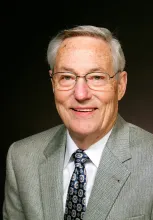
At the time of his retirement in 2016, Roy Holladay was serving the Operation Manager for Ministerial and Member Services of the United Church of God. Mr. and Mrs. Holladay have served in Pittsburgh, Akron, Toledo, Wheeling, Charleston, Uniontown, San Antonio, Austin, Corpus Christi, Uvalde, the Rio Grand Valley, Richmond, Norfolk, Arlington, Hinsdale, Chicago North, St. Petersburg, New Port Richey, Fort Myers, Miami, West Palm Beach, Big Sandy, Texarkana, Chattanooga and Rome congregations.
Roy Holladay was instrumental in the founding of the United Church of God, serving on the transitional board and later on the Council of Elders for nine years (acting as chairman for four-plus years). Mr. Holladay was the United Church of God president for three years (May 2002-July 2005). Over the years he was an instructor at Ambassador Bible College and was a festival coordinator for nine years.
