
Roy Holladay
This transcript was generated by AI and may contain errors. It is provided to assist those who may not be able to listen to the message.
In the ministerial journal we just received was a letter from Jim Franks concerning the Passover season. I thought I'd read part of that letter to you since it applies to the Passover to this time of the year. And cover with you some aspects of this. He mentions it's hard to believe that the Passover will be here in less than two weeks. Since this is the last newsletter prior to the observance, I want to take the opportunity to discuss the most solemn and significant single evening in the year, the New Testament Passover. I found it interesting in reading the 1938 fundamental beliefs of the Radio Church of God where Herbert W. Armstrong wrote that there are only two ordinances of the Church in the modern era. Water baptism and the observance of the New Testament Passover on the evening of the 14th of Nisan. He considered these two events linked together and listed them as one fundamental doctrine. You have to realize this was back in 1938.
As we observe the Passover today, there are three distinct parts to the service. Foot washing, the bread, and the wine. But there is one service. We meticulously observe these three symbols each year and every year on the evening of the 14th of Nisan or ABIB. You will see in the 1997 statement from the Council of Elders that youth were permitted to attend and observe or watch the partaking of these symbols but not participate. And of course, we're talking here about teens or older teens, those who are responsible. How did we arrive at that position in 1997, he asked? Some believe that we observe a type of the Old Testament Passover or some sort of hybrid between what Israel did in Exodus 12 and what Christ did the night that he died. It should be clear to all that we observe the New Testament or the covenant Passover as instituted by Christ the night before he died. We believe it is observed on the same evening that ancient Israel gathered in their homes with the blood of the Lamb on the doorposts. But in meaning and practice, it's very different. We're not killing lambs today, as they did. The lives of the Israelites firstborn were spared because they meticulously followed the instructions given by Moses, who received them from God. With great care, we also make every effort to accurately follow the example that Christ gave his disciples on the night before he died, the night that he was betrayed. The New Testament Passover is never described as a family activity. It symbolizes an individual's commitment to God. Paul states in 1 Corinthians 11, 28, Let a man examine himself. You're not required to examine your wife, your children, your husband, or anyone else. You must examine yourself before participating in the Passover. If you observe the Passover in an unworthy manner, you are guilty of a serious error, as we know. Not your family, but you. Paul contends, for this reason, there are many who are weak and sickly among you, and many sleep. This hardly seems as though it is a ceremony that unbaptized individuals or children should be partakers of. Mr. Armstrong connected baptism in the Passover when he wrote the Fundamental Beliefs in 1938, calling these two ordinances of the Church, both of very serious ceremonies that require conviction and commitment before one participates.
So you don't partake of those without having made a serious commitment.
We do not baptize children, or should children participate in the Passover? After all, baptism is symbolic of the conviction that comes from having repented of your sins, accepting Jesus Christ as your Savior. In the early days of the United, when we began our discussion about the Passover service, the question was asked about unbaptized youth participating in the foot washing. When we surveyed the group of ministers on the Council, we discovered that different ones understood the policy differently from the worldwide Church of God days. Some had previously permitted unbaptized youth to participate in the foot washing, but not the bread or the wine. No one felt that it was appropriate for unbaptized individuals to participate in the bread and the wine. This was something we came across more than once in the early days. Not everyone implementing the policy from the Pass in the same manner. When asked about their justification for allowing youth to participate in the foot washing, but not the bread and the wine, the answer given was that since Judas was present at the foot washing and then left after the sop and before the bread and wine, that it was acceptable. So, you know, that was the reasoning. And since after further discussion and study, it was determined that we should not separate the meaning and the seriousness of these three elements of the service since they are linked together. Is foot washing less meaningful than the bread? Is the bread less meaningful than the wine? Christ set the example and commanded that we do all three.
The conclusion of the Council in 1997 was that we observed the New Testament Passover, which is different from the Old Testament Passover. We prepared two separate study papers on the Passover, its observance, one on the Old Testament Passover, the other on the New Testament Passover. Now, if you would like to get a copy of those, you can get those. Download them off the internet. It says, while it is appropriate to refer to the Old Testament Passover as a foreshadow of the New Testament Passover, to learn the many lessons that can be gleaned from it and to understand the spiritual symbols that were involved, we recognize that we are not observing a family meal when we keep the Passover. As was in the case of ancient Israel, Jesus Christ is our Passover, and he instituted new symbols. As far as we know, there was no wine involved in the meal of Exodus 12. At least none is mentioned. According to Jewish history, wine was not introduced until later. The unleavened bread was used to picture the haste with which they left Egypt. In the New Testament, the unleavened bread pictures the body of Christ.
Requirement for circumcision for the males can be compared to baptism, but what about women? They were permitted to partake of the family meal. But in order to participate in the New Testament Passover, they must be baptized just as well as the males. Paul made it clear that the new covenant makes no difference between male-female, Jew, or Gentile in Galatians 3. The position of the church can be summarized quite simply. One must be baptized to partake of this very important ceremony. Foot washing, the bread and the wine are all part of this one service. All three were commanded to be observed by Christ during his last night. Responsible teens who are interested in seeing how our services are conducted are welcome to attend with their parents and to observe.
Passover is also a time of unity. In 2006, Mr. Franks mentioned, I conducted the Passover at the home of Peter Uluai, a deacon in Benign City, Nigeria. There were 13 of us present. Peter arranged for the ceremony without any instructions for me, and it was set up exactly as I had observed it for the last 38 years.
It is unifying as a church to know that members from around the world will gather on the evening of Nisan the 14th to observe the New Testament Passover in the same manner following the same ceremony. So it doesn't matter where you go around the world in the United Church of God, we will all be observing the Passover in the same way as what he's saying. There's a unity. There's a harmony in that. When you begin to think about the Holy Days Passover, the Feast of God, by whose authority do we keep these? Who has the right to tell us how to observe these days? Why do we keep them today?
And I'd like for us to take a look at what the Bible has to say about this.
Let's go back to the book of Leviticus, Leviticus chapter 23.
We're aware that Leviticus 23 mentions all of the Holy Days of God. Let's answer the question, who has the authority to tell you what days to observe, and who has the authority to tell you how to observe these days? Beginning in verse 1, Leviticus 23 verse 1, The Lord spoke to Moses, saying, Speak to the children of Israel, and say to them, The Feast of the Lord, which you shall proclaim, to be holy convocations, these are my feast.
And verse 4, These are the feasts of the Lord, holy convocations, which you shall proclaim at their appointed times. Now, I want you to notice these are not called the feasts of the Jews, the feasts of the Canaanites, the feasts of anybody. They're God's feasts. He's the one who ordained them. Now, by what authority do we keep them? Well, there's no greater authority than God, so therefore we observe them because God commands them to be observed. God has the authority to tell us what to observe and how to observe them. The word feast in the Hebrew comes from the Hebrew word moad. The word moad means an appointed time.
So, when we come before God at the Passover, or on one of the holy days, we are coming at the time that God has appointed. They are appointed meetings with God. If you were asked to go visit the President of the United States, and he sent you an invitation, and he said, okay, on July 1st, I would like for you to come to the Oval Office, to the White House, and I would like to meet you and talk to you. Guess what? You'd be there, you know, to have an invitation from the President.
Well, when you have an invitation from God, from the Almighty Maker of the Universe, and he says, be there, that's a command. That's not, well, I'll be there if I want to. Maybe I'll be there. I could be there. I'll think about it. No, you're there, because God says to be there. The word convocation means a calling together, or sacred assembly. It's a commanded assembly. And so, when we meet on those days, God specifies which days we should meet on. They are commanded. They are commanded sacred assemblies. So, God has the authority to say which days and how to keep them. Now, what about the Church? Can just anybody keep them anyway he wants to? Well, back in the book of Colossians, chapter 2. Colossians 2, beginning in verse 13, we have a scripture that shows that the Church has the responsibility to guide the membership, to teach the membership, about how to observe these days. Not everything is specified and spelled out in the scriptures. The overall outline is, but there are chunks sometimes that need to be filled in. Let's notice here, beginning in verse 13. If you'll remember the story here, there were Gnostic teachers who were coming down to Colossae, who were teaching the people that they needed additional knowledge, that the scriptures were not enough, and that they had this knowledge. And part of that knowledge involved worshiping angels. So, they were actually telling them about worshiping angels. In verse 8, it says, beware lest anyone cheat you through philosophy and empty deceit, according to the traditions of men, according to the basic principles, the soyachia, the basic elements of this world, not according to Christ. So, he tells them to beware. In verse 13, he says, you being dead in trespasses and the uncircumcision of your flesh, talking about when they were unconverted, he has made a life together with him, having forgiven you all trespasses. And that's what happens when we repent, we're baptized, our past sins are forgiven. And he goes on in verse 14 to describe that, having wiped out a handwriting of requirements. The word handwriting there is chiographon in the Greek, and it means an IOU. It's a debt, like you owe debt. You borrow something, you say IOU, X number of dollars for whatever it is that you buy. Well, you and I all have a debt of indebtedness, our sins, and you find that Christ came to wipe that out, to get rid of it. And as it says here, having wiped out the handwritings of requirements, word of there, would be better translated due to requirements. King James says, due to ordinances. And it's talking about the ordinances that they had kept back before their conversions. Not talking about the Ten Commandments, not talking about the laws of God here, but they had incurred a debt of sin that needed to be wiped out, forgiven, because of their past pagan practices, because of their observing things that they should not have been. It says that was against us, that was contrary to us. God's law is not against us, it's for us. And he has taken it out of the way, having nailed it, the handwriting, that IOU, the debt that we owe, debt of sin, nailing it to the cross. Having disarmed principalities and powers, he made a public spectacle of them, triumphing over them in it. So Christ triumphed over Satan, his demons, the spirit world. Then notice again, verse 16. He says, let no one judge you. Now in verse 8, he says, beware lest anyone cheat you through philosophy. So now he's saying, don't let any man judge you or condemn you. In what way? Well, he goes on to say, in food or in drink. Or he could be in eating or in drinking.
Or regarding a festival. Now that's an interesting term. Notice, festival. Margin says, feast day.
So we're not to let others judge our eating and drinking aspect of the festivals or the new moon or the Sabbath. And he says, all of these are a shadow of things to come. The Sabbath is a foreshadowing of the millennium, the world tomorrow. The holy days foreshadow the plan of God, the Passover, Christ, his sacrifice. And we all know those symbolisms. It says, which are a shadow of things to come, but the substance is of Christ. Now the margin says, literally, for substance, but the body. The word is was added by translators because they thought that'd make it clear. In this case, it confuses it. What it's saying, this is an elliptical clause. Don't let man judge you, but the body of Christ judge you.
Is the implication. The body of Christ, which is the church, would have the responsibility to judge the Christians on how we keep the holy days, how we keep the Sabbath, these particular days. And he's saying, don't let any man come along and just do that. Notice again, verse 18.
Let no one cheat you of your reward, taking delight in false humility and worship of angels. So they were worshiping angels, these Gnostics. You see, the Gnostics came along and they believed also, some of them, that you should neglect the body, go without the stoic type of philosophy. This is why in verse 8, he says, beware lest anyone cheat you through philosophy. There were all of these pagan philosophies and philosophers out there. And so they were coming along telling the Christians that they should deny themselves, go without, that this proves that you are sincere, if you fast all the time, deny the body and all of this. And he says, it is a false humility.
And then he goes on to talk about verse 20. Therefore, if you died with Christ from the basic principles of the world, our elements of this world, this society, why is low living in the world? Do you subject yourselves to regulations? Now, what kind of regulations? Do not touch, do not taste, do not handle it. Again, these are stoic ideas, philosophical, Gnostic approach, which all concern things which perish with the using according to the commandments and doctrines of men. Human doctrines, human teachings, not to 10 commandments, not to spiritual laws of God. These things indeed have an appearance of wisdom.
Now, why? Well, in self-imposed religion, false humility and neglect of the body, but are of no value against the indulgence of the flesh. They don't help a bit in controlling the lust of the flesh, the lust of the eyes, the pride of life, the vanity, ego that we all as human beings have to struggle with. But if you neglect yourself, you go without, you beat yourself, as many of these people would do, then you find that they thought that they were wise. So, brethren, the church, the body of Christ, does have a responsibility to guide and judge us. And every time Dick and Harry comes along and says, well, you shouldn't be keeping the Holy Days this way. That's what the Gnostics were telling them. Well, you shouldn't be eating on a feast day. Just the opposite of what the Bible would indicate. Okay, let's go back to Exodus 12. Exodus 12. That is a background, and let's read here. It's always good to go back and review and know why we do what we do, that there is a reason for it, beginning in verse 1, Exodus 12, and verse 1, concerning the Passover. Now the Lord spoke to Moses and Aaron in the land of Egypt, so they were still in Egypt, saying, This month, that's the month Abib, or Nicem, shall be the beginning of months. It shall be the first month of the year to you. Speak to all the congregation of Israel, saying on the tenth day of this month, Every man shall take for himself a lamb according to the house of his father, a lamb for a household.
And if the household is too small for the lamb, let him and his neighbor next to his house take it according to the number of the people or persons. According to each man's need, you shall make your count for the lamb. So if there are only two in your household, you and your wife aren't going to sit down and eat a whole lamb. So a couple of families would get together and keep it. Now you shall keep it, notice, they were to set it aside on the tenth, and they were to keep it up until the fourteenth day of the same month, then the whole assembly of the congregation of Israel shall kill it at twilight. R. Zikine James says between the two evenings, or in the evening, and it means twilight. So what we read here at the beginning of the fourteenth, the thirteenth is ending, the fourteenth is beginning, what we call twilight. Now twilight means that the sun has gone down, you no longer have the direct rays of the sun, can't see the sun, but it's not pitch dark yet, either. It's that twilight period. There's still some light, but it's not black, and it's not, you know, the sun shining. It was at that period of time that they were supposed to slaughter the lambs, that twilight. In verse seven, and they shall take some of the blood, put it on the two doorposts and on the lentils of the house, where they eat it. And they shall eat the flesh on that night, what night? The fourteenth. The night of the fourteenth, roasted in fire with unleavened bread.
Again, unleavened bread here, symbolizing the haste that they were going to have to depart from Egypt. Bitter herbs symbolizing the bitterness, the suffering, the slavery they'd gone through. Shall they eat it? Now, that lamb that they set aside, brethren, that lamb was a type of Christ. Remember John 1, 29, where John the Baptist said, Behold the Lamb of God, who takes away the sins of the world, referring to Jesus Christ.
Now, verse nine, do not eat it raw, nor boil it at all with water, but roasted in fire, its head with its legs and its entrails. And you shall let none of it remain unto morning.
What remains of it until the morning, you shall burn with fire. And thus you shall eat it with a belt on your waist, your sandals on your feet, staff in your hands, so shall you eat it in haste. It is the Lord's Passover. Again, not the Jews Passover, but the Lord's. Now, where do we get the term Passover? Well, verse 12, I will pass through the land of Egypt on that night and will strike all the firstborn of the land of Egypt, both men and beasts, and against all the gods of Egypt. I will execute judgment. I am the Lord. Now the blood shall be assigned for you on the houses where you are, and when I see the blood, I will pass over you. So the death angel passed over the houses that were under the blood. Brethren, you and I have a death penalty hanging over our heads. We've had it in the past. The wages of sin is death. When we come under the blood of Christ under his sacrifice, then we find that we have the opportunity for eternal life. God passes over our sins. Our sins are forgiven. And so here we have, I will pass over, and the plague will not be on you to destroy you. So this day shall be to you a memorial. You shall keep it a feast to the Lord throughout your generations. You shall keep it as a feast, as an everlasting ordinance. So this is where the Passover was instituted. Now, I want you to notice Jesus Christ's example of what he did. What day did he keep, and how did he observe it? Matthew chapter 26. We'll go over to Matthew chapter 26, beginning in verse 2 here.
Matthew 26 verse 2. Christ said, you know that after two days is the Passover, and the Son of Man will be delivered up to be crucified. Now verse 17. Now on the first day of the feast of unleavened bread, now there are a lot of words added in here. It just basically means on the first day of unleavened bread, referenced probably to the fact the first time that they would use unleavened bread, the disciples came to Jesus saying to him, where do you want us to prepare for you to eat the Passover? So they were going to prepare the Passover. And he said, go into the city to a certain place. Say to him, the teacher says, my time is at hand. I will keep the Passover in your house with my disciples. Now this is the Old Testament Passover meal that they were going to prepare. Christ had not yet instituted a change. So the disciples did as Jesus directed them, and they prepared the Passover. So if they prepared the Passover, they had to get a lamb, unleavened bread, bitter herbs, knew all of these things. And when evening had come, which evening was this? This is the beginning of the 14th. When the evening had come, he sat down with the 12th. So somewhere toward the end of the 13th and the beginning of the 14th, they prepared the lamb. They roasted it, and then in that evening, Jesus Christ sat down with them. Again, they were not preparing the New Testament Passover because they didn't know anything about it yet. Now, as they were eating, see they're eating a meal here. He says, Now, as they were eating, he said, assuredly I said to you, one of you shall betray me. And he went on to talk about that. Now, let's notice in verse 26 that Jesus Christ now changes the symbols. As they were eating, Jesus took bread. He blessed it. He offered a prayer over it. He broke it. He gave it to the disciples and said, take eat. This is my body, or this represents my body. And he took the cup and he gave thanks, and he gave it to them, saying, drink from it, all of you. For this is my blood of the new covenant, which is shed for many for the remission of sins.
So Christ, when we drink the wine, it's symbolic of Christ shedding his blood so that our sins could be forgiven. But I say to you that I will not drink of this fruit of the vine. From now on, until the day that I drink it, you with you and my Father's kingdom. And when he had sung of him, or they had sung of him, they went out to the Mount of Olives. So here you find Jesus Christ changed the symbols. He changed it to eating the bread, drinking the wine. I want you to notice one thing. He did not change the day on which it was observed. Same day, he just changes the symbols. No longer the lamb, no longer the meal, but the bread and the wine. Now verse 31, I think, is significant because it says, Jesus said to them, all of you will be made to stumble because of me this night as it was written. Which night was that? It was the 14th, that night. And then dropping on down to verse 34, Jesus said, assuredly I say to you that this night before the rooster crows, you will deny me three times. So again, it's still this night, the night of the 14th.
Remember, a day begins in the evening when the sun goes down. So the beginning here of the Passover. So it was the night of the Passover, the night that he kept the Passover, changed the symbols with his disciples. Now John 18 in verse 28 reveals a very interesting fact that the Jews had not yet eaten the Passover. Christ and his disciples had, but they had not. 28. Then they led Jesus, if you'll remember the story here in chapter 18, he's arrested. Christ kept the Passover. He went out. He prayed three hours. Judas brings a group of soldiers. They arrest him. He goes before the high priests. He goes before Caiaphas, Annas. And then finally in verse 28, they led Jesus from Caiaphas to the Praetorium. And it was early morning. This is still the 14th, but the daylight portion of the 14th. But they themselves did not go into the Praetorium. Why didn't they go into the judgment seat area?
Lest they should be defiled. Now why were they concerned about being defiled? But that they might eat the Passover. So they had not yet eaten the Passover. Christ and his disciples did. And you find that the Jews, many of them in that day, were eating the Passover one day late. Or later, what we call the beginning of the 15th. Well, we would refer to as a night to be much observed. Now chapter 19, verse 31, let's notice this.
It says, Therefore, because it was a preparation day, that the body should not remain on the cross on the Sabbath. For that Sabbath was a high day. So Jesus Christ was crucified in the daylight portion of the day prior to the first day of unleavened bread. That day was a high day. What day was that? It was the 14th. So Christ obviously observed the Passover with his disciples at the beginning of the 14th. I mean, that's that's what we're focusing on here. Verse 42, So they lay Jesus, so there they laid Jesus, because of the Jews' preparation day for the tomb was nearby. So they were preparing for the Passover to eat the Passover at that time. Now, if you'll back up here to chapter 13 in the book of John, you'll find that Jesus Christ on that Passover evening with his disciples instituted another ceremony that we continue to observe to this day. It's a very integral part of the Passover. It's the first thing that we do as a group, and that is the foot-washing ceremony.
In chapter 13, verse 1, it says, Now before the feast of the Passover, when Jesus knew that his hour had come, that he should depart from the world to the Father, having loved his own, who were in the world, he loved them to the end, and supper being ended. So they had observed the supper or the Passover, the devil having already put into the heart of Judas Iscariot, Simon's son, to betray him, and Jesus, knowing that the Father had given all things into his hand, that he had come from God, and that he was going to God, rose from supper, laid aside his garments, or his outer garments, took a towel, girded himself, and after that he poured water into a basin, began to wash the disciples' feet, and to wipe them with the towel with which he was girded.
Now I'm sure they were dumbfounded. To have Christ, their Master, their Lord, their Rabbi, get down and wash their feet. Well, Jesus answered and said to them, well, verse 6 here, he came to Simon Peter, and Peter said to him, Lord, are you washing my feet? And Jesus said to him, what I am doing you do not understand now, but you will know after this.
Peter said to him, you should never wash my feet. And Jesus answered him, if I do not wash you, you have no part with me. Well, Simon backtracks real quickly. Simon Peter said to him, Lord, not my feet only, but my hands and my head. You know, just give me a bath. You know, that shows you the attitude that Peter had. He was enthusiastic in whatever he did. And Jesus said to him, notice, he who is bathed needs only to wash his feet, but is completely clean.
But you are clean, but not all of you. So Judas apparently was still there. For I knew who would betray him, therefore he said, you are not all clean. So when he had washed their feet, taking his garments, sat down again, he said to them, do you know what I've done to you? No, they had no idea what he had done. He said, you call me teacher and Lord and say, well, so I am. If I then, your Lord and teacher, have washed your feet, you also ought to wash one another's feet.
And I would say, we ought to wash one another's feet. I mean, that's what this scripture is telling us. For I have given you an example, Christ said, that you should do as I have done to you.
Most assuredly, I say to you that a servant is not greater than his master, nor is he who is sent greater than him who sent him. If you know these things, blessed are you if you do them. Now, what we find here, Jesus Christ instituted a ceremony on the Passover that teaches us, especially a couple of profound lessons. First of all, it teaches humility. For you to get down on your knees before another human being, take their gnarly feet and wash them, and then dry those feet off and have somebody wash your feet is very humbling. Now, there should not be anyone here that we would be afraid of to wash their feet. We should be willing to wash anyone's feet.
It also shows a proper attitude of service, that we should be willing to do the lowliest job. It doesn't matter what that job might be. The lowliest job at this time was a servant who washed people's feet. Most of the roads were dusty, not paved back then. They wore open-toed sandals, much like flip-flops, this type of thing. They would come into a person's home.
Their feet would be dirty. The servant would be there. The basin of water would wash their feet, and then they would go on into the house. Well, here Christ was doing that, and here he was, the second member of the God family, the one who created the whole universe, created life, set life in motion, and he's willing to get down on his knees and to wash his disciples' feet.
He set us a wonderful example of what we should do. You'll find this actually occurred first, and then taking the bread and the wine occurred afterwards. Now, in 1 Corinthians 5.7, we've already alluded to this, but I want you to notice here in 1 Corinthians 5.7, when it comes to talking about the Passover, it says, therefore purge out the old leaven that you may be a new lump, since you truly are unleavened, for indeed Christ our Passover was sacrificed for us. Jesus Christ is our Passover.
Jesus Christ was sacrificed just like taking a lamb, cutting its throat, letting it bleed, ripping the hide off, cutting it into pieces, and burning it on an altar. Jesus Christ was willing to give his life. He was beaten within an inch of his life, as we know. He shed his blood, and he did this, and he is our Passover. He is the Passover instead of the lamb. He is the Passover lamb today. In 1 Corinthians 11, I want you to notice beginning in verse 20 that Paul, here in writing this letter to the church in Corinth, had to correct them, because they were not keeping the Passover properly. They were trying to have a hybrid. They were mixing things up here, and they were keeping part of the Old Testament Passover, part of the New Testament. However, they were trying to do this. In verse 20, he says, therefore when you come together in one place, it is not to eat the Lord's Supper.
So apparently, they were trying to eat a meal, a supper. And for in eating, everyone takes his own supper ahead of others, and one is hungry and another is drunk. What if we came here? We decided, well, we were going to eat a meal along with the Passover. Some who are poor come, and maybe they have peanut butter and matzohs. You know, that's what they eat.
Some of us get over here in the side room. We have Chateaubriand. We have, you know, best wines that you can think of. And maybe somebody eats a little too much, somebody gets a little tipsy. Maybe the minister's a little tipsy. He's up here trying to conduct the Passover. What kind of an example would that set? And would it create division within the church? Would there be hard feelings within the church? Would, you know, those who are poor think, well, you know, what's going on here? Well, I want you to notice what Paul said. He says, what? Do you not have houses to eat and drink in, or do you despise the church of God and shame those who have nothing? What shall I say to you? Shall I praise you in this? I do not praise you, he said. And you'll end this.
Then in verse 23, for I receive from the Lord. Remember, Paul was taught by Christ in Arabia for around three years or more. So he said, I received this from the Lord, that which also I delivered to you, that the Lord Jesus, on the same night in which he was betrayed, took bread. Now he's going to show them how to keep it. And I want you to notice, on the same night, you and I keep the Passover on the same night that Jesus Christ kept it. Not following what the Jews were doing, but on the same night that Christ did, he gave thanks and he broke it. And he said, take heat, this is my body. It represents my body, which is broken for you. This do in remembrance of me. So when you do this, you're remembering his sacrifice. In the same manner also, he took the cup after supper, saying, this cup is the new covenant in my blood. This do as often as you drink it. Now it doesn't say you can drink it as often as you want to, but as often as you do it, he says, you do it in remembrance of me.
So when we take those symbols, we are remembering Christ's sacrifice. The Passover is a renewal of our acceptance of Jesus Christ's sacrifice, so that our sins could be forgiven. This is why Mr. Armstrong tied baptism and the Passover together as ordinances. Our sins are forgiven when we repent and we're baptized. And so he said, you do this in remembrance of me, for as often as you eat this bread, drink this cup, you proclaim the Lord's death till he comes. So every year, when we take those symbols, we are very forcefully reminded of what Christ did for us.
Now, some people are superstitious. Now, I say superstitious. They think that all of our sins are saved up for the year. And on the Passover night, when they take these symbols, then they're forgiven. Consequently, they will attend the Passover service, whether they come to any other service during the year. And we always see, I don't know if that's the only reason that some people come, but it's sort of like so-called Christians in the world, where they show up once or twice a year, Christmas and Easter. And, you know, those are important days, so you know, they're there on those days. Well, some attend the Passover. They come for this one service. Now, once you have been baptized and Christ's sacrifice has been applied to you, thereafter, when you repent of your sins, if you sin, you get down, you ask God to forgive you. When you ask God to forgive you, He forgives you at that time. They're not all saved up and just forgiven at the Passover. The Passover is our renewal, our acceptance, our willingness to show God that we accept what Christ did for us.
And so, you know, in saying all of this, I'm not saying that we should not keep the Passover. Obviously, John 6, beginning here in verse 53, shows that the Passover is something that we are commanded to keep. Jesus said to them, most assuredly, I say to you that unless you eat the flesh of the Son of Man, drink His blood, you have no life in you. Whoever eats my flesh, drinks my blood, has eternal life, and I will raise Him up at the last days. So, it's commanded that you and I ought to be living the right way all year long and, when we repent, be asking God continually to forgive us. Now, who should observe the Passover? Can just any Tom, Dick, Harry keep the Passover? Well, let's go back to Exodus 12 again.
Mr. Franks mentioned this in his letter, but in Exodus 12, verse 40.
Now, the soul-journing of the children of Israel who lived in Egypt was 430 years, and it came to pass at the end of the 430 years on the very same day it came to pass that all the armies of the Lord went out from the land of Egypt. And, well, let's skip over that. I'll come back to that. Let's go over to verse 43.
The Lord said to Moses and Aaron, This is the ordinance of the Passover, no foreigner shall eat it. But every man's servant who's bought for money when he has been circumcised, or when you have circumcised him, then he may eat it. So you had to be circumcised. A sojourner and a hired servant shall not eat it. Now, in verse 48, And when a stranger dwells with you, and wants to keep the Passover to the Lord, that all his males be circumcised, and then let him come near and keep it. And he shall be a native of the land, for no uncircumcised person shall eat it. Obviously, it's talking about the males being circumcised because the women were not circumcised. So if the man in the family was circumcised, then the whole family would keep the Passover together. Today, if the husband is circumcised, so to speak, spiritually, or baptized, it doesn't mean his wife can keep the Passover and his children, because they have to be baptized also. I mean, that's the principle. In Romans chapter 2, in Romans 2, 28, 29, we find that today we are to be spiritually circumcised in the heart. Verse 28 says, He is not a Jew who is one outwardly, nor is circumcision that which is outward in the flesh, but He is a Jew who is one inwardly, and circumcision is that of the heart. When you and I were baptized, we were to have the tough foreskin of our heart cut away, the rebellion, the stubbornness, the vanity cut away. In the Spirit, not in the letter, whose praise is not from men, but from God. So what you find today, what makes us a member of God's church is if we've been spiritually circumcised. Colossians 2, 11, let's notice Colossians 2, 11, In Him you were also circumcised with the circumcision made without hands, by putting off the body of sins of the flesh and by the circumcision of Christ, buried with Him in baptism, in which you also were raised with Him through faith in the working of God, who raised Him from the dead, and you then being dead in your trespasses. So you find you and I have to become spiritually circumcised. So only those who are baptized and have God's Spirit should partake of the symbols of the Passover. Older teens can attend to observe, but just to observe. Only baptized members should partake of the Passover. It is a solemn time. We bring our Bibles. We review the Scriptures leading up to that, and then it's not a time for great fellowshiping that evening. A night to be much observed. It's that occasion. Again, let's go back to Exodus 12, where I was reading earlier. Exodus 12, we find that the sojourning of the children of Israel was 430 years. And, verse 42, Exodus 12, 42, it is a night of solemn observance. What night is this? Well, it's the night of the 15th. It is a night of solemn observance to the Lord for bringing them out of the land of Egypt. This is that night of the Lord, a solemn observance for all the children of Israel throughout their generations.
Now, this journey, this night, pictures our beginning to come out of sin.
You know, when the days of Unleavened Bread began, and for them, they kept the Passover at the beginning of the 14th. The night was over. They burnt any of the Passover that would remain the daylight portion. They got their groups together. Remember, there were three million of them, so you don't just line up and leave the land and march out and gather all your cattle and all of that up and just start marching because their three million people go for miles. You know, you're talking about walking and coming out of Egypt, which they did. So, they began on the beginning of the days of Unleavened Bread, the 15th. Numbers 33, in verse 3, verifies this. Let's notice. Numbers 33 and verse 3. We find here, they departed from Ramesses in the first month on notice the 15th day of the first month. Now, they came out at nighttime, so they had to come out on the beginning of the 15th, on the day after the Passover. So, they'd already kept the Passover. The day after the Passover, the children of Israel went out with boldness in the sight of all the Egyptians. And then, in Deuteronomy 16 and verse 1, just an added scripture, says, Observe the month of Abib and keep the Passover to the Lord your God, for in the month of Abib, the Lord your God brought you out of Egypt by night. So, they came out of Egypt on the 15th. They came out at night, so it had to be what we would call the beginning of the 15th. Now, how do we observe this today? Well, this is where the church steps in. There's not a whole lot written in the Bible. We observe it by getting families together. And, you know, families can get together in somebody's home or in a building that they might have, put food together and eat it. Or you can go out to a nice restaurant, and especially if you have privacy, you can eat there. It's not a religious service, but it's a time that I think it's nice to sit down and to talk to one another about how God called you out of this world.
You had pictures of Israel coming out of Egypt, which is a picture of our coming out of this world, out of sin, out of slavery to Satan. And so, we sit down and we talk about that evening, our calling, and how God called us into His church, and the importance of that. And so, it's a wonderful occasion. Now, let's back up to Exodus 12 again. Exodus 12, in verse 15, and we find here concerning the days of unleavened bread, something that you and I are supposed to do, some things we're not supposed to do. In verse 15, seven days you shall eat unleavened bread. So, during that period of seven days, guess what? We eat no leavening. We eat only unleavened bread. Now, let me add so that nobody misunderstands. I don't mean that's all you eat. When you eat bread, you eat unleavened bread, but you can eat food. Some have thought, well, all I can eat is unleavened bread. So, seven days they try to do that. Well, it says, seven days you shall eat unleavened bread during that period of time. On the first day, you shall remove leaven from your houses. Whoever eats unleavened bread from the first day, under the seventh day, that person shall be cut off from Israel. On the first day, there shall be a holy convocation. That's the fifteenth. There's to be a holy convocation. Now, on the seventh day, there shall be a holy convocation. So, these are commanded assemblies, sacred assemblies. No manner of work shall be done on them. So, that means your normal job, you don't work on that day. But that which everyone must eat, that only may be prepared by you. So, you can prepare food on those days, as it says here. Verse 17, So you shall observe the feast of unleavened bread, for on this same day I have brought your armies out of the land of Egypt. Therefore, you shall observe the days throughout your generation for an everlasting ordinance. In the first month, on the fourteenth day of the month at evening, in other words, at the end of the fourteenth, at evening, you shall eat unleavened bread until the twenty-first day of the month at evening. So, beginning at the end of the fourteenth, beginning of the fifteenth, all the way to the end of the twenty-first, that's seven-day period, they were to eat unleavened bread.
And God says that they were to keep this day. So, there is to be no leavening in the houses. Verse 19, let's notice, For seven days no leaven shall be found in your houses. So, what does that mean? You've got to get it out. You have to de-leaven your homes.
Since whoever eats what is leavened, that same person shall be cut off from the congregation of Israel, whether he is a stranger or a native of the land. Verse 20, you shall eat nothing leavened, and all your dwellings you shall eat unleavened bread.
So, that's very clear. Now, the same thing is mentioned over in Leviticus 23.
Now, let me just explain something. I think most of us understand this, but so that it's absolutely crystal clear.
There are seven festivals and there are seven holy days.
And we need to understand the difference. Let me name them for you. The seven festivals are the Passover. It's a festival. The Days of Unleavened Bread, Pentecost, Trumpets, the Day of Atonement, the Feast of Tabernacles, and the Last Great Day.
But within those seven festivals, there are seven annual Sabbaths, or high days, so there are seven holy days. The first and last day of the Days of Unleavened Bread. That's two. Pentecost, Trumpets, Atonement, first day of the Feast of Tabernacles, and the Last Great Day. So, within those are seven, you find holy days that we observe. That is why, with the Days of Unleavened Bread coming up, brethren, we will meet twice during those days. First day, we'll have one service. The last day, we have two services. Why don't we have two services on the first day? We used to, if you'll remember. But because of the night to be much observed, it was felt that to be able to observe that, you know, you stay up, you're cooking, eating, and fellowshiping. That would be better to sleep in and then come in the afternoon. So, that was a decision that was made a while back.
Now, why do we put leavening out of our homes? Well, let's go over to 1 Corinthians 5.
1 Corinthians chapter 5. You remember the story here again. There was a young man who was committing adultery with his stepmother. He was apparently sleeping with her. And Paul said here in verse 2, you are puffed up. They thought, well, you know, we're very understanding. We're very tolerant. We show how tolerant we are. They were putting up with it. Paul said, put him out. I've judged already. Put the man out until he repents. Verse 6. Your glorying is not good, he said. Do you not know that a little leaven leavens the whole lump? What does leavening do? Well, leavening, when you add it to dough, causes that dough to be puffed up. It goes all the way through the dough and causes it to rise. Well, here, their attitudes, their wrong attitudes, their approach was wrong. And he's showing that a little leaven will leaven the whole lump. And what that means, if we compromise brethren, we let down. We give in to things. And we begin to compromise. We let a little leaven into our lives. And guess what? It will begin to affect us. It will begin to affect our attitudes and our approaches. Same thing in the church. And if we do that in the church as a whole, it can affect the whole church. And here, it was affecting that church.
So he said that in verse 7, therefore, purge out the old leaven, that you may be a new lump, since you truly are unleaven. Now, apparently, he wrote this letter during the days of unleavened bread to them. They were unleavened physically, but spiritually, they were not. For he said, for indeed Christ our Passover was sacrificed for us. Therefore, let us keep the feast.
Now, I mean, how do you do away with this? Let us keep the feast. What feast? Well, we're talking here Passover, days of unleavened bread. Not with old leaven, nor with the leaven of malice and wickedness, but with the unleavened bread of sincerity and truth. So we find that we keep, and we still keep it. Leavening is a type of sin and a type of wrong attitude. Do you remember back in Matthew 16, verse 12, Christ warned the disciples to beware of the leavening of the Pharisees and the Sadducees? And in verse 12, it says, they understood that he was talking about the doctrine or the teachings of the Pharisees and the Sadducees. So, how do we prepare for the days of unleavened bread?
Well, there are three Hebrew words that are used for leavening. Let me give these to you.
Mecha mez refers to a leavening agent, substance that is used to puff up or produce fermentation. A example would be yeast, bicarbonate of soda, baking soda, baking powder, these types of things.
Another word is shimes, which is the shortened form of this in Hebrew. It simply means food that has been leavened, food that has leavening put in it that's been caused to rise. All foods that have leavening that causes them to rise. And then sheol, S-E-H-O-H-D, Hebrew, sourdough, which is a naturally fermented yeasty batter. So, when we're talking about putting leavening out of our houses, that means, when you have a leavened bread, you don't have yeast, you don't have baking powder, you don't have baking soda, all of these things there. You put them out.
Now, things like brewer's yeast is dead. People ask these questions, what about brewer's yeast? Well, that's dead. Cream of tartar by itself is not a leavening agent. It's only when you try to make it a leavening agent, mix it with other things, to do that. Yeast extracts are not derivatives of yeast, are not yeast agents. Sometimes you'll find these derivatives. These are things that are used sometimes, and you'll find them in pet foods, and they're not leavening agents. So what this means, as we prepare for the days of unleavened bread, and I might say, Norman, I think we are de-leavened. I use the term, we think, because you always find something, you know, when you begin to look even more closely. But when you begin to realize things like breads, what are we talking about? Things that have leavening agents in them. Breads, cookies, crackers, you have to check your cereals, pizzas, ice cream cones, pie doughs, I mean, the list goes on and on and on. You have to become very label conscious to see if there's something in there.
You may have checked the label on matzos, because some matzos have leavening in them. So don't just assume, because it says matzo, that it's de-leavened.
I think one thing we need to do is share recipes with each other during the days of unleavened bread. It should be a family project to clean the house. I've known men who've said, well, that's my wife's job. No, it's not just your wife's job, it's your job. It's the children's job. Everybody should jump in and do it. It's a family project to clean the house, to vacuum the whole house, vacuum the couches, the chairs, all of those things. I think I've mentioned to you before a man that we knew years ago, bachelor.
This was before they had self-cleaning ovens on stoves. He hated cleaning his stove. He would just take and give his stove away and buy a new one every year. And that was his way of cleaning the stove. So you have to make sure some people eat in bed.
Couches, chairs, toasters, refrigerators, vacuum cleaners, people vacuum, and there's the bag full of all of the leavening sitting right there in the closet. Husbands and children should help, especially if the garage, the cars, vacuum. Don't hang your leavening on a fishing pole and hang it over the fence. Say, it's off my property. No, you get rid of the leavening. The wise thing is to try to eat it all up before the days of unleavened bread. That way you don't lose a lot of money, but when it comes down to it, we need to get rid of it. Don't leave it in the vacuum cleaner. Again, many times you think you've gotten rid of it, but what happens during the days of unleavened bread? You find an old sandwich, somewhere under the bed. I always look under the bed and vacuum. You gotta get under there.
It's like one of the ministers years ago who was in New York City. They had cleaned their room. They thought, well, we don't have a house clean here. We'll clean our room.
Sun was going down. They were looking at it, and they turned around. They saw this bag of cookies sitting up there. They grabbed the bag of cookies. What did we do with the cookies? Well, they dumped the bag of cookies in the commode and flushed it. It promptly choked the commode, broke the cookies in a million parts, and overflowed onto the floor. Now they've got cookies everywhere. They're busy trying to collect these cookies and throw them down the sink and get rid of them. We all have our stories, don't we? Things that have happened to us in the past. It's not the days of unleavened fish food, dog food, beer, pillows, inflated tires, and so on. It's unleavened breads. We should not spend more hours looking for crumbs than we spend looking for sin and prayer and Bible study and preparing for the days of unleavened bread. I find that too often there are two extremes that people go through. People are totally worn out by the time the Passover comes around. They've moved everything and nothing wrong with that. We try to use this time for general spring house cleaning. At least once a year you clean your house. Well, we claim more than that, but at least this one time it's cleaned from one end to the other. But you've got to start weeks before in order to do that. Then there are others who exert very little effort. They may run the vacuum through the middle of the floor and throw things out of the pantry, and that's about it. Well, there's a balance between these two.
It's okay to help others to 11 if they're not physically able to do so. Sometimes we have people who are sick and confined to the bed. People who are handicapped, someone who might have a new baby. The elderly, sometimes, they're not able to do some of these type of things. So it's not wrong for us to help, and if we see a need to jump in and help them. What if you have a non-baptized mate, someone who doesn't share your religious enthusiasm for what you believe? You cannot force them to go your way. You can't force them to eat unleavened bread. You can't force them to do anything, neither should you. A lot of husbands have gotten into trouble by saying, I'm the head of the house here. You will do this. And the wife picks the skillet up and says, I will do what? And, oh, well, yes. No, the husband, you might shock your wife. If your wife is not a member and she doesn't understand this, you can ask her, would she be willing to do so? But why don't you volunteer to start cleaning the house? If you started cleaning the windows in the house and started vacuuming, she might faint, but you'll do it anyway. You'll volunteer to clean, clean the garage, clean the cars out, and you'll do all these things. You should learn the lesson of putting the leavening out. Wives should do the same thing. Your wives are in a little better position to do that. But again, what if your husband doesn't agree with you? You cannot force him. You can ask him, these are the days of unleavened bread. You should eat the unleavened bread. There's no question about that, but would you like to do so? See, one way of helping with this is a week or two ahead, start baking some of these wonderful unleavened recipes. There are some unleavened recipes that are just mouthwatering. You know, they're dessert type of things that anybody would be willing, you know, to eat. And maybe you begin to put these around and they begin to eat some of these. And when the days of unleavened bread come, they don't miss the bread. But if they say, I'm going to have bread, you say, well fine, if you want bread, you're more than welcome to bring it in.
And you know, you can do that. If he demands his unleavening products, it's okay to have it in the house. But we should learn the lesson by going through the lesson of learning how to do this.
So, brethren, God has given us these physical rites, rituals, physical things to teach us spiritual lessons. Baptism, we go under the water. It teaches us the death and burial of the old man.
Foot washing teaches us humility and service. Bread and wine teach us about Christ's sacrifice, laying on of hands, setting apart a people. So we find that putting leavening out pictures are putting sin out of our lives and diligently looking for it and eating the unleavened bread pictures are trying to put righteousness in. So, brethren, let's make sure that we prepare for and observe the spring festival season the way God intended it.
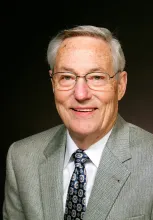
At the time of his retirement in 2016, Roy Holladay was serving the Operation Manager for Ministerial and Member Services of the United Church of God. Mr. and Mrs. Holladay have served in Pittsburgh, Akron, Toledo, Wheeling, Charleston, Uniontown, San Antonio, Austin, Corpus Christi, Uvalde, the Rio Grand Valley, Richmond, Norfolk, Arlington, Hinsdale, Chicago North, St. Petersburg, New Port Richey, Fort Myers, Miami, West Palm Beach, Big Sandy, Texarkana, Chattanooga and Rome congregations.
Roy Holladay was instrumental in the founding of the United Church of God, serving on the transitional board and later on the Council of Elders for nine years (acting as chairman for four-plus years). Mr. Holladay was the United Church of God president for three years (May 2002-July 2005). Over the years he was an instructor at Ambassador Bible College and was a festival coordinator for nine years.
