

How Responsive to God's Spirit Are We?
Given on
Given in
Downloads
Downloads
To download a file, right-click (or long press) a link above and choose Save As.
What metrics can be used to determine how responsive we are to God's Spirit? This sermon will discuss three areas that can be used to see how we are doing in this regard.
Transcript
This transcript was generated by AI and may contain errors. It is provided to assist those who may not be able to listen to the message.
This morning was a typical morning for me, getting up and doing my normal routine. Part of that routine is I'll get my iPad and I'll take a look at what's on Fox News, take a look at the various headlines, and read those that are different from what I've read in the past, that catch my eye. There was one headline that really did catch my eye, and I read a very extensive article. The author was Victor Davis Hanson, and some of you probably know that name Victor Davis Hanson. He's written a number of books. He has been on a number of conservative talk radio shows. The title of his article was, An American Apocalypse, Why People of All Classes and Races are Filled with Fear. Now, I'm not going to go any further than that. It was a good read. You might be interested in reading that by Victor Davis Hanson, An American Apocalypse. But I think it demonstrates very much that if we've got eyes to see and ears to hear, we can tell that our country is in a very difficult situation. We understand Bible prophecy. We understand where all this is heading. As I was reading his article, I was thinking again, as I thought, numerous times in the past, I'm wondering if we are kind of living, you know, like back in the 1920s, early 1930s, what was taking place in Europe, how various things were happening, various characters were coming on to the stage in preparation of World War II. I can't help but think that that might be taking place right now in preparation for World War III. Now, that's not what I want to talk about today, but it does kind of give a background as to the subject matter I want to talk about today. If you had a friend, somebody from work, a next-door neighbor, a relative, and they came to you and they asked a very sincere question, and the question is, what is a biblical definition of a Christian? What verse or set of verses would you turn to to answer that question? What is the biblical definition of a Christian? Now, we're not talking about the process of conversion and what leads you to become the Christian. There's, you know, God has to call. God gives the Spirit to those who obey Him. We've got to repent and be baptized and have hands laid on us and so forth. But if we wanted to take a look at a scripture, and I've got something here in mind, as to what defines a Christian, how would you respond to that? Well, I turned to Romans chapter 8. You might think the same thing. You may have a different response. But let's go to Romans chapter 8.
Romans chapter 8 and in verse 9.
I believe there's a good definition of what a Christian is, Romans 8 verse 9. But you are not in the flesh but in the Spirit, if indeed the Spirit of God dwells in you. Now, if anyone does not have the Spirit of Christ, he is not his. So to me, one of the great definitions of what a Christian is, a Christian must have God's Holy Spirit. But in the same chapter, there is an addition to that thought. We drop down to verse 14. For as many as are led by the Spirit of God, these are the sons of God. So we must have God's Spirit and we must be led by God's Spirit. Brethren, this is not a time for us as Christians to be sleeping. This is not a time for us to be worrying whether we are a laodicean or not. We can't allow ourselves to be in that kind of a spiritual situation, spiritual condition. But what does it mean to be led by God's Spirit? Is it just a matter of our feelings? Is it a matter of impressions? Must we have visions? Is it a matter of emotions? You know, people in the world can be very confused about that. We don't have to be. The Bible gives us solid instruction about what it means to be led by the Spirit of God. But what does God's Spirit lead us to? Let's take a look at John 16.
John 16.
And verse 13. John 16 verse 13. However, when he the Spirit of truth has come, he will guide you into all truth. Notice the Spirit of truth. God's Holy Spirit, called the Spirit of truth, and that Spirit will guide us, will lead us into all truth. So God's Spirit, being called the Spirit of truth, will lead us to the truth we need to understand about God's Word. But also, I would believe that God's Spirit is going to lead us to understand the truth about us, our condition spiritually, where we stand before God.
Let's add to what we've just read, John chapter 10. John chapter 10. We've got the story here of the shepherds taking their flocks and putting them in a place of safety so they wouldn't be attacked by predators and so on and so forth. John chapter 10, starting here in verse 1. John chapter 10. Most assuredly I say to you, he who does not enter the sheepfold by the door, but climbs up some other way, the same as a thief and a robber. Only one way in to do it God's way. Verse 2.
But he who enters the door is the shepherd of the sheep. To him the doorkeeper opens, and the sheep hear his voice. They hear the voice so they can be led by the Spirit. And he calls his sheep by name and leads them out. So apparently back in the day, you might have had several shepherds penning up their sheep together. And apparently some of them at least were able to call them by name, and the sheep remembered their particular shepherd's voice, at least according to the story here, and they would follow that particular shepherd out. Verse 4. And when he brings out his own sheep, he goes before them. And the sheep follow him, for they know his voice.
They are led by that shepherd. Yet they will by no means follow a stranger, but will flee from him, for they do not know the voice of strangers. We drop down to verse 27. My sheep hear my voice, and I know them, and they follow me. Brethren, as God leads us, we must ask some very important questions of ourselves. And once again, as I may have mentioned to you so many times in the past, before I give this sermon to you, I've given it to myself.
How responsive are we to the leading of God's Holy Spirit in our lives? How responsive are we? How responsive are we to God's directing us to do what God wants us to do in our lives? Isn't this, in one sense, a measure of our conversion? You know, at Passover time, we tend to think about those sorts of things. But you know, brethren, here we are just a few weeks away from the Feast of Tabernacles.
You know, people, so many people, you know, we've had a, we've got a feast meeting Tuesday evening. All the speakers will be going through their material, make sure everything is feasty in terms of the material, making sure there's not any undue duplication of material. And you know, that will be happening all around the world as the various speakers get together to talk about their messages. The Feast of Tabernacles is a wonderful opportunity for us to draw closer to God, to make sure that we are in a position where we are so close to God that we are aware of what He's doing and what He wants, and especially what He wants for us in our lives individually and personally.
We don't want to find ourselves in a position where we are resisting the lead of God, we're not receptive to the lead of God, that God is moving forward and we're far behind. So this brings me down to the theme of my material today, and it's seven words. How responsive to God's Spirit are we?
How responsive to God's Spirit are we? And each of us, no one gets a free pass, each of us must look into our own hearts and make that determination. How responsive to God's Spirit are we? How do you know? How can we know how responsive to God's Spirit are we?
Can this sort of thing be measured? What are the metrics if it can be measured? What are the guidelines? What are the indicators? What are the standards? Well, I've got three things I want to discuss with you. These are not the only metrics, the only standards. I don't think there's ever a sermon ever given where it's the ultimate on any one topic. But I want to give you three things today, three metrics to think about, three metrics I need to think about as to how responsive to God's Holy Spirit am I.
But I think it's something that we all can value and think a great deal of. Metric number one.
How responsive are we to hungering and thirsting for God? How responsive are we to hungering and thirsting for God? Let's look at Psalm 63, verse 1. Psalm 63, verse 1.
O God, you are my God. Early will I seek you. My soul thirsts for you. My flesh longs for you in a dry and thirsty land where there is no water. Now again, this is a highly personal sermon for me. It's a highly personal sermon for you. Each of us must ask ourselves, do we really hunger and thirst for God, for what He is, for what He represents, for His way of life? In our discretionary time, you know, we're busy people. We've got work to do. We sleep, some better than others. You know, there's things to do around the house. There's, you know, we've got to go grocery shopping. We've got to do this and that and the other. But then there's a certain frame of time we each have, which is discretionary time. In that discretionary time, what do we do in terms of thirsting and hungering for God, what He is and who He is? Let's look at Matthew chapter 5. Here we have one of the Beatitudes, and you know exactly what I'm going to quote, Matthew chapter 5 and verse 6. One of the beautiful attitudes. Matthew chapter 5 and verse 6. Blessed are those who hunger and thirst for righteousness, for they shall be filled. We hunger and thirst for the things of God.
Brethren, the driving force in our life. If we don't want to be left behind, if we want to be following God, be right there with them, especially now, when it seems like the whole world is trying to implode upon itself. Again, this is not the time for us to be asleep at the switch.
Is it one of the driving forces of our life, our desire to hunger and thirst for God? A spirit-led and a spirit-responsive Christian yearns for atonement with God, with atonement for the great God. Let's take a look at a well-known example over here in Acts chapter 17. How this group of people were showing this attitude. Acts chapter 17 verses 10 and 11. The Bereans. You know the example very well. The Bereans. Acts chapter 17 verse 10. Then the brethren immediately said, Paul and Silas away by night to Berea. When they arrived, they went into the synagogue of the Jews. These, the Bereans, were more fair-minded than those in Thessalonica. And that they received the Word with all readiness and searched the Scriptures daily to find out whether these things were so. You know, the traits of these Bereans were traits that we should make sure we are emulating in our lives as well. A spirit-led, spirit-responsive people who are honest, who are thinking, who are searching. We want to investigate what we're being taught in services, in Bible studies, in sermonettes. We want to study, we want to seek, we want to verify, we want to prove whether these things are so. We want to make sure we understand the Word of God. Notice it says here they had a readiness of mind. They had an attitude that was eager, that was zealous, that was resolute in their desire to know the things of God. Spirit-led and spirit-responsive people do not shut the doors of their minds or hearts. They don't refuse to listen or consider. We don't become Laodicean. I know that already. I am rich and increased. I've been in the church all these years. I have x number of family members in the church. I have x number of layers of family, of generations. I've read in all of us, you know, I don't know what this feast is for me, 51 or whatever it is, 52. I can't afford to tell myself I've heard all these sermons. I've heard some of the great speakers. I've listened to Mr. Armstrong and GTA and these. I can't afford to do that. Now, these same people were taught by the Apostle Paul himself. And they didn't have a bad attitude when they said, well, we're going to take this home and go study it. We're going to look into it. We're going to dig deep into it. Spirit-led, spirit-responsive people don't just accept whatever they're told. And that's not putting anything against the Apostle Paul in this case. What did Herbert Armstrong used to say? You know, don't believe me, believe the Bible. You know, recently, Mr. Bradford has made a couple of comments. We have our elders for him. And apparently, somewhere, we've got people who are teaching that, and I don't know who's teaching or where, but that both of the goats on the Day of Atonement represent Jesus Christ.
You know, don't laugh. I, years ago, had to sit down with somebody who strongly believed that, and had a Bible study about that. Mr. Bradford made some very incisive comments about that. You can ask him about that after services. But we want to be able to look into the scriptures and know what they say. Know what they say. We want to hunger and thirst for God in His Word. But let's move forward here. Let's take a look at Acts chapter 6.
Here in Acts chapter 6, you see the early New Testament church. We see there are some difficulties. Some people were not being served as well as they should have been being served. And because of that, there was a need for finding the right kinds of servants to take care of those duties. And we see here the beginning of the office of deacon, or deaconess. But notice what it says here. There's a principle that we see in chapter 6 of Acts in verse 4. Now, here the ministry is talking, but we will give ourselves continually to prayer and to the ministry of the Word. Now, that's explicitly talking about the ministry. One of the jobs I have is to make sure I am praying and studying and preparing sermons and Bible studies and counseling sessions. That's what I do. I am to give myself over to that. But, brethren, I believe that you're not all ministers, but I believe that there's a principle here for all of us in our discretionary time. In the time you have where you're not at work, you're not sleeping, you're not taking care of the home or your car or whatever, there's time in your life, your discretionary time. And we need to ask ourselves, how are we doing with giving ourselves over to prayer and to study? Is our prayer time just kind of an incidental? Is our study time just we wing it as we can? And, brethren, again, I remind you, I've not always been in the ministry all my life. When I graduated from Ambassador, I worked on the outside for 10 years. I worked long hours. I covered a four-state area. I drove 60,000 miles a month or a year, excuse me, 5,000 miles a month plus what I would fly. I spent a lot of time in hotels and motels.
But I had to ask myself back in those days, am I going to keep up and not just give, begrudgingly, time to prayer and study, but to do so, give God prime time. And we're all different. For some of you, your prime time is early in the morning. That's not my prime time. I am not a morning creature. That's all I can do to get up and blink, you know, in the morning. My prime time is in the afternoon or early evening. Then I can really get at it, and sometimes even later into the afternoon or evening. But the principle here is to give ourself to that discretionary time and give God prime time. Again, brethren, I really feel strongly we are heading into some really difficult times. When you take a look at what's going to happen prophetically, we can't be asleep right now. We just can't. Acts chapter 10. Acts chapter 10. Here we've got the story of Cornelius.
He's reiterating the story here down into the discussion here in Acts chapter 10 verse 30. So Cornelius said, Four days ago I was fasting until this hour, and at the ninth hour I prayed in my house, and behold a man stood before me in bright clothing. So let us break into a thought here. Here's a man who's going to be one of the very first, if not the first, converts to Christianity who is a Gentile. Maybe the Ethiopian eunuch was the first. But in any case, here we've got a man who is fasting. He's taking some of his discretionary time. He's making sure he's fasting. And as we see, as he's fasting, on the other end of that, you've got Peter fasting. And they're both fasting, and they're looking for God's will about things, and what God wants, and their prayers are being heard and answered.
Again, are we giving God the best, our prime discretionary time for fasting? Not just on the day of atonement, but at other times. And you know, certainly, brethren, you hear what your brothers and sisters in the faith are going through. As I stand here, as others stand here, and we read announcements, and we talk about the various prayer requests, prayer is so valued. But I can also tell you that I've had people come to me when I've asked for prayers for myself and told me they've been fasting on my behalf. That really means something. It really means something. I've had members go to other members in churches I've pastored, and go, I will pray for you. And they set a time aside to do that. That's powerful stuff. That is very powerful stuff. That's hungering and thirsting for the ways of God. Hungry and thirsting for God. To use the tools God gives us. Let's go to 1 Timothy 4.
1 Timothy 4, verse 13. Again, explicitly, this is talking Paul to a minister. But I think there's a principle here for all of us. 1 Timothy 4, verse 13. Till I come, give attention to reading, to exhortation, to doctrine. Do not neglect the gift that is in you. Isn't that true of all of us? Which is given to you by the laying on of the hands of the eldership. Meditate on these things. Give yourselves entirely to them that your progress may be evident to all. Again, this is Paul talking to a minister. He's telling him to give himself to reading, and exhortation, and doctrine. To meditate on the beauty of the truth that he has. To make sure he can expound and explain that to the people. But isn't this also true for us? How we are to give ourselves to meditation. How we are to think deeply. You know, we appreciate the Psalms. If there's one book in the Bible that people worldwide appreciate, it's the Psalms. And why do they appreciate it? Because you've got a number of individuals who've written the Psalms who really are thinking deeply about the mechanics of what God has. They're thinking about the mechanics, the machinery, and how this all works together, what God is doing in the background. And they ponder and they think deeply about that.
So I ask the question, how responsive to God's Spirit are we? Metric number one.
Another question, how responsive are we to hungering and thirsting for God? We need to be able to answer that, each and every one of us. Number two, metric number two of the three. You know, how responsive to God's Spirit are we? Metric number two, how responsive are we to developing the mind of God? How responsive are we to developing the mind of God? You know, each of these metrics can be a sermon to themselves. I'm just painting broad brush here.
Philippians chapter 2 and verse 5. A scripture that is so important where the bar is set extremely high. Philippians chapter 2 and verse 5. Let this mind be in you, which was also in Christ Jesus. How are we doing in developing that mind? Do we? How strong is that mind in us?
Romans chapter 12 bears on this, I believe. Romans chapter 12 verses 1 and 2. Where it says, I beseech you therefore, brethren, by the mercies of God, that you present your bodies a living sacrifice, holy, acceptable to God, which is your reasonable service. And do not be conformed to this world. But now notice Romans 12 too. But be transformed by the renewing of your mind, that you may prove what is the good and acceptable and perfect will of God. Our minds need to be transformed from what they were to having the mind of Jesus Christ.
How do we do that? Let's take a look at Ephesians.
You know, recently, not that long ago, we had a series of Bible studies that went through the book of Ephesians. Mr. Bradford took you, those of you who went to the studies, and I'm sure you took a good long look at what I'm about to read. Ephesians chapter 2 and verse 20. And again, there's a lot here in this one verse. Ephesians 2, 20. Having been built on the foundation of the apostles and prophets, Jesus Christ himself being the chief cornerstone. Jesus Christ is the chief cornerstone. How do we develop that high bar? How do we develop the mind of Jesus Christ that we see there in Philippians chapter 2 and verse 5? Well, we have to build on a proper foundation. That proper foundation is Jesus Christ. He is the chief cornerstone. You know, if you go and you study what a cornerstone is, I was reading in this one commentary. It says, the cornerstone is the directional stone. It is used to line up the whole building and all the other stones. It can be called the instructional stone upon which all the lines and instructions of the building are based. So it is with Christ. He is the one who gave us the directions and instructions. We, the church, are to build our lives upon his instructions and his instructions only. You know, we're having a new series of pastoral development. It's called a pastoral development program. And it is now breaking down groups to act as facilitators or well facilitators. And one of the groups that I'm helping with is the fundamental beliefs. And the three of us who are going to be giving lectures to the whole of the ministry as they come into the refresher, the three of us are Bob, Dick, Daris, McNeely, and myself. I'll be happy to listen to all Bob, Dick has to say. And Daris, and hopefully God will inspire me to think of a thought or two. But again, we want to make sure we are building ourselves on the scriptures. I hear too much. You know, I would think maybe some of our other ministers get these kinds of phone calls. Mr. Bradford, as I know over the years, I get people who are upset. They call me on the phone. Mr. D, I heard this message in this area. And the guy was saying this, are we teaching this now? And so many times I've got to say no. Are we sure you heard what you heard? Oh yeah, I can play it for you. Well, you know, brethren, we've got to be very sure that we are building our lives, not what other people say, but what the Bible says, what the scriptures say. Jesus Christ is the proper foundation, spirit-led, spirit-responsive minds build on Jesus Christ. Take a look at John 6.
John 6.
Again, well-known scriptures. John 6, verses 44 and 45, No one can come to me unless the Father who sent me draws him, and I'll raise him up at the last day. Now what I want to zero in on is really more verse 45, and it's written in the prophets, and they shall all be taught by God. Jesus Christ is a chief cornerstone. We need to be taught by God. Now Jesus Christ is God, but God is God, the Father is God. We need to be taught by whatever in the Word. Everything we do in a church points to a relationship with God the Father and Jesus Christ. We need to be developing this mind of God, not somebody else's mind, God's mind. How else do you and I work on developing the mind of God? Well, spirit-led, spirit-responsive minds seek godly values. Are we seeking godly values in our life? That's what the mind of God wants us to do. How are we doing that? Philippians chapter 3.
Philippians chapter 3, starting here in verse 3. For we are the circumcision who worship God in the Spirit, rejoicing Christ Jesus, and have no confidence in the flesh. Paul goes on to this very famous section of scripture talking about who he was. He was an up-and-comer. He was going to be famous, maybe a legend in his day. He was bright. He probably came from money. And he was zealous. He sat at the feet of Gamaliel. Gamaliel would be kind of like the head of our Supreme Court. Gamaliel was a very famous man. So notice what Paul says. Verse 4, Though I might have confidence in the flesh, if anyone else thinks he has confidence in the flesh, I more so, circumcise the eighth day, as God instructed, of the stock of Israel of the tribe of Benjamin, who was the first king of Israel, Saul, a Benjamite. Drop a name here. Hebrew of the Hebrews, concerning the law of Pharisee, concerning zeal, persecuting the church, concerning righteousness, which is the law of blameless. But what things were gained to me, these I have counted lost for Christ. Yet indeed, I count all things lost for the excellence of the knowledge of Christ Jesus my Lord, for whom I have suffered a loss of all things, and count them as rubbish that I might gain Christ. That is an explanation of a spirit-led, spirit-responsive mind seeking godly values. An educated man, a lot he can crow about, did an awful lot to impress people, but that was nothing. That was not the value God wanted him to have. And so he began to change. He began to turn around. He began to continually develop the mind of God in his life. How else did we develop the mind of God? We build on a proper foundation, we seek godly values, and we also build a godly mind by guarding our thinking, by guarding our thought processes. Let's look at 2 Corinthians chapter 10.
Where it says, casting down arguments in every high thing that exalts itself against the knowledge of God, bringing every thought into the captivity, to the obedience of Christ. How responsive are we to this task of guarding our minds, making sure we don't let just any old thing into our minds? The rubbish of the world, the thinking of the world, the principles of the world. We need to make sure that we are guarding our hearts and our minds along those lines. Now again, how do we do this? Well, it says we need to be casting down arguments. Let's go to Ephesians chapter 6 and take a look at some important material here. Ephesians chapter 6 verses 10 through 13.
Ephesians chapter 6 verse 10. Finally, my brethren, be strong in the Lord and in the power of His might. Strong in the Lord and the power of His might. How are we going to cast down these arguments? We don't do it on our own. We do it by the power of His might, being strong in the Lord. Verse 11. Put on the whole armor of God, that you may be able to stand against the wiles of the devil. If we don't wrestle against flesh and blood, but against principalities, against powers, against the rulers of the darkness of this age, against spiritual hosts of wickedness in heavenly places. Brethren, we are wrestling against the great power on planet earth that is not God. He is the God of this planet, the God of this world. He is a tremendous adversary. That's one of His names. We can't keep our minds straight on our own. We have to have the power of God to do this to cast down these imaginations. We need to take up the whole armor, not just part of the armor of God, the whole armor of God. Verse 13. Therefore, take up the whole armor of God, that you may be able to withstand in that evil day, and having done all to stand. Having done all to stand.
2 Corinthians 10, verse 5 also told us that we need to not only cast down arguments, we need to cast down every high thing that exalts itself against the knowledge of God. Every high thing that exalts itself against the knowledge of God. You know, brethren, I've, I've, I know this may seem like it's wearisome when I talk about what's happening in the country. And it's wearisome to me. And I hate what's happening to our country. You know, when we are being basically taught now to hate one another, if you're this color, you're this way. If you're this other color, you're this other way. Gone is a time when Dr. Martin Luther King said, boy, I would just look for it at a time when people are judged by the content of their character. Well, today, all people want to look at is the color of people's skin. And that's wrong. That's its own form of racism. And it's being taught in our schools, and the parents are objecting to it, and they're holding board session after board session. And in so many cases, and they go to a school board meeting, they say, you know what? What you're saying doesn't mean anything, because we've got elected officials who want that very thing to be taught in our schools. And until you change those elected officials, things are going to be the way they are. I remember listening to a discussion by our chief of staff of the military and what he's coming to believe about certain things. Brethren, these things are tearing us apart. God wants us to love one another. He wants us to look at what the Scriptures say. These are our guidelines, not what some progressive thinks is the way we should go. Let's look at Colossians 2.
Chairman of the Joint Chiefs. I couldn't quite think of his title. Colossians 2, verse 8. Be aware lest anyone cheat you through philosophy and empty deceit, according to the tradition of men, according to the basic principles of the world, and not according to Christ. Yes, if we are going to cast down every high thing, we do it with the Word of God. We don't do it with what people think is popular for the day. What is the thing that people are talking about? Whatever. No, these words are eternal. These concepts are eternal. They're from God. They're not from men. And so we're going to cast down and get our mind in control. We're developing the mind of God. We've got to do it through the Word of God. 1 Peter chapter 1. 1 Peter chapter 1. Talking about developing the mind of God, casting down arguments in every high thing that exalts itself against the knowledge of God. But 2 Corinthians chapter 10, verse 5, also says, we need to captivate every thought to the obedience of Christ. 1 Peter chapter 1, verse 13. Therefore, gird up the loins of your mind. Powerful statement. Gird up the loins of your mind. Be sober and rest your hope fully upon the grace that is to be brought to you at the revelation of Jesus Christ. As obedient children, not conforming yourselves to the formalos, as in your ignorance, but as He who called you is holy, you also be holy in all your conduct, because it is written, Be holy, for I am holy. This is one of the ways we captivate every thought to the obedience of Christ. We gird up the loins of our mind. We get our minds ready for spiritual battle. And we make sure we're following after holiness, because we want to develop the mind of God. Metric number 3. Metric number 3. Lastly, at least for this message, again, I'm sure there's more points that can be made here. Metric number 3. We're asking the question, how responsive to God's Spirit are we? Metric number 3. How, again, another question for our consideration, how responsive are we to living our life as Christ lived His? How responsive are we to living our life as Christ lived His? Let's go over to the book of Romans. Romans chapter 6, the baptismal covenant chapter. Here Paul gives us a vision of how we are to live, how we are to turn from a path and a culture of death, of wickedness. And brethren, that's where we are right now. We are in a culture of death and wickedness, and it's only getting worse. Romans chapter 6 and verse 3. Do you not know that as many of us as were baptized into Christ Jesus, were baptized into His death? That's all of us here who have been baptized. Therefore, we were buried with Him through baptism into death, that just as Christ was raised from the dead by the glory of the Father, even so we should walk in newness of life. If we want to be responsive to God's Holy Spirit, we need to walk in newness of life. For if we've been united together in the likeness of His death, certainly we should also be in the likeness of His resurrection, a resurrection to newness of life. Knowing this, verse 6, that our old man was crucified with Him, that the body of sin might be done away with, that we should no longer be slaves of sin.
The Spirit-led, Spirit-responsive Christian desires with their whole heart to turn their lives over to Jesus Christ. And as I've said a number of occasions, John the Baptist, or as Scott actually calls him, John the Baptizer, Scott would say, well, John wasn't a Baptist. He was a Baptizer. John 3, 30, John the Baptist said, you know, he must increase, I must decrease. And isn't that exactly what we must be doing? If we're going to be led by God's Spirit, we must let Christ increase in us and we must decrease. We must be going more going more and more to the background. We must stop our destructive behaviors that enslave us. You can ask yourself, do you have things in your life that enslaves you? Certain ways of thinking, certain habits, certain way you live your life, maybe you're doing great in a lot of things, but maybe there's one thing that, you know, we really just regret and every, it seems like every Passover as we're handing out the bread and the wine, you're saying, you know, next year is going to be different. Maybe next year it's not so different because we're weak. Well, God understands that. That's why we have a Passover. But we don't want to just sit there. We don't want to be there all the time with the rest of our lives. As Spirit-led and Spirit-responsive Christians, we want to make a decision that things really are going to be different and we really are going to overcome. As Spirit-led, Spirit-responsive Christians, we're going to forgive others. Now holding on to pastor, it's, you know, so many times when I see people who have left the church, it's because of some past hurt that they never were able to get over. A comment that was made, an action that was taken, and instead of not letting the sun go down on your wrath and, you know, go into somebody, Matthew 18, just bury it and it just festers and festers and festers, and finally the person leaves the church. That's not the way the mind of Christ is. That's not the way Jesus Christ lived his life. We need to make a decision to make sure things are different. Let's look at Galatians chapter 2. And this, my brothers and sisters, is the last verse of this sermon. Galatians chapter 2.
Galatians chapter 2 and verse 20.
I have been crucified with Christ. It is no longer I who live, but Christ lives in me. And the life which I now live in a flesh, I live by the faith in the Son of God who loved me and gave himself for me. It is no longer I who live, but Christ lives in me. Powerful, powerful words. So, brethren, we've asked the question today, how responsive are we to God's Spirit? We began by talking about what it means to be a Christian. We have to have God's Holy Spirit and be led by God's Spirit. We looked at John chapter 10, talking about how we listen to the shepherd and we follow his voice and follow his lead. And I gave three simple metrics of how we can be more responsive. At least three questions that we can ask ourselves, whether we are responsive to God's Spirit or not. Metric number one, I mentioned we are responsive by hungering and thirsting for God. Metric number two, we are responsive by developing the mind of God. And metric number three, we are responsive by living our life as Christ lived his. Brethren, we are facing an American apocalypse. We are facing some very, very serious times. As your pastor, I don't want to see you harmed by the times that are coming. I want to see you vibrantly in the kingdom of God and not going through some very dark and heavy times. You don't have to because God's got to correct you because of the way you or I could be living our lives. We need to make sure we're not asleep at the switch right now. We need to make sure we are responsive to God's Holy Spirit.
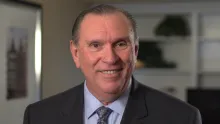
Randy D’Alessandro served as pastor for the United Church of God congregations in Chicago, Illinois, and Beloit, Wisconsin, from 2016-2021. Randy previously served in Raleigh, North Carolina (1984-1989); Cookeville, Tennessee (1989-1993); Parkersburg, West Virginia (1993-1997); Ann Arbor and Detroit, Michigan (1997-2016).
Randy first heard of the church when he was 15 years old and wanted to attend services immediately but was not allowed to by his parents. He quit the high school football and basketball teams in order to properly keep the Sabbath. From the time that Randy first learned of the Holy Days, he kept them at home until he was accepted to Ambassador College in Pasadena, California in 1970.
Randy and his wife, Mary, graduated from Ambassador College with BA degrees in Theology. Randy was ordained an elder in September 1979.
playlist
Related Sermons
