

Chuck Smith
This transcript was generated by AI and may contain errors. It is provided to assist those who may not be able to listen to the message.
In the interest of full disclosure, I've used the following materials in the preparation of the sermon today. I've used the Life Application Bible commentary and also the Preachers Outline and Sermon Bible commentary. Those are two very fine commentaries that I use very extensively when I'm preparing messages. I just wanted to give them due credit for what they've done to help me with the message today. Today, we are going to go through one verse of the Bible.
We're going to go through Romans 12 and verse 1. That's all I had time for over in Ann Arbor. I'm sure that's all I'll have time for here. In Romans, and it's been a while since we've been there, let me give you a couple of minutes as a recap of where we've been. The purpose of the book, Paul was writing a letter to present a complete and detailed statement of the Gospel message.
He wanted the people in Rome to understand what it was that Jesus Christ proclaimed. The theme, and again, you will be able to get this online. We'll put this sermon online today or sometime this week. Or you get a CD later. But the theme is stated in Romans chapter 1 verses 16 and 17, where it says, The Gospel is the power of God unto salvation. That's something that Paul very much wanted to get across to the people he was writing to.
The Romans were very familiar with power. And he wanted to show them another kind of a power, a spiritual power, the power unto salvation. Breaking down the chapters, Romans chapter 1, 2, and 3 shows man's guilt before God and him as being worthy of the death penalty. Romans chapter 4 shows how man can have his sins forgiven, justification by faith. And in so doing, the Apostle Paul wanted to make sure that the Christians in Rome didn't think that he was trying to do away with the Old Testament theology, not all of it.
And in so doing it to show the doctrine of justification by faith, he leaned on two Old Testament examples, the example of Abraham and David. Both of whom were justified by their faith. Romans chapter 5 talks about the doctrine of justification, talking about how justification is right standing before God. Our sins are forgiven, therefore we've got right standing before God. Chapter 6 and 7 of Romans talk about sanctification.
Sanctification being right living before God. More specifically, chapter 6 talks about how the believers are free from sin's control, because we have the sacrifice of Jesus Christ. We're not helpless, we have the sacrifice of Christ to call upon. But chapter 7, to balance that view, discusses the continuing struggle the believers have with sin. It's in that chapter that Paul says, you know, things I don't want to do, those are the things I do. And we've read that chapter each of us so many times. We relate to that chapter. So even though sin, you know, we can break free from sin's control because of the sacrifice of Christ, that doesn't mean we're home free regarding sin.
Paul wanted to make that point clear. Romans chapter 8 talks about how believers can overcome sin. Romans chapter 9 talks about God's sovereignty. Romans chapter 10 talks about the human responsibility that we all have before God. And then chapter 11, which was kind of the ending point for this first portion of the book, Romans chapter 11 gives an overview of the wisdom of God in dealing with Israel.
So the first 11 chapters, which we've gone through, shows us more of a doctrinal view, discussing the gospel of Jesus Christ. Starting in chapter 12 and going to the end of the book, there's going to be much more in the way of Christian living. Doctrine is fine to show us, you know, the basis for the faith, but we need to understand Christian living as to how we respond in a godly way to doctrine. How we respond properly. Now, I, as I made mention in Ann Arbor, I had my sermon all finished. It was all printed up.
It was ready to go. And then I wanted to take a look at the letter that Mr. Luca wrote us. And I had not read this letter before doing the sermon. But I thought it was interesting. It's a three-page letter that Mr. Luca has written to us.
Again, you've already got this at home if you've got internet, and I've sent it to you. Or you can pick up a copy later today. But I want to read just portions of what Mr. Luca wrote to us as a group, because it's so much, you know, what he was wanting to express and what I'm about to express to you are both on the same page. This letter is dated October 28th, dear brethren.
What lies ahead for the Church of God? As we settle in after the Feast of Tabernacles, what should we be looking forward to and achieving over the coming months? As we go through our daily tasks, the word daily comes out to my mind, and you'll see why in a little bit. As we go through our daily tasks, are we looking for and earnestly seeking the direct guidance of Jesus Christ, the living head of the Church?
Is our true focus on serving God through Jesus Christ and accomplishing His purpose for us? Several paragraphs down, he writes, The dual mission of United Church of God, based directly on the word of God, makes it clear we are to be dedicated to preaching the precious gospel of the coming kingdom of God, and we are to be daily, minute by minute, hour by hour, preparing ourselves to serve for all eternity under Jesus Christ Himself. We begin this daily process by spiritually renewing ourselves, dedicating each and every day in prayer to the divine purpose of God, and yielding ourselves to His will, seeking His will and doing it, offering up ourselves as living sacrifices, which is what Paul said under inspiration of the Holy Spirit, in Romans 12, verse 1.
Toward the end of his letter, Mr. Luecker says this, But God, through Jesus Christ, gives us the victory, on a daily basis, complemented by regular fasting and times of intense prayer, to seek the Almighty will of God. God will open our eyes and give us incomprehensible spiritual strength to overcome and become more like Him. Let us rededicate ourselves to seeking those things which are above. I thought it was amazing after I put my thoughts together on the material I want to cover with you today, and then reading this letter, how much what was on his mind has been on my mind.
Let's now turn to Romans 12 and read our one verse. After I read the one verse, we're not going home. I'll have more to say than just reading one verse here, but this is all as far as we're going to get to today in Detroit. Romans 12, verse 1, I beseech you therefore, brethren, by the mercies of God, that you present your bodies a living sacrifice.
Mr. Luecker talked about that in his letter, and I would ask you a question, what exactly does that mean? How do you and I present our bodies a living sacrifice? We're going to look at that today. We're going to ask that question and hopefully answer it to some degree. Holy and acceptable to God, which is your reasonable service. So that is my text for today, as they say in some parlance. You know, brethren, the Bible talks about here in verse 1 how we need to present our bodies a living sacrifice.
Our bodies are all we have to offer to God. Our body encompasses our emotions, our mind, our thoughts, our desires, and our plans. Our body represents the totality of who you and I are. Our body is the instrument by which all of our service is given to God. And so Paul says here we are to present our bodies, we are to present everything to God as a living sacrifice. As I was preparing the message, looking at one of the commentaries, there was an interesting little quotation from Mr. Anonymous. Mr. Anonymous says a lot of things, but he said this, the main problem of being a living sacrifice is that it keeps crawling off the altar.
We don't want to keep crawling off the altar. We want to be a living sacrifice that stays on the altar. Now Romans chapter 12 offers an outline for breaking the world's mold and the world's hold on us as Christians. We believe sincerely, you know, Mr. Luca talked about this last Sabbath. He said he thinks, you know, his family has some longevity in it.
His mother, I believe, is in her 90s. He says, you know, I think that we will see the return of Christ before that time. No one knows. But I think that's certainly a very real possibility. And if you and I are going to be in God's kingdom, we need to break the hold that the world has on us. Romans chapter 12 shows how that is done. How that is done. Romans chapter 12 gives us direction, how we can go against the flow of society. And of course, the whole idea here is that you and I, we are going to conform.
You know, verse 2 says, and do not be conformed to this world, but be transformed by the renewing of your mind. Now the truth of the matter is, I'm not going to get to verse 2 today. I wanted to, but I'm not going to get to it.
But you and I, all of us in this room, are going to be conformed to something. Either we are going to conform to God and His way of life, or we're going to conform to this world and Satan's way of life. There's no middle ground. There's no fence sitting here. Because if we're not for God, then we're going the other direction. It's as simple as that. So the question is, what exactly is sacrificial living? What is sacrificial living? It says here that we need to present our bodies.
The totality of what we are. We need to present ourselves as a living sacrifice. I've got four points here for you. Number one, a living sacrifice means constant, not occasional dedication to God. Constant dedication, not occasional. I think all of us understand that concept. I think all of us have been to the place in our lives spiritually where we've heard a sermon maybe at the feast. Maybe this last feast. This last feast in Wisconsin delves. I was moved to tears on several occasions by the speakers who spoke.
There were two men who in particular, both on the same day, they had split sermons. One man was talking about how his stepson was killed in an auto accident just 30 days before the feast. The other man was talking about growing up in a family that was very dysfunctional.
How his father had hurt him and hurt him and hurt him. And how hurt he was and what his life was like as a result. He said, you know, all I ever wanted from my dad was simply for him to come to me and say he was sorry. And to apologize. And that never happened. Never happened. And, you know, the people around me were, you know, I was pulling out my hanky, using my own hanky, sharing my hanky. Times like that, you know, there's a lot of emotion.
And at times like that, you know, it's so easy for us to be zealous, want to be dedicated. But then the feast comes and goes. We go back home. We start working with our crabby people at work. Our crabby next-door neighbors, or whoever is crabby in our life, and kind of contrary and what have you. And the dedicated, not the dedication necessarily, but the inspiration evaporates.
Can't bottle that up. But if we want to be a living sacrifice, we must have a constant, not occasional, dedication to God. Let's take a look at some Scriptures here. Put your marker in Romans. Although I don't think we'll be returning to it too often. But let's go to Matthew 6.
Here in Matthew 6, we've got the model prayer. The disciples wanted to know how to pray. And Christ gave them an example. He gave them highlights. He gave them things that would be good for us all to incorporate into our prayer life. Not that we've got to do this every day. I've had situations where I've maybe highlighted one aspect and spent the whole prayer session on that. But here in Matthew 6 and verse 9, In this manner therefore pray, our Father in heaven, hallowed be your name. And as you go through this whole model prayer, the one thing that strikes you is the whole of the prayer has a spiritual orientation to it. We want to hallow our Father. He's not just anybody's Father. He's our Father. He's your Father. He's in heaven. We need to hallow that name. We need to reverence it and respect and stand in awe and worship. All those things we think about how to properly respond to the very name of our Father. Your kingdom come. All that that means, your kingdom come. Your will be done on earth as it is in heaven. And right now we know that only the righteous angels are there with God and with Jesus Christ. And we know that only the perfection of the will is being sought in heaven because Satan has been cast to the earth. But now notice in the midst of this prayer, verse 11, and give us this day our daily bread. Brethren, it doesn't make any sense that in a prayer, the whole of the prayer has a spiritual orientation, that you have something here that just sticks out as being physical. Now, I don't doubt that we need to be asking for our daily bread physically, that God would give us what we need to keep body and soul together. You know, our physical nourishment, you know, clothes on our back and those sorts of things. I'm not saying we shouldn't be asking for that, but the thrust of this prayer is spiritual in nature. Give us this day our daily spiritual bread. Our daily spiritual bread. This is where sacrificial living comes in as a constant, as a continuous sacrifice. Because we're going to God and we're wanting daily nourishment. We're wanting daily, the daily infusion of God's Spirit into our lives. You and I can take a little bit of a quick, you know, we're nowhere near Passover season, but we can take a little bit of a spiritual temperature on where we are right now by looking at our orientation in life. Do you and I have a worldly pursuits orientation? Or do you and I have a spiritual pursuits orientation? What takes up most of our thinking? What takes up most of our time? If you are concerned about things, what takes up most of your concern? Is it for the physical or is it for the spiritual? If we want to be examples of a living sacrifice, then we need to do what it says here and ask God for our daily spiritual bread. Something else, let's go to Luke. I think we're, as we go through some of these scriptures, we'll augment the meaning of what we've got here. Luke 9 and verse 23. Luke 9, 23.
Then he said to them all, if anyone desires to come after me, let him deny himself and take up his cross daily and follow me. Not take up the cross occasionally. Not take up the cross when it's convenient. Not take up the cross Monday, Wednesday, and Friday, but Tuesday, Thursday, Saturday, and Sunday. We're not going to do it. Kind of like a college class. It used to be, before I really did an in-depth study on this verse, that like many people, I thought that when Christ said to take up his cross daily, that what that meant was, well, you know, we all have our issues in life. Some of us have ill health, and so ill health is my cross to bear. Or maybe I don't have the education I should have, and because of that I don't have the job I should have, so that's my cross to bear. Or maybe my family isn't what it should be, they're not in the church, and that's my cross to bear. Is that what it's talking about there? You know, when you look at the context of what Luke is writing, those people that he's writing to, that Christ is talking to, when somebody talked about crucifixion, they knew exactly what you were talking about. Crucifixion was ending somebody's life. Crucifixion was a slow, painful process. Your life was forfeited because of crucifixion. And so what Christ here is saying, we must take up our cross daily, yes, it includes all the various issues and challenges we have in life, but basically that saying is talking about how you and I need to be a living sacrifice on a daily basis. We give up our life. We are no longer our own. We're going to read some scriptures about that later on. We are no longer our own. We've been bought and paid for. We are bondservants. Christ has purchased us.
And so the old man, the old woman, has to die, has to be crucified, and it is a slow and a lingering process. Now let's go over to Mark 8 because there's a little something in addition over here in Mark that gives additional light to what we just read in Luke.
Mark 8 and verse 31. Mark 8, 31, He began to teach them that the Son of Man must suffer many things and be rejected by the elders and the chief priests and the scribes and be killed. And after three days rise again. So here in verse 31, it encompasses the mission of Jesus Christ.
Verse 32, He spoke this word openly, then Peter took him aside and began to rebuke him. Peter began to rebuke him. You see, at this point, Peter was sincere and Peter was zealous and Peter was well-meaning. But Peter had more of a physical orientation. He wasn't getting the intent of what Jesus Christ was here on earth to do. He was mistaken. And you know, brethren, we can follow him to the same pit. If you and I don't have the proper orientation, we can be sincere. We can be zealous. We can be doing things that we consider very religious. And we can be off base, way off base. He was. Notice what it says here in verse 33. But when he had turned around and looked at his disciples, he, Christ, rebuked Peter, saying, Get behind me, Satan. Now, Christ loved Peter. He didn't hate Peter. Christ was about to die for Peter. But Christ wants to make a very strong point. Only Satan would not want Jesus Christ to be crucified. Because if Christ is not crucified, our sins are not forgiven. And Satan would win. Peter didn't have a proper orientation.
Get behind me, Satan, for you are not mindful of the things of God, but the things of men. Remember there in Romans 12, verse 2, where it talked about how our minds need to be renewed.
We'll get into that next time we go through Romans. We need to have a mind that is full of the things of God. If we have that, we're not going to go astray. But notice verse 34. When he had called the people to himself, and his disciples also said to them, Whoever desires to come after me, let him deny himself, take up his cross, and follow me. Same kind of thing we've read back there in Luke. Notice verse 35, though, that really kind of gives a clinching idea here. For whoever desires to save his life will lose it. But whoever loses his life for my sake in the Gospels will save it. So here we see connection. We see a connection of carrying, taking up our cross, taking up Christ's cross, our cross, and losing our life. It's not just a matter that we've got some impediment in life, we've got some struggle. Yeah, we all have those. But we need to give our life fully and totally to the great God. Fully and totally. Peter was committed to the establishment of the kingdom of God on earth at that time. He just didn't know any better because God's Spirit was only working with him instead of in him. What he wanted was to follow Christ. He would go to war with Christ. Remember, he was the one who lopped off the high priest's servant's ear. But he was misguided. He was misguided in his actions. Brethren, when you and I are living sacrifices, and we are a constant living sacrifice, not an occasional one, two things will be true for us. Let me go through these. And I was, you know, as I put this together, I could have added so many other things. But I just wanted to broach this subject to give you something to think about and meditate about. As a living sacrifice, it means that it will cost us all that we are. All that we are. Remember, I talked about the body. The only thing we have to give to God is our body. So keeping that thought in mind, that it's going to cost us our whole body.
Listen to this. Let me kind of tick down through the areas here. It's going to cost us to be a living sacrifice, to be a continual living sacrifice. It's going to cost us our heart. Our heart. Our heart represents our total devotion and commitment to God. It's going to cost us our heart. It's going to cost us our mind. So our mind is totally permeated with the things of God, not the things of the world. It's going to cost us our eyes. What are we going to look at? What are we not going to look at? Because the eyes are the porthole for the soul. It's going to cost us our ears.
What are we going to listen to? What are we not going to listen to? Are there some things we need to listen to we're refusing to listen to? And are there some things we shouldn't be listening to that we're only too eager to listen to? It's going to cost us our hands. In the Bible, the hand is a symbolic of a way of living, of doing. We do with our hands.
It's going to cost us watching what we take part in in life. It's going to cost us our feet. The Bible uses the feet. Again, about looks like the hands. It talks about our walk. You know, the direction we're going. What direction are you going right now? What direction am I going right now?
If we're going to be a living sacrifice, a constant living sacrifice, it's going to cost us the way we walk. It's going to cost us our mouth. How we use our mouth. What we discuss, what we don't discuss with our mouth. Yes, it will tell us what we should eat and not eat, but that's more of a physical thing. What does the Scripture say out of the abundance of the heart? The mouth speaks. Today we live in a very rude age. We live in an age where people say almost anything that comes to their mind. Very, very hurtful age. Better than I, I think it was last week on Fox News, they were showing this one little girl. Her mother had already died. The little girl was terminal. I think she was like six or seven years of age. Pretty little thing. It was terminal. I don't think she had much time left. And for some reason, I think it was the next-door neighbor. It might be getting some of the facts from it, but I think it was the next-door neighbor had issues with the mom that was dead. And so this woman got on the Internet and started making fun of the little girl who was dying. And then they had the people come and interview the woman who was putting this horrible stuff on the Internet. And she was probably, I don't know, in her 30s or something like that, and she just had the most awful expression and just in your face. And she says, well, you know what goes around comes around. And she just, just the opposite of a repentant. I mean, people in the world, you know, people who were reporting the issue were just, they couldn't believe what they were seeing. And here's an adult, this poor little girl's dying and making fun of the little girl, making fun of the mom, the situation.
You know, out of the abundance of that woman's heart, she did speak. And what was coming out was really evil. It was evil, pure and simple. So those are some of the things that it will cost us. It will cost us all that we are. But secondly, secondly, if we're going to be a living sacrifice before God, it's going to cost us all that we have. Not just what we are, but what we have. Remember, we are slaves, each and every one of us. We are slaves to God, the Father, and Jesus Christ. We are bond servants. We are bond slaves. To really follow Christ will cost our family. How many in this room have family issues with the church? Probably everybody in this room has got family issues with the church. Sometimes you can have family issues and everyone is in the church. And sometimes it's because people aren't in the church and they, you know, we've got issues. They don't understand why we're not keeping Christmas and Easter. They don't understand why we don't do birthdays. They don't understand why we don't do this or that or the other. They just don't understand why we don't eat this.
It's fun. I've not been in the environment that you are for some time. So I live vicariously through my lovely wife, Mary, who this last week they had all this, apparently some sort of a pageant at work for their Halloween costumes. And they were voting department by department who had the best group look. And they, you know, they wanted Mary to vote and Mary wouldn't vote. What's wrong? It's just, you know, just costumes. And, you know, we're just dressed up as little devils and ghosts and ghouls. People just don't understand. So sometimes it costs us our family. Sometimes it costs us our job.
Now how many of us in this room, show of hands, how many of us in this room have applied for a job, probably could have gotten it, but we didn't because of the Sabbath. Most people in this room, I've lost track of the jobs I could have had if it were not for the Sabbath and the holidays. And so what? So what? It hasn't hurt my girth, honey. I've not missed that many meals in my life. But, you know, to be a living sacrifice means a constant, not occasional, walk with God. Let's go on to point number two. Point number one was that a living sacrifice means a constant, not occasional, dedication to God. Point number two, a living sacrifice means a sacrifice wherever the person is at.
A living sacrifice means you will follow Christ's lead no matter where it goes. You can state that any number of ways. Any number of ways. Some people feel in some of the religions of the world that they've got to go to a place where a so-called miracle has happened. Or they need to go to maybe a holy city or a city that is much loved by God and go to a certain wall or go to a certain area or something or other. Christ would tell us that a living sacrifice follows Christ wherever he leads. Wherever he leads. Let's take a look at Revelation chapter 14.
Revelation chapter 14, starting here in verse 1. Here we're looking at the saints of God. We're looking at Christians. Revelation 14, 1. And I looked and behold a lamb standing on Mount Zion, and with him 144,000, having the Father's name written on their foreheads. There are foreheads representing their minds. The Father's name written on their foreheads means that God's Holy Spirit was in their hearts and in their minds. These are Christians. And I heard a voice from heaven like the voice of many waters, like the voice of the loud thunder and the loud sound of harpists playing in their harps. The thing is, we're a new song before the throne, before the four living creatures and the elders. And no one can learn the song except for the 144,000 who were redeemed from the earth. Again, we're looking at language talking about God's people. They were redeemed. Redeemed by the shed blood of Jesus Christ. Now, verse 4. These are the ones who were not defiled with women. And as we heard earlier, here talking about false churches, false belief, they were not defiled with false doctrine, a false way of looking at life. For they are virgins. Their sins have been forgiven them. So far as God is concerned, they're spotless. Now notice, these are the ones who follow the Lamb wherever He goes.
Brethren, that is the essence of being a living sacrifice. That we are going to follow the Lamb wherever He goes. And whatever He asks, that's what we are going to do. It says here, these are the redeemed. These were redeemed from among men, being first-roots to God and to the Lamb. So a living sacrifice follows Christ wherever He leads. We take up that cross. Our life is over. And now we're going to live the way God wants us to live. We're going to live according to this book that's on your lap right now. Whatever it says, we're going to do. When you were being counsel for baptism, you didn't know everything there was to know about the church. I don't know if even right now any of us knows everything there is to know about the Bible and the church. I don't know everything that's in this book. But the one thing that we look for before a person is baptized is the idea that no matter what this book says, as long as this book says it, as long as it's God-breathed, that's where we are going to go. We're going to follow Jesus Christ no matter what. Let's turn to John 10.
Discussion here about sheep. John 10. John 10.
John 10 and verse 3.
John 10. To him the doorkeeper opens, and the sheep hear his voice, and he calls his own sheep by name and leads them out.
We, as the sheep of God, every one of us are sheep. There's nothing wrong with saying that we're sheep. We're foul. We should be sheep. We should be sheep-like in that way. That we are going to follow Jesus Christ as he leads. We drop down to verse 27. My sheep hear my voice, and I know them, and they follow me.
They follow me. Wherever Christ leads, we follow. That is the essence of being a living sacrifice. We don't go our own way. We don't do our own thing.
We ask God the Father and Jesus Christ, what is your thing? Where do you want me to go? You lead me, I will follow. We yield ourselves to God's guidance. We seek to be led by God, by Jesus Christ, and to do only what they would have us to do. Now, there's another aspect to this. Not only are we going to follow Christ wherever he dictates we go. Much like Abraham. Abraham was told, Abraham, I want you to leave your family. You're going to leave this land that you know and you love. I'm going to take you someplace that you're not familiar with. There's something I want to accomplish in your life. In one sense, every one of us was like Abraham in that regard. Now, we've not all left our family. We've not all left the local area where we were brought up. Not all of us have done that. But in terms of us leaving an old way of life and going God's way, yes, every one of us have done that. We've walked away. We were dead to the old way of life. And now we're going forward to a new way of life. We are a living sacrifice. But over here in Exodus 4, let's take a look at the calling of Moses.
Because it does add to our understanding about how God wants to work with us. A living sacrifice means going wherever Christ leads. And it also means that we simply go with what we've got. Sometimes, back in the day, people came to Jesus Christ, Christ said, I want you to follow me. And they said, Christ, well, let me go bury my father first. Let me go this, do this, or that or the other. And Christ said, no, no, no. I'm calling you right now, and I want you to come to me with what you have. Because there are certain things you need to repent of. There are certain things you've got that I want to have you continue to use. Exodus 4, they're in the midst of this discussion, Moses and God, about Moses leading the children of Israel out of Egypt. Chapter 4, verse 1, Moses answered and said, But suppose they will not believe me or listen to my voice. Suppose they say, the Lord has not appeared to you.
So the Lord said to him, What is in your hand?
What is in your hand?
The point God is wanting to get across is He's going to use Moses right where He was standing. What do you have in your hand, Moses? I'm going to show you how powerful I am because what you have got going for you, I'm going to use that not for your glory, but for my own glory. Thankfully, as I said in Ann Arbor, Moses had a staff in his hand. He didn't have a buffalo wing or a lamb chop or something. But he had this staff. He said, Arad, verse 3, cast it on the ground. So he cast it on the ground and became a serpent. And Moses fled from it. Then the Lord said to Moses, Reach out your hand and take it by the tail. And he reached out his hand and caught it and became a rod in his hand. That they might believe that the Lord God of the fathers, the God of Abraham, Isaac, and the God of Jacob, has appeared to you. This is a part of sacrificial living, to use what's at your disposal that God gives you as a gift to use. You don't have to swim some new ocean. You don't have to do a whole bunch of new things in terms of, I've got to go to school now or I've got to do this now. God calls you where you're at. He wants you to start serving where you're at. He wants you to blossom where you are. Yes, we do need to repent of a lifestyle, not saying that. But in this case, God says, What do you got in your hand? You've got a rod? How many of you use that rod? Each and every one of you, you've got a certain degree of education, you've got a certain station in life. I'm going to use you right where you are in that station in your life. I'm going to use you to work with people right there and then.
But it goes on. Verse 6. Furthermore, the Lord said to him, Now put your hand in your bosom, and he put his hand in his bosom, and when he took it out, behold, his hand was leprous like snow. He said, Put your hand in your bosom again, so he put his hand in his bosom again, and drew out from his bosom, and behold, it was restored like the other flesh.
Then it will be if they do not believe you, nor heed the message of the first sign, you know, the throwing down of the staff, they might believe the message of the latter's son. So not only was God going to use Moses' rod, he was going to use Moses' hand.
God was calling him right where he was at. Be a living sacrifice right where he was at, with the tools at his disposal. Verse 9. And it shall be if they do not believe, even these two signs are listened to your voice.
So not only was God going to use his staff, his hand, now his voice is made mention of.
You should take water from the river and pour it on the dry land, and the water which you take from the river will become blood on the dry land. The river was going to be something that was, again, close to him. You can use that river. But think about the idea about the voice. Going to verse 10. Then Moses said to the Lord, O my Lord, I am not eloquent, neither before nor since you have spoken to your servant, I am slow of speech and slow of tongue.
And we probably, maybe many of us have seen the musical, Fiddler on the Roof. What does Tevye say? He says, you know Moses, for a guy who is slow of tongue, sure talked a lot.
So the Lord said to him, Who is made man's mouth, or who makes the mute, or the deaf, or the seeing, or the blind? Had not I the Lord? Now therefore go, and I will be with your mouth, and teach you what you shall say.
God's not putting up with excuses. God says, here I have called you, you follow my lead. Don't start making excuses about what you have as weaknesses. I'll use those weaknesses. Whatever's around you, I'm going to use.
Of course, Moses began to start talking about, well, you know, you really don't get it, God. I really don't pass muster. I don't pass muster. There's my brother, and he's much better than me. Dropped on to verse 15. He says, Now you shall speak to him, and put words in his mouth, and I'll be with your mouth, and with his mouth. God says, Oh, okay, if you want to do it that way, Moses, fine. Well, use your brother. He's like your staff. He's like your hand. He's like the river. He's like your voice. He's close by you. We're going to use you. You're going to follow me. You're going to do what I ask you to do.
I'll be with your mouth, and with his mouth, I'll teach you what you shall do. Verse 16. So he shall be your spokesman to the people, and he himself shall be as a mouth for you, and you shall be to him as a God. And you shall take this rod in your hand, with which you shall do the signs.
So here we've got an example of a living sacrifice following Christ, wherever Christ leads, with the tools that Christ gives us. Now, Christ will give us other tools. He'll give us additional spiritual gifts. As we yield to him, he will enhance and augment the gifts we already have. But a living sacrifice doesn't make a lot of excuses. The living sacrifice simply says, okay, I'm going to do what God has asked me to do. Let's go on to point number three. Point number three is that a living sacrifice, the living sacrifice leaves away its own desires.
The living sacrifice gives way, doesn't think about its own desires.
We've all got our own desires. We've all got our own wishes and wants and what have you. But a living sacrifice puts that in the background. Yeah, I might have a desire for this, but what is God's desire? That's first and foremost not what my desire is, but God's desire is. Let's go to Romans, but this time Romans chapter 14.
Romans chapter 14, verse 7 and 8. Romans chapter 14, verse 7. Romans chapter 14, verse 7. Romans chapter 14, verse 7. Romans chapter 14, verse 7. For none of us lives to himself and no one dies to himself. Romans 14, verse 7. Romans chapter 14, verse 7. In other words, you and I don't live in a vacuum. In other words, you and I don't live in a vacuum. Everything we do affects other people. Our lives impact those around us. We have a responsibility to those around us. So we can't just always be disappointed in what our desires are because that's selfish. Now there's nothing wrong with having desires. You know, the Bible talks about how we should love our fellow man as we love ourselves. So we can love ourselves. We can have desires, but we can't elevate our desires above God.
We can't elevate our desires above what God's desires for us would be.
Verse 8. For if we live, we live to the Lord, and if we die, we die to the Lord. Therefore, whether we live or not, we can't elevate our desires above God. We can't elevate our desires above God's desires but if we die to the Lord, therefore whether we live or die, we are the Lords.
Our lives are ultimately Christ's. We are those bond slaves. Our entire life, from beginning to end, belongs to God. He designed us, He created us, He has saved us. He has bought and paid for us. We are the Lords.
That's brought out a little more clearly here in 1 Corinthians 6. Let's turn over there. 1 Corinthians 6, verses 19 and 20.
1 Corinthians 6, verses 19 and 20.
Or do you not know that your body is the temple of the Holy Spirit who is in you, whom you have from God, and you are not your own? You are not your own. For you are bought at a price, therefore glorify God in your body and in your spirit, which are gods. Notice, glorify God in your body. We talked about how the body is everything that we have. He adds to your spirit, which is also the case. Glorify God in your body and in your spirit, which are gods?
We are not our own. There are many people today who would say that they have a right to do with their own bodies whatever they will. The idea over in California, there is an initiative on the ballot for legalizing marijuana. And right now, it doesn't look like that's going to pass. Even in California, most Californians realize that there's a lot of difficulties with something like that, in terms of crime and being gateways to other drugs and any number of other issues. So the referendum, I think, is 51% of people oppose it and only 39% of people are for it. The rest are undecided. Or they're probably on pot, so they don't know what they think.
But people have this concept that, well, it's my body, I can do whatever I want with it. Now, in one sense, that's true. God has given us free and moral agency. But the concept is that when we can do whatever we want to with our own body, that gives us some kind of freedom.
And that's fallacious. Because if we find ourselves getting on crack cocaine, if we find ourselves doing all sorts of other things that are injurious to our body, we are not free at all. We are enslaved to a bad habit. And we're shackled to that bad habit. We're not free. The way of God gives freedom. True freedom. But with that freedom comes responsibility. So a living sacrifice means that we must sacrifice our own desires to follow God. Because that's ultimately what's best for us.
You know, probably all of us at some point in our lives were renters. Maybe when you were first single, maybe you left your parents' home or your first marriage, or whatever. Many of us, if not most of us at some point, were renters. Many still are renters. And if you were a renter, when you go into an apartment or a condo or whatever it is at home, whatever it is you were renting, you're given a list of things that are do's and don'ts. Because you don't own that home or that apartment or that condo. And there's rules and there's guidelines. And you don't want to violate those rules or guidelines, lest you have certain negative things fall upon you. Well, the same thing is true with our bodies. Our bodies belong to God. Our spirits belong to God. And He's given us a list of do's and don'ts. And if we violate that, it's almost like violating our rental agreement.
And negative consequences happen when that takes place. So, point number three is that a living sacrifice means that the body sacrifices its own desires and lives for God. Lastly, number four, and this is the last thing I'll go into before we quit for the day, as we journey through our one verse today. Point number four, a living sacrifice means that we serve God. A living sacrifice means that we serve God. We sacrifice our own ambitions, our own desires, and we commit our own ambitions and desires for what it is that God wants us to do.
That's not to say that we as human beings can't have goals and aspirations, because we certainly can. But again, all of that is subordinated to what God wants first. What does God want first in our life? Let's look at 1 Peter 2 and verse 5.
1 Peter 2 and verse 5. 2 Peter 2 and verse 5.
You also as living stones are being built up a spiritual house, a holy priesthood, to offer up spiritual sacrifices acceptable to God through Jesus Christ. To offer up spiritual sacrifices. Today, I've been painting broad strokes, what it means to live as a sacrifice. Sacrificial living, there are certain key concepts I wanted to get across. That's painted broad brush, big strokes. But now I want us to be a little more definitive. We want to fine tune our focus here. And take a look at what are some of these specifics in terms of spiritual sacrifices.
I'm going to letter these, letter A.
We offer ourselves and our wills to God's control.
We offer ourselves and our wills to God's control.
That's a spiritual sacrifice. We've been called to do that. In your notes, you might just jot down Romans 12.1. We've been talking about that all day today. Romans 12.1. Not going to belabor that. We've been covering that. Letter B. Letter B, in terms of specific spiritual sacrifices, we offer love to God and to our fellow man.
There are many, offering love to God and our fellow man. There are many verses we can turn there. Let's look at Ephesians 5 and 2.
Ephesians 5 and 2.
Actually, we'll start in verse 1. Ephesians 5.1. Therefore, be imitators of God as dear children.
Be imitators of God. What is God? Who is God? What does it say there in 1 John 4? I think it's verse 16 or 18, somewhere in there. It says, God is love. Be imitators of God as dear children. Notice verse 2. And walk in love, as Christ also has loved us and given himself for us, and offering anise sacrifice to God for a sweet-smelling aroma. Now, here's a specific that we need to walk in love as Christ did. We are Christians. We are Christ ones. We follow Him. We are imitators of Him. And by walking as He walked, we offer ourselves as a sacrifice to God.
Let her see.
Talking about more specifics. We offer our money and our possessions freely to help spread the Gospel. Again, brethren, you and I have been called, not just for our own salvation, we have been called to do a work. I would never be wanting to be a part of any organization, spiritual organization. All we want to do is look to ourselves, selfishly. Yes, we want to take care of the brethren. That's one of the commissions we feel we have. But we also want to get out a warning message to this world. And we have such a passion about it that, yes, we will give of our substance. I don't know. Maybe my mind is wired a little bit differently than others. But when I see on TV worldly people talking about their passion of living. Now, their passion might be owning a pro football team. Their passion might be owning a race car. Their passion might be oil painting. It could be any number of things that are not by themselves. They're fine. But they talk about the passion they have for their career.
And I think to myself, how passionate am I for the career God has given me? And my career is that of being a Christian. And your career is that of being a Christian. How passionate are we?
We watched the old black and white World War II films. We see the old series, which was such a good series, World at War. Came back in the 50s or 60s, whenever that series came on. Black and white. That's mostly all they had back in World War II to film things. And they'd have hour-long segments talking about various parts of the Second World War. And you think about the fact that what you and I probably are going to live through is going to be so much worse than that.
When you see movies about the Holocaust and what happened to those poor people, you think, that's going to happen to our people in this nation in our lifetime. Can we not have a passion for getting out the Gospel, for taking of our substance, whatever meager possessions we have, whatever our tithe dollar, our offerings, and to put it behind the work of the great God?
Let's look at Philippians 4. Philippians 4.
Here Paul is writing to a church, the church in Philippi, that he loved so very much. Paul loved every church, but there was a special connection to this church. You see, there were some churches like the church in Thessalonica. Paul didn't feel he could have asked them for financial support, because there were enough people in Thessalonica that thought Paul was in it for the money.
You get a group even this small. If you take all the wage earners in this congregation, you take 10% of what's in this room. That's a lot of money. And so people sometimes think, well, he's in it for the money. But the people in Philippi didn't feel that way about Paul. That's a little bit of a background. Chapter 4 of Philippians, verse 15. Now, you Philippians know that in the beginning of the Gospel, when I departed from Macedonia, no church shared with me concerning the giving and receiving, but you only. I didn't feel I could go to a lot of the churches and ask for financial help to support the ministry, but I could come to you, because we were on the same wavelength. For even in Thessalonica, you sent aid once and again for my necessities. Paul couldn't ask from that little church in Thessalonica, but he could ask from Philippi. Not that I seek the gift. I don't seek people's money. I'm not in it for riches, but I seek the fruit that abounds to your account.
What I want the money for is so that I can proclaim the truth of God. I've got physical means. I've got to eat. I've got to, you know, when I go on a journey, I've got to pay the ship to get on the ship. I've got to pay for my food when I'm on the ship. I've got to rent animals if I'm not walking. I've got my costs to cover. I'm not in it for money, but what I am in it for is to see you abound in the grace of God. That's what I'm there for. Verse 18. Indeed, I have all in abound. I am full, having received from Epaphroonitis the things sent from you, a sweet-smelling aroma and acceptable sacrifice well pleasing to God. So when they sent him money, it was a sweet-smelling aroma and acceptable sacrifice well pleasing to God. Again, because he was going to use that money to pay for his ministry. Now notice verse 19. And my God shall supply all of your need according to his riches in glory by Christ Jesus. Paul says, don't think that just because you're giving me some of your physical wealth that somehow that's going to hurt you. God is going to respond by giving you spiritual wealth from his great riches, from his grace.
Okay, moving on. Letter D. Talking about some specifics of sacrificial living.
We send our lives around continual praise to God. Continual praise to God. I don't think we do such a good job. As a church culture, I don't think we've ever done a really good job with this. In terms of praising God, I think we're so concerned about sounding Pentecostal or something that we might think is from another group or something. And yet, continually, you see the Apostle Paul giving praise and honor to God. Yes, I understand there's a right way and there's an incorrect way of doing that. But we need to be doing it. We need to seek out that correct way and do that correct way. Let's look at Hebrews 13.
Hebrews 13 and verse 15. Hebrews 13-15. Therefore, by him let us continually offer the sacrifice of praise to God, that is, the fruit of our lips giving thanks to his name. The sacrifice is called the sacrifice of praise to God, the fruit of our lips giving thanks. That's something that we should be doing as a daily living sacrifice. And then, the letter E is found in the very next verse. Letter E, to do good and share freely with others. We see that in Hebrews 13-16. But do not forget to do good and to share, for with such sacrifice, God is well pleased.
With that kind of sacrifice, God is well pleased. Brethren, today we have gone through one verse. I know that if I always took this much time for one verse, we would be here for a long, long time. But as I was getting into this subject this last week and I saw just how much material there was here, I felt the need to slow down, not try to go through two chapters or three chapters. The more I got into it, the more I thought, I can't even get through three verses here. But hopefully you see just how rich and how beautiful the Word of God is and what there is for us to be studying.
And hopefully sometime this week we'll have this sermon uploaded for you so you can review it online if you would like. So, be praying for our little adventure here on the internet that we would get up and running fully. I'm not so sure I know what that means. Mr. Ellis, he is the man of wisdom there. He knows what that means. And if he doesn't, he'll talk to Michelle to compost who will help us in the way to get that thing up and running. But over the course of, I think, by the end of this calendar year, that site will be well up and running. We'll have a calendar on there for you. We'll have sermonettes, we'll have sermons, we'll have Bible studies. I'll put in my weekly, midweek news write-ups for you there. All sorts of other things. I might ask your prayers. The Church has asked if I would do an occasional weekly news commentary for the internet. So I'm going to be doing that as well so you can be praying for me for that because I would certainly appreciate your help with that. Okay. See you later on.
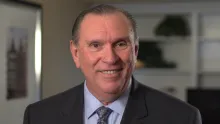
Randy D’Alessandro served as pastor for the United Church of God congregations in Chicago, Illinois, and Beloit, Wisconsin, from 2016-2021. Randy previously served in Raleigh, North Carolina (1984-1989); Cookeville, Tennessee (1989-1993); Parkersburg, West Virginia (1993-1997); Ann Arbor and Detroit, Michigan (1997-2016).
Randy first heard of the church when he was 15 years old and wanted to attend services immediately but was not allowed to by his parents. He quit the high school football and basketball teams in order to properly keep the Sabbath. From the time that Randy first learned of the Holy Days, he kept them at home until he was accepted to Ambassador College in Pasadena, California in 1970.
Randy and his wife, Mary, graduated from Ambassador College with BA degrees in Theology. Randy was ordained an elder in September 1979.
