

Greg Thomas
The spring Holy Days focus on God's work in individuals through repentance, acceptance of Christ's sacrifice, overcoming sin, and receiving the Holy Spirit as He prepares His firstfruits for His Kingdom. The fall Holy Days broaden that focus to God's intervention in the world through Christ's return, the first resurrection, the removal of Satan, the restoration of peace, and ultimately the opportunity for all humanity to receive salvation. A striking theme is that the fall festivals picture God reversing the tragedy of Eden in that His presence returns, the serpent is removed, and paradise is restored. If God has not forgotten a single person in His plan, how deeply do we appreciate the calling and preparation taking place in our lives today?
This transcript was generated by AI and may contain errors. It is provided to assist those who may not be able to listen to the message.
Well, next week we begin the 2026 fall Holy Day season, beginning with the Feast of Trumpets. Where did the time go this year? And, of course, the Feast of Trumpets falls on the weekly Sabbath.
The fall festivals pick up after a three-month-long gap since we observed Pentecost in June.
Is the importance and theme of the fall Holy Days different from the spring Holy Days? Do you know they are? Do you know that the fall Holy Days have a different theme and a different purpose than the spring Holy Days?
That's primarily what we want to talk about today.
What do the upcoming festivals of God, the ones we're about to celebrate, tell us about His future plan for the world?
Well, let's go back to the book of Leviticus and review what God originally instructs about His festivals, and that is Leviticus chapter 23. If you'll turn there, please. So what we're going to do today is we are going to have a brief survey on the seven annual Holy Days, the crux of their meaning, and how the spring Holy Days in purpose and theme are different from the fall Holy Days that we're about to celebrate.
And I know, of course, that as we get to each one of these feasts, there will be a lot more detail about what and the totality of what they represent. Let's begin Leviticus chapter 23 verse 1.
And the Lord spoke to Moses, saying, Speak to the children of Israel, and say to them, The feast of the Lord, as I've mentioned before, they're not your feast, they're not the feast of the United Church of God, they're not any man's or organization's feast, these are God's feasts.
The feast of the Lord, which you shall proclaim to be holy, convocations, holy conventions, you'll gather together, you will worship and celebrate Me. These are my feasts, God says. Again, He has ownership of them. Six days, and He begins with a weekly feast. Six days. Shall work be done, but the seventh day is a Sabbath of solemn rest, a holy convocation, you shall do no work on it. It is the Sabbath of the Lord in all your congregations. These are, what He's about to announce, are the feasts of the Lord, holy convocations, which you shall proclaim in their appointed times, because God designated when specifically each of these feasts were to be held, some in the first month, some in the accounting 50, in the middle of summer, some in the seventh month.
God appointed specific times for these days to be acknowledged, and He announces to Moses a reminder of the weekly feast before He even proclaims the seven annual holy days. And we, of course, observe the Sabbath because it's a reminder of God's creation. It helps us to look forward to the kingdom of God, a time of peace, a time of serenity, a time when God's presence will not just be in our lives and in our church, but God's presence will be throughout the earth. Some claim that we believe in salvation by works, and nothing could be further from the truth.
You see, by resting on the weekly Sabbath, we show that salvation is not achieved by works or anything we can do, but by God's grace and what Christ has done for us. That's what the Sabbath represents. So that is the weekly Sabbath, and God gets into His annual festivals, and there are some connected celebrations with His annual festivals, beginning with Passover.
Verse 5 of Leviticus 23, on the 14th day of the first month at Twilight is the Lord's Passover again. He has ownership of that time. It's sacred to Him. It's important to Him. And until Exodus, the enslaved Hebrews, kept the same calendar year as the Egyptians, but when they came out of Egypt, God instructed them that they were to have a new month, month called Abib, which means green years or just the beginning of early springtime.
Abib correspond to the springtime in that area of the world, and the same in our area of the world. And the season would begin with the Passover, and it teaches that repentance and conversion are not possible without reconciliation. Everyone who has ever lived, lives today or ever will live, needs a Savior. They need Jesus Christ. They need to accept and understand what Jesus Christ did for them, and accept the way of life that cherishes Him as our Savior, as our Lord, as our Messiah, as our High Priest, and our soon-coming King.
He died in our place, and He made it possible for everyone to eventually, when their time comes, be reconciled to God. It's a reminder of what Christ did individually for each and every sinner who has repented to this point in time. Every human being who has ever lived, who is living today or will live in the future, must acknowledge Jesus Christ as their Savior.
Everyone who needs to accept His shed blood for the remission of their sins, so they can be reconciled to God. In Acts chapter 4 and verse 12, it says, under no other name in heaven can anyone be saved. You cannot be saved by acknowledging Muhammad or Buddha or any of the Indian gods or any other name in heaven or earth, except Jesus Christ as our personal Lord and Savior.
And since the great majority of human beings who have ever lived throughout time, never even heard of the name of Jesus Christ, let alone accepted Him as their Savior, it's rather ridiculous to think that an annual event that pictures the total sacrifice and complete forgiveness of sin is now obsolete. And unfortunately, that's what most Christians have done today. They don't keep the Passover. This beautiful ceremony that pictures the shed blood of God's Passover lamb, capital L, they don't even acknowledge that, and they have replaced it with some story of a resurrection occurring on a Sunday instead of what God had revealed the focus on regarding His lamb, the Lamb of God.
Paul said in 1 Corinthians chapter 5 and verse 7, therefore, purge out the old leaven that you may be a new lump, since you truly are unleavened, for indeed Christ our Passover, Paul says, was sacrificed for us.
And as we have acknowledged before, this was written about 55 AD. That's 24 years.
After the death and resurrection of Jesus Christ, Paul is telling Gentiles. Corinth was a Gentile congregation. You know what? We're going to keep the feast. We're going to acknowledge the fact that Jesus Christ is our Passover who was sacrificed for us. And we're also going to recognize that we need to be unleavened in our lives. That's how important that message was to the Apostle Paul.
And then going to Leviticus chapter 23 and verse 6, we move into the days of unleavened bread. It says in verse 6, on the 15th day, the same month, the feast of unleavened bread is the Lord. Seven days you must eat unleavened bread, and for seven days we take leaven, which represents sin, out of our homes. Verse 8 says the seventh day is also a holy day. And this time period between these two annual holy days is seven days long. You know what number seven is in Scripture?
It's the number of perfection. That's what seven is. The days of unleavened bread represent the progression of us getting sin out of our lives, becoming less carnal, more Christ-like. That takes decades. That takes effort. That takes commitment until we come to the time when Jesus Christ returns, and we are transformed in the twinkling of an eye from mortal to immortal. And then we are perfected. And those seven days represent that progression of personal individual growth that you are going through and that I'm going through until a time when we can reach perfection. We don't do that because we think it saves us. We do that because we want to be obedient to our Father.
We were created for good works, Paul says in Ephesians. God has given us a mission, and that mission has become more like him and less like ourselves. And that's not easy, is it?
So God is performing not just an international work of preaching the gospel, but he's also doing a work in you. And this is exactly the theme and purpose of the spring holy days and the day of Pentecost. Think about it. It's not universal like bringing peace to the nations.
Like an army, Jesus and his army fighting the nations who ended upon his return.
It's not just about some massive resurrection. It's about what God is doing in the individual lives of people he is calling. Their acceptance of Christ is their Savior. Their sanctification and growing in the grace and knowledge of the Lord. They're receiving the Holy Spirit to help them in that process. Preparing the elect is the theme of the spring holy days.
These are the same people who will stand by the side of Jesus Christ as all of the fall holy days unfold. They come with him. They're part of the army of Jesus as he comes back to earth and sets his foot upon the Mount of Olives. And the nations are angry and want to have war against him. They're there by his side. Everyone who is experiencing the conversion process of these spring holy days is preparing to be part of that group that fulfills the latter fall holy days. Let's take a look at Pentecost. It occurs usually early summertime in our time of the world. Leviticus chapter 23 and verse 15. As you shall count for yourselves from the day after the Sabbath, count the day that you brought the sheaf from the wave offering. Seven Sabbaths shall be completed. Count 50 days to the day after the seventh Sabbath. Then you shall offer a new grain offering to the Lord and then dropping down to verse 21. And you shall proclaim on the same day that it is a holy convocation to you. You shall do no customary work on it. It shall be a statute forever in all your dwellings throughout your generations. I think we know this feast celebrates the receiving of the Holy Spirit. Jesus promised he would not leave his disciples an orphan, that he would send a helper, a comforter, something to coach and guide us and prick our conscience and tell us when there are things that we're not doing that we should be doing or tell us when things that we're doing that we should be or shouldn't be doing to remind us, to guide us, to teach us, to put these thoughts in our minds. He promised that Spirit to us. He said the Father would send that helper and comforter to the believers. And we believe that and we live by that. We know that the church was established in 31 AD, and the Holy Spirit is still being given to newly baptized believers today. Two individuals this very week received the gift of the Holy Spirit by the laying on of hands. God is still doing a mighty and marvelous work preparing people now so that they will be part of that team with Jesus Christ as the fall Holy Days begin to unfold.
Every year the church celebrates the anniversary of receiving the power of the Holy Spirit. Today, we do that immediately after a baptism ceremony by the laying on of hands. But then a dramatic profound miracle was important for everyone in 31 AD to see that this unique group of called out ones were the literal foundation of the New Testament church. The first three holy days that we just reviewed, including the Passover within those days, the days of Unleavened Bread, Pentecost, occur during the first and third months of the Hebrew calendar. And what they have in common is that every human being throughout history will have to do these things beginning with you and I, the elect, the chosen, those who are to be part of the fulfillment of the fall Holy Days with Jesus Christ. But even after that time, everyone most personally experienced repentance and acceptance of Jesus Christ as a personal Savior. That's Passover. Everyone has to go through a period of physical struggling in their lives against sin or their own carnal human nature to develop the character and obedience we need to have in order to be good servants within the family of God. Philippians chapter 2 and verse 5 talks about the mind of Christ. What is the mind of Christ? The kind of mind that Jesus had, it was the combination of deep humility. He gave up everything. He was part of the Godhead. He gave up everything and became a living sacrifice. Are we willing to give up the cares and temptations of this world? Are we willing to be living sacrifices for Christ throughout our lives? And then everyone who has ever lived and died and didn't know Christ or will be resurrected in the future will need to receive the Holy Spirit.
That's the seed of God's mind that enters us upon conversion and helps us to become more like God because we are seeded with Spirit through that process. And in time, God's desires that we become less carnal in our thinking and more spiritual in our thinking, and that takes decades. That takes a long, long time. So the spring and summer Holy Days are personal. They're individualists. The process of what we might say, conversion and salvation. And those whom God has called since the time of the day of Pentecost, he is preparing his chosen so they can be part in the prophetic fall Holy Days. And then an interesting thing happens in the Hebrew calendar.
After Pentecost are no other Holy Days until the seventh month. There's about a three-year gap. It's the longest gap between any group of Holy Days. Why? Between Pentecost and the Feast of Trumpets that we'll be celebrating shortly, is there a long three-month gap? What does this period represent?
Well, I want to suggest to you that all along it was a prophetic message that there would be a long time span between Jesus leaving the earth in 31 A.D. and granting the gift of his Holy Spirit, and 2,000 years before he would return to earth as pictured by the Feast of Trumpets.
You know, many early disciples expected Christ to return in their lifetimes. Even Paul said that when we who are alive, when Jesus returns, right? And so it goes back many, many years that people in every generation have believed that Jesus would return in their own lifetime. Maybe it's because we don't want to die. But whatever the reason, every Christian generation has believed this is it. This is the time. But you know what? The spacing of the Holy Days may have been God's indication all along that 2,000 years would lapse before Jesus would return again.
Maybe it was there all along. God would call many generations of firstfruits to be used by him each in their own time, in their own age, in their own day. And they would live their lives, and they would die, and they would participate in celebrating the same Holy Days that we celebrate looking forward to the soon-coming King. So again, I want to emphasize there's a big difference in the purpose and the meaning of the spring Holy Days, which are personal, individual.
They are focusing on the conversion, the salvation process of beginning with the chosen, but the same process that anyone living any time of history will also have to go through in order to receive salvation through the shed blood of Jesus Christ. So now let's briefly review the fall Holy Days, and they're significant. These are future events that you and I will have the personal privilege to be part of, to witness, to be there. That was all signified by the spring Holy Days, and God working with us, each and every one of us, as individuals to prepare us for this role at this time, beginning in the fall Holy Days. Again, these are future events that we will have the privilege to be involved in. Only a select few out of all humanity have been invited to be part of witnessing and participating in the prophecy outlined by these fall Holy Days, and that includes you. Leviticus chapter 23 and verse 24.
Speak to the children of Israel in the seventh month, on the first day of this month, you shall have a Sabbath rest, a memorial, blowing of trumpets, a holy convocation, you shall do no customary work on it, you shall offer an offering made by fire to the Lord. We know that anciently the blowing of trumpets, as was very dramatically demonstrated by the sermonette we had last week, as Mr. Housen endeavored to take every possible scripture I could use next.
Feast of trumpets. Thank you for that, Jim. Thank you very much for that.
But in his excellent presentation of the meaning of the Feast of Trumpets using the many, many scriptures I think we totally understand. The trumpets were used sometimes to gather together for war. Other times they were blown to make an announcement. In New Testament theology, it's universally recognized that they were blown to recognize Jesus Christ at his return, and the sound of that powerful heavenly trumpet blast. Let's take a look at Matthew chapter 24 and verse 30. You might want to keep your place in Leviticus, however. Matthew chapter 24 and verse 30.
Jesus said, Then the sign of the Son of Man will appear, and then all the tribes of the earth will mourn, and they will see the Son of Man coming in the clouds of heaven with power and great glory, and he will send his angels with a great sound of a trumpet, and they will gather together his elect from the four winds, and from one end to heaven to the other. We'll gather together everyone, whose salvation process was just like the spring holy days. They acknowledged their need for a Savior. They accepted Jesus Christ and his shed blood for the forgiveness of their sins.
They began to live a way of life called in the book of Acts of the Way, and through the sanctification process, they changed. They grew. They were remolded. They were transformed throughout the decades that they lived. They were the elect. They were the ones who were preparing for this time. They are the ones who will be gathered together at the sound of that trumpet from the four winds, from one end of heaven or the earth, wherever God's people are located, to the other at that time.
And this event describes what we know as the first resurrection. Obviously, that is very, very exciting. We're looking forward to a time when multiple thousands, tens of thousands, hundreds of thousands, who knows how many people will be in that great resurrection, will leave the earth and transformed into spirit and rise in the air to meet the arriving Jesus Christ. And like Jesus Christ, they will be given power and great glory upon His return.
Now let's go back to Leviticus 23 and verse 26. The Day of Atonement.
And the Lord spoke to Moses, saying, also, in the tenth day of the seventh month shall be the Day of Atonement. It shall be a holy convocation for you. You shall afflict your souls, meaning you shall fast. And offer an offering made by fire to the Lord. We don't offer animal sacrifices anymore. We come to that service as a living sacrifice. And you shall do no work in that day, for it is that they have atonement to make atonement for you before the Lord your God.
For any person who is not afflicted in soul on that same day shall be cut off from among his people and any person who does any work in that same day, that person I will destroy from among his people. This day looks forward to a time when the influence of Satan and his demons are removed from the world. Think of all the suffering that has occurred because of the sin of Adam and Eve.
And at this time, Satan and his demons will be replaced by the loving rulership of Jesus Christ and you. And all of those who went through that salvation process that we reflected in the spring holy days will be the new rulers, the new servants whom God has placed with loving rulership over the earth. And we'll fast on that day and fasting reminds us of the fact that we are, first of all, weak mortal beings.
It's humbling. We may think, you know, we may get a little cocky and think that we're really doing okay, but you skip meals and water and food for 24 hours and you're kind of reminded, you know, I'm really pretty shallow. I'm like one heartbeat away from dying and I feel like it after I haven't eaten for 24 hours. So it's very humbling, isn't it? That's a great experience. But there's another reason that we want and that we need to fast.
Another major reason we afflict our souls is to remind ourselves of our neighbor, that our neighbors are suffering. They're also God's creation. Even if they haven't been called yet in this world, the world is suffering the ravages of sin and it happens every day. The only solution is Jesus Christ. What is this day 11 since a terrible flash flood hit Nepal and I think thousands and thousands are still missing, and after 10 or 11 days you're not going to find very many people alive.
The world is suffering. The weather is messed up. Our environment we have poisoned. Our culture has become crude and more violent. The love of many indeed is waxing cold and the only solution that we have in this world is for that instigator of all those negative thoughts and ideas, that is Satan and his demons are removed from the earth and that people have an opportunity and a chance to follow and live God's way of life. So we fast remind us that the world still needs God's Spirit and needs his kingdom.
Then we come to the Feast of Tabernacles, Leviticus chapter 23 verse 33. Then the Lord spoke to Moses saying, speak to the children of Israel, saying, the fifteenth day of the seventh month, the Feast of Tabernacles, for seven days to the Lord. For the first day there shall be a holy convocation. You shall denote customary work on it. For seven days you shall offer an offering made by fire to the Lord. On the eighth day you shall have a holy convocation as well, just like the first. And you shall offer an offering made by fire to the Lord.
That is your living sacrifice, your presence. It is a sacred assembly and you shall do no customary work on it. Anciently the Israelites left their homes and they built tabernacles during the feast. And these temporary dwellings, whatever they may be, a booth, a hotel room, somewhere that isn't your home, somewhere that you've just migrated to, these temporary dwellings reminded them that God has something better planned for all of us in the future.
He has a permanent home, not the wooden structures that we live in today, which could be wiped out by a flash flood or an earthquake. And certainly at our demise will be owned by someone else. We're just, frankly, we're just trustees of everything we have in our lives, our cars, our clothes, our personal possessions, our home. We're just trustees. A hundred years from now, somebody else will own them. Even if they exist, someone else will own them at that time.
God has something better planned for all of us in the future. Earthly homes eventually decay. They fall into disrepair. The eternal home of the kingdom of God on earth is what the feast represents. And then there's the eighth day. Verse 39 says, on the on the eighth day, a Sabbath rest. The major emphasis on this holy day is not on you and me. We will already be sons and daughters in God's family at that time. This emphasis is on the multiple billions. The last figure that I saw by an organization that has worked very hard to come up with a number of how many human beings have ever existed, they say a hundred billion human beings have listed, have lived throughout history, human history. It's a lot of people. But no matter how many there are at that time, most have never known God and they'll be given their first opportunity for salvation to go through that process. Of the spring holy days, we talked about the acceptance of our Savior recognizing his shed blood, sanctification process of changing and growing, getting sin out of our lives, receiving the seed of God spiritually in our minds, the same spirit that the Father and Son share together. They, at that time, will go through the same process that you and I went through. And at that time, billions and billions will be raised from the dead to live again. So, the last part of the sermon today, I want you to think about this.
Have you ever considered that the fall holy days, picture the reversal or the unwinding of events that occurred in the Garden of Eden, that God reverses and unwinds the events that led to man being alienated from God? And he unwinds it all back to re-established paradise on earth. Let's take a look at this. Let's go to Genesis chapter 2 and verse 7. Genesis chapter 2 and verse 7.
After the creation of humanity, God creates a garden for them to live in. Let's read about it.
Now, the word Eden in Hebrew means something that's beautifully delicate, a delight, a pleasure. Same things that we could say about the kingdom of God once it's established on earth. And we know all the beautiful prophecies about the lion and the lamb and people living in their own homes and there being peace and plenty of food and a world that we long for. God gave Adam and Eve a taste of that when he created this garden, eastward in Eden. And he put the man whom he had formed and out of the ground the Lord God made every tree to grow that is pleased to the sight and good for food. The tree of life was also in the midst of the garden and the tree of the knowledge of good and evil. So step one, after the creation of humanity, God also created a garden for them to live in and it who was his intent that it eventually be extended to cover the earth. It is his desire for the kingdom of God to be on earth. So the garden was the first thing. Now let's read chapter three in verse one. Now the serpent had more cunning than any beast of the field which the Lord God had made. He said to the woman, has God indeed said, you shall not eat of every tree of the garden? And the woman said to the serpent, we may eat the fruit of the trees of the garden, but of the fruit of the tree which is in the midst of the garden. God has said, you shall not eat it, nor shall you touch it lest you die. Then the serpent said to the woman, first recorded lie, you will not surely die. Anyone seen Adam and Eve lately?
I think we can easily say that this statement was an absolute lie. But he goes on. For God knows that in the day that you eat of it your eyes will be opened and you will be like God knowing good and evil. Yes, God does know good and evil, but God has character. God knows good and evil and he consciously, purposely chooses only to do good. When human beings have their eyes opened, they are carnal. We are selfish, self-absorbed, and we will do evil. And the serpent knew that exactly.
But he's weaving this lie in the making them think, well think, oh, you'll be enlightened.
If you eat of that tree, you'll be like God if you just eat of that tree.
So the second thing had happened. First of all, God created the garden. The second thing is a serpent exists that deceives humanity and instigates sin and dysfunction throughout the earth.
All right, Lau, Genesis chapter 3 and verse 22. What was the result of this? Then the Lord God said, Behold, the man has become like one of us to know good and evil. Of course, he doesn't have the character to choose good perpetually.
And now lest he put his hand and put in his put out his hand and also take the tree of life and eat and live forever. Therefore, the Lord God sent him out of the garden of Eden until the ground from which he was taken. So he drove out the man. The previous verse says the Lord sent him out of the garden. Verse 24, he drove out the man. Why? Because God is evil? No.
Because what did Adam and Eve do after they sinned?
God's walking through the garden. Adam, Eve, where are you? Hello?
They hid from God. And human beings have been hiding from God ever since that day.
And God said, Okay, you want to do that? You don't want to have a relationship with me. You don't want me to walk through your life and participate and share your life with you? Fine. You're going to have to leave the garden. You're going to have to do it your own. Build your own civilizations, your own religions, your own languages, your own cultures. Go ahead. See how well that works. It says, and you placed cariboum at the east of the garden of Eden and a flaming sword, which turned every way to guard the way to the tree of life. So the result here, the result of sin, humanity is cut off from God's presence in salvation. So the order of events in Genesis 1 is Paradise Created. 1. 2. Serpent instigates sin.
And 3. God removes his presence. So what does God do in the fall holy days?
Number one, the Feast of Trumpets, God's presence is restored. That was number three. That's the last thing that happened in Genesis. In the fall holy days, number one is that God's presence is restored. What happens then? That same original serpent who caused everything in the first place is exiled for a thousand years and put in a spiritual prison. That serpent that instigates sin is removed. And then number three, that was number one in Genesis. God created a garden.
Number three in the fall holy days, after God has returned to the presence of Jesus Christ trumpets, after that serpent has been removed from influencing mankind atonement, the Garden of Eden is restored, is built once again, and encompasses what God always wanted, encompasses it throughout the earth. So I hope that you can see how God unwinds and restores what he originally intended in Genesis chapter two and Genesis chapter three to fulfill his plan for all humanity. Well, it begins just one week from today. Let's look forward to those holy days this year. Remember that God not only loves his firstfruits, which are you and I, whom he is preparing to be there to be part of the fall holy day prophecies, but he also loves all of humanity. He loves everyone who has ever lived. He hasn't forgotten about them. He has a plan for them, just like he has a plan for you today. The world needs its loving creator. And the fall holy days remind us that God has not forgotten the world. He has not forgotten his plan, and neither should we.
I wish all of you a wonderful, fulfilling Sabbath.
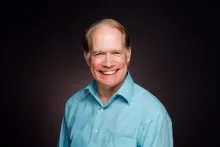
Greg Thomas is the former Pastor of the Cleveland, Ohio congregation. He retired as pastor in January 2025 and still attends there. Ordained in 1981, he has served in the ministry for 44-years. As a certified leadership consultant, Greg is the founder and president of weLEAD, Inc. Chartered in 2001, weLEAD is a 501(3)(c) non-profit organization and a major respected resource for free leadership development information reaching a worldwide audience. Greg also founded Leadership Excellence, Ltd in 2009 offering leadership training and coaching. He has an undergraduate degree from Ambassador College, and a master’s degree in leadership from Bellevue University. Greg has served on various Boards during his career. He is the author of two leadership development books, and is a certified life coach, and business coach.
Greg and his wife, B.J., live in Litchfield, Ohio. They first met in church as teenagers and were married in 1974. They enjoy spending time with family— especially their eight grandchildren.
