
Darris McNeely
This transcript was generated by AI and may contain errors. It is provided to assist those who may not be able to listen to the message.
The Kingdom of God Bible Seminars are just two Sabbaths away, so we're down to crunch time. And I think rather than having a Bible study that normally we normally would have had today, I would like to continue our congregational preparation for this very exciting event. I know that a number of us are excited, some of us are anxious, some of us may be feeling like it's a little bit scary, having this many folks in services at one time that we've never met before.
For most of us, we're new at this. I can remember many years ago, going back to the late 60s, before I started attending services, the Worldwide Church of God had something they called the America Listen Campaign, in which they took a gentleman named Garner Ted Armstrong, and he rent around the country and spoke, kind of like Kingdom of God seminars, obviously they were in rented halls. And in the late 60s, I received a letter and it said that we're going to have one in Ohio, where it's either going to be in Cleveland or Cincinnati.
So let us know your views on it. And of course, I had been listening to the radio broadcast by that time for quite a while. And I was so excited because I thought it was going to come to Cleveland, and I wrote back, Yes, Cleveland! Nor our sports teams. Don't let that be a vote against us. Please come to Cleveland. And they decided to go to Cincinnati, and it was held in Cincinnati at that time. But I remember the sense of excitement that I had, that I would actually get to hear someone preaching God's word.
And that was a very exciting time. And then it occurred a few times in the 70s, and then unfortunately the church kind of got away from that. We had a media effort that was kind of limited, descending out a magazine, and if they respond, they respond. And if they don't, so what? And it wasn't a very effective way to grow the church of God. Certainly not what we had experienced. Even in our history, this all began with a man named Herbert W.
Armstrong, who would have local tent meetings. And that's what he called them, tent meetings in Oregon. And he would invite people. He would be having an advertising background. They would print up hand bills and handouts. He would give them to a community. And he sometimes would do them for four or five nights in a row, and people would come.
And that was his version of a kingdom of God seminar. And there's nothing like pressing the flesh. Much more effective than simply sending someone a magazine or a booklet and hoping that they will respond. As of this morning, we have 26 people who have registered to attend the seminar. And to me, that is very exciting, particularly when you think about two weeks ago, because God always has other plans, aside from our feeble human minds and limitations.
So it is pretty exciting. Let's first go to 1 Corinthians chapter 3 and verse 5. 1 Corinthians chapter 3 and verse 5. Paul talks about his role in the ministry and the role that the ministry plays in serving God's people. And I think this is a great place to start in the sermon today. Paul says, Who then is Paul, referring to himself? Who is Apollos, a man who also had pastor to the Corinthian congregation, but ministers through whom you believed as the Lord gave to each one?
So it wasn't Paul, it wasn't Apollos, there was nothing magical about them, per se. It was God who called people and gave those ministers an opportunity to love and shepherd the people that God gave to the congregations. Verse 6, he said, I planted, Apollos watered, but God gave the increase. Now he who plants and he who waters are one, meaning they're doing a very similar job, nurturing and caring for the people that God calls, he says, and each one will receive his own reward according to his own labor.
For we are God's fellow workers, you, brethren, are God's field, and you are God's building. God is building you up, you are his harvest, you are his field. This is according to the grace of God which was given to me as a wise master builder.
I have laid the foundation and another builds on it. But let each one take heed how he builds on it, for no other foundation can anyone lay than that which is laid, which is Jesus Christ. So Paul is mentioning that a minister is only an instrument that God uses the plant and water what are God's first fruits.
A healthy church cannot be built around a ministerial personality. The Cleveland congregation has been served by many individuals over the years. Officially, the first pastor that Cleveland had was a man named Bob Steep, who I had the pleasure of meeting a number of times. He was a very kind, a very gentle man. And from Bob Steep until today, until the time when I take to the baton and hand it off to someone else, and that day will ultimately come, from then until now into the future, what the ministry is, is here to serve you and to care for you. And it's not about us, it's about Jesus Christ. And each pastor is going to be judged according, as Paul says here, according to his own labor.
I'm not judged for anything that Mr. Steep did. He's not judged for anything that I do here in the 21st century. We are all judged according to our own labor. And Paul reminds us, he says, let each one take heed how he builds on it. As your pastor, I am responsible for caring for you and for laying one foundation. And that foundation is Jesus Christ. And if I build any other foundation for you, I do you a disservice. If I build a foundation that this is all about saving your carcass in the place of safety, that's not going to last.
When times get tough, you're going to leave. That's not the foundation of Jesus Christ. I believe in biblical prophecy. I'm a supporter of biblical prophecy. But brethren, if I build upon a foundation of man-made delusional fantasies, that is not the foundation of Jesus Christ.
When those things don't happen, you'll lose faith. When you're told something's going to occur, and someone says it dogmatically from up here and it doesn't occur, you'll lose faith. You'll fade away. The foundation that I am responsible for helping you delay in your life is only one. That is Jesus Christ, Him crucified, why He died for us, and the gift that we have through the power of the Holy Spirit to transform our lives to become more like Jesus Christ.
So brethren, we want to make sure that as God's chosen flock in Cleveland, we want to serve the needs of the visitors who come into this hall in two weeks, and we want to love them, and we want to be patient with them, and we want to allow our Father to do a work through them.
We want Jesus Christ to be reflected through us to these people so that they say, this is something that I want to be part of. This is something that's wonderful and beautiful. And if it's God's will to call someone to join us in our mission, He'll do it. We just need to make sure that we don't get in God's way and be a stumbling block. Here's the format that we're going to have in two weeks. It was sent out by the home office, and I have made a few minor additions.
First of all, we'll start off with an opening prayer, then it will have seminar number one will last about 45 minutes, and then we were going to have special music. And the reason I've inserted special music in a few places is because we are so spiritually gifted with talented people. And music can be so inspiring, especially when you're talking about the Millennium and the Kingdom of God. Because we have that gift, I thought it would be a shame if we don't use that gift during these seminars. So after the first 45-minute seminar, we'll have special music performed, and then we'll take a 10-minute break for coffee and tea.
Then we will come back and have the second seminar that will last about 45 minutes. Then we will have another special music number to conclude the second seminar, a closing prayer, and then we'll have complimentary snacks and drinks and appetizers for our guests. So that is the format of what we will have on that day. Again, this is basically the format suggested by the Home Office, but I've added some music to it because we are gifted in that way, and it's something that we can offer our community. I wanted to read to you the letter that went out. This is the letter that went out to the Good News subscribers in Greater Cleveland.
A similar one will be sent out for Youngstown. I thought I would just take a minute and read this to you. This was written by the media department at the Home Office, and I think it's so beautifully written and powerful that I wanted to make sure that we read it today. It says, Dear Good News subscriber, As a reader of the Good News magazine published by the United Church of God, you may have wondered if the church has local congregations. The answer is yes. As pastor of the Greater Cleveland congregation, I would like to invite you to a special seminar on September 10th for Good News magazine readers and their friends in Berea, Ohio, titled, Kingdom of God Bible Seminars.
The Kingdom of God was the central theme of Jesus' ministry. Our world today is filled with thousands of forms of organized Christianity that teach about Jesus, but often don't teach the message that Jesus shared with his believers. Jesus Christ's original message of the future Kingdom of God, found in over 100 places in the New Testament, is largely unrecognized by Christianity today, even though this message holds the very key to human survival. Not everyone who says to me, Lord, Lord, will enter into his kingdom, Matthew 7, 21. Jesus told of the key signs about his return and how to prepare for his kingdom.
As a reader of the Good News magazine, you have read of the prophesied, troubling times ahead for our nation and the world. But, as you have also read, there is good news of a kingdom yet to come. We want to tell you more about that kingdom and give you the good news Jesus preached to his disciples you were invited to this special Kingdom of God Bible seminar, which is coming to Bre, Ohio, on Saturday, September 10th. The topic will be, Why the World Needs the Kingdom of God Now.
Jesus instructed us, quote, Seek you first the kingdom of God in his righteousness, and all these things shall be added unto you, Matthew 6, 33. As a Good News subscriber, you and your family and friends are invited to join us for this special presentation. We will help to unlock your understanding of the Bible as never before. These seminars are being held in over 160 cities across the United States and many other countries around the world. The seminar nearest to you is being held in Greater Cleveland at the ICNS Building, 125 Pelret Parkway, Bre, Ohio, 44017 to 12 noon.
This is the same location we meet together in worship and fellowship every Sabbath. By attending, you will discover what the kingdom means to your own personal salvation. The seminars will help you understand the key signs Jesus gave to his disciples about his return and how the kingdom of God will soon be established on earth.
You will also discover not only how you can enter the kingdom of God, but vital ways you can develop a deeper, more meaningful relationship with your Creator now. And finally, you will learn important ways to live a positive, happy life, even in the midst of the problems and challenges you face.
Go online for additional information and to reserve your complimentary seat. There is no charge for the seminar. Space may be limited, so visit our Kingdom of God Bible Seminars website today at KOGBibleSeminars.org. It is absolutely free and refreshments will be provided. Please register online or, if you prefer, you can call me or send an email at the contact information given below. We are looking forward to meeting you and sharing with you the same message Jesus Christ shared with his disciples over 2,000 years ago. PS, if there is any way I can help with directions or other questions, please call me at 330-723-1973 or email me at gunderscorethomas.org.
So that's the letter and it has been responded to in a very positive way. Now let's go to Matthew 9 and verse 35. Matthew 9 and verse 35.
It says, When Jesus went about all the cities and villages, teaching in their synagogues, preaching the gospel of the kingdom, that is the good news of the kingdom of God, and healing every sickness and every disease among the people. But when he saw the multitudes, he was moved with compassion for them because they were weary and scattered, like sheep having no shepherd. I want to stop right there because some people think that what we should be doing is sending out a warning, a harsh warning message, judging everyone. The people that Jesus judged harshly were the religious leaders. The people that he condemned and said were going to be in hellfire, that he dressed down, were those who had religious titles, the ones who were supposed to be the shepherds, but were charlatans. Those are the people that he condemned and judged and warned. When he looked out upon the common people who were blinded, it says he was moved with compassion for the common man because they were weary. They were tired of being used and manipulated by these religious charlatans who just woke up every morning to aggrandize themselves and to make themselves feel like they were superior or important. He says they looked and they were weary and they were scattered like sheep having no shepherd.
And he said to his disciples, The harvest truly is plentiful, but the laborers are few. Therefore, pray the Lord of the harvest to send out laborers into his harvest. Well, brethren, we have prayed, and God has responded because you are the laborers for this event on September 10th. I truly believe that this scripture is as true today of what Jesus said about the kingdom of God, the importance of preaching that message, and the fact that the laborers were few, but the harvest was ripe. I believe that is just as true today as it was in 30 A.D., perhaps more true than ever before. And granted, I understand that Americans are a self-absorbed and self-satisfied people who do not see a need for God in their lives. But, brethren, yet in a nation of 300 million people in the United States, there are many who are searching for the deep answers in life, and many who have a deep spiritual hunger inside that they want filled. Our calling is to offer them positive hope about God's promises in the world tomorrow, and to let them know that there is a congregation of true disciples right here who meet in Breo, Ohio, week after week in this facility, and that we are here to care for them, to love them, to nurture them, and to mentor them. Now, let's go to Matthew 28. Matthew 28, verse 16. See if Jesus changed his emphasis or his message. Here's what he tells his disciples. Matthew 28, verse 16. Then the eleven disciples went away into Galilee to the mountain which Jesus had appointed for them. When they saw him, they worshipped him, but some doubted. And Jesus came and spoke to them, saying, All authority has been given to me in heaven and on earth. Go therefore and make disciples of all nations, baptizing them in the name of the Father and the Son and the Holy Spirit, teaching them to observe all things I have commanded you. And lo, I am with you always, even to the end of the age. Now, why does he say, I am with you always? Because this is the hard stuff. Preaching the Gospel, going to nations and languages we don't understand, and the organization that it takes to print material and to preach a message is the tough stuff. That's hard. There are barriers. There are roadblocks and obstacles that are constantly thrown in our way. But Jesus said, no matter what happens, I want you to know that I am with you always, even until the end of the age. Brethren, I'm going to be very frank with you. I will personally not be part of any church that doesn't put its first priority in the preaching the Gospel of the kingdom of God and nurturing the disciples. That's where I'm coming from. I think that's of utmost importance. I don't care about buildings. I don't care about people building monuments to themselves. What I'm interested in is preaching the Gospel and fulfilling what Jesus Christ asked his disciples to do, who no, commanded his disciples to do, as a mandate here in Matthew, Chapter 28. Our commission, our mandate from Jesus Christ, is to make disciples of all nations, not to build physical empires. Making disciples, teaching them, building them is what excites me. That's what I get excited about, and I hope the same is true for each and every one of you. Let's now go to Acts, Chapter 1 and verse 11 and see if the mission of Christ changed in 40 days.
We have to ask the question, how many times does Jesus have to say this before the Church gets it? Acts, Chapter 1, beginning in verse 1, Luke writes, The former account I made, O Theophilus, of all that Jesus began to do and teach until the day that he was taken up, after he, through the Holy Spirit, had given commandments to the apostles whom he had chosen, to whom he also presented himself alive after his suffering by many infallible proofs, being seen by them during 40 days and speaking of the things pertaining to the kingdom of God.
Verse 4, And being assembled together with them, he commanded them not to depart from Jerusalem, but to wait for the promise of the Father, which he said, You have heard from me, for John truly baptized with water, but you shall be baptized with the Holy Spirit not many days from now.
Verse 6, Therefore, when they had come together, they asked him, saying, Lord, will you at this time restore the kingdom of Israel? And he said to them, It is not for you to know the times or the seasons for which the Father has put in his own authority. Put that out of your mind, Christ says. Stop this babble about when, how, and my GPS coordinates and when I arrive to earth.
Only the Father knows when I am coming to earth.
But you shall receive power when the Holy Spirit comes upon you, and you shall be witnesses to me in Jerusalem, and in all Judea, and in Samaria, and to the ends of the earth. Now, when he had spoken these things, while they watched, he was taken up, and a cloud received him out of their sight. And while they looked steadfastly towards heaven, as they went up, behold, two men stood by them in white apparel, who also said, Men of Galilee, why do you stand gazing up into heaven? The same Jesus who was taken up from you into heaven will so come in like manner as you saw him go into heaven.
So, brethren, the disciples wanted to focus on the wrong thing.
They said, let's just sit around and talk and speculate about when you're going to restore the kingdom. And Jesus said, let's not do that.
Instead, let's take the Holy Spirit I'm going to give you and do the hard stuff.
Not talk, not speculate, not fantasize.
Let's take this Holy Spirit, this power I'm going to give you on the day of Pentecost, and let's do the hard stuff of organizing and translating and proclaiming my good news to the entire world.
You see, brethren, Jesus wanted them to be a dynamic witness to the world, not a group that was hesitant or cautious about preaching the gospel of the kingdom of God.
I may have mentioned earlier that I received telephone calls from seven people this week telling me they wanted to register for the kingdom of God seminars.
Virtually all of them were senior citizens.
They called me because they either can't or don't use the Internet.
One person who called me was poor, and she mentioned she doesn't own a computer or have access to the Internet.
Well, brethren, what about them?
You see, these people need and desire printed media and television to learn about the truth. E-booklets doesn't do them any good. They need something they can hold in their hands.
They need something they can see on free television.
That is what we need to do in order to preach the gospel.
And I realize there are less expensive ways to preach the gospel on the Internet, and that can be great as a tool.
But that is not the exclusive tool or way that we should be preaching the gospel.
That's why we have over 30 printed booklets.
That's why we have a quality bi-monthly magazine that's been printed regularly for 16 years.
That's why we invest in a TV presence. Yes, all of these things are expensive, but brethren, the gospel is not just for the wealthy.
The gospel is not for people who just have Internet access.
The gospel is a message that's supposed to be for everyone at their level and according to where they are at.
Let's now go to John 6, verse 41.
John 6, verse 41.
John was inspired to write. The Jews then complained about him because he said, I am the bread which came down from heaven. And they said, Is this not Jesus, the son of Joseph, whose father and mother we know?
How is it that he says, I have come down from heaven?
Jesus therefore answered and said unto them, Do not murmur among yourselves.
No one can come to me unless the Father who sent me draws him, and I will raise him up at the last day. It is written in the prophets, and they shall all be taught by God. Therefore, everyone who has heard and learned from the Father comes to me.
Verse 44 translated from God's word today says, People cannot come to me unless the Father who sent me brings them to me.
I will bring these people back to life on the last day.
So Jesus knew that only the Father can call people into his kingdom.
And we know that, and we understand that.
He knows who he is truly calling, and those whom he is calling will respond to him.
We'll do everything we can in two weeks to provide a warm and loving environment, and we'll preach the gospel to these folks. And we will allow the Father to call and to allow people to respond to his calling, and we'll leave that in his hands.
You know, there are some big questions some of us may be asking at this time, like, how are we going to do on September 10th? We're going to do just fine, because we're going to have God's Spirit guiding and directing us as a congregation.
You may be saying to yourself, how will I do on that day?
What if somebody asked me a difficult question on that day?
You may be saying to yourself, I hope no one asked me any questions.
I'm staying in the restroom until it all ends.
Please don't do that. We only have three restrooms.
We only have one men's room, and if you're a male and you stay in the restroom until it ends, we're going to have a lot of people with bow-legged feet standing out in the hallway, a long line.
But, brethren, we're going to do just fine, because our guests who attend the Bible seminars are going to see Jesus Christ in us.
Jesus Christ was called a teacher. He was called the master. He's the head of the church. And we can learn how to relate to people if we just take a look at a few examples of how He came in contact with people, how He dealt with people that rubbed shoulders with Him.
And I think, and we'll be doing that for the rest of the sermon, we'll be looking at His example and gleaning some lessons about how Jesus related to people, and it will tell us a lot about how we can relate and respond to people on September 10th. So let's begin by going to John. We're already in the book of John, the first chapter, verse 35.
We're going to take a look at the account of two disciples. They were the disciples of John the Baptist, and they heard Jesus speak. They began to follow Him, and they actually became the disciples of Jesus.
John, chapter 1 and verse 35. It says again, the next day, John stood with two of his disciples, and looking at Jesus, as He walked, He said, Behold, the Lamb of God.
The two disciples heard Him speak, and they followed Jesus. Then Jesus turned, and seeing them following, said to them, What do you seek? They said to Him, Rabbi, that is to say, when translated, Teacher, where are you staying? I want you to notice, brethren, Jesus turned, and He asked a simple question.
What do you want? He didn't start with His agenda. He started with their agenda.
How can I help you? You see, He didn't have this pre-planned, He didn't pull something out of His pocket and start reading through 80 pages. His attitude was the kind of attitude that we need to have.
Someone comes up and approaches us, and that is the attitude, the mindset of how can I help you? How can I be of help to you on this day? He began where they were at, and then He gradually led them to Himself.
And, brethren, we need to engage with a person when they come up and introduce themselves, or we talk to them.
We need to find out their interest. We need to answer their questions clearly and briefly, and not to say much more than what they really asked.
We don't need to go up to them with our agenda or with something that we think is important and has nothing to do with the question that they asked.
I don't know how many of you have ever heard the story of the Montana rancher and the young preacher.
Young preacher gets his first church. He's all excited. It's Sunday morning in Montana on January, and it's snowing outside.
And it's time for church. Nobody's there.
At the last minute, one rancher comes through the back door, sits down in the corner chair in the back of the room, and folds his arms over. He looks at the preacher and the preacher. He's rattled now.
His first church, his first sermon. No one showed up except this grumpy old guy. He says to him, perhaps because of weather today I should cancel church.
The rancher says, preacher, if I went to feed my animals and one showed up, I'd feed him.
Preacher's all excited. He speaks for 30 minutes. That becomes 60 minutes. Becomes 90 minutes. Becomes 120 minutes. 180 minutes.
And finally he ends his sermon. A big smile on his face. He says to the rancher, what did you think?
The rancher says, preacher, if I went to feed my animals and one showed up, I wouldn't dump the whole load on him. And the moral of the story, brethren, is when someone comes up to us on September 10th and asks a question, don't dump the whole load on him.
It's best to leave them hungering for a little bit more.
I was a regional sales manager for many years. I want you to learn a lesson that most salesmen have to learn. And that is, a salesman talks and he gets the sale, and then a lot of salesmen continue to babble, and they talk themselves out of the sale.
And the person decides, after a while, you know, I really don't want to buy this.
Where if he just would have sold it, closed it, booked, zipped his mouth, he would have had the sale.
I've seen people nodding their heads because they know that's exactly true.
There is no reason to outsell the powerful message of the kingdom of God.
So again, if someone asks a question, answer them clearly, answer them briefly, but don't tell them a whole lot more than they ask.
Allow them to ask you another question, and if they want to know more, they will ask you.
A great thing to do is also to refer them to a booklet for more detail or closer study. One thing I would like to do is create a checklist of all of our booklets on a piece of paper.
So rather than just having people raid the table, which they'll have a tendency to want to do, they'll be excited.
Many of those booklets they've never seen before, we will allow them to check off the ones that they want, and then we will follow up and mail those booklets to them.
Maybe we'll have someone kind of shepherding the table and making sure that that happens.
But I can guarantee you that table will be a point of interest for many people who come to this seminar, because they have not seen the majority of the booklets that are on that table.
And they'll want to know more. Now let's go to Matthew 10 and verse 16. Matthew 10 and verse 16.
This is a scripture that in context is really talking more about being put on the spot in persecution, but it's certainly applicable to what we will have on September 10th with the folks that come in inquisitive about learning more about God's way of life.
He says, Behold, I send you out as sheep in the midst of wolves. Therefore be wise as serpents and harmless and duds.
But beware of men, for they will deliver you to councils and scourge you in their synagogues.
You will be brought before governors and kings for my sake, and as a testimony to them and to the Gentiles.
But when they deliver you up, when you're put on the spot, do not worry about how or what you should speak, for it will be given to you in that hour what you should speak.
For it is not you who speak, but the Spirit of your Father who speaks in you.
So that day, brethren, just relax. Be yourself. Let Christ be reflected in your life.
Obviously, pray ahead of time for guidance and inspiration. I certainly encourage you to fast.
I will be fasting between now and then, that the day just goes marvelously.
Perhaps read the fundamentals of Belief Booklet in preparation for the event to brush up on some of our major doctrines in case you're asked a question.
If anyone asks you a question and disagrees with your answer, don't argue with them. Don't get rude.
Allow God to open their minds in time and make them teachable.
I can tell you the one thing that I've learned 30 years in the ministry, 40 years in the church, and that is, if people are not teachable, you might as well be talking to a brick wall.
You can't reach them. The kingdom of God is like this little child. Their minds are like sponges of knowledge. They copy everything that they hear.
They have zeal to learn. They have that humility because they just want to absorb the world around them and touch and play and learn.
That's the kind of teachable spirit that God can work with.
If you get in a situation, you give an answer, and someone doesn't agree with you, don't argue with them. Don't get rude.
God, in his own time, will open their minds and he will make them teachable.
Now let's go to John 2 and verse 7.
I won't spend a whole lot of time in the Scripture because I read it just two weeks ago. This is the wedding feast at Cana. It's the first miracle that Jesus Christ performed.
But again, I want to highlight something that I said that day that is so very important.
Instead of reading the entire episode, I'm just going to pick it up here in verse 7. John 2 and verse 7.
We know this story. He was at a wedding. They ran out of wine. His mother said to Jesus, they ran out of wine. He hesitates a little bit, but he eventually does this.
Jesus said to them, fill the water pots with water, and they filled them up to the brim.
He said to them, draw some out now and take it to the master of the feast.
They took it when the master of the feast had tasted the water that was made wine.
He did not know where it came from. But the servants who had drawn the water knew.
The master of the feast called the bridegroom and he said to him, didn't call Christ, to the bridegroom, every man at the beginning sets out good wine, and when the feast had well drunk, then the inferior, but you've kept the good wine until now.
This beginning of signs Jesus did in Canaan Galilee and manifested his glory, and his disciples believed in him.
So you see, brethren, during the celebration, the host ran out of wine.
And that was considered a social disaster that was humiliating for the host.
Jesus learned of it from his mother and he turned the water, not just in the wine, but the best wine of the feast.
And here's the point for us to think about on September 10th.
Christ was willing to care for people's needs, even ones that seemed unscriptural.
There's nothing deeply spiritual about changing water in the wine.
What did he do? He saw someone that was humiliated, that was the host of the wedding, and he saved the host from humiliation.
He did it quietly. He didn't draw attention to himself. He did it tactfully.
He met the need of the present moment with discretion.
He didn't stand up and say, now that I have your attention, the sermon that I have prepared for them...
That would have been inappropriate. This was a time to honor the bride and the groom.
It was not the time for him to preach.
So he met people at their needs with discretion, with tact, quietly.
He showed a genuine interest in them. And we need to do that on September 10th.
We need to make people feel like they are very special guests, because they are.
We need to smile. We need to be warm and engaging.
And if you run into an uncomfortable moment, ask them a simple question about themselves.
Just make sure it's not personal. A question like, do you live in the west side of town?
Did you have any trouble finding our church? People like to talk about themselves.
And when you're in sales, you also learn that. People like to talk about themselves.
So if you ask them a simple question, people will respond. Please do not ask them their social security number, their mother's maiden name, how much money they make.
Those are personal questions that we should not be asking people. But ask them a simple question.
And if you find yourself in an awkward moment where you're both standing there and you're looking at that person, that person's looking at you, and eternity seems to stand still.
The people in the room seem frozen in time. And you hear the clock on the wall going tick.
Tick! Tick! Tick!
Then ask them a simple question to break that awkward moment.
Now let's go to John 3, the visit by Nicodemus. John 3, beginning in verse 1.
Nicodemus was not only a Pharisee, he was a rabbi, he was a member of the Sanhedrin.
So this is a man who is expected to understand spiritual things.
Remember how Jesus met people where they were at? He understood where they're coming from. He met them on their level.
There was a man of the Pharisees named Nicodemus, a ruler of the Jews.
This man came to Jesus by night. It's because he didn't want to be seen with Jesus during the daytime.
He was afraid what his fellow Jews would say to him or about him if he were meeting with Jesus.
So he went to Jesus by night and said, I want you to notice that he's not ready to say that you are the teacher from God, but you are a special man, Jesus.
For no one can do these signs that you do unless God is with him.
Jesus answered and said, Now, Jesus is going to say something that's interesting because Jesus can read human hearts. I can't read human hearts. People who write blogs cannot read human hearts and intentions.
Only Jesus could read human hearts. He understood that this man, his real question was, Am I on the path to salvation? Yes, I may be a ruler of the Jews.
I may be a very religious man, a Pharisee, but do I have it right? Am I going to be saved?
And Jesus answered, I say unto you, Unless one is born again, he cannot see the kingdom of God.
And Godimas said to him, How can a man be born when he is old? Can he enter a second time into his mother's womb and be born?
And Jesus answered, I say unto you, Unless one is born of water and of the Spirit, he cannot enter the kingdom of God. Unless you repent of your sins, unless you accept Jesus Christ as your Lord and Savior, you receive the power of God's Holy Spirit, he says you cannot enter the kingdom of God.
Verse 6, That which is born of flesh is flesh, That which is born of spirit is spirit, Did not marvel that I said to you, You must be born again, The wind blows where it wishes, and you hear the sound of it, But cannot tell where it comes from and where it goes. So is everyone who was born of this Spirit.
In other words, spiritual. You cannot taste it, touch it, smell it, hear it.
It is spiritual.
He's talking about conversion, accepting the Christ so that you'll be reconciled to God and receiving his Holy Spirit.
So here was a rabbi who recognized Jesus as a teacher from God.
The Jews were expecting the kingdom of God to be set up. Nicodemus knew that. But he still wondered about it in his heart.
Am I fit for the kingdom of God?
Though I'm a Pharisee, and I'm a respected ruler of the Jews, I'm a member of the Sanhedrin.
Am I saved is what he was asking himself.
And the reason he went to Jesus by night.
And Jesus explained to him exactly what he was wondering about and how to participate in the kingdom of God. He said, you must be born again from above.
Christ was saying that simply being religious or belonging to physical Israel is not enough.
And why did he say something this deeply? And this is pretty deep.
I mean, people still debate what this means to this day.
Why does he speak this deeply to him? Because Nicodemus is a Sanhedrin rabbi, and Christ is talking to an educated man at his level.
We're going to have a cross-section of people that come in here.
Some will be religious, perhaps someone who's even a minister in their own faith.
I wouldn't be surprised if that happens at all.
Some may come wearing crosses.
Others will come who aren't particularly religious.
Some women may have shaved heads. Some men may come with hair down to their backs and wearing sandals.
Some may come to the seminar dressed like they're going to a beach party.
Others may come dressed like they're going to a funeral.
There's going to be a cross-section. They don't know.
They're coming here to find out the good news of the kingdom of God.
So let's cut them some slack. Let's not judge them.
Let's not be harsh to them. Let's respond in their level.
Allow your positive an example and a parent to influence them.
Brethren, change is a process. It isn't an event.
I could give you many situations in the years that I've been in the church where people would come to church looking at one way, and after the influence of God's people they would change who and what they are.
Beard! He looked like a hell's angel. He was all scruffy.
That was the first time he came to church. Four months later, he shaved and he just looked like Popeye, the sailor man.
But he cleaned himself up and he changed who and what he was because of the powerful influence of coming among God's people.
And he even changed how he looked and began to change how he thought and how he acted because of the influence of God's people.
So again, allow your positive example and your appearance to influence them. Change is a process. It is not an event.
Now let's go to John 4 and verse 7, the story of the Samaritan woman at the well.
John 4 and verse 7.
John wrote, A woman of Samaria came to draw water, and Jesus said to her, Give me a drink, for his disciples had gone away into the city to buy food.
The woman of Samaria said to him, How is it that you, being a Jew, asked for a drink from me, a Samaritan woman, for Jews have no dealings with Samaritans?
Jesus Christ was not a bigot.
There is no room for prejudice in the Church of God.
And even though Jewish culture said that someone who is a Jew never associates with a Samaritan, Jesus Christ didn't care what cultural dictates said.
He was not a bigot. He dealt with everyone as a brother, as a sister, and he related and cared for them whether they were a Jew or whether they were a Gentile.
Verse 10, Jesus answered, said to her, If you knew the gift of God, and who says to you, give me a drink, you would have asked him, and he would have given you living water.
The woman said to him, Sir, you have nothing to draw with, and the well is deep.
Where, then, do you get that living water?
Verse 12, You argue greater than our Father Jacob, who gave us the well, who drank from it himself, as well as his sons and his livestock. And Jesus answered and said to her, Whoever drinks of this water will thirst again, but whoever drinks of the water, that I shall give him will never thirst, but the water that I give him will become to him a fountain of water, springing up into everlasting life. The woman said to him, Give me this water, that I may not thirst or come here to draw.
Then Jesus says something that rattles her here. Jesus says, again, knowing her heart, knowing her life, knowing her path and her background, Jesus says, He tests her a little bit, Go, call your husband and come here. And the woman explained and said, I have no husband.
And Jesus said to her, You have well said, I have no husband. For you have actually had five husbands.
And the guy that you're living with now, he's not your husband. In that, he says, you spoke truly.
Then the woman, looking around, swallowing hard, looking up to the earth in the sky and says, I perceive that you are a prophet.
I perceive that you may know things about me that no one else knows. She's wondering, how can this man know these things?
She says, Our fathers worshiped on this mountain, and you Jews say that in Jerusalem is the place you ought to worship. Jesus said, Her woman, believe me, the hour is coming when you will neither on this mountain nor in Jerusalem worship the Father.
You worship what you do not know. We know what we worship for salvation is of the Jews.
But the hour is coming and now is when the true worshippers will worship the Father in spirit and truth, for the Father is seeking such to worship Him. God is spirit, and those who worship Him must worship in spirit and in truth.
The woman said to Him, I know that Messiah is coming who is called Christ. When He comes, He will tell us all things.
And Jesus finally reveals to her, I who speak to you am He.
So she was after water. She was surprised, shocked that a Jew would even talk to her, a Samaritan woman.
Actually, Jesus was also preaching the gospel here to a Gentile, but that's a sermon for another time.
Rather, much like Jesus here, we have to be living examples of Jesus Christ. There should be no barriers with someone who walks through that room, whether it's their skin color, their ethnicity, the language they speak, how they comb their hair, what hair color their hair is dyed.
Even if it's pink or orange, we have to be living examples of Jesus Christ. There is no room for bigotry in the Church of God.
He carefully led her from where she was, focusing on getting water, physical water, from a deep well, and He gave her a spiritual analogy of Himself as the giver of eternal life through living water.
He enlightened her by adding a spiritual application to an everyday action, like simply drawing water out of a well.
So again, He related to her on her level and helped her to understand the spiritual truth through something so simple as just taking water out of a well.
Now let's go to John 5, verse 2.
John writes, Now there is in Jerusalem by the sheep gate of pool, which is called in Hebrew Bethesda, having five porches, and these lay a grey multitude of sick people, blind, lame, paralyzed, waiting for the moving of the water. For an angel went down at a certain time into the pool and stirred up the water, and whoever stepped in first, after the stirring of the water, was made well of whatever disease he had.
Verse 5, Now there was a certain man was there who had an infirmity thirty-eight years, and when Jesus saw him lying there and knew that he had already been in that condition a long time, He said to him, Do you want to be made well? Simple question.
He doesn't break into a lecture about how your parents must have sinned for you to have this problem, or he just asks a simple question, Would you like to be made well? The sick man answered him, Sir, I have no one to put me into the pool when the water is stirred up, but while I am coming, another steps down before me. And Jesus said, Him, Rise, take up your bed, and walk. And immediately the man was made well. He took up his bed, and he walked, and that day was the Sabbath. And of course, because it was the Sabbath, Jesus got a lot of grief from the Pharisees.
So what does Jesus do here? He has moved by compassion. He walks up, he sees a man, mangled body, thirty-eight years. What chance does this man have to get into that pool if he's paralyzed? He got all these other people. They may have other diseases, but they can walk, they can move, and every time the water stirs up, they get into that pool before this poor man does.
He doesn't have a chance. And Jesus says, I'm going to give him that chance. I want you to notice how he was moved by compassion, how he initiated the contact with this man. He didn't sit back and say, well, if he comes up to me, I'll talk to him. But Jesus doesn't say that. Jesus sees a need. He knows he has the ability to provide for that need, and he does provide for that need. He initiates the contact.
He doesn't wait for somebody to simply come to him. I want you to notice how he worked to help people according to their personal need at the moment. He earlier didn't tell the humiliated host at the king of wedding that he needed to be born again. That would have been inappropriate. It was a wedding event.
They were focusing on the bride and groom. The host was frustrated. He ran out of wine. He was humiliated. Telling him about spiritual waters wouldn't have meant anything to him at that time. He had a need, a specific need for that time. And Jesus provided it. He didn't tell the paralytic here about living water. That's not where the man's mind was focused. The man wanted to be healed. He longingly looked in that pool and said to himself, when will I ever be healed? When will I ever be made whole? The Messiah helped him to get up and helped him to walk.
And again, brethren, it was their need and their agenda that was important to Jesus Christ. And in a similar way in two weeks. People will come here with their own needs and their own questions and their own problems. Let's address those needs they have in ways that are helpful and appropriate to their need at that time. Then they'll want to know more information about us. Then they'll want to know more about what we believe and why we believe it.
Jesus is the one who can meet every human need. His method of evangelism is simply this. To reach people where they are, to touch them at the point of their need and to give them a glimpse of the magnificent kingdom, a glimpse of his love and his way of life. And we will be rubbing shoulders with people who have physical, emotional, mental and spiritual needs.
And our role is to be the positive, encouraging lights and examples for people to see. Let's now go to 1 Peter 2, verse 9. Couple more scriptures as we conclude the sermon for the day.
Peter wrote, he's talking about you, but you are a chosen generation. You've been chosen for this task that we have on September 10th. You are a royal priesthood. Most of you have been in the church a long time. Deep in the recesses of your mind, you have the answers to every potential question that someone could ask. You truly do. You are a holy nation. You are God's spiritual nation, his own special people that you may proclaim the praises of him who called you out of darkness into his marvelous light.
And how do we do that proclamation? How do we proclaim that? By caring and loving people, by having concern for them. And then God will take them to the next step, and they will discover and understand their sins. They will see their need for change, for repentance. They will see the need to understand the deep things of God like we do. Let's continue here, verse 10. Who once were not a people, speaking of you and I, but are now the people of God, who had not obtained mercy, but now has obtained mercy.
Beloved, I beg you, as sojourners and pilgrims abstain from fleshly lust that bore against the soul, having your conduct honorable among the Gentiles. Again, on that day, we want our conduct to be honorable. We don't want to be self-righteous. We don't want to be judgmental. We don't want to argue with people. We don't want to be rude, even if they argue with us, even if they're rude back to us. That when they speak against you as evildoers, they may, by your good works, which they observe, glorify God in the day of visitation.
The day that Jesus Christ returns, they will have to confess, honestly, that, yes, I met that person, and you know, maybe I didn't treat that one, that child of God in the right way. They were a person of dignity and grace and class. I'm ashamed of myself. I'm ashamed of the things that I said about them. Verse 13, therefore submit yourself to every ordinance of man for the Lord's sake, whether the king is supreme or the governor's or those who are sent by him, for the punishment of evildoers and the praise of those who do good.
For this is the will of God, that by doing good, you may put the silence, the ignorance of foolish men, as free, yet not using liberty as a cloak for vice, as bondservants of God.
Honor all people. And I want to emphasize that for that day. No matter how they look, how they're dressed, what they're wearing, whether it's jewelry or whatever, let's follow the example here that Peter says, and that is to show honor, dignity to all people.
And then turn it up a notch and love the brotherhood. We should be loving one another, and I've been talking about that a lot. That's very important. Fear God and honor the king. So, brethren, to glorify God, we have to orient people to God, not to ourselves. Paul said that love suffers long and is kind. That's good to remember. If someone says something rude to you, love does not envy. Love does not parade itself.
You know, love isn't like we're leading a parade. It's all about me. Everybody give me attention. Paul says no, love doesn't parade itself. It's not puffed up. Self-focus sets up the wrong mindset. If we're focused on ourselves instead of on others, it sets up the wrong mindset. And that's not a good thing.
Our focus has to be on Christ, not even per se, on the United Church of God. You see, God's church is a spiritual body. Sure, I hope they join the United Church of God. But more important than that, if God is calling them, I want them to respond to His calling. Our example should glorify God, not ourselves.
And if our focus is on God, and our personal examples are positive, then people naturally will want to be associated with the United Church of God. But this is not some attempt, just to flood the United Church of God with new people. It is an attempt to preach the gospel of the kingdom of God so that those whom the Father draws can understand and repent and believe the gospel.
Some of the people who will come here that day are very religious. I had an email exchanged with one individual. They're just dissatisfied with their former church. One particular lady, she's not turned off by God for Jesus Christ. She happened to be a member of the Jehovah's Witnesses. She just has come to believe that they're not the true church. She discovered the Sabbath and realizes that the Sabbath needs to be kept. So her problem isn't with God. It's not with Jesus Christ. Her problem is her church organization. So we'll have folks who are coming here who are very religious, don't understand the truth as we know it, as God has revealed to us, but yet are very religious and we need to respect that. And again, not to be judgmental or harsh. Ancient Israel focused on herself. We are God's people. They assumed, ancient Israel, that they were better, that they were superior than others. But you know what? I've read the Bible and their example told a different story. In a lot of ways, they were more degenerate than their pagan neighbors. Read the book of Judges, living like a bunch of animals. Yet their smugness, their focusing on themselves as we are God's special people, contradicted their example.
They became proud. I can guarantee you, when pride enters, God leaves. That's true of our life. It's true of our church. When pride enters, God walks out. It's just that simple. We are a royal priesthood and let's allow God to use us as a conduit to help people to be reconciled to God. Let's lead an example so that they want what we have. Final Scripture, 1 Peter, chapter 4 and verse 11, our final Scripture for the day. 1 Peter, chapter 4 and verse 11. Peter says, If anyone speaks, let him speak as the oracles of God. If anyone ministers, let him do it with the ability which God supplies, that in all things God may be glorified through Jesus Christ, to whom belong the glory and the dominion forever.
So when we speak, let's pray about it in advance. Let's fast about that day in advance. Let's allow God's Spirit to work through us as if it's the very oracles of God coming out when someone asks us a question. Let's remember that the goal here is to glorify Jesus Christ. To him, it says, belongs the glory and the dominion forever and ever. Not to us, it's not about us, it's about Jesus Christ. So we must have the same focus as Christ had, and that is about him, not about us. He will teach us and he will guide us that day and give us the right words to say, and he will help us to understand the things that we need to understand if we will just allow him to work through us.
Allow the reflection of Jesus Christ to be seen through our individual lives.
Well, that's the sermon for today, but next Sabbath, the week before this event, God willing, I'll give a sermon that discusses 1 Peter chapter 3 and verse 15.
And Peter said, but sanctify the Lord God in your hearts and always be ready to give a defense to everyone who asks you a reason for the hope that is in you with meekness and with fear.
Next Sabbath, we'll explore that scripture and prepare for September 10th.
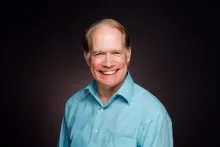
Greg Thomas is the former Pastor of the Cleveland, Ohio congregation. He retired as pastor in January 2025 and still attends there. Ordained in 1981, he has served in the ministry for 44-years. As a certified leadership consultant, Greg is the founder and president of weLEAD, Inc. Chartered in 2001, weLEAD is a 501(3)(c) non-profit organization and a major respected resource for free leadership development information reaching a worldwide audience. Greg also founded Leadership Excellence, Ltd in 2009 offering leadership training and coaching. He has an undergraduate degree from Ambassador College, and a master’s degree in leadership from Bellevue University. Greg has served on various Boards during his career. He is the author of two leadership development books, and is a certified life coach, and business coach.
Greg and his wife, B.J., live in Litchfield, Ohio. They first met in church as teenagers and were married in 1974. They enjoy spending time with family— especially their eight grandchildren.
