

Darris McNeely
This transcript was generated by AI and may contain errors. It is provided to assist those who may not be able to listen to the message.
Very nice. Please be seated now in the main message of the sermon presented by our pastor again, Randy Delisandro. I certainly want to add my thanks to Frank and Pam for coming today. I really appreciated the special music. It really does add quite a bit to the service. Brethren, today I have used the preacher's outline and sermon Bible commentary for preparing this message. The Kingdom of God Bible seminars begin next Sabbath. At first, every church area was asked to have their meetings on September the 10th, but when you're talking about so many churches around the world, it simply was not possible because of scheduling conflicts to have that day for everybody. So some of the churches will be holding theirs the week after on the 17th, and still others on the 24th. So please keep this in mind as you're praying about the success of these seminars. They're going to be for the next three weeks running. We certainly do covet your prayers for these. These are exciting times. These are interesting times, and in some ways they're a bit scary. We don't typically do things like this in a church. Everyone's probably wondering, how am I going to do? How is he going to do? How are we going to do? And so on and so forth. And I would like to address that issue today. Let's begin the discussion today by turning over to 1 Corinthians chapter 3. 1 Corinthians chapter 3. I think the best place for us to begin is what our foundation is. Where will the power for these seminars come from? They don't come from Randy Delosandro or any other presenter. They don't come because of your sparkling personality. They don't come because we've got a wonderful hall. They're not going to come because somebody made a great batch of chocolate chip cookies. The reason these seminars are going to be powerful, and they will be powerful to the degree of what is true, what we read here in the Scriptures. First Corinthians chapter 3, starting here in verse 5. Who then is Paul? And who was Apollos but ministers through whom you believed as the Lord gave to each one? The ministry is nothing. God is everything. I planted Apollos watered, but... In one sense, verse 6 is the essence of the sermon. I planted Apollos watered, but God gave the increase.
We're on a team. God's the captain of the team. God and Jesus Christ. They're running the show. They're running the team. We're a part of the team. There's something we must be doing, but we must always remember that it is God who gives the increase. We are not here to grow the church. Over the years, over the decades I have been in the church, I've heard various people expound this idea, we're going to grow the church. We don't grow the church. God grows the church when and if He wants to grow the church. There have been times when the church hasn't grown. There have been times when the church hasn't grown tremendously. That is up to God. Now, again, we have our part to play in the team. We'll talk about that through the course of the sermon today. But please remember, God gives the increase. Verse 7, So neither he who plants is anything, nor he who waters, but God who gives the increase. So that is foundational. Our power comes from God. Our power comes to the degree we point people to God, to the degree we point people to Jesus Christ, to the degree we talk about the message of the gospel of the kingdom of God, which is God's message, which is Christ's message. It's not mine. It's not anybody's. We don't have a patent on it. It's God's. So as we point to God, to Christ, through the message of God and Christ, to that degree, if we are successful in doing that, we will be successful. Here in 1 Corinthians 2, just across the page in my Bible, 1 Corinthians 2, verse 1, And I, brethren, when I came to you, did not come with excellence of speech or of wisdom declaring to you the testimony of God. Now, understand something for a moment about Paul. Paul was a brilliant man. Paul was a highly educated man. He was the Rhodes Scholar of his day. He was a highly educated man from a fairly well-to-do family. Paul was a Roman citizen. You didn't get Roman citizenship unless you bought it at great amount or you did some great deed for the empire. Probably it was in his family because his family was a fairly well-to-do family. Paul was, you know, but look at how Paul views himself. He didn't come with excellence of speech or of wisdom. For I determined not to know anything among you except Jesus Christ and him crucified.
Now, is this being that Paul was going to be a dummy? That he didn't want to study and educate himself? He didn't want to know about all sorts of other things? Well, of course not. Because in Paul's writing, he even quotes various poets of the day. Paul was an educated man, but what he's getting across here in verse 2 is that the knowledge that really counts, the knowledge that really matters, is the knowledge that comes from God. Verse 3, I was with you in weakness and in fear and in much trembling. And that was his stance. Verse 4, in my speech and my preaching were not with persuasive words of human wisdom, but in demonstration of the spirit and of power.
I'm hoping this week, as you are praying for all of us presenters around the world, that perhaps you open your Bible to this section as you're kneeling down and you read those words and you ask our father and our elder brother to supply the spirit for those who are presenting, this next Sabbath and other Sabbaths, that we might do just what it says here, to speak in the power of God's spirit. Verse 5, that your faith should not be in the wisdom of men, but in the power of God. So I think it's important that we get our bearings where the power is going to be coming from for these seminars. It comes from God. But again, we've got our concerns. I've got my personal concerns. There have been days I felt I've been on my A-game. There have been days I felt I've been on my F-game, like I was a charter member of F-troop. Just some days I can hardly get out of my own way, it seems. I don't want a day like that. I want to be energized by God's Holy Spirit. I want, in essence, like with Moses, I want people holding up every presenter's arm so we can proclaim the truth of God. And we certainly need God's help to do that. So what is my point today? My point today, and it's for all of us, if you are taking notes, you might want to jot this across the top of your paper. Let's learn from Jesus Christ how to relate to those in the world.
Jesus Christ is going to take us to school today. We're going to look at Him and how He worked with people. And we're going to find some marvelous principles about how we should work with people. Now maybe you won't be able to come next week. You may be sick. There may be various reasons you won't be there. And certainly maybe some of you will because you're closer. You may go to to go to Flint.
Wherever you are at, whether you're at one of these seminars or whether we're talking about you dealing with family members, whether we're talking about you dealing with people you work with, your next door neighbor, whoever you're talking about, these principles that we're going to see from Jesus Christ, they're a treasure trove of what we should put into practice to do our responsibility in the church. Now let's go to John again. We want to keep our bearing straight. Let's go to John chapter 6. We'll be in John quite a bit today. We want to start here in John chapter 6.
John chapter 6 and verse 44.
Red letters in my Bible here. No one can come to me unless the Father who sent me draws him, and I will raise him up and the last day. So right there is the proof. We can't grow the church. Only God is going to grow the church. Verse 45. It is written in the prophets, and they shall all be taught by the ministers of God.
No? And they shall all be taught by God. Now, many times that is through the ministers of God, but many times it's by people just opening up their own Bibles.
God's going to teach people the way God wants to teach people.
How many ways was God teaching you before you even knew there was a church of God?
How many things happened in your life for God to open your eyes that there was something bigger and better than what you knew at that point? Our God, our Father, our elder brother are the consummate teachers, and they will teach. And I am delighted if they use me as an instrument, and you will be delighted if God uses you as an instrument. I'm sure that he will use all of us.
It is written in the prophets, and they shall all be taught by God. Therefore, this is verse 45, John 6, therefore everyone who has heard and learned from the Father comes to me. Go across the page or go to verse 35, John chapter 6, chapter 6, verse 35, And Jesus said to them, I am the bread of life. He who comes to me shall never hunger, and he who believes in me shall never thirst. You see, the beautiful thing about pointing people to God, pointing people to Jesus Christ, is when we do that, that satisfies people, people who are really being called by God. You and I, we will fall short. We will mess up. We will do things that people can say, well, why is he doing that? Or why did he say that? Or why is he acting that way? Or why did he or she sub snub me? You know, we will fall far short as human beings, but God never does. Verse 36, But I said to you that you have seen me and that you do not believe. All that the Father gives me will come to me.
We've got roughly 4,000 people in the area who are giving the Good News magazine. 4,000 people.
That's not talking about all the people in years gone by who used to get the Plain Truth magazine. We were sending out 8 million of those a month. 8 million. I mean, those numbers are almost hard for me to announce because they are so different from what we do today. 8 million. Back in the early 70s, we were number one in religious broadcasting in this country. Nobody put out more TV time, bought more TV time, than the worldwide Church of God. So there are plenty of people out there. God told the Apostle Paul, I've got much people in this city.
Brother, I think we've got much people in Ann Arbor and in Detroit. Much people. So there's something that God wants you and I to do. He wants us to be on our game next Sabbath and every day that we rub shoulders with people in the world. He says here in verse 37, All that the Father gives me will come to me, and the one who comes to me I will by no means cast out. Very encouraging verse. For I have come down from heaven not to do my own will, but the will of him who sent me.
That should be our marching orders as well. We want to make sure we are in line with what God wants. What is His desire? What is His will? For this is verse 39, For this is the will of the Father who sent me, that of all He has given me, I should lose nothing, but should raise it up at the last day. And this is the will of Him who sent me, that everyone who sees the Son believes in Him may have everlasting life, and I will raise them up at the last day.
So it is God who calls, but we are a part of His team. So where does that leave you and I?
It is our responsibility as God calls people, as God draws people, as He opens up their hearts and their minds, as they get in their cars, as they come to where we are. Our responsibility is to, number one, make people welcome. You can do that. I can do that. We can make people welcome. We'll talk more about that as the sermon goes along. But secondly, something you and I can do is make the truth of God clear, relevant, make it appetizing. There is a hunger in people today, a tremendous hunger. You know, all people need to do is watch the news. You know, they see hurricanes in one part of this country. They see tremendous drought in another part of this country.
They see the horrible economic conditions. They see people fighting other people in crime. They see wars all around the world. People are in need of answers. What's the meaning of life?
Folks, you understand that. I think sometimes we take for granted all that God gives all we do understand. If you happen to shake hands with a brand new woman or a man next Sabbath, you make them feel welcome. And you engage them in conversation. We'll talk more about that as we go on. Let's now get into some principles that Jesus Christ shows us. Let's go to John 1. John 1.
John 1, verse 35. Again, the next day John, this is talking about John the Baptist, again the next day John the Baptist stood with two of his disciples and looking at Jesus as Jesus walked, he said, Behold, this is John the Baptist says, Behold the Lamb of God. The two disciples of John the Baptist heard him speak and they followed Jesus. Then Jesus turned and seeing them following, he said to them, What do you seek? Now here we come across principle number one. Meet people where they are. Meet people where they are. Jesus Christ said, What do you seek? Jesus Christ didn't turn around and say, Well, I've got an agenda. I've got to save everybody.
You're obviously a lost soul. Come over here. Jesus Christ didn't take that approach.
We'll talk about the approach he uses as we go along, but Jesus Christ wanted to engage them where they were at. Herbert Armstrong was tremendous at that. Garneted Armstrong was tremendous at that. Probably most everyone sitting in this room came into the church as a result of those two men and their preaching. You know, God using those two men, put it that way. I remember as a 15 year old kid, sitting up in my attic, listening to his crossing the radio dial and coming across this wonderful, powerful voice coming out of Leamington, Ontario, Canada. And, you know, here's this guy talking about the Bible, and he was making sense.
Now, I pulled out my Bible and followed along, and I did something that I never thought I'd do, and that's writing to a radio program. Then all the literature starts coming. Remember that happened in your life? And as the literature starts coming, your life starts changing.
All of a sudden, there's certain things you don't eat. All of a sudden, there's certain times that are different than other times to you. And things you have been doing all your life were now changing. Every time, you know, it's almost, what's in that mailbox now? You know, what am I going to be doing now? It was dynamic, it was wonderful.
But, you know, we were at a certain point. And God the Father and Jesus Christ called us where we were and touched us where we were. And that's what we need to do with the people who will be meeting next Sabbath and whenever we meet new people. We need to meet them where they're at. We start with their agenda, not ours. So, as you meet new people, engage them in conversation.
Be interesting in your conversation. Don't try to grill anybody. Don't try to, you know, be negative. Be positive. Most of all, they are the reason that we want them, you know, we want to emphasize them, they're coming. We want to emphasize the material they're going to be hearing. We don't want to walk up to people and say, boy, I had a hard week this last week. It's not about us. We don't bring up, you know, we're not, it's not about us. It's about them. It's about what they're going to hear about God the Father and Jesus Christ and the message of the Bible. So, meet people where they're at. Now, it could be that as you engage people in conversation, maybe something you're going through right now really would be helpful to discuss with them. You know, something that God has really done in your life, in the past, that's currently doing in your life. Now, that might be very acceptable, but don't start with you. We start with them.
John chapter 2. Let's take a look at another principle. The first principle was, meet people where they are. Here in John chapter 2, we've got the very first miracle that Jesus Christ performs, and it's a marvelous thing as we take a look at this, what Christ is doing here. John chapter 2 verse 1. On the third day, there was a wedding in Cana of Galilee, and the mother of Jesus was there. Now, both Jesus and His disciples were invited to the wedding.
Obviously, Jesus and His disciples were not known as people who were party killers.
You know, they were not routing types. They weren't the kind of people you had to go get out of a Roman jail because of their partying. But, you know, they were normal people. They were people that you can invite to an activity such as this, and people were happy to have them. Verse 3. And when they ran out of wine, the mother of Jesus said to him, they have no wine.
Most of us in this room have been married. Most of us in this room have gone through the jitters of preparing for a marriage. Some are now doing that. And, you know, when you have all your guests there, and all of a sudden you've run out of food, or you've run out of drink—I don't care if it's punch—you've run out of something, it's a social disaster. You don't want that. You don't want to throw a big party that all of a sudden people are, you know, they're really chewing their toothpicks.
You don't want that. So Jesus said to her, woman, what does your concern have to do with me? My hour has not yet come. His mother said to the servants, whatever He says to you, do it. And so we have, you know, this various water pots, and verse 7 Christ says, fill the water pots with water, and they filled them to the brim. They said, draw some now, and they took it to the master of the feast, and He took it. He finds that the water was turned into wine. The water was turned into wine. What's the principle here? The principle here is Jesus Christ is meeting a specific need of the moment. Not a big spiritual issue here. They need wine. But that was the need of the moment.
When you meet the person's need of the moment, they remember that. That gives you an entree to their lives. They may be more free, more accessible to have other conversation, because you were loving enough to show that you were going to meet a need they had, right there and then.
Christ did this tactfully. You know, He didn't say, okay, now I'm going to do a really neat trick here. So I'm going to get the fireworks ready. And they had fireworks back in those days, the Chinese invented it long ago. But no, Christ simply does the act here with discretion, but He meets them at their moment of need. You can do that. I can do that.
For us, in our preparation, we need to be asking for God's Holy Spirit to give us sensitivity, give us the understanding, give us the wisdom, give us the appreciation of the human condition so that we sense what a person's need may be.
We can, you know, God can give that to us as a gift. Now turn to 1 Peter chapter 3.
1 Peter chapter 3. Notice here, 1 Peter chapter 3 and verse 15.
But sanctify the Lord God in your hearts, and always, always be ready to give a defense to everyone who asks you a reason for the hope that is in you with meekness and fear.
You know, another translation says that we should give a reasoned response.
Now, don't think that next week, wherever you are at, if you go to one of our seminars here, or, you know, Celine or Flint or wherever you're going to be, don't think that you're just going to waltz in and you don't have homework to do. I've already got my sermon done. I'm going to spend all week long going over every detail of that sermon. I'm going to put more time into that sermon probably than I do even for a fee sermon.
I want to be prepared, but there's things you can do to prepare.
You're going to be praying. Some of you will be fasting.
Certainly, you can be in your mind thinking, okay, if they ask me this question, how do I respond?
If they ask me this other question, how do I respond? What are some of the key scriptures that really encourage me?
What might they ask if they ask? Maybe they'll ask about prophecy. Maybe they'll ask about, you know, the economy. Maybe they'll ask, who knows what? But, you know, you're thinking in your mind, you're preparing for what might be the eventual question you might receive.
You know, this morning in Ann Arbor, I was joking with the people, you know, don't feel you're going to come to this thing and just hide out in the bathroom.
You know, somehow, I don't want anyone to ask me a question. Who am I to be asked the question? Who are you? Reverend, do you and I want to be the person who takes our talents and buries it?
If you and I aren't preparing to answer some questions, then we're like the ones who are taking our talent and burying it. We don't want to do that.
We want to be prepared with a reasoned response as to what we believe. And certainly, certainly, brethren, the essence of the day next Sabbath, we're talking about the Kingdom of God. Now, let me ask you a question. You've been in a church a long time, most of you. Do you know what the Kingdom of God is? We had a fellow give a sermon last year at the Del's about what the Kingdom of God is, and probably half the audience probably objected what he said, but what he said was true. You may think that human beings in the millennium are in the Kingdom of God, and you would be wrong. The Kingdom of God and the millennium are not the same thing. We'll talk about a scripture that will show that in a little bit. The Kingdom of God, a person has to be born into it as a spirit being. The Kingdom of God is the family of God who rules over physical human beings in the millennium.
But the Kingdom of God is that family of God.
Doug Johnson gave a wonderful sermon last year in Del's about that. And it's interesting how many people don't understand that concept.
So here we're having a seminar on the Kingdom of God. Make sure you understand what it is.
Because one of the things I would say to you is it would be good for you if you started conversing with people, discuss the meaning of the day.
The Kingdom of God. The fact that we're not always going to be in this flesh.
The fact that something better is coming. Let's stay on this idea of meeting the need of the moment. Let's go to John 5.
John 5. John 5. Another miraculous circumstance taking place here.
John 5.
Verse 2.
Now there is in Jerusalem by the sheep gate a pool, which is called in Hebrew, Bessedah, having five porches, and these lay a great multitude of sick people, blind, lame, paralyzed, waiting for the moving of the water. For an angel went down at certain times into the pool and stirred up the water, that whoever stepped in first after the string of the water was made well of whatever disease he had. Now a certain man was there who had an infirmity thirty-eight years.
Thirty-eight years. When Jesus saw him lying there, he knew that he'd already been in that condition a long time. He said, what do you want to be made well? Or do you want to be made well? Do you want to be made well? Notice something here. It's not always that we need to always just wait for somebody to ask a question. There's nothing wrong with us initiating a well-placed question. Again, we're not getting into people's personal lives. We're not trying to be nosy or intrusive. But people have signed up to come to a seminar, a Bible seminar. And understand something about this seminar. Several years ago, we had a seminar for World News and Prophecy. Remember that several years ago?
We had some hurricane off the coast. I don't know if it was Katrina or what it was. But the day we had our seminar, we had six inches of rain that day. I mean, it was a horrible day. In terms of the weather, just raining continually hard all day long. But we had nine people come.
Nine people, braving those horrible elements to come and hear about prophecy.
Prophecy is something people are always interested in. It's, you know, when you look at our booklets, you know, our prophetic booklets are normally in the top five. This seminar is about salvation. And we've already got 10 signed up, maybe 12. And there might be more that will show up who aren't signed up. Now that tells me something.
This is outstripping prophecy. That tells me something. And so there's nothing wrong with us in a proper way to wet people's appetite by initiating and maybe saying something about the kingdom. Something as simple as, boy, I just can't wait until the kingdom of God comes. And blah, blah, blah, blah, blah. Verse 7, the sick man answered him, Sir, I have no man to put me into the pool when the water is stirred up, but while I am coming another steps down before me. And he sent him rise, take up your bed, and walk. And immediately the man who was made well took up his bed and walked. That day was a Sabbath.
That day for healing.
What we have here is a discussion about there being a need for healing. People are coming who have a need to be healed.
They have a need. They surmise in their hearts and minds they have a spiritual need for healing. Some of them may have a physical need for healing. They may have an emotional need for healing. They may have a mental need for healing. They know that they have a need for healing.
And folks, you understand where that healing can come from.
Don't be afraid, as we see Jesus Christ doing it, don't be afraid to initiate some interesting conversation.
Again, you don't want to start arguments or you've got to be very careful and be discerning. What can they take? What won't they accept? Philippians 2. Let's look at this in relation to what we've just been discussing. Philippians 2.
Philippians 2, verse 3, where it says, Let nothing be done through selfish ambition or conceit.
This must not be where our heart is. Our heart cannot be here. Let nothing be done through selfish ambition or conceit, but in lowliness of mind, in deep humility. Let each esteem others better than himself. Let each of you look out not only for his own interests, but also for the interests of others.
We come to these seminars, yes, we will be educated, too, but we want to be there for the other guy. How can we be of service to the other guy, the other lady? How can we help them to connect more to the material, to connect more to God the Father and Jesus Christ?
Verse 5, Let this mind be in you, which is also in Christ Jesus.
Let me turn to one other example about meeting the need of the moment over here in John 6. Go back there. We were there a little earlier. Let's go back to John 6. In John 6, we see a certain miracle.
This particular miracle, there's something about this miracle that is truly astounding, truly amazing, because of all the miracles that Jesus Christ performed, of all the beautiful and wonderful miracles Christ performed, there is only one that is found in all four Gospel accounts. Only one. It's the one we're about to read.
Now, you might wonder to yourself, why is that? Is that because this particular parable has so many dynamic things to teach us. John 6, verse 1, After these things, Jesus went over the Sea of Galilee, which is the Sea of Tiberias, then a great multitude followed him because they saw his signs, which he performed on those who were diseased. And Jesus went up on the mountain, and there he sat with his disciples. Now, the Passover, the Feast of the Jews, was near. And then Jesus lifted up his eyes and seen a great multitude. Coming toward him, he said to Philip, Where shall we buy bread that these may eat? But he said this to test Philip, for he himself knew what he would do. Christ realized he was about to feed these many thousands of people. But he wanted to survey where his men were. Where was their thinking? Where was their heart? Christ was not looking to hurt the men, but he wanted to use this as a teaching moment.
Philip answered him, Two hundred denarii worth of bread is not sufficient for them, that every one of them may have a little.
So there were some resources there. They were meager resources, but there were some resources there. I'll pause here for a moment. You may think spiritually you have gotten meager resources.
Spiritually you may think, Who am I to talk to anybody about such things as the Kingdom of God?
Who am I to talk to anybody about issues of salvation?
I guess I would turn that around and say, for somebody who's been in a church as long as you, who aren't you? Why wouldn't you? Why aren't you ready? You've been in a church for decades, most of us. Why aren't we ready? Why don't? Why aren't we? Why isn't our heart burning within us to discuss these things? Why should we want to hide? We should be wanting to stand on top of a roof and yell out to the world the beautiful things God has done for us. So again, some things to learn here. Verse 8, one of the disciples, Andrew Simon Peters, but I said to him, There is a lab here who has five barley loaves and two small fish, but what are they among so many? Again, the same idea.
Well, we've got something. We've got something to give, but to this great crowd, what is what we have to them? Then Jesus said, Make the people sit down.
There was much grass in the place, so the men sat down and number about 5,000. That's men. It's not talking about women and children. There may have been eight or nine thousand people here. A very large crowd. And Jesus took the loaves, and when he had given thanks, he distributed them to his disciples and the disciples to those sitting down, likewise, of the fish as much as they wanted.
So when they were filled, Jesus Christ asked a blessing. He asked for God to make their meager resources stretch so those around could be filled. Brethren, we can do this. You and I can get on our knees and ask God to take our meager resources spiritually. Every one of us is individuals. We can get on our knees and say, Father, please bless what we are about to do. Please bless what I specifically am about to do. Give me wisdom. Give me insight. Give me a loving heart.
Give me the ability to touch somebody. It happened with the fish and the loaves. Are we saying it can't happen here? That would be a lack of faith. I don't think you are folks. I don't think you lack faith. I've seen too many of you healed. I've seen too many times where you have exhibited your faith in so many different ways. You are people of faith. Let's remember this lesson here. Verse 12. So when they were filled, he said to the disciples, gather up the fragments that remain so that nothing is lost.
Therefore, they gathered them up and filled twelve baskets with the fragments of the five barley loaves and then the fish. Plenty left over. Now, the last two weeks in the midweek study, I've sent out information for you regarding, just like what we're covering today in the sermon, the last two midweek Bible studies I've sent out on Wednesdays, I've talked about how do we deal with new people? And you'll get one more this coming Wednesday. And we talked about this very miracle. So I'm not going to take a great deal of time to go through this with most of you who are on the internet, most of you got the emails.
But there's so much here for us to understand. Don't question your ability to give something. When you ask God to bless you, there'll be more than you're able to handle. More than you're able to handle. But notice here, they had to organize. Christ said, make the people sit down. You can organize. You can organize your thoughts. Again, like we said a moment ago, what will they maybe what will they ask? What do I know? What are some hot buttons to me?
What were some of the things I wanted to know when I was first coming into the church? You can organize. Don't fly by the seat of your pants. You can give tremendous prayers asking God to give you what you need and it will be done for you. So the principles you've looked at to this point where meet people where they are. Meet the need of the moment. Meet the need of the moment. Let's turn to John chapter 3. Because now we're going to escalate things a little bit.
John chapter 3. You might feel uncomfortable with what I'm about to say, but we're going to say it anyway. There's another principle we see in John chapter 3. Here in this chapter is the famous story of Jesus talking to Nicodemus. Nicodemus was a teacher. Nicodemus was a Jew. Nicodemus was waiting for the kingdom of God to be established in his mind. What that meant was for the Roman yoke to be thrown off, for Israel to no longer be a subjugated nation, and for God to physically rule over the nation of Israel.
That's where he was coming from. Now let's see where Jesus Christ takes this conversation. John chapter 3 starting here in verse 1. There was a man in the Pharisees named Nicodemus, a ruler of the Jews. This man came to Jesus by night and said to him, Rabbi, we know that you are a teacher come from God. Well, that was incorrect. He wasn't a teacher. He was the teacher come from God. For no one can do these signs that you do unless God is with him.
And Jesus answered and said to him, Most assuredly I say to you, unless one is born from above, he cannot see the kingdom of God. Remember our discussion a few minutes ago? What's the kingdom of God? It's not physical human beings living in a millennium. Unless one is born from above, he cannot see the kingdom of God. The kingdom of God is a spiritual thing, seen only by spiritual entities.
But Nicodemus wasn't getting it. Verse 4. Nicodemus said to him, How can a man be born when he is old? Can he enter a second time into his mother's womb and be born?
Now here is where the next principle comes in.
We need to respond to people on the appropriate spiritual level.
Don't think for a moment that every new person we're going to see next Sabbath is a person who doesn't understand the Bible. I told you I think last week about the phone call I had the week before that. I talked to this lady for 55 minutes up there in a commerce township. She would be coming to this congregation if she comes to church.
Pentecostal in background, and yet she wants to keep the Sabbath. And she said to me, You do know that it's from Protestant I said yes, I think I know that. And then she mentioned how I don't eat anything that's unclean. And I've been looking into the Holy Days. She still had some questions about speaking in tongues. Obviously there are some things to learn. But what I got out of talking to her for 55 minutes is here is a woman that God is really working with. God is opening up her heart and mind. And all she needs to do is be shown from the Scriptures what the truth is, and she'll go there. We will probably have people like that. Next Sabbath. To me, that is so exciting.
And what does that mean for not only me, but for you? That means that they may come and they may start talking about some physical things, but we might want to up and change the gears. And begin doing what Jesus Christ did here with Nicodemus. Jesus Christ said, well, He's coming to me physically. But let's up the ante here a little bit and let's talk spiritually.
This man's got a need that he may not perceive, but he's got it anyway, and it's a spiritual need.
Verse 5, Jesus answered, Most of the Spirit I say to you, unless one is born of water in the Spirit, he cannot enter the kingdom of God. Once again, you can be physical and be in the millennium, but you cannot be physical and be in the kingdom of God. You have to be born of water and the Spirit. You've got to be a person who is a Spirit being to be in the kingdom of God. So obviously, just being a physical Israelite doesn't cut it here, is what Jesus Christ is saying to Nicodemus. He makes a contrasting statement here in verse 6, that which is born of the flesh is flesh, but that which is born of the Spirit is spirit. And we're not just talking about somebody who's converted here.
Do not marvel that I said to you, you must be born again, for the wind blows where it wishes, and you hear the sound of it, but you cannot tell where it comes from and where it goes. So is everyone who is born of the Spirit. We are born of the Spirit at the time of our conversion. That is true. We are a new creation, but we are also born of the Spirit at the time of the resurrection, when we are totally changed. To be born again, or as the world puts it, we don't like that phrase, the Greek here really is better to be translated born from above. There are two times, to use the various analogies, that we have a new birth at the time of our conversion to being a Christian, and also at the time when we are totally converted to being a spirit being. Jesus Christ wanted to teach him. He wanted to talk to him about spiritual things. And this is something we should remember as we talk to people as well. Don't be afraid to get into a spiritual discussion with people. They are hungering and they are thirsting for that.
We can see the same thing in the next chapter. Let's look at John 4.
John 4. John 4, verse 5.
So he came to a city of the Samaria, which is called Saikar, near the plot of ground that Jacob gave to his son Joseph. Jacob's well was there, and Jesus therefore being wearyed from his journey sat down by the well. It was about the sixth hour. A woman of Samaria came to draw water, and Jesus said to her, give me a drink. Now, Christ understood how she was going to receive that, as anybody else would receive it. He's sitting at a well. He asked for water. So obviously, like the old saying is, when you hear hoofbeats, you think horses are not zebras. You don't go to some weird idea. So she's thinking, well, the man wants a cup of water. For his disciples, where Satan had gone away into the city to buy food, then the woman of the Samaria said to him, how is it that you, being a Jew, ask a drink from me, a Samaritan woman? For Jews have no dealings with Samaritans. Now, she could have said this matter-of-factly, or this could have been almost like a sneer. This could have been deeply sarcastic. We don't really know. We're not, you know, you can't just tell by the wording here. But Jesus side step, let's say she was being negative. Let's say she was being kind of catty toward him. Jesus Christ side stepped that. He was bigger than that. There was something else he wanted to get to. Verse 10, Jesus answered and said to her, If you knew the gift of God, and who it is who says to you, give me a drink, you would have asked him and he would give you living water. So hear Jesus Christ now. He's set the hook. He's doing a little fishing here. And again, you go back to the times for most of us in this room, and you go back to the times when God first called you. I remember when God first started working with me. I was just a teenage kid. But I do remember one thing. I remember what really drove me to want to write in for literature. I'd be listening to that telecast. In this case, it was Garner 10 Armstrong. And he would roll off a series of 10-12 questions, all of which I wanted the answer to, and none of which he would give on the radio. Just put that hook in. Yeah, I want to know about that. Well, here's literature. Ah, come on. So he puts the hook out there. And this is what Jesus Christ is doing. He says, you want water? I can give you living water. Oh, living water. That's different. Where do I get that stuff? That sounds pretty good. High octane stuff. Verse 11, the woman said, Jim, sir, you have nothing to draw with, and the well is deep. So again, she's really not fully comprehending here. The well is deep. Where do you get that living water? Are you greater than our father, Jacob, who gave us the well and drank from it himself and as well as his sons and his livestock? So again, maybe she's being a little catty here. But again, Christ is going to sidestep this. And this shows us something. The people may not always treat us properly. They may not always respond to us in the way we want to be responded to, but we've got to be bigger than that. We've got to sidestep that because there's a bigger mission in mind here. And the mission is we want to impart to them some grain of truth of God. Verse 13, Jesus answered and said to her, whoever drinks of this water will thirst again. But whoever drinks of the water that I give will never thirst. But the water I shall give him will become in him a fountain of water springing up into everlasting life. The woman said to him, sir, give me this water that I may not thirst nor come here to draw.
Christ was successful. She was cooked. She wanted to know more. Rather, we've got people as a result of our advertising, the kingdom of God seminars. We've got people who have not even come to the seminars yet, they've not even begun, but they're now coming to church. And some areas are coming to church because of what they've already seen.
We certainly would like to see that here in Detroit. We wouldn't like to see our numbers grow.
I would. You know, there are next Sabbath, I see my time is really melting here, but next Sabbath, we are going to have people who understand that they've got certain needs. We all have what we perceive to be our needs. Our needs could be maybe something having to do with our marriage. Maybe it's something to do with our children or our grandchildren. Maybe it has to do with our health. Maybe it has to do with we don't have a job. Maybe it has to do with a recent death in the family. Maybe we're lonely. You know, maybe we're single and we're lonely. Or maybe we're married and we're lonely. I've known too many people over the years who married the wrong person, and they're lonely in a loveless marriage. Those are needs that probably most people perceive, but there are other needs that sometimes people don't perceive. These are the great needs. These are the needs that deal with salvation. People are coming to these seminars realizing that they are going to be impacted with material, with information. It's going to meet needs that they may not even fully identify with.
This is where you need to be praying. That God would open up their hearts and their minds, and that God would lead you and lead me, lead all of us who are going to be there with them, to impart something to them. To impart something to them that will be of help to them.
Now, I've only got a few more scriptures to read and will be finished here. The time is melting away, but let's take a look at one final principle, and that is the source of your evangelistic strength. You, an evangelist? Ladies are thinking, well, me? I'm a woman. Well, so was Priscilla. And when she heard Aquila, the eloquent preacher preaching the truth of God, she said, you know, he doesn't know everything. And so very nicely, this lady went to one of God's marquee ministers and said, sir, can we talk? And because he was a humble man who wanted to learn, he said, yeah. And she said, well, you know, there's some things you're not understanding. Let me discuss them with you. You know, probably sometime in November, we're going to have a very special seminar. Some of our ladies in Ann Arbor came to me and they said, hey, we saw this really great seminar being held by the Jewish temple in the area there in Toledo. How to Keep the Sabbath.
And they gave me a flyer. This is being done by the Jewish community about keeping the Sabbath. And when I saw the flyer, I was very excited. You know, sometimes we need to step out of the box a little bit. We know the Sabbath. We keep the Sabbath. We've been keeping the Sabbath for decades. But when I saw what they, the way that they were putting things, the way they were stating things and so on and so forth, I thought, man, these are wonderful principles that we need to make sure we're getting out to our people. So we are going to have a ladies-only seminar sometime in November given by ladies, for only ladies, about the Sabbath. I've looked at the curriculum and it is really top-notch. It is really top-notch. I've already gotten clearance from Mr. Cubic. He said, man, it's a wonderful idea. Absolutely wonderful. You'd have to see the material. I see some of you frowning, like, what's up? Again, don't think you know everything about Sabbath TV. And sometimes it's the way you phrase things that really help you understand a little more in depth a little better. Certainly we're not going to, we'll be going into Christian principles, but I'm looking forward to that. So the bottom line is, ladies, God is using you. God used Deborah.
You know, we're not asking you to get up from the pulpit on the Sabbath and speak, but you can converse, can you not? Right? You can discuss the scriptures of what means so much to you that how God has worked in your life, can we not? Of course we can't. So this is not a foreign concept to any of us. Let's go to Ephesians chapter 3. Ephesians chapter 3.
And again, we're talking about the source of our evangelistic strength. Ephesians chapter 3 verse 15. So here we're talking about God strengthening us with His riches through His Spirit. Verse 17.
Some of you were in the room way back on the Feast of Trumpets in 1979 in Roma Hall where we had several pastors up on the stage and they called one Randy Delosandro to the stage.
And on that Trumpets in 1979, I was ordained as an elder there in Roma Hall in front of about 1200 people. And some of you, I know that some of you were there. And I remember, man, who am I to be one of the ministers of God? But I very quickly realized that, and somebody came to me very shortly after and told me something I've never forgotten. I said, you know, Randy, you will have in your ministry, you will have your ups and your downs. You will fail people. You will be successful with people. But one of the things that you can remember is that if you simply love the brethren, the brethren can put up with an awful lot. And we ministers make the brethren put up with an awful lot. But if you love the brethren, they will love you right back. And they can overlook a lot of your faults. Brethren, that's not only true for ministers, that's true for us as members.
If we are loving people at this seminar, you know, if the people you're talking to, let's say new people you're talking to, maybe you don't phrase everything the way you would like, you may go home that evening and say, boy, I wish I would have said it this way or not said that or whatever. But if they sense in you that you're a loving person and you're trying to touch their life in a proper way, they're going to be there for you. They're going to enjoy you. And, you know, that's one of the hallmarks for us as Christians, is to be loving people. Verse 17, that Christ may dwell on your hearts through faith that you, being rooted and grounded in love, may be able to comprehend with the saints what is the width, the length, the depth, the height, to know the love of Christ, which passes knowledge, that you might be filled with all the fullness of God. Let's pray this prayer as well. Let's put this in our prayers this coming week. We want to be loving people who are shown to be loving people, wanting to touch other people at their moment of need, at their time of need. Verse 20, now to Him who is able to do exceedingly abundantly above all that we ask or think according to the power that works in us. Don't feel like as though you've got to hide in the restroom. You don't want to answer anybody's question. It says here, according, you know, God is exceedingly abundantly above all that we ask or think. I can ask Him and think an awful lot.
And He says He'll give us more than that, according to the power, according to His power, that works in us. Verse 21, to Him be glory in the church by Jesus Christ of all generations, forever and ever. 1 Peter 2. The next couple of verses. We only have two more verses before we're finished here today. They're both in 1 Peter. 1 Peter 2.
Looking at the source of our evangelistic strength. 1 Peter 2 verse 9. But you are a chosen generation. Again, let's not run past that too quickly. God chose you. God the Father of Jesus Christ. Who knows whether they call the 24 elders, they called all the heavenly hosts. Who knows, if there wasn't some sort of real conference, talk about conference calls, where your name came up. Okay, when do we call this one? Do we wait until, you know, the Great White Throne judgment period? Do we call that person now? You have already been called, and you've chosen to live this life. And now you are being faithful people, called chosen and faithful. But you are a chosen generation, a royal priest of a holy nation, his own special people. This is how God views us.
That, and now here comes our part of being part of the team, that you may proclaim the praises of him who called you out of darkness into his marvelous light. Each and every one of us can talk about how God has called us. Don't we do that every every year on night to be? How did you come into the church? Well, how did you come into the church? Well, here's how I came into the church.
Verse 10, who once were not a people of God, but now the people of God, who had not obtained mercy, but now have obtained mercy. We can talk about those things. We can talk about those things in aces and spades. Beloved, I beg you, as sojourners and pilgrims abstain from fleshly lust which wore against the soul, be a clean instrument for God, have your conduct honorable among the Gentiles, that when they speak against you as an evil doer, they may by your good works, which they observe, glorify God in a day of visitation. Make no doubt, make no mistake, you will be observed next Sabbath. How you converse, how you listen, how you respond to people, whether you walk over and shake somebody's hand, whatever, you know, we will be, all of us, myself and Cleo, we will be observed next Sabbath. And we want to be observed to the place where God is given glory.
Where God is given glory. One last scripture here, 1 Peter chapter 4. 1 Peter chapter 4 and verse 11.
If anyone speaks, let him speak as the oracles of God.
If anyone ministers, let him do so with the ability which God supplies, that in all things God may be glorified through Jesus Christ, to whom belong the glory and the dominion forever and ever. Amen. This is our, these are our marching orders. This is our talking point. This is what we want to get across.
We want God to be glorified. We want to do His will. So today, brethren, we've asked, were we taking a look at the idea, this concept, we wanted to learn from Jesus Christ, how to relate to those in the world. We looked at a number of principles, five of them. One, meet people where they are. Two, meet the need of the moment. Three, respond to people on an appropriate spiritual level. Four, lead people to a higher understanding. And five, we've looked at God in you, the source of your evangelistic strength. For then you can do the job that's going to be required of you next Sabbath. Please be praying about that, be praying about the success of the seminars worldwide. As I said, we have about 12 that are signed up for us. That puts us about the top third. You know, there are some churches. We have one church in the south, one pastor in the south. He's got, man's got four churches, four churches, smaller churches. He's got 99 people signed up to come to his seminars. 99. He's got more people signed up to come to his seminars than he's got people in those four churches. Grand Rapids has got 23. We've got 12.
You know, who knows who will actually show? Let's pray that they do show. And let's pray that when they show, we show. And we show fully armed spiritually, wanting to give and to serve. Look forward to seeing you there.
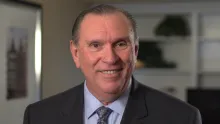
Randy D’Alessandro served as pastor for the United Church of God congregations in Chicago, Illinois, and Beloit, Wisconsin, from 2016-2021. Randy previously served in Raleigh, North Carolina (1984-1989); Cookeville, Tennessee (1989-1993); Parkersburg, West Virginia (1993-1997); Ann Arbor and Detroit, Michigan (1997-2016).
Randy first heard of the church when he was 15 years old and wanted to attend services immediately but was not allowed to by his parents. He quit the high school football and basketball teams in order to properly keep the Sabbath. From the time that Randy first learned of the Holy Days, he kept them at home until he was accepted to Ambassador College in Pasadena, California in 1970.
Randy and his wife, Mary, graduated from Ambassador College with BA degrees in Theology. Randy was ordained an elder in September 1979.
