

John Elliott
This transcript was generated by AI and may contain errors. It is provided to assist those who may not be able to listen to the message.
Thank you very much. Now for the sermon, our pastor again, Mr. Steve Shafer.
Well, as you all know, we just concluded a midterm election, which, for some, thought it was a very important election, because it would determine which party was going to control the Senate, especially in this case. And as you know, as we came out, the Republicans got control of the Senate. They also controlled the House, but the administration controlled by the opposite party. So in all likelihood, over the next two years, we'll probably have gridlock and very little, if anything, will get accomplished. However, in the long run, as we all realize, it will make little or no difference which party is in control or who's in office, because as we know, the real problem we face as a nation is our moral decline. And the fact that as a nation, we are rejecting God and turning our back on God. This current good news, and I haven't had a chance to read it yet. Evelyn was reading it, and she read about half of it, I think. But she said it's really quite a powerful good news magazine. It's the one November-December issue, which you probably all received by now, America's war on God. So it's very blunt in going into what's happening. An article here on banning the mission of God in public life, which here, this very country that was founded on Judeo-Christian values is now banning the name of God in many places. They've got this article here on the flood of immorality, as we quite understand. Rampant, adultery, and widespread divorce don't receive much notice, nor does pornography, pre-marital sex, and cohabitation, but that's just the way things are now. It's taken as being normal in our country today. And of course, there's an article here also, one nation under Allah, an article on that. Rejecting God and the nation's long history rooted in the Bible, American leaders and government is increasingly embracing a religious belief system alien to the country's long-held values. So a lot of things are happening. This country is changing dramatically, and that's going to affect all of us. As Mr. Japhe said, I think in his opening remarks, how much longer will we have the freedom to worship God as we do in the freedom? I don't know. Things could change even there. I hope not, but you just don't know.
But no, either party, any candidate of either party or any either party has the power, really, kind of to reverse the course the nation is now on. It's gone so far. It is almost beyond the power of any political party or any person in office, even the president, whoever that might be, to change the course our nation is on right now, because we'd have to turn back to God and God's values. And it doesn't look like that's going to happen. But in this recent election, of course, with those who are running, it was important whether or not they be elected, either that elected or be able to stay in office for another two to four years, whatever it might be. And, of course, in this election, multiple millions of dollars, I think is the most expensive election in just about history, multiple millions of dollars were spent by various candidates trying to get elected. Of course, some, when it was all over, some were related and some were very disappointed. But I'm leading into this. Well, what about all of us? You know, in a sense, and Mr. Hall's sermonette kind of ties into what I want to say today, too. It's amazing how sometimes they always kind of fit together. But in a sense, we're all running for office. For a much higher office than even the President of the United States. We stop and realize the offices we're running for. What offices are we striving for? We're striving to become kings and priests to our God and to reign on the earth with Christ when he returns. Revelation 5 verse 10. Or as God told Israel through Moses back in Exodus 19 6, you shall be to me a kingdom of priests, a kingdom of priests to teach God's laws and God's way of life to the rest of the world. That's the position we're going to have, an opportunity we're going to have. The question is, I want to ask here, since there was an election recently, do we have to be elected in order to serve in those offices and positions in God's kingdom? Will we need anyone's vote before we can actually assume office? And if so, whose vote must we receive or win? And what will determine whether or not that vote is for us or against us? Those are some of the questions we'll look at today in the aftermath of this year's midterm election. What would need to be voted into office? And actually the answer, as I'm going to give it in a figurative sense here, it may surprise you because the answer is, yeah, in a sense we do. We will have to receive at least one vote to assume office, as we'll see. I want to hold off giving you my title until but later in the sermon, but my first question is very, very basic. In order to serve in God's kingdom with Christ as kings and priests or as a kingdom of priests, as it's put back in Exodus, must we first be elected? Let's look what Scripture says. Let's go first to 2 Peter 1.
2 Peter 1, verse 5. And I'll begin in the middle of the verse. It says, giving all diligence, add to your faith virtue, to virtue knowledge, and going on, to knowledge self-control, to self-control perseverance or patience, as my margin has it, and to perseverance godliness, to godliness, add brotherly kindness, and to brotherly kindness, love. For if these things are yours and abound, you will be neither barren nor unfruitful in the knowledge of our Lord Jesus Christ. For he who lacks these things is short-sighted even to blindness, and has forgotten that he was cleansed from his old sins. Therefore, brethren, verse 10, be even more diligent to make your call and election. Sure. For if you do these things, you will never stumble. If you do these things, you will make both your call and your election into office. Sure. That's kind of what Peter is saying there. So we've all been called, and we have been basically nominated by Christ, by God the Father, and by Christ to assume office and be elected. But we still have to make that election sure. And of course, Peter says one way we can do this is by adding these different attributes to our character as he outlined here. But we'll also take a vote in order to make our election sure, so we can actually assume the offices that God has preserved for us. Will it take a vote? Now, Peter here indicates that it isn't to be called. We must also be elected into our office, or position of rulership with Christ. And if we have to receive a vote by whose vote, or votes must we be elected? Whose vote must we win? Do we have to win a ballot, so to speak? And what will it take to win that vote? Again, my original question was, must we first be elected? And Peter gets here that yes, we do have to be elected, and we actually have been elected to have an office. There's an office reserved for us, but we have to be actually given that office once the time comes. And he says here we must give all diligence to add to our faith virtue, add to virtue knowledge, and then add self-control, perseverance, or patience, and godliness, brotherliness, kindness, and love. Then Peter adds that if we do these things, we'll make both our call and our election. Sure. So we've all been called to an office in God's kingdom, and we've all kind of had a position there that God wants to place us in, but we have to yet make that election into that office. Sure.
And if we placed into that office, we actually are going to have to receive just one vote. Not a majority vote, just that one vote will be a majority vote, because it'll only be one vote. So the next question is, whose vote must we win, in essence? And I'm talking in a figurative sense now, because there's not going to be a ballot box here. But whose vote must we win to be elected into office? Let's notice what Christ himself says, and I'm also going to be using a little revelation here, and going into even the seven churches, just one one with seven churches, says, Mr. Hall did in his sermon, but not the same one. But Revelation 1-1, the revelation of Jesus Christ, which God gave him to show his servants, things must certainly take place. And he sent and signified by his angel to the servant John. Interesting, just very beginning here, the first chapter here of Revelation is Christ is giving this revelation to John. Christ reveals his literal appearance here. He revealed to John how he literally appears in his glorified state, beginning in verse 12 of chapter 1. Then I turned to see the voice that spoke with me, and having turned I saw seven golden lampstands, and in the midst of the seven lampstands, one like the Son of Man, clothed with a garment down to the feet, and girded about the chest with a golden band. His head and hair were white like wool, as white as snow, and his eyes were like a flame of fire. His feet were like fine brass, as if refined in a furnace, and his voice as the sound of many waters. And he had in his right hand seven stars, not of his mouth, but a sharp two-edged sword, and his content was like the sun shining in its strength. Now, why did Christ reveal that to John at this particular point? Why did Christ reveal and then inspire John to write down and record how he appears in his glorified state? At least to give us a little bit of an idea. Why is that important? A soldier place here will be coming back here in a moment, but let's go to Romans 14. Paul's letter to the Romans, beginning in Romans 14. Let's begin down in verse 7 of Romans 14, where Paul wrote, For none of us lives to himself, and no one dies to himself. For if we live, we live to the Lord, and if we die, we die to the Lord. Therefore, whether we live or die, we are the Lords. Whether we live or die, either way, we belong to Christ. Also, verse 9, For to this end Christ died and rose, and lived again, that he might be Lord of both the dead and the living.
So that raises a question. How is Christ Lord of both the dead and the living? So who's going to make the final judgment in regards to everyone's eternal fate? Who's going to have the last word? Who's going to have the final say, if you will? Who's going to cast the one and only vote that counts? Paul then goes on to say this in verse 10, Why do you judge your brother? Or why do you show contempt for your brother? Or he can switch that around a little bit and say, well, why do you worry about your brother's judgment of you? Why are you bothered when your brother shows contempt towards you? Why does that bother us so much? Paul's trying to make a point here. See, why do we worry and get bothered by what other people think? What they think of us? What about how someone else may be judging us? Because we all get bothered by that. But when Paul's trying to say, that's not the thing you need to worry about, don't be overly concerned about that. Why shouldn't we be overly concerned by what others think? Because in the final analysis, there is only one vote that counts, if you want to put it that way, when it comes to our election. And there's only one judgment seat that we will have to, figuratively speaking, stand before. Romans 14 verse 10. Why do you judge your brother? Why do you show contempt for your brother? For we shall all stand. Everyone is going to, and at least in a figurative sense, stand before the judgment seat of Christ. Christ is all judgments and giving to Christ by God the Father. He is going to be the final judge. He's going to have the final say. So the only judgment and the only vote that's going to count is the vote of Jesus Christ. Christ alone will determine the final outcome of our election into office, at least to assume office. Going on in verse 11, Romans 14. For it is written, As I live, says the Eternal, every knee shall bow to me, and every tongue shall confess to God. So in each of us, you'll give an account of himself to God. Everyone's going to have to give an account of himself. You have to worry about somebody else. All we do is have to give an account of ourselves. And that's why, in my opinion, Christ revealed his literal appearance to John in Revelation 1. So we all have a clear picture in our minds of what it's going to be like to at least be judged by Jesus Christ. So he's the one that's going to make the decision for us on our behalf as to where we're going to end up when that time comes. And we realize that we understand that we get a little bit of an awesome picture of who is going to be making that decision on our behalf when it comes to assuming office. His is going to be the only count, both the counts, if you will.
Let's go on to verse 13. It goes on. This is, therefore, let us not judge one another anymore. Don't worry about judging somebody else. Don't worry about somebody judging you. We're going to resolve this, not to put a stumbling block or a cause to fall in our brother's way. We all need to be encouraging one another, helping one another in every way we can to fulfill the calling that we have so we can assume office when that time comes. Because there is, of course, only one vote that will count, that the vote of Jesus Christ before us through judgment's seat, particularly speaking, we shall all stand. And that vote will not be close. It's not going to be contested. Like, well, the election a number of years ago won't be any hanging chads. The vote's going to be unanimous because there's only going to be one vote. And it'll either be a yes vote or a no vote. And all probabilities we'll see here because of the way God judges and what he's going to look for in us, it's going to be a yes vote. So it'll be positive. But it will either be a vote for or a vote against. Which leads to the next question. How will we know whether Christ's vote is for us or against us? Now, again, I'm reading what it says here in the scripture, but this is in a figurative sense because we all know, as we all know, we'll know if we're in that first resurrection. We know the vote was yes. It was for us. But this is a figurative way of helping us to understand this whole, what I'm bringing out here. Because we're all standing before the judgment of the seed of Christ. How will we know we have his vote, figuratively speaking, here? It tells us in God's Word if we've been elected into office with him or not. Let's go back again to Revelation 1.
Revelation 1. Let's pick it up and down in Revelation 1, verse 16. He had in his right hand seven stars, out of his mouth on a sharp two-edged sword, and his conscience like the sun shining in his strength. And when I saw him, I fell at his feet as dead, but he laid his right hand to me and said to me, Do not be afraid. I am the first and the last. Or we could kind of say here, in the sense that we're looking at this as an election, I am the first vote and the last vote. I'm the only vote that counts. Going on to verse 18, I am he who lives and was dead, and behold, I am alive forevermore. Amen. And I have the keys of Hades and death. Write these things which you have seen, and the things which are, and the things which will take place after this. The mystery of the seven stars, which you saw in my right hand, and the seven golden lampstands. The seven stars are the angels of the seven churches, and the seven lampstands, which you saw, are the seven churches.
So then Christ gave a message to the angels of these seven churches, of these messengers, of each of these seven churches. And Christ, then basically, as we know here in Revelation 2 and 3, gave them a series of seven messages, which really are to his church. And as Mr. Hall pointed out, these messages are to all of God's people at all times, down through the ages. They apply to all of us.
To all those who be called to be in the running for all the offices that God has reserved for us. Those who will be striving, as I said, in Peter, to make their call in the election sure.
Here in verse 16, we just read, Christ is portrayed as having a sharp, two-edged sword.
Again, in relation to verse 12. And to the angel of the church of Pergamos, right? I'm going to pick up just up for that, that particular message. These things says, he who has, and it mentions it again here, he who has a sharp, two-edged sword. I know your works and where you dwell, and I know where Satan's throne is. Why is, again, this is meant to be all God's people, all these messages.
Why is this aspect of Christ's appearance emphasized here in his message to the church of Pergamos? That is, having a sharp, two-edged sword. Why is that emphasized here in this particular message? And why is the sword portrayed as coming out of his mouth? Especially in lieu of this being where Satan's throne is. So, Satan's brought into the picture here of trying to stop God's people from fulfilling whatever that calling is.
Very interesting what William Barkley says in his New Testament study Bible, his comments on Revelation 2, verse 12, by saying this in regards to the sharp, two-edged sword. He says this, very interesting comment. He says, the Roman governors were divided into two classes. Those who had the right of the sword and those who had not, those who had the right of the sword had the power of life and death on their word. The word of their mouth, on their word a man could be executed on the spot.
But this letter bids the Christian not to forget that the last word, the final say, or the final vote we could say, the final say is still with the risen Christ who has the sharp, two-edged sword. The power of Rome might be satanically powerful and the power of the world might be satanically powerful, but the power of the risen Lord is greater yet.
That's Barkley's comment. Christ is going to be the final word. His word is going to over-shallow any other word that might be against us. At the end of each of these seven messages Christ says this, Revelation 12 verse 17, He who has a near to hear, let him hear what the Spirit says to the churches, all of God's people who are being called.
To him who overcomes, I will give some of the hidden manna to eat. I want to mention here is the Church of Pearl. So this message to the entire Church of God, to all the churches, and I just don't want to particular church. It applies to all of God's people at all times. So all can strive to make their call and election ensure. Again, read an entire verse. He who has a near to hear, let him hear what the Spirit says to the churches.
To him who overcomes, I will give some of the hidden manna to eat. And then, that part of verse 17 is what I want to kind of focus on today. And I will give him a white stone. And on the stone, a new name written which no one knows except him who receives it. What's that talking about? To him who overcomes, I will give a white stone. What is so special about receiving a white stone?
Why would you all want to be striving to overcome just in order to receive a white stone? Why is that so important? What is the real significance of that? Because someday, figuratively speaking, we're going to stand before the judgment seat of Christ. And we'll be actually awaiting, waiting for what? We're going to wait to see if Christ, in a figurative sense, extends to us a white stone. I want to now give the title of my sermon. The title is, I will give him a white stone.
Taken here from verse 17. My title is, I will give him a white stone. Very interesting. You look into a background of that and what that means and what it signifies. What is this white stone? What does it mean? What does it signify? How important is it for us to receive it? And how important is it for us to have our name engraved on it? Our new name? What does that signify? The Greek word translated stone here is saphos, spelled p-s-e-p-h-o-s, and simply means a pebble. In this case, a white pebble or a small white stone.
It's not what it literally means that really is significant. It's what it implies that's really significant when you understand a little bit about what this means. What does it imply? What does it really signify? Here's what Strong's concordance says. Saphos, a pebble, by implication a counter or ballot, a verdict of acquittal, or ticket of admission, a vote. That's what Strong says. So you could say that this white stone represents Christ's vote, if you will. His vote for your acquittal and for my acquittal. His vote for our admission into his family, for our admission into the kingdom of God. It indicates Christ's vote for our election into an office that he has prepared for all of us, whatever it might be, prepared for you with your new name written on it. And Christ's vote, his ballot is the only one that's going to count. Nobody else's ballot might count. How we know that Christ's vote is for us, for our acquittal, for our admission into the kingdom of God? It says here, if Christ's vote is for us, he will give us a white stone. And I'm just using this probably in a figurative sense, because I don't know whether a resurrected is going to give us that or not, but this is just implying what this means. Now the same word is very interesting here. I'll give you this quickly. This same word used translated white stone here, the same word sephos, is used by the apostle Paul in Acts 26 verse 10. I'm not going to read it. You can just jot it down. Look it up later if you want to. Where in the old King James his translated voice, that translation is corrected in the new King James, where it is correctly translated vote. It's translated vote in the new King James in Acts 26.10. In Paul is saying in Acts 26.10, you read it, read the context, that before God called him, he put many of the saints in prison, as we know, and he cast his vote against the saints, is what he's saying there, before God called him, even voting to have some of them put to death. That's what is implied by what Paul says in Acts 26 verse 10. But here in Revelation 2.17, the same word is translated a white stone because it is a pebble which implies Christ's vote or ballot for our acquittal, for our innocence, so we can avoid being put to death, which we all deserve.
You know, we've all heard the saying, you still hear it once in a while, by being blackballed. It's very interesting what the 11th edition of the Encyclopedia Britannica says in regards to the word blackball. I want to read it for you here.
It's from the 11th edition of the Encyclopedia Britannica, volume four, page 19, article, Blackball. Blackball, a token used for voting by ballot against the election of a candidate for membership of a club or other association. Formally, white and black balls, about the size of pigeon eggs, were used respectively to represent votes for and against a candidate for such election. And although this message is now generally obsolete, the term blackball survives both as a noun and a verb. The rules of most clubs provide that a stated portion of black balls shall exclude candidates proposed for election. And candidates so excluded are said to have been blackballed. So we've heard that expression. That's where it comes from. It's because small black balls were used as tokens for voting against the election of a candidate. On the other hand, a small white ball was used as a token for voting for the election of a candidate. A black ball was a vote against, and a white ball was a vote for. That's when someone was excluded from becoming a member. He or she was then said to have been blackballed. Now, the Encyclopedia Britannica also stated there, as I read, that the term blackball still survives as a noun and as a verb. Here's how Webster's Collegiate Dictionary defines the word blackball as a noun. A small black ball for use as a negative vote in a ballot box. An adverse vote against admitting someone to membership in an organization. And here's how Webster's defines blackball as a verb. To vote against, to exclude from membership by casting negative vote. So a black ball or a black stone was a vote against admission. A white ball or a white stone was a vote for admission. In Revelation 2, 17, it indicates that Christ's vote for our admission represents Christ's vote for our admission into into his family and into the kingdom of God. Let's read it again. Verse 17, He who has a near let him hear what the Spirit says to the churches. To him who overcomes, I will give some of the hidden manatee, and I will give him a white stone. And on that stone a new name written, which no one knows except him who receives it. That raises a question. What will that new name be? I don't know. But it will probably indicate the office or position of rulership that will be given in our election to be kings and priests ruling with Christ. It will probably indicate the unique office or unique position that God has restored for us, that he has reserved for us, which no one else will have that particular office but you or me, whatever office that might be. And that's why no one else will know that name, so to speak, except him who receives it, because no one else will have that particular office. But how will we know whether Christ vote for us or against us? We'll know that Christ vote for us when he gives us a white stone with a new name, with our new position of rulership designated on that stone or on that position. But the real important question then is this. I'd like to talk about in the remainder of the sermon.
On what will Christ base his decision? How is he going to base the decision to grant us entrance to serve in our office that he has reserved for us? Seven times here in these messages to this church in Revelation 2 and 3, Christ says these things, including this white stone, that's going to be given to him who overcomes. Him who overcomes. Does that mean then that we'll have to attain perfection before Christ will offer us a white stone? Is he going to look to see how many times we slipped up? Is he keeping the tabs? How many times we fall short? How many times we slip up and make a mistake?
I want to talk about something that I found very interesting. It ties in here, I believe. This past Sunday, November 2nd, Evelyn and I went to a concert with my sister Shirley. She has some tickets sometimes to go to Benaroy Hall to see the Seattle Symphony Orchestra. We go a couple times a year, we go with her. I went to see the Seattle Symphony Orchestra. They had a large choir accompaniment this past Sunday in the section they did. It was over a hundred piece choir performing Mozart's Requiem, which was sung in Latin. I couldn't much understand it except there's one place where they said Amen. That's the same in Latin as this is in English. That was the only thing I ever really understood. But they gave us a program. The program went through the whole thing and it gave the Latin and beside that it gave the English translation of what they were singing. And again, it was Mozart's Requiem. Back in 1984, the movie Amadeus was released. How many of you saw Amadeus? How many of you did? It won eight Academy Awards, including Best Movie. Of course, Amadeus was Mozart's middle name. His full name was Wolfgang Amadeus Mozart.
And he was a child prodigy and a genius when it came to composing music. Very unusual person, very gifted person. Unfortunately, as you know, if you saw that movie, he died at a very young age at the age of 35. He was born in 1756 and he died on December 5th, 1791. In July of 1791, he received a request to compose a Requiem Mass or a Mass for the Dead.
The request was from an anonymous person. Somebody came to him and said that the person requested this, but he didn't give the name. The person who made the request wanted to remain anonymous, but he paid him a good sum to do it. He didn't want to know the person who requested this did not want to give his name and he did not want to give the reason why he was making the request. But by 1791, I should say, Mozart's fortunes were at a very low ebb. He was heavily in debt. He was kind of reduced to receiving second-rate assignments that brought him very little income. So when he was given this opportunity with a bit better income to write this particular Requiem Mass, he accepted the request to compose both the music and lyrics for this Requiem Mass.
It would not only turn out to be his final composition, but he also died before completing it.
With the work about 80% completed, he fell gravely ill. Again, he was only 35 years old. And by November 20th of that year, 1791, he became confined to bed and he was never able to get out of bed from that point on. Two weeks later, on December 5th, 1791, he died with his Requiem Mass still unfinished, piled on his desk, about 80% finished. His widow asked one of her husband's students to finish it, which he did. She was thus able to deliver the Mass to the individual, as promised, because they had already been paid for it. It was later discovered that the anonymous requester had requested this Mass of Mozart's, he requested Mozart to write this particular Requiem Mass for his wife, who had recently died. But both the music and the lyrics are very positive, they're very soothing, they're very consoling. It's really a beautiful piece of music. When we get these opportunities to go to concerts with my sister, and she lets us pick out maybe a couple of them that we'd like to go to that she has some tickets for, I usually send that to our daughter, La Anna, who's very educated in music. I say, well, there's some really good ones to go see. Pick out two of them. And she picked out this beautiful, beautiful piece of music. A good one to go see, so we did. But it is, it's very beautiful music and very moving lyrics when you understand the translation into English. It's an amazing composition. It has a lot of movements and sections, like the one I just wanted just to give you a flavor for what it's about. This is one of the one early parts, earlier parts of the composition. This one called, in Latin, is called tubo mirum, this particular movement. And I'm just going to translate just a little portion of it. The trumpet casting its wondrous sound across the graves of all lands summons all before the throne. Death and nature shall be astounded when mankind arises to give account before the judge. The written book shall be brought in, which in which all is recorded, whereby the world will be judged. When the judge takes his seat, all that is concealed shall appear, nothing shall remain unavenged. What shall I, a frail man, say then? And the next session begins by saying, remember, gentle Jesus, that I am the reason for your earthly life. Do not cast me out on that day. Again, it's very moving. But the two sections I want to look at here, and I want to just quote four portions of, are the sections called Confutatus in Latin, and the one right after that called Lacrimosa in Latin, which are thought to be the final two sections that were proposed and written by Mozart before he died. And the part after that was figured by written by a student. But I think those two movements there reflect accurately when it comes to the question on what well priced base his decision.
His decision to give us a white stone and his vote of acquittal. What's that going to be based on?
Here's the English translation of Mozart's final two sections. That is, the final two sections that he actually wrote before his student had to take it over after he died. Last two sections that Mozart actually wrote himself of his Requiem Mass. I want to give you the English translations of Confutatus and Lacrimosa, these are portions of them. When the damned are cast away, of course this is from a Catholic perspective if you will, so you have to take that into account, call me to be with the blessed. Bow down in supplication, I beg you. My heart, as though ground to ashes, helped me in my final hour. In this day of tears, when from the ashes arises a guilty man to be judged. Have mercy upon him, O Lord. Gentle Lord Jesus, grant him rest. Amen.
Now, does the word of God uphold these final words written by Mozart in his Requiem Mass? It's kind of being an attitude that Christ and God's going to look for as far as a decision when He gives us an office in His kingdom. Will God judge us according to our sins and faults and shortcomings or by our attitude? By our striving to overcome even though we will fall, maybe fall short in overcoming all things, as invariably we all will. See, on what will Christ base His decision? You know, we've got a wonderful example of King David. King David was his man after God's own heart, but he had a lot of faults and shortcomings. He slipped up a lot, but he always had a very deeply humble and repentant attitude. It was very sincere. What did King David hope for?
Were David's thoughts in line with the thoughts of Mozart expressed in his Requiem Mass? Let's go to Psalm 103, one of my favorite Psalms. Psalm 103, beginning in verse... I'll just begin back in verse 1. Blessed be the Lord, O my soul, and all that is within me, bless His holy name. Bless the eternal, O my soul, and forget not all His benefits, who forgives all your iniquities, who heals all your diseases, who redeems your life from destruction, who crowns you with loving kindness and tender mercies, who satisfies your mouth with good things so that your youth is renewed like the eagles. The Lord executes righteousness and justice for all who are oppressed. He made known all His ways to Moses, His acts to the children of Israel. The Lord is merciful and gracious, slow to anger, and abounding in mercy. He will not always strive with us, nor will He keep His anger forever. He has not dealt with us according to our sins, by what we deserve, nor punished us according to our iniquities. For as the heavens are high above the earth, so great is the mercy towards those who fear Him. As far as the east is from the west, so far as He removed our transgressions from us. As a father pities His children, so the Lord pities those who fear Him. For He knows our frame. He remembers that we are dust. See, Christ is going to base His decision to give us a white stone. He's going to base that on our attitude. Are we striving to overcome? Are we striving to obey God and put God first in our life? Do we fear God and have humble and contrite hearts? Do we bow down in supplication before God daily? Are our hearts ground to ashes, as Mozart put it? That's what Christ is going to base His decision on, because as Psalm 136 repeats, in all 26 verses, His mercy endures forever. I just want to read here before we close, just the last four verses of Psalm 136. Psalm 136 verses 23 through 26. Again, every one of these 26 verses says His mercy endures forever. God remembers Him in our very lowly state because His mercy endures forever. And He rescued us from our enemies, for His mercy endures forever. He gives food to all flesh, all flesh, because His mercy endures forever. O give thanks to the God of heaven, for His mercy endures forever.
You know, our past midterm elections will undoubtedly result in gridlock for the next two years, but neither party has the power to reverse our moral decline as a nation. To change, of course, the entire world is now on. It's going to take the power and rulership of Jesus Christ as King of Kings and Lord of Lords. And all of us have received a tremendous call to be elected into office and to rule with Christ. And to make our call and election sure, we must receive the one and only vote that counts, the vote of Jesus Christ. He's the one that's going to place us in office. And fairly speaking, we're all going to stand someday before the judgment seat of Christ. But if our attitudes are right, and if we have humble contrite hearts that are bowed down in supplication, if our hearts are as though they are grounded ashes, if in our final hour we crowd to God to help us, then when we are resurrected from dust or ashes to stand before Christ or to be with Christ when He returns, even as a guilty man to be judged, as Mozart put it, Christ is going to have mercy. And He will give us a white stone, which have our names written on it, our new names, which no one knows except for those who receive it, with our position in His kingdom that He's going to give us. So be diligent to make both your call and election sure. And remember, you only need one vote, the vote of Jesus Christ, who wants to vote for your equital. He wants to quit you. He wants to make you innocent. He wants to admit you into His family and into the kingdom of God. He wants to extend that white stone, saying, yes, you are acquitted. You are. I'm voting for your membership into God's family, into God's kingdom. Remember that Christ wants to give you a white stone.
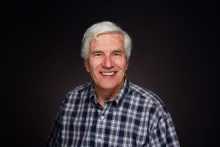
Steve Shafer was born and raised in Seattle. He graduated from Queen Anne High School in 1959 and later graduated from Ambassador College, Big Sandy, Texas in 1967, receiving a degree in Theology. He has been an ordained Elder of the Church of God for 34 years and has pastored congregations in Michigan and Washington State. He and his wife Evelyn have been married for over 48 years and have three children and ten grandchildren.
