

Roy Holladay
This transcript was generated by AI and may contain errors. It is provided to assist those who may not be able to listen to the message.
It's that time of the year again, and I'm not talking about Christmas. We are approaching a momentous time in the history of this country. We have, again, the election of a president that we will be faced with.
When you stop and think about it, what should we, as members of God's Church, be doing when it comes to political races? Should we participate in voting? And are we to become involved with the secular political systems that we see about us in society? I think that's a question that comes up from time to time. When the United Church of God was first established, it was agreed that we would retain a long-held teaching that church members should refrain participating in the secular political system of this world. Now, there is a difference between balloting or voting and what is commonly called politics.
Now, politics, if I could define it, is the unpleasant and ungodly wrangling over issues along with vying for personal advancement. We almost always see in a political situation where somebody is out to gain what? Power. Authority. That's what it all comes down to.
I remember at Ambassador College studying Dr. Dorothy at the time taught the course on geopolitics. And the one thing that he brought out and emphasized quite adamantly in the book brought out was that politicians are striving for power. You get a position, you have the power, you're able then to do whatever you want to do. I think clearly you and I as a Christian need to distance ourselves from the carnal, the negative politics of this world.
Now, the question, though, comes up, well, what's the difference in that?
And the fact that in the United Church of God you find that people vote. I mean, sometimes local congregations, people are balloting. Council ballots, the General Conference of Elders ballots every year on various issues. What's the difference?
Well, I want to explain that today and explain basically what we should be doing, what we should not be doing. The historical position of the Church on this has been absolutely clear. You go back to 1948 in the Radio Church of God, as it was called then, and there was an article published in the Plain Truth magazine that was titled, How Would Jesus Christ Vote for President? And if you remember that article over the years, it kept resurfacing. The article was reprinted in 1952 in the Good News magazine. Four years later, it came out in the Plain Truth again in 1956. In 1960, it was another article in the Plain Truth magazine. Last time it had appeared in a publication, and the worldwide Church of God was 1984. So from 1948 to 1984, here was an article that basically, I know a few things were changed, but it was basically just lifted out and kept being republished. The article continued throughout all the years in the major statement, and it actually became the major statement that the Church made on the subject of voting in political elections. Historically, it applied to political elections and to public offices.
So here we are. We're in the middle of a national election for president, and there are also many major political offices up in some states. Governors, senators, representatives, all of this.
Now, the Democrats, if they can control the presidency and they can continue to keep control of the Senate and the House, will basically be able to control everything. So therefore, there's the power. They want to be able to ramrod through whatever legislation, whatever they want to do.
Now, of course, the Republicans are there trying to frustrate them and thwart them, at least keep the presidency, maybe win back and chip away at some of the majority that the Democrats have, and then they can also have power or influence. There are certain names that seem to just sort of float around right now. Names like Hillary Clinton, Bill Clinton, John Edwards, of course, he's been in the news a little lately, Barack Obama, John McCain, Mitch Romney. You can go on and on, naming all the politicians. Most of these individuals were ones who were running for the presidency of the United States. Now, those who are involved with a particular leader what is their job? Well, they support and extol the leader. They tell all of his virtues, how great he is. They expound on his policies. They tell you what a wonderful country this would be. Explain all of his virtues. On the other hand, the opposition, the loyal opposition belittles the individual. They put him down and they tear his policies and all of that apart. Now, in the run-up to the election to represent either the Democratic Party or the Republican parties in the presidential election, various candidates of each party would attack other candidates in their party.
So, Mrs. Clinton had very few things good to say about Mr. Obama. And they had very little to say good about John Edwards and so on. Now, what happens once? They've been selected to represent their party all at once. Everybody becomes friends again and everybody gets out and works for the person that they said was no good. It wouldn't make a good president. Now, they're all behind them. Is this the type of system that you and I should be involved in? Is this the type of thing that you and I should be doing involved in this political system? Well, we want to take a look at that today and see what does God say. First thing I think we need to take a look at on the subject of voting is who actually appoints the major leaders who are in secular office.
Who's responsible? The voters or God? I think the Bible offers a lot of guidelines on that. Let's notice first of all Psalm 75, Psalm chapter 75 and verses 6 and 7.
I'm going to read this from the Amplified Bible. Psalm 75 verses 6 and 7. For not from the east, nor from the west, nor from the south, comes promotion and lifting up. But God is the judge.
He puts down one, he lifts up another. So God is the one who is responsible for putting down and lifting up. Jeremiah 27 and verse 5. Just read a few of these very quickly. Jeremiah 27.5.
I've made the earth a man and the beasts that are on the ground by my great power and by my outstretched storm and have given it to whom it seemed proper to me. So God is the one who is able to give jobs, responsibilities to whoever seems proper to him. Daniel 2.21. Daniel chapter 2 and verse 21.
It says, He changes the times in the season. He removes kings and raises up kings.
He gives wisdom to the wise and knowledge to those who have understanding. So God can remove kings. He can set up whoever he wants. Daniel 4.17.
Just over a couple of pages here. Daniel 4.17. We find, breaking into the middle of the thought here, the most high rules in the kingdom of men and gives it to whomever he will. And he sets over it the lowest of men. So sometime the very basis of individuals become rulers.
Daniel 5.21. God had to teach Nebuchadnezzar a lesson. In Daniel 5 verse 21, it says, Then he, Nebuchadnezzar, was driven from the sons of men, and his heart was made like the beast, and his dwelling was with the wild donkeys. They fed him with grass like oxen.
His body was wet with the dew of the heaven. Till he knew that the most high rules in the kingdom of men and appoints over it whom he chooses. So here was Nebuchadnezzar. God removed him from authority. And it wasn't until he finally acknowledged that God does that that God put him back on his throne. Now in Romans chapter 13 and verse 1 over in the New Testament, Romans 13.1, Let every soul be subject to the governing authority. For there is no authority except from God, and the authorities that exist are appointed of God. So brethren, we find that God is the one, especially when it comes to major offices, who appoints leaders to secular offices. Now many times somebody asks me, well, do you vote? Or they'll ask me why I don't vote?
And one of the major reasons why I don't is the very thing I'm doing here. That is, as a minister, I could get up and I could have a great deal of influence over a number of people, and telling them what to do, what not to do. And you know, don't vote for this person, you'll vote for this individual. And that is not something that I believe, and I think the Bible shows that as a minister that I should get involved in. And so therefore, you know, I don't stand up here and try to sway you in that direction to go out and vote for one party versus another party, or one person versus another. We in the ministry should not be doing that. Our job is to preach the Word, tell you what God says, and then, you know, we just simply don't get involved in the politics.
Now for decades, God's people have reframed from voting in political elections, not because we're passive, not because we want to be isolated, but as an act of faith.
As an act of faith. We have faith that God will place whomever He will in the position, secular leadership positions, independent from help from us. And we do vote in elections on our knees when we pray. We ask that God's will be done, not our will, that God will direct things because we don't always know what God wants to do. This has been one of the major characteristics of God's church. I remember years ago, Dr. Hay appeared in a case that had to do with a conscientious objector, and unbeknownst to him, the judge later on mentioned to him, you know, he said, that the Church of God, and I think it was the Mennonites, are the two groups who have for decades and centuries opposed warfare. And he went on to talk about not only that, but have not been actively involved in the political system. And I thought that that was significant in that that was something that was acknowledged by secular sources, had been established going all the way back to 1850-something, that the Church of God has always upheld that principle. Now, this practice protects the church because you'll find that if a person comes up, claims to be a conscientious objector, and he's involved highly in the political system, then you find that they look a little unfavorably on that individual. The Church has taught the government authorities should be respected. You know, there's no lack of scriptures in the Bible, regardless of their political affiliation.
Let's go over here to 2 Peter chapter 1 verse 17, 2 Peter chapter, or 1 Peter chapter 2 and verse 17.
We find the scripture clearly says, honor all people, love the brotherhood, fear God, honor the king. So, if you were sitting there at the time that Peter wrote this, somewhere around 60 to 70 AD in that period of time, and he says, honor the king. Do you know that 14 out of the first 15 Roman emperors were homosexuals? The homosexuality was a rampant problem in the Roman Empire, and especially among many of those in the higher positions, and yet God inspired people to say, honor the king. Now, does that mean you honor homosexuality? Well, obviously not. You don't do that, but you honor the office, the position. He is in a position of responsibility.
1 Timothy chapter 2 verses 1 and 2. Timothy mentions the same thing here. 1 Timothy chapter 2 verses 1 and 2. He says, therefore I exalt, first of all, that supplication, prayers, intercession, and giving of thanks be made for all men, for kings, and for all who are in authority, those who have responsibilities of authority. Why? Why do we pray this? That we may lead, as it says here, a quiet and peaceable life, and all godliness and reverence.
It's so that you and I can have a peaceable life, that they're not going to persecute the church, that they're not going to point us out. You know, this was a problem back in the Roman Empire. As time went on, Christians were what? Well, they were persecuted. They were martyred.
And so, therefore, Paul wrote to Timothy here that we should pray thus. Now, in Romans chapter 3 in verse 2, Romans 3, 2, notice this section, because this is a clear indication in the New Testament about authority, governments. Therefore, Romans 13 verse 2, whoever resists the authority, resists the ordinance of God. Romans 13, 2, and those who resist will bring judgment on themselves.
For rulers are not a terror to good works, but to evil. Do you want to be unafraid of the authority?
Do what is good, and you will have praise from the same. For he is God's minister, or God's servant, to you for good. But if you do evil, be afraid, for he does not bear the sword and vain.
Guess what? If you're obeying the speed laws, you don't run the stop signs, you know, you stop at the red lights. You don't have to be afraid of the policeman. When you're going down the road and you're doing 85 and a 65 speed zone, guess what? You're looking every way. You're looking behind, and you're watching because you're afraid that a policeman might show up.
Well, as it says here, you don't have to be afraid if you're obeying the law. For he is God's minister, or servant, an avenger to execute wrath on him who practices evil.
Therefore, you must be subject. Not only because of wrath, not only because of the penalty, in other words, but also for conscience's sake. For because of this, you also pay taxes. For they are God's ministers attending continually to this very thing, rendering therefore to all their due, taxes to whom taxes are due, custom to whom custom, fear to whom fear, and honor to whom honor is due.
So we've already seen from other scriptures that those in authority, those who are the kings, in other words, the president, the rulers, the governors, and so on, that we are to honor and to respect the office. This respect, you'll notice, is not based upon the perceived morality of the person in the office. Because most people in an office are not very moral. Once you find a person begins to be in an office, have authority, it is the rare bird who can stay moral, who is not swamped by wrong sexual practices, doesn't take monies, or doesn't give in to lobbyists, stands up for what he believes and never compromises with it. You find it's very difficult to find an individual who will do that. So he doesn't even discuss the question of morality here. He just says, you honor and you pay respect to those that you should. Now over in Philippians 3 and verse 20, we find here in Philippians 3 and verse 20 that it also comes down to a matter of citizenship.
You and I are citizens of a different kingdom. In essence, we have dual citizenship.
We are citizens of the United States of America, as far as the country that we live in.
But we also represent another kingdom. Philippians 3 and verse 20, we read here, for our citizenship is in heaven, from which we also eagerly wait for the Savior, the Lord Jesus Christ. Now the Greek word here for citizenship, or as King James Version says, conversation, is a Greek word. I'll just spell it for you. It's p-o-l-i-t-e-u-m-a, obviously referring to political, and it's only used once in the New Testament. And guess where it's used once? Well, right here, Philippians 3 and verse 20. According to the enhanced Strong's lexicon, this is the definition of the word. The administration of civil affairs or a common well. The constitution of a common well form a government and laws by which it is administered.
A state common well, the common well of citizens. So you and I are citizens, part of a different common well. We represent a different government. Vines has this to say concerning for our citizenship is in heaven. He says there is a strong contrasting emphasis upon the word our. Our citizenship.
And the word citizenship here signifies the condition of life of a citizen.
Condition of life of a citizen. Margin common well. The synonym denotes a relationship in which a citizen stands to the state. The word heaven is plural in its origin or the original. It sets forth the region in its fullness in contrast to earth. There is no article before the noun in this submission stresses the character. In other words, we are citizens of a heavenly kingdom is what it says. The verb is is not the normal word emi but is another word to subsist. The citizens exist. Basically what it is stating, the state to which the believer belongs is not antagonistic to the earthly civil order.
For that is appointed by God. In other words, God allows or appoints the physical leaders.
But it is contrary to the world which is antagonistic to him.
Now what that means, and again that's taken from vines, is simply this. You and I, yes, we are citizens of the government we live under. But when God calls us, he calls us to become a part of a different government that has different standards, different laws. We have different values that we have to live by. Those are called the Ten Commandments. They're called God's Law, being written in the heart and our mind. We no longer live by the world, its standards, its way of life, but we are to live by God's standards. So we are contrary to the world as far as our standards and values are concerned. But we don't cause problems in the world. But they are antagonistic against us, against what we believe, what we stand for. How many people get very upset when it comes to the Sabbath day or the Holy days, or to any of these type of things, when they find out that we keep them? Let's notice also over in Ephesians chapter 2 and verse 19, concerning citizenship, Ephesians 2.19, it says, now therefore you're no longer strangers and foreigners, but fellow citizens. Now the Bible describes that we're strangers, foreigners, pilgrims on this earth, but we're also fellow citizens with the saints and members of the household of God. So you and I become a fellow citizen with all of the saints, no matter where they are, if they're in Russia or Germany or Italy or Ghana or Australia, New Zealand, US, Canada, South America, all of us, no matter what government we find ourselves on as far as this world is concerned, we all become citizens, once we receive God's Spirit, of a heavenly kingdom. We become fellow citizens.
The Greek word is used only once in the New Testament, and it's used here, and it means a fellow member of a social political unit. So you and I become a fellow member of another political unit, the kingdom of God. Now it goes on. This is taken from the low and nigh-de Greek lexicon.
It says, the expression in Ephesians 2.19 may also be rendered as you join with God's people as fellow citizens together with them. Are you and God's people or all persons who belong to the same place or, as in some languages, people of God's country? You and I represent God's country, God's kingdom, God's way of life to this world. So therefore, we are citizens of another kingdom, the kingdom of God.
Now Israel, when God called them, they were a nation, and they were a theocracy. God was their king. Well, they rejected him, if you remember, wanted a physical king, just like all the other nations around them. So God gave them kings. Some of them were good, most of them were bad.
And the same thing you find today in society. Some of our leaders are good. Not all leaders are bad, but you find that most are not the type of leader that we would want to have. Have you ever asked the question, could Jesus Christ be elected president?
If Jesus Christ were alive today, and you hear you would have all of the Christian population worshiping him. Let's just assume they would worship him. Would he be elected president?
And the answer is no. You know why? Well, first of all, would he be a Democrat or Republican?
Well, he'd be neither. As far as running for office, most would not tolerate his platform.
But what kind of a platform would Jesus Christ have? You know, the Democratic Convention, what's a couple weeks away, and they're going to go and they're going to put planks figuratively in a platform that they're all going to stand on this platform. Then following that, the Republicans will have their convention and they'll put their planks in their platform, what they will stand for. So let's say Jesus Christ came out with a platform, and he says, this is what I'm going to stand for. I'm going to stand for religion, the Christian religion.
Nothing but the Christian religion. That's it. And not as you've been taught, but let me tell you the type of Christian religion I'm going to be talking about. And he would talk about the 10 commandments. He talked about the Sabbath and the Holy Days. He would talk about the basic principles that his way of life is based upon. Now in America, we want freedom of religion, don't we? That's guaranteed, freedom of religion. But we want to define freedom of religion from our own perspective. We want to be free to define God or gods in the way that we want. We want to have freedom of choice. We want to have freedom to define what this God would teach us.
And so in this country, people want to have freedom to have abortions.
They want to have freedom to have free sex. They want to enjoy the freedom of any type of entertainment they want to have. And don't you tell me what I can't see and cannot see.
So, you know, this would include films, music, books, television, all of these, which we know are drenched with violence and sex today. Christ would come out and say, if I'm elected, I'm going to control radio and TV. I'm going to make sure that all the printed books are cleaned up. And you know, I'm going to do this, I'm going to do that. What do you think the average American would say? They would say, uh-uh, would Jesus Christ take over a rule? Would he accept the rule as president and then have lobbyists and political parties and people influencing him and telling him what to do? I don't think so. People want unrestrained sexual freedom.
They want freedom of speech to be able to get up and say anything and everything that they want to do. Americans want full freedom to define culture and lifestyles and these images in their own image. They want freedom to divorce. They want freedom to do just about anything they want to do.
As we know, Jesus Christ advocated the Ten Commandments that they be taught universally for the standard of human behavior. So there goes the atheist vote. There goes the agnostic vote.
There goes the homosexual vote. You know, probably there goes most of the Christian votes because most of them are not going to say, well, you know, we meet on Sunday. You mean that you're going to one of your appliances or you're not going to allow people to go to church on Sunday? Where am I going to vote for you? What about the Muslims? What about, you know, you could go on down the line. The First Commandment says you're not to have any other God before the true God. But what about, you know, all of the other gods that are worshipped? What about the gods of the Buddhists and the Muslims and the Confucius and every other type of religion that you can think of? People would say, well, he's advocating church and state. We should have separation of church and state. And we know when Christ comes back, guess what? Church and state are going to unite. There's not going to be that type of separation. People want their own definition of what is tolerance, of liberty, and how to live. They don't want anybody telling them.
Another factor would be that Jesus Christ was Jewish. He was a member of an ethnic minority, and there's considerable prejudice against Jews even in this country. So his customs, his teachings, his practices, his belief would be just like sandpaper. They would rub people raw. And guess what?
He'd probably get the fewest votes of anybody who's ever run before, simply because they would not like what he stands for. So Jesus Christ, if we were left up to the average American, I'm not talking about the average Russian or Chinese or Indian or whoever it might be. I'm talking about this country that's supposed to be a Christian country. He would not be elected.
He wouldn't even probably make it onto the ticket. Now, there's another thing that we need to realize when it comes to politics, to what happens and what goes on in this world, is there is another unseen influence in this world that influences world affairs, that people are totally ignorant about or they make fun of or they laugh about.
And you know, Satan the devil is made fun of. Here he is. He's got these pointed ears. He's got a pitchfork. He runs around in a red suit and red cape. And they think, well, he doesn't really live. He doesn't really exist. They don't realize that he is the unseen influence. He doesn't have a visible office that you can look at, but nevertheless, he is the ruler and leader of this world. You might remember when I first came here, I gave a sermon where I showed and I went through the Bible, especially in the Old Testament. The number of places where Satan influenced all kinds of events to take place. He was the unseen influence behind world events.
Let's go over to John 12 and verse 31. John 12 and verse 31. And just notice quickly a few scriptures here. It says, Now is the judgment of this world. Now the ruler of this world will be cast out.
Christ did not deny that Satan the devil was the ruler of this world, of this age.
Now, chapter 14 and verse 30.
John 14.30.
I will no longer talk much with you, for the ruler of this world is coming, and he has nothing in me. So Satan the devil is the ruler of this world.
Chapter 16 verse 11.
Says of judgment because the ruler of this world is judged. So Satan the devil is judged.
Notice Ephesians chapter 6, Ephesians 6 and verse 12.
It says, We do not wrestle against flesh and blood, against principalities, against powers, against the rulers of the darkness of this age, against, it says, the spiritual host of wickedness in heavenly places.
So what we find is that there are rulers of the darkness of this age who are ruling over humanity. All the world lies in darkness.
And Christ said that he was the light of the world and he was here. The church today is the light to the world, but the rest of the world lies in darkness.
And we find here, notice chapter 2 and verse 2.
Chapter 2 verse 2 of the book of Ephesians says, In whom you once walked according to the course of this world, see, before our conversion, pre-conversion days, we all walked according to the course of this world, according to the prince of the power of the air, the spirit that now works in the sons of disobedience, among whom also we all once conducted ourselves.
And then it goes on to describe how. So there is an influence that most governments do not recognize or take seriously.
Does this mean that everything associated with every government is evil? And of course, the answer is no.
But what we have to realize is that Satan is trying to work out events historically, politically, in every way to thwart the plan of God. I mean, he can read the book of Revelation. He knows that certain things are going to take place.
And you find that he tries to thwart what God is doing.
There are many spiritual, or many things spiritual, behind the scenes going on. Many spiritual type of activities involved in the secular processes in the world. Notice Daniel 10, Daniel 10, verses 12 and 13. Daniel 10, verses 12 has this to say, This is Gabriel talking.
And when he was sent to Daniel, you find he was hindered here by the prince of Persia.
So you find that there are spirit beings, powerful angelic beings, demons, Satan himself, who are over and influence nations, influence religions, influence political systems. And you find that they begin to have a certain bent, a certain way of thinking, a certain ideology, and sometimes that is not by accident.
You might remember in John 18, verse 36, Christ made the statement in John 18, 36, My kingdom is not of this world.
Meaning of this age, of this society that we live in, the present, as the Bible calls the age we live in, the present evil world is not of this world. If my kingdom were of this world, my servants would fight so that I would not be delivered to the Jews.
But now, my kingdom is not from here. It's interesting, the World Bible commentary has this to say about this section of John 18, 36. The meaning of the opening clause is made clear through its repetition in the final clause of the sentence. My kingdom is not of this world.
My kingdom is not from here. It says, the kingdom of Jesus, that is, does not have its origin in this world. It's just not one of the kingdoms of this world that's going to rise up and one day be so powerful it's going to take over all of the other kingdoms. As defined by Barrett, as the field in which humanity and the spiritual world are organized over against God. If the sovereignty of Jesus does not originate in this world, it is self-evident that it is not like the kingdoms of this world. If we're like the kingdoms of this world, it would act like the kingdoms of this world. But it's not like the kingdoms of this world. As Jesus proceeds to state, if his rule were exercised in the manner of the kingdoms of this world, he would have an army. And as they do, his followers will go out and battle, fight for him against his enemies.
But he has no army. He says, Pilate therefore must recognize, because he was speaking to Pilate here, that his rule is wholly different from that of the political powers of the world.
Holy different from anything that Pilate had experienced. Therefore, it was not any threat to the Roman government. He was not there to try to overthrow the Roman government.
John 823 also makes this statement. John 823. Christ said, you are from beneath, in other words, of this world. But I am from above. You are of this world. I am not of this world.
So therefore, his kingdom is not of this world. It is a heavenly kingdom. It is the kingdom of God that Christ spoke about constantly in Matthew, Mark, Luke, and John. Now, notice in Colossians chapter 1 verses 12 through 13, what happens to us when we're converted? What happens to you when God gives you his Holy Spirit? When you're baptized, you repent. You're baptized. You have hands laid on you. You receive God's Spirit. Colossians 1, 12 through 13. It says, giving thanks to the Father, who has qualified us to be partakers of the inheritance of the saints in the light.
And he has delivered us from the power of darkness. So you and I have been delivered out of the power of darkness. And we have been conveyed, or as I think the King James says, translated us into the kingdom of his Son, of his love. The Greek word for convey, or translate, means to change or to remove. It's made up of two words. It's a compound word. The word meta that implies change. And the word histomai, to cause to stand. And you find it is translated or conveyed. Now, you and I, before we were converted, and I've known because over the years I've run into any number of people in the church who were very active politically before they became converted. And they would support a particular party, a particular candidate.
And when they became converted, they stopped that. Because now they support the candidate of the kingdom of God, which is Jesus Christ. He's our King. Now, you and I, like many politicians, you know politicians today, can become disenchanted with their own party. And sometimes they will switch parties. And they'll move over to another party because they like the ideology of that party. Well, that's exactly what you and I have done. We have switched from the human kingdom and supporting that to a godly kingdom. What are the fruits of the secular political systems of this world? You look at the fruits. You look at communism. You look at socialism. You look at any form of government that you want to look at. Dictatorships, oligarchies, monarchies, you know, anything you want to take a look at. Democracies, Republican forms of government.
They all have a problem because, first of all, they've got humans ruling them.
And that's where the problem comes in because of human beings. But the fruits are very clear. There's confusion. There's deceit. There's jealousy. There's division. And you find in James 3, verse 16, where this is described very clearly. Let's go back over here to James, the third chapter. James chapter 3, verse 16.
Well, let's back up a little bit to verse 13 to read the whole section. Verse 13, Who is wise in understanding among you? Let him show by good conduct that his works are done in the meekness of wisdom. But if you have bitter envying and self-seeking in your heart, do not boast and lie against the truth. Now, you'll notice here, self-seeking in the margin says selfish ambition. You'll find that that describes politics to a tee. Selfish ambition.
Now, says this wisdom. Where does this wisdom come from? This wisdom does not descend from above where Christ came from, but is earthly, it is sensual, and it is demonic. So there's the source of it. For where envy and self-seeking exist. So where you have envy, self-seeking, self-aggrandizement, self-ambition, confusion, and every evil thing are there. But the wisdom that is from above is first pure, then peaceable, and gentle, willing to yield full of mercy and good fruits without partiality and without hypocrisy. So there is a big difference.
So you find the fruits of the political systems of this world are not good.
Now, there's another thing that the Bible brings out very clearly about us, and that you and I are called ambassadors. We are ambassadors of God's kingdom. 2 Corinthians 5 and verse 20. 2 Corinthians chapter 5 verse 20.
1 Corinthians 5 verse 20. 2 And then we are ambassadors for Christ.
As though God were pleading through us, we implore you on Christ's behalf to be reconciled to God. Now, what's the main job of an ambassador? What does he do?
The main job of an ambassador is to represent his country, his government, to another They'd be in trouble. We send an ambassador over to Russia. They have an election. We try to vote in that. We'd be in trouble also. You just can't do that. An ambassador of the United States is an American. He's an American citizen in a foreign land. His life is fed among people, usually speak a different language. We have a different tradition. Follow different ways of life. That's what a Christian does. That's what we do in this world. An ambassador speaks for his country. An ambassador upholds the honor of his country. He's representing his country to others.
You and I are to uphold the honor of God, his way of life, before all nations. So, brethren, we are ambassadors for God.
What would happen if church members voted? All of us voted in political elections, and we were clearly divided over whom we were voting for.
What if half this audience was for Barack Obama, and what if the other half were for John McCain? So, we come to church every Sabbath, and I guarantee you, we'd have lively conversations.
I mean, there would be, you know, you're for Obama, you'd be talking him up. Other members would be talking John McCain. What impact would this have on the church? On the unity of the church, the stability of the church, the harmony of the church? I think that we would find that we would begin to have some problems.
What if you came and you had political stickers all over your car? You know, they're just pasted all over your car. And you come and you're standing at the door, along with the greeters, and you're handing out hand-bills for your political candidate. You've got everything that he stands for on there, and you're handing them out. Somebody else takes it, wads it up, and throws it on the floor and stomps on it. And you get a little angry, and you can't do that. You know, I paid for this. And the first thing you know, we have our first fight out in the foyer because of this. What about if somebody gets up and opening prayers and endorses one candidate and asks God to please help this individual? And that candidate stands for abortion, or who knows what he stands for? The man in closing prayer does just the opposite. And which one of those prayers is God going to answer? As you can see, there'd be all kinds of problems. How about emails, handouts, you know, writing each other? You know, you've got to vote for so-and-so, and you know, you try to turn out votes.
This would be very counterproductive for God's Church. I don't think any of us would want to see that taking place. But I could see it taking place. And what if I got up here every Sabbath, and there are ministers who do this in the world, who get up and, you know, basically there are mouthpieces for a particular candidate, and they're trying to push that particular candidate.
What you have to realize, if you vote for a particular candidate, that your vote goes towards or contributes toward everything that he stands for.
Now, you can say, well, my vote, I'm voting for this person because he's against abortion. But then he may be for homosexuality. He may be for, you know, letting anybody come into the country, who wants to come into the country. He may be for, you know, whatever. Let's say, whatever it is that you might be against. But you would have to realize that when you vote for him, that everything he stands for is going to move forward. Maybe war, concerning war, drugs, crime control, death penalty, you know, any number of issues.
Sometimes God, as the Bible says, we read back in the book of Daniel, places the lowest of men in positions of rulership.
Now, what if it's God's time to do that? You and I could be working against God. We could be out here trying to get somebody else elected. And God is saying, no, no, we're not going to have him. I want this person. And we could be working against God by engaging in politics in that election.
You see, again, there is a significant difference between just validating our voting and what is commonly called politics, which, again, can get into bitter accusations and wrangling over issues and personal advancement.
The United Church of God, the International Association, as from the very beginning, as I mentioned to start with, maintained the tradition that a Christian should avoid voting and participating in political elections and running for political office. I know you can quote all kinds of scriptures. Daniel was in the government of Babylon, Shadrach, Meshach, and Abednego were. You can quote any number of servants of God. Joseph was.
But you find they didn't run for office. They were selected. They were put into government. That would be like somebody coming along and saying, I would like you to head up this committee over here, or I'd like you to be in charge of all the dog catchers. And you're appointed the head dog catcher. So you have a responsibility, or you have an office.
The church does not declare, quote-unquote, balloting or voting itself to be a sin, because we participate in that. However, this does not change the teaching and judgment of the church regarding the political situation.
Even if someone does not vote, the vision can still result if one brings his political preferences in and tries to push them. So you can still be creating the vision. The act of not voting in the elections of this world are not an end in itself.
Basically, what you find is that the church is trying to promote peace and harmony within the church to avoid confusion. God is not the author of confusion, but a peace and harmony within the church. It's a clear issue of coming out of this world, not being part of the system of this world and the ways of this world.
Now, let me just clarify. We have never taught against – I won't use the word never because somebody somewhere may have – of balloting or voting in local elections that are issued driven by things like the school board. You're a part of the PTA, and you have an opportunity to ballot in that. Water treatment or zoning changes or sewage disposal or trash-holing, wildlife and environmental things that might impact your local area. Things that directly affect the township or the street you live on.
City or rural area. That type of thing. That's vastly different than getting involved in the political system and trying to support a candidate. So, we have said in the past that there's certainly nothing wrong with that. There's been one occasion that I know of that members of the church voted in a local political election. That was to elect the mayor of the city of Big Sandy. Back when the college was in Big Sandy, and we outnumbered – we had two or three thousand members and so on living in Big Sandy – we outnumbered them vastly.
There was a mayor selected who then, I think, went ahead and made – let's say put out a bill. That Big Sandy would not be a dry county. Then they started selling alcohol in that area. That was his big contribution, or one of the big contributions that they had for that area. But that was something that was done.
It was because, in many cases, our young people, our children, were not being represented on the school board. We were having problems with, let's say, the school board, with getting off for the Holy Days, for the Sabbath. There were a number of issues that were going to be dealt with. It just felt that it would be better if we had somebody who would represent us from that perspective. There is validating our voting that takes place within the church. A number of congregations have local committees that they'll sit down. Maybe it's a social committee. They'll sit down and they'll say, OK, here's one, two, three, four, five, six, seven activities.
Maybe they'll ballot and they'll decide on two or three. That's just casting your opinion. The multitude of counselors, there's safety. We do the same thing within the General Conference of Elders. We do the same thing in the Council of Elders. I'll be leaving going to the Council of Elders. There will be a number of issues that come up. We'll ballot on those. It's a matter of getting a wise decision. How can you know? Here you have 12 men sitting around discussing an issue. Maybe 10 of them think it's great.
A couple of them have reservations. And so, you have a multitude of counsel on the subject and 10 say yea and 2 say nay. Well, that's applying that particular principle. It's obtaining an opinion. The Church Brethren has published a study paper on balloting, if you've never gotten it. It's also published a study paper on voting and politics. So, I would encourage all of you who have computers to go look those up as far as study papers. I suggest you download them. Because there's a lot more material contained in those papers than I can begin to try to cover here.
So, brethren, we know that there is going to be an election to determine who will be the next president. God will have a hand in that. There's also the unseen influences of this world. We need to pray that God's will be done. Obviously, God will, if he wants something done, it will be done. We don't have to worry about that. You and I need to pray on our knees. We need to get down and pray and ask that God's will be done. And we need to ask that God will select those leaders who will help us in the sense of bringing peace, not persecution against the church, and to realize that there are many principles in the Bible that deal with this topic.
And that you and I should not be involved in the politics of this world.
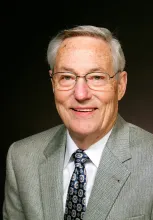
At the time of his retirement in 2016, Roy Holladay was serving the Operation Manager for Ministerial and Member Services of the United Church of God. Mr. and Mrs. Holladay have served in Pittsburgh, Akron, Toledo, Wheeling, Charleston, Uniontown, San Antonio, Austin, Corpus Christi, Uvalde, the Rio Grand Valley, Richmond, Norfolk, Arlington, Hinsdale, Chicago North, St. Petersburg, New Port Richey, Fort Myers, Miami, West Palm Beach, Big Sandy, Texarkana, Chattanooga and Rome congregations.
Roy Holladay was instrumental in the founding of the United Church of God, serving on the transitional board and later on the Council of Elders for nine years (acting as chairman for four-plus years). Mr. Holladay was the United Church of God president for three years (May 2002-July 2005). Over the years he was an instructor at Ambassador Bible College and was a festival coordinator for nine years.
