
Robin S Webber
This transcript was generated by AI and may contain errors. It is provided to assist those who may not be able to listen to the message.
Good morning, everyone. I want to say thank you very much to Sarah, coming up and playing that for us and for God. Sarah is one of our Bakersfield girls that is now here as a lady and married and serving along all side of you. I think she played last time I was up here, so it's always nice to have a hometown person to be able to proceed when I come up to speak to all of you.
I want to bring greetings to you from your sister congregations in Southern California. We're all doing well out there, and we are certainly very supportive of the direction and the spirit and the approach of the United Church of God. I certainly appreciate the brethren around the world that are praying and fasting for the well-being of the upcoming Council of Elders meetings, and would certainly ask your prayers and your thoughtfulness, and as I had written to the church that if you can fast during this time, we would certainly appreciate it. I do not just say this to simply say this, but we do feel the support when people are praying, when people are fasting.
It is evident. We know that we are not alone. We know that the brethren are behind us as much today as the brethren of old were behind the Apostle Peter or the Apostle Paul. And to recognize that you do go that extra distance, just like when it says that Paul in the book of Acts was going to Rome, and it says that the brethren came up and met him at the end of the three taverns or whatever it was on that road along the Appian Way.
The brethren have always gone the extra distance. They've always gone the extra mile. And it is together as a church that we move forward together. So please do remember us. We're going to be in a retreat session tomorrow. And then we're going to be having committee meetings all day on Monday. And those committee meetings are important because so much can be done then before it comes up to the council level, so that our time is well spent to make the decisions that need to be made.
And then we'll be in our regular set of meetings on Tuesday, Wednesday, and Thursday. It's always an honor and a privilege to follow my good friend of many years, Rainer Saloma. He is an older gentleman, as you can well tell by now, from me. I first met Ray... I look older, I know that.
You can say yes. It's being up in Canada. It's being in that rare, refined air. It's also being finished. You know, all the Baltic people look very young. But I've known Rayner for many, many years, and he's a delightful gentleman. I'd like to bring you a subject this afternoon that comes out of the book of Revelation. The book of Revelation is written in what we call apocalyptic style and or apocalyptic literature. And this form of literature appeared shortly before, during, and somewhat after the time of Jesus Christ. Apocalyptic literature basically was in a figurative mode. It was very colorful, had a lot of imagery. And it was directed to a dispossessed or in-door, a persecuted people of that time to assure them of a better future.
And that is the message that I would like to bring to you today out of the book of Revelation. I find that wherever I travel in our circuit in Southern California, or when I'm given opportunity to speak elsewhere, I think the people of God more than ever need to be encouraged. And that is my hope today to be able to encourage you. When we consider this literature in Revelation, we do recognize that it does serve that very purpose. That no matter what you and I are going through today, as Mr.
Eddington just mentioned with that personalized version of the subject of suffering, that no matter what is occurring, we have read the end of the book. And when we read that end of the book, we know that God wins. And if God wins, then you and I know that we also, as we surrender ourselves to God, we too also win.
And so we recognize that since the time that Jesus Christ was crucified, and that He did die and was resurrected and was ascended, that we recognize that that victory is in place, that God has a plan, that God has a purpose. And we just need to surrender ourselves to that and recognize that He has that plan and that purpose for us. The victory is won, but the details still have to be worked out here below. And I'd like to talk about some of those details with you this afternoon and add a note of encouragement.
I'd like to draw your attention to Revelation 2, if you'll come with me. Let's open up the Word of God here to Revelation 2. And we're going to pick up the thought in verse 8. And as you turn there, allow me to give you some framework. Because I'm going to direct your attention to a wonderful statement that demands our attention to explore, and to internalize, and fully embrace. And may I say, with living faith, because it will set the road forward as to what we are to obtain.
In Revelation 2, in verse 8, we come to the message to the church at Smyrna. We recognize that this message was given to the seven churches that were there in Asia Minor. And Jesus Christ speaks to each of them, because you'll notice that it is in red ink in your Bible, which means these are the words of the Alpha Omega, Jesus Christ, directly speaking to his body, directly speaking to his church. And even as he gives specific comments to each church, it was to be read to the church as a whole.
And so we glean some of the information from Revelation 2. And we'll come to see what it means here. In Revelation 2, let's pick up the thought in verse 8, and to the angel of the church in Smyrna write, these things says the first and the last, who was dead and came to life. Now that's going to set the tone for everything else, because Smyrna was under persecution. They were having challenge. They were having trials. It was some tough sledding, as we want to say today.
It was tough sledding in first century Smyrna. And so Jesus himself, being the spirit of experience, says, Look, I was dead, but I am alive. So I'm giving you my background, solidarity with you that are following me. I know your works and tribulation and the poverty, but you are rich. And I know the blasphemy of those who say they are Jews and are not, but are of the synagogue of Satan. Do not fear any of these things which you are about to suffer.
Indeed, the devil is about to throw some of you into prison, that you may be tested. And you will have tribulation 10 days. Be faithful until death. Be faithful unto death. Spirit of experience is speaking this. He said, Before I was dead, but now I am alive, He that was faithful unto death, but now lives forever, and I will give you the crown of life.
And it is that which I would speak to you today, this afternoon, brethren. The title of my message is simply this. If you'd like to jot it down. I will give you the crown of life. And that is what I would speak to. With everything that was going on, and again, the world of old was cosmopolitan. There were a lot of things that were happening in Asia Minor.
It seems that this particular church, Smyrna, had several challenges that were occurring. There was one that was coming from the Jewish community, and that was not the only area where that was coming from. Also, there was a tribulation that was beginning to be compounded, especially at that time under the Emperor Domicium of the Flavian House. A man that he himself thought that he was a god. He didn't even wait until he was dead to become a part of that cult of the genius of the emperor.
He said, hey, I'm alive. I'm a god right now. And so the Christians then had a real challenge as to who was going to be the true king. Who was going to be the king of their life?
Now, the Romans normally didn't have a problem of a religion having its own, what they called a supersticio, and or their own religion, as long as it did not conflict what was called the religio or the state religion. And that there could only be one lord. There could only be one king, and that was the man that was on the river Tiber, Caesar.
And Jesus had to tell them...
Sounds like an earthquake. I'm out of southern California.
There we go.
So Jesus had to remind them...
Very simple, and that is this in John 15 and verse 20.
He had said that if they have persecuted me, they will persecute you.
And so he begins to set the stage. He said that no matter what comes in your life, I want you to remember something. I will give you a crown of life.
Very interesting that, in a sense, Jesus personally communicates with the church at that time.
I think all of us remember when we were first called into this way of life and began to surrender our lives to God Almighty and Jesus Christ. We thought that it was the best day of our life, and we didn't really realize perhaps some of the issues that were going to come along. We were happy. We were excited. We were thrilled that we might be able to take up as a disciple of Christ and be able to walk in his footsteps. I'm sure that was the case with the people in Smyrna. They didn't realize, perhaps in their enthusiasm, some of the challenges that were going to come along and that some of the echoes of Jesus' words would really also be upon them, that if they have persecuted me, they will indeed persecute you. I'm sure those people in Smyrna did the best that they could to walk in the footsteps of Christ, but they could only go so far. And then it's as if Christ comes down in spirit, as it were, and gives them this encouragement, that it is going to be worth it, because when it is all said and done, I will give you a crown of life. The term crown there comes out of the Greek word. You might want to jot this down. It's not one of those hard Greek words that are hard to spell. It's like stefan, stefanos, Greek word for crown. And what that is alluding to was that laurel wreath, that laurel wreath made out of olive, olive leaves, that laurel wreath.
That would be placed on either a olympian champion, the one that had finished the race first, had gone through the training, had endured the challenge, and had come in first across the tape measure, and he would come to the podium like this, and he would be crowned by the local official, and that wreath would go on his head. There had been a triumph, and he was crowned before all. Also, at times, a Roman general that was either fighting into Medea or Parthia or up in Germania, and perhaps he had won one for the Roman Empire, he would be invited to come back to Rome or later into Constantinople, and the emperor would place that crown, that staphanos, on his head. There had been a triumph, and that is the background of, I will place a crown, I will give you a crown of life. I'm going to give you the opportunity through my spirit, through you co-working with me is what Christ is saying, that one day you are going to be placed in this opportunity, in this position, and there is going to be a triumph. I am the triumphant one. I have died, and I live. I am the Alpha, and I am the Omega, and I, I will, I will give you that staphanos, that crown of life. I'd like to offer some contrast, because contrast is sometimes the best way of learning a lesson about what the Bible shares with us, and sometimes what we're experiencing down here in this world. When it comes to coronations, or when it comes to crown, I'd like to talk about another gentleman for a moment, somebody that you all studied in history at one time or another. His name was Napoleon Bonaparte. A gentleman from Corsica later on became Emperor of the French. Very interesting that when Napoleon was coronated in 1804, as Emperor of the French, it was very, very interesting. It was a lot different than our fringe in Smyrna, and or you brethren here in southern Ohio. That when Napoleon was coronated, number one, he was not alone or lonely like these people that were in Smyrna. He was surrounded by throngs and crowds that had come into the cathedral. Neither was he dispossessed, as we talk about apocalyptic literature being written to dispossessed people. Europe lay at his feet from the the peninsula of Iberia to the to the rivers of Russia. So everything basically lay at his feet. What's most interesting about Napoleon, that when he was crowned Pope Pius the 7th had come up to do the honors, or at least he thought he was going to do the honors, that he raised the crown and basically Napoleon, and I can't speak French and or even with a Corsican accent, but Napoleon just took the crown from him, said thank you very much, and he crowned himself as emperor of the French. He remembered what happened a thousand years before with Charlemagne and he was going to make sure that that didn't happen again to be subservient to a religious figure. What is interesting is that 11 years after 1804, if you add it up, you know what happened in 1815. If not, you need to take a remedial course in Western civilization.
But in 1815, we know the famous phrase that Napoleon met his Waterloo. This man that had been in the midst of a throng, had Europe laying at his feet, had crowned himself king, lost in battle, and was exiled to an island. Now what's very interesting is that lonely, excuse me, what this king who had had everything basically at the end of his life, died alone on an island after becoming very sickly, and he died far from his homeland.
Beyond that, what is interesting, though, to bring us together with this gentleman for a moment, Napoleon was crowned, even though he crowned himself. And we, as the Bible states, are one day going to be crowned by Jesus Christ. He who is the king of kings is going to crown us with the Stephanos. But again, the contrast is still worth bearing note. It's interesting that when you look at it, that Napoleon seized a crown. What a difference from what you and I do today, and what the brethren in Smyrna did long ago. Napoleon lost a great lesson that is out of the Bible, and that is simply this, that we are not here to conquer others. We are here to be conquered by the Spirit of Jesus Christ and God Almighty, and to learn to give ourselves away. To be able to do that, you have to recognize the king of our life. You have to recognize the goals that are ahead, and you have to be willing to do it. Napoleon never conquered himself, never allowed himself to be conquered. He was more interested in conquering other people. What a difference of approach and motivation that this man that is world famous from the people of Smyrna, from the people of Batavia, from the people of Milford, from the people of San Diego and Bakersfield and Los Angeles and Kenya. People that are willing to give their life away, that they might have the ultimate life live within them. Very interesting. The Apostle Paul, who most likely visited Smyrna at one time or another, understood the same concept. If you'll join me in 2 Timothy 4, verse 8 for a moment, 2 Timothy 4 and verse 8, let's take a look at this verse about a crown. 2 Timothy 4.
Let's pick the thought up in verse 8.
Okay. Finally, there is laid up for me... No, actually I want to begin. Let's pick up the thought in verse 6. Pardon me. For I am already being poured out as a drink offering, and the time of my departure is at hand. I have fought the good fight, and I have finished the race, and I have kept the faith.
What is very interesting when you just look at verse 6 is you recognize that Paul said he poured himself out as this drink offering. Pouring himself out day by day in every means and in every way of his life that he poured himself out. And notice then what he said here, which is interesting. I'd like to draw your attention to. He says, I have fought the good fight.
I have fought the good fight. The Bible is very plain and very honest that there is a challenge, that there is a struggle that does occur down here below. There is friction. There will be opposition because of what you and I have done in our life by surrendering ourselves to the words of this book and to the author of it. That there's going to be a struggle. There's going to be a fight, but it's a good fight. It's a good fight. I have a question for you, may I?
With this week that's gone past us on your Monday or Tuesday or Wednesday or Thursday, as you went through the challenge, as you went through knowing what God wants you to do, but knowing the pull and the gravity of this earth, did you say in any way, perhaps, looking at these words, that I'm in a good fight?
This is worthwhile.
I understand that he who died and now lives is looking down and understands what I am going through and to recognize that there's a purpose that is being worked out here below and to look for God's hand in it. It's a good fight. If it's not considered to be a good fight, and it's only the struggle, and it's only, you know, nothing's ever working out, nothing's ever happening, I'm always living with one hand tied behind my back.
That was not me. Wasn't that fun? You're not a heart patient, are you?
Okay. You had a little struggle happening there. Was it a good fight?
We talked about this before church. Not. But notice again what it says here.
And I have finished the race. I finished the race. There's a course that's set before me. There's a course that's set before us. Going back to the book of Smyrna, Jesus had said, the Christ had said that there are going to be 10 days of struggle and trial. He's saying, there's going to be this time period, 10 days, and we'll allow others to interpret all of that, but it's going to be a set time. And it might seem like a long time, but it is going to end. There is a definite end of what you are going through right now. And then, I will give you a crown of life. I've finished the race, and I've kept the faith. To fight that good fight, to finish that race. How many of you ever saw the movie Chariots of Fire? Always nice to see what an audience is watching. Story of Eric Lidle, the Scotsman, back in the early 1920s. He was a gentleman that came out of that Scottish background to where they observed Sunday as we observed Sabbath, kind of in what we used to call a blue law manner, that you didn't do things on Sunday.
It was his value system, and it was his conviction that he was not going to run on Sunday. And we see that from time to time since then, with different individuals of religious convictions, even about the seventh day Sabbath in baseball or football. And many of you have been through that in high school and college, and even some of you that are younger, that they were going to stick to their values. And he had this conversation with his fiancé, and she was kind of, oh, come on, Eric, Eric. And he said, well, why do you keep on running? Why do you keep on doing that? And I always remember this line that comes out of the movie. He says, I run. I run to feel God's pleasure.
I have a question for you here in Cincinnati, and those that are listening abroad, and those that may see this in the future. Why are you running that race that's set before you right now? Are you running it on your own?
Or are we running to feel and to know God's pleasure?
Notice then what the Apostle Paul says here. Finally there is laid up for me a stefanos of righteousness, that crown of righteousness which the Lord the righteous judge will give to me on that day. It's not today. It may not even be tomorrow. When it says that day, that is an assurity for we that live in faith, and not to me only, but also to all of those who have loved his appearing. It's very interesting when you look at these words and you understand the Greek root, to all of those who have loved his appearing. There's a past tense here that have experienced him already. The word here is not perusia when it comes to appearing, talking about that future activity, that future event when Christ comes down as King of kings and Lord of lords. It's a word that comes, the same word as epiphany. This appearing now, this bright light that comes into our life daily as we seek it, as we acknowledge it. Those that have already loved what God almighty and his Son are doing in us every day and in every way if we allow him. And to recognize, for those of you that are fighting that fight and racing that race, that all things work together for the good for those that love and keep God's commandments. Can I share a story with you for a second? Really, boy, has this been a past week? My wife was gone for 11 days. Guess where? To Ohio.
She lives on the other end. She went to visit her folks. She was gone 11 days. She comes back this past Monday night and said, oh, I'll be able to see my wife for about two and a half days, just all by myself because then I was going to be in Cincinnati. Have you ever noticed that life is what's happening that you haven't planned for? Or am I the only one? Our daughter calls on Tuesday morning, no matter how old they are. This one's 33 years old. It says, where's mom? So I knew it must have been important. What happened is her daughter had been in an emergency all night long. She had an impacted kidney stone in her gallbladder and been there all night and she was going to go into surgery. Had to go into emergency surgery. And so immediately, as parents and grandparents, because you're always on the run with the family, we immediately went into town and got the four granddaughters. So much for being alone for three days. But it was very much needed for our daughter. And what timing God had that Susan was home, we were able to go in, our daughter is doing okay. I'll just go to the end of the story. She's just doing great. Some of you know her. And so everything is fine. And we had the four kitlets with us for three days and three nights. That's very difficult.
And then we dropped them off. And we think, well, that's really good. We were able to be there for the kids. So we're leaving town. This is Los Angeles around Glendor, for those of you that have been there. And I'm leaving town and I'm in bumper-to-bumper traffic. Not at five, but one o'clock in Los Angeles, leaving. We're already 30 miles out of town, but it's bumper-to-bumper traffic. And then, oh boy, I've got to get home. And all of a sudden, my radio goes out. All of a sudden, then my air conditioner goes out. I don't know too much about cars myself. And all of a sudden, the car starts shaking a little bit. I think, that's no earthquake. And I said, I'd better get off the road. So it's almost as if there was this opening, opening. And I was able to glide off and get off the road. A-okay. Bottom line, after two different AAA people came out, alternator had gone. Most of you had already figured that out, that know a lot about cars.
Now, why is this happening the day before I go to Cincinnati? Lord, what are you doing to me?
But that was the same car that I was going to take the next morning at 5 30 in the morning to the airport. And the verse that came in my mind is, all things work together for the good.
It will only be able to think it through of what God is doing. Because I could have been my plane left very early from Ontario. I could have been stuck. I wasn't. God was good. Does He put us through a little challenge? Does He put us through a little struggle in life?
Absolutely. But when we recognize that all things work together for good, and that this is a good race that you and I are going through, then things are going to happen. With that stated, what I'd like to do is I'd like to give you three specific points. They're very short, but they are about a crown. And I just want to remind you about these points, and they're going to be very simple. I hope that you'll always remember them. The first point that I want to bring you, I'm not going to give you seven points like Mr. Saloma. Just three. Just teasing arena.
Before that good day arrives, the first thing that we need to remember is this.
We have a destiny. Number one, you are to wear a crown. You are to wear a crown. I think that has already been established by Revelation 2 and also by the words of the Apostle Paul, that there is a crown that is waiting for us to be worn in glory and in honor, not because of us, not because of what we have done, because it's not about us. It's about him, and it's about God, and it's about his son, and surrendering ourselves to that. That it is their triumph, but they allow us in that sense to be participants and co-workers in what they are doing in our framework. And we are going to wear a crown. Join me, if you would, please, friends, in Revelation 5. In Revelation 5, and let's pick up the thought, if we could, in verse 9.
And they sang a new song, saying, You are worthy to take the scroll and to open its seals, for you were slain. Now this is speaking of Christ, who is going to be the king of kings, and have redeemed us to God by your blood out of every tribe and tongue and people and nation. This is going to be for humanity. That's... no, I didn't do that at that time. This is going to be for humanity, not just one group of people, and have made us kings and priests to our God, and we shall reign on earth. There's a purpose that's being worked out here below, and God is calling people now that will surrender themselves, and in that sense, allow themselves unconditionally to have God Almighty and Christ and that Spirit live in us, and to give ourselves away day by day, moment by moment. I have a question for you. Can we talk? When we look at this past week, because we don't know what's before us right now, how much have you given yourself away this past week? I'm not talking about compromising. I'm talking about allowing the Spirit of God to guide you to a better future, to put self on the shelf, and to follow the footsteps of the one that has gone before us.
Only you can answer that question. It's not always easy. It's not easy for we that are older.
It's not easy for some of you that are younger, someone we want to welcome those that are coming to Ambassador Bible Center. Not easy for some of you in high school with the way things are going today in today's culture. But to put yourself aside, and to allow in that sense God Almighty to rule over your actions rather than have your emotions rule over your actions. And that's coming every day in every way for us to prepare for that crown, and to recognize that, to surrender our own human kingdom now. But there's something else that we need to understand. Point number one is you are destined to wear a crown. The second point, though, is a little bit more challenging, and that is simply this. Before we wear that crown, we have to wear another crown.
We have to wear another crown, and that is in this time we will bear a crown of thorns.
Point number two, we will bear a crown of thorns. Join me if you would in Hebrews 2.
Hebrews 2, and let's pick up the thod in verse 9.
But we see Jesus, who was made a little lower than the angels, for the suffering of death, crowned with glory and honor, that he, by the grace of God, might taste death for everyone.
For it was fitting for him, for whom are all things, and by whom are all things, and bringing many sons to glory, to make the captain of their salvation perfect through suffering.
He was made perfect through suffering. Very interesting.
How can that be defined when we look at the Scripture? The suffering that precedes the crown of glory and honor that was given Jesus Christ is illuminated in chapter 19 of John. Join me if you would in the Gospel of John, John 19. And again, let's pick up the thought if we could in verse 1. So then Pilate took Jesus and scourged him, and the soldiers twisted a crown of thorns and put it on his head. And they put on him a purple robe. And then they said, Hail, King of the Jews! And they struck him with their hands. This is a rather graphic piece of Scripture to go through. Hurts just simply to consider what they did to our Lord and to our Savior on that night in which he was betrayed, and then the beating and the suffering that he took.
And to recognize that the Romans, who did not treasure life outside of Rome, but looked at other peoples as almost in an animalistic sense. They didn't understand. They had no connection with other human beings suffering if they were not Roman. And that's why you would have the gladiator games. Sometimes we can't wrap that around in our minds. How could the Romans watch what they called the games? It's because they did not look upon the conquered people. They did not look upon those outside of the Latin or the Hellenic race as being people, but as inanimate objects, living tools, as it were, to be used as they would want to. So they took this man, and they took a crown, as it were, of thorns, and they put it on his head. Now you can imagine, and I know this, sometimes I go out and just simply go to prune the roses like you do back here, and you go to prune the roses, and I get one little thorn in my little pinky, and I go to pieces.
Ah! Oh! It's so horrible!
You're waiting for a show of what's going to happen here. You're looking at your finger, wondering if it's gotten poisoned. Can you imagine having a crown of thorns put on your head like Jesus Christ? And yet, and yet, he bore it gladly. It was the good fight.
It was the race that was set before him, and he finished the course. I want you to think about that for a moment, whatever you're going through, and if I see 130, 140 human beings out here, I realize that life is challenged. There are things that come our way that we do not expect it.
When we were baptized, hopefully the gentleman that sat down with you explained that things would come your way, but that they would serve a purpose, just like the booklet that Mr. Eddington mentioned. Why does God allow suffering? And why do we go through what we're going through in this life? It's for a purpose, and absolutely. And it's to recognize that one day, especially as we go into these fall festivals, that you and I, one day, as we read the scriptures, we have this understanding, and it's a beautiful understanding, that you and I are going to be able to serve under Jesus Christ. That Jesus Christ is going to reign. He is going to rule, and He's going to give us the privilege of wearing a crown. But it's not a crown of conquering others.
It's a crown that is designated of service. It's a crown that says that, like the Christ in a small way, that you and I have gone through the ropes. We've gone through the challenges, and that you and I are going to be able to serve under Him in a spirit of experience. We need to appreciate that. Jesus is not only going to bear the crown of crowns, that He bore a crown of thorns, and it's for a purpose, and we have to understand that. Shakespeare once said that He just, at scars, that never felt the wounds. Just at scars that never felt the wounds. And that's why we're going through what we're going through right now.
And you think about what you're going through right now in your life, and I'm looking at what's going through in my life, and nobody has a silver spoon in this life at all. But it's for a purpose.
It's part of that good fight. It's to ultimately feel God's pleasure. It's to run that good race.
It has been said at times that we must bear a cross before we bear a crown. Somebody else put it another way, which is interesting, is that a life without thorns is an eternity without a crown.
And therefore, we move forward, and we learn about this.
The Olympians of old, the Olympians of old, when they began to consider moving into the games and participating in the games, they had to take an oath. It was like a covenant.
And they had to dedicate themselves that they would stay in the game. They would stay in the training. And there were very, very specific guidelines that they had to meet to stay in that.
Isn't that a little bit what you and I did when we were baptized?
When we were baptized? And we took covenant with God?
Do you remember where you were here, perhaps in Ohio, or maybe you were down in Kentucky at the time? And the minister began to ask you those questions regarding covenant, and he asked you your name. And he said, have you accepted Jesus Christ as your personal Savior?
You're halfway there. And then he said, and have you repented of your sins?
Because you have accepted Jesus Christ as your personal Savior, and your Lord, and your King, and your high priest. And because you have repented of your sins, of what you have done, not only what you have done, but what you are apart from God, I am going to baptize you, not into any sect, creed, and or denomination of this world or of this earth, but I'm going to baptize you in the name of the Father, and of the name of the Son, and of the name of the Holy Spirit, for the remission of all of your sins. Remember there? Remember when you were there? Remember that was asked of you. And you took covenant with God. You said, I do. I will accept your gift, Jesus Christ, to run the race before me, and I will follow Him. I will fight that good fight. I will run that distance. I will finish the fight. And not only that, but I know that I will not run alone, that your spirit will be with me. It's still the same today, brethren.
God hasn't changed the rules, and you know and I know that we took oath as much as that Olympian of old who recognized that there was a crown of Stephanos waiting ahead of him of triumph, and that is very important to understand. Join me if you would in 1 Corinthians 9.24. 1 Corinthians 9.24.
Again, Paul, using these Olympian considerations in the words of the Bible, do you not know that those who run in a race, they all run but one receives the prize?
And it says, run in such a way that you may obtain it. And everyone who competes for the prize is temperate in all things. Now they do it to obtain a perishable crown.
You get a laurel made out of olive leaves. It's going to wilt.
But we have an imperishable crown. Now I've got to share a story with you. I'm a couple minutes ahead. Last night we had a very, what I call a very neat Midwest experience. You say, what is that?
A night without a thunderstorm? No. We're staying at the McNeelys, and Debbie said, we've got a nine o'clock flower. Everybody know what a nine o'clock flower is? How many of you know what a nine o'clock flower is?
How many of you have an eight o'clock flower? It doesn't exist. It's a nine o'clock flower. What happens is this flower is in a little pot, and at nine o'clock, because of the humidity, the moisture, the moonlight, whatever, it comes out at nine. Ours came out at 905. It was pretty close. But it came out, and it just began to glow in the moonlight. It was really neat, and we watched it, and it was so beautiful. It was glorious, and it came out almost on time. And then this morning, I looked at it, and I thought it was white, because the moonlight, it actually kind of a dull little yellow thing. But it was still very, very pretty. And now it's, pfft, there's nothing to it. All of that, for a moment, it comes out in all of its radiant, glorious, created splendor.
But for one night, it had its majesty. It had its glorious moment, its less than 15 minutes of fame in creation. I was telling my wife about it this morning, about the nine o'clock flower, and she said she'd been reading through Isaiah 40 and 41 this morning, about how humanity is like grass. It grows, and it withers, and it goes away. And you know that, and I know that. Our God above tells us something, friends, that's better than a nine o'clock flower, that He created. And that is what is mentioned here, is that we obtain, we strive to obtain a perishable crown, but we for an imperishable crown. Therefore, I run thus not with uncertainty. This I fight, and that is one who beats the air. And the Christian journey is a glorious struggle. And sometimes we want it to be cut in half, maybe because of something that's on the job, or something that's happening in our marriage, or something that's happening with our adult children, or something that's happening to our teenager, and you're waiting. I can't wait till he's 21 and becomes my best friend, but he's 15 right now, and going through some of those challenges. Or maybe an illness that has come upon us that was least expected, or the death of a dear one, as I found out this morning on the phone of a member back in San Diego. And sometimes you want to cut the struggle in half. We're a little bit like the gang in Revelation. Oh, Lord, how long is this going to go?
Some of us are like that individual that, you know, sometimes you wander out and you see this little piece of nature and creation, and it's a cocoon, and you begin to see it kind of, you know, shake, rattle, and roll. And, you know, something is really neat is going to come out right. And so, you kind of want to get things along. You think you're the midwife of all creation, so you kind of want to get it along. So you take your little scalpel and you, you know, you put a niche in there thinking that you're helping. You think you're helping the little butterfly?
You think you're going to help them on the journey? And the little butterfly kind of comes out, like this. And you see the color, and you see, though, that it's kind of not being able to flap its wings. It's not able to get, there's no lift off, Houston. It's not going into space.
Why is that? When that butterfly is in the cocoon, there's a struggle that's going on in there.
And the struggle that is in the cocoon is actually strengthening, strengthening the butterfly, so that when it comes out of the cocoon, it will have butterfly muscles to be able to lift off, and that you might be able to see in your Midwest gardens go from bush to bush. But we want to cut that struggle. We think we know more than God does, and we say, oh, how long, oh Lord, how long? And we have to understand that in Him, time hath full perfection, and we want to cut that struggle off sometime. Will there be struggle in this human existence? Absolutely.
But you and I are not alone. The same one that promised us that there's a crown of life said that I will be with you. I will never leave you nor forsake you. You rest on me. You abide in me, and we'll go through this race together. We will fight that good fight together, and we will finish it. First Corinthians 9, 24, it says in 25, but I discipline my body and bring it into subjection, lest when I preach to others, I myself should become disqualified. Allow me to take you to the third point. It's brief, but it is important. And that is found in the book of Revelation 3.
And let's pick up the point in verse 11. Behold, I am coming quickly. Hold fast what you have, that no one may take your crown.
He who overcomes, I will make him a pillar in the temple of my God, and he shall go out no more.
And I will write on him the name of my God and the name of the city of my God, the new Jerusalem, which comes down out of heaven and from my God. And I will write on him my new name.
I often quote the scripture when I go into the dental office, when the dentist is looking at my teeth. It's the only scripture I normally give my dentist that I want to hold on to my crowns, even when he wants to take them away and make more money on them.
But our God above says a loving admonition and encouragement that we are to hold fast and to make sure that no man takes our crown. And brethren, that includes you and me.
To be vigilant, to understand what God is calling us to. You know, this message to the seven churches of Revelation were written to, were read to all of the churches. And at the very end, Jesus says, I stand at the door and I knock. He who lets me in, I will indeed dine with him. So these messages to Smyrna and or these messages to Philadelphia are messages that have come down to you and me to this day that yes, in the truest sense, the victory is won. But the details have to work be worked out. And God allows you and me to be a part of the detail squad. And that is to hold on fast to the crown that God has reserved for you and for me. I believe that that crown is so much more real than what you and I see on this earth. I have and you have, are you with me? You have and I have staked our life on that, that that crown does await us. How can I say that? Because as the apostle Paul says, I die daily. You and I give ourselves away daily, person by person, need by need, and deed by deed. We don't take to ourselves like a Napoleon, but we give of ourselves like Jesus Christ, the ultimate King. And when you see this that is offered to those that are firstfruits, those that have been followers of Jesus Christ from His time forward, and to recognize that He is offering us an opportunity to be at the very epicenter, epicenter.
Of that kingdom. Notice, if you will, for a moment again, verse 12. He who overcomes, I will make him a pillar in the temple of my God, and he shall go out no more. We're not going to go back and forth. There's this aspect, if we can talk about it, there's this aspect of presence.
And that is going to be something very, very, very special. In that sense, there is that privilege that God gives to those that are firstfruits, not because of who we are, but because of what He is, that we are going to, in that sense, be near Him in this fullness. And not only that, but it says that I will make, where it says, about, shall be a pillar. It's very interesting that when you take the Greek temples of old that were support, we so often think of pillars as being a support to an atifice or to a building. There is a twofold aspect of pillars in the ancient world, especially in the Greek world. Pillars were used to, yes, be support structures, and we've often focused on that. And I'm sure you've heard a number of messages on that. But they were also, they were also beautified. There were laurels and there were garlands that were put around them that you could see from quite a distance that were to the praise and that were to the glory of that deity, that wrong deity. What God is saying in a sense is we are not only going to be at the epicenter, but we're also, in a sense, going to show forth His praises, His way of life wrapped around that kingdom that is to come, that we that have gone through the good fight, we that have felt the pleasure of God in the race, we that have finished the race, we that have accepted His appearing, not in the future of which we know not to date. Are you with me? But we have a date with God every day now as He appears in our life. We surrender ourselves to that greater life, the life of Christ in us, and we prepare ourselves for that staphanos that is in the future.
Brethren, we have all come too far. And I'm only here as one Christian speaking to you as Christian. We're all in this together. Don't be an Esau. Don't trade in the birthright that God Almighty has placed before us, simply for something that is so much lesser of this earth, that will sustain us but for the moment when God wants to give us the crown of life forever. I hope I've made the book of Revelation a little bit easier for you to take a hold of this afternoon. Sometimes it's not how much of the Bible that we know, but what we remember that we have been taught. And I hope that you will always remember from this day forward, wherever you go in your life, that your life serves a purpose. It has a cause. Just like Jesus long ago was looking down on the saints of Smyrna. It said, I know what you're going through. I know your works. I'm right there with you.
It's to recognize here in Batavia, here in Eastgate, here in Milford, up in Dayton, down on the riverside, that God knows exactly what you're going through. And He gives that promise forever to each and every one that love Him and keep His commandments. And it's a very simple statement that I leave you with from Jesus Christ Himself. I will give you—and you fill in your name—I will give you a crown of life. Look forward to seeing you after services.
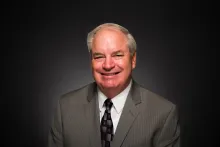
Robin Webber was born in Chicago, Illinois, in 1951, but has lived most of his life in California. He has been a part of the Church of God community since 1963. He attended Ambassador College in Pasadena from 1969-1973. He majored in theology and history.
Mr. Webber's interest remains in the study of history, socio-economics and literature. Over the years, he has offered his services to museums as a docent to share his enthusiasm and passions regarding these areas of expertise.
When time permits, he loves to go mountain biking on nearby ranch land and meet his wife as she hikes toward him.
