
Robin S Webber
This transcript was generated by AI and may contain errors. It is provided to assist those who may not be able to listen to the message.
Over the last several months, I have felt that more than ever that the people of God need to be encouraged. We live in a challenging world. We've been given a challenging calling. Christianity is a wonderment. It's an incredible opportunity. And yet we also recognize that we walk in a world apart from God. To offer you encouragement today, dosed with reality, I'd like to begin the message by having you turn to the book of Revelation. Join me if you would. And let's go to the last book of the Bible, Revelation. And I'd like to draw your attention to Revelation 2, verse 8. While all of you are going towards Revelation, I'd like to just share a few thoughts about the book of Revelation, why it was written for the audience of its day and why it is written for us, we, that live today. The book of Revelation is written in a style that is called an apocalyptic. It was a style of written literature that was, basically from about 200 BC to about 200 AD, especially within the Jewish community, but also spilled over into the early Christian church. This form of literature appeared, like I said, shortly before and after the time of Christ. Apocalyptic literature is written, as it were, in a figurative form, a lot of imagery, and a lot of color, to give us substance of what God wants to bring to us as much as we can understand his perfect ways. It was directed towards people that were normally dispossessed, people that were being persecuted for one reason and one reason alone, and that was to offer them encouragement and to assure them that God was granting them a better future. And so we need to understand that. And that's why I'd like to draw you to the book of Revelation today to look at some of this literature that is actually written in red in my Bible, which probably means your Bible, which means that these are the very words of Jesus Christ to the church then as well as now. Join me if you would in Revelation 2, and for those that are students of the Bible, we'll recognize that we begin to be in the midst of the letters to what is called the seven churches. And I draw your attention to verse 8. And it says, and to the angel of the church in Smyrna write, these things says, the first and the last, who was dead and came to life. So what is being spoken here as we look at verse 8 is it's giving us a perspective of the one that is sharing something with us. He is the first, he is the last. He comes with a perspective that is totally different than what's happening on the ground then and there in Smyrna and or in our life today here in San Diego County.
And he says not only that, but he was dead. So he understands something that people are going through, and yet it does say that he is now alive and came to life. It says that I know your works. I know your works, tribulation and poverty, but you are rich. And I know the blasphemy of those who say they are Jews and are not, but are a synagogue of Satan. It's interesting that God above says, I know exactly what you're going through down here. You Smyrnites. That's the name I just gave them. I hope it sticks. Smyrnaites or Smyrnites. I know what you're going through down there in Asia Minor. I know the world that I've called you out of and that I've kept you in.
You're in this city that is famous as the Port of Asia. I know that there is a group of individuals there that were covenant people that are persecuting you, thinking that they're doing God a favor.
The Jewish community of the diaspora that was in Smyrna. And not only that, I know the other challenge that you have. If that's not enough, I know what's coming the other way with the Roman population. I know that you love the Lord Jesus Christ so much and that He is the King of your life, that you will not go and do the due worship to Caesar. I know that you will not write your loyalty to Caesar. I know that you will not mark that charigma. I know that you will not take that mark of the beast, that there is a man above God in your life. Smyrna, I know exactly what you're going through. Do not fear, verse 10, any of those things which you are about to suffer.
Indeed, the devil is about to throw some of you into prison. You might say, oh, thank you very much for letting us know.
It's about the twirlers in the prison that you may be tested, and you will have tribulation 10 days. There are things that are going to happen to you, and it's going to perhaps seem like forever, like when will this go away? But it's going to be for a set amount of time. It's going to be for 10 days, whatever that figuration is. There's going to be a beginning, and there's going to be an end. So understand that. Even as you're going through all of this, whatever that challenge is, it's going to start, and I guarantee you, says the one whose words are written and read, it will end. And I'm bringing you a perspective because I'm the first and the last. I'm outside the goldfish bowl of your current trials and tribulations, but at the same time in there with you right now. And there's one more thing I want you to know, and I will give you the crown of life. And with that last sentence, I'd like to share the title of my message with you.
I will give you the crown of life. Because, first of all, we have to understand existentially and live in the skin, as it were, of the people that this was initially written to, Christians. In the second and or third generation, of perhaps families had to come in through the teachings of Paul or Silas or Timothy.
And now they're living under the challenge of Domician, of the Flavian house, a man that is and will only be called Lord by both Roman and by slave. He thinks he's God, and he's persecuting. It's the second great persecution of the church. The first was under Nero, and now there's Domician. And it's a challenge being a Christian. And he says, you need to understand, I know your works, I know what you're going through, but I also want to share something with you. If you will be faithful, there will be a crown of life given to you. Jesus is very realistic. He understands what's going on in the ground. He understands what's happening here, but he takes us to the future. And we're going to build upon that, especially at the end of this message of what that future means when he says, I will give you a crown of life. Join me if you would in John 15 and verse 20, because Revelation basically expands upon the initial words of Jesus Christ back in the Gospels in John 15 and verse 20. Notice what it says. Remember the word that I said to you. And sometimes we have to be brought into remembrance to recognize what Christianity is. That it's just not a one-way escalator to bliss, but to recognize that lessons and activities are being worked out here below to perfect us for a future purpose. A servant is not greater than his master, and if they persecuted me, they will also persecute you, and if they kept my word, they will keep yours also.
Jesus was always brutally honest. Jesus was always up front, perhaps much more than we are sometimes, about the way of life that we have been introduced to. We need to understand that, and that no matter what we're going through, whether it be in Smyrna, Santee, La Jolla, Temecula, Mission Valley, San Ysidro, and all parts in between. And I better say, Murrieta and Menifee, to get everybody involved here.
God says, I will give you a crown of life. Let's talk about this for a moment and understand what the crown of life is all about. To recognize that when we go through the book of Revelation, we recognize that Jesus is a king above all kings, that the crown upon him is a crown above every realm that is either in heaven and or in earth. And to recognize that the crown that is being spoken about here is very interesting.
I'd like to just, maybe you've never heard a message before on the subject of crowns and a reward. And there are many things that I could talk to you today about encouraging towards what the future is going to be about. We could talk about what it is to have life immortal. And that is indeed one of the rewards and one of the gifts that God is going to give us. We could also, in a sense, talk about the aspect of being able to see God as God is God and to be able to have that blazing light taken from between He and us and to see Him as He is.
These are all things that are out there, but I would keep you here well till midnight. And I might anyway, just on one, is that that was to wake you up, which we won't. And that is to just simply today focus on what it means to be given the crown of life. That word you might want to jot it down out of the Greek is a simple word. It's staphanos, just like Stefan with an o-s, one of the easier Greek words to deal with. What does it mean when it says that I will give you a staphanos of life?
What was being spoken about here was a crown that was placed upon an olympic champion, that that laurel of olive reefs that were placed on the winner, the one that had tested, the one that had trained, and the one that had accomplished before that vast audience in olympia greece, that they were finally welcomed up to the winner's podium, and they stood up there tall, and that staphanos and or that crown was put upon them.
That is one example of staphanos. Another example of staphanos would be for a roman general and or a caesar to be granted what was called a triumph. Now you'd think maybe that a triumph is a sports car, but back in roman days a triumph was a gift that was not granted to every victor of a battle over my ancient ancestors up there in germania or the parthians, but that occasionally a triumph was granted to a general who had to leave his army on the outside of the walls of Rome, and he was allowed to come in, and he would have a staphanos placed on his head as he came through the city, and was hailed, and there was a triumph.
It was a moment of tremendous glory. That is what is being spoken about here. These were gentlemen that gave their all. But what we need to recognize is this, as christians and the crown that we're talking about, while these gentlemen perhaps were ahead of others and or triumphed over others or conquered others, the crown that is placed on our heads is because we have been conquered.
We have been conquered by God Almighty and given ourselves to him unconditionally. The Bible has no better means of informing us or educating us about the ways of God other than contrast, and I'd like to share a contrast, if I could for a moment with you, about the crown that God wants to place on your head. I want you to begin visualizing that in your mind that one day you are going to have a staphanos or a crown placed on your head by God Almighty.
I want you to understand that, but we need to understand maybe how the rulers of the world have dealt with crowns in their life, and there's probably no better example than Napoleon Bonibard, who has lived, you know, a couple hundred years ago. It's very interesting that Napoleon did it differently than is going to be done to you and me. Napoleon was a Corsican. Many of you thought that he grew up in France.
He actually grew up in Corsica, which was an extension of France at that time, known as the Little Corporal. Later on, became one of the all-time classic generals down through the ages. I want to deal with a contrast for a moment about what happened to him when he was coordinated in our coronation. Napoleon Bonibard was coordinated in 1804, and he was coordinated as Emperor of the French. Let's get a few thoughts and a few facts about that coronation. I'll make it simple for those of you that are taking notes. You might want to jot this down because we're going to build upon this with the contrast. Number one, he was not alone when he was coordinated.
He was coordinated in a tremendous and a great cathedral, and there were thousands of people that were in attendance. No, Napoleon was not alone, like our friends in Smyrna. And or maybe you today in Muriet or San Ysidro or out in La Mais or in Santee.
Unlike the people that the book of Revelation was written to, he was not dispossessed.
All of Europe lay at his feet from the Iberian Peninsula to the farm fields of Poland. He had conquered much. Perhaps most startling is how he was coordinated, because one day when you and I are coordinated, we're going to have a crown placed on our head. But what Napoleon did, and maybe you're familiar with this, is just as he was about to be coordinated, he literally took the crown himself from Pope Pius VII, and he placed it on his own head. You can see he was a very modest individual. See, he remembered what happened to Charlemagne a thousand years before when Charlemagne was on a trip to Rome, and all of a sudden the Pope, to show his sovereignty over an earthly emperor, he stuck the crown on Charlemagne's head. So Napoleon, a great student of history, was not about to go that direction. Napoleon, by taking that crown and coronating himself, I am now going to be not only king of a day, but the emperor of the French. And he did it himself to show that he was under no one, no man, not even a spiritual head. So all of these things are kind of interesting. Now what is also interesting is simply this is to recognize 11 years after he did that, he met his Waterloo on the plains of Belgium in 1815. This little corporal, who would be a self-proclaimed emperor, would only be stuck alone on an island.
He would escape, and he'd be sent down to the South Atlantic to another island, which maybe you're familiar with, called Elba. No, excuse me, St. Helena. Elba was the first island he was sent to.
He was alone, he was sick, and he died far from his homeland. Thus is the story of an emperor who coordinated himself on this earth. There are some similarities between Napoleon, ourselves, and the people in Smyrna. Napoleon wore a crown, the people in Smyrna are destined to wear a crown, and you and I, as citizens of the kingdom of God, are destined to wear a crown. But unlike Napoleon, we are not going to seize a crown, but we are going to be given a crown. Unlike Napoleon, we are not here to conquer others, but allow ourselves to be conquered by God the Father and Jesus Christ, and submit to the guidance of the Holy Spirit. Unlike Napoleon, our kingdom is not going to last but merely 20 years. But join me if you would for a moment in Revelation 20 in verse 4. Revelation 20 in verse 4. Let's notice what it says here, again with the aspect of the destiny of those that are firstfruits. And I saw thrones, and I sat on them, and judgment was committed to them. And then I saw the souls of those who had been beheaded for their witness to Jesus, and for the word of God, who had not worshiped the beast or his image, and had not received his mark on their foreheads or on their hands. And they lived and reigned with Christ for a thousand years.
Not 20 years, like Napoleon under either the Directorate or the Empire.
Not like Hitler proclaiming that that Reich would last a thousand years. Not even the British Empire. Not even the Latin Roman Empire lasted this long. It says that those that truly believe and submit themselves to the calling of God and to the example of Jesus Christ and yield to the Spirit, no matter what happens in their life for 10 days, to use the example in Smyrna, which can seem exhaustive and forever. I want to share with you what you're going through right now in your life that you don't think God knows about. When he says, I know your works, your marriage, your job, your health, your challenges, whatever is underneath that skin that you don't think he knows about, he says, I know your works. I'm intimately involved with you. And I realize that what you're going through seems like more than 10 days, as it were. But I'm talking to you from a perspective that I'm the first and the last. In fact, I've been down there and I've had my own days. Yes, I did die, but I have lived again. This is the perspective of the book of Revelation. And you're going to be a part of a system that's going to last for a thousand years called the Millennium. The Apostle Paul, who most likely established the church in Smyrna in one of his missionary journeys, had something to say about this crown. Join me if you would in 2 Timothy 4.
In 2 Timothy 4 and verse 8. And I hope you'll look at this maybe in a way that you've never looked at it before. 2 Timothy 4. And let's pick up the thought in verse 6. I'm sorry, note takers.
For I am already being poured out as a drink offering, and the time of my departure is at hand. I have fought the good fight, and I finished the race. I have kept the faith. Finally, there is laid up for me the Stephanos of righteousness, which the Lord, the righteous judge, will give to me on that day, and not to me only, but also to all who have loved his appearing. Now, a couple of thoughts as we look at this verse, and we're going to center on the crown here in a moment, is to look at this for a moment. Paul is speaking about running this race, so he's using this Olympian ideal. And then notice what it says down below here, but also to all who have loved his appearing. Let's remember that analogies have similarities, and there's breakdowns. In Olympia of old, when there was a race that was conducted, there was only one champion.
There was only one winner. Think about it for a moment. There's only one that crossed the line ahead of everybody else. The Christian race is not singular. If you're daring enough, you might want to take your pen and focus on this more and meditate it. It says, to all, to everyone, there's more than one winner in Christ. It says, all. There are going to be many, many, many, many champions that are going to be resurrected and are going to receive this stefanos. And then notice what it says, but also to those who have loved his appearing. The word there is very interesting. The word there in the Greek is apephenaea. I'm not going to dare spell it for you right now, but that means to those that love his appearing and or the shining forth into their darkness. This is somewhat different than other Greek words that talk about the ultimate coming or the perusia of Christ coming in the future. It just says, those that love his appearing in their life now. In other words, it's not just simply, I'll get ready and I'll be ready in the future and I'll love that appearing then. I'll set a date or I'll wait for the date and when Christ comes and I'm all yours, here I am, beam me up, not Scotty, but Christ, says those that love his appearing means what is happening in your life now. Put these two words together. Love his appearing.
Do we love his appearing now in our life? In combination with whatever 10 days of trial, we are going through right now. And is his appearing that a papania greater than the trial that we're going through? Doesn't mean that we're not going to wobble. It doesn't mean that our knees aren't going to buckle. We're only human beings. But to recognize that our hearts stay firm. And all of this, there's just simply three very simple basic points that I want to get across to you this afternoon about crowns. It's going to be very simple and it's going to be very short.
The first thing that I want to share with you today, they're just simply three points. The first one I want to just encourage you, brethren, so much about is this, that you are going to wear a crown. That is God's destiny and reward for each and every one of us that love that appearing. We need to understand that. Revelation 5. Revelation 5. Let's take a look at this for a moment. In Revelation 5, and let's pick up the thought if we could in verse 9. Revelation 5 and verse 9. And they sang a new song, saying, You are worthy to take the scroll and open its seals, for you are slain. And you have redeemed us to God by your blood. Out of every tribe and tongue and people, nation have made us notice kings and priests to our God, and we shall reign on the earth.
Now, it does not mention the word crown right here. It mentions it elsewhere, and I'm just logically putting it together to recognize that royalty wears crowns. And God is granting you and me to be a part of a kingdom of priests. That's one way of looking at it. And our kings and priests and to recognize that we're going to rule and we're going to reign under him. And I know if I can make a comment, because sometimes it's kind of hard for me to wrap it around my mind, you might just say, I don't want to be a ruler. I'm not interested. I don't want to reign.
Well, we need to understand that we're going to be assistants. We're going to be hopers, as it were. But the kind of ruling and the kind of reigning that is going to occur in the wonderful world tomorrow is not what's happening in this world today. That rulership is giving of yourself. It's extending yourself. It's totally based on service to those that you are over, to be Christ-like in that sense. It's going to be completely different that when that Stephanos is put on your head, it is going to be a position of service and not just simply a position of authority that we think of so often. Join me if you would in Zechariah 9. This is a wonderful verse back in the Old Testament. Zechariah 9. Zechariah, again, is a book that was written to people that were dispossessed, that had to be encouraged, that God had a purpose for them, that there was something in the future ahead of them. In the book of Zechariah, and let's pick up the thought in chapter 9 and beginning in verse 16, the Lord their God will save them in that day. Again, the aspect of rescue of a dispossessed people will save them in that day as the flocks of his people, as the flock of his people, for they shall be like the jewels of a crown, lifted like a banner over his land, his land, for how great is its goodness and how great its beauty.
What we have here in a sense is this jewels, and jewels just don't happen, do they, friends? It jewels, diamonds, they come under tremendous aspects of pressure and shaping and molding to grant a permanence that makes them valuable. And God likens us to his jewels, he also likens us to an instant, if you'll look at it here, where it talks that in our lifted like a banner over the land, that God's going to take his people in the future and he's going to lift them up amongst the nations and say, they are mine. They have surrendered themselves. They gave up trying to conquer life by themselves. And they allowed me to be their king. They allowed me to write my laws in their hearts and their minds. And I'm not going to reward that. And it's not even about them, it's my righteousness in them that I'm lifting up before you to show what can indeed happen.
That is going to be an incredible day when that does occur. It's going to be wonderful, going to be fantastic. But it also does, brethren, come at a cost. That means we need to talk for a moment.
The first point that I gave you is that you are going to wear a crown. May I say something? God says I am going to wear a crown by His grace. Number two, we now have to bear a different kind of crown. Today we have to bear a different kind of crown. We have to ask, oh, Mr. Weber, what is that? Join me if you would in Hebrews 2. Hebrews 2. And let's pick up the thought again in verse 9.
Remember what I mentioned in Revelation 2? Jesus saying that I am the Alpha and the Omega. He said I was dead but have become alive. This expands on that point. But we see Jesus.
That's interesting. But we see Jesus. How often do we wake up in the morning and only see ourselves?
Only see what we're going through? Only see what life has thrown at us? Only see those apocalyptic 10 days and think that it will never end? But here in Hebrews it says, but we see Jesus who is made a little lower than the angels for the suffering of death, crowned with glory and honor. There's that word. Crowned with glory and honor that He might be the grace of God. Might taste death for everyone. For it was fitting for Him for whom are all things and by whom are all things in bringing many sons to glory to make the captain of their salvation perfect through going to Disneyland.
Laying on the beach at La Jolla.
Having just everything go right in our lives in the here and the now.
Which translation are you reading out of?
To be made perfect through suffering.
I don't know anybody that desires to suffer in this lifetime. I've never seen anybody sign up for a class in suffering.
I've never even seen it offered in a college as a regular class, much less an elective.
What are you taking this semester? I'm taking a 401 in suffering. Sounds like a really interesting class. No, none of us want to suffer. All of us would like to have the struggle eliminated, just so much like the Emperor Moth. You heard the story before that in that cocoon phase when you have an Emperor Moth. Maybe you've seen this before where there's this cocoon and you begin to see it kind of rock and roll. You say, I just heard a message in church about being a good Samaritan. So I know what I'm going to do. I'm going to alleviate the situation. And I'll just make a slice in that cocoon. God probably doesn't know what he's doing. He's the creator, but somehow that Emperor Moth is not getting out of the cocoon. So what you do is slice it and out comes the … That was my PowerPoint. That's it. It comes out.
And it's all colorful, but it's all wet, and it tries to fly away. And you know what? It can't.
You know why it can't fly away? It didn't build its muscles in the womb of the cocoon.
That's why you have the struggle in the cocoon. It's warming up those muscles so that when the time comes and it has life that those muscles are ready to take it off. So often we want to shorten the process. We want to eliminate what God is doing with us, thinking that God doesn't understand even when he says, I know your works. It says that Jesus was made perfect by the struggle, by the suffering, by staying in the ten days and yet having his eye on eternity and knowing what God was going to do. We need to understand that.
John 19 verse 2. Join me there, please. John 19 verse 2.
The Gospel thereof, John 19 verse 2. And the soldiers twisted a crown of thorns and put it on his head.
And they put him on a purple robe, and they put on him a purple robe.
And then they said, Hail, hail, king of the Jews, and they struck him with their hands. Can you imagine what it would be like to have a crown of thorns put on your head?
I go out to trim rose bushes.
And that's my mistake, because Susan's a much better pruner than I am.
But I want to get in there and help a little bit. And I just have one thorn stuck in my finger, and I go to pieces. Because even when you take it out, you're feeling it for the rest of the day. And normally when I'm about to prepare a message or a sermon, I have to write an article. And while my brain is bigger than that little piece, that skin that got stuck, somehow that's dominating my brain level all during that time. I go, Oh boy, here it goes again. Just that, just a thorn. You know what it's like. It's a little bit like, guys, I think we do this more than the ladies. Have you ever stepped on a board with an ale in it? Or am I the only one?
I used to do that a lot growing up in San Diego when so much was being built up in the 50s and 60s. I didn't know, boy, I'd be out in the lumber yard. I know I'd just...
I'm like this. I'm not getting off the nim. Oh, look what I did. I'm still here. I'd get up. And you know, what I'm saying is this without trying to take it any further, and I don't mean to.
You can only imagine a hardened, coarsened, figuration made in the form, mock form of a crown, and then being jammed on our Savior's head.
He was made perfect in suffering. And He did that for you and for me.
And that basically leaves a lesson for you and I as we begin to leave this second point as simply this, is to recognize this simple theorem of the Bible. It is the message of the Scripture. Before we bear a crown, we will bear a cross. Before we bear a crown, we will bear a crown.
We will bear a cross. And if we do not bear thorns in this lifetime, the equation is not set that we will bear a crown throughout eternity. Jesus was always so true and so honest to those that He loved. He never said that it would be easy, but He did say that it would be worth it.
I want to take you to the last point, the last point that I'd like to share with you.
And that is simply the, oh not, yeah, the last point is simply this.
And that is to care for the crown that is reserved for you.
Care for the crown that is reserved for you. We are to wear a crown. In this lifetime, we are to bear a different crown. The third point is we are to care for that crown. Have you ever gotten a notice in the mail saying that, you know, the postman missed you or the package was too big and therefore come down to the central post office and pick it up or FedEx? Or you think they're playing a joke on you like, I'm not going to show up. What do you do? The next, you're there, you know? Might be something big. Might be something important. No, you're very assured that because you've gotten a notice from the government, from the Postal Service or FedEx, that there's something waiting for you upon arrival. You don't have any doubt in that, do you? I mean, we've all done that. We've gone to the post office. We know it's waiting for us. And that's what God is telling us. I'm telling you something today. I'm encouraging you to recognize if you will move beyond those figurative 10 days, that there is a crown of righteousness not only waiting for you, but for all that love God, all of those that long for His appearing. And it's got to be that real. Join me if you would in 1 Corinthians 9. We need to take care of that. It's reserved. And we need to understand something. Join me if you would in 1 Corinthians 9. In 1 Corinthians 9, and let's pick up the thought if we could as a congregation in verse 24. 1 Corinthians 9 verse 24. Do you not know that those who run in a race, they all run, but only one receives the prize.
Run in such a way that you may obtain it. And everyone who competes for the prize is temperate or moderate in all things. Now they do it to obtain a perishable crown, but we for an imperishable crown and or Stephanos.
What these individuals had to do back in the days of Olympia and the Olympic games, that each and every athlete that desired to enter had to take an oath, had to make an ascension of covenant, that they had read the rules and that they would abide by the rules and that they would live by those rules for 10 months. Now that's sacrifice. And we still see that today, to a degree, certainly with our Olympians, that they give their life to be able to be there wherever the games are played. And so Paul is using this Olympic ideal. He's talking about a covenant. And the reason why they did that in the Olympics was so that the standards would not come down. The Olympics were to be at the highest level, the highest standard, and to just kind of take it willy-nilly, well, I'll do a few exercises over here, I'll do a few laps over here, or I'll lift a few barbells here. They didn't want that person.
They weren't taking their calling. They were not taking their covenant seriously. As an Olympian, you had to put your John Henry, before there was John Henry or John Hancock, you had to put it on the line. Because the standards, the standards were to be so high.
Have you ever read the, have you ever read the Sermon on the Mount like I have? And you read that and you say, I don't know if I can do that. That doesn't sound human. And it's not.
Jesus Christ gave the Sermon on the Mount and He lifted the bar so very, very high.
Delves recognized that we could not do it on our own. It could only be by the Holy Spirit operating in us and His example before us, that we have any hope in following His path and what He said. And that's what we find here. Let's continue the thought. Therefore I run thus, not with uncertainty, thus I fight, not as one who beat the air. But I discipline my body and I bring it into subjection, lest when I have preached to others, I myself should be disqualified.
Paul was saying, talk is cheap. I've got to walk. I've got to do this.
I don't want to just kind of be out there flailing.
I'm going to give it my all.
I mentioned this last week in Los Angeles. The Lucent Heights were there.
They're not here now. Maybe I should be speaking on the rapture.
Anyway, I was talking about one of my favorite movies, Chariots of Fire. Chariots of Fire. How many of you have seen Chariots of Fire? Story of Heraclital. Back in the 19, what, 20 Olympics.
The Scotsman. He ran in the most unorthodox fashion that you'll ever see, for those of you that have ever seen the movie. I mean, he looked like... I better watch the words that I use here, but he just put his...
Some of the things I do on stage sometimes have got to look crazy.
But he'd just be like that, and they'd say...
They just gave up. They stopped looking at the arms and just knew that he put his whole heart into it.
And he was trying to stick to his own personal values related to what he considered the Lord's Day and being in the Olympics, which were going to be a collision course.
And his fiancé is talking, why do you do what you do? Why do you do what you do? Why do you do what you do?
And he says... And he got frustrated, and then he just finally said... He said, I run to feel God's pleasure.
I run to feel God's pleasure.
I have a question for each and every one of you. Why are you still in the race?
Why are you still running? Why are you still here?
Are we just doing it to finish out our 10 days of apocalyptic numbering in the book of Revelation?
Or do you and I experience Christ and in the Bible of the Spirit and search for that law, which is written in our hearts and our minds, that you and I might run to feel God's pleasure?
God's pleasure is more powerful than any pain that we're going to feel on earth.
When you recognize what he's done for each and every one of us, and to recognize that Jesus Christ has already run the race, we have a champion ahead of us. We have a model. We have an example. And all we have to do is to follow his way.
Join me, if you would, in Revelation 3. Revelation 3.
Here is a warning, admonition to those that Christ died for, lived for, and wants to place a stefano, or crown, upon their head. Verse 11, Behold, I come quickly. Notice what it says.
Hold fast what you have. Hang on to it. Don't let go. Let go. That no one may take your crown. It's right there. I want you to see it. It's there. It's on the shelf of eternity. It's waiting for you. Don't be like Esau. Don't let the 10 days of Revelation 2 have you sell your birthright for a can of Campbell's, tomato, soup, a la potich, porridge, of the Old Testament. Don't settle for that which is less, because it will seem more. Just like the tree of good and evil, it looked good to those eyes.
It looked like it would be mighty, mighty tasty. And there was a thought about it on the recipe package or the ingredients. It says it could make one wise.
Notice what it says here in verse 12. He who overcomes, I will make him a pillar in the temple of my God, and he shall go out no more. And I will write on him the name of my God, the name of the city of my God, the new Jerusalem which comes down of heaven from God, and I will write on him my new name. Those that are the first fruits of God are going to have the privilege at being at the nerve center of God's throne room. Again, not because of who we are, but because of who he is, because of his grace.
You wouldn't want to settle for anything else.
But when you signed up at baptism, you also have to recognize something, and that there is judgment upon the household of God now.
That's just a part of the deal. Judgment is upon the household of God.
God will not be mocked. God will not be mocked. And God is not going to lower his standards, which are perfection, that only comes from him and his righteousness.
But that we can yield ourselves to that. We can submit ourselves to that.
Join me, if you would, in conclusion. Join me in 2 Corinthians 4.
I'm going to share a thought with you, and I was doing some reading this morning, and I want to share it with you. I hope it will encourage you that we have the proper spiritual lens on our eyes to understand the incredible encouragement that God gives us saints to say, I will give you the crown of life.
Therefore, we do not lose heart.
Why did Paul say that? I'm going to ask somebody in the audience here.
Why would Paul say, therefore, we do not lose heart? Does anybody have an answer for that out there?
This is not a trick question.
Skip.
Yeah. He's speaking of the human condition.
I have lost heart at times, and confession is good for the soul, and so have each and every one of us when we take our eyes off of and remove our fix on Jesus Christ.
Therefore, we do not lose heart, even though our outward man is perishing, yet the inward man is being renewed day by day for our light affliction.
What? Are you talking about me? You think what I'm going through in Santee, or La Mesa, or El Cajon? You're calling that light? Give me a break!
There's a contrast here between what is happening in the ten days, as it were, of a time period now versus all of eternity that lies ahead. So there's a contrast for our light affliction, which is but for a moment. It's heavy. God, through Paul, says it's light. We think that this is going to go on forever. God says it's temporary. It is working for us a far more exceeding and eternal weight of glory. And while we do not look at the things which are seen, but at the things which are not seen, for the things which are seen are temporary, but the things which are not seen are eternal.
And that's why God tells us in the book Revelation, don't worry. I will give you a crown of life. We are going to be there to support the King of Kings, Jesus Christ. There's one thought I'd like to share with you. You might want to jot this down, and maybe you've never thought about this before. Because ultimately, what is being spoken of here in 2 Corinthians 4, 16 through 18 is really what Jesus Christ did for each and every one of us, and allowed him to run the race that was set before him. To understand something very important that was always in Christ's mind, in Christ's words, he never spoke about his death without speaking about his resurrection. I want you to think that through for a moment. Are you with me?
He never spoke about his death without speaking about his resurrection. He would tell his disciples that the Son of Man will be in the grave for three days and three nights, but then he will be resurrected. He practiced what he preached. He lived perfectly what the Apostle Paul is asking each and every one of us. There's something I want to share with you, the best news that I can give you here on Saturday, July 13, 2013. I can tell you this. I ask that God Almighty above will give you the seed of faith to understand it, to explore it, to internalize it, to live it, and look forward to it. And it just simply comes out of God's holy word. From the red ink of Jesus' words, a promise that we can take to the grave, I will give you a crown of life. Let's go out.
Let's be prepared to wear it. Let's understand what we also have to bear in the meantime, and let's care for it as if our life depends upon it, because, after all, it does.
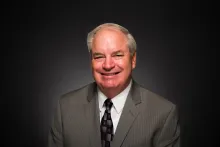
Robin Webber was born in Chicago, Illinois, in 1951, but has lived most of his life in California. He has been a part of the Church of God community since 1963. He attended Ambassador College in Pasadena from 1969-1973. He majored in theology and history.
Mr. Webber's interest remains in the study of history, socio-economics and literature. Over the years, he has offered his services to museums as a docent to share his enthusiasm and passions regarding these areas of expertise.
When time permits, he loves to go mountain biking on nearby ranch land and meet his wife as she hikes toward him.
