
Robin S Webber
This transcript was generated by AI and may contain errors. It is provided to assist those who may not be able to listen to the message.
Thank you very much, Steve. Appreciate that message regarding God. Set to music.
3500 years ago, there was a culture and there was a society in the north of Africa, and within that culture was the land of Goshen. And there were a people that were chosen by none other than God Almighty. He chose to call a people out of slavery. He chose to call a people that had no future other than to die on the muddy banks of the Nile River for somebody else. These people, known as Israelites, were slaves of the greatest empire that the earth had ever known, the empire of Egypt. Egypt was a very interesting culture, and we are all still at times enthralled with Egypt, and going back, especially we that study Western civilization, it's kind of the epitome of culture. The Egyptians were unique people. They were polytheistic. That means that they worshiped many, many gods. And frankly, just to understand, the Egyptians was to recognize that they never ran out of gods. They worshiped the Nile. They worshiped cattle. They worshiped the sun. They worshiped this. They worshiped that. And it's very interesting with the Egyptians, what they would do oftentimes is that they would, rather than when a new god came into their consciousness, they would just place him along with the rest of the gods. If you can picture it this way, let's say this is a mantle above the fireplace. And so what would happen is they would just put the statues of the gods. And when a new one came into their consciousness, or in a sense was revealed to them, they didn't go like that and have them all fall down onto the floor and break and shatter. They would just always make room for one more god. Let's put it this way, that basically they had a god for every reason.
And for every season. There was a man that came out of that culture and departed from it and went to what we now call the Sinai. And the god of gods called that man and bid him to come up to a burning bush and gave him a commission and gave him a job. And he said, you will go back to Egypt and you tell Pharaoh, let my people go. He said, well, who am I going to say? He sent me. And we find the answer if you'll turn with me to Exodus 3. In Exodus 3, and let's notice what this god mentioned to this former Egyptian on top of a mountain top in front of a burning bush. Verse 12, chapter 3, so he said, I will certainly be with you.
And this shall be a sign that I have sent you when you have brought the people out of Egypt, and you shall serve God on this mountain. Then Moses said to God, indeed, when I come to the children of Israel and say to them, the God of your fathers has sent me to you. And they say to me, what is his name? What shall I say to them? How will I get to them? Because they have so many, they don't know you. How will they place you up on their mantle? And God said to Moses, I am who I am. And he said, Thus you shall say to the children of Israel, I am has sent me to you.
Moreover, God said to Moses, Thus you shall say to the children of Israel, the Lord God of your fathers, the God of Abraham and Isaac, and the God of Jacob has sent me to you. And this is my name forever. And this is my memorial to all generations. I am that I am.
Always. Just tell them I am always.
When Moses went back to Egypt, he revealed that I am and to the Egyptians.
He also reminded the people, the slaves of Goshen, of the God of their forefathers, Abraham, Isaac, and Jacob. And he said that this I am is one that has a future for you, wants to break the chains of slavery, wants to give you something beyond just simply a grave in the sand of the Egyptian deserts. And he's going to rescue you from the living death.
He's going to break those bonds. And he's going to miraculously give you a life that you could never have on your own. And he is going to direct you to the land of promise. The land that was promised Abraham and Isaac and Jacob that their descendants would have. Ultimately, those people went out. They left Egypt and they moved towards that promised land.
And somewhere between Egypt and the promised land, they forgot. And they forgot that their God is a good God that rescued them.
And they didn't fully grasp what a tremendous and unbelievable God that they had.
He's so unbelievable that he said, you shall have no other gods before me.
You shall have no other gods before me. I am that God which brought you out of the land of Egypt, out of the house of bondage. And not only that, don't try to minimize me. Don't try to compact me into anything physical. You can't understand how awesome and how great and how wonderful and how loving I am. So don't even try to compartmentalize me, to bring me down to your level. Even as he said that, they forgot. And they forgot the words that David would later say 400 years after that, that the Lord is my shepherd in whom I shall not want. The Lord, the I am, the, in that sense, the pre-existent Christ, the one that became Jesus, the Word, the one that was that pillar, that force that brought Israel out of Egypt, was the one that led them and had a future for them. How does that affect us as New Covenant Christians? Well, we too are people of covenant.
And in a couple of nights, tomorrow night, we come together, sit in these chairs, sit in these pews, and basically what we tell God as we partake of the bread and as we partake of the wine on an annual basis is something very, very simple, and I'd like to just share it with you. It's simply this. It is the words of David, the Lord is my shepherd I shall not want. That what God the Father bequeathed to us, that second Moses, that greater Moses, not just simply the one that delivered people from a physical death, but that greater Moses, that spiritual Moses that leads us from death to eternal life, is symbolized by what you and I partake of in the bread and the wine. And we say, Father above, it is enough, and you are a good God, and you have delivered us from death, and you have given us and promised us life eternal in your everlasting kingdom, that you're a good God, and that no matter what comes to us in this wilderness of life, as did some of the things that we have even discussed this afternoon with a loved one, and a dear one amongst us, or other things that have happened in our life, the challenges that have occurred to us this year, of which you and I could probably write down on a list, and there have been many. Nobody has a silver spoon. Nobody is immune from this life. We are all going through the challenges of life, and yet to recognize that we come before our God, and we say, there is a purpose, and I've been called to a purpose by a good God.
Victor Frankl was a Jewish gentleman that survived the Holocaust during World War II. The incredible atrocities perpetrated upon a people of genocide. Victor Frankl was in the camps, and the one thing that Victor Frankl came away with as he watched people come and go, and as he watched some live, and as he watched some die in those camps, was simply this. It was not based necessarily on how somebody looked on the outside. It was not how big they were, how wide a frame, and or how intelligent they were. It was not about an intelligence quotient, but it was about an identity quotient. He said, basically, after being in those camps for years and analyzing it as a professional, he said the people that survived were those that had a purpose inside of them, down deep to where mankind could not reach and could not break. Brethren, when you and I come before God the Father and Jesus Christ and renew covenant with them by the partaking of the bread and the wine, we are saying that we believe in a good God, and we believe that our lives serve a purpose beyond the moment, and that our Father above knows exactly what He's doing. Join me, if you would, in Romans 8, 28. As the Israel of God, as the Israel of God, let's look at what our God tells us beginning in Romans 8 and verse 28.
And I'm basically just going to simply read through some passages today. We're not going to go into... I'm not going to have you go through scriptural whiplash today, back and forth and back and forth. I'm basically just going to go to two chapters. One is Romans 8 and the other is Romans 5. And let's take a look at Romans 8 and verse 28, and I hope that this will encourage you as we come up to the New Testament Passover. It's interesting what it says in Romans 8, 28, We know that all things work together for the good to those who love God, to those who are the called... I love that... to those that are the called according to His purpose. It's interesting that just simply in this one verse, there's five things that leap out of this verse. You might be ready to take notes. It's interesting that number one, it tells us that God works, that God does work.
Number two, it tells us that God is at work for the good of His people, not to make our life miserable. God is at work. Number one, number two, God is at work for the good of His people. We worship a good God. We will not always understand His goodness in the moment, but it's good. The people of antiquity had to worship and serve and sacrifice to these gods that were raining down thunderbolts on them, that would come down out of the mountains.
We don't worship that kind of a God. We worship a good God, and we're going to find out just how wonderful He is in the course of this message. Number three, God works for our good in all things, all things, even when we don't understand it at the moment. How often Susan and I have looked at things that have occurred in our life that we were, for the moment, frustrated and or did not understand, and then to look back and to be able to see God's hand lovingly. Sometimes move us out of something, because we be just like a donkey. I'm calling myself a donkey, not my wife. But just like a donkey, you're not going to move. You're going to be like an old Missouri mule, you know? Oh, whack! No, I'm not going anywhere. Oh, whack! And sometimes God just has to kind of move you out of your comfort zone. And it doesn't seem or feel good at the moment, does it? And yet it says here that all things work together for good. And notice in the fourth point that God works in all things for those who love Him. The good things are for those who love Him in return. And number five, then, that God works according to His purpose. Have you ever seen all that just in that one verse, how it's broken down? But that leads us into the rest of the conversation. What is that purpose? Remember what Victor Frankel said, that those that survive are those who had a purpose, who understood why they were born. And sometimes, as I mentioned in the announcements, it does not take away the immediate pain of the moment or the challenges that we face in our heart or in our lives, but it creates a framework. It gives us a strength to move forward to understand where God's goodness is in these matters. Notice what it says here, then, according to His purpose. And then He unveils that. Because the book of Romans, when we come to understand Romans, if you read Romans 1 and Romans 2, oh, that's... The Gentiles have blown it. The Greeks have blown it. The Greeks had intellectual truth. The Jews are here, but not going further. They had biblical truth, but we're not fully acting upon it. And it basically comes to a point where there's a dark spot, a dark spot. And then comes the glorious news of the Gospel that God is going to redeem not only the Israelite, but the Gentile, all of humanity. Because all of humanity is sinned, thus there has to be a propitiation for all of humanity to be able to come back into the presence of God, that which was lost at Eden. And thus, then, Christ is mentioned. Later on, then, the Holy Spirit is mentioned in Romans 8, which leads us up to this point. Notice what it says. The purpose is unveiled. And it's basically given in five very short steps. Let's note what it says. According to his purpose. And what is that purpose? For whom he foreknew. The first thing that allows us to understand how God operates and his goodness is that God knew beforehand what he planned to do with humanity. As we come up to the New Testament Passover, let us consider verses like Genesis 1, 26-27, which tells us that in that beginning that God said, let us make man after our image and after our likeness God wanted companionship. He wanted to have a creation that was like him.
When he made Adam and Eve in the garden and he made Adam out of the clay and then later on took Eve from the rib of Adam and created the woman, the man and the woman, we were created just simply for one purpose and that was to worship God. To worship God. Not just skip and play around Eden. That sounds pretty good too. Oh, I'm in paradise. But that paradise was not meant to be a Disneyland as it were. It was meant to be a laboratory of life that that special creation would worship God. That what's the word worship mean?
That comes from an old Anglo-Saxon term, worthship. That means to give God his worth, his honor, and that as God would look upon man and man would look upon God, that they could have that rich, as Mr. Garnett mentioned in his message, that that rich fellowship, table fellowship in Eden, that communion, that togetherness, that participation, that could not be broken, that was bonded, that was unique. Nothing else in the creation had that. And in all of that, we recognize though what man and woman did.
They rejected the love of God. They rejected the commandments of God and were thrust out of the garden. Even so, as Adam and Eve were going out of the garden, God said to the serpent, he said, out of your seed will come something, and out of the seed of the woman will come something. Out of the seed of the serpent, the serpent will bite the heel. But out of the seed of the woman will come the one that will bruise and stomp on the head of the seed of the serpent.
Even as mankind was without hope, had blown it, had rejected the ways of God. God opened up a door. The first prophecy in the Bible, did you know that? Genesis 3.15. Right out of the gates. That one day those carobim would be parted, and that humanity could come back into the presence of God and have union and have fellowship, have that communion, that word of kennelos, in the Greek of seamlessness with God. That was always God's intention. And as it says in Hebrews 2 and verse 10, that his ultimate intention was to bring many sons to glory.
As we come up to the Passover, and as we partake of that bread and wine, let's understand something. God knows exactly what he's doing, and by his grace he started from the beginning. What is grace? Grace means that it's God's favor. It moves from him. It's not about us. Now God wants variety, and he wants our companionship, and he wants our individuality, and he wants our fellowship, but it stems from God. It's not something that we were aware of. It wasn't something that we were looking for.
We couldn't rescue ourselves. It was God's initiative. It was his forethought. You know, sometimes you'll run into somebody and say, well, I knew your parents before you were a gleam in your father's eye. God had a plan for us before we even were. Let's take it a step further, for whom he foreknew or had this plan and purpose for all of humanity. Notice what it says.
He also predestined. He also predestined. Now, it's interesting that some people of Calvinistic been have taken this to a realm of, well, there are people that are bent toward salvation, and there are people that are are cast towards damnation, that it's really just all happening, and we're just kind of going through life.
It's already been determined. That is it. I'm sorry, folks. I don't preach that God to you. That's not a God I can worship. Otherwise, what I'm doing right now is a folly. If I've already been chosen for salvation or chosen for damnation, then what am I doing up here, and why am I breathing, and why am I living life? That's not what it means, because this is already talking to people. The book of Romans is talking to people that are striving to be Christ-like.
So, what does it mean that He also predestined? It doesn't mean toward salvation or damnation, but those that God had a plan of firstfruits, that God predetermined that He would call out and begin to work with the people that were in slavery. Oh, not with physical chains or mud, as it were, on their ankles or on their shins, but just as much in slavery to sin, and just as much as covered with dirt in their heart, that God would begin to work with the people that were called firstfruits, just as ancient Israel was called the firstfruits of God, Jeremiah 2 and verse 3.
He would begin to work with the firstfruit people that would be the first to accept Jesus Christ as Lord and Savior. Join me if you would in Ephesians 1. In Ephesians 1, and let's pick up the thought if we could in verse 11.
Notice what it says here. In Him we have obtained an inheritance. In Him, not by our own works, not by our own doing, not by our own deeds, not by our good looks or our good thoughts, but in Him also we obtained an inheritance being predestined according to the purpose of Him.
See, it's about God. It's about God and what He is doing, who works all things according to the counsel of His will, that we who first trust it in Christ should be to the praise of His glory.
In Him you also trust it. After you heard the Word of Truth, the Gospel of your salvation.
Salvation! Just as much as when Moses came to Goshen and said, the I AM wants to save you. This is good news, O Israel! The Gospel of salvation!
In whom also having believed you were sealed with the Holy Spirit of promise, who is the guarantee of our inheritance until the redemption of the purchased possession to the praise of His glory. This is focusing on those who are believers, those who first trust it in Christ. Last time I looked, if I looked out these windows and went around this world and I had a global perspective, I would say that there are many people that do not trust in Christ. God is not simply calling everybody at this time. He has a plan. He has a purpose. Probably doing it differently than I would because God's ways are not my ways, His thoughts are not our thoughts, but He works with a beginning of those that would accept Christ and be conformed to Him and His likeness. Now that's what you're saying when you come tomorrow night and you partake of the bread and the wine. That God foreknew His purpose for the creation of humanity. And He predetermined, He predestined that there would be a first fruit community of believers that would believe that He is a good God, that would believe that He did send His Son, and that would believe with all of their life and give their life, die as it were, that that Son might live in them. Let's look at the next step of this as we proceed. It says, verse 30, Moreover, whom He predestined, now we come to the third step, He also called whom He called. Now this is profound. Allow me to share it with you, please. It's not whom so ever will, it is whom so ever is called. As God begins to work with us with His spirits, it says, For as many as are led by the Spirit. It's God that is working in us, opening our minds, opening our hearts. How many of us at times when we've come to the understanding of the truth, if you'll look up for a moment, I know we've all been there before, and you go to a friend at work, or you tell your mother or your father, or you tell your wife, look at this right here! Look!
Isn't this wonderful? And you can't take your eyes off the Scripture, and they can't take their eyes off of you because they think you're nuts. You say, what, Moses? You saw a burning bush? Lock them up. Get the white jacket.
Take them down to Thebes. Whomsoever is called, whom He called. Allow me to share that with you again. It's allowed to sink in. Moreover, whom He predestined these, He also called. Jesus Himself said in John 6, 44, No man can come unto Me, unless first the Father calls Him, whom He called. Remember the words of Jesus in John 15, I have not called you. Excuse me. You have not chosen Me, but I have chosen you.
We have to come, brethren, may I dare say this, we have to come to that level of humility more than ever within the body of Christ, that it's not about us. Oh yes, we have a role and we have a part, and we'll learn more about that as we move through the Passover in the days of 11 bread and every day after that. God doesn't want spiritual automatons or robots. We do have a role. We do have a responsiveness in faith towards God to live His way, but it initiates and it starts and it flows from a good God that wants you to be a part of His kingdom forever, whom He called. This calling is incredible, brethren, and I think the older I get and the longer I study God's Word, I am humbled to come to understand what this calling means. It's also sanctification. It's being set apart. It's not just being, hello, you're being called.
No, I heard an echo. It's being called to be conformed and placed into a state of holiness and living before God and having the belief, literally, that we're not just walking behind Jesus Christ. We're not just simply walking alongside Jesus Christ like the disciples did for three and a half years, but that none other than through the Spirit of God, Jesus Christ who is living in us. And we covenant again tomorrow evening. This is what you're doing. We're covenanting again that we are going to abide in the framework of the gift that God has given us, Jesus Christ. That we abide, we conform within that life of righteousness, within that death of ignominy, within that resurrection of glory, within that ascension to the throne of God. That we look forward to His second coming, that it's not only about us but all of humanity. We live in that state. And then notice what it says. The next step, the fourth step, it's not only to have been foreknown, predestined, or called, but then he says, these He also justified. These He also justified. What does that mean to be justified? To be justified, to make it very simple, not to make it confusing, you can read commentaries on this, is to be declared not guilty. How incredible is that? Now, I know none of you out here in this church audience watch television.
I know that none of you have ever seen some of these very famous court trials that come and all of a sudden, CNN News Alert, Fox News Alert, the jury is coming out, and all the reporters rush to the courtroom. And you're all one of these court cases that go on and on and on and everybody gets, you know, into. And then finally, you don't really know which way it's going to go. And then the foreman of the jury comes up and hands the envelope to the judge. And then the foreman of the jury stands, and the defendant stands along with his lawyer. And you wonder, you talk about showtime, you wonder what's going to happen next. You don't know if it's going to be guilty or not guilty, and they don't know if it's going to be guilty or not guilty. And then the foreman of the jury states, your honor, we have found the defendant not guilty. And you just see, it's almost like a tsunami of emotion come over that individual. It's incredible. It's unbelievable. Not guilty.
I get to live. I get to be.
It's over. I can move forward.
That's what justification is. And each and every one of us that come before the Passover tomorrow night are justified by the will of the Father through Jesus Christ. That doesn't mean we're perfect, but God knows that we are bent in His direction. And we understand it's not about us, it's about Him and what He's done. And it doesn't mean that Satan at times will not say, well, do you know about Chris? Do you know about Ward? Do you know about Robert Lyons? Do you want to know all about Robert Lyons? Just teach him, Bob. Do you want to know about Robin? I'll throw myself in. We're friends.
And as it says, Satan's the accuser of the brethren.
And it can look like, er, because as much as we love God, we're still in this human framework, and we are trying to run away from sin, but we'll still stumble as Christians. But Satan's there to remind God. And it's not like Jesus Christ at the right hand says that we didn't do it, we did it. We did it. We did it. But He reminds His Father, yes, they did it, but their heart, their motivation is here. This is what they strive to perform before you, Father, because of what you've done for them. And remember, my blood covers that. They are in this called, sanctified, justified state. Remember that moment when you look down and saw me on Gogatha, and you turned from Me, because the sins of the world and their sins were upon Me.
And God says, I do, Son, remember that forever moment. And I've heard their prayer. They've come to Me. They've said, Father, forgive Me of My sins in Jesus' name. Those three words you could write volumes on in Jesus' name. And that's why you and I are able to come to Passover tomorrow night, because of the Father's gift in Jesus' name. Notice what it says in these, He also then glorified. Look at Romans 8 and verse 16 for a second in this subject. Romans 8 and verse 16.
Romans 8 and verse 16. Speaking of this glory, it says this, The Spirit Himself bears witness with our Spirit that we are the children of God.
For if children then heirs, heirs of God, and join heirs with Christ, and indeed we suffer with Him, that we may also be glorified together. For I consider the sufferings of this present time of which some of us are going through, and if not, get ready for tomorrow or the next day or the next week with our spouse, with our parents, with our children, with our co-workers, with our congregation. It will come, are not to be compared with the glory which shall be revealed on us. For the earnest expectation of the creation eagerly awaits for the revealing of the sons of God. For the creation was subjected to futility, not willingly, but because of Him who subjected it in hope, because the creation it also will be delivered from the bondage of corruption into the glorious liberty of the children of God. A glorious liberty that trumps the liberty that was granted ancient Israel in a physical lifetime, with a physical land of promise that what is spoken about here is entering into the realm of the glorious kingdom of God with a new body, with a new body, before the same God and before the same Christ.
Then we come back to Romans, friends. Join me in Romans 8 for chapter 31 because this gives you the framework for better-known scriptures that you and I need to cover for a few minutes. Because basically what the Apostle Paul does, he now approaches this as God's lawyer. He surgically, systematically supplies questions and gives the answers.
Verse 31, what then shall we say to these things? What things? That God foreknew what he was going to do. That he was going to predestined, predeterminate a group of individuals, not because of who they were, but because of who he is by his grace. And that he was going to call them. And he was going to justify them. And as they accepted that and understood what was going on, that ultimately he was going to glorify them as the Son is glorified Himself. Therefore, what then shall we say to these things? Those are the things that are the foundation of what's about to be spoken. If God is for us, who can be against us? Who can be against us?
I remember when I went to Ambassador College, and probably some of you that went there, too. We used to have an old saying when we went to Romans 8.31, God plus me equals majority. You might want to jot that down. God plus me equals majority of God is for us. Who can be against us? The question is given, the answer is received. He who did not spare his own Son, but delivered him up for us all. How shall he not with him also freely give us all things?
Romans is being read to people of God. It's being read to people that are foreknowing, predetermined, called, justified, and promised glorification. This is not being written to an outside audience. This is being written to, are you with me? People like you and me that have gone through the year that we've just gone through. And we sometimes wonder, does God care? Does God really know what's going on down here? I've been on the journey so long. The pilgrimage has gone far longer than I thought it would. And I didn't see all the bumps. I didn't see all the grinds. I didn't see all the issues. I was kind of bright and bushy-tailed when this all started at baptism. And I thought it was just going to be kind of a one-day triumph and a slide into glory. And I didn't realize all of this was going to go on. Do I really know that God loves me? This good God. This God that says, remember this, all things work together for the good of those that love me.
And we're challenged. That's why we come up to Passover to come back to understand the immensity of God's love. The joy that you and I can have. Not happiness, but joy. There's a difference of abiding in God's promises, having a purpose, remembering what Victor Frankl said, and to recognize that God is true. And that in his Son is a Lord in whom we shall not want. Join me in Romans 5. Romans 5.
We have to be reminded about God's love through Christ in Romans 5.
God says, you wonder if I love you? Do you?
It's a human question. I can understand where you're coming from in your fleshly portals.
But remember this in verse 6, for when we were still without strength, in due time Christ died for the ungodly. For scarcely, for a righteous man will one die and yet, perhaps for a good man, someone would even dare to die.
But God demonstrates. It means He puts it in full measure. He puts the tapestry out. He puts the manifold out before everybody. It stretches before everybody. For God demonstrates His own love towards us in that while we were still sinners, Christ died for us much more than having now been justified, declared not guilty, and by His blood we shall be saved from wrath through Him.
For if when we were enemies we were reconciled to God through the death of His Son, much more having been reconciled we shall be saved by His life. And not only that, but we also rejoice in God through our Lord Jesus Christ through whom we have now received the reconciliation. Now these are big Latin and Greek words, reconciliation, six syllables.
That's a lot of syllables, kids. This reconciliation means that when we have accepted the sacrifice of Jesus Christ, God's gift to us, His Son, and we accept that. And that we believe that He did come with this life of humility, and suffered this death of ignominy, and was resurrected in glory, and then ascended. And that we believe that is God's gift. And that kapoor, that yom kapoor, that covering is enough. It is God's sacred lamb that that blood is put upon us. And recognize that by doing that, that you and I, you think we are on Merton Avenue right now. Are we on Merton Avenue? It's not a trick question. We're on Merton Avenue. But that when you and I pray in Jesus' name, and we believe that Jesus Christ is the gift of God, and that we are not only repent in that name, we not only receive that name, that we are reconciled and we are restored, that we come literally. Are you ready for this? This is breathtaking. But sometimes forget it. You and I can come before the very presence of God, immediately and instantly, and have His favor, have His good pleasure.
In the tabernacle of old, with the curtains that were there that separated the holy place from the holy of holies, there was this gigantic curtain up there, and on that curtain were two carabim.
Carabim to remind that holiness was on the other side. Carabim that reminded that mankind was on this side after Eden and couldn't go through that side without blood. Here's the point of Romans 5, and the point that takes us up to Passover, and it's simply this. When we ask whether or not God is watching and knowing what's going on, and that He does not have our best interest at heart, He only has one thing to come back to us and say, and that's simply this, I gave you my son. I gave you my son. That's it. That's the statement. That is my grace that is personified, I'm going to do a double personification, in the person of Christ.
You need not ask. You only have to accept and to recognize that a purpose is being worked out here below. Let's go back to Romans 8. The next question comes up, who shall bring a charge in verse 33 against God's elect? It is God who justifies. It's God who declares not guilty. And there will be those many human voices that are out there, and those lesser voices that are out there, and those own echoes and those caverns of our mind and our heart that wonder, wonder, wonder, and condemn us, and push us back away from God, rather than approaching Him in the boldness of Jesus Christ. He says, who is it that condemns? It is God who justifies.
And there are people there that will condemn. They'll point a finger right at you. Or am I the only one that's ever seen the big finger being pointed at me? Who are they to condemn?
Do they have holes in their hands? Have they been put on a piece of wood and nailed like a rat to a piece of wood? Have they died for you and for me?
Do they know they only see you and me from the outside? They don't know our inner angst, our inner pleas, our inner prayers, our inner thoughts, the thoughts that are the echoes of Paul that everything that I want to do I don't and all things I'm not supposed to do I do.
Lord help me. And that's what we say as we come up to Passover tomorrow night, that we have this challenge of being in the Spirit and yet still in this fleshly tent. Our heart has been towards God. We want to be His loving servant here on earth. We want our tongues to speak as praises, our hands to reach to those that need to be loved, our feet to walk towards those that are hopeless and to help them, and yet sometimes we stumble. And yet in all of that we say the Lord is my shepherd in whom I shall not want. Let's finish the story here then. Who shall separate us from the love of Christ? Shall tribulation or distress or persecution or famine or nakedness or peril or sword as it is written, for your sake we are killed all day long. We're accounted as sheep for the slaughter. Yet in all of these things we are more than conquerors. Not by what we do, not in our own strength or in our own power. And brethren, we have to more and more understand that. That is God that is working inside of us. It's not just simply getting this right and getting this right and crossing this off and crossing this off, but to flow with God's Spirit and see where He is directing us. And living in that, as Mr. Beatty was bringing out in his message, to abiding in that realm of love towards others and forgiveness. That each and every one of us have to go back and to be, in that sense, figuratively a Golgotha. To be figuratively facing our Savior and recognizing that that blood that's built from that stake and formed a pool underneath that, underneath the gift of God, that each and every one of us stand in that pool of blood.
Each and every one of us is responsible. We're not on the edge of the pool looking in. That blood was shed for each and every one of us, lest we forget. When we do forget that, we allow that lesser nature, that human nature, that bad nature, that condemns, that does not love, that does not help the helpless, that does not give hope to the hopeless, that does not bide how we speak and talk about others or think about others or care about others. It's only when we understand that we were cut off ourselves at one stage at one time and that Jesus Christ did not come to make good men better.
I'm pretty good, but the sacrifice of Jesus dusts me off. Now I'm clean and pretty. No. Jesus Christ came as that second Moses, that greater Moses, to deliver us from ourselves.
Each and every one of us, man and woman, were dead men walking. Oh no, no, no. He did not come to make good men better. He came to take dead men walking, and allow each and every one of us to walk in righteousness before the Father and before Him.
Is that what you are thinking as you come to take Passover tomorrow night?
To give God praise and glory that He has rescued us from the state of slavery?
And He hasn't changed His mind. Maybe you've changed your mind. Maybe we've wondered this year. Maybe we have wandered this year. And I know we have thoughts and challenges right now with even the news that we've had even these last couple of weeks with the death of people that we love and we know and that we've been challenged with this entire year or challenges that we've had on the job, challenges that we've had in our marital relationships, challenges that we've had with that teenager that we wish he would get just a year older and towards 21. And all those challenges that face us at times, and we say, where is God? And God says, I'm right here. He tells you and He tells each and every member here in this congregation, I am that I am. Remind them, tell them, Robin, tell them again to fortify them, to encourage them, to allow each and every one of us to know that purpose, that I am that I am. That's who you tell them. You tell them that I am the one that rescued them, not just simply out of the land of Egypt, but out of the land of spiritual death. I am the one that broke their bonds. I am the shepherd in whom they shall not want. Well, you know, Paul starts thinking about this, and then he just winds up in verse 37. Let's read it together and conclude. Yet in all of these things we are more than conquerors through Him who loved us. It's all about God's love. He loved us. He took as much as He took Jerusalem of old and washed her up as it says in Ezekiel, cleaned her up and made her special unto Him. And then he says, you know, just to thinking about it, I've always said that, you know, distress or persecution or famine or nakedness, all this stuff, can't separate us from this love. Well, folks, this is Paul's speaking in the vernacular. I'm going to take you a step further because I just thought about it a little bit more. I'm even more persuaded that neither death nor life nor angels nor principalities nor powers nor things present or things to come, nothing, nor height nor depth nor any other created thing shall be able to separate us from the love of God.
And you say, well, what is that love of God? Help me find a scripture to define what the love of God is. And there are many in different venues, in different facets, but here's one that maybe you've never seen. It's a simple definition. From the love of God, what is that love? How do we know that God loved us, is with us, and is still working His purpose in us, which is in Christ Jesus our Lord?
Tomorrow evening, may God's blessings be on each and every one of you. The body of Christ, whoever, wherever they are, and God alone knows who are His, are going to assemble around this world. And as people of old and people in the New Covenant today, we recognize that we have a mighty one that leads us. He takes us from death to life, just as much as He did with the people of Goshen. He delivered them from slavery and led them into glorious freedom. It took them longer than they thought it was going to be. They thought it was going to be 40 days, and it turned out to 40 years. And some of us have been on the pilgrimage. We've been on the journey. We followed the way. A lot of us started this back in the 50s or in the 60s or the 70s when we first had the call of the Father. And then we heard the words of Jesus Christ, follow me. Oh, okay, follow you. Little did we recognize all the different pastures we would go through, all the still waters we would go through. Sometimes those valleys of death that we go through, and you know what? They're all part of the 23rd Psalm, aren't they? And yet at the end, we remember what the shepherd said, for surely I know that goodness and mercy lies ahead of me. And that is the call of the New Testament Passover that bids us welcome tomorrow night in the presence of our Father and His dear Son, Jesus Christ.
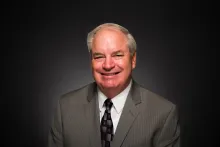
Robin Webber was born in Chicago, Illinois, in 1951, but has lived most of his life in California. He has been a part of the Church of God community since 1963. He attended Ambassador College in Pasadena from 1969-1973. He majored in theology and history.
Mr. Webber's interest remains in the study of history, socio-economics and literature. Over the years, he has offered his services to museums as a docent to share his enthusiasm and passions regarding these areas of expertise.
When time permits, he loves to go mountain biking on nearby ranch land and meet his wife as she hikes toward him.
