

Robin S Webber
This transcript was generated by AI and may contain errors. It is provided to assist those who may not be able to listen to the message.
I have a question for you this afternoon. That's a phrase I often use, but it's a good one because then you can say, Oh, what do you want me to say? I've got a question for you. And that is simply this. Why are we here today? That's a good question. Why are we here today? And especially as New Covenant Christians, why are we here observing this, the festival of Unleavened Bread?
It would seem, basically in this world outside these walls, it would seem somewhat incongruent. Well, I'm going to share why. One thing, if you're visiting here for the very first time today, we in this congregation and congregation is plural. We believe that God is indeed ageless, and we believe that He changes not. We also understand that Jesus Christ is the same yesterday, today, and forever. And rather than two stories happening in this book between these covers, it's one expanding story with new chapters along the way, so that ultimately God can bring about His desire that He says, I will be your God, and you will be my people.
There's so much that our Heavenly Father wants to do for us through Jesus Christ. But He would ask us, you and me, down here below to do some things along the way as well, and that's what we're going to be talking about this afternoon. I certainly want to build upon the foundation of Mr. Tower and also Mr. Garnett, thank you very much, and we'll try to build upon where they were and then move forward. I'd like to suggest a word to you. You might want to jot it down. We're going to build upon it that here's the word I'd like to share with you.
Haste. H-A-S-T-E. Haste. Making haste towards God's purpose is one of the great themes of the Days of Unleavened Bread. We've covered in great part different aspects today from Colossians 3 to understanding the role of leaven, unleaven, etc., etc. We're going to build upon that some. But why does a covenant people, and we are a covenant people, we're not just in Christianity like another contract.
Contracts are made for lawyers, and they're made to find loopholes in. A covenant is different. A covenant is life to life, blood to blood. It's a compact that is until death do you part. And that's what we're here about. Nothing short of that. And it's a glorious thought. It's a wonderful relationship. But when we look at this, haste, what does that have to do with God's purposes? That very word is why we are here today and why God says we shall keep these, the Feast of Unleavened Bread.
Join me, if you would, in Deuteronomy 16. In Deuteronomy 16, the fifth book of the Pentateuch. Let's understand the background of Deuteronomy. Deuteronomy is given 40 years after Israel has left Egypt. They're really almost a couple of generations into the human family. And you know how it is sometimes when you talk about if I as a baby boomer, I know I don't look like a baby anymore, but a baby boomer is that we can talk about things back into the sixties. We can talk about Watergate. We can talk about hippies. We can talk about Peter, Paul, and Mary. Aren't those just great significant items? Anyway, we can talk about those things and we have a commonality.
We were there. We remember what those things were. But then 30-40 years down the line, people forget they don't have the same communication. And so they were about to go from being a pilgrim people, having wandered in the wilderness for 40 years, and now they were going to become stationary. They were going to be planted on the other side of the Jordan. And there's just something about human nature that we forget to remember or remember to forget.
We lose the significance of how things started because so often we have been on the journey so very long that we forget why did we start this in the first place? And what were the starting blocks? Why did we begin the race? And who called the race to begin with? And thus we go to Deuteronomy 16 and we find something mentioned 40 years after the Passover and that first on Love and Bread. Chapter 16, verse 1, observe the month of Abib and keep the Passover to the Lord your God.
For in the month of Abib, the Lord your God brought you out of Egypt by night, not Moses, not yourself, not a man, but none other than God Almighty brought you out of the land of Egypt. Therefore you shall sacrifice the Passover to the Lord your God from the flock and the herd in the place where the Lord chooses to put His name. And you shall eat no Love and Bread with it. Seven days you shall eat unleavened bread with it.
That is the bread of affliction for you came out of the land of Egypt in haste, that you may remember the day in which you came out of the land of Egypt all the days of your life. We notice that what God is saying, remember, hardest thing to do sometimes is to remember and to go back why things happened the way they did. Let's join and go over to Exodus 12 and verse 11 to pick up the story a little bit more, dealing with the concept of haste.
In Exodus 12, speaking of preparing for the Passover, we notice 9 and 10, it's talking about the different things that they would eat at that Passover meal before that night and during that night when the avenger would come through Israel and devastate and bring down the greatest empire that it ever was.
And it says, notice verse 11 specifically, And you shall eat it, speaking of that Passover meal, with a belt on your waist, your sandals on your feet, and your staff in your hand. And so you shall eat it in haste. It is the Lord's Passover. You wonder what Susan and I do out in Sun City. I'm bringing some of it with you, me.
It said, if I can untangle this, unhastily, it says, you shall let the staff drop. It says, you shall, don't look, close your eyes, you shall have a belt.
Susan's been wanting me to wear suspenders for a long time, but this is getting ridiculous. You shall have a belt on your waist. You shall have, notice, a staff in your hand. And you shall have your sandals, which I'm not going to wear, on your feet. I don't know if you've ever centered on those verses before, that as they ate that meal so often, we think of the meal so often, we think of the unleavened bread, etc., etc., etc.
But there were other instructions that were given. You say, yeah, but that was given to those people a long time ago. I am a new covenant individual. Yes, I am. So I don't have to read Exodus. Oh, yeah, you do. God was telling a covenant people to be that they had to be ready, because what He was going to do was going to be so incredible. You talk about the original shock and awe. Remember nighttime over Baghdad? Well, this was nighttime over the Nile. And Moses had come revealing the I AM.
And he told Pharaoh, you're coming down, buddy. You're coming down, bro. Because he had known that man. And the God that I serve is greater than the gods of Egypt. And in one night, God did His part. And He took those abusers of humanity that had enslaved their fellow man for hundreds of years and went through them.
That as He passed over one nation, He passed through Egypt, person by person, and brought down them. And He said, I've done what I'm going to do, and it's going to come so incredibly, you better be ready. So you have that staff in your hand. Because when it comes, I am God Almighty. And I'm going to come with a vengeance. I'm going to come with judgment. And I'm coming to deliver you. And therefore, be ready. I have a question for you as we begin to proceed. How does this relate to due covenant individuals to have a staff in their hand, sandals on their feet, and a belt around their waist?
Simply this. We worship Almighty God. And He is our God, and we are His people. And as we hope and we pray for God's deliverance, whether then or now, He also would have us do what we can do. The covenant people of God, from Abram to Israel to Christians in this day and age, that in the book of Revelation are told to come out of this world, have always been exhorted by God to do three things.
You might want to jot these down if you want to. To get up, to get out, and to get going. And don't waste time. When I call upon you, when I the Almighty call upon you, you be ready to tremble at My Word. Respect My position. Understand your condition. Understand that I am intervening in your life. And now move. And you will move, because I love you. And if you love Me, you will make haste with what I give you to do.
Absolutely. But we realized that the problem with ancient Israel was that you could take the slave out of Egypt, but you couldn't take Egypt out of the slave. For as Stephen said nearly 1,500 years later, that in their hearts they looked back. They got up, they got out, they got to going, as it were, for a while. But pretty soon they were a little bit like Dorothy in the Wizard of Oz. There's no place like home. There's no place like home. And thus their hearts drifted back to that which they had been familiar with.
We need to understand that the thrust of these two spring festivals, as Mr. Garnett brought out, we need to think of not separately but together. And allow me to explain that for a moment. When coupled together, it isn't simply about let My people go, but let My people grow. Based on two dynamics that I'm going to share with you in the course of this message. Number one is haste, and that haste is based upon expectation. That haste is based upon expectation. God has expectations, and we, as we grow in faith towards God, should also have expectations towards Him that indeed His deliverance continues in our life.
Join me if you would for a moment in the book of Corinthians. Always a good start, a place to begin. We've already mentioned to it. We're going to reverberate that again, the great message of 1 Corinthians 5. Join me if you would, right in the New Testament. It has the framework of Passover and the Days of 11 bread just permeating it. But in 1 Corinthians 5, let's notice what it says here. Therefore purge out the old leaven that you may be a new lump, since you truly are unleavened, for indeed Christ our Passover was sacrificed for us. Therefore let us keep the feast, not with the old leaven, not with the leaven of malice and wickedness, but with the unleavened bread of sincerity and truth.
And so we're to purge out the old leaven, and we are to be that new lump, that new creation that Paul speaks about in 2 Corinthians 5, 17. Behold! Behold! You are a new creation! Old things have passed away! At times we can become so focused on that which we need to put away, and certain symbolism of leaven that we don't recognize another symbolism. Again, I'm going to expand both on what Mr.
Garnet and Mr. Towers offered this morning. Join me if you would for a moment in Matthew 13.33. In Matthew 13, join me if you would in Matthew 13.33. Let's notice what it says. Can we talk for a moment? Sometimes it kind of messes with your mind a little bit, because we're so often looking at leaven during these days, in a sense like, cooties. You know, we kind of, oh, cooties!
Yes, when I was in first grade I believed in cooties. I thought all girls had cooties. Then I married a girl. She doesn't have cooties. I found it's really the men that had the cooties. How am I doing, ladies?
But we notice what it says here in Matthew 13.33, in all seriousness. Another parable he spoke to them, the kingdom of heaven. This is a terminology that Matthew used specifically. Sononimous with the kingdom of God. The kingdom of heaven is like leaven, and we heard about all the qualities of leaven today, even with all the chemicals and all the ingredients and all the things that Mr. Garnet explained, because he knows chemistry. It's like leaven, which a woman took and hid in three measures of meal till it was all leavened. So while something is being put out, as it were, put away, the old leaven, and be the new lump, there is something that ought to be rising in us. There is to be something that is expanding in us. And this is what the Days of Unleavened Bread bring out to us. Yes, indeed, Christ our Passover has been sacrificed, that glorious life, that incredible death of humility. And yet there is that glorious resurrection, and there is that incredible ascension to the right hand of His Father. And because He is, we can be. And to recognize then that we have a responsibility to have the life of Christ, the new man, the man of God, the Son of God, the Son of Man, His Spirit in us now, rising, developing, expanding. The ingredient of the Holy Spirit of the Father and the Son working and agitating positively in us, dynamically in us, to where we are not what we were at one time. So let's talk about that. What makes that new lump? And I'm going to entitle this message, Making Haste Towards Godliness. Making haste towards godliness. Let's understand that when God called ancient Israel out of Egypt, boy, were they excited for the first lap around the track. Let's come back to Exodus 3, if you would, for a moment. Exodus 3. And we notice where Moses is talking to Pharaoh.
Exodus 3, not Pharaoh, he's actually talking to God. Pardon me on this one. And the Lord God said, I have surely seen the oppression of my people who were in Egypt and have heard of their cry because of their past masters, for I know of their sorrows. So I have come down to deliver them out of the hands of the Egyptians and bring them up from the land, to a good and a large land, to a land flowing with milk and honey, to the place of the Canyonites and the Hittites and the Amorites and the Parazites and the Heavites and the Jebusites and all the sites in between.
Now therefore, behold, the cry of the children of Israel has come to me, and I have also seen the oppression with which the Egyptians oppressed them. Come now, therefore, and I will send you to Pharaoh, that you may bring my people, the children of Israel, out of Egypt. But Moses said to God, who am I that I should go to Pharaoh and that I should bring the children of Israel out of Egypt? So he said, I will certainly be with you, and this shall be assigned to you, that I have sent you. And when you have noticed, brought the people out of Egypt.
You're just going to sit, lay back in your hammock, go on vacation after 200 years of slavery, and you're just going to suck down that milk and honey. No. Notice what it says here. And when you have brought the people out of Egypt, you shall serve God on this mountain.
Israel was not just freed from the bondage that they were in at that time, to simply go on vacation from the vocation of slavery. They were rescued for a specific purpose, and that was to serve God. To worship God. The same God that said, I am holy, therefore you be holy. And as that holy God would serve that holy people, they indeed were to be holy in their response to God, their faith towards God, and to love the Lord their God with all of their heart and all of their mind and all of their soul.
In other words, it wasn't just simply going to be Disneyland.
Because, you see, God was going to give them a kingdom on this earth. There would be no ruler at that time. He would be their God, and He would be their King, and they would be His subjects. And they would live by His law so that all of the people would not focus on them, but they'd say, who are these people, and who is their God? He must be incredible. It was not a self-reflection towards Israel, but a praise towards God by their actions and their deeds, by what they did in living a life like God on this earth, by His direction and by His laws. But we recognize that they did not sustain that. And as mentioned in the book of Hebrews, but with most, God was not pleased. They had quite a life to go ahead of them. You know, when we think about after the Red Sea, we recognize all the things that happened. There were big armies chasing them. Before the Red Sea, there were ocean barriers. There was a desert environment with scorching heat. There was thirst and hunger. And there was an unwelcoming greeting committee called Canaanites. And most importantly, they had to face themselves.
And that is the hardest thing for a human being to do. It's easy to tackle the world that is going out there right now, back and forth on that street, or the restaurant that you are in, or the job that you're going to go back to, or the university that you're going to be going back to, the high school that you're going to be going back to. And we can put the focus on everybody else. But that's not where God's at. God calls us individually. He individually calls us and wraps us in His love and gives us His calling. And He says, Who do you say that I am? Who do you say that I am?
That question always comes back to the same question as Peter. Who do you say that I am?
And He said, You are the Christ. And Jesus said, No man has told you this, but other than heaven above. Because it was a miracle and it was a revelation. You and I, like Israel of old, we have our challenges and things that come our way. But what I want to share with all of you today is simply this. As we move away from the Days of Unleavened Bread, I want to challenge you on behalf of God Almighty. I want to encourage you through Scripture. And we're going to flush it out some along the way as to what you can do. So that as you use these sandals up here, I'm actually going to... I'm not going to be ethereal today. It's not going to be wispy. We're going to get down to specifics of what each and every one of us can do to be that new lump. What each and every one of us need to make haste regarding in our lives. There are things that are going to face us tonight or tomorrow that, you know what, we're going to have to get up. We're going to have to get out. We're going to have to get going. Because that is what God has called us to. We are no longer our own person, but we are bought with a price. Join me if you would in Romans 6, 13. In Romans 6, verse 13.
I say verse 13. Pardon me. Romans 6, 1. Romans 6. Romans 6 is an incredible set of verses that really frame what the New Covenant existence is about. And it really frames what the New Testament Passover, as well as these days in Love and Bread, mean to a Christian.
Notice verse 3. Or do you not know that as many of us as were baptized or immersed into Christ Jesus were baptized into His death? Therefore we were buried with Him through baptism into death. That just as Christ was raised from the dead by the glory of the Father, even so, we should also notice walk and newness of life. The focus of the days of Unleavened Bread and the rest of our life is the future. Is leaning forward. Is not going back. Oh yeah, we have some problems that we have to tackle that are still with us. But the entire energy of God's plan, God's purpose, God's spirit, and what is being mentioned here in Romans is that move forward.
Don't dwell on who you are. Understand what you need to correct. But you dwell on Jesus Christ.
You dwell on that rock. You dwell on that foundation that the Father has given us. You dwell on that greater Moses. You dwell on the one that has led us more than from one bank of a sea to another, but the one that God the Father put in front of us to taste death and to be resurrected from the dead. During the days of Unleavened Bread. It is during the days of Unleavened Bread that there was no stone too heavy. And that tomb is empty. You know why it's empty? Because He's at the right hand of the Father today. And He's looking down. And He's saying to you that live in Cyprus, and you that live down in San Clemente, and you that live up in Hesperia, and you that live in South L.A., and you that live over in the San Gabriel Valley, and you that live up in Ventura and Santa Barbara, do you understand that when God gave His Son, and that Son died perfectly, and was resurrected in glory before His Father, and that wave-sheaf that was experienced for twelve to thirteen hundred years before, depicting that He would ascend to the right hand of God, do you recognize that what was done was even greater than what the I AM did back to Egypt? That He that is that greater Moses, that second Moses, conquered death and took the sting of death out for you and for me. That we might be that new lump, we might be that new man, we might be that leaven that is spoken of from the Kingdom of Heaven. We need to understand that. But there's something else I want you to understand as we move forward a little bit more, for He who has died has been freed from sin, speaking of us, if we've died in Christ. Now if we died with Christ, we believe that we shall also live with Him. Brethren, I just want to echo that the days of unleavened bread are about life. It's about living in an unleavened existence by, interestingly, putting that leaven from Heaven in us, that it might rise to reflect our Savior. Knowing that Christ, having been raised from the dead, dies no more. Death no longer has dominion over Him. For the death that He died, He died to sin once and for all, but the life that He lives, He lives to God. Thus, in parallel example, He died the life that He lives, He lives to God. Brethren, we are not here just playing church. The ecclesia is not just simply another theological, have fun, have socials group. We are in the business of God, about our Father's business, that we are becoming immortal children in the family of God by God's grace. That is His desire, that is His expectation. He sees things as if they already are. You've got to see that. He's going to do His part. He gave His Son. He broke the Pharaoh, that spiritual Pharaoh, called Satan. He broke the death, the slave, the bondage of sin, took the sting out of it and said, you're gone. What do we do in response to that? What do you and I do because of God's graciousness and God's gift?
There was another resurrection. Join me if you would in John 11.
Another resurrection that I'd like to draw your attention to.
The Gospel of John. The story of Jesus, the story of Lazarus.
The famous phrase comes out that I am the resurrection and I am the life.
Most of us know the story well. I'm not going to go through all the verses. I'm really going to focus on the very end. Jesus did a wonderful thing to show that He was not only the Son of Man, but the Son of God and was divine. And that was that He raised His good friend Lazarus from the dead. But I want to show you something here in verse 43. Now when He had said these things, He cried with a loud voice, Lazarus, come forth. And he who had died came out bound hand and foot with grave clothes. And His face was wrapped with a cloth. And Jesus said to them, Loose Him and let Him go.
It's kind of interesting that when Lazarus was raised from the dead, you just imagine him coming out of that tomb.
And it was kind of like Boris Karloff for those of you that are a little bit older. Mummy movies of old back in the 30s that you didn't want to watch after midnight. Because you didn't know what was going to come through the next room.
And the first thing that Jesus said was, Take off those grave clothes. Yeah, makes sense, doesn't it? But have you ever thought about that? He said, Take off those grave clothes. You were dead, but now you're alive.
There's a time to switch clothing as Mr. Tower brought out this morning. To put on, to put off. Can you imagine waking up in the morning, waking up from the dead of sleep, and going down to sixth and flower in your pajamas? Saying, Here I am, ready to report! Everybody's kind of staring at you. You're still wearing what you did when you were dead in your sleep, as it were? I have a question for you. As we move from these days of 11 bread, how many of us are still wearing our grave clothes?
That we're still wearing? That we're still holding on to? Not understanding the miracle of God the Father through Jesus Christ? Not understanding that, yes, indeed, as we were baptized in the water, in a watery grave, that we come up in newness of life. That's what God the Father and Jesus Christ did for us, and now they have expectations of us to remove those grave clothes one by one. Join me if you would in Exodus 4. That's what happens when you use the entire Bible. You go from Exodus to Ephesians 4. By the way, I still have that belt on me. I have not changed my mind about getting up, get to going, and moving on. That's what it says in Ephesians 4, verse 20.
You see, when God gives us this new life and this new experience, He says, behold, all things are new. You're a new creation. Have you ever gotten a big package and you open it up and you've spent all the time waiting for it and it comes? You're really excited and the kids are watching and you have it out there and you know what? There's no batteries. There's no batteries. You've spent $150 to $200 on some gizmo and there's no $5 set of batteries. See, when God gives us this gift of being a new creation, He does indeed supply the batteries. Join me if you would in Ezekiel 11. Join me there for a moment.
Because this is the difference, and I want to point this out to you. It's very important. This is the difference between, in the sense, the story of old and the story that God is working in each and every one of us today. Ezekiel 11. Now, when He asked ancient Israel to leave Egypt, He said, you will have your sandals on your feet. Good. You will have a staff in your hand and you'll have a belt. That's going to help you on the journey ahead. But notice what God says here in Ezekiel 11, verse 19, regarding the New Covenant. Brethren, when God begins to work with us and we have received the indwelling of His Spirit, He gives us a new heart. It's not a transplant. It's not the heart of a baboon from the Seventh Day of Venice Hospital back in 1972. It's not somebody else's heart that's been down here. He gives us a new heart. It's a miracle. And He gives us a new spirit. It's a miracle. And He gives us something greater than Moses of old. Join me if you would for a moment in Hebrews 3. Speaking of the two Moses, as it were.
So as we begin this journey, whether it was last week when you were baptized or 10 years ago, God has given us a new heart.
God has given us a new spirit. God has given us someone greater than Moses.
Jesus Christ. Thus, what do we do with that? How do we then make haste? I'm going to give you some examples. I want to share some specific items. Eye number one, I'm going to make haste in. And I'd like to share them with you. Get ready because they're going to go very rapidly because we're going to take a couple of laps. A lot of steps here. Now, brethren, we have driven all the way here because we're either serious about our calling or not. We're serious about living the new life not for ourselves, but to the glory and to the honor and to the worship of God the Father and or we are not. If you're not, you might as well leave right now. You're not going to want to hear the rest of the sermon.
You and I are here as a matter of life and death. We have been granted by the grace of God life. And we can expect His deliverance and being in that state of grace is ongoing deliverance in our life. But He also has expectations of us. Then what He can't do, we will. Here's my making haste list. Number one, as we proceed from this evening, number one, we need to hasten to pray to God. We need to hasten to pray to God. We need to be more rapid. Remember, get up, get out, get going. Move, move, move. We've got to learn to hasten to pray to God to bring Him into the equation just as soon as possible. He alone is all powerful. He alone is all wise. He alone is all in all. He alone is all loving. Most importantly, He's our brother. Nehemiah 2. Let's see how it works. In Nehemiah, which is one of the great examples of prayer, here's Nehemiah as the cupbearer before Cyrus in Nehemiah 2. And we notice that it says, and it came to pass in verse 1 in the month of his nice son, and it goes on about Artaxerxes, not Cyrus, pardon me, that Nehemiah was preparing some wine before him, and now I had never been sad in his presence. So Nehemiah had not a happy face. His countenance was down. And therefore the king said to me, Why is your face sad since you're not sick? This is nothing but sorrow of heart. So I became dreadfully afraid. Because you know kings back then, if they didn't like your looks, they could just change it by your neck. And he said to the king, May the king live forever. That's always a good thing when you're talking to the king. May the king live forever. Why should not my face be sad when the city of the place of my father's tomb lie waste and its gates are burnt with fire? So Jerusalem. Then the king said to me, Why do you request? Notice what it says there. This is powerful, brethren. You can take this one to the bank. So I prayed to the God of heaven.
Verse 5. And I said to the king, If it pleases the king, and if your servant has found favor in your sight, I ask that you send me to Judah to the city of my father's tomb, that I may rebuild it. And then the king said to me, The queen also said to me, How long will your journey be, and when will you return? So it pleased the king to send me.
And I set him a time. Bottom line is, the king granted this man going to Jerusalem. But the most important thing, brethren, if you want a circle, and it doesn't take a lot of energy, and it could be one of the most important circles you will make in your spiritual life. Notice what it says. In the middle, while he's speaking to, do I dare say, a type of the beast?
A type of the beast. Babylon to Persia. He's a type of the beast. Here he is in the presence of the beast, and he is praying. He is supplicating to God. He is bringing God immediately into the equation. Can I share a really cool story with you? Cool is a Hebrew word for cool. Last night, we had challenging news to come to Susan and I about one of our family members. And that family member, in a sense, had their back up against the Red Sea. Interesting that it would be that night, last night, the night when the wind blew against the Red Sea. And that family member was distraught. When you have grown children, you're always a parent, and you feel the pain more than they do.
Try to tell them that, just like when they're young, but it never really works. You know what I'm saying? And we heard the news. We were about a mile away from home, and we said, when we get home, we are going to immediately pray for this. We're going to immediately pray for this. You know your mother and your father, and you know how we're going to handle this.
And we went into the guest bedroom, and Susan got down by the bed, and I got down by the bed. And we just asked God to work a miracle, because, well, we love our daughter. We love all of our daughters. And we just beseeched God. And we said, God, you know how hard that our daughter is trying to do what she's trying to do in this matter. And she's done seemingly everything right, but it's just not happening.
And Father, please, you that are God above, you can work with hearts and minds of these people that right now are causing her to be paralyzed and stopping this progress. We're going to ask that you work with these hearts, and we're going to ask that you work with these minds, because you're our God. This is our daughter. And if we love her, we know how much you love her.
But if you do not allow us to accept your will. Susan and I got up. About 25 minutes later, our daughter called. For her, at least, the Red Sea had opened. There was a communication with the other party that was all smiles, all joy. And she was, her life, in just a few minutes, changed from despair to joy. By the way, we let her know that. She grew up in this church. And Mom and Dad still poke away at times, letting her know that we worship a mighty God and the God that gave her life.
Her mother's really good at reminding her, even better than her father. That's what mothers and grandmothers are for, aren't they? Brethren, let's make a point as we move out of these days, Malef and Brad, as we walk across our Red Seas. As we move up to that sure shore of promise on the other side, let us more than ever pray. Pray in the moment. Pray in the spirit. Pray in your mind. Pray in your car. Pray in the office. Pray on your knees. Pray without ceasing. Ask God to be a part of your equation in life.
Ask Him, as He did with ancient Israel at the Passover in the night to be much observed, to be your champion. And then accept His will. If you do that, your life will change. That leaven of heaven will rise inside of you, and you will be that new lump. Number two, hasten to open up God's Word. Hasten to open up God's Word. The Apostle Paul says in Romans 4 and verse 3, What saith the Scriptures?
Not what Robin Weber says, not what John Garnett says, not what Roy Towers says. But what says the Scripture? What's the bottom line? What's the direct line from you? And we have to understand our need for that. Psalm 42 and verse 1. Psalm 42 and verse 1.
We sing this song. We praise God about it. But we've got to make haste towards this. As the deer pants for the water, Brooks, so pants my soul for you, O God. I have a question for you. We're all Californians, right? And we all love our mule deer here in California. We know we're in a four-year drought. You think they're panting for water? When they come up against a water hole these days, how eager they are, how desperate they are, that they know where there is water, there is life. Where there is not water, there is death.
Where there is water, they have another day. Where there is no water, death is to be visited upon them. Hasting to God's Word more than ever. So very important. Psalm 119, verse 173. Let your hand become my help, for I have chosen your precepts. I long for your salvation, O Lord, and your law is my delight. Hasting to open up God's Word.
During this upcoming general conference, we're going to be talking about... we're going to be speaking to the ministry. How all of us as ministry, much less not ministry, but all of us, because we are training in that sense to be a priesthood before God, that more than ever we have to labor in the Word. That is a specific instruction to the ministry. But it's also an encouragement to the brethren that we have to labor in the Word. We have to wrestle with it. We have to come to understand it. Because it's not within us to know our own steps.
How quick are we to wrestle with God's Word and to understand Him? How quick are we to open up the Bible rather than to touch our smartphone? Can I tell you something? God's Word, which is ageless, is going to give you a whole lot more knowledge than a smartphone. I am not anti-technology, but I'm going to ask you something. In the day, what do you reach for first? Unless you're reading God's Word on the smartphone, then you get a license. What you reach for in life, just like Mother Eve, is what's important to you.
Are we, as we move out of these days, better be going to hasten to speak to God, to talk to God more? Are we going to hasten to open up His Word? Number three, are we going to hasten to ask God's Spirit to direct our steps and give us understanding? Hasten to say, God, okay, that's theory, but now allow me to break it down.
Guide my steps. I've got my father, I've got my sandals on, and Jesus has told me to follow Him. But I need understanding in this. I need your GPS. I need your Spirit to guide and to direct me. That's so very important. We need a hasten to seek the application with the situation in hand. Join me if you would in Psalm 119. Again, you're right there. Notice Psalm 119, verse 15. I will meditate on your precepts and contemplate your ways. I will delight myself in your statutes, and I will not forget your Word.
Notice verse 23. In verse 23, Princes also sit and speak against me, but your servant meditates on your statutes. Your testimonies also are my delight, and my counselors, my soul clings to the dust. Revive me according to your Word. I've declared my ways, and you answered me. Teach me your statutes. Make me understand the way of your precepts, so I shall meditate on your wonderful works. Brethren, this is a gigantic challenge in this day and age where information is coming at us at the speed of lightning, where people are distracted, where knowledge is going to and fro, where people are not looking at one another in the eyes, where they're not...
Oh, I got my cell phone. Oh, hello. No, what you were saying was not important. This is more important. Thank you very much. Am I the only one that ever gets that from people? You must be a unique crowd. Wow. You've never had anybody do that? They've never put you on pause. They've never put you on hold, and you're buying them dinner, and they're still putting you on hold. So much is coming at us, brethren.
It is the greatest challenge for Christians today. Information is good of and by itself. Technology is an instrument. It can either be a tool or it can be a weapon. And I do sincerely believe that our people are getting so busy and so engrossed in the culture of this world, and just like the old line in Jurassic Park... So now you know I saw Jurassic Park.
Just because you can. Just because you can. Should you? In a myriad of manners that affect our life. How different than Jesus Christ when he walked through the Galilee. Can you imagine living life at the speed of walk? And what one might take in? Walking at the speed of... Walking at the speed of walk. And following Jesus' footsteps. But it takes us to stop. It takes within us a desire that of and by ourselves we are nothing apart from God's grace and the indwelling of his spirit and the incredible set of laws and statutes and judgments that he's given us.
Brethren, the words I share with you are words of life. You will either do this or you will not. And I've often found that he who hesitates, you know the rest of it, he who hesitates is lost. Oftentimes when windows are open or doors are open in life, whether it's on the job, whether it's on the school, whether it's in our spiritual existence, that door only stays open so long. The window only stays open and not shut so long.
And it's not a matter of knowing that the door is open, knowing that the window is open. The matter is a matter of the heart, not a matter of the brain or a matter of the eyes. The matter of the heart is will you walk through that open door and will you get out while you can through that open window? You see, we can't wait till tomorrow. Tomorrow is a word and it's a concept that, well, tomorrow it's the graveyard of a thousand aspirations, a thousand desires. And that tomorrow is followed by another tomorrow saying would have, should have, could have.
You know, have you ever noticed that tomorrow is never on the calendar? It's Monday, Tuesday, Wednesday, Thursday or Friday. But most of us schedule the most important things in our life for tomorrow. When God says, today, if you will hear me on this during the days of Unleavened Bread, to take off the grave clothes that are encumbering you, you that have been called to life, you that have this faith in the Father and faith in the Son and the faith of the indwelling of the Spirit, wake up, O sleeper!
Time is precious. Hasten, hear me, hasten towards departing from naysayers and people that are not spiritually attuned, from people that are not building you up. I know that sounds hard. I know that sounds almost mean. Pastors aren't supposed to say that because pastors love everybody. Yes, they do. But you also have to recognize, as the Apostle Paul said, bad company corrupts good manners.
Time is short. Time is precious. Oh, yeah. Please understand, I'm not saying that we ought not to encourage people. We not ought to go that extra mile for people that are emotionally challenged or in despair for the moment. But I've known some people that have been in despair for 40 years.
Because I've been here for 40 years. Kind of like Moses. Younger version. Time is short. I'm going to be 64 years of age. I know that comes as a shock to many of you just teasing. No, I'm going to be 64. By reason of God's grace, I don't know how long I'm going to have. Life is short. The older you get, the shorter it gets.
And I don't have time. I have time as a pastor to reach out to people. Absolutely. Please understand what I'm saying. But I don't have time for people's bad manners, bad spirit to infect my well-being. And to punch that new lump that I'm trying to create by God's grace for our Father above.
There's a time to talk to people. There's also a time not to linger. Have you ever asked yourself, what was Eve doing in the garden? How long did she hang around that serpent? I think she hung around a little bit too long. Have you ever thought that one through? She did not make haste from bad company. Conversely, hasten towards those who will direct you and build you up in the way of God. Hasten towards those people. The book of Hebrews speaks about that. Join me if you would in Hebrews 10. Picking up the thought.
In Hebrews 10, verse 19. Therefore, brethren, having boldness in her, the holiest by the blood of Christ, by a new and a living way which He consecrated for us to the veil that His flesh, and having a high priest over the house of God, let us draw near with a true heart. You want to move towards people that are getting up, getting out, getting to going, striving even in their stumbling to develop that new lump, to be that new creation. People that talk about things that are whatsoever are lovely and pure and just. People that talk more about what God is doing rather than what they're doing. People that have the song of joy of Miriam and the ladies, that praise God on the other side of the Red Sea rather than, Can you believe that?
My mother, when I was in high school, used to know who I was hanging around with when I came home. I wore their personality and their outlook like a basketball outfit. It does rub off. Bad company does corrupt good manners. That's what God's word says. But there is a spirit of an individual who's that new man, that new lump, that new creation, that elevates, that lifts, that allows that love of the Kingdom to rise in them, that fills, that expands, that is joy.
Yes, even with the sorrows of stumbling. And look to God, and talk more about God, and talk more about Christ than talk about their problems, recognizing that the solution is at hand. God the Father sent His Son. His Son lived perfectly, died in humility, raised in glory, and ascended in majesty at the right hand of God.
Now you either believe that and you respond to that, or you're wasting your time in this church. If you do not believe that, your time here is a folly. It's a folly. And it doesn't have to be. And I want you to think about what I've been speaking about today, that some of us have been tied up with our grave clothing, from feast to feast, and we have not allowed the Christ and the Spirit in dwelling to rip that off of us, and to boldly stand on His life, His death, and His sacrifice, and to claim that promise that I am a new creation.
Not just simply because of what I know in the knowledge of the Bible, but because of what I am, the love of God that is in me. Quickly. Hasten to realize God is with you and will keep you. Ancient Israel never had that confidence. They had this spiritual disease called Benditis. Have you ever heard of that? Benditis? Have you ever noticed the story of Exodus in Numbers? No, they were really good with God until they went around the next bend. And then they said, where is He?
Weren't there enough graves in Egypt that you brought us out here? Is God only good in our hearts and our minds until the next bend? Or do we remember the words in Hebrews 13 and verse 5 that says that God will never leave us nor forsake us? And as Jesus said in Mr. Garnett's favorite gospel, the book of Matthew, Lo, I shall be with you to the end. I'm really glad what happened yesterday in the life of our family.
I'm sure the family member wasn't too happy. But I was happy that we had an opportunity to worship God, my wife and I, in prayer. And to say, God, we know that you're a good God. And you haven't taken our daughter, who we love, down this path for this to happen. And you're a God that not only shaped the universe, but you have shaped hearts and minds from Pharaoh to Nebuchadnezzar to Artaxerxes, to our hearts that have been circumcised, not with hands of men, but with hands of God.
And God, you rule over men, you rule over their minds, you rule over their hearts. And what you do, one way or the other, we will worship you and we know that you are God. And you're a Father that knows best. Brethren, I sincerely believe that this is a lot of what has occurred within our church over the last 20 to 30 years, to allow us to individually come to this understanding, that God has individually called us out, yes, incorporated us within the body of Christ, which is a spiritual organism, but to work with us, not work with what we know.
We've known a lot over the years, right? How did that work out in dealing with our brother, in dealing with our God? He's now allowing us to do the heart work and the homework. He's allowing us to, in a sense, be vulnerable, to be humble. If you ever pray to God and thank Him for the humility that you have, you can be guaranteed you don't have humility.
Oh, thank you, Lord. No. We are at a spot in this track of the golden years of the journey. I would not trade a moment of all the years that I've had in Pasadena, Los Angeles, and all the experiences that I've had as a minister in this area, with all that I've done, with all that God has granted me to be, with all those that I've come into contact with over the years.
I'm glad that was a part of the journey, but I would never go back. I was talking to a gentleman that had lunch with us today. I said, this, indeed, this, indeed, is the time. That was then, this is now. This is the time. These are the golden years. This is where God is shaping our hearts and preparing us for eternity. Join me, if you would, in conclusion. Let me take you to one verse to bring the Old Testament and the New Testament together. Join me, if you would, in Luke 12. In Luke 12. And we'll conclude here. And let's pick up the thought in verse 34. In Luke 12 and verse 34, notice it together as a congregation.
For where your treasure is, there your heart will also be. Now, notice, isn't this interesting with what we read in the book of Exodus? Let your waste be girded. That means to be tied up. That means to, like this belt, I still have it on, by the way. Let your waste be girded and your lamps burning. And you yourselves be like men who wait for their master.
Just as Israel of old waited for the I Am on that night of Passover, when he will return from the wedding, that when he comes and knocks, they may notice, notice, open to him immediately. That means that when he knocks, we open with haste. Haste in developing the new life, developing the life of Jesus Christ in us. Being a new man, being a new lump, and being a new creation, not for simply our salvation, but to God's glory, to God's praise, to whom we owe everything, as we have moved through another Passover and Feast of Unleavened Bread, bringing death, bringing life together, not to live in the past, but to deal with the present, and to move towards the future, knowing indeed that rather than just simply having a staff, a belt, sandals, we have a new heart, we have a new spirit, we have a greater Moses.
And because that has been given to us, God has expectations. The great theme of the Days of Unleavened Bread is simply this. When God intervenes in your life, get ready to move. Get up, get out, get going, and move with haste. For on that night of night so long ago, that when God intervened, He intervened so quickly that the bread did not have time to rise. It was like an earthquake came. Have you ever had that earthquake? And your clock, when it hit, stands still. Such is that occasion that He draws us back, not only to what He has done, but what He is.
That He is a God that intervenes not only in human history, but our personal lives. Get ready to get out, to get going, to make haste. The great lesson of this, the Days of Unleavened Bread.
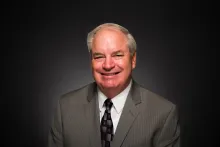
Robin Webber was born in Chicago, Illinois, in 1951, but has lived most of his life in California. He has been a part of the Church of God community since 1963. He attended Ambassador College in Pasadena from 1969-1973. He majored in theology and history.
Mr. Webber's interest remains in the study of history, socio-economics and literature. Over the years, he has offered his services to museums as a docent to share his enthusiasm and passions regarding these areas of expertise.
When time permits, he loves to go mountain biking on nearby ranch land and meet his wife as she hikes toward him.
